Tahini Sauce: Creamy 5-Minute Recipe for Everything
Ingredients
Scale
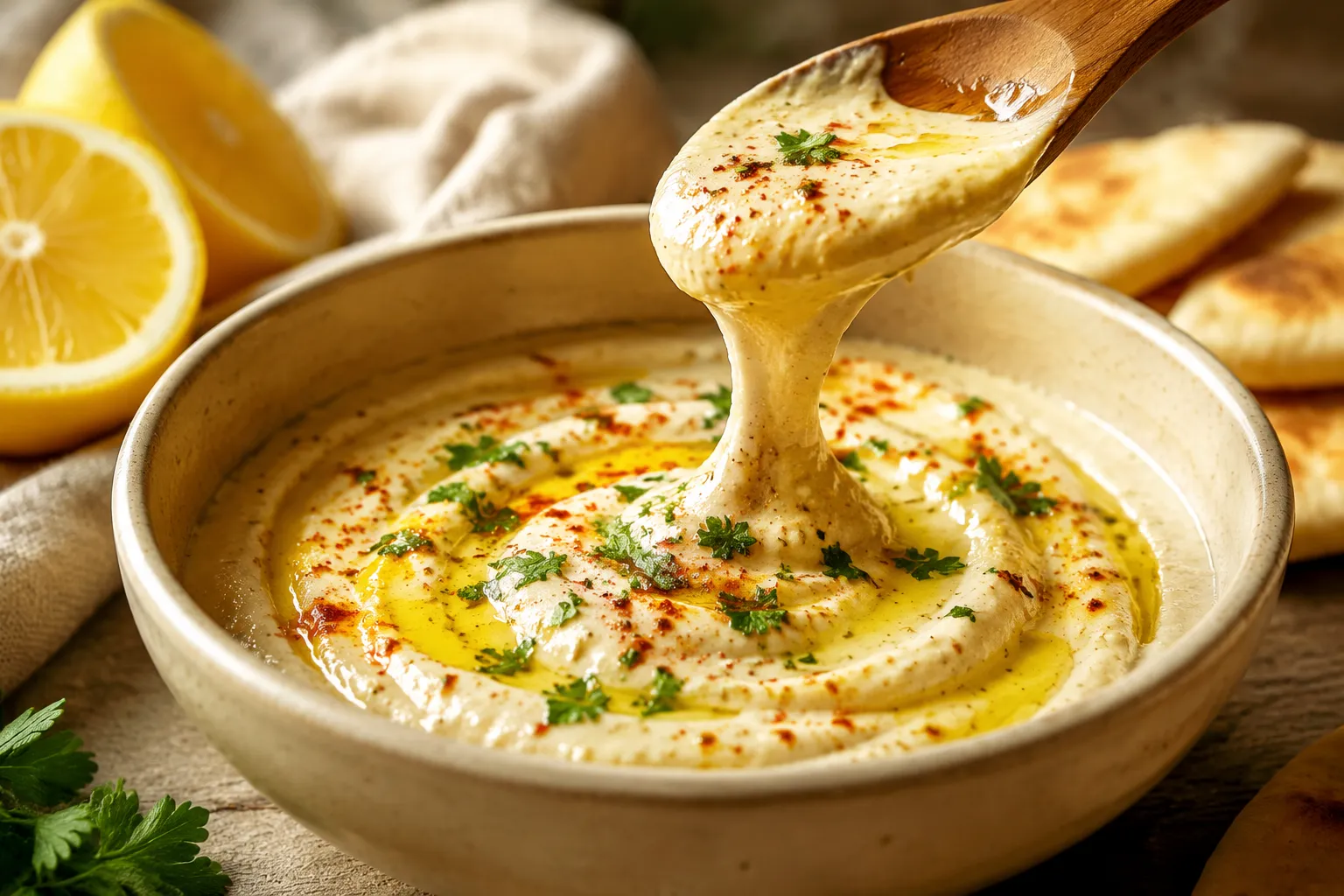
Silky, lemony, garlicky tahini sauce that whisks together in 5 minutes and turns everything from grain bowls to falafel into something crave-worthy.
This tahini sauce is the five-minute, five-ingredient backbone of every Mediterranean-leaning meal in my kitchen, and once you nail the technique you'll wonder how you ever lived without a jar of it in the fridge. It's pourable, lemony, garlicky, and creamy in a way that feels almost dairy-rich even though it's completely plant-based. The best part: no blender, no fuss, just a whisk and a few minutes at the counter.
What makes this version different from the three-ingredient pours you'll see online is a single trick I learned from a Tel Aviv cookbook years ago — emulsifying the sesame paste with ice water after it seizes against fresh lemon juice. That cold-water shock is what transforms a thick, claggy mixture into a silky, ribbon-like sauce that pools beautifully over warm pita and clings to roasted vegetables without sliding off. It's the same base I use for the creamiest homemade hummus, the brightest lemon garlic dressing for crisp salads, and the drizzle that finishes every falafel bowl I build for lunch.
Whether you're spooning it over a Mediterranean grain bowl on Tuesday or whisking up a batch as a roasted vegetable sauce on Sunday, this is the master recipe to memorize. Keep a jar in the fridge and dinner plans pretty much make themselves.
Five ingredients. That's it. Each one matters, but none are hard to source — most are probably already in your pantry. Here's what you're working with and why each piece earns its place.
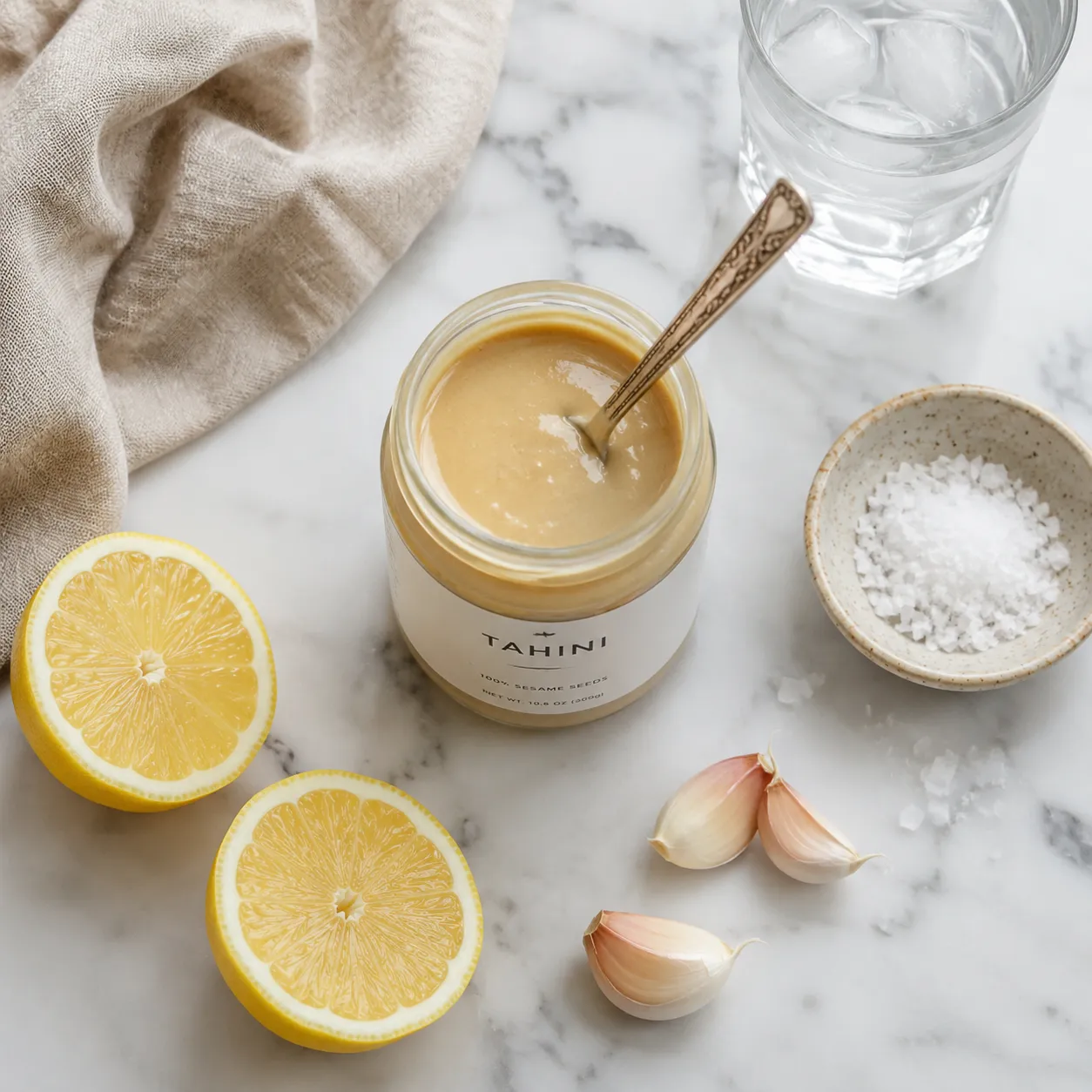
Tahini is the heart of the recipe, and the brand you choose makes a real difference. Look for a jar labeled "100% sesame seeds" with a pourable, slightly runny texture and a pale, ivory color. Soom, Seed + Mill, and Mighty Sesame are reliable picks at most US grocery stores. Avoid anything dark, gritty, or overly bitter — old or low-quality sesame paste will haunt your finished sauce no matter how carefully you whisk.
Fresh lemon juice is non-negotiable here. The acid does the structural work of seizing the sesame paste so the ice water can re-emulsify it, and bottled juice doesn't have the same brightness or pectin behavior. Two medium lemons should give you the quarter cup you need. Roll them firmly on the counter with the heel of your hand before juicing to maximize the yield.
Garlic brings the punch. Use one small clove, finely grated on a Microplane so it disperses evenly without leaving raw, biting chunks behind. If you're sensitive to raw garlic, soak the grated pulp in the lemon juice for ten minutes before whisking the rest of the sauce together. The acid mellows the bite considerably and saves you from that sharp afternoon-breath feeling.
Fine sea salt seasons the whole thing, and ice water is the secret that turns thick paste into a luscious, pourable creamy tahini dressing. Don't substitute room-temperature water; the cold genuinely matters for emulsification. Optional add-ins like a pinch of ground cumin, a dusting of smoked paprika, or a small handful of fresh herbs are great once you've got the base mastered.
The whole process takes about five minutes and lives or dies on one weird-looking moment that scares first-timers. Trust the steps, keep whisking, and you'll get there.
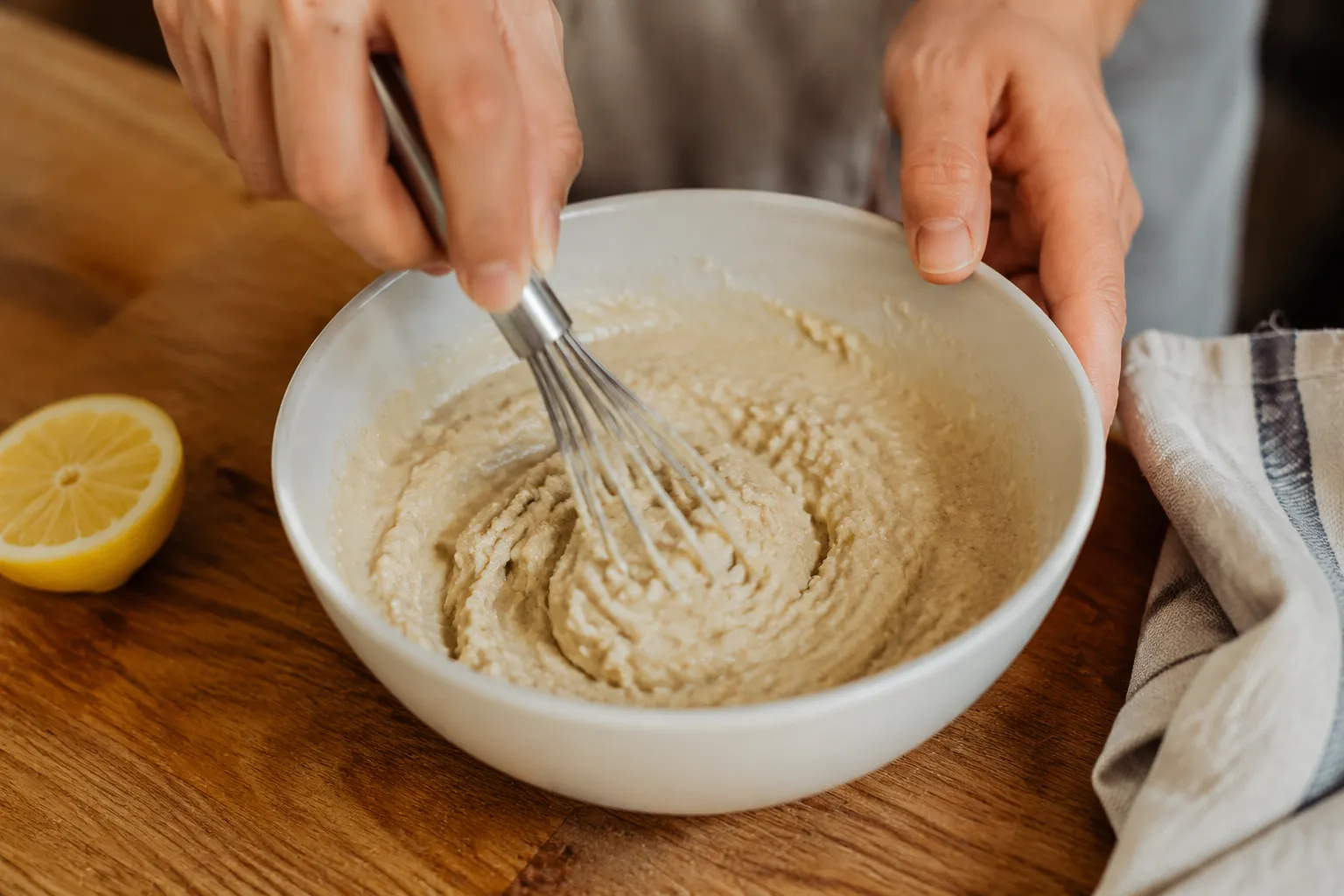
Start by whisking the tahini, lemon juice, grated garlic, and salt together in a medium bowl. Within seconds, the smooth tahini will tighten into a thick, almost spackle-like paste — this is called seizing, and it looks completely wrong. Keep going. The seize is exactly what you want; it's the protein and oil restructuring around the acid, and it's the foundation of the silky texture you're about to coax out.
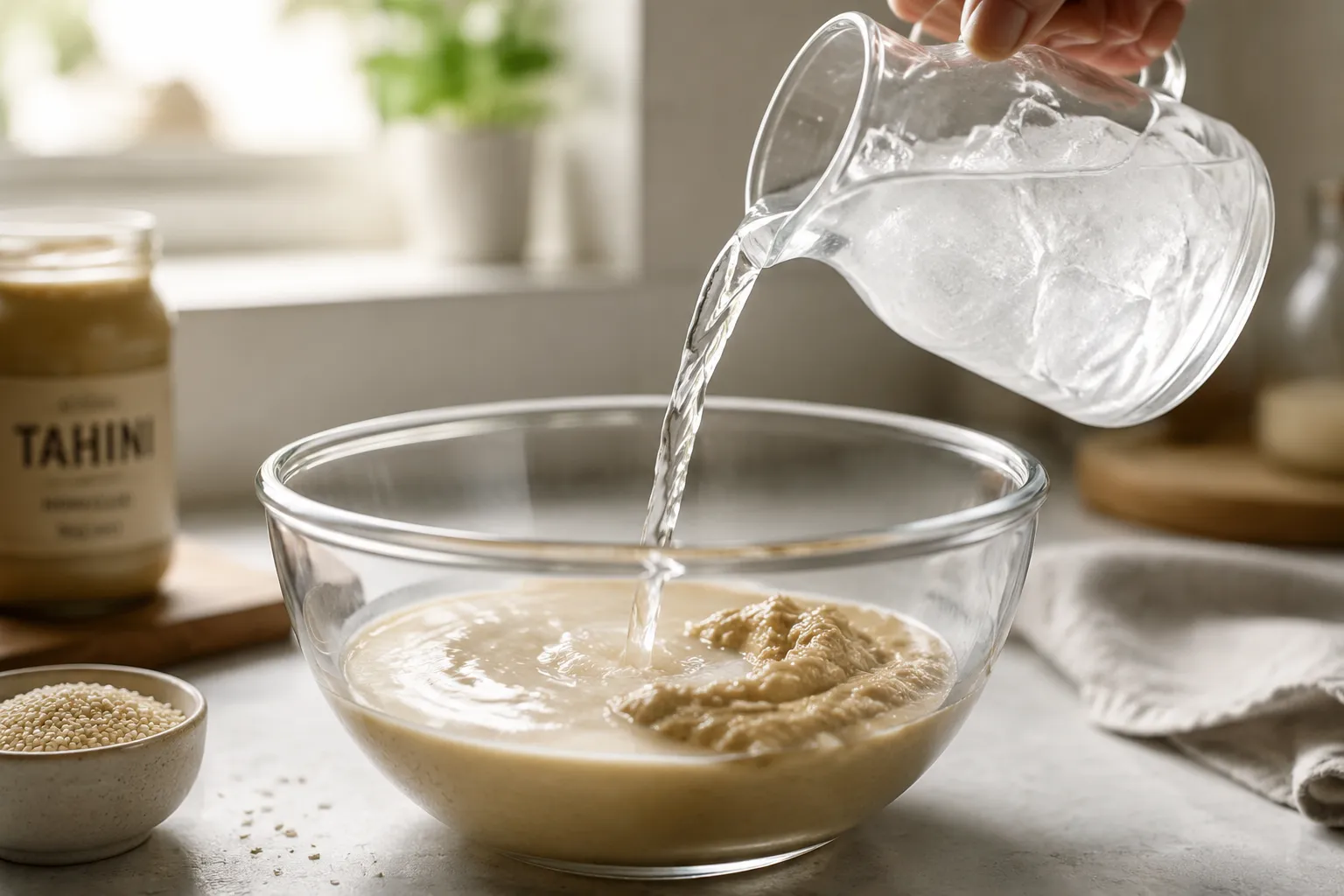
Now add the ice water, one tablespoon at a time, whisking vigorously between each addition. The first tablespoon will look like it disappears into the paste. The second will start to loosen things up. By the fourth or fifth tablespoon, the mixture will dramatically lighten in color — going from beige to pale ivory — and turn glossy, fluid, and ribbon-like. Stop adding water when the sauce drips off the whisk in a steady, slow ribbon that holds its shape for a beat before melting back into the bowl.
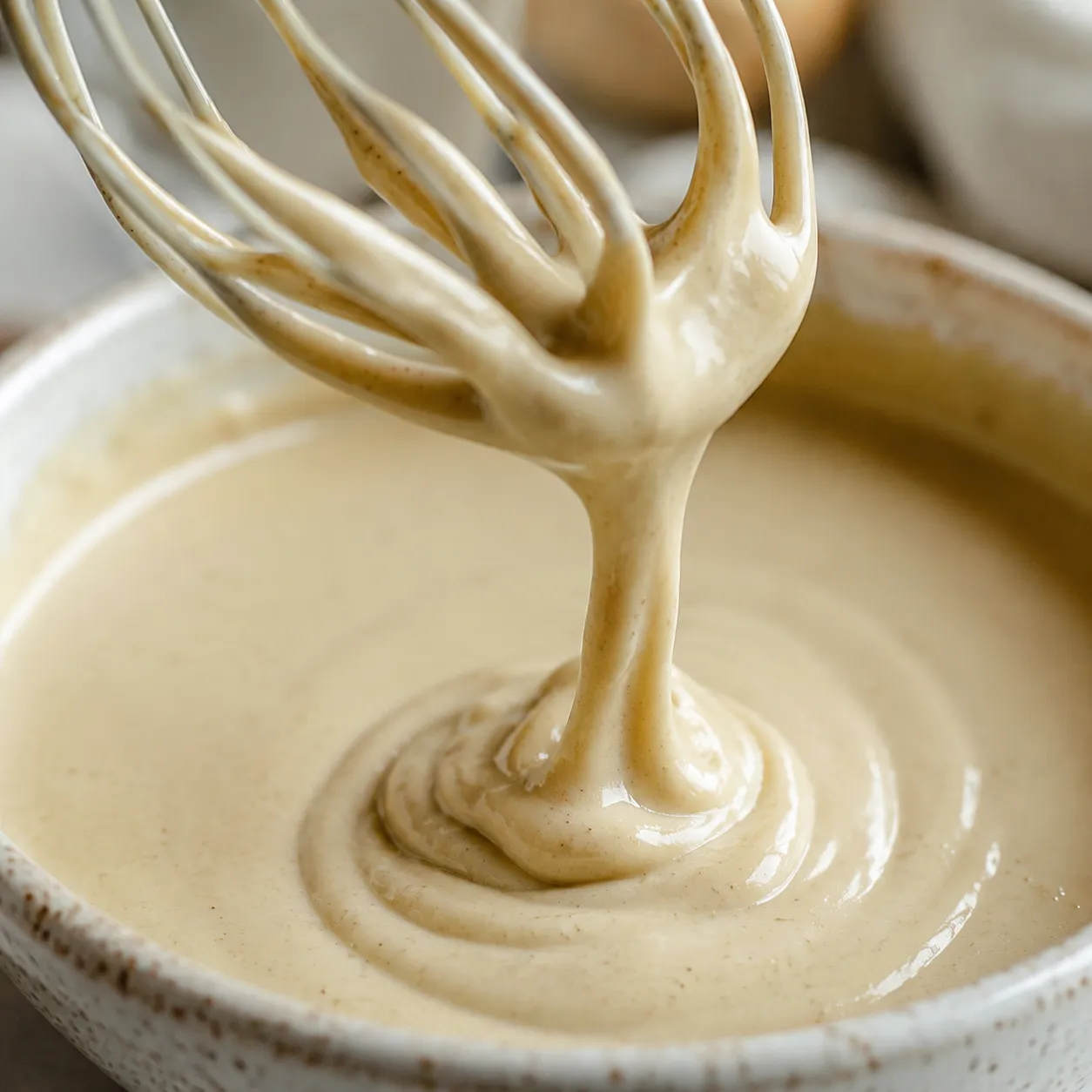
Taste and adjust. Want it brighter? Add more lemon. Punchier? Pinch more salt. Thinner for drizzling over a salad? Another splash of ice water. Thicker for spreading on toast or smearing under grilled chicken? Leave it as is. This is a recipe that rewards tasting as you go, because every jar of sesame paste behaves a little differently and ripeness of lemons varies through the year.
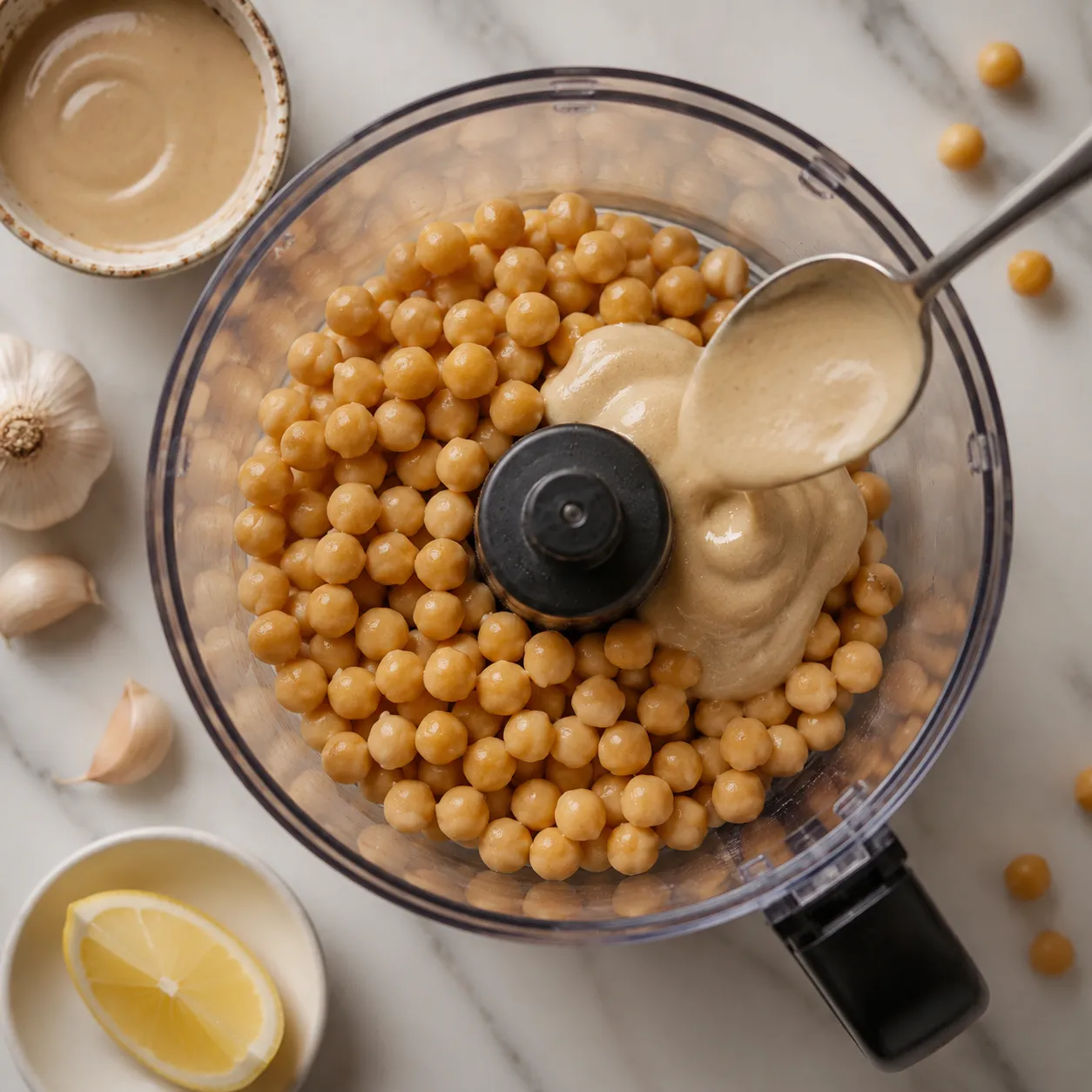
Once you have the master sauce dialed in, you're about ninety seconds away from the best homemade hummus of your life. The trick is using the already-emulsified base as the creamy starter in your food processor instead of beginning from cold paste, which is what most recipes have you do.

For one 15-ounce can of chickpeas, drained and rinsed (warm them in their cooking liquid or simmer briefly in fresh water for the fluffiest texture), use a generous half cup of finished tahini sauce. Add the warm chickpeas to a food processor with the sauce, an extra tablespoon of lemon juice, a pinch of cumin if you like, and two or three ice cubes. Blend for a full three to four minutes, scraping down the sides occasionally, until the mixture is shockingly fluffy and pale. Those ice cubes are doing the same emulsification work in the processor that the ice water did at the bowl — they whip air into the chickpeas while keeping the friction-heated mixture from breaking.
The ratio of tahini sauce to chickpeas is what separates restaurant hummus from the grainy supermarket stuff. Be generous. If your hummus tastes flat, it's almost always under-tahini'd, not over-seasoned. Finish the bowl with a swirl of olive oil, a dusting of paprika, and a few whole chickpeas reserved before blending — and serve while it's still slightly warm.
This is the part where I tell you to make a double batch, because once it's in your fridge you'll find a reason to use it on almost everything you cook for a week.
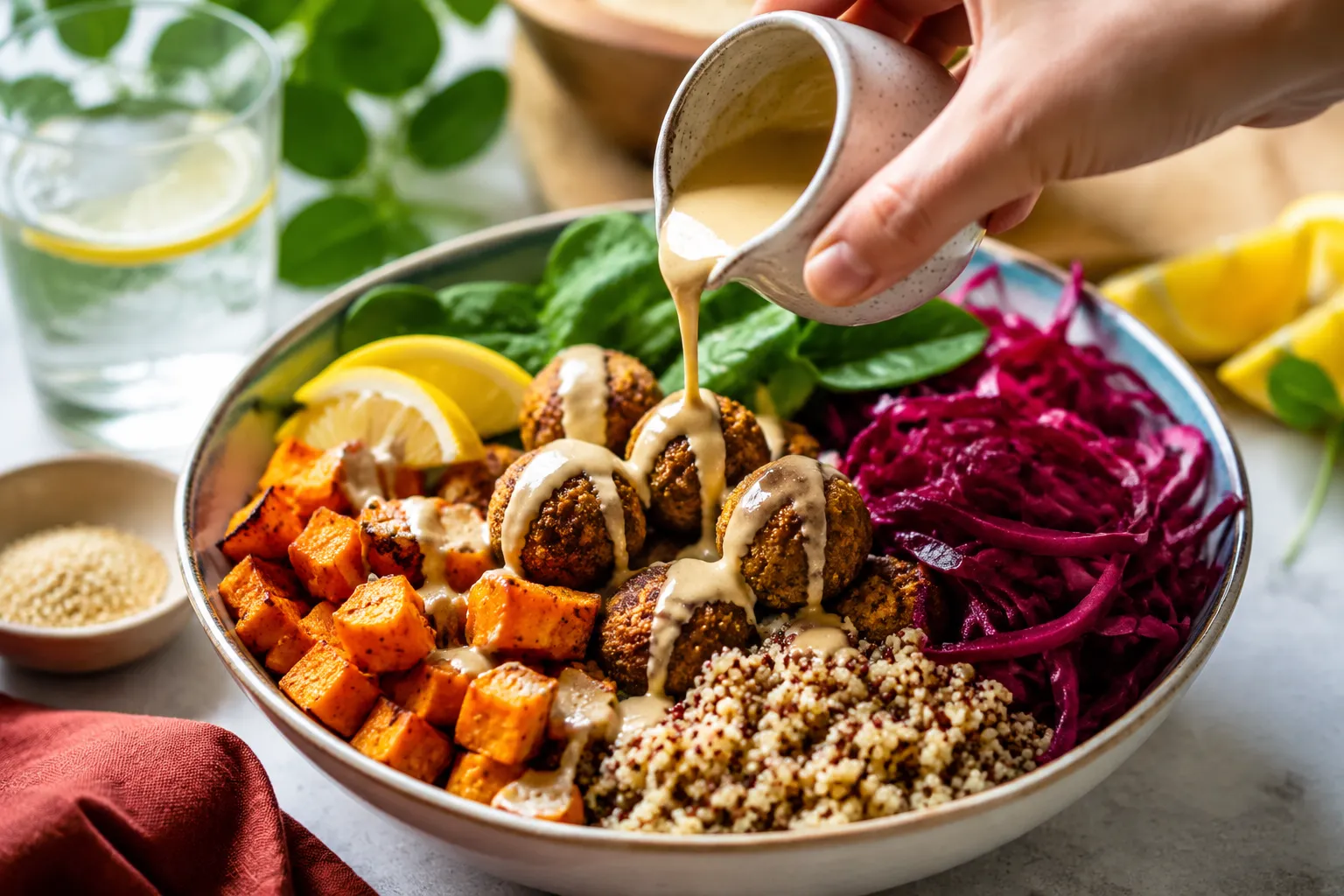
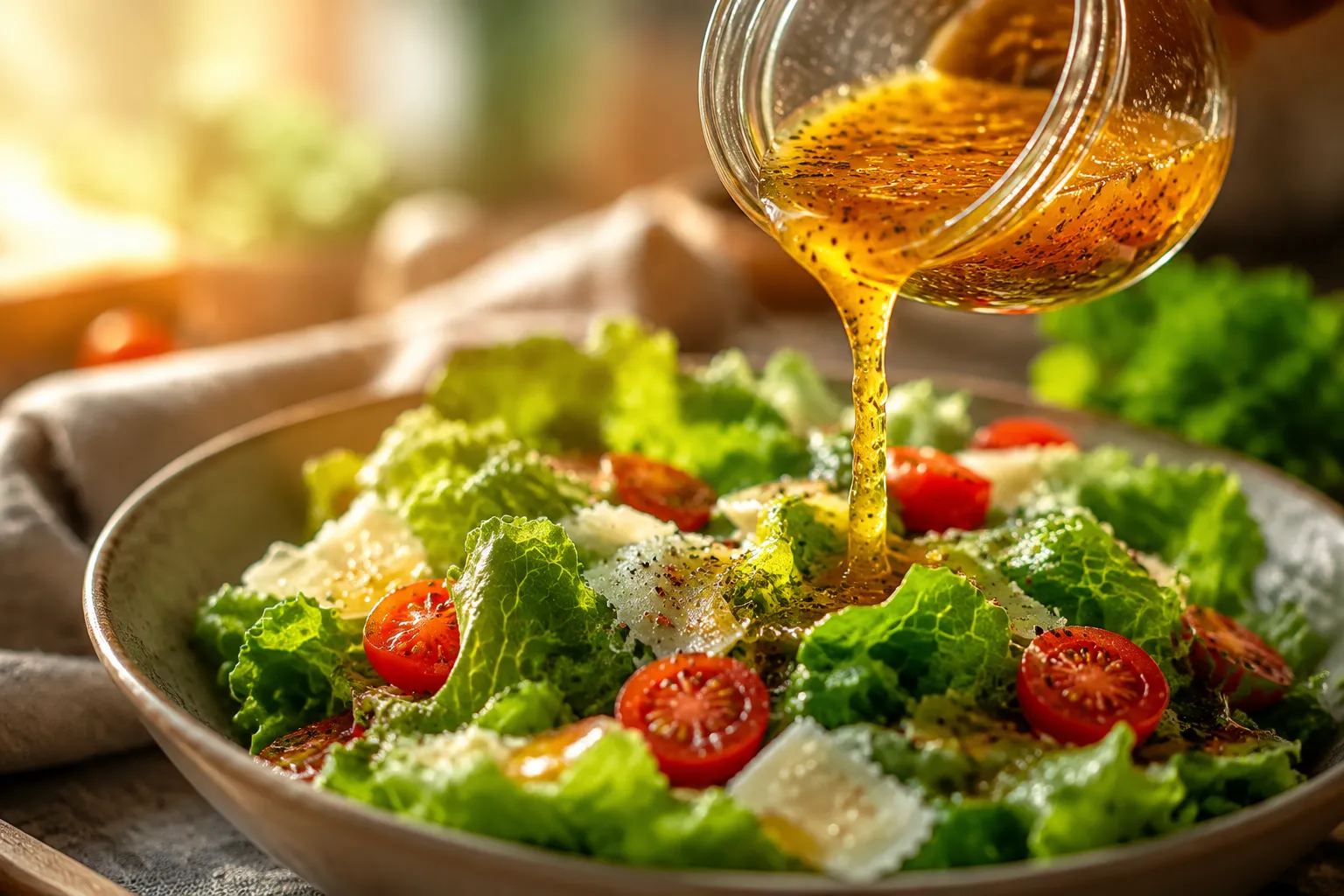
Drizzle it generously over crispy falafel, shawarma-spiced chicken, gyros stuffed into warm pita, or grilled lamb kofta. Stir a few tablespoons into greens, quinoa, and roasted chickpeas to build a quick falafel bowl that hits every Mediterranean note in one dish. Thin it with an extra splash of water and a teaspoon of olive oil and you have an instant lemon garlic dressing that turns kale, romaine, or shaved cabbage into something you actually want to eat for lunch on a Tuesday.
Spoon it across a sheet pan of roasted carrots, cauliflower, sweet potatoes, or charred broccoli — it works equally well as a roasted vegetable sauce drizzled cold over warm vegetables, and the temperature contrast is part of the charm. Use it as a sandwich spread on grain bread with cucumber and tomato, swirl it into soups for richness, or thin it into a dip for raw vegetables and warm flatbread. It's also the move on a build-your-own-bowl dinner night when everyone's customizing their plate with different proteins, grains, and vegetables.
A couple of housekeeping items worth knowing before you grab the whisk. Always stir your jar of sesame paste thoroughly before measuring — the oil separates and sits on top, and skimming off only the oily layer or only the dense bottom will throw off the whole recipe. If you want to learn how to store tahini properly so the jar stays fresh and pourable for months, keep it upside down in the pantry between uses to redistribute the oil naturally without any extra effort.
This sauce gets noticeably better after thirty minutes of resting — the garlic mellows, the lemon settles, and the texture tightens just slightly into something even silkier. If you have the foresight to make it ahead, do. And if you're cooking for a crowd, double or triple the recipe without changing a thing; the ratios scale perfectly as long as you keep the ice-water rule.
The base recipe is endlessly riffable. Once you've got the ratios memorized, you can build out flavor profiles for whatever you're cooking that night without ever needing a different recipe.
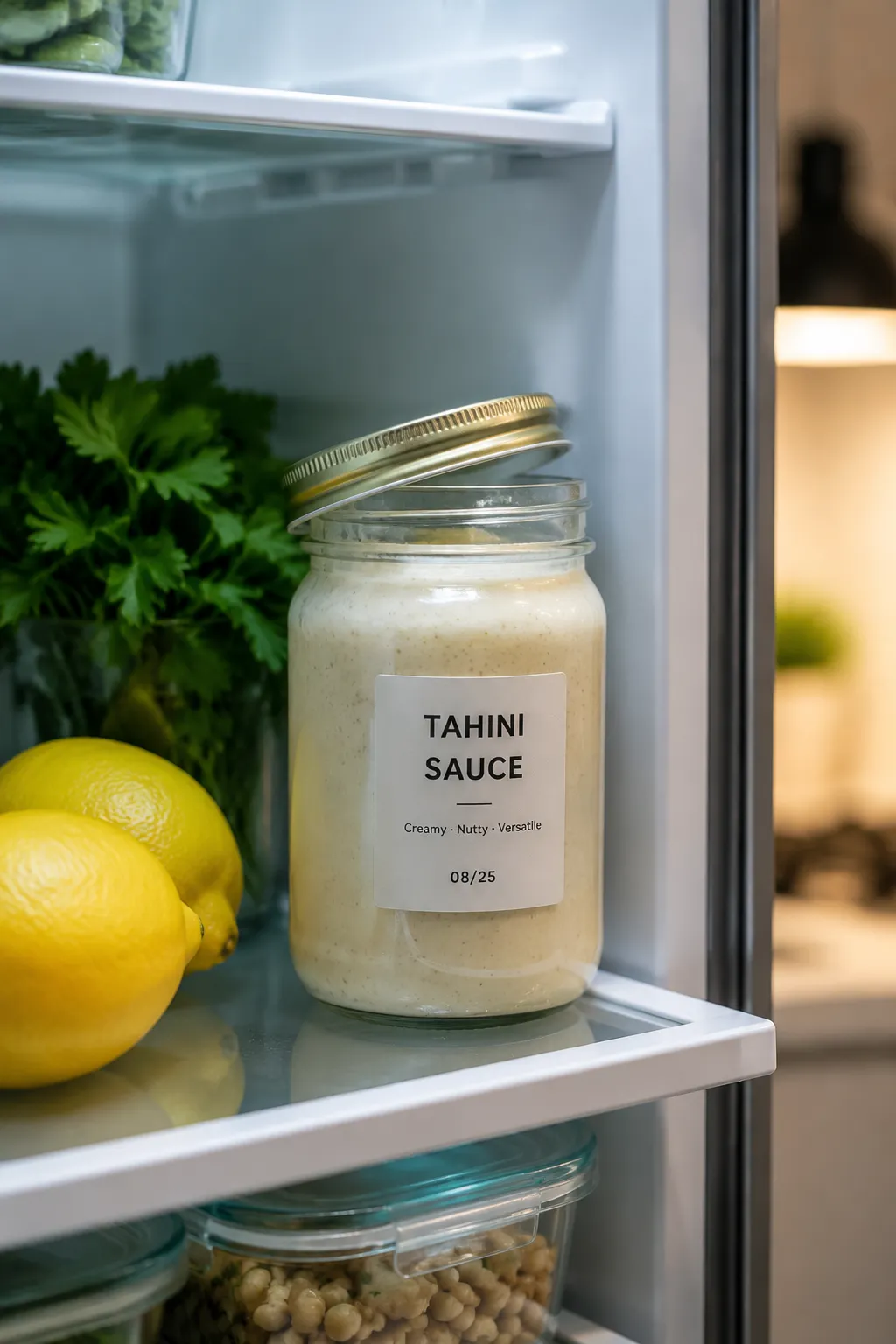
Transfer the finished sauce to a clean glass jar, seal tightly, and refrigerate for up to 5 to 7 days. It will thicken considerably as it chills, which is normal — whisk in a tablespoon or two of cold water before serving to bring it back to its silky, pourable consistency. Always taste before serving leftovers; a quick pinch of salt or fresh squeeze of lemon perks the flavor right back up after a few days of resting in the fridge.
This sauce doesn't freeze well; the emulsion tends to break and the texture turns grainy on thaw, so I don't recommend it. If you want to make a bigger batch for the week, just stash the jar in the fridge and work through it across grain bowls, salads, sandwiches, and roasted vegetable sheet pans. A double recipe will disappear faster than you'd think.