Roasted Cornish Hen Recipe (Juicy, Golden & Easy)
Ingredients
Scale
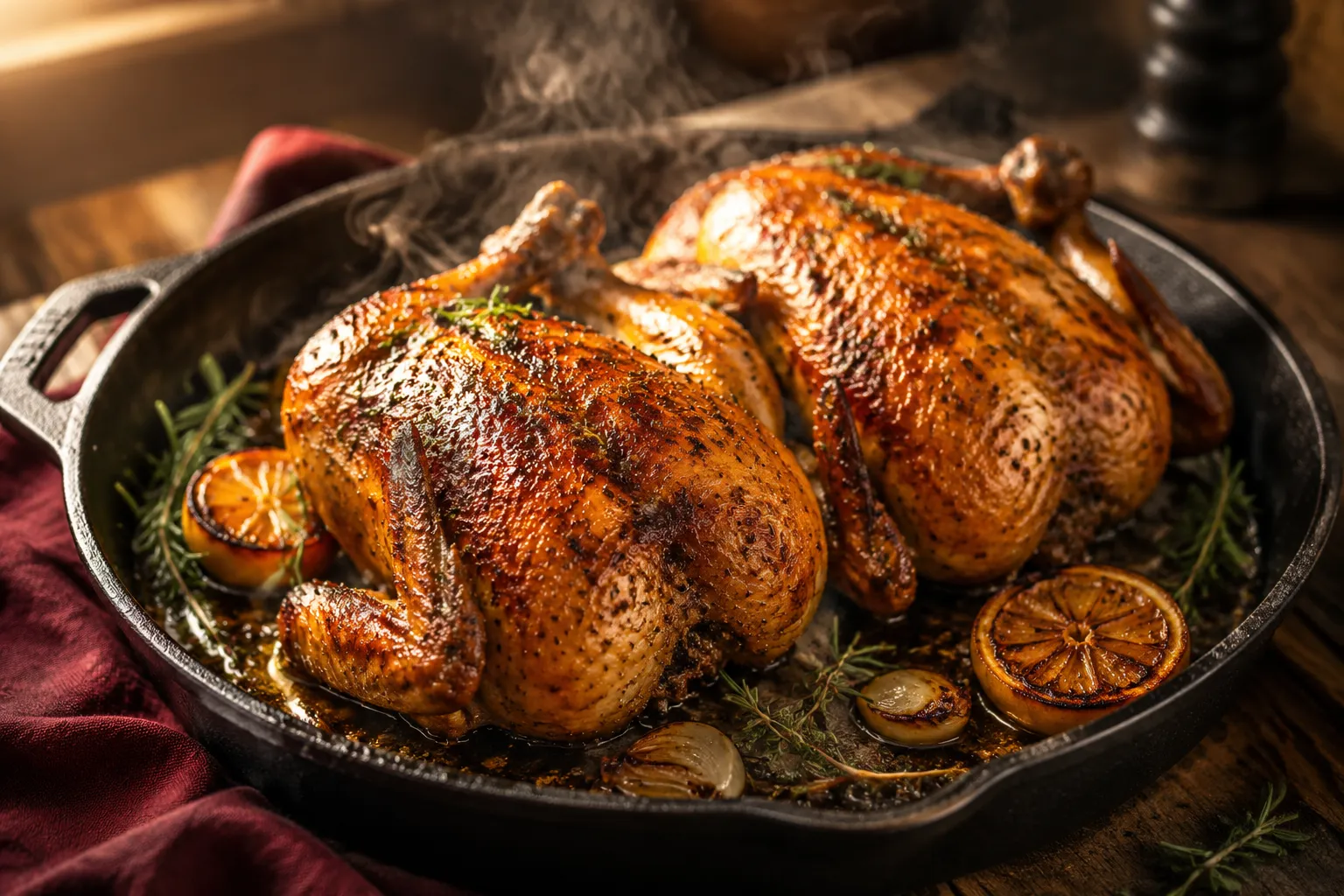
This roasted Cornish hen comes out impossibly juicy with shatter-crisp golden skin — an elegant one-bird-per-person dinner ready in about an hour.
There's something undeniably special about a roasted cornish hen on the dinner table — petite, mahogany-gold, and juicy to the bone, with skin so crisp it audibly crackles when you press a fork to it. Each guest gets their own little bird, which feels celebratory without the all-day commitment of roasting a whole turkey or a full-sized chicken. The technique here is genuinely simple: a generous slather of garlic-herb butter, a hot oven, and a meat thermometer to take all the guesswork out.
I started making these little birds for two-person holiday dinners and quickly realized they belong in the regular weeknight rotation, too. They cook in under an hour, look like a million bucks on the plate, and the herb butter melts down into the pan to create the kind of golden, garlicky drippings you'll want to sop up with crusty bread. If you've ever wondered how to roast cornish hen reliably without a dry, overcooked breast or pale, rubbery skin, this is the method that has worked every single time in my kitchen.
Whether you're putting together an easy holiday dinner for two or just want a Tuesday meal that feels like a restaurant plate, these hens deliver. They're forgiving, fast, and — with one essential step (butter under the skin) — completely foolproof.
A Cornish hen — sometimes labeled Rock Cornish or Cornish game hen — is a young chicken bred for tenderness, harvested at around four to six weeks old. Despite the “game” in the name, there's nothing wild about them: they're a domestic crossbreed of the Cornish and White Plymouth Rock varieties, and the meat is mild, slightly sweet, and very tender. The USDA classifies them as anything under two pounds dressed weight, which is exactly why one bird makes the perfect single serving.
The biggest difference is size and texture. A standard roaster chicken weighs four to six pounds and takes well over an hour to cook through; a cornish game hen weighs about a pound and a quarter and is done in 50 to 60 minutes. Because the birds are so young, the meat stays delicate and the bones are smaller, so heat penetrates evenly and there's far less risk of a dry breast by the time the thighs finish. Think of them as the chicken equivalent of single-serving rib eyes — same flavor profile, more elegant presentation.
Most large supermarkets carry frozen cornish game hens year-round in the poultry case (Tyson and Perdue are the common national brands). Around the holidays you'll often find them fresh. Whole Foods, butcher shops, and Asian markets sometimes stock locally raised options that are worth the splurge. Buy two birds for two diners — one whole hen per adult is the right call for a satisfying main course.
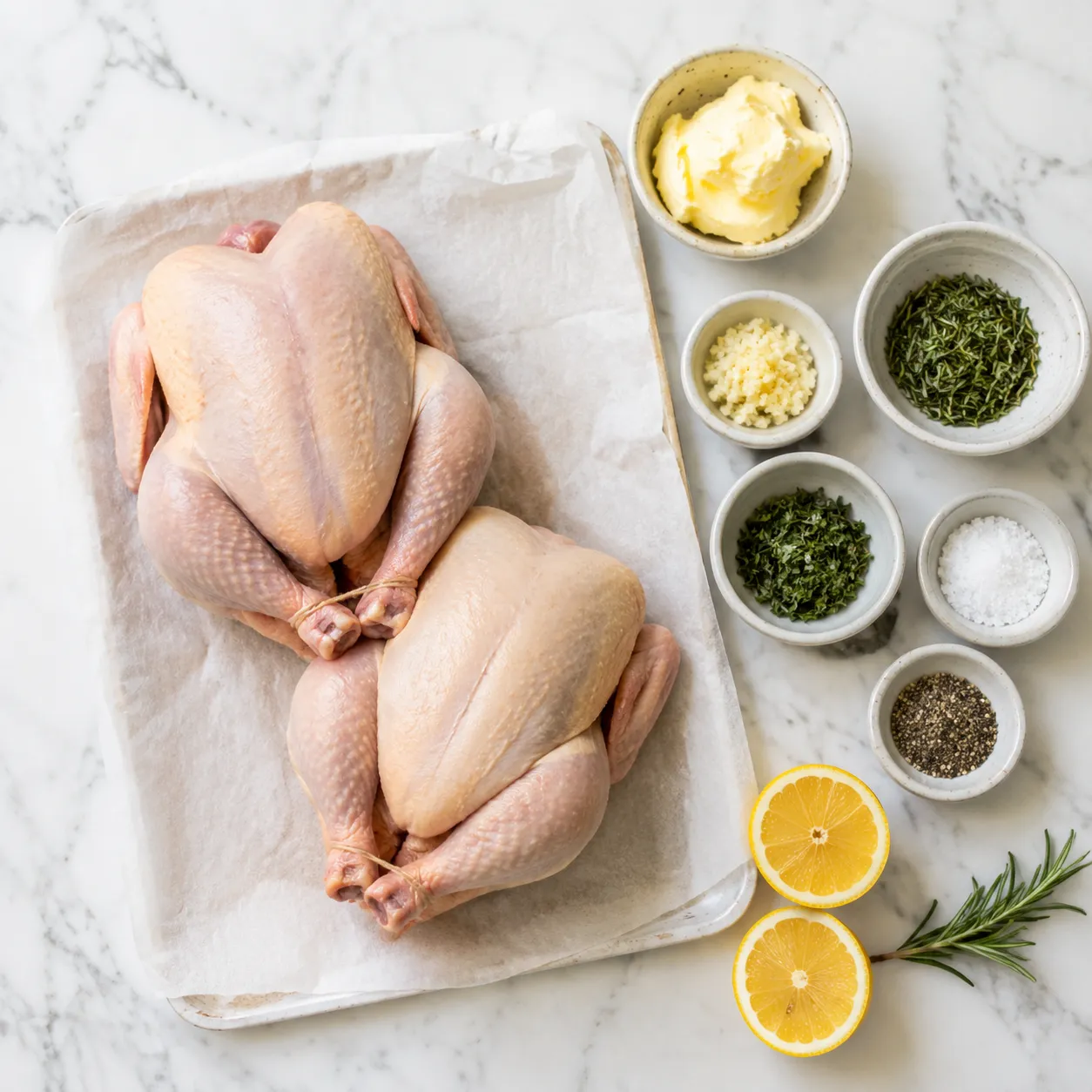
The beauty of this recipe is how little you actually need. A short list of pantry staples and one bunch of fresh herbs is all that stands between you and a glossy, golden roast. Here's what each component does and why it matters.
The herb butter is the heart of this recipe — it bastes the meat from the inside out and gives the skin its lacquered finish. Soften unsalted butter to room temperature so it's easy to spread, then mash it with minced garlic, finely chopped rosemary, thyme, and parsley, and a generous pinch of kosher salt. This compound butter is essentially a riff on classic herb butter chicken seasoning, just packed under and over the skin of a smaller bird. The garlic mellows in the oven, the herbs perfume the meat, and the butter renders into the pan as rich garlic butter poultry drippings — the best part of the whole dish.
Fresh herbs are best, but in a pinch you can use one tablespoon of dried Italian seasoning. Salted butter works if it's all you have on hand — just pull back on the salt elsewhere. A halved lemon stuffed inside each cavity adds brightness, but oranges, shallots, or a small bunch of fresh sage work beautifully too. Olive oil keeps the bottom of the pan from scorching and helps the wing tips and legs crisp up.
A great roast comes down to four moves: dry skin, seasoned butter, hot oven, real rest. That's it. The full timing and quantities live in the recipe card below, but here's a walk-through of the technique so you understand why each step matters. (Spoiler: it's mostly about coaxing out crispy skin while keeping the meat juicy.)
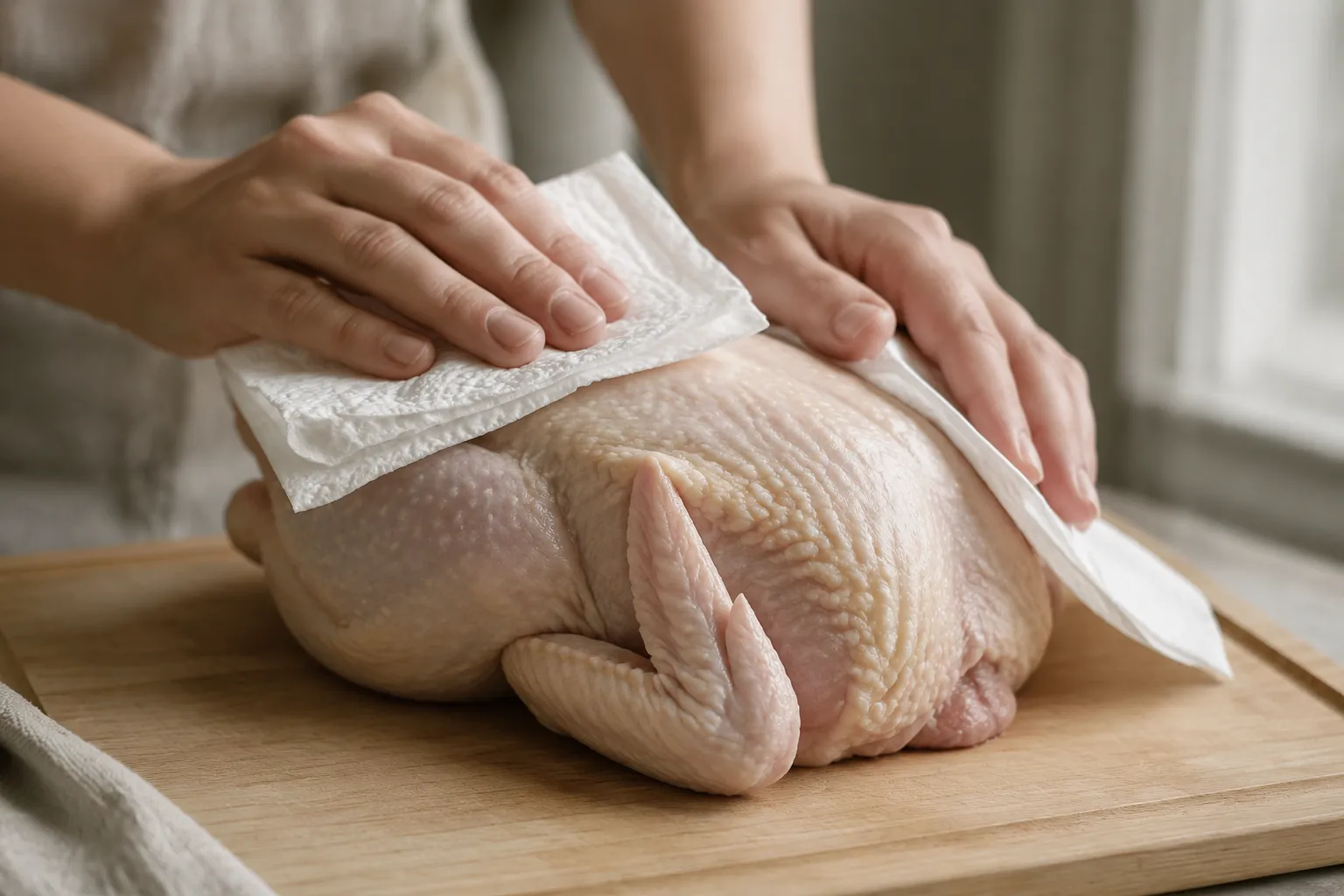
Take the birds out of the fridge 30 minutes before roasting so they don't go into the oven cold. Remove any giblets from the cavity, then pat the skin completely dry with paper towels — this is non-negotiable. Wet skin steams instead of crisps, and you'll end up with a pale, flabby exterior no matter how hot your oven is. Sprinkle the cavity and the outside generously with kosher salt.
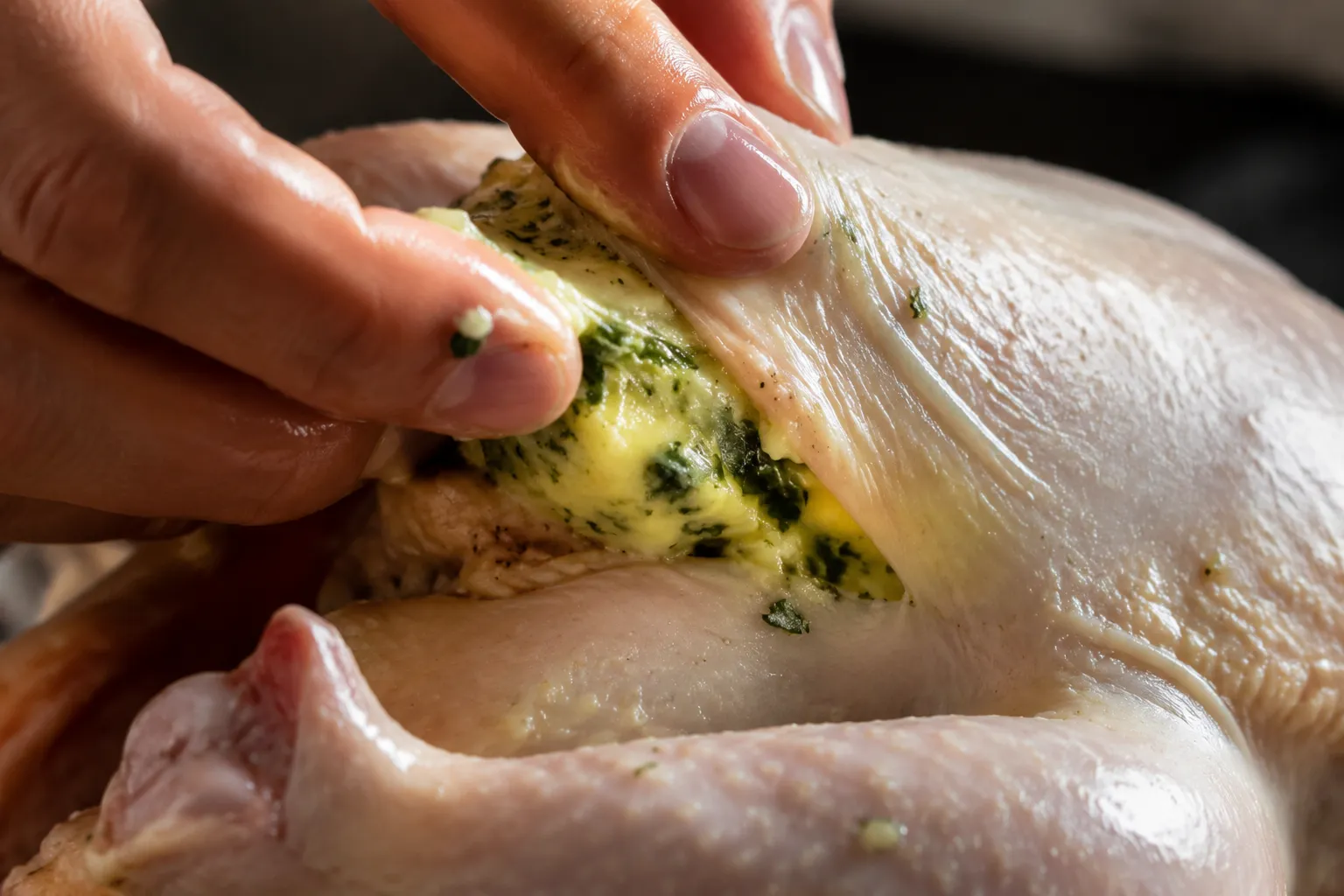
Here's the move that separates a good roast from a great one: gently work your fingers under the breast skin to create a pocket, then push half of the herb butter directly onto the meat. Rub the remaining butter all over the outside of the bird. Butter under the skin keeps the breast meat moist as it cooks, while butter on top crisps and caramelizes into that magazine-cover glaze.
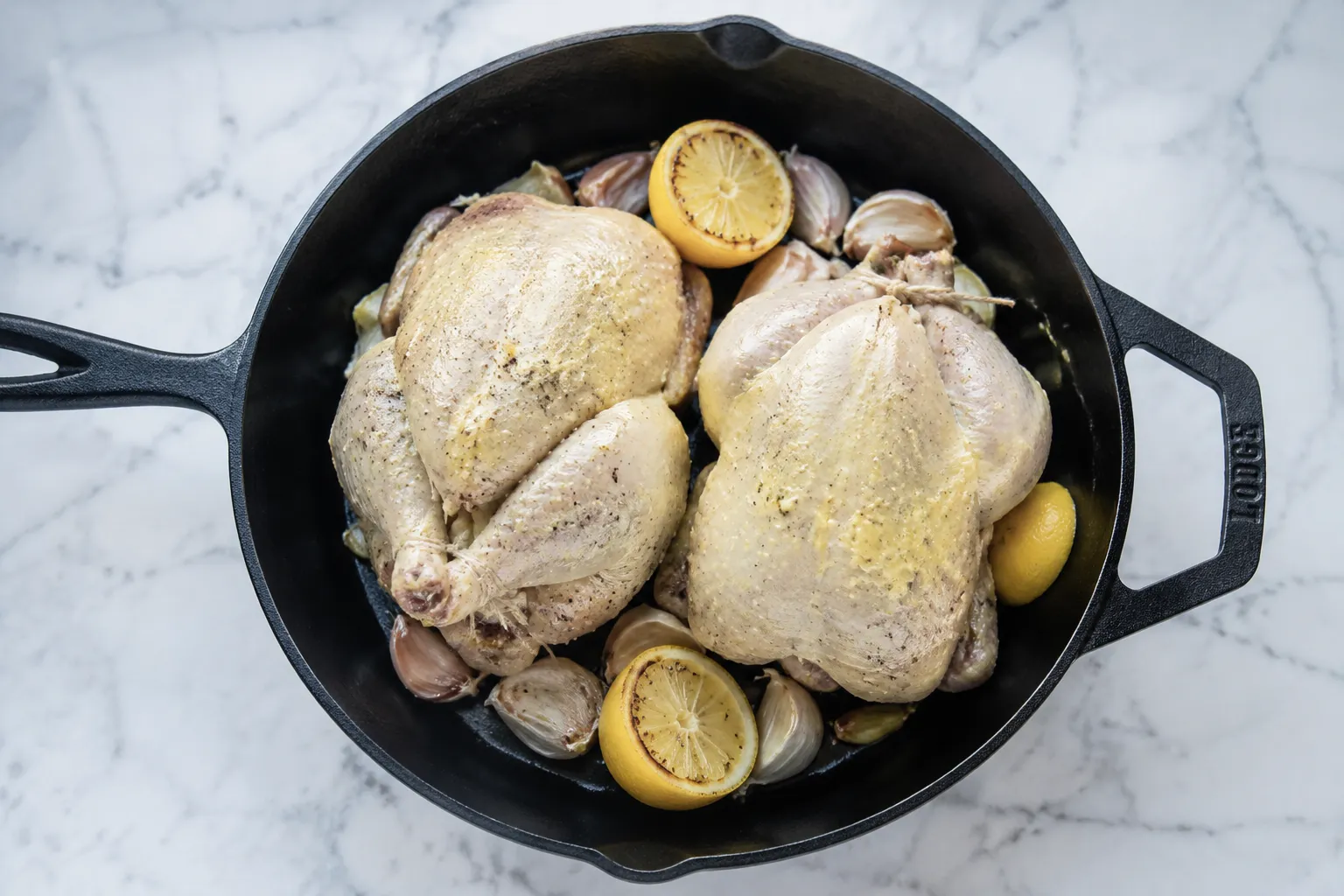
Tuck a halved lemon and a few crushed garlic cloves into each cavity, then tie the legs together with kitchen twine. Trussing isn't just for looks — it keeps the legs close to the body so the breast doesn't overcook before the thighs are done. Settle the birds breast-side up in a cast iron skillet or roasting pan and slide them into a 425°F oven.
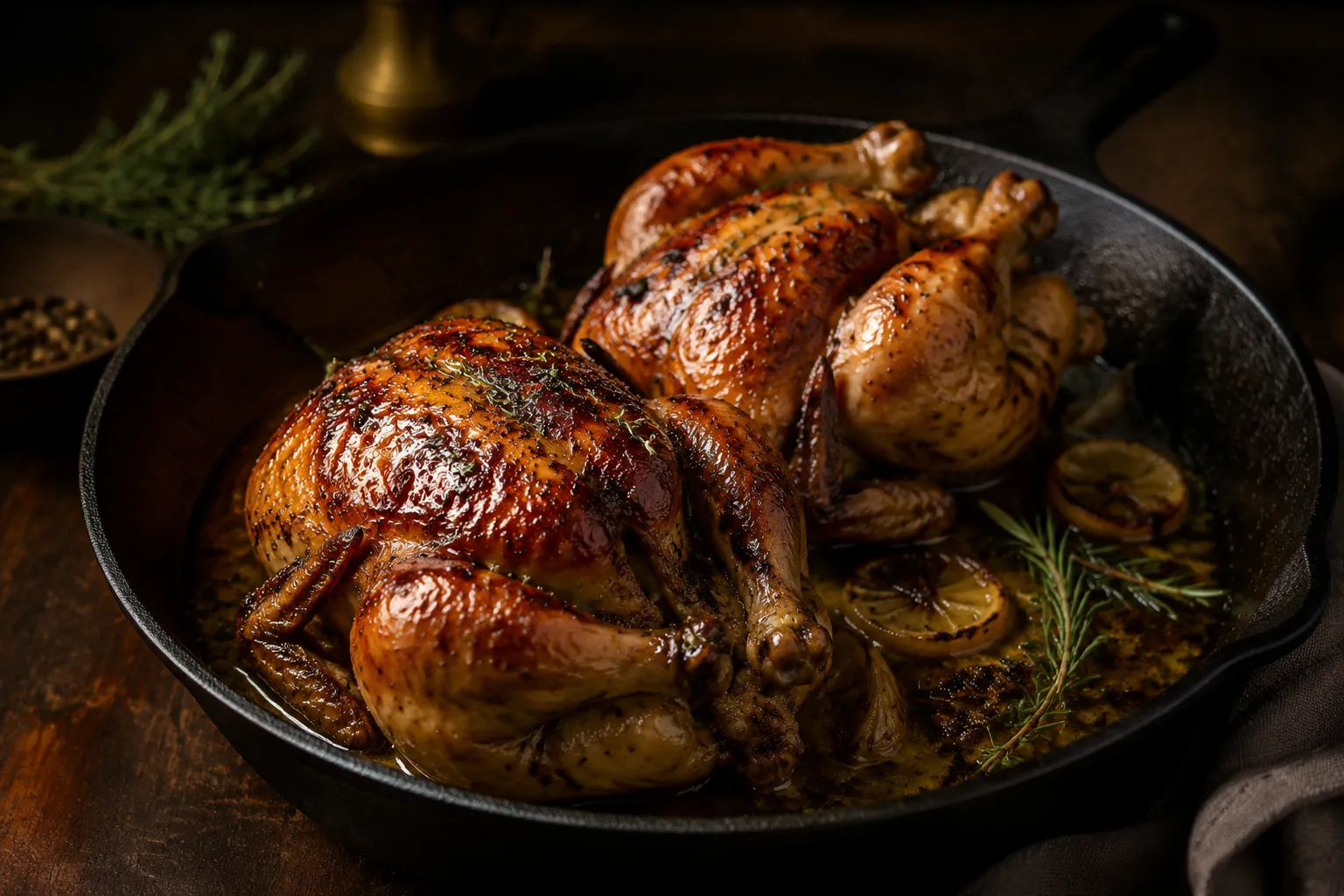
When the birds come out deeply golden and registering temperature, transfer them to a board and let them rest for 10 minutes — uncovered, so the skin stays crisp. Resting is when the juices redistribute through the meat, so cutting in too early will leave a puddle on your board instead of inside the bird. Spoon the pan drippings over the top right before serving and don't forget the lemon halves from the cavity — they're caramelized and gorgeous.
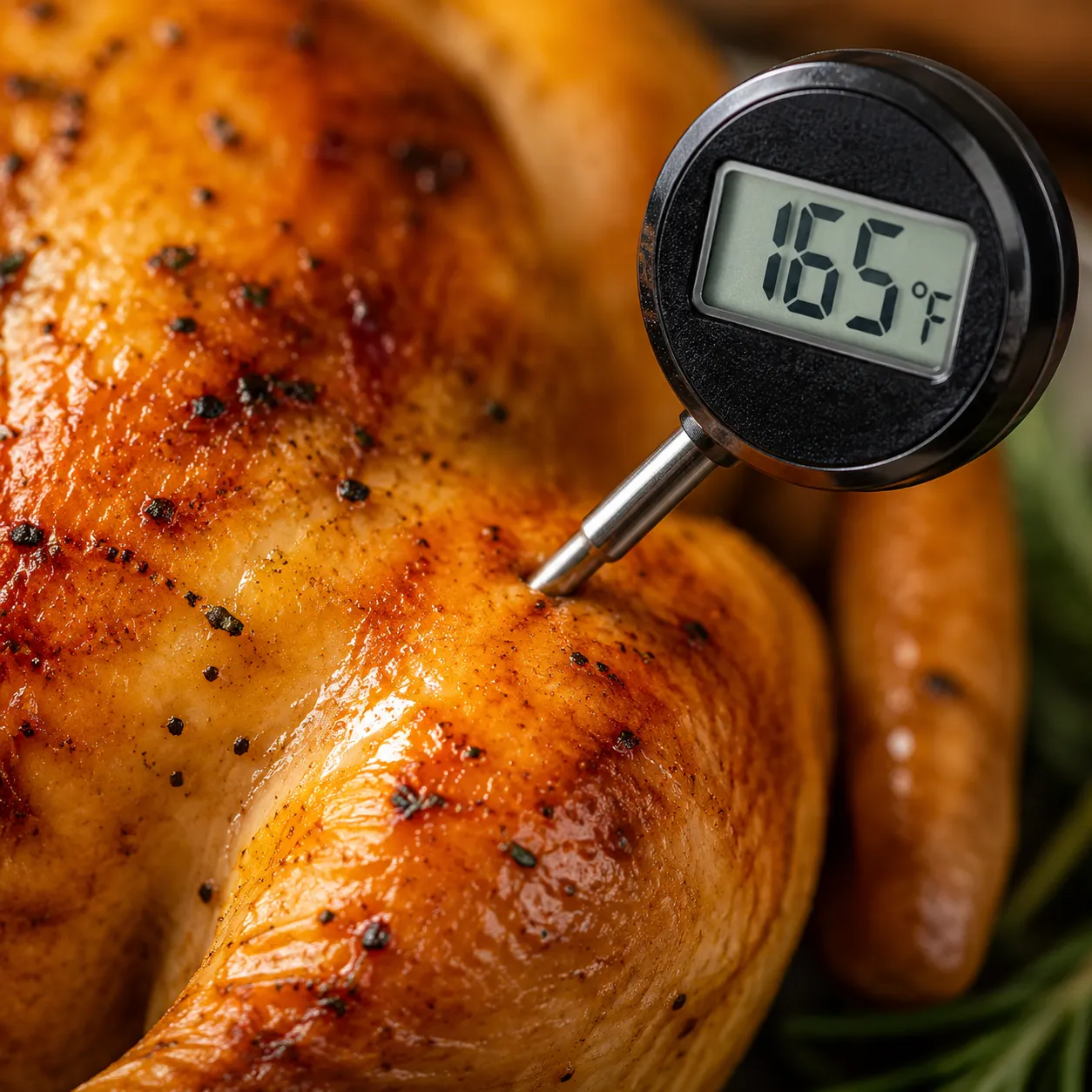
Forget timers and trust your thermometer. The USDA-recommended safe internal temperature for poultry is 165°F, measured at the thickest part of the thigh without touching bone. At that mark, the juices run clear, the meat is fully cooked, and you haven't pushed past the point where the breast turns chalky. An instant-read digital thermometer is the single best $15 you can spend on your kitchen — it removes every guess from roasting.
If you pull the birds at 160°F and let them rest while loosely tented, carryover cooking will bring them up the final five degrees without any risk of overshooting. The skin should be deep mahogany, the legs should wiggle freely in their sockets, and the pan juices should be sizzling and golden.
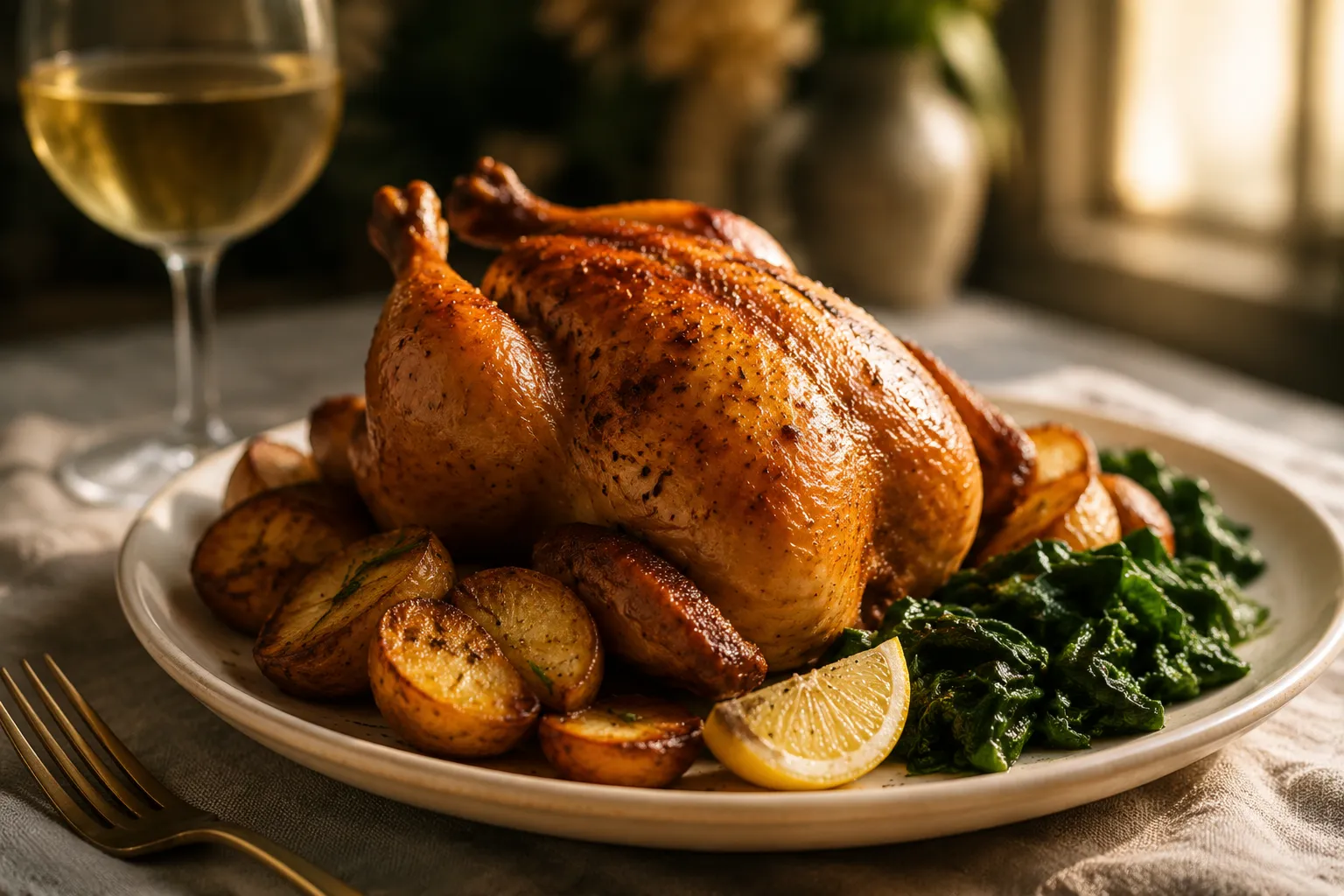
Because the birds are rich and buttery, lean toward sides that bring some texture and acidity to balance them out. Crispy roasted potatoes (cooked right alongside in the same pan if there's room) soak up the drippings and become impossibly good. Wilted spinach or sautéed kale with a squeeze of lemon cuts through the richness beautifully. A simple arugula salad with shaved parmesan is dinner-party-ready in three minutes flat.
For a holiday spread, think wild rice pilaf, buttery mashed potatoes, glazed carrots, or roasted brussels sprouts with bacon. A loaf of crusty bread is non-optional in my house — those pan drippings deserve a vehicle. If you're going more rustic, soft polenta or an herbed risotto plays beautifully with the savory butter and herbs in this dish.
A medium-bodied white like an oaked Chardonnay or Viognier matches the richness of the herb butter without overpowering the delicate meat. If you prefer red, a light Pinot Noir or Beaujolais works wonderfully — both have enough fruit to complement the herbs and enough structure to stand up to the crispy skin. For a celebratory upgrade, a dry Champagne or sparkling rosé is honestly hard to beat.
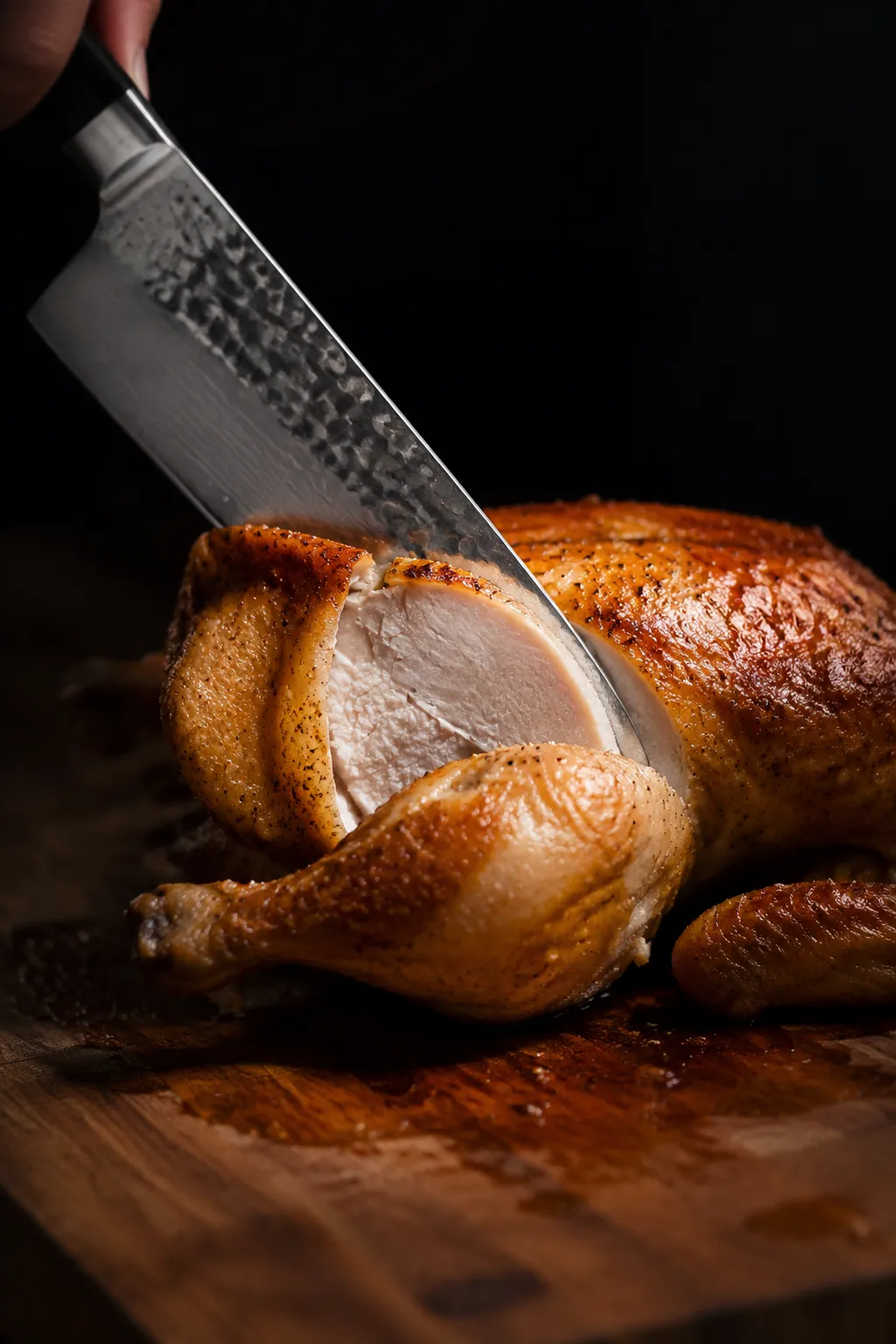
To carve, slice straight down through the breastbone to halve the bird for two diners, or remove the legs at the joint and slice the breast off the carcass for a more refined plate. Either way, you'll see clean white meat glistening with butter — the payoff for every minute of patience. This recipe started in my kitchen as a way to make Valentine's Day dinner feel special without being fussy, and it has since become my go-to for everything from quiet weeknights to Christmas Eve. Once you nail the under-skin butter trick and learn to trust your thermometer, you'll never make a dry roast again.
This recipe is a perfect canvas for whatever flavors you love. Once you've nailed the basic technique, swap in different aromatics and seasonings to match the season, your menu, or your mood.
Leftover meat keeps beautifully. Refrigerate cooled hens (or pulled meat off the bone) in an airtight container for up to 4 days, or freeze portions off the bone for up to 3 months. To reheat without drying out, place pieces in a 325°F oven covered loosely with foil for 12 to 15 minutes, or until warmed through. The microwave works in a pinch but tends to toughen the breast meat — if you go that route, add a splash of broth to the dish and cover loosely with a damp paper towel.
For make-ahead prep, you can season the birds and slip the herb butter under the skin up to 24 hours in advance. Refrigerate them uncovered on a wire rack set over a sheet pan so the skin air-dries — this actually delivers even crispier results than same-day roasting. When ready, pull from the fridge, let sit 30 minutes, and roast as directed (you may need an extra 5 minutes in the oven).