What Is Polenta? A Complete Guide to Cooking It Perfectly
Ingredients
Scale
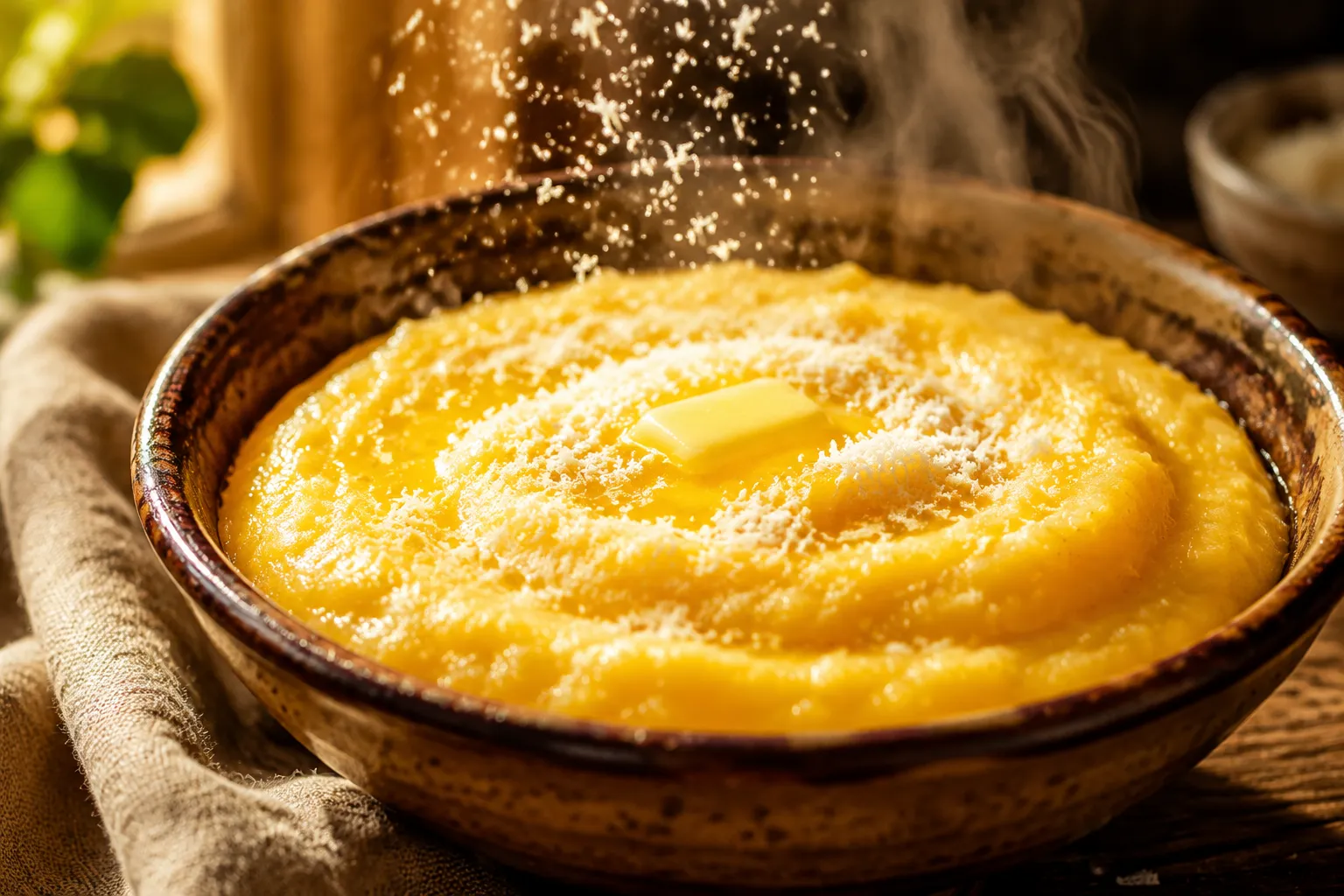
Curious what polenta actually is? It's a creamy, golden Italian classic made from coarse cornmeal, and once you learn the technique, you'll make it on repeat.
What is polenta, exactly? At its simplest, polenta is a warm, golden Italian cornmeal porridge made by slowly cooking coarse cornmeal with water, broth, or milk until it turns soft, thick, and spoonable.
It is humble food in the best possible way: a pantry staple transformed into something silky, comforting, and restaurant-worthy with just heat, salt, and a little patience. Serve it loose and creamy under braised meats, mushrooms, or roasted vegetables, or chill it until firm so you can slice, grill, or pan-fry it into crisp-edged squares.
If you have ever seen a creamy polenta recipe on a menu and wondered whether you could make it at home, the answer is absolutely yes. This guide walks through the short answer, the store-bought options, the stovetop technique, and the most delicious polenta serving ideas so you can cook it with confidence.
Polenta is both an ingredient description and a finished dish, which is why it can feel a little confusing at first. In the most traditional sense, it refers to a Northern Italian preparation of Italian cornmeal cooked slowly with liquid until the grains swell and soften. The finished texture can be loose and creamy, like mashed potatoes or risotto, or firm enough to cut once it cools.
Historically, polenta was a staple in Northern Italy long before it became a restaurant darling. Families stretched simple grains into filling meals, often pairing bowls of polenta with beans, cheese, stews, or whatever vegetables were in season. Today, it still carries that cozy, practical spirit, but it also has the elegance to sit under short ribs, ragù, roasted mushrooms, or a glossy spoonful of tomato sauce.
The key ingredient is coarse cornmeal, usually yellow, though you may also see white or heirloom varieties. The grind matters because finely ground cornmeal can turn gluey or pasty, while coarse grains give the dish its gentle texture and slow-cooked body. Once the question what is polenta clicks, it becomes one of the easiest blank-canvas sides to keep in your back pocket.
Before corn arrived in Europe, versions of polenta were made with grains like farro, millet, buckwheat, or chestnut flour. Corn eventually became the defining ingredient, especially in regions like Lombardy, Veneto, and Piedmont, where it grew well and fed households economically. That rustic foundation is part of why polenta feels so comforting: it was never meant to be fussy.
In Italian kitchens, polenta was often cooked in large pots and stirred for a long time until thick and tender. It might be poured onto a board, sliced with string, and served family-style at the table. Modern kitchens do not require quite that level of ceremony, but a heavy pot, steady heat, and occasional stirring still create the best texture.
Cornmeal is the ground grain; polenta is the cooked dish made from it. Bags labeled “polenta” are usually a coarse or medium-coarse yellow cornmeal chosen specifically for this preparation. If a recipe calls for polenta, look for that labeling or choose coarse-ground yellow cornmeal rather than fine cornmeal used for baking.
The comparison of polenta vs grits is also helpful. Both are cooked corn porridges, but polenta is Italian and traditionally made from yellow flint corn, which holds more texture. Grits are a Southern American staple often made from white dent corn, giving them a softer, more delicate finish. If you are curious about grits vs polenta, think of them as close cousins with different corn varieties, culinary histories, and textures.
The polenta aisle can be surprisingly varied, but most options fall into three categories: traditional coarse-ground polenta, quick-cooking or instant polenta, and pre-cooked tubes. Traditional polenta gives you the deepest flavor and best creamy texture, while quick versions are helpful when dinner needs to happen fast. Tubed polenta is already cooked and firm, so it is better for slicing and sautéing than for making a soft bowl from scratch.
For a classic pot, choose coarse-ground or medium-coarse yellow polenta if you can find it. Stone-ground varieties often have beautiful flavor, though they may cook a bit more slowly and need an extra splash of liquid. Avoid cornmeal labeled “fine” unless the recipe specifically calls for it, because it can thicken too aggressively and lose that rustic, spoonable character.
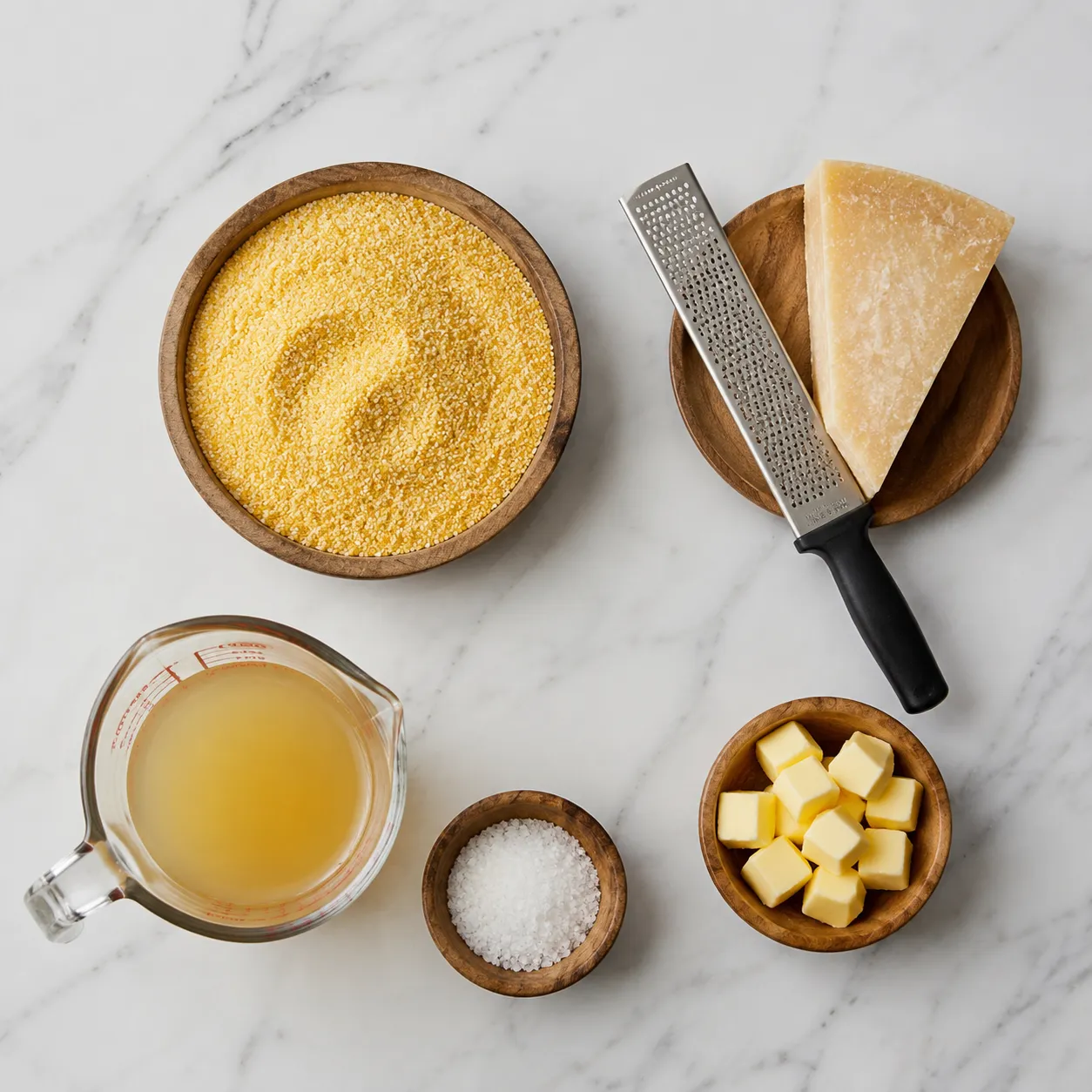
Traditional coarse-ground polenta is the one to buy when you want the classic slow-stirred experience. It typically takes 30 to 45 minutes, depending on the brand and grind, and rewards you with a creamy base that still has a subtle corn texture. This is the style I like for Sunday dinners, braises, mushroom ragù, or anytime the polenta is a main part of the plate.
Because the grains are larger, they need time to hydrate fully. If your polenta tastes gritty after 20 minutes, it is not ruined; it simply needs more liquid and more time. Keep the heat low, stir often, and let the cornmeal soften until it tastes mellow and cooked through.
Quick-cooking and instant polenta are partially processed so they soften in a fraction of the time. They are convenient, especially for weeknights, but the flavor and texture can be a little less rich than traditional coarse-ground cornmeal. Still, with broth, butter, Parmesan, and good seasoning, instant polenta can be genuinely delicious.
Follow the package directions for liquid amounts and timing, since brands vary. The main trick is to whisk vigorously at the beginning and remove the pan from the heat as soon as it thickens. Overcooking quick polenta can make it stiff or bouncy rather than smooth.
Polenta tubes are fully cooked, chilled, and packaged in a firm log. They are not the best choice if you want a bowl of soft, creamy polenta, but they are terrific for slicing into rounds. Pan-fry them in olive oil until crisp, then top with marinara, pesto, fried eggs, sautéed greens, or roasted vegetables.
You can mash tubed polenta with liquid and heat it into something softer, but it will not have quite the same texture as fresh stovetop polenta. Think of it as a convenience product with its own strengths. It is especially handy for appetizers, quick lunches, and crisp polenta croutons.
You only need a handful of ingredients to learn how to make polenta well: polenta, liquid, salt, butter, and cheese. The simplicity is exactly why ingredient quality matters. A flavorful broth, freshly grated Parmesan, and real butter turn a modest pot of cornmeal into something luscious.
The classic ratio is 1 cup polenta to 4 cups liquid. Water lets the corn flavor shine, broth adds savory depth, and milk creates a richer, softer finish. I often use low-sodium chicken broth or a mix of broth and water, then finish with butter and Parmesan so the pot tastes rounded but not heavy.
Salt should go in early, not just at the end. Cornmeal absorbs seasoning as it cooks, and early salting keeps the finished dish from tasting flat. Freshly cracked black pepper, a drizzle of olive oil, herbs, or a spoonful of mascarpone can all be added at the end, but the base does not need much to feel special.
Look for bags labeled “polenta,” “coarse-ground cornmeal,” or “stone-ground yellow cornmeal.” The grains should look sandy rather than powdery, with a warm yellow color and a faintly sweet corn aroma. If you buy stone-ground cornmeal, store it in the freezer if you do not use it quickly, because the natural oils can turn rancid over time.
Medium-grind cornmeal works if it is what you have, and it will cook slightly faster than a very coarse grind. Fine cornmeal is better saved for cornbread, muffins, and breading. For the creamiest result, traditional polenta should soften slowly enough to develop body without becoming pasty.
The 4:1 liquid-to-polenta ratio is the sweet spot for a soft, spoonable pot. If you want an extra-loose texture, add another 1/2 cup of hot liquid near the end. If you plan to chill the polenta for slicing, keep it a little thicker and pour it into a pan while warm.
Broth is my favorite for savory dinners, especially when the polenta will sit under saucy meats or vegetables. Milk makes it creamy and slightly sweet, which is lovely for breakfast bowls or mild cheese finishes. Water is always acceptable, especially if you are using plenty of Parmesan or a bold topping.
Learning how to cook polenta is mostly about temperature and timing. Bring your liquid to a gentle simmer, whisk in the cornmeal slowly, then reduce the heat so the mixture bubbles lazily rather than spits aggressively. From there, the polenta needs enough stirring to prevent sticking and enough time for the grains to become tender.
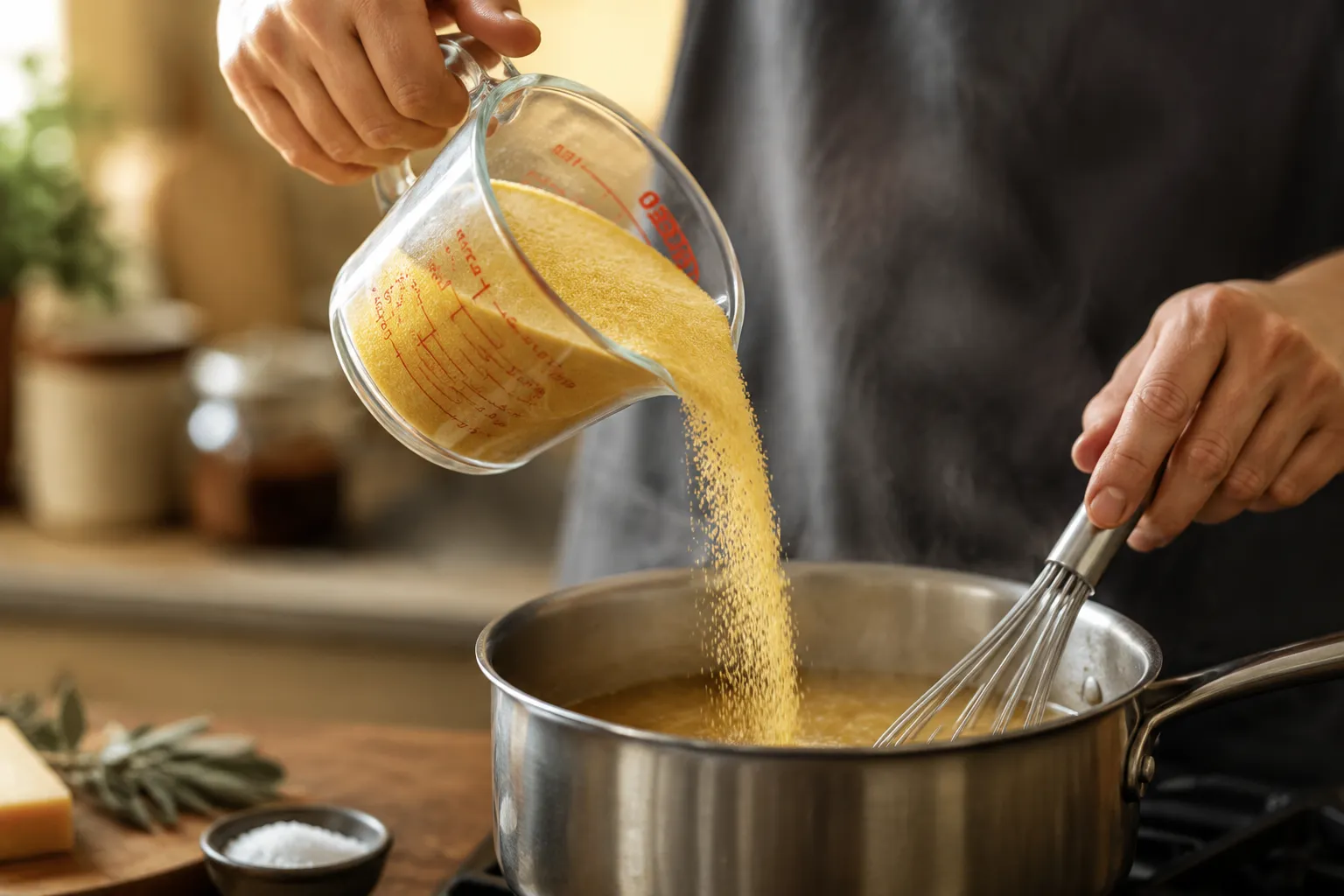
The first minute is the most important for preventing lumps. Pour the cornmeal in a thin, steady stream while whisking constantly, almost like making a smooth gravy. Once everything is incorporated, switch to a wooden spoon or silicone spatula and stir every few minutes, scraping the bottom and corners of the pot.
As it thickens, polenta will begin to pull away slightly from the sides of the pan and fall from the spoon in soft ribbons. Taste it rather than relying only on the clock. If the grains still feel hard or gritty, add a splash of hot water or broth and keep cooking until the texture turns tender and creamy.
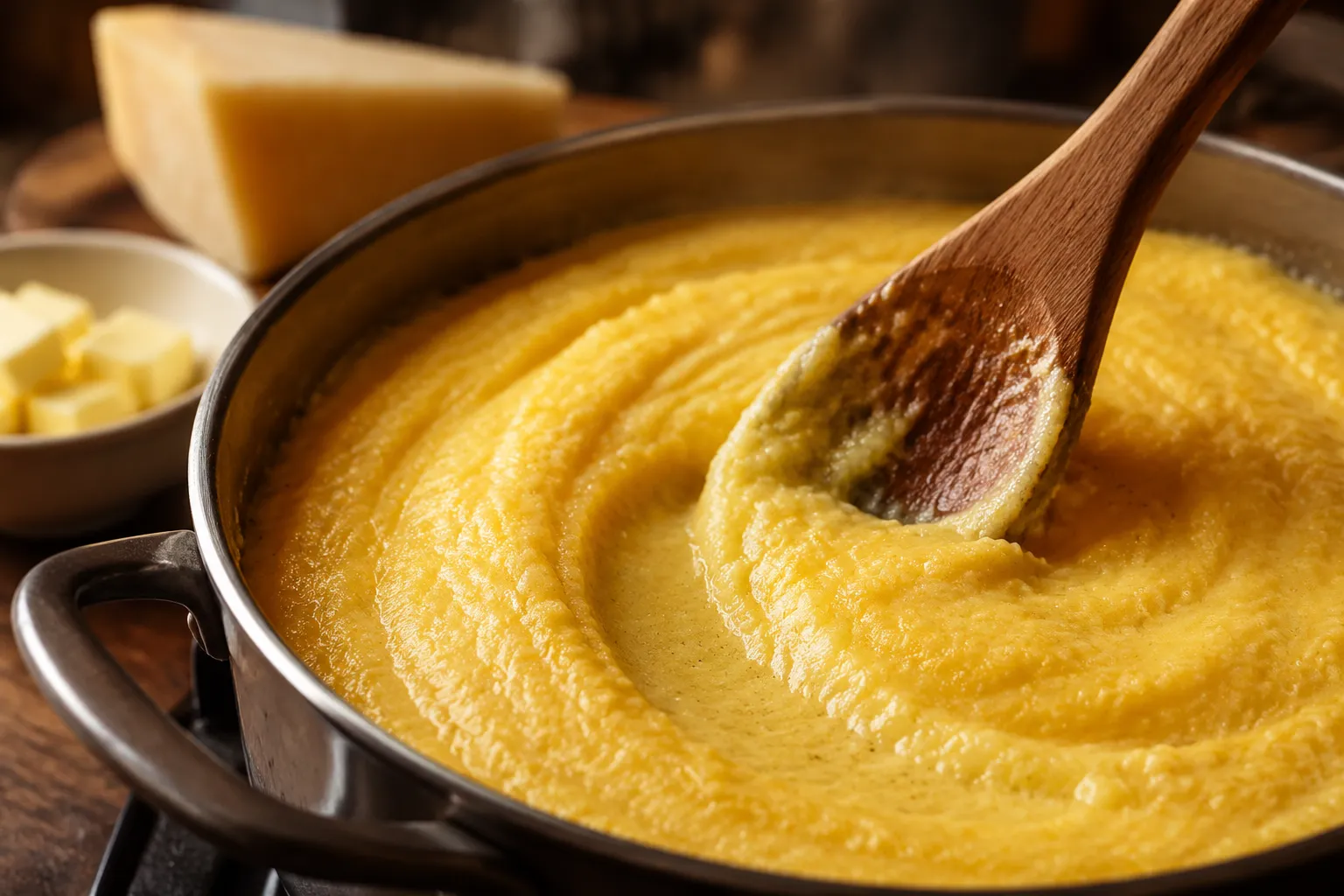
Start with a heavy-bottomed saucepan or Dutch oven, because thin pans are more likely to scorch. Bring the liquid and salt to a simmer, whisk in the polenta gradually, then lower the heat to maintain a gentle blurp rather than a boil. The polenta should move slowly in the pot, thickening little by little as the cornmeal hydrates.
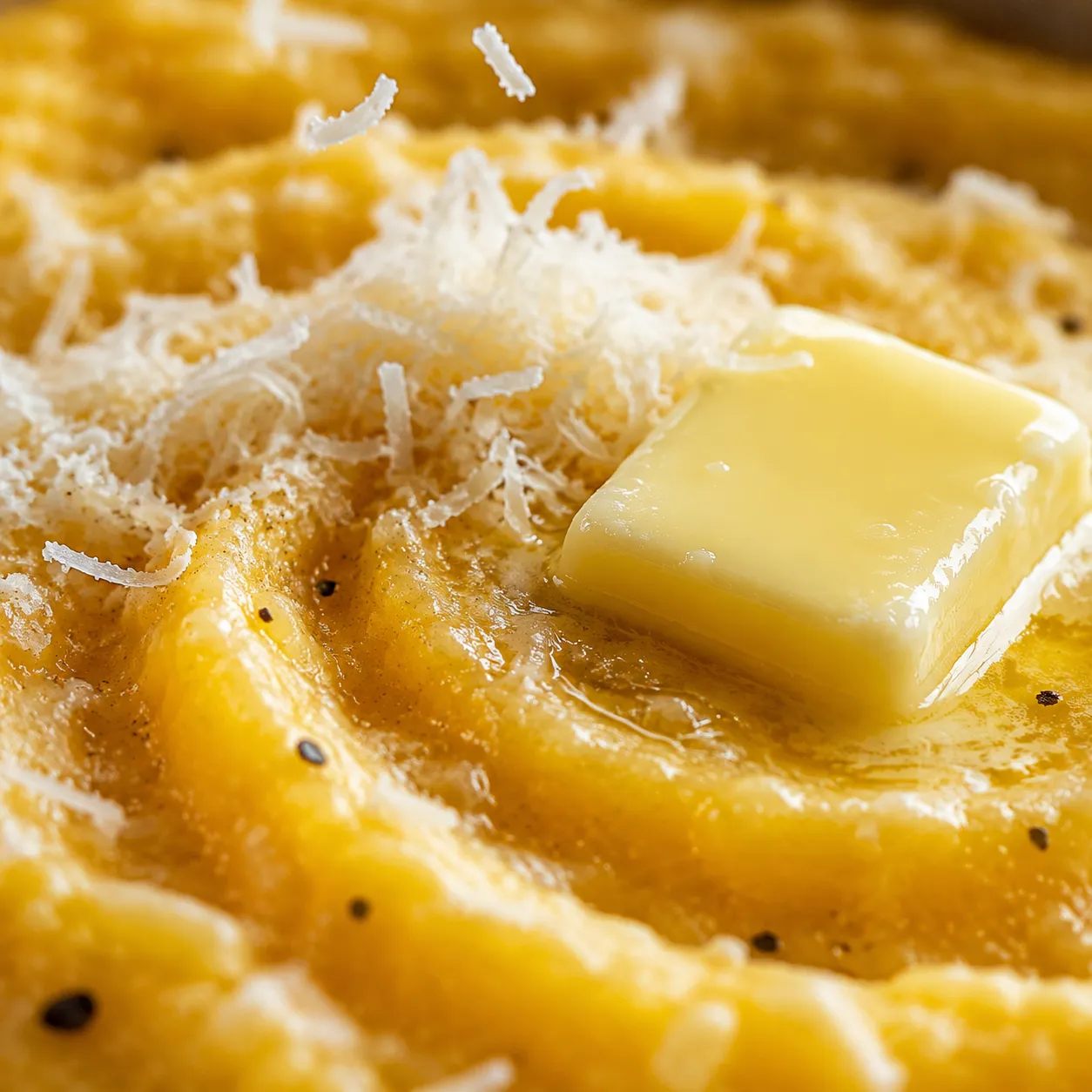
After about 30 minutes, the grains should taste sweet and tender, not raw or chalky. Stir in butter and Parmesan off the heat so they melt into the hot polenta without separating. This final enrichment is what gives the finished bowl that glossy, restaurant-style texture.
Lumps usually happen when the cornmeal is dumped in too quickly or the liquid is boiling too hard. Keep the simmer gentle and whisk as you pour, aiming for a thin rain of grains rather than a cascade. If lumps do form, whisk firmly for a minute or press them against the side of the pot with your spoon.
Sticking is usually a heat problem. Once the polenta begins to thicken, low heat is your friend, and a heavy pot makes a big difference. If you notice the bottom catching, transfer the polenta to a clean pot without scraping up any browned bits, then continue with a little extra liquid.
Traditional coarse-ground polenta usually takes 30 to 45 minutes. Medium-ground versions may be ready closer to 25 minutes, while quick-cooking polenta can thicken in 5 to 10 minutes. Instant options vary widely, so read the package and adjust your expectations accordingly.
The best signal is always taste. Polenta that is fully cooked should feel soft and cohesive, with a pleasant corn flavor and no harsh grit. If it thickens before it tastes done, add hot liquid in small splashes and keep going.
Polenta changes dramatically as it cools, which makes it wonderfully versatile. Fresh from the pot, it can be loose, glossy, and spoonable, perfect for ladling into shallow bowls. After a night in the refrigerator, the same polenta becomes firm enough to cut into squares, rounds, or fries.
For creamy polenta, serve it right away and keep extra warm liquid nearby to adjust the texture. A knob of butter, a little Parmesan, and a final splash of broth make it flow beautifully on the plate. For firm polenta, spread the hot mixture into an oiled pan, smooth the top, and chill until set.
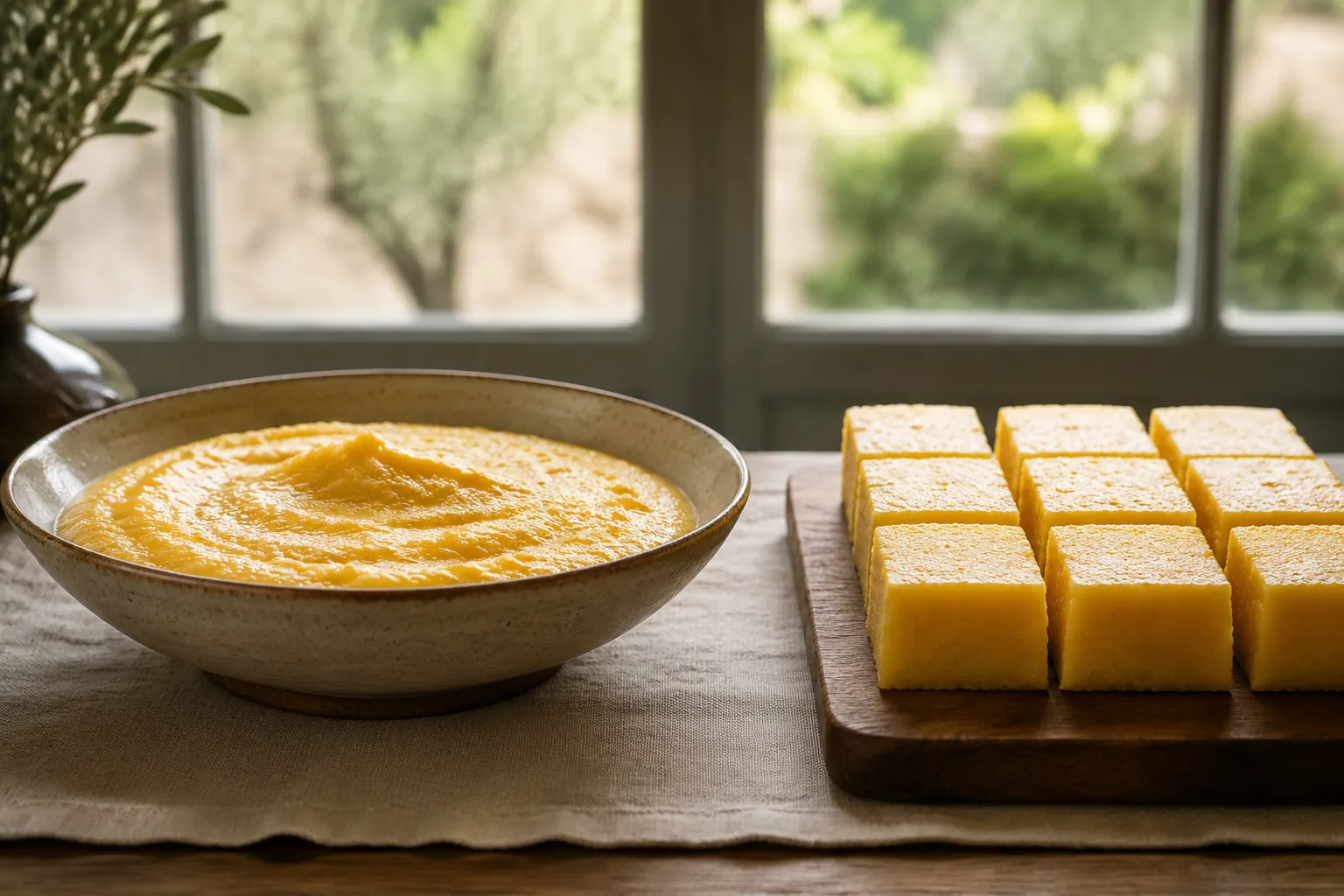
This is where polenta becomes more than a side dish. One batch can be a soft base for dinner tonight and crispy pan-fried squares tomorrow. That flexibility is one reason it belongs in the same weeknight comfort-food category as risotto, mashed potatoes, and creamy beans.
Soft polenta should relax into the bowl rather than stand up in a mound. If it looks too thick, whisk in warm broth, water, or milk a few tablespoons at a time until it loosens. Finish with butter and cheese after the heat is off for the smoothest texture.
This style is ideal under saucy dishes because it catches every drop. Think red wine braised beef, tomato-braised chickpeas, roasted mushrooms, garlicky greens, or a simple fried egg. It is cozy, generous, and perfect for chilly evenings.
Firm polenta starts with a slightly thicker pot, then relies on chilling to set. Pour it into a lightly oiled baking dish or loaf pan while still hot, smooth the surface, and refrigerate until completely cold. Once firm, it can be cut into slabs, cubes, fries, or rounds.
Pan-fry the pieces in olive oil or butter until crisp on the outside and creamy within. Grilled polenta is also lovely, especially with smoky vegetables, pesto, or marinara. The contrast of crunchy edges and tender cornmeal centers is completely irresistible.
Polenta loves bold, saucy companions. Because the base is mellow and lightly sweet, it balances rich meats, earthy mushrooms, sharp cheese, bitter greens, and bright tomato sauces. If you are building a meal, imagine it as the soft landing place for anything you would serve over mashed potatoes or pasta.
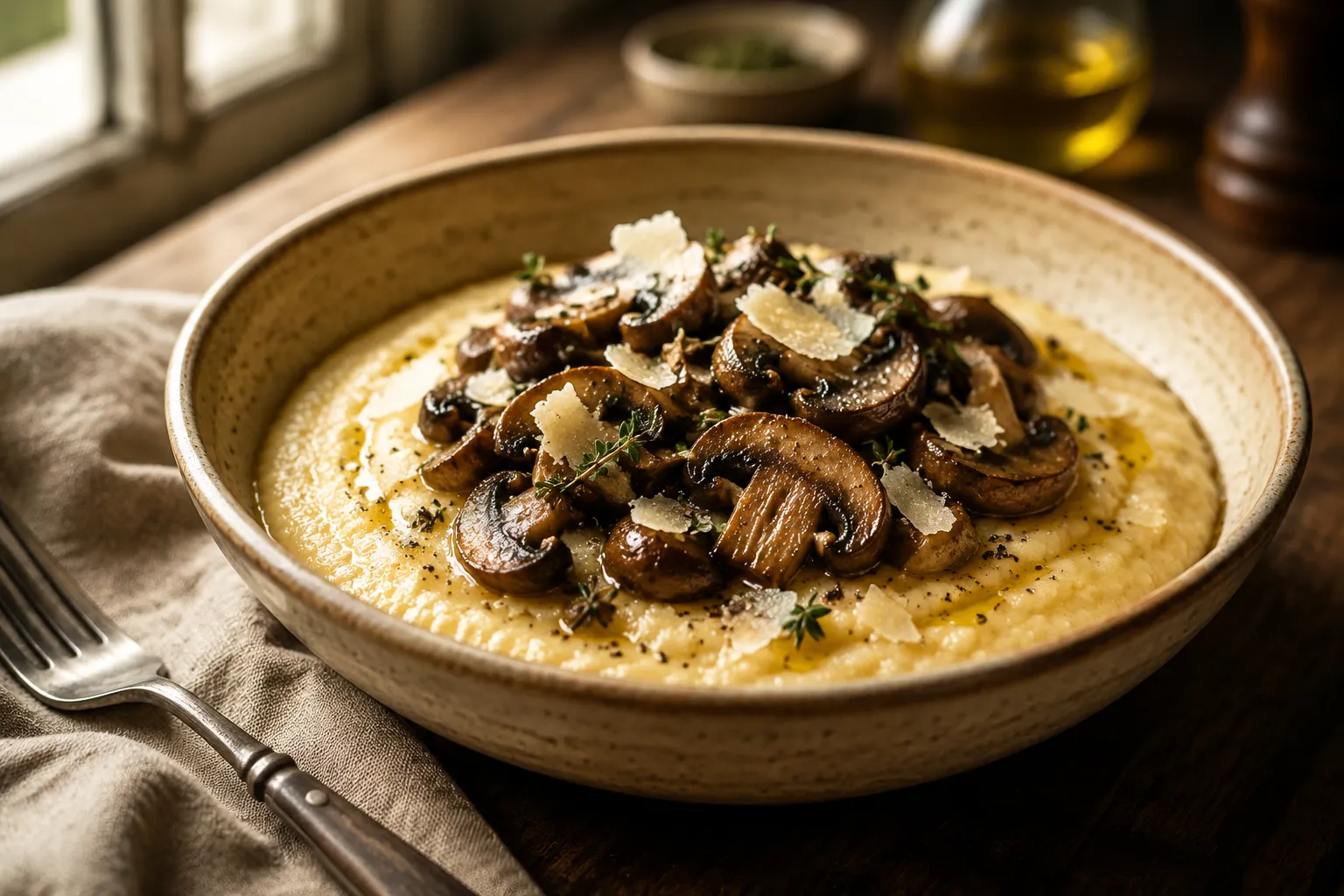
Braised meats are a classic pairing for good reason. Short ribs, pot roast, pork ragù, lamb shanks, and sausage in tomato sauce all settle beautifully into a bowl of polenta. For a vegetarian dinner, top it with roasted mushrooms, white beans, wilted spinach, caramelized onions, or a spoonful of caponata.
Breakfast polenta is underrated, too. Make it with milk, keep it a little looser, and finish with butter, maple syrup, berries, or toasted nuts for a sweet bowl. Or take it savory with a fried egg, cheddar, hot sauce, and sautéed greens.
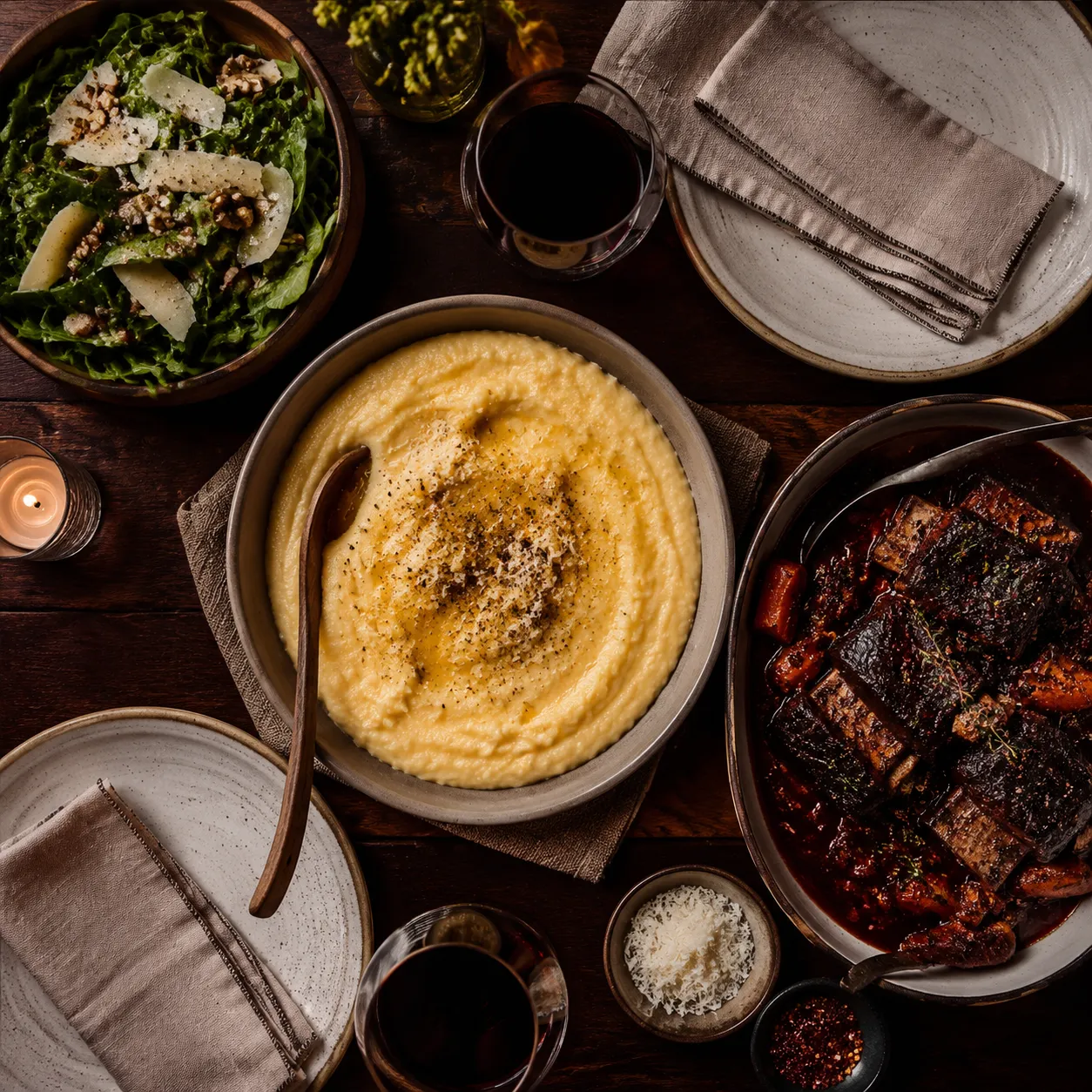
If you enjoy exploring Italian cornmeal dishes, polenta is the gateway to so many comforting meals. It can be rustic or refined, simple or deeply layered, depending on what you put on top. Once you know the basic method, you can use it as a dependable foundation for weeknight dinners, dinner parties, and cozy weekend cooking.
Polenta is especially good with anything slow-cooked and saucy. Spoon it into shallow bowls, make a little well in the center, and ladle the stew right over the top. The edges stay creamy while the center soaks up all those rich juices.
Red wine short ribs, beef stew, chicken cacciatore, and Italian sausage ragù are all beautiful choices. Keep the polenta lightly seasoned if the topping is intense, or add Parmesan and black pepper when you want the base to stand on its own. A final drizzle of olive oil makes the whole bowl feel finished.
For a meatless bowl, sauté mushrooms until deeply browned, then add garlic, thyme, and a splash of balsamic or wine. Spoon them over soft polenta with Parmesan, fontina, goat cheese, or blue cheese. The earthy mushrooms and sweet cornmeal are a perfect cold-weather pairing.
Greens bring freshness and color. Wilted kale, spinach, chard, or broccoli rabe add welcome bitterness that cuts through the richness. Add toasted walnuts, chili crisp, or a poached egg if you want the bowl to feel more complete.
Breakfast polenta can go sweet or savory, which makes it a smart alternative to oatmeal. For sweet bowls, cook it with milk, then add brown sugar, honey, berries, roasted apples, or cinnamon. The texture is creamy and soothing, with just enough corn flavor to feel interesting.
For savory breakfast, reheat leftover polenta with a splash of milk or broth and top with eggs, bacon, greens, and cheese. Firm slices can also be pan-fried until crisp and served like breakfast potatoes. It is a simple way to turn last night’s side dish into a completely new meal.
Polenta continues to thicken as it sits, so do not be surprised if leftovers look solid after chilling. That is normal, and it gives you two good options: revive it into a creamy bowl or slice it for frying. If you want the soft version again, warm it gently with extra liquid and whisk until it loosens.
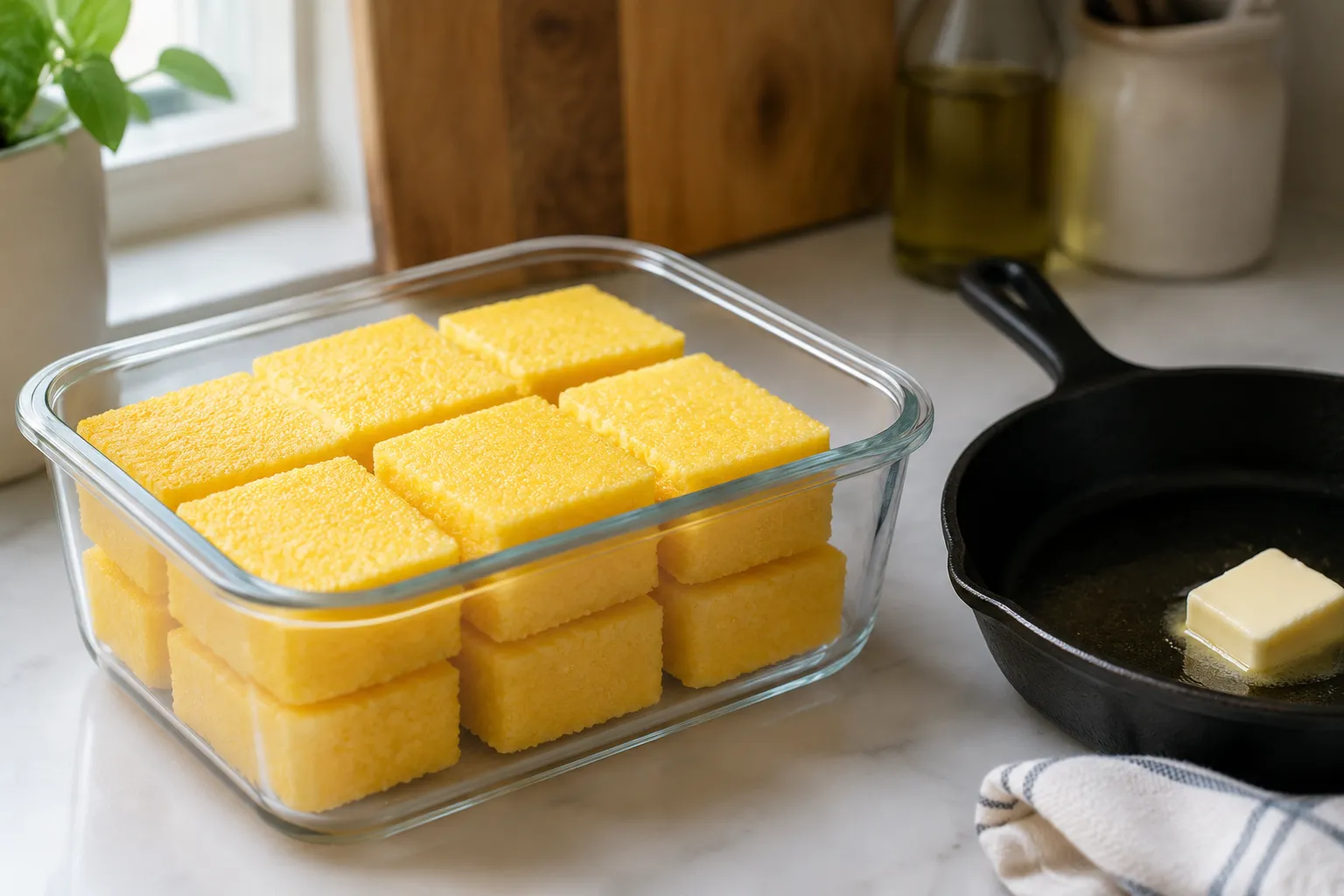
For planned leftovers, spread warm polenta in a shallow container so it cools evenly. The next day, cut it into squares and brown them in a skillet until golden. This little transformation is one of the best reasons to make a full batch, even if you are cooking for a smaller table.
Now that you know what is polenta, the pot is yours to play with. Keep the basic ratio in mind, trust your spoon and your taste buds, and do not rush the grains before they are tender. With a bag of cornmeal and a little butter and cheese, you are never far from a warm, golden bowl of comfort.
Classic Parmesan polenta is only the beginning. Once you master the base, you can shift the flavor with different liquids, cheeses, herbs, and toppings to match the rest of your meal.
Store cooked polenta in an airtight container in the refrigerator for up to 4 days. It will firm up as it chills, which is completely normal; you can either reheat it back into a creamy consistency or slice it once cold.
To reheat soft polenta, warm it gently in a saucepan with a splash of water, broth, or milk, whisking until smooth. For firm leftovers, cut into squares or rounds and pan-fry in butter or olive oil until crisp and golden on both sides.