Easy Quiche Recipes: The Best Classic Food Quiche Recipe
Ingredients
Scale
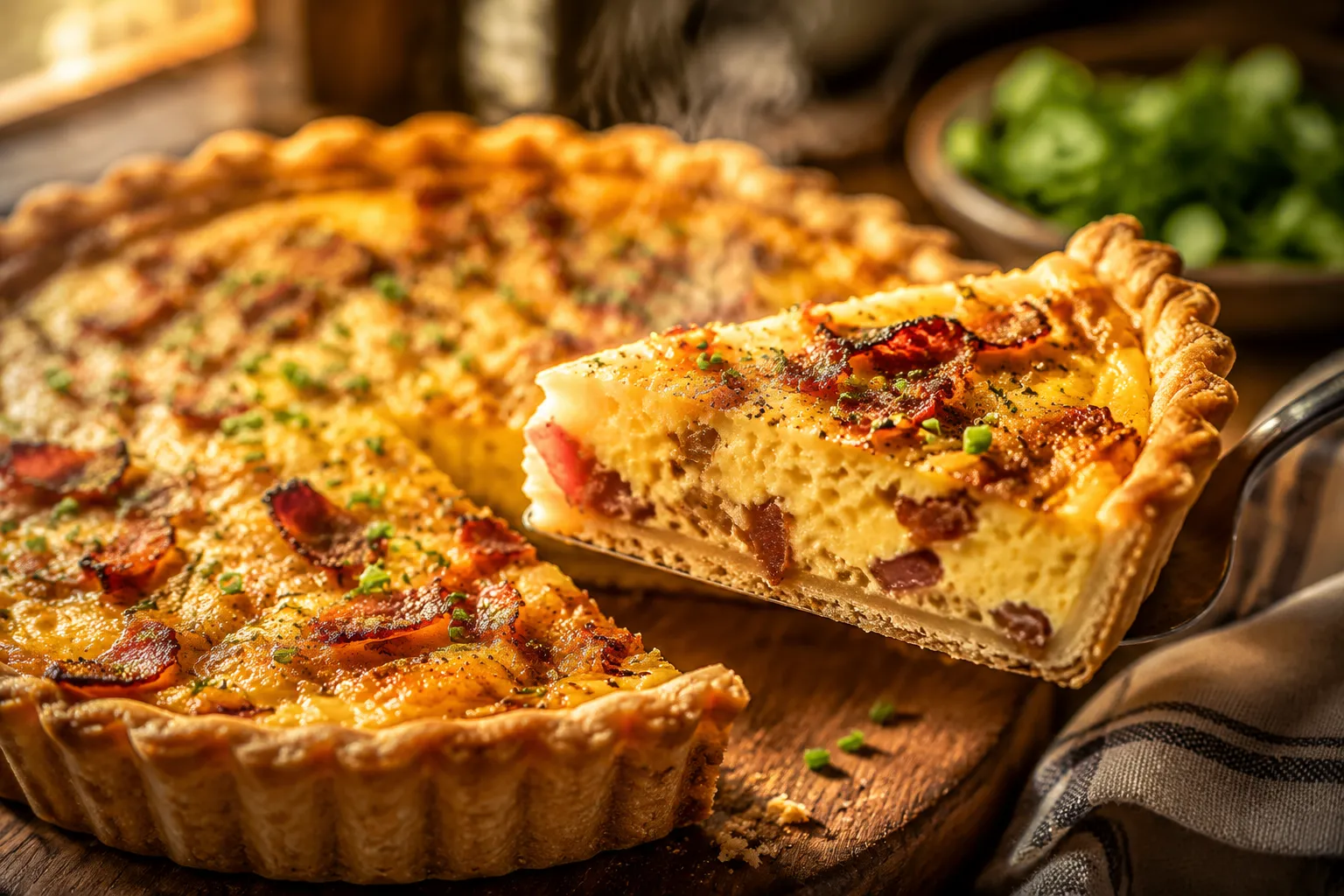
This is the only food quiche recipe you need: a flaky all-butter crust, silky custard filling, and endless mix-and-match flavor options for any meal.
The best food quiche recipes aren't fussy French production numbers — they're a flaky all-butter crust, a silky savory custard, and whatever good cheese and odds-and-ends you happen to have in the fridge. Once you understand the master formula (six eggs, a cup and a half of cream, a fully blind-baked shell), you can make a different quiche every weekend without ever pulling up a new recipe.
This is the version I make on repeat: a classic quiche Lorraine built on smoky bacon, sweet softened onions, and nutty Gruyère, all suspended in a custard so silky it barely holds its shape on the fork. It's the kind of dish that feels equally at home on a Sunday brunch table and sliced cold from the fridge for a Tuesday lunch.
Below you'll find the full master recipe, plus everything I've learned from making quiche dozens of times — the egg-to-cream ratio that never curdles, why blind baking matters, and how to swap fillings without throwing the texture off. Whether you came here looking for a foolproof classic or want to riff your way into spinach quiche territory, this is the only template you'll need.
A great quiche only has a handful of components, which is exactly why each one matters. The crust gives you structure and flake, the custard gives you that just-set jiggle, and the fillings carry the flavor. Get those three right and you have an endlessly riffable formula. Get them wrong and you end up with soggy bottoms, rubbery eggs, or a watery middle. Let's break it down.
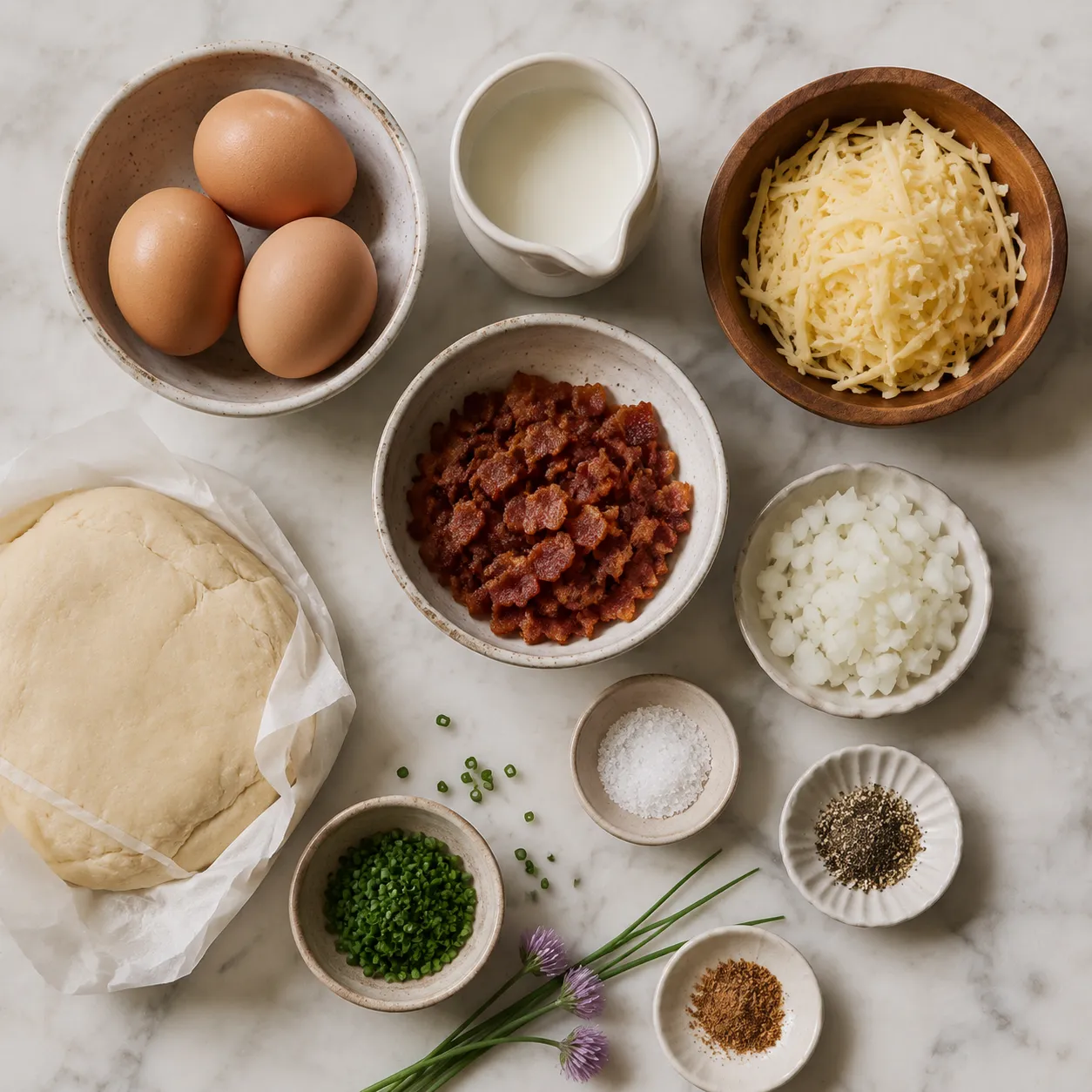
For a truly flaky base, you want a homemade pie crust made with cold unsalted butter, all-purpose flour, a pinch of salt, and just enough ice water to bring the dough together. Cold butter is non-negotiable — those visible flecks are what steam into flaky layers in the oven. Store-bought refrigerated crust works in a pinch and won't ruin anything, but a from-scratch shell tastes noticeably more like the bakery version. You can mix the dough by hand, with a pastry cutter, or pulse it in a food processor in under a minute.
The egg custard is the soul of the dish. My ratio is six large eggs to one and a half cups of heavy cream, which lands right in the silky-but-sliceable sweet spot. Whole milk or half-and-half will work, but the texture turns lighter and a little wobblier. Always season the custard generously: kosher salt, freshly cracked black pepper, and a tiny pinch of nutmeg, which sounds optional but is the secret handshake of a properly seasoned quiche.
Aim for about one and a half cups of cooked, well-drained add-ins per nine-inch pie. For the classic version, that's crisp bacon, softened onion, and shredded Gruyère. But this is also where you make it your own: sautéed mushrooms and Swiss, wilted spinach and feta, diced ham and sharp cheddar, or a pile of roasted vegetables. The key word is cooked — raw vegetables release water as they bake and will leave you with a watery custard.
Quiche has a reputation for being temperamental, but most of that comes down to two things: a soggy crust and an over-baked custard. The good news is both are easy to avoid once you know what to watch for. Here's the rhythm I use every single time, broken into the four stages that matter most.
Start the dough first because it needs to rest. Cut cold butter into the flour until you have pea-sized pieces, drizzle in just enough ice water to bring it together, and pat it into a flat disc. Wrap and refrigerate for at least one hour (overnight is even better). This rest hydrates the flour evenly and lets the gluten relax so the crust rolls out without snapping back.
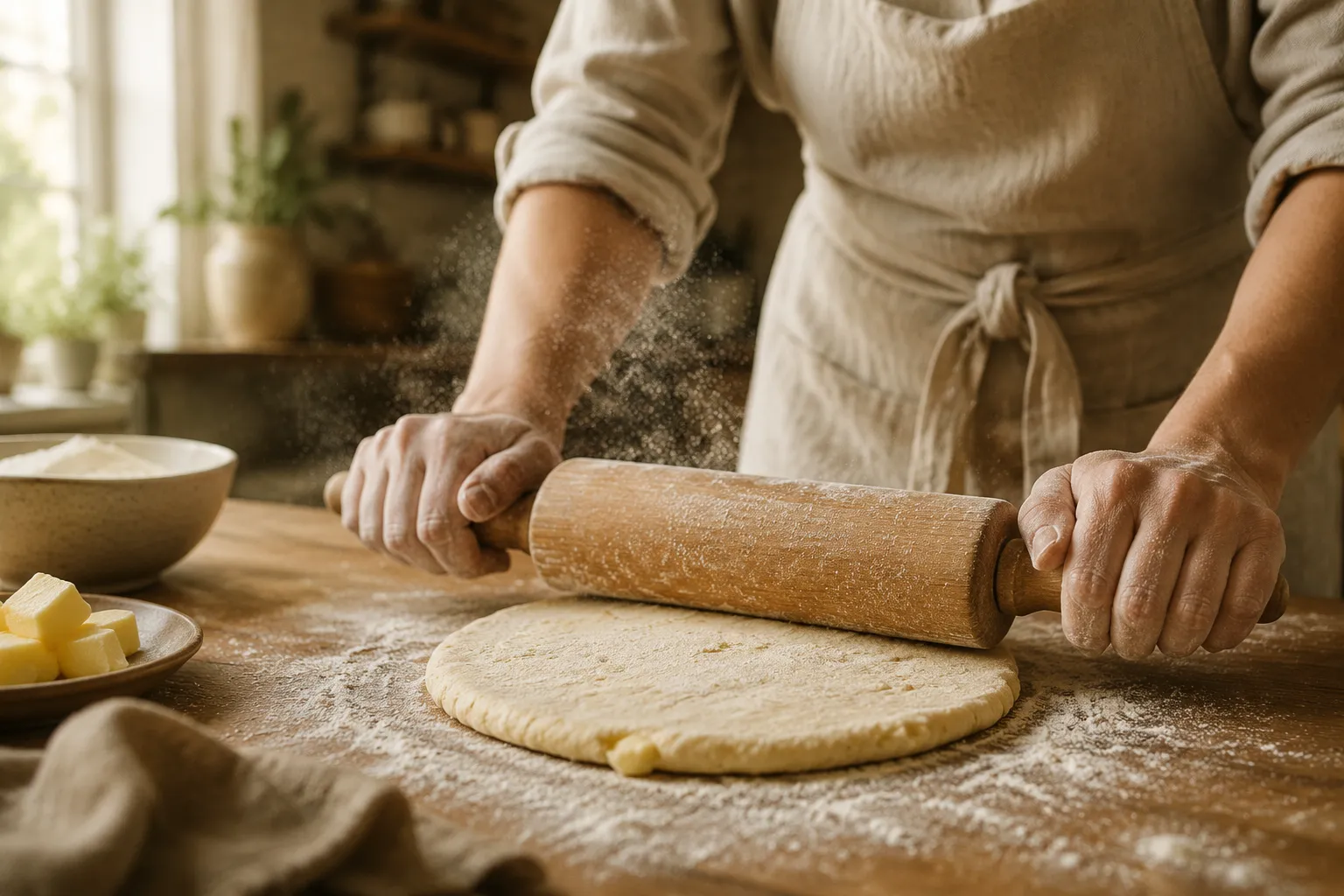
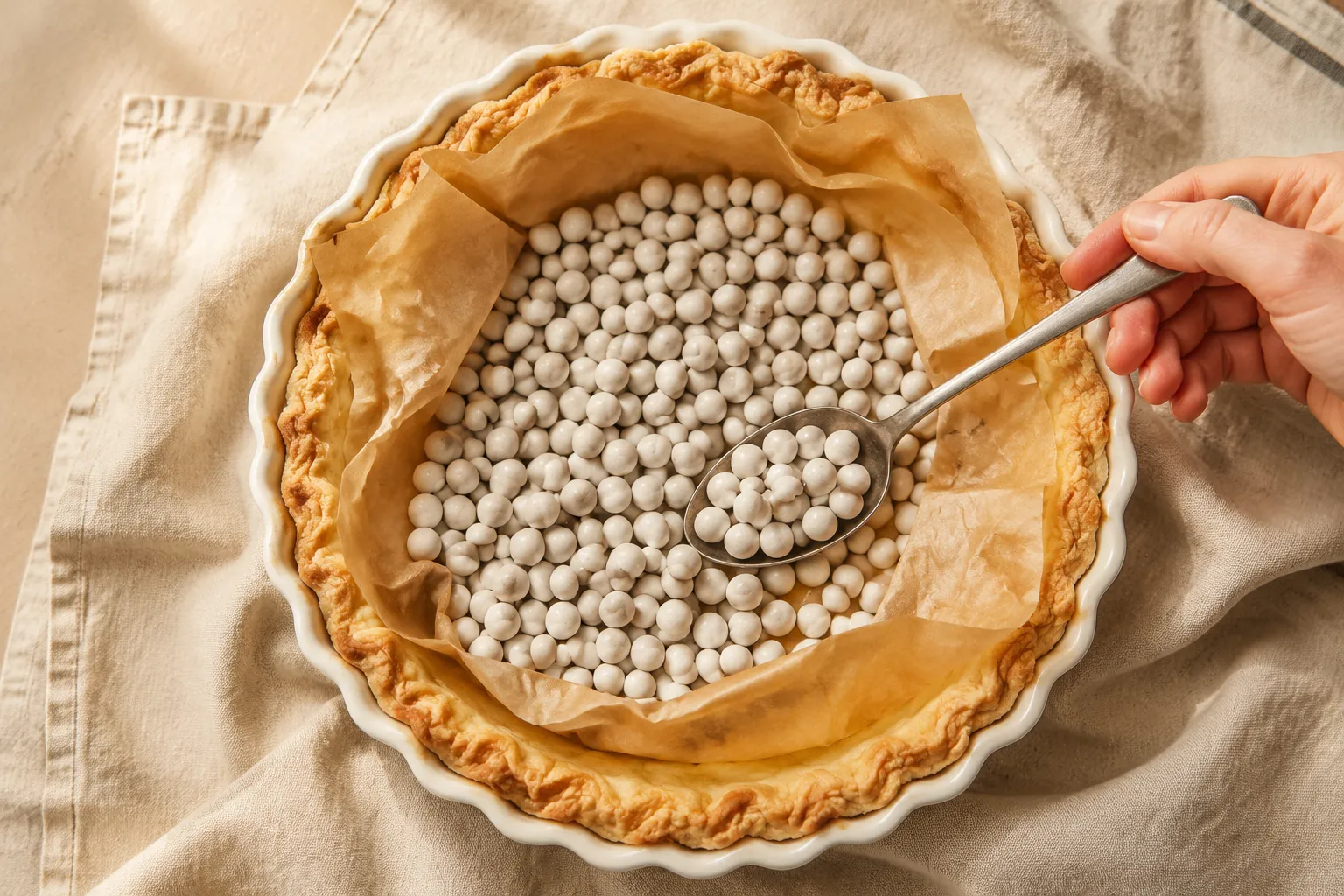
Roll the chilled dough into a 12-inch round, ease it into a 9-inch pie or tart pan, crimp the edges, and freeze for 15 minutes while the oven heats to 400°F. Line the shell with parchment, fill it to the brim with pie weights or dried beans, and blind bake for 15 minutes. Remove the weights and parchment, then bake another 5 to 7 minutes until the bottom is dry and just starting to color. This step is what guarantees a crisp, flaky base under all that custard.
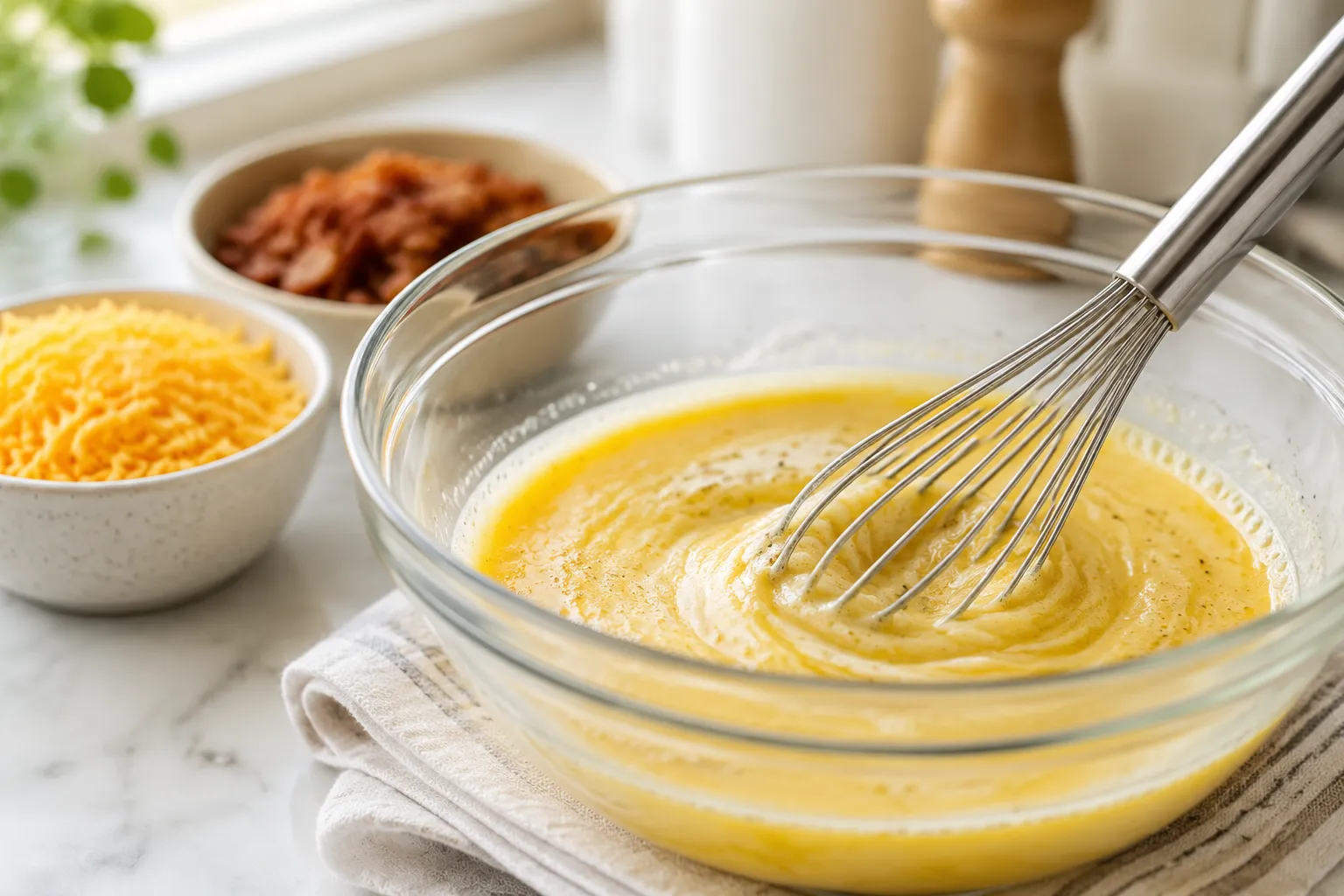
While the crust cools, cook the bacon until crisp, then sauté the onion in a little of the rendered fat until soft and golden. Whisk the eggs, cream, salt, pepper, and nutmeg in a large measuring cup until completely smooth — no streaks of white. Scatter the cooled bacon, onions, and shredded Gruyère evenly across the par-baked crust.
Lower the oven to 350°F. Set the filled pie shell on a rimmed baking sheet (it makes transport infinitely easier) and slowly pour the custard over the fillings until it reaches just below the top of the crust. Bake for 35 to 45 minutes, until the edges are puffed and set but the center still has a faint jiggle when you nudge the pan. It will continue to set as it rests.
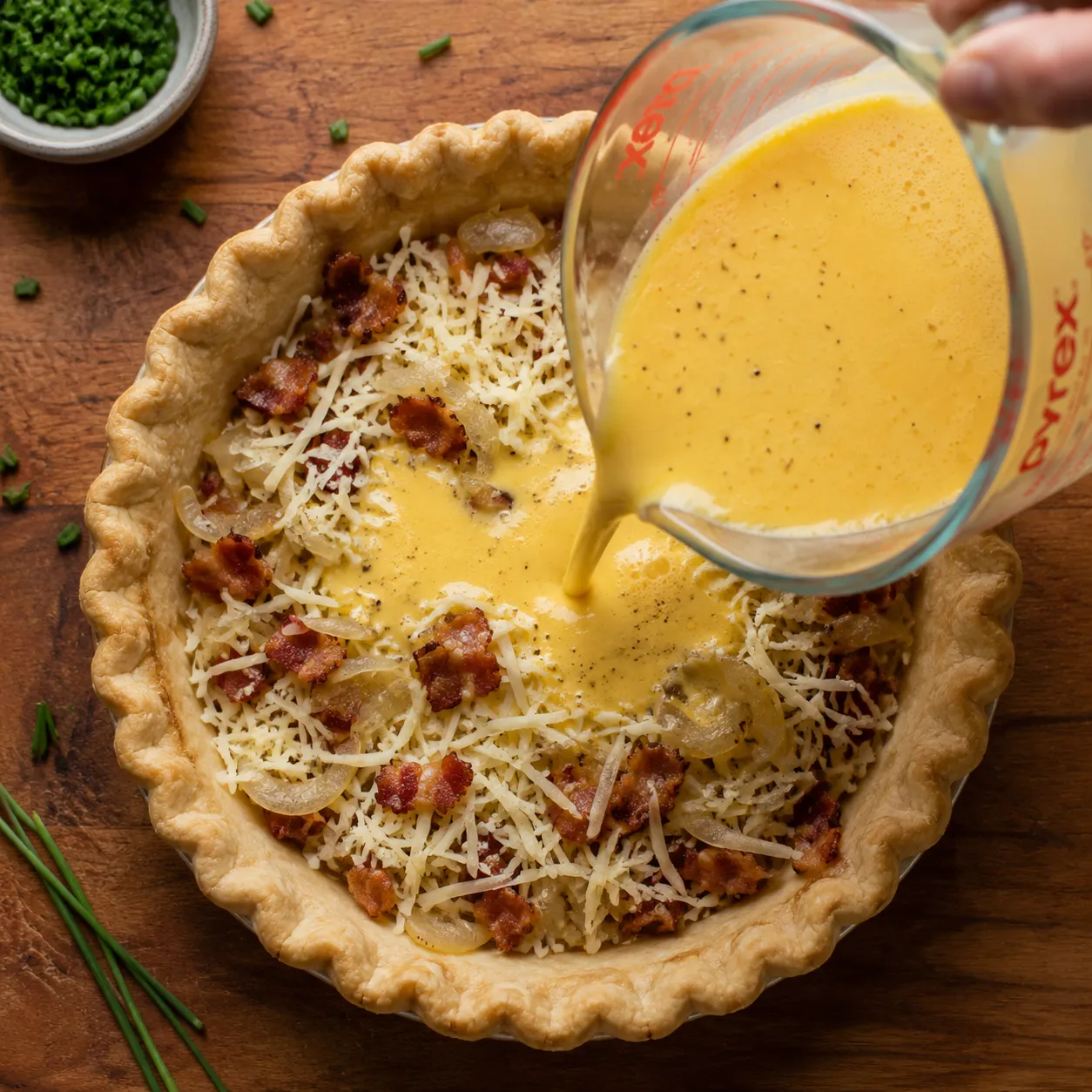
The reason this classic quiche turns out the same way every time comes down to ratio and temperature. Six eggs to one and a half cups of cream gives you a custard that's rich enough to slice cleanly but never bouncy or rubbery. A 350°F oven (rather than the 400°F you'd use for the crust) keeps the eggs from seizing up and cracking on top. And blind baking is the single biggest upgrade most home cooks can make — it's the difference between a pastry shell with shatter-crisp layers and one that turns to wet cardboard under the filling.
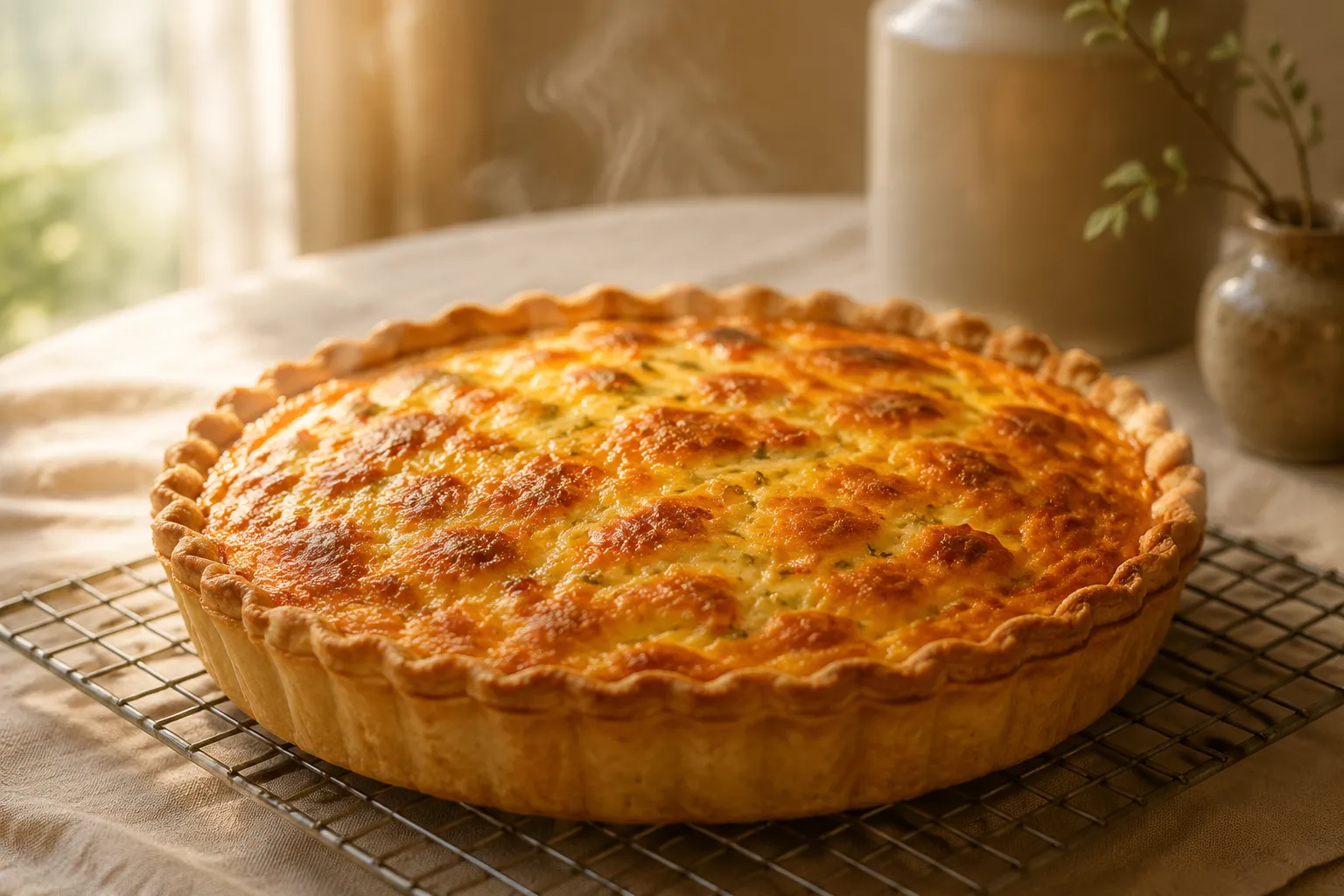
This template scales beautifully across the most-loved food quiche recipes you'll find anywhere: bacon and Gruyère for the bistro classic, mushroom and Swiss for something earthy, ham and cheddar for the kid-friendly version, or a bright spinach quiche when you want something a little greener on the table. The crust, custard, and bake time stay the same. Only the cup and a half of cooked add-ins change.
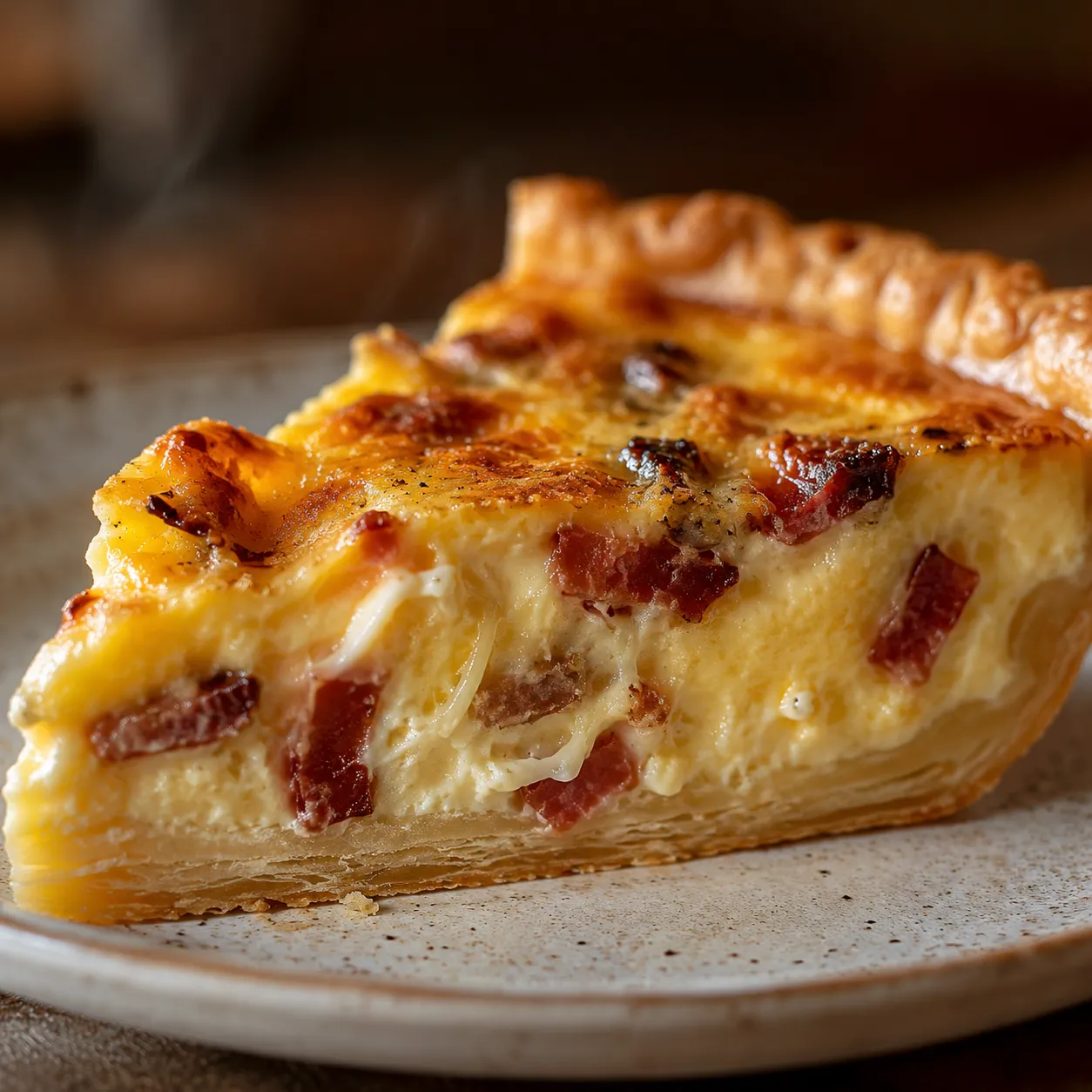
It's also one of the most useful make-ahead breakfast options I keep in rotation. A whole quiche bakes in about an hour total, slices into eight tidy wedges, and reheats beautifully for grab-and-go mornings throughout the week. If you're someone who batch-cooks egg bake recipes for the freezer, this one slots right into that habit with the bonus of an actual buttery crust.
Because the filling is so rich, the best partners for a slice of classic quiche are bright, acidic, and crunchy. A simple arugula salad dressed in lemon vinaigrette is the move I default to nine times out of ten — it cuts the cream beautifully and takes about ninety seconds to throw together. Other favorites include a shaved fennel and citrus salad, blistered cherry tomatoes, or a pile of buttery roasted asparagus when it's in season.
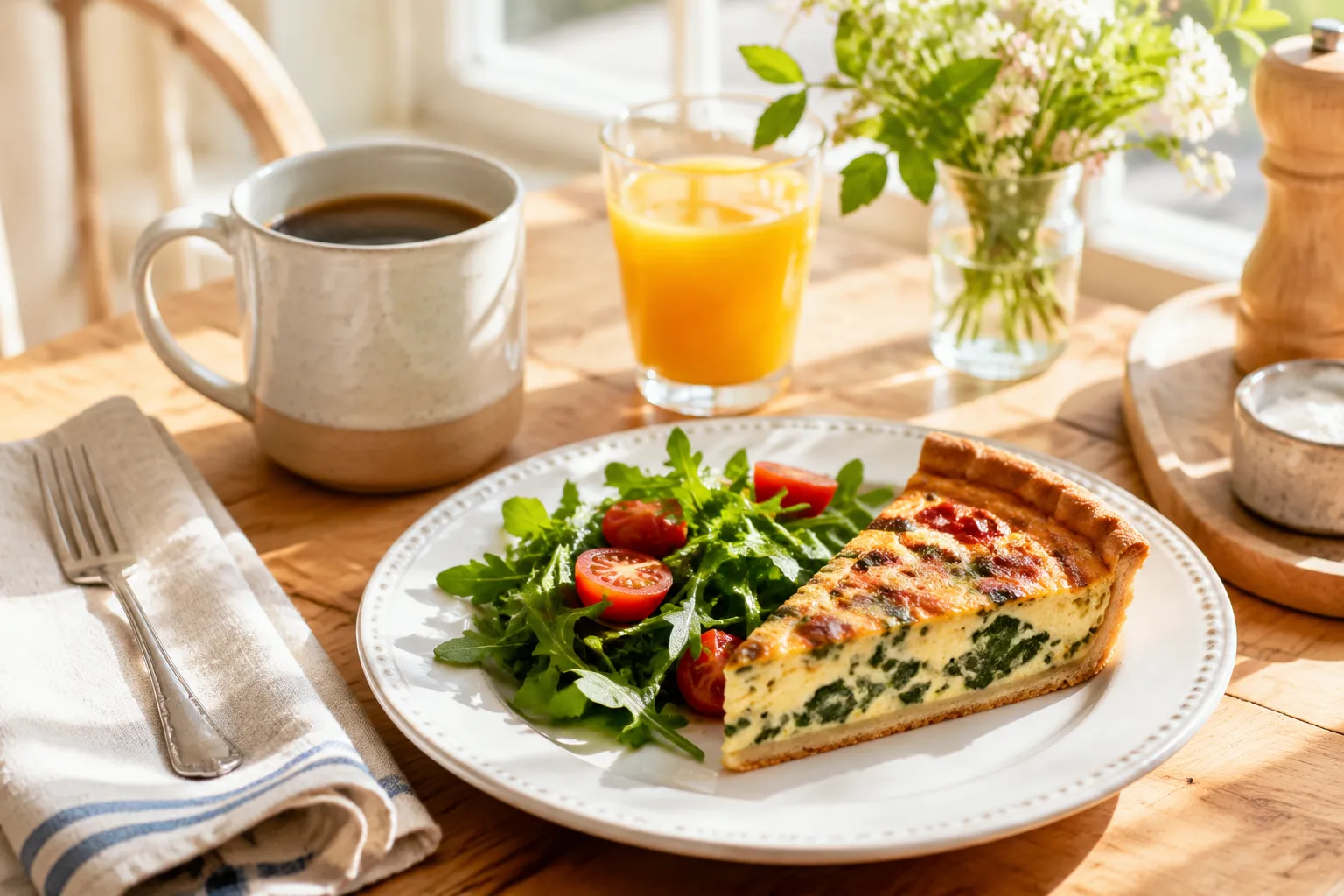
For a fuller spread, lean into easy brunch recipes that play well with eggs: a bowl of fresh fruit, crispy breakfast potatoes, or warm scones with jam. On the drink side, mimosas and a strong pot of coffee are the obvious calls, but a peppery Bloody Mary or a pitcher of iced hibiscus tea can take things in a more interesting direction. And if you're serving quiche for a light dinner, a bowl of tomato soup or a chilled cucumber gazpacho turns a single slice into a complete, satisfying meal.
However you slice it (literally), once you've made this master version a few times, you'll start seeing quiche the way a French home cook does — less of a precious project, more of a smart, flexible way to use up what's already in the fridge. That's the real magic of a good food quiche formula: it adapts to your week instead of demanding you adapt to it.
Once you have the master ratio down, swapping fillings is the fun part. Use about 1½ cups of cooked, well-drained add-ins total per 9-inch quiche, and keep the custard exactly the same.
Cooled quiche keeps beautifully in the refrigerator for up to 3 days. Wrap the whole pie tightly in foil or transfer slices to an airtight container. To reheat, place individual slices on a baking sheet and warm at 325°F for 10 to 15 minutes, or until heated through. The microwave works in a pinch (about 60 seconds per slice) but the crust will soften.
For longer storage, freeze fully baked and cooled quiche, either whole or pre-sliced, wrapped tightly in plastic and then foil for up to 2 months. Thaw overnight in the fridge before reheating, then warm covered with foil at 325°F for 20 to 25 minutes. Cover loosely with foil while reheating to keep the custard from drying out and the edges from over-browning.