Dutch Baby Recipe: Puffy, Golden German Pancake
Ingredients
Scale
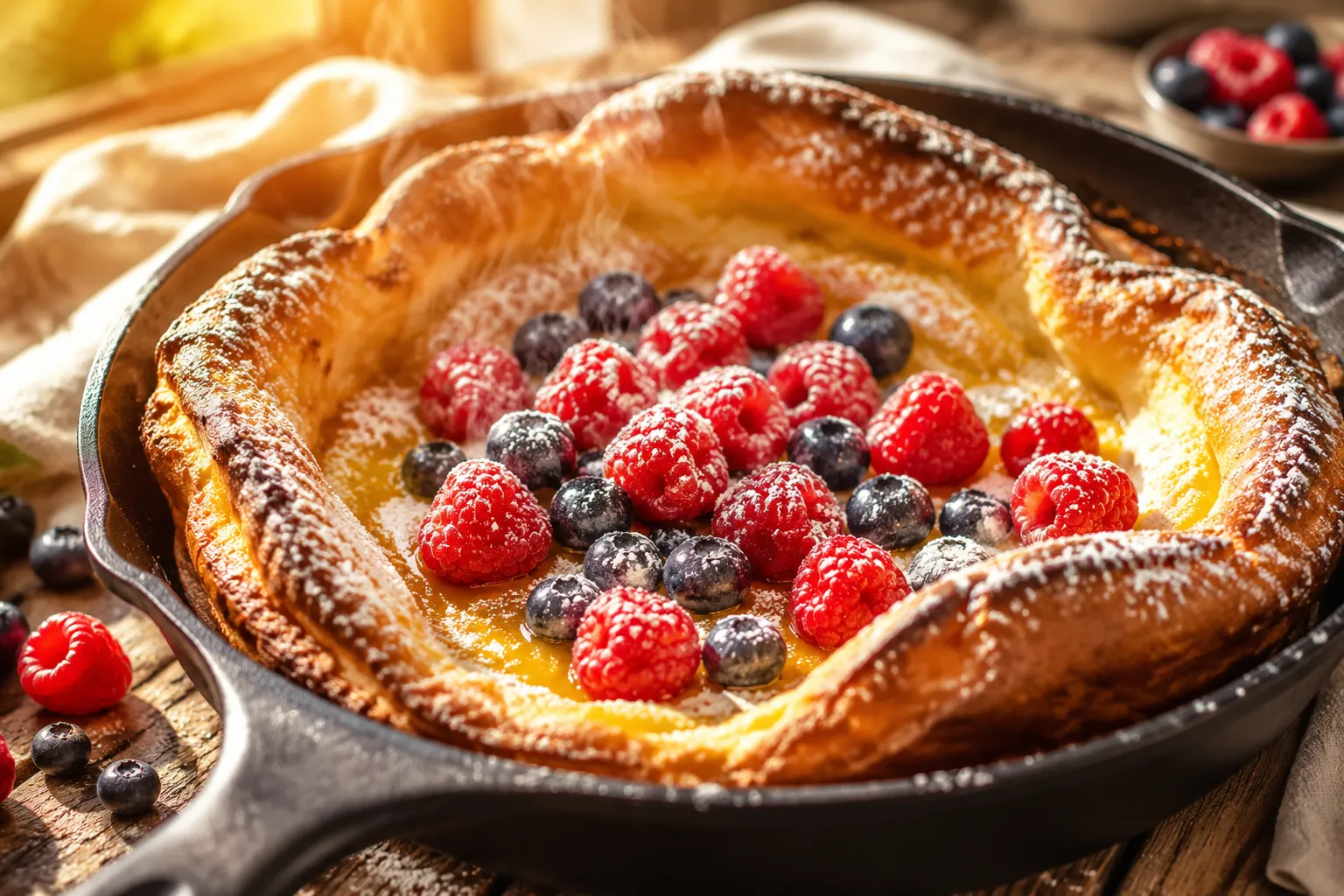
A foolproof Dutch baby recipe that puffs sky-high every time. Crisp golden edges, custardy center, and just 5 minutes of hands-on prep in one skillet.
This dutch baby recipe is the kind of breakfast magic that makes a regular Saturday morning feel like a table-by-the-window brunch reservation. You pour a thin, silky batter into a sizzling hot pan, slide it into the oven, and 20 minutes later out comes a towering, golden puffy pancake with crisp edges and a tender, custardy middle.
The best part is how humble the ingredient list is: eggs, milk, flour, sugar, salt, vanilla, and butter. It tastes special, but it is really just pantry staples behaving beautifully under high heat. Serve it straight from the skillet with lemon and powdered sugar, a handful of berries, or a drizzle of maple syrup, and you have a brunch centerpiece with very little hands-on work.
If you have ever made a German pancake, Yorkshire pudding, or even popovers, the method will feel familiar. The batter is loose and eggy, more like popover batter than traditional pancake batter, and the steam from the hot oven is what gives it that dramatic lift. Think of this as the easiest cast iron breakfast to keep in your back pocket when you want something impressive but low-stress.
A Dutch baby is a large oven-baked pancake, usually made in a cast iron skillet, that rises dramatically around the edges while staying soft and custardy in the center. Unlike regular pancakes, it is not cooked in batches on a griddle, and there is no flipping involved. The batter is very thin, with a higher egg ratio, which helps create steam and structure as it bakes. The result lands somewhere between a crepe, a popover, and a classic breakfast pancake.
Despite the name, the dish is closely related to a German pancake rather than a Dutch one. The “Dutch” part is often traced to an Americanized pronunciation of “Deutsch,” and the version we know today became popular in Seattle in the early 1900s. However it got its name, the appeal is timeless: one pan, a few ingredients, and a showy rise that makes everyone peek through the oven door. It will deflate a little after baking, and that is exactly what it is supposed to do.
The ingredient list is short, so each piece matters. Eggs provide structure and richness, whole milk gives the batter body, flour creates the delicate interior, and a spoonful of sugar encourages browning without making the pancake overly sweet. Vanilla is optional but lovely, especially if you are serving the pancake with fruit, while kosher salt keeps the flavor balanced. Butter does double duty by flavoring the pancake and helping the edges fry against the pan as they climb.
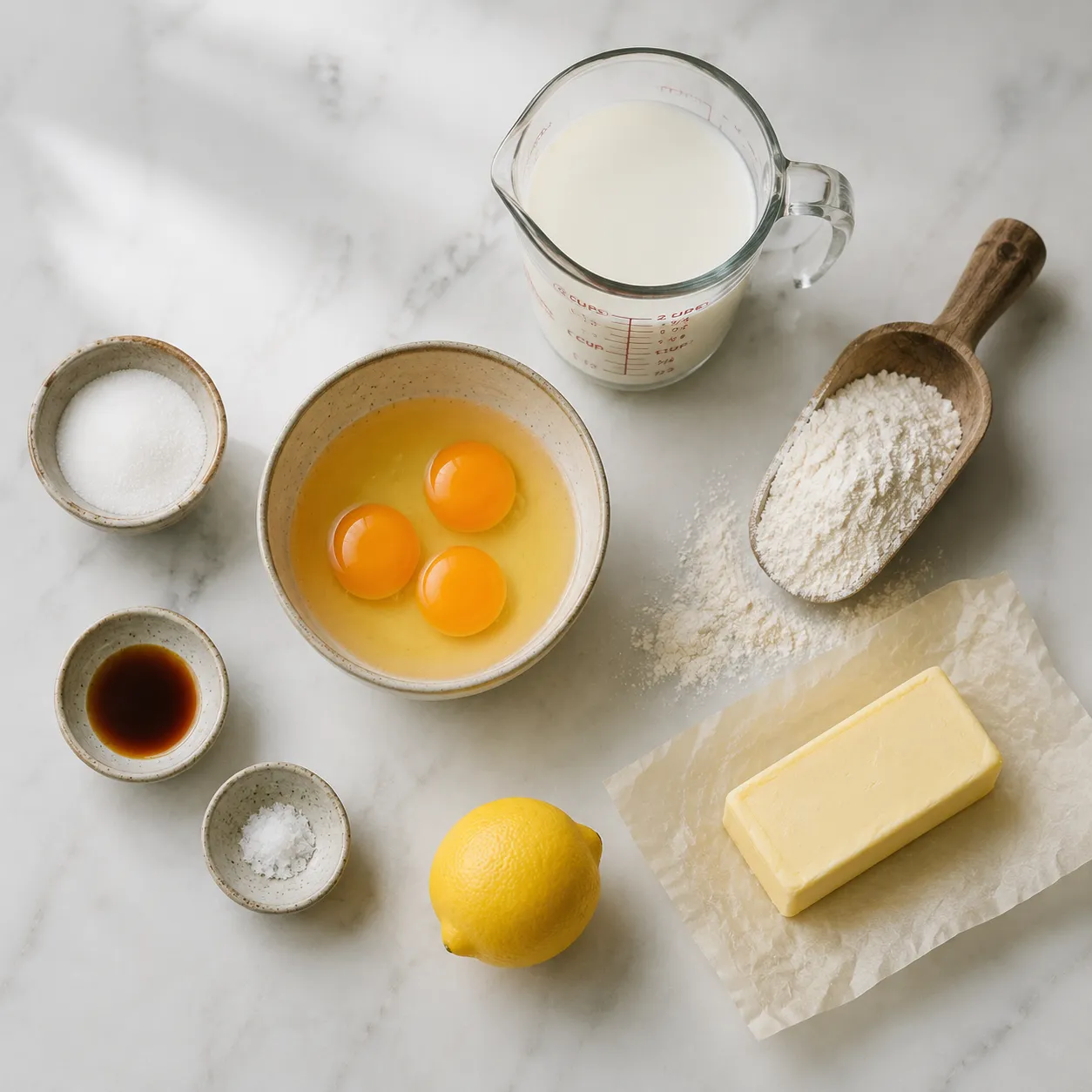
For the best rise, use room temperature eggs and room-temperature milk. Cold ingredients can slow down the oven spring, especially when the batter hits the preheated skillet. If you forget to set them out, place the eggs in a bowl of warm water for 5 minutes and microwave the milk briefly just until it loses its chill. You do not want hot milk, only milk that is no longer refrigerator-cold.
This dutch baby recipe is intentionally classic, but the base takes well to small flavor additions. A pinch of cinnamon, a little lemon zest, or a few drops of almond extract can change the personality without affecting the rise. Keep heavier mix-ins out of the batter itself; fruit, cheese, and cooked meats are better added after baking or scattered lightly near the end. Too much weight in the pan can prevent the pancake from climbing as high.
The skillet is not just a vessel here; it is part of the leavening strategy. A cast iron skillet holds heat incredibly well, which means the batter starts cooking the second it hits the butter. That instant heat creates steam, the steam pushes the batter upward, and the hot sides of the pan help set those rippled, golden walls. A 10-inch skillet gives you the most dramatic puff, while a 12-inch skillet makes a slightly thinner pancake with broader crisp edges.
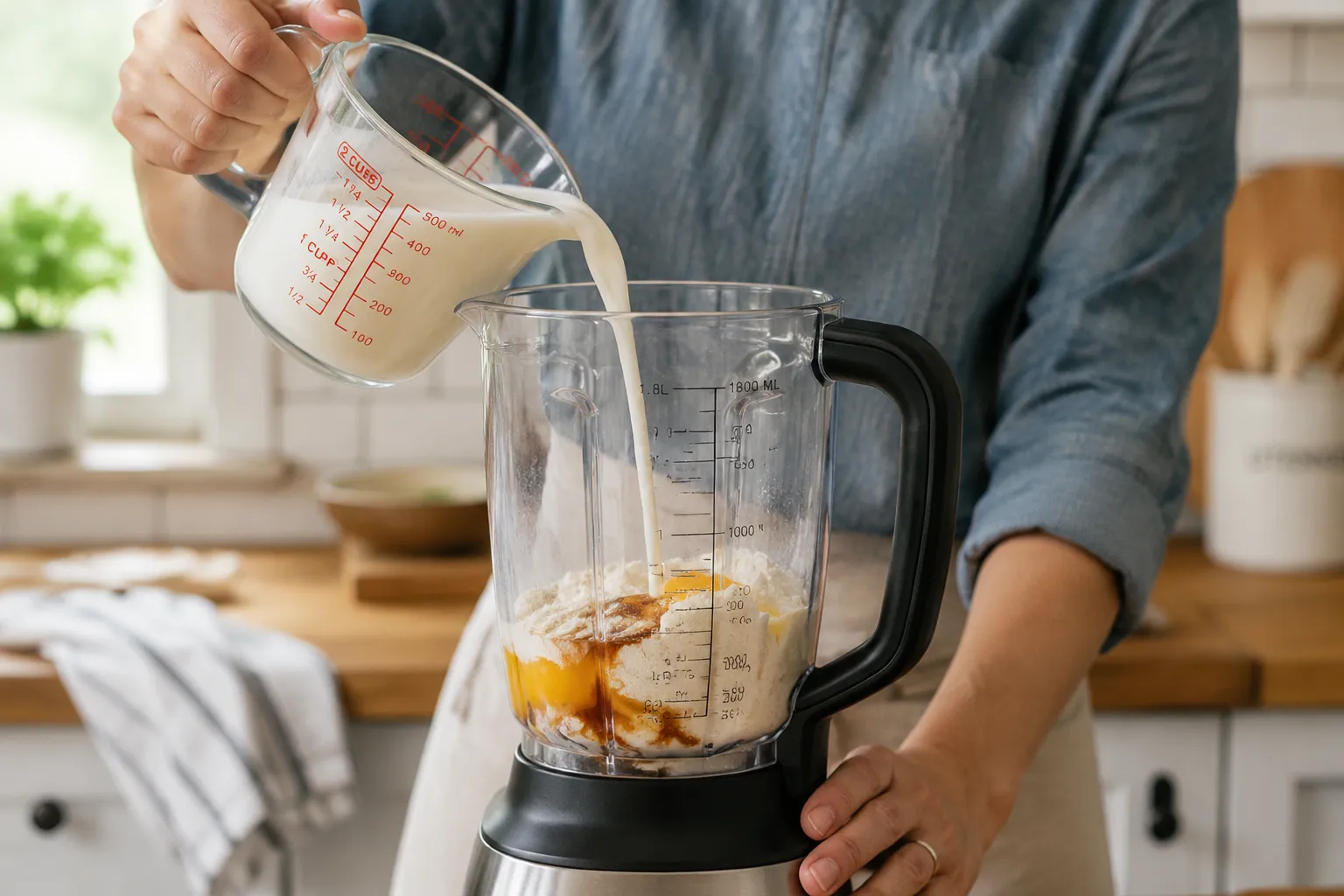
Blending the batter is the easiest way to make it completely smooth. A blender breaks up the flour quickly and aerates the mixture just enough, without requiring a long rest. You can whisk by hand in a bowl, but you will need to be thorough, because lumps of flour can bake into dense spots. The finished batter should look pourable and pale yellow, similar to heavy cream.
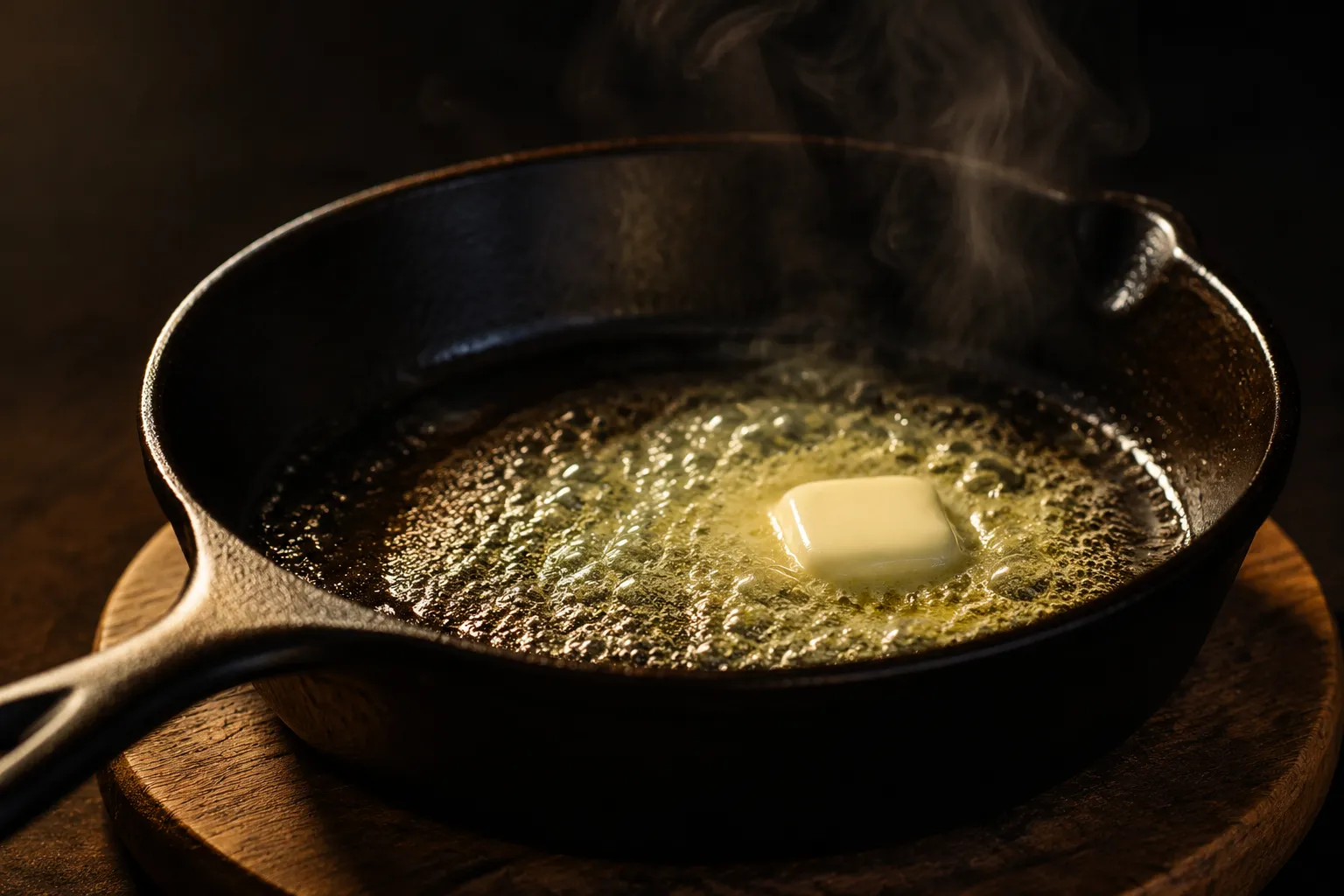
While the oven heats, place the empty skillet inside so it becomes truly hot. This step is the difference between a pancake that lazily rises and one that billows up the sides like a golden crown. Once the pan is hot, add the butter and swirl it so the bottom and lower edges are coated. The butter should foam and smell nutty almost immediately, but it should not scorch.
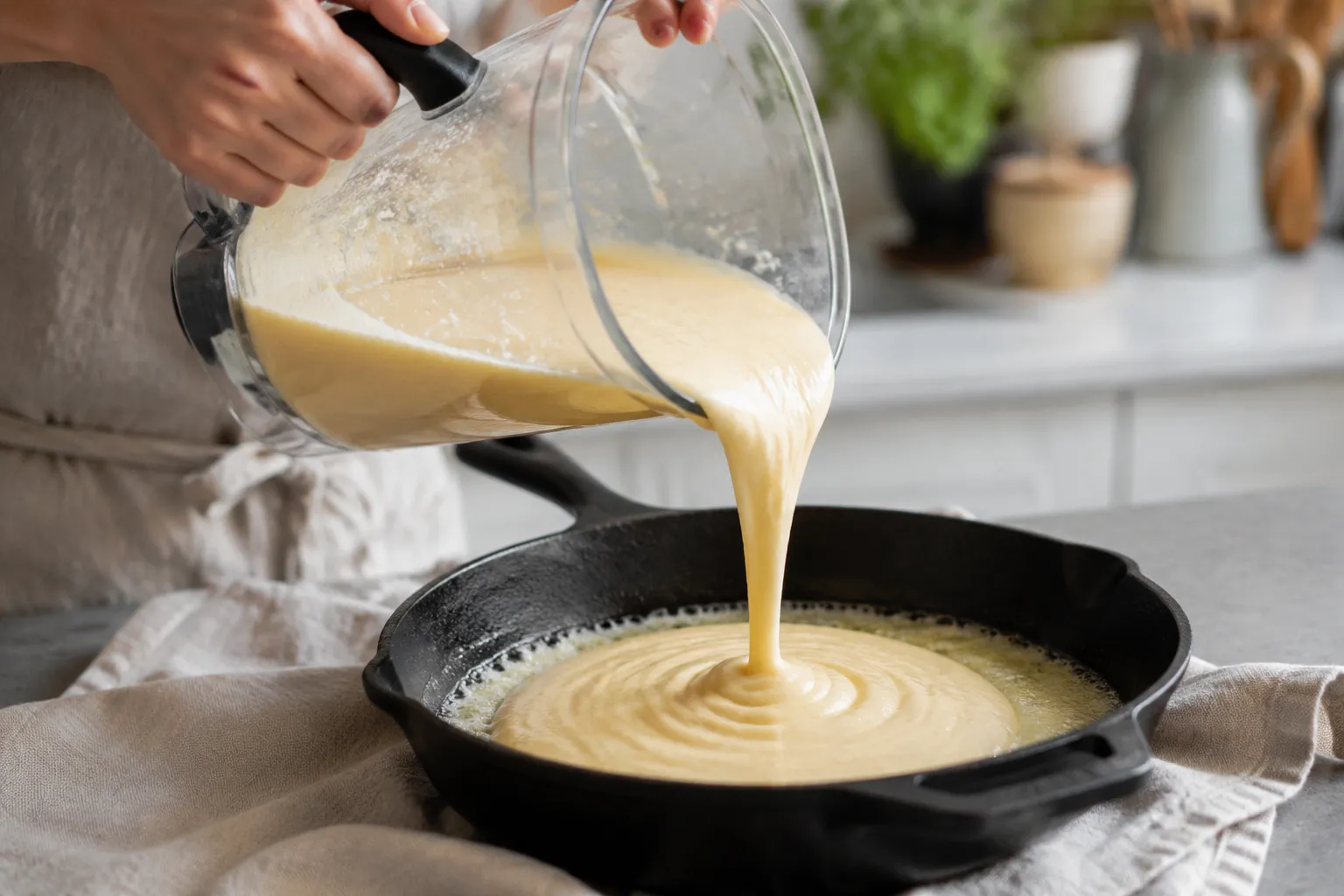
Pour the batter in all at once and move the pan directly back to the oven. Work carefully but quickly, because every second the skillet sits on the counter it loses heat. The batter may swirl through the foaming butter, and that is a good thing; those buttery pockets become the crispest bites. From here, the oven does the work.
High heat is what gives this pancake its signature shape. As the batter bakes, the edges puff first, then climb, brown, and curl, while the center stays lower and custardy. Avoid opening the oven door during the first 15 minutes, even if you are tempted to check on the rise. A sudden drop in temperature can interrupt the steam and cause the pancake to settle early.
You will know it is ready when the edges are deep golden, the center looks set but still tender, and the whole pancake is dramatically inflated. The exact bake time can vary by oven and skillet size, but most land right around 18 to 20 minutes. If the edges are browning too quickly before the center sets, your oven may run hot; make a note and reduce the temperature slightly next time. For this dutch baby recipe, color is your best cue, not just the timer.
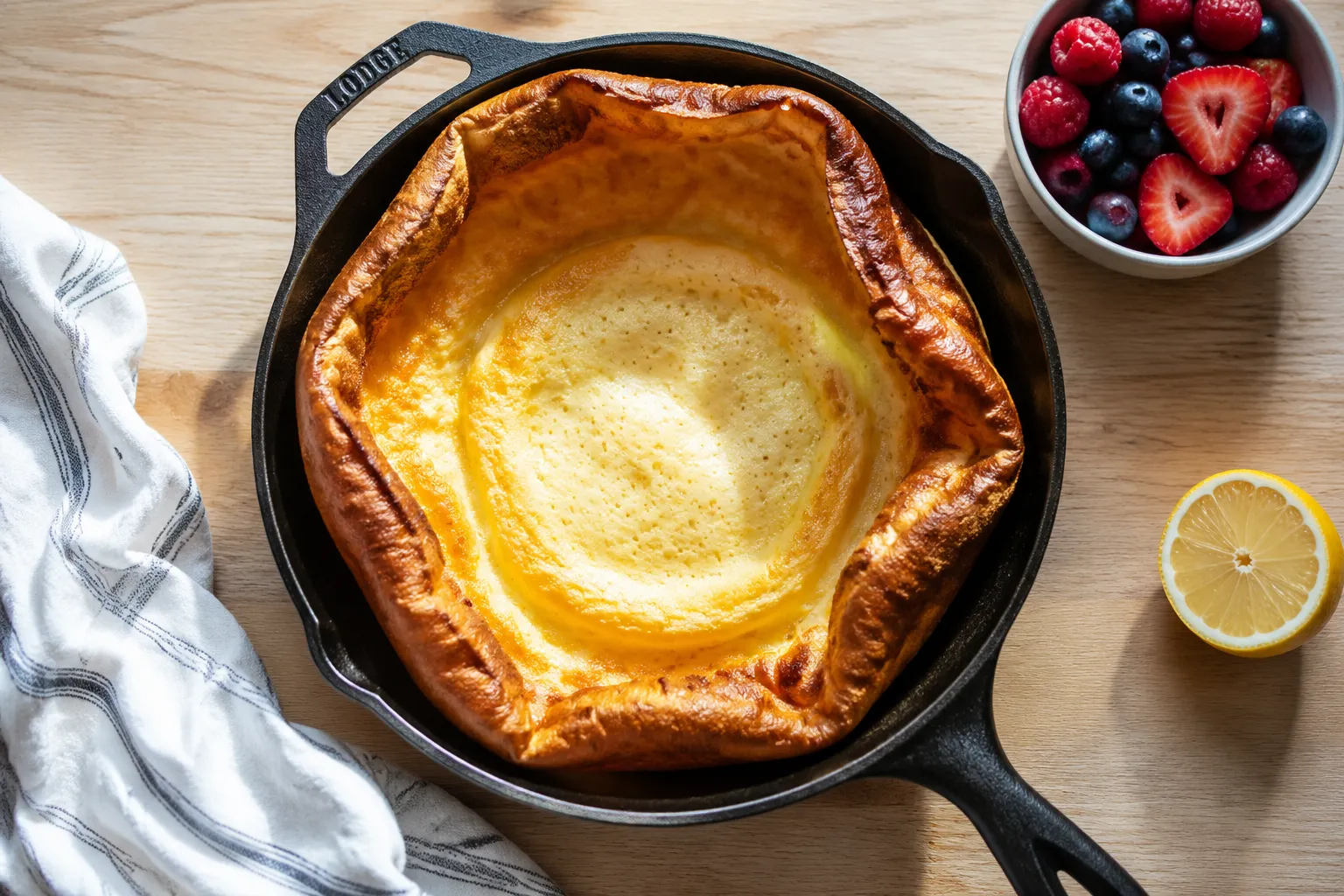
Expect the pancake to sink a bit once it leaves the oven. That collapse is part of its charm and creates the perfect bowl-like center for toppings. Bring it to the table while still hot, because the contrast of crisp edges and warm custardy center is best right away. A dusting of sugar over the ridges makes it look bakery-level with almost no effort.
The texture is the reason people fall hard for this dish. The outside is lacy and crisp, almost like the edge of a buttery crepe, while the interior stays soft, rich, and slightly eggy in the best way. It is not supposed to taste like a fluffy buttermilk pancake; it has a different kind of drama. If you love popovers or custards, that tender center is the prize.
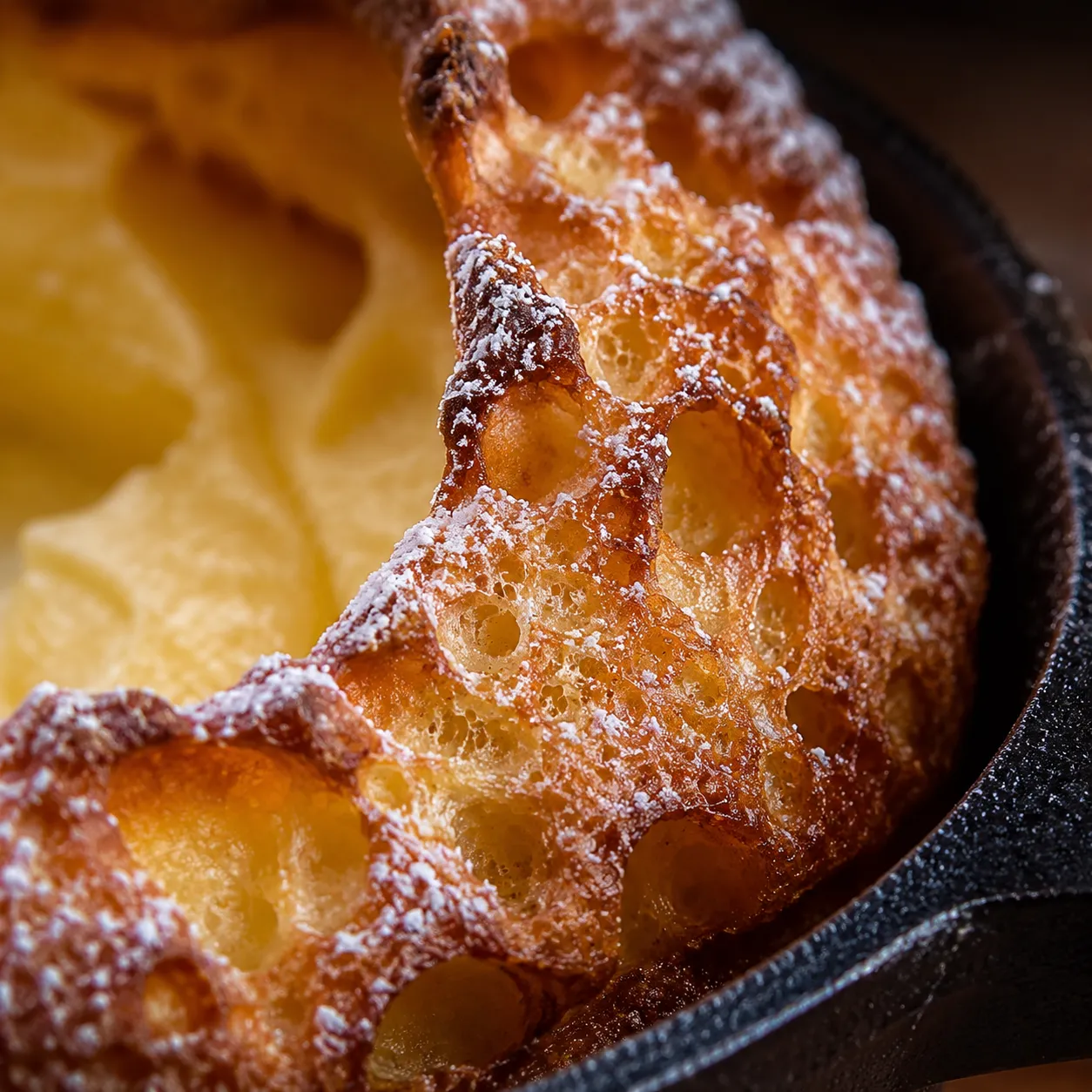
The ratio matters, too. Equal volumes of flour and milk keep the batter light enough to rise but sturdy enough to hold its shape. Eggs bring elasticity, while butter gives the skillet-fried edges their shatter and aroma. When all of those pieces meet a preheated skillet, you get the signature contrast: crisp rim, soft middle, and a little buttery chew where the pancake meets the pan.
Because the flavor is simple, toppings really shine. Lemon and powdered sugar are the classic choice because the citrus cuts through the richness and the sugar melts into the warm surface. Fresh berries add brightness, whipped cream makes it dessert-like, and maple syrup turns it cozy and familiar. If you like breakfast dishes that can lean sweet or savory, this one gives you plenty of room to play.
For a classic finish, squeeze fresh lemon juice all over the hot pancake, then shower it with powdered sugar. The sugar dissolves into the buttery surface, the lemon wakes everything up, and the whole skillet tastes clean, rich, and bright at once. Add raspberries, blueberries, or sliced strawberries if you want color and freshness. This is the version I make most often because it feels special without needing a sauce.
If you are building a fuller brunch menu, pair slices with bacon, sausages, fruit salad, and strong coffee. A pitcher of homemade buttermilk syrup is wonderful for a sweeter table, especially if you are serving kids or anyone who loves caramel-like breakfast sauces. For more brunch ideas, set out bowls of toppings and let everyone dress their own wedge. This also makes the pancake feel interactive and relaxed, which is exactly the mood I want on a weekend morning.
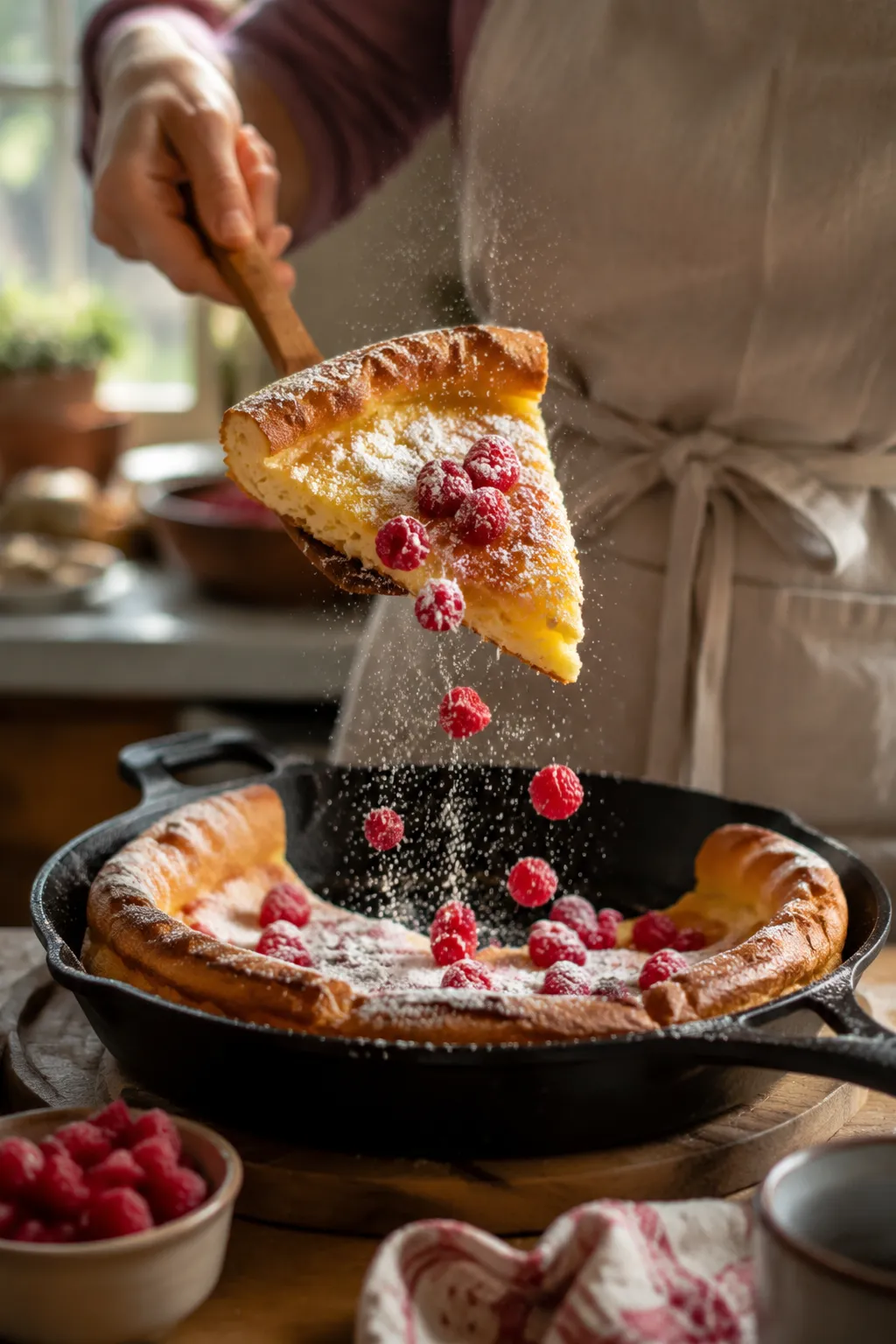
Savory toppings are just as good. Try crisp bacon, shredded cheddar, chives, and a little black pepper, or go with smoked salmon, crème fraîche, dill, and capers. You can even serve the pancake alongside a green salad for a light breakfast-for-dinner situation. If your table loves a sweet brunch spread, pair this with lemon ricotta pancakes so you have one skillet showpiece and one tender griddle favorite.
This dutch baby recipe is best served the moment it comes out of the oven, so have your toppings ready before you bake. Set out lemon wedges, powdered sugar, berries, syrup, butter, herbs, or savory extras while the pancake is in the oven. Then all you have to do is carry the hot skillet to the table, dust, slice, and serve. Use a sharp knife or kitchen shears to cut wedges, then lift them out with a thin spatula.
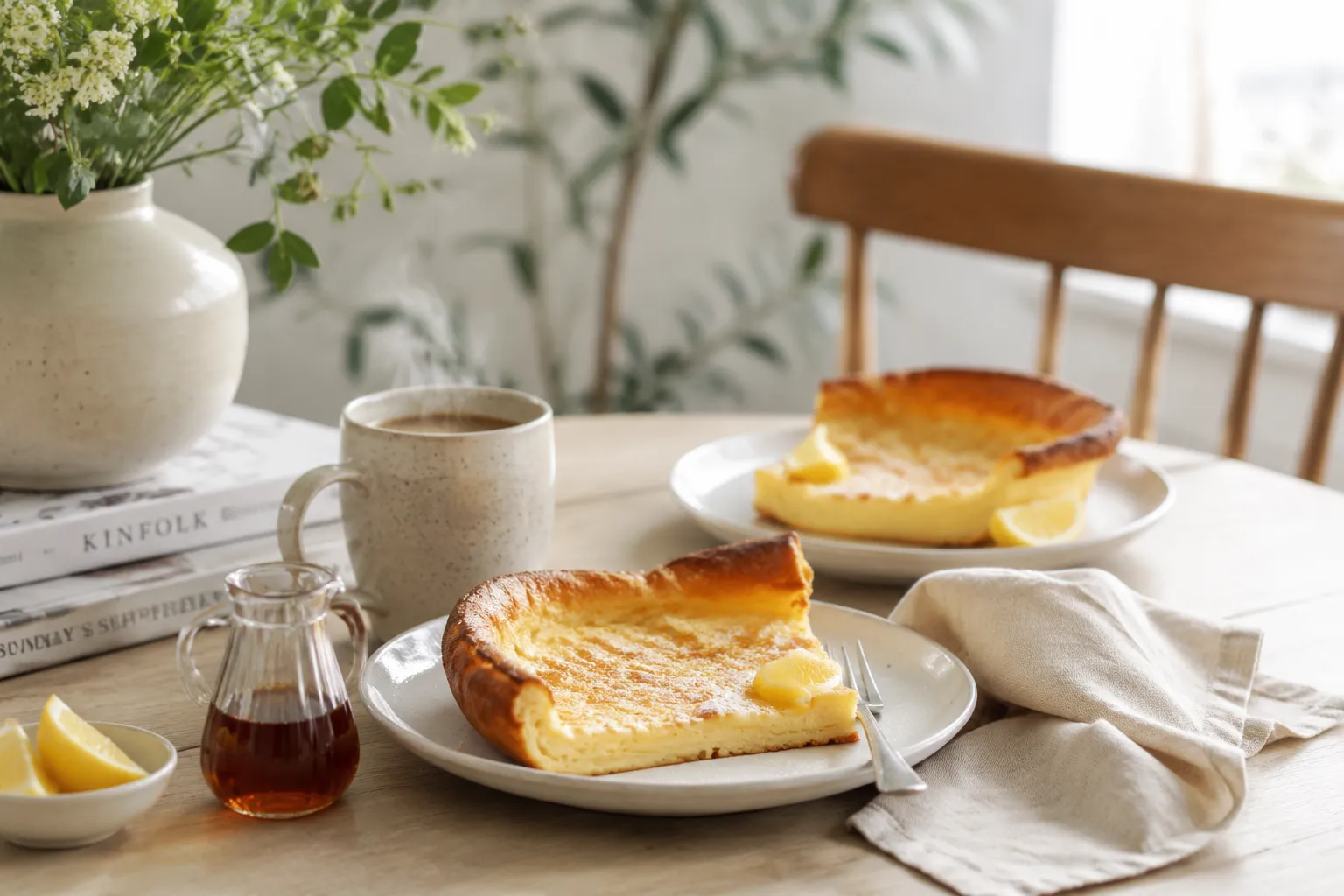
For a cozy meal, I like to serve it with coffee, fruit, and something salty on the side. It is light enough that it will not weigh everyone down, but satisfying enough to anchor the meal. If you are making it for guests, measure your ingredients ahead of time and keep the skillet in the oven while people arrive. You will look effortless, even though the oven is doing nearly all the work.
Once you make it a time or two, you will start to trust the process. The batter looks too thin, the pan looks too hot, and then somehow it rises into one of the prettiest breakfasts you can make at home. That is the joy of a Dutch baby: simple ingredients, a little heat, and a big golden payoff. Serve it hot, let it be a little rustic, and enjoy every crisp, buttery edge.
A Dutch baby is at its very best right out of the oven, when the edges are crisp and the center is still warm. If you have leftovers, let them cool completely, then store slices in an airtight container in the refrigerator for up to 2 days.
To reheat, place slices on a baking sheet in a 350°F oven or toaster oven until warmed through and lightly crisped at the edges. Avoid the microwave if you can; it softens the texture and can make the pancake rubbery.