Turkish Eggs (Çılbır): Creamy Yogurt Poached Eggs
Ingredients
Scale

Turkish eggs, or çılbır, pair velvety poached eggs over warm garlic yogurt with sizzling Aleppo pepper butter. It's the most luxurious 15-minute breakfast you'll make all year.
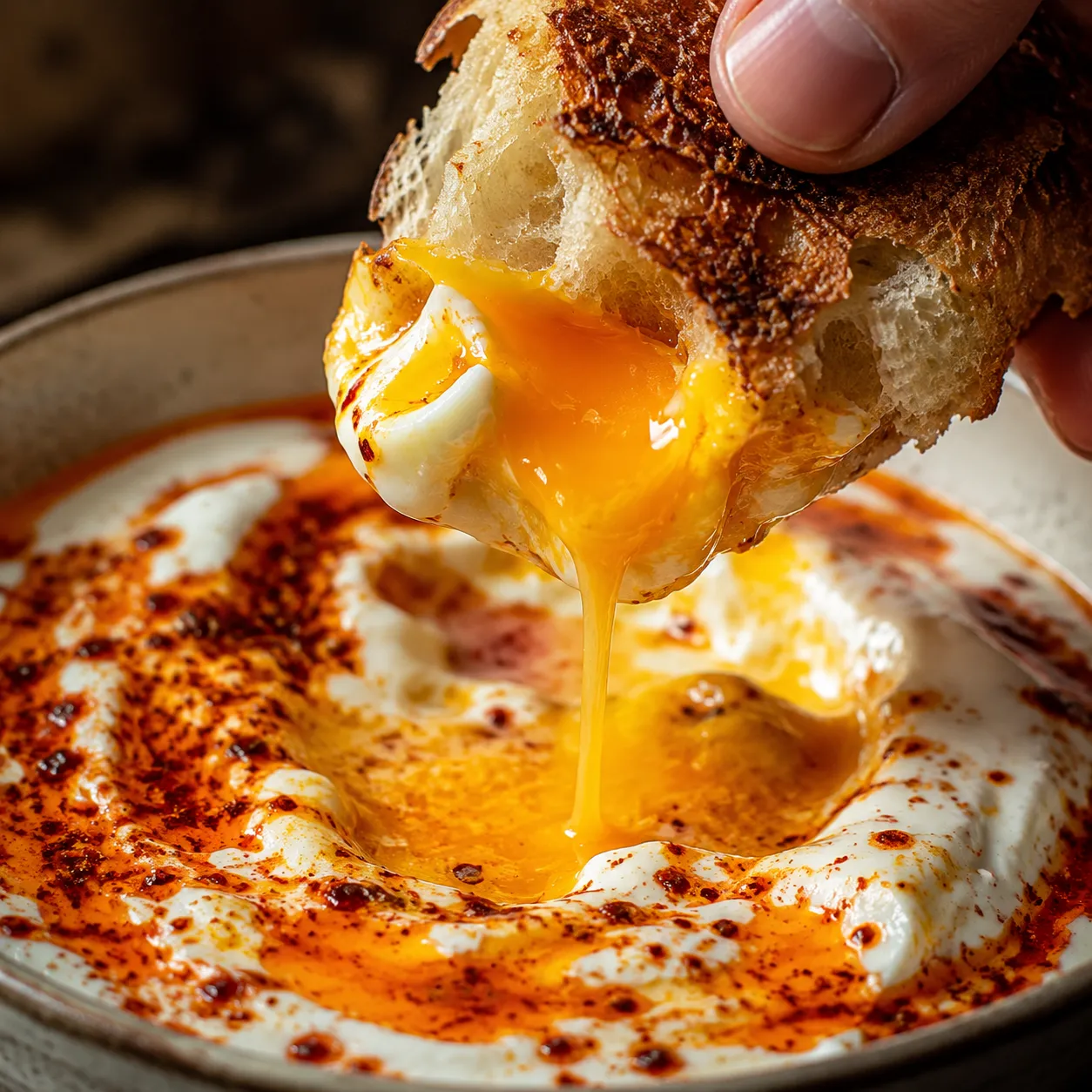
Turkish eggs are the dish I make when I want breakfast to feel like a small ceremony without spending more than fifteen minutes at the stove. Imagine a shallow pool of cool, garlicky yogurt cradling two soft poached eggs, the whole bowl crowned with sizzling red-orange Aleppo pepper butter that hisses as it hits the surface. Tear a piece of bread, drag it through the yolk and yogurt, and you'll understand why this is a breakfast people fly to Istanbul for.
Known as çılbır (more on that pronunciation in a moment), this dish has anchored Ottoman breakfast tables for roughly six centuries. It's the rare recipe that tastes deeply restaurant-worthy but uses ingredients you almost certainly already have in the fridge: yogurt, eggs, butter, garlic, and one good chili. There's no special equipment, no fussy technique, and no long ingredient list to deter you on a sleepy weekend morning.
This turkish eggs recipe is my refined take on the classic, with two small upgrades that make a noticeable difference. We temper the yogurt with a splash of warm water so it stays silky and never curdles against the hot eggs, and we brown the butter before adding the chili for a nuttier, deeper finish. Same fifteen minutes, twice the flavor.
Çılbır traces back to the imperial kitchens of the Ottoman Empire, where it was reportedly a favorite of fifteenth-century sultans. The earliest written references appear in palace records from the 1400s, which means cooks were poaching eggs over yogurt long before brunch became a Sunday tradition in the West. You'll find regional variations across Turkey today, some with sumac, others with dried mint or a scatter of walnuts, but the bones of the dish (yogurt, eggs, spiced butter) have stayed remarkably consistent.
What makes the recipe so enduring is its restraint. Each component is simple and good on its own: thick strained yogurt, a fresh egg, browned butter, a pinch of chili. Layered together, they create something far more complex than the sum of their parts. It's the kind of cooking that rewards quality over quantity, where a great cultured yogurt and a bright, fruity Aleppo pepper genuinely transform the bowl into a Mediterranean breakfast worth slowing down for.
The word çılbır is pronounced roughly chuhl-BUHR, with that opening "ç" sounding like the "ch" in "church" and the dotless "ı" landing somewhere between an "uh" and a soft "i." The name itself is thought to come from an old Turkic word meaning "to whisk" or "stir," likely a nod to the way the eggs swirl into the yogurt at the table. Don't worry too much about saying it perfectly. Most Turkish home cooks I know just call it "yogurt eggs" when they're being casual at the breakfast table.
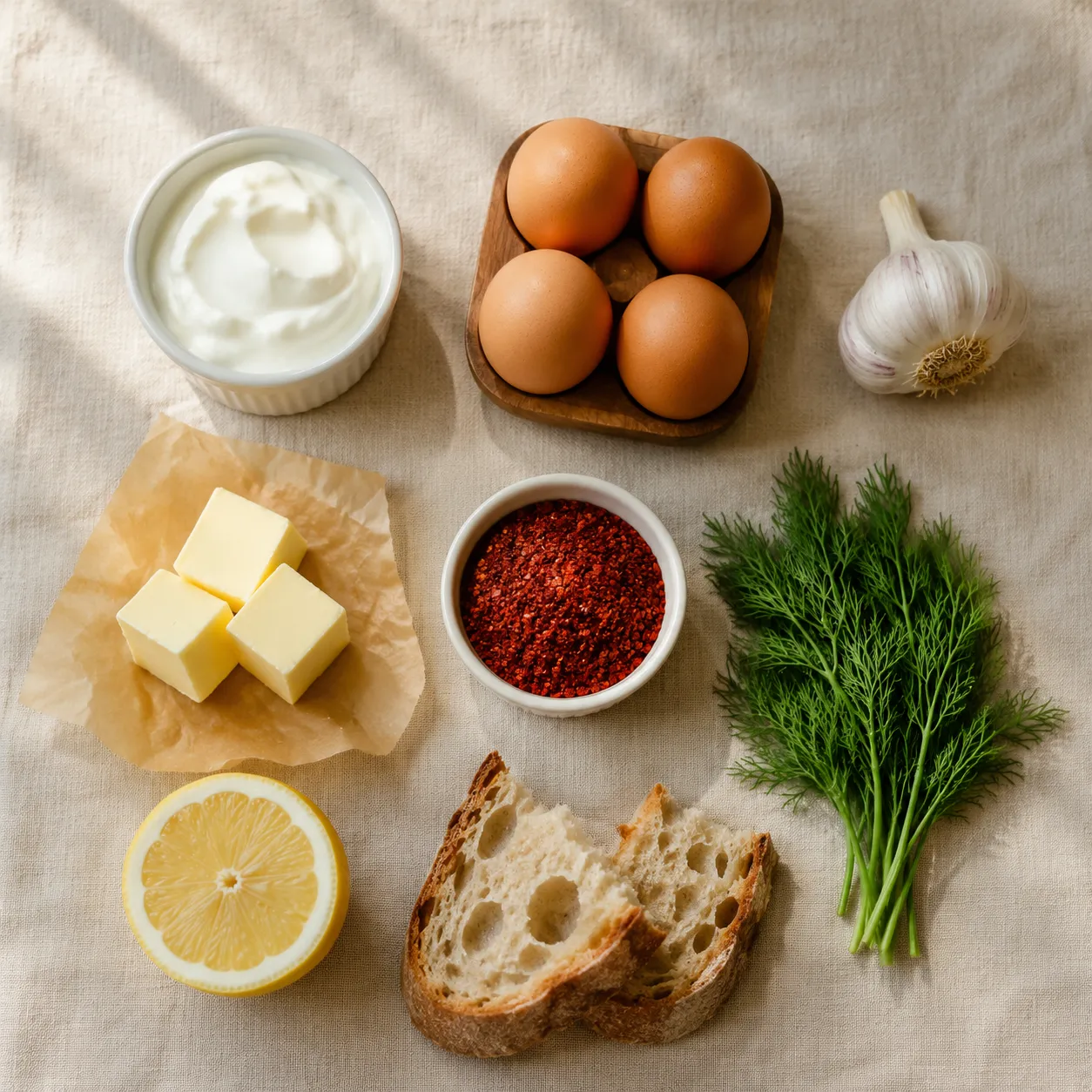
The beauty of this dish is how few ingredients it asks for and how much each one matters. Pull out your best pantry pieces here: a great cultured yogurt, fresh eggs, real butter, and a chili with character. Exact measurements live in the recipe card below, but here's what to focus on at the store.
Use full-fat plain Greek yogurt or, if you can find it, Turkish süzme yogurt. The fat is doing real work here: it carries the garlic flavor, holds up against the hot butter, and gives the dish its luxurious mouthfeel. Low-fat or nonfat yogurt tends to taste thin and chalky once the eggs land on top, and it's much more likely to break when the warm butter hits. If you keep homemade Greek yogurt in the fridge, this is exactly the moment to break it out. Whatever you use, let it come closer to room temperature before serving so it doesn't shock the warm poached eggs.
Aleppo pepper (also labeled pul biber or Halaby pepper) is a sun-dried Syrian chili with a fruity, raisin-like sweetness and a slow, gentle heat. It's the soul of the spiced butter and worth seeking out at a Middle Eastern grocery or online. If you can't find it, the most reliable Aleppo pepper substitutes are a 50/50 mix of sweet paprika and crushed red pepper flakes, or a spoonful of Urfa biber for a smokier, raisiny note. Whatever chili you use, you'll bloom it in brown butter to release the oils and deepen the flavor.
Fresh eggs poach beautifully because the whites are still tight and gel-like, which means they hug the yolk instead of feathering off into wisps. If you're not sure how fresh your eggs are, drop one (in its shell) into a glass of water. A fresh egg sinks and lays flat on the bottom; an older egg stands upright or floats. For two servings you'll want four eggs total, two per bowl, so buy a fresh dozen the day before if you can swing it.
Full timing and quantities live in the recipe card, but here's the rhythm of the kitchen. Once your yogurt is whisked and your water is simmering, the whole thing comes together in under ten minutes. I like to lay everything out first, ramekin-style, because once the eggs go in, you're committed.
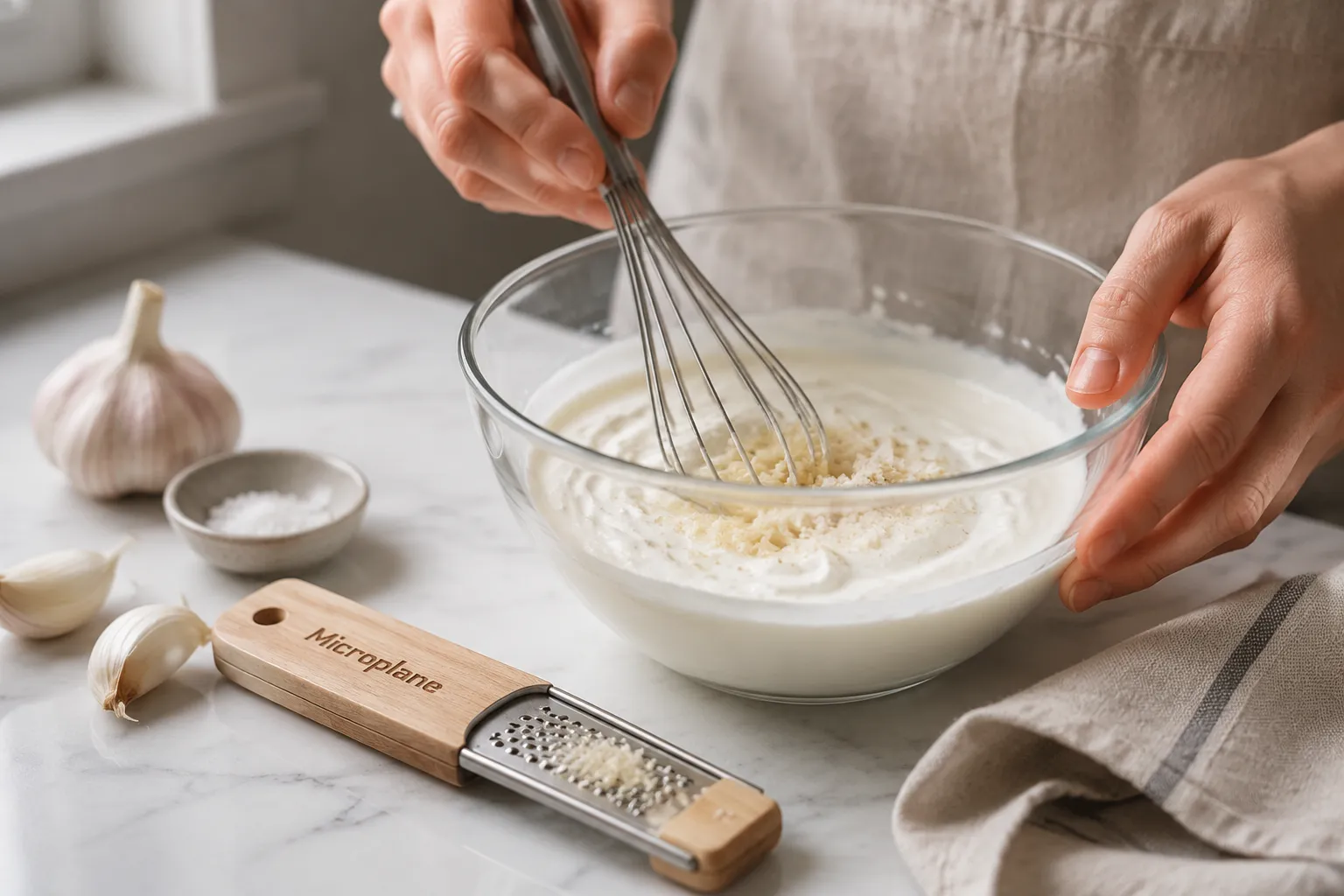
Start by whisking finely grated garlic, a pinch of salt, and a tablespoon of warm water into your yogurt. The water loosens the texture just enough to spread across the bottom of the bowl in a glossy pool, and it gently warms the yogurt so it won't shock the eggs. Use a Microplane or the smallest holes on a box grater for the garlic; you want it almost paste-like, with no chunks to bite into. Spread the seasoned garlic yogurt across two shallow bowls and set them somewhere warm, like the back of the stove, while you poach.
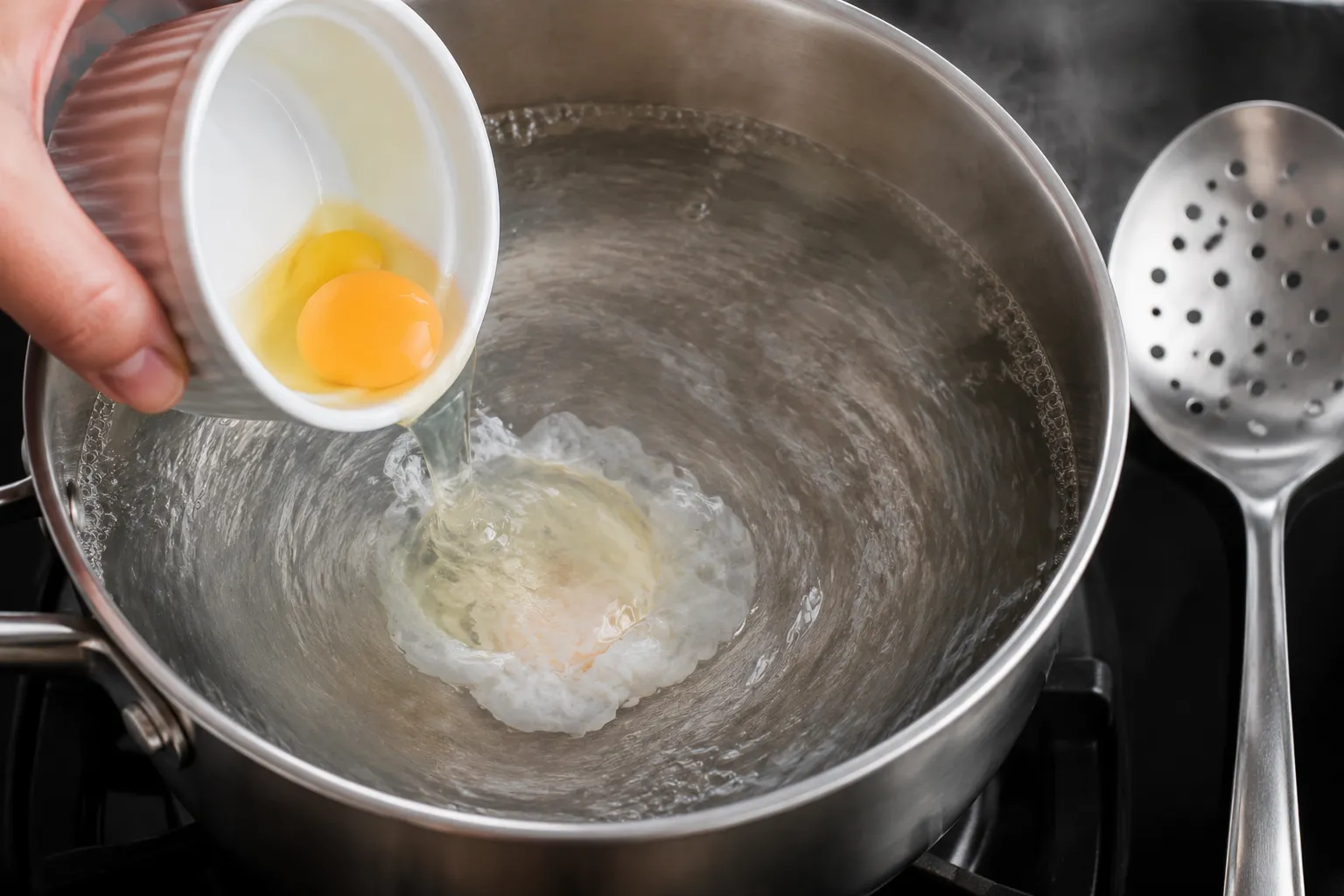
Bring a wide saucepan of water to a bare simmer (you want soft, lazy bubbles, not a rolling boil) and add a tablespoon of white vinegar. The vinegar helps the whites set quickly without changing the flavor. Crack each egg into a small ramekin first, give the water a gentle swirl with a spoon to create a soft whirlpool, and slide the egg in close to the surface. If you've never tackled how to poach an egg before, the whirlpool is your secret weapon: it wraps the white around the yolk like a gift. Cook for three minutes for jammy yolks, then lift out with a slotted spoon and rest on a paper towel.

While the eggs poach, melt unsalted butter in a small skillet over medium heat. Swirl the pan and watch the butter foam, then quiet, then turn a deep golden amber as the milk solids toast on the bottom of the pan. The moment you smell hazelnuts, pull it off the heat and stir in the Aleppo pepper. The chili will bloom into a glowing red-orange oil within seconds. This brown butter step is the single upgrade that takes the dish from good to genuinely restaurant-quality, and it costs you about ninety extra seconds.
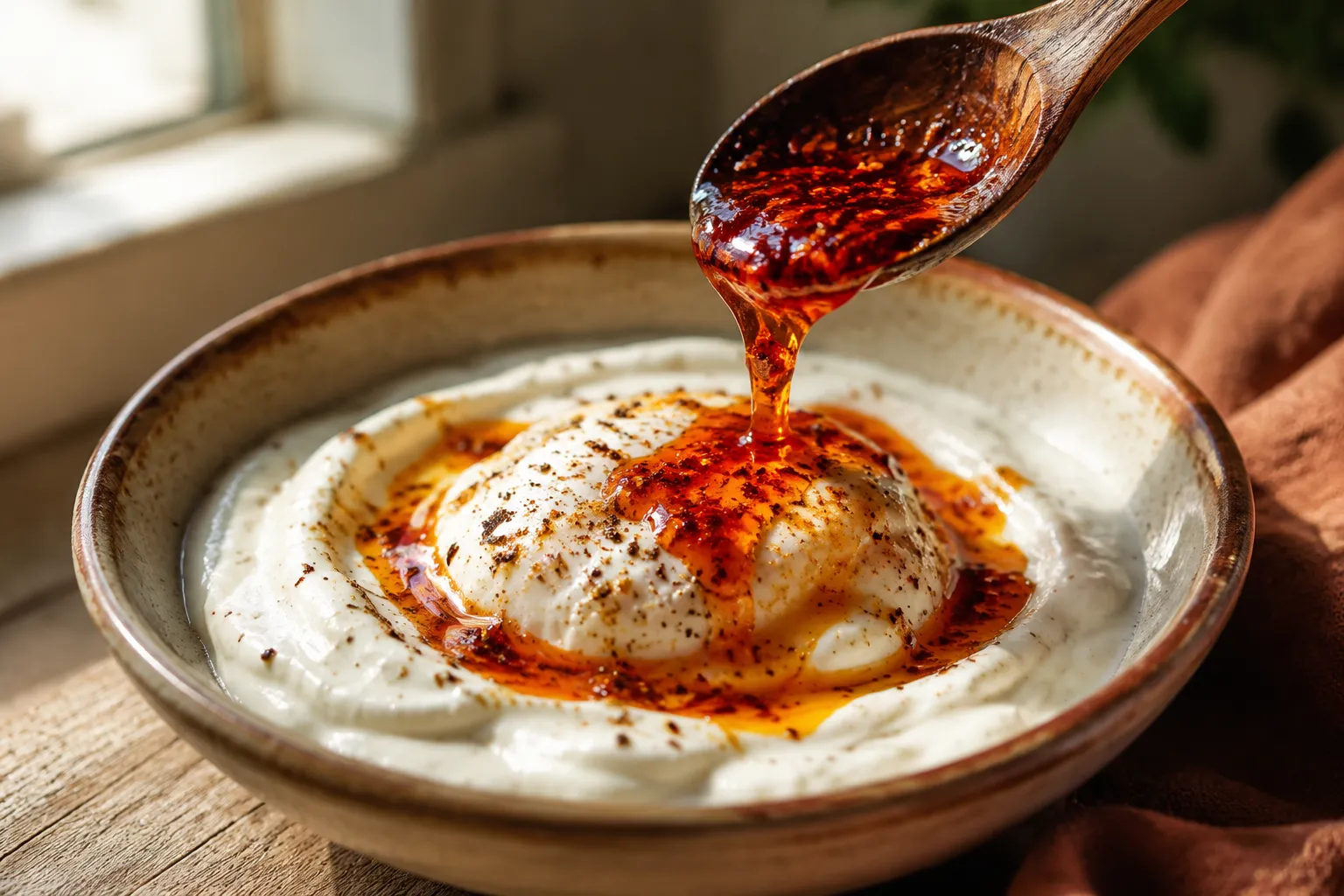
Nestle two poached eggs into each bowl of garlic yogurt, then spoon the warm Aleppo butter generously over the top, letting it pool around the edges in vivid ribbons. Scatter with fresh dill, a pinch of flaky sea salt, and a squeeze of lemon if you like a little brightness against the richness. Serve immediately with bread for dipping, because the eggs and butter will continue to warm the yogurt as you eat, and the first bite is always the best one.

Çılbır is built for dipping, so the bread you serve alongside matters almost as much as the eggs themselves. A thick-crusted sourdough is my go-to, but warm pita, simit (sesame-crusted Turkish bread rings), or any easy crusty bread will catch the yolk and butter beautifully. Toast your slices lightly so they stay sturdy through the second and third dunk. If you bake your own loaves, this is a wonderful place to use a heel that's a day or two past its prime, since a sturdier crumb stands up to all that creamy yogurt.
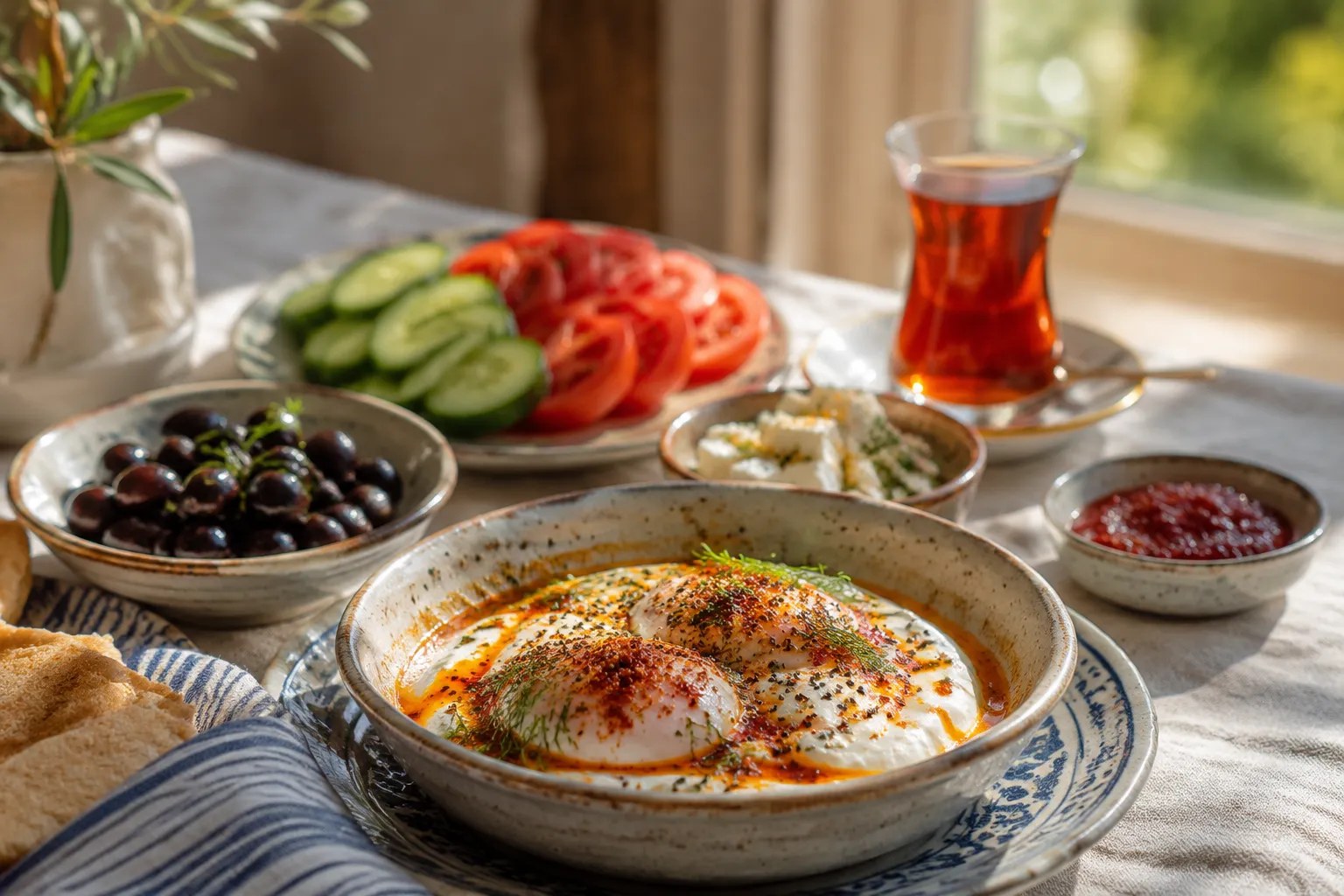
For a fuller spread, treat çılbır the way Turkish home cooks do and turn it into a kahvaltı, the long, lingering breakfast meant for Sundays. Surround the bowls with little dishes of green and black olives, sliced cucumbers and tomatoes dressed with olive oil, salty white cheese (feta works beautifully), a small bowl of honey alongside soft butter, and a tulip glass of strong black tea. If you're collecting Mediterranean breakfast ideas for entertaining, this kind of spread pulls together in twenty minutes and feeds a crowd happily.
Looking for another savory egg breakfast in the same family? A shakshuka recipe (eggs poached in spiced tomato sauce) is the North African cousin to çılbır, and the two make a stunning brunch pairing if you're cooking for a crowd. The contrast between the cool, tangy garlic yogurt of çılbır and the warm, smoky tomato of shakshuka shows off the full range of egg-forward Mediterranean cooking, and it's the kind of menu that turns a quiet Sunday morning into something you'll genuinely look forward to all week.
Çılbır is a beautifully forgiving template, and once you've made it once you'll start to see it everywhere. The yogurt base, the poached eggs, and the spiced butter are the three levers, and small swaps in any of them can take the dish in a new direction without breaking the formula.
Çılbır is a fresh-from-the-pan dish, but two of its three components can absolutely be made ahead. The garlic yogurt keeps in an airtight container in the fridge for up to three days; in fact, the garlic mellows and integrates after a few hours, so making it the night before actually improves the flavor. Just give it a quick whisk and a splash of warm water before serving to bring it back to a glossy, spreadable consistency.
The Aleppo brown butter can be made up to a week ahead and stored in a small jar at room temperature or in the fridge. Warm it gently in a small skillet or in fifteen-second microwave bursts until it's pourable again. The poached eggs, however, are non-negotiably best fresh — they take three minutes from cold water to plate, so there's no real benefit to cooking them ahead. If you absolutely must, slip cooked poached eggs into ice water, refrigerate up to two days, and reheat by lowering them into hot (not simmering) water for sixty seconds before serving.