Tuna Melt Recipe: Crispy, Cheesy Diner-Style Classic
Ingredients
Scale
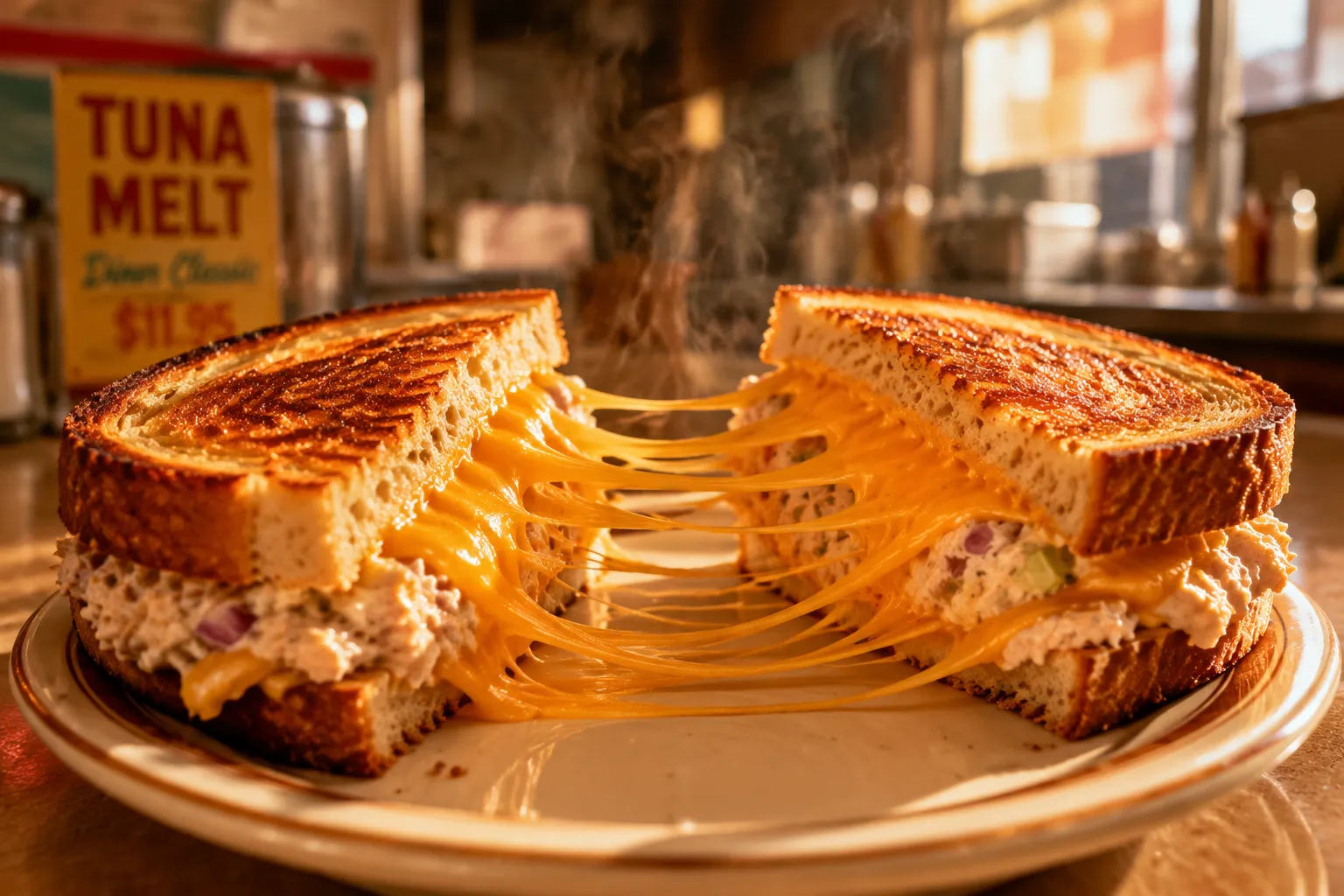
A crispy, cheesy diner-style tuna melt with creamy tuna salad and gooey cheddar on buttery sourdough — ready in just 20 minutes.
There's something deeply comforting about a perfect tuna melt — the kind you'd order at a worn-vinyl diner booth where the waitress calls you "hon" and the coffee never stops flowing. This version brings that nostalgic, butter-griddled magic right into your kitchen with creamy lemon-Dijon tuna salad, sharp cheddar cheese that pulls in long glistening strands, and sourdough toasted to a shatter-crisp gold. It comes together in 20 minutes flat, which makes it dangerous in the best way.
I grew up eating these at a Jersey diner where the cook flipped them on a flat-top so seasoned it looked black. The trick, I learned years later, is treating it less like a sandwich and more like a controlled experiment in heat: low and steady so the cheese has time to liquify before the bread goes too dark. Get that timing right and you've got crackly toast, oozing cheddar, and warm-but-not-watery tuna in every single bite.
Whether you're hunting for easy lunch recipes to break up the workday or you want to channel that classic American luncheonette vibe at home, this is the one I make on repeat. It uses pantry staples, plays nicely with whatever cheese is in your drawer, and scales up effortlessly when you're feeding the whole family.
Most recipes treat this sandwich as a dump-and-grill afterthought, but a few small choices separate a soggy disappointment from a true diner-style stunner. We drain the tuna aggressively so the salad never weeps into the bread, balance the mayo with bright lemon and Dijon for lift, and griddle the bread in real butter for that signature amber crust. The cheese goes against the bread on both sides, not just the middle, so it acts as a creamy seal between the tuna and the toast.
You'll also see two methods to choose from. The closed griddle version (my preferred) gives you a fully crisp top and bottom, while the open-faced broiler version exposes the cheddar to direct heat for those gorgeous bubbly brown spots. Either way, this tuna melt beats almost any version of a grilled cheese sandwich for sheer satisfaction per minute of effort.
You probably have most of this already. The ingredient list is short on purpose — when you're working with this few components, the quality of each one matters more, so don't reach for the dusty can at the back of the pantry.
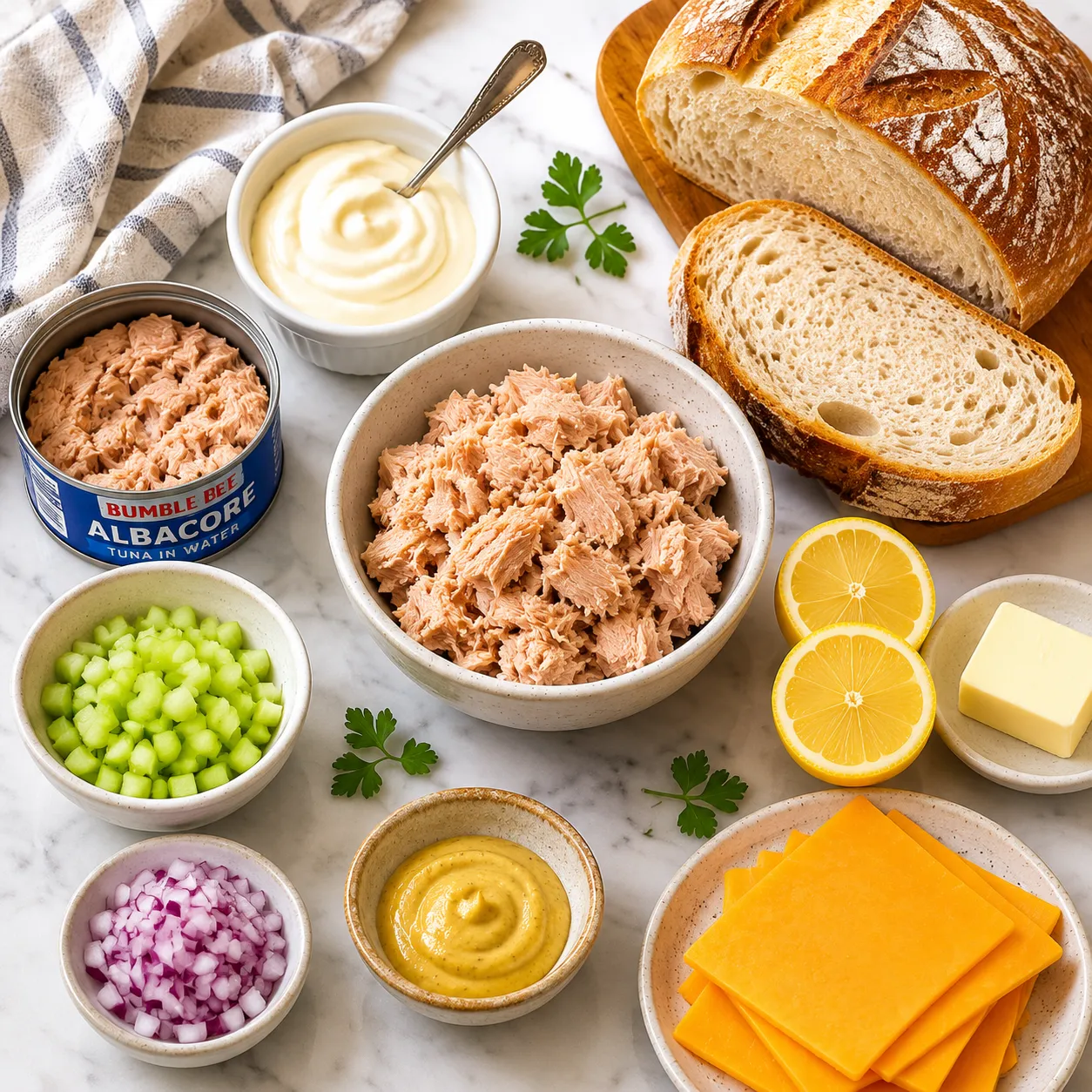
Solid white albacore packed in water is my default. It flakes into substantial, meaty chunks rather than dissolving into mush, and it has a cleaner flavor than chunk light. If you want richer, fattier results, look for tuna packed in olive oil — Italian and Spanish brands like Tonnino or Ortiz are some of the best canned tuna you can buy, and they completely transform the salad. Whichever you choose, drain it like you mean it: press the lid down hard and let the can sit tilted in the sink for a full minute. Wet tuna is the number one cause of soggy sandwiches.
Sharp cheddar cheese is the classic pick — it has enough acidity and bite to cut through the creamy salad without disappearing into it. American cheese melts even more smoothly and gives you that diner-style texture if you want to go full nostalgia. Swiss, provolone, Muenster, and Havarti all work beautifully too. Avoid pre-shredded cheese here; the anti-caking agents prevent the silky melt you're after, and slabs from the deli counter are worth the extra 30 seconds at the cheese case.
Sturdy sourdough bread is ideal because its open crumb soaks up just enough butter without going limp under the weight of the filling. Slice it about half an inch thick — any thinner and it'll burn before the cheese melts; any thicker and you'll lose the bread-to-filling ratio. Rye is the other diner-classic option and pairs especially well with sharp cheddar. Soft sandwich bread can work in a pinch, but you'll want to toast it lightly first so it doesn't collapse under the warm filling.
The method is simple but deliberate. Don't rush the griddle step — that's where the magic happens, and pulling the pan off too early is the difference between a good sandwich and a great one.
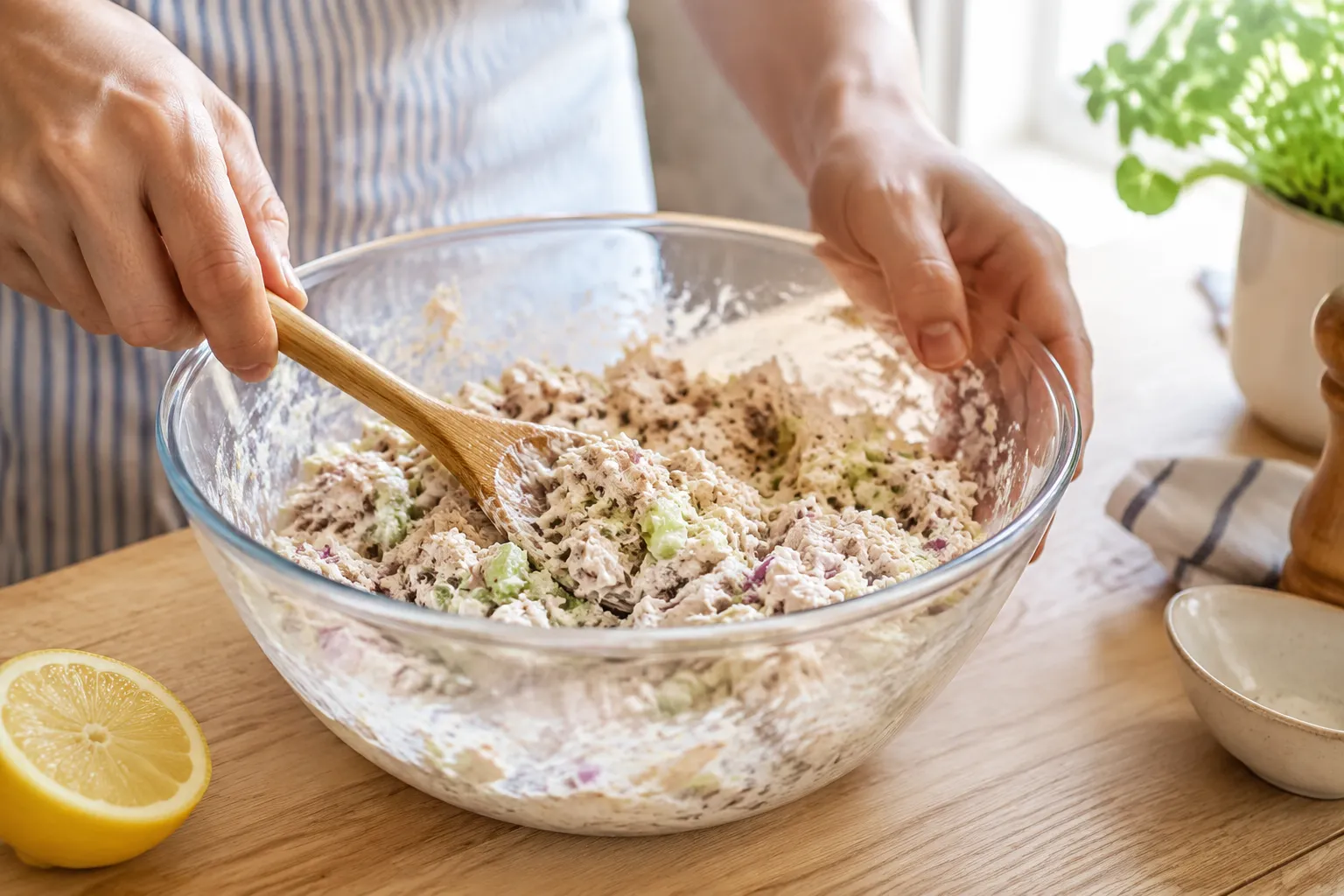
In a medium bowl, flake the well-drained tuna with a fork until no large clumps remain. Add the mayo, finely diced celery, minced red onion, Dijon mustard, and lemon juice, then fold gently with a rubber spatula. You want everything coated but still chunky — overmixing turns it into paste. Taste and season with a pinch of salt and a generous crack of black pepper. This same base makes a fantastic tuna salad on its own, so I always make a double batch for the next day's lunch.
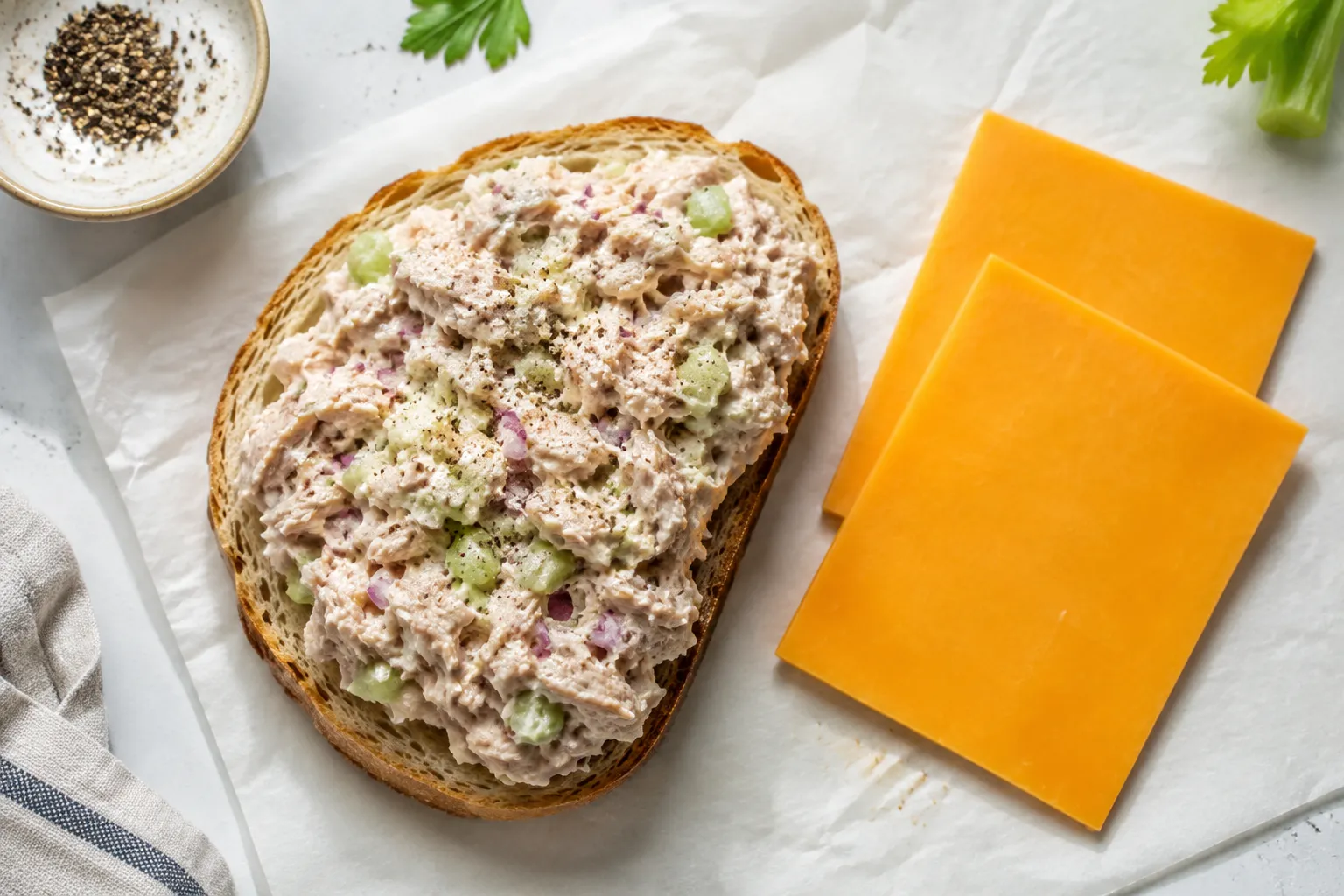
Lay your four sourdough slices on a clean board and butter one side of each generously, edge to edge. Flip two slices butter-side-down — these are your bottoms. Place a slice of cheddar on each, then divide the tuna salad evenly between them and spread it almost to the crust. Top with a second slice of cheddar (the cheese-tuna-cheese stack is the anti-sog secret) and finish with the remaining bread, butter-side-up.
Heat a cast-iron skillet or heavy nonstick pan over medium-low. Once it's warm but not screaming, lay the sandwiches in and press lightly with a spatula. Cook for 4 to 5 minutes per side, checking the underside often — you're looking for deep amber, almost mahogany, with no pale patches. If the bread is browning faster than the cheese is melting, drop the heat and cover the pan loosely with a lid for 30 seconds to trap steam. Flip carefully, repeat on the second side, then transfer to a cutting board and let it rest for one full minute before slicing.
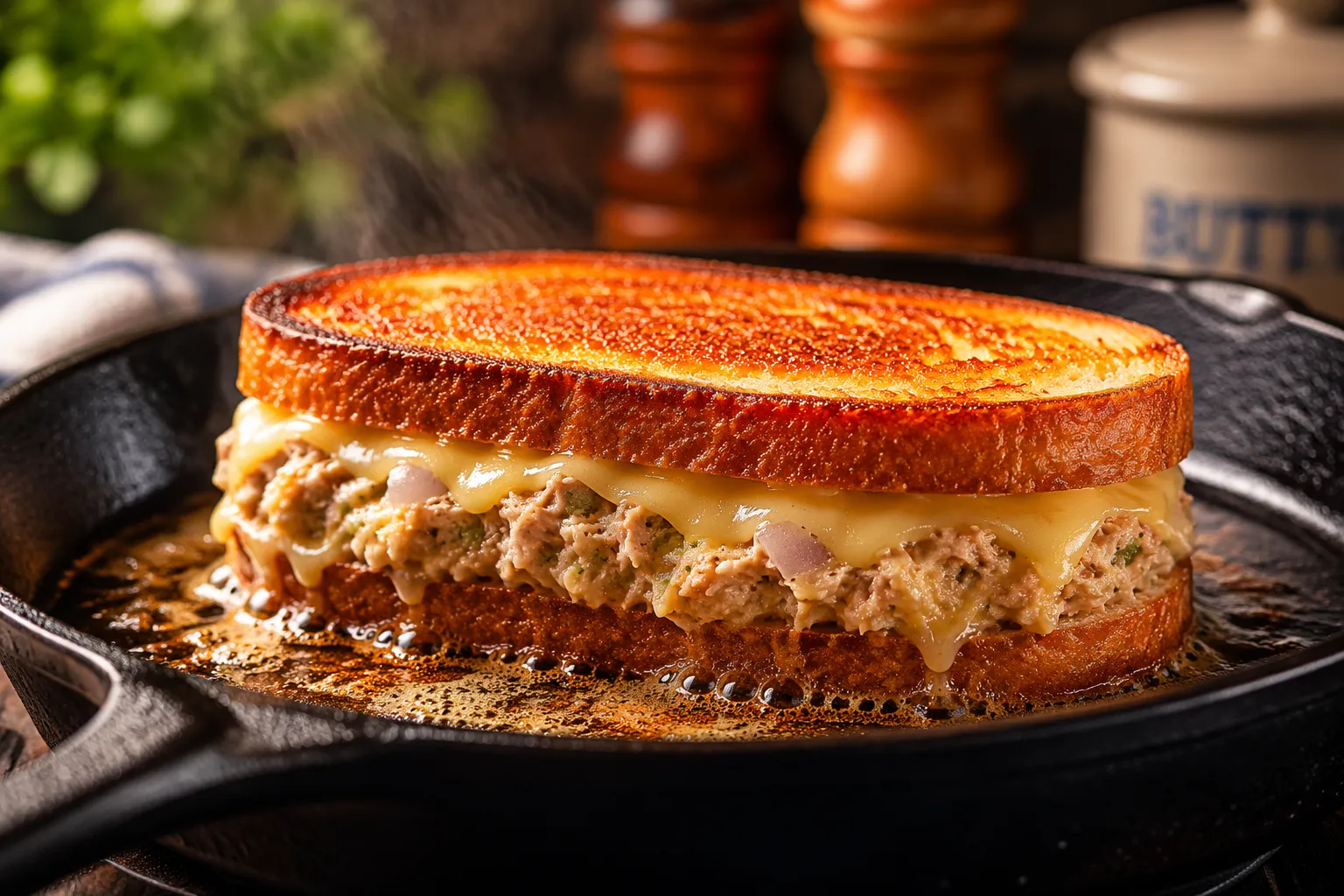
That brief one-minute rest matters more than you'd think — it lets the cheese set just enough that it doesn't slide out the second you cut in, while the residual heat finishes melting any stubborn pockets near the crust.
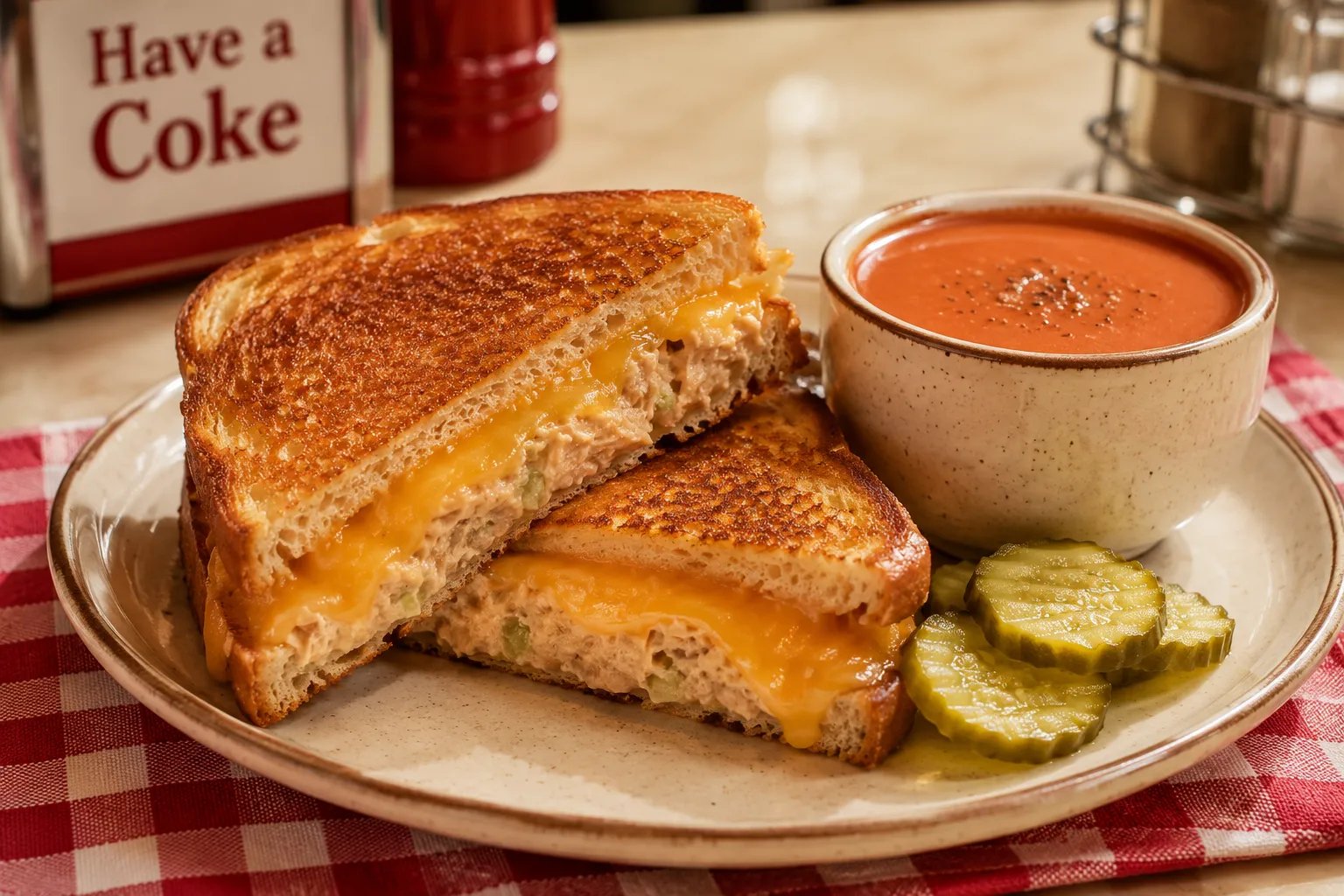
A tuna melt is hearty enough to stand alone, but pairing it with a hot or crunchy side turns lunch into something that feels like a real occasion. Diner-style sides are a great place to start — think anything with crunch, salt, or acid to balance all that buttery cheese.
Tomato soup is the canonical match — the bright, slightly sweet acidity slices right through the rich cheese. Creamy roasted tomato with basil, classic chicken noodle, or a smoky tomato bisque all hit the spot. For something lighter, try a simple cup of broth with lemon and dill, or a bowl of corn chowder when the weather turns cold.
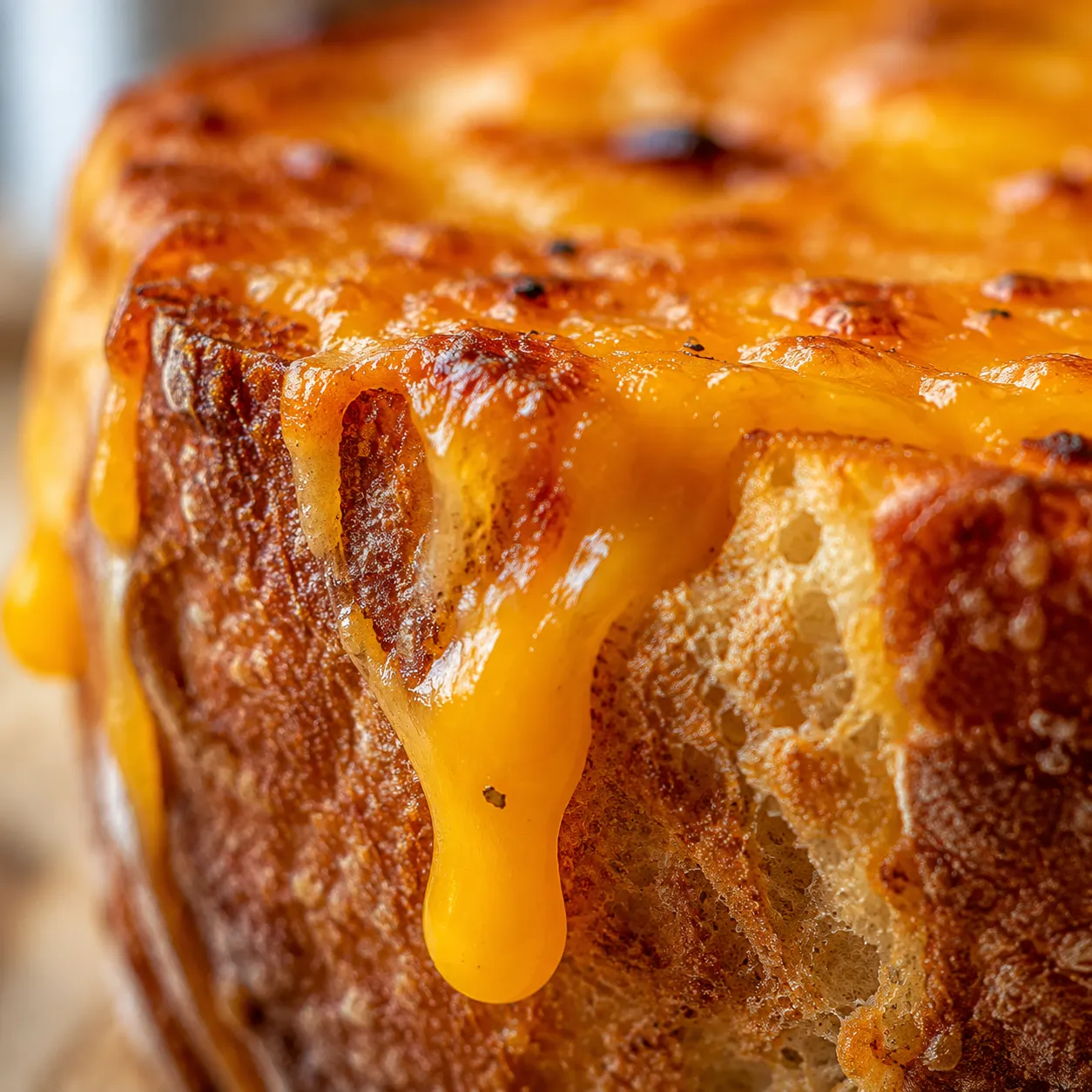
If you're not in a soup mood, lean into texture contrast. Kettle-cooked chips, a tangle of shoestring fries, a pile of dill pickle spears, or a sharp little vinegar slaw all play beautifully against the buttery sandwich. I'm partial to crinkle-cut pickles and a handful of salt-and-vinegar chips for that full diner-counter experience.
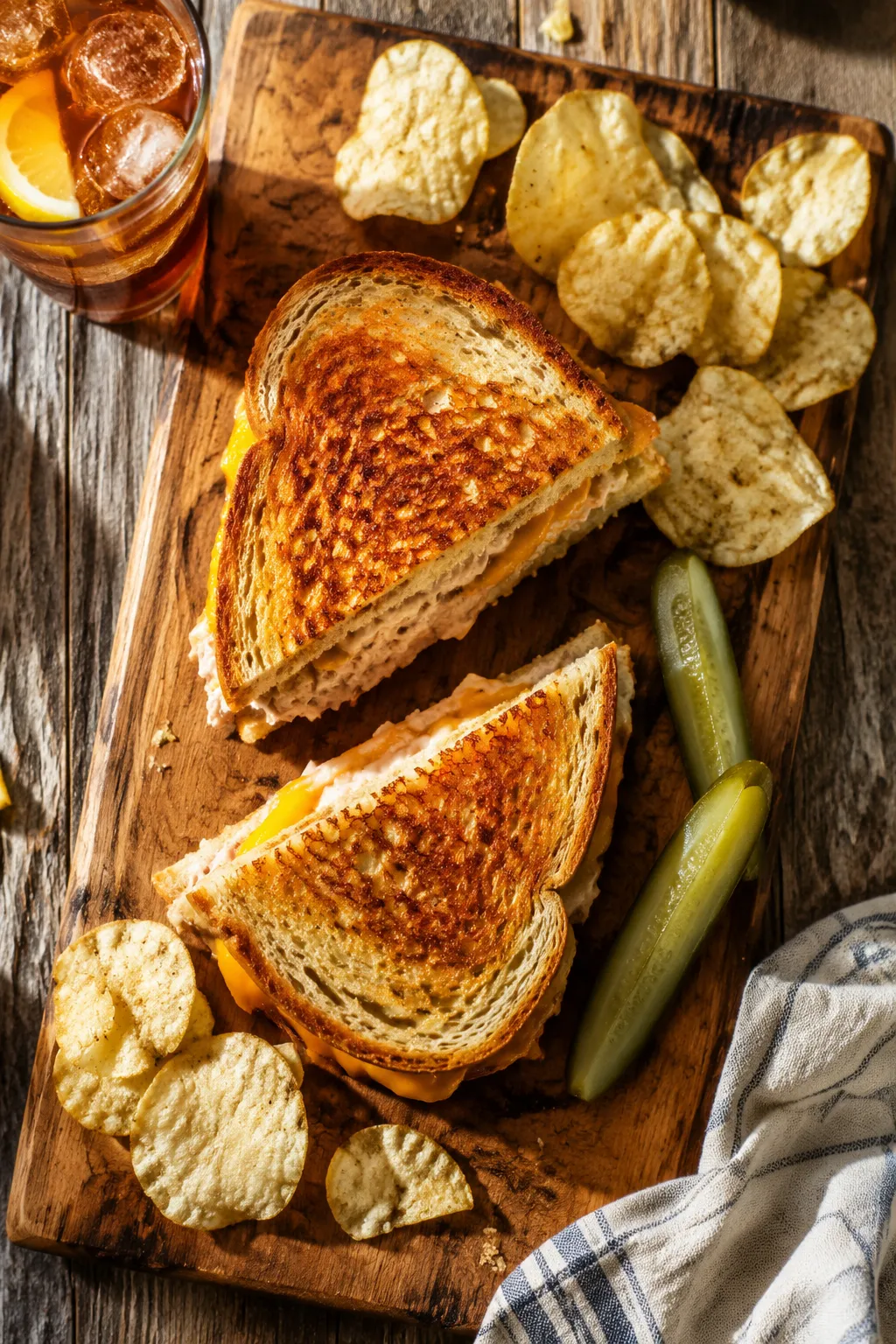
Most home cooks stick with the closed griddle method, but the open-faced approach is worth knowing — especially if you're feeding a crowd. Lay buttered sourdough on a sheet pan, toast in a 400°F oven for 5 minutes, top each slice with tuna salad and two slices of cheddar, then run it under the broiler until the cheese is bubbly and starting to brown in spots. It's how most New York and New Jersey diners actually serve it, and the broiler caramelization is something a skillet just can't replicate.
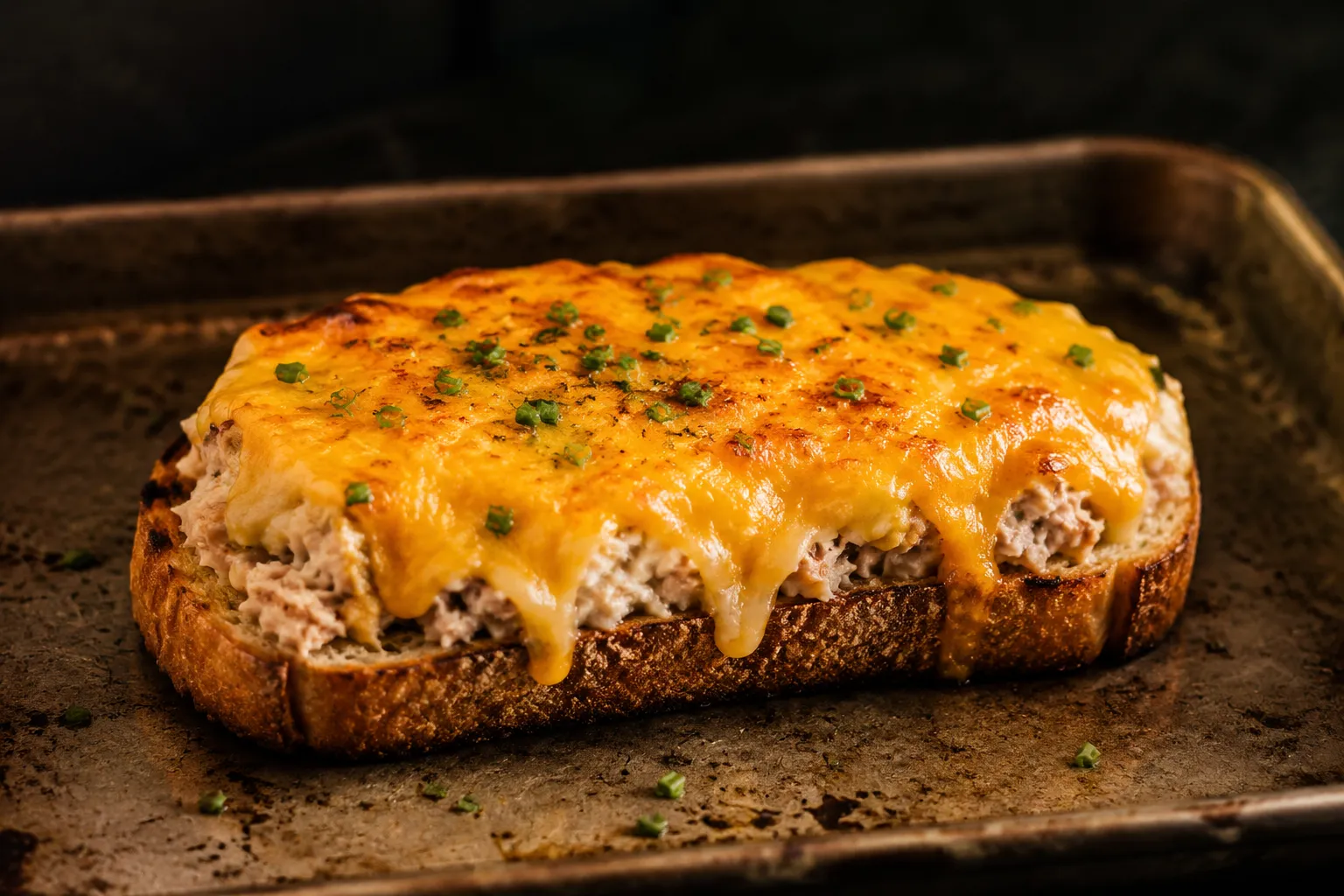
If you've ever had a great patty melt, you'll recognize the same playbook at work here: low heat, real butter, melty cheese, toasty bread. Some weekends I'll caramelize a handful of onions and slip them under the cheese for a hybrid version that lands somewhere between the two classics. Make this once and it earns a permanent slot in the rotation — the kind of nostalgic, deeply satisfying lunch you'll keep coming back to on busy weeknights, lazy Saturdays, and every rainy day in between.
Once you've nailed the basic method, the variations practically write themselves. Swap proteins, switch up cheeses, or borrow tricks from other classic griddled sandwiches to keep things interesting all week long.
The tuna salad is the make-ahead workhorse here. Stir it together up to three days in advance and store it in an airtight container in the fridge — the flavors actually deepen overnight as the lemon and Dijon mellow into the mayo. Give it a quick stir before using, since the celery can release a little water as it sits.
For leftover assembled sandwiches, wrap loosely in foil and refrigerate up to one day, but know that the bread will lose its crackle. To revive: skip the microwave (it steams the bread limp) and instead reheat in a 350°F oven or air fryer for 6 to 8 minutes until the crust crisps back up and the cheese softens. Avoid freezing assembled sandwiches — the mayo separates and the bread gets gummy when thawed. The salad alone freezes poorly too, so make it fresh.