Green Chili Recipe: Authentic Hatch Pork Stew
Ingredients
Scale
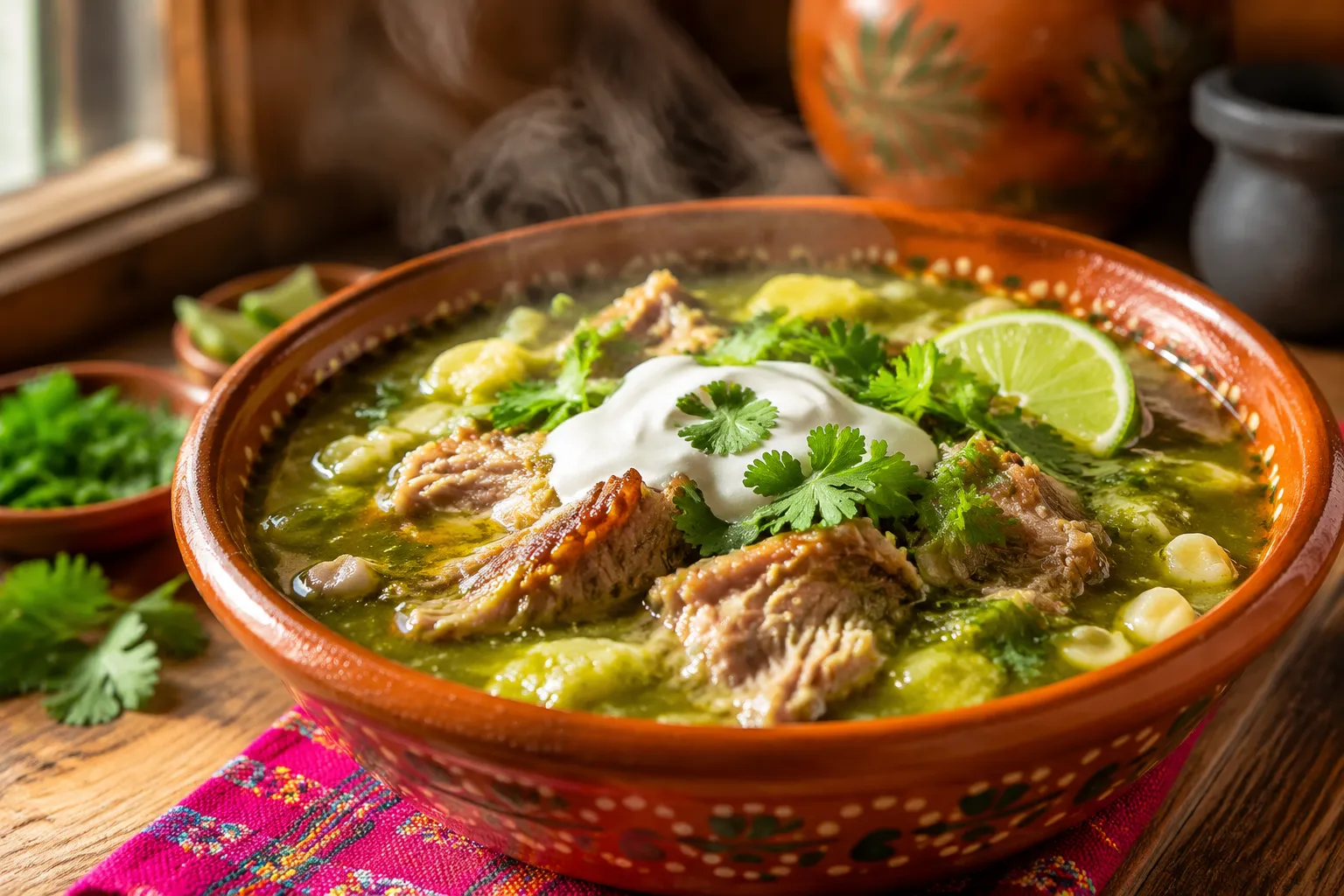
A bowl of real-deal green chili: roasted Hatch peppers, slow-simmered pork shoulder, and a smoky broth that tastes like New Mexico in every spoonful.
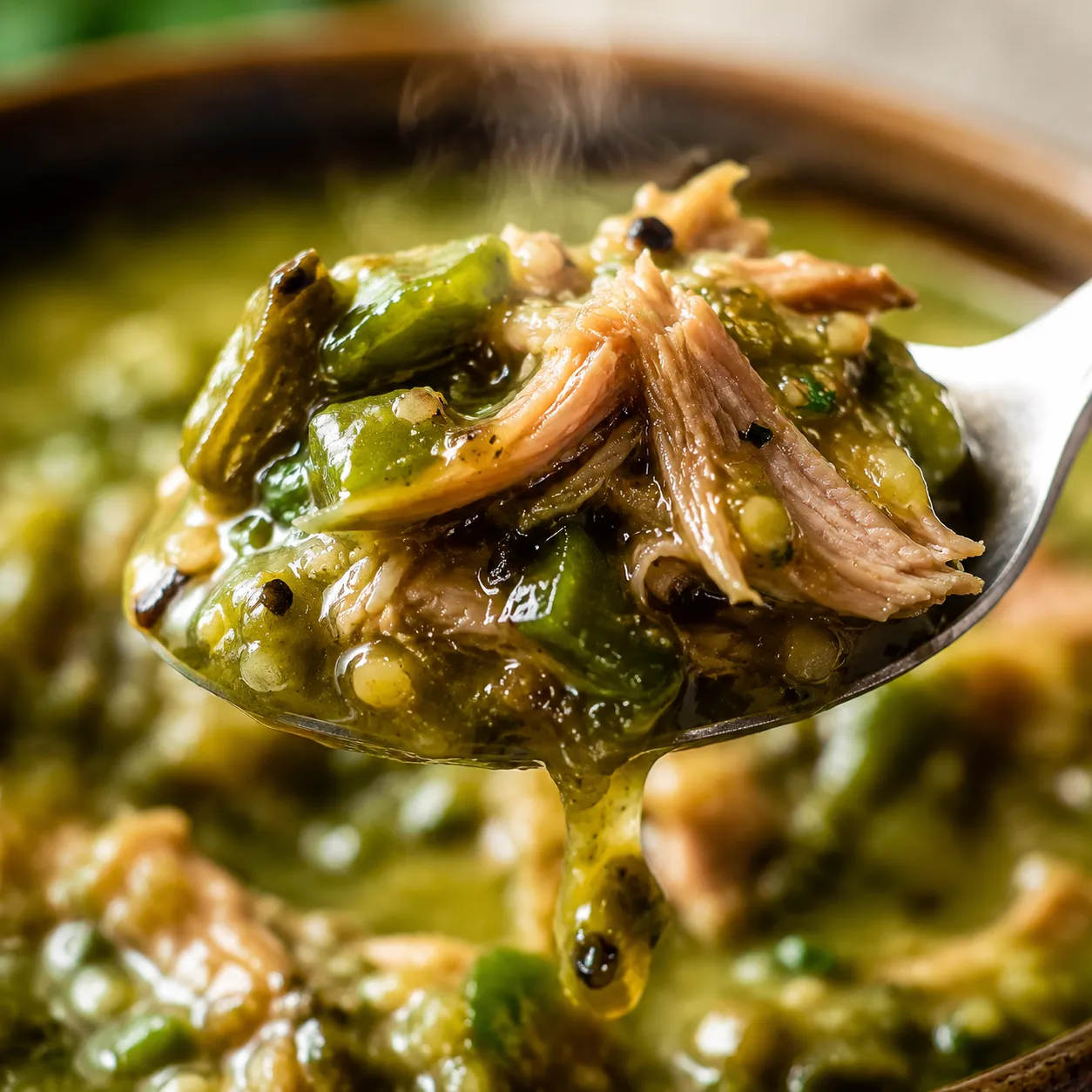
This green chili recipe is the real Southwestern deal: chunks of pork shoulder seared until burnished, then simmered low and slow in a smoky broth of roasted Hatch chiles, tomatillos, and just enough garlic to make the kitchen smell like a roadside cafe in Albuquerque. It is brothy, gently spicy, and deeply savory, the sort of pot you make on a Sunday afternoon and ladle over everything you eat for the next three days.
If you have only ever had the canned-soup-and-beans version, this is going to taste like a different food entirely. Real chile verde gets its flavor from charring fresh peppers until their skins blister, building a fond on cubed pork, and letting all of that mingle in the pot until the meat shreds at the touch of a fork. Nothing about it is fussy. It is one heavy pan, one cutting board, and about two hours of mostly hands-off time.
I cook this version year-round, but it really earns its keep in late summer when Hatch chile season hits and the markets pile high with green peppers in every heat level from baby-mild to nearly nuclear. Make a double batch. You will use it.
This is the question I get most often, because both pop up when you search around online and they could not be more different bowls of food. Green chili, or chile verde to most New Mexicans, is a Southwestern pork stew built on roasted green peppers, tomatillos, and broth. It is thin-bodied, brothy, and savory, the color somewhere between olive and emerald depending on how dark you char the chiles.
White chili, on the other hand, is a creamy chicken-and-bean dish usually thickened with cream cheese, sour cream, or pureed beans. It leans mild, comfort-forward, and Midwestern in spirit. If you grew up on a tailgate-style white chicken chili with shredded rotisserie meat and great northern beans, you already know that style. Both are wonderful. They are simply not the same dish.
When friends ask which to make, I tell them this: choose chile verde when you want something brothy and smoky to ladle over burritos, eggs, or rice. Choose the creamy version when you want a spoonable bowl with crackers on a snowy night. This recipe is firmly in the first camp, and once you taste it next to a canned alternative, you will understand why people drive across state lines for the genuine article.
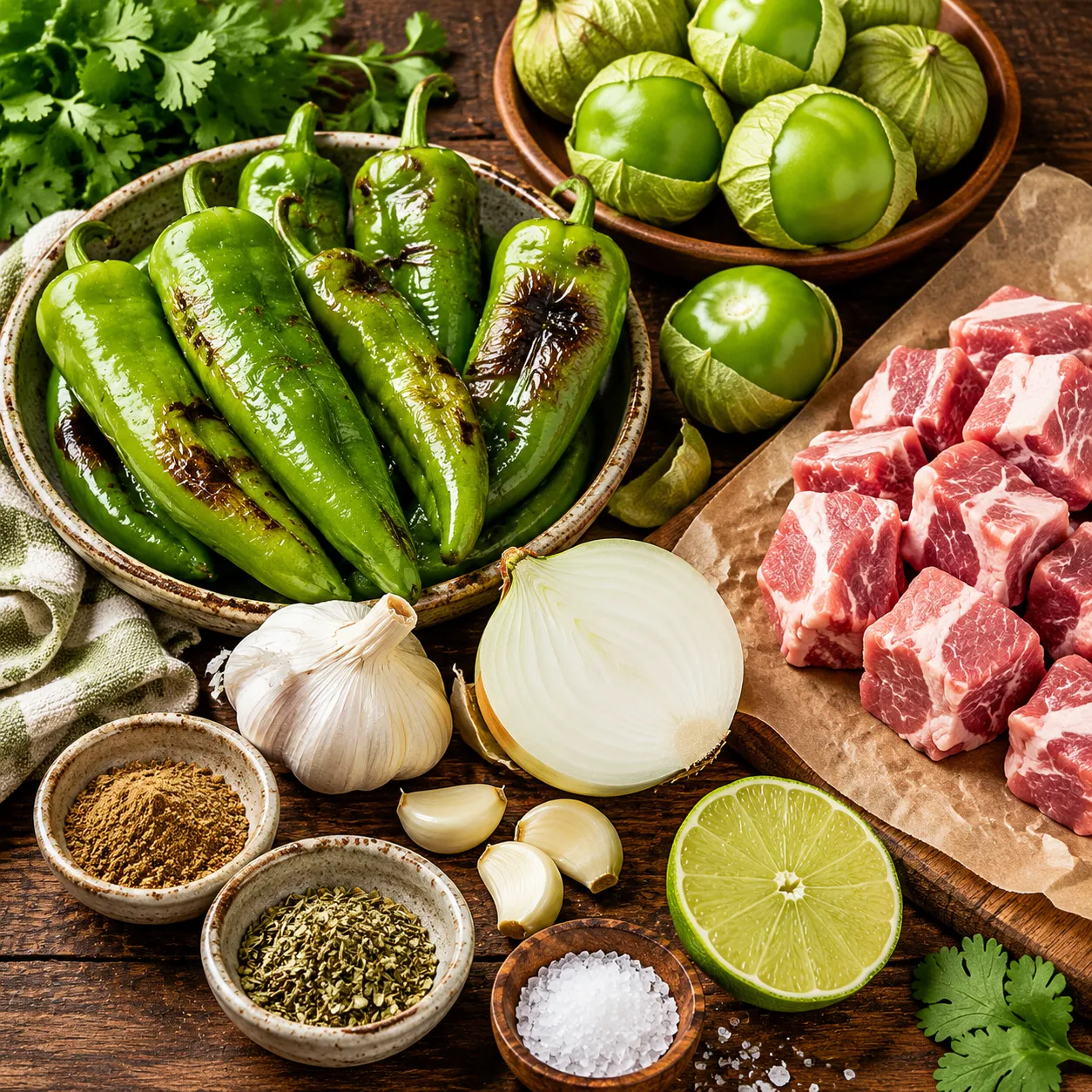
The ingredient list is short, but every item earns its place. Start with the peppers. Fresh Hatch green chile is the gold standard, with a grassy, slightly fruity heat that is unique to the Hatch Valley in southern New Mexico. If you can find them in late August or September, buy a flat and roast extras for the freezer. Out of season, Anaheim chiles are a close cousin and widely available at most grocery stores. For a deeper, earthier note I sometimes blend in roasted poblano peppers, which add body and a faint cocoa-like richness without much heat.
For the meat, pork shoulder (also sold as Boston butt) is non-negotiable. It has the marbling needed to stay juicy through a long simmer, and it shreds into tender ribbons by the end. Chicken thighs will work in a pinch and cook faster, but you sacrifice the silky, slightly gelatinous body that pork gives the broth. A couple of tomatillos round out the sauce with a tangy lift, and good low-sodium chicken stock ties everything together. Cumin and Mexican oregano are the only dried spices you need; anything more starts to compete with the chiles.
The recipe card has the precise quantities and timings, but here is the rhythm of it so you know what to expect from start to finish.
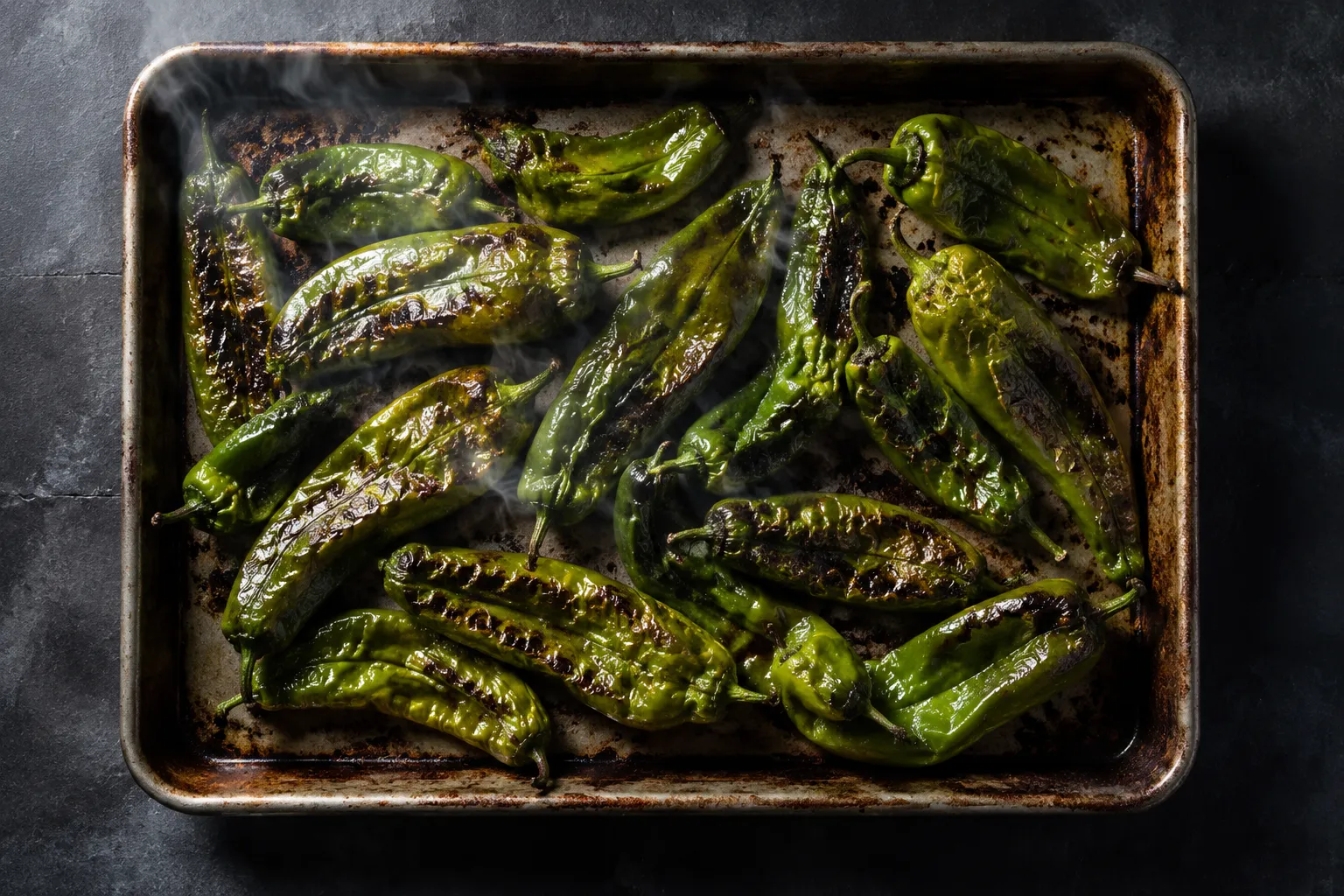
1. Roast and peel the chiles first. Spread your peppers on a sheet pan and run them under the broiler, turning every few minutes, until the skins are charred and blistered all over. Pile them into a bowl, cover with plastic wrap, and let them steam for 10 minutes; that loosens the skins so they slip right off. Pull the stems and most of the seeds, then rough-chop the flesh. This step is what separates restaurant-quality chile verde from the canned stuff, and it takes maybe fifteen minutes start to finish.
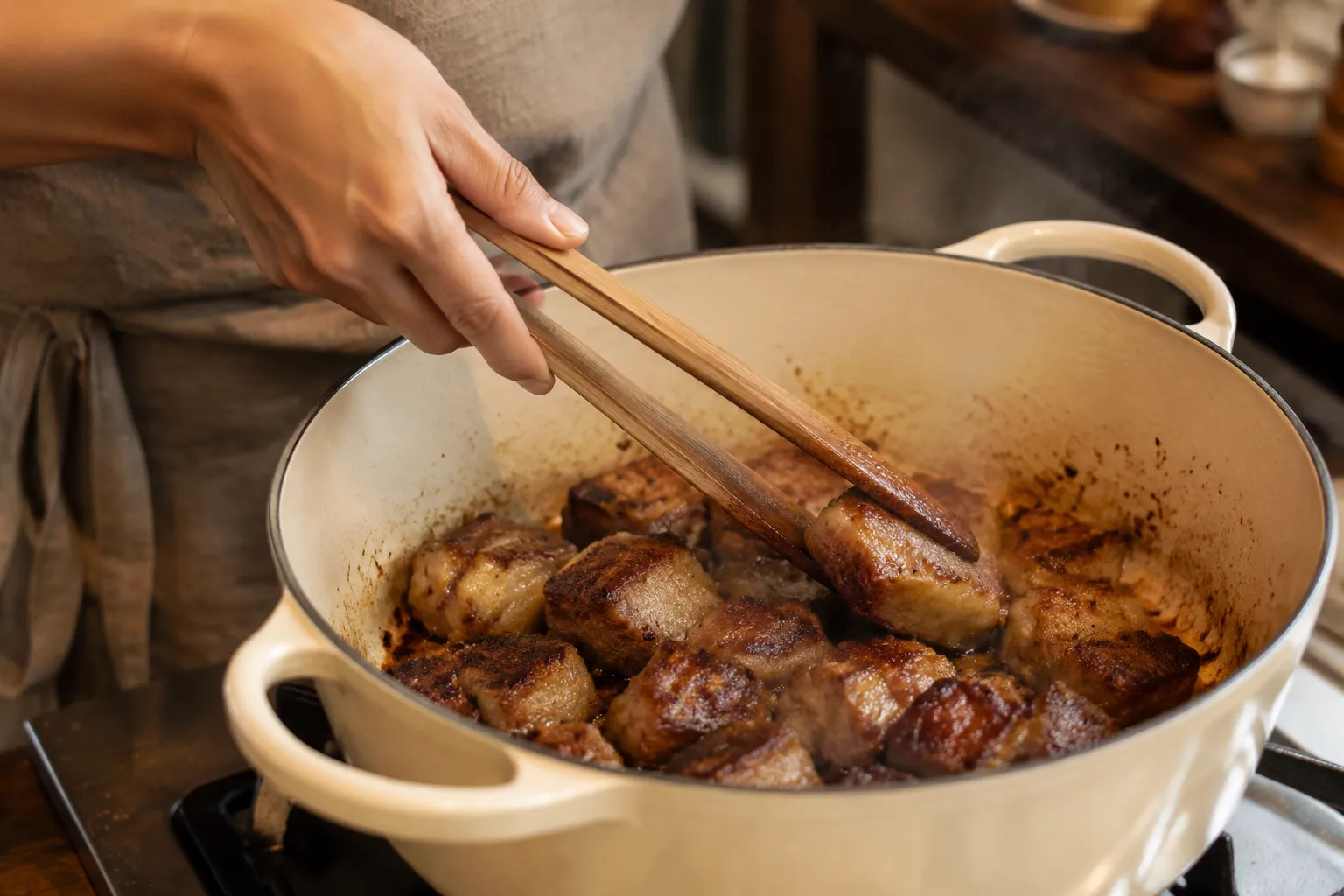
2. Sear the pork hard. Pat the cubed pork shoulder very dry, season aggressively with salt and pepper, and brown it in batches in a heavy Dutch oven. You want a deep mahogany crust, not gray meat. Crowding the pan kills the sear, so give each batch room and let the pieces sit undisturbed for a couple of minutes per side. The browned bits stuck to the bottom are pure flavor; do not scrape them out yet.
3. Build the base. Soften diced onion in the rendered fat, then add garlic, cumin, and oregano and toast for 30 seconds until the kitchen smells like a taqueria. Sprinkle in a couple of tablespoons of flour and stir for a minute. This gives you a light roux that thickens the broth without lumping later. Pour in the chicken stock slowly, scraping up the fond as you go so all that flavor lifts back into the liquid.
4. Simmer until fork-tender. Return the pork to the pot along with the chopped tomatillos and roasted green chiles. Bring everything to a gentle bubble, then drop the heat to low, partially cover, and simmer for 75 to 90 minutes. You are looking for pork that surrenders to a fork and a broth that has reduced just enough to coat the back of a spoon.
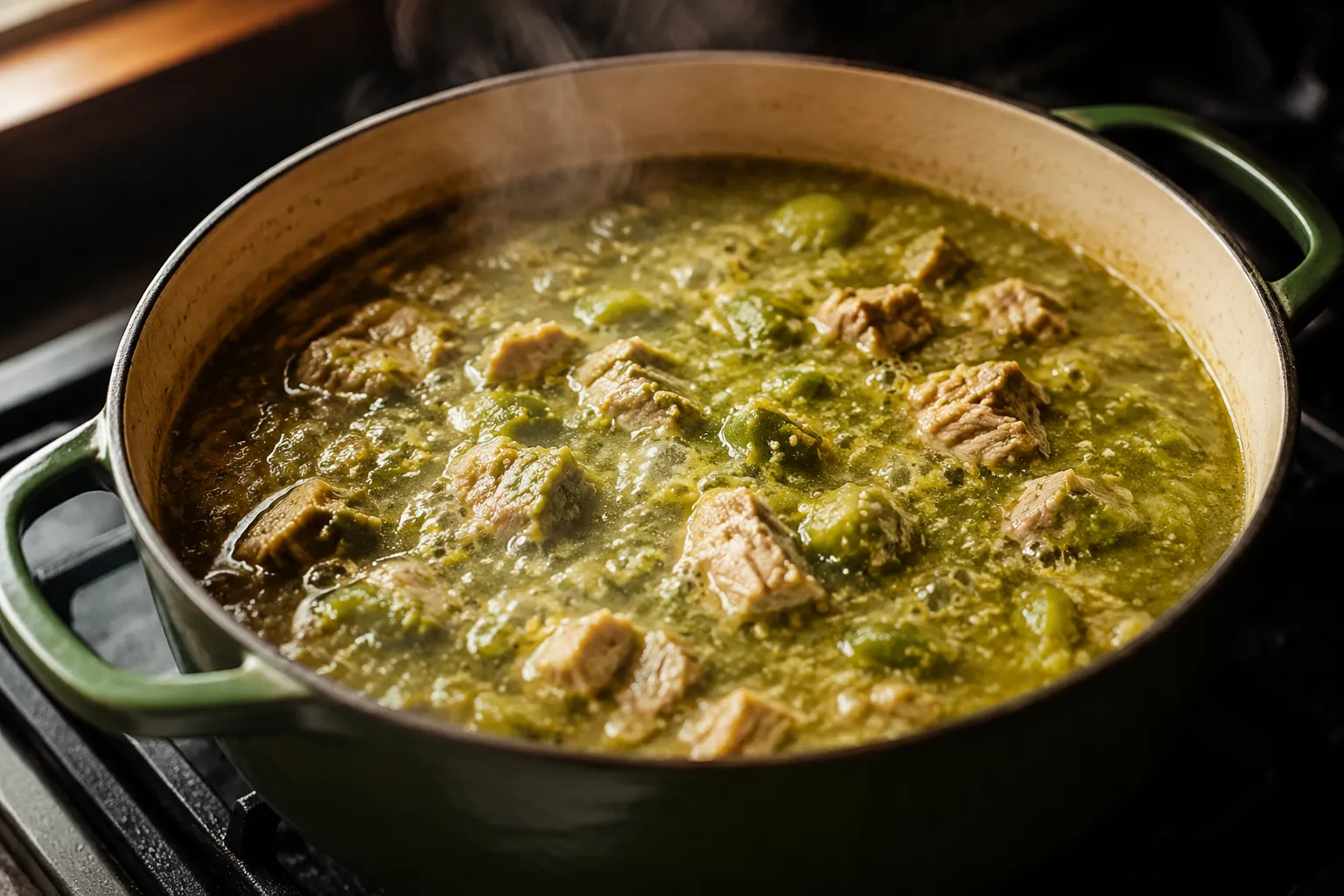
5. Taste and adjust. This is the most important step, and the one home cooks skip most often. Salt is almost always the answer, but a squeeze of lime at the end can wake up the whole pot if it tastes flat. If the broth is too thin, simmer uncovered for another ten minutes. If it has tightened up too much, splash in a little more stock. Trust your tongue here more than the clock.
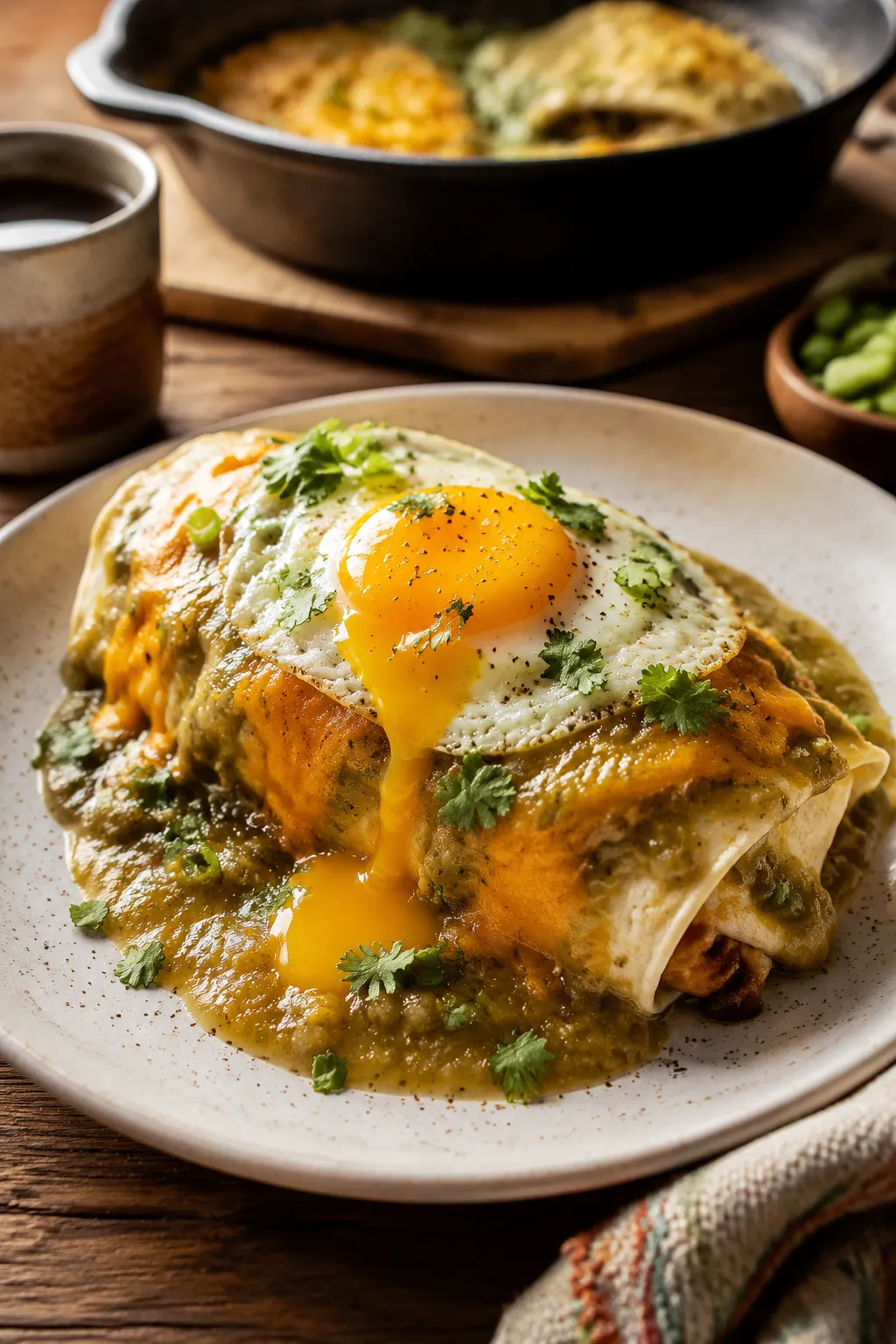
This is where chile verde really shines: it is less a single dish and more a building block for an entire week of meals. Ladle it over a fat breakfast burrito with scrambled eggs and cheese for the classic smothered treatment. Spoon it onto crispy diner-style hash browns or french fries for an instant green chili plate. Use it as the sauce for stacked enchiladas in place of a homemade enchilada sauce when you want something brothier and pork-forward on the plate.
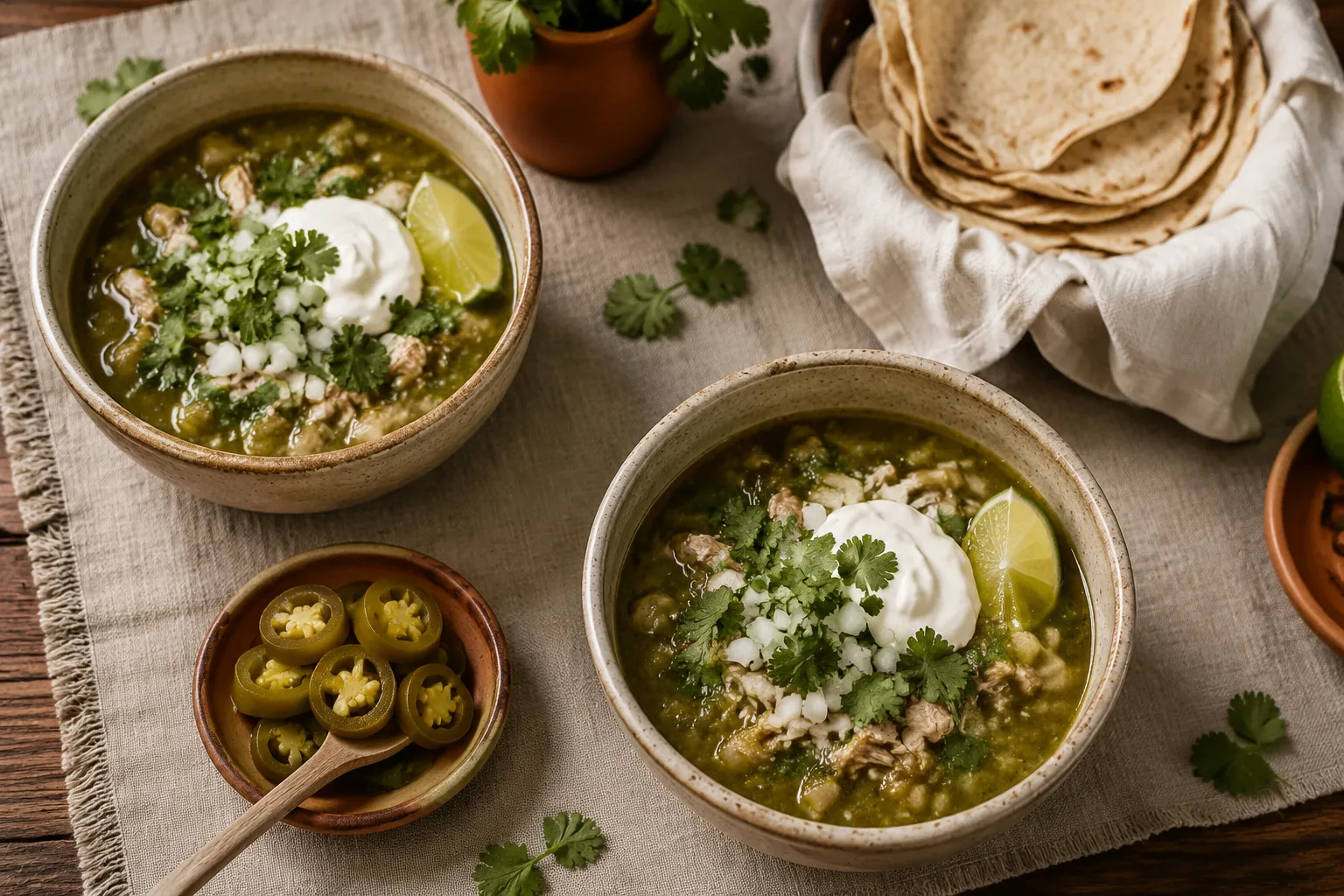
For a proper sit-down dinner, serve big bowls with warm flour tortillas, a scoop of Mexican rice, and a side of pinto or black beans. Toppings matter, so I always set out sour cream, diced white onion, fresh cilantro, lime wedges, and pickled jalapenos so everyone can dial in their bowl. If you usually default to a bowl of white chicken chili on weeknights, this pork shoulder stew is the heartier, smokier cousin worth keeping in rotation. It is also a stellar potluck dish because the flavor only deepens between the kitchen and the party.
Heat level is personal. Hatch chiles are sold mild, medium, hot, and extra hot, and the difference between mild and hot is significant; taste a sliver of one before you commit the whole batch to the pot. You can always add a chopped jalapeno or a pinch of cayenne later, but you cannot pull heat back out once it is in. If you are cooking for a crowd with mixed tolerance, lean mild and put a bottle of hot sauce on the table.
Plan ahead if you can. Like most braises, this one tastes even better on day two once the spices have settled and the pork has soaked up more of the broth. I often make it the night before I want to serve it and reheat gently on the stove. It is one of those recipes that turns a quiet Sunday into a week of effortlessly good lunches, and the smell alone is worth the afternoon.
Pour yourself a bowl, top it generously, and tear into a warm tortilla. This is the kind of cooking that does not ask for much and gives you everything back.
This recipe is a strong base that takes well to swaps. Adjust the protein, the chile mix, or the cooking vessel to suit what you have on hand and the kind of evening you are after.
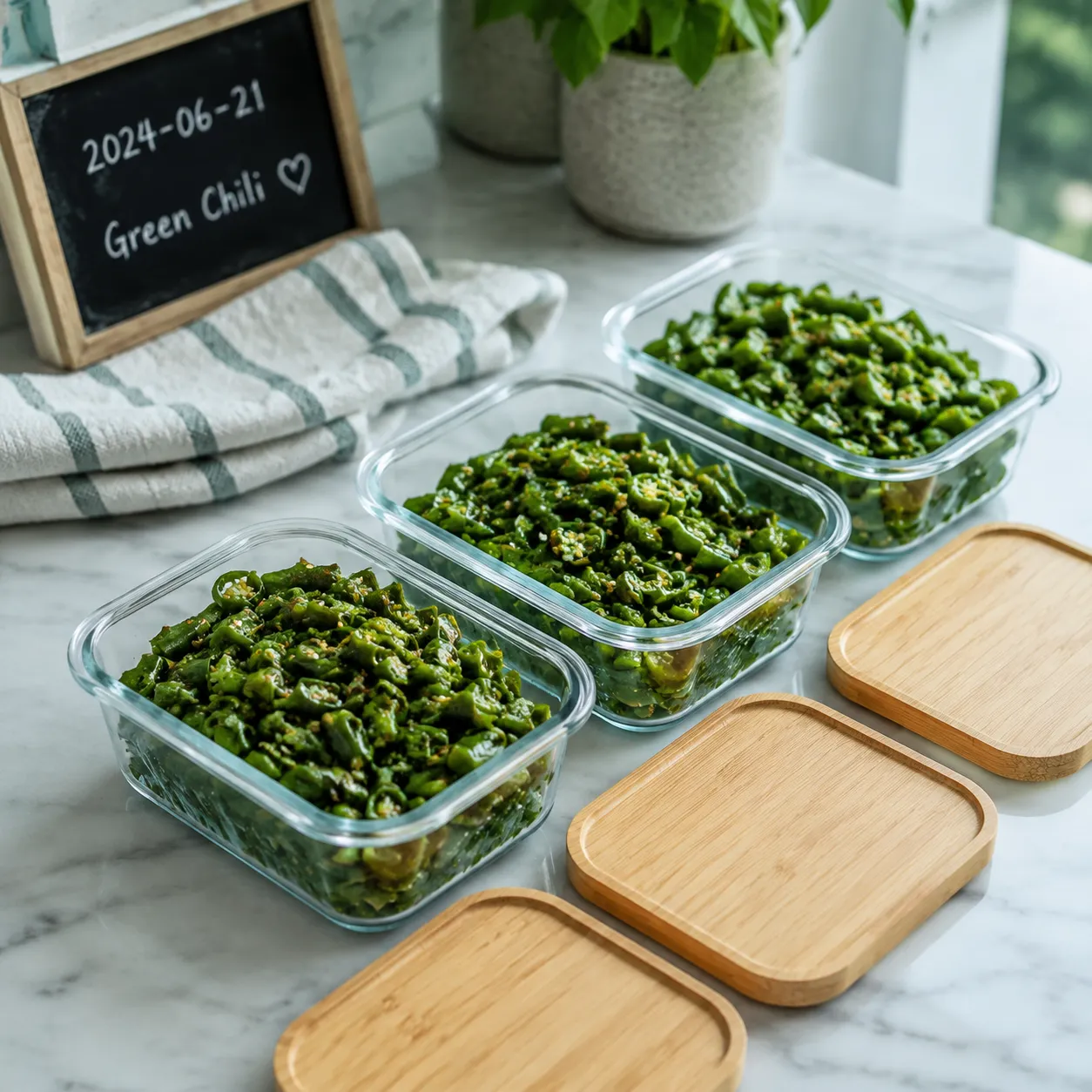
Refrigerate leftovers in an airtight container for up to 4 days. The flavor genuinely improves on day two as the spices settle and the pork keeps absorbing the broth, so do not feel bad about making it ahead. Reheat gently on the stovetop over medium-low heat, stirring occasionally, and add a splash of broth or water if it has tightened up overnight.
For longer storage, cool the stew completely, then portion into freezer-safe containers or zip-top bags laid flat. It freezes beautifully for up to 3 months. Thaw overnight in the fridge before reheating, or reheat from frozen on low with a lid on, breaking it up as it loosens. Avoid the microwave at full power, which can toughen the pork and dull the chile flavor; use 50 percent power in short bursts if you must.