Authentic Aguachile Recipe (Spicy Mexican Shrimp)
Ingredients
Scale
This authentic aguachile recipe transforms raw shrimp into a fiery, citrus-bright Mexican classic in under 20 minutes — fresher and bolder than any ceviche.
aguachile is the kind of no-cook seafood dish that tastes like summer hit the blender: bracing lime juice, fresh green chiles, cool cucumber, sweet raw shrimp, and just enough salt to make every flavor snap into focus. It is icy, spicy, citrusy, and wonderfully dramatic for something that takes about 20 minutes from cutting board to table. If you love Mexican shrimp ceviche but wish it were brighter, bolder, and more alive with chile heat, this is your dish.
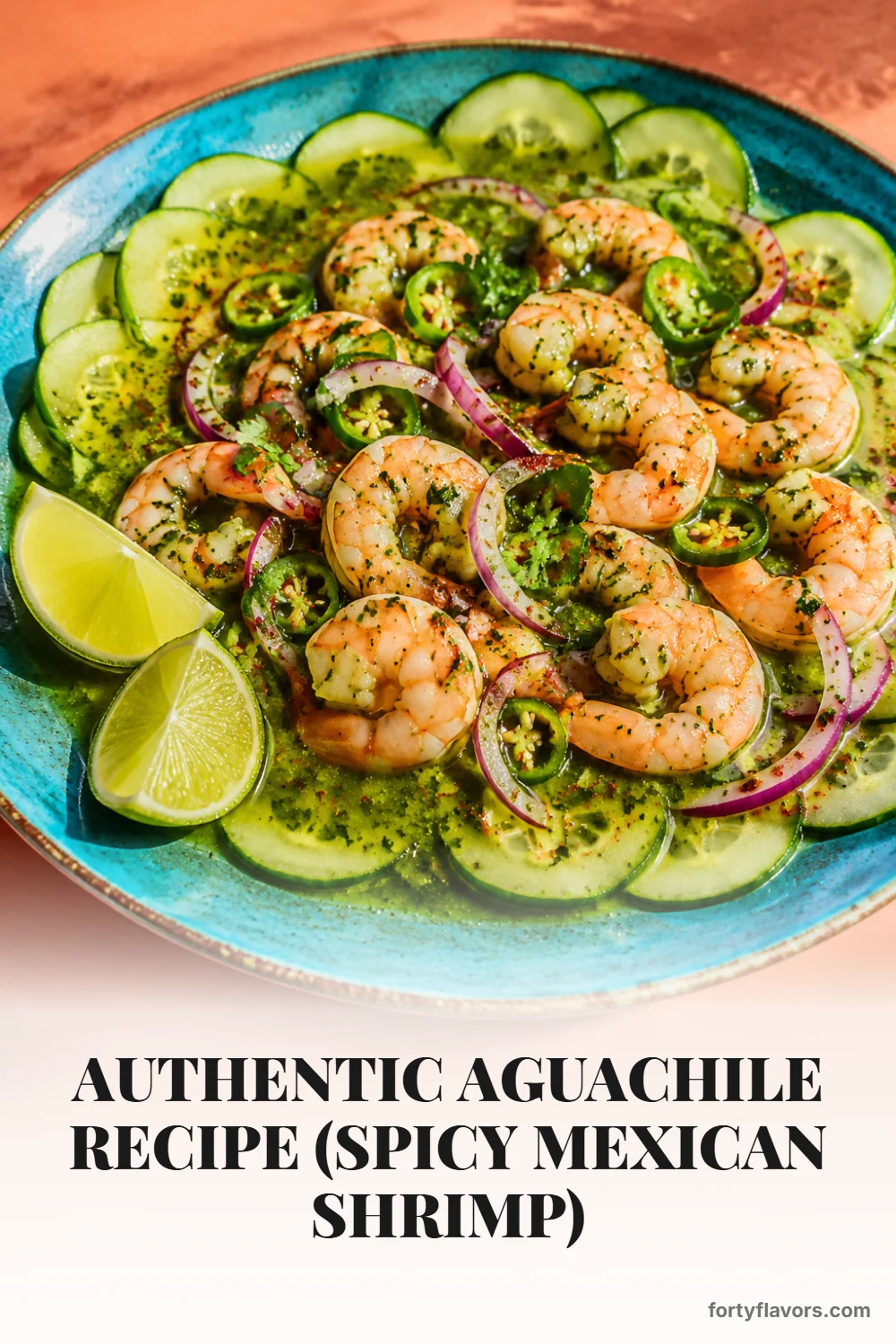
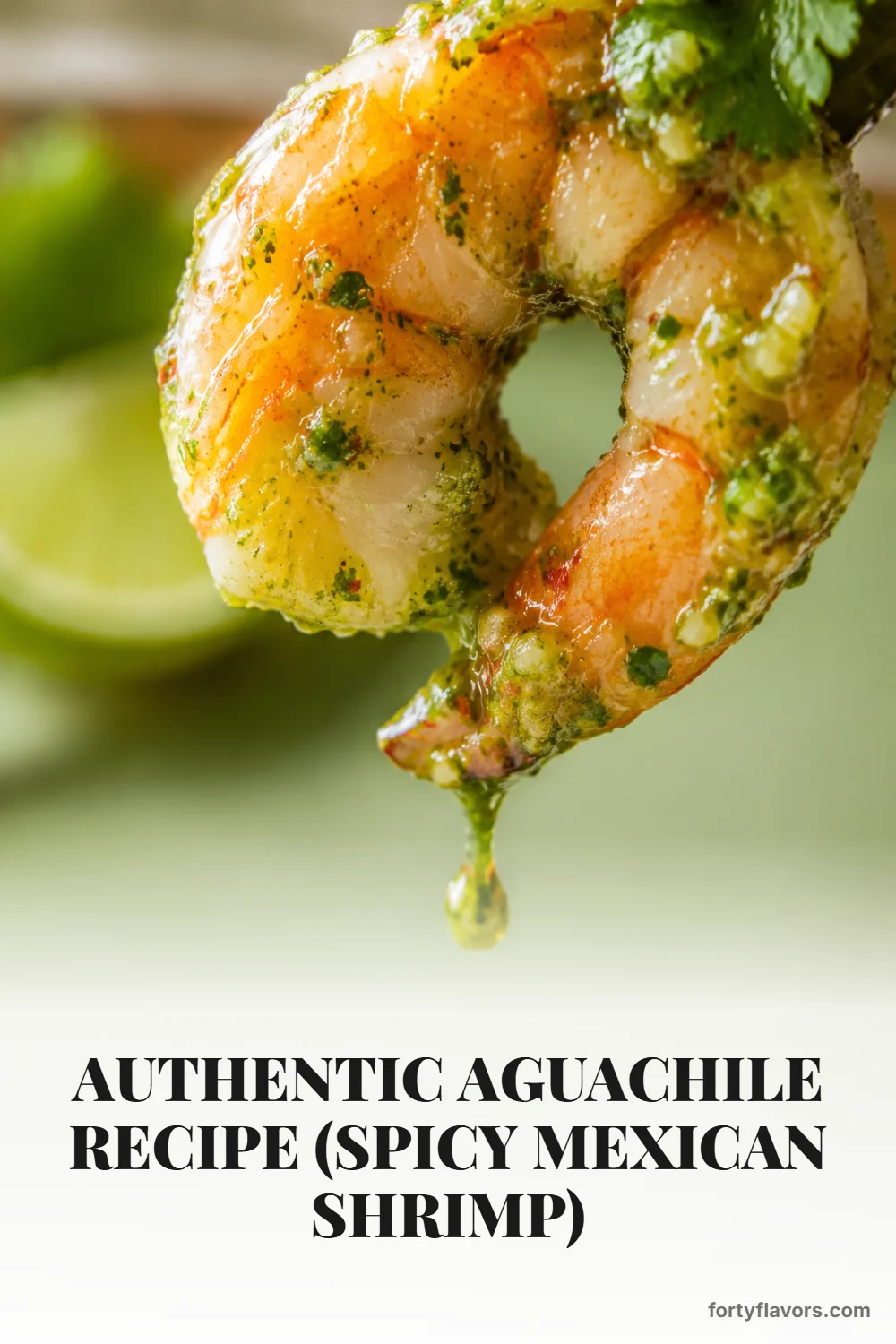
This version leans traditional in spirit, with butterflied shrimp and a vivid green broth made from serrano chiles, cilantro, garlic, cucumber, and fresh lime juice. The shrimp is not cooked with heat; instead, the citrus changes its texture while keeping it tender and silky. Serve it very cold with crisp tostadas, creamy avocado, and a cold drink, and you have a restaurant-worthy appetizer that feels made for patios, beach weekends, and long warm evenings.
The name translates roughly to “chile water,” which is a beautifully simple description of the dish’s soul: seafood bathed in a sharp, spicy liquid. In its most recognizable green form, the sauce is blended with lime juice, serrano chiles, cilantro, and often cucumber, then poured over sliced or butterflied shrimp. The result is fresher and more immediate than many marinated seafood dishes, with the shrimp barely cured and the sauce tasting electric rather than mellow. Think of it as Sinaloa-style seafood at its most refreshing, clean, and unapologetically spicy.
While the two dishes are close cousins, they are not identical. Ceviche usually marinates seafood longer, often with chopped tomato, onion, cilantro, and citrus until the texture is firmer and more thoroughly “cooked” by the acid. This dish is served sooner, often while the shrimp is still tender and translucent at the center, with a blended chile broth rather than a chunky dressing. The heat level is usually higher too, especially when serranos or chiltepín chiles are used with a generous hand. If ceviche is bright and sunny, this is sharper, colder, greener, and more exhilarating.
The dish is strongly associated with Sinaloa, a coastal Mexican state known for exceptional seafood and a deep culture of raw and lightly cured preparations. Early versions were often made with chiltepín chiles pounded into water with salt, then spooned over fresh shrimp pulled from nearby waters. Over time, lime became central, and modern green versions added herbs, cucumber, and blender-smooth sauces. That coastal immediacy is important: the point is not to hide the seafood but to spotlight it with acid, heat, and cold crunch. When made well, it tastes clean, briny, and intensely fresh.
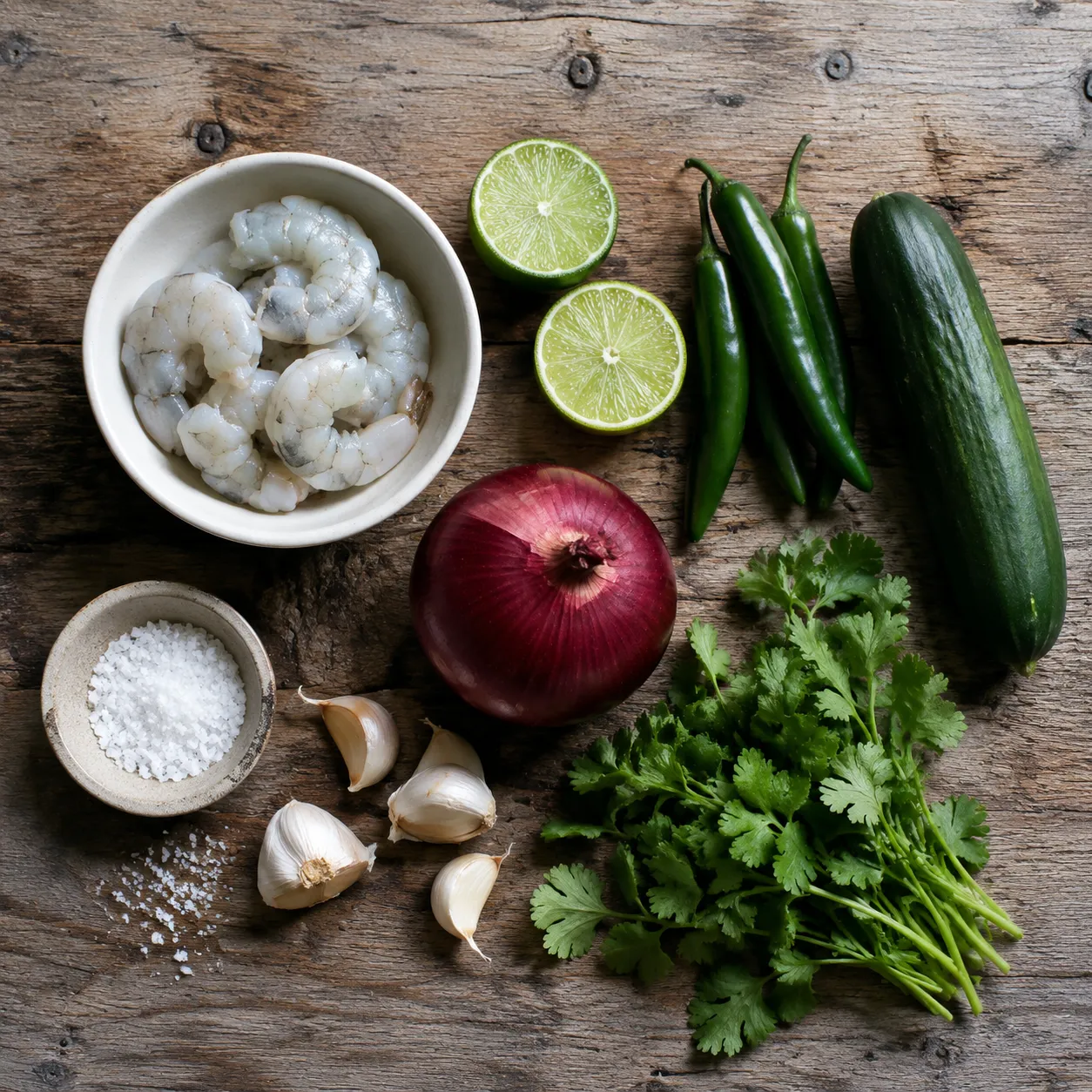
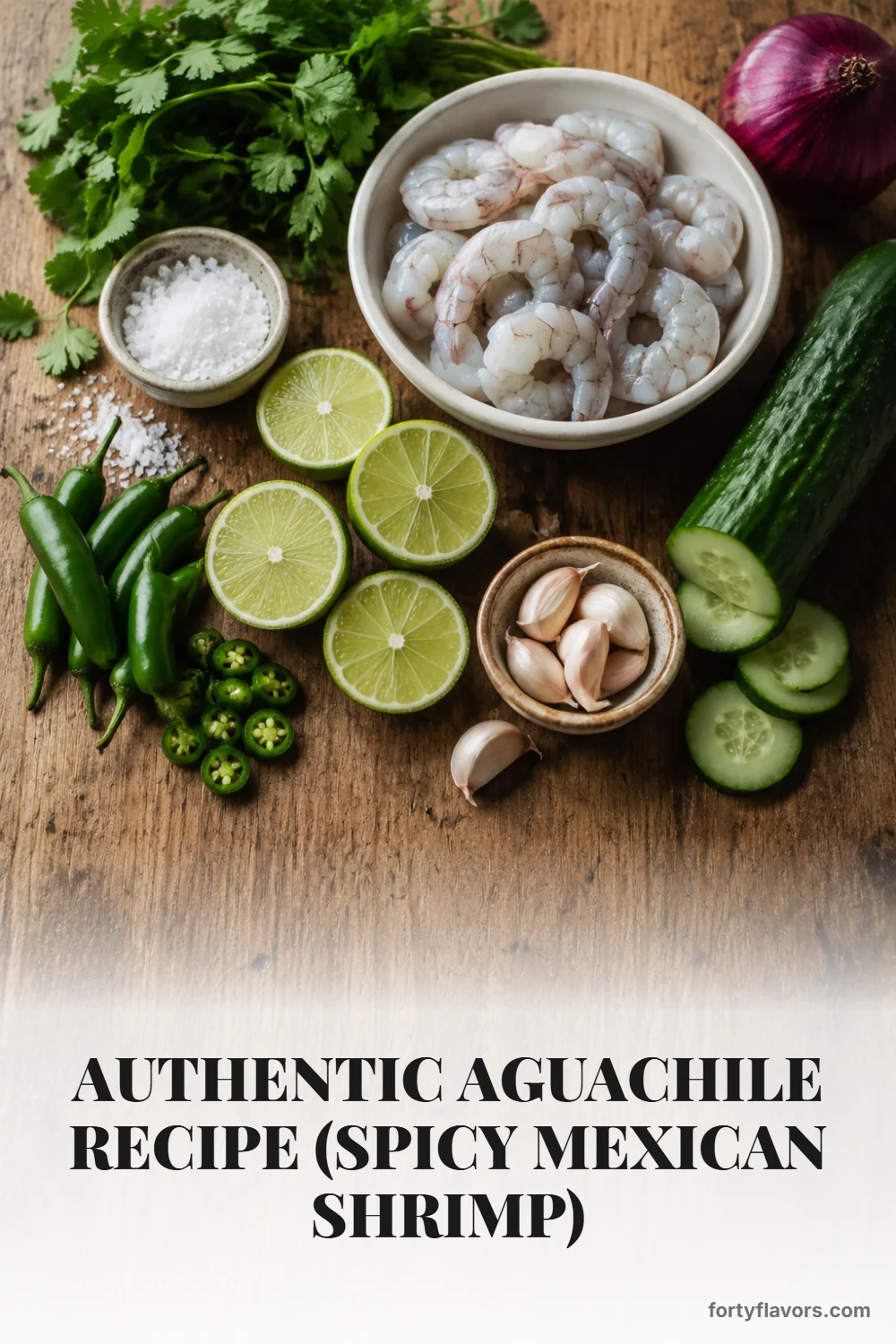
The ingredient list is short, so each piece needs to pull its weight. Start with excellent raw shrimp, peeled and deveined, then butterfly them so the lime penetrates quickly and evenly. You will also need plenty of fresh lime juice, a crisp English cucumber, thinly sliced red onion, fresh cilantro, one small garlic clove, kosher salt, and black pepper. The green sauce is essentially a quick serrano chile salsa, but thinner, brighter, and designed to soak into the shrimp instead of sit on top.
For the best texture and safest result, buy sushi-grade shrimp if you can find it, or ask a trusted fishmonger for shrimp suitable for raw preparations. Frozen shrimp can actually be a smart choice because many shrimp are frozen quickly after harvest, preserving sweetness and texture; thaw them overnight in the refrigerator and pat them very dry. Avoid any shrimp that smells strongly fishy, feels slimy, or has been sitting in the case too long. Large shrimp are easiest to butterfly neatly, but medium shrimp work if that is what looks freshest. The cleaner the shrimp tastes before it meets the lime, the more elegant the finished plate will be.
Serrano chiles are the classic home-kitchen choice because they bring clean green heat without overwhelming the citrus. Use three for a lively but manageable spice level, or four if you like the broth fiery enough to make your lips tingle. If you are sensitive to heat, remove some of the seeds and ribs before blending, or use a mix of serrano and jalapeño. For a more regional nod, a pinch of crushed chiltepín can bring a sharp, lingering warmth. The goal is spice that wakes up the shrimp, not spice that buries the sweetness.
Fresh citrus is non-negotiable here, so skip bottled juice and squeeze the limes right before blending. The cucumber does double duty: part of it goes into the sauce for a cool green body, and part is sliced thinly for crunch around the shrimp. Red onion adds color and bite, especially if you slice it paper-thin and rinse it briefly under cold water to soften its edge. Cilantro gives the broth its herbal lift, while a small clove of garlic adds depth without making the sauce heavy. This is not the place for complicated seasoning; salt, acid, chile, and freshness do the work.
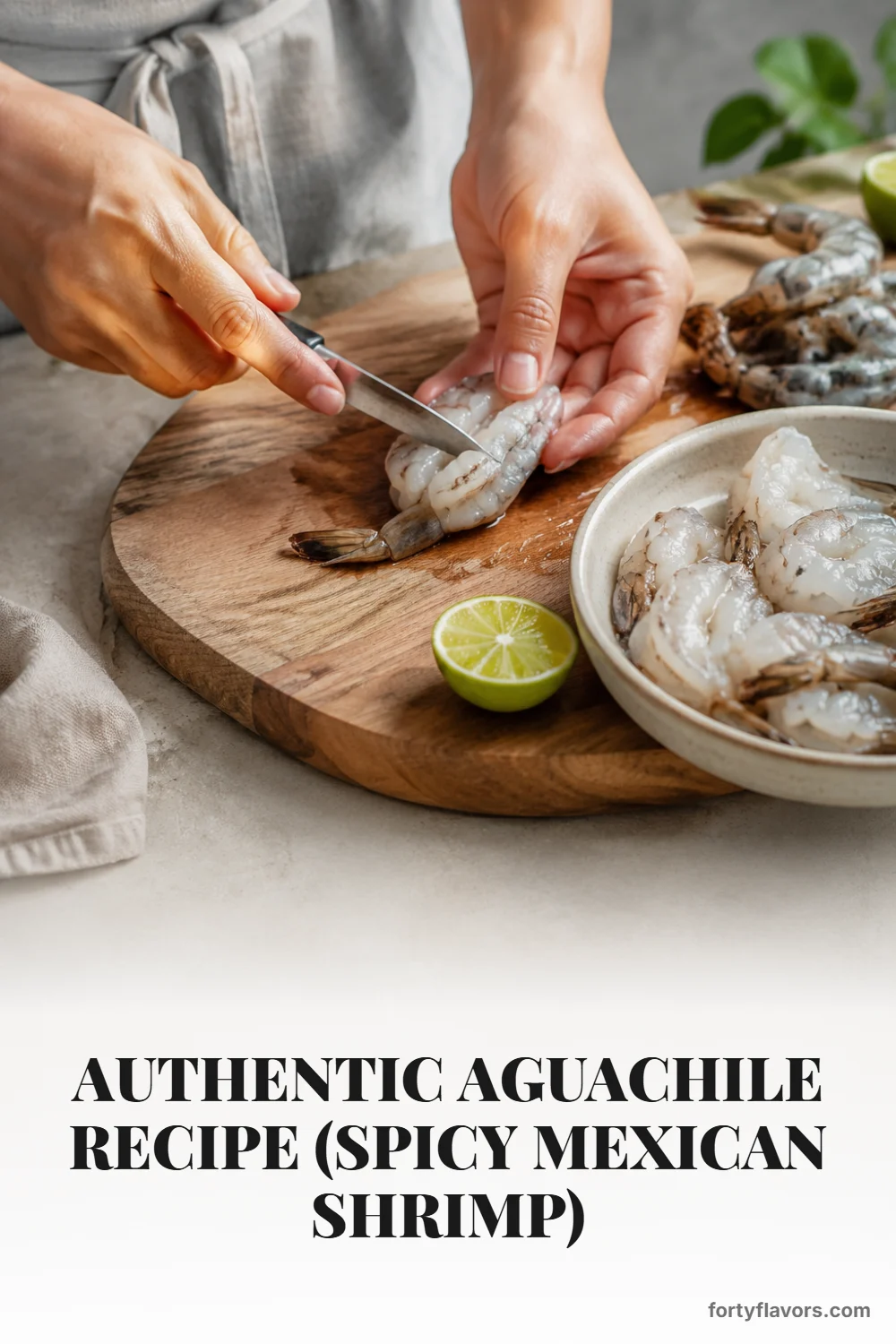
The method is simple, but the order matters. Butterfly the shrimp first so they open like little books and cure quickly in the lime. Then blend the green broth until smooth, taste it for salt and heat, and pour it over the shrimp just before serving or after a brief chill. You want the shrimp to turn opaque around the edges while staying delicate, not rubbery or over-marinated. A shallow dish is ideal because every piece can sit in the sauce instead of being piled too deeply.
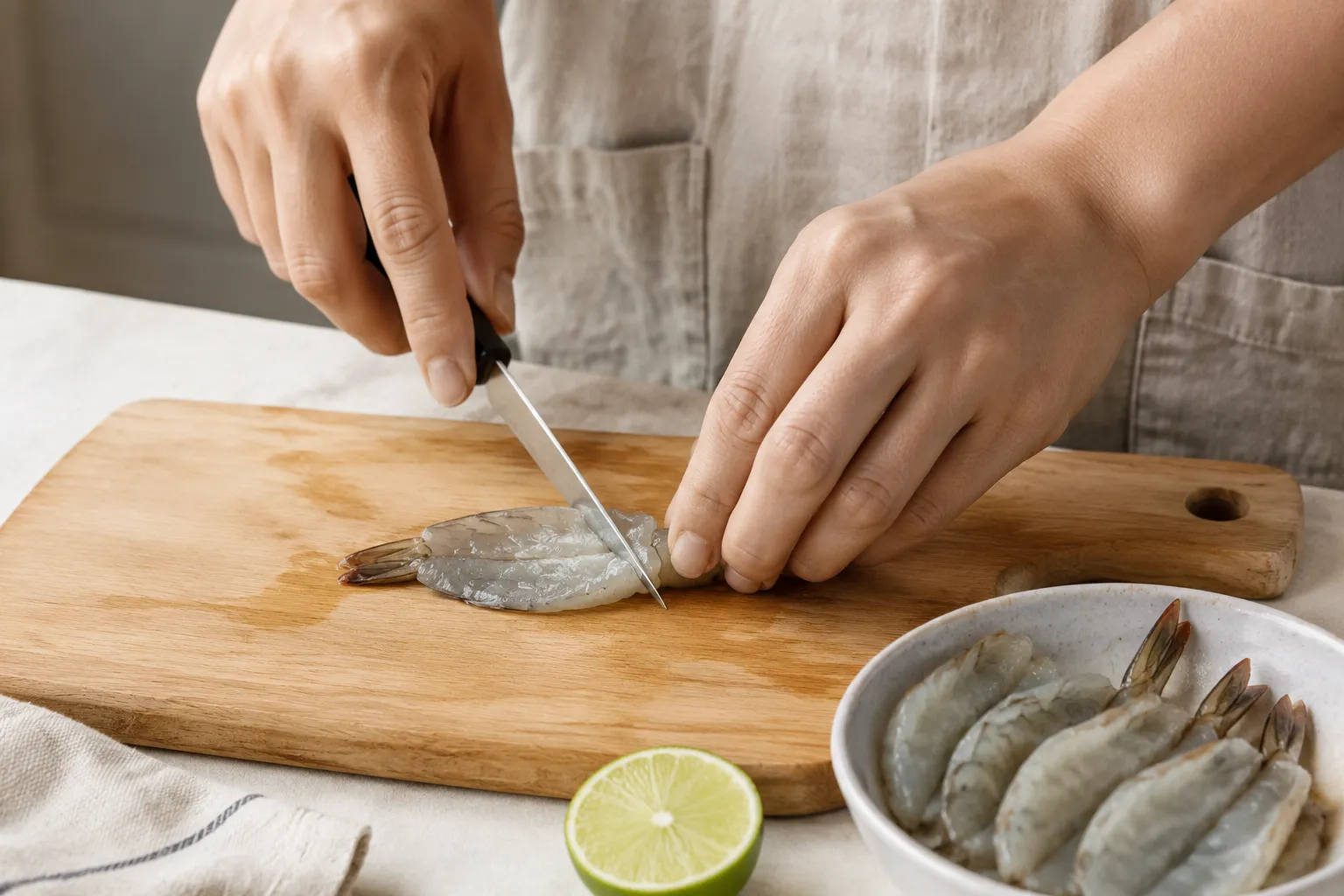
Use a sharp paring knife to slice each shrimp lengthwise along the back, taking care not to cut all the way through. Open the shrimp flat, remove any remaining vein, and arrange the pieces in a single layer in a chilled shallow dish. Sprinkle lightly with kosher salt, then spoon over a little lime juice while you make the sauce. This early acid contact gives the shrimp a head start and helps the texture firm just enough. If your kitchen is warm, place the dish over a tray of ice or slide it into the refrigerator while you blend.
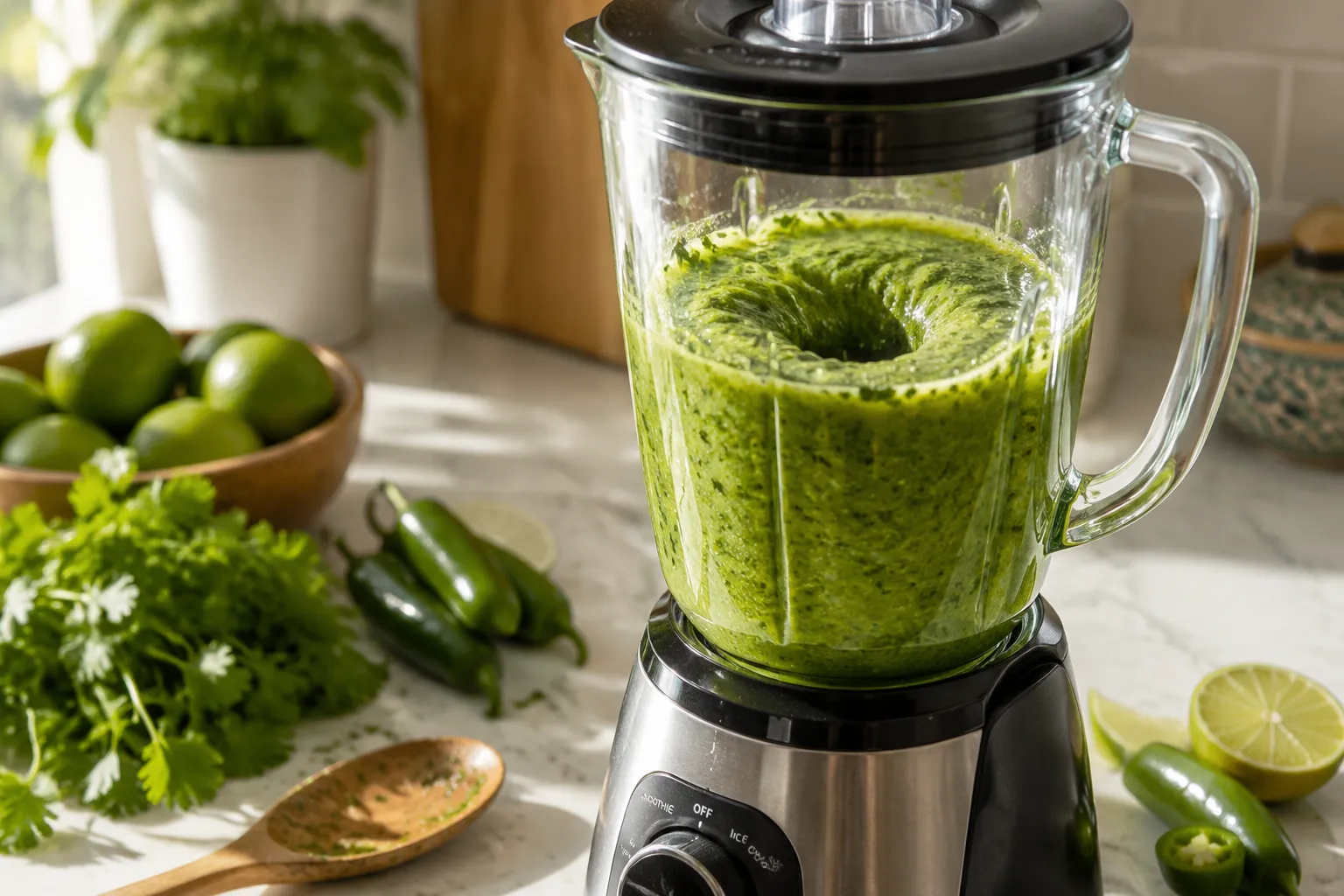
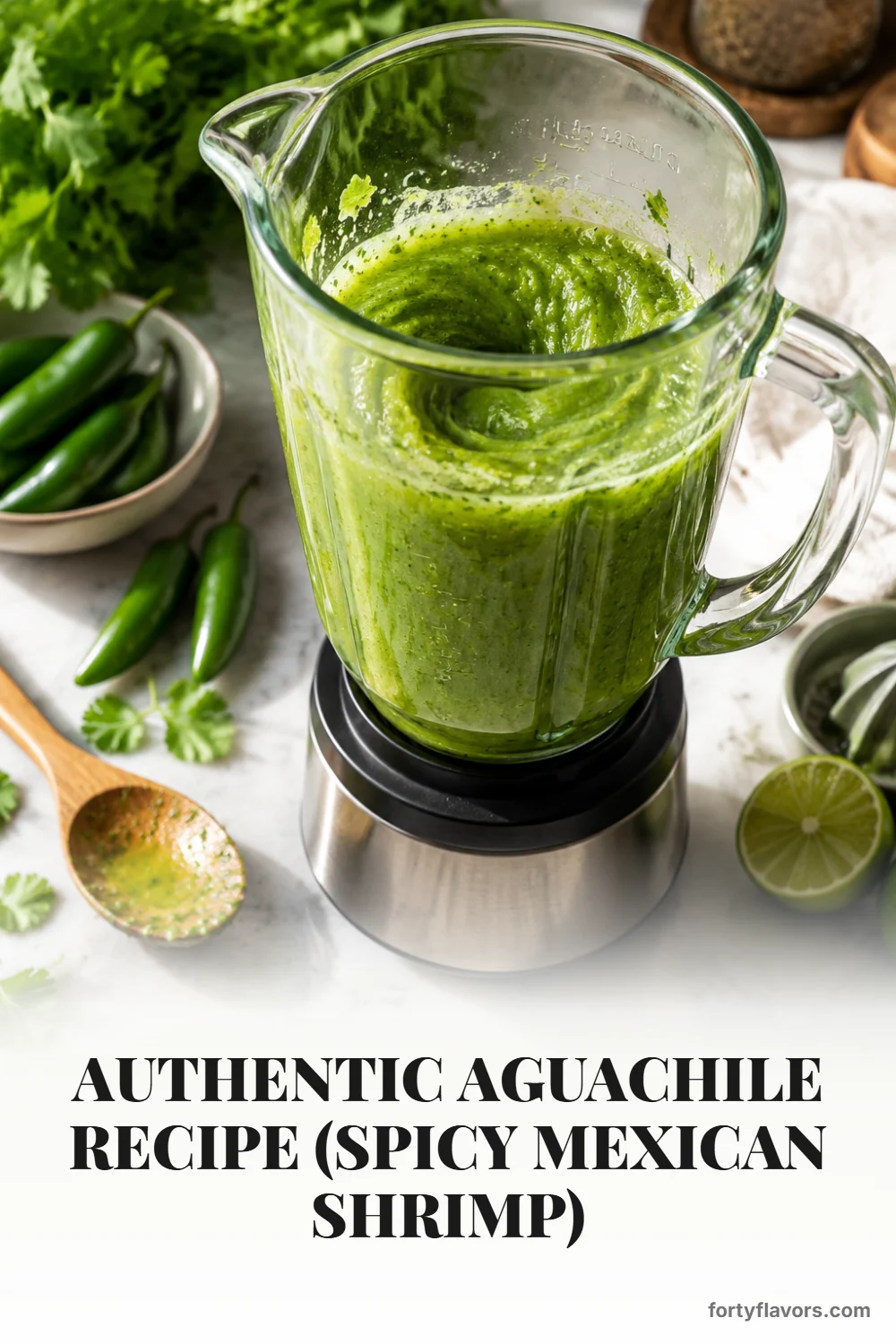
In a blender, combine fresh lime juice, serrano chiles, cilantro, garlic, a few chunks of peeled cucumber, salt, and a little black pepper. Blend until the mixture turns smooth and vividly green, then taste with a spoon before it touches the shrimp. It should be tart, salty, and spicy enough to feel slightly intense on its own, because the seafood and vegetables will soften it. If the sauce tastes flat, add another pinch of salt; if it is too sharp, blend in another slice of cucumber. This broth is the backbone of the entire dish, so let your palate guide the final balance.
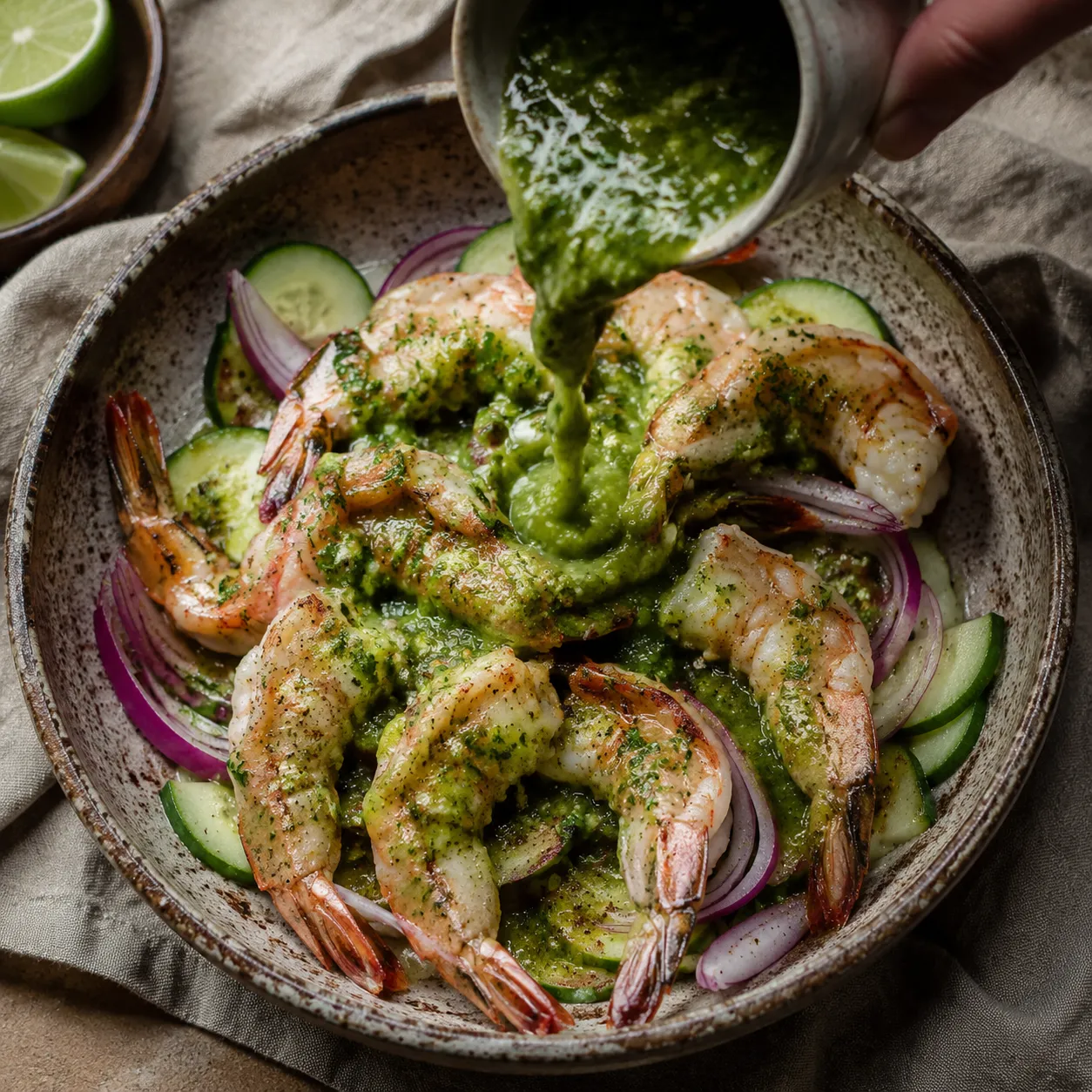
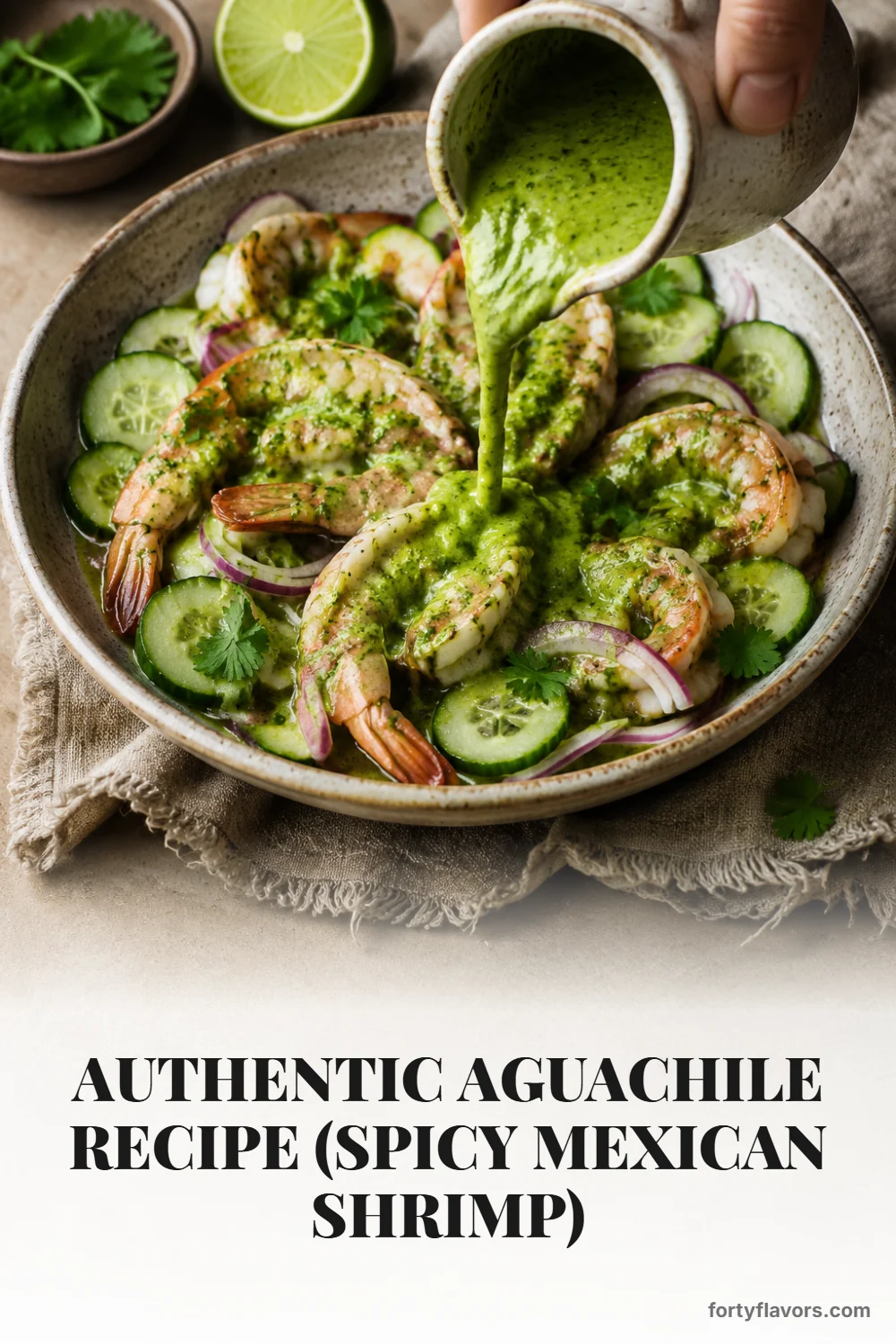
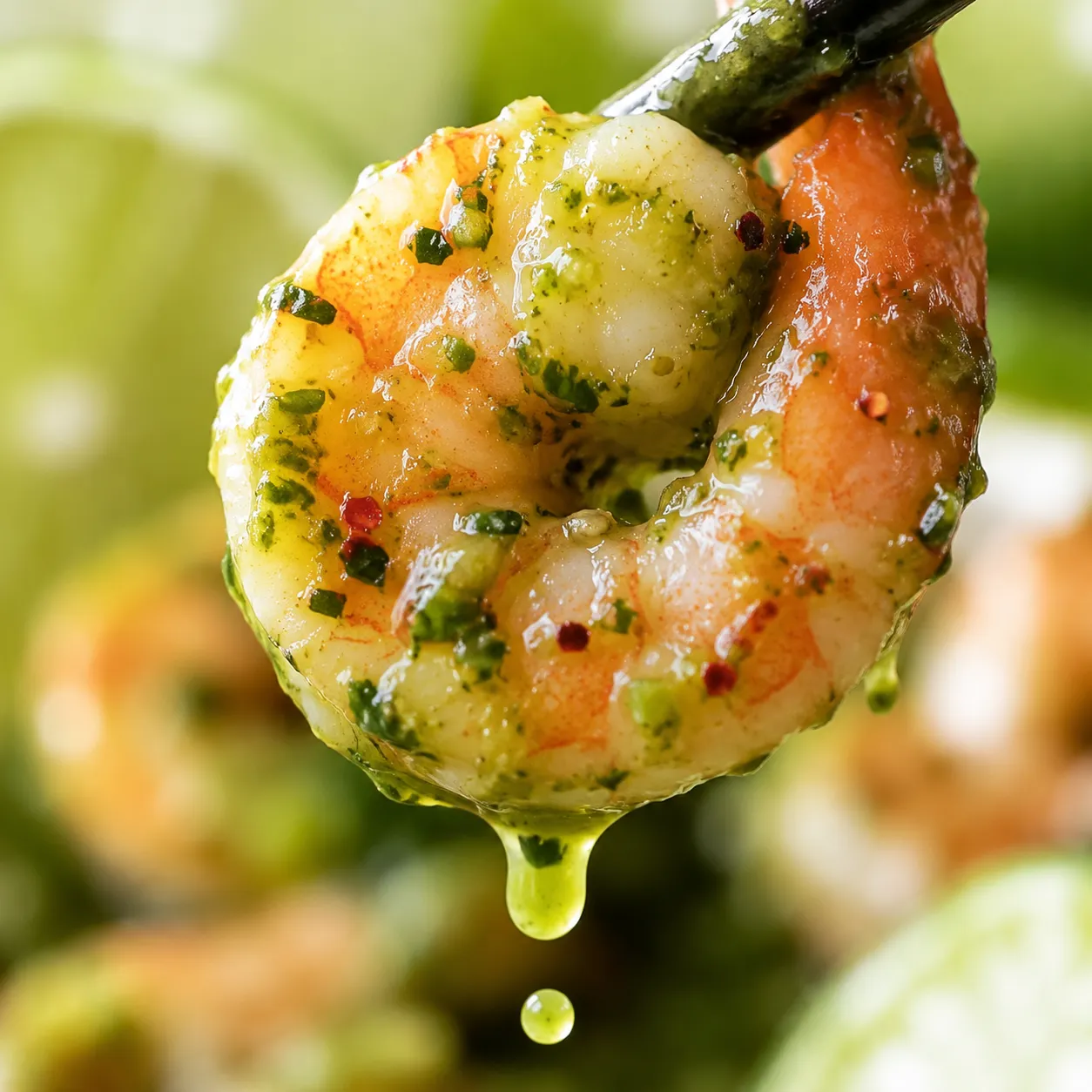
Pour the green sauce over the butterflied shrimp and gently tuck in thin cucumber slices and red onion ribbons. Let the dish chill for 5 to 10 minutes, depending on how cured you like the shrimp and how thinly it is cut. During this short rest, the edges turn pink and opaque while the centers remain tender and almost silky. Spoon the sauce over the top once or twice so everything is evenly coated. Finish with more cilantro, a few lime wedges, and, if you like, a pinch of flaky salt right before serving.
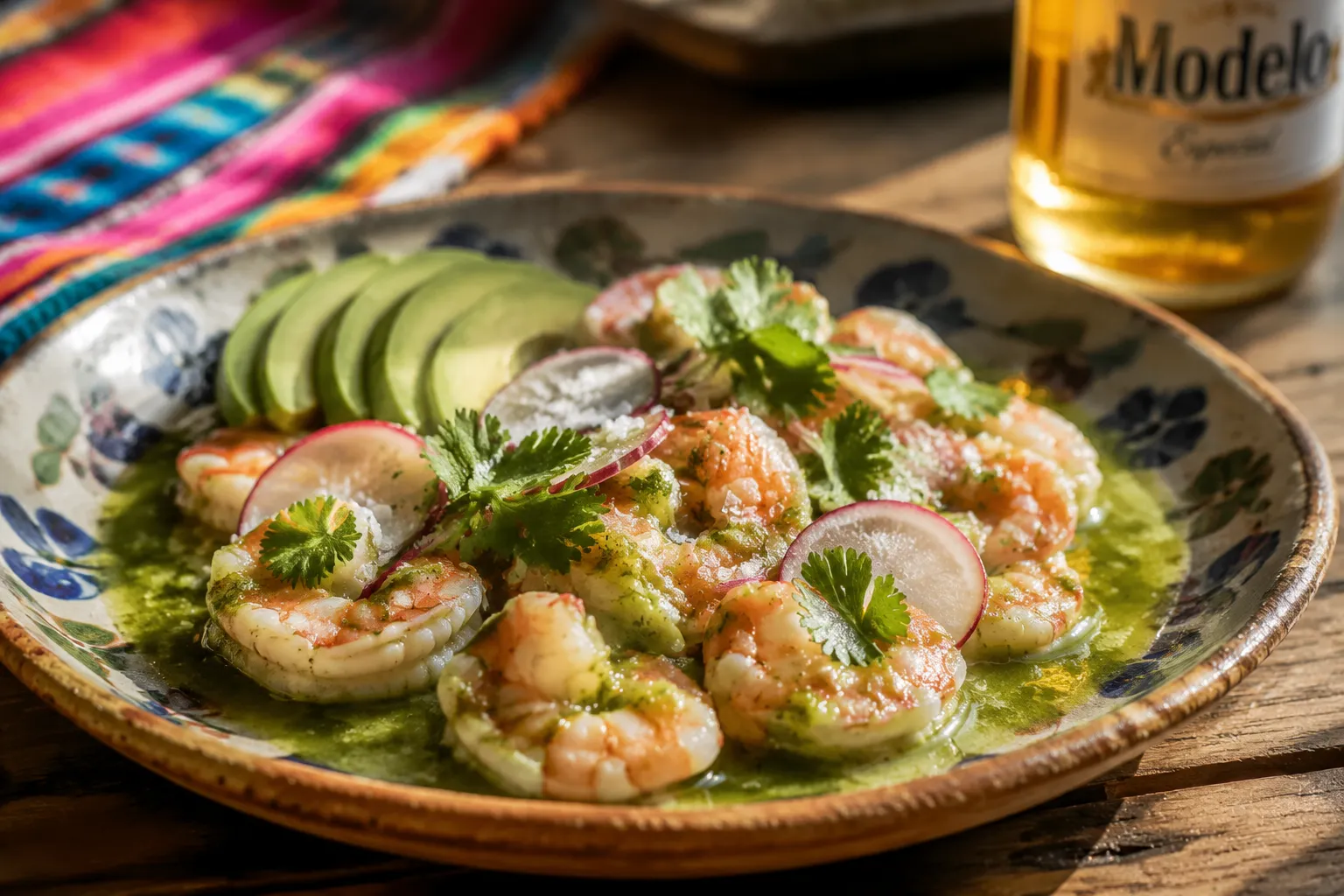
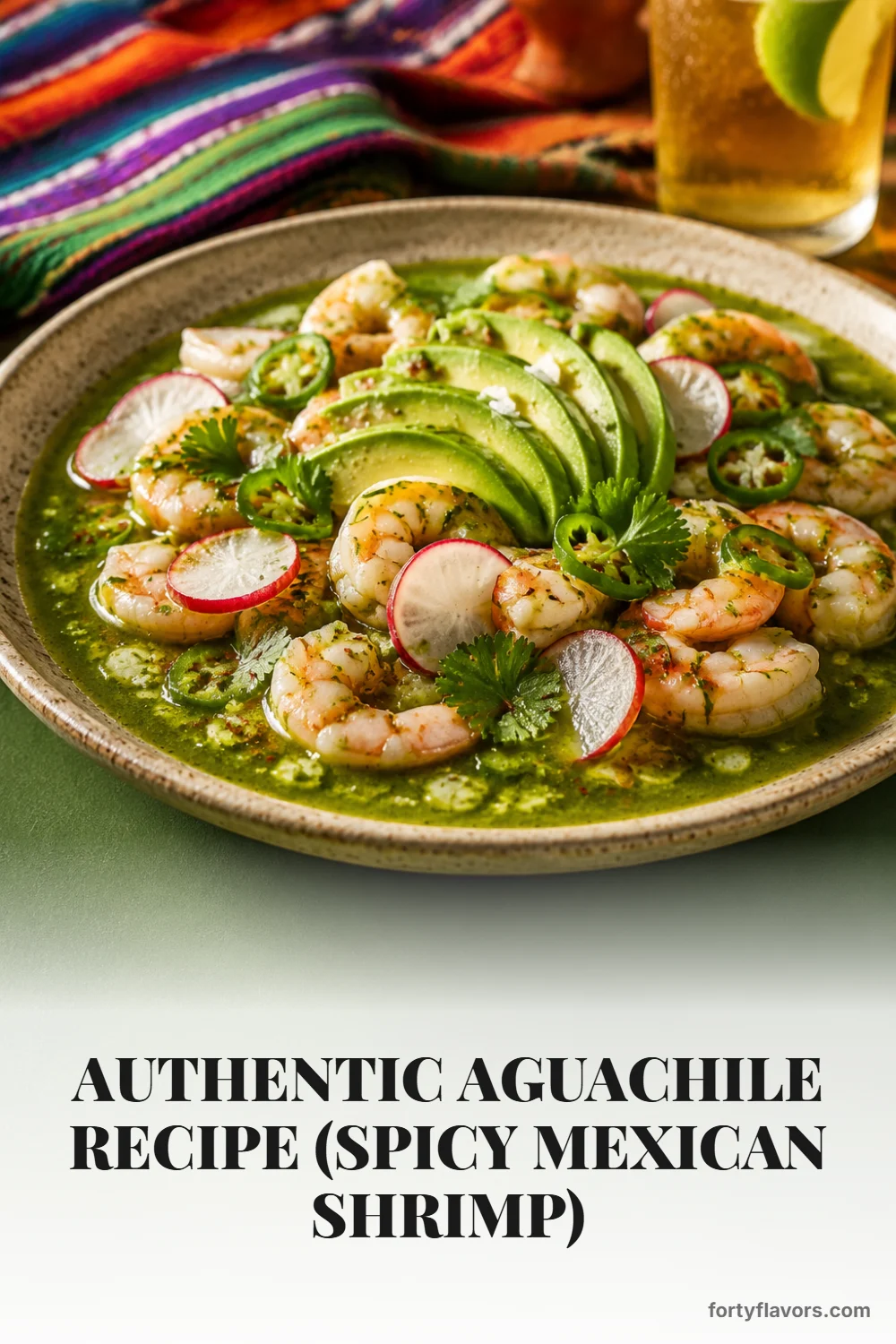
Serve this dish cold, wide, and shallow, so the shrimp glisten in the green broth and guests can scoop up a little of everything. Crispy corn tostadas are the classic move, and they make the perfect contrast to the soft shrimp and juicy cucumber. If you are building a seafood spread, add bowls of homemade pico de gallo, sliced avocado, lime wedges, and hot sauce so everyone can customize each bite. For something especially pretty, arrange radish slices, cilantro leaves, and avocado fans over the top right before the platter hits the table.
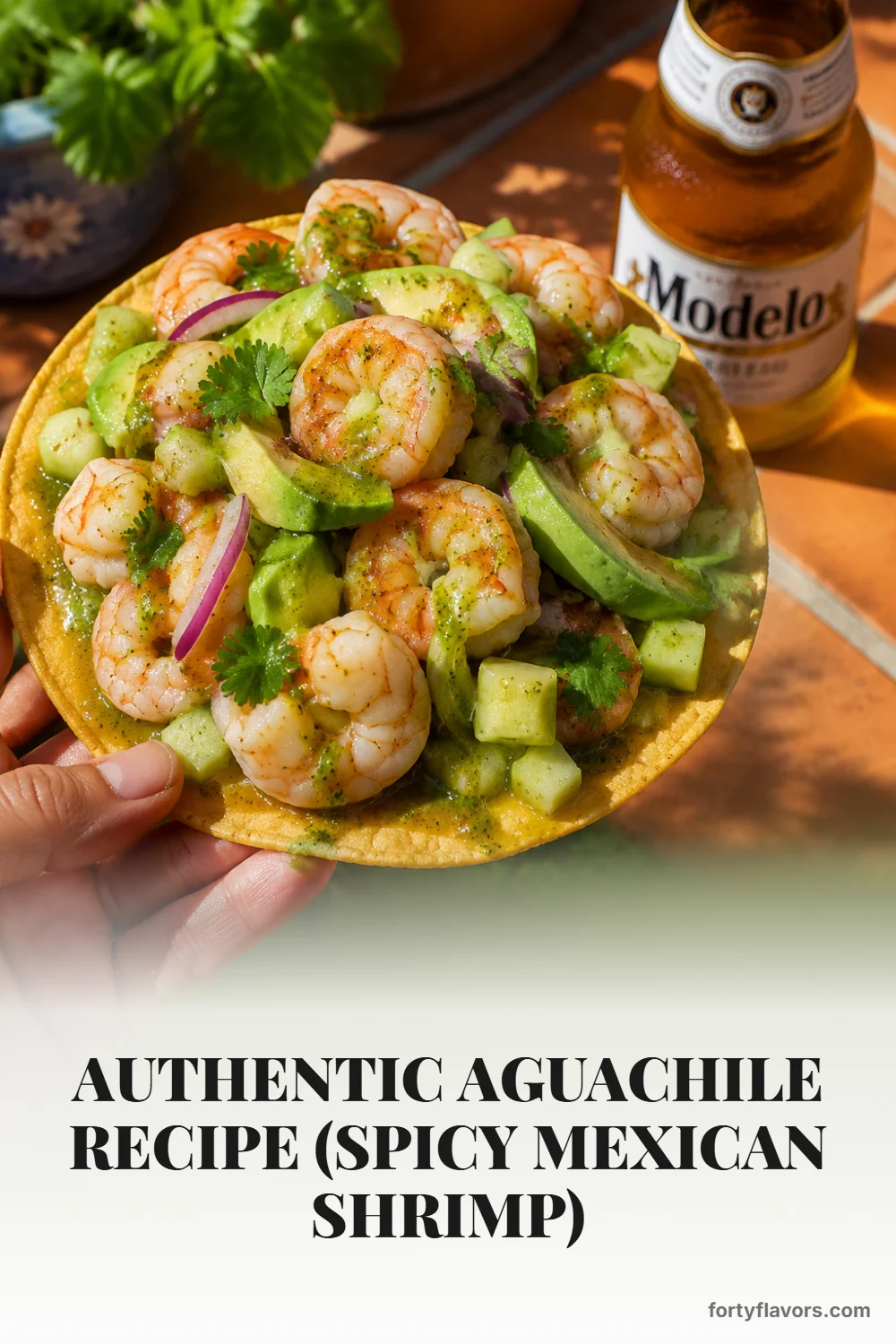
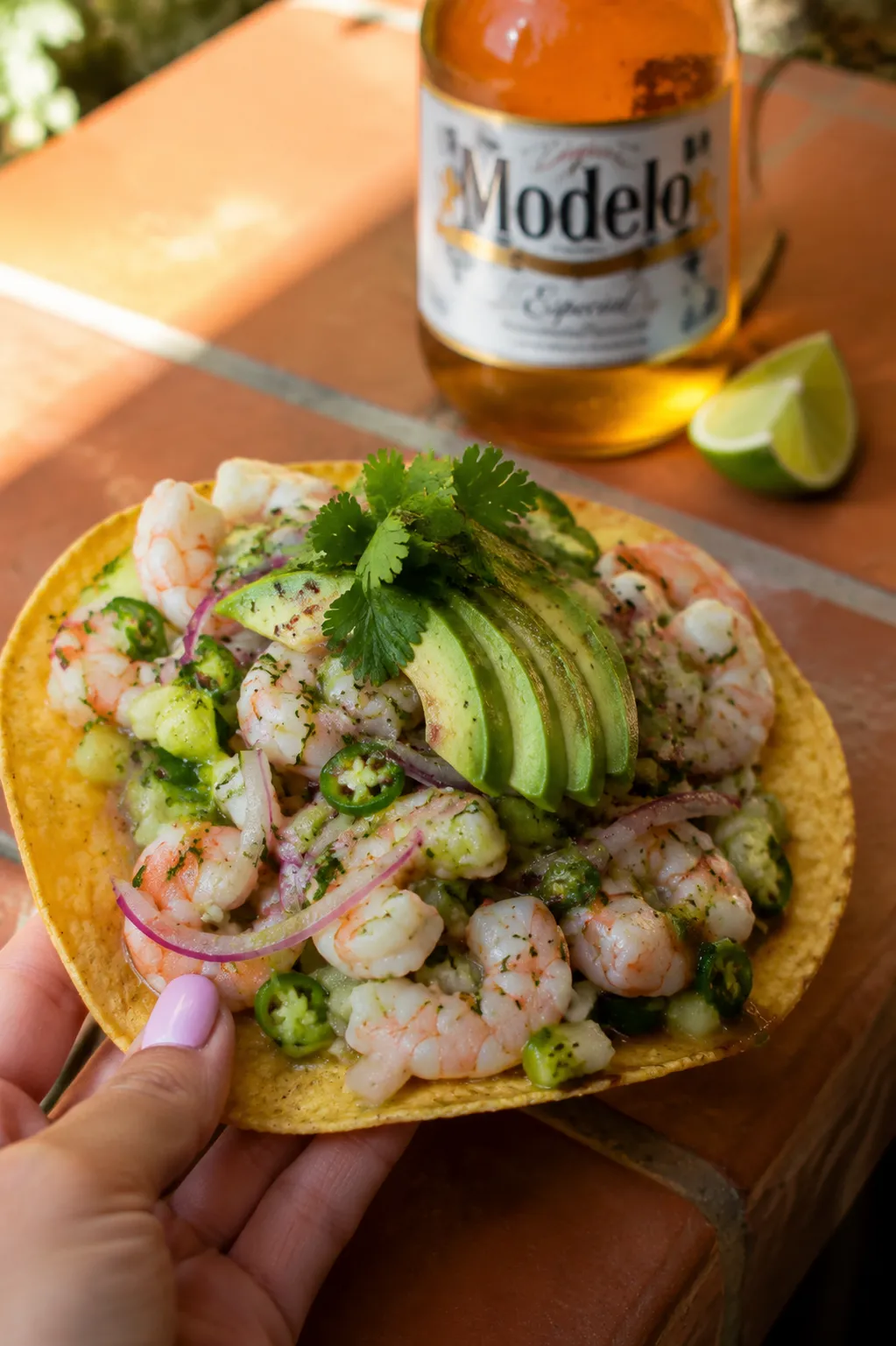
A tostada turns each bite into a perfect stack: crunch on the bottom, creamy avocado in the middle, chilled shrimp and chile-lime broth on top. If you already have a favorite tostadas recipe, this is a wonderful reason to make it; otherwise, store-bought crisp corn tostadas work beautifully. Spread on a thin layer of mashed avocado or guacamole first to help the shrimp stay put. Add a spoonful of shrimp, cucumber, and onion, then drizzle a little extra green sauce over everything. Eat immediately, because the magic is in that contrast between crisp shell and juicy topping.
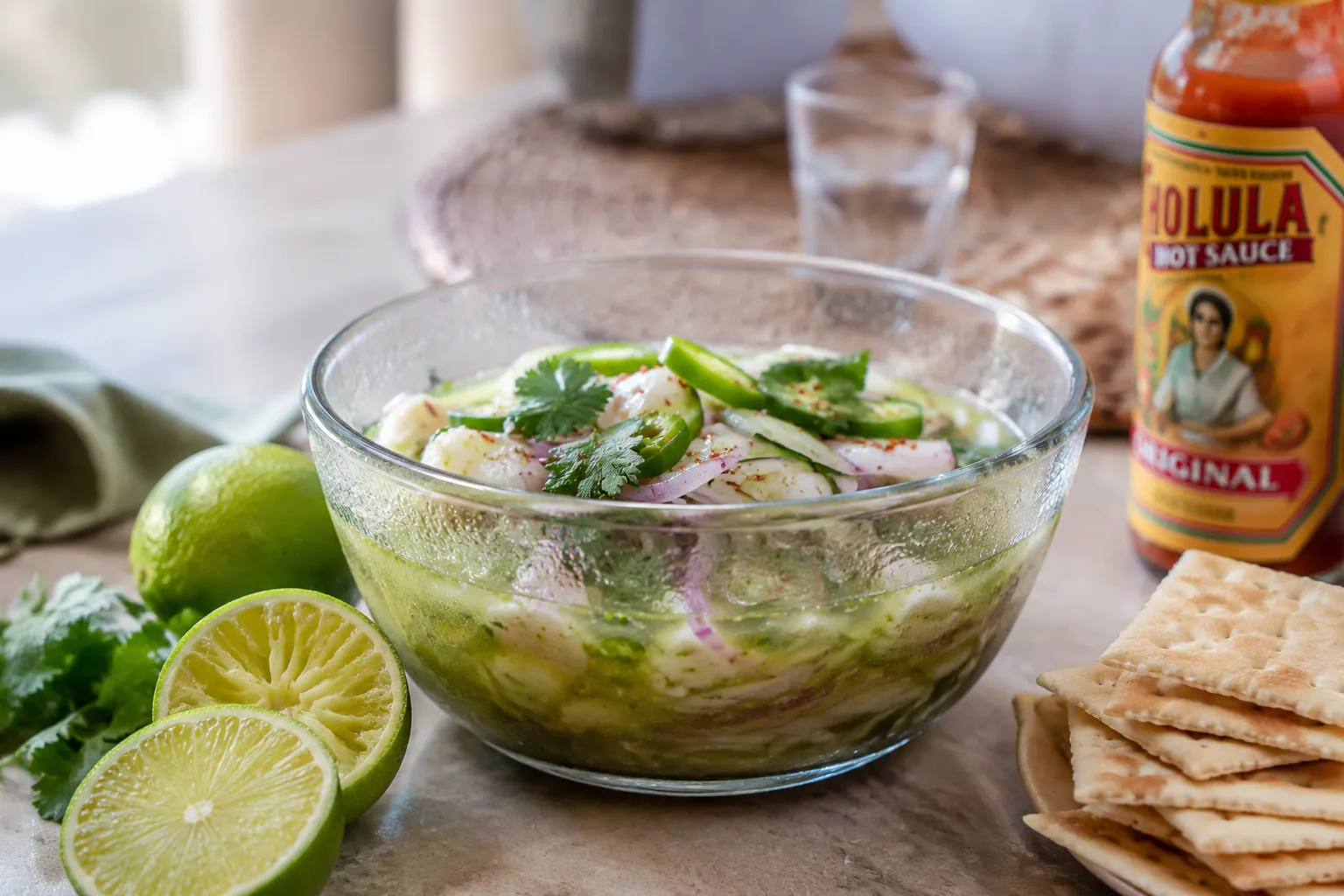
Saltines are humble, but they are deeply traditional with Mexican seafood cocktails and chilled mariscos. Their salty snap works surprisingly well with the sharp lime and chile, especially if you spoon a little broth over the cracker just before eating. Put out a bottle of Mexican hot sauce for anyone who wants more vinegar, heat, or tang. This is also a great way to serve smaller portions as a passed appetizer because crackers feel casual and easy. Keep napkins close; the best bites are wonderfully drippy.
Cold, crisp drinks are your friends here. Mexican lager, a michelada, sparkling mineral water with lime, or a citrusy margarita all stand up well to the heat. If you prefer wine, choose something bright and mineral-driven, like Sauvignon Blanc, Albariño, or a dry sparkling wine. Avoid anything too oaky or heavy, which can fight the lime and chiles. The dish is meant to feel refreshing, so let the drinks stay light, cold, and clean.
The beauty of this preparation is its immediacy. Instead of waiting hours for seafood to marinate, you get a dish that tastes alive: the lime is sharp, the chiles are green and fresh, and the shrimp remains tender. Butterflying the shrimp is more than a visual trick; it creates more surface area for the citrus and salt, giving you better flavor in less time. The blended cucumber adds a cooling backbone that keeps the serrano heat from feeling harsh. It is a small technique shift that makes the finished dish taste balanced, polished, and true to its coastal roots.
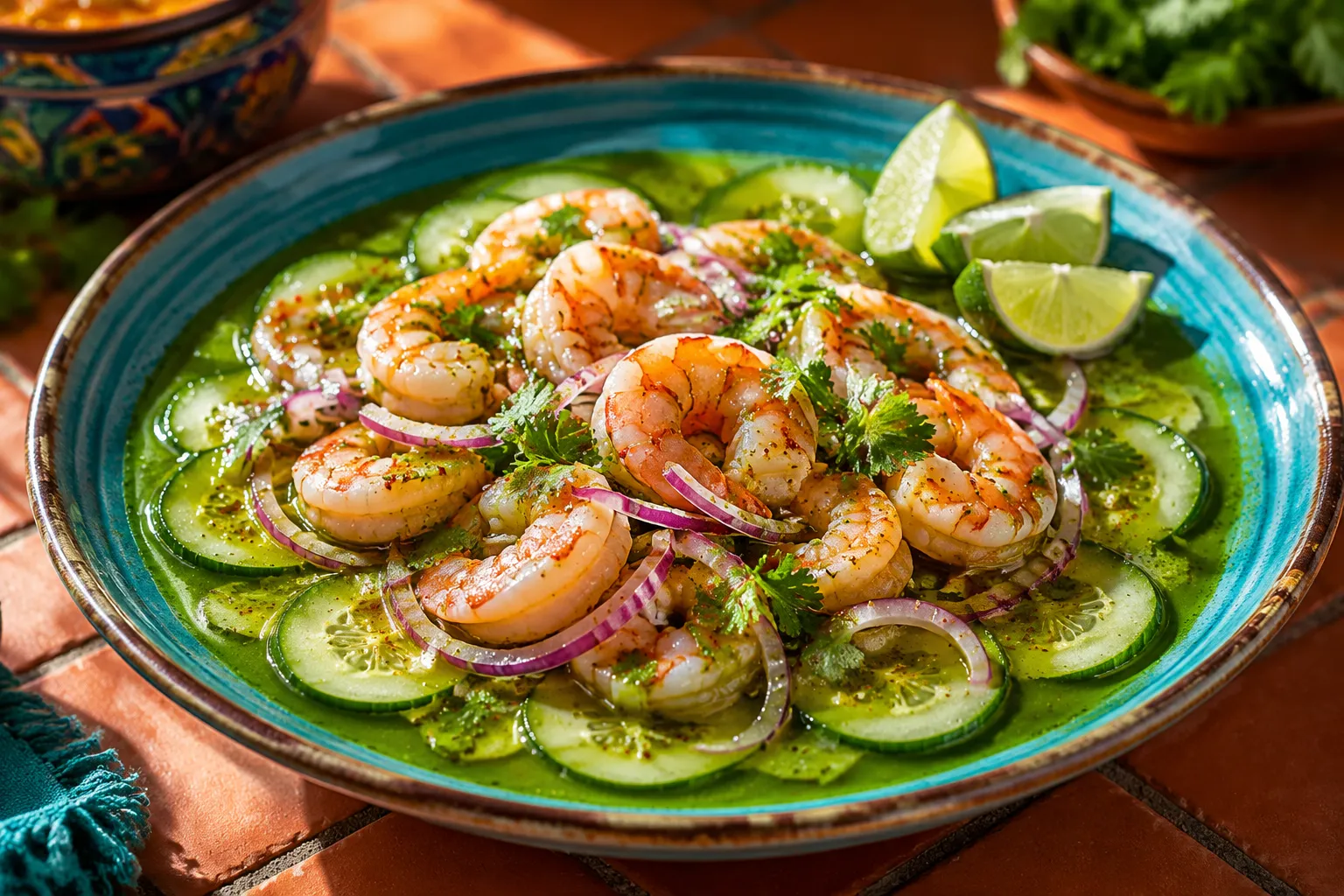
It also happens to be a beautiful platter for entertaining. The colors are naturally dramatic: pink shrimp, emerald sauce, pale cucumber, purple-red onion, and bright cilantro scattered over the top. You can prep the components shortly before guests arrive, then combine everything right before serving so the texture stays ideal. Set the platter in the center of the table with tostadas, crackers, avocado, and lime wedges, and watch how quickly people gather around. Few dishes deliver this much flavor, color, and freshness with no stove required.
Because the ingredient list is so lean, seasoning at the end matters. Taste the broth after it has met the shrimp and vegetables; it may need a final pinch of salt or squeeze of lime to bring everything back into focus. Serve it well chilled, preferably within minutes of that final toss, when the cucumber is crisp and the shrimp is just cured. If you want to round out the table, add a simple salad, extra tostadas, or a bowl of rice for anyone who wants a more filling plate. However you serve it, this is the kind of seafood dish that feels bright, generous, and made for sharing.
This dish is best eaten immediately, within about 30 minutes of combining the shrimp and sauce. If you have leftovers, refrigerate them in an airtight container and eat within 24 hours, knowing the shrimp will continue to firm up and the vegetables will soften.
Do not freeze it. The lime-cured seafood and cucumber lose their delicate texture after thawing, and the sauce becomes watery. For make-ahead entertaining, prep the sauce, sliced vegetables, and cleaned shrimp separately, then combine shortly before serving.
Hover any image and hit “Pin it” to save it to your Pinterest boards.