Carne Asada Marinade: Authentic Mexican Recipe for Juicy Steak
Ingredients
Scale
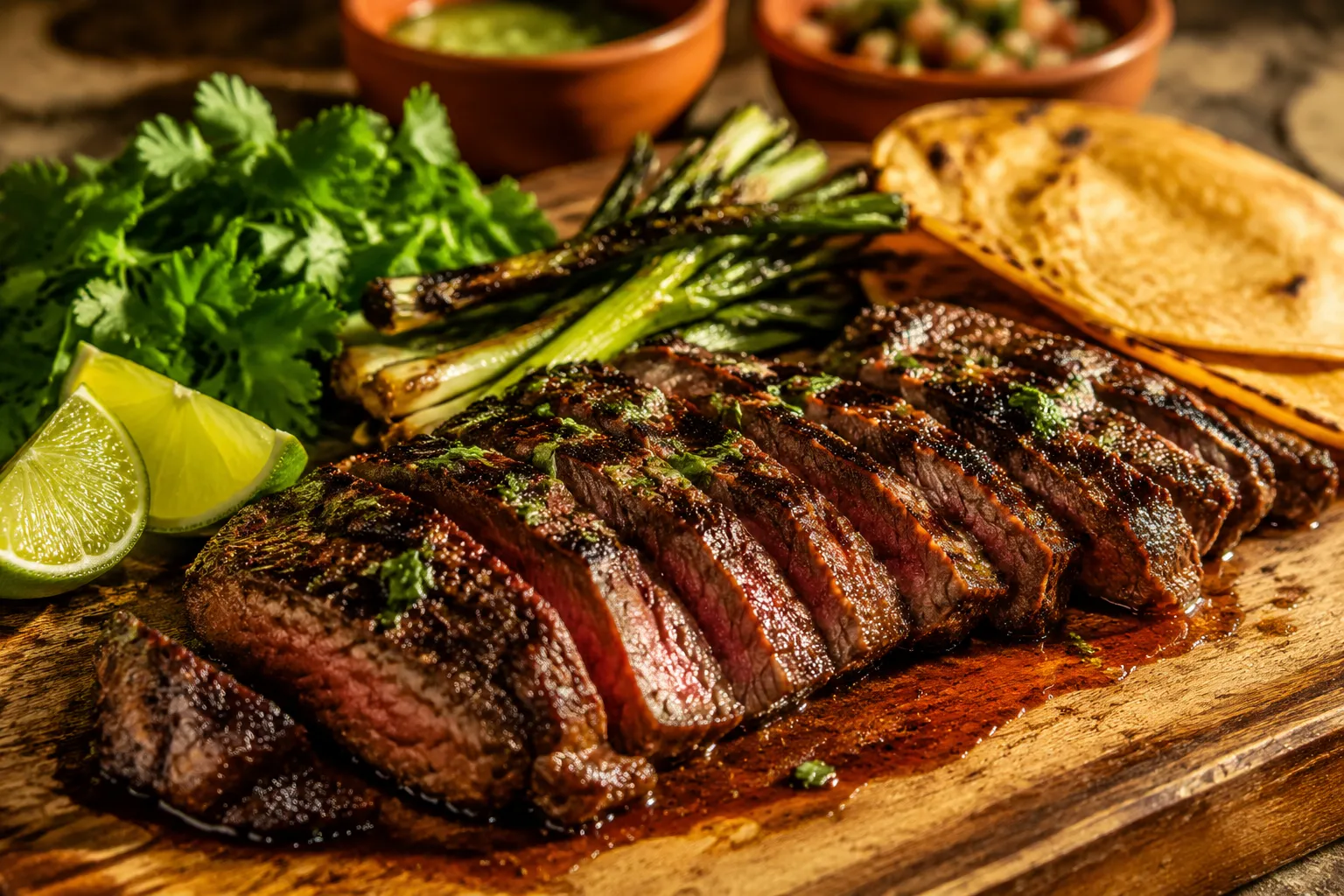
The only carne asada marinade you'll ever need: bright citrus, fresh garlic, smoky spices, and a splash of beer for unbelievably tender, charred steak.
This carne asada marinade is the one I've been chasing for a decade — the recipe that delivers deeply charred, juicy grilled steak with that unmistakable taqueria flavor you usually only find in family-run Mexican spots. It leans on fresh orange juice and lime juice, a small mountain of garlic and cilantro, smoky cumin and paprika, and a splash of Mexican lager that softens the citrus and adds quiet complexity. Twenty minutes of total work, and dinner tastes like a backyard cookout in Guadalajara.
I grew up watching my abuelo's neighbor butterfly skirt steak across his grill in San Diego, and the smell — citrus, charred beef, raw white onion — wired itself into my brain. This recipe is my closest reverse-engineer of his marinade, refined over hundreds of taco nights. It's bold but never aggressive, tenderizing without turning the meat to mush, and it works just as well on flat iron or hanger steak if that's what the butcher has on the day.
If you've ever ended up with carne asada that was tough, gray, or weirdly sweet from too much pineapple juice, you're going to love how this one comes out. The acid is balanced, the salt is dialed in, and the beer is optional but recommended. Pair it with a stack of warm tortillas and your favorite carne asada tacos toppings, and you've got one of the best dinners in your rotation.
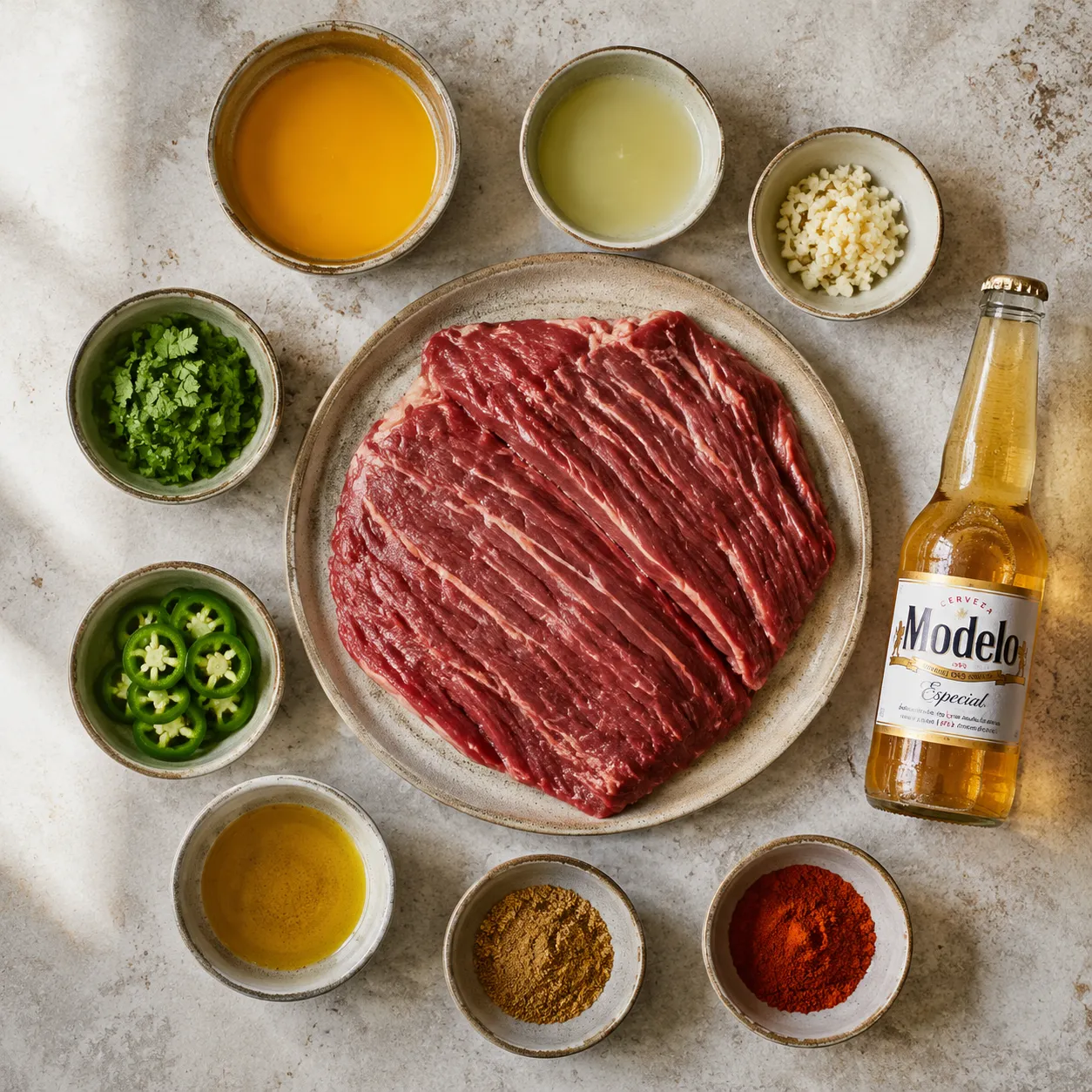
Every great carne asada recipe starts with a citrus base, and that means actually-squeezed fruit — not the bottled stuff. Half a cup of fresh orange juice and a third of a cup of fresh lime juice give you the perfect ratio: enough acid to break down the muscle fibers in the steak, enough sweetness from the orange to balance the punch of the lime. Bottled juice is heat-treated and tastes flat, and you will absolutely feel it in the final flavor.
The aromatic backbone is six cloves of garlic, a generous half cup of chopped cilantro (stems and all — they pack the most flavor), and one minced jalapeño. The heat from the jalapeño is gentle background warmth, not a slap. If you like things spicier, leave the seeds in or swap in a serrano. A quarter cup of olive oil carries the fat-soluble flavors of the spices into the meat, and a quarter cup of Mexican lager — Modelo, Pacifico, or Tecate — adds malty depth and a touch of carbonation that helps the marinade penetrate the steak faster.
For spice, two teaspoons of ground cumin and one teaspoon of smoked paprika do the heavy lifting in this carne asada marinade. Cumin grounds the marinade in classic Mexican flavor, and smoked paprika is the secret that gives the steak that wood-fired taste even when you're cooking on a gas grill. A teaspoon of kosher salt and half a teaspoon of black pepper round it out. That's the whole list. No soy sauce, no Worcestershire, no shortcuts — just real ingredients doing real work.
The cut you choose matters almost as much as the marinade itself. The classic answer to the flank steak vs skirt steak debate is this: skirt is more authentic, more flavorful, and slightly more forgiving on a hot grill, while flank steak is leaner, easier to find at any U.S. supermarket, and cuts a little cleaner. Both are long, flat cuts with pronounced grain, both love high heat and short cook times, and both will be incredible in this marinade. Flat iron and hanger are excellent backup options if your butcher is out of the usual suspects.
Whichever cut you choose, look for steak that's three-quarters of an inch to one inch thick, with a deep red color and a little marbling. Trim off any tough silver skin before marinating — the marinade can't penetrate it, and it eats like rubber after grilling. And once the steak is cooked and rested, slicing against the grain is non-negotiable. The grain runs in long parallel lines down the muscle; you want your knife perpendicular to those lines so each bite is short fibers instead of long, chewy ropes. Slice it the wrong direction and even a perfectly cooked piece of skirt steak will eat tough.
The full recipe with measurements is in the recipe card below, but here's how this carne asada marinade comes together from start to plate. The whole process is more about timing than technique — get the timing right and the steak basically cooks itself.
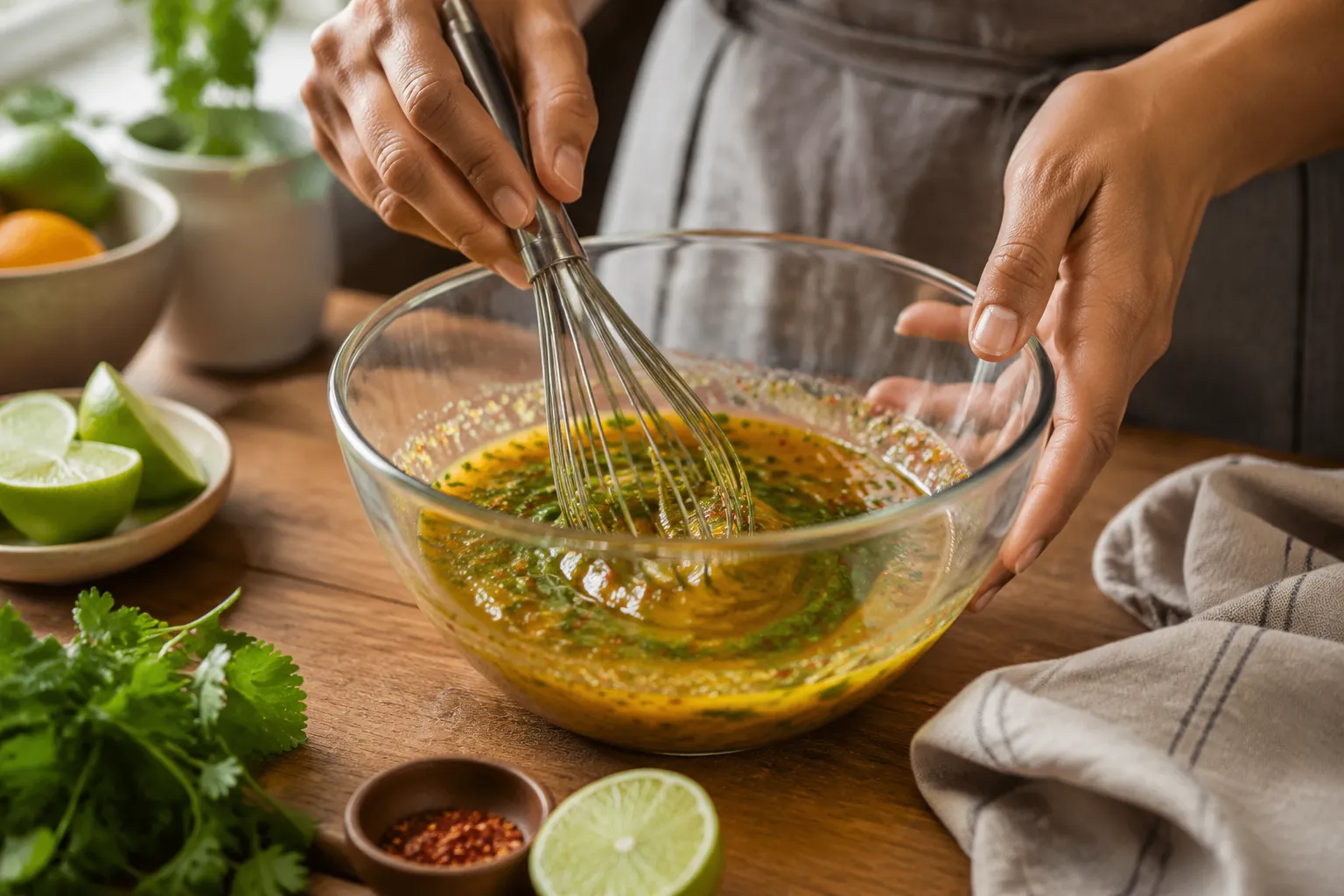
Start by whisking everything except the steak together in a large bowl or measuring pitcher. You want the salt and spices fully dissolved into the citrus and oil, with the cilantro and garlic distributed evenly. Give it a taste — it should be bright, salty, slightly bitter from the citrus pith, and deeply aromatic. If you're a planner, make the marinade the night before and let the flavors meld in the fridge overnight.
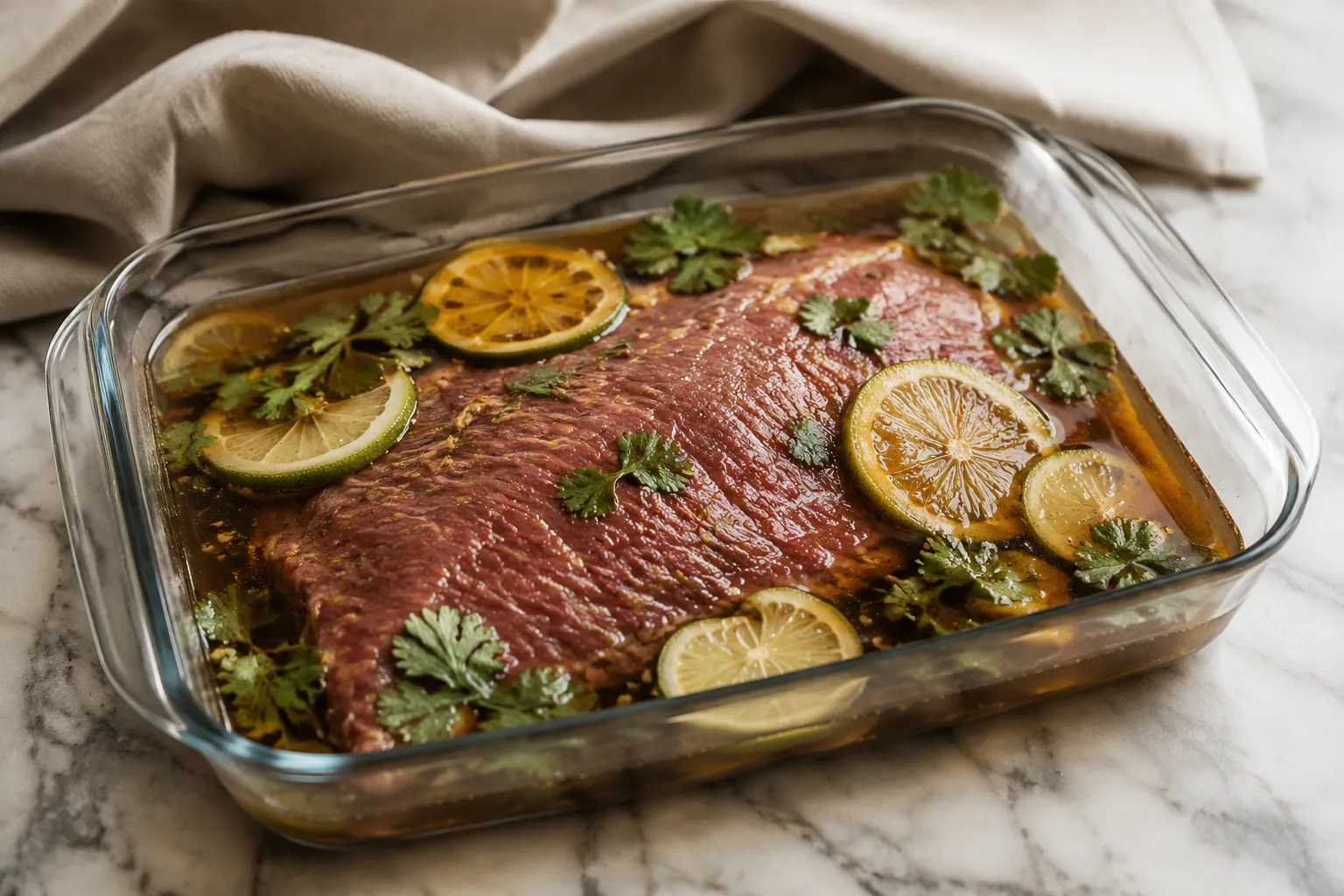
Slide the steak into a zip-top bag or shallow glass dish, pour the marinade over, and squish everything around so the meat is fully coated. Marinate in the fridge for at least two hours and no more than eight. This is where most home cooks go wrong — citrus marinades are aggressive, and if you leave the steak in for twelve hours or overnight, the surface turns mealy and the texture goes chalky. Two to four hours is my personal sweet spot.
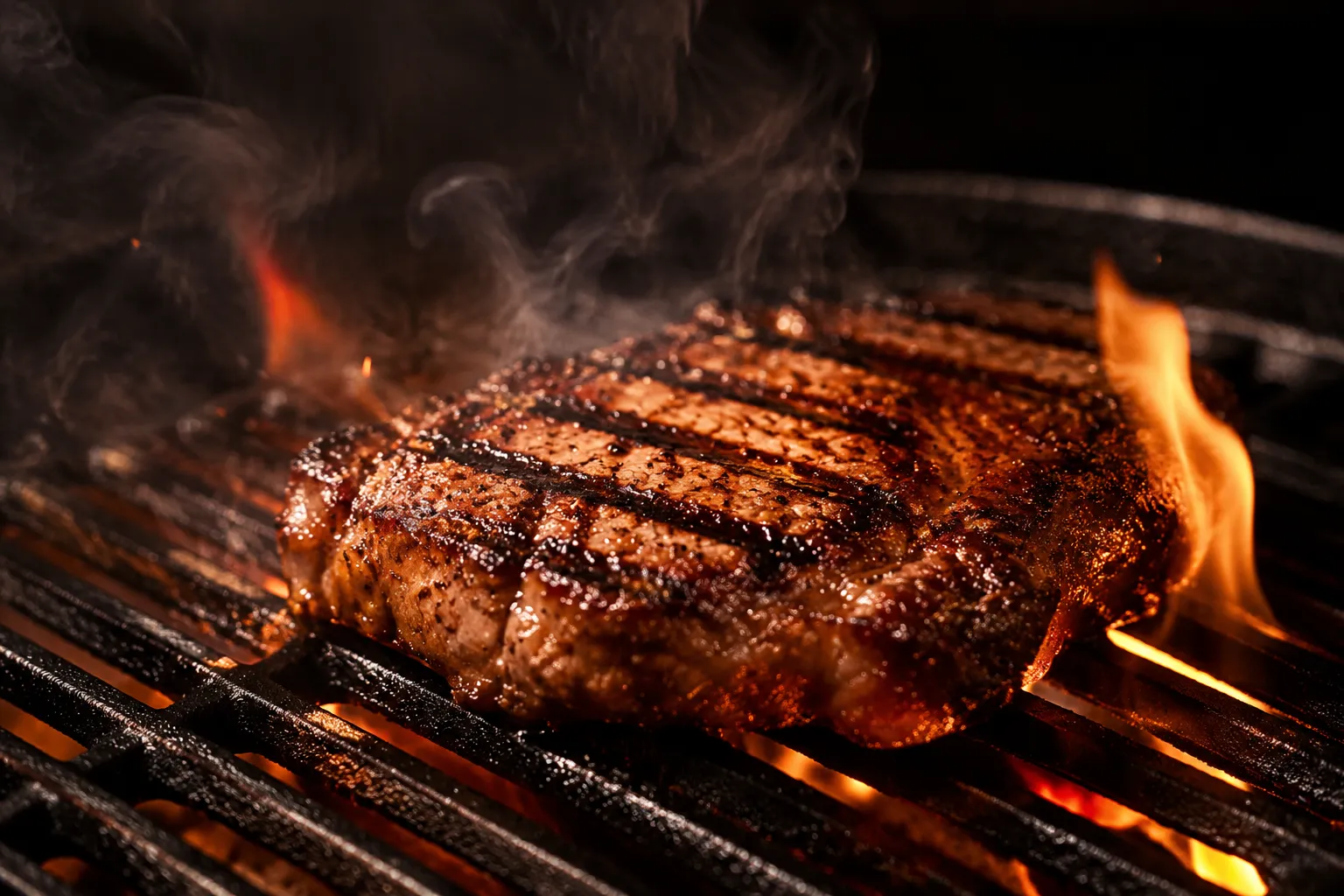
When you're ready to cook, get your grill ripping hot — 500 to 600°F, lid open, grates clean and oiled. Pull the steak out of the marinade about thirty minutes before grilling so it loses the chill, then pat it dry with paper towels (wet meat steams instead of sears, and you lose your crust before you start). Grill three to four minutes per side for skirt steak, four to five for flank, until the surface is deeply charred and the internal temp hits 130°F for a perfect medium-rare. No grill? A cast iron skillet over the highest heat your stove can muster will get you almost the same result.
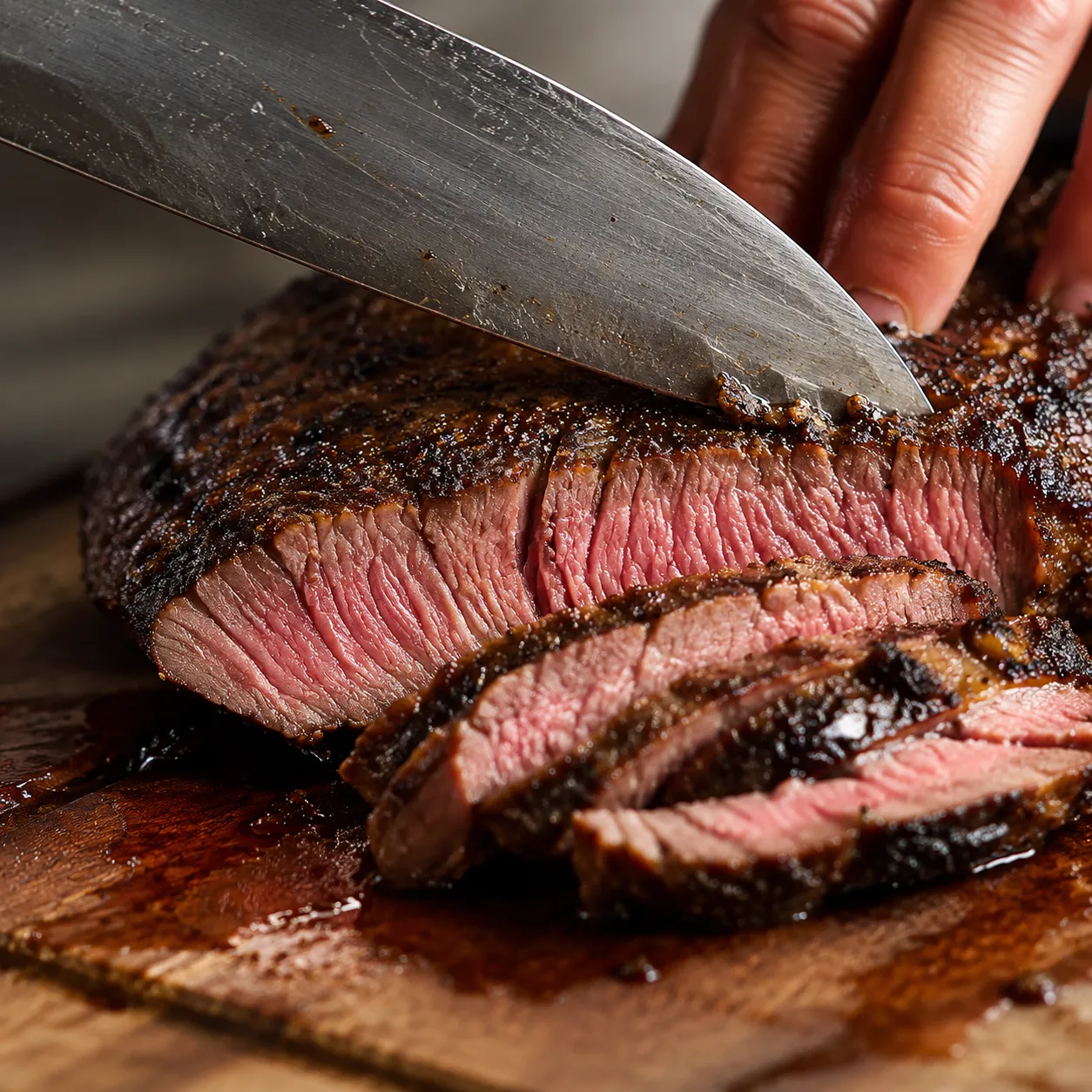
Rest the steak on a cutting board, loosely tented with foil, for a full ten minutes. Skipping this step is the fastest way to ruin all your hard work — the juices need time to redistribute, or they'll spill out the moment your knife touches the meat. Then slice it thin, against the grain, on a slight bias for maximum tenderness. Pile it on a warm platter, hit it with another squeeze of lime and a shower of fresh cilantro, and call everyone to the table.
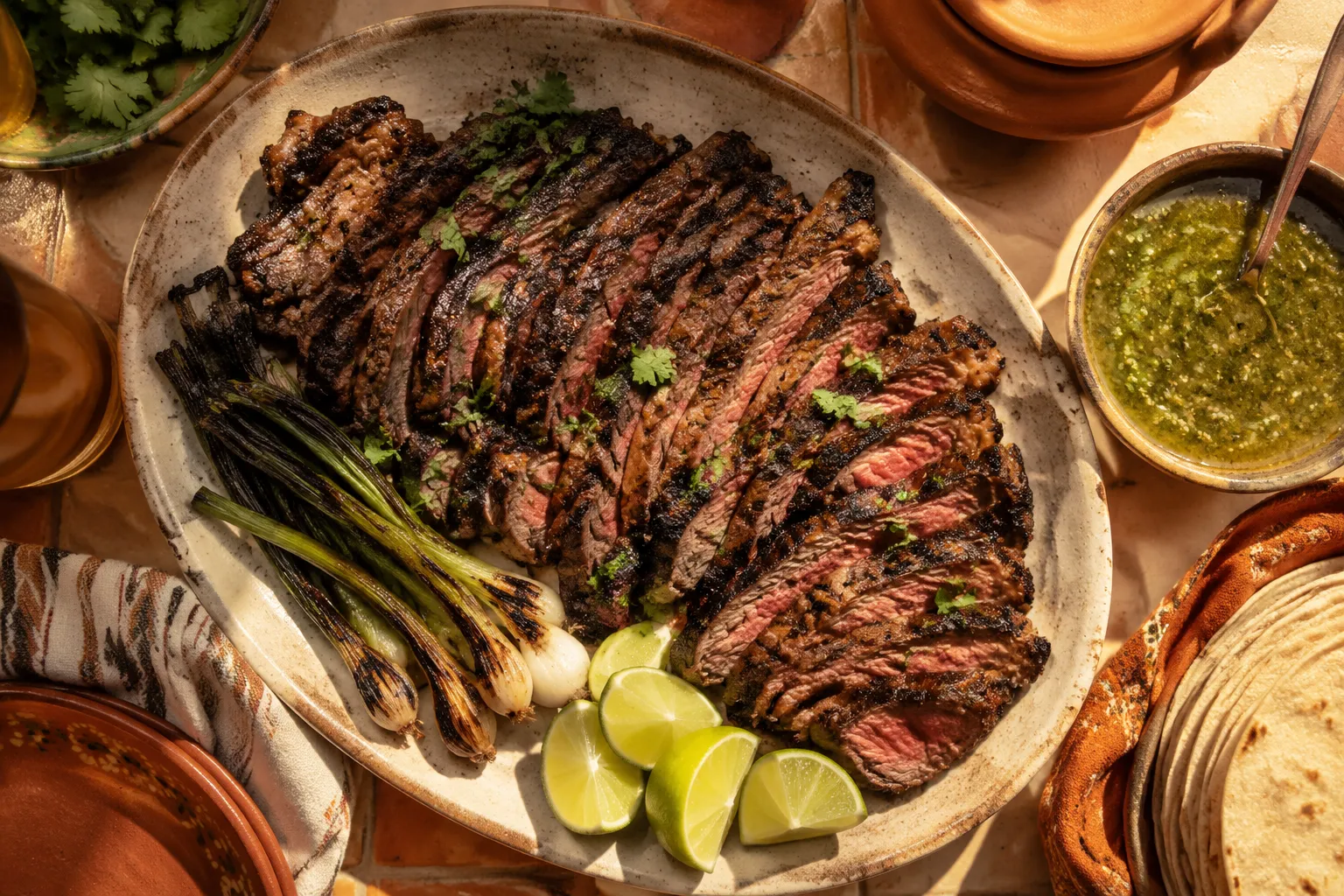
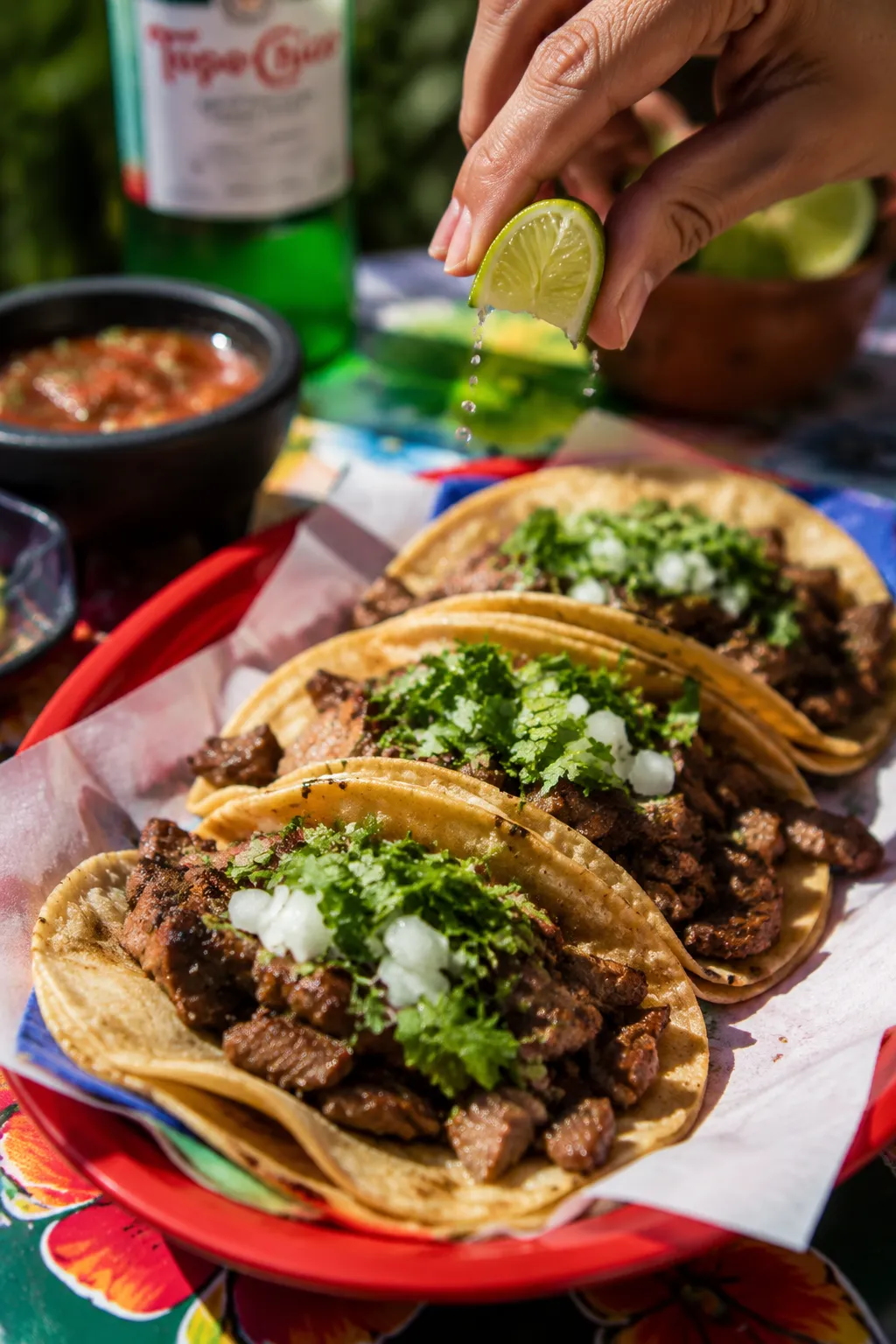
The most popular destination for this grilled steak is, of course, carne asada tacos — sliced thin, piled onto warm double-stacked corn tortillas, topped with raw white onion, more cilantro, and a hard squeeze of lime. That's the platonic ideal. Serve them with a bowl of homemade pico de gallo, a generous scoop from your favorite guacamole recipe, and a few slices of charred jalapeño for the heat seekers, and you've got a taqueria-style spread that beats anything you'd order out.
Beyond tacos, this steak is endlessly useful. Build a burrito bowl over cilantro lime rice with black beans, pickled red onions, and crumbled cotija. Layer it on nachos with melted Oaxaca cheese and pickled jalapeños. Tuck it into quesadillas with a slick of refried beans, or pile it onto tortas with avocado and chipotle mayo. For a full Sunday-supper plate, serve the sliced steak alongside warm Mexican rice, charro beans, grilled scallions, and a stack of tortillas wrapped in a clean kitchen towel.
Drinks-wise, you can't go wrong with a cold Mexican lager (the same one you used in the marinade), a classic margarita on the rocks with salt, or a tall agua fresca de jamaica if you want something non-alcoholic. Whatever route you take, this carne asada preparation is a centerpiece dish that turns a regular weeknight into something worth lingering over.
Whether you make it for taco Tuesday, a backyard cookout, or a weekend meal-prep session, this carne asada marinade recipe is the kind of thing that earns a permanent spot in your rotation. Bookmark it, print it, splatter the page with citrus juice — it only gets better every time you make it.
This marinade is incredibly forgiving — once you nail the citrus-and-spice base, you can riff in dozens of directions to fit what's in your pantry or the mood of the meal.
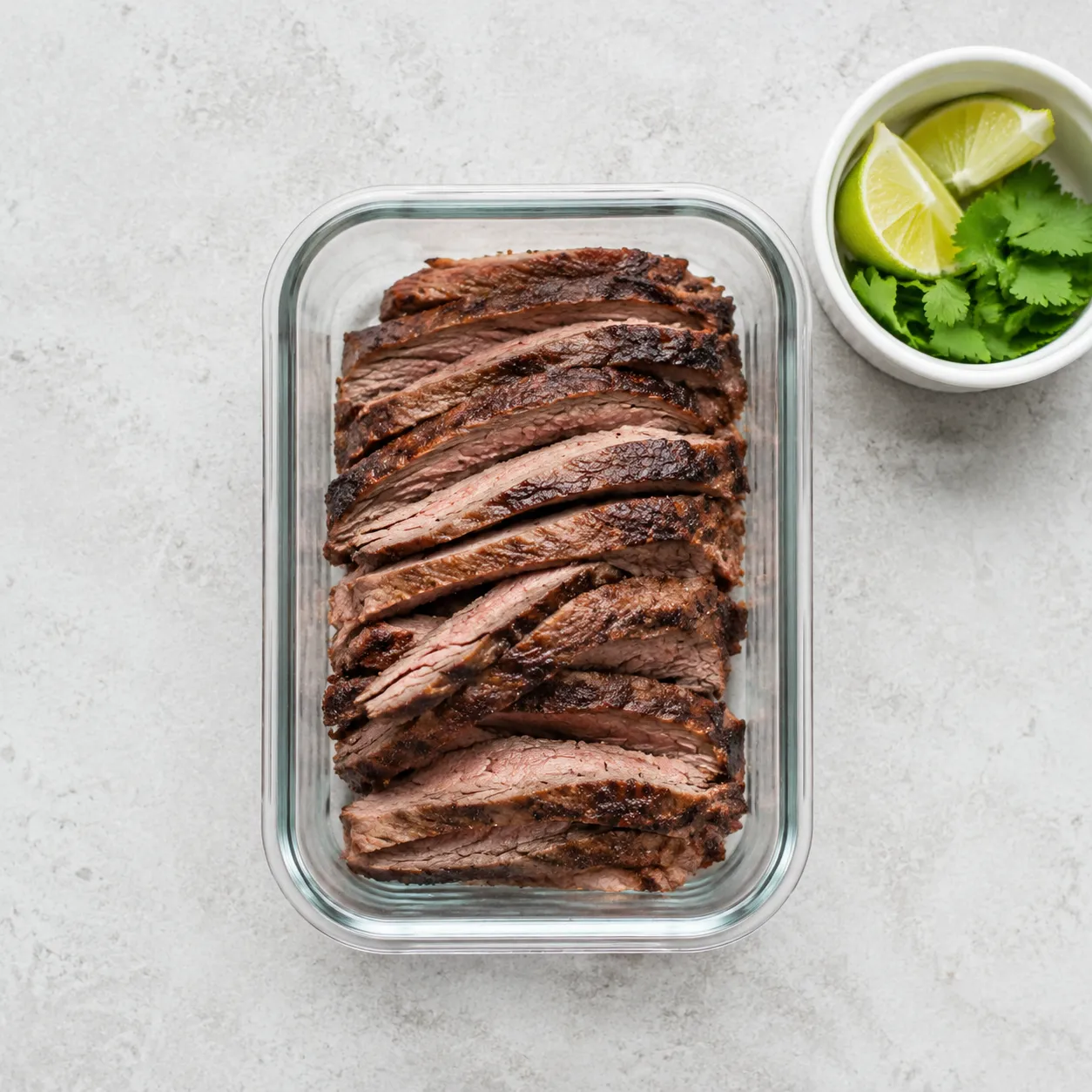
Cooked carne asada keeps in an airtight container in the fridge for up to four days. The flavor actually improves overnight as the citrus and spices mellow into the meat, so leftovers are gold for next-day tacos, salads, or quesadillas. Reheat gently in a skillet over medium heat with a splash of water or broth — high heat will dry it out, and the microwave will turn it tough and chewy. You can also crisp slices in a hot cast iron pan for thirty seconds per side to revive that just-grilled char before serving.
For longer storage, freeze cooked, sliced carne asada in a zip-top bag with a little of its juices for up to three months. Even better: freeze the raw steak directly in the marinade in a heavy freezer bag for up to three months and thaw overnight in the fridge before grilling. The steak marinates as it defrosts, so by morning it's ready to hit the heat with zero extra work — the smartest meal-prep hack in this entire recipe.