How Long to Cook a Whole Chicken in the Oven (Per Pound Guide)
Ingredients
Scale
Wondering how long to cook a whole chicken in the oven? Here's the exact time-per-pound chart, oven temp, and doneness test for juicy results.
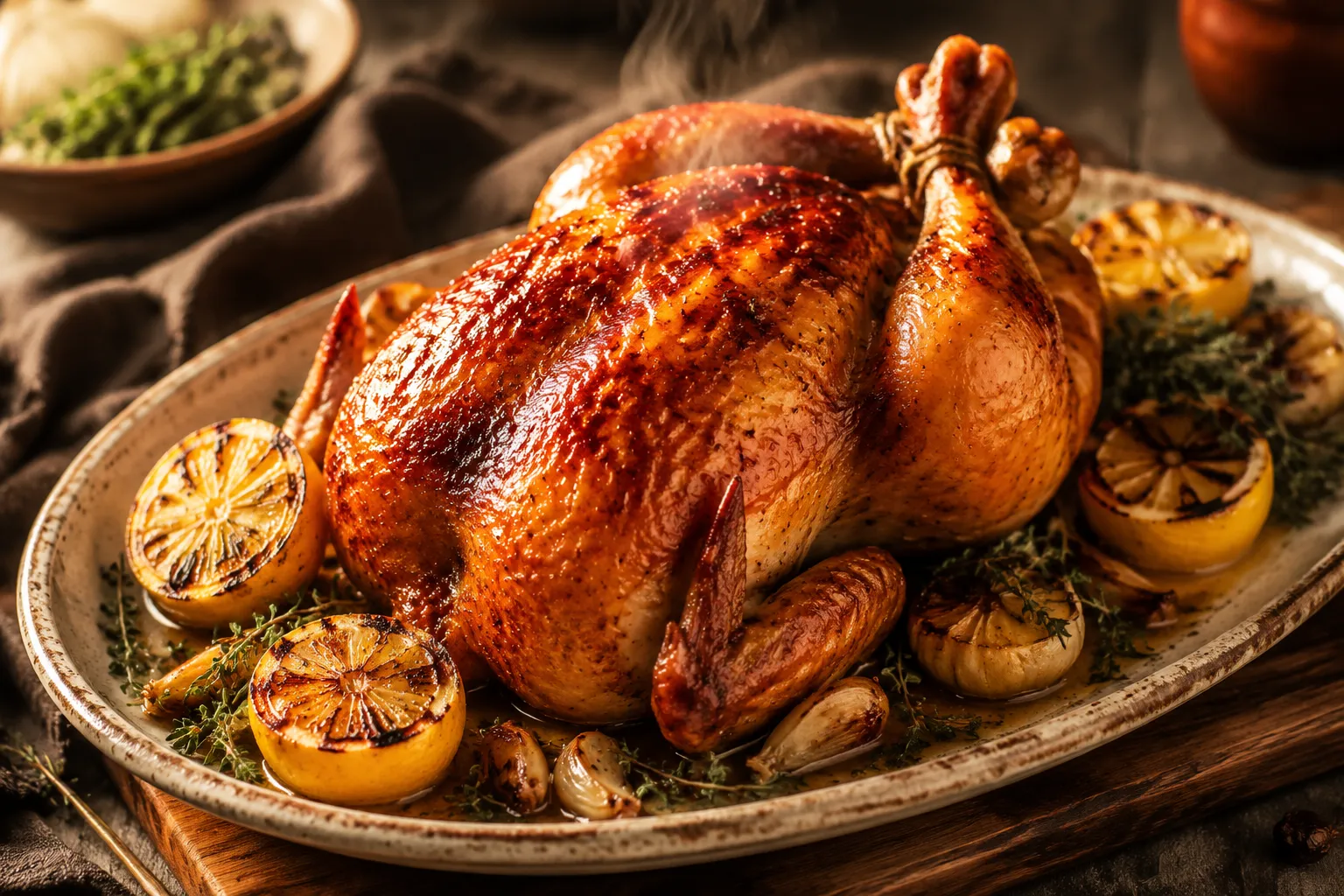
If you’ve ever wondered how long to cook whole chicken in oven, the shortest answer is about 20 minutes per pound at 375°F, but the best answer also depends on the size of the bird, your oven, and whether you want deeply golden skin or extra-juicy meat. This guide gives you the time chart, the right oven temperature, and the doneness cues so you can roast with confidence instead of guessing.
A good roast whole chicken is one of those back-pocket dinners that feels special without asking much of you. The skin turns crisp and bronzed, the pan drippings practically beg to become homemade chicken gravy, and the leftovers are just as useful for sandwiches, salads, soups, and all kinds of leftover roast chicken ideas.
For most birds, how long to cook whole chicken in oven comes down to a simple formula: 20 minutes per pound at 375°F. That means a 4-pound chicken needs about 1 hour 20 minutes, while a 5-pound chicken usually lands closer to 1 hour 40 minutes. If you are asking how long to bake a whole chicken for a weeknight or Sunday dinner, that range is the most reliable starting point.
Think of 375°F as the default setting for a balanced roast: steady heat, good browning, and a chicken that cooks through without drying out too fast. A bird roasted at this temperature tends to give you a crisp skin and evenly cooked meat, especially when it is not stuffed. If you want the most consistent result, this is the method I recommend first.
Use this as your guide: 3 pounds, about 60 minutes; 4 pounds, 75 to 85 minutes; 5 pounds, 95 to 105 minutes; 6 pounds, 110 to 120 minutes; and 7 pounds, 125 to 140 minutes. Bigger birds often need a little more time than the math suggests because the heat has farther to travel into the thigh and breast. A rack, a hot oven, and a thermometer matter just as much as the clock.
Two chickens of the same weight can roast differently if one is trussed, one is flatter, one starts colder, or one sits in a more accurate oven. That is why the smartest answer to how long to cook whole chicken in oven always includes a temperature check. The visual clues matter too, but time is only the opening act; the final call should come from an instant-read thermometer and a little patience.
The oven temperature you choose shapes the final texture just as much as the total cook time. For an everyday dinner, 375°F is the sweet spot because it gives you plenty of browning without racing past the point where the breast meat turns dry. If you are after super crisp skin, 425°F can work well for a smaller bird, and a two-stage method can give you the best of both worlds.
At 375°F, the chicken cooks steadily, the fat renders well, and the skin has time to turn deep golden instead of pale and soft. This temperature is especially friendly for home ovens that vary a little from one end to the other. It is the safest recommendation if you want a dependable roast chicken recipe that works without much fuss.
If crispy skin is your main goal, 425°F can help jump-start browning and shorten the total roast. The tradeoff is that the chicken can go from perfectly done to overdone more quickly, so you will need to watch it closely. Smaller chickens under 4 pounds are the best candidates for this hotter approach.
Some cooks like to start at 425°F for the first 15 to 20 minutes, then drop the oven to 375°F to finish. That method can improve the color on the skin while still giving the meat a gentler finish.
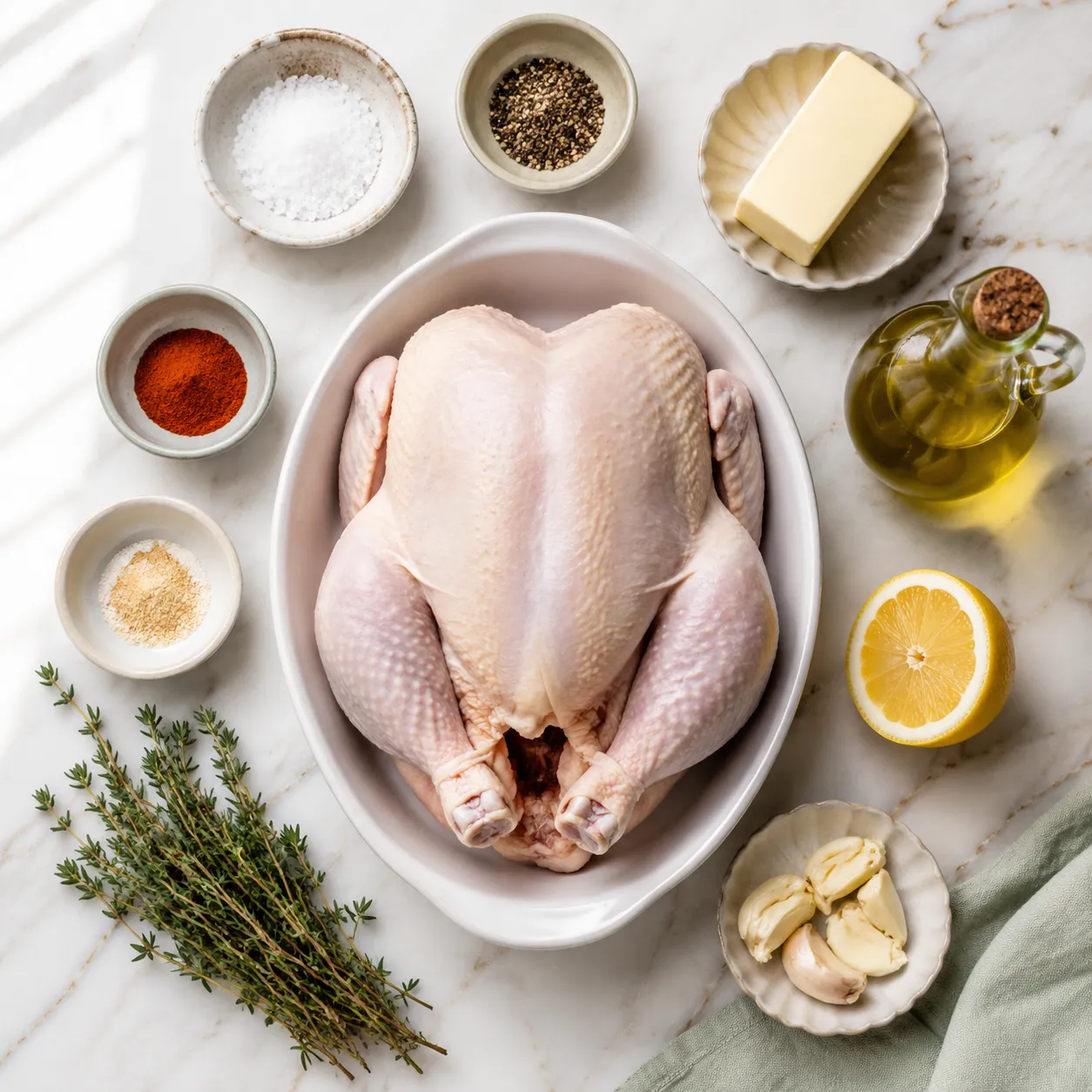
The method here is simple on purpose: season well, give the skin a head start, and roast on a rack so the heat can circulate. The ingredient list is short, but every part matters, from the softened butter to the lemon tucked into the cavity. If you like a deeply seasoned bird, a chicken brine recipe is another route, but this dry-brined version keeps things easy while still delivering big flavor and a crackly finish.
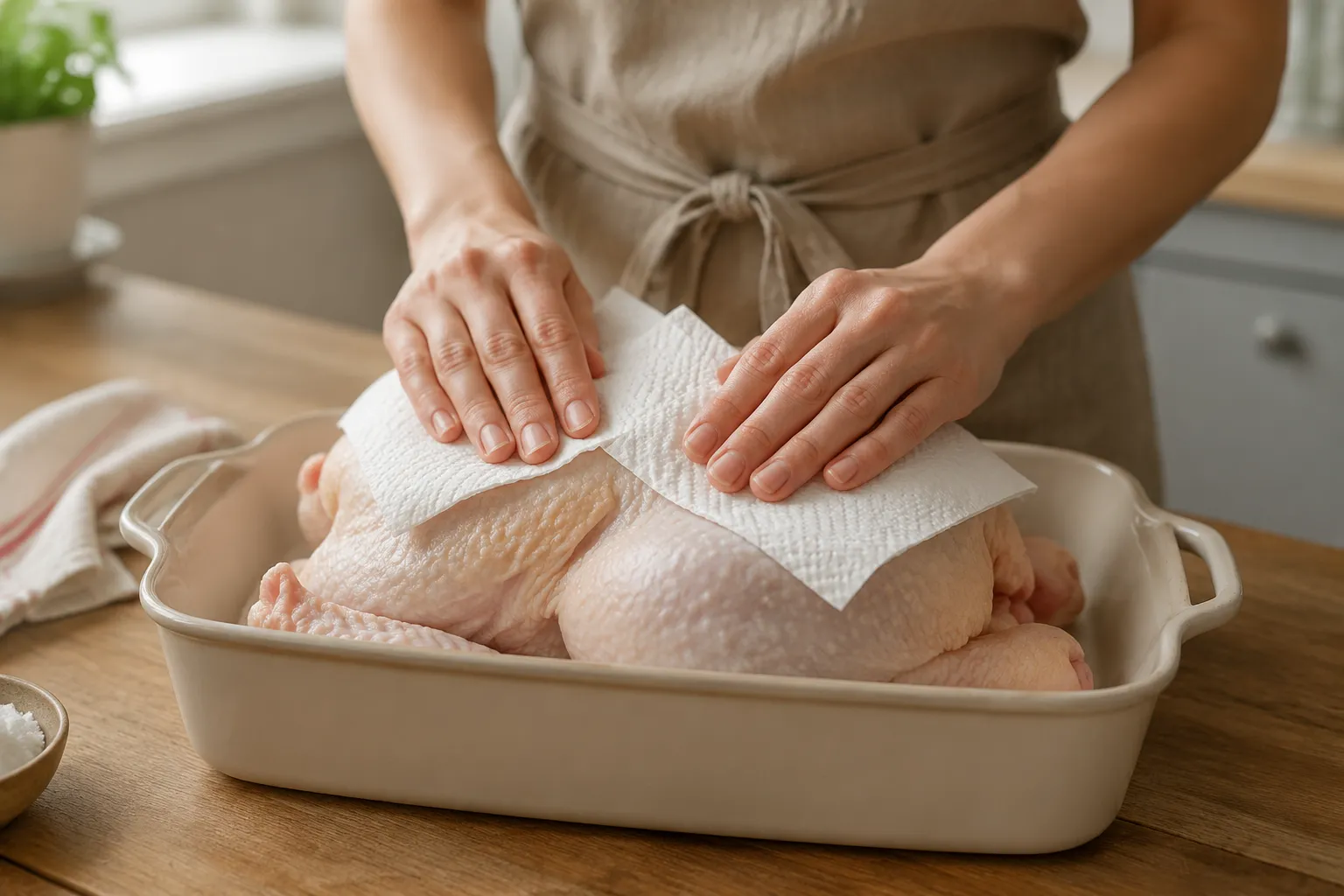
Start by patting the chicken very dry with paper towels; this is one of the easiest ways to improve crispy skin. Moisture on the surface creates steam, and steam works against browning. Season the skin and cavity generously with salt, pepper, garlic powder, and smoked paprika so the flavor reaches past the outer layer.
Trussing helps the chicken cook more evenly by keeping the legs close to the body and protecting the breast from overexposure. If you have ever searched how to truss a chicken, the goal is simply neatness and even heat flow, not perfection. Tuck the wing tips behind the shoulders and tie the legs lightly with kitchen twine if you have it.
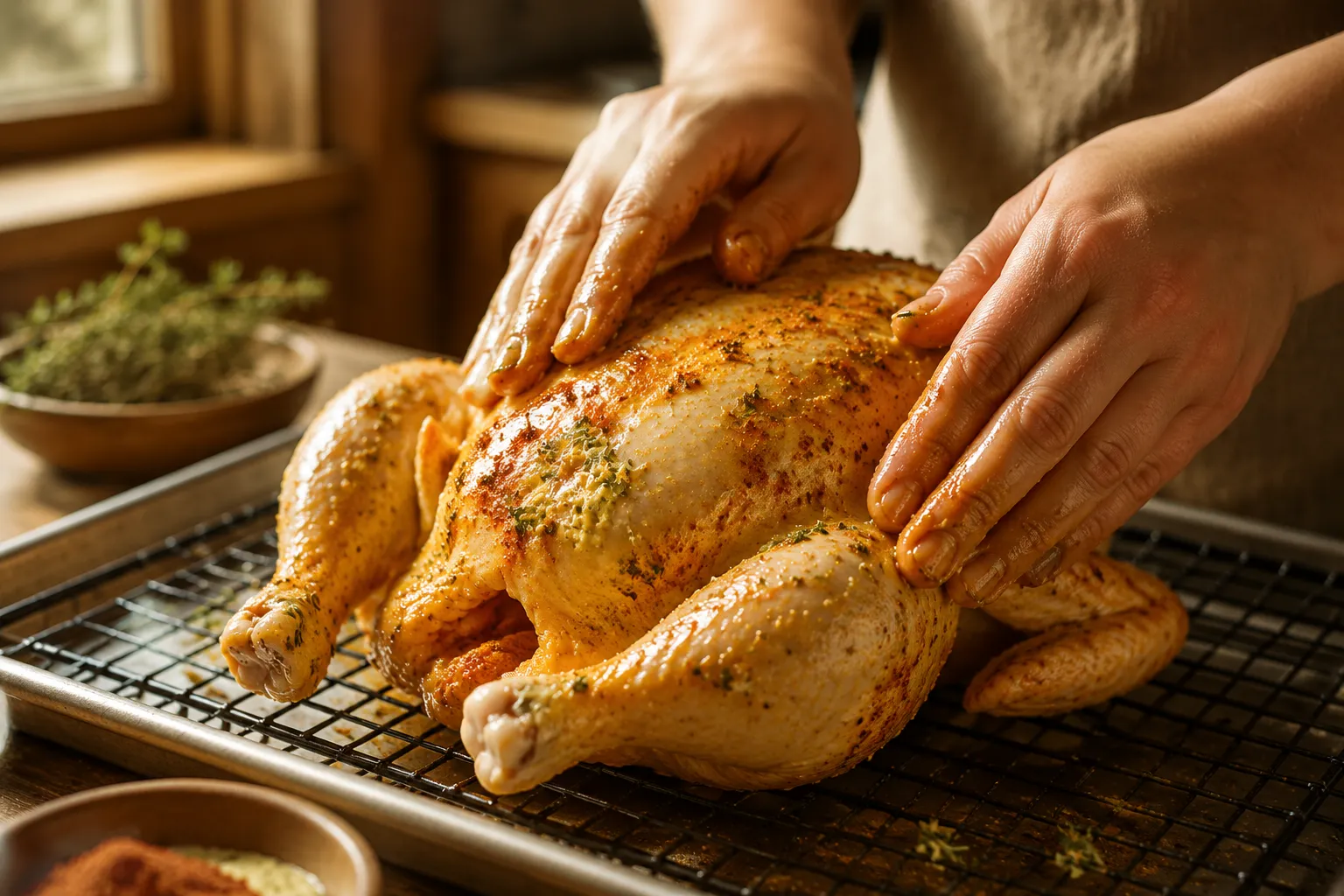
Set the chicken on a rack over a roasting pan or rimmed sheet pan so the bottom does not steam in its own juices. The butter and oil mixture helps the skin brown while keeping the surface supple enough to crisp rather than dry out. About halfway through, the kitchen will start to smell like Sunday dinner, which is always a good sign.
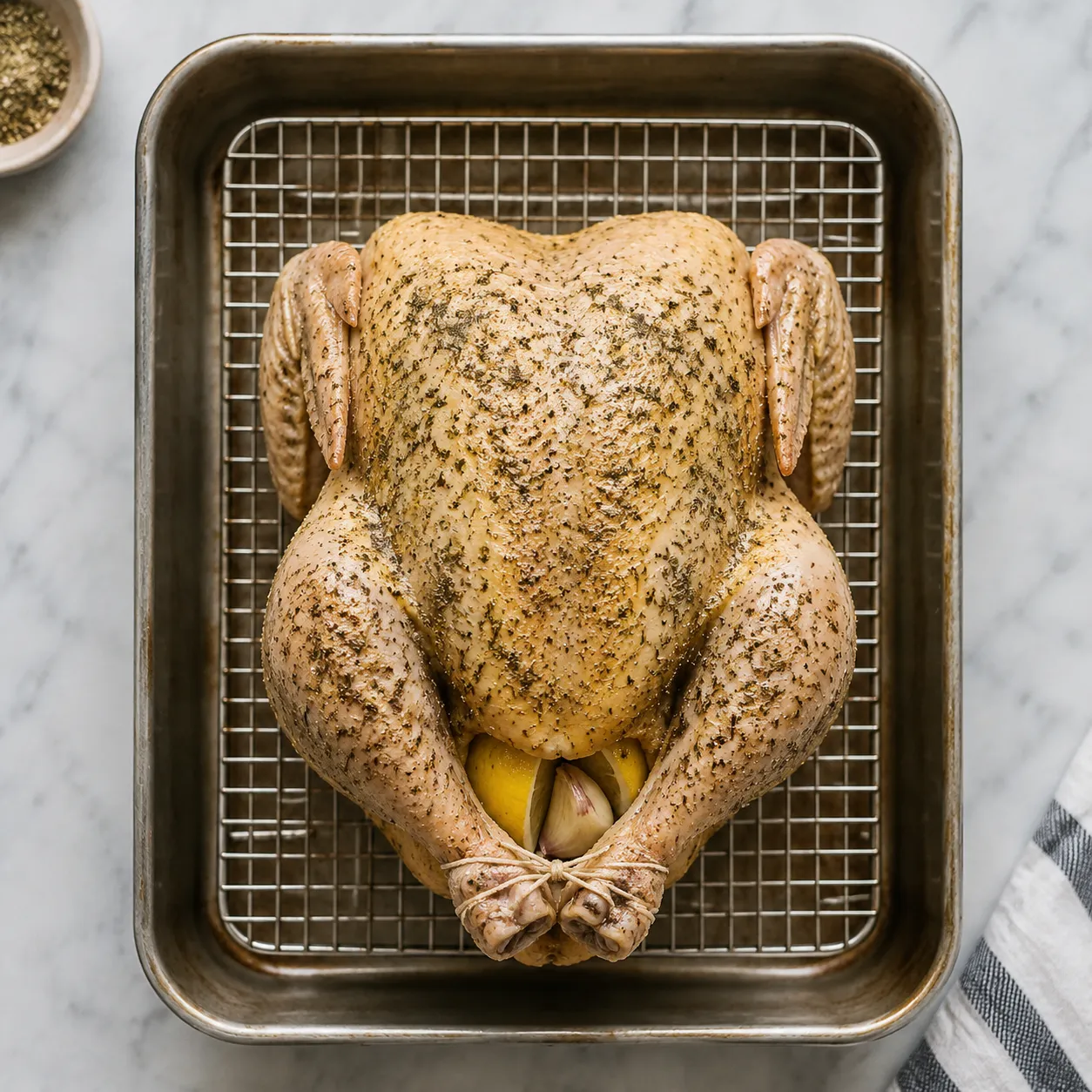
Slide the chicken into the oven and roast until the skin is deeply golden and the juices are bubbling in the pan. If the top darkens too quickly, you can loosely tent it with foil near the end, but leave the bird uncovered for most of the roast so the skin can do its thing. The best results usually come from a steady, unfussy roast instead of a lot of opening and closing the door.
The easiest answer is temperature, not color. The breast can look beautifully bronzed before the center is fully cooked, so the only way to know for sure is to use an instant-read thermometer and check the thigh. The target is 165°F internal temperature, and that reading should come from the thickest part of the thigh without touching bone.
An instant-read thermometer takes the guesswork out of roasting and saves you from cutting into the bird too early. Insert it into the thigh where it meets the body; that area is usually the slowest to finish. If you want a fully confident result, keep checking until the thermometer reads 165°F or a few degrees over in the breast while the thigh is at least 165°F.
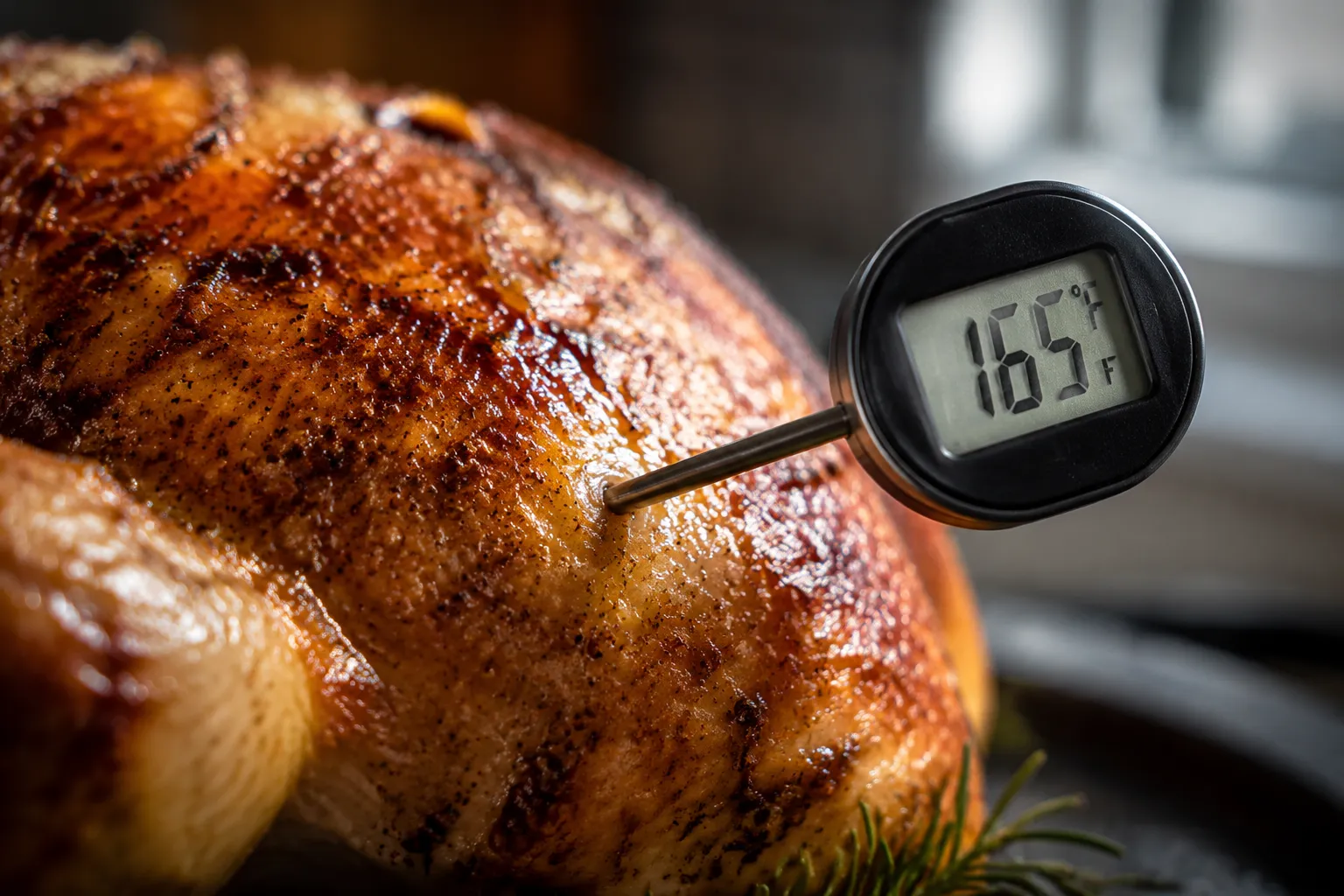
When you pierce the thigh, the juices should run clear rather than pink. This is helpful as a backup clue, but it should not replace the thermometer. Color can be misleading, especially if the bird was brined, seasoned heavily, or roasted in a very hot oven.
Once the chicken reaches temperature, move it to a cutting board and let it rest before carving. That resting time allows the juices to settle back into the meat instead of spilling out the second you slice in.
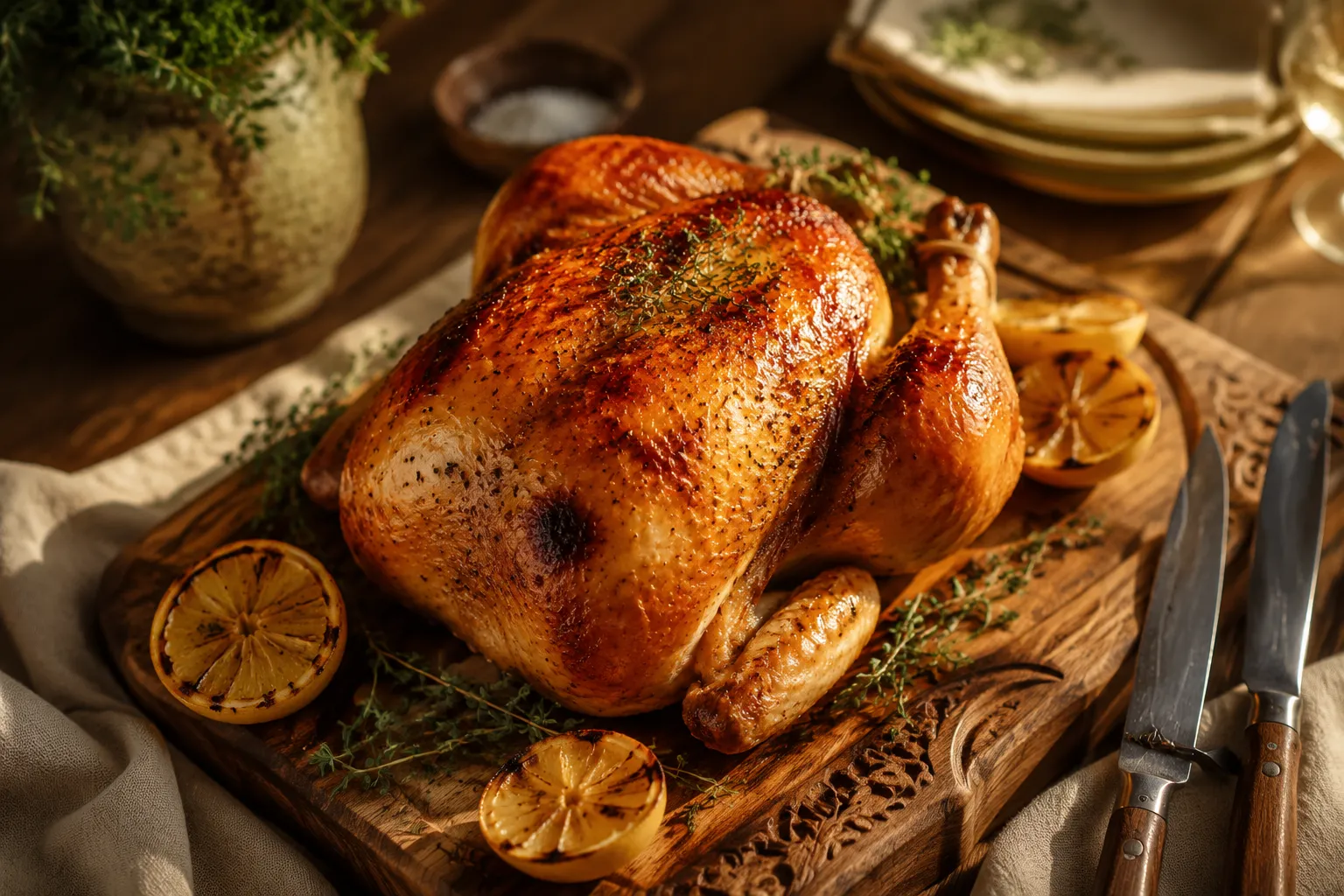
Good roast chicken is not about complicated technique; it is about a handful of small habits that add up. A dry surface, enough seasoning, and a thermometer are the three biggest players. If you treat the chicken gently and give it time, the reward is juicy meat and truly crispy skin.
Start with a room-temperature bird if you have time, since it will roast more evenly than one pulled straight from the fridge. If you forget, don’t panic; just give it a little extra time and check the thigh temperature carefully. Basting is optional at best, and I usually skip it because opening the oven repeatedly can slow browning and lower the heat.
Dry-brining the day before is the easiest upgrade if you want even better skin and deeper seasoning. Salt the chicken, place it uncovered in the fridge, and let the skin dry out a bit overnight. For cooks who like to plan ahead, this is the move that makes a roast chicken recipe feel restaurant-worthy with almost no extra work.
Once the chicken comes out of the oven, dinner practically builds itself. Creamy potatoes, roasted vegetables, and a simple salad make a classic plate that feels comforting and complete. A shallow drizzle of pan juices or homemade chicken gravy takes it from good to memorable.
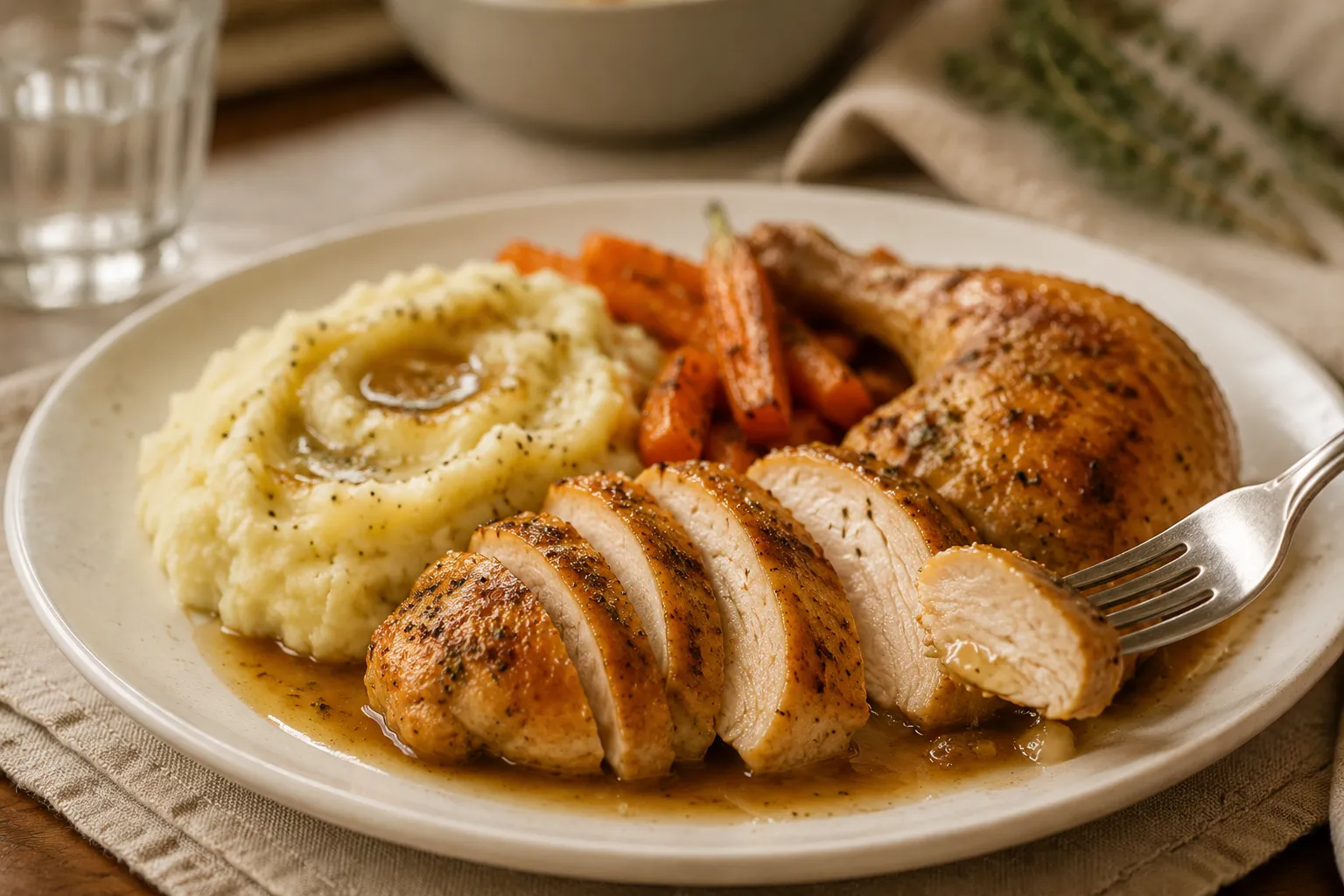
Mashed potatoes are the natural partner for roast chicken because they soak up the pan drippings so beautifully. If you have the time, use the roasting juices to make a quick gravy and spoon it over everything. That combination is hard to beat on a cold night or a laid-back Sunday.
Carrots, onions, potatoes, and parsnips roast happily alongside the chicken if you use a wide enough pan. They pick up flavor from the drippings and make the meal feel more complete with almost no extra cleanup. Keep sturdier vegetables underneath or around the bird so they can catch the savory juices.
If you want something lighter, a crisp green salad gives the meal a fresh, bright edge. Warm dinner rolls are also a nice way to stretch the juices and gravy a little further. This is the kind of dinner that feels flexible enough for a family meal but nice enough for company.
Leftover chicken keeps well, which is one more reason this meal is such a smart choice. Slice or shred it after it cools, then store it in shallow containers so it chills quickly and evenly. For the best flavor and texture, keep some of the pan juices with the meat if you can.
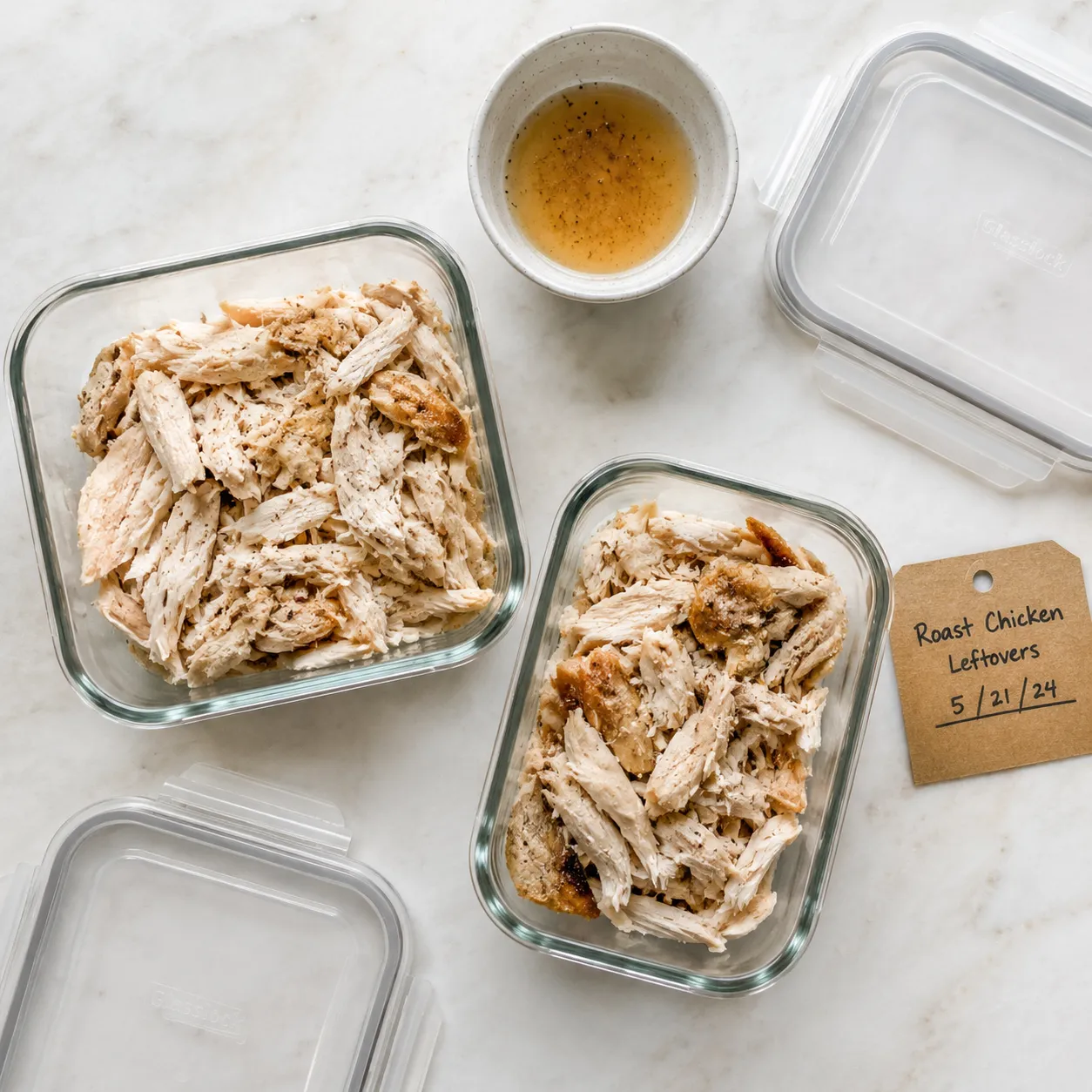
Refrigerate leftovers for up to 4 days, or freeze them for up to 3 months in a tightly sealed container. To reheat without drying out, warm the chicken gently in the oven with a splash of broth or reserved drippings, or microwave it in short bursts covered with a damp paper towel. For anyone who loves leftover roast chicken ideas, this is your starting point for sandwiches, quesadillas, soups, grain bowls, and quick chicken salad.
Once you’ve roasted a bird or two, how long to cook whole chicken in oven becomes less of a mystery and more of a reliable kitchen habit. You will know when to trust the clock, when to trust the thermometer, and when to pull the chicken for the best mix of juicy meat and crackly skin. That is the whole game, and it is easier than it looks.
This roast chicken method is a great base for plenty of flavor directions. Keep the same roasting time and temperature, then change the seasoning, aromatics, or finishing sauce to match the meal you want.
Store leftover chicken in airtight containers in the refrigerator for up to 4 days. If you want to freeze it, remove the meat from the bones, pack it tightly, and freeze for up to 3 months for the best texture.
To reheat, place the chicken in a baking dish with a spoonful of broth, pan juices, or gravy, then cover loosely and warm in a low oven until heated through. This gentler method helps the meat stay moist instead of turning stringy.