How Long to Smoke a Whole Chicken (Juicy Every Time)
4.8 from 12 reviews
0SHARES
Now Playing
How Long to Smoke a Whole Chicken (Juicy Every Time)
0:00
0:00
Learn exactly how long to smoke a whole chicken at 225°F and 250°F, with foolproof timing, internal temps, and pro tips for crispy, smoky skin every single time.
Why You'll Love This Recipe
Clear timing, no guesswork: You get a simple chart for multiple bird sizes and smoker temperatures.
Juicy meat from breast to thigh: The recipe uses smart pull temperatures so the white meat stays tender while the dark meat gets silky.
Big smokehouse flavor: Brown sugar, smoked paprika, garlic, and fruitwood smoke create a balanced sweet-savory crust.
Works on any smoker: Pellet, electric, charcoal, and offset smokers all work with the same temperature targets.
Crispier skin strategy: A dry surface plus a hot finish helps avoid the rubbery skin problem.
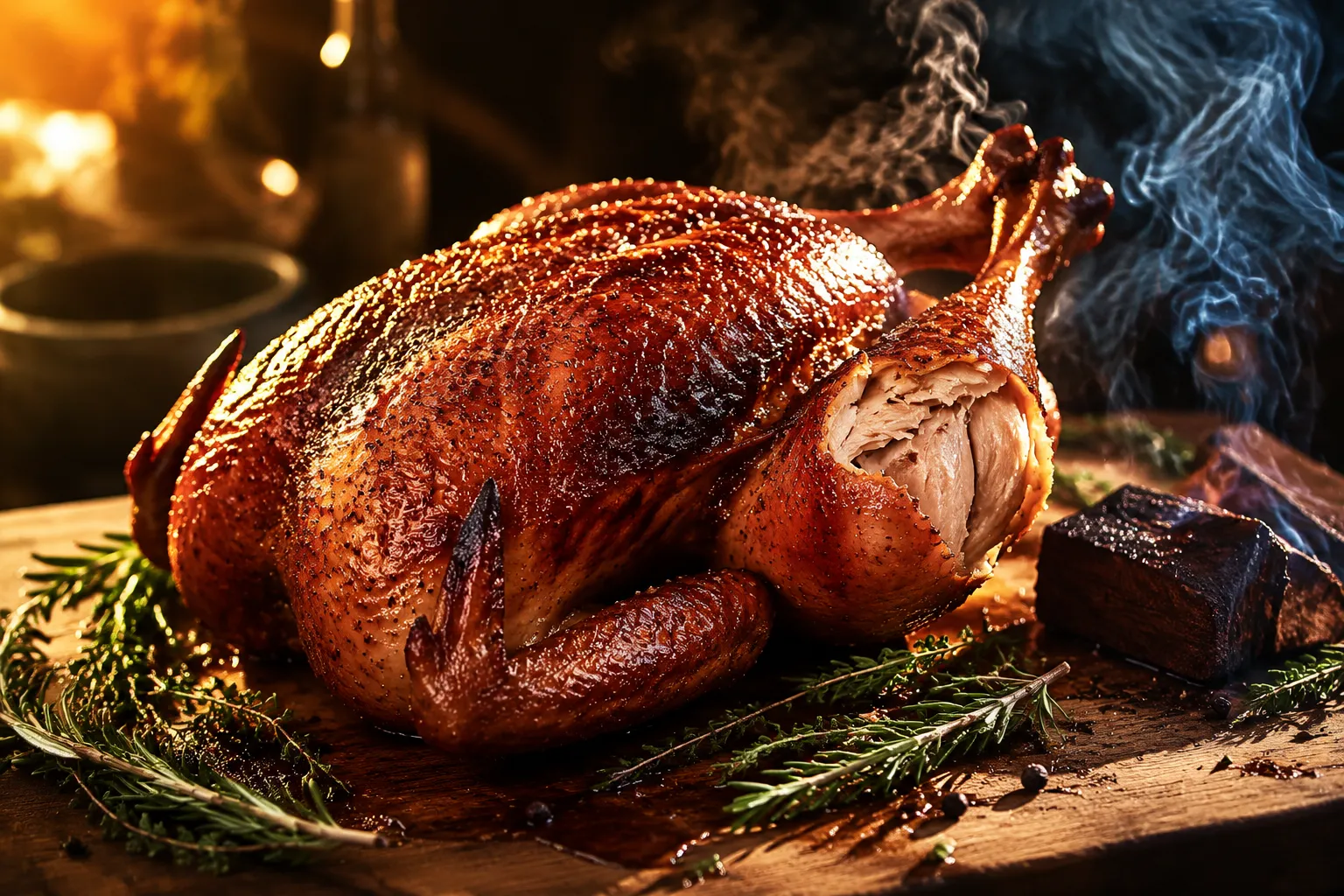
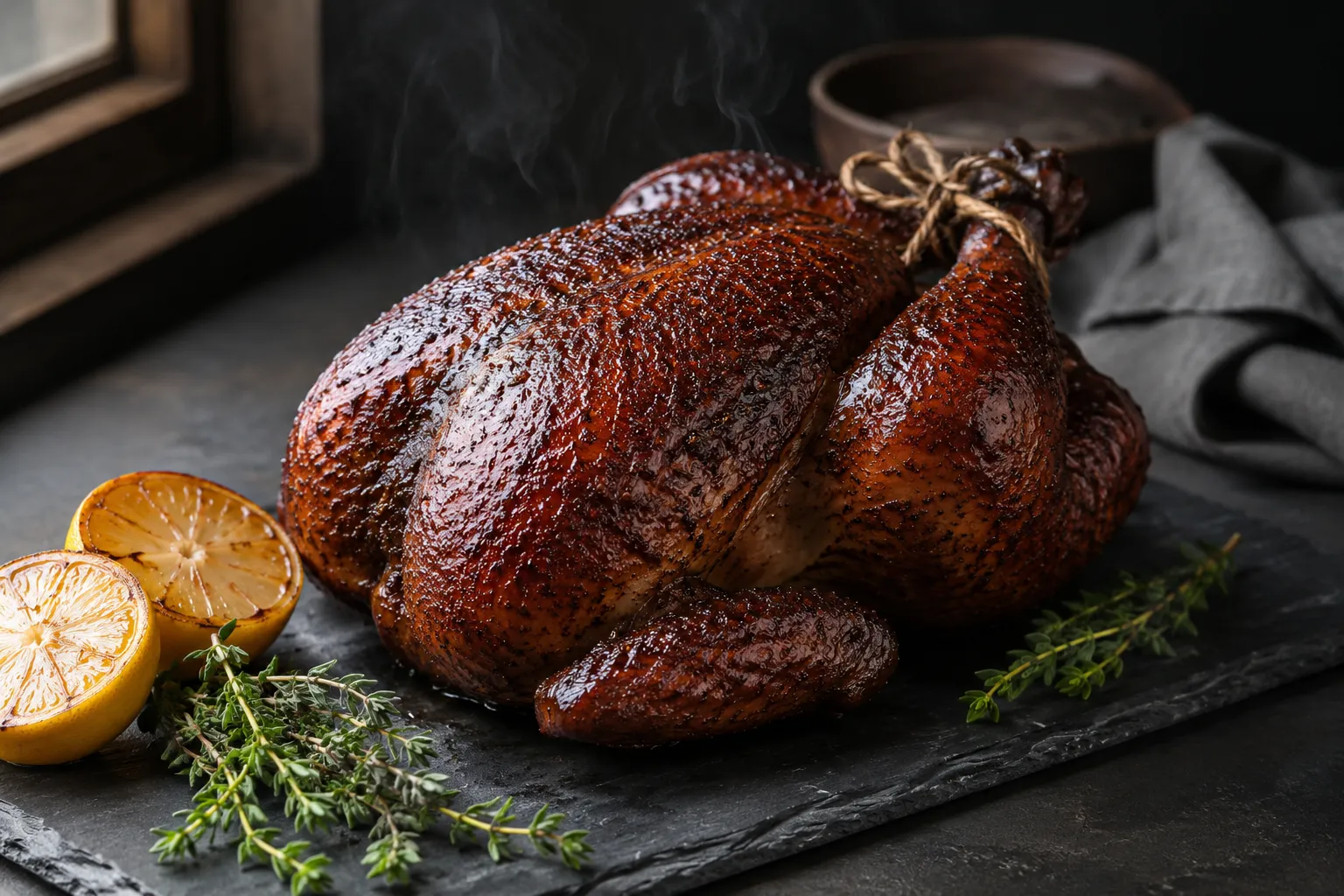
How long to smoke a whole chicken depends on the size of the bird, the temperature of your smoker, and whether you leave it whole or spatchcock it first. For most backyard cooks, a 4 to 5 pound chicken smoked at 250°F takes about 2 1/2 to 3 1/2 hours, with tender meat, gently rendered fat, and skin that can crisp beautifully with a hot finish.
This is the kind of weekend recipe that smells like a cookout before dinner has even started: paprika, brown sugar, garlic, and a little fruitwood smoke curling around a golden bird. The method here is built for pellet, electric, charcoal, or offset smokers, and it gives you clear target temperatures so you are not guessing by the clock alone.
If you have ever pulled chicken too early and found pink juices near the bone, or waited too long and ended up with dry breast meat, this guide is your reset. We will walk through timing at 225°F, 250°F, and 275°F, plus the internal temperature 165°F safety point, crispy-skin strategy, and a built-in reference for smoked chicken legs and smoked chicken drumsticks.
How Long to Smoke a Whole Chicken (Quick Answer)
For a standard 4 to 5 pound bird, plan on 3 1/2 to 4 hours at 225°F, 2 1/2 to 3 1/2 hours at 250°F, or about 2 to 3 hours at 275°F. If you are specifically wondering how long to smoke a whole chicken at 225, use 45 minutes per pound as your planning number, then start checking temperature early. If you are asking how long to smoke a whole chicken at 250, plan closer to 30 to 40 minutes per pound, which is why 250°F is my favorite balance of smoke flavor and better skin.
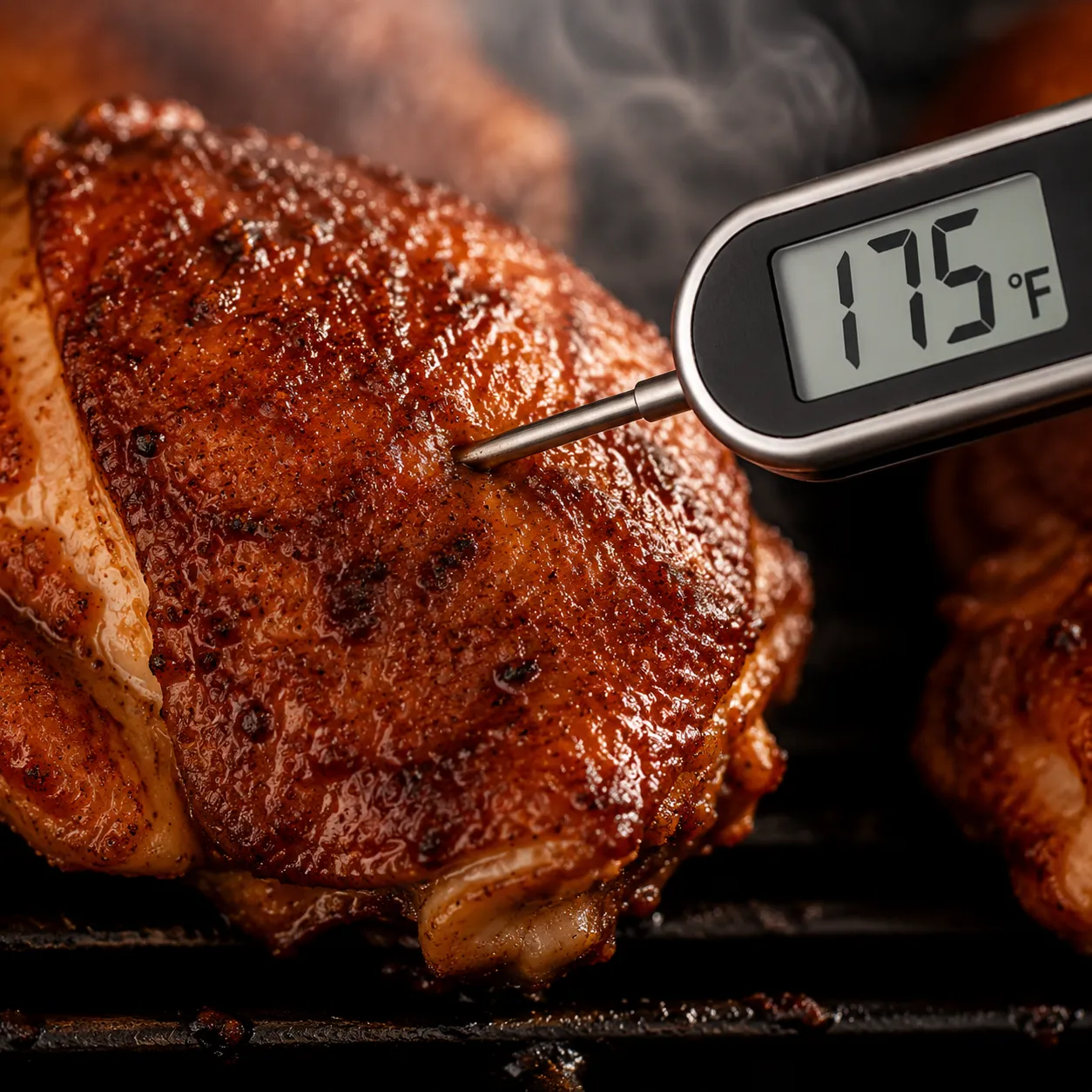
The clock is helpful, but the thermometer is the boss. Pull the chicken when the breast registers 160°F and the thickest part of the thigh reads 175°F; after a short rest, carryover heat brings the breast to a safe internal temperature 165°F without drying it out. The thigh is happier cooked higher because the connective tissue softens, giving you that juicy, almost fall-apart texture.
Size matters more than the calendar you set in your head. A compact 3 1/2 pound chicken can finish surprisingly fast, while a plump 6 pound roaster may need extra time, especially if it goes onto the smoker cold.
Smoked Whole Chicken Time & Temperature Chart
Use this chart as a planning guide for smoking a whole chicken, then confirm doneness with the best meat thermometer you own. Poultry can vary by shape, water content, and starting temperature, so the times below are ranges rather than promises. If your smoker runs a little cool or the lid gets opened often, expect the longer end of the range.
3 to 4 lb chicken: 225°F for 2 1/2 to 3 hours; 250°F for 2 to 2 3/4 hours; 275°F for 1 3/4 to 2 1/4 hours.
4 to 5 lb chicken: 225°F for 3 1/2 to 4 hours; 250°F for 2 1/2 to 3 1/2 hours; 275°F for 2 to 3 hours.
5 to 6 lb chicken: 225°F for 4 to 4 1/2 hours; 250°F for 3 to 4 hours; 275°F for 2 3/4 to 3 1/2 hours.
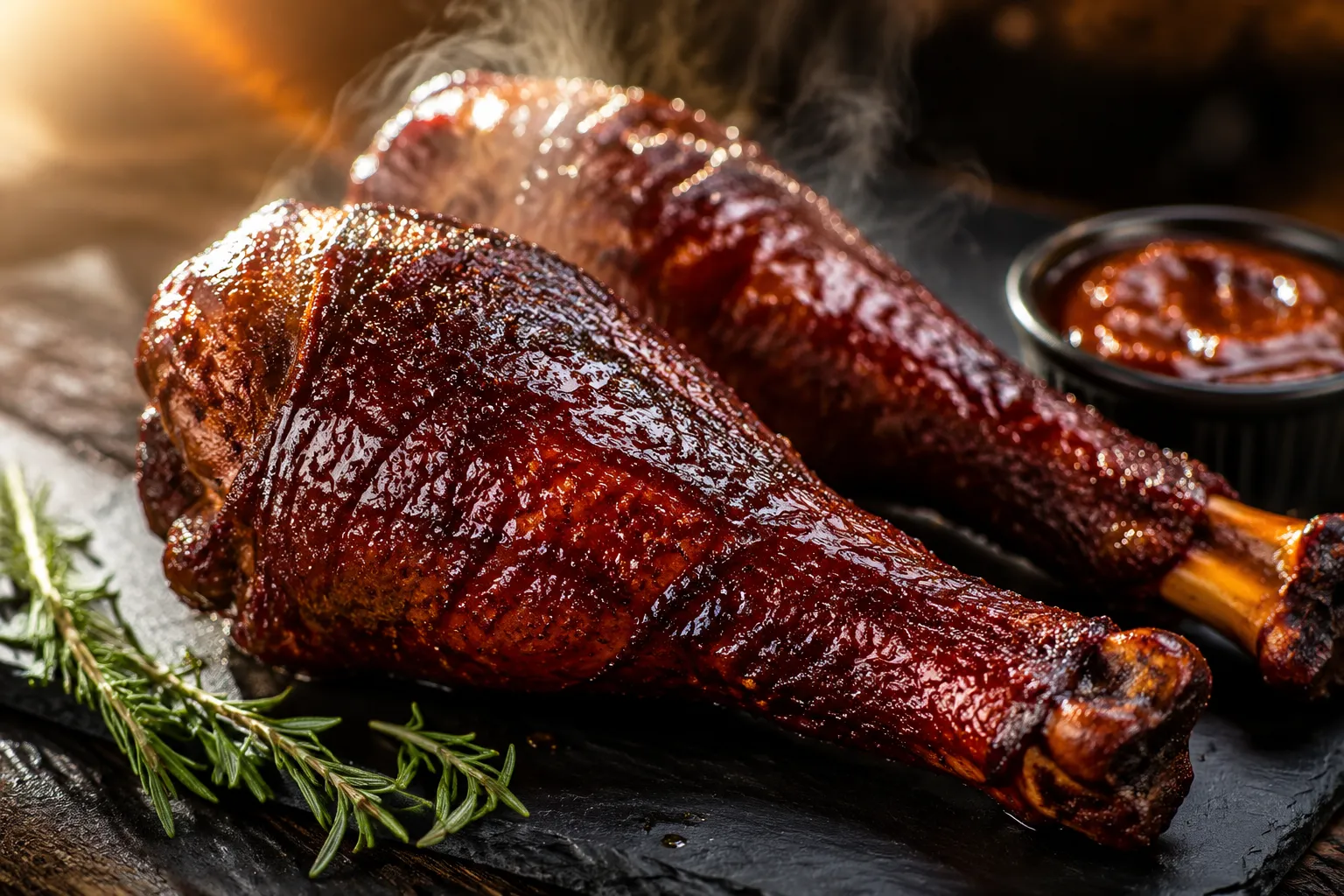
For smaller pieces, the timing is much shorter. If you need to know how long to smoke chicken legs, plan on 1 1/2 to 2 hours at 250°F, cooking until the thickest part reaches 175°F to 185°F. The same answer works for how long to smoke chicken drumsticks because legs and drumsticks have enough dark meat and connective tissue to benefit from that higher finishing temperature.
The reason this chart leads with 250°F is simple: chicken is lean, and skin needs enough heat to render. Low-and-slow barbecue temperatures are dreamy for brisket and pork shoulder, but poultry skin can turn rubbery if it hangs out too long below 225°F. That is why knowing how long to smoke a whole chicken is really about matching time, temperature, bird size, and final texture.
What You Need to Smoke a Whole Chicken
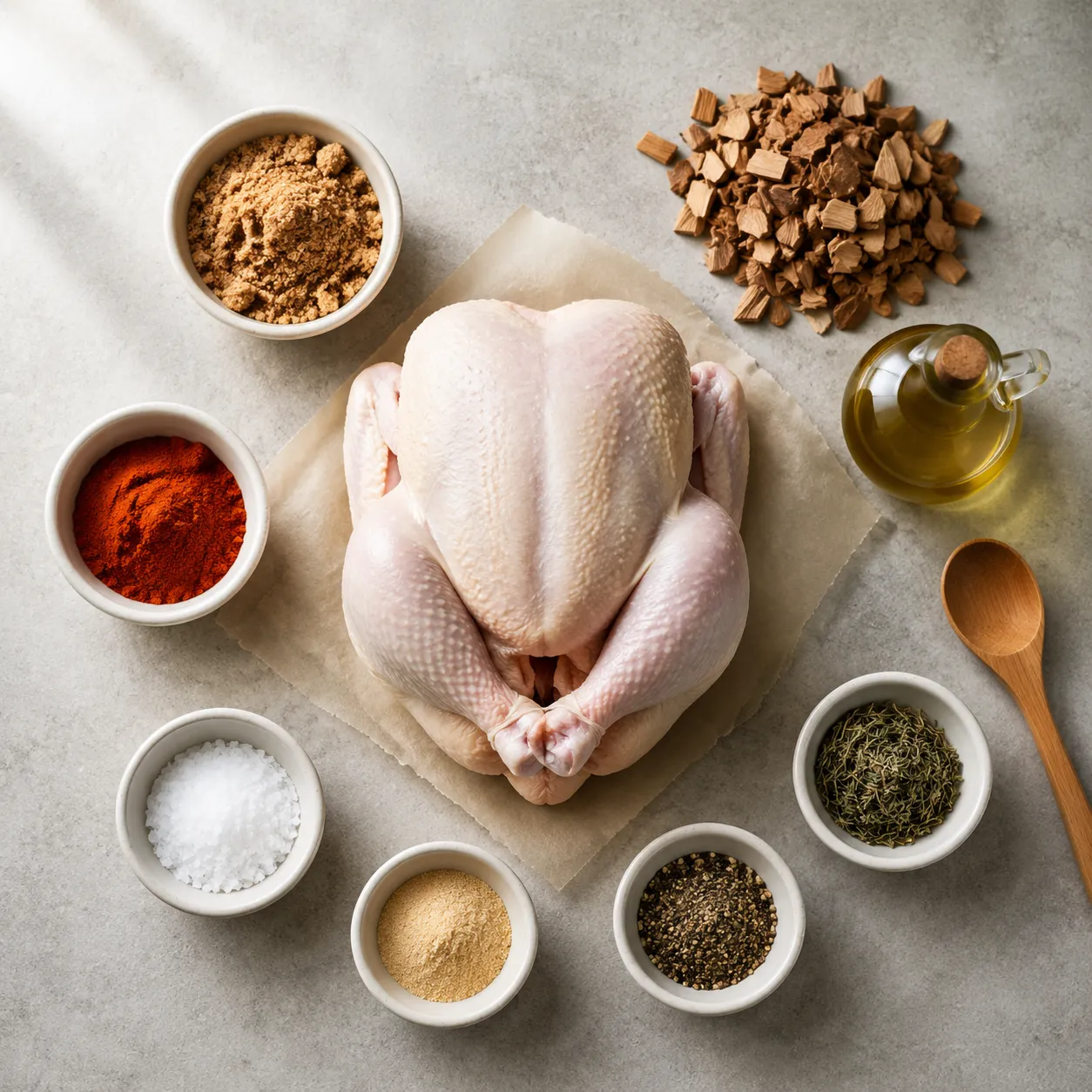
Start with a 4 to 5 pound whole chicken if you can; it is large enough to serve a family but small enough to cook evenly. Look for a bird with intact skin, no strong odor, and minimal added solution if the label lists it. Pat it very dry before seasoning, because surface moisture is the enemy of browning and bite-through skin.
For flavor, this recipe uses olive oil and a sweet-smoky spice blend of brown sugar, smoked paprika, kosher salt, garlic powder, onion powder, black pepper, and thyme. You can use your favorite smoked chicken rub here, or make the simple one in the recipe card below. If you prefer extra insurance against dryness, a chicken brine recipe works beautifully before you dry the bird and add the rub.
Apple and cherry are the gentlest, most crowd-pleasing choices for poultry, while pecan adds a nutty warmth and hickory brings a stronger barbecue backbone. Apple wood chips are especially good with the brown sugar and paprika in this recipe, giving the chicken a lightly sweet aroma without overpowering the meat. If you are comparing wood chips for smoking poultry, save mesquite for bolder meats or use it sparingly in a blend.
You will also want a smoker, a drip pan, heat-safe gloves, butcher twine if you plan to truss, and an instant-read thermometer. A leave-in probe is useful for tracking the breast during the cook, but I still like to verify the thigh and breast with an instant-read before pulling the bird.
Step-by-Step Smoked Chicken Method
The best smoked whole chicken starts before it ever hits the grate. Pat the bird dry, remove any giblets, and season it generously with salt or a dry brine if you have time. Even 4 hours uncovered in the refrigerator helps, but overnight is better for deeper seasoning and drier skin.
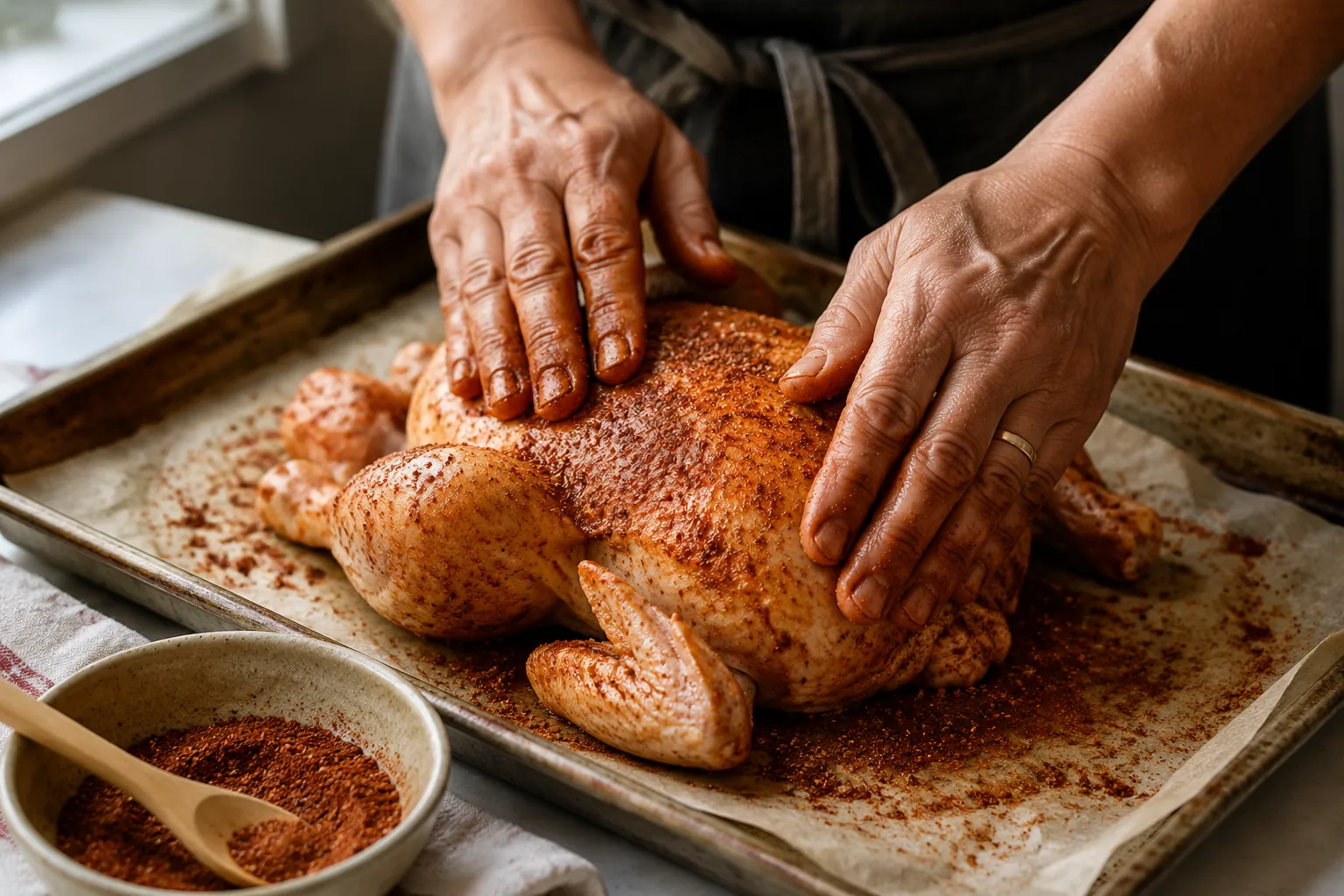
Once the bird is dry, coat it lightly with olive oil and cover every surface with the spice rub, including the back, legs, wings, and the skin around the breast. Try to season under any loose skin without tearing it, because that puts flavor closer to the meat. Tie the legs loosely if you want a tidy presentation, or leave them relaxed for more airflow around the thighs.
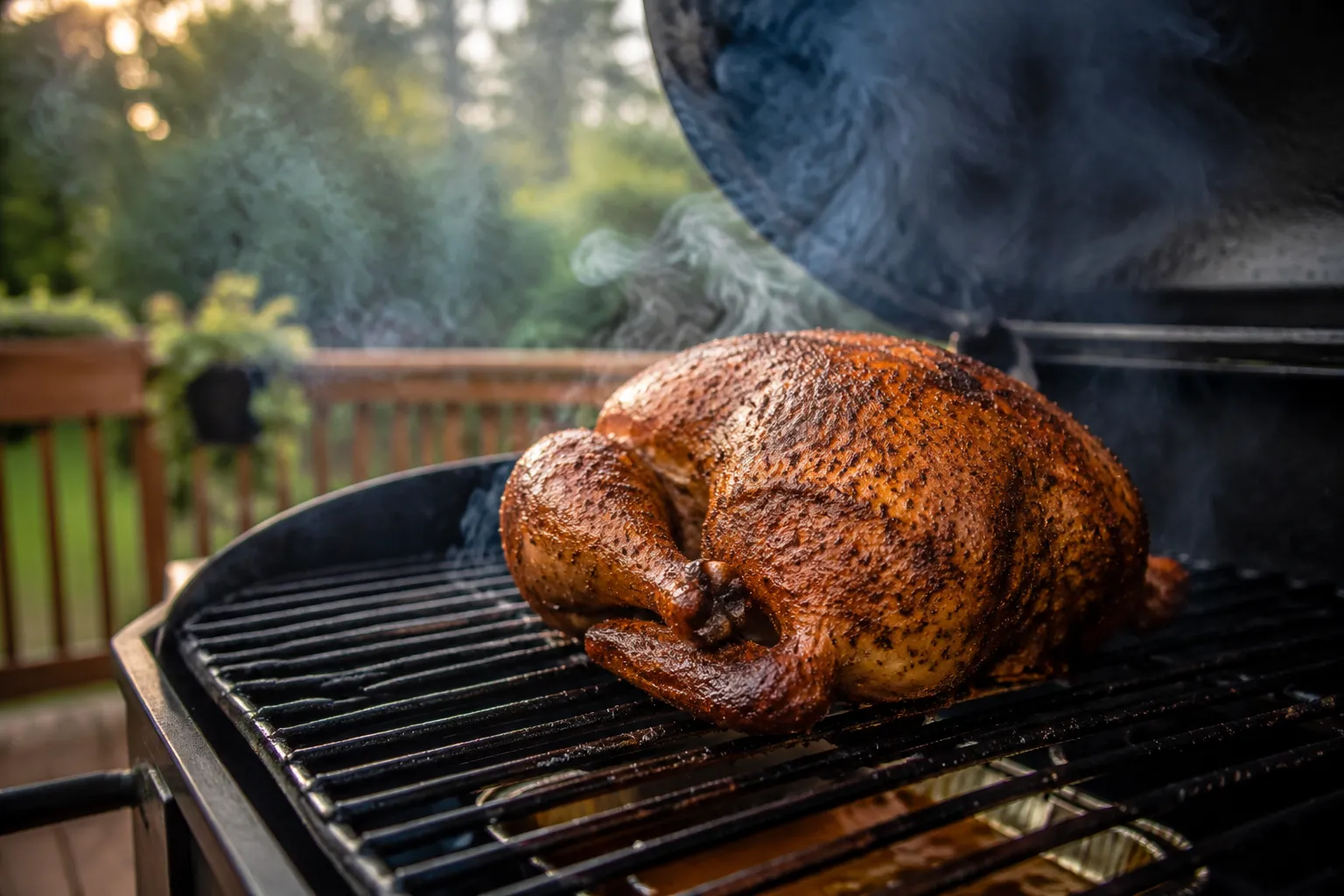
Preheat the smoker to 250°F for the main method, or 225°F if you want a longer, deeper smoke. Add apple, cherry, pecan, or a mild hickory blend, and wait for thin blue smoke rather than a thick white cloud. Set the chicken breast-side up on the grates with a drip pan underneath, then close the lid and let the heat do its quiet work.
Begin checking the internal temperature when you are about 30 minutes shy of the low end of the timing range. Insert the thermometer into the thickest part of the breast without touching bone, then check the thigh near the joint. The sweet spot is pulling at 160°F in the breast and 175°F in the thigh, which gives you safe, juicy meat after resting.
To crisp the skin, raise the smoker to 375°F to 400°F for the final 8 to 12 minutes, or transfer the chicken to a hot grill or oven. Watch closely because the brown sugar in the rub can darken quickly. Rest the finished bird for 10 to 15 minutes before carving so the juices settle back into the meat instead of running across the board.
Crispy Skin and Smoky Flavor Basics
Crisp skin begins with a dry surface. If you can, season the chicken and refrigerate it uncovered overnight on a rack set over a sheet pan. This air-drying step helps the salt penetrate the meat while the skin loses enough surface moisture to brown instead of steam.
A spatchcock chicken is another excellent option when you want faster, more even cooking. Removing the backbone and flattening the bird exposes more skin to direct heat, helps the thighs and breast finish closer together, and can shave 30 to 45 minutes off the cook. It also makes carving easier, especially if you are serving a crowd.
Rubbery skin usually comes from cooking too cool for too long or skipping the drying step. If you love a heavier smoke profile, you can start at 225°F for the first hour, then bump to 275°F until the bird is nearly done. The final hot blast is what turns rendered fat into that glossy, lightly blistered finish.
For a pretty pink smoke ring, use steady clean smoke early in the cook while the meat surface is still cool and slightly tacky. Fruitwoods such as cherry and apple can deepen the color of the skin, while a touch of hickory adds a classic barbecue edge. Do not chase the smoke ring at the expense of flavor, though; juicy meat and balanced seasoning matter more than a rosy line.
Serving Ideas for a Backyard Chicken Dinner
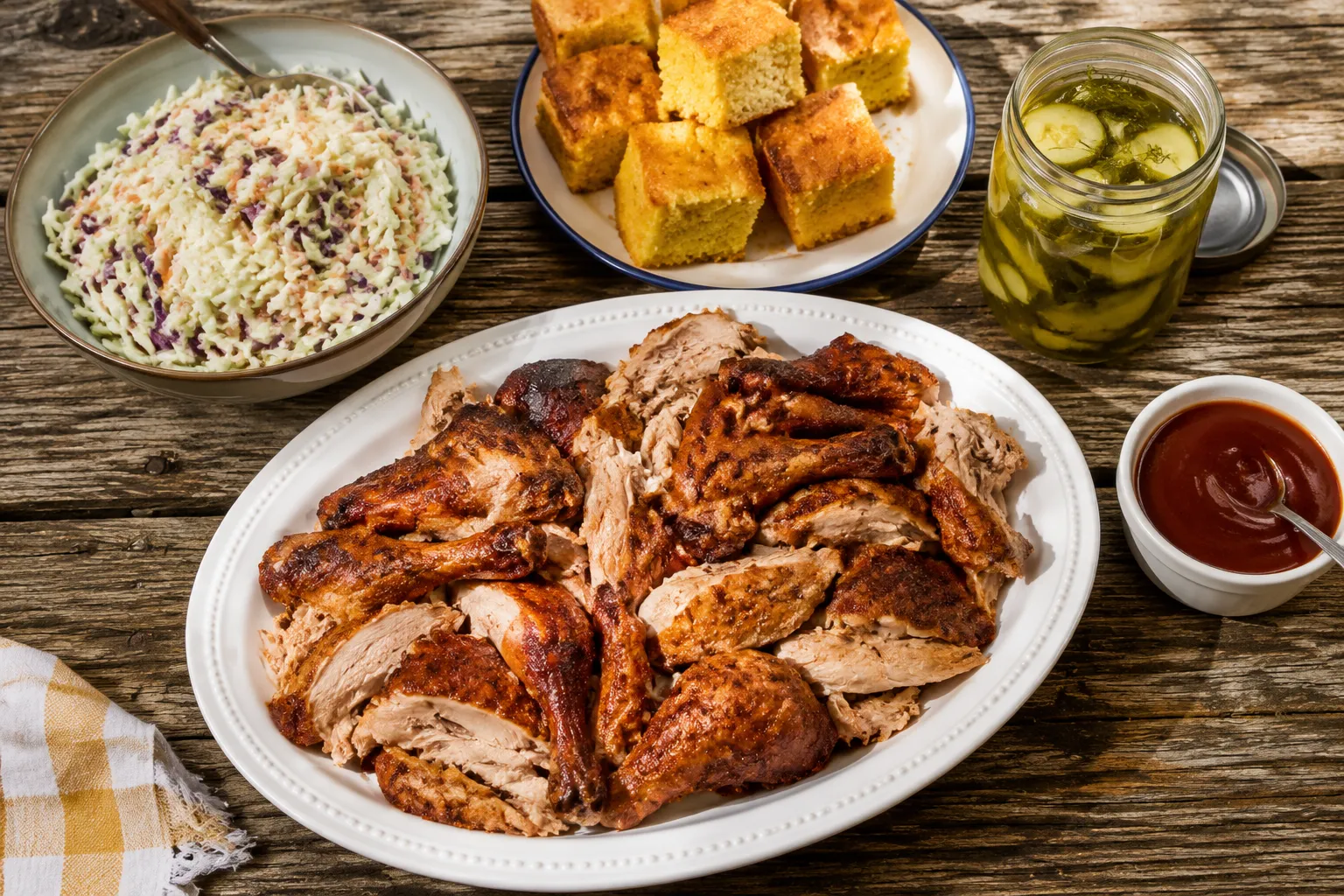
Smoked whole chicken is one of those main dishes that plays nicely with almost any cookout side. I love it with creamy coleslaw, skillet cornbread, dill pickles, grilled corn, potato salad, or a crisp green salad with a tangy vinaigrette. A little barbecue sauce on the side is welcome, but the chicken should be flavorful enough to stand on its own.
For a weeknight-style plate, serve sliced breast meat with roasted sweet potatoes and a quick cucumber salad. For a more barbecue-forward spread, pile the carved chicken onto a platter with pickles, onions, soft rolls, and extra sauce. Leftover meat also makes incredible tacos, grain bowls, smoky chicken salad, and soup.
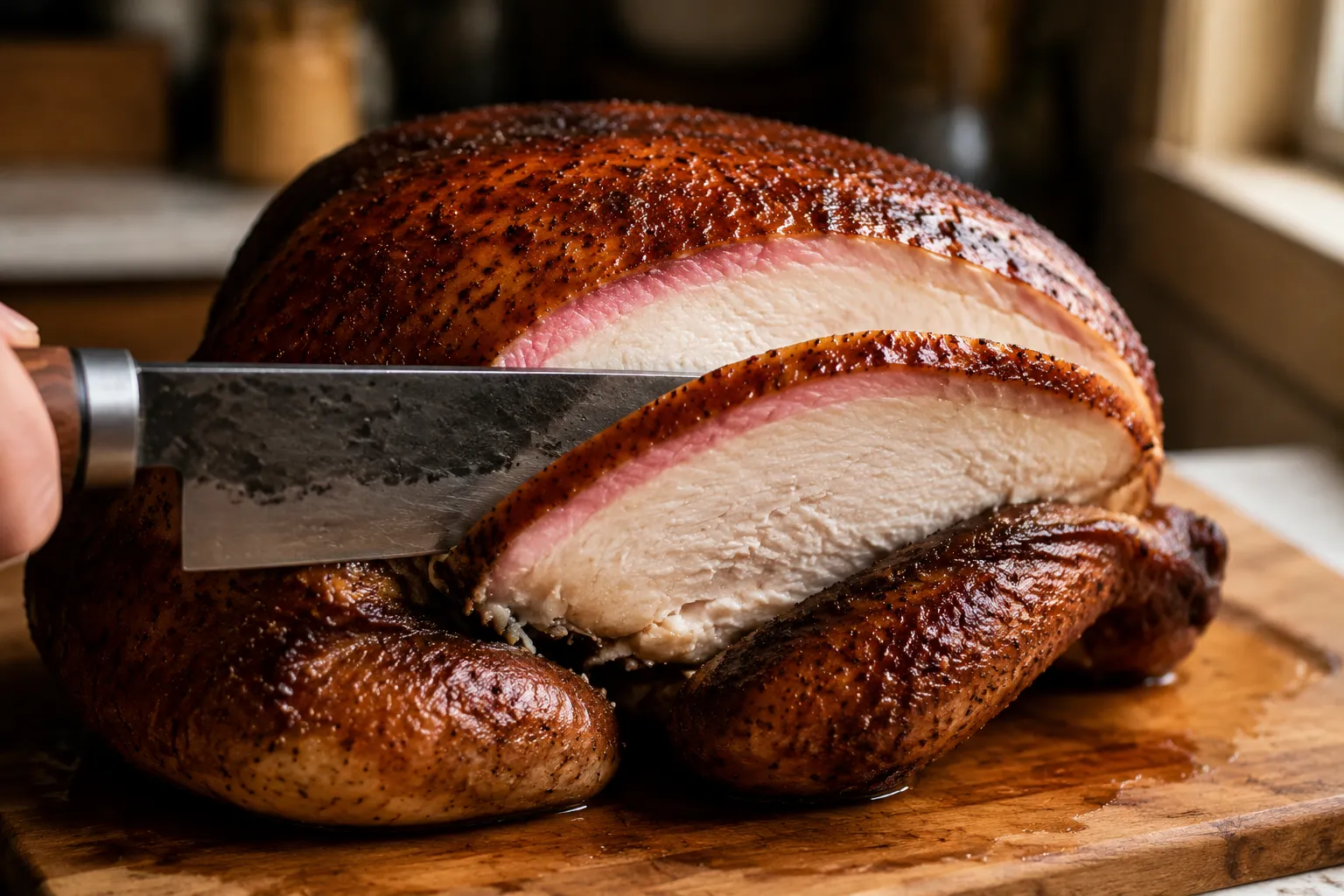
When carving, remove the legs first, then separate the drumsticks from the thighs at the joint. Slice the breast meat across the grain, keeping a little strip of skin on each piece if possible. The wings are the cook’s snack in my house, especially when the tips get dark and savory from the smoke.
Common Mistakes to Avoid with Smoked Poultry
One common mistake is smoking chicken too low from start to finish. Temperatures below 225°F can keep the skin soft and damp, and they may stretch the cook long enough to dry out the breast before the thighs are perfect. If you like starting low, build in a hotter finish so the skin has a chance to render.
Another mistake is relying only on time. Even a very accurate timing chart cannot account for every bird, every smoker, and every windy afternoon in the backyard. The safest answer to how long to smoke a whole chicken is always paired with internal temperature: 160°F breast, 175°F thigh, and a rest that carries the white meat to the proper safe zone.
Finally, do not carve the chicken the second it comes off the smoker. Resting is not a fussy chef trick; it is the difference between juicy slices and a puddle of flavor left behind on the cutting board. Give it 10 to 15 minutes, then carve with a sharp knife and serve while the skin still crackles at the edges.
💡 Expert Tips
Dry the skin well: Pat the chicken dry before seasoning, and refrigerate it uncovered overnight if time allows. This is the single best move for better browning.
Use temperature, not time, as the final call: Pull when the breast is 160°F and the thigh is about 175°F, then rest before carving.
Keep the smoke clean: Thin blue smoke tastes sweet and woodsy; thick white smoke can make poultry bitter.
Finish hot for texture: If the skin looks soft near the end, raise the heat to 375°F to 400°F for 8 to 12 minutes.
Let it rest uncovered: Foil can trap steam and soften the skin, so rest the chicken lightly tented only if your kitchen is very cool.
🔄 Variations & Substitutions
Once you have the basic timing down, you can change the flavor profile without changing the method. Keep the same internal temperature targets and adjust the rub, wood, or finishing glaze to match your menu.
BBQ glazed: Brush with barbecue sauce during the final 10 minutes of cooking.
Lemon herb: Add lemon zest, rosemary, thyme, and cracked pepper to the rub.
Spicy Cajun: Swap in Cajun seasoning and add a pinch of cayenne.
Maple pecan: Use pecan wood and finish with a light maple-butter brush.
Spatchcocked: Remove the backbone and flatten the bird for a quicker, more even cook.
🧊 Storage & Leftovers
Store leftover smoked chicken in an airtight container in the refrigerator for up to 4 days. Remove the meat from the bones if you want easier reheating, but keep the skin separate if you plan to crisp it later in a skillet or air fryer.
To freeze, wrap portions tightly and freeze for up to 3 months. Reheat gently with a splash of broth in a covered skillet or 300°F oven until warmed through, then uncover briefly to refresh the skin if desired.
Frequently Asked Questions
How long does it take to smoke a whole chicken at 225°F?
Plan on about 45 minutes per pound when smoking a whole chicken at 225°F. A 4 to 5 pound bird usually takes 3 1/2 to 4 hours, but always verify doneness with a thermometer instead of relying only on the clock. Pull the chicken when the breast reads 160°F and the thigh reaches about 175°F. During the rest, the breast temperature will rise to the safe 165°F mark while staying juicy.
How long to smoke a whole chicken at 250°F?
At 250°F, a whole chicken usually takes 30 to 40 minutes per pound. For a 5 pound chicken, that means about 2 1/2 to 3 hours, depending on the shape of the bird and how steady your smoker runs. This temperature is a great sweet spot because it still gives the meat time to absorb smoke, but it helps the skin render better than a very low 200°F to 225°F cook.
What internal temperature should smoked chicken reach?
For the juiciest smoked chicken, pull it when the breast registers 160°F and the thickest part of the thigh reads 175°F. The chicken will continue cooking as it rests, and the breast should rise to the safe internal temperature of 165°F. Dark meat can handle and even benefit from higher temperatures, which is why the thigh target is higher than the breast target. Always check without touching bone for the most accurate reading.
How long to smoke chicken legs and drumsticks?
Chicken legs and drumsticks generally take 1 1/2 to 2 hours at 250°F. Cook them until the thickest part reaches 175°F to 185°F; while poultry is technically safe at 165°F, dark meat becomes more tender at the higher range. The connective tissue has time to soften, and the meat pulls from the bone more easily. For crispier skin, finish them over higher heat for a few minutes at the end.
Why is my smoked chicken skin rubbery?
Rubbery smoked chicken skin usually means there was too much moisture and not enough heat to render the fat. Air-dry the chicken uncovered in the refrigerator overnight, pat it dry before adding rub, and smoke at 250°F or higher for better texture. If the meat is nearly done but the skin still looks soft, raise the smoker to 375°F to 400°F for about 10 minutes. Rest uncovered so steam does not undo the crisping.
How Long to Smoke a Whole Chicken (Juicy Every Time)