Smoked Turkey Legs: Juicy Backyard BBQ Recipe
Ingredients
Scale
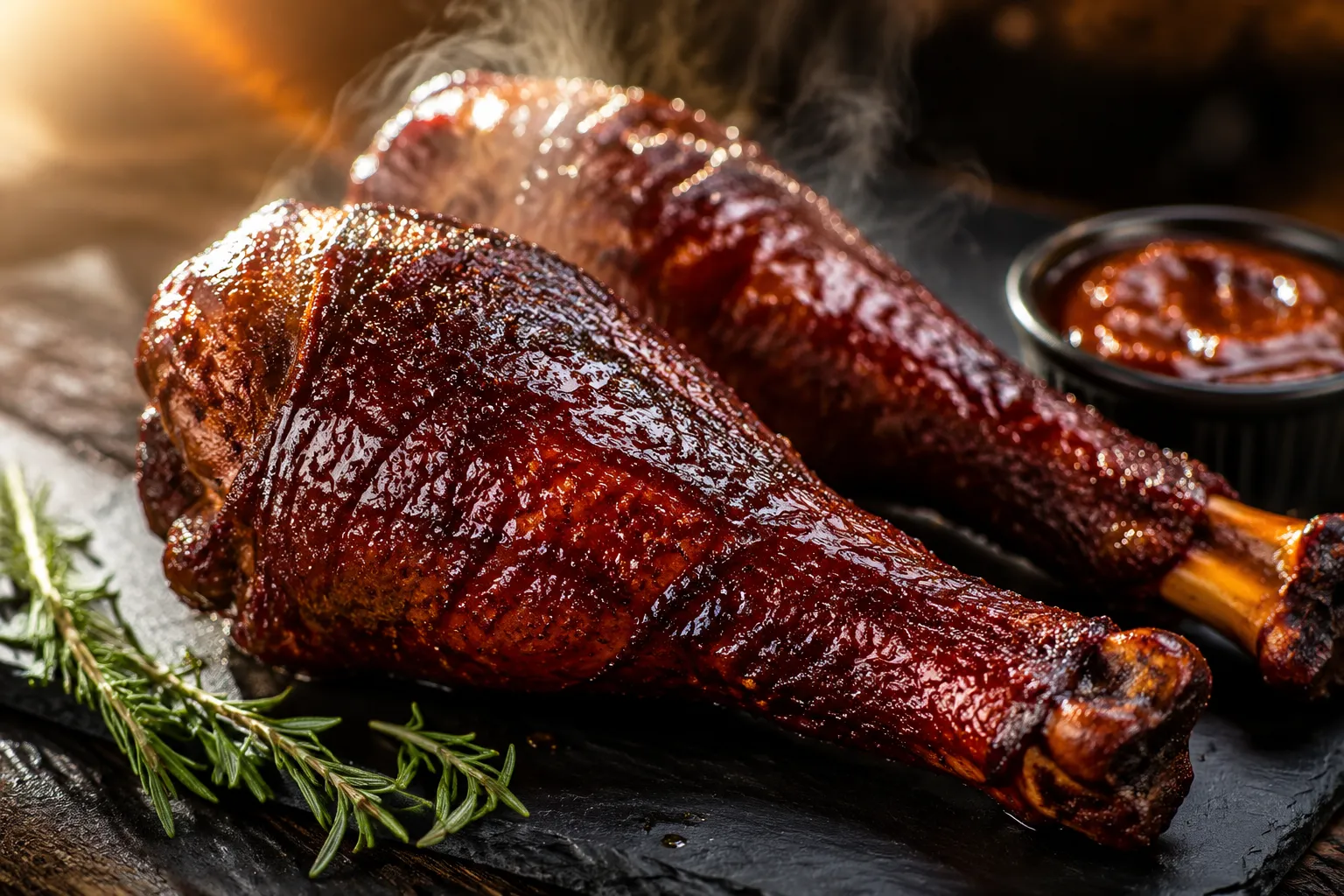
These smoked turkey legs are tender, smoky, and Disney-park worthy, with crispy mahogany skin and juicy meat that pulls right off the bone.
If you have ever wandered through a Disney park, sniffed the air, and made a beeline for the smoke, you already know the magic of smoked turkey legs. Massive, mahogany-skinned, fall-off-the-bone drumsticks that look like something a medieval king would wave around at a banquet. The good news: you do not need a theme-park ticket or a commercial smoker to make them at home. With a simple overnight brine, a brown-sugar BBQ rub, and a few hours of low-and-slow hickory smoke, you can pull these off in your own backyard for a fraction of the carnival price.
I have tested this recipe on a pellet smoker, an offset, and a kettle grill with a smoke tube, and the formula holds up across all three. The brine seasons the meat all the way to the bone, the rub builds that signature deep red crust, and the long stretch at 250°F renders the connective tissue into something so tender the meat practically slides off when you pick it up. It is the kind of cook that turns a casual Saturday into an event. Neighbors will start drifting over around hour two, drawn in by the hickory.
This is also one of my favorite Thanksgiving turkey ideas when you do not want to wrangle a whole bird, or you have a crew that fights over the dark meat. Drumsticks are cheap, hard to overcook, and unbelievably forgiving for first-time smokers. If you can keep a fire steady at 250°F and read a meat thermometer, you can absolutely make these.
The shopping list for these smoked turkey legs is short and friendly. Look for big, plump turkey legs, often sold in pairs and labeled fresh turkey drumsticks. Around 1 to 1.5 pounds each is the theme-park sweet spot. Go bigger if your butcher will sell them, since those massive specimens are exactly what you are after for that handheld, fairground-stand presentation. Avoid frozen if possible, or thaw fully in the fridge for 24 to 36 hours before brining.
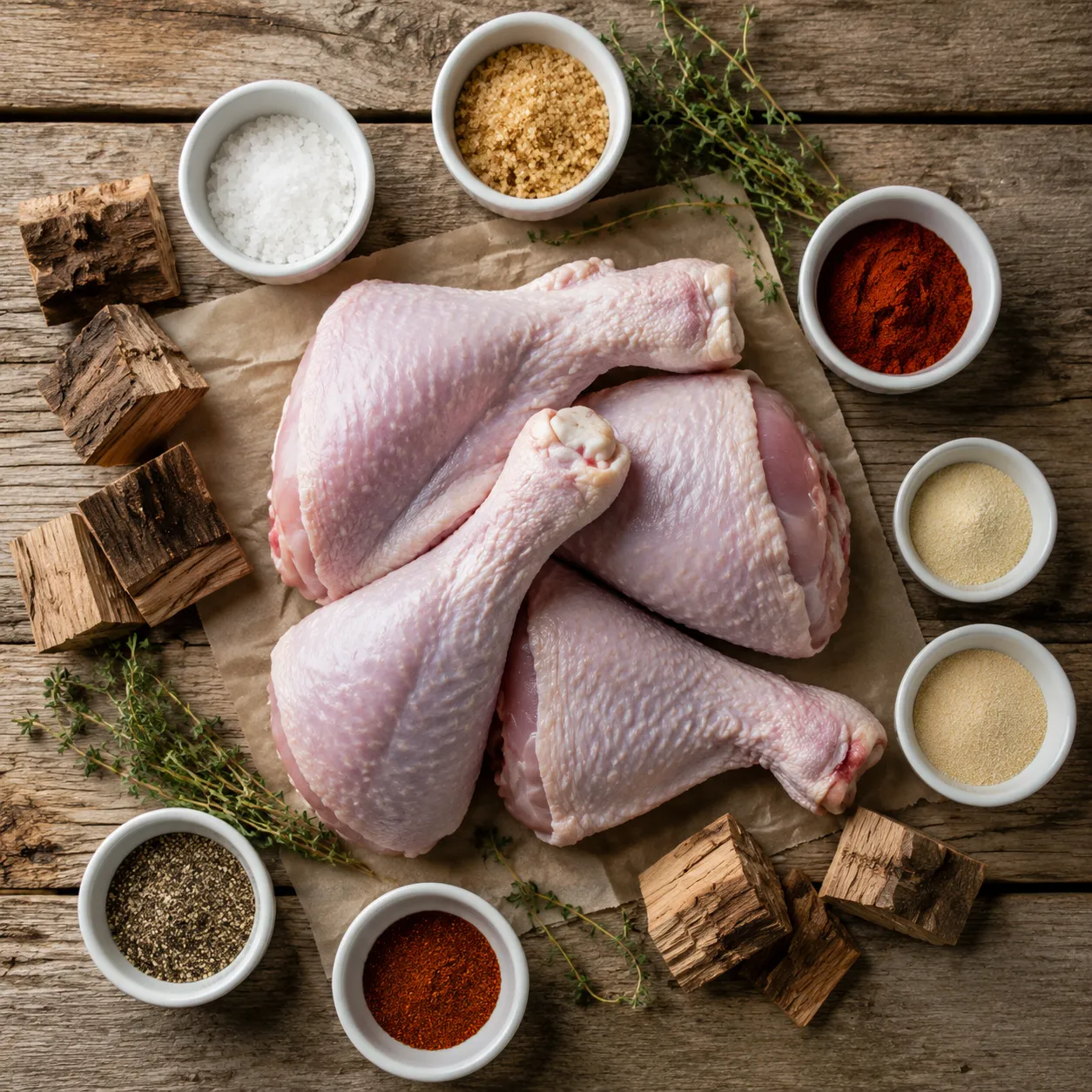
Brine is non-negotiable for juicy meat. A basic turkey brine recipe uses kosher salt, brown sugar, and water as the backbone. I add bay leaves, whole peppercorns, smashed garlic cloves, and a splash of apple cider vinegar for depth. The salt seasons the meat, the sugar helps with browning and balances the salt, and the overnight soak keeps every bite moist even after four hours in the smoker. Use kosher salt specifically. Table salt is denser by volume and will turn your turkey into something inedible.
The BBQ dry rub is where you build that signature red-brown bark. Smoked paprika gives color and a hit of campfire, brown sugar caramelizes into a sweet crust, and garlic powder, onion powder, black pepper, and cayenne round out the savory edge. Mix the rub the night before so the flavors meld. If you have a favorite store-bought blend, you can absolutely use it here. Just check that it is not already heavy on salt, since the brine has that job covered.
For that classic theme-park taste, hickory is king. It is bold, slightly bacon-y, and clings to poultry beautifully. If you prefer something gentler, applewood, cherry, or pecan all play nicely with turkey without overpowering it. I usually run a 70/30 mix of hickory and apple to land between bold and balanced. Whatever wood chips for smoking you choose, soak chips for 30 minutes if you are working on a kettle, but skip soaking with chunks on a pellet rig, since the moisture just steals heat. Avoid mesquite for this cook; it gets bitter on long poultry sessions.
Here is the rhythm of the cook from start to finish. Read it through once before you start so you can plan the brine timing. The active work is short, but the brine and smoke each need real-time hours, and you do not want to start a 4-hour cook at 5 p.m. and end up serving dinner at midnight.
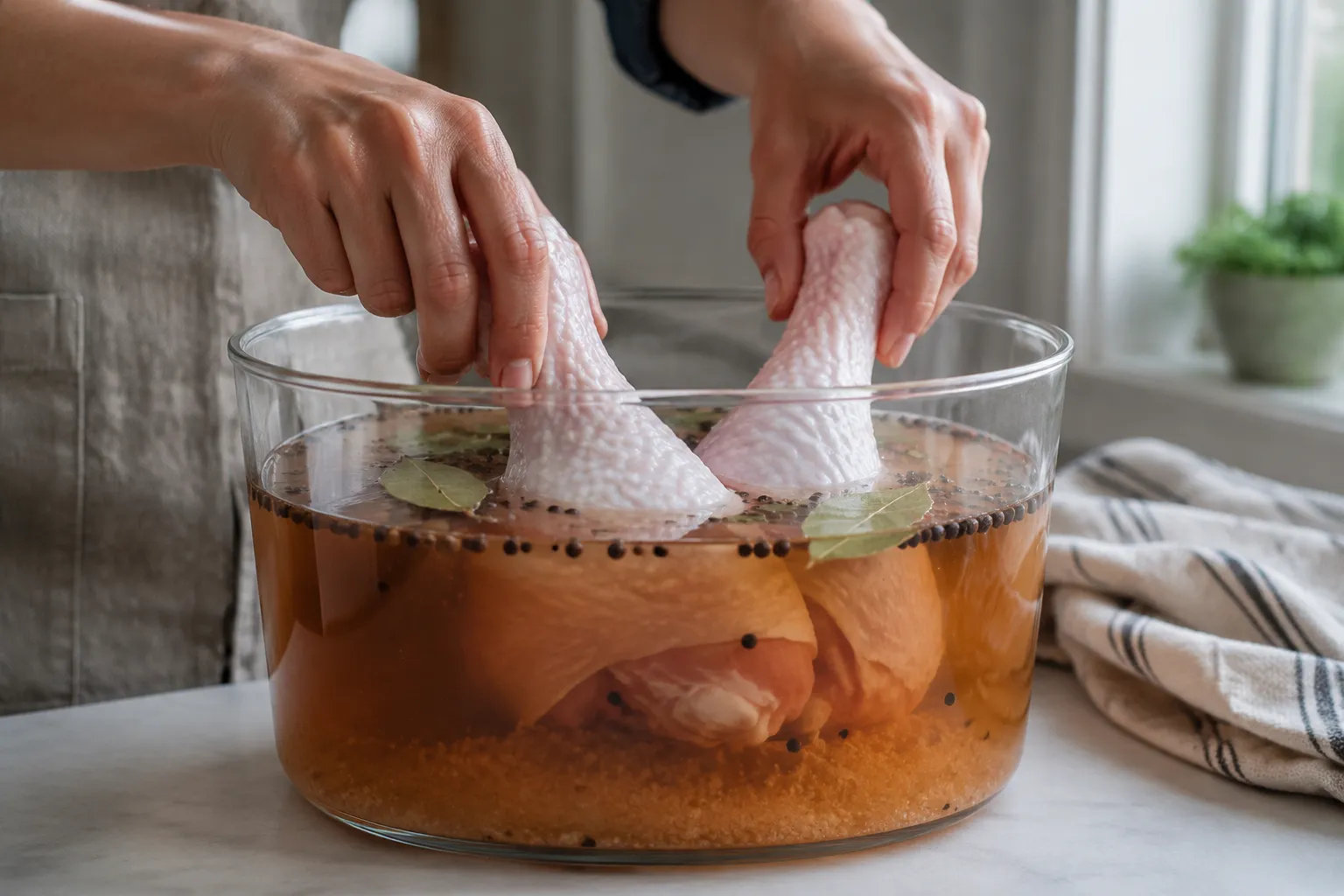
The night before, dissolve the salt and sugar in a quart of hot water, then add cold water and ice until the brine is fully chilled to under 40°F. Submerge the drumsticks completely, weigh them down with a plate or a zip-top bag full of water if they float, and refrigerate for 8 to 12 hours. Do not push past 14 hours or the meat near the surface can turn hammy and overly cured. A food-safe 5-gallon bucket or a big stockpot works perfectly here.
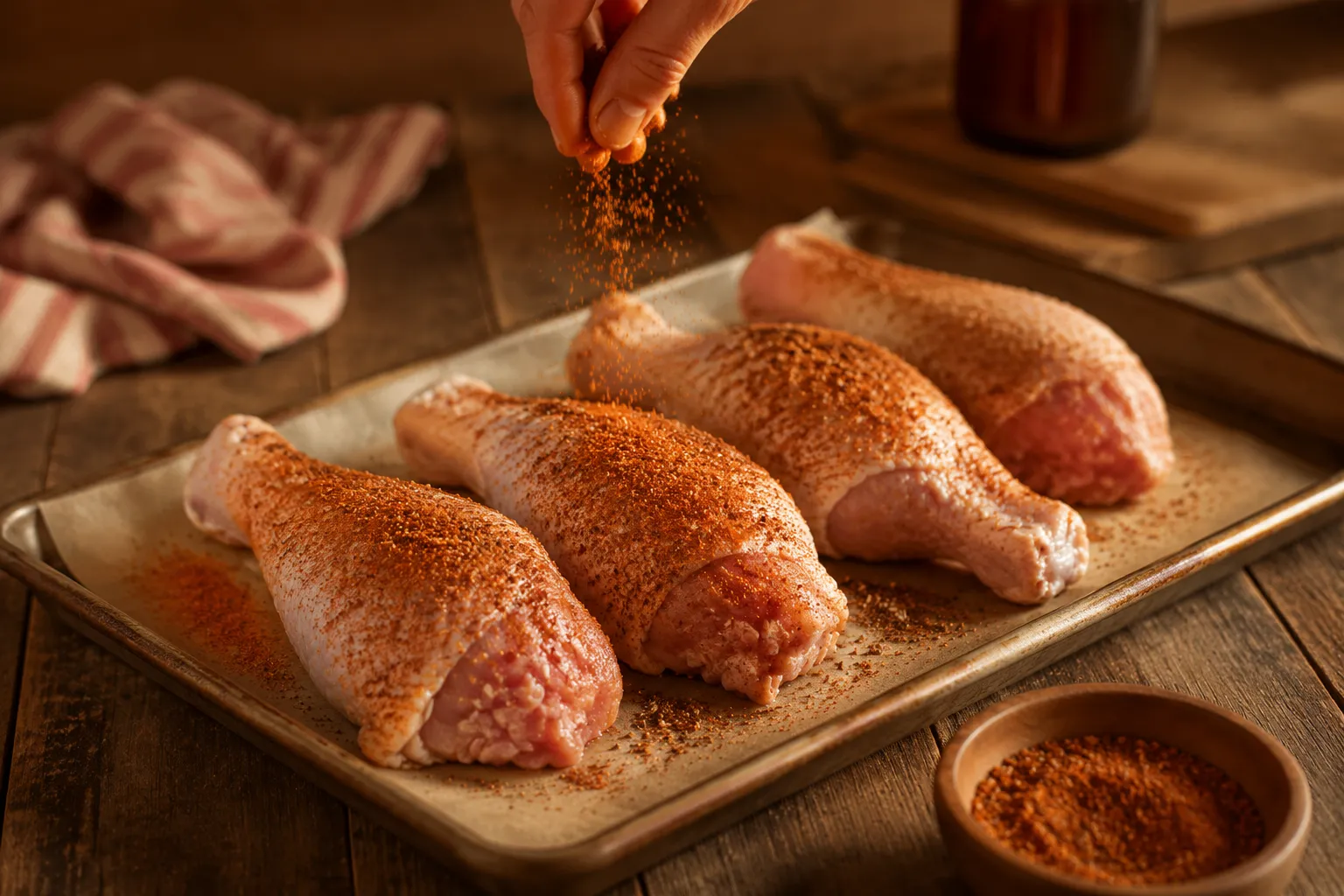
The next day, pull the legs from the brine, rinse briefly under cold water, and pat them very, very dry with paper towels. Dry skin is what gives you that crackled mahogany finish. Wet skin steams and goes rubbery, full stop. Coat each leg in a thin slick of yellow mustard or olive oil to help the rub stick (you will not taste the mustard, promise), then dust generously with the BBQ spice blend, pressing it gently into the skin. Let the seasoned legs sit at room temperature for 30 to 45 minutes while the smoker comes up to temp. That window also helps the rub set into a sticky paste rather than blowing off in the first puff of smoke.
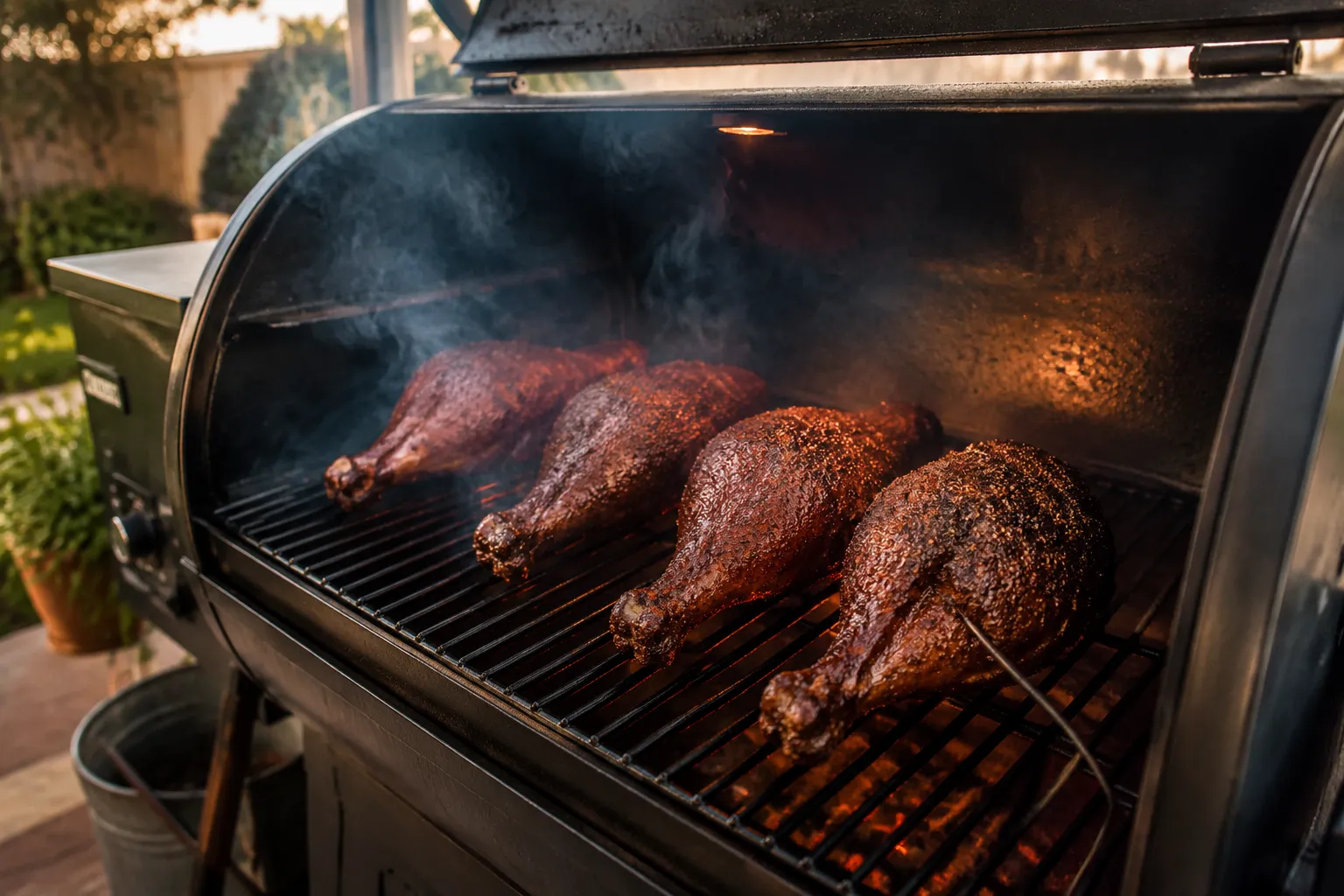
Preheat your pellet smoker, offset, or kettle to 250°F with hickory pellets or chunks. Place the drumsticks directly on the grate, bone end facing the cooler side if your rig has hot spots, and close the lid. Insert a meat probe into the thickest part of one leg, avoiding the bone, and walk away for the first hour. The meat is taking on smoke during this stage and you do not need to babysit. Every time you open the lid you lose roughly 10 minutes of cook time, so resist the urge to peek.
After about 90 minutes, start spritzing every 30 to 45 minutes with a 50/50 mix of apple juice and water in a clean spray bottle. This adds moisture, encourages that deep red color, and keeps the rub from scorching as the sugars caramelize. Around the 2.5-hour mark, the legs will look beautifully bronzed and the backyard will become magnetic to anyone within sniffing distance.
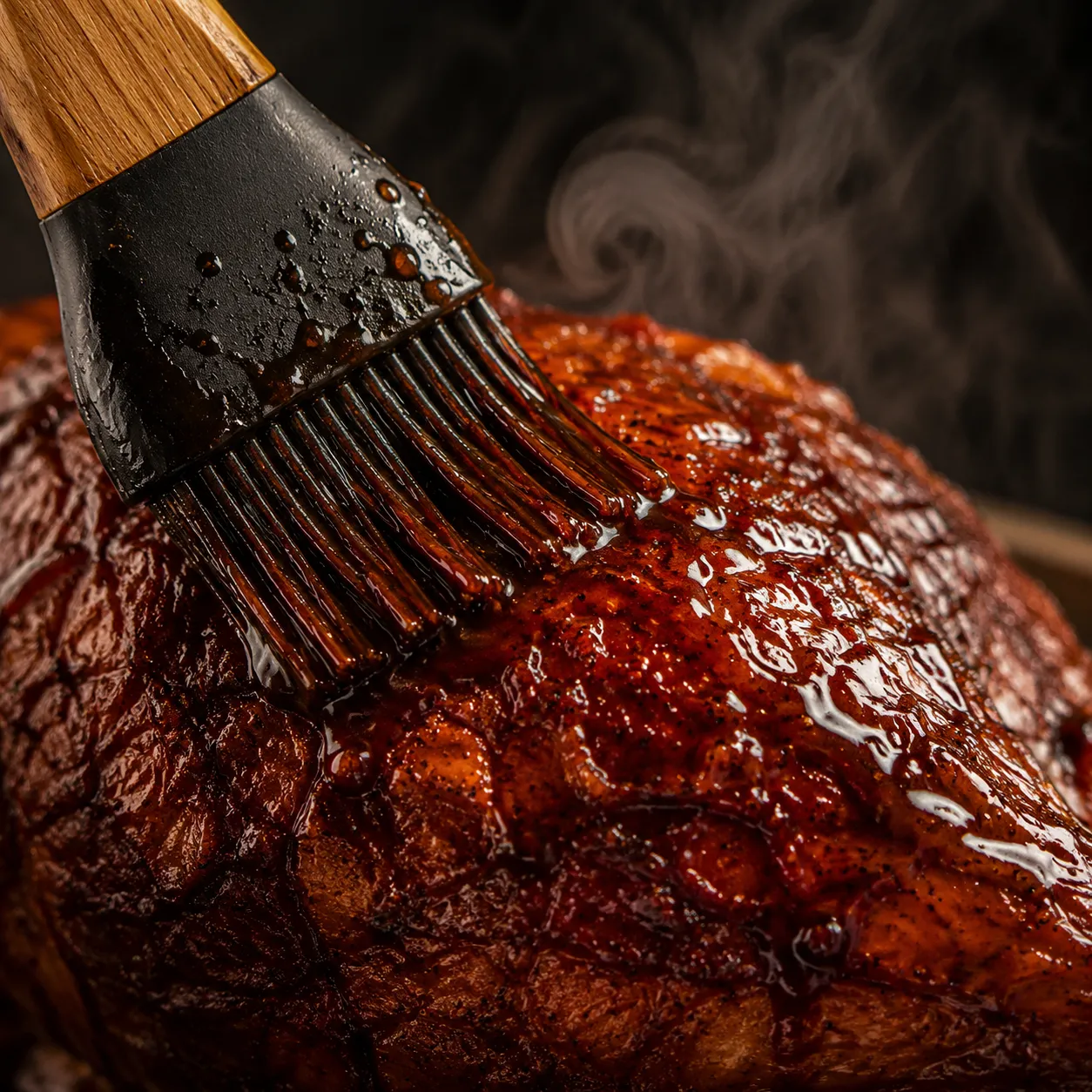
In the final 20 to 30 minutes, brush each leg with a thin coat of homemade BBQ sauce if you want a glossy, sticky finish. This is optional. True Disney-style legs are not sauced, but a light glaze adds shine and a sweet edge that is hard to argue with. Pull the smoked turkey legs when the internal temperature reads 175°F to 180°F in the thickest spot. That extra few degrees past the safe minimum of 165°F is what melts the collagen and gives you fall-off-the-bone texture instead of tight, chewy meat.
Tent the drumsticks loosely with foil and rest for 10 to 15 minutes before serving. The juices need a minute to redistribute through the meat, and the residual heat will carry the legs to a perfect 180°F. Skip this step and you will watch all that lovely moisture spill straight onto the cutting board the second you cut in.
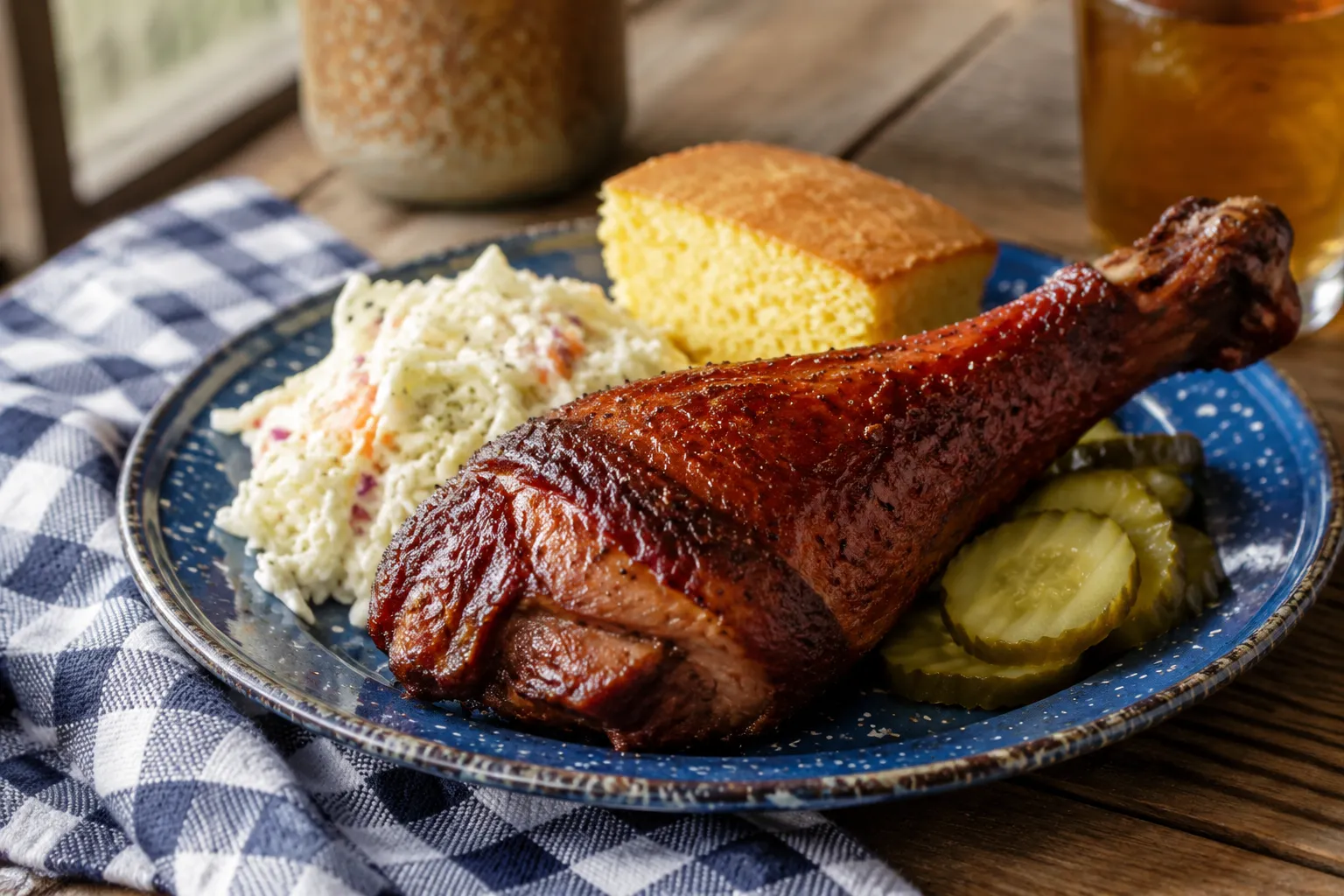
A leg this big can be a meal on its own, but the right sides turn it into a backyard feast. I lean on classic BBQ plates: tangy vinegar slaw, buttery cornbread, baked beans with bacon, and crunchy dill pickles to cut through the richness. A pile of mac and cheese never hurt anyone, and grilled corn brushed with chili-lime butter is the kind of side that makes the whole table go quiet.
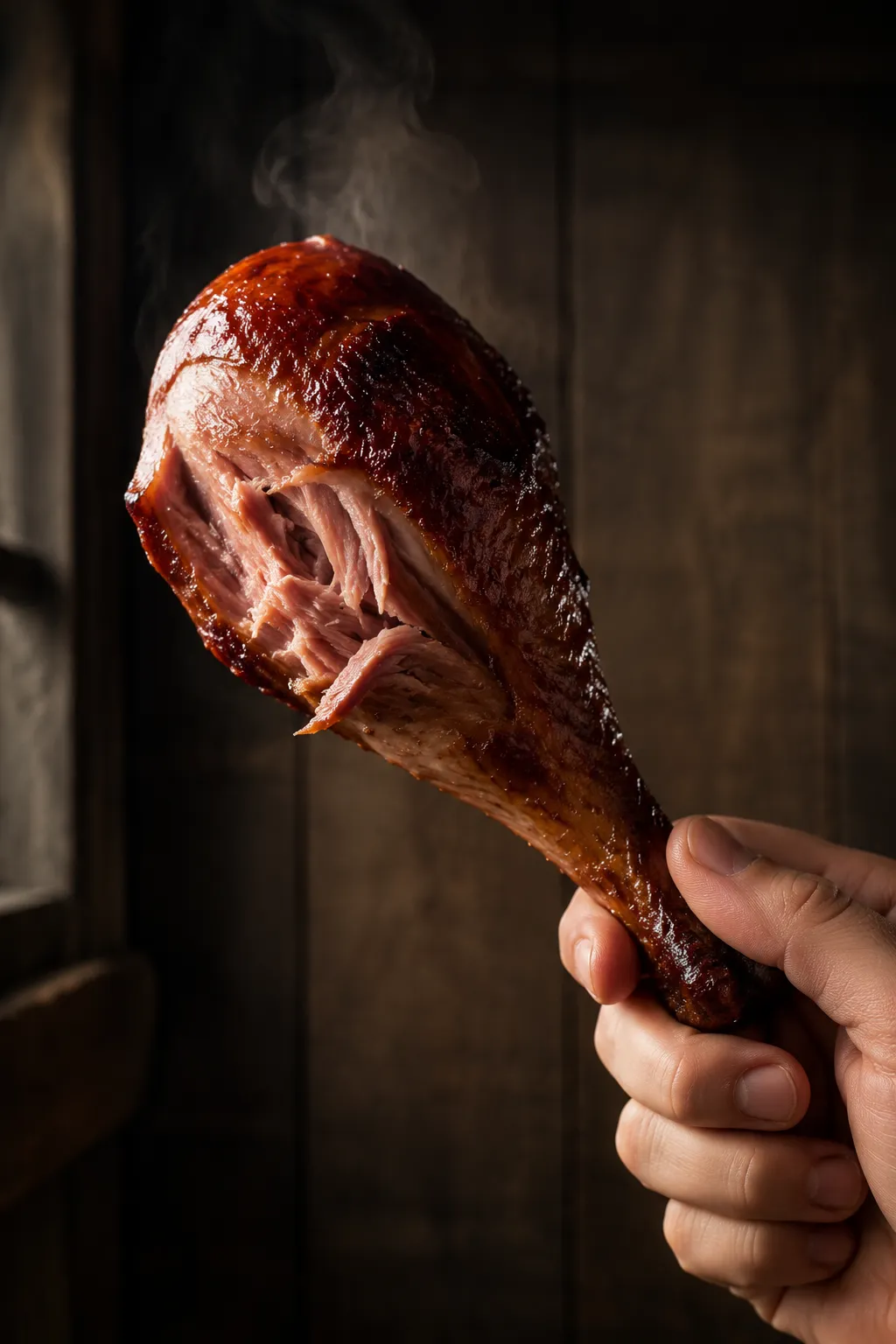
If you want to keep things lighter, a chopped kale salad with apple and cheddar, a crunchy fennel slaw, or roasted sweet potatoes balance the smoky intensity nicely. For drinks, a cold amber lager, a hard apple cider, or a glass of unoaked chardonnay all hold their own against the bark. And if you have a half-finished bottle of homemade BBQ sauce in the fridge, set it out for dipping. That smoky-sweet combo is unbeatable, especially when you are gnawing the last bits off the bone.
This recipe also plays beautifully alongside a smoked turkey breast cook if you are hosting a bigger crowd, since both can run on the smoker at slightly different temps without much fuss. Pile any leftover meat onto brioche buns the next day with extra slaw and pickles and you have the best smoky turkey sandwich on the block. The smoked turkey legs themselves reheat surprisingly well too, which means day-two leftovers are almost as good as the original cook.
Once you have made these once, they will wedge themselves into your regular cookout rotation. The combination of an overnight brine, a punchy rub, and patient smoke does almost all the work. Your job is mostly to keep the fire steady and resist poking the legs every five minutes. Whether you are throwing a backyard birthday, a tailgate, or rethinking your holiday menu, this is the kind of recipe that earns the cook a standing ovation and a permanent spot on the family request list.
Once you have nailed the basic version, the door is wide open. The same brine and smoke method handles bigger batches and bolder flavor profiles without much extra work.
Cool the smoked legs to room temperature within two hours of pulling them off the smoker, then refrigerate in an airtight container for up to 4 days. For longer storage, pull the meat off the bone and vacuum seal in portions, or use heavy-duty freezer bags with the air pressed out, and freeze for up to 3 months. Label with the date so you do not lose track.
To reheat without drying things out, place a leg on a foil-lined sheet pan, splash with 2 tablespoons of chicken broth or apple juice, tent loosely with foil, and warm at 325°F for 20 to 25 minutes until the internal temperature hits 145°F. Pulled meat reheats beautifully in a covered skillet over low heat with a little broth, or in 60-second microwave bursts wrapped in a damp paper towel.