Polish Sausage Recipe: Skillet with Peppers & Onions
Ingredients
Scale
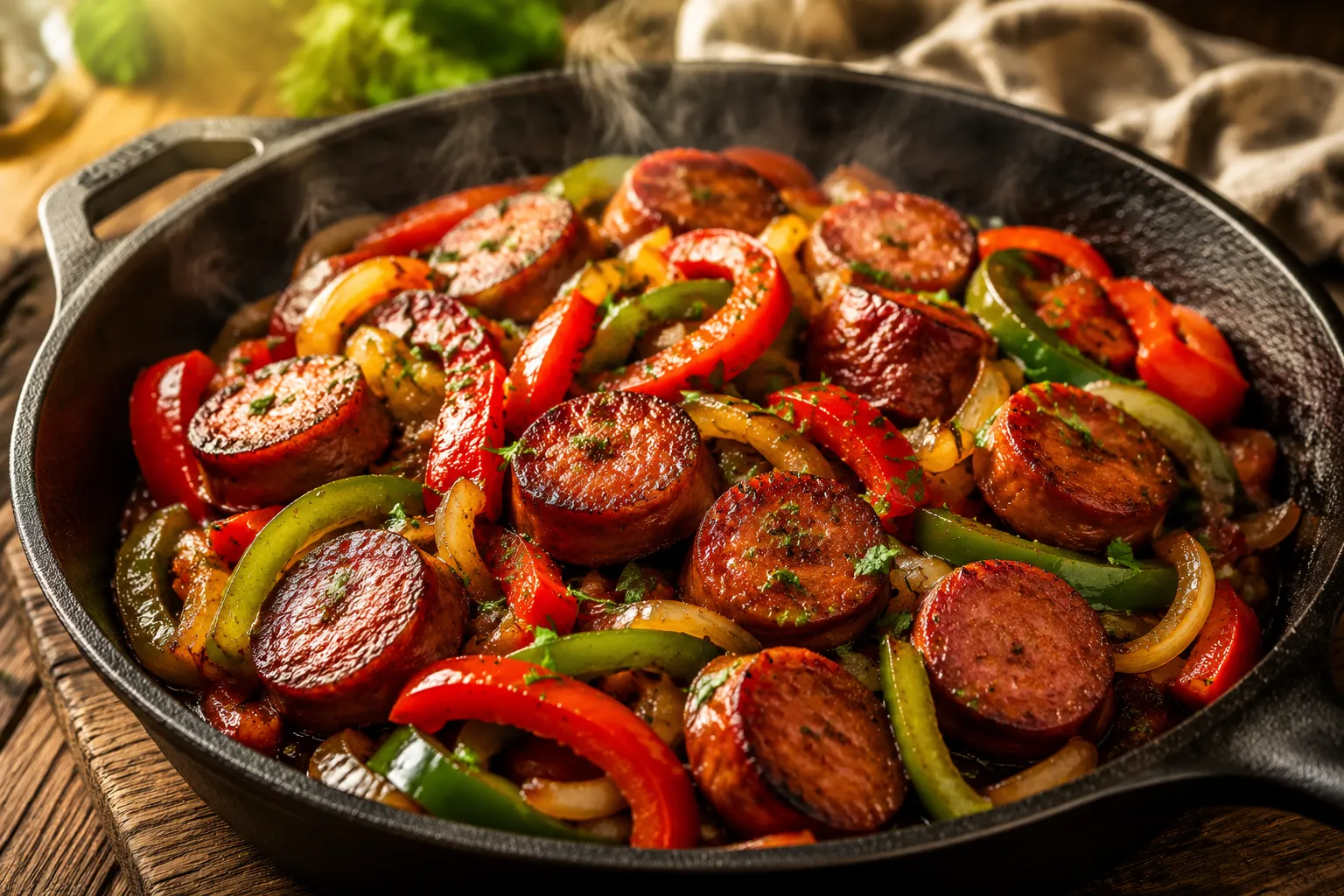
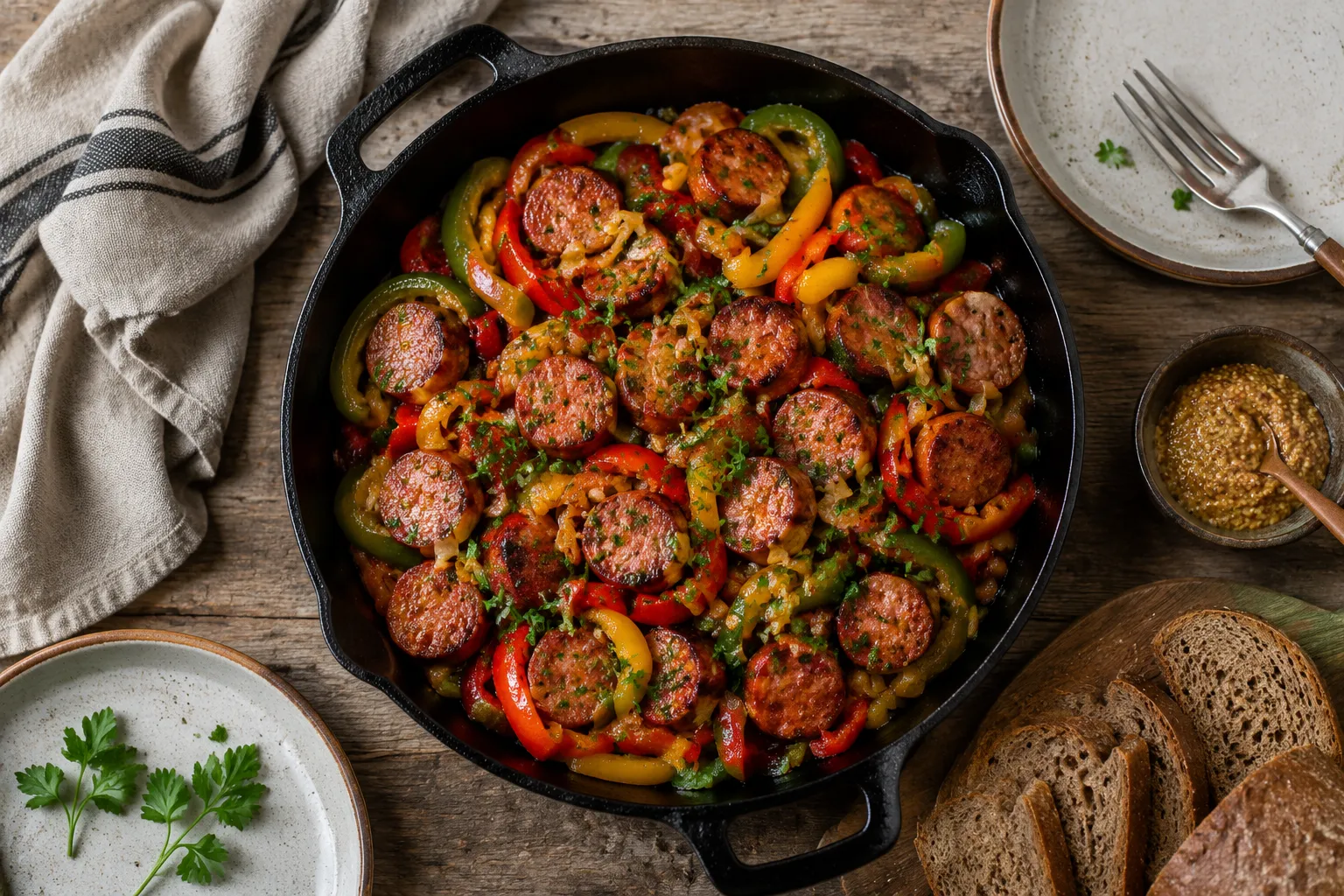
A smoky, caramelized Polish sausage skillet with peppers and onions, ready in 30 minutes and built on one pan for an easy weeknight win.
This polish sausage recipe is the cast-iron skillet dinner I make when the week has gone sideways and I still want something that tastes like Sunday. Smoky kielbasa, caramelized onions, sweet bell peppers, and a quick mustard-paprika pan sauce, all built in one pan in about 30 minutes. It's the kind of easy weeknight dinner that smells incredible the moment the sausage hits the heat, and it converts skeptical kids and tired adults alike.
I grew up watching my Polish-American neighbor brown rings of kielbasa until the edges were almost burnt, and that mahogany crust is non-negotiable. This version takes that old-school technique and pairs it with the bell peppers and onions you'd find on a great sausage hoagie, plus a splash of broth and Dijon to pull everything together into something glossy and spoonable. Serve it over creamy mashed potatoes, tucked into a roll, or piled next to sauerkraut and you've got a meal that feels generous on a Tuesday.
If you've ever stared at a ring of smoked kielbasa in your fridge and wondered exactly how to cook kielbasa so it tastes like more than just heated-up sausage, this is your blueprint. We'll cover what Polish sausage actually is, what to buy at the U.S. grocery store, and the step-by-step skillet method that delivers deep flavor without fussy technique.
Polish sausage is one of those grocery store staples most American shoppers grab without really knowing what they're buying. In Poland, "kielbasa" is the umbrella word for sausage, and there are dozens of regional varieties, but in the U.S. the term has come to mean a specific style: a thick, garlicky, smoked pork (sometimes pork-and-beef) sausage sold in a U-shaped ring. It's deeply seasoned with garlic, marjoram, and black pepper, and the smokehouse cure gives it that unmistakable bacon-adjacent aroma. Because it's already smoked and fully cooked, it's an absolute gift for busy cooks: you're really just heating it through and developing flavor on the outside.
In the States, the words are essentially interchangeable on a grocery store label, even though kielbasa technically just means "sausage" in Polish. If you grab a ring labeled "Polish kielbasa" or "smoked kielbasa," you're getting the same thing: a fully cooked smoked sausage ready to slice and sear. Authentic Polish kiełbasa wiejska or kabanosy you might find at a Polish deli are different beasts entirely, but for this recipe, any standard U.S. supermarket ring works beautifully.
The vast majority of what you'll see in the refrigerated case is smoked and pre-cooked from brands like Hillshire Farm, Johnsonville, Eckrich, and store labels. Fresh (uncooked, white) kielbasa is harder to find outside Polish butcher shops and needs to be simmered or roasted to a safe internal temperature before serving. For this skillet, stick with the smoked variety. The cure and smoke do half the flavor work for you before the pan even gets hot.
For a really good ring, look for Wenzel's, Bobak's, or Kiolbassa if you can find them; they tend to have a meatier grind and more pronounced garlic. National brands like Hillshire Farm and Eckrich are reliable everyday picks at any major supermarket. Whatever you choose, look for "natural casing" on the label if you want that satisfying snap when you bite in, and check the date stamp the way you would with any cured meat.
Part of the reason this kielbasa skillet dinner has become a regular at my house is that it's almost entirely a pantry-and-crisper situation. You need one ring of sausage, a couple of bell peppers, one big onion, and a few seasonings you almost certainly already own. Here's how I think about each component before you head to the store.
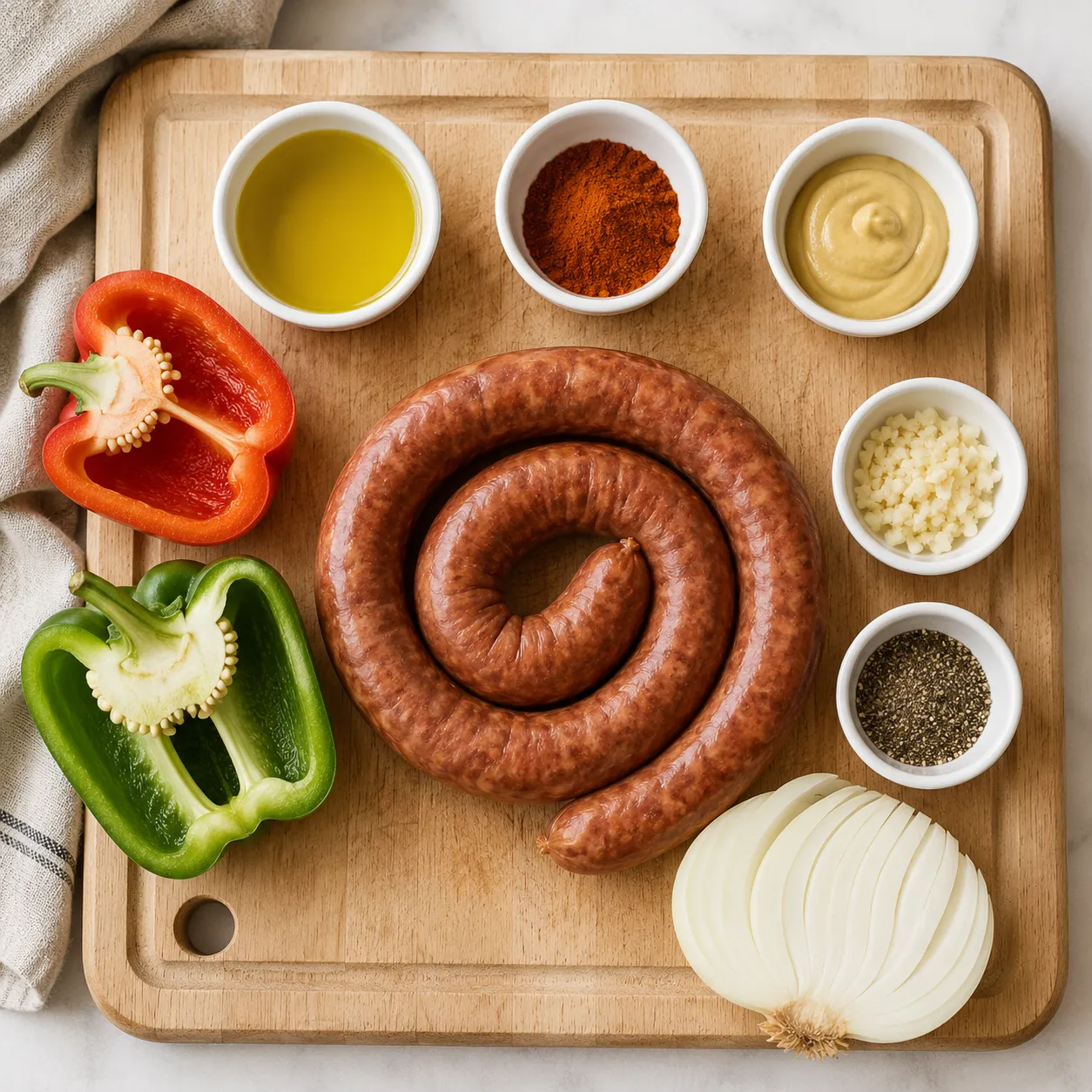
One pound of smoked kielbasa is the right amount for four servings, sliced into half-inch coins. Thicker than that and the centers don't pick up enough caramelization; thinner and they shrivel before the edges crisp. If you only find a 13- or 14-ounce ring (very common at U.S. grocery stores), don't overthink it. Just use the whole ring and adjust the vegetables down by a small handful.
A red bell pepper and a green bell pepper give you both sweetness and that grassy bite, plus they look gorgeous against the dark sausage. One large yellow onion goes jammy and golden in the pan drippings. Three cloves of fresh garlic, minced, get added at the end so they bloom without burning. If you only have one color of pepper, use two of those; the recipe is forgiving.
Smoked paprika doubles down on the smokehouse flavor of the sausage. Dijon mustard adds tang and emulsifies the pan sauce so it clings to every coin. Black pepper, a splash of olive oil for searing, low-sodium chicken broth to deglaze, and fresh parsley to finish. Notice there's no salt in the ingredient list; the smoked sausage and Dijon bring plenty on their own, so taste before reaching for the shaker.
This is the section I want you to actually save, because the difference between a sad, gray sausage skillet and a deeply flavored one comes down to three small choices: high heat, dry pan, and patience. The whole one-pan sausage recipe builds in layers. Sear the meat, cook the vegetables in the rendered fat, then deglaze to lift every browned bit off the bottom of the skillet. Cast iron is ideal here because it holds heat and creates the best crust, but any heavy stainless skillet will work. Avoid nonstick if you can; it won't get you the same caramelization.
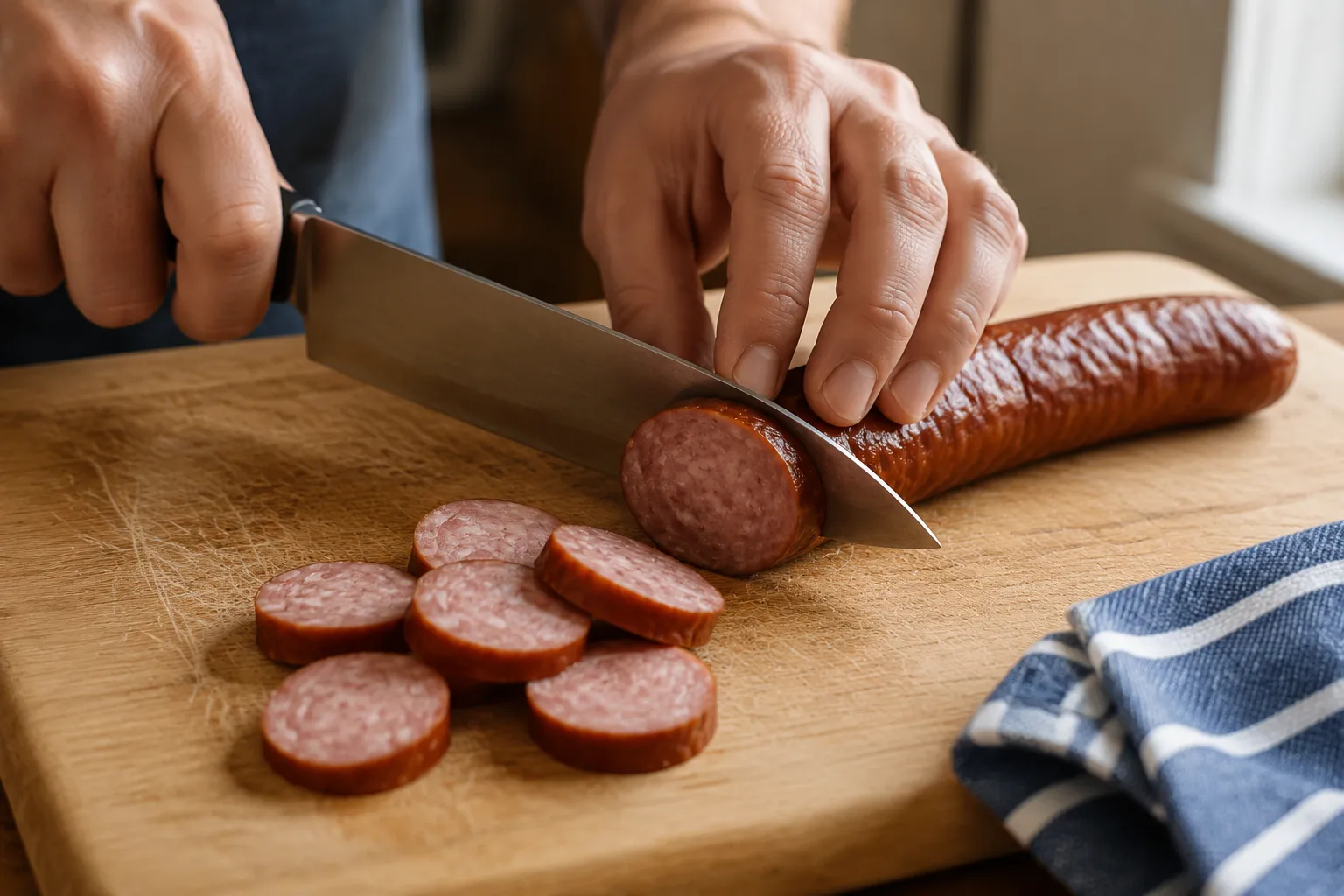
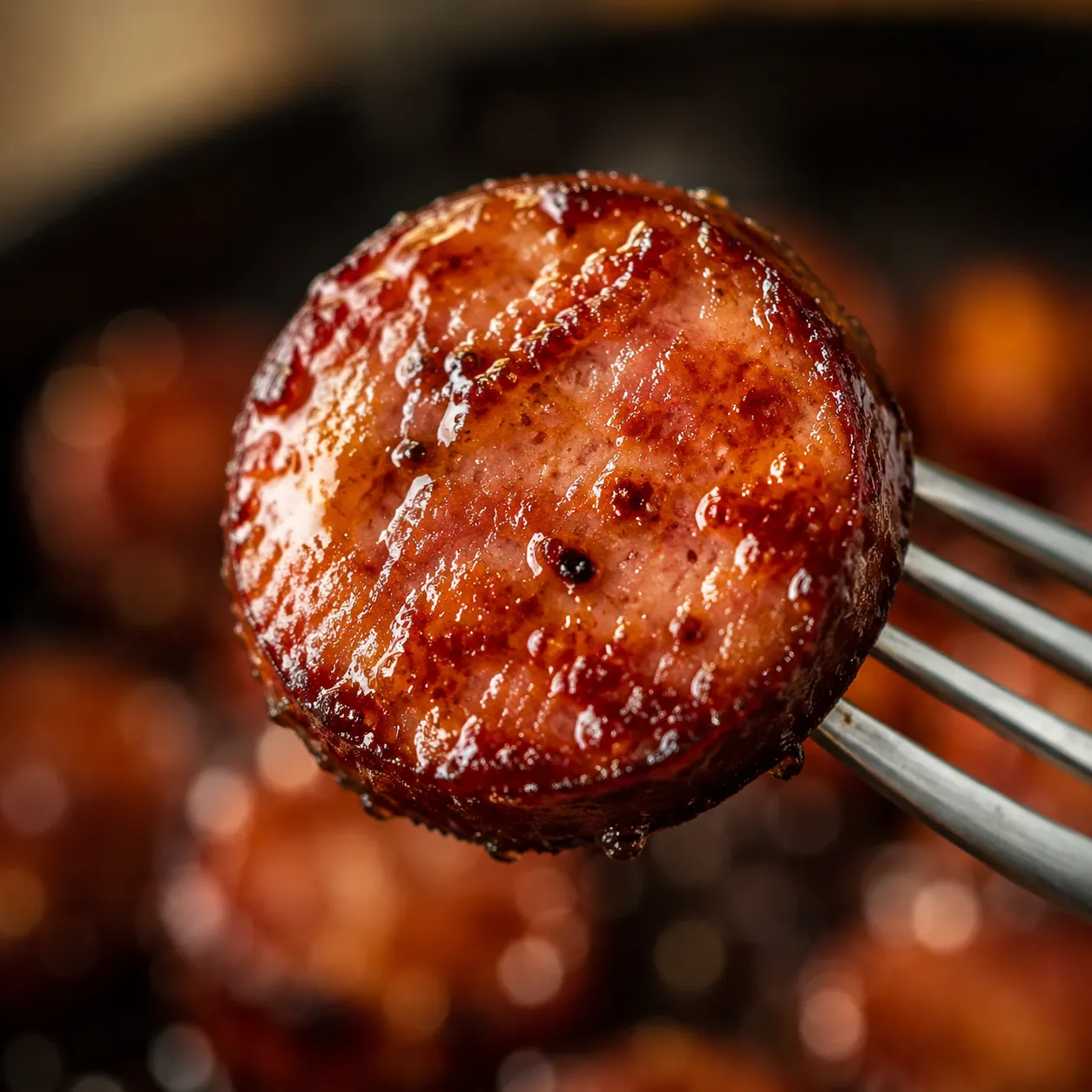
Slice the kielbasa into half-inch coins on a slight bias for more surface area. Heat one tablespoon of olive oil in a large cast-iron skillet over medium-high until it shimmers, then lay the coins down in a single layer. Don't move them. Let them sear undisturbed for three to four minutes until the bottom edges are deep brown, then flip and sear the other side another two to three minutes. Transfer to a plate and leave the fat in the pan.
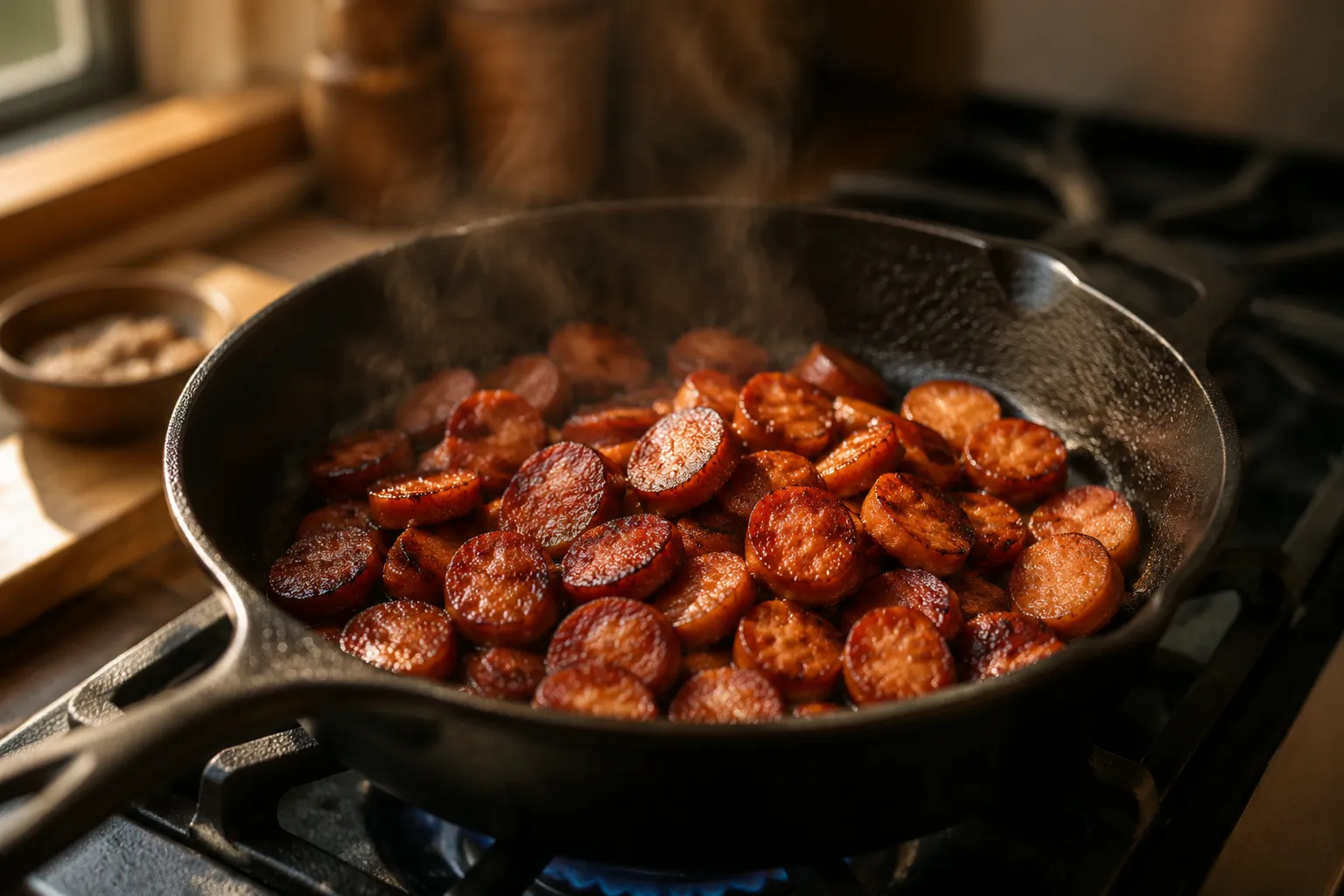
Add the second tablespoon of olive oil to the same skillet, then dump in the sliced onions and bell peppers. Stir to coat them in the smoky fond left from the sausage and spread them in a single layer. Let them cook six to eight minutes, stirring only occasionally so the edges char. When the onions are golden and the peppers are blistered in spots, add the minced garlic, smoked paprika, and black pepper, and stir for thirty seconds until fragrant.
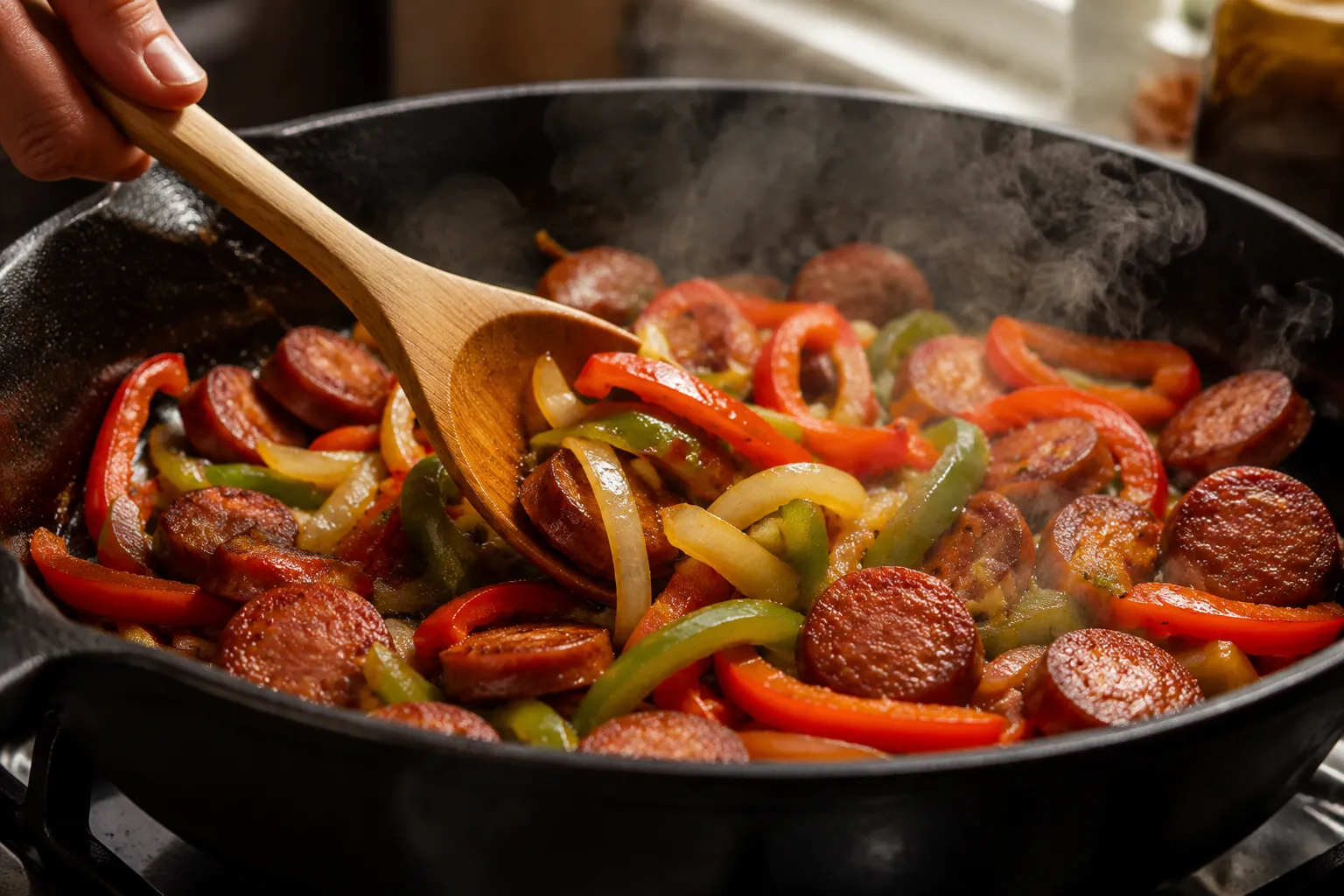
Pour in the chicken broth and scrape the bottom of the skillet hard with a wooden spoon to lift every browned bit. Stir in the Dijon mustard until the sauce comes together glossy and slightly thickened. Slide the seared sausage and any accumulated juices back in, toss to coat, and simmer for two minutes so the kielbasa heats through and absorbs the sauce. Off heat, shower with chopped parsley and serve immediately while everything is still glossy.
Half the fun of smoked sausage and peppers is deciding what you're going to spoon it over. The skillet is rich, smoky, and brothy enough to soak into anything starchy, which means it plays well from the most casual sandwich situation to a cozy weeknight plate.
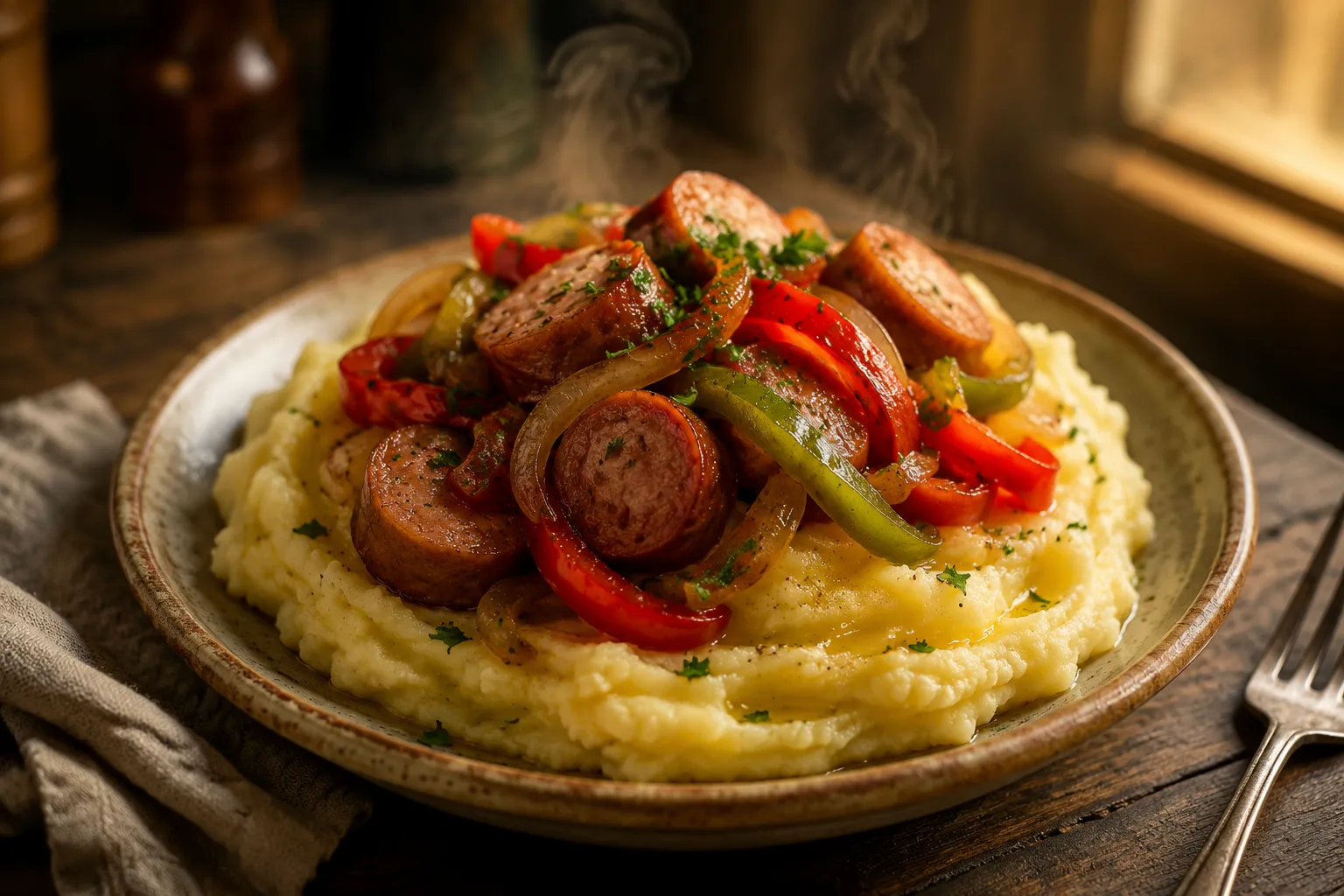
This is my house favorite. Pile the sausage and pan sauce over a big swoop of buttery mashed potatoes and let the juices run into the valleys. Buttered egg noodles or steamed white rice work just as well; you want something that drinks up that mustard-paprika glaze. If you love a sausage and potatoes situation, you can also slice a few small Yukon Golds into the skillet with the peppers for a true one-skillet supper that needs no side at all.
Toast a soft hoagie roll, slather it with extra Dijon, and pile the skillet contents inside for the cleanest sausage-and-peppers sandwich of your life. A handful of provolone melted on top under the broiler takes it into the stratosphere. Add pickled banana peppers if you like a little heat, and serve with kettle chips for crunch.
For a more traditional Polish-leaning plate, serve the skillet alongside warmed sauerkraut, a slick of grainy mustard, and slices of dark rye bread. Pickled beets or a sharp cucumber salad on the side cuts through the richness beautifully. A cold pilsner or a glass of dry Riesling rounds out the meal in a way that feels like a Sunday dinner on a weeknight.
Whether you're cooking for a houseful or just stretching one ring of kielbasa across two nights of leftovers, this is the recipe I trust to deliver every time. It's flexible, it's frugal, and it tastes like you tried way harder than you actually did. Make it once and you'll understand why it has earned a permanent spot in my weeknight rotation, and why I keep an extra ring in the fridge "just in case."
This skillet is endlessly riffable, and once you've got the technique down it becomes a launchpad for half a dozen weeknight dinners. Swap the vegetables for the season, change the starch, or push the flavors in a totally different direction with a few pantry tweaks.
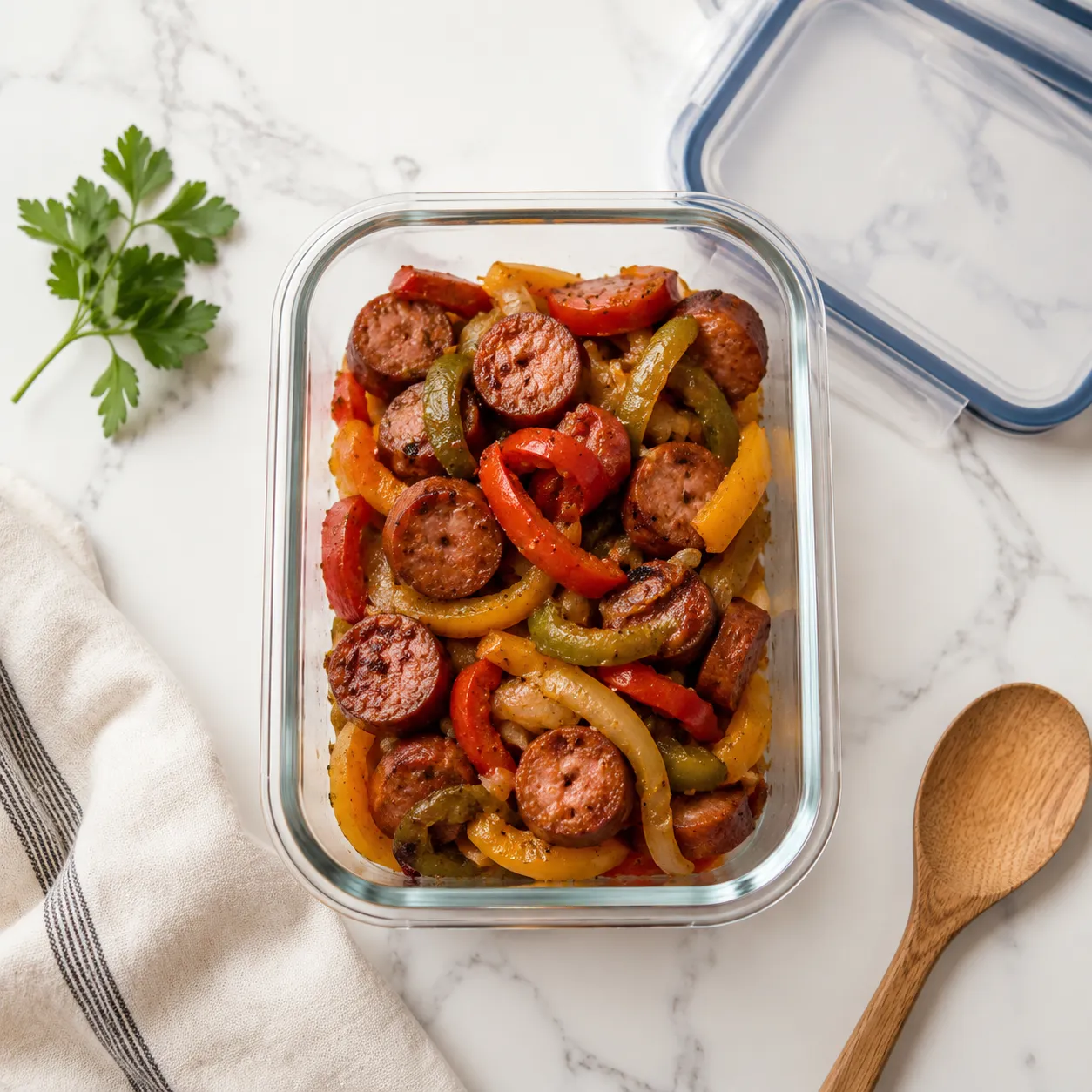
Leftovers keep beautifully for up to four days in an airtight container in the refrigerator. In fact, the flavors deepen overnight as the sausage and peppers continue to soak in the pan sauce. To reheat, warm gently in a covered skillet over medium-low heat with a splash of chicken broth or water to bring the sauce back to life. Avoid the microwave when you can, since it tends to make the sausage edges rubbery and the peppers limp.
To freeze, cool the cooked skillet completely, then portion into airtight freezer containers or zip-top bags with as much air pressed out as possible. Label and freeze for up to three months. Thaw overnight in the fridge before reheating, or warm directly from frozen on the stovetop over medium-low with the lid on, stirring occasionally until heated through. Mashed potatoes or rice are best made fresh the day you serve, since starches change texture in the freezer.