Chicken and Noodles Recipe (Creamy Homestyle Comfort)
Ingredients
Scale
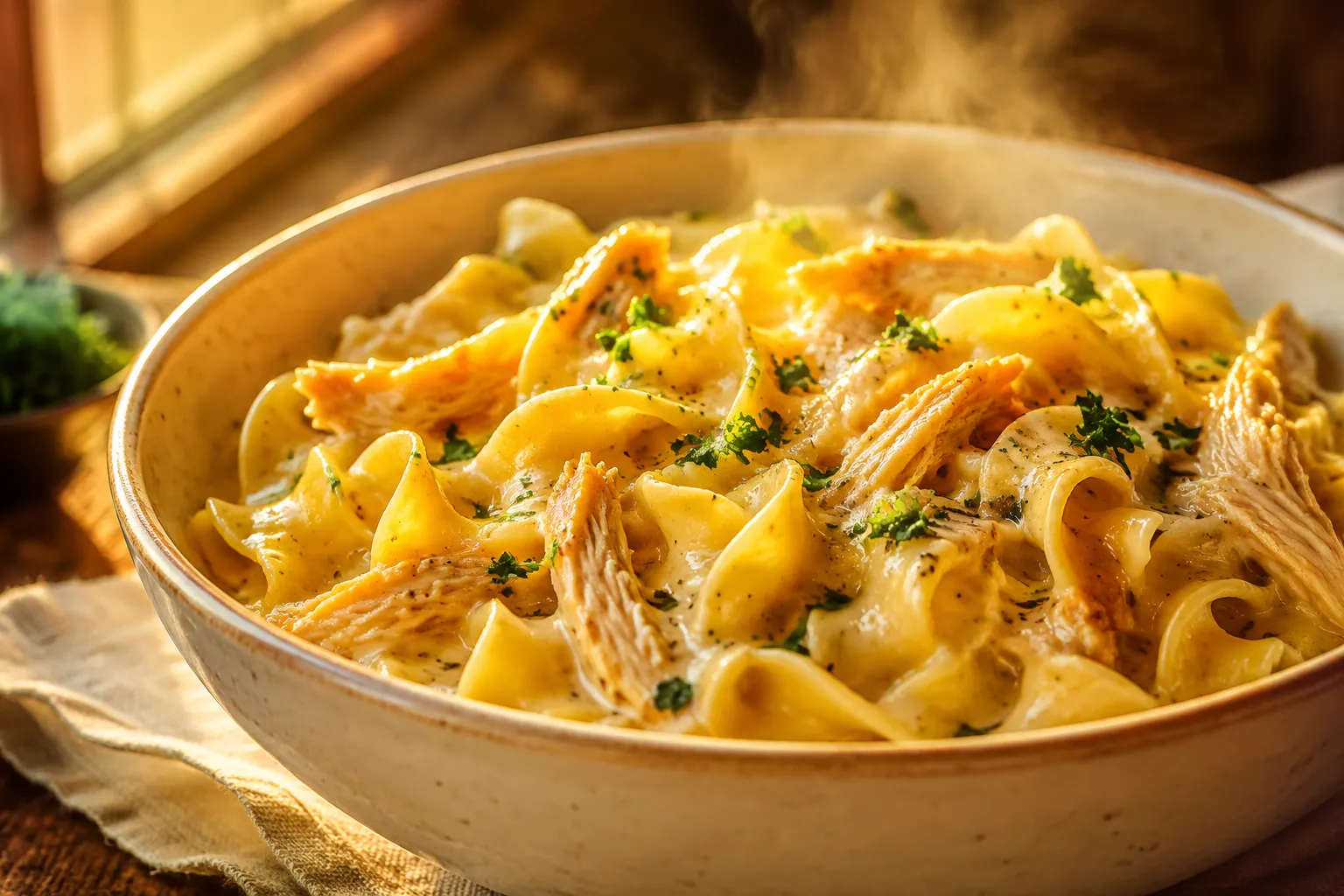
Tender shredded chicken, buttery egg noodles, and a silky pan gravy come together in 30 minutes for the coziest homestyle dinner you'll make all week.
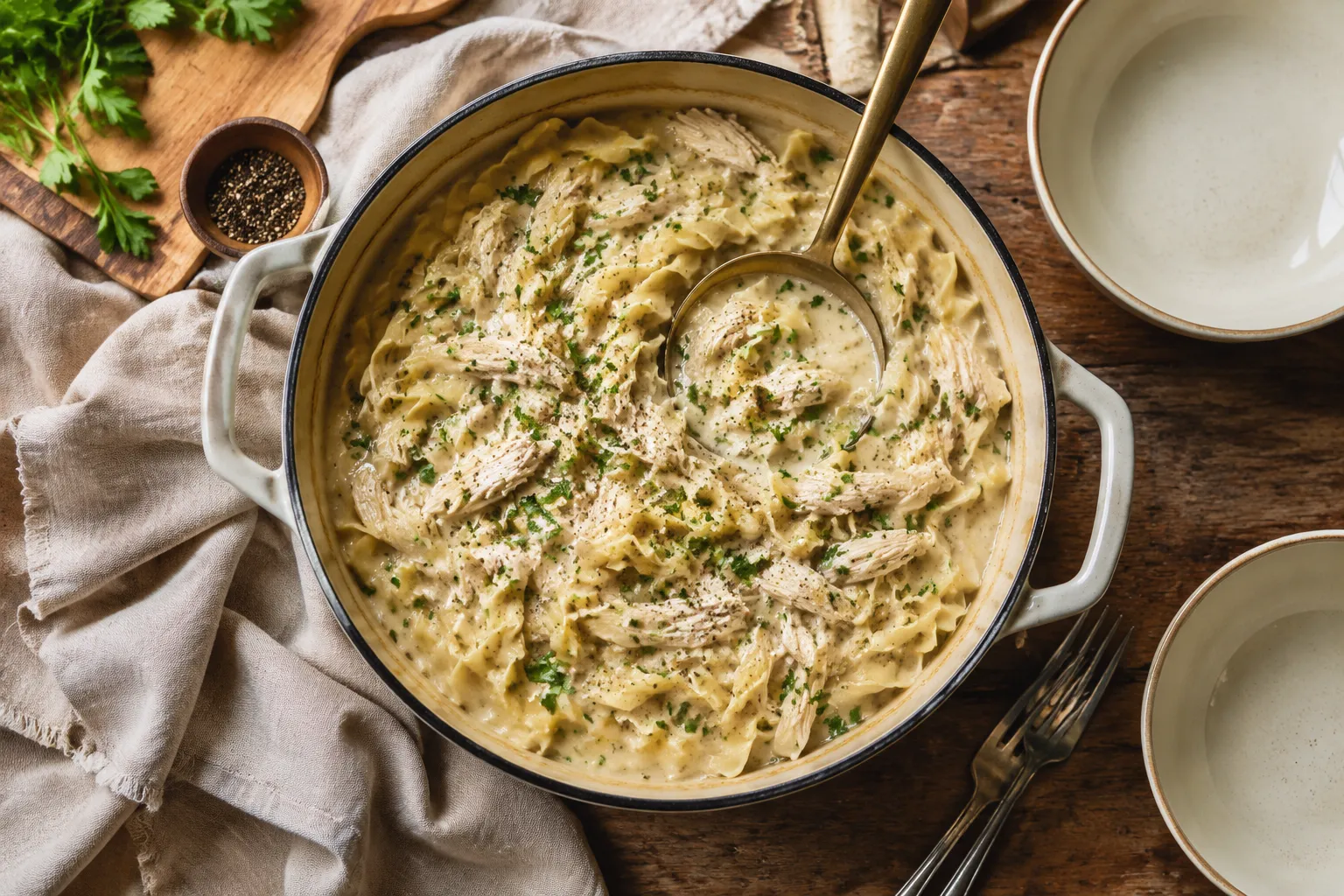
This chicken and noodles recipe is the kind of nostalgic, stick-to-your-ribs supper your grandma might've thrown together on a snowy Tuesday without ever measuring a thing. Tender shreds of chicken, wide buttery egg noodles, and a silky pan gravy come together in one pot in about 30 minutes — no canned soup, no shortcuts that taste like shortcuts, just real comfort food made the way it was meant to be made.
What I love most about it is how forgiving it is. Use rotisserie chicken from the deli, leftover Sunday roast bird, or a quick poached breast — the dish bends to whatever you have on hand. The egg noodles cook right in the seasoned broth, soaking up flavor while they soften, and a quick butter-flour roux turns the cooking liquid into a glossy gravy that hugs every strand.
If you grew up on the Midwest version, you already know it gets ladled over mashed potatoes for the legendary double-carb supper that defies every food rule and absolutely earns its place at the table. Whether you serve it that way or in a deep bowl with a hunk of crusty bread, this is the cozy weeknight dinner that disappears before second helpings even hit the table.
What sets this chicken and noodles recipe apart from the typical canned-soup version is the from-scratch gravy. Most online recipes lean on cream of chicken soup to do the heavy lifting, and while that works, it leaves you with a sauce that tastes faintly metallic and one-note. Here, we build the creamy chicken sauce from butter, flour, broth, and a splash of milk — it takes maybe four extra minutes and the difference is night and day. Fresh aromatics, a real roux, and good seasoning give this version an honest homestyle flavor that doesn't taste like a casserole shortcut.
It's also a true one-pot chicken dinner. The noodles cook directly in the seasoned broth, which means they pick up flavor on their own and you skip an entire colander's worth of cleanup. By the time the noodles are tender, the starchy cooking liquid has already started thickening into the gravy, so you get that classic homestyle texture with very little fuss. This is exactly the kind of recipe that earns a permanent spot in the easy weeknight dinners rotation.
You don't need anything fancy here, which is part of why this dish has been a family-supper staple for generations. Most of these ingredients are probably already in your kitchen, and the few that aren't will run you about ten dollars total at any grocery store. Full measurements live in the recipe card below, but here's what each component is doing in the pot and why it matters for the finished bowl.
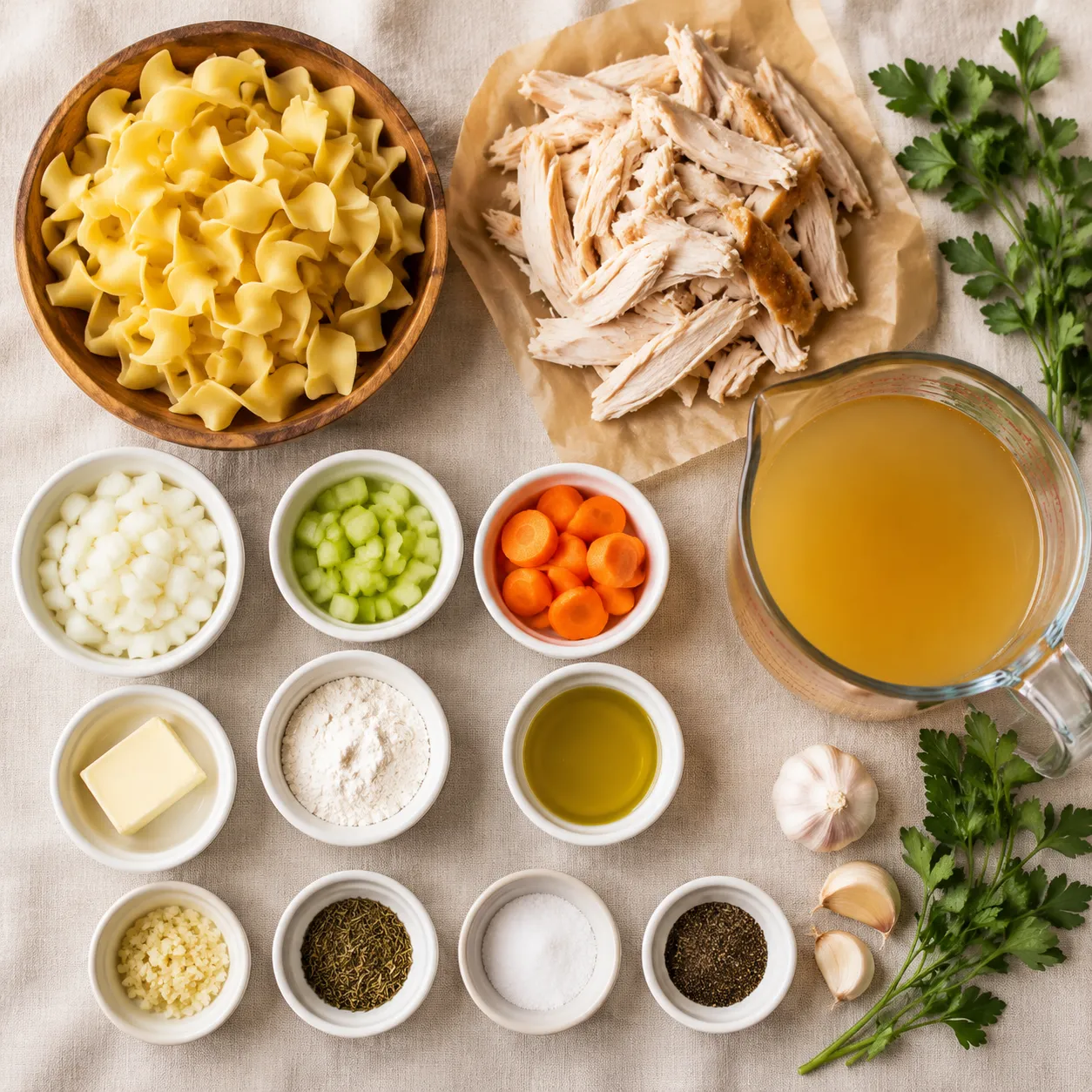
Wide egg noodles are the only way to go if you want that classic Sunday-supper texture. They're sturdy enough to hold up in broth without turning to mush, they have ridges and curls that grab onto the gravy, and the egg in the dough gives them a richer, more tender bite than plain pasta. If you can find them, frozen Reames noodles (a Midwest grocery-store treasure) are even better — they cook up thicker and chewier, almost like homemade. Any wide egg noodles recipe you make will benefit from going one width up rather than down: don't sub thin egg noodles or you'll end up with a softer, almost porridge-like dish.
The brilliance of this dish is that the chicken is already cooked when it joins the pot, which is why I almost always reach for a grocery-store rotisserie bird. One regular-sized rotisserie yields just about three cups of meat, the seasoning is already taken care of, and shredding takes five minutes flat. If you'd rather poach your own, simmer two boneless skinless breasts in salted water for about 15 minutes, let them rest, and shred. Leftover roast chicken or turkey works beautifully too — this is one of my favorite rotisserie chicken recipes precisely because it makes that supermarket bird taste like you cooked it yourself.
Use a good low-sodium chicken broth so you can control the salt as the gravy thickens. If you have homestyle chicken broth from a previous roast in the freezer, even better — it'll make this dish taste like it simmered all afternoon. For the dairy, whole milk gives a clean, classic finish, while half-and-half pushes things into richer, more decadent territory. Skip heavy cream here; it makes the sauce feel heavy in a way that fights with the noodles instead of cradling them.
The full numbered method lives in the recipe card, but this chicken and noodles recipe rewards a little context — here's the why-behind-the-how so you can troubleshoot in real time and tweak to your own taste.
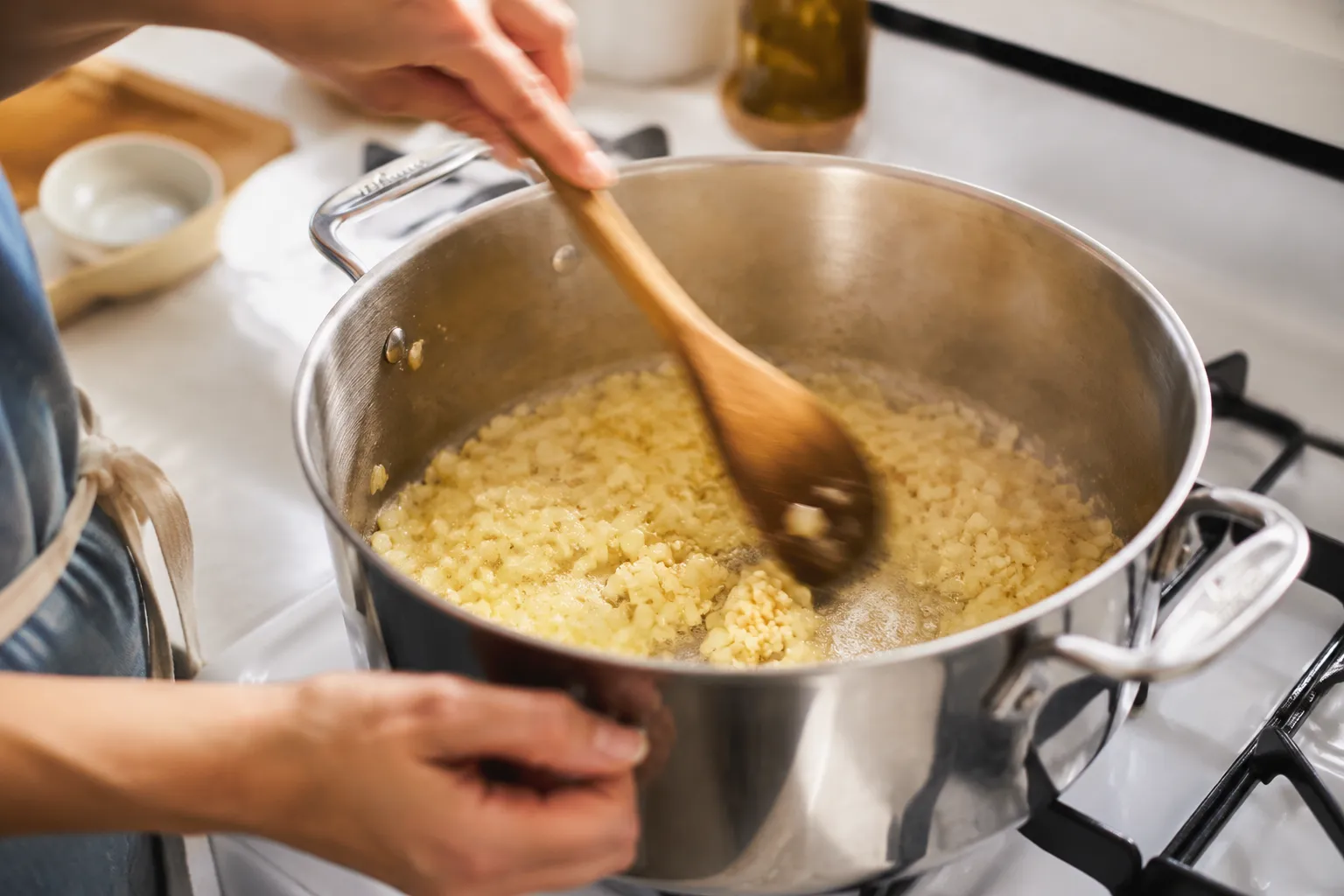
Start by melting butter in a Dutch oven or deep skillet, then sweat the diced onion until it's translucent and just starting to take on color around the edges. Add the garlic and poultry seasoning and stir for about 30 seconds — you want it fragrant, not browned, since burnt garlic will haunt the entire pot. This base is doing a lot of quiet work: it's where the savory depth comes from, the kind of slow-cooked flavor you usually only get from longer-simmered dishes.
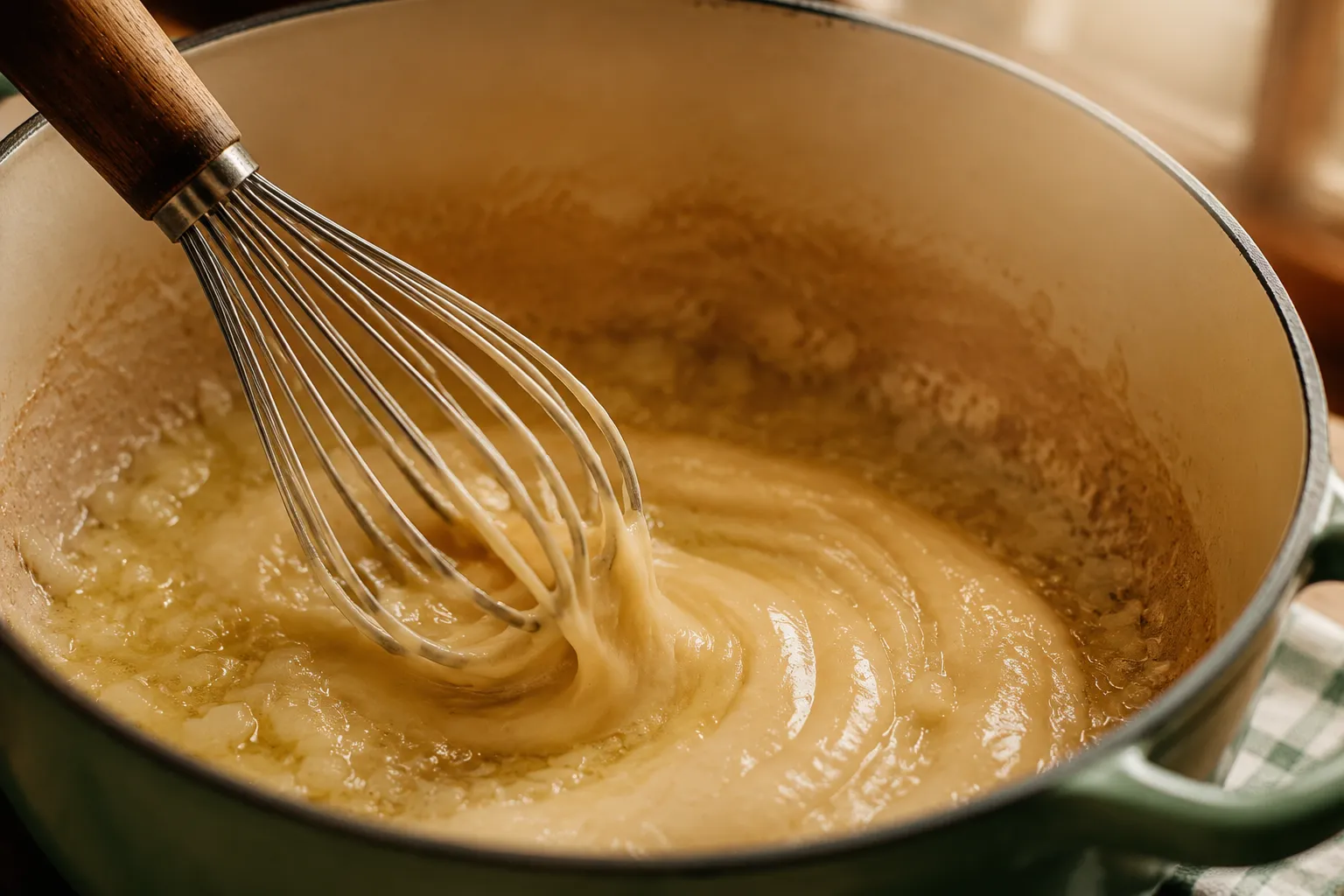
Sprinkle the flour over the butter and onions and whisk constantly for one to two minutes until you have a smooth, blond paste. This roux is the secret to a gravy that's silky instead of grainy — don't skip the whisking time, even if it feels fussy. Slowly stream in the broth while whisking to keep things lump-free, then bring it to a gentle simmer.
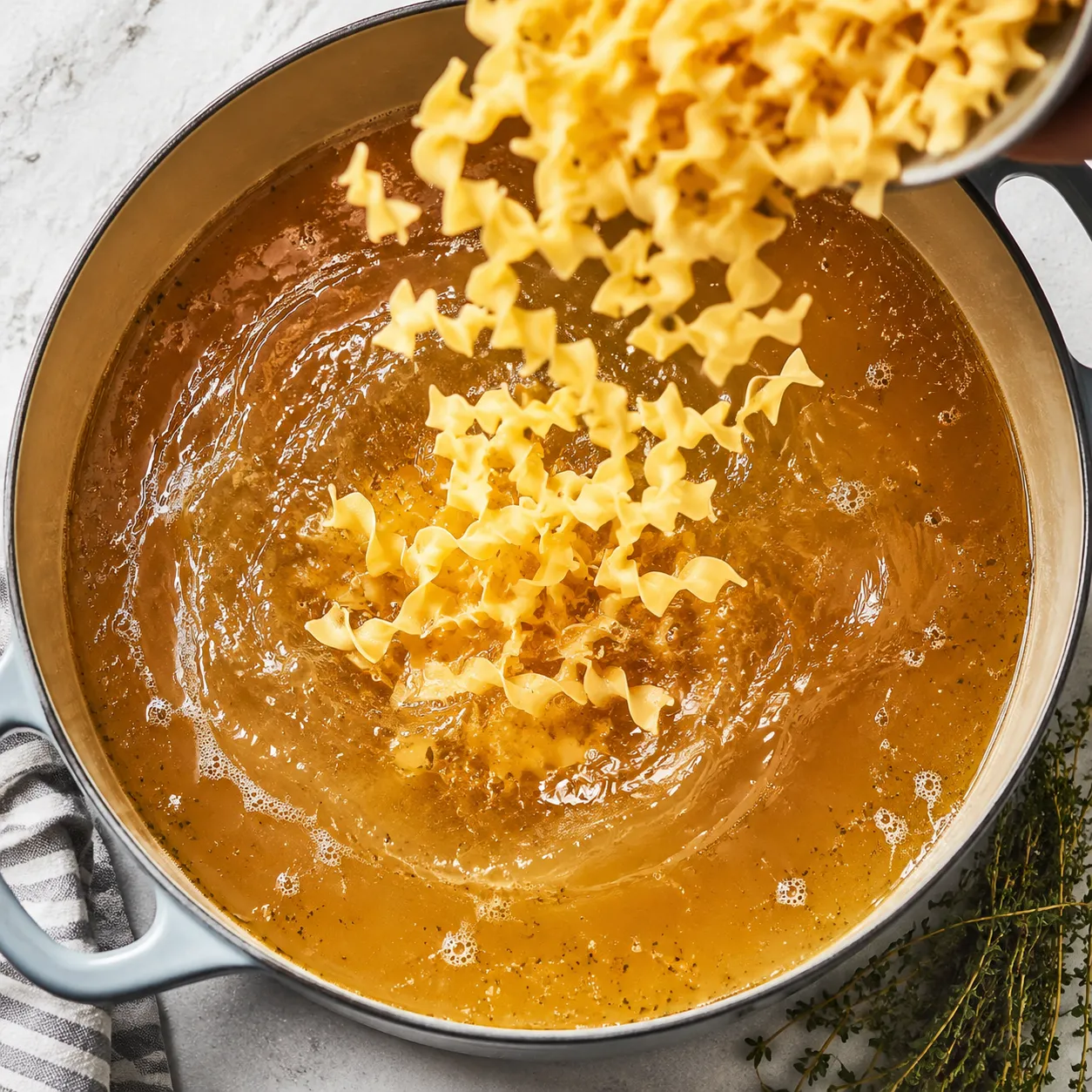
Tumble the egg noodles in, give everything a stir, and let them cook directly in the broth for about 8 to 10 minutes. They'll release starch as they soften, which works with the roux to thicken the sauce naturally. Stir occasionally to keep noodles from sticking to the bottom of the pot, and resist the urge to drain anything — that liquid is your gravy.
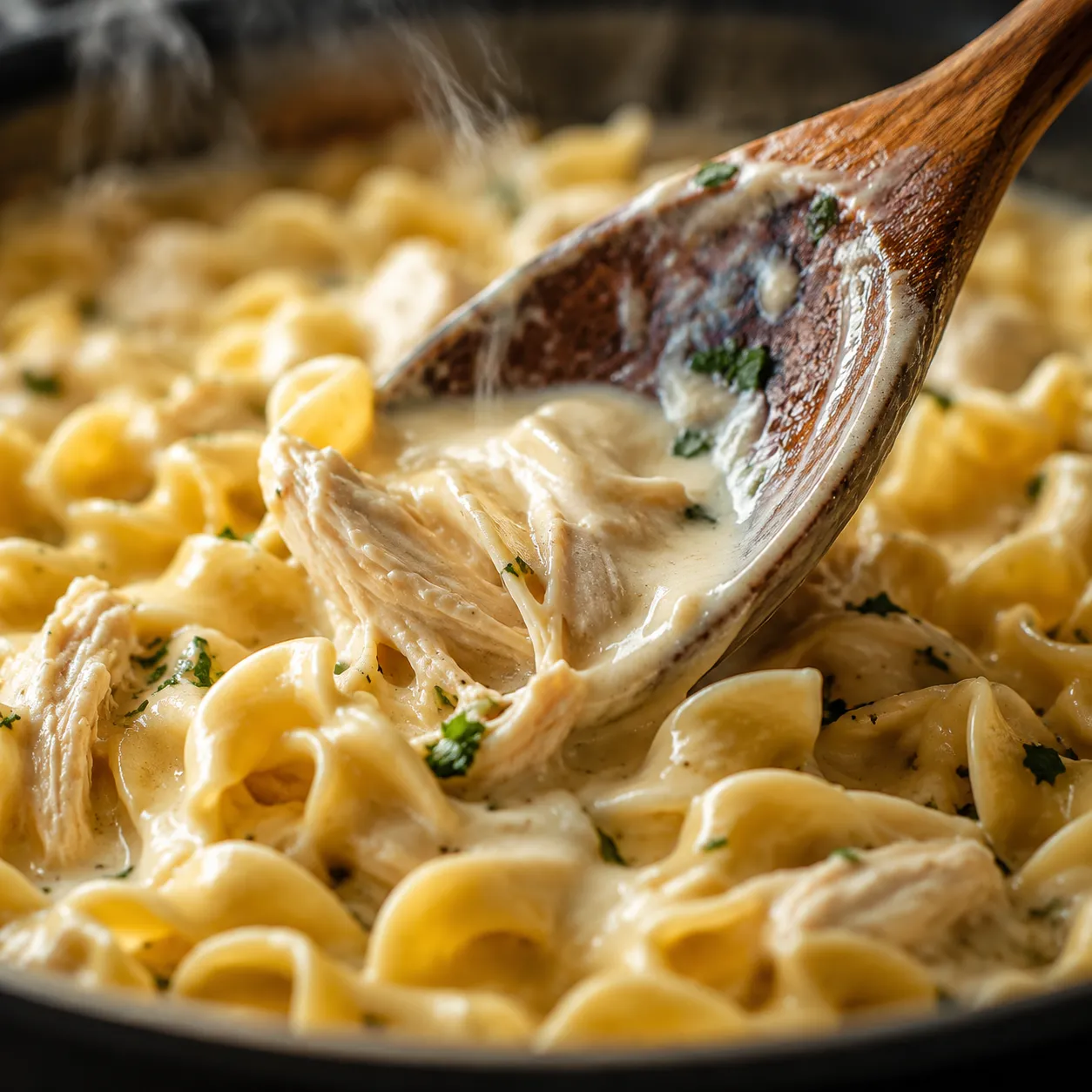
Once the noodles are just tender, reduce the heat to low and fold in the shredded chicken along with the milk or half-and-half. Gentle heat here is important — boiling the dairy can cause it to break or look curdled, and we want a smooth, glossy finish. Let everything warm through for two to three minutes, then taste and adjust salt and pepper. Finish with a generous shower of fresh parsley for that little garden-fresh lift that ties the whole bowl together.
This is one of those meals substantial enough to stand alone, but it really shines when you give it a thoughtful supporting cast. The richness wants something to play against — a bright vegetable, a crisp salad, or in true Midwest fashion, even more starch.
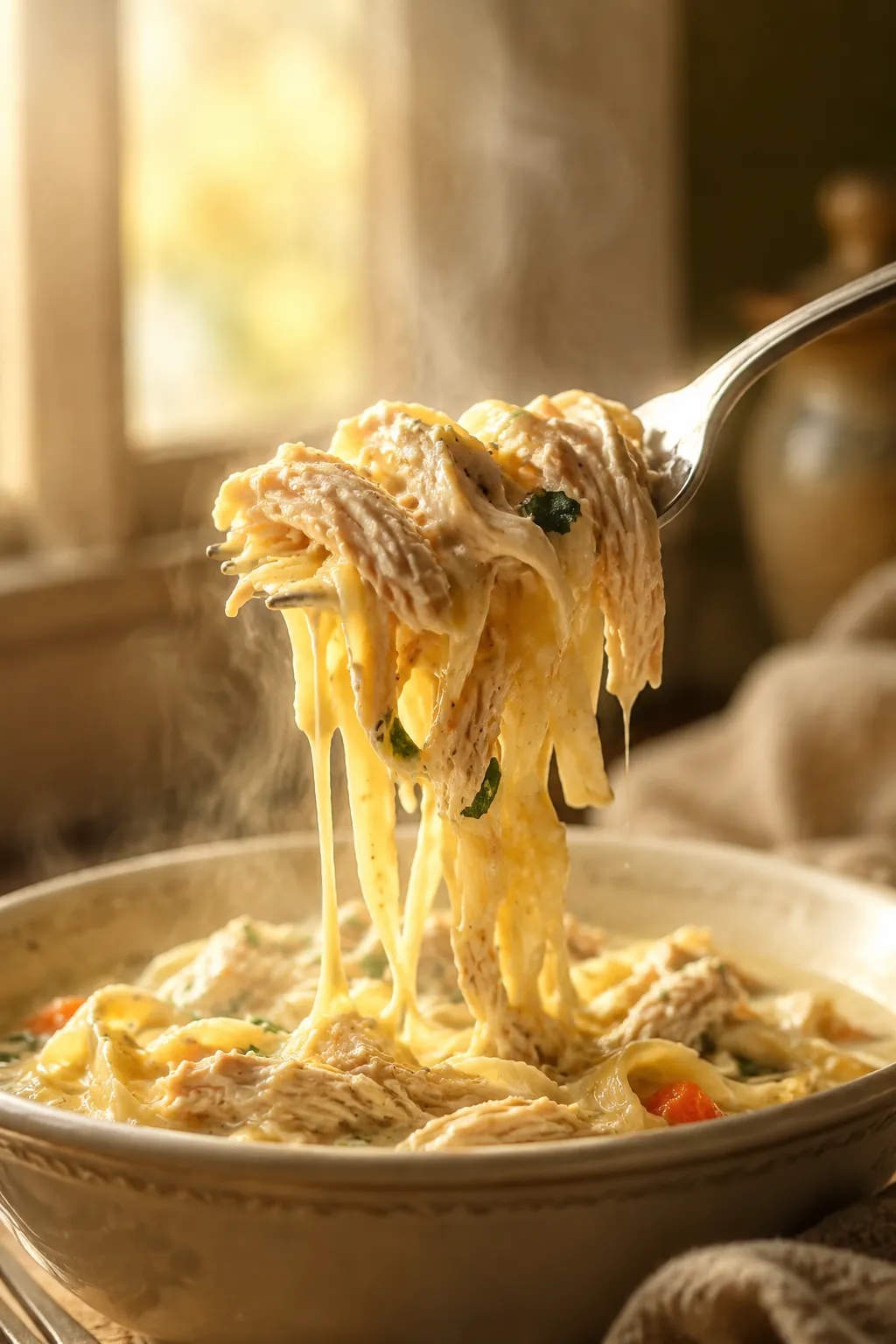
If you've never had creamy chicken and noodles ladled over a scoop of buttery mashed potatoes, you're in for a revelation. It's a beloved tradition across Indiana, Ohio, and Pennsylvania Dutch country, and it's exactly as cozy as it sounds. The potatoes catch the gravy that escapes the noodles, and every bite ends up creamy, savory, and almost custardy. Don't overthink it — basic mashed russets with butter, milk, salt, and pepper are perfect.
If you'd rather keep things lighter, lean into contrast. A crunchy green salad with a sharp vinaigrette, roasted broccoli with lemon, quick-pickled cucumbers, or buttery green beans all cut through the creaminess beautifully. Warm garlic bread or a soft dinner roll is non-negotiable in my house — you'll want something for sopping up the last of the sauce. Steamed peas or honey-glazed carrots stirred right into the pot also work if you want to keep it strictly one pot.
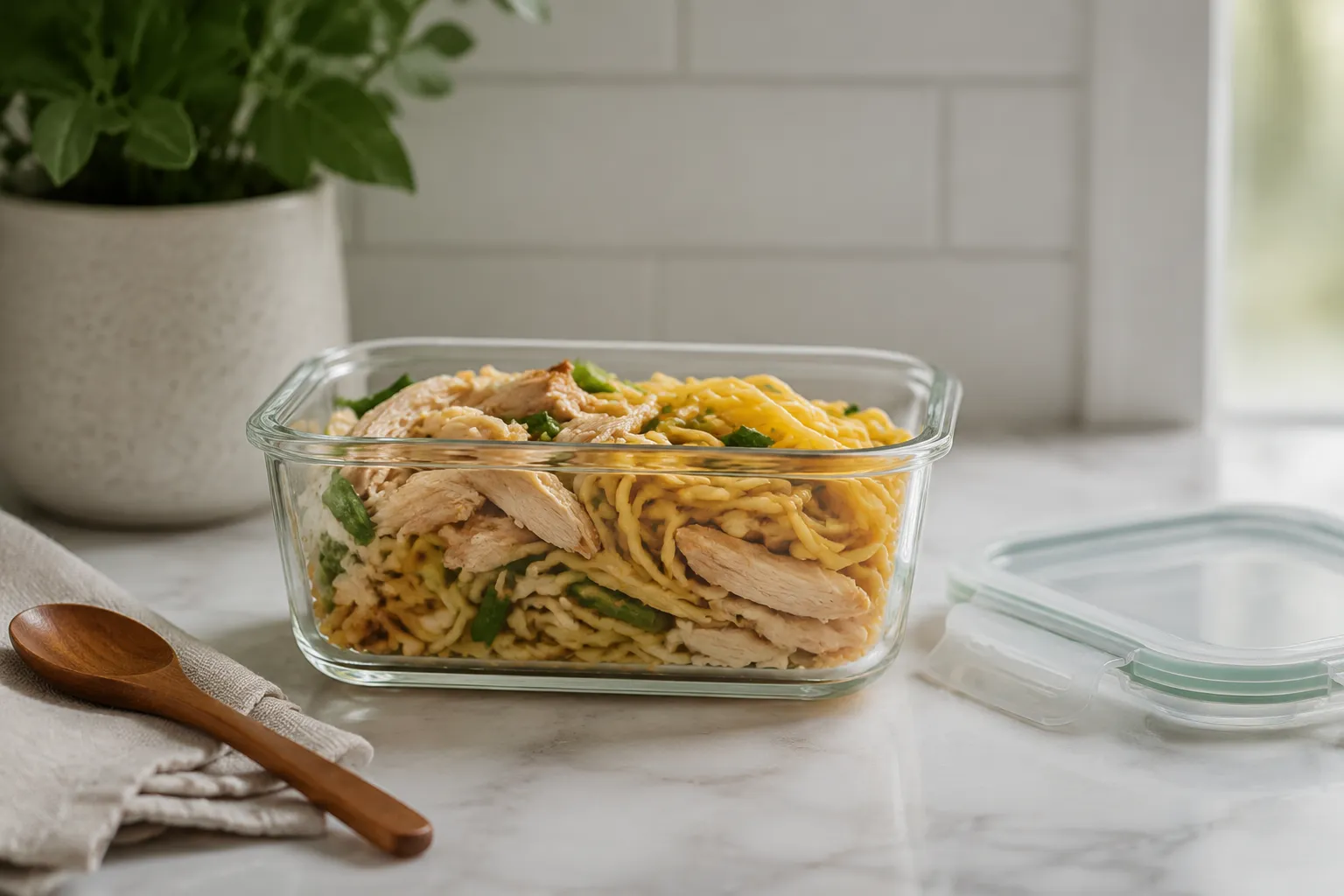
Once you've made this chicken and noodles recipe a couple of times, it stops feeling like a recipe at all and starts becoming muscle memory — the kind of supper you can throw together half-asleep on a Wednesday and still get high-fives for. Leftovers, if you somehow have any, reheat into an even better lunch the next day.
Make a double batch when you have the time; future-you will be very, very glad.
This recipe is a sturdy template, so feel free to make it your own depending on what's in the fridge or how much hands-on time you have.
Leftovers keep beautifully in the refrigerator for 3 to 4 days in an airtight container. The noodles will keep absorbing liquid as they sit, so the dish thickens significantly overnight — that's normal and easy to fix at reheat time. To reheat, warm gently on the stovetop over low heat with a generous splash of chicken broth or milk to loosen the sauce, stirring often until heated through. Microwaving works too in 60-second bursts, stirring between each, and again with a little added liquid to keep the sauce smooth.
Freezing is possible but tricky: cooked egg noodles tend to soften and turn mealy when thawed. For the best long-term storage, freeze just the chicken and creamy broth base (without the noodles) for up to 3 months, then thaw overnight in the fridge, reheat, and add freshly cooked egg noodles right before serving. If you do freeze the finished dish, slightly undercook the noodles before freezing and reheat low and slow with extra broth to revive the texture.