Korean BBQ Sauce Recipe: Sweet, Savory & Sticky in 15 Minutes
Ingredients
Scale
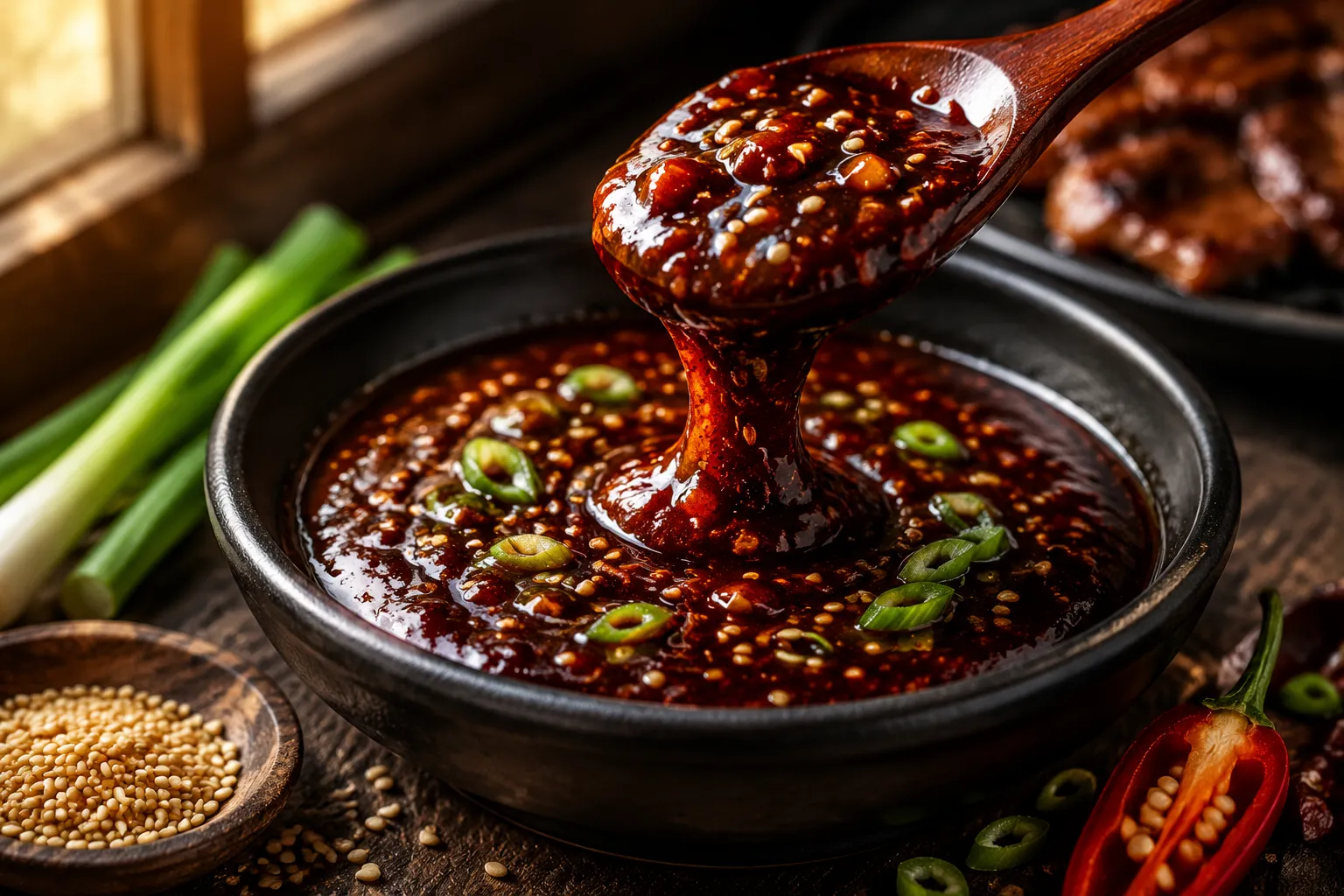
A glossy, sweet-savory Korean BBQ sauce you can whip up in 15 minutes with pantry staples. Use it as a marinade, glaze, dressing, or dip.
Korean BBQ sauce is the glossy, sticky-sweet magic that turns a simple weeknight dinner into something that tastes like it came sizzling off a restaurant grill. It hits every note I want in a great sauce: salty soy sauce, caramel-like brown sugar, garlicky warmth, a little ginger, toasty sesame oil, and that deep chile savoriness from gochujang.
This version comes together in about 15 minutes, but it tastes layered and slow-built. Spoon it over rice bowls, brush it onto chicken thighs, use it as a Korean BBQ marinade, or thin it into a punchy dressing for slaws and crunchy salads. It is bold without being fussy, and once you have a jar in the fridge, dinner options multiply fast.
Think of this as your master sauce: simmer it just until pourable for dipping, reduce it a touch more for a lacquered grill glaze, or whisk it with vinegar and oil when you want a fast Korean BBQ dressing. If you already love homemade teriyaki sauce, this one lives in the same sweet-savory family, but gochujang brings a deeper, warmer, more fermented kick.
The beauty of this korean bbq sauce recipe is balance. Brown sugar and honey give the sauce its sheen and sticky finish, while rice vinegar keeps the sweetness from feeling heavy. Soy sauce lays down a savory foundation, garlic and ginger make it aromatic, and toasted sesame oil adds that unmistakable nutty finish.
Gochujang is the ingredient that makes the sauce feel distinctly Korean-inspired rather than just sweet and salty. It is not only spicy; it is savory, slightly sweet, fermented, and rich. If you are new to gochujang paste, start with the amount in the recipe, then adjust future batches based on your heat preference.
The cornstarch slurry is small but important because it gives the sauce that restaurant-style body in minutes. You are not boiling it down forever, so the flavors stay bright and the aromatics stay fresh. The result is thick enough to cling to grilled meat but still loose enough to spoon over rice, noodles, roasted vegetables, or lettuce wraps.
This sauce is built from a short list of pantry-friendly ingredients, and every one has a job. Low-sodium soy sauce seasons the base without making the finished sauce overly salty. Light brown sugar melts into the soy and helps create that mahogany shine, while honey rounds out the sweetness and adds a soft floral note.
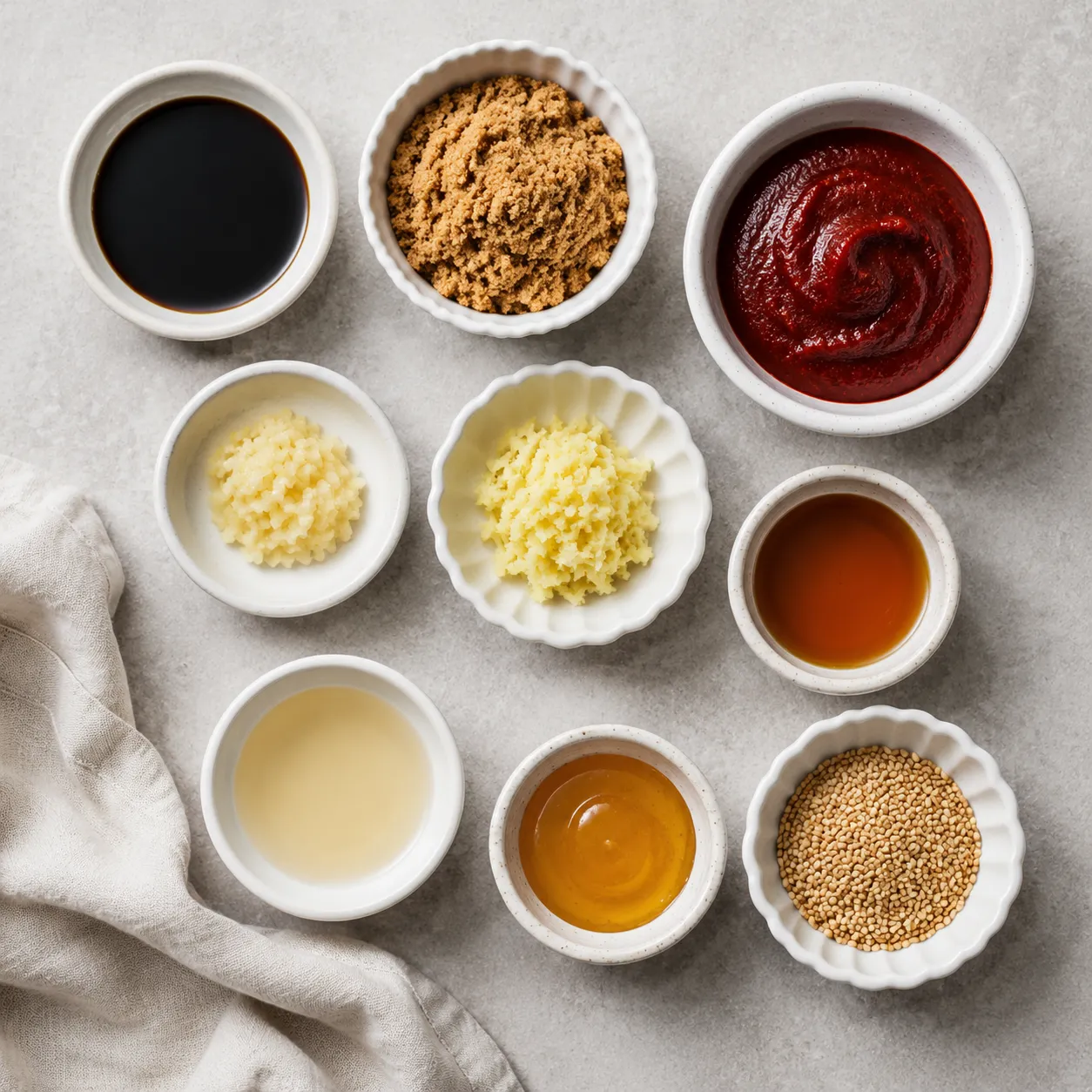
Gochujang brings chile heat, umami, and a slow-building depth that makes the sauce taste more complex than the cook time suggests. Fresh garlic and ginger are worth using here because they bloom into the sauce and give it a lively edge. Rice vinegar adds lift, and toasted sesame oil should be stirred in with intention because a little goes a long way.
Toasted sesame seeds are optional from a thickening perspective, but they make the finished jar feel special and add a pleasant nuttiness. If you like a smoother sauce, you can leave them out or sprinkle them on when serving. For a deeper flavor, add a pinch of black pepper, a splash of mirin, or a teaspoon of grated pear, which nods to the fruit-sweetened style often used for Korean beef bulgogi.
If you need substitutions, use tamari for a gluten-free version, coconut sugar instead of brown sugar, or maple syrup in place of honey. Apple cider vinegar can stand in for rice vinegar in a pinch, though the flavor is a little bolder. For a milder sauce, reduce the gochujang by half and add a little extra honey or brown sugar to keep the texture balanced.
Start by whisking the soy sauce, brown sugar, gochujang, rice vinegar, honey, garlic, and ginger together in a small saucepan. It will look a little streaky at first because the chile paste is thick, but a minute of whisking loosens everything into a smooth, dark red-brown base. Keep the heat at medium, not high, so the sugar dissolves before the sauce begins to bubble aggressively.
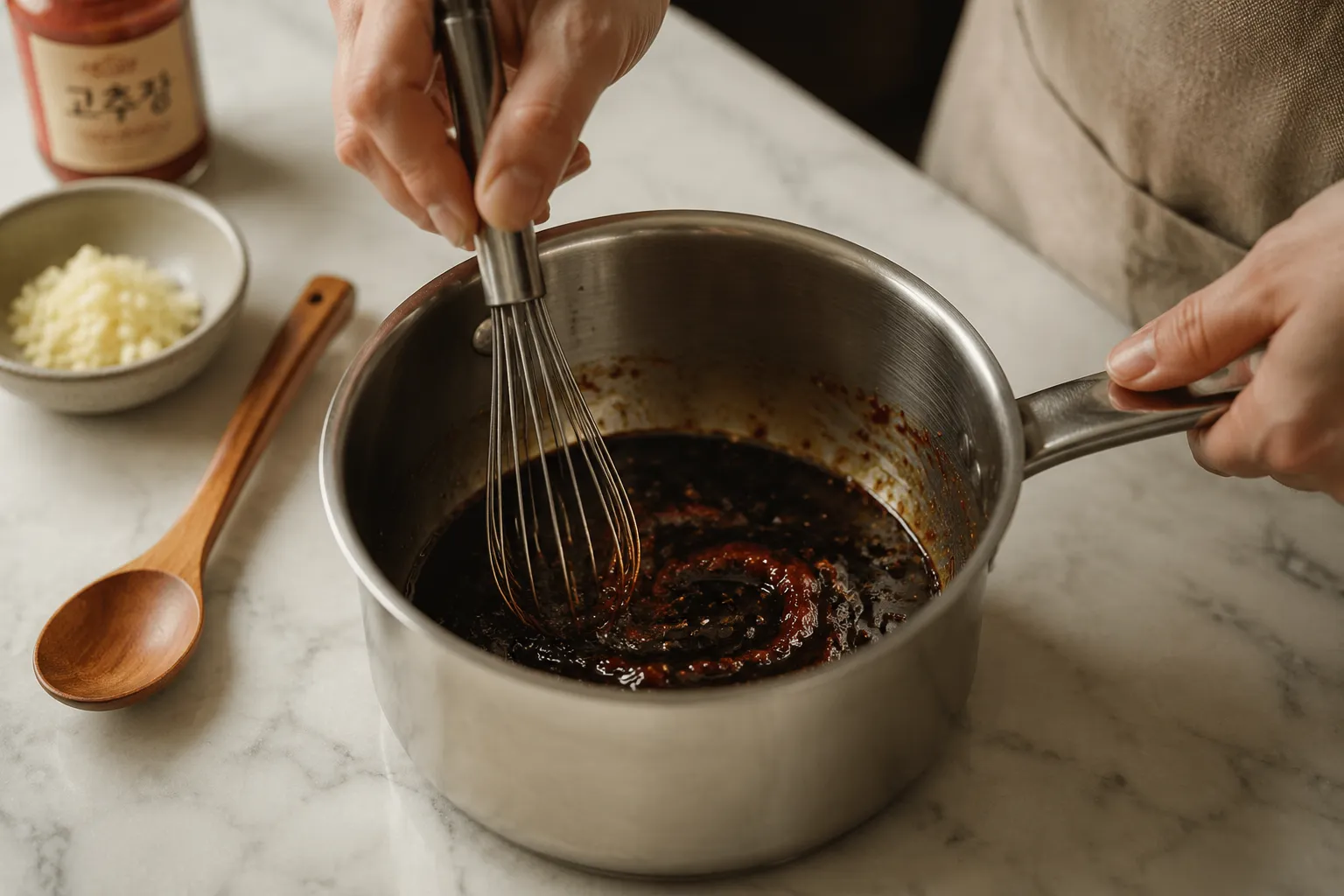
Once the mixture starts to simmer, stir often and watch the edges of the pan. Sugary sauces can catch quickly if the heat is too high, so the goal is a gentle bubbling, not a rolling boil. After a few minutes, whisk in the cornstarch slurry and let the sauce thicken until it lightly coats the back of a spoon.
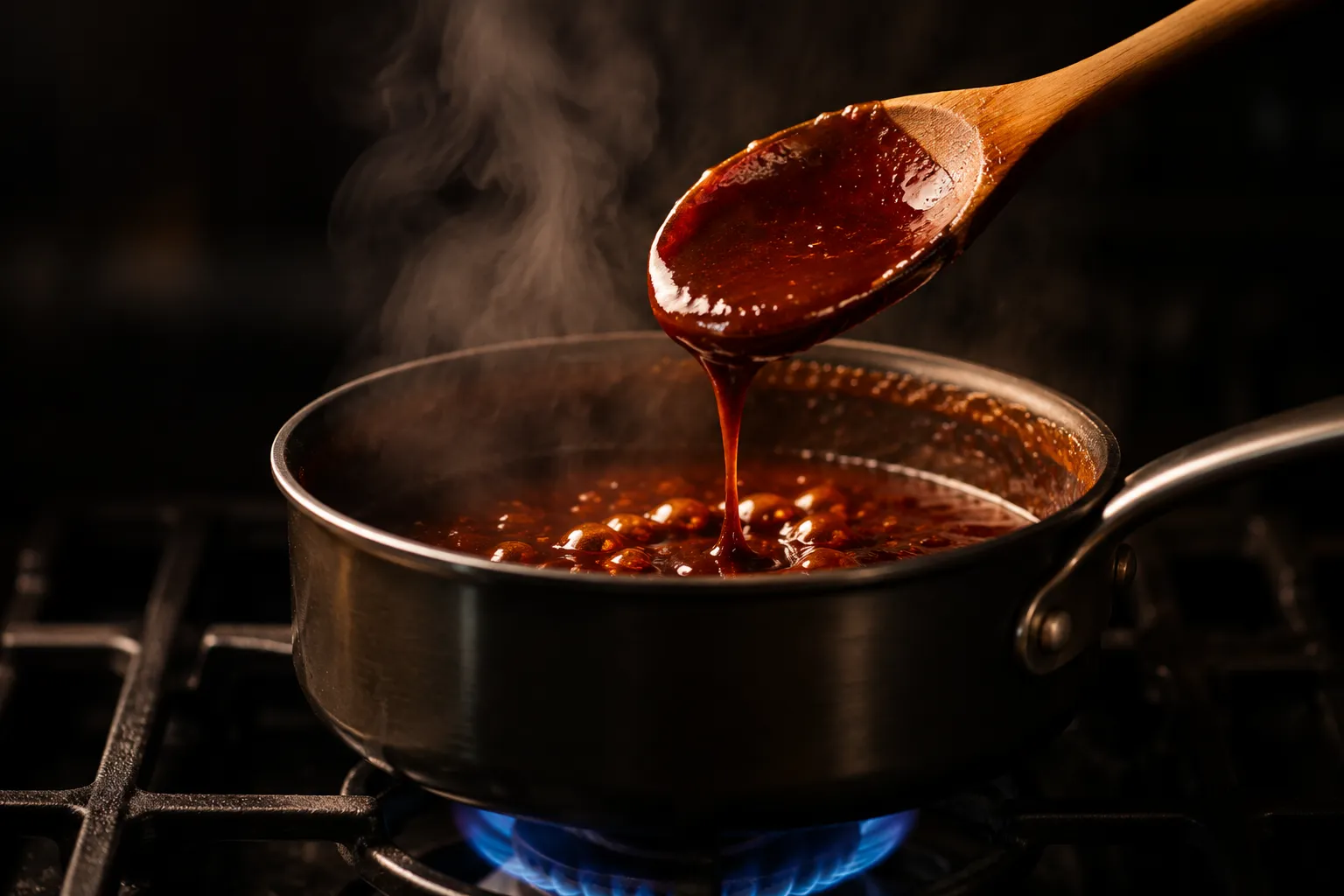
Finish with toasted sesame oil and sesame seeds, then let the sauce cool for a few minutes before tasting. Warm sauce always tastes a bit sharper and sweeter than cooled sauce, so give it a short rest before making final adjustments. If it tastes too salty, add a splash of water and a tiny bit more honey; if it tastes too sweet, add a few drops of rice vinegar.
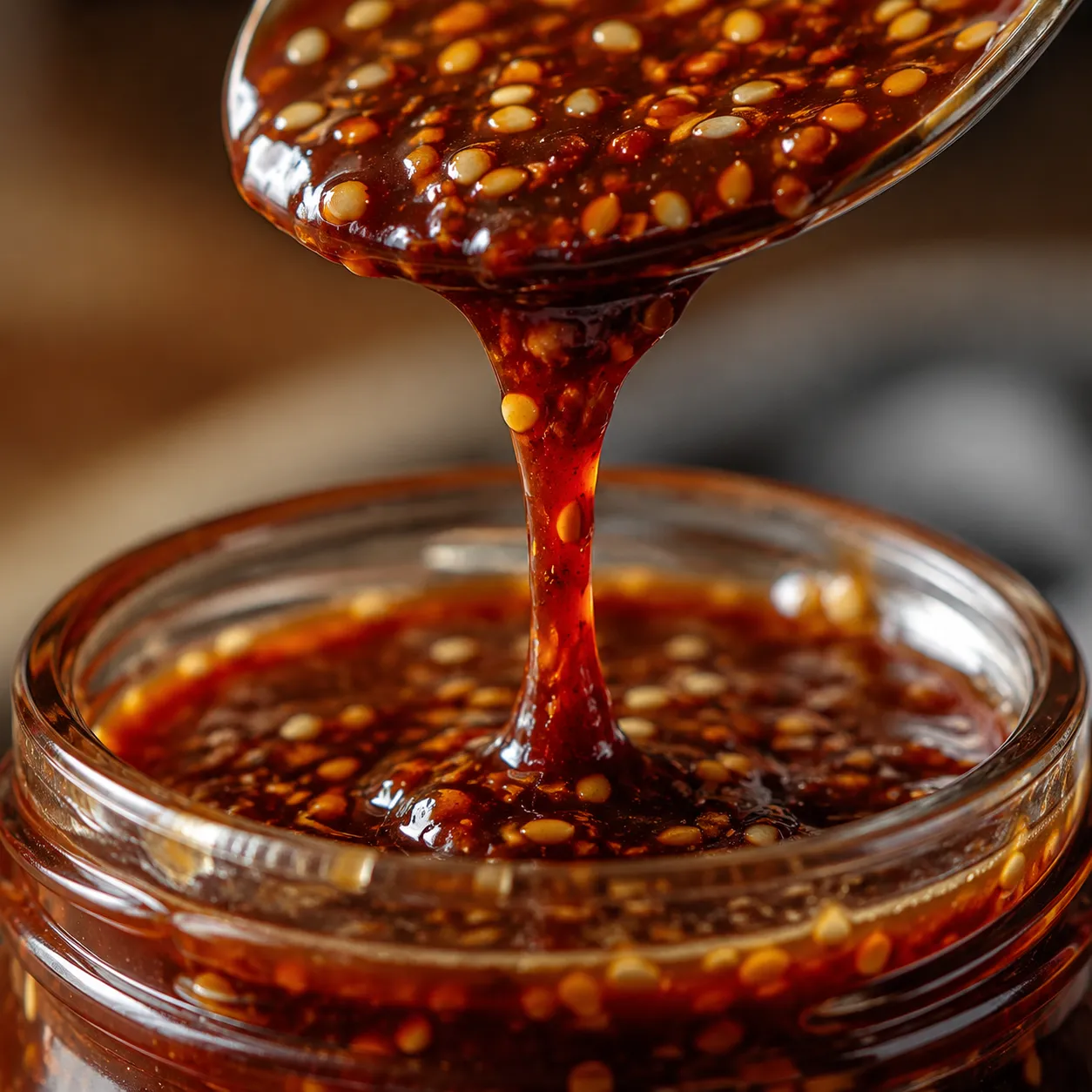
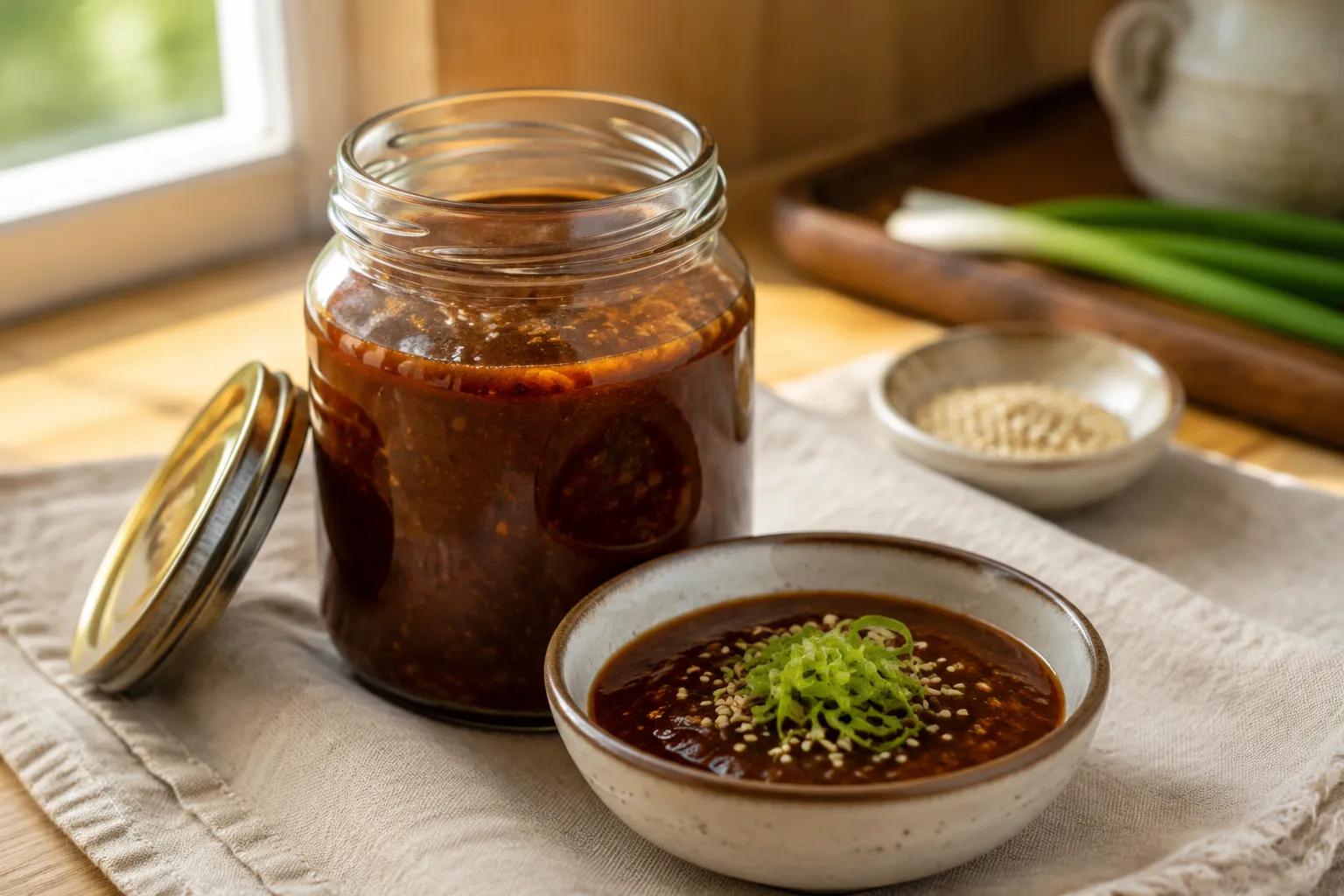
For the cleanest texture, pour it into a jar while still warm but not piping hot. The sauce will thicken slightly as it cools, turning shiny and spoonable. If you want it extra smooth for drizzling, strain out the garlic and ginger; if you like texture and character, leave those little flecks right where they are.
One of the best things about this recipe is how easily the consistency changes depending on the meal. For a salad or slaw, whisk 3 tablespoons of cooled sauce with 1 tablespoon rice vinegar and 2 tablespoons neutral oil. That simple ratio turns the bold base into a Korean BBQ dressing that is tangy enough for cabbage, cucumbers, shredded carrots, cilantro, and grilled chicken salads.
For a sticky grill glaze, simmer the finished sauce for another 1 to 2 minutes, stirring constantly, until it looks thicker and glossier. Brush it onto chicken, pork, shrimp, tofu, or short ribs during the final few minutes of cooking so the sugars caramelize without burning. This is also a great place to use it like a soy garlic glaze for air fryer wings or broiled salmon.
As a dip, keep the sauce as written and serve it warm or room temperature. It is right at home with dumplings, scallion pancakes, lettuce wraps, crispy tofu, roasted sweet potatoes, or grilled skewers. If you keep a few Asian dipping sauces in rotation, this one earns its spot because it can be sweet, spicy, salty, and tangy all at once.
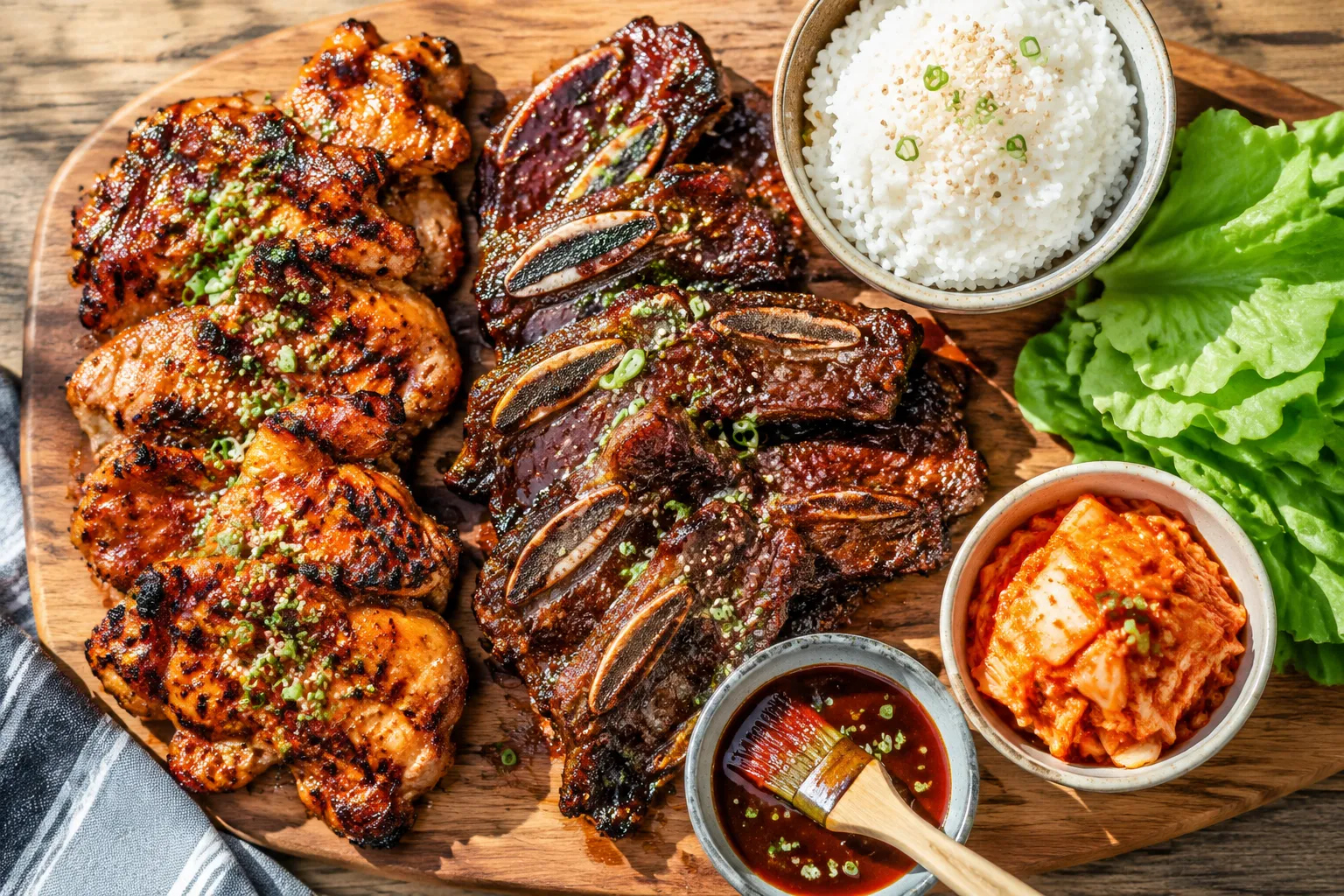
This Korean BBQ sauce is especially good with proteins that can handle bold flavor. Use it as a quick marinade for chicken thighs, pork tenderloin, flank steak, short ribs, shrimp, or extra-firm tofu. Because it contains sugar, marinate meat for flavor, then pat off excess before searing or grilling so the outside caramelizes instead of scorching.
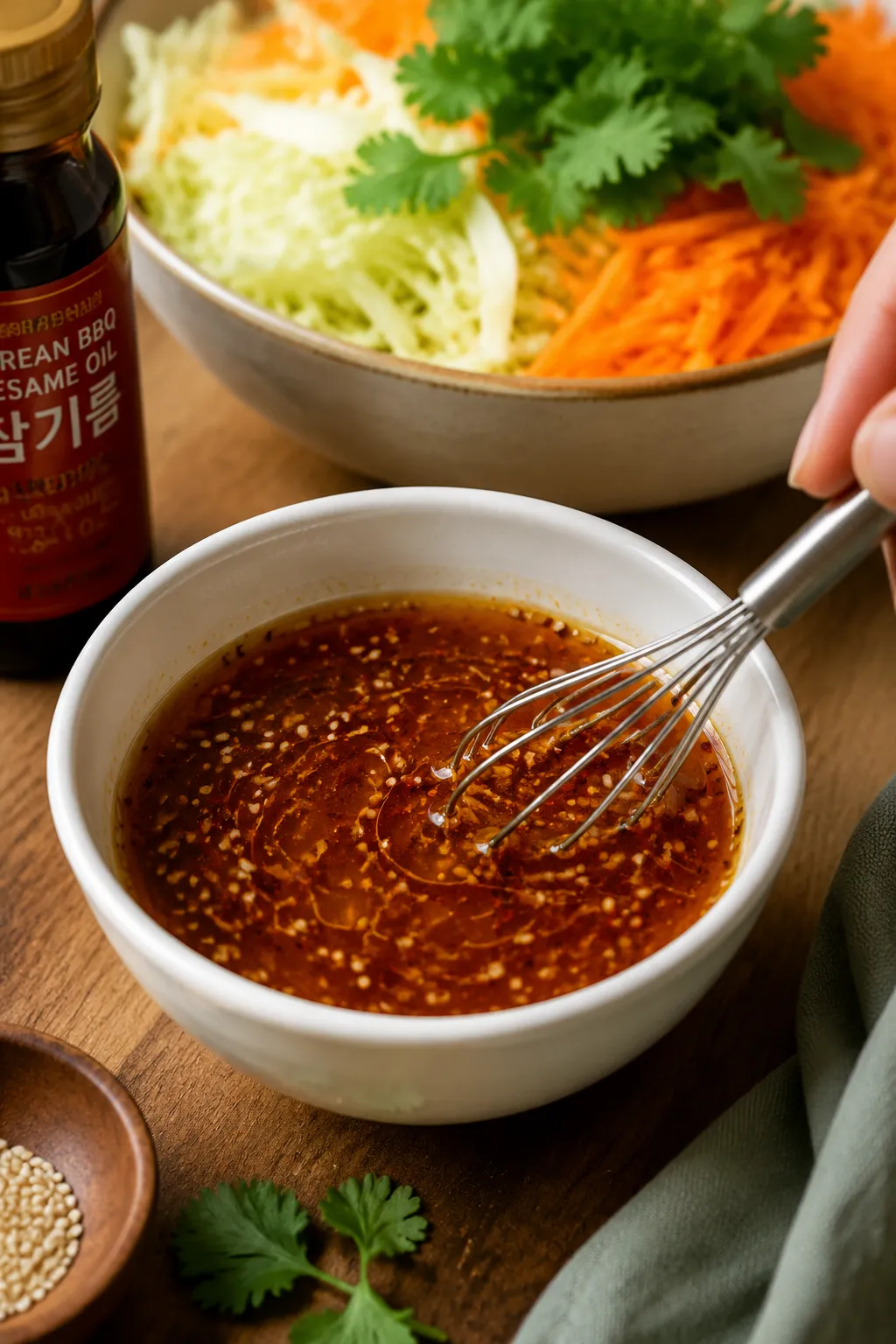
For weeknight rice bowls, spoon the sauce over warm rice with sautéed vegetables, a jammy egg, cucumber, kimchi, and scallions. It also makes leftover grilled meat taste brand new when tucked into lettuce wraps with herbs and crunchy pickles. If you are planning a Korean beef bulgogi night, serve a little bowl of this on the side for guests who want extra shine and sweetness.
The sauce is also wonderful beyond classic barbecue-style meals. Toss it with roasted Brussels sprouts, drizzle it over crispy potatoes, brush it onto baked meatballs, or stir a spoonful into fried rice at the very end. It brings enough flavor that even a bowl of plain noodles, steamed broccoli, and rotisserie chicken can feel dinner-party worthy.
Once your Korean BBQ sauce has cooled, it becomes the kind of fridge staple that quietly saves dinner. Keep it in a clean glass jar, label it with the date, and pull it out whenever you need a fast marinade, finishing sauce, or bowl drizzle. The flavor deepens after a night in the refrigerator, so making it a day ahead is never a bad idea.
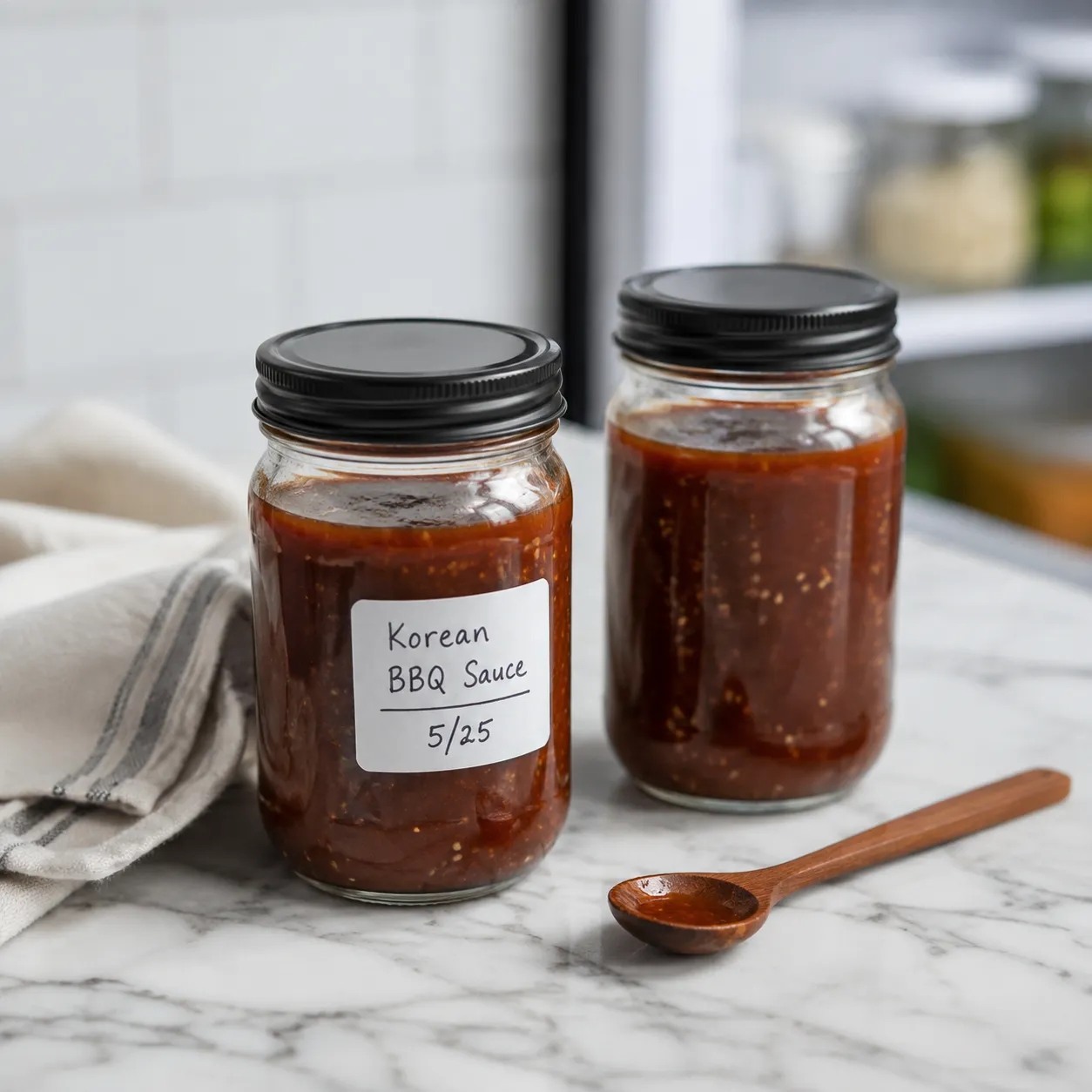
If the sauce thickens more than you like after chilling, loosen it with a teaspoon or two of warm water. For a richer finish, whisk in a few drops of sesame oil right before serving. For a brighter finish, a splash of rice vinegar wakes everything up, especially if you are using it on salads or cold noodle bowls.
The best sauce is the one that tastes right to you, so use this recipe as a strong starting point and adjust with confidence. Want it spicier? Add more gochujang. Want it sweeter and more kid-friendly? Add a little extra honey. Want it sharper for vegetables or slaw? Increase the rice vinegar by a teaspoon at a time.
That flexibility is what makes Korean BBQ sauce so useful in a home kitchen. It can be a marinade on Monday, a glaze on Wednesday, and a dressing for crunchy leftovers by the weekend. Make one jar, taste as you go, and you will quickly see why this sweet-savory staple belongs in your regular sauce rotation.
Store cooled sauce in an airtight glass jar or container in the refrigerator for up to 2 weeks. It will thicken as it chills, so stir in a small splash of warm water if you want it looser for drizzling or dressing.
To freeze, portion the sauce into small freezer-safe containers or an ice cube tray and freeze for up to 3 months. Thaw overnight in the refrigerator, then warm gently on the stovetop or in short microwave bursts, stirring well before serving.