Buffalo Sauce Recipe: 5-Minute Homemade Wing Sauce
Ingredients
Scale
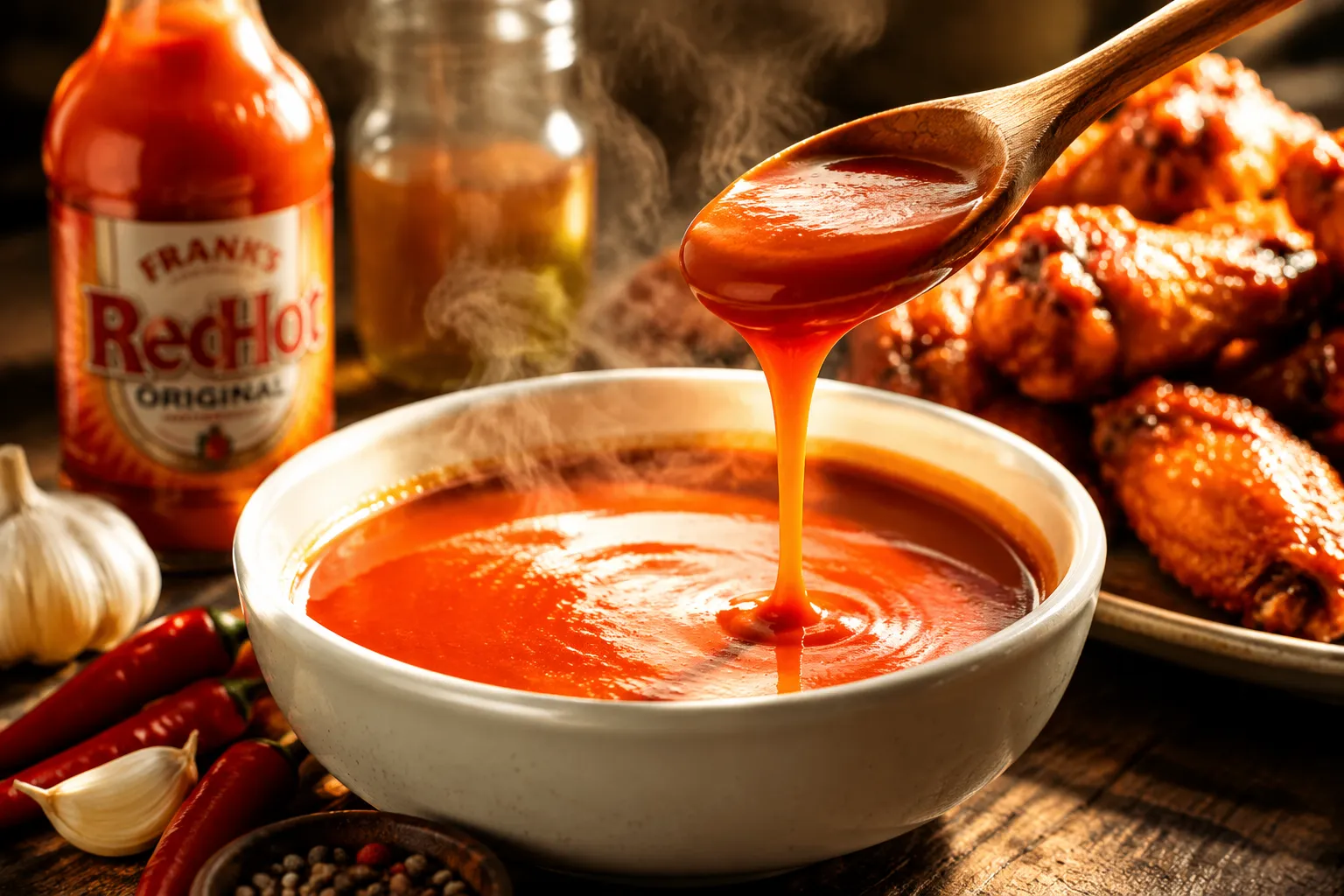
The only buffalo sauce recipe you'll ever need. Five ingredients, five minutes, and that signature glossy, tangy, buttery heat that beats anything bottled.
This buffalo sauce recipe is the one I keep going back to every game day, every wing night, and every time I open the fridge and realize the last bottle of store-bought is empty. It comes together in five minutes with five pantry staples, and once you taste that glossy, buttery, vinegar-snapped heat fresh out of the pan, the bottled stuff starts to feel a little sad by comparison.
What makes a great buffalo sauce isn't a secret ingredient. It's a ratio and a technique. The original Anchor Bar version out of Buffalo, New York leans on hot sauce and butter as its foundation, then layers vinegar, Worcestershire, and garlic for depth. Get those proportions right, emulsify them properly, and you end up with a sauce that clings to a wing instead of pooling at the bottom of the basket.
I'll walk you through the ingredient choices that actually matter (Frank's vs. the rest), the three-step method, and the small tweaks that take this from good to genuinely better than your favorite wing joint. Whether you're tossing it with crispy fried wings, drizzling it on a chicken sandwich, or stirring it into a cheesy dip, this is the base recipe that does it all.
The beauty of homemade buffalo sauce is that you almost certainly have everything already. Five core ingredients plus one optional kicker, and each one is doing real work — there's nothing here just for show. Let's break down what each component brings to the bowl so you can shop with intention or substitute with confidence.
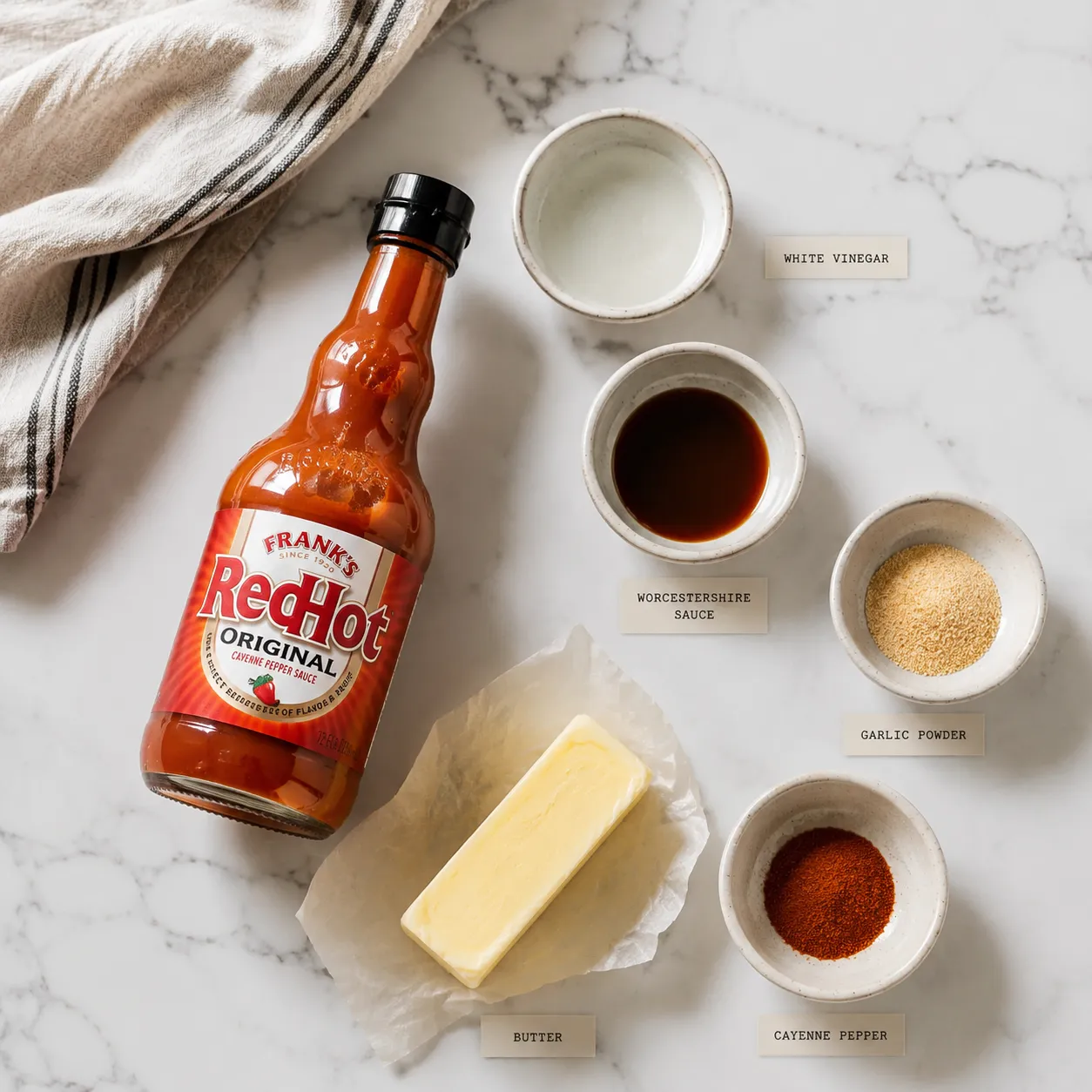
Frank's RedHot Original is the gold standard, and it's not nostalgia talking. Frank's has a relatively mild heat (around 450 Scoville units) and a pronounced vinegar tang, which is exactly the profile you want as a backbone. Hotter sauces like Tabasco are too sharp and acidic to use in the same proportions, while sweet-leaning sauces like sriracha will throw the whole flavor off balance.
If you can't find Frank's, Crystal Hot Sauce (the Louisiana classic) and Texas Pete are both excellent stand-ins with similar mild-vinegar profiles. Avoid anything labeled "extra hot," smoked, or fermented-funky for this particular use. If you make your own homemade hot sauce, look for a cayenne-based, vinegar-forward style and use it the same way.
Use unsalted butter so you can control the salt, and don't substitute margarine — the milk solids in real butter are what create that velvety, glossy emulsion. A splash of white vinegar sharpens the tang, while Worcestershire sauce adds umami depth that separates a great buffalo wing sauce from a one-note one. Garlic powder rounds everything out (fresh garlic burns and turns bitter here), and a pinch of cayenne lets you dial the heat up without throwing off the balance.
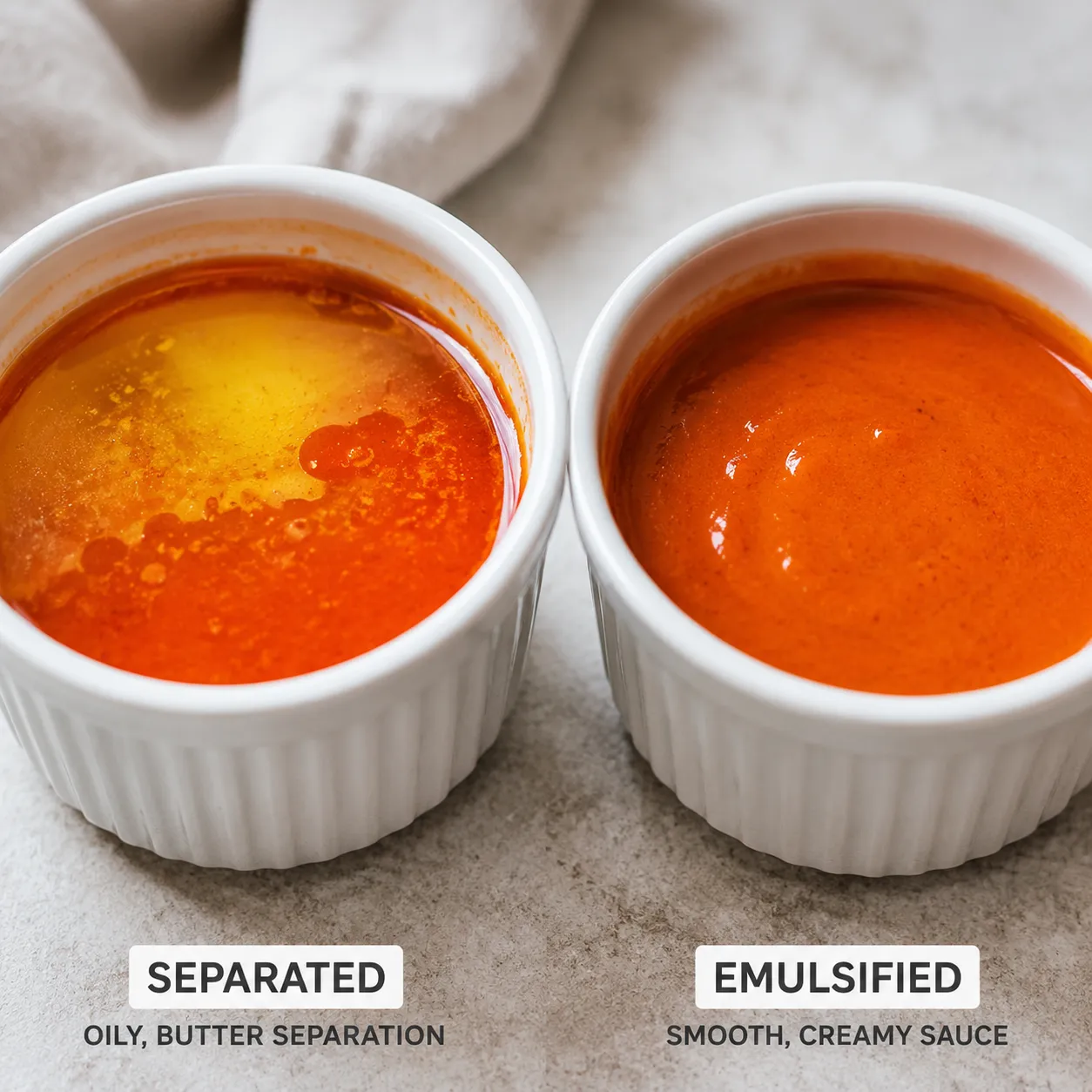
The whole point of learning how to make buffalo sauce at home is that the technique is genuinely simple — but the order matters, and so does the heat level. Low and slow is the move. High heat will scorch the butter and break the emulsion before it ever forms, and you'll end up with a greasy, separated mess instead of that glossy ribbon you're after.
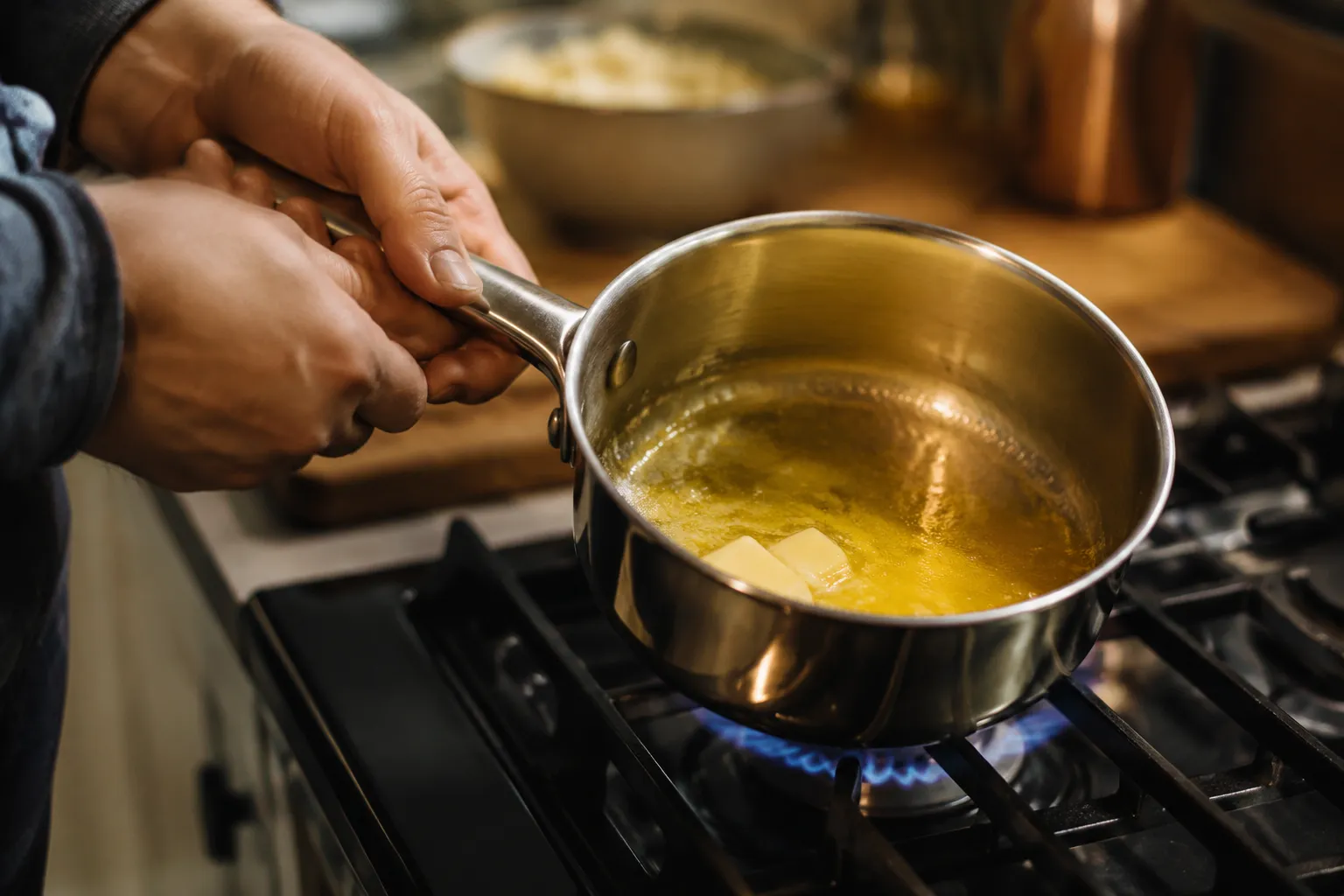
Set a small saucepan over the lowest heat your stove can manage. Add the butter and let it melt slowly, swirling the pan occasionally — you want it fully liquid but absolutely not browned or bubbling hard. The temperature here should feel barely warm; if you can hear sizzling, pull it off the heat for thirty seconds.
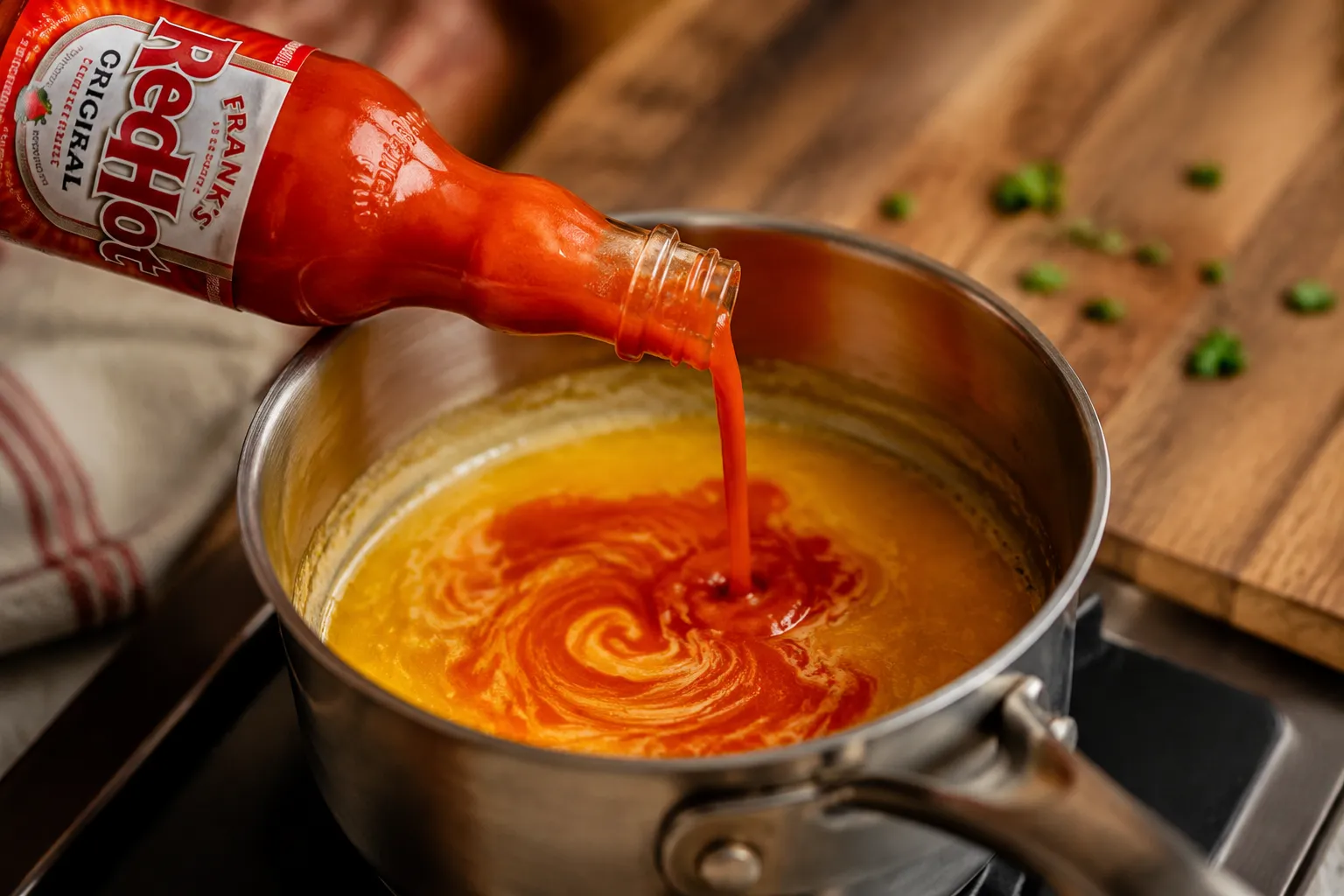
Pour the Frank's RedHot directly into the melted butter and start whisking immediately. The colors will swirl from yellow to bright orange, and you'll see the sauce start to thicken almost on contact. Add the vinegar, Worcestershire, and garlic powder now too, whisking constantly to bring everything together into one smooth mixture.
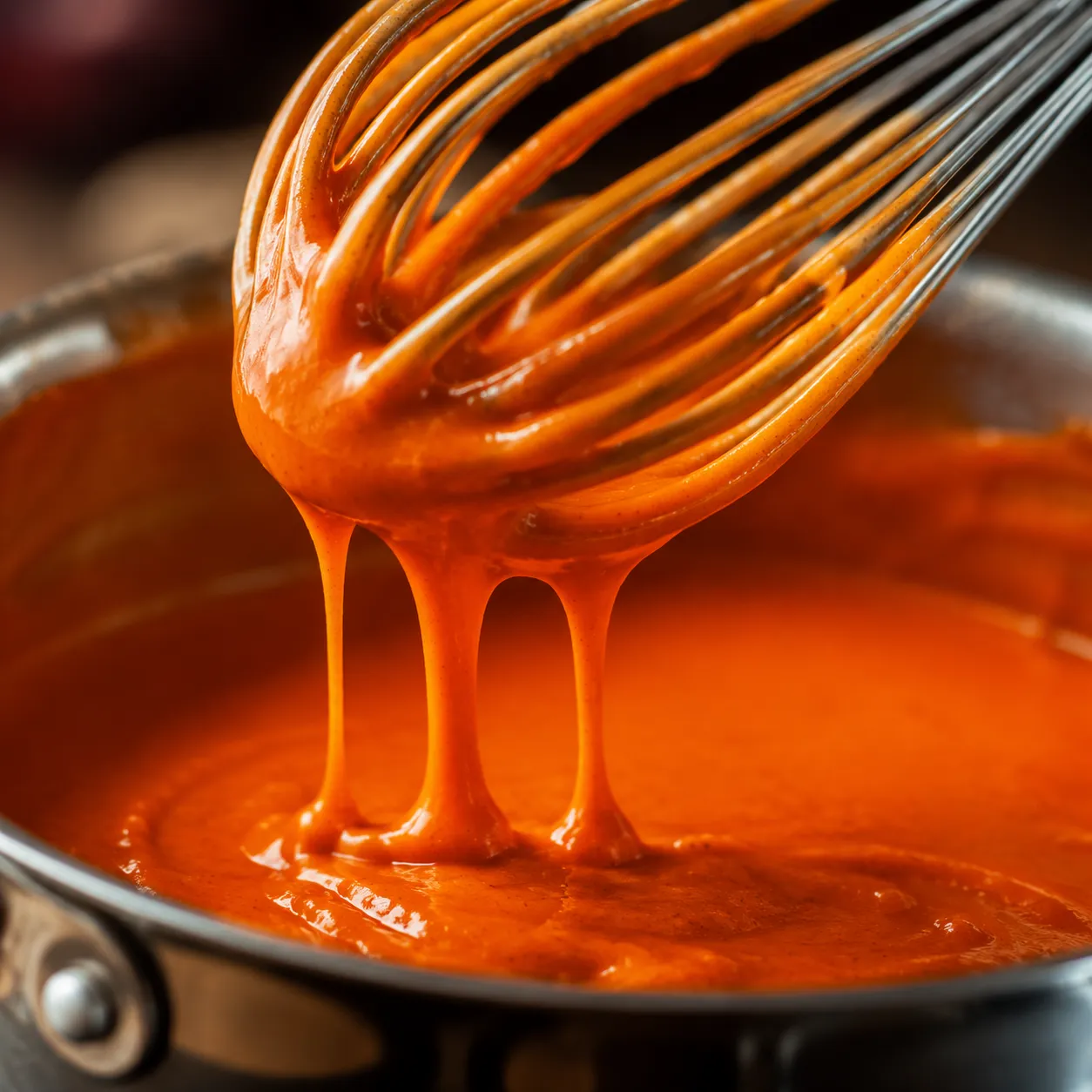
Hold the sauce over low heat for one to two minutes, whisking the whole time. This gentle simmer is what locks the fat and water together into a stable emulsion — the same principle behind a good hollandaise. The sauce will turn from streaky and split-looking to uniformly glossy and slightly thickened. That sheen is your signal it's ready.
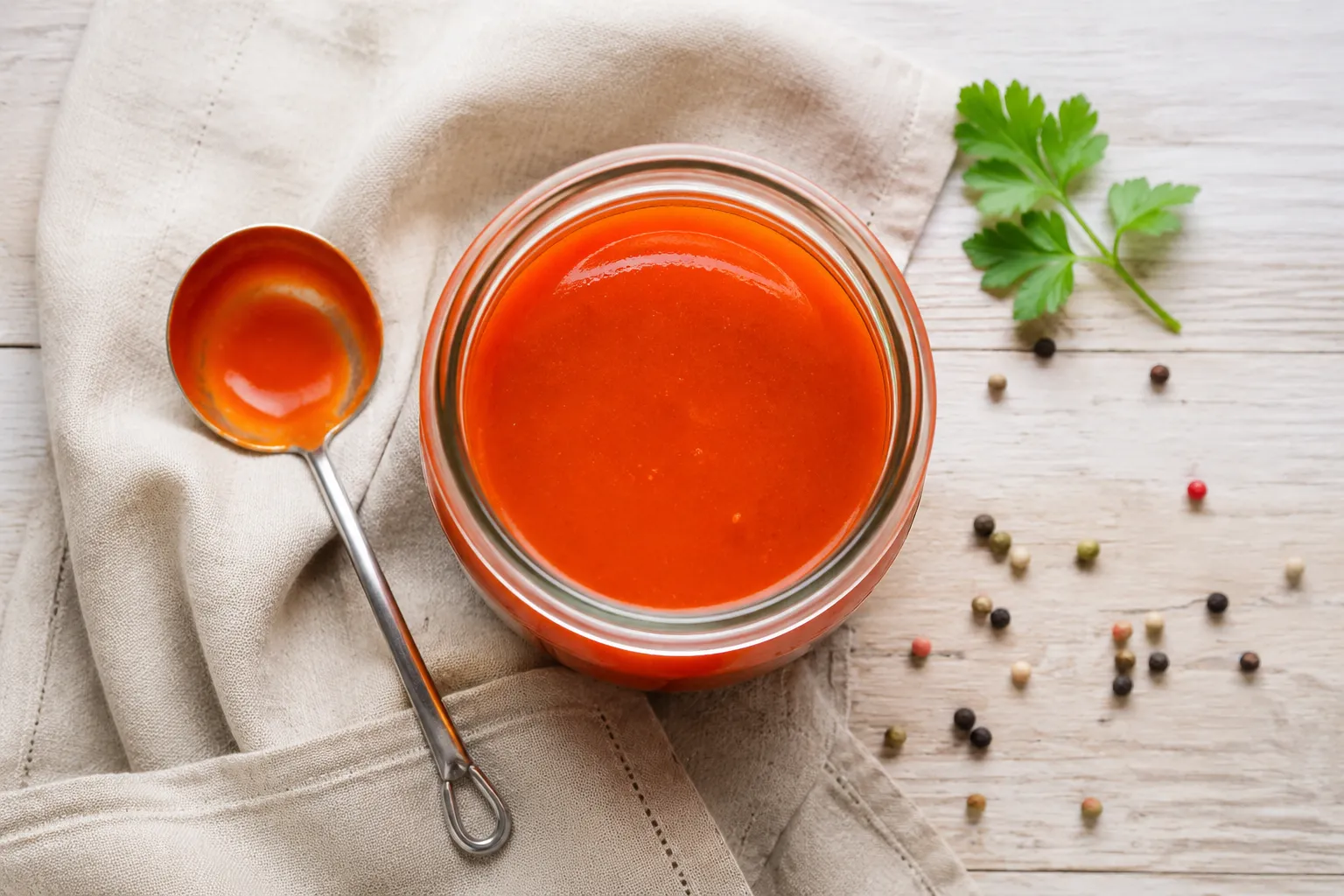
That's it. The sauce is ready to use immediately while it's warm and at peak glossiness, or you can let it cool and transfer it to a jar for later. It will thicken slightly as it cools — totally normal.

This is where a great buffalo sauce recipe earns its keep — it's so much more than a wing dunk. Once you have a jar in the fridge, you'll find yourself reaching for it the way you reach for hot sauce or ketchup. Here are the uses that have earned permanent rotation in my kitchen.
The obvious one and still the best. Toss this sauce with hot, crispy baked chicken wings or air fryer wings the second they come out of the oven — the heat helps the sauce cling and absorb just enough to flavor without going soggy. Serve with celery, carrots, and a generous side of blue cheese dressing or a homemade ranch dressing recipe to tame the heat.
Stir half a cup of this sauce into shredded rotisserie chicken with cream cheese and shredded cheddar for a five-minute buffalo chicken dip that disappears at every party. Brush it on pizza dough in place of red sauce, top with mozzarella and shredded chicken, and you've got buffalo chicken pizza. It's also incredible drizzled over a fried chicken sandwich, swirled into mac and cheese, or used as a dip for sweet potato fries.
Roasted cauliflower florets tossed in buffalo sauce are a genuinely great party appetizer — the florets soak up the sauce the way wings do, and the contrast of charred edges with tangy heat is hard to beat. Crispy baked tofu, fried cauliflower bites, and even chickpeas all work beautifully. The sauce doesn't care what it's coating, as long as the surface is hot and crispy enough to grab on.
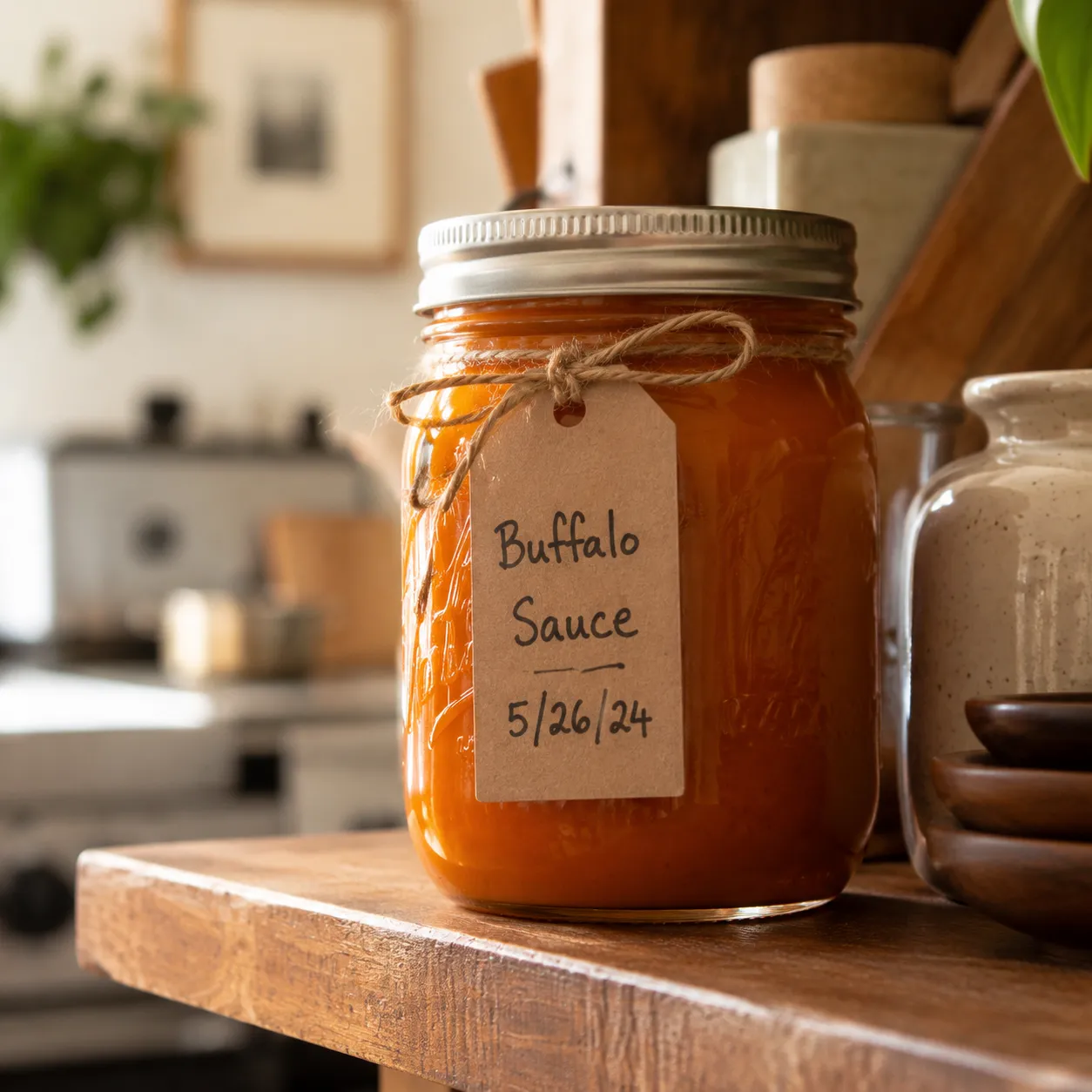
One of the things I love about this homemade buffalo sauce is that it's genuinely make-ahead friendly. A double batch sits happily in a sealed jar in the fridge for up to two weeks, ready to warm and toss at a moment's notice. The butter will solidify when chilled and the sauce will look thick and matte, which is completely normal — a quick rewarm and a vigorous whisk brings the gloss right back.
Once you've made this buffalo sauce recipe from scratch, the bottled stuff is going to taste flat and one-dimensional in comparison. The depth from the Worcestershire, the brightness from the vinegar, the buttery richness that actually clings to your food — it's the kind of small upgrade that punches way above its five-minute effort. Make a batch this weekend, toss it with whatever crispy thing is calling your name, and tell me you'll ever go back to the bottle.
The base recipe is a launching pad. Once you've made it once, the riffs are nearly endless — adjust one ingredient at a time so you can taste the difference each tweak makes.
Transfer cooled buffalo sauce to an airtight glass jar and refrigerate for up to 2 weeks. The butter will solidify and the sauce will look thick and matte — that's expected. To use, microwave in 15-second bursts or rewarm on the stovetop over low heat, whisking until the sauce returns to its glossy, pourable state. Avoid boiling, which will break the emulsion.
For longer storage, freeze in an ice cube tray, then transfer the cubes to a zip-top freezer bag for up to 3 months. Thaw overnight in the fridge or drop a cube straight into a hot pan with a splash of butter. The texture may look slightly grainy after thawing — a quick whisk over low heat smooths it right back out.