Homemade Spaghetti Sauce Recipe (Better Than Jarred)
Ingredients
Scale
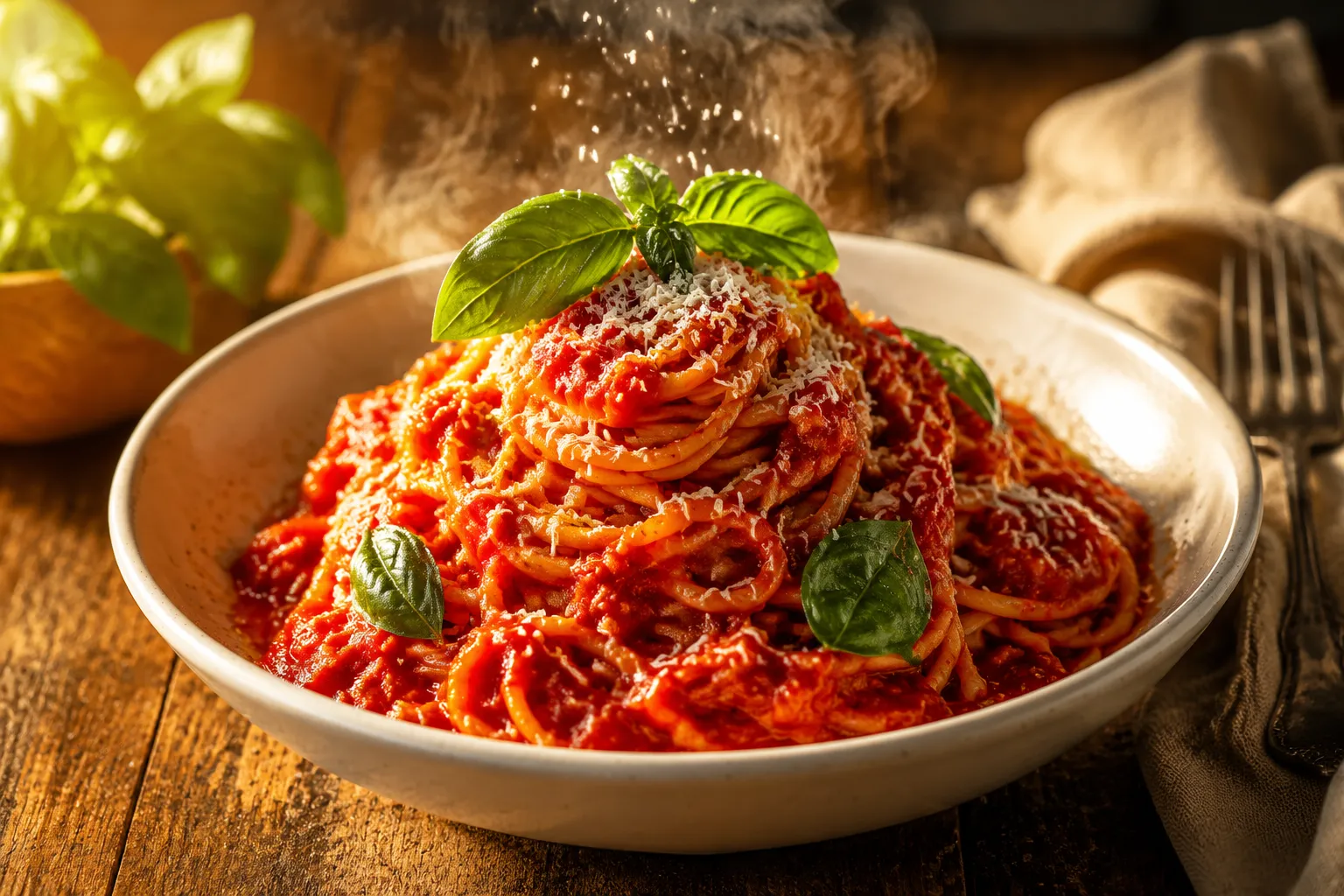
Skip the jar. This homemade spaghetti sauce is rich, garlicky, and deeply flavorful, with a silky texture that clings to every strand of pasta.
This homemade spaghetti sauce is the one I make on slow Sunday afternoons when the windows are cracked open and there's a Sinatra record spinning in the next room. It simmers down into something deep, garlicky, and glossy — a velvety Italian tomato sauce with enough body to wrap around every strand of pasta you twirl onto your fork. After years of trying every shortcut and every supermarket jar, I keep coming back to this method: a slow aromatic base, two cans of really good tomatoes, a low patient simmer, and a finishing whisper of cold butter and torn basil.
What sets this spaghetti sauce recipe apart from the dozens floating around the internet isn't a rare ingredient or a fussy technique. It's the layering. You sweat the onions until they go sweet and translucent, then you toast the garlic and tomato paste until they smell almost roasted, then you let the tomatoes drink up all of that flavor over a long, gentle simmer. By the time you stir cold butter and basil into the pot at the end, you've built something that tastes like it came out of a small trattoria on a side street in Naples — not a Tuesday-night kitchen in the suburbs.
If you've ever felt let down by jarred sauce — too sweet, too tinny, too one-note — this is the recipe that fixes it. It's faster than you might guess (under an hour from cold pan to dinner table), it freezes beautifully, and it pulls double duty as the base for a great easy marinara sauce or a meaty Sunday gravy. Let's get into it.
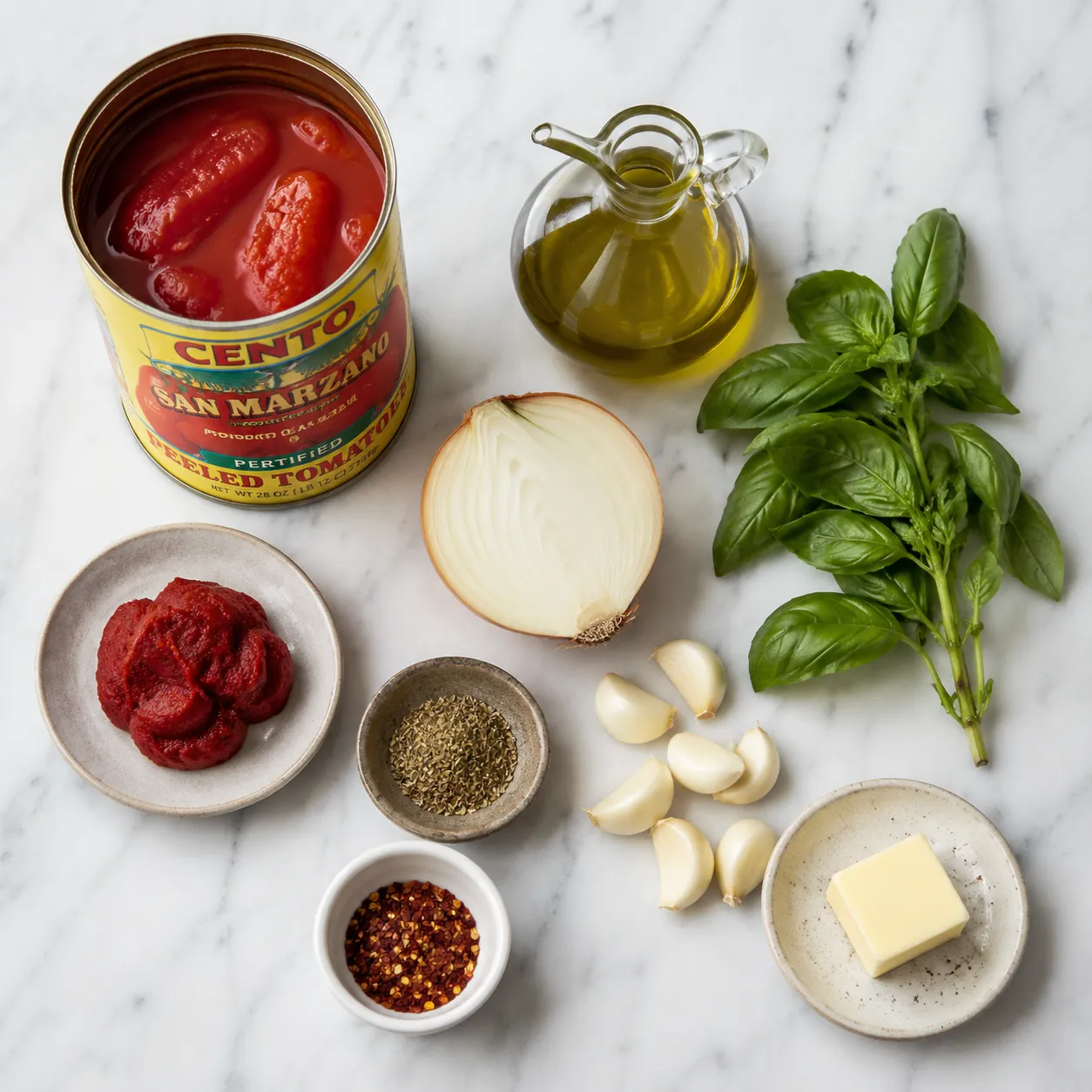
The shopping list for this pasta sauce from scratch is short on purpose, because every ingredient is doing real work. Two 28-ounce cans of whole San Marzano tomatoes form the backbone — they're sweeter, less acidic, and meatier than standard plum tomatoes, which means you don't have to fight them with sugar to get balance. A yellow onion and six garlic cloves give the savory foundation. Extra-virgin olive oil — use the good stuff here, since it actually carries flavor — and a couple tablespoons of tomato paste deepen the color and add slow-cooked richness without an actual long cook.
For seasoning, dried oregano and a pinch of red pepper flakes are non-negotiable, and fresh basil torn in at the end is what separates this from a plain pantry marinara sauce. The final touch is two tablespoons of unsalted butter swirled in off the heat. It sounds odd in an Italian tomato sauce, but it's a trick borrowed from Marcella Hazan and it rounds out any sharpness from the tomatoes into pure silk.
If fresh tomatoes are in season and you've got a flat of ripe Romas from the farmers' market, by all means — blanch, peel, and use about three pounds in place of the cans. Just plan on simmering an extra 15 to 20 minutes to drive off the extra water and concentrate the flavor.
The full step-by-step lives in the recipe card below, but here's the rhythm of the cook and the why behind each move — because once you understand the logic, you can make this sauce by feel forever.
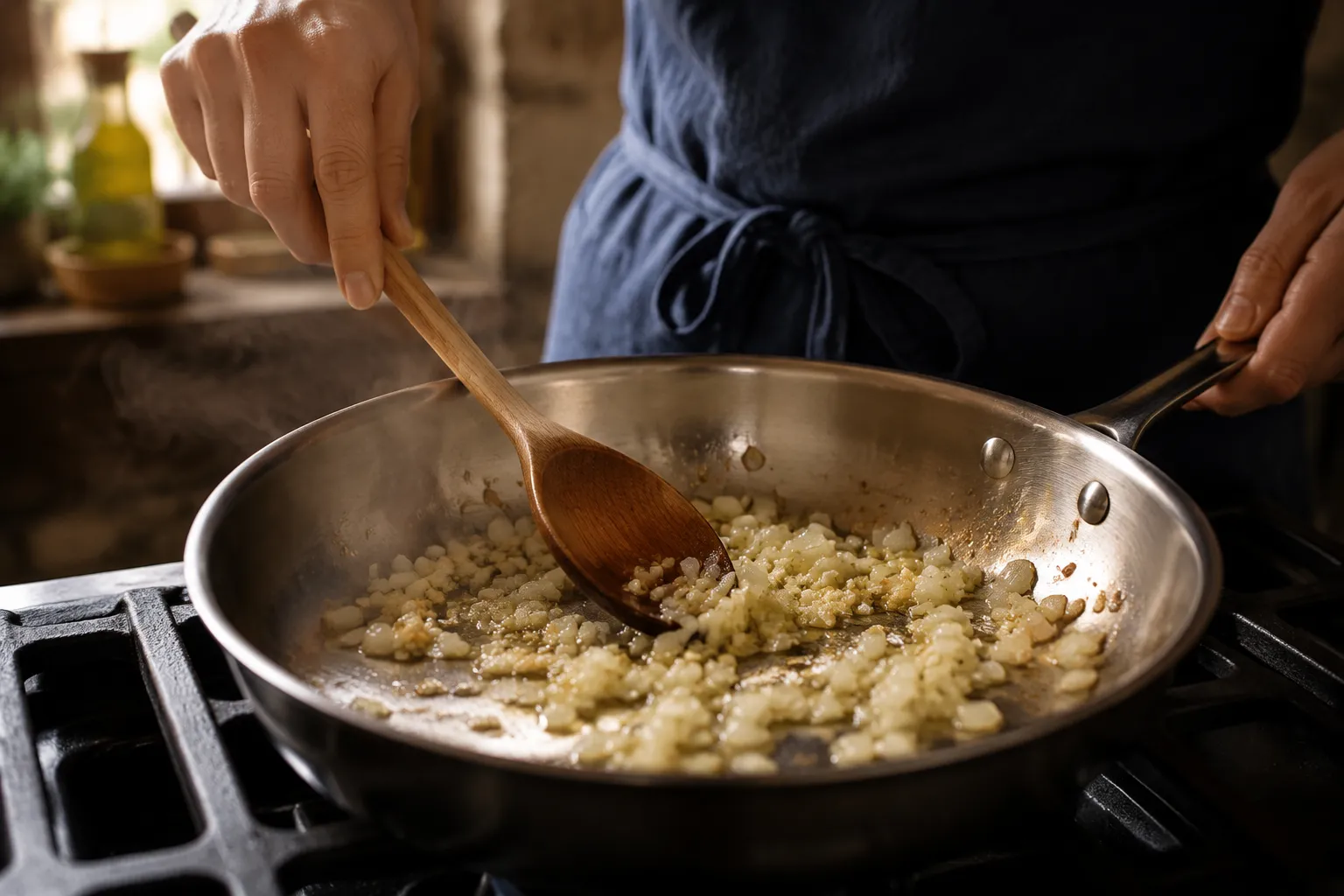
Start with a wide, heavy-bottomed pan and a generous pour of olive oil. The onions go in first and cook over medium-low heat for a full eight to ten minutes — longer than feels necessary, until they're soft, sweet, and almost melting. This stage is your sweetness, your body, your savory base. Rush it and you'll taste the difference in the finished sauce. Once the onions are jammy and translucent, the garlic and tomato paste join the party.
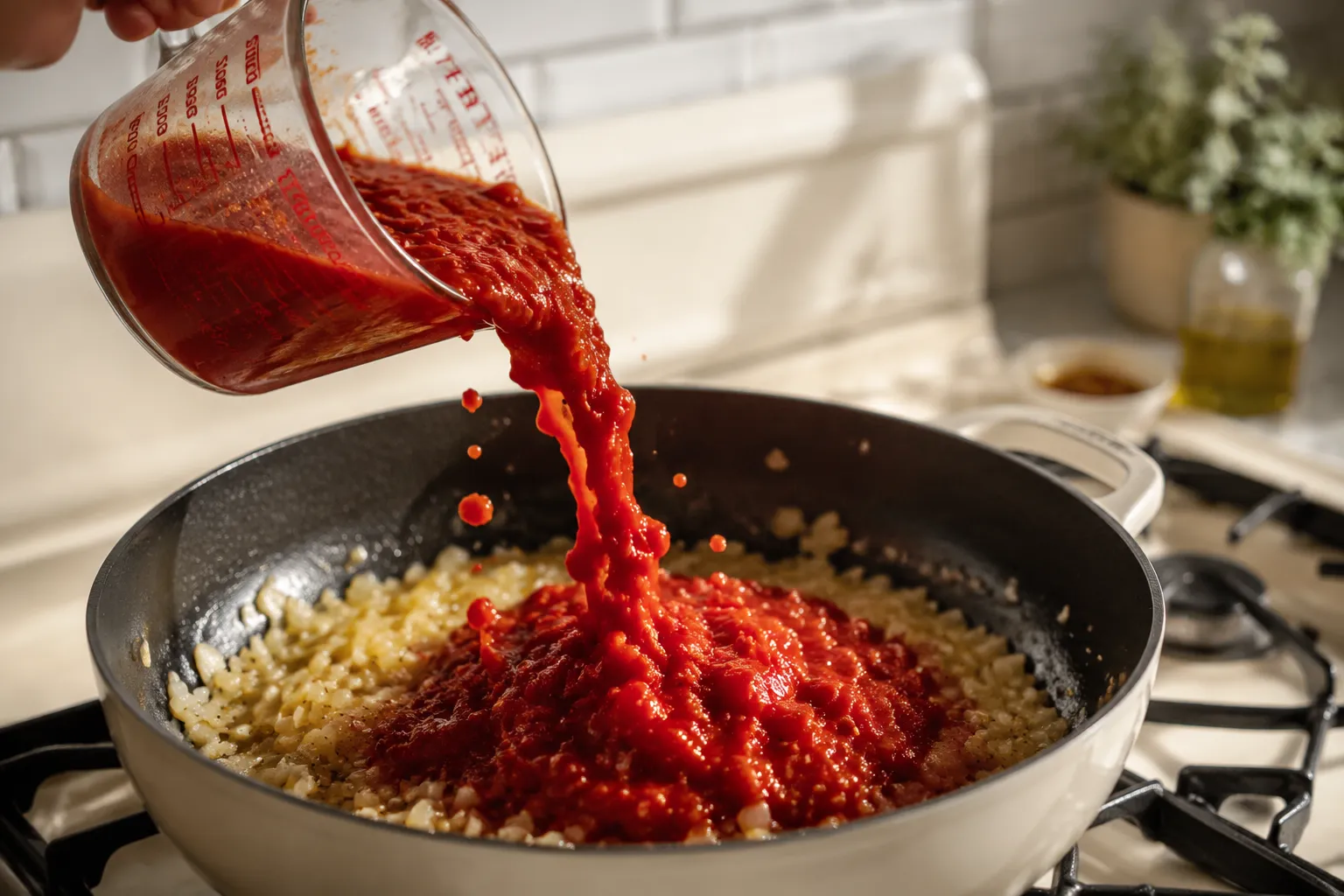
Toast the paste in the oil for about two minutes — it'll shift from bright red to a deeper brick color and smell almost caramelized. That toasting is free flavor and it's the single move most home cooks skip. Then the tomatoes come in, crushed by hand right out of the can so you get rustic, irregular pieces rather than a smooth purée. Add a teaspoon of kosher salt, the oregano, and the red pepper flakes, then bring everything to a gentle bubble.
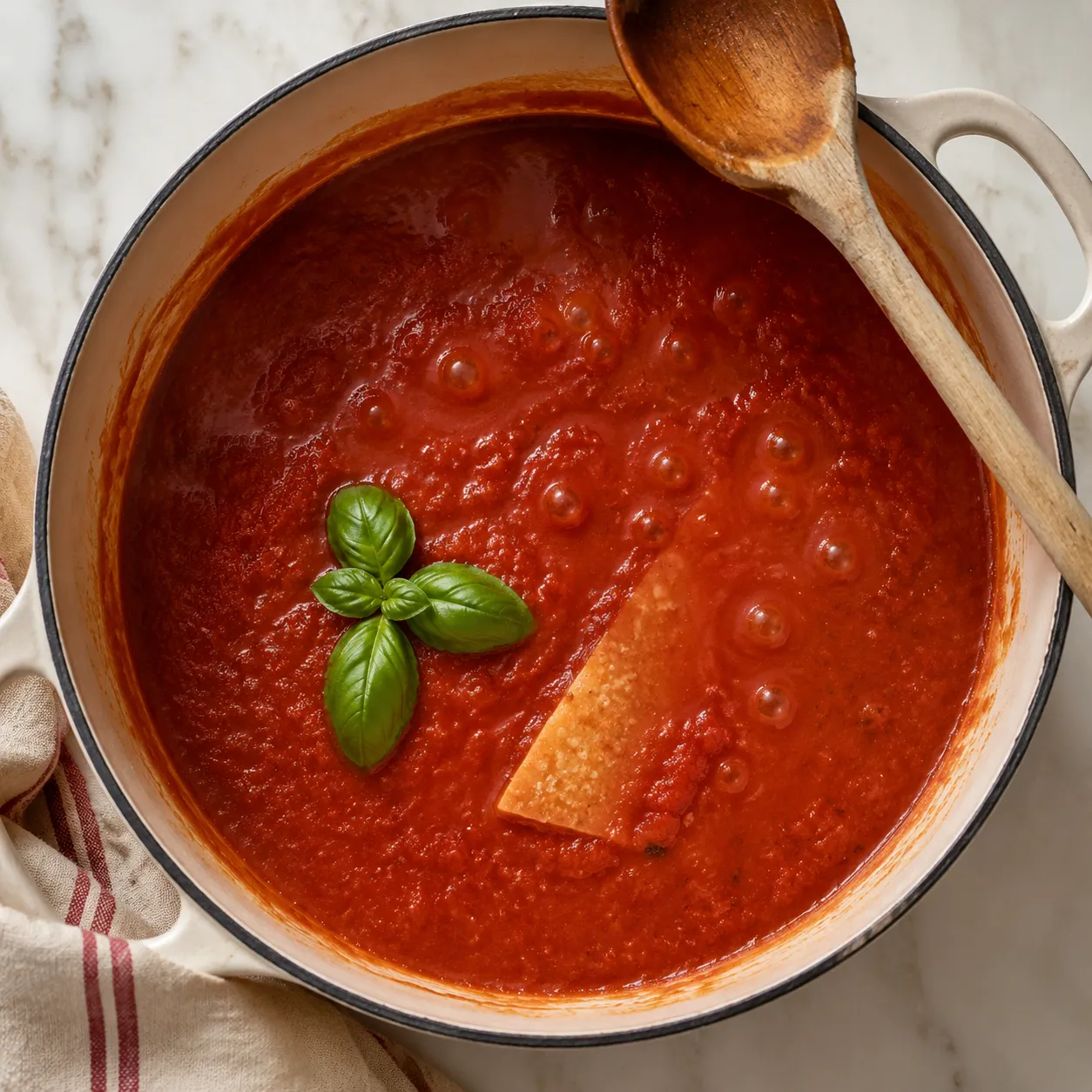
Now you simmer. Low heat, lid cracked, 30 to 40 minutes. This is where the alchemy happens — water evaporates, flavors marry, and the sauce transforms from thin and watery into thick and glossy. Stir occasionally, taste once or twice for salt, and resist the urge to crank the heat. A hard boil will scorch the bottom of the pot and dull the bright tomato flavor you worked so hard to build.
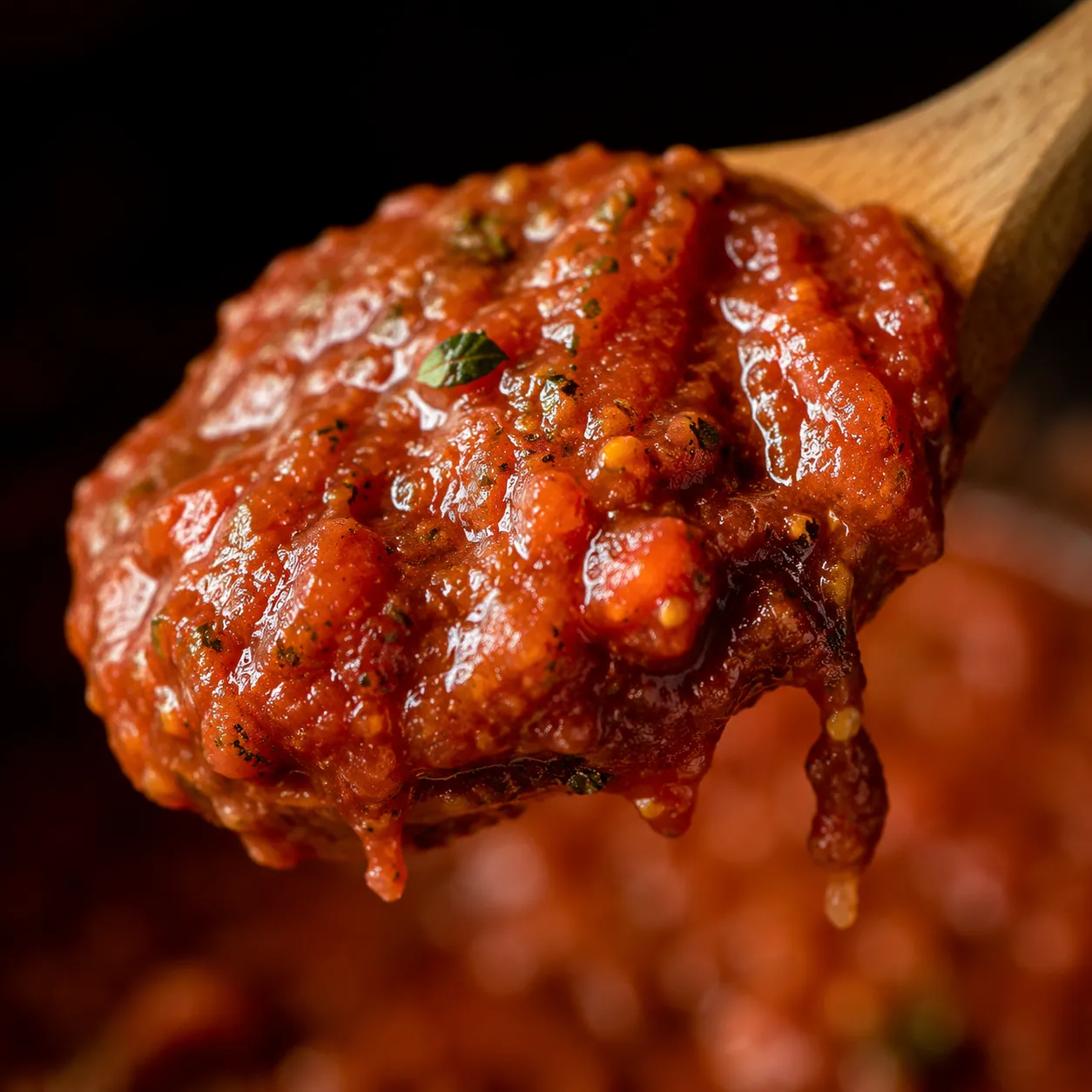
The finishing move is what pushes this homemade spaghetti sauce from good to great. Off the heat, stir in cold butter and a generous handful of torn fresh basil. The butter emulsifies into the sauce, smoothing every edge, while the basil perfumes everything with that unmistakable summery note. Taste one last time, adjust salt, and you're done.
A Parmesan rind dropped into the pot during the simmer is the single biggest upgrade I can recommend. As it warms in the bubbling sauce, it releases salty, nutty depth — think of it as a cheat code for that long-cooked, Sunday-gravy taste in a fraction of the time. Save your rinds in a freezer bag whenever you finish a wedge, and you'll always have one ready to go.
If your tomatoes taste sharp, don't reach for sugar first. Try a knob of butter, a splash of cream, or a few extra minutes of simmer time. If after all that it's still too bright, a quarter teaspoon of sugar will round it out without making the sauce taste sweet. About texture: I leave mine slightly chunky because I love the bite of soft tomato pieces, but if you prefer a smooth sauce — especially for a kids' meal or a layered baked ziti recipe — pass it through a food mill or pulse it briefly with an immersion blender.
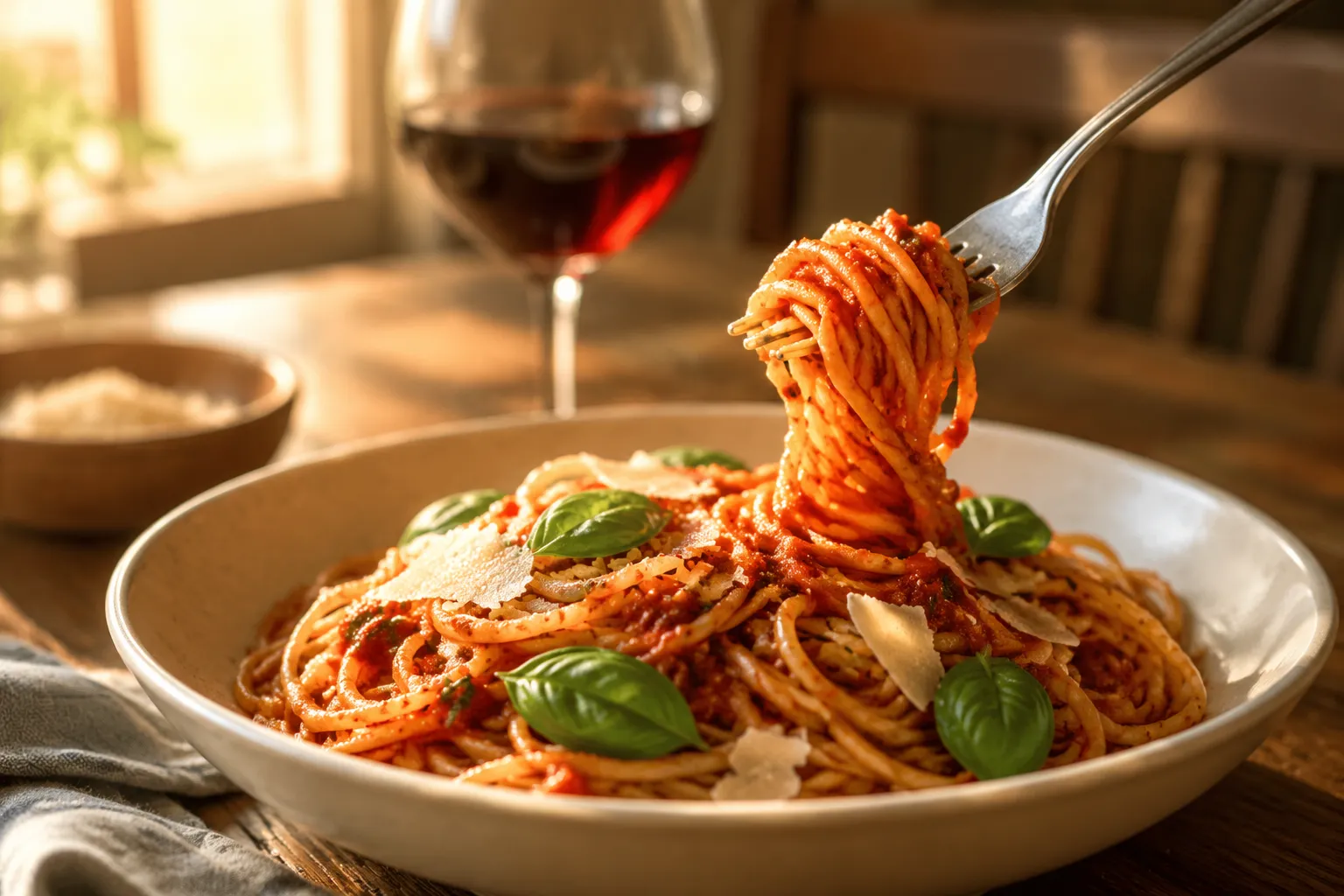
Spaghetti is the obvious match, but this sauce clings beautifully to anything with grooves and twists — rigatoni, casarecce, bucatini, paccheri. If you're feeling ambitious, a batch of homemade pasta dough rolled into wide pappardelle is a special-occasion pairing that's hard to beat. On a weeknight, dried bronze-cut pasta does the job perfectly. Always finish your pasta in the sauce with a splash of starchy cooking water — that's how restaurant kitchens get that glossy, clingy coating you can never quite replicate at home.
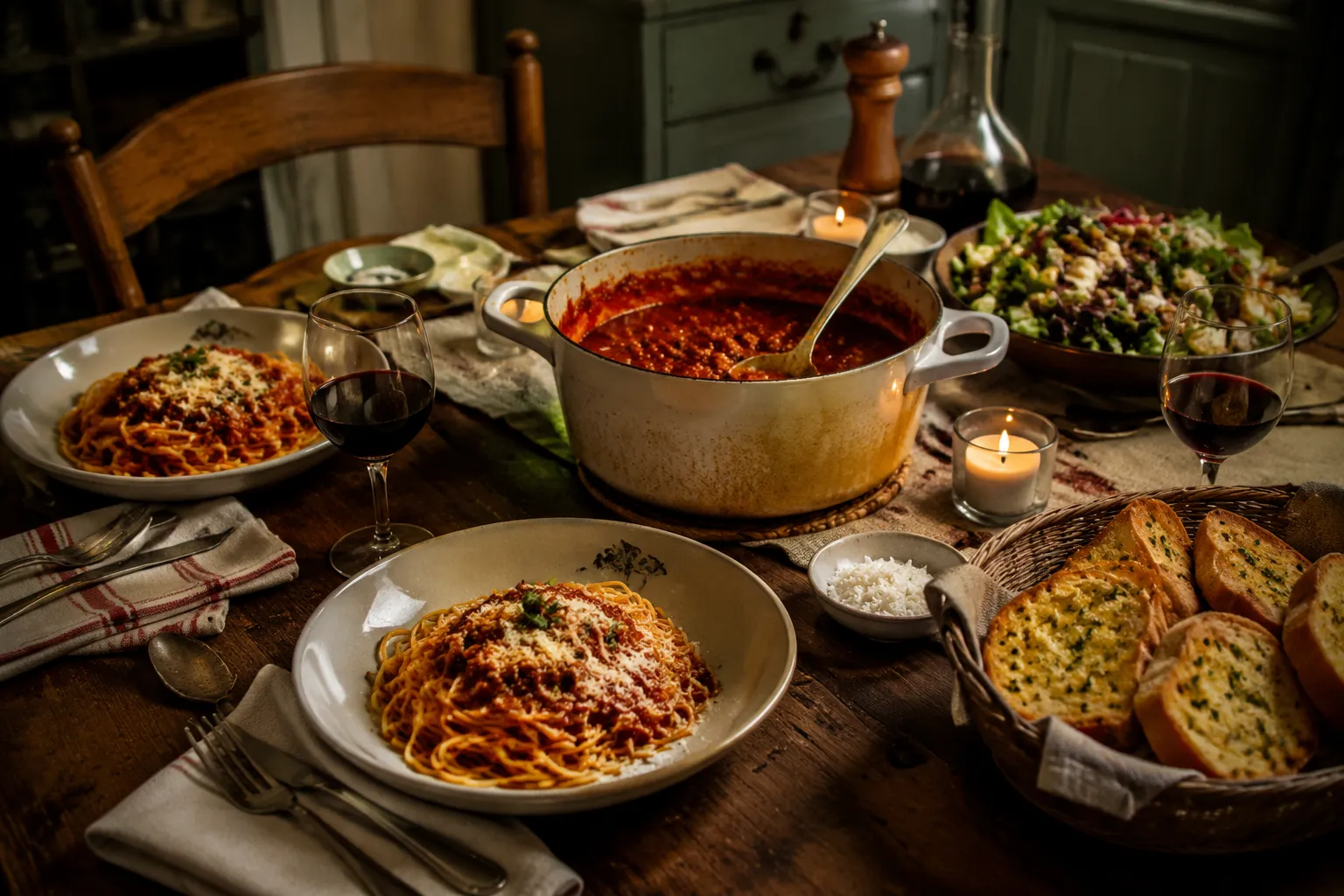
For the table, you want something to mop up every last drop. A crusty garlic bread recipe is mandatory in my house, ideally one with plenty of butter and a shower of parsley. Round out the plate with a sharp arugula salad dressed with lemon and shaved Parmesan, or a simple Caesar. And if you've got family-sized appetites, this sauce is the launching pad for tender Italian meatballs simmered right in the pot, layered into a baked ziti recipe for a make-ahead Sunday dinner, or built into a slow cooker bolognese with browned beef and pork the next day.
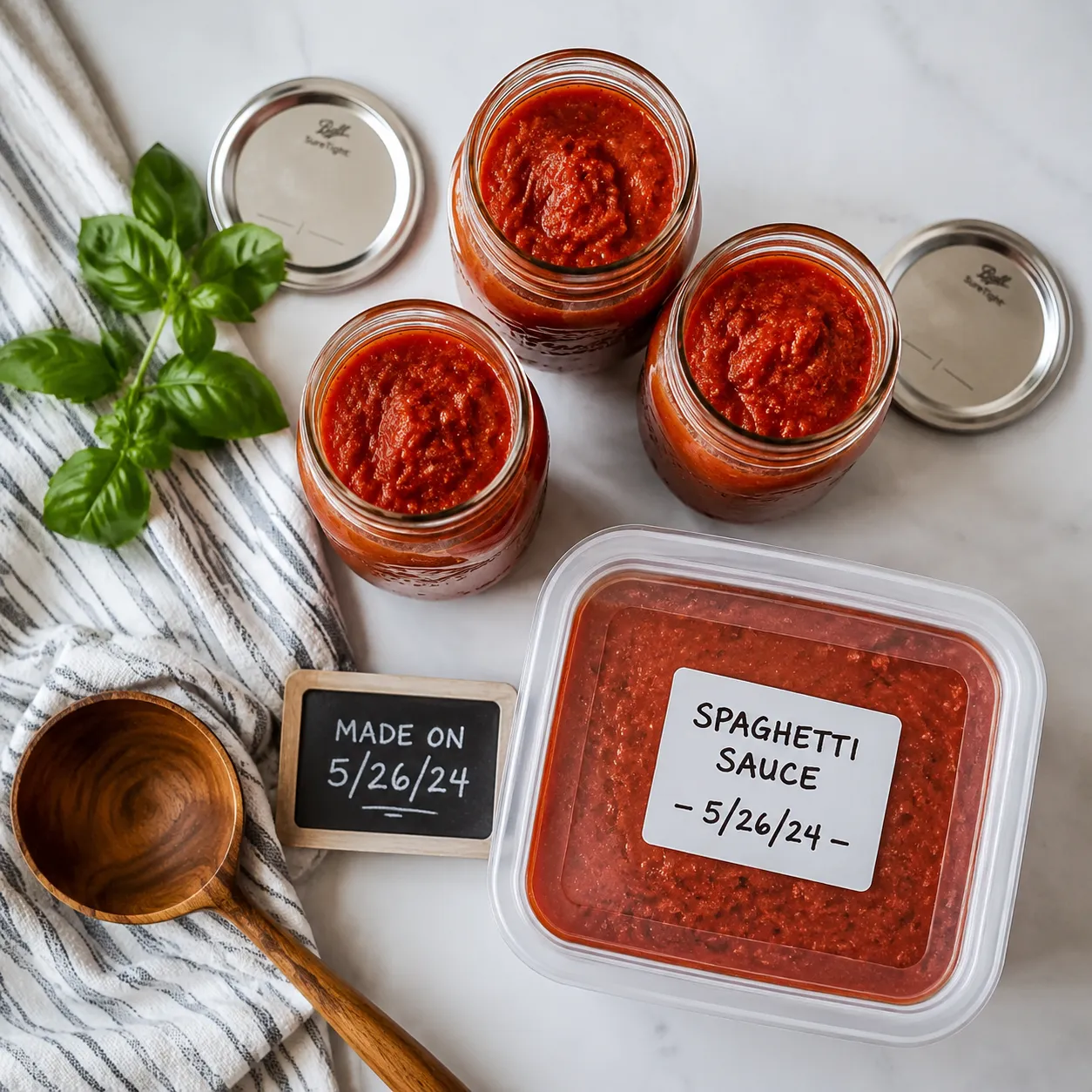
This is one of those recipes that genuinely tastes better the next day, which makes it tailor-made for meal prep. I'll often double the batch on a Sunday, eat one portion that night, and tuck the rest away for quick weeknight dinners. The flavors deepen and round out as the sauce rests, and reheated sauce poured over fresh pasta feels almost more complete than the first night. Detailed storage timelines, freezing tips, and reheating advice are in the storage section below — the short version is that this homemade spaghetti sauce keeps wonderfully and freezes like a dream.
Once you have the base method down, this sauce becomes a launchpad for half a dozen weeknight dinners. Swap the herbs, add protein, or stir in cream — the bones of the recipe support all of it.
Cool the sauce completely before storing — pouring hot sauce into a sealed container traps steam and shortens its fridge life. Transfer to airtight glass jars or food storage containers and refrigerate for up to 5 days. The flavor actually improves on day two as everything melds together, so don't be shy about making it ahead.
For longer storage, freeze in single- or double-meal portions for up to 3 months. I love using flat freezer-safe zip-top bags laid horizontally on a sheet pan — once frozen solid, they stack neatly and thaw quickly. To reheat, warm gently in a saucepan over medium-low heat with a splash of water or pasta cooking liquid to loosen the texture. Avoid the microwave on high power, which can break the emulsion and make the sauce look greasy. A few minutes of gentle stovetop reheating brings it right back to its just-made glossy state.