Creamy Vodka Sauce Recipe (Restaurant-Style in 30 Min)
Ingredients
Scale
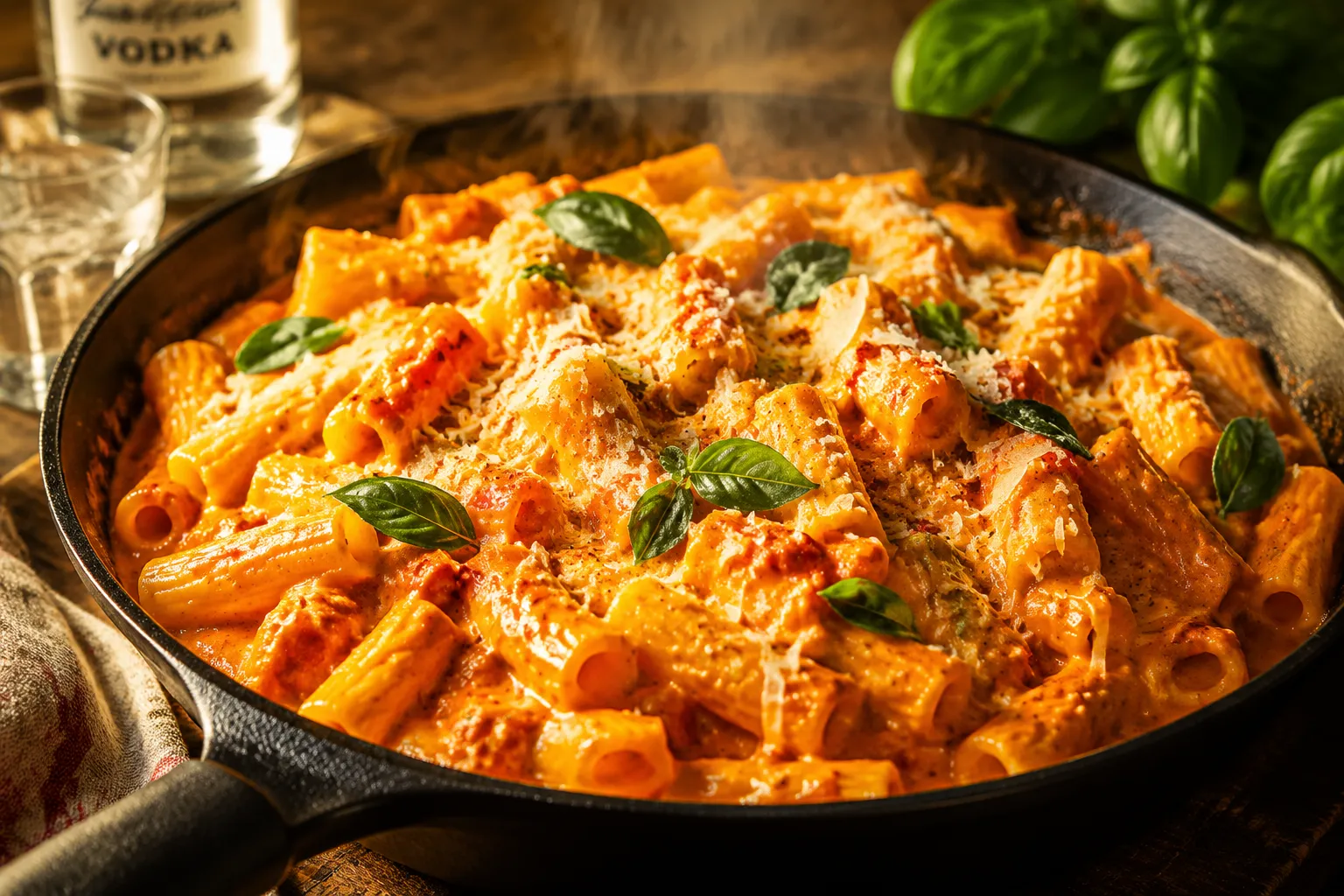
A silky, restaurant-style vodka sauce with the perfect balance of sweet tomato, sharp vodka, and rich cream — ready in 30 minutes from one pan.
There's a reason vodka sauce shows up on every Italian-American restaurant menu from Brooklyn to Bakersfield — that glossy coral color, the way it clings to every ridge of rigatoni, the lift of something sharp behind all that cream. It's the sauce people come back for, even when they swore they'd order something different this time. The very best part? You can make a version at home in about 30 minutes that genuinely rivals what you'd get at a white-tablecloth red-sauce joint.
This is the recipe I make when I want pasta to feel like an event without actually planning one. We start with a base of bloomed tomato paste, add a generous splash of vodka to brighten everything, then finish with heavy cream, cold butter, and a snowstorm of Parmesan cheese. The whole thing happens in one skillet, mostly hands-off, and the result is a silky pink sauce with serious depth.
What separates a restaurant-quality version from the watery, broken pink stuff you've probably had before is technique — not fancy ingredients. We'll get into the why behind every step (blooming the paste, fully cooking off the alcohol, finishing with cold butter for shine) so you can nail it on the first try.
Vodka sauce — sometimes called salsa alla vodka or simply "pink sauce" — is a creamy tomato sauce built on the unlikely-sounding combination of crushed tomatoes, heavy cream, and a generous shot of vodka. The vodka isn't there to get anyone tipsy (it cooks off entirely). It's there to coax flavor compounds out of the tomatoes that water and oil alone can't reach, and to add a faint peppery sharpness that keeps the cream from feeling heavy or one-note.
The origin story is famously fuzzy. Most food historians trace the dish to Italian-American kitchens in the 1970s and '80s, where it became a fixture at red-sauce restaurants thanks to its glossy color and richer-than-marinara appeal. A handful of Italian chefs claim earlier versions across the Atlantic, but the gloss-and-cream style we know today is undeniably American comfort food.
How does it stack up against its cousins? Compared with a classic homemade marinara sauce, vodka sauce trades brightness for richness — it's softer on the palate and clings to pasta differently. Compared with a basic rosa or pink sauce (which is just marinara plus cream), the vodka is the difference-maker: a little heat, a little edge, and a noticeably more complex finish. It's the upgrade you didn't know basic pink sauce was missing.
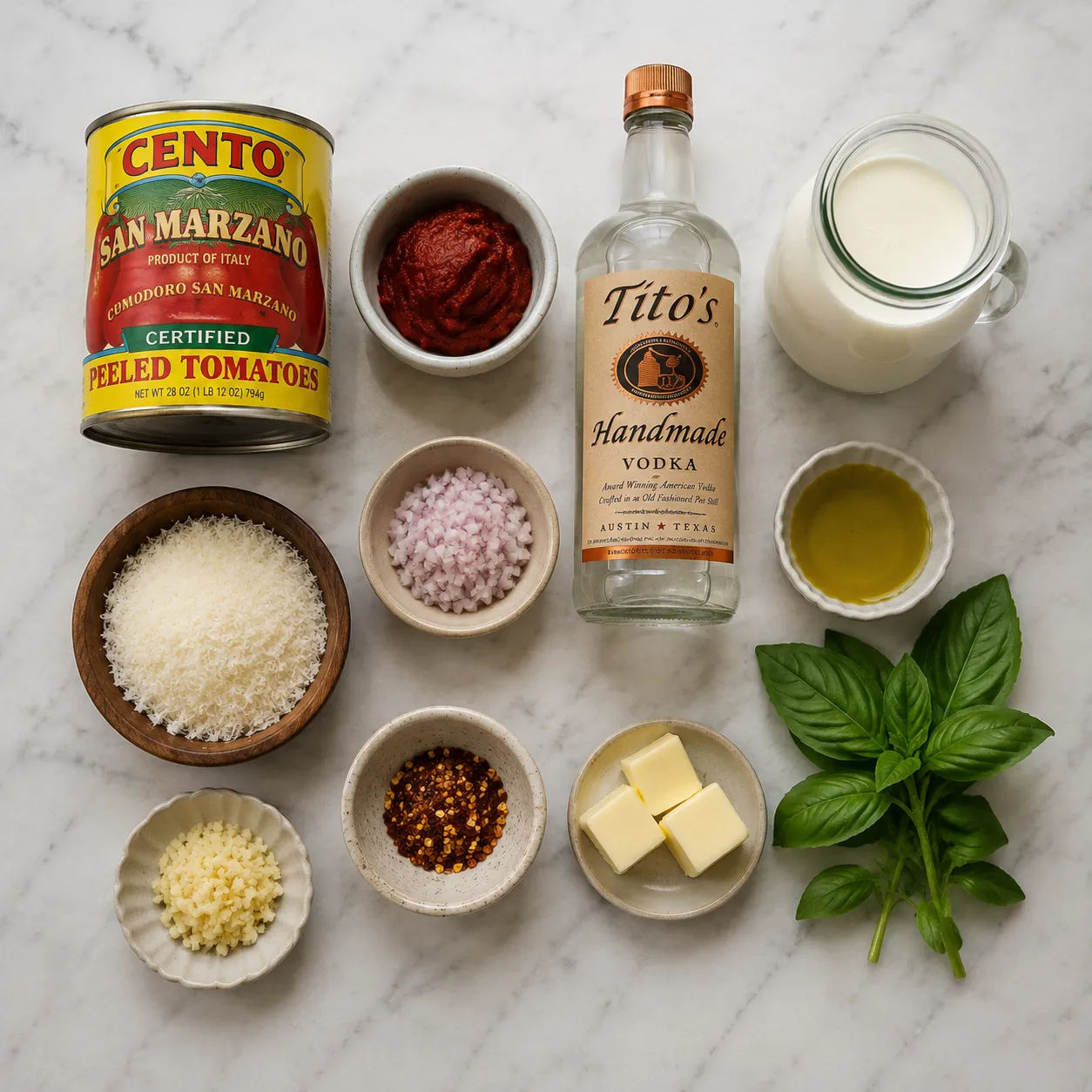
You don't need a specialty grocery run for this one — most of it is probably already in your pantry. Here's what each ingredient actually contributes, so you can make smart swaps if needed.
The tomato base. I use a 28-ounce can of crushed San Marzano tomatoes plus three tablespoons of tomato paste. The paste is non-negotiable: blooming it in olive oil at the start is what gives the sauce that deep brick-red base note and concentrated sweetness. Crushed tomatoes add the body, but a good Italian passata (smooth strained tomatoes) works beautifully too if you prefer an even silkier texture.
The vodka. Any neutral, decent-quality vodka works — Tito's, Smirnoff, Absolut. Don't waste your nice bottle on a sauce that's going to simmer for ten minutes. You'll use about a third of a cup, which sounds like a lot until you remember it's flavoring four full servings.
Heavy cream, Parmesan cheese, and butter. This is the trinity that takes a creamy tomato sauce from rustic to restaurant. Heavy cream (36% milkfat) is essential — anything lighter risks breaking when it meets the acidic tomato. Freshly grated Parmesan cheese (please, not the green-can stuff) melts smoothly into the sauce instead of clumping. A final pat of cold unsalted butter, swirled in at the end, gives that high-gloss sheen you see in restaurant kitchens.
The aromatics. A finely minced shallot, four cloves of garlic, a generous pinch of red pepper flakes, and torn fresh basil at the end. Some recipes call for pancetta or guanciale at the start — feel free to add a few ounces if you want a smokier, meatier version with extra savory depth.
The full quantities and timings are in the recipe card below, but here's the technique walk-through with the why for each step. This is the section that turns "fine pink pasta" into the kind of bowl you actually want to photograph.
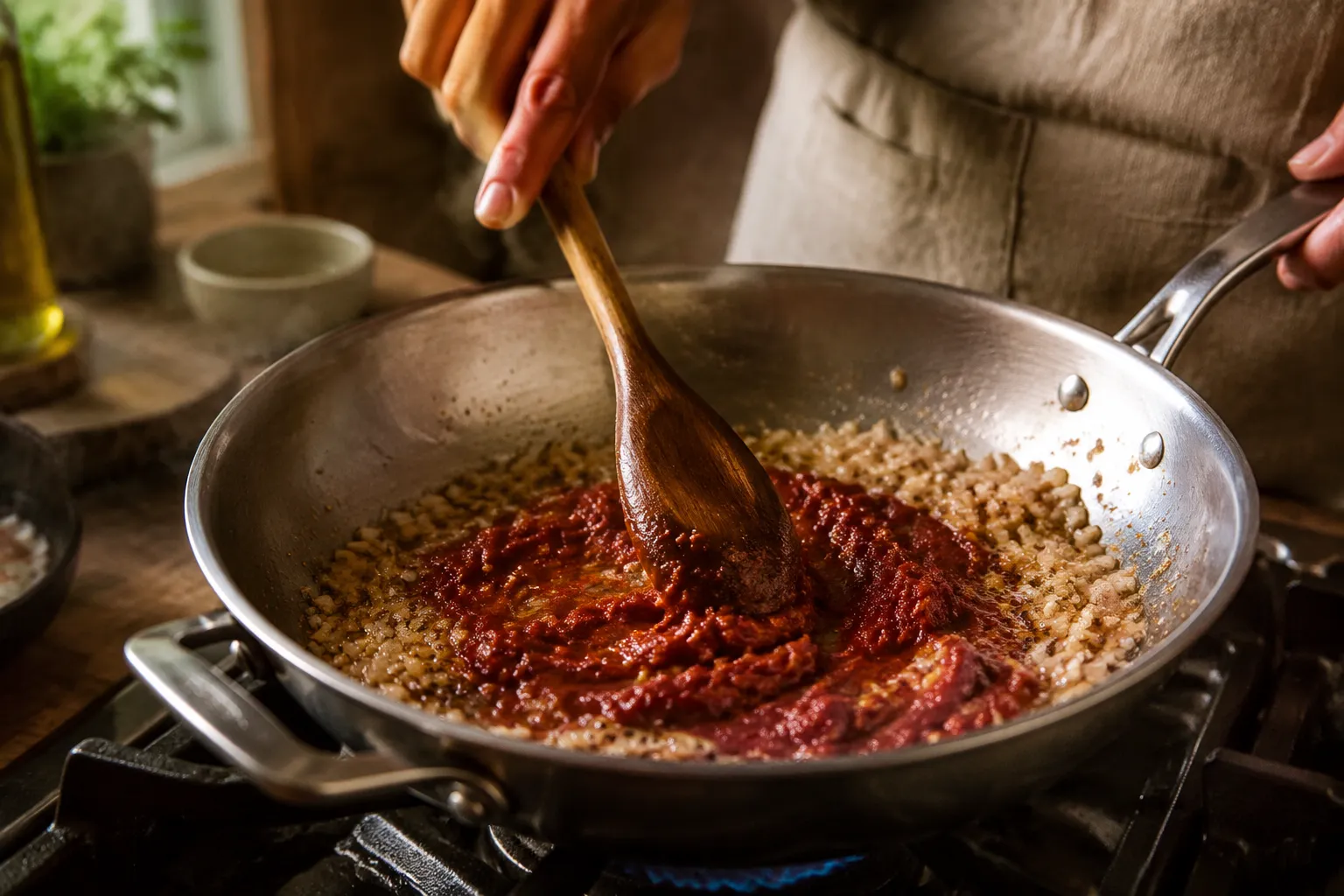
1. Sauté your aromatics, then bloom the paste. Start with olive oil over medium heat, add the minced shallot and a pinch of salt, and cook until soft and translucent — about three minutes. Add garlic and red pepper flakes, stir for thirty seconds until fragrant, then add the tomato paste. This is the most important move in the whole recipe: cook the paste in the oil for two to three full minutes, stirring constantly, until it darkens from bright red to deep brick. You're caramelizing the natural sugars and driving off that tinny canned-paste flavor. Skip this step and your finished sauce will taste flat.
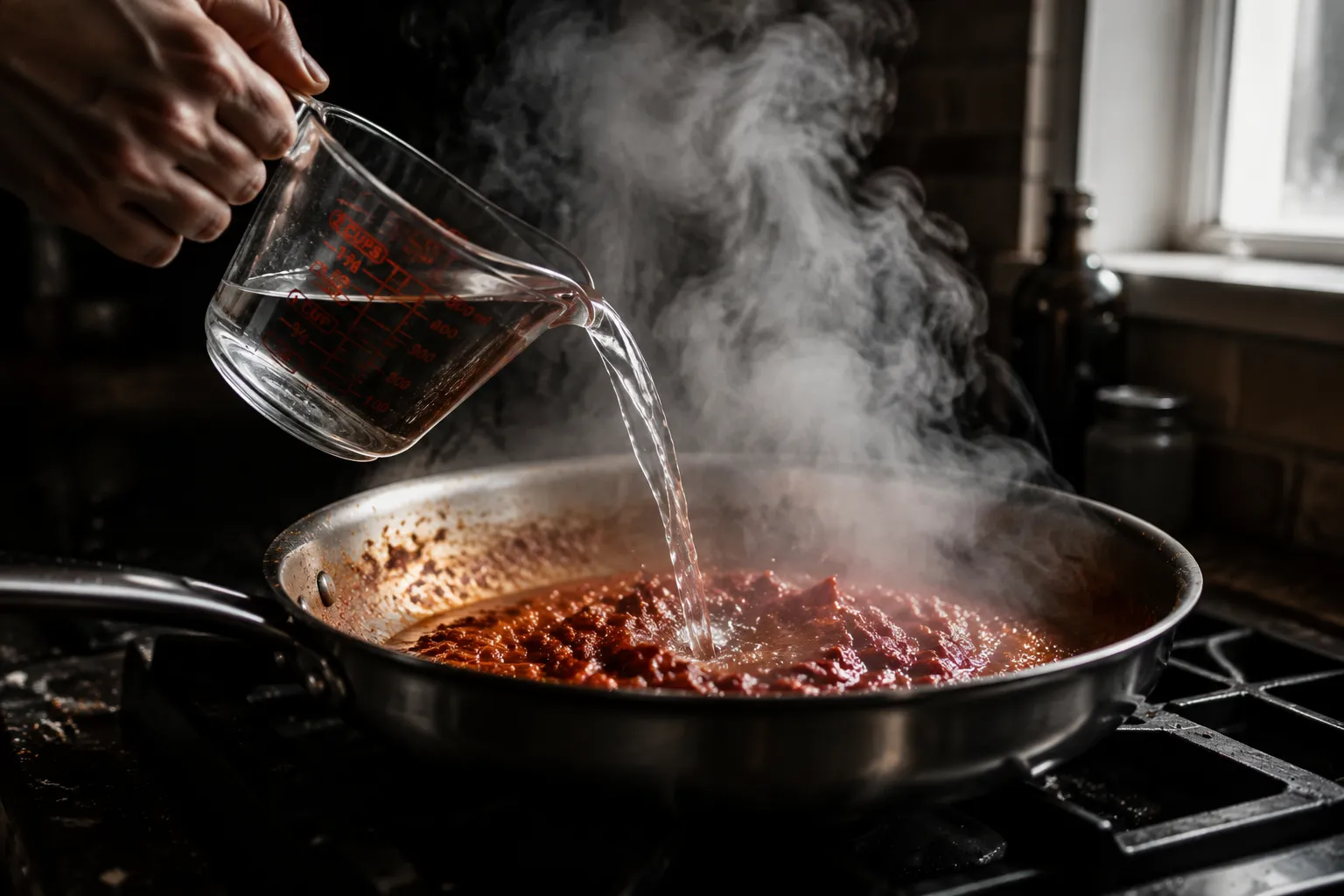
2. Deglaze with the vodka. Pull the skillet off the heat for a second (vodka is flammable, and you don't need an open flame near a hot pan), pour in the vodka, then return it to the burner. Let it bubble vigorously for two to three minutes. You want to actually see the liquid reduce by half — that's how you know the alcohol has cooked off and what's left is just the flavor compounds the vodka pulled from the tomato. Cut this step short and you'll get that harsh, boozy edge that ruins so many home versions.
3. Add the tomatoes and simmer. Pour in the crushed tomatoes, season generously with kosher salt and black pepper, and let everything bubble away for about ten minutes on medium-low. The sauce should darken slightly and you'll see oil separate at the edges — that's a sign your base is concentrated and ready for the cream.
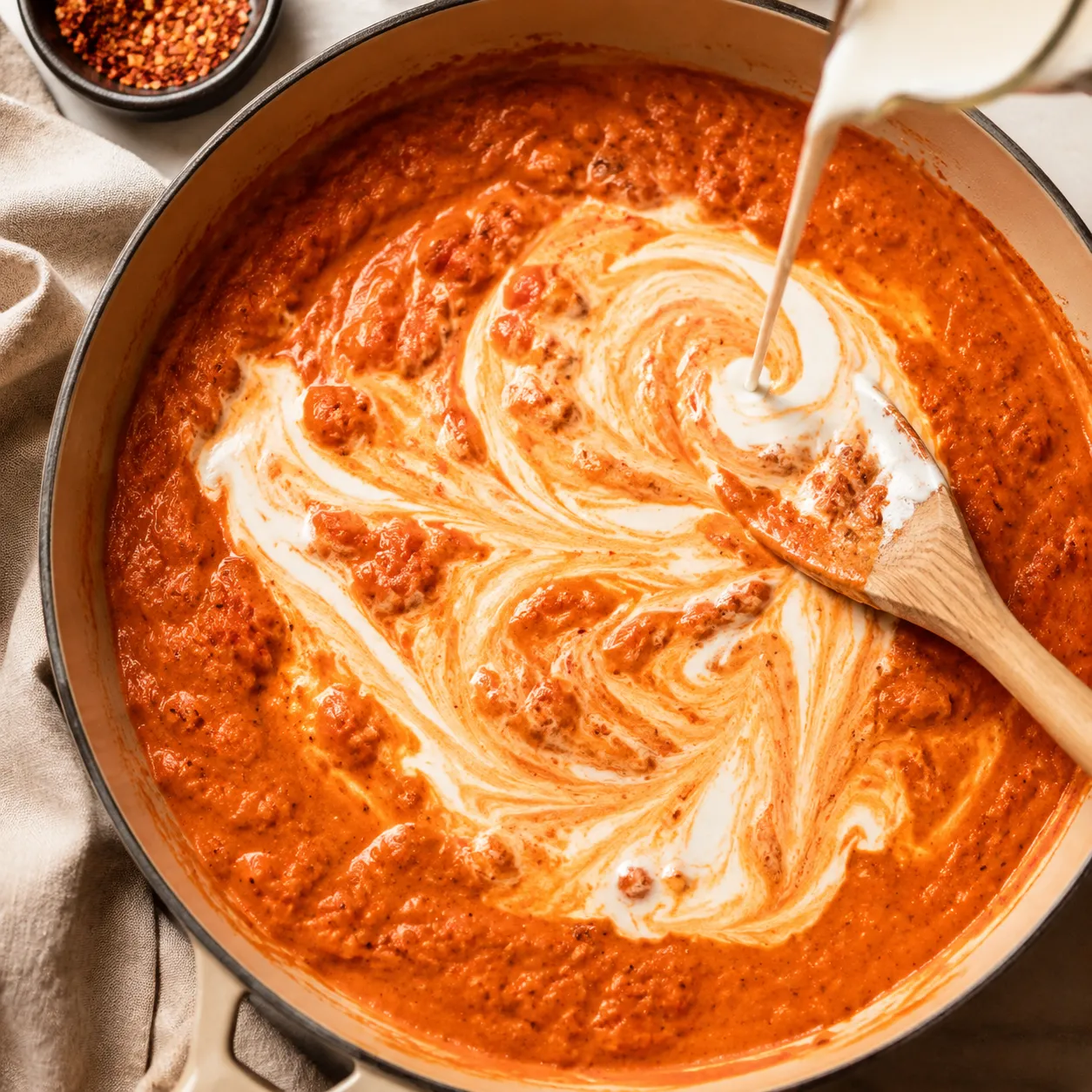
4. Stir in the cream and Parmesan. Lower the heat (this is critical — high heat will break the cream) and pour the heavy cream in a slow stream, stirring constantly until the sauce turns that signature peachy-coral color. Add the Parmesan a handful at a time, stirring between additions so it melts smoothly instead of clumping. Taste, adjust the salt, and pull off the heat.
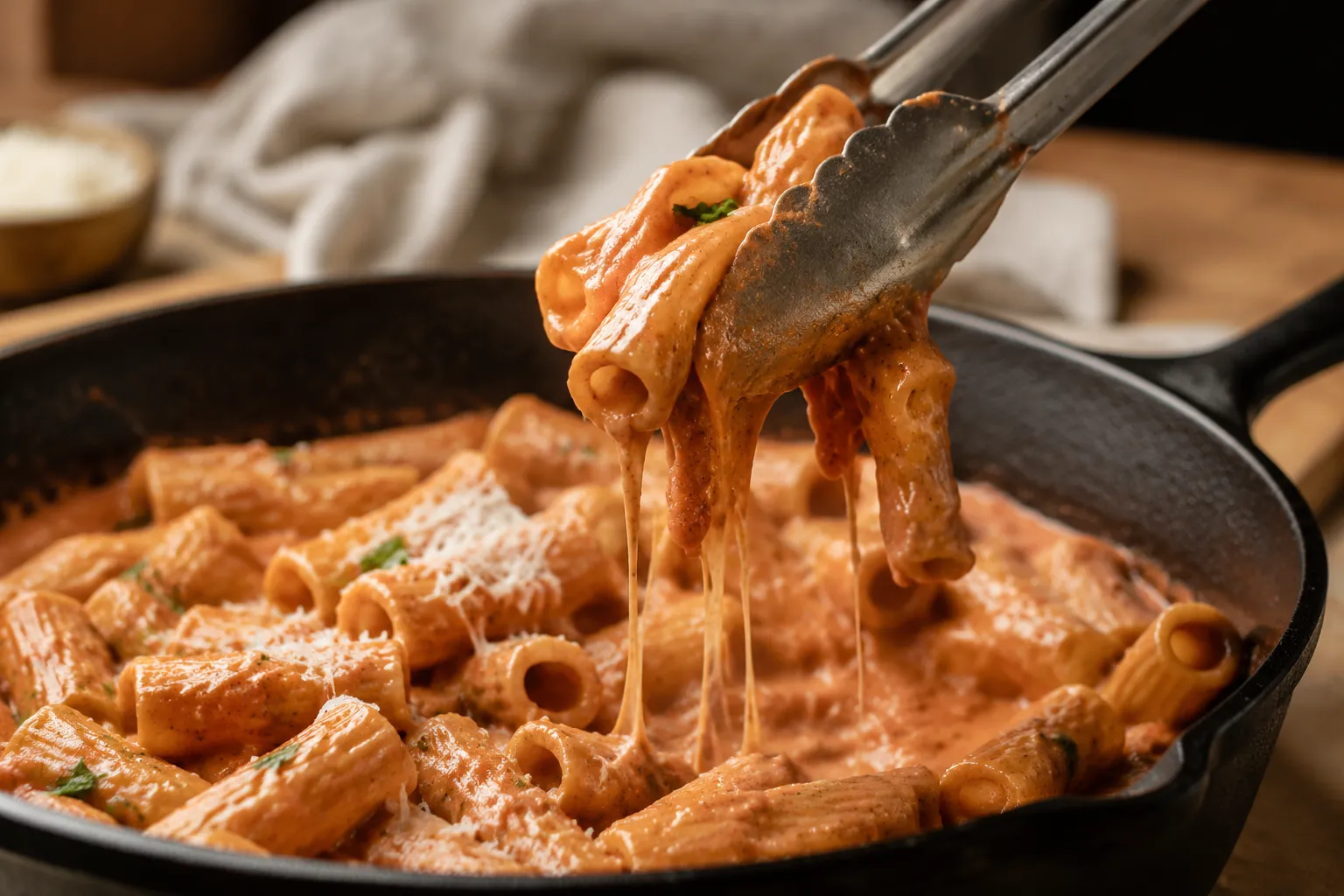
5. Toss with hot pasta and starchy water. While the sauce was simmering, you should have boiled a pound of penne or rigatoni in heavily salted water. Reserve a full cup of pasta water before draining — you'll use a half cup or more to loosen the sauce and help it cling. Add the cooked pasta directly to the skillet with a splash of starchy water, swirl in the cold butter, and toss for thirty seconds until every tube is glossy and coated. Top with torn basil and a final shower of Parmesan.
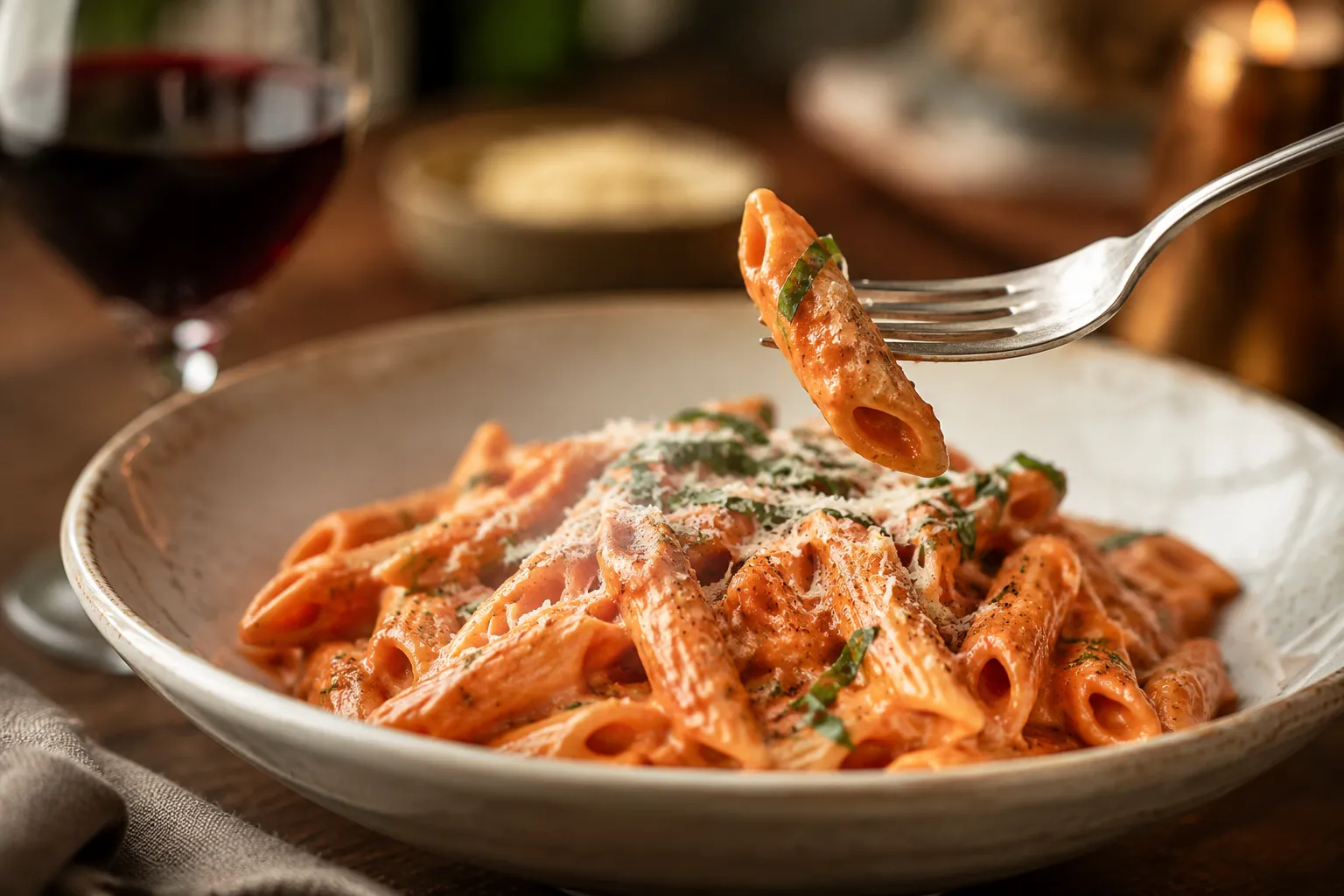
Tube shapes are the gold standard for this sauce — penne, rigatoni, ziti, paccheri. The hollow centers and ridged exteriors trap pools of creamy sauce in every bite, which is exactly why penne alla vodka became the iconic pairing. If you're feeling ambitious, fresh pasta dough cut into wide pappardelle is gorgeous here too, though the sauce will coat differently. Long shapes like bucatini or spaghetti work in a pinch, just expect more sauce on the plate than on the strand.
For a heartier meal, this sauce plays beautifully with proteins. Pan-seared chicken cutlets sliced over the top is classic Italian-American restaurant fare. Italian sausage browned at the start of the recipe (before the shallots) adds a savory backbone that turns the dish into a one-pan dinner. And if you want to go a little fancy, a few pieces of garlic butter shrimp finished in the sauce for the last two minutes of cooking is genuinely showstopping.
On the side: a simple arugula salad with lemon and shaved Parmesan to cut the richness, or warm crusty bread for sauce-mopping. For wine, a medium-bodied red like Chianti or Barbera matches the tomato acidity, while a chilled rosé or even a dry Lambrusco is a lighter, summery pairing. This one earns a spot on any short list of easy weeknight pasta winners and rounds out a rotation of go-to Italian dinner recipes you can pull off without a meal plan.
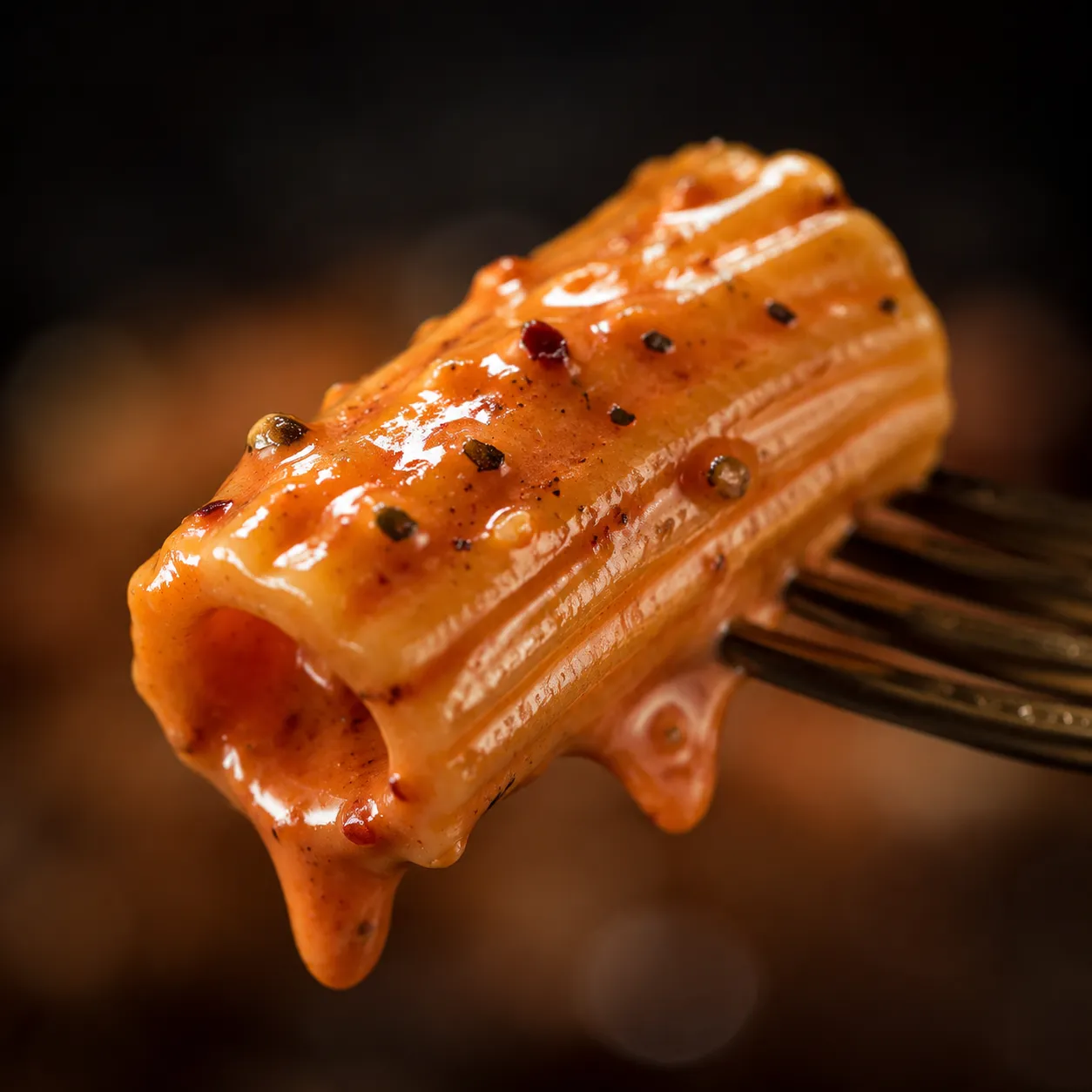
Look closely at restaurant pasta and you'll notice something: the sauce isn't pooled at the bottom of the bowl, it's clinging to every single piece. That's not magic, it's emulsion. The starchy pasta water you saved earlier is the binder that locks fat (cream, butter, oil) and water (tomato) together into one cohesive, glossy sauce. The cold pat of butter you stir in at the very end works the same way — it adds shine and structure to the finished pasta in a way warm, melted butter simply can't.
The other restaurant trick is finishing the pasta in the sauce, not on top of it. Boil your pasta one minute shy of al dente, then transfer it directly to the skillet with a splash of cooking water. The pasta finishes cooking inside the sauce, soaking up flavor and releasing more starch as it goes. It's the difference between sauce sitting on noodles and sauce becoming part of the noodles. Once you start cooking pasta this way, you won't go back.
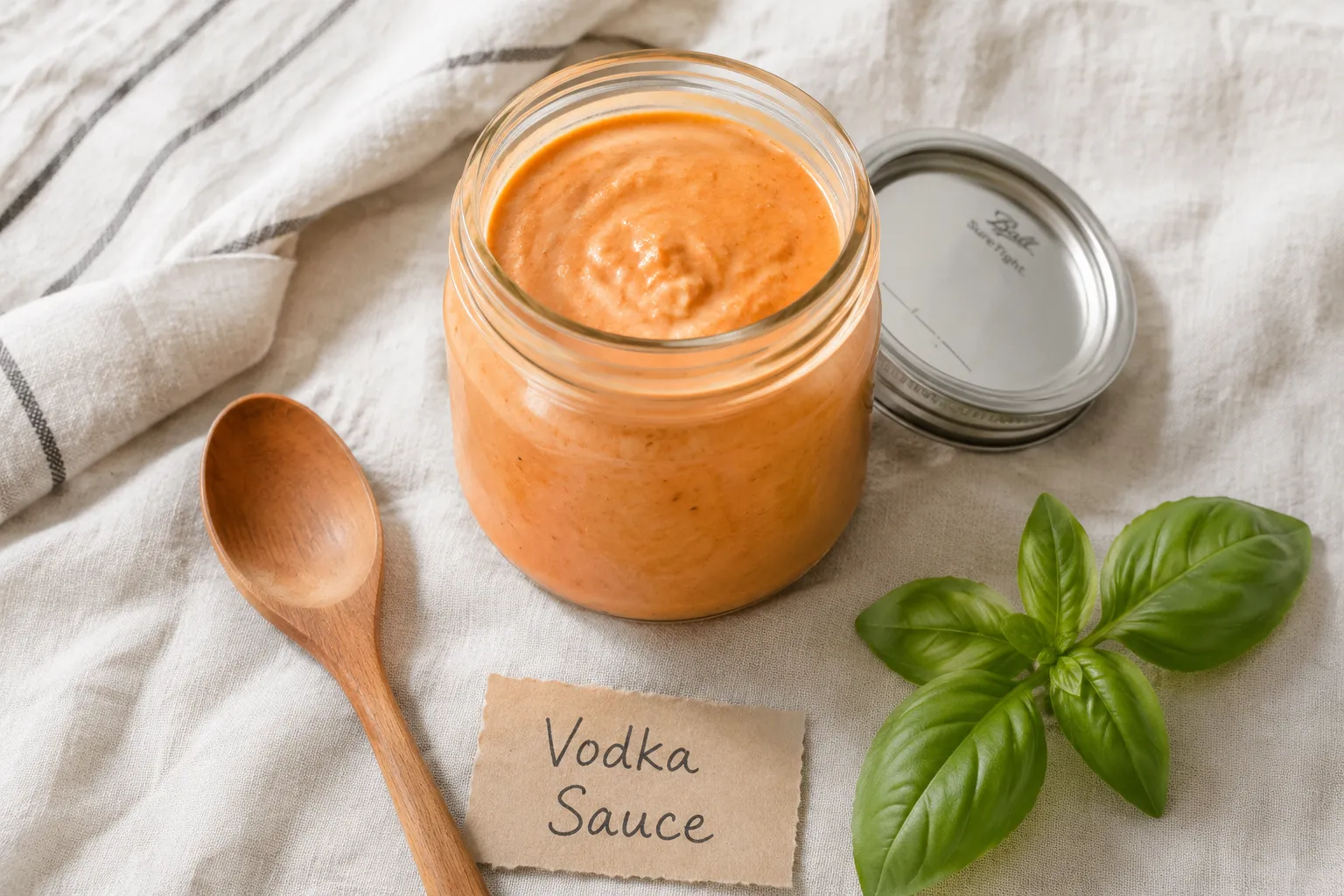
One of the things I love about this vodka sauce recipe is that it actually improves overnight. The flavors mellow, the tomato deepens, and the cream relaxes into something even silkier than it was the day you made it. Make a double batch on Sunday and you've got the bones of two weeknight dinners, a quick baked ziti, or a killer dipping sauce for chicken parm bites.
When making ahead, my one tip is to slightly under-reduce the sauce so it has somewhere to go when you reheat. Cook it just to coat-the-back-of-a-spoon consistency rather than fully thickened, then warm it gently on the stove with a splash of cream or pasta water to bring it right back to life. Always sauce your pasta to order — never store cooked pasta in the sauce, or both will turn gummy.
This sauce is a strong base recipe, which means it takes well to almost any direction you want to push it. Use the master technique and add or swap from there.
Stored in an airtight container, leftover vodka sauce keeps in the refrigerator for up to 4 days and honestly tastes better on day two as the flavors meld. Sauce stored separately from pasta will hold its texture beautifully; pasta tossed in sauce should be eaten within 2 days, since the noodles continue to soak up liquid and turn soft.
For longer storage, freeze the sauce alone (no pasta) in freezer-safe containers or zip-top bags for up to 2 months. Leave a little headspace since it expands as it freezes. Thaw overnight in the fridge before reheating. To reheat, warm the sauce gently in a saucepan over low heat with a splash of milk, cream, or pasta water to bring back its silky texture. Avoid microwaving on high power, which can cause the cream to separate. If the sauce ever does break on you, a quick blitz with an immersion blender almost always brings it back together.