Authentic Paella Recipe (Easy Spanish One-Pan Dinner)
Ingredients
Scale
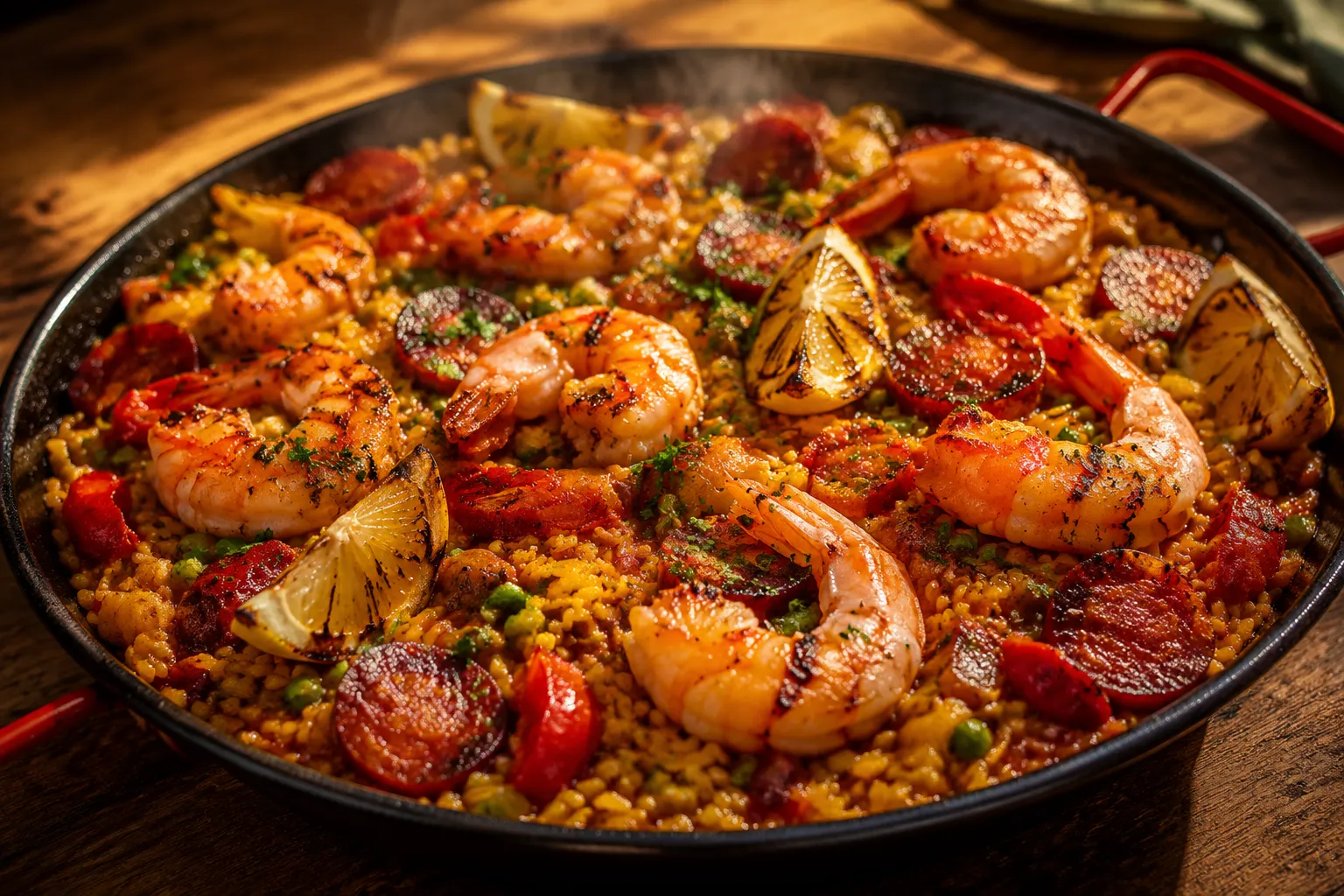
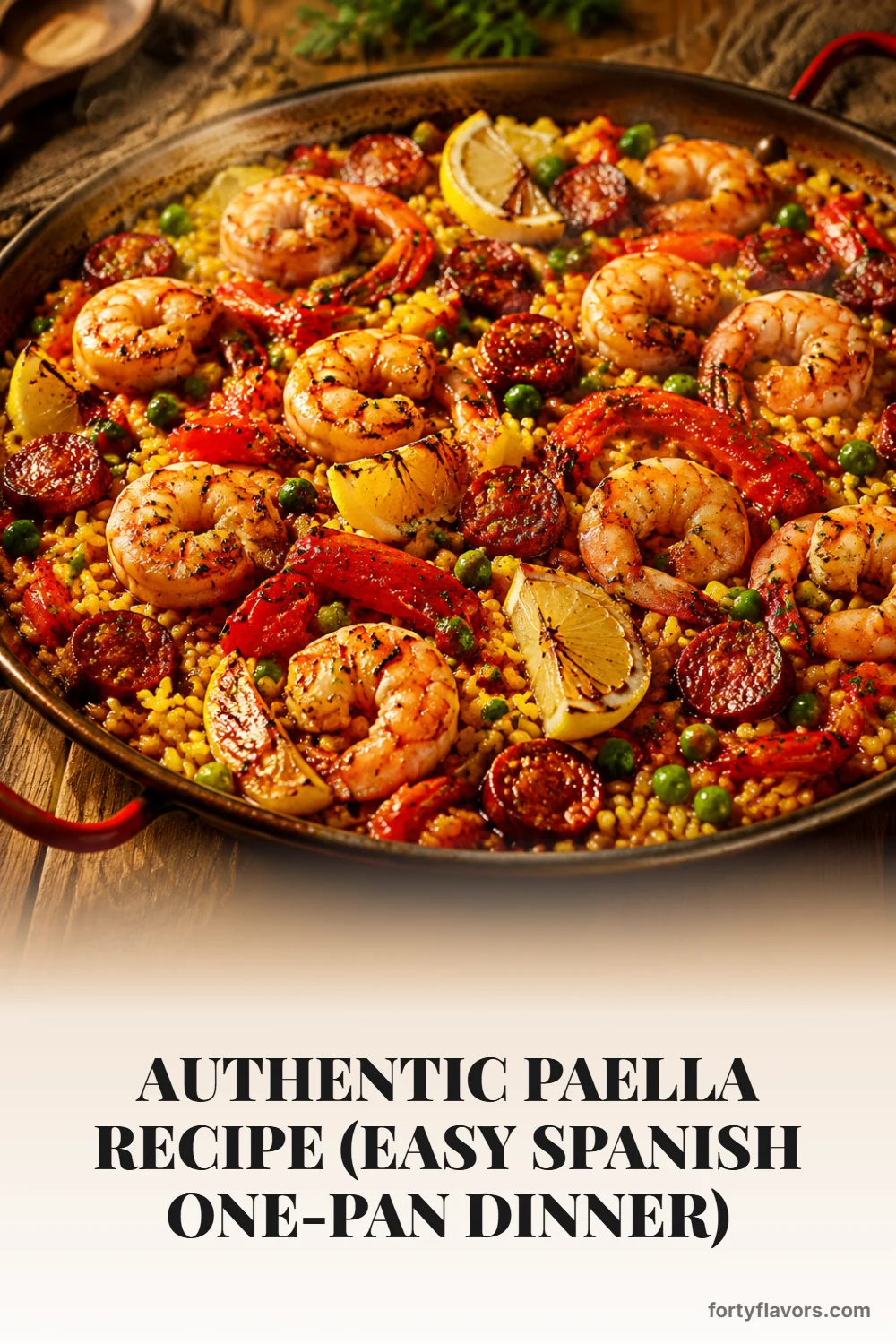
This paella recipe brings Spain to your kitchen with golden saffron rice, plump shrimp, smoky chorizo, and that craveable crispy socarrat bottom.
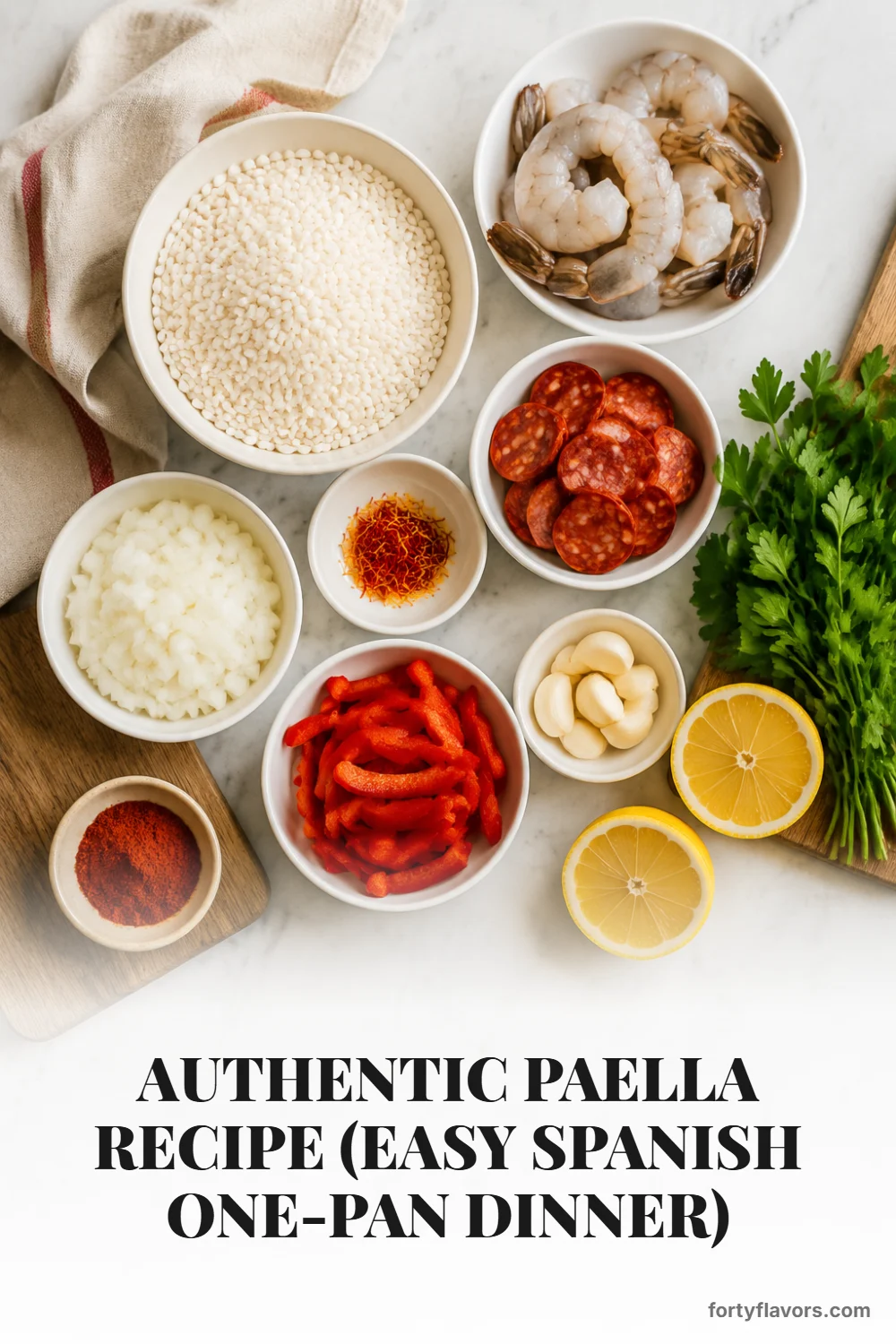
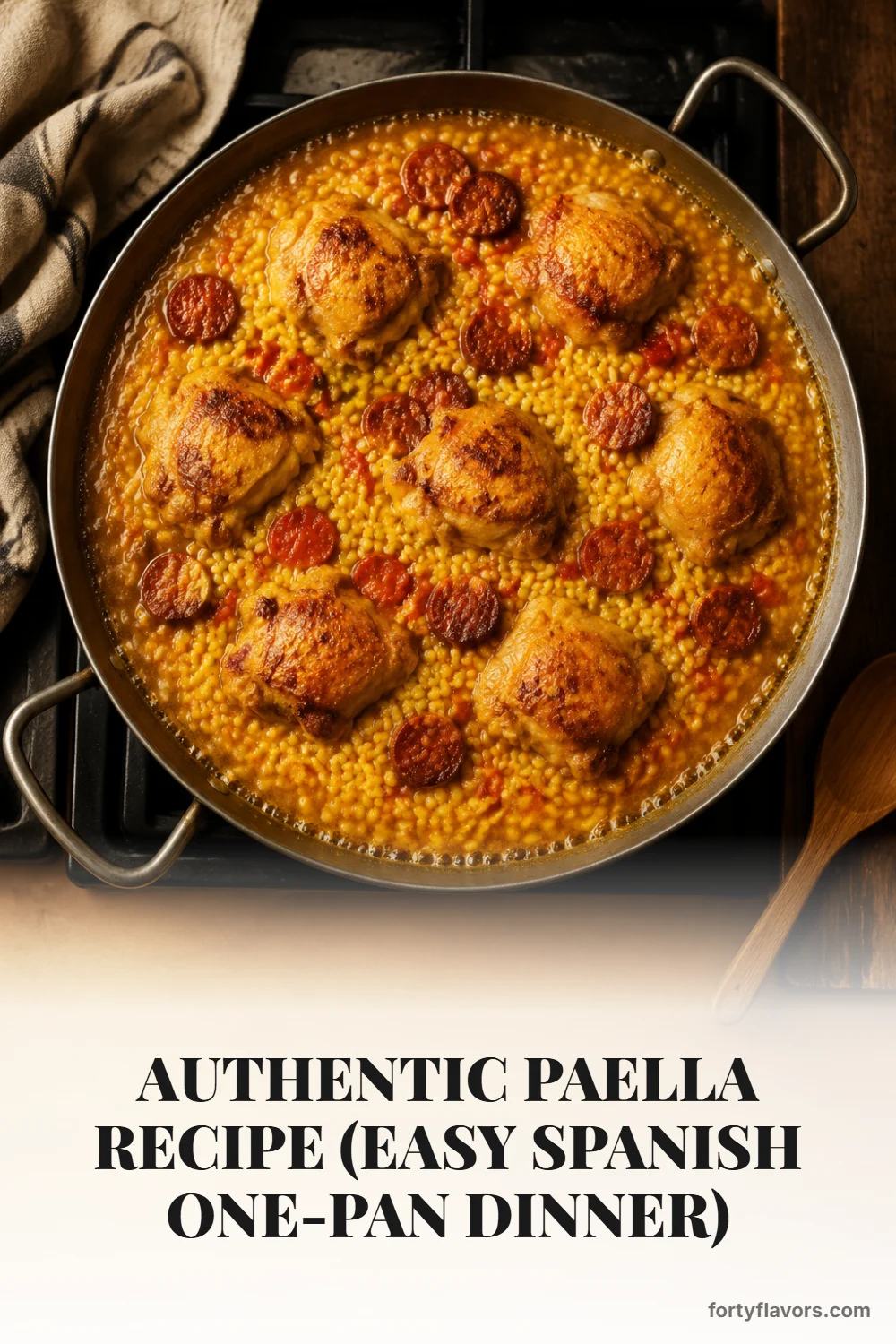
This paella recipe is the kind of sunny, celebratory one-pan dinner that makes your kitchen smell like garlic, saffron, smoky paprika, and sizzling rice. It is generous and colorful, with juicy chicken thighs, plump shrimp, rounds of chorizo, sweet peppers, peas, and lemon tucked into golden grains that cook right in the pan.
What I love most is that it feels restaurant-worthy without being fussy. You do not need a wood fire, a giant outdoor burner, or a suitcase full of specialty tools; you just need a wide pan, a little patience, and the confidence to leave the rice alone while it does its magic. The reward is that coveted crisp bottom layer, called socarrat, which is every bit as delicious as it sounds.
Paella is a Spanish rice dish that originated in Valencia, where it was traditionally cooked in a wide, shallow pan over an open flame. Classic Valencian versions often include rabbit, chicken, green beans, and sometimes snails, while coastal versions lean into shellfish and fish. What many American cooks recognize as Spanish paella is a mixed version, bringing together meat, seafood, vegetables, and deeply seasoned rice in one dramatic pan.
The heart of the dish is not just what goes on top; it is the rice and how it cooks. Short-grain Spanish varieties absorb broth beautifully while staying separate and tender, creating that signature texture that is neither creamy like risotto nor fluffy like pilaf. Saffron gives the rice its golden color and unmistakable floral depth, while smoked paprika adds warmth and a subtle campfire note. Together, those ingredients create the bold, layered flavor that makes Paella feel so special.
If you have made seafood paella before, this version will feel familiar but a little more flexible. The combination of chicken, shrimp, and sausage gives you a balanced pan with rich drippings, briny sweetness, and enough substance to feed a hungry table. Think of it as a practical home-kitchen bridge between tradition and weeknight possibility.
For the best texture, choose Bomba rice if you can find it. It is prized because it absorbs a remarkable amount of liquid without collapsing into mush, which is exactly what you want when the broth is carrying saffron, tomato, paprika, garlic, and meat juices. Calasparra rice is another excellent Spanish option, and in a pinch, a short-grain rice such as Arborio can work, though it will be a touch starchier and softer.
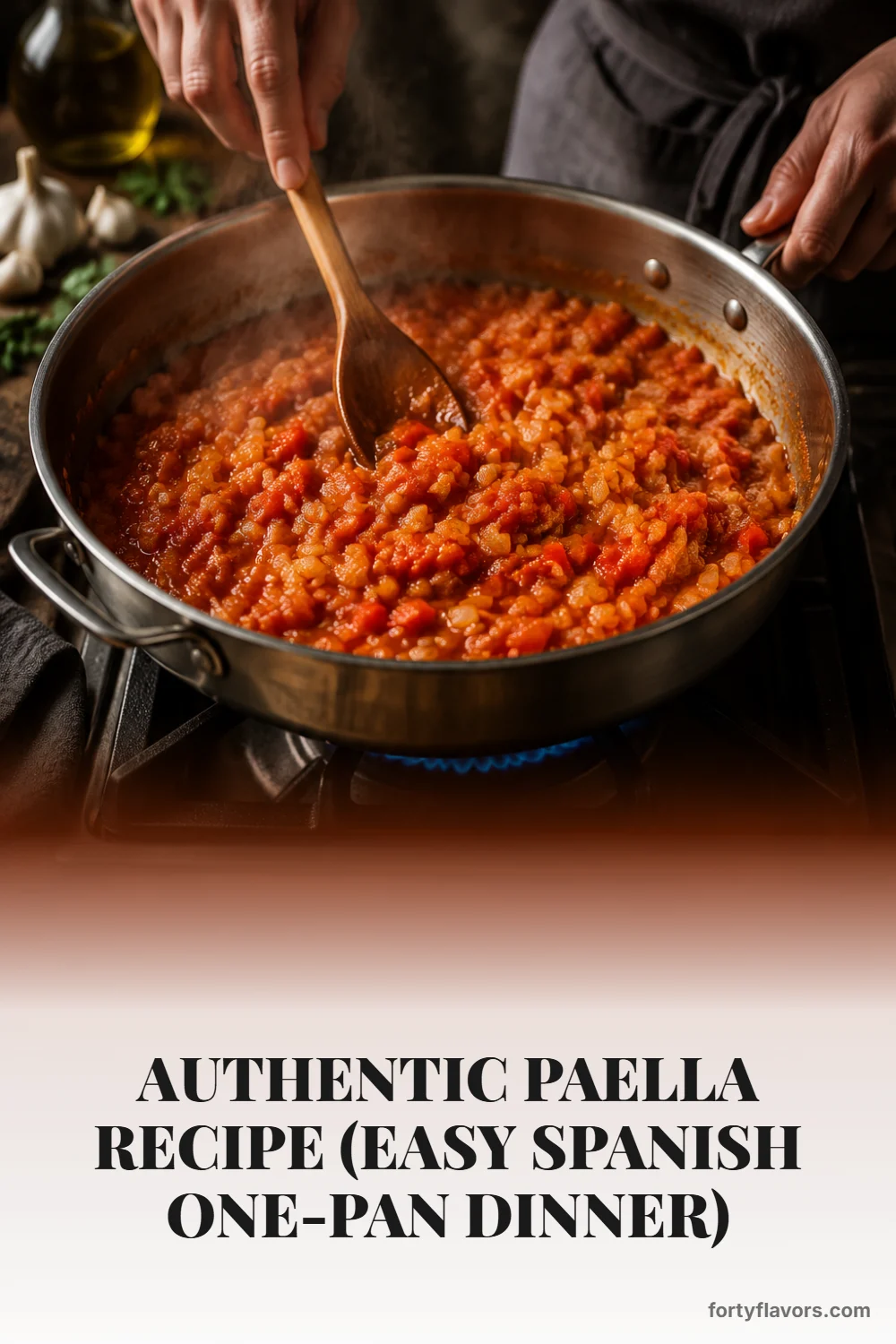
The base begins with sofrito, a slow-cooked mixture of onion, garlic, pepper, and tomato that melts into the oil and seasons the entire pan. This step is simple, but it is not throwaway; it creates the savory backbone that makes the rice taste full and rounded rather than flat. Let the tomato cook down until it looks glossy and concentrated, almost jammy, before adding the rice.
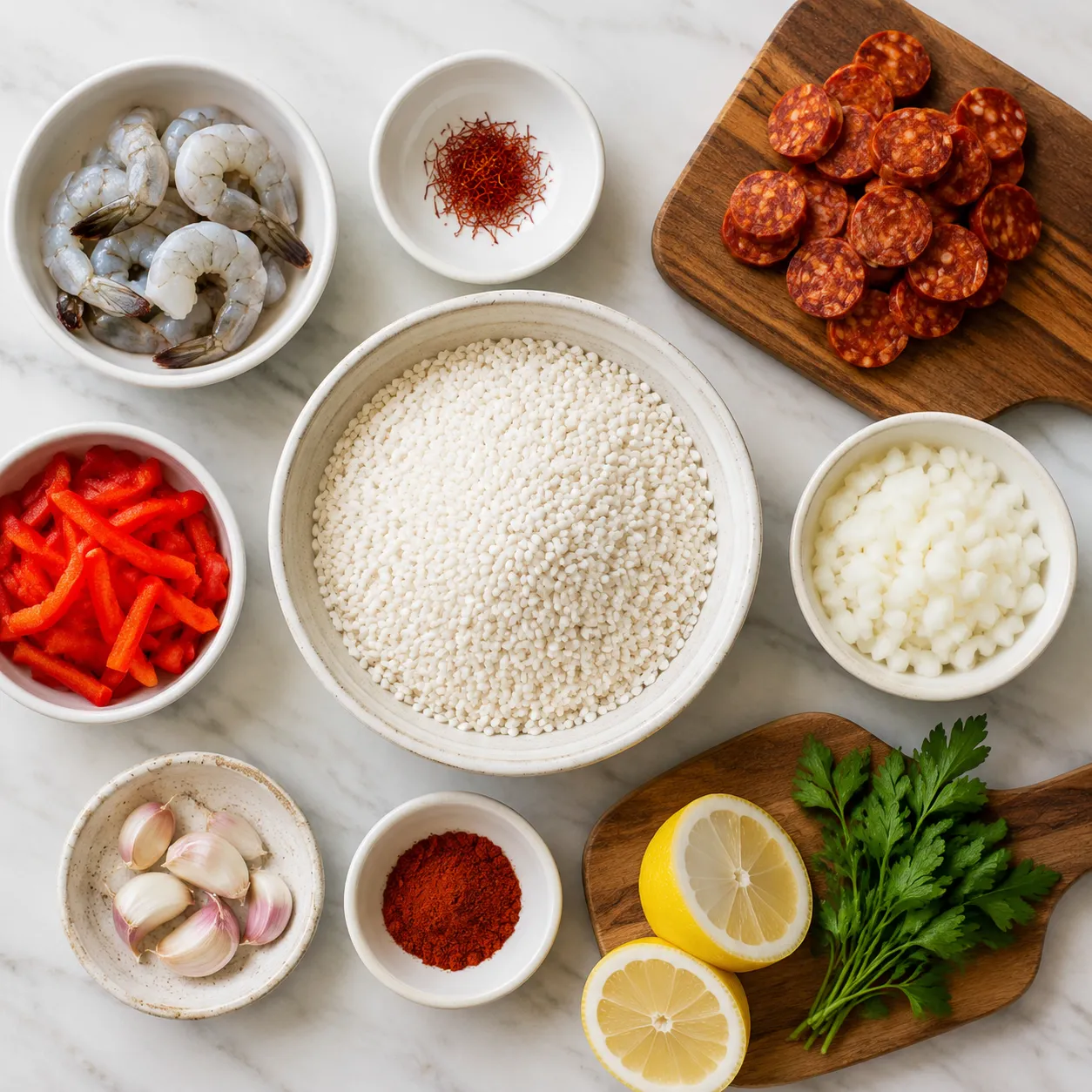
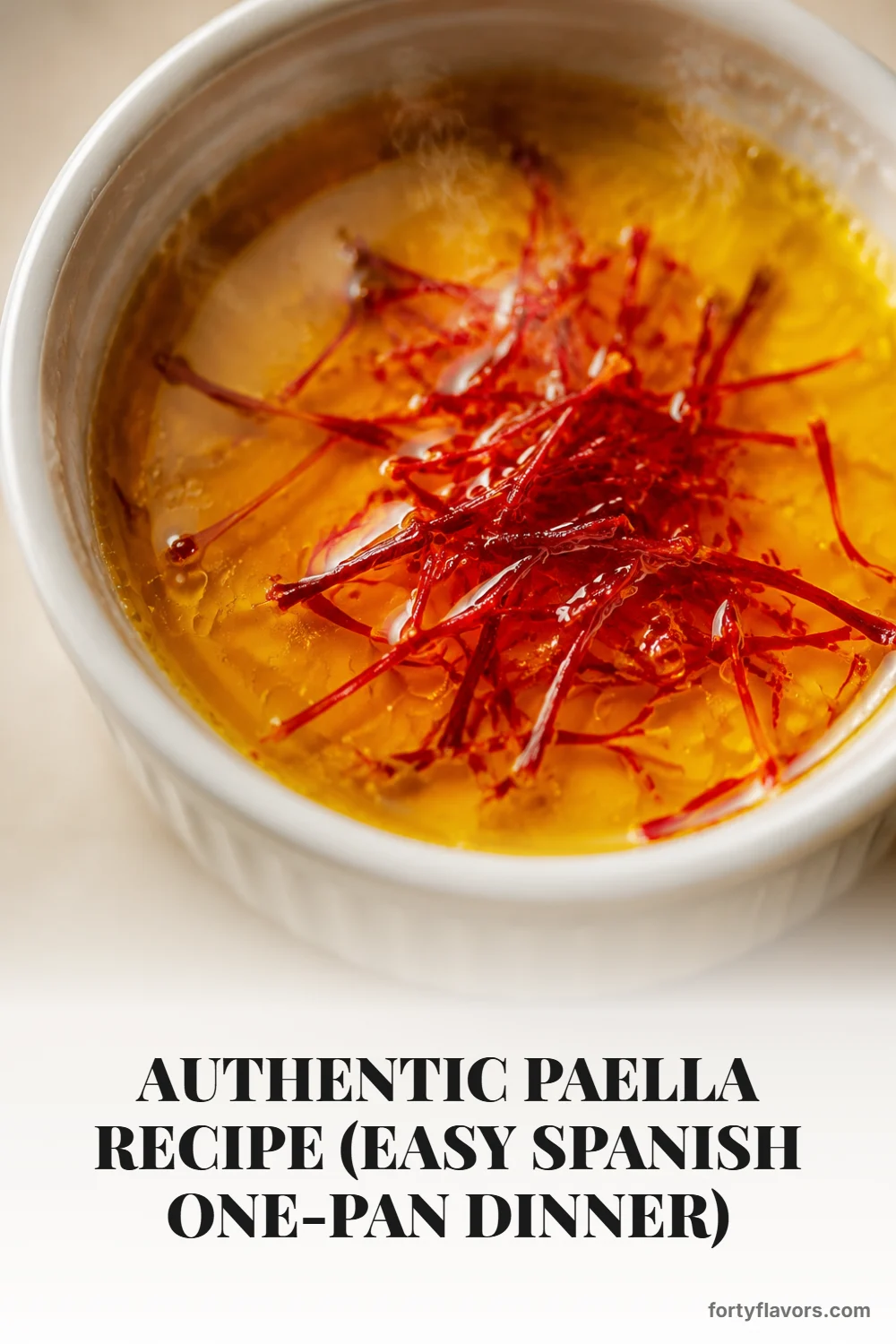
Saffron is a small ingredient with a big job. Blooming the threads in warm broth before they hit the pan helps release their color and aroma evenly, so every grain of rice gets kissed with that deep golden flavor. If you have ever made saffron rice, the technique will feel familiar, but here the broth is more layered thanks to the sofrito, chicken, and smoky spice.
This mixed version uses chicken thighs, shrimp, and Spanish chorizo for a beautiful balance of savory, smoky, and sweet. Boneless chicken thighs stay juicy during the simmer and give the broth a deeper flavor than chicken breast. The shrimp cook gently on top toward the end, so they stay tender instead of rubbery.
For the sausage, look for cured Spanish chorizo rather than raw Mexican-style chorizo. Spanish chorizo is firm, sliceable, and seasoned with paprika, which means it browns beautifully and perfumes the oil. If you cannot find it, use another cured smoked sausage, but know that the flavor will be less traditionally Spanish.
You can also customize the proteins depending on what you have. Mussels or clams are lovely if you want a more seafood-forward pan, while extra chicken and vegetables make it heartier and simpler. Just avoid overloading the pan; Paella cooks best in a shallow, even layer, not a deep mound.
A traditional paella pan is wide, shallow, and designed to encourage evaporation, even cooking, and maximum rice-to-pan contact. That broad surface area is what helps the rice cook evenly and allows the bottom to caramelize. If you own one, wonderful—this is its moment.
If not, do not let that stop you. A 12- to 14-inch stainless steel skillet, carbon-steel skillet, or wide sauté pan works beautifully for a home version. Cast iron can also work, though it holds heat aggressively, so you will want to watch the bottom carefully near the end.
For six servings, the pan should be wide enough that the rice sits in a relatively thin layer once the broth is added. If the rice is stacked too deep, the top may stay undercooked while the bottom over-browns. If you only have a smaller skillet, make a half batch rather than crowding the pan.
Start by browning the chicken and chorizo in olive oil, then set them aside while you cook the aromatics. This first sear is not just about color; the browned bits left behind in the pan become part of the sauce. When onion, bell pepper, and garlic hit that oil, they pick up all the smoky, savory flavor already waiting there.
Next comes the tomato, which should simmer until the mixture thickens and the raw edge cooks off. You are aiming for a concentrated base that coats the pan and smells sweet, garlicky, and rich. Add smoked paprika near the end of this stage so it blooms in the oil without scorching.
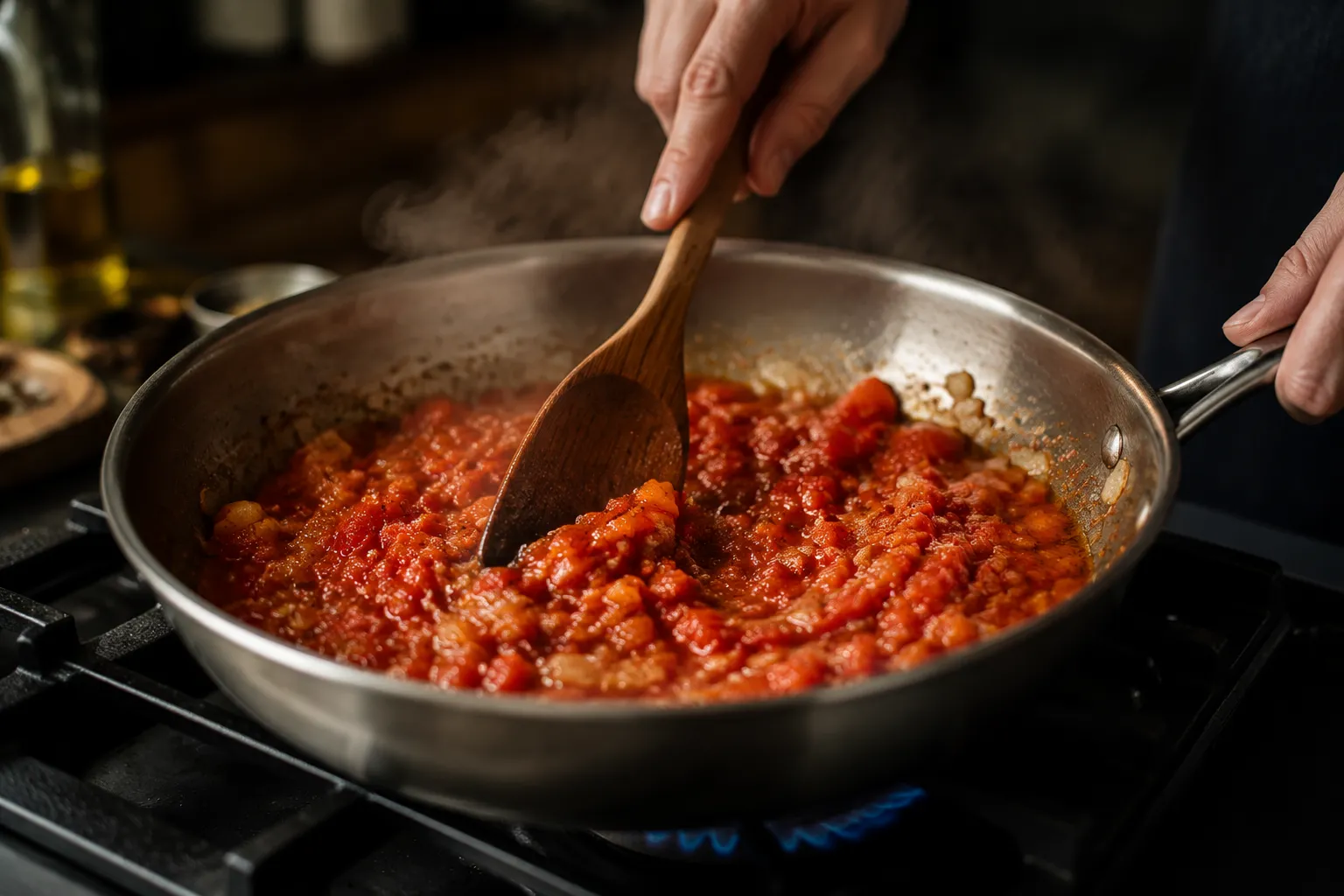
This is one of those quiet cooking moments that pays off later. A rushed sofrito can taste watery, while a properly reduced one makes the rice taste seasoned from the inside out. Keep the heat moderate, scrape the bottom often, and let the mixture become glossy before moving on.
While the sofrito cooks, stir the saffron threads into a little warm broth and let them steep. The liquid will turn a deep marigold color, and the aroma will become floral, earthy, and slightly honeyed. This small step helps the saffron distribute more evenly than if you simply sprinkled the threads into the pan.
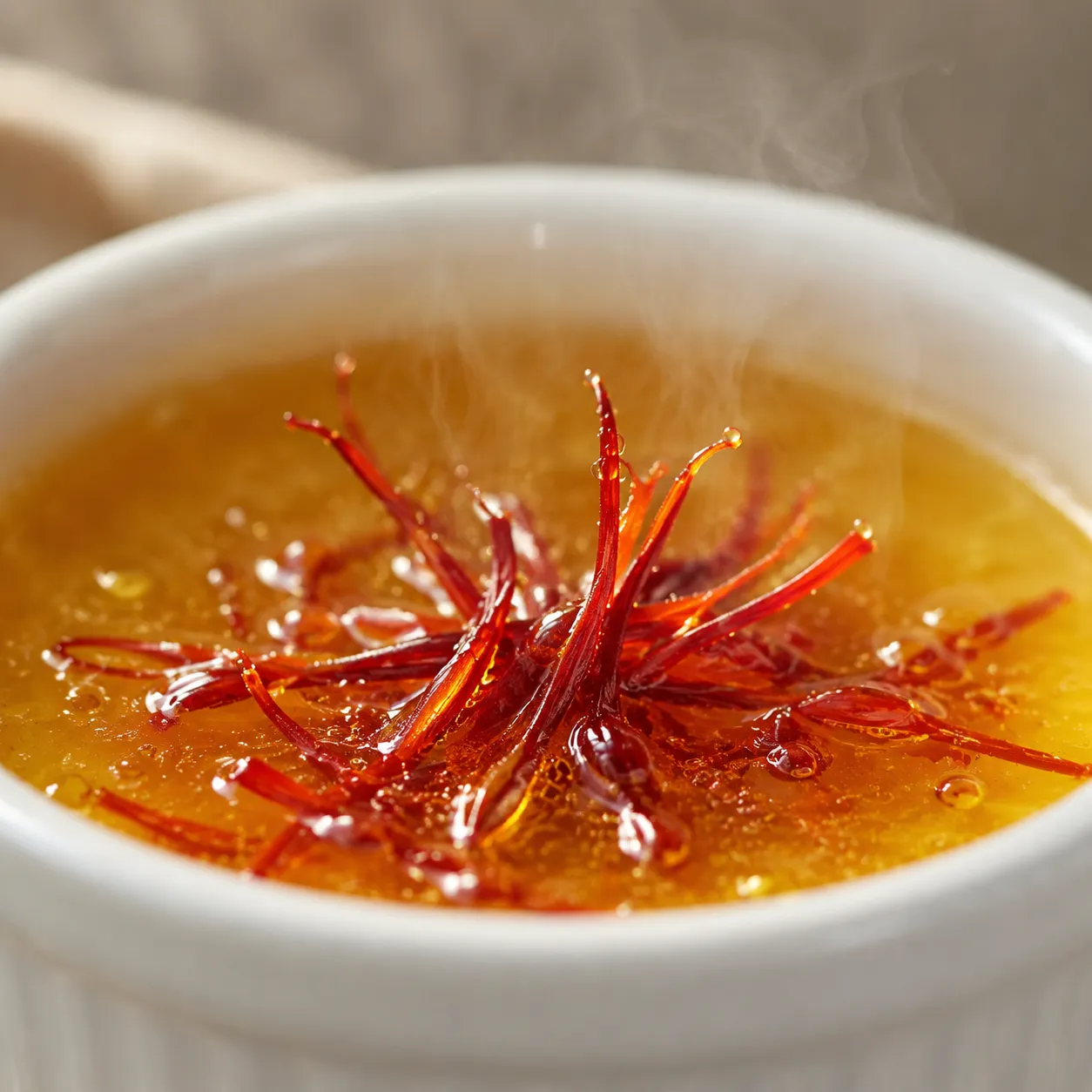
Once the sofrito is ready, add the rice and stir it briefly so the grains are coated in the flavorful oil and tomato mixture. Toasting for a minute or two helps the rice hold its shape and gives the final dish a subtle nuttiness. After that, add the broth, the saffron infusion, and the browned chicken and sausage.
This is the turning point: stir to level the rice, then stop. Unlike risotto, Paella is not meant to be stirred continuously. Leaving the rice undisturbed allows it to absorb the broth in place and gives the bottom layer a chance to crisp.
Bring the pan to a steady simmer and let the rice cook uncovered. You should see bubbling around the edges and across the surface, but not a violent boil that tosses the grains around. The goal is even absorption, with the broth gradually reducing until the rice is tender and the flavors are concentrated.
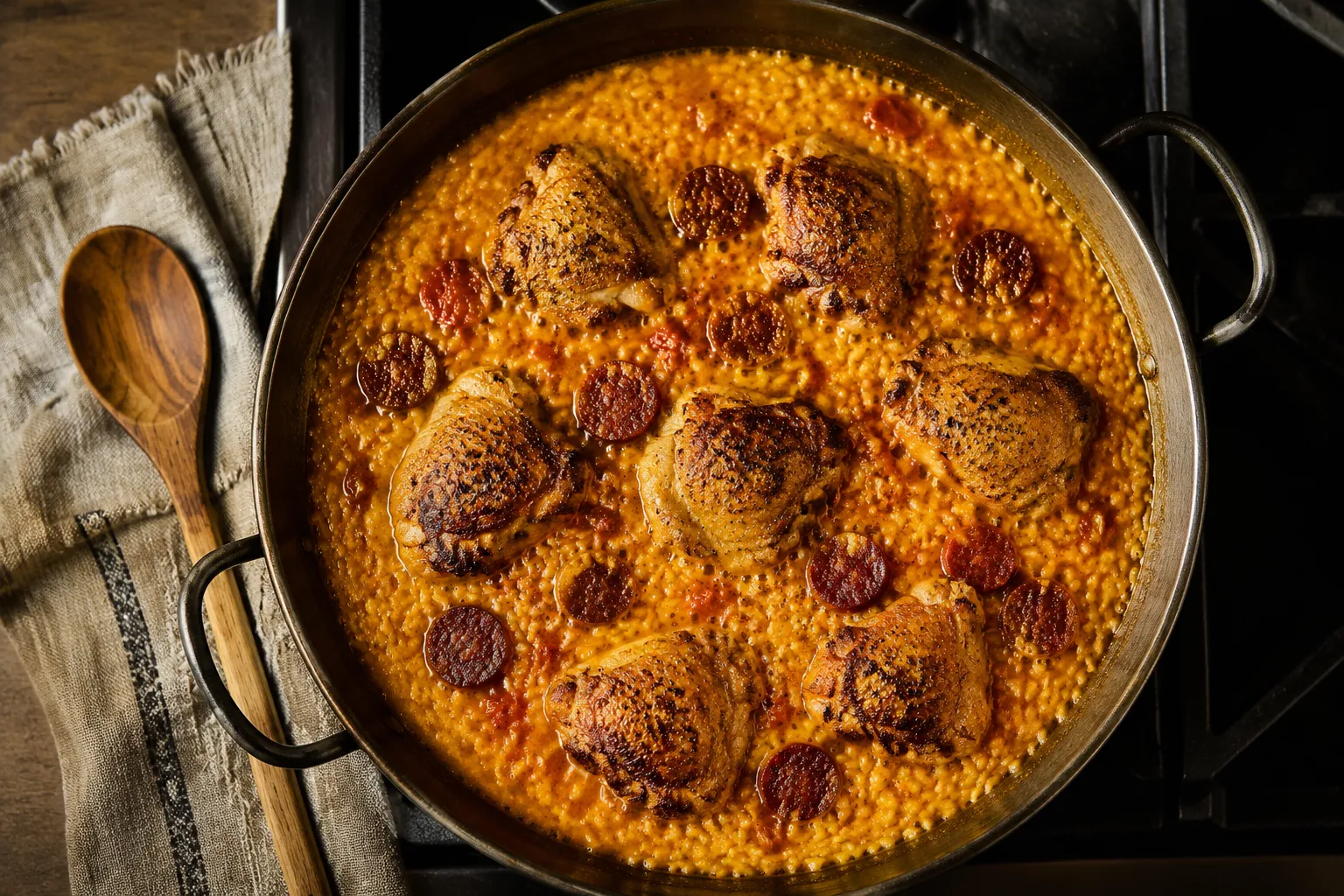
As the liquid drops, rotate the pan occasionally if your burner has hot spots. This is especially helpful on a standard American stovetop, where the heat rarely spreads as evenly as it would over a broad outdoor flame. If one side is bubbling hard while another is quiet, a little rotation keeps things balanced without disturbing the rice.
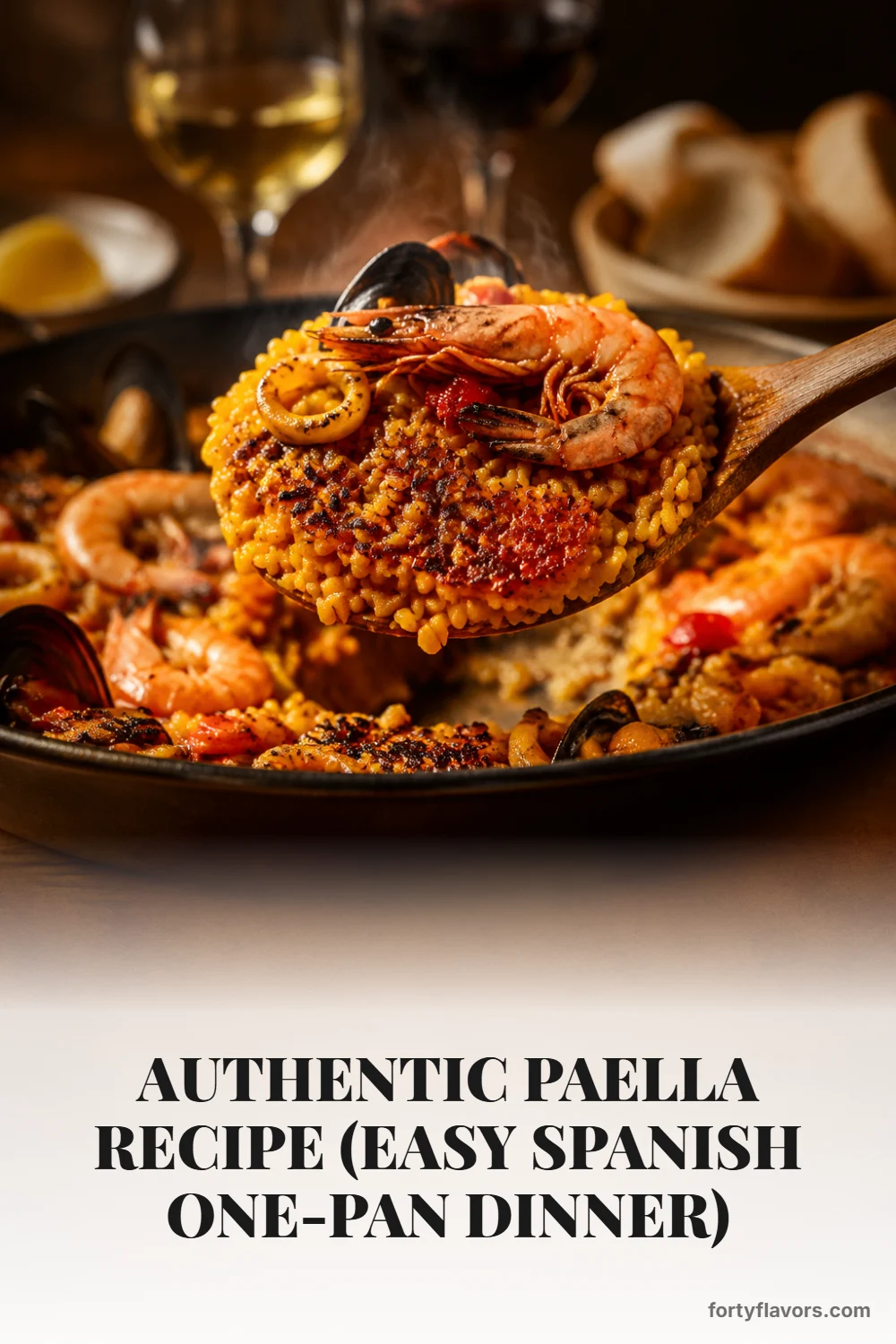
Near the end, listen closely. When most of the broth has been absorbed, the sound shifts from simmering to a faint crackle, which is the bottom layer beginning to toast. That is your socarrat forming, and it is the difference between a good pan of rice and one that people scrape clean at the table.
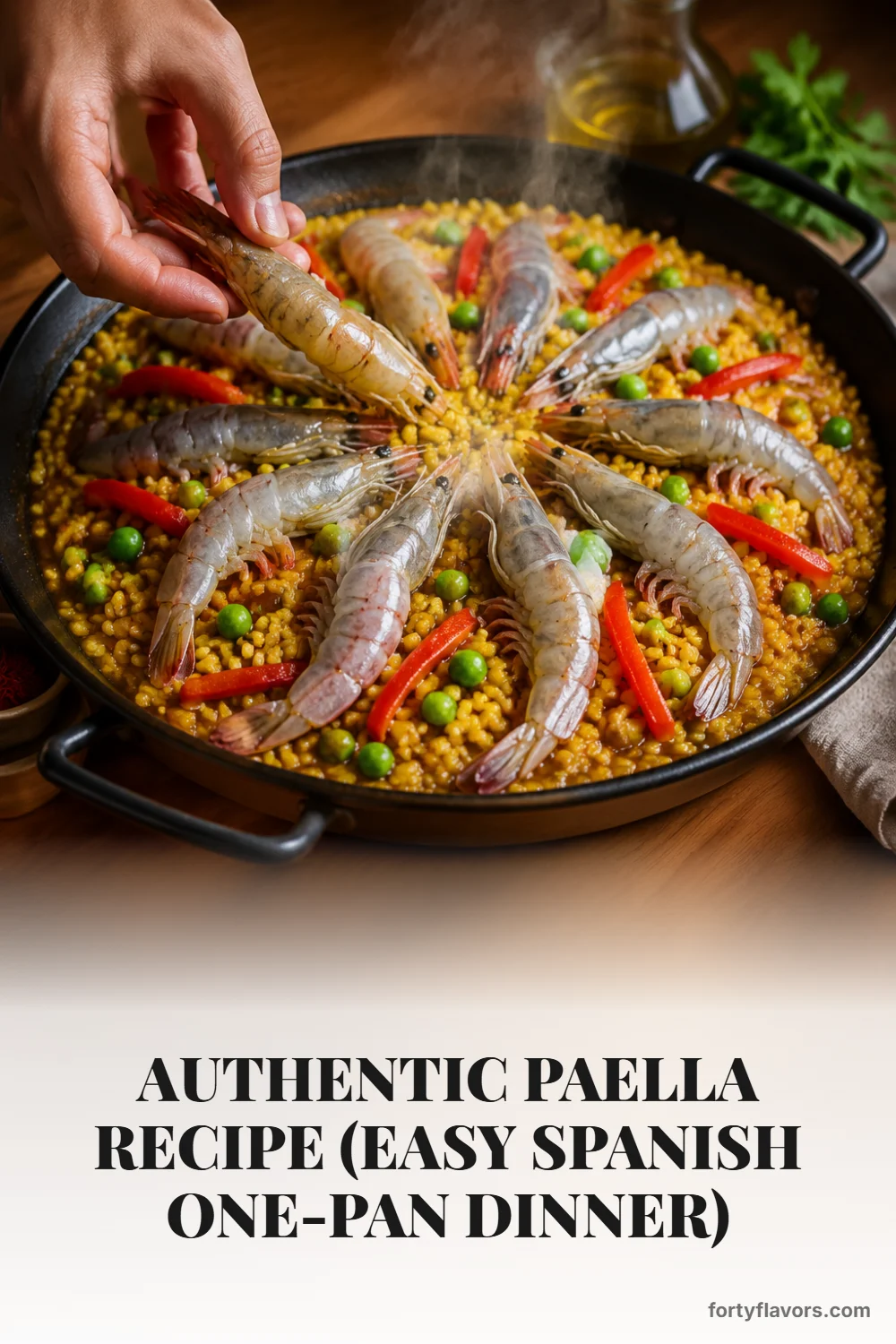
Shrimp go on top once the rice is partially cooked, not at the beginning. Nestle them into the surface so they steam gently in the fragrant heat, turning pink and tender as the rice finishes. Peas and pepper strips add color, sweetness, and that classic festive look.
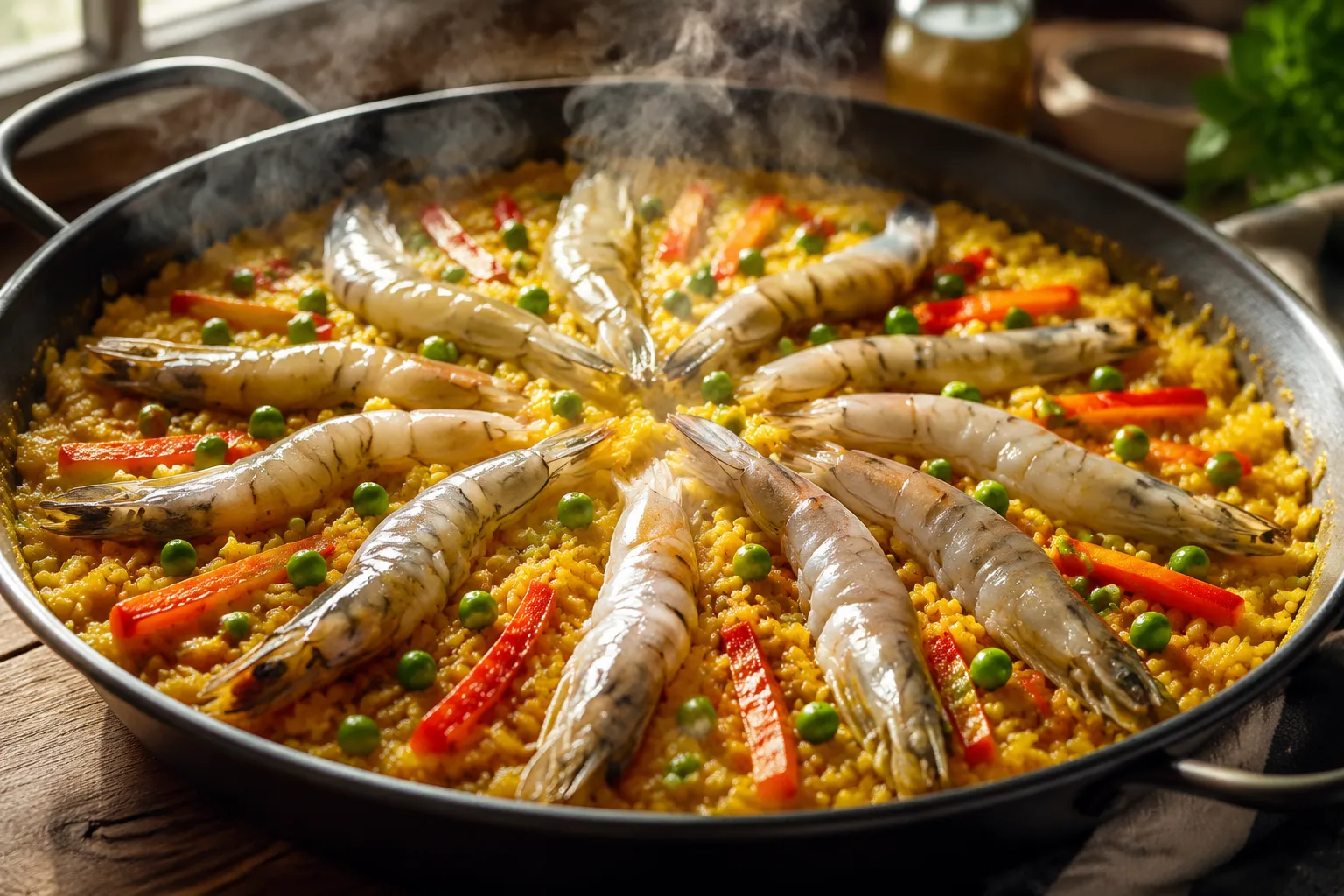
When the shrimp are cooked through and the rice is tender, remove the pan from the heat and cover it loosely with foil or a clean towel. This short rest matters because it lets the steam redistribute, softening any last firm grains without washing out the texture. It also gives you time to slice lemons, chop parsley, and call everyone to the table.
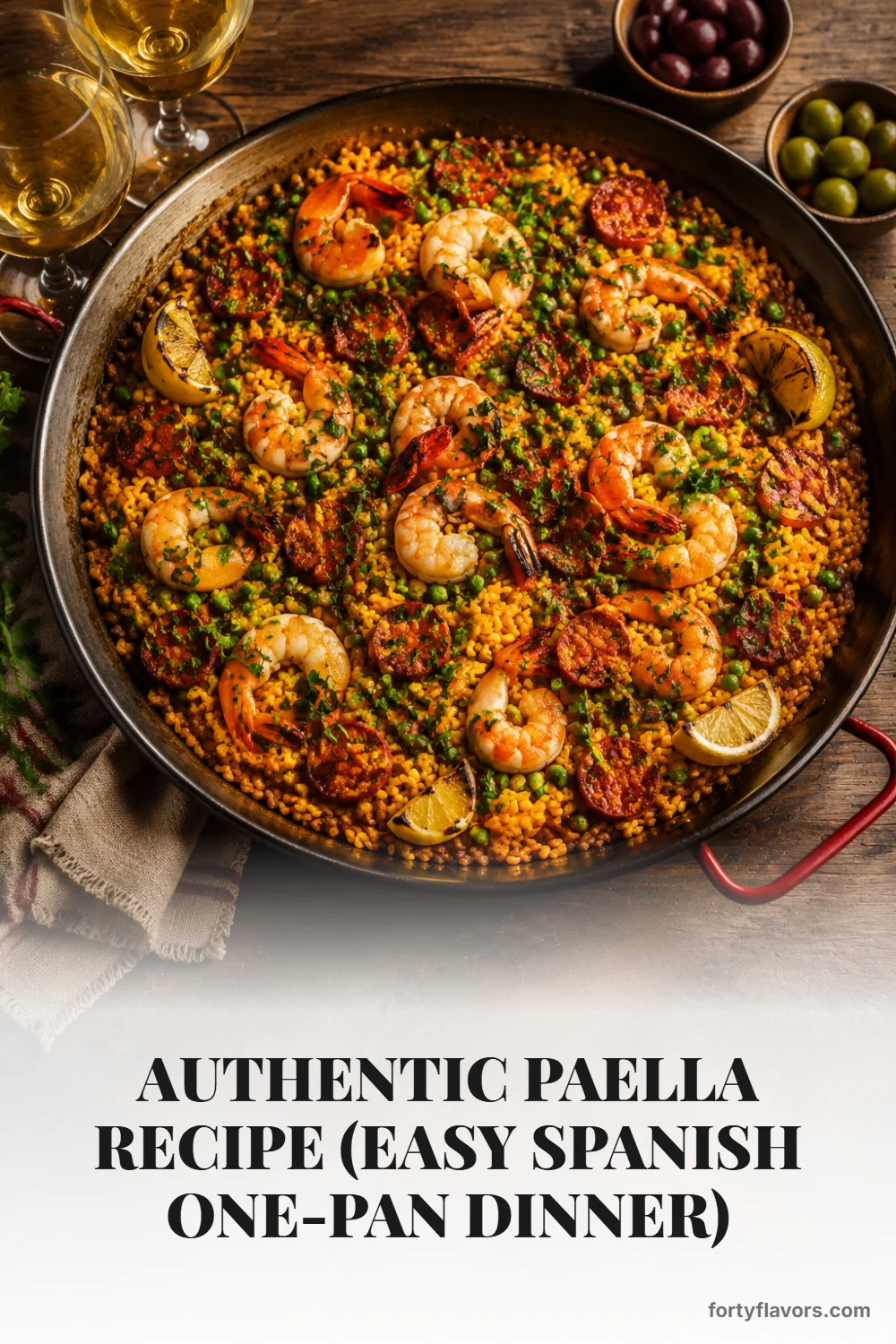
Serve the pan family-style if you can. The visual drama is half the fun, especially when the rice is golden, the shrimp are glossy, and the lemon wedges are tucked around the edges. A sprinkle of parsley at the end adds freshness and makes the whole dish feel bright.
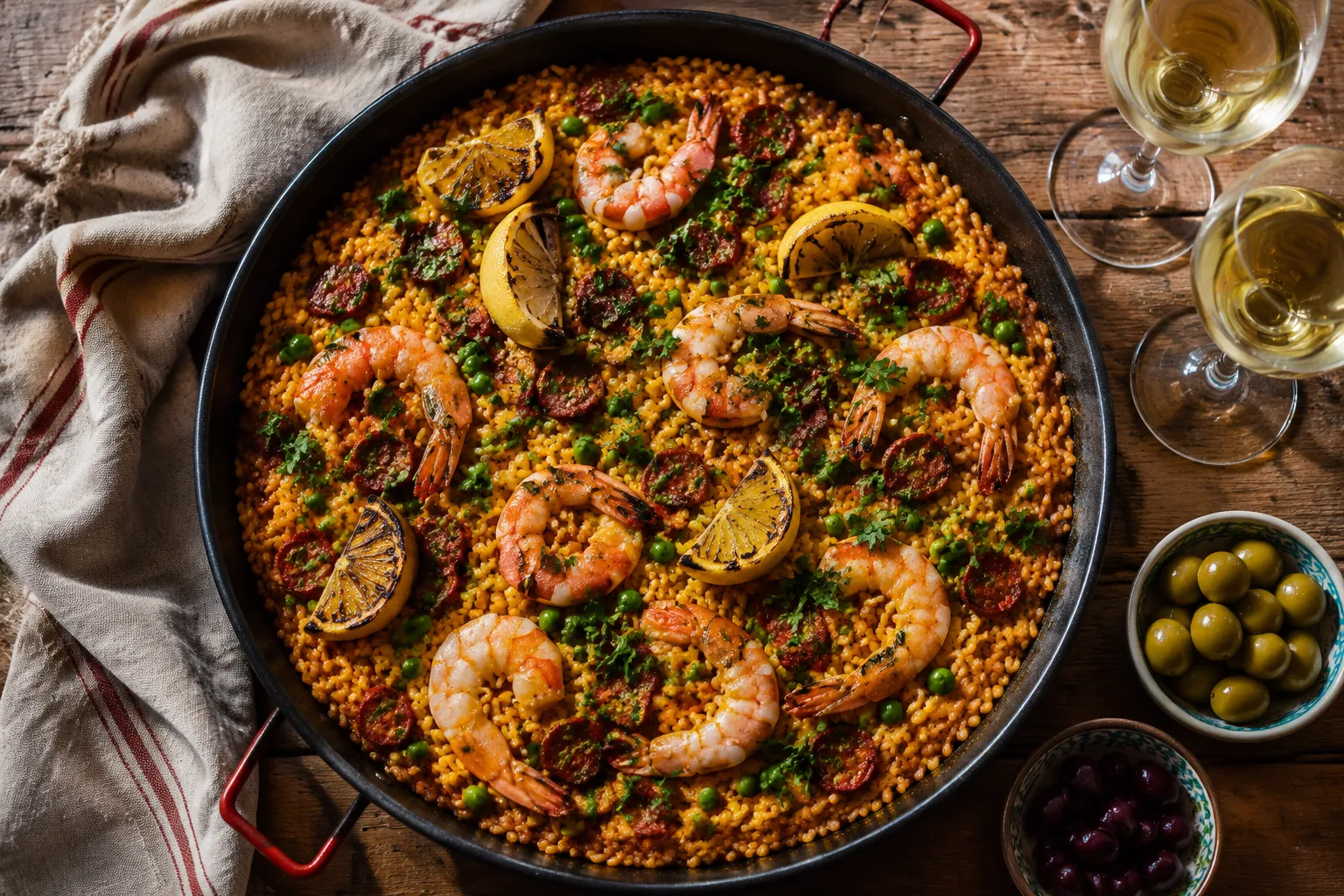
This dish is hearty enough to stand alone, but a few simple sides make it feel like a full Spanish-inspired spread. A crisp green salad with sherry vinaigrette is perfect against the richness of the rice and sausage. Marinated olives, roasted peppers, or a small plate of manchego are easy additions that do not compete with the main event.
For drinks, homemade sangria is festive and relaxed, especially if you are serving friends on a warm evening. A dry Spanish white, rosé, or light red also works well, depending on whether you want to highlight the shrimp or the smoky sausage. Keep dessert simple with citrus, almond cake, or berries and cream.
At the table, encourage everyone to scoop from top to bottom so they get some tender rice and some of the crisp crust. That contrast is the joy of the dish. If your guests are new to Paella, they will understand the hype the moment the spoon hits that golden-brown layer.
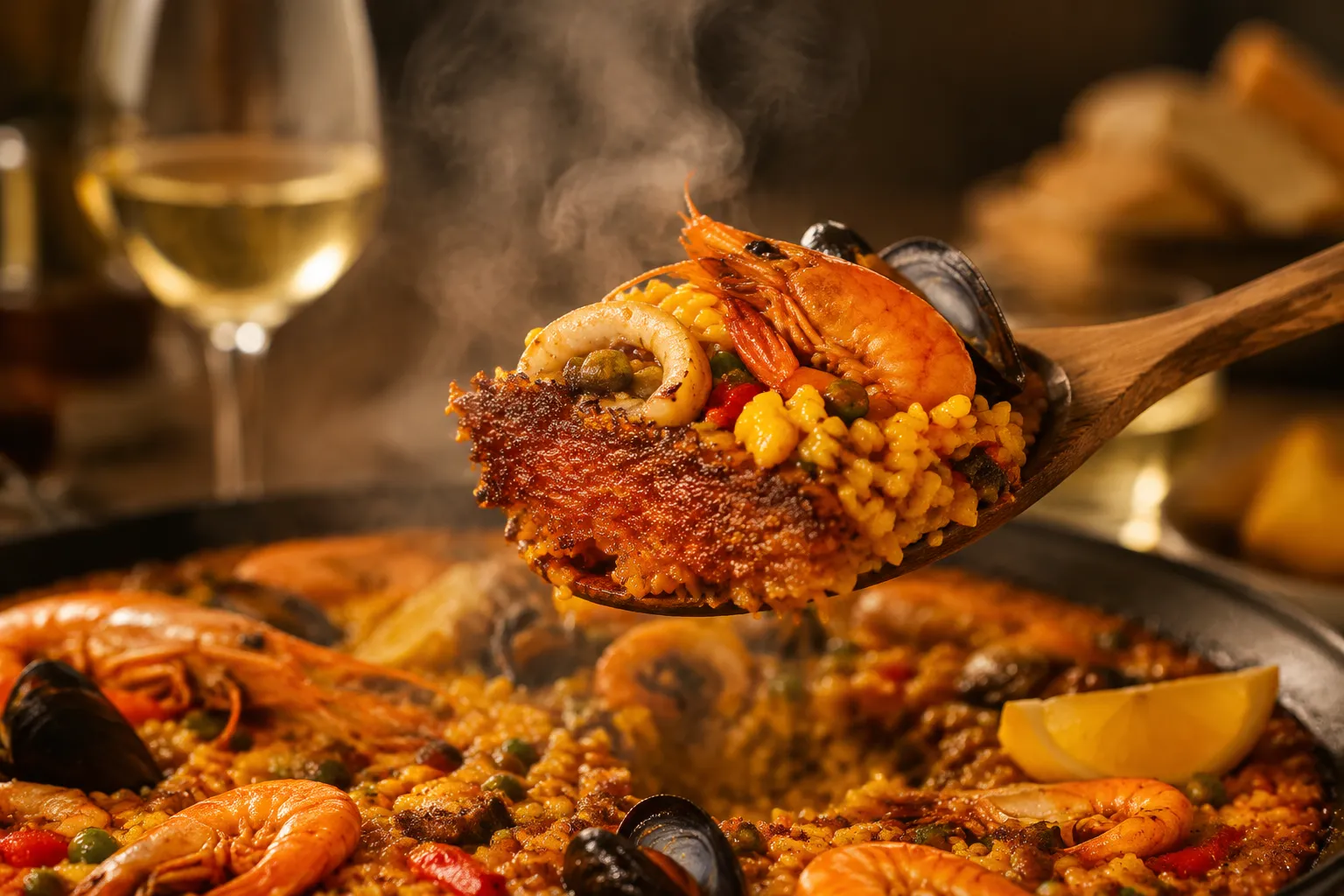
The beauty of this Spanish paella is that it asks for attention, not perfection. A well-cooked sofrito, properly bloomed saffron, and a wide pan will carry you a long way. Even if your crust is a little lighter the first time, the flavors will still be bold, sunny, and deeply satisfying.
Once you learn the rhythm, you can make the dish your own while keeping the technique intact. Build flavor first, add the rice, simmer without stirring, and finish with seafood, lemon, and herbs. It is a generous, joyful meal that turns everyday ingredients into something memorable.
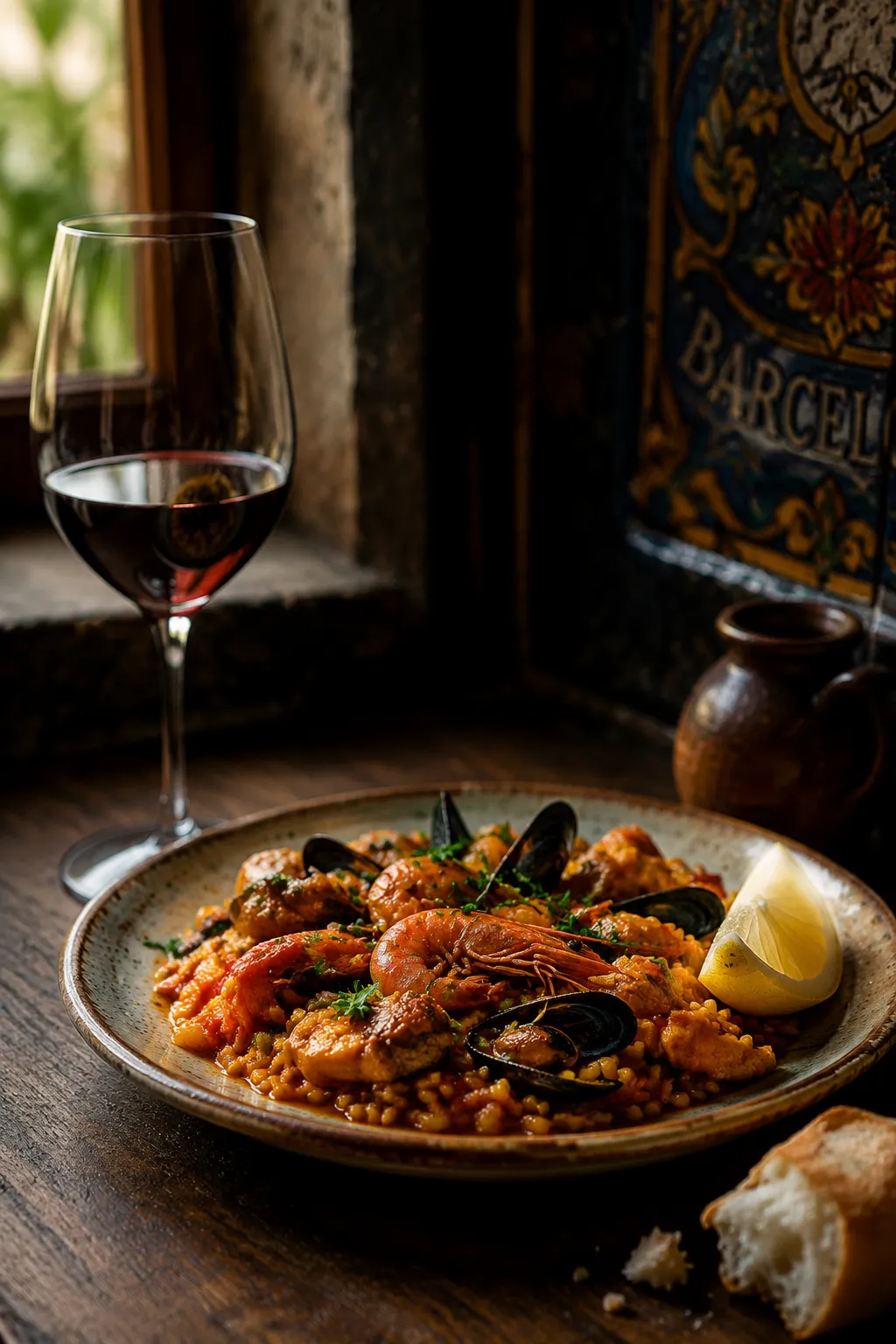
Paella is at its absolute best right after resting, when the rice is tender and the bottom crust is still crisp. Leftovers can be cooled, transferred to an airtight container, and refrigerated for up to 3 days. Because seafood is included, refrigerate promptly and avoid leaving the pan at room temperature for long.
To reheat, warm portions in a covered skillet over medium-low heat with a splash of broth or water until steaming. The microwave works for convenience, but the skillet does a better job preserving the rice texture. Freezing is possible, though the shrimp may become a little firmer and the rice softer after thawing.
Hover any image and hit “Pin it” to save it to your Pinterest boards.