Authentic Lomo Saltado: Peruvian Steak Stir-Fry Recipe
Ingredients
Scale
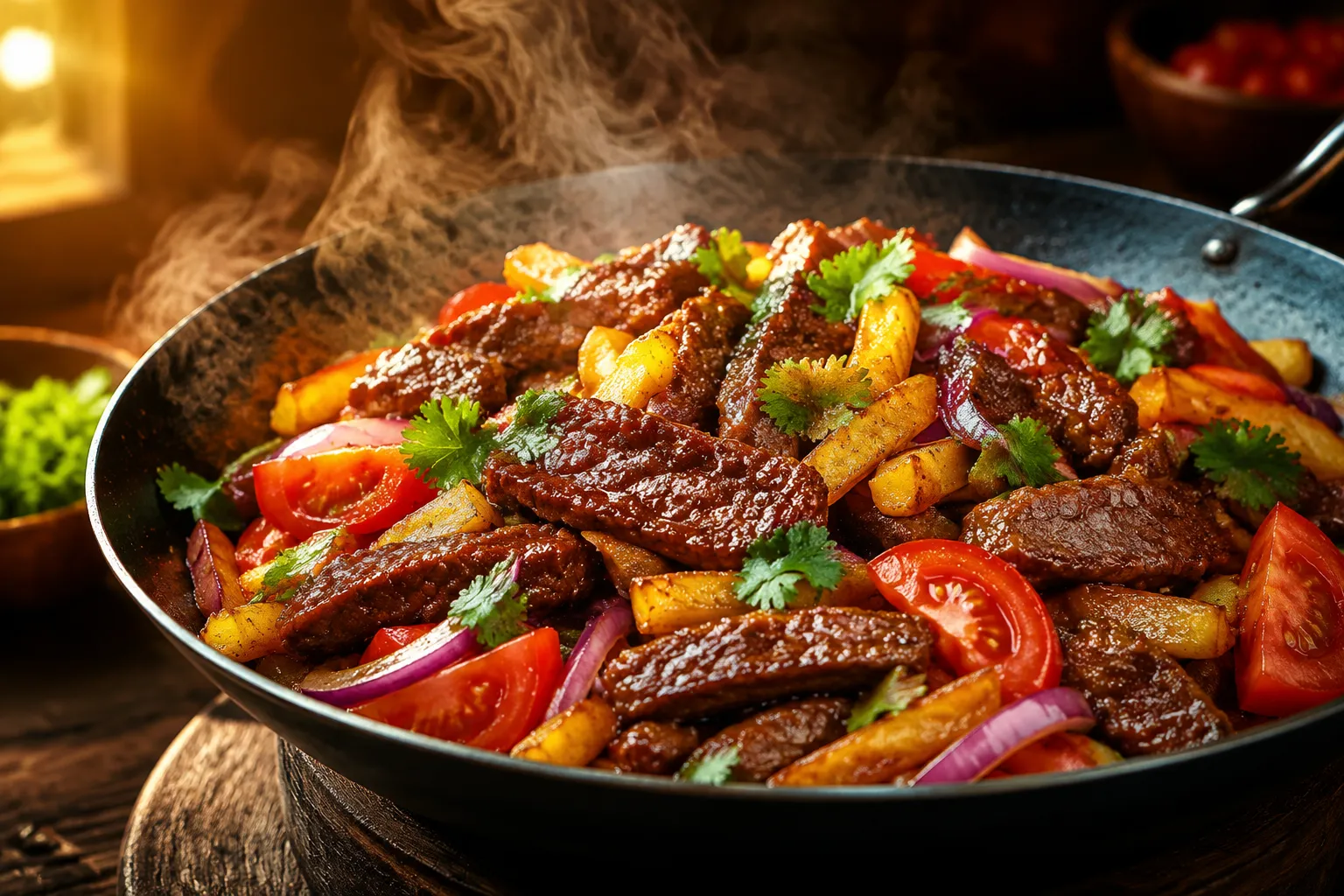
Lomo saltado is Peru's iconic steak stir-fry: tender sirloin, blistered onions and tomatoes, splashed with soy and vinegar, piled over crispy fries and rice.
Lomo saltado is the kind of dinner that makes the whole kitchen feel like a restaurant line: beef hissing in a hot pan, onions blistering at the edges, tomatoes turning juicy and glossy, and a sharp splash of soy sauce and red wine vinegar pulling everything together. It is bold, fast, saucy, and a little dramatic in the best possible way. The magic is that it eats like comfort food but cooks like a lightning-quick stir-fry.
This lomo saltado recipe is built for home cooks who want the smoky, sizzling feel of a Peruvian chifa kitchen without needing a restaurant wok burner. You will use sirloin steak, thick wedges of red onion and tomato, aji amarillo for warmth, crisp french fries, and white rice to catch every drop of that savory-tangy sauce. If you love an easy weeknight stir-fry but want something with a bigger personality, this is your pan-to-plate moment.
At its heart, this dish is a Peruvian stir-fry of sliced beef, onions, tomatoes, a chile-forward sauce, and fries, typically served with rice. The name comes from lomo, referring to the beef, and saltado, meaning jumped or sautéed, which captures the quick tossing motion in a very hot pan. It is one of Peru’s most beloved dishes because it brings together local ingredients and Chinese cooking technique in one deeply craveable plate.
The story belongs to chifa cuisine, the Peruvian-Chinese food tradition that grew from Chinese immigration to Peru in the 19th century. Wok cooking, soy sauce, and high-heat sautéing met Peruvian potatoes, aji amarillo, tomatoes, and rice, and the result became something entirely its own. In Peru, lomo saltado is not treated as a novelty; it is everyday restaurant food, home food, and late-night comfort food all at once.
What separates this dish from a typical beef stir-fry is the way the sauce is sharp, savory, and almost juicy rather than thick and sweet. Soy sauce gives the beef its deep umami base, while red wine vinegar cuts through the richness and wakes up the tomatoes. Aji amarillo adds a sunny, fruity heat that tastes distinctly Peruvian, more floral than fiery, and it makes the sauce feel layered rather than simply spicy.
The texture is just as important as the flavor. The onion wedges should stay a little crisp, the tomatoes should soften but not collapse, and the beef should be seared hard enough to pick up browned edges. Then come the fries, which are not a side note but part of the dish itself. They catch the pan sauce in their craggy edges, giving you that perfect bite of steak, potato, tomato, and rice.
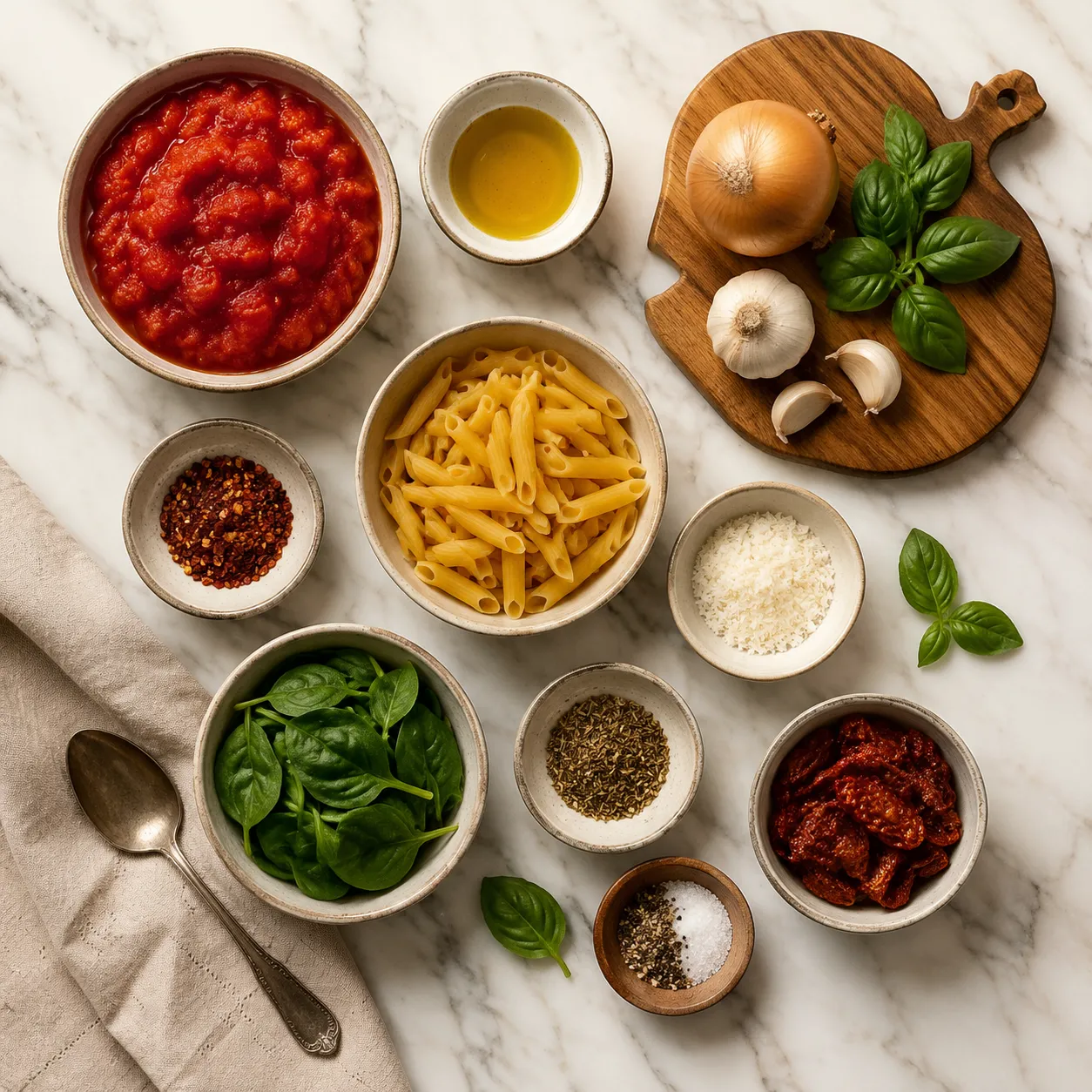
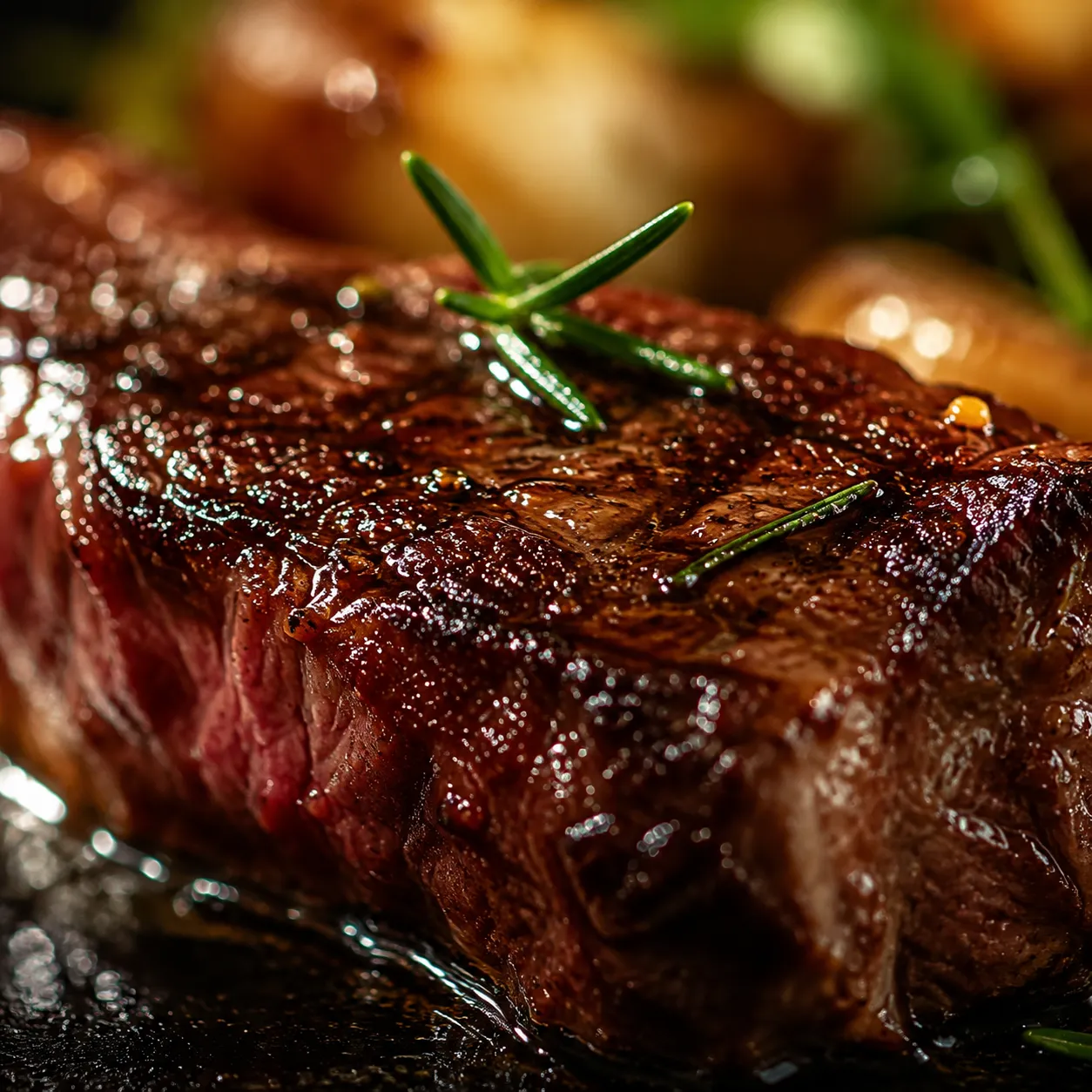
The ingredient list is short, but each piece has a job. For the beef, sirloin steak is the sweet spot: tender enough for quick cooking, affordable enough for a weeknight, and easy to slice into strips. Flank steak, skirt steak, ribeye, or tenderloin also work if you already have them; for a deeper guide to choosing stir-fry beef cuts, use the same logic you would for any hot-and-fast skillet recipe: slice thinly, cut against the grain, and do not overcook.
The vegetables are intentionally chunky. Red onion wedges get charred and sweet while still keeping a little bite, and Roma tomatoes hold their shape better than very juicy slicing tomatoes. Garlic goes into the sauce rather than burning in the pan, and cilantro at the end adds freshness. If you can find fresh aji amarillo, wonderful; otherwise, Peruvian aji amarillo paste is the easiest way to get that signature golden pepper flavor into the pan.
Then there are the two non-negotiables: french fries and rice. You can absolutely make homemade french fries if you want the full from-scratch experience, but good frozen fries baked or air-fried until crisp are a practical shortcut. The rice should be simple and plain—think fluffy white rice with no competing seasonings—because its job is to soak up the soy-vinegar juices. This is not a dish that asks you to choose potatoes or rice; the joy is having both.
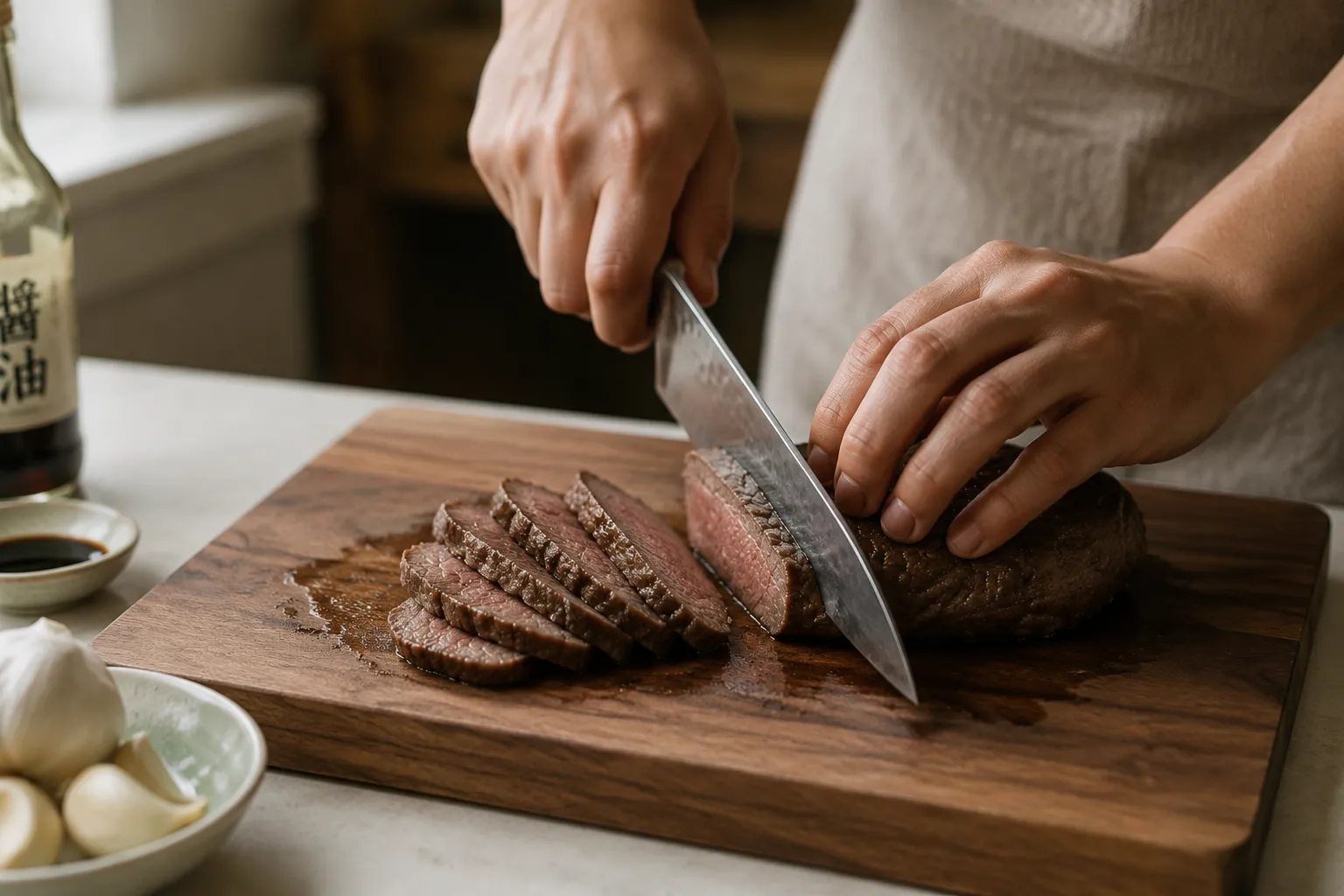
Start by getting all your ingredients ready before the pan goes on the heat. This is a true stir-fry situation, which means once the beef hits the wok, there is no relaxed chopping in the background. Slice the steak across the grain into strips, cut the onion and tomatoes into thick wedges, mix the soy sauce, vinegar, garlic, and aji amarillo, and have the fries cooked and waiting. A few minutes of prep turns the actual cooking into a confident, quick rhythm.
The beef gets a brief seasoning and a splash of the sauce mixture before cooking, just enough to flavor the surface without making it wet. If the steak is dripping when it goes into the pan, it will steam instead of sear, so patting it dry is worth the tiny extra step. For the best browning, use a carbon-steel wok, cast-iron skillet, or your heaviest stainless pan. The pan should be hot enough that the first strip of beef sizzles loudly the second it touches the surface.
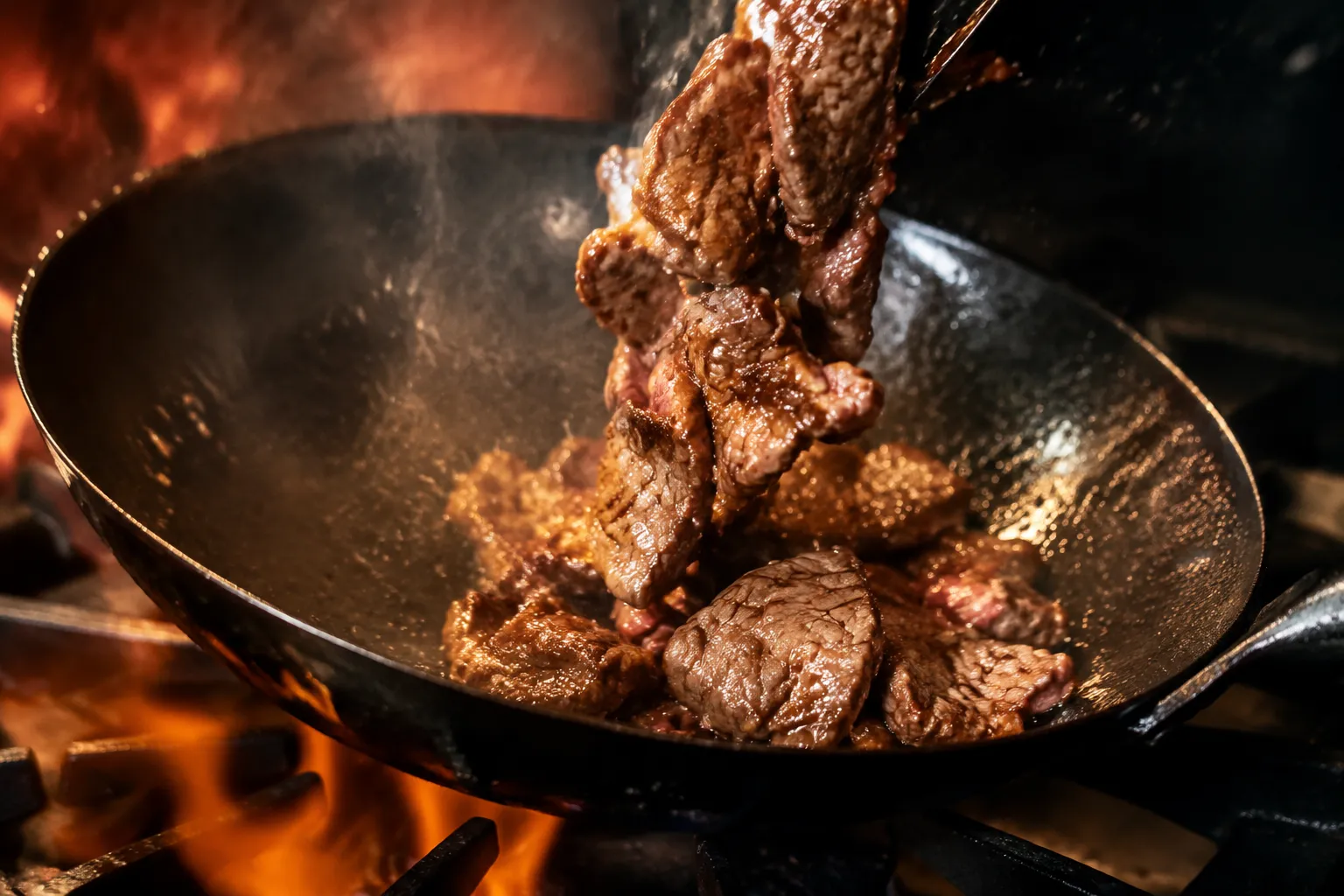
Cook the steak in batches if needed, giving each piece space to brown. This is where that restaurant-style flavor happens: not from a long simmer, but from fast contact with fierce heat. Once the beef has browned edges and is still juicy inside, pull it out briefly while the onion wedges blister in the same pan. The tomatoes go in after the onions so they can warm and release juice without turning into sauce.
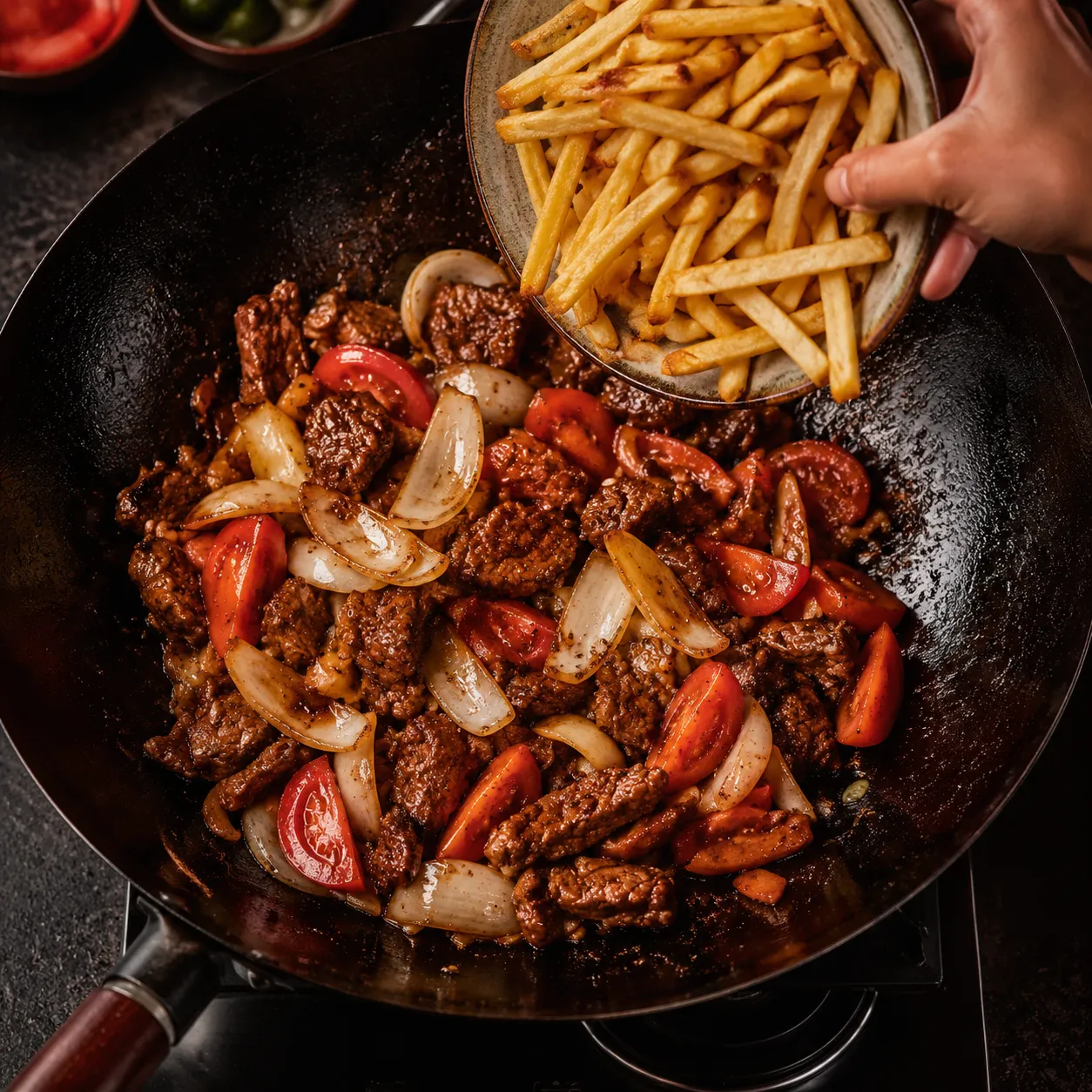
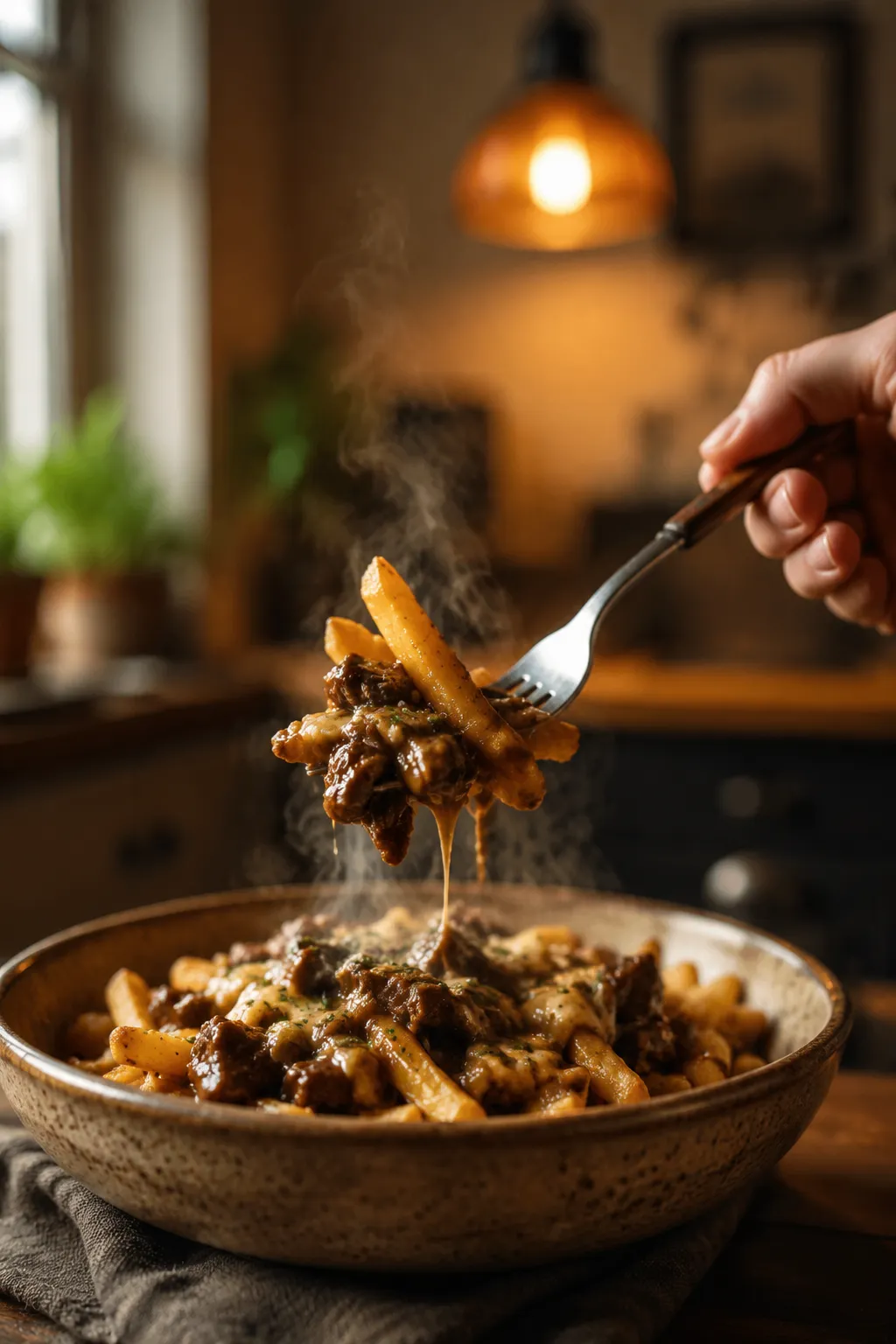
Finally, the sauce goes in and deglazes all those browned bits clinging to the pan. The vinegar steams up first, the soy darkens everything, and the tomato juices loosen the glaze into a glossy, spoonable coating. Return the beef, toss quickly, and add the fries at the very end so they stay crisp on the outside while catching just enough sauce. Pull the lomo saltado from the heat while it still looks lively and glossy, not stewed.
The sauce is simple, but balance matters. Too much soy sauce can make the dish flat and salty, while too much vinegar can push it into sharp territory. The goal is savory first, tangy second, with a gentle chile warmth from the aji amarillo. If your tomatoes are very sweet, you may want an extra small splash of vinegar; if they are tart, keep the vinegar measured and let the soy carry the base.
Fresh aji amarillo can vary in heat, and paste varies by brand, so taste before you add more. A tablespoon of paste gives color and flavor without overwhelming the beef, but you can nudge it up if you like a brighter chile note. Some cooks add a small spoonful of oyster sauce for gloss, but this version keeps the flavor clean and classic. The sauce should coat the steak and vegetables, not drown the fries.
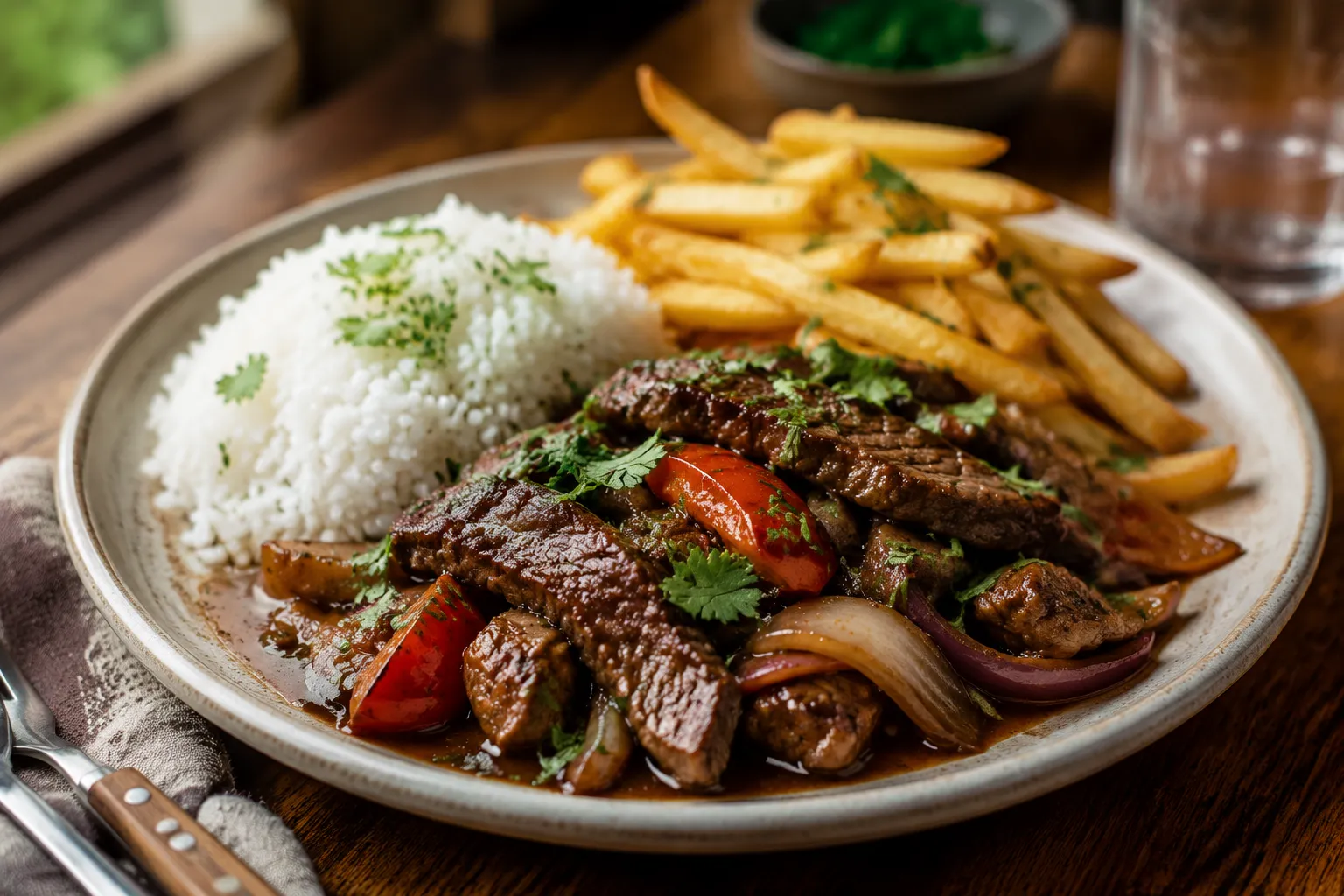
For the traditional presentation, spoon rice onto one side of the plate and pile the saucy beef, vegetables, and fries alongside or partly over the top. Some restaurants keep the fries underneath so they soak up more sauce, while others toss them through the wok at the last second for a mix of crisp and saucy edges. I like a hybrid: a few fries tossed in, a few tucked on top, and plenty of cilantro scattered over everything.
Because the dish is rich and savory, a bright sauce or salad is welcome on the table. Peruvian green sauce is especially good if you love a creamy, cilantro-chile kick alongside the steak and potatoes. A quick cucumber salad, lime wedges, or sliced avocado also works beautifully. Keep the sides fresh and simple so the beef, fries, and rice stay center stage.
You can do a surprising amount ahead without sacrificing the just-cooked feel. Slice the beef, cut the vegetables, mix the sauce, and cook the rice earlier in the day. If using frozen fries, keep them frozen until you bake or air-fry them; if making fries from scratch, cut the potatoes and hold them in cold water, then dry them very well before cooking.
The only part that should not happen too early is the final stir-fry. Once cooked, the tomatoes continue to soften and the fries continue to absorb sauce, so the dish is at its best right out of the pan. Think of the make-ahead strategy as setting up your station, not finishing the meal. With everything prepped, the cooking really does take about 15 minutes.
A wok is ideal because its sloped sides make tossing easy and its bottom gets extremely hot, but you do not need one to make a great version at home. A cast-iron skillet is an excellent choice because it holds heat well, especially when beef is added. Stainless steel also works if you preheat it properly and use enough oil to prevent sticking. Nonstick can be used in a pinch, but it will not give quite the same char because it should not be heated as aggressively.
If your kitchen fan is strong, turn it on before you start; if not, crack a window. High-heat cooking should smell toasted and savory, not scorched. Watch the food rather than the clock: beef should brown quickly, onion edges should blister, and tomatoes should look glossy but still hold their wedge shape. When that happens, dinner is ready.
The best version of this dish is fast, generous, and a little untidy in the most delicious way. Do not fuss over making every piece identical or every fry perfectly placed; the beauty is in the sizzling toss and the sauce running into the rice. As long as your pan is hot, your beef is sliced against the grain, and your fries go in at the end, you are already close to the spirit of the dish.
Serve it immediately, while the beef is glossy and the fries still have crisp edges. Spoon extra pan juices over the rice, add cilantro, and bring the whole skillet to the table if you want a little drama. This is the kind of meal that disappears quickly, which is exactly how it should be.
Once you understand the basic format—protein, hot pan, soy-vinegar sauce, tomatoes, onions, fries, and rice—you can adapt the dish without losing its spirit. Keep the cooking fast and the vegetables chunky, then adjust the protein or seasoning to fit what you have.
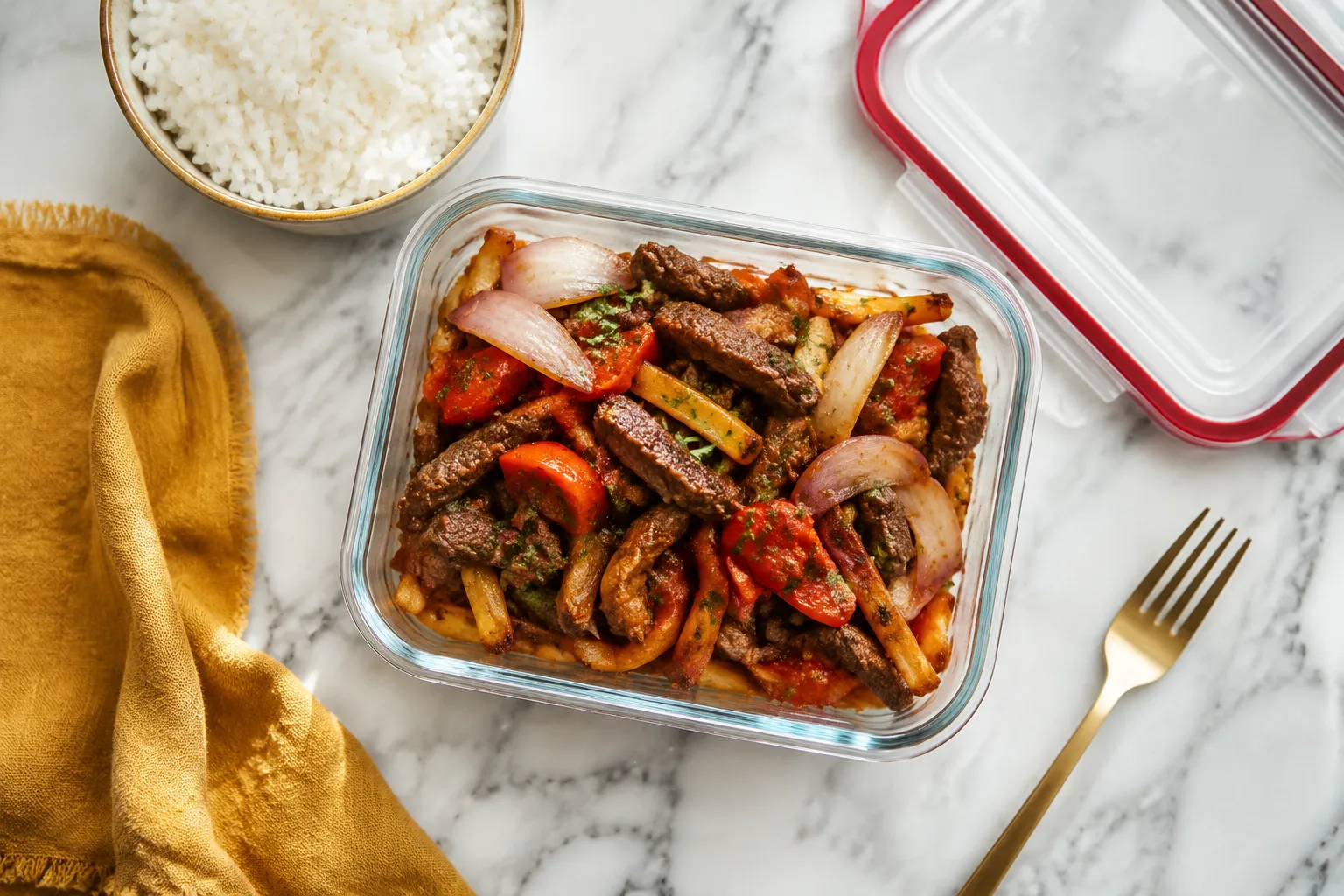
Lomo saltado is best right after cooking, when the beef is juicy and the fries still have crisp edges. If you do have leftovers, store the stir-fry and rice in separate airtight containers in the refrigerator for up to 3 days. The fries will soften as they sit, but the flavors stay delicious.
Reheat gently in a skillet over medium-high heat with a small splash of water or broth to loosen the sauce. For the best texture, re-crisp extra fries separately in an air fryer or oven and add them after reheating the beef and vegetables.