Italian Meatball Recipe: Tender, Juicy, Authentic
Ingredients
Scale
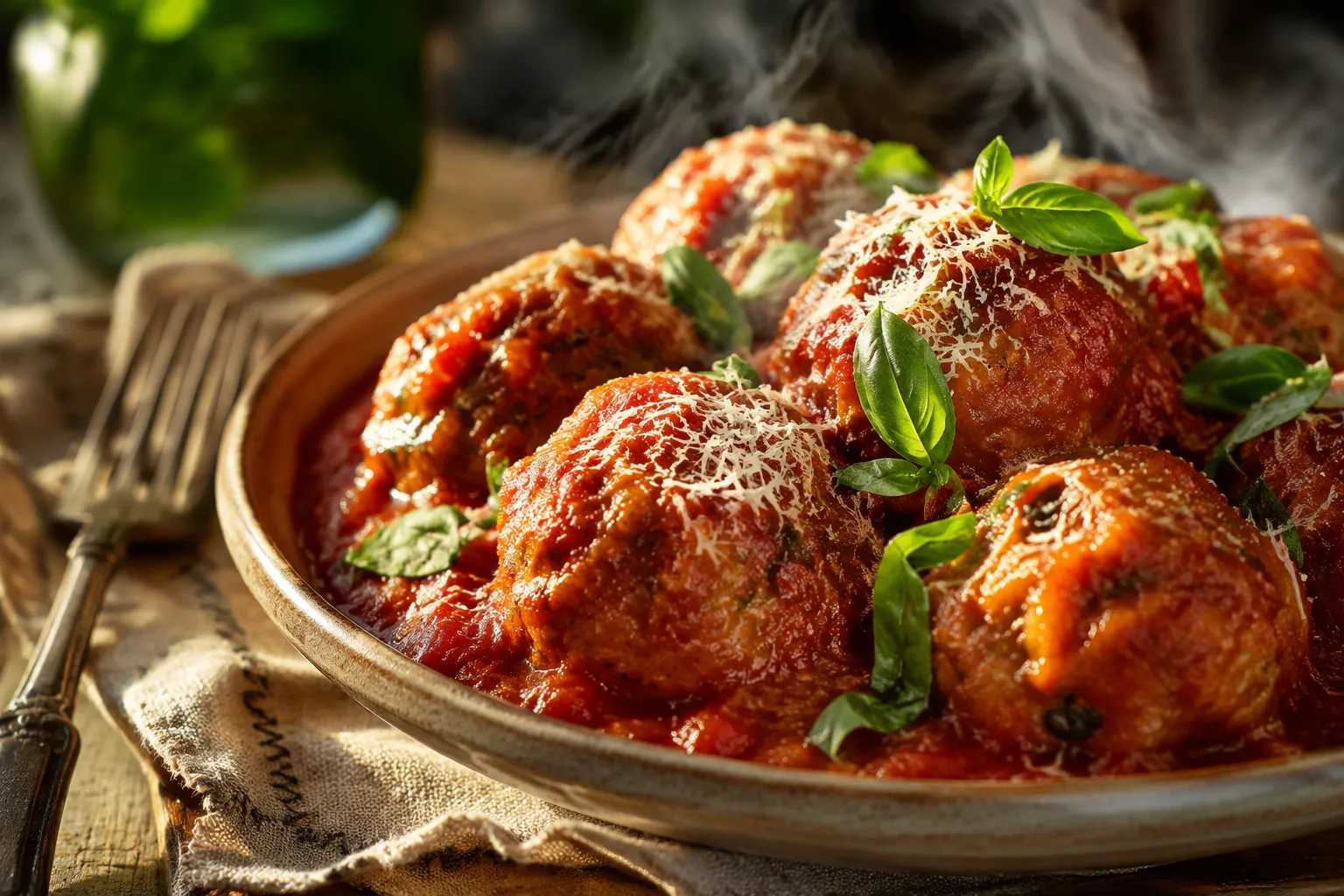
Soft, savory, and simmered in garlicky marinara, this Italian meatball recipe is the kind Nonna would approve of, with an easy baked option for busy weeknights.
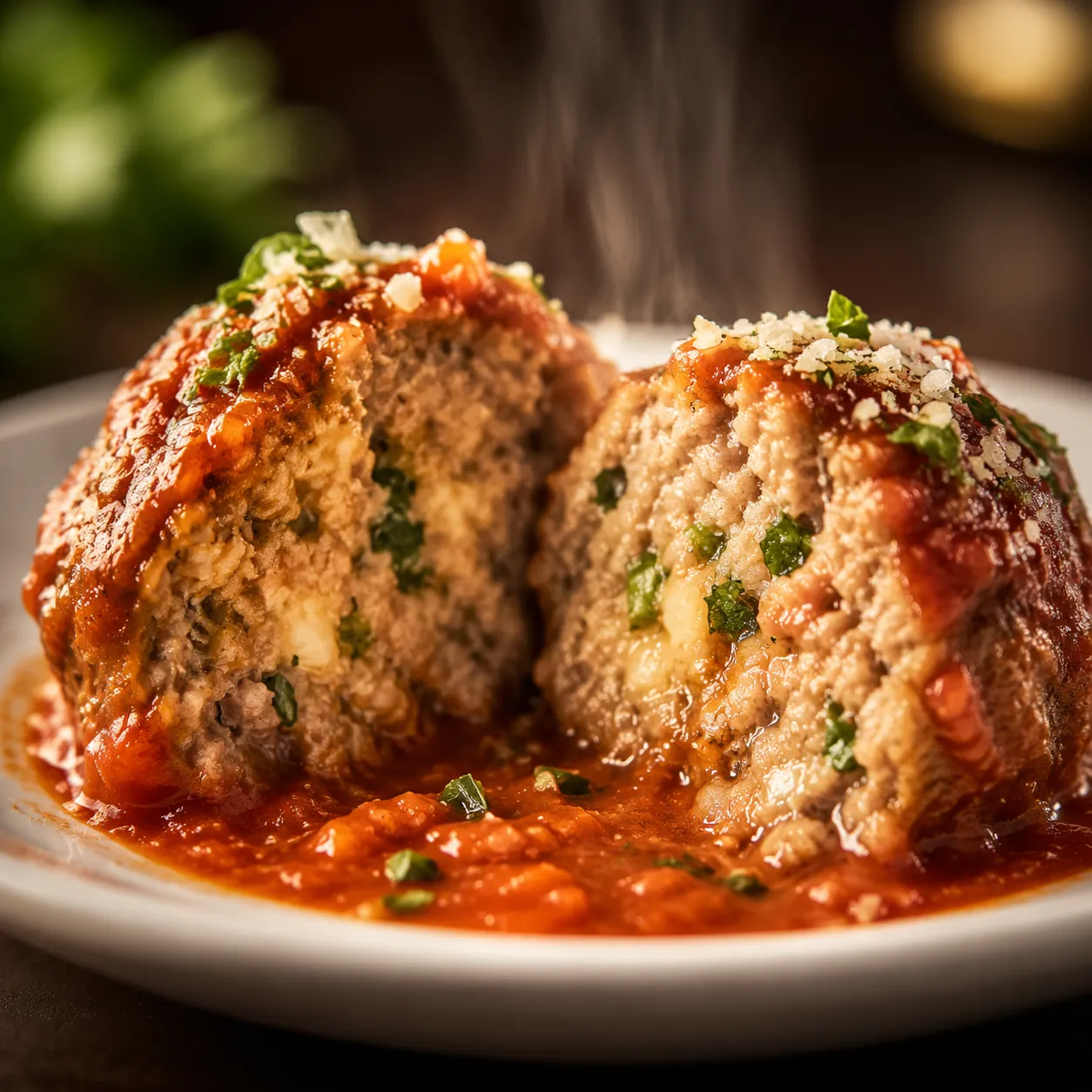
This italian meatball recipe is the one I make when I want dinner to feel like a hug. Plump, fork-tender, deeply savory meatballs nestled in a glossy red marinara, finished with a flurry of Parmesan and torn basil. It is the kind of pot you set in the middle of the table and watch disappear before anyone has a chance to ask for seconds.
I learned to make meatballs the way most American cooks did: from a friend's Nonna who didn't measure, an aunt who insisted on three meats, and a few decades of trial and error in my own kitchen. What you'll find here is the version that hits every note: tender inside, lightly crusted outside, perfectly seasoned, and built to soak up sauce. It's authentic Italian-American comfort food without any fuss.
Better yet, you've got options. Pan-sear the meatballs on the stovetop for old-school flavor, slide a tray into the oven for hands-off baked meatballs, or even crisp them in the air fryer when you're short on time. Whichever route you take, dinner is on the table in 40 minutes flat.
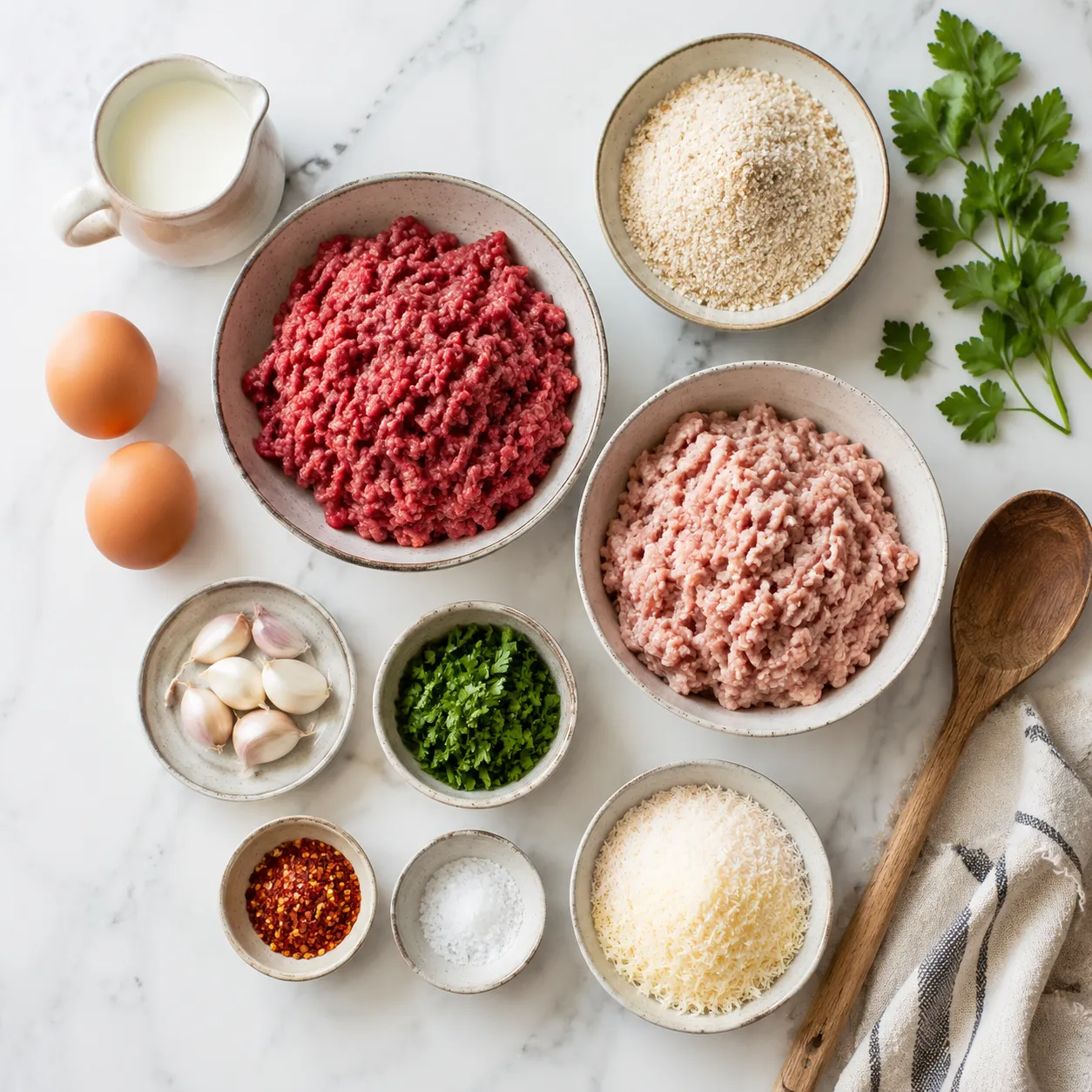
Great Italian meatballs start with great ingredients, and the list is mercifully short. The classic Italian-American formula uses a blend of fattier ground beef and ground pork (some cooks add veal too for the famous trio), plus a milk-soaked breadcrumb panade, eggs, garlic, fresh parsley, and a generous handful of grated Parmesan. The fat keeps them juicy, the panade keeps them soft, and the cheese deepens the savory backbone.
For breadcrumbs, fresh crumbs torn from a day-old loaf work best because they soak up milk faster and stay tender. That said, Italian breadcrumbs from a canister are perfectly fine in a pinch. If you go store-bought, look for ones seasoned with herbs and a little Parmesan; they layer flavor beautifully without any extra effort. Either way, soaking the crumbs in whole milk transforms them into the panade, which is the magical paste that holds everything together while keeping the texture cloud-soft.
The bones of this italian meatball recipe are forgiving as long as you protect the fat and the panade. If pork isn't your thing, all-beef works (use 80/20 so you don't lose juiciness). Out of fresh parsley? Use a tablespoon of dried instead. No Parmesan? Pecorino Romano is sharper but excellent. Garlic powder can sub for fresh in a pinch, though I'd push you to keep the real stuff if at all possible.
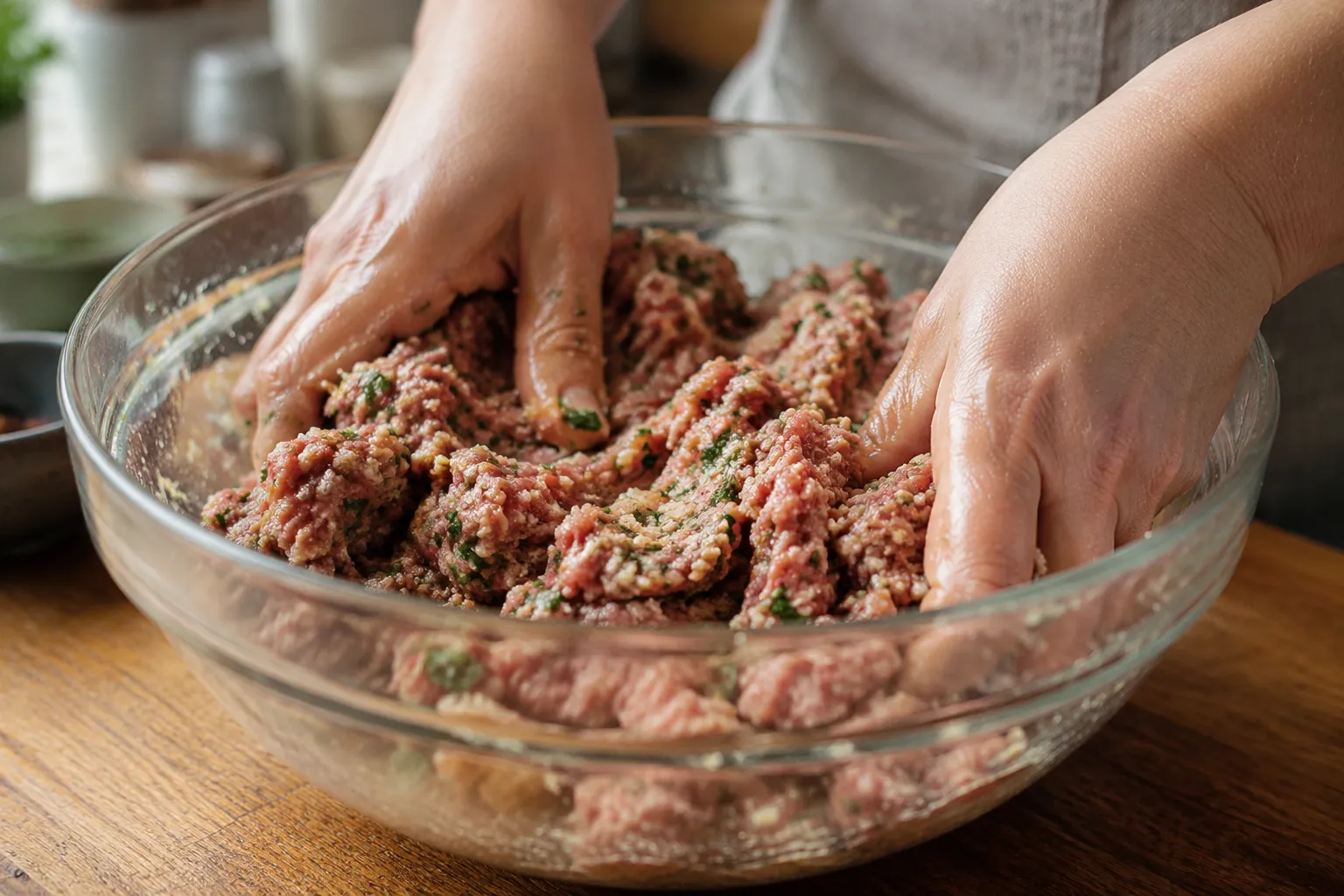
Mixing technique matters more than any single ingredient on the list. The difference between a tender meatball and a tough one comes down to whether you treated the meat gently. Start by tearing your bread into the milk and letting it sit for five full minutes until it looks like soft porridge. Don't rush this; a properly hydrated panade is non-negotiable.
Whisk the eggs, minced garlic, parsley, Parmesan, salt, pepper, and red pepper flakes right into the panade until smooth. Only then do you fold in the beef and pork. Use your fingertips, not your palms, and think of it as distributing rather than kneading. Stop the moment everything looks evenly mixed; another thirty seconds of squishing and you'll compress out the tiny air pockets that keep meatballs light.
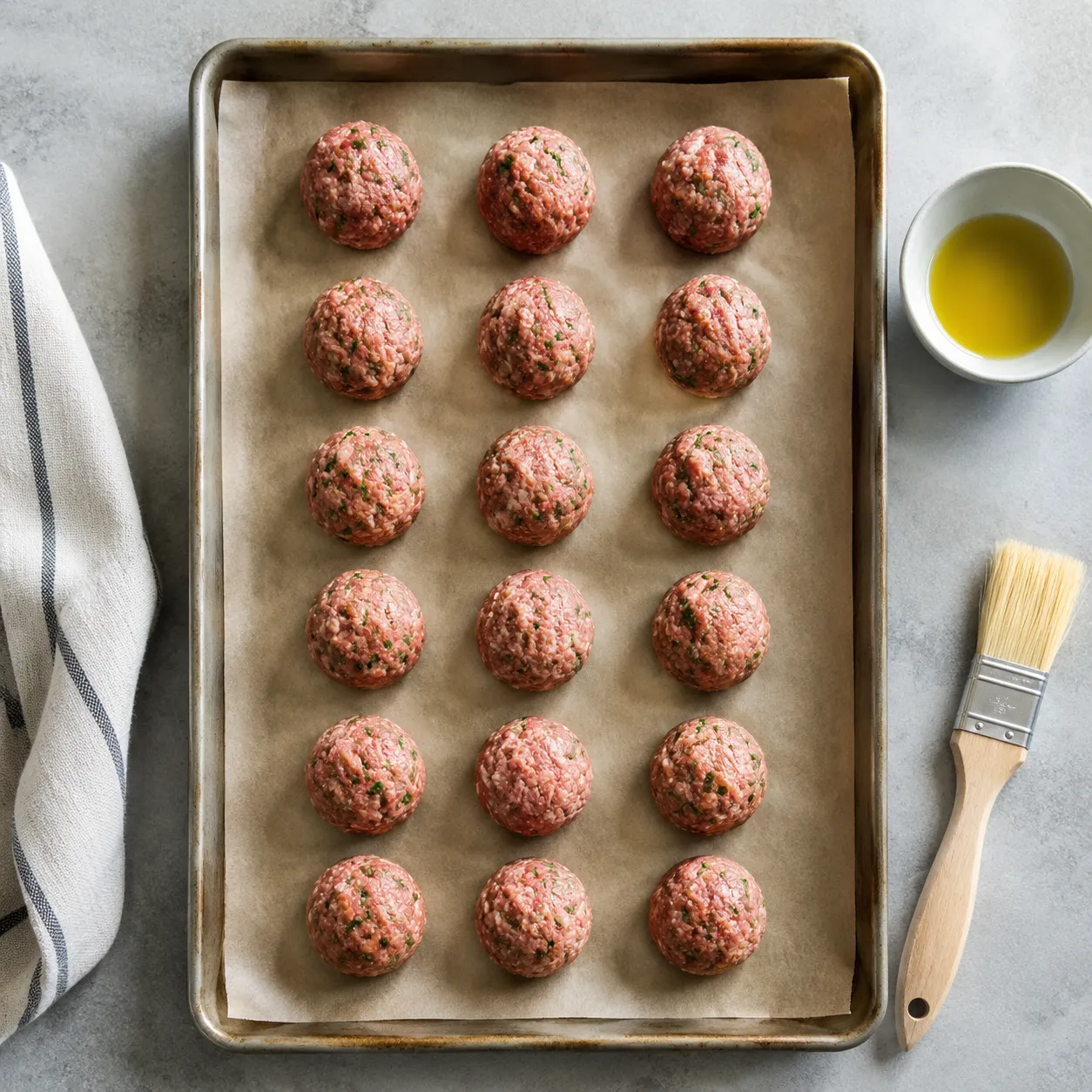
Roll the mixture into roughly 1 1/2-inch balls (a #40 cookie scoop is your best friend here). Aim for about 18 meatballs total to feed six. Line them up on a parchment-lined sheet pan with a little space between each one. If you have time, pop the pan in the fridge for 15 minutes before cooking. Chilling firms up the surface so they hold their round shape and develop a much better sear.
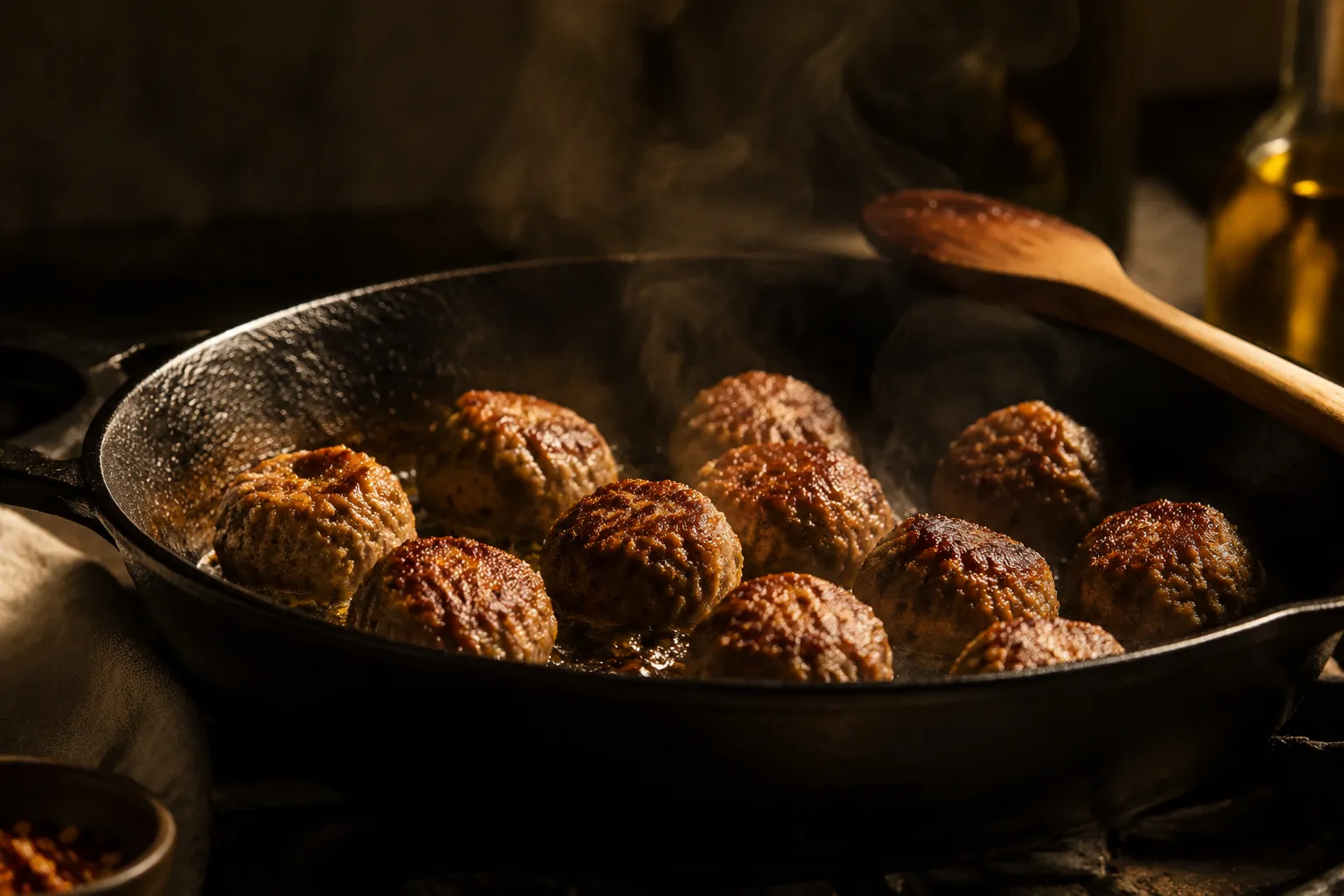
Both methods work, and both have devoted fans in my house. The stovetop sear is the classic approach: a few minutes in olive oil over medium-high heat develops a deep golden crust that delivers that restaurant-style flavor and leaves behind a fond you can build the sauce on. Don't crowd the pan or you'll steam instead of sear, and don't worry about cooking the meatballs through. They'll finish gently in the simmering sauce, which keeps them tender.
The baked meatball recipe is my go-to for big batches and weeknight sanity. Bake at 400°F on a parchment-lined sheet pan for 18 to 20 minutes, until they're browned on the outside and 160°F inside. They won't get the same caramelized crust as the stovetop, but they'll be evenly cooked, perfectly round, and almost entirely hands-off, which means you can be making the sauce or boiling pasta while they roast.
For an air fryer shortcut, set the basket to 380°F and cook in batches of 8 to 10 meatballs for 9 to 11 minutes, shaking halfway through. The high-velocity heat creates a crisp crust very close to pan-searing, with almost no cleanup. Once cooked, drop the meatballs straight into warm marinara to finish, where they'll soak up flavor for as long as you let them simmer.
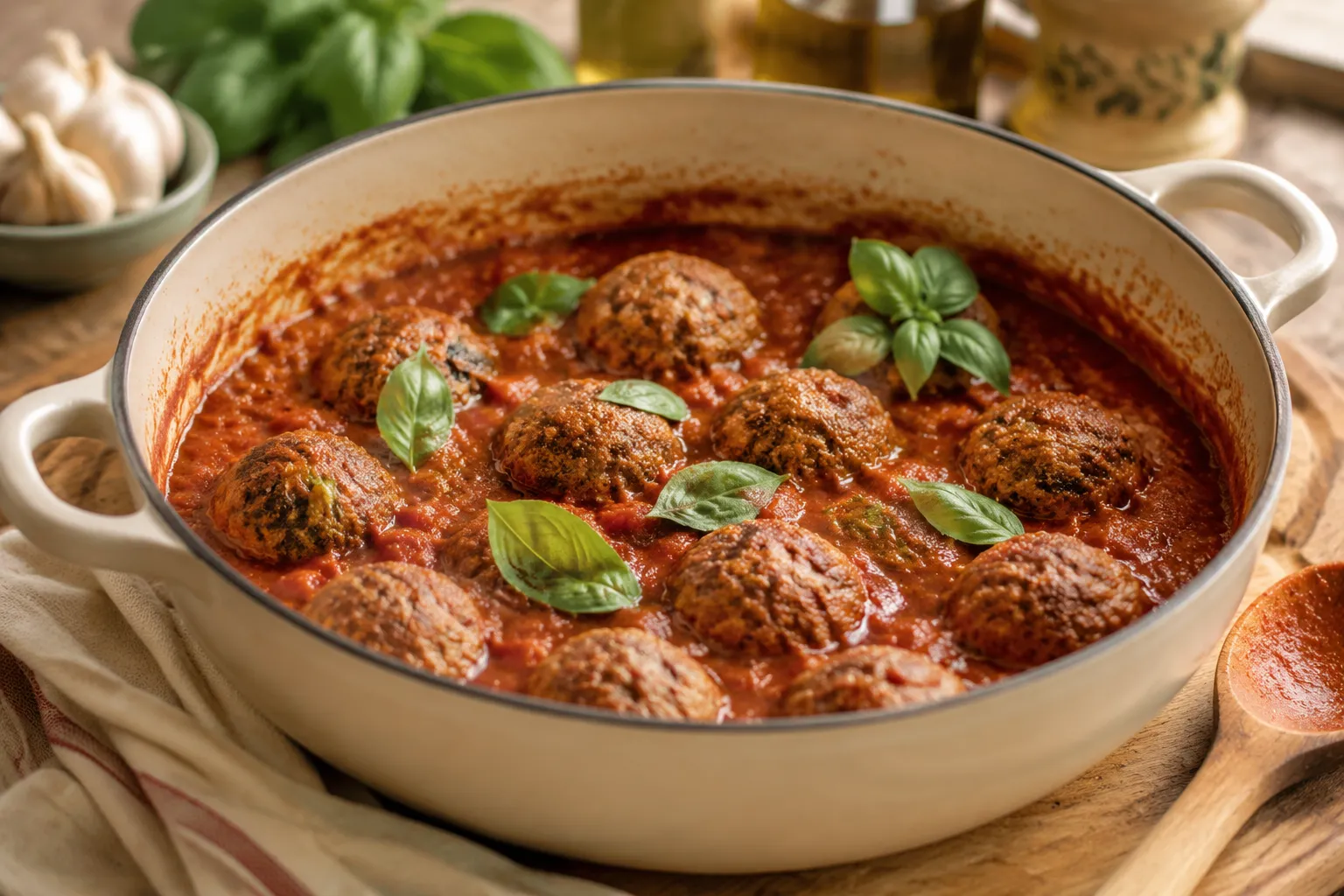
A great meatball deserves a great sauce, and a quick homemade marinara sauce comes together in the time it takes the meatballs to cook. In the same pan you used to brown the meatballs, soften a chopped onion in the rendered fat, then add four cloves of minced garlic and let them bloom for sixty seconds. Pour in a 28-ounce can of crushed San Marzano tomatoes, season with salt, a pinch of sugar, and a flick of red pepper flakes, and simmer for 15 to 20 minutes until thickened.
For a true Sunday sauce, double the batch and let everything simmer together for two to three hours over the lowest flame your stove can manage. The sauce thickens, the meat releases its richness into the pot, and your kitchen will smell like a small trattoria in Brooklyn. This is the version that begs for a torn loaf of crusty bread and a glass of red wine, and it's the kind of project I cherish on cold winter afternoons.
Whichever route you take, finish with torn fresh basil and a final shower of Parmesan right before serving. The basil's perfume blooms in the warm sauce, and the cheese melts into salty, nutty pockets you'll chase across the plate. The marinara sauce will reduce slightly as it sits with the meatballs, so don't worry if it looks a touch loose right when you turn off the heat.
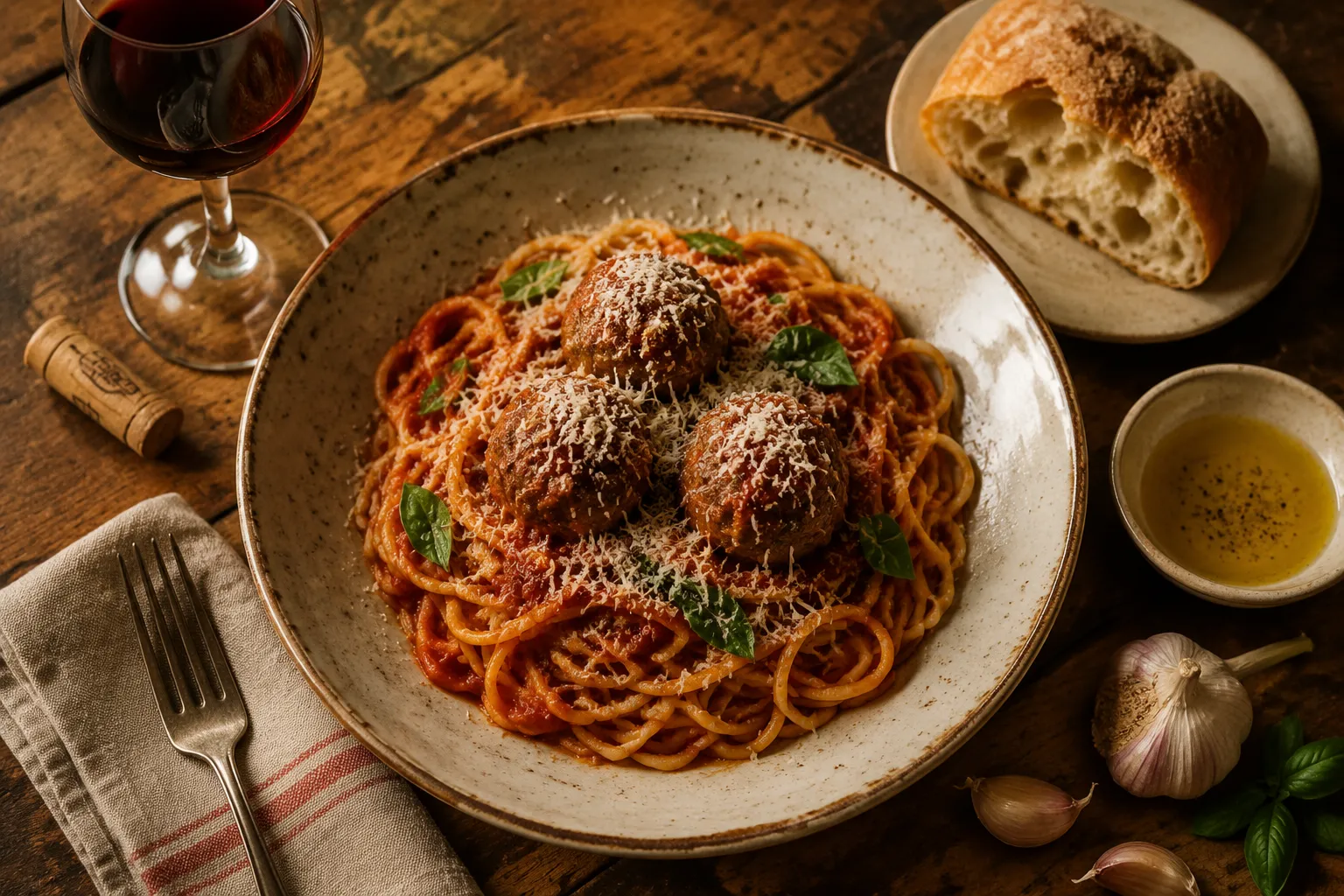
The obvious answer is spaghetti and meatballs, twirled into nests and topped with three saucy spheres and a snowfall of cheese. It's a Tuesday-night classic and an easy weeknight pasta that the entire family agrees on without negotiation. Serve with a simple green salad dressed in lemon and olive oil, a glass of Chianti, and a thick slice of garlic bread to swipe through any leftover sauce.
But this italian meatball recipe deserves more than one stage. Tuck the meatballs into a soft hoagie roll with melted mozzarella for the ultimate sub. Pile them over creamy polenta or buttered orzo. Skewer them on toothpicks for a party platter, or simmer them with sautéed peppers and onions for a sheet-pan dinner. They're also excellent over zucchini noodles or roasted spaghetti squash when you're going lighter on carbs, and they make a wonderful baked ziti when folded into the casserole right before the cheese goes on top.
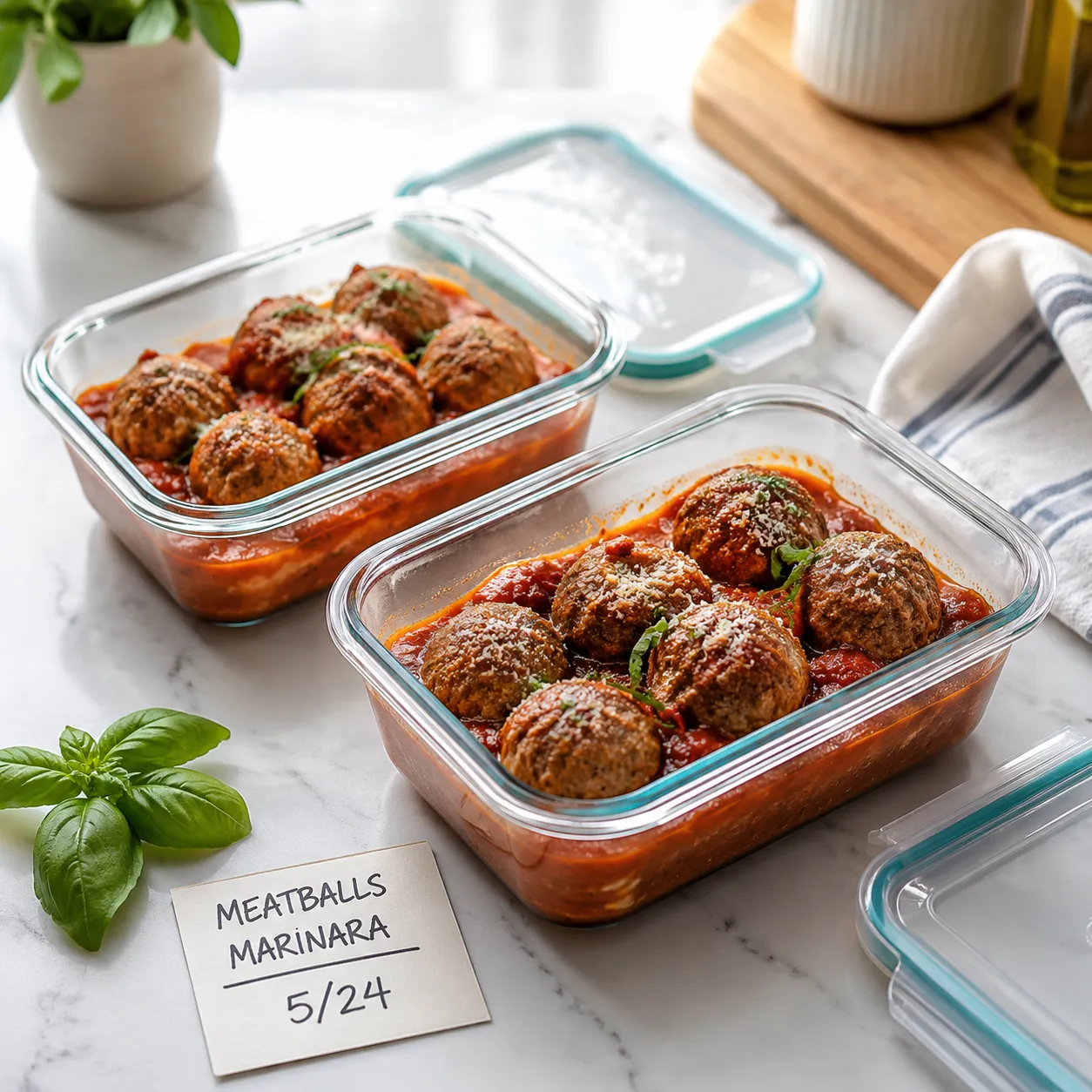
These were practically built for make-ahead cooking, which is part of why this italian meatball recipe earns its keep in my regular rotation. The meatballs reheat beautifully, freeze gracefully, and only get more flavorful after a night in the sauce. Whether you're prepping Sunday dinner for a crowd or stashing portions for hectic Wednesdays, this is the kind of recipe that pays dividends every single time you pull a container from the fridge or the freezer.
Once you have the base technique down, this recipe stretches in dozens of directions. The proportions of fat, panade, and seasoning carry over to almost any global meatball cousin, so don't be afraid to riff.
Cooked meatballs and sauce keep beautifully in an airtight container in the refrigerator for up to four days. Reheat gently on the stovetop over low heat with a splash of water or broth to loosen the sauce, or microwave covered in 90-second bursts, stirring between each.
For longer storage, freeze cooked meatballs in their sauce for up to three months in freezer-safe glass containers or zip-top bags. To freeze raw, arrange shaped meatballs on a parchment-lined sheet pan, freeze solid (about two hours), then transfer to a labeled bag. Cook from frozen by adding 5 to 7 minutes to the bake time, or simmer directly in sauce until they reach 160°F at the center.