Spaghetti Squash: How to Cook It Perfectly Every Time
Ingredients
Scale
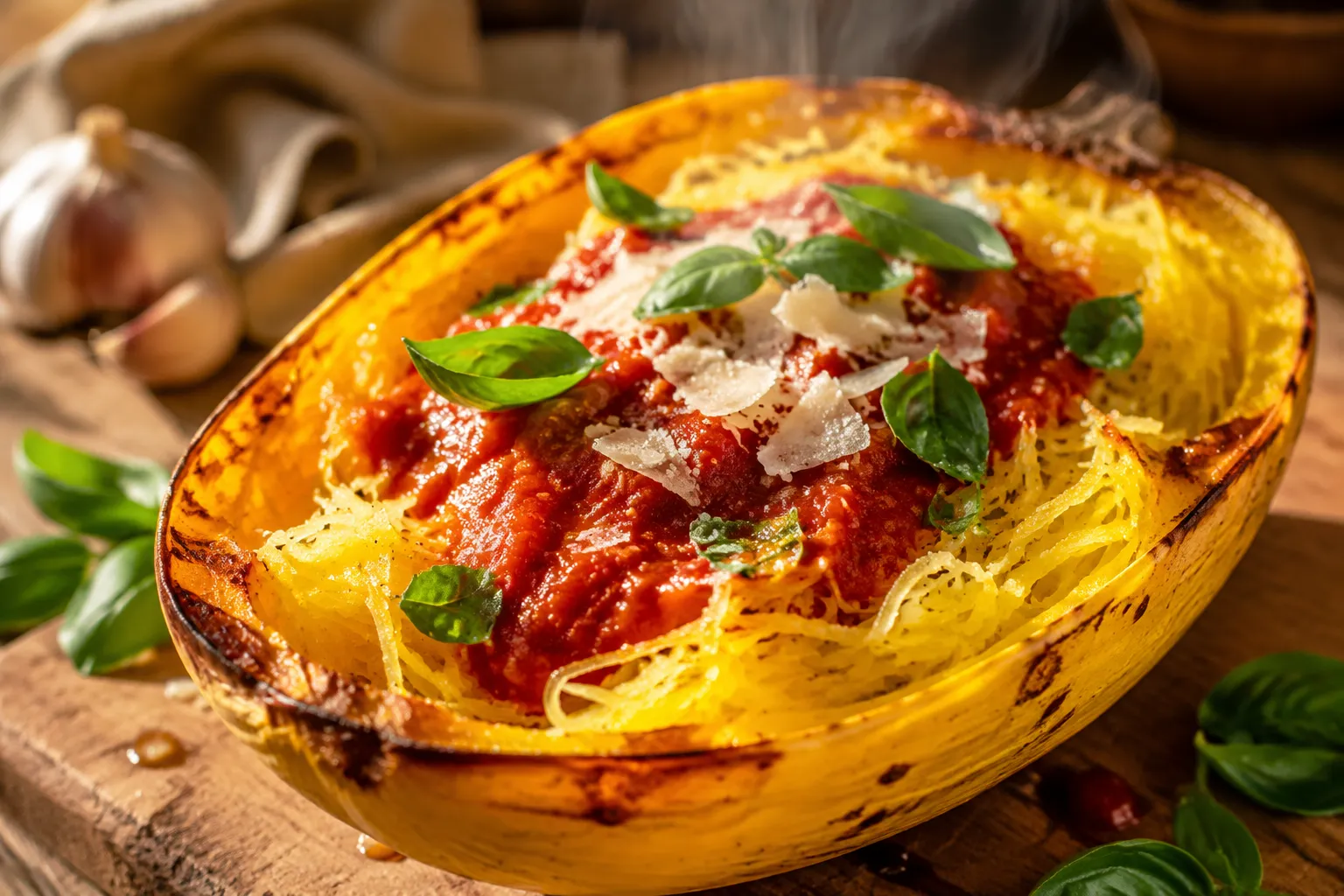
Master spaghetti squash with this foolproof oven-roasting method, plus easy ways to turn those golden strands into a satisfying pasta-style dinner.
Spaghetti squash is one of those magical vegetables that does most of the work for you. Roast it in the oven, drag a fork through the flesh, and what's left is a pile of golden, noodle-like strands ready to be twirled, sauced, and called dinner. It's naturally gluten-free, lower in carbs than wheat noodles, and forgiving enough that even a distracted weeknight cook can pull it off without much thought.
I'll be honest — I spent years roasting these badly. Cut-side up, sliced into rings, scooped too early. The strands came out either crunchy or sopping wet. Once I locked in the cut-side-down method at 400°F, everything changed. The flesh steams gently against the hot pan, the edges caramelize just enough, and the strands separate into long, tender ribbons instead of mushy fluff.
This is the post I wish I'd had back then. We'll cover how to cook spaghetti squash in the oven (my gold standard), three faster alternatives for busy nights, and a handful of saucy ideas that turn it into actual dinner. By the end you'll know exactly when to pull it from the oven, how to shred it cleanly, and how to keep the strands from going watery.
It's a winter squash with a hard, pale-yellow shell and a hollow seed cavity surrounded by stringy flesh that, once cooked, pulls apart into noodle-shaped strands. Despite the name, this is nothing like the soft, thin-skinned summer varieties (zucchini, yellow crookneck, pattypan) — it's dense, oblong, and keeps for weeks at room temperature. It belongs to the Cucurbita pepo family, the same crew that gives us pumpkins and acorn squash.
You'll find it at peak quality from early fall through late winter, though most grocery stores carry it year-round now. When picking one, look for a squash that feels heavy for its size, has a firm dry stem, and shows no soft spots, cracks, or mold near the stem. The skin should be a deep, even yellow — pale or greenish ones are underripe and will roast up bland and stringy.
The flavor is mild and subtly sweet, somewhere between butternut and zucchini, with a clean vegetal finish that fades into the background as soon as you add sauce. That neutrality is its superpower: it plays well with bold marinara, garlicky butter, creamy alfredo, browned sage and brown butter, or a simple olive-oil-and-parmesan setup. Think of it as a blank-canvas noodle that costs three dollars and feeds four.
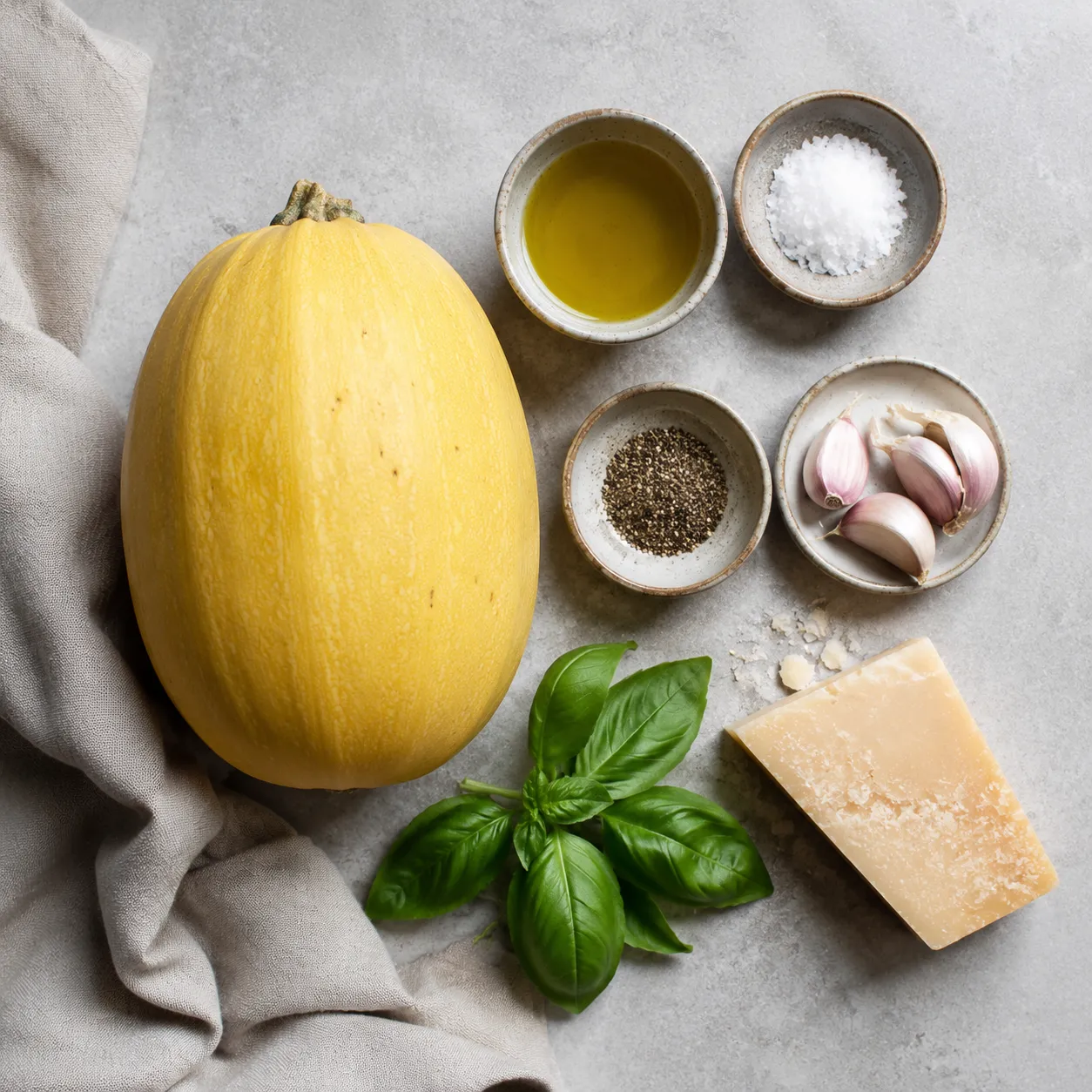
The beauty of a basic roasted spaghetti squash is how few groceries it actually demands. You probably already have everything you need sitting in the kitchen right now.
Roasting at 400°F cut-side down is the method I default to for almost any squash dinner. It's mostly hands-off, the texture comes out consistent every single time, and the squash halves double as their own pretty serving bowls. Here's the play-by-play, with the same steps you'll find in the recipe card below.
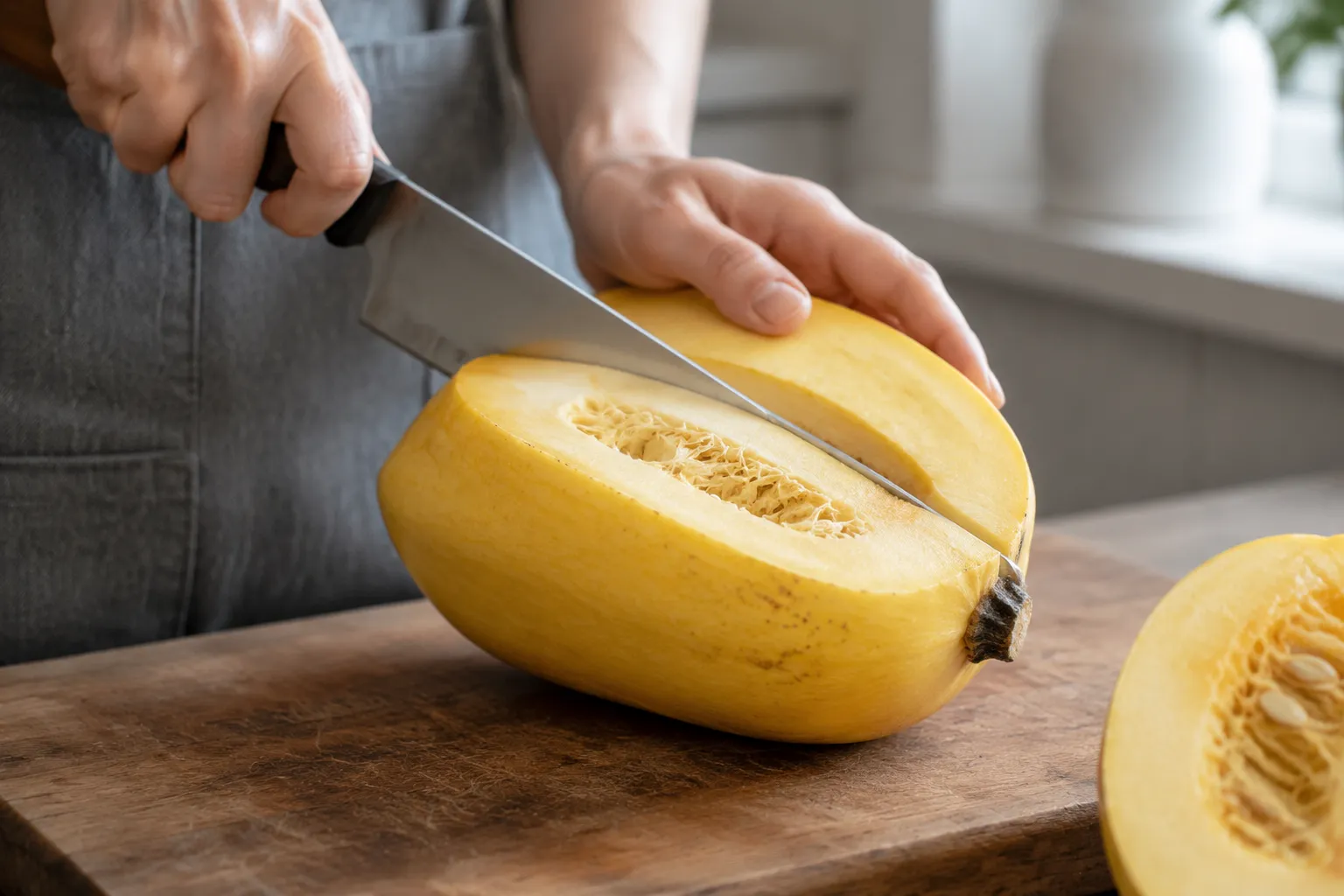
Halve and seed safely. Set the squash on a damp kitchen towel so it doesn't roll out from under your knife. Slice a thin sliver off the stem end to create a flat base, then stand the squash up and cut down the long way from top to bottom. Use a large spoon or an ice cream scoop to dig out the seeds and stringy pulp from the center, the same way you would with a pumpkin. (Save the seeds — they're great roasted with olive oil and salt.)
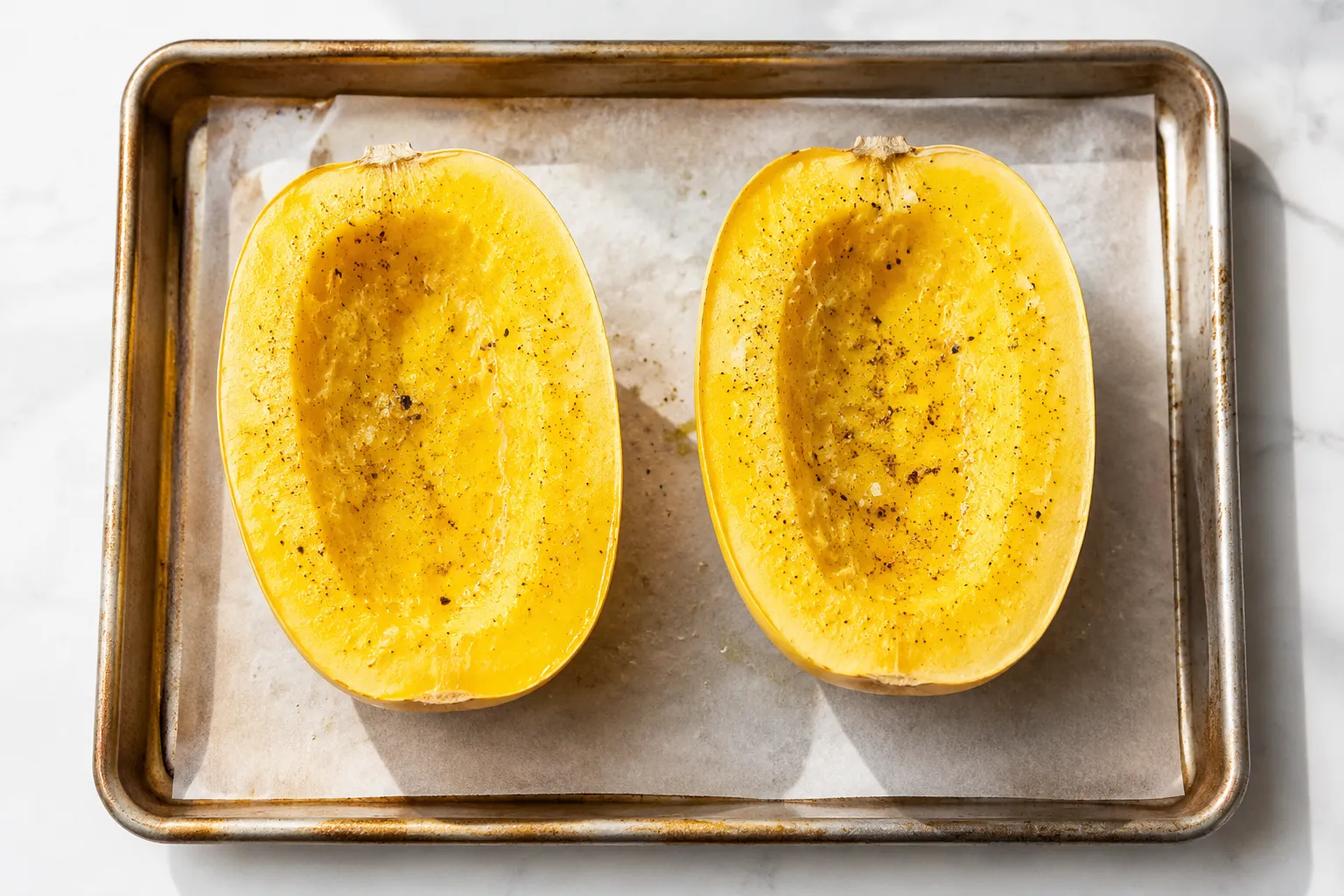
Season and roast cut-side down. Brush the cut faces with olive oil, season generously with salt and pepper, and place them face-down on a parchment-lined sheet pan. Roast at 400°F for 35 to 45 minutes, depending on size. The cut-side-down position traps steam against the flesh, which is what gives you long, tender strands instead of dry or stringy ones. Don't open the oven before the 30-minute mark.
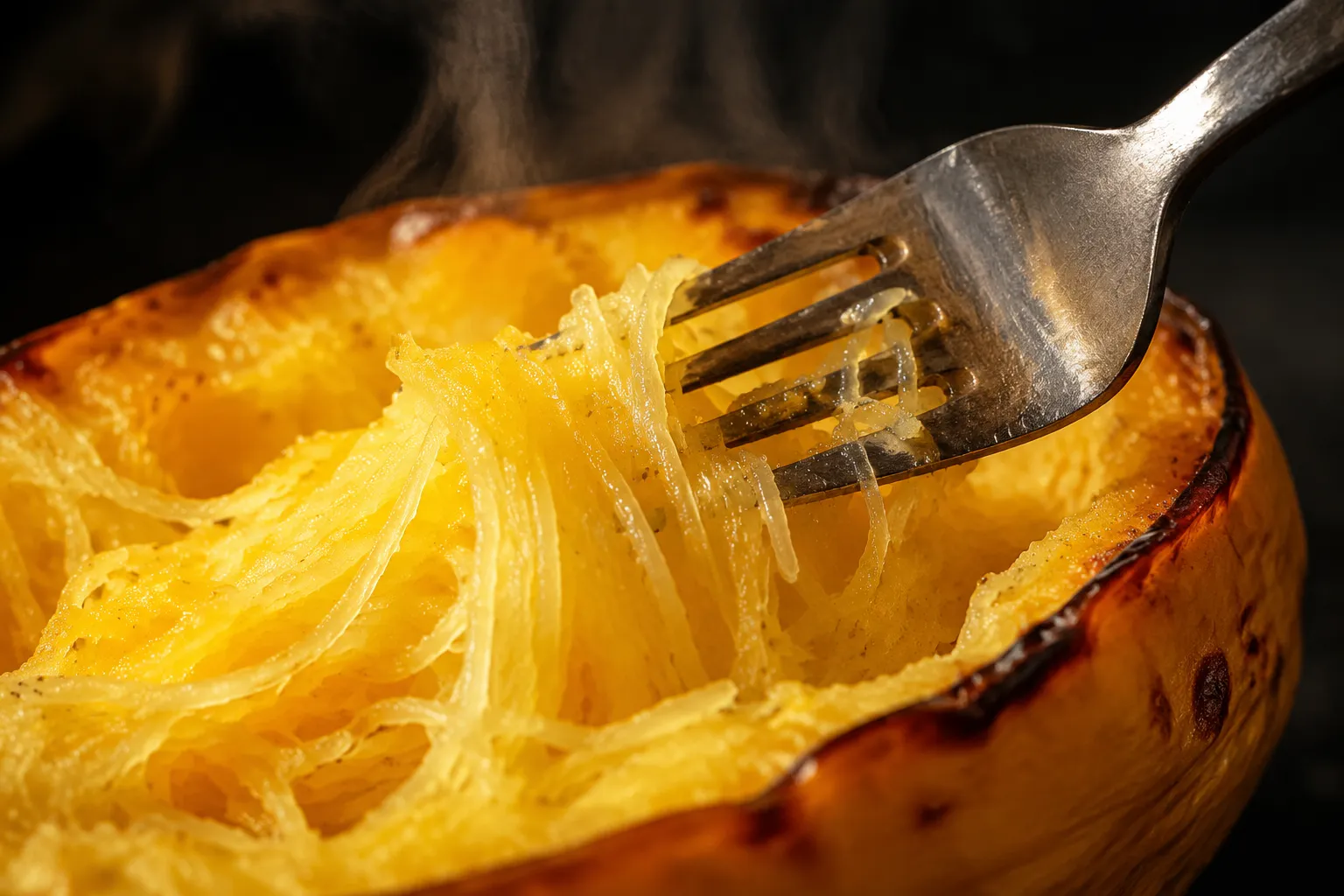
Shred into noodles. Pull the pan from the oven once a fork easily pierces the skin and the flesh feels tender when pressed. Let the halves rest cut-side down on the pan for about 5 minutes (this drains excess moisture onto the parchment, not into your dinner). Then flip them, drag a fork across the flesh from end to end working with the natural grain of the strands, and watch them release into long, pasta-like ribbons.
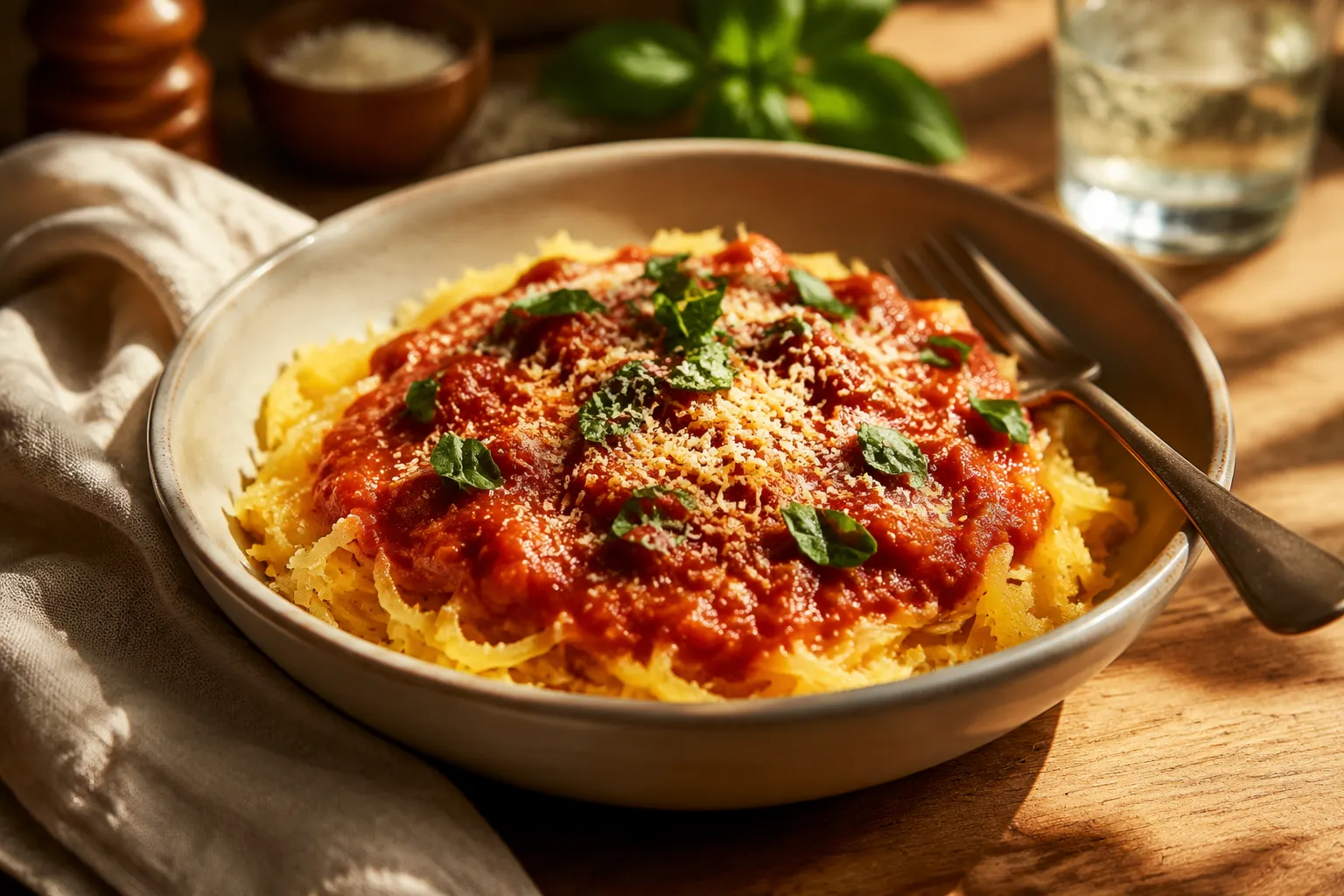
The oven is my favorite, but it's not the only road. If you're short on time or oven space — or you just don't want to heat up the whole kitchen in summer — these alternative methods all work. Just expect slightly different texture: microwave strands tend to be softer and steamier, while air-fryer halves get the deepest caramelization.
For meal-prep weekends, I'll often run the oven method for two squashes at once and stash the strands. They're one of my favorite gluten-free pasta alternatives to keep ready in the fridge for the busy stretch of the week.
Here's where the fun starts. Once you have a sheet pan of tender strands, dinner becomes mostly an assembly job. These three are on heavy rotation in my kitchen and lean firmly into easy weeknight dinners territory — under 15 minutes from "squash is roasted" to "we're eating."
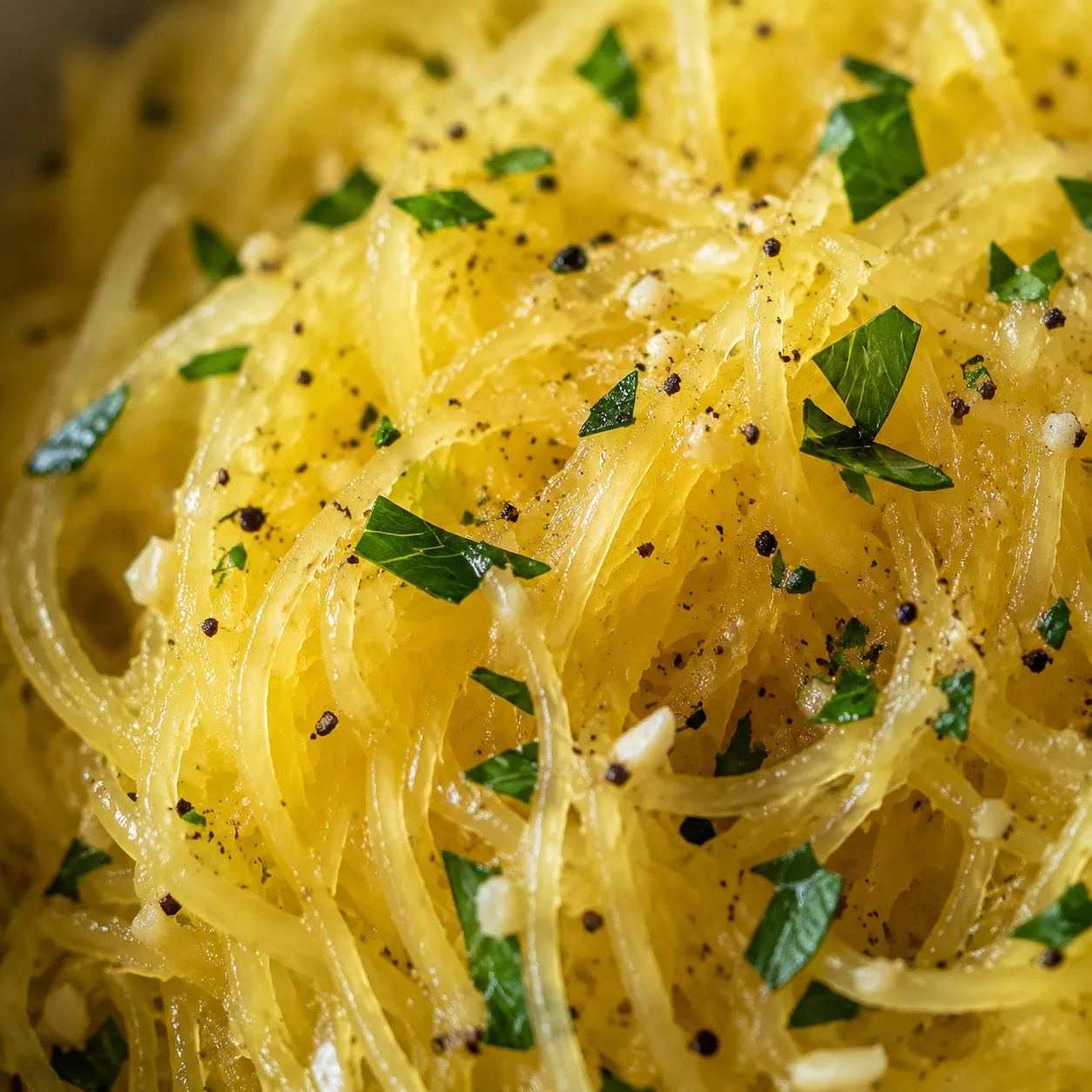
Classic marinara with parmesan. Warm a jar of good marinara, ladle it generously over the strands right inside the squash boat, and shower with grated parmesan and torn basil. Add browned Italian sausage, a few quick turkey meatballs, or a spoonful of ricotta if you want to make it heartier.
Garlic butter and herbs (summer squash pasta style). Toss warm strands with melted butter, a couple of cloves of minced garlic sizzled until just fragrant, lemon zest, chopped parsley, and a generous pinch of salt. Finish with red pepper flakes and parmesan. This is the closest thing to a true summer squash pasta you can pull off in the dead of winter, and it takes about five minutes start to finish.
Creamy chicken alfredo bowls. Top strands with shredded rotisserie chicken and a quick alfredo (butter, heavy cream, parmesan, a clove of garlic, lots of black pepper). It eats like serious comfort food but skips the heavy carb-crash that a bowl of fettuccine alfredo can bring.
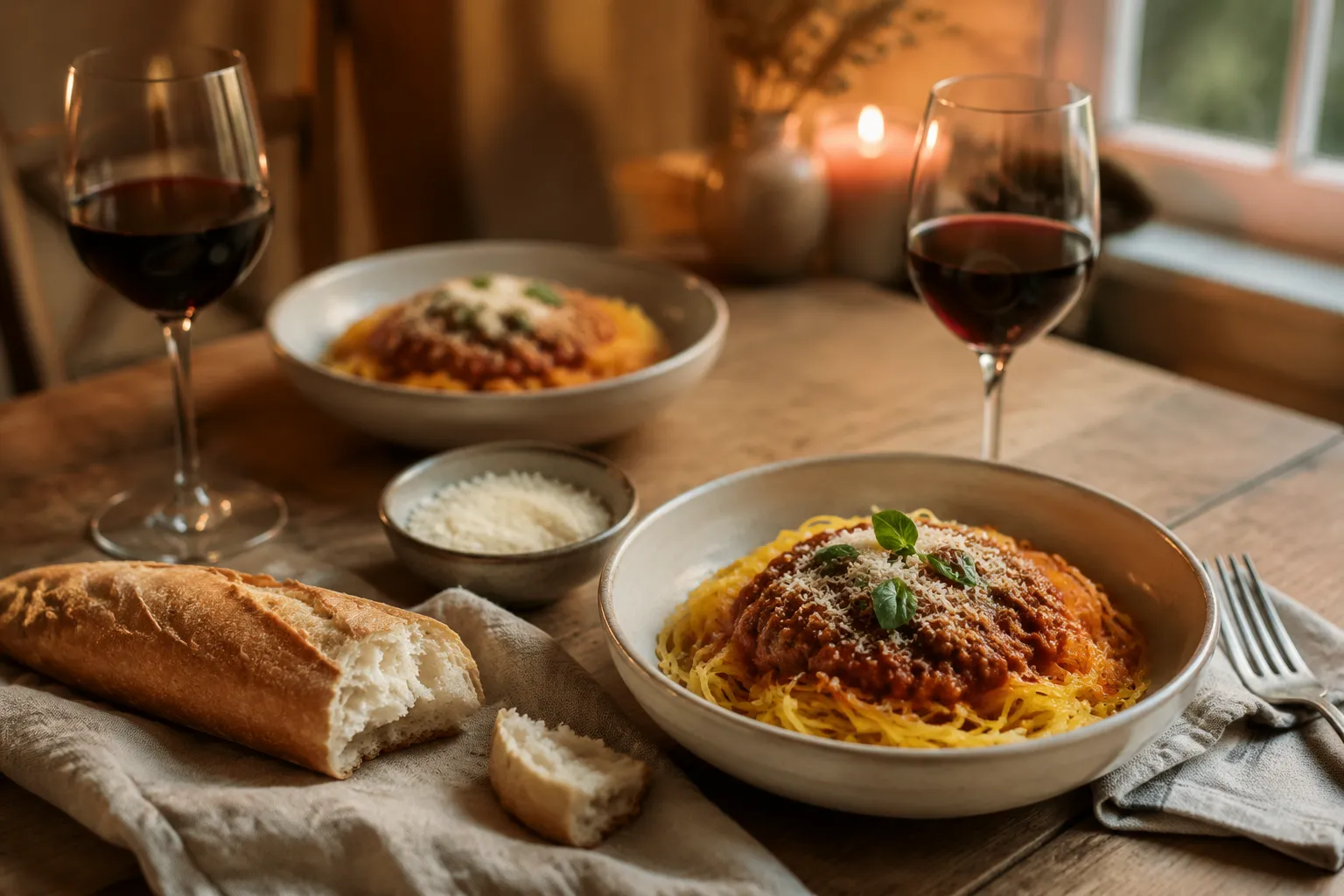
Treat a saucy squash boat the way you would a bowl of pasta. A simple arugula salad with lemon and shaved parmesan balances the richness, and a hunk of crusty bread mops up the marinara. A medium-bodied red — Chianti, Sangiovese, or even a chilled Beaujolais — handles tomato sauces beautifully, while a buttery Chardonnay flatters the alfredo version.
For a fuller spread, roast a second sheet pan of vegetables alongside the squash (broccolini, brussels sprouts, or cherry tomatoes all behave themselves at 400°F) and you've got an entire dinner with one oven, one pan, and almost no babysitting. It's the kind of meal that quietly turns Tuesday into something you actually look forward to.
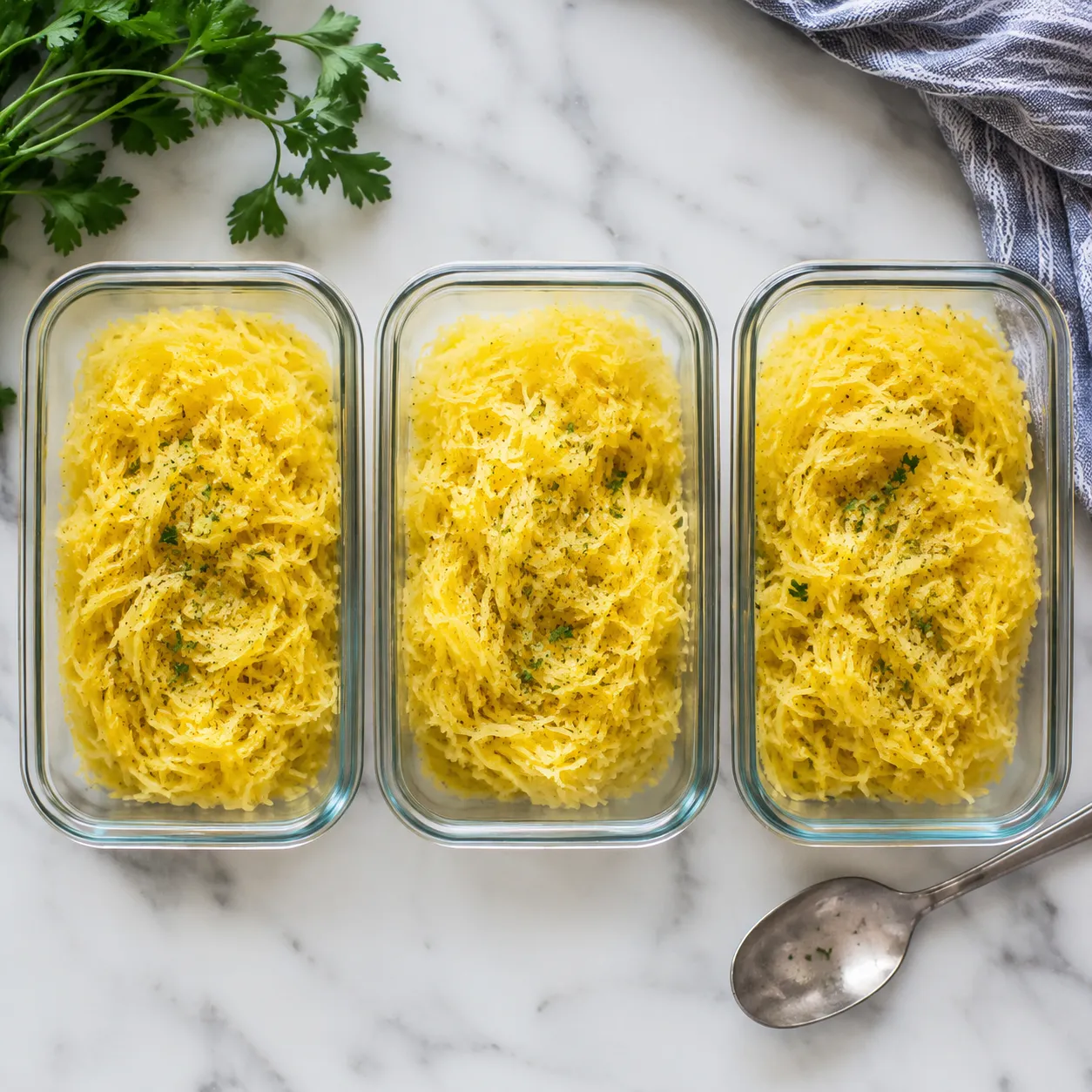
Once you nail the cut-side-down oven method, this becomes one of those quiet kitchen wins you'll lean on through the cooler months. It's affordable, naturally gluten-free, freezer-friendly, and endlessly remixable — the kind of vegetable that can stretch from a quick one-bowl dinner to a meal-prepped lunch rotation without losing any of its appeal. Roast a couple, stash the strands, and you'll have the foundation for three or four meals before the week is even halfway through.
The base method works as a launching pad for dozens of flavor directions. Once you've got tender strands, lean into whatever sauce or cuisine your fridge is aimed at this week:
Cooked strands keep in an airtight container in the refrigerator for 4 to 5 days. Store them naked (no sauce) so they don't get soggy, and reheat in a hot dry skillet for 2 to 3 minutes — this drives off excess moisture and gives you much better texture than the microwave will. Whole uncooked squash will keep on the counter for 2 to 3 months in cool, dry conditions, no fridge needed.
For longer storage, freeze cooked strands flat in a zip-top bag for up to 3 months. Thaw overnight in the fridge or directly in a hot pan over medium heat. Frozen strands release a lot of water as they thaw, so plan to drain or blot them thoroughly before saucing. They shine in saucy preparations like baked casseroles, stuffed boats, or soups rather than dishes where you want the strands to hold their shape.