Gluten Free Pizza: The Best Crust Recipe (Crispy & Chewy)
Ingredients
Scale
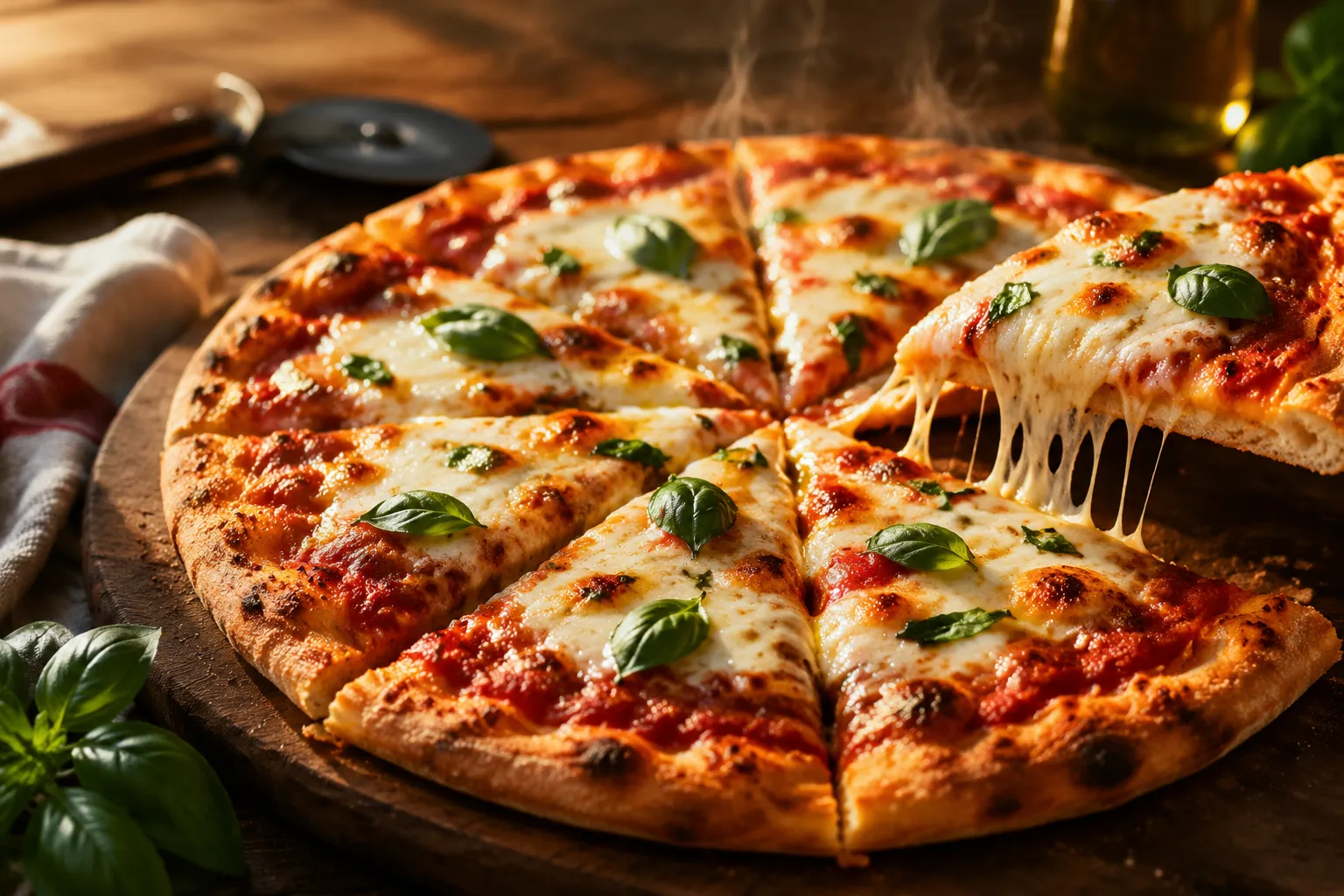
A gluten free pizza with a genuinely crispy bottom and chewy center, made from a simple one-bowl dough that holds up under any topping you throw at it.
Gluten free pizza gluten free baking at home should feel exciting, not like a compromise, and this crust is the one I make when I want that pizzeria-style bite: crisp underneath, lightly chewy in the middle, and sturdy enough for a generous sweep of sauce and cheese. It is built from a simple one-bowl dough, a reliable gluten free flour blend, and a little psyllium husk powder for the stretch that gluten-free crusts so often miss. The result is a weeknight-friendly pie with golden edges, a tender crumb, and zero sad, cracker-dry energy.
This recipe is for anyone who has missed the ritual of Friday night pizza: the hot pan, the smell of tomato and olive oil, the first stretchy slice lifted from the board. The dough rests just long enough to hydrate, then gets pressed onto parchment, par-baked for structure, topped, and finished until bubbly. If you have celiac disease or cook for someone who does, choose certified gluten-free ingredients and keep your prep surfaces, pans, and utensils safely separate from wheat flour.
Think of this as your dependable house gluten free pizza crust recipe: straightforward, flexible, and deeply satisfying. It gives you the familiar wheat-style experience without asking for a specialty flour blend you will only use once. Add a salad, a little chili oil, and maybe garlic knots for the gluten-eaters at the table, and dinner is done.
The magic here is a combination of hydration, psyllium, and a hot surface. Gluten-free flours need more time with liquid than wheat flour because they absorb moisture slowly; that short rest transforms the mixture from sticky batter into a dough you can actually shape. Psyllium husk powder acts like a flexible binder, creating the bend and chew you want in a pizza base gluten free dough rather than a crumbly flatbread. Olive oil adds tenderness and helps the bottom brown, while yeast brings subtle flavor even though this is not a long-rise dough.
The par-bake is the other non-negotiable piece. It sets the crust before toppings add weight and moisture, so the final pizza bakes up crisp instead of gummy. This method is especially helpful for anyone trying to recreate a classic gluten free crust pizza with a bubbling top and a sliceable, foldable base. In short: hydrate, rest, press, par-bake, top, finish.
The ingredient list is intentionally small, but each item matters. Start with a cup-for-cup gluten free flour blend that already contains xanthan gum; this gives the dough enough structure without needing a pantry full of starches. If your blend does not include xanthan gum, the crust may spread more and feel less elastic, so add a small amount or use a different blend for best results. The best gluten free flour blend for this style usually contains rice flour, tapioca starch, potato starch, and a binder.
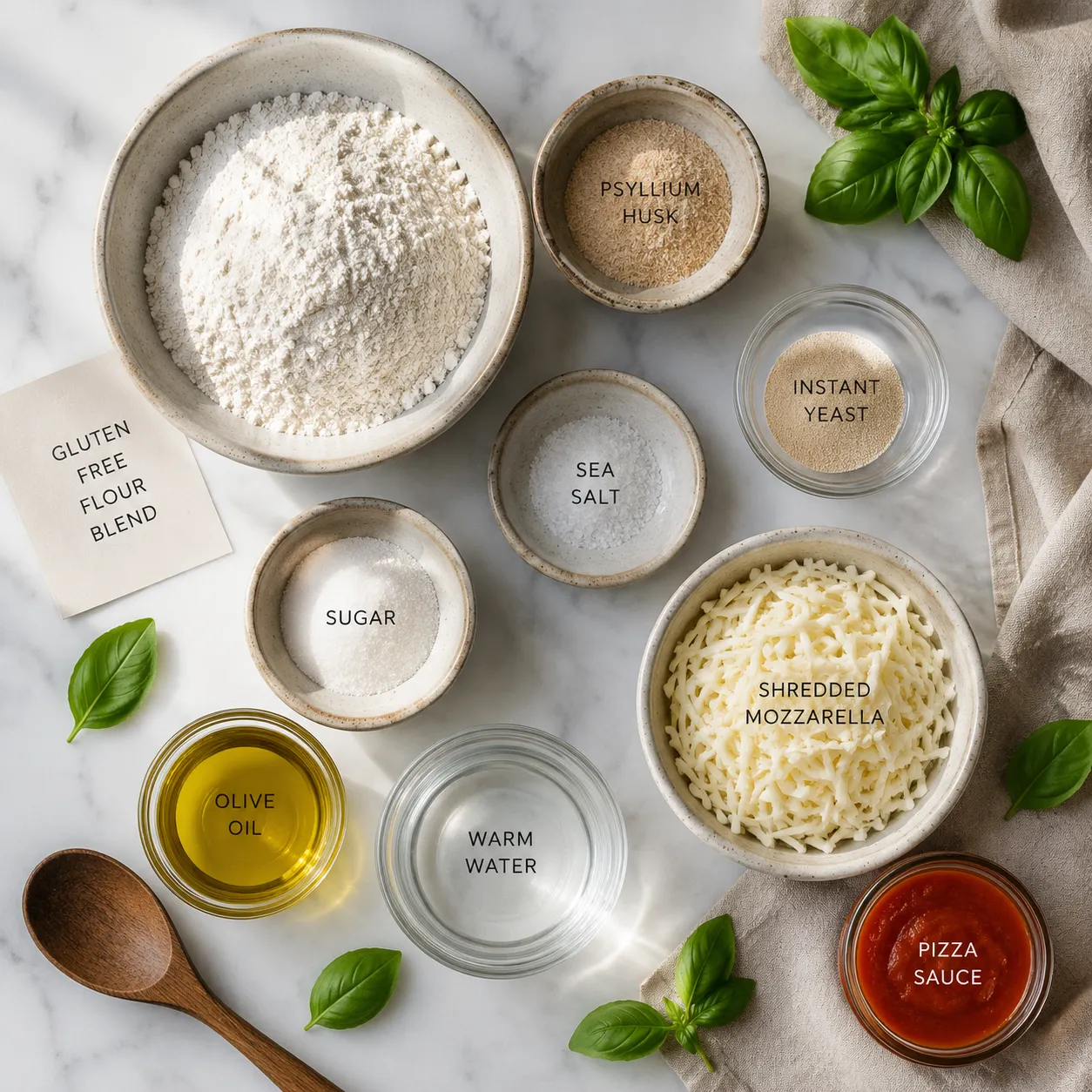
Psyllium husk powder is the texture-maker. When it meets warm water, it forms a gel that mimics some of gluten’s stretch, helping the dough hold air and slice cleanly. Instant yeast and a teaspoon of sugar provide flavor and a gentle lift; the sugar also helps the crust brown beautifully in a short bake time. Fine sea salt seasons the dough all the way through, and olive oil keeps the crumb tender while encouraging a crisp underside.
For toppings, use a thick pizza sauce rather than a watery marinara. Shredded mozzarella melts reliably, but dairy-free shreds work well if you want a gluten free dairy free pizza. If you are building a plant-based pie, a vegan mozzarella substitute or spoonfuls of cashew cream can give you that creamy, melty feel without dairy. Just keep toppings light enough that the crust can shine.
This gluten free pizza gluten free method begins in one mixing bowl, which is exactly how I like a weeknight dough to behave. Whisk the dry ingredients together first so the psyllium, yeast, salt, sugar, and flour are evenly distributed. Then pour in warm water and olive oil, stirring until the mixture looks shaggy, sticky, and almost too wet. That is normal; gluten-free doughs often look more like thick paste before they hydrate.
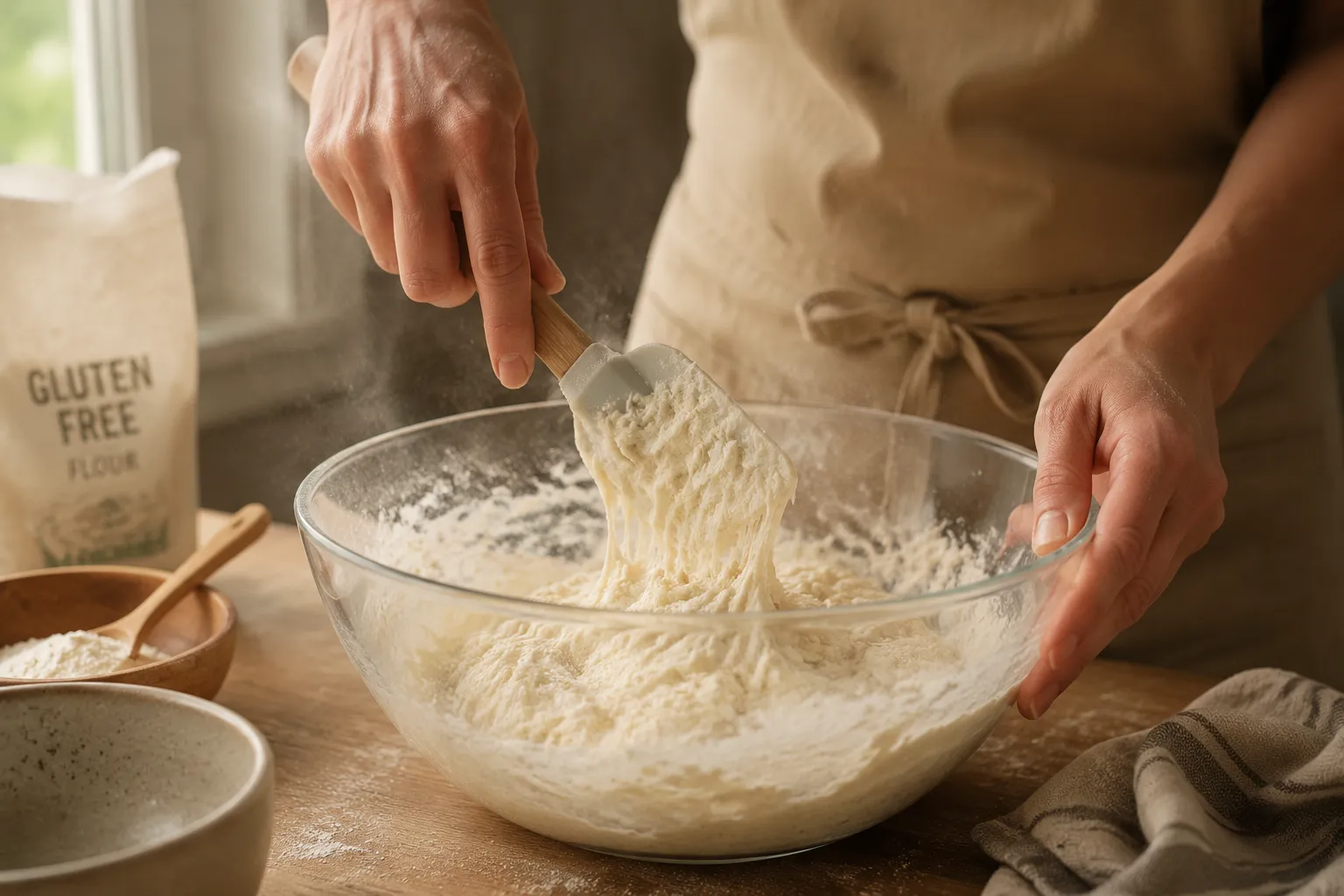
After mixing, give the dough a short rest. During those minutes, the psyllium thickens, the flour absorbs water, and the dough becomes easier to handle. This is also where many gluten-free recipes go wrong: if you rush straight to shaping, the dough can smear, tear, and bake up dense. A good gluten free pizza dough recipe should build in hydration time, even when it skips a long yeast rise.
Shaping gluten-free pizza is less about tossing and more about pressing. Transfer the rested dough to a sheet of parchment and oil your fingertips lightly so they glide instead of stick. Press from the center outward, leaving a slightly thicker rim around the edge to mimic that classic pizzeria border. If the dough resists or pulls up, pause for a minute and let it relax before continuing.
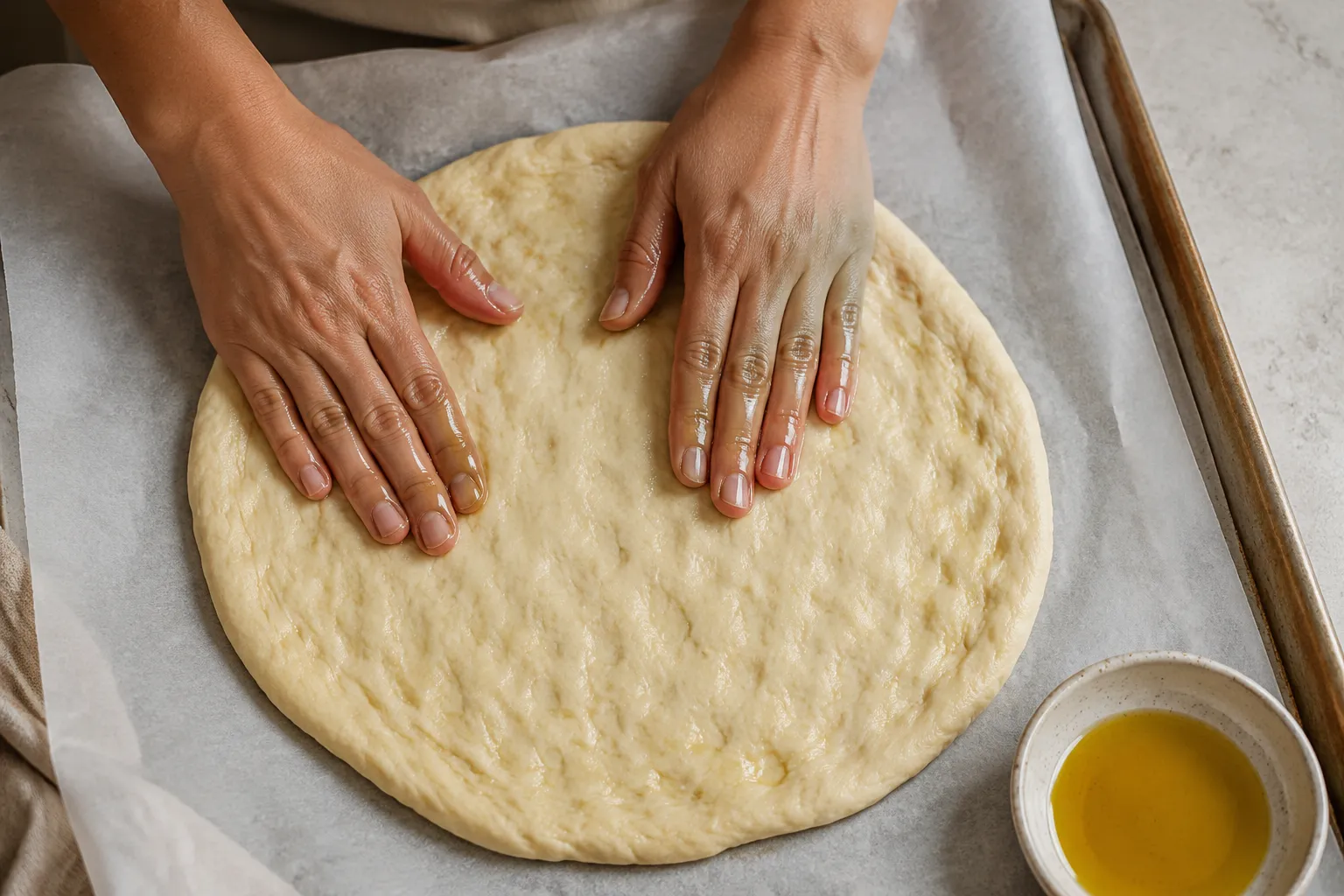
Aim for an even 11- to 12-inch round. Thin spots will crisp quickly, while thick patches can stay soft in the center, so take a moment to smooth and even the base. This is one reason parchment is so helpful: it lets you shape, transfer, and par-bake without adding excess flour. Once shaped, brush the surface with a touch of olive oil to help the crust color and protect it from sauce.
For the best lift, preheat your oven fully before the dough goes in. A pizza steel or stone is excellent, but an inverted sheet pan works surprisingly well when heated until blazing hot. The goal is instant heat on the bottom so the crust begins crisping the moment it hits the oven.
Par-baking is the step that makes this gluten free pizza gluten free crust feel like real pizza instead of a soft bread round. The first bake dries and sets the surface, gives the underside a head start, and creates a sturdy foundation for sauce and cheese. You are not looking for deep browning yet; the crust should be set, lightly golden in spots, and easy to lift from the parchment. If the center still looks shiny or raw, give it another minute or two.
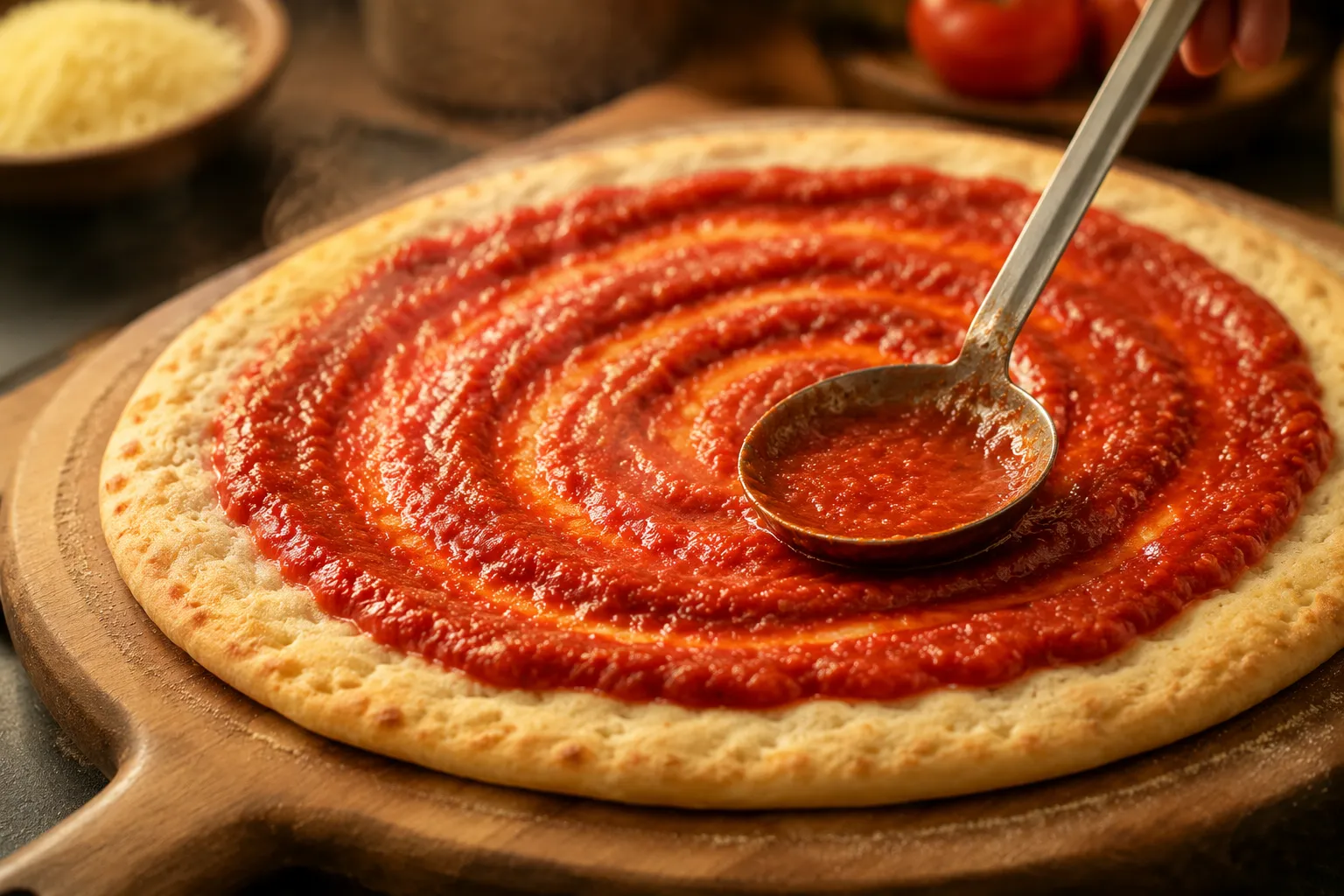
Once par-baked, the crust can be topped right away. Spread sauce in a thin, even layer with the back of a spoon, leaving the rim bare so it can crisp and blister. This is where a thick sauce matters, and if you are cooking without dairy, a dairy free pizza sauce made with good tomatoes, olive oil, garlic, and herbs is perfect. Avoid pooling sauce in the middle, which can steam the crust and soften the crumb.
Add cheese, basil, vegetables, pepperoni, or whatever you love, but think in layers rather than piles. Gluten-free crust has structure, especially with psyllium, but too many wet toppings can overwhelm it. A moderate hand gives you those browned cheese bubbles, crisp edges, and clean slices. Return the pizza to the hot oven until the cheese melts and the crust is deeply golden.
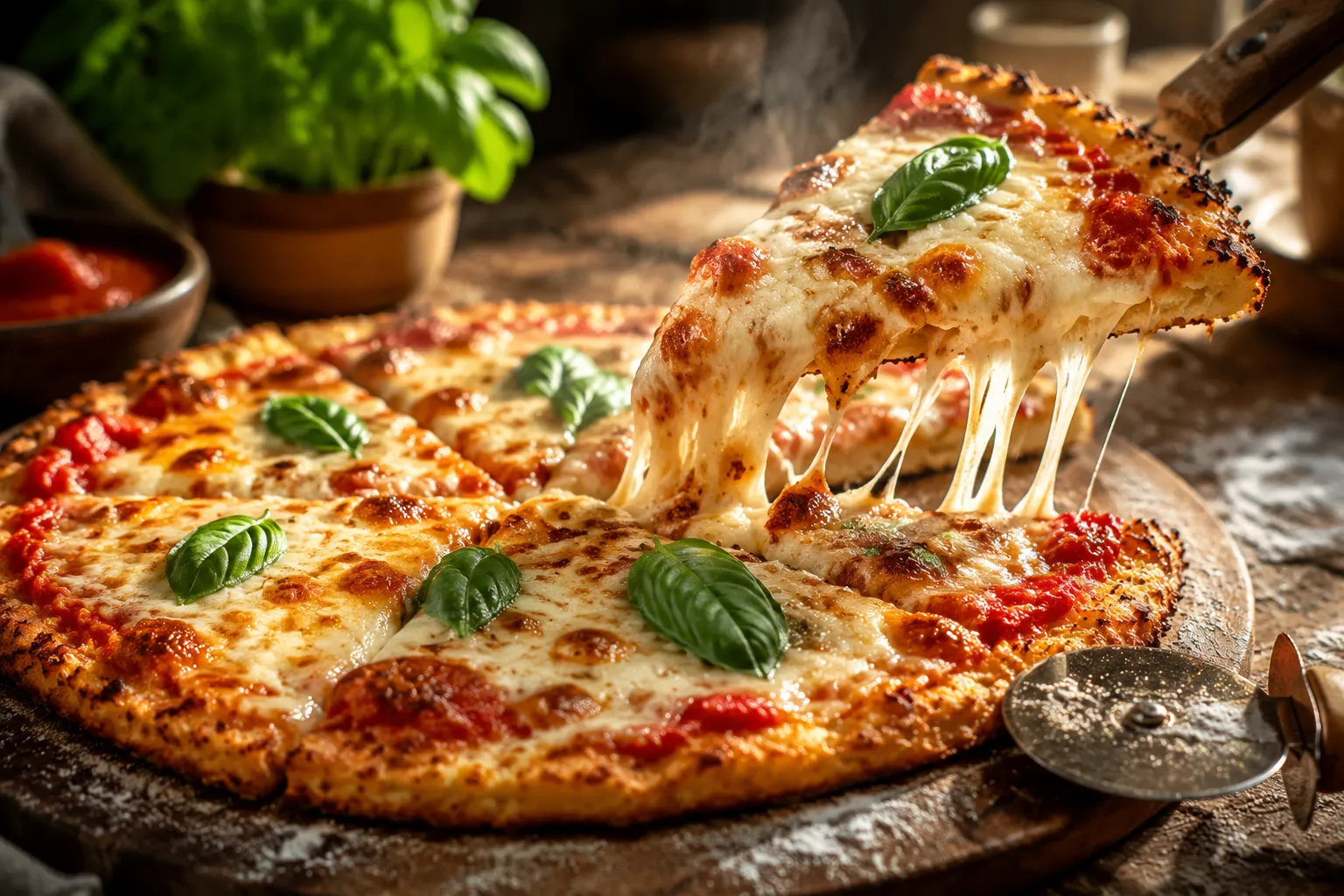
The simplest version is a margherita-style pizza with red sauce, mozzarella, fresh basil, and a drizzle of olive oil after baking. It lets you taste the crust and gives you those bright red, white, and green slices that disappear as soon as they hit the table. For a slightly richer pie, add roasted garlic, a pinch of chili flakes, and shaved parmesan if dairy is on the menu. A handful of arugula tossed with lemon is also wonderful on top after baking.
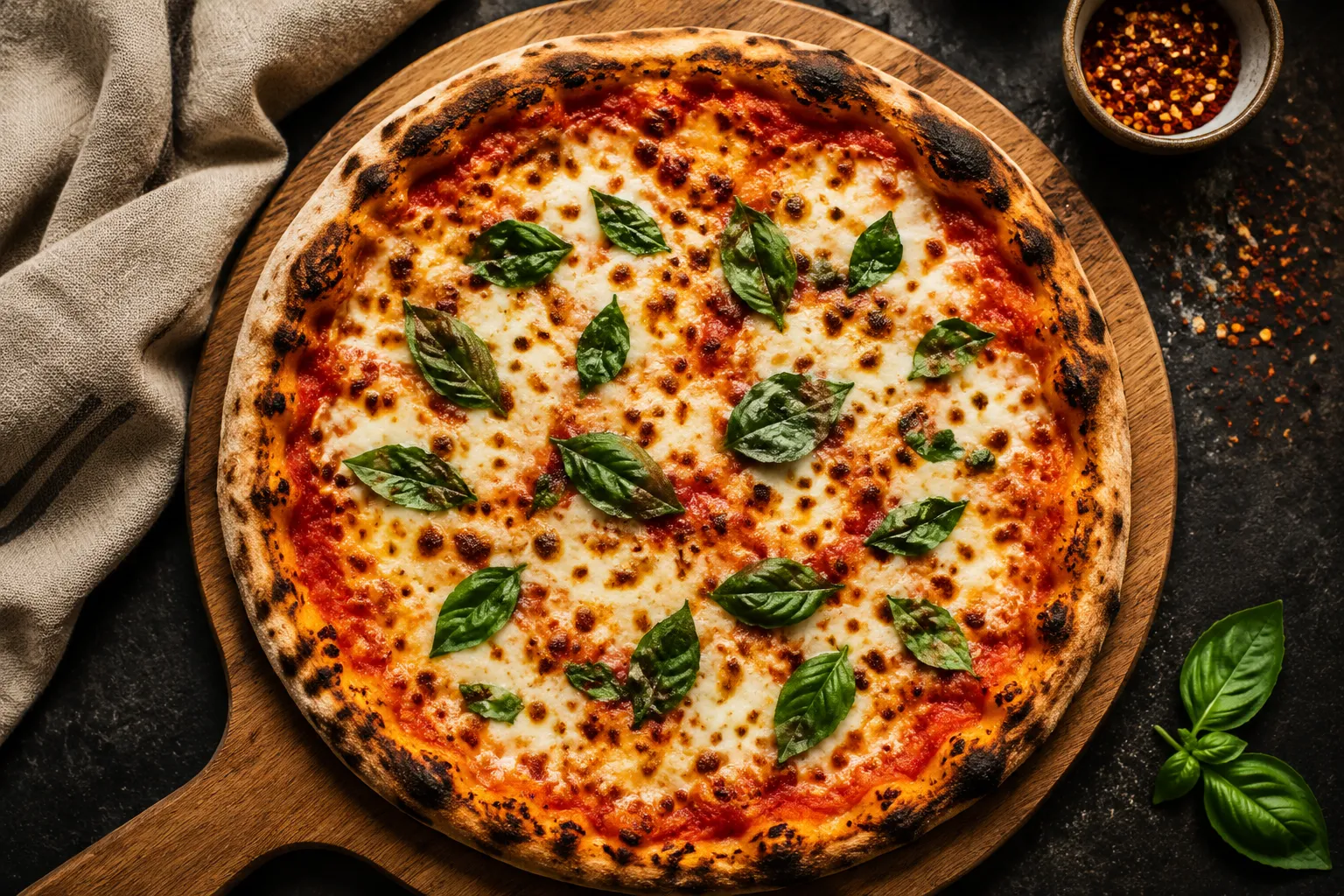
For a gluten free dairy free pizza, use dairy-free shreds sparingly and add flavor with olives, roasted peppers, caramelized onions, or pesto made without cheese. A cashew cream swirl can bring a creamy finish that feels restaurant-worthy. If you are making a gluten free vegan pizza, try tomato sauce, mushrooms, red onion, artichokes, spinach, and a vegan mozzarella substitute that melts well. The dough itself is already plant-based when you use sugar rather than honey.
This recipe also fits neatly into your rotation of gluten free dinner ideas because the crust is neutral enough to go in several directions. Make a white pizza with garlic oil and ricotta-style almond cheese, a spicy veggie pie with jalapeños and corn, or a Mediterranean version with olives and roasted zucchini. Just pre-cook vegetables that release a lot of water, like mushrooms or summer squash, so they do not make the center soggy.
Look for three signs: browned edges, bubbling cheese, and a firm, crisp bottom. The rim should feel dry and lightly blistered, not pale or soft. If you lift a corner with a spatula, the underside should be golden with deeper brown spots, especially if you baked on a steel or stone. The center should hold together when sliced, even if the cheese is still gloriously molten.
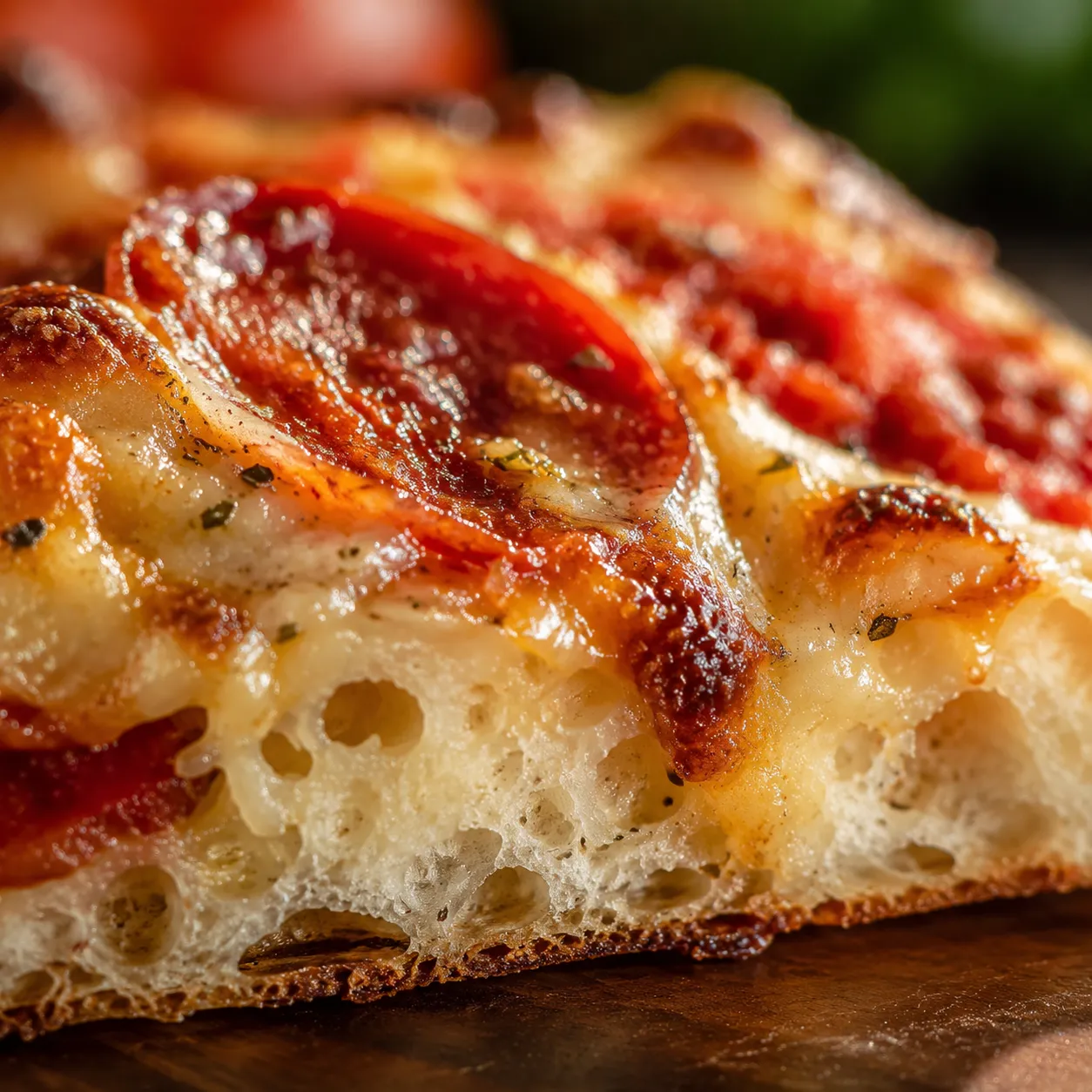
Because ovens vary, trust the visual cues more than the timer. A very wet sauce, extra cheese, or heavy vegetables may add a few minutes. If the top is browning before the bottom is crisp, move the pizza to a lower rack for the final minutes. If the bottom is browning too fast, slide a sheet pan underneath to buffer the heat.
A hot gluten free pizza gluten free crust deserves the same little extras you would set out for a pizzeria night at home. Offer chili flakes, grated parmesan or dairy-free parm, torn basil, hot honey if you use it, and a small bowl of good olive oil for the crust edges. A crisp green salad with lemon vinaigrette balances the richness beautifully. If you are feeding a mixed household, keep gluten-free serving utensils separate so there is no cross-contact at the table.
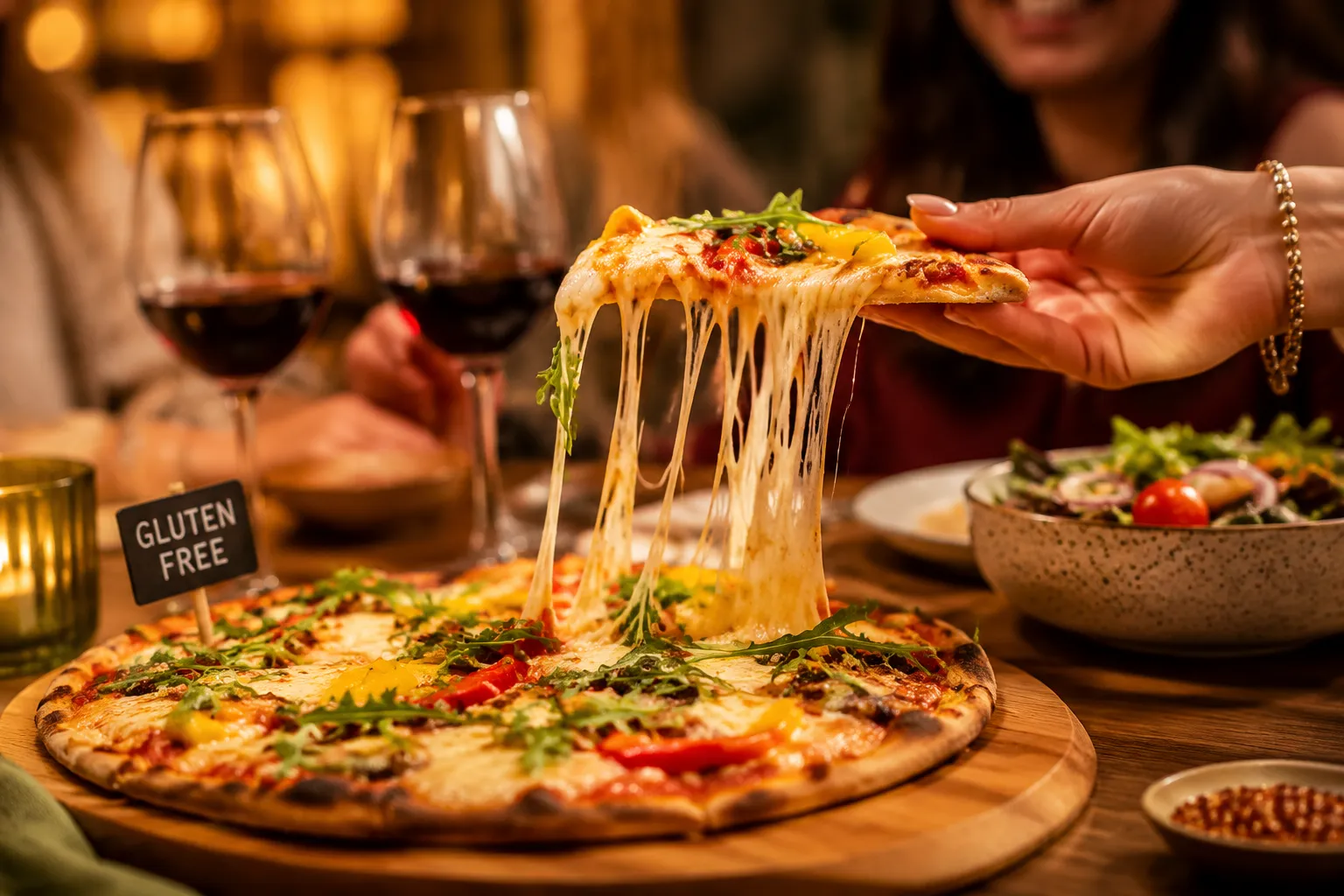
For kids, cut the pizza into small squares instead of wedges, which makes the pieces easier to hold. For adults, pair it with roasted vegetables, soup, or a big antipasto-style platter. The crust has enough chew to support bold flavors, but it is mild enough for plain cheese pizza lovers too. That flexibility is the reason this gluten free pizza dough has become a staple in my kitchen.
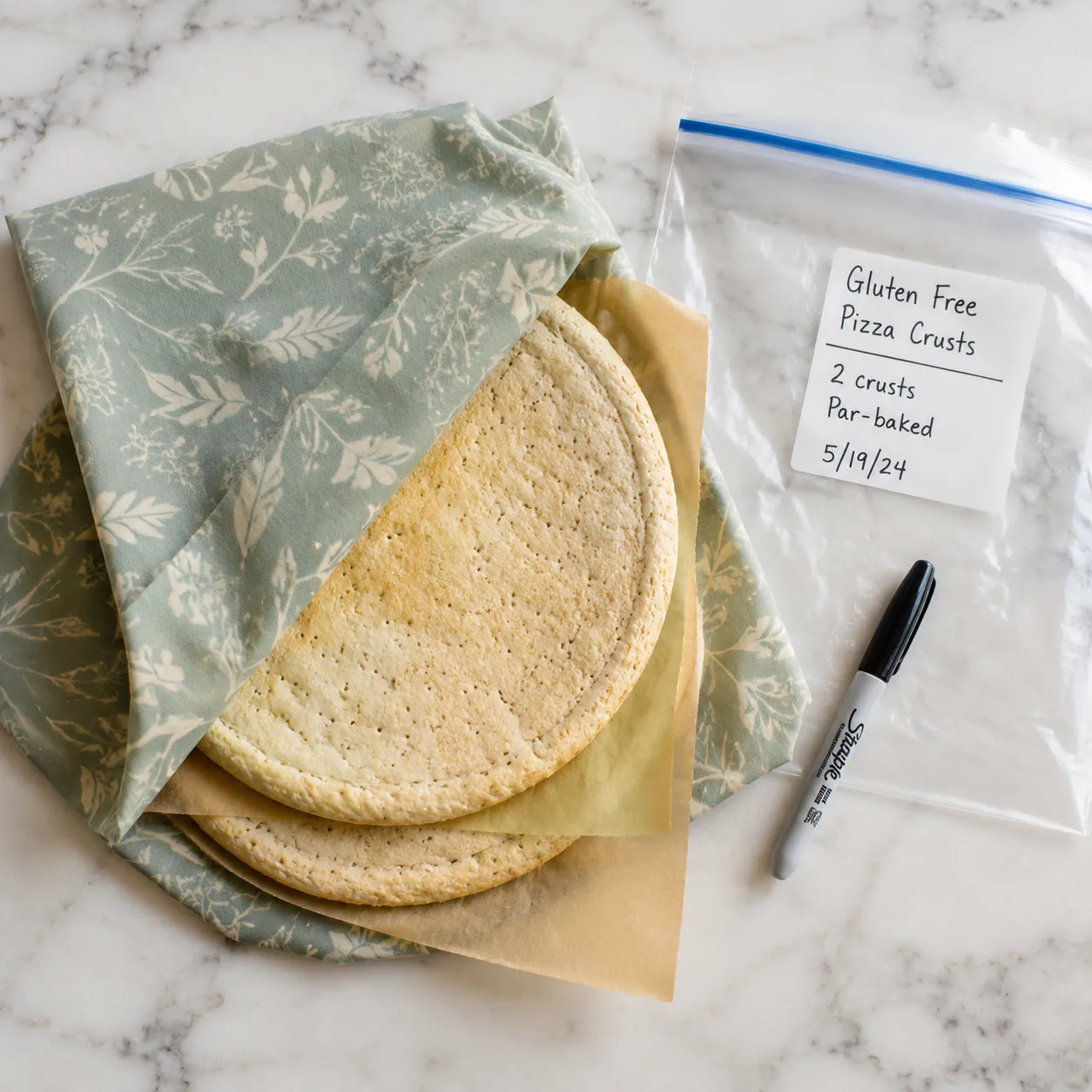
If you want pizza faster than delivery, par-bake the crusts in advance. Once cool, stack them with parchment between each round and wrap them well. They can wait in the refrigerator for a few days or head to the freezer for future dinners. When you are ready to eat, top from chilled or frozen and bake until hot, crisp, and bubbling.
You can also mix the dough earlier in the day and keep it covered in the refrigerator. It will firm as it chills, so let it sit at room temperature briefly before pressing it into a round. The flavor becomes a little more developed with time, though the quick version is still excellent. This make-ahead flexibility is what makes gluten free pizza gluten free night feel easy, cozy, and totally doable on a Tuesday.
The best gluten-free recipes do not just remove wheat; they rebuild texture in a smart, delicious way. Here, psyllium brings elasticity, the flour blend creates structure, olive oil adds tenderness, and the par-bake locks in that crisp-chewy balance. It is familiar enough for classic cheese pizza, sturdy enough for loaded toppings, and flexible enough for dairy-free or vegan eaters. Make it once, and you will understand why this is the crust I come back to whenever the craving hits.
Whether you top it simply with tomato and basil or load it with roasted vegetables and dairy-free cheese, this gluten free pizza gluten free recipe gives you a real pizza-night moment. Crispy bottom, chewy center, bubbling top, happy table. That is the whole point.