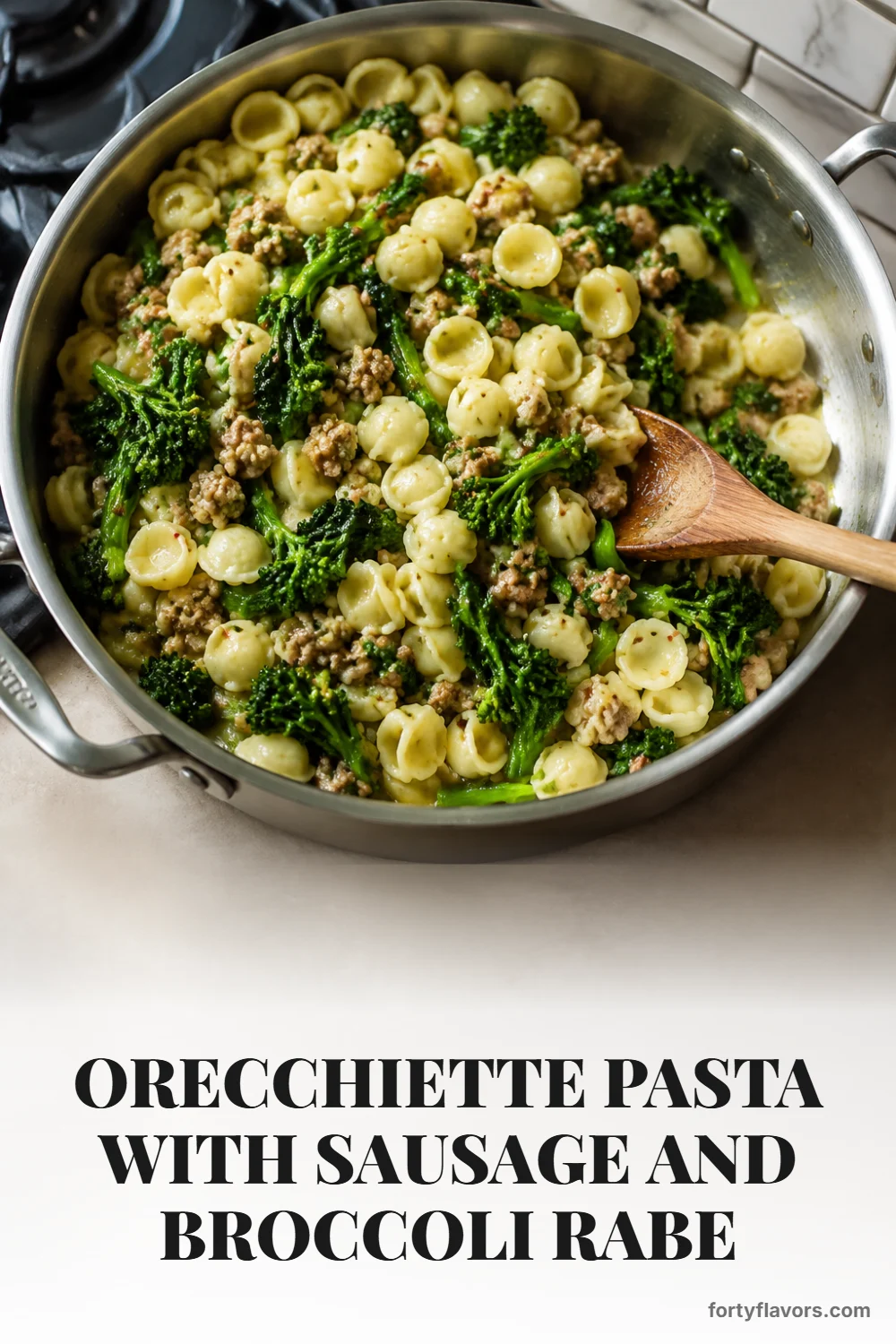
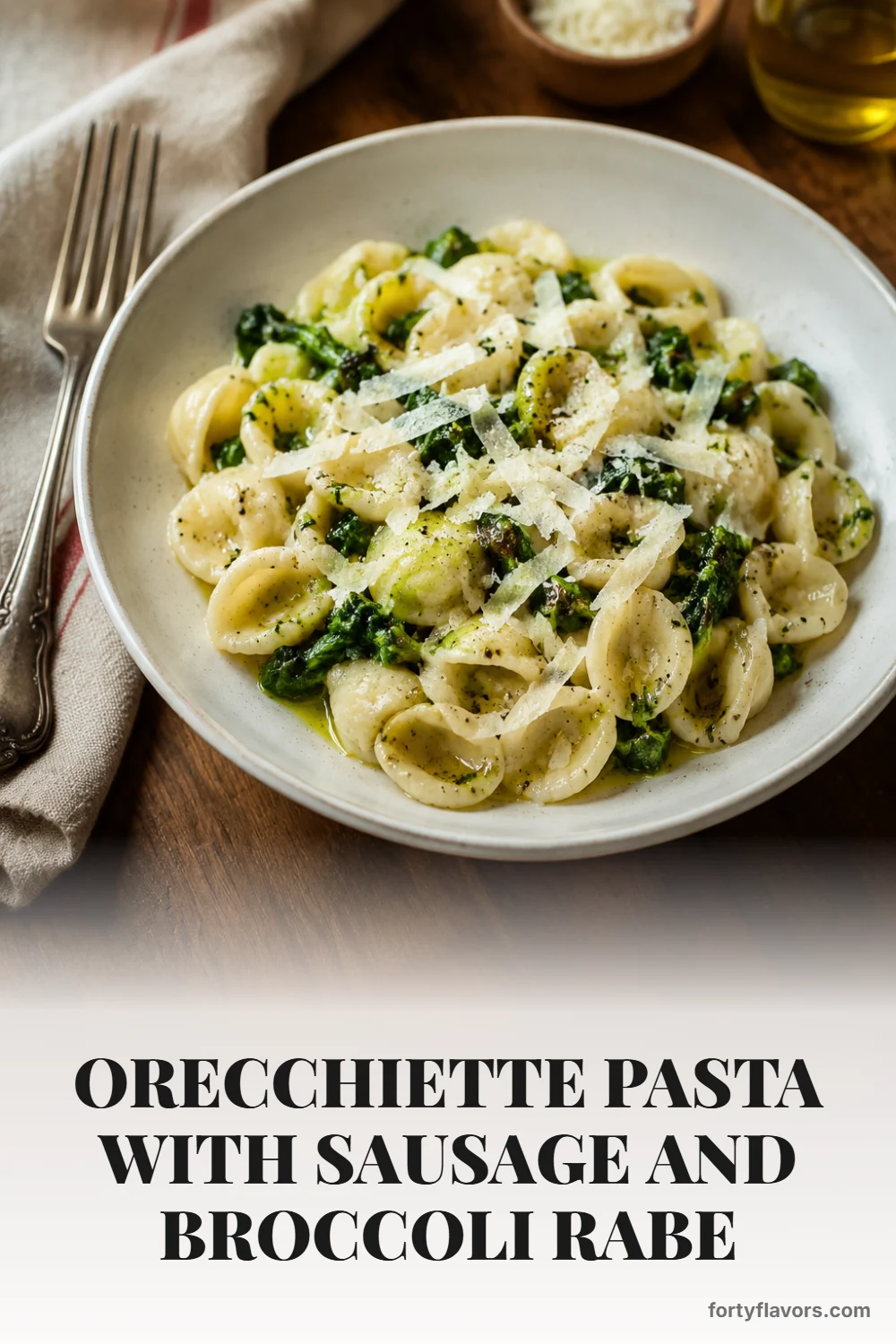
Orecchiette Pasta with Sausage and Broccoli Rabe
Ingredients
Scale
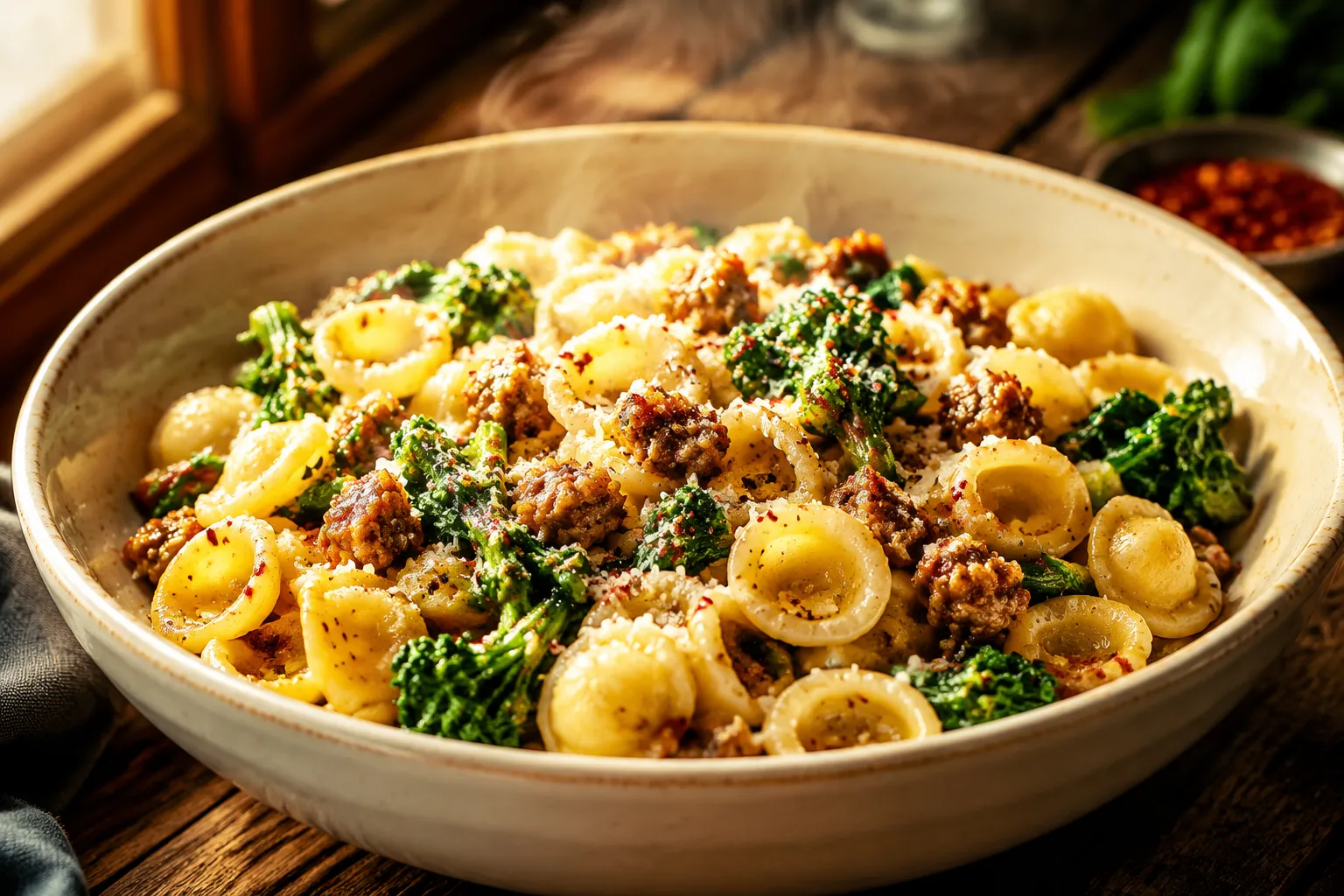
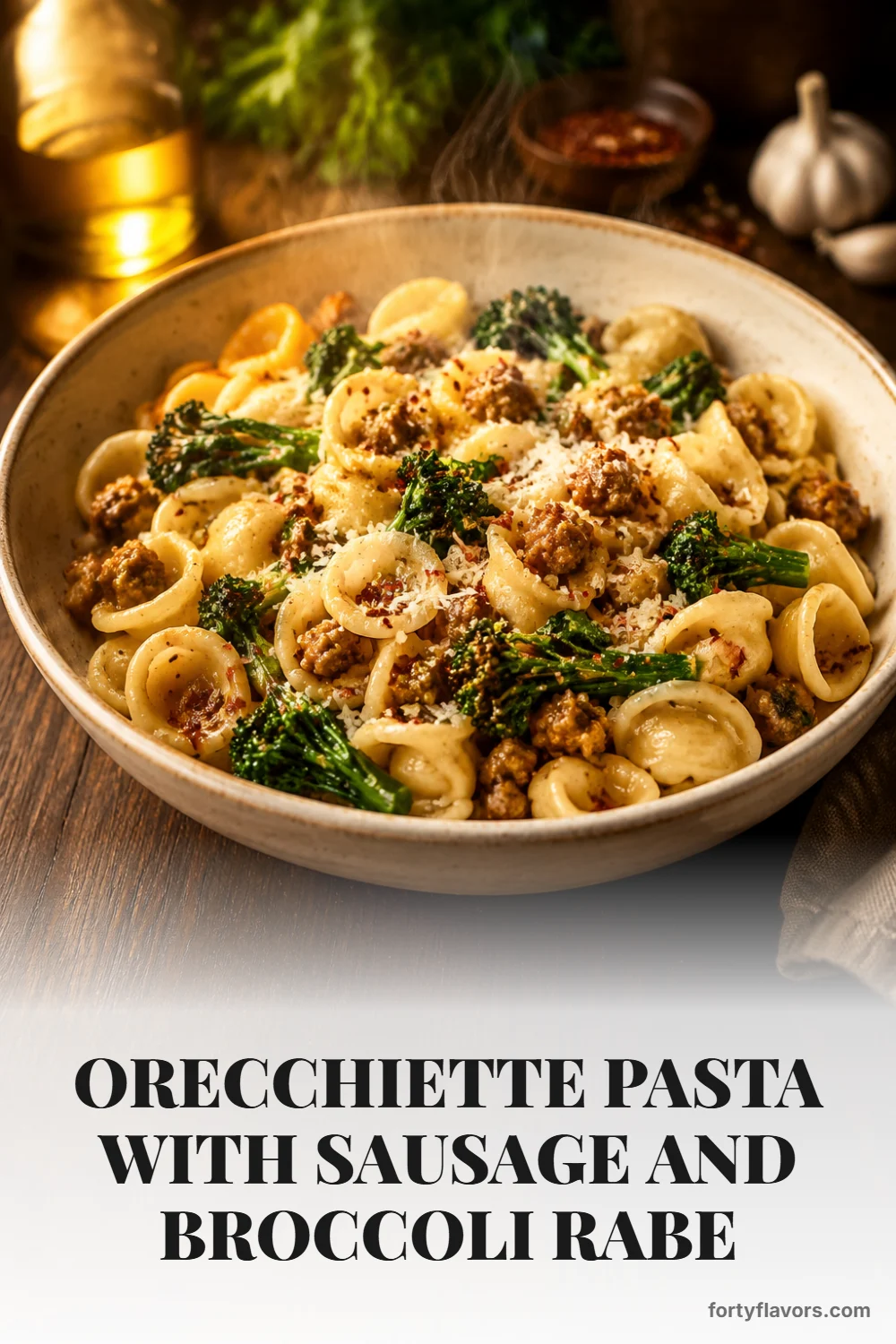
Orecchiette, the little ear-shaped pasta from Puglia, cradles every drop of sauce. Toss it with spicy Italian sausage and broccoli rabe for a 30-minute weeknight win.
Orecchiette with Italian sausage and broccoli rabe is the kind of one-pan dinner that tastes like it took all afternoon but lands on the table in thirty minutes flat. The little ear-shaped pasta is a defining staple of Pugliese cuisine, where home cooks toss it with bitter greens, good olive oil, and whatever else the garden offers. Each cupped piece is engineered to scoop up sausage crumbles and clinging bits of garlic, so every bite delivers the full chorus of flavors at once.
This is the version I keep coming back to when I want something rustic, deeply savory, and fast enough for a Tuesday. Sweet, fennel-laced sausage browns into burnished crumbles, broccoli rabe brings its grown-up bitterness, and a splash of starchy pasta water pulls everything into a glossy, restaurant-quality sauce — no cream required. It's a masterclass in how a handful of well-chosen ingredients can outperform any recipe twice as long.
If you've never made this style of Italian sausage pasta before, you're in for one of those quietly stunning weeknight discoveries. And if you have, this version leans hard on tradition: salty Pecorino Romano, thinly sliced garlic, a whisper of red pepper flakes, and the kind of olive oil you'd consider drinking straight from the bottle.
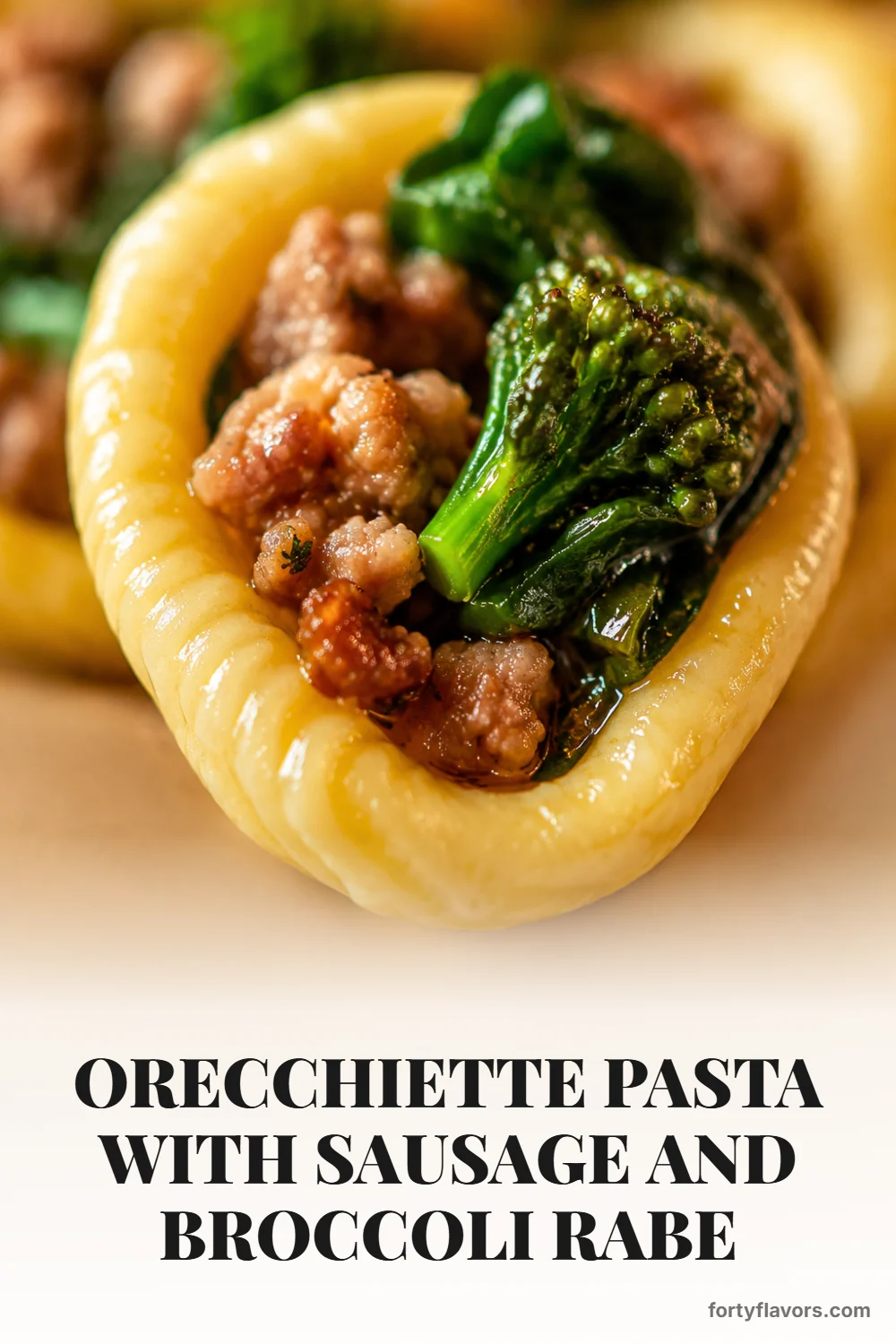
Orecchiette is small, dome-shaped pasta from Puglia, the sun-soaked heel of Italy's boot. The name translates to "little ears" — and once you see them lined up on a wooden board, the resemblance is hard to unsee. Each piece is shaped by dragging a thumb or a small knife across a pinch of semolina flour dough, leaving a slightly rough exterior and a deep concave center that's basically a sauce magnet. In Bari, the regional capital, you can still find women shaping them by hand on tables set up in the alleyways of the old town, gossiping and pinching their way through pounds of dough before lunch.
The word comes from the Italian "orecchia," meaning ear, with the diminutive "-ette" suffix tacked on for affection. You'll sometimes see them called little ears pasta on menus across the U.S., and that nickname captures both the shape and the playful spirit of southern Italian cooking. The dough itself is humble — semolina flour and water, nothing more — but the technique transforms it into something architecturally clever and surprisingly addictive.
That hollow cup isn't just charming, it's functional engineering. The cavity grabs onto chunky sauces, broken sausage, and small bits of vegetable in a way that smooth, tubular pasta simply can't. The slightly rough surface, created by hand-shaping with semolina, gives sauce something extra to cling to. This is exactly why the pairing with sausage and rabe became iconic in Puglia — the shape was practically designed to deliver every component in a single, perfectly balanced bite.
Hand-shaped versions from Bari are nubbier and more irregular, with a satisfying chew at the center. Dried boxed versions from quality Italian brands are smoother and more uniform, but they still cook up beautifully al dente and are absolutely worth using on a busy weeknight. Look for "trafilata al bronzo" on the label — pasta extruded through bronze dies has a textured surface that grips sauce far better than slick, Teflon-extruded versions you'll find at most big-box stores.
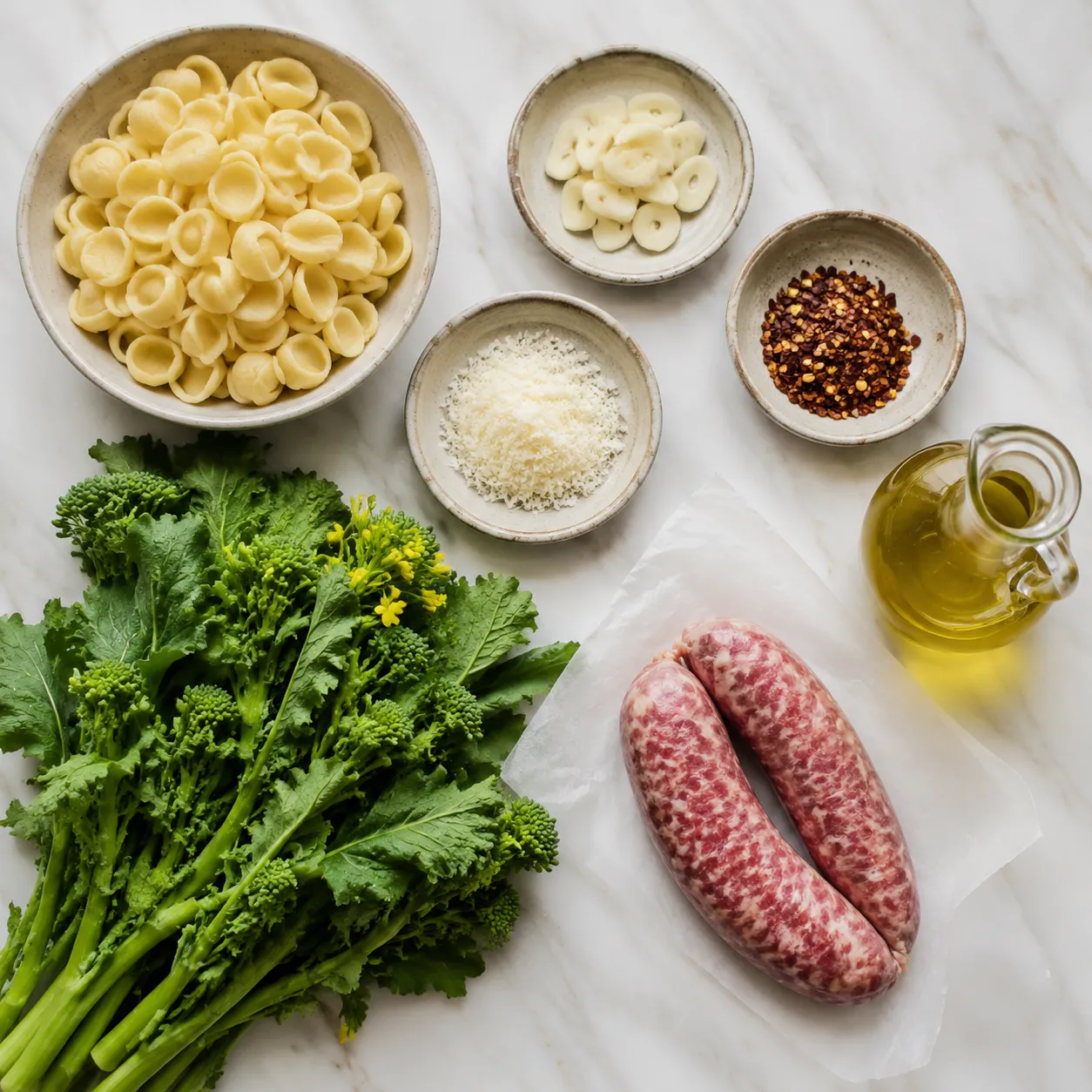
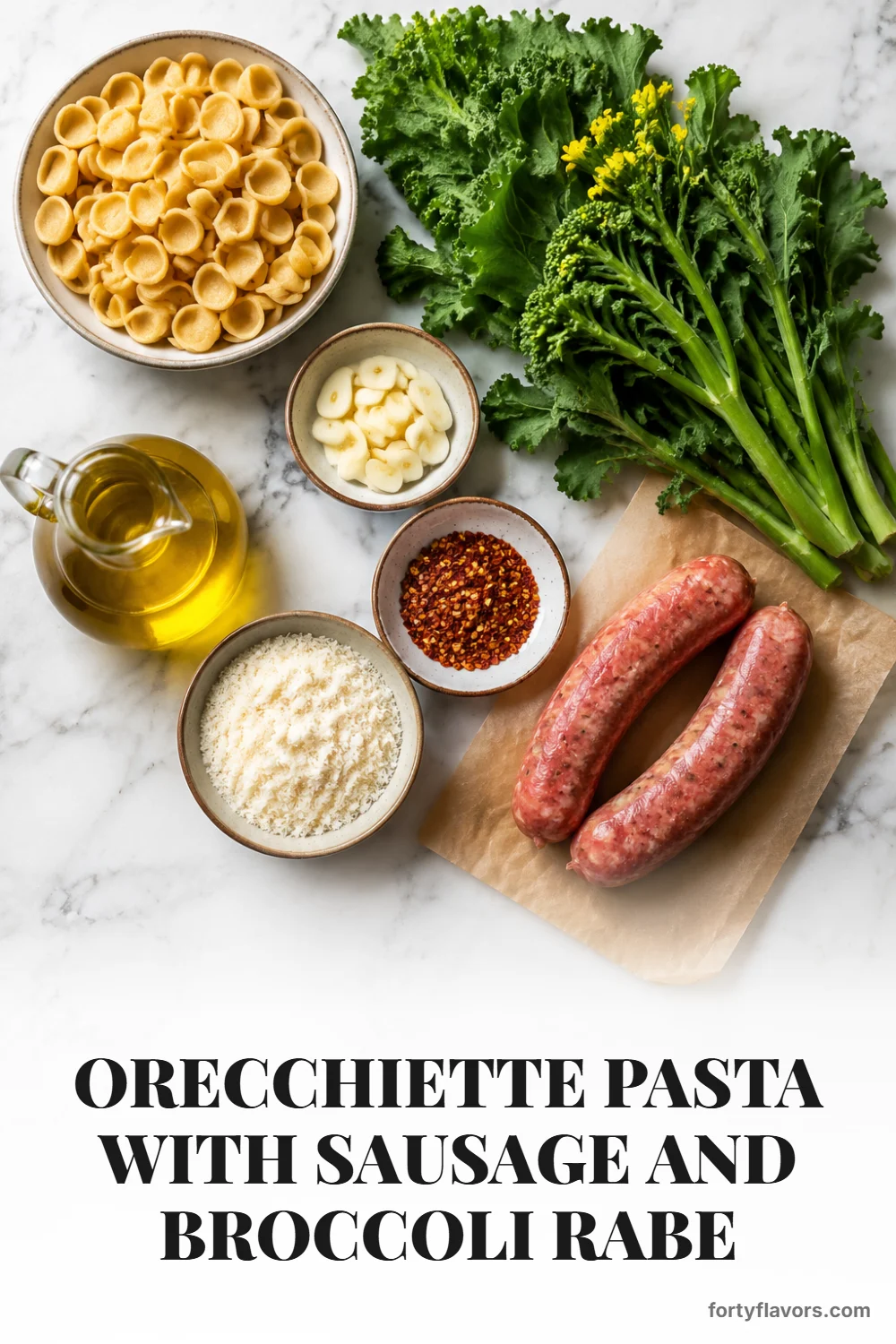
The beauty of this dish is how few ingredients it asks for, and how much each one matters. Think of it as a great garlic and olive oil pasta with two upgrades: bitter greens and well-seasoned pork. Buy the best version of each component you can find, because there's nowhere for cheap substitutes to hide.
A pound of good dried pasta is your reliable starting point. If you have time and ambition, fresh hand-shaped pasta is a gorgeous project (more on that below). Either way, look for bronze-die brands at the supermarket — De Cecco, Rustichella d'Abruzzo, and Setaro all make excellent versions you can find at most U.S. grocery stores or order online.
A pound of Italian sausage with the casings removed is the heart of the sauce. Sweet sausage leans on fennel and a touch of sugar, while hot brings chile heat. I like to split the difference: half sweet, half hot. Whatever you choose, look for a sausage with visible flecks of fennel seed and a high pork-fat content — about 25 to 30 percent fat is ideal for that lush, self-saucing quality.
Broccoli rabe — also sold as rapini — is leafier, more bitter, and far more interesting than regular broccoli. It's a defining ingredient in any classic broccoli rabe recipe from southern Italy. The bitterness mellows beautifully when blanched and tossed with rich, fatty pork. If you can't find it, swap in broccolini, Tuscan kale, or Swiss chard — each gives you a milder, more accessible take while keeping the structure of the dish intact.
Four cloves of thinly sliced garlic, a quarter cup of really good extra-virgin olive oil, and a half teaspoon of red pepper flakes round out the sauce. Don't forget Pecorino Romano for finishing — its sharp, salty bite is non-negotiable here. Parmigiano works in a pinch, but it's milder and won't push back against the sausage the way Pecorino does.
The technique is one of those elegant, do-everything-at-once Italian moves. You'll blanch the rabe in the same water you'll use for the pasta, brown the sausage while the pasta cooks, and then bring it all together with a generous splash of starchy water. Detailed step-by-step numbers live in the recipe card below — what follows is the rhythm and reasoning behind each move, so you understand exactly what you're doing and why it works.
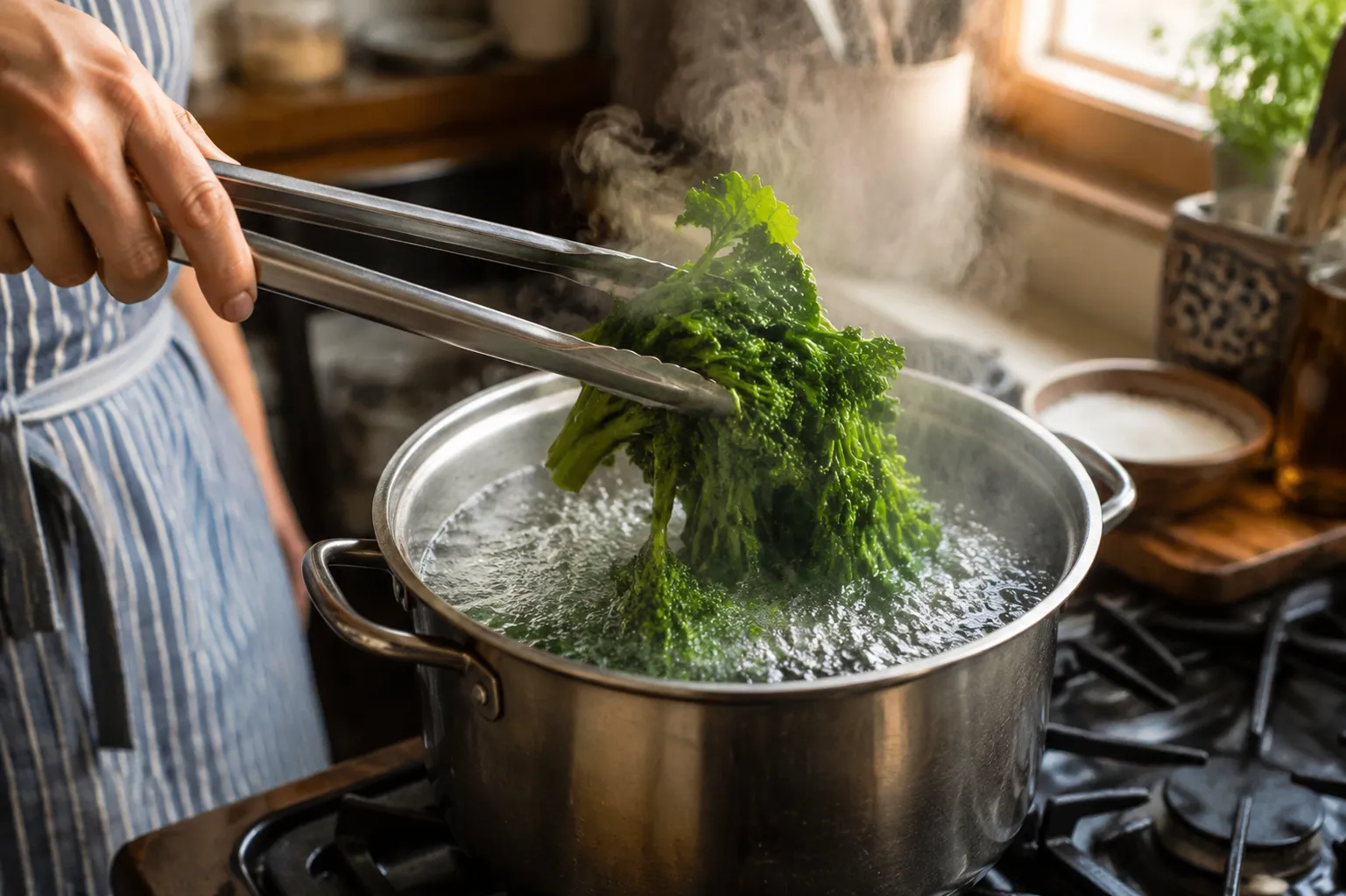
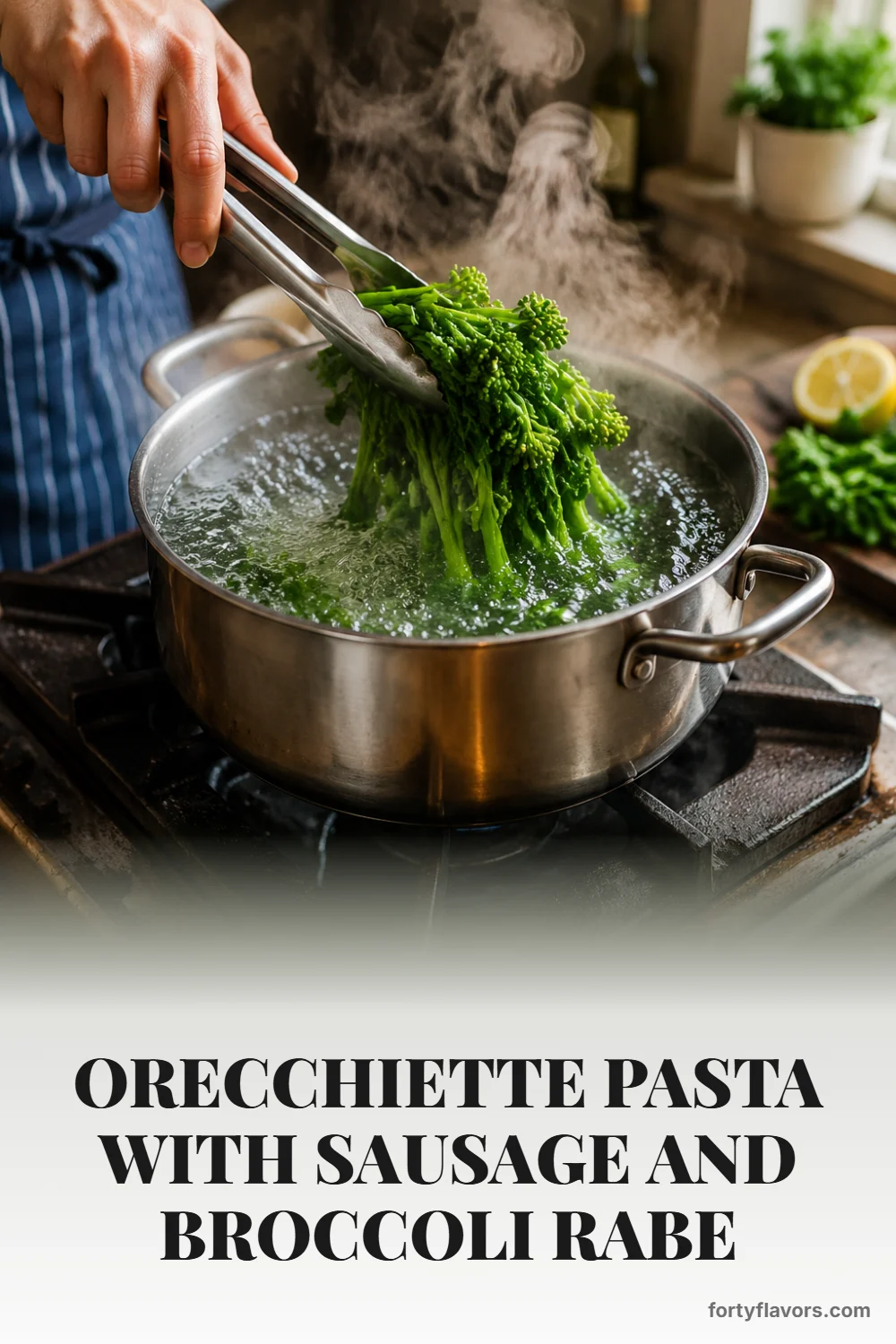
Bring a big pot of water to a rolling boil and salt it generously — it should taste like mild seawater. Drop the trimmed, chopped rabe in for about two minutes, just until the stems lose their squeak. Lift it out with a spider or tongs and shock it in cold water to lock in that vivid green color. You're going to reuse this same pot of water for the pasta, so don't drain it — every bit of that flavor matters.
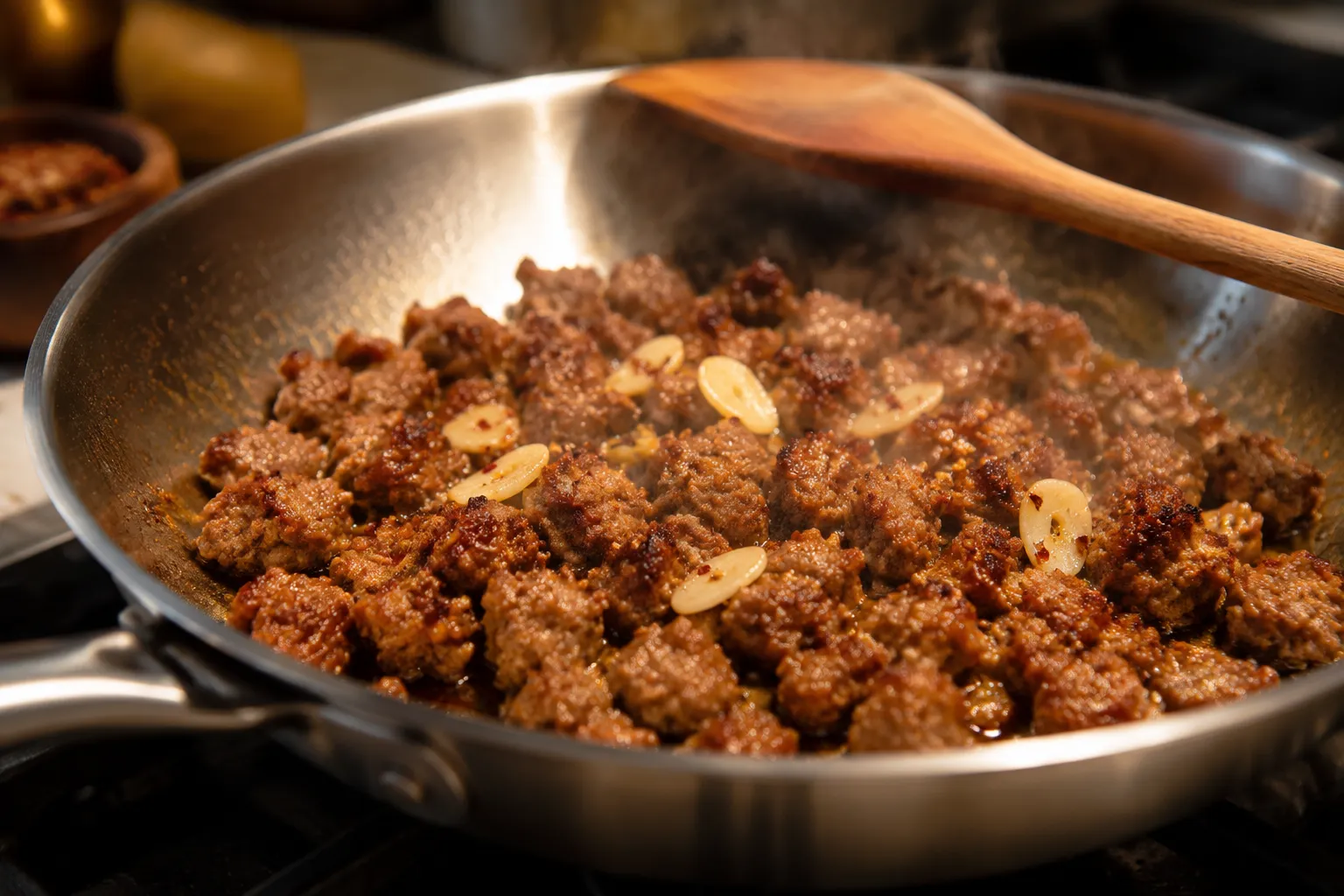
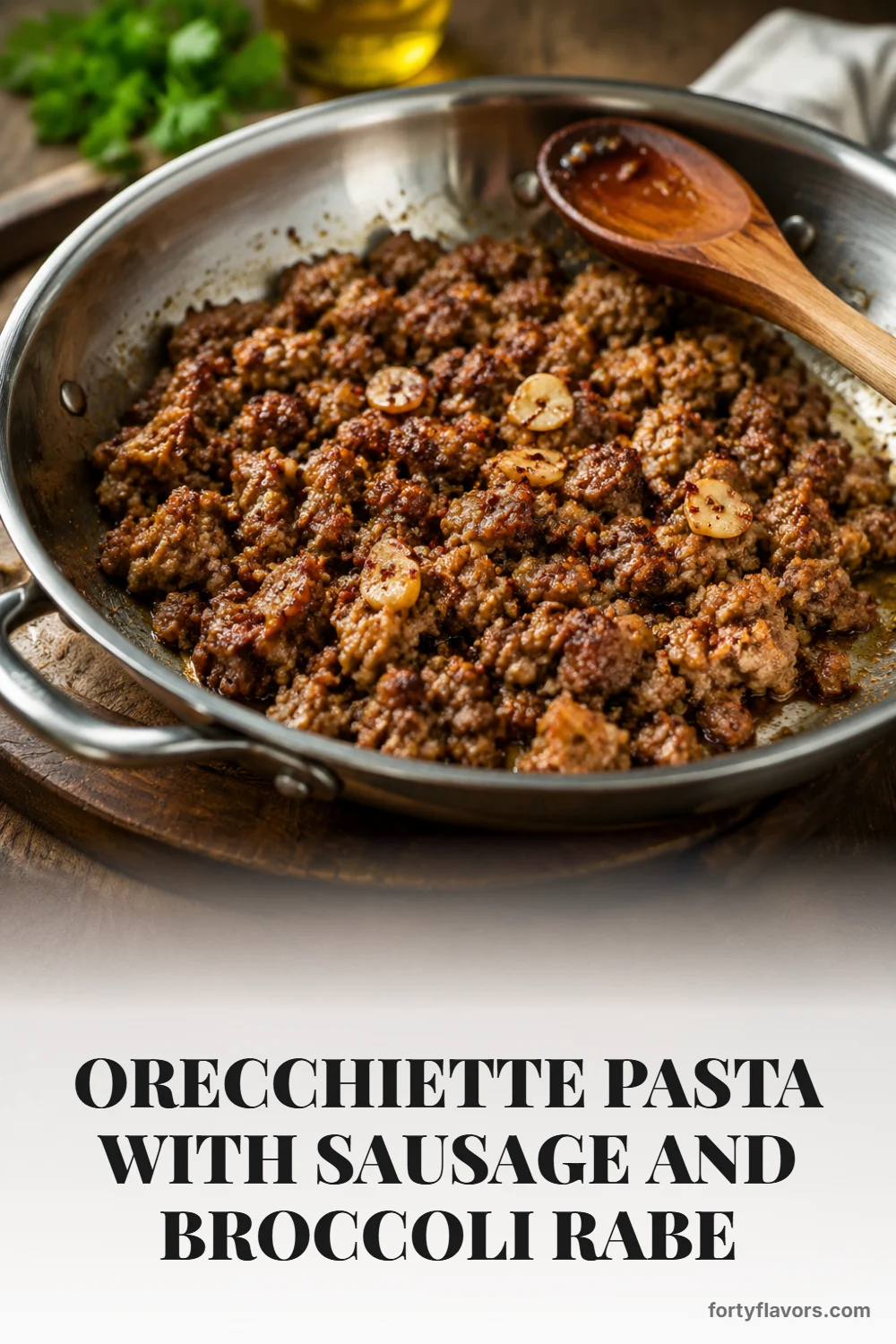
While the rabe rests, heat a wide skillet over medium-high and add a slick of olive oil. Crumble in the sausage in big, craggy pieces and let it sit undisturbed for two or three minutes — that's how you build deeply browned, caramelized edges. Once it's gorgeous and golden, push it to one side, lower the heat, and add the sliced garlic and red pepper flakes to the empty space. Thirty seconds of sizzle, and you'll smell exactly why this technique works.
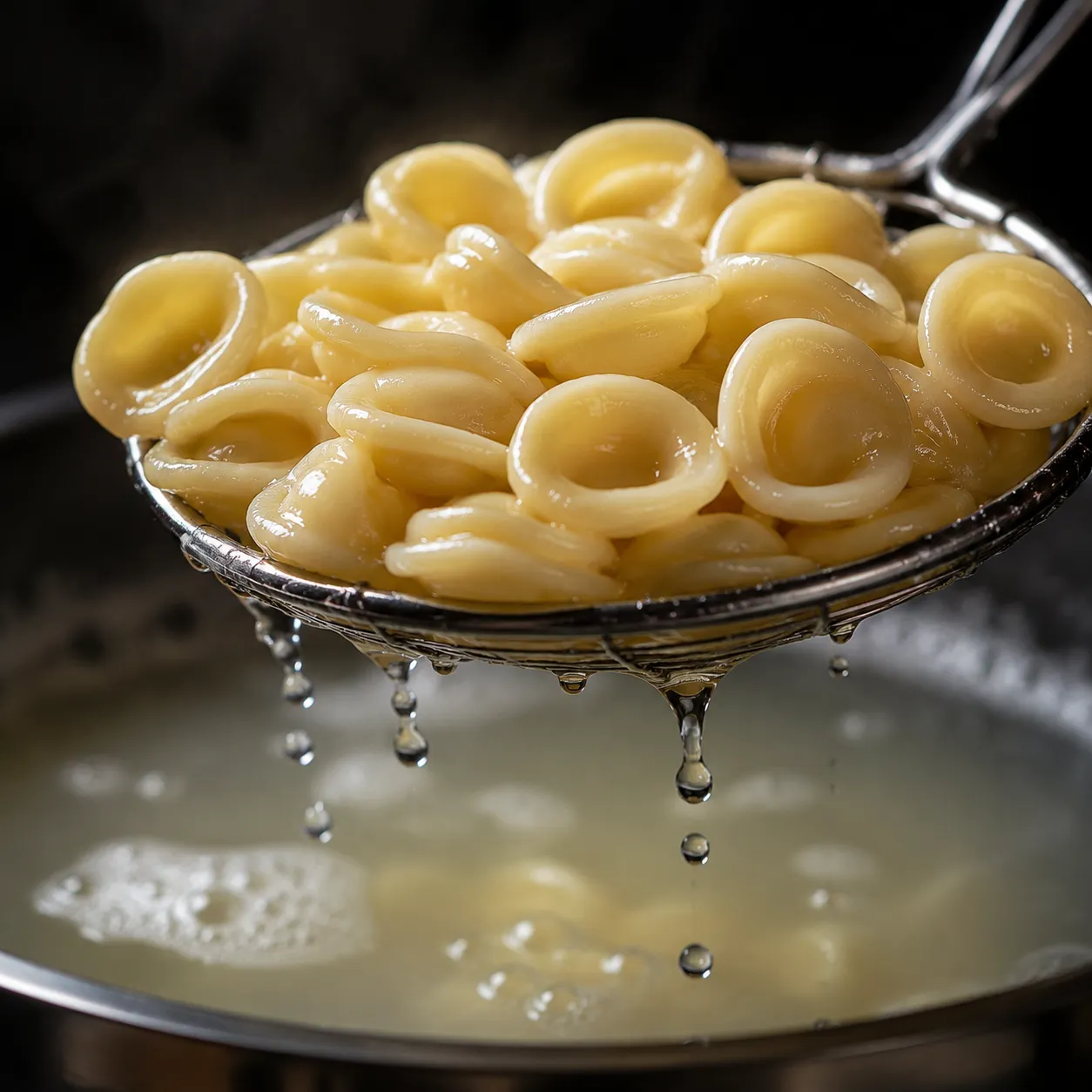
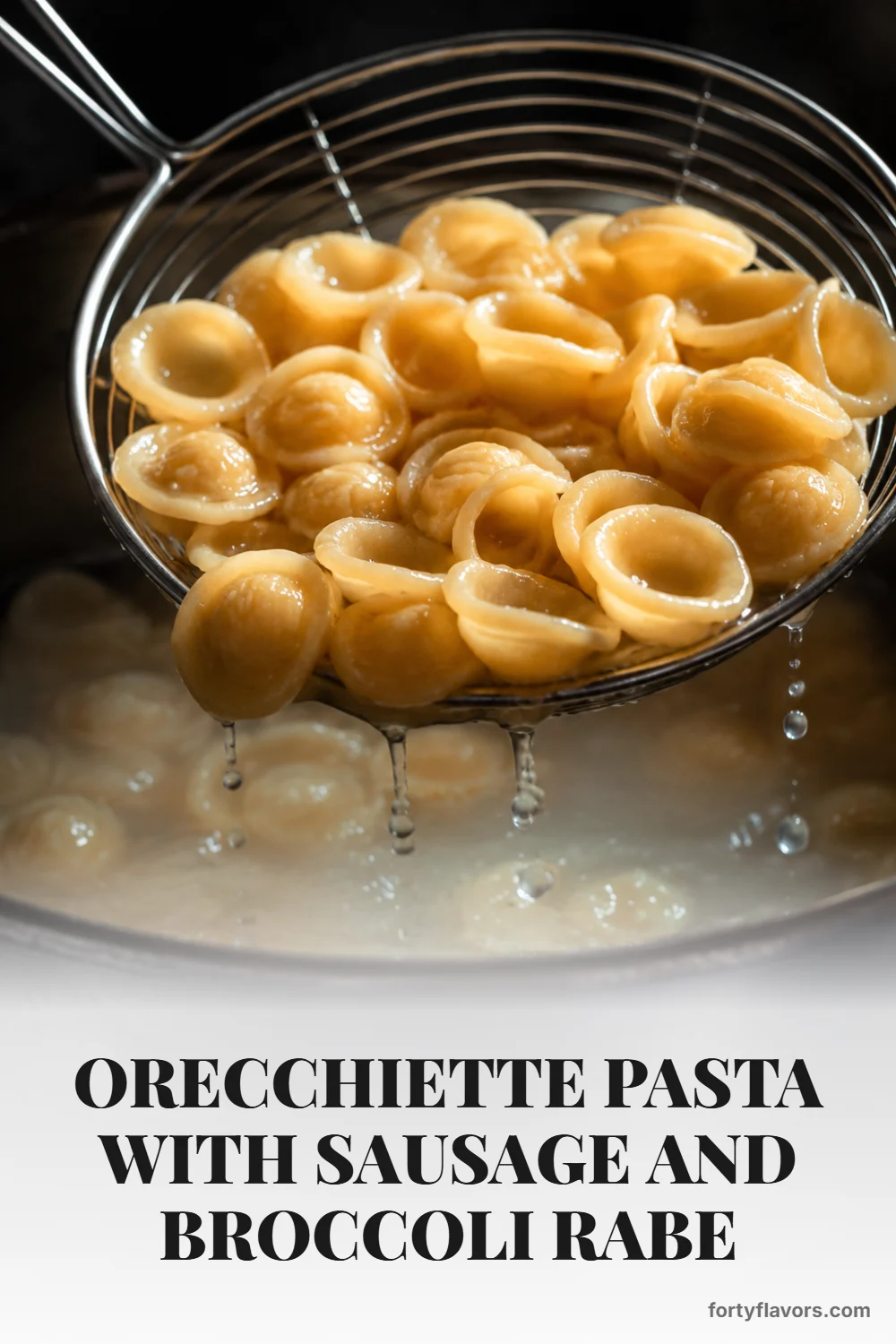
Drop the pasta into the same big pot of salted, blanching-flavored water and cook it one to two minutes shy of the box's al dente time. Before draining, scoop out at least a cup of the cloudy pasta water — this is liquid gold. Pull the pasta directly from the pot into the skillet using a spider; a little extra water riding along is a feature, not a bug.
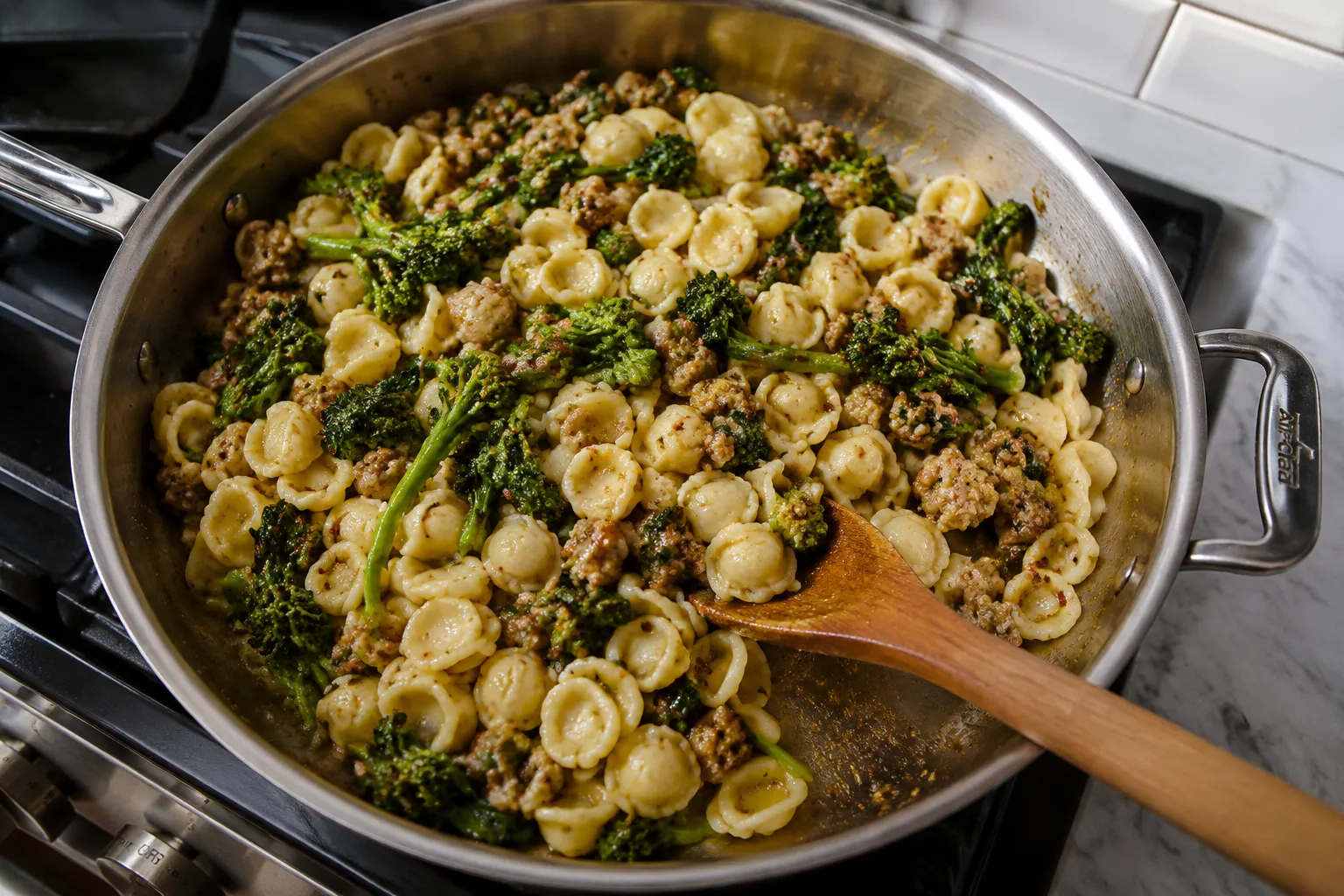
Add the blanched broccoli rabe to the skillet, then a generous splash of pasta water, and toss everything over medium heat for about a minute. The starch in the water emulsifies with the rendered sausage fat and olive oil to form a silky, clinging sauce that coats every little ear. Off the heat, shower in the Pecorino Romano, taste for salt, and finish with another drizzle of olive oil right before serving.
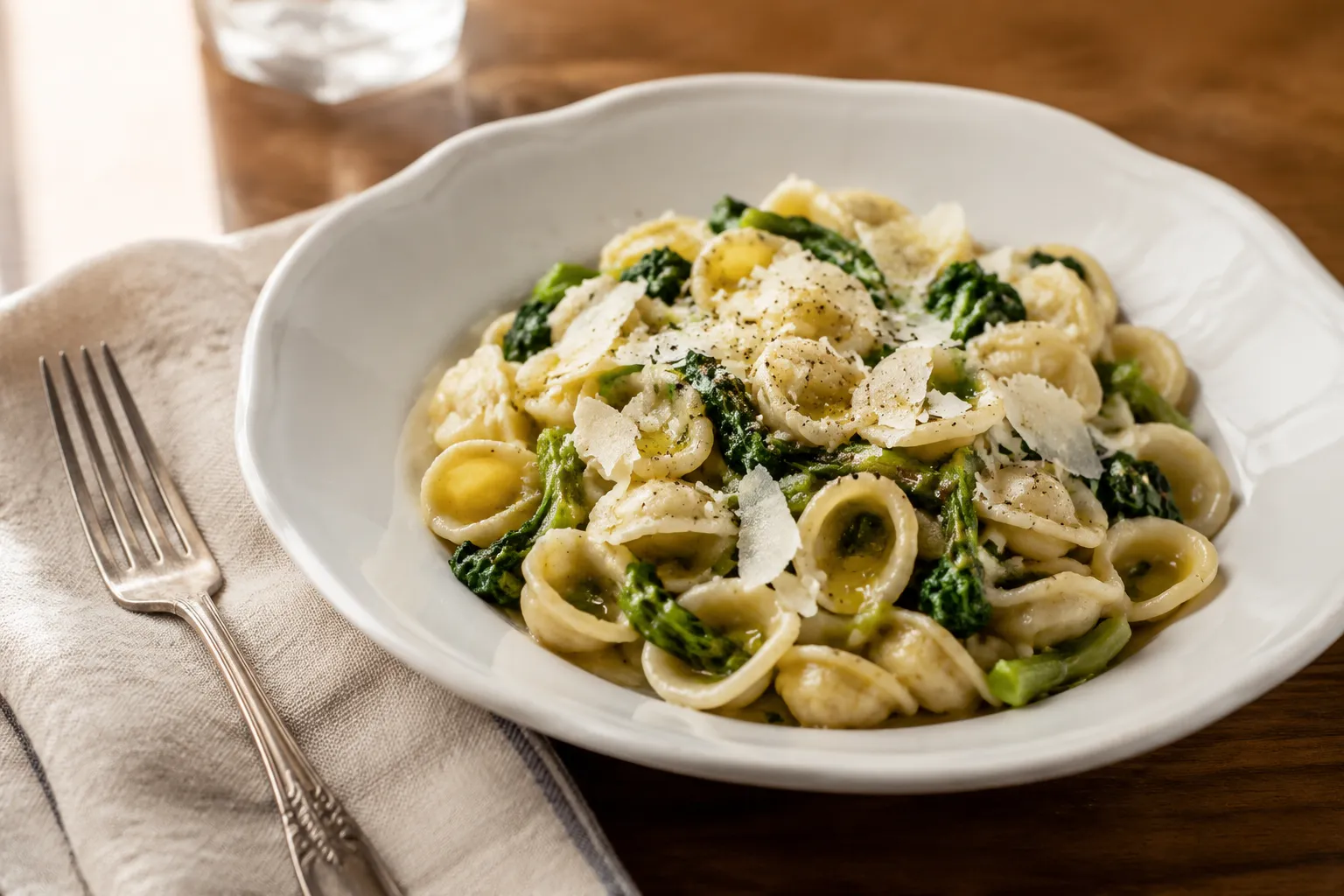
If you've ever wanted a low-stakes pasta project, this is the one. There's no rolling pin, no machine, and no eggs — just semolina flour, water, and your thumbs. Once you get the rhythm, you can churn out enough little ears for dinner while a podcast plays in the background. Pugliese grandmothers have been doing it this way for centuries, and it's surprisingly meditative work.
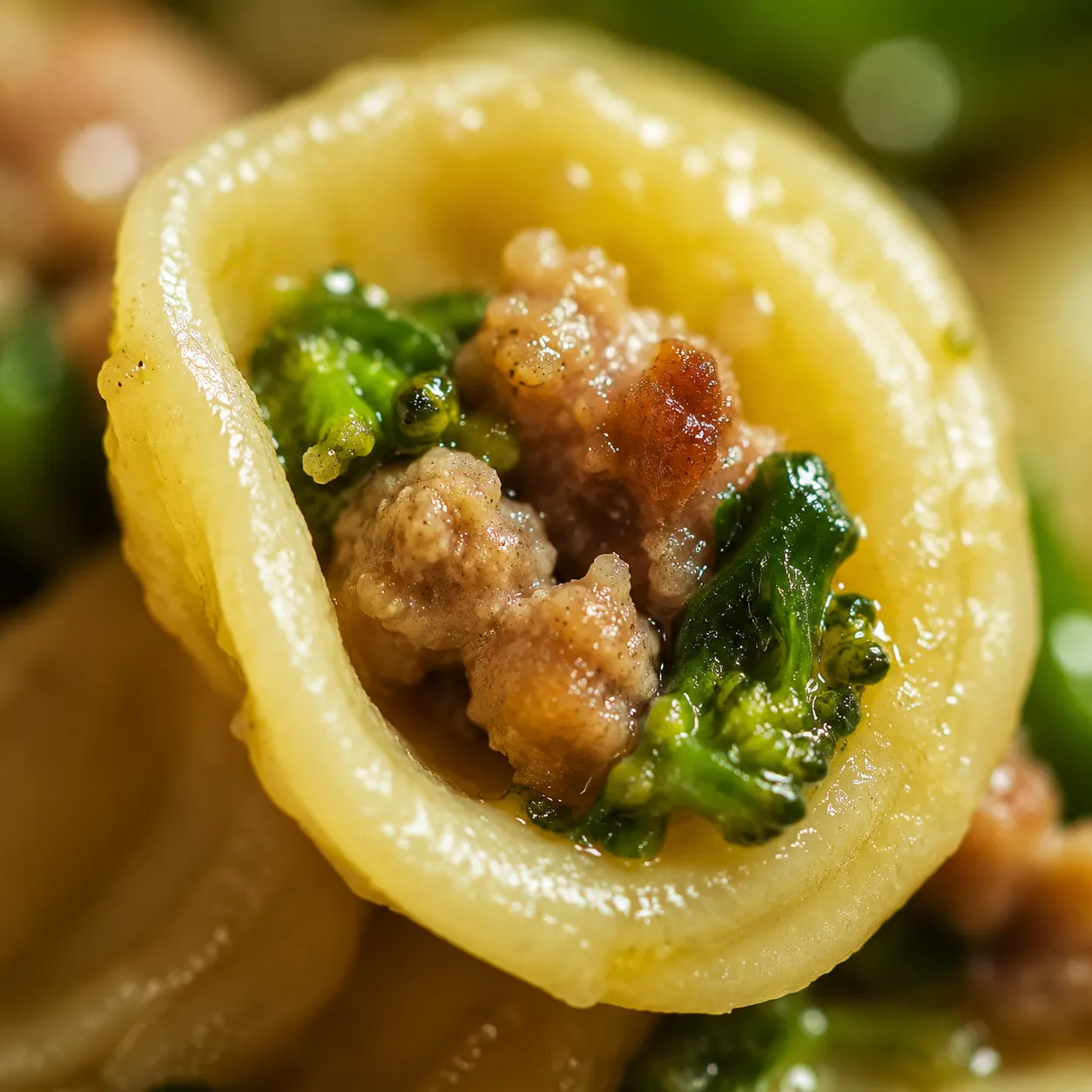
The classic homemade pasta dough from Puglia is just two cups of fine semolina flour and about three-quarters of a cup of warm water, with a pinch of salt. Knead for eight to ten minutes until the dough is smooth, elastic, and slightly tacky, then cover with an inverted bowl and let it rest for thirty minutes. The rest gives the gluten time to relax so you can shape without fighting the dough.
Roll the rested dough into thin ropes the width of a pencil, then slice into pea-sized pieces. Drag each one across a wooden board with a butter knife to create that signature curl, then flip it inside out over your thumb to form the cup. Set them on a floured tray as you go. Imperfect ones still cook up beautifully — and frankly, they look more authentic that way.
Fresh hand-shaped pasta cooks in just three to four minutes, versus the typical eleven for dried. They'll be a touch chewier in the center — that's exactly the texture Pugliese cooks chase. Don't try to fully cook them through in the boiling water; pull them when they still have a little bite, and let the skillet finish the job alongside the sausage and rabe.
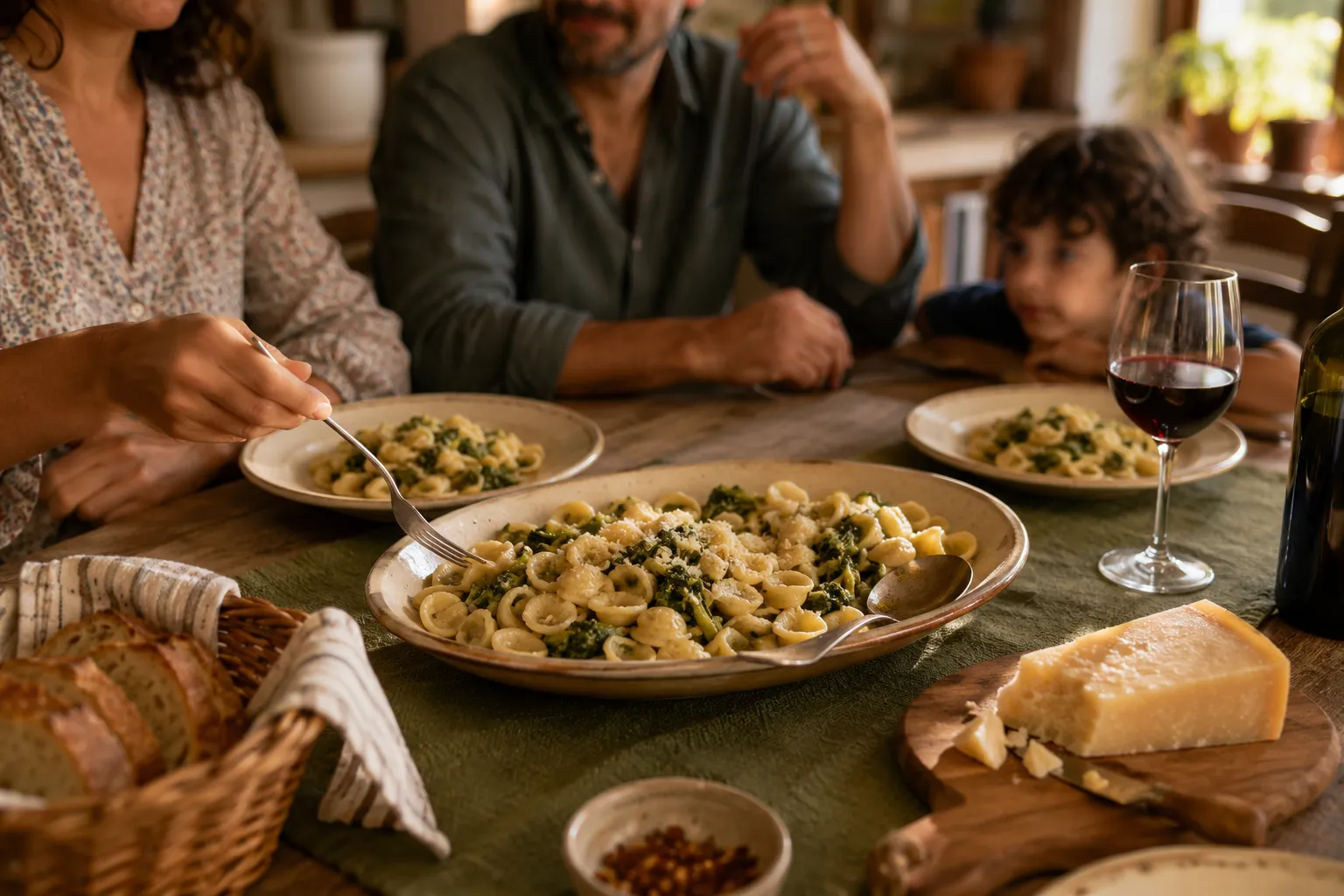
Serve this family-style on a warm platter with a wedge of Pecorino on a wooden board for grating at the table, a green salad dressed simply with lemon and oil, and a basket of crusty bread for catching the last bits of sauce. A medium-bodied red — Primitivo, naturally, or a Negroamaro from Puglia — drinks beautifully against the bitterness of the rabe and the richness of the pork.
This is the kind of weeknight pasta dinner that earns a permanent spot in the rotation: minimal cleanup, maximum flavor, and a recipe that scales easily up or down. Make this orecchiette pasta once and you'll understand why Italians have been eating little ears pasta for centuries.
This recipe is a strong template for endless improvisation. The basic ratio of greens, pork, garlic, and starchy water holds up to nearly any swap you throw at it.
Leftovers keep beautifully in an airtight container in the fridge for up to three days. The flavors actually deepen overnight, which makes this a stellar make-ahead lunch — pack it with a wedge of bread and an extra shake of Pecorino.
To reheat, add a splash of water or chicken broth to a skillet over medium-low heat, slide the pasta in, and toss until warmed through, about three minutes. Avoid the microwave if you can help it; it tends to dry out the pasta and tighten the sauce. I don't recommend freezing this dish, as the broccoli rabe loses its texture and the pasta turns mealy after thawing.
Hover any image and hit “Pin it” to save it to your Pinterest boards.