Virgin and Extra Virgin Olive Oil: The Complete Guide
Ingredients
Scale
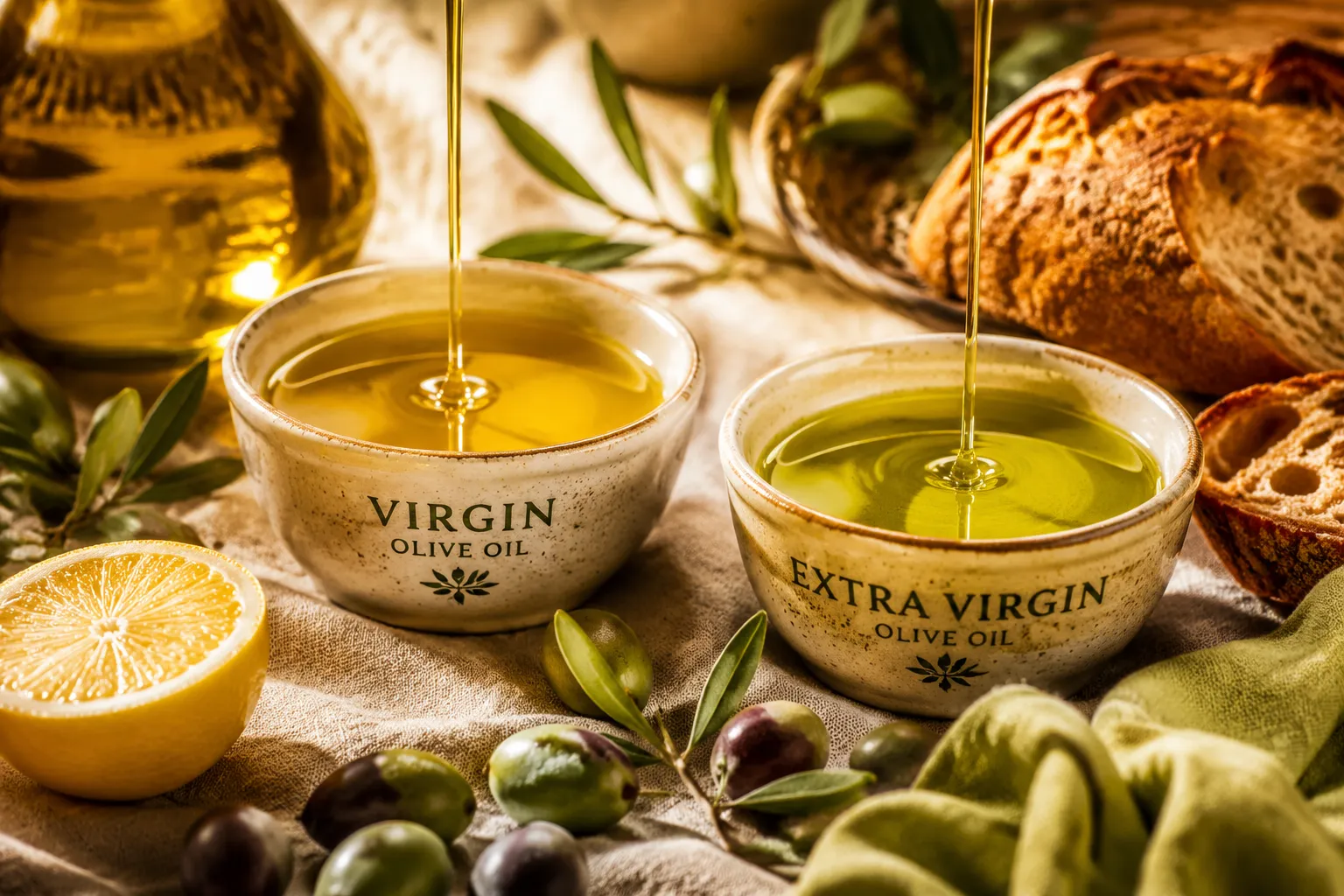
Confused by olive oil labels? Here's a clear, kitchen-tested guide to virgin and extra virgin olive oil, what sets them apart, and when to use each.
Virgin and extra virgin olive oil can look nearly identical on the shelf, but the label actually tells you a lot about taste, quality, and how to use it in the kitchen. If you’ve ever wondered why one bottle tastes peppery and vibrant while another seems softer and more neutral, you’re in the right place.
In this guide, we’ll break down the differences in a way that’s practical for everyday cooking, whether you’re making a weeknight salad, roasting vegetables, or finishing a bowl of soup. Think of it as your no-fuss primer for choosing the right bottle, understanding what EVOO really means, and learning when it’s worth spending a little more.
You’ll also get a simple tasting-friendly vinaigrette at the end, because the best way to understand olive oil virgin extra virgin is to actually taste it. Once you know what to look for, shopping gets easier, meals get better, and that bottle on your counter starts earning its keep.
At the simplest level, both oils come from olives and are made without heavy chemical refining, but extra virgin olive oil sits at the highest quality tier. Virgin olive oil is still a natural product, but it can have slightly more defects, a softer flavor, and a higher acidity level than EVOO. 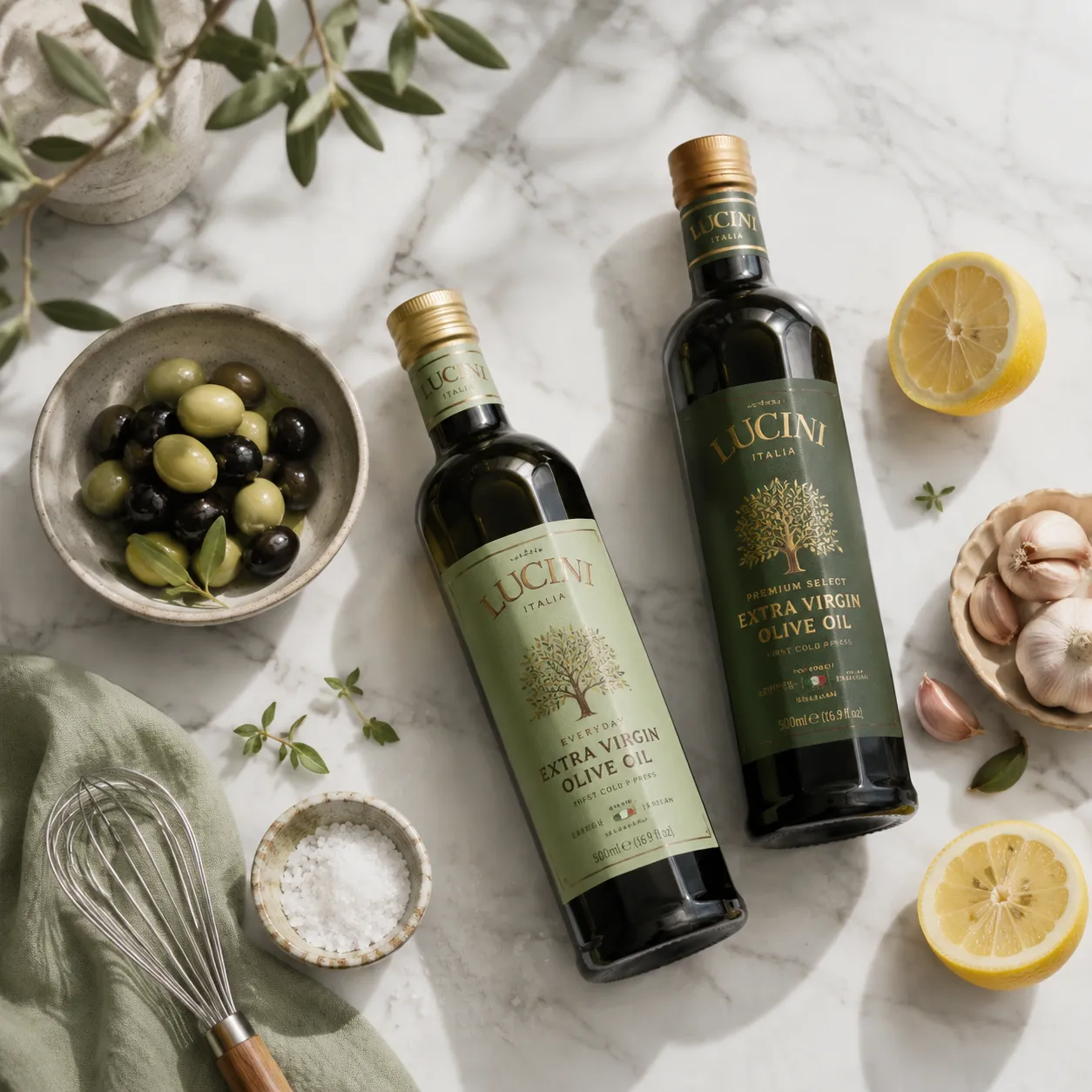
The easiest way to think about it is that extra virgin tends to be the brightest, fruitiest, and most aromatic option, while virgin is a touch more muted and affordable. That makes both useful, just in different ways. If you’re shopping for a finishing oil or something to drizzle over tomatoes, burrata, or grilled fish, EVOO is usually the better pick.
Extra virgin olive oil is the gold standard: mechanically extracted, cold pressed, and judged by both chemistry and taste. Virgin olive oil is also mechanically extracted, often through a first press or similarly gentle process, but it doesn’t have to meet the same strict sensory benchmarks. That difference is why the label matters so much when you’re reading a bottle in the store.
In the kitchen, extra virgin is ideal when you want character, while virgin is useful when you want olive flavor without as much intensity. Both can work in everyday cooking, but the best one depends on whether you want the oil to stand out or quietly blend in.
Olive oil grades exist to protect consumers and create a common language around freshness, quality, and flavor. Without grading, every bottle would be a mystery, and you’d have no reliable way to know whether you’re buying a vibrant oil or one that’s stale and flat. Standards around free acidity, aroma, and taste help separate top-quality oil from lower-grade products.
That’s especially important in a Mediterranean diet, where olive oil is often used daily in salads, vegetables, beans, and grains. When you understand the grading system, you can choose the right bottle for the dish instead of treating every olive oil as interchangeable.
EVOO is the highest grade of olive oil commonly sold to home cooks. It’s made from olives using only mechanical methods, usually cold pressed, and it must pass strict standards for flavor, aroma, and acidity. The result should taste fresh, lively, and distinctly olive-forward rather than dull or greasy. 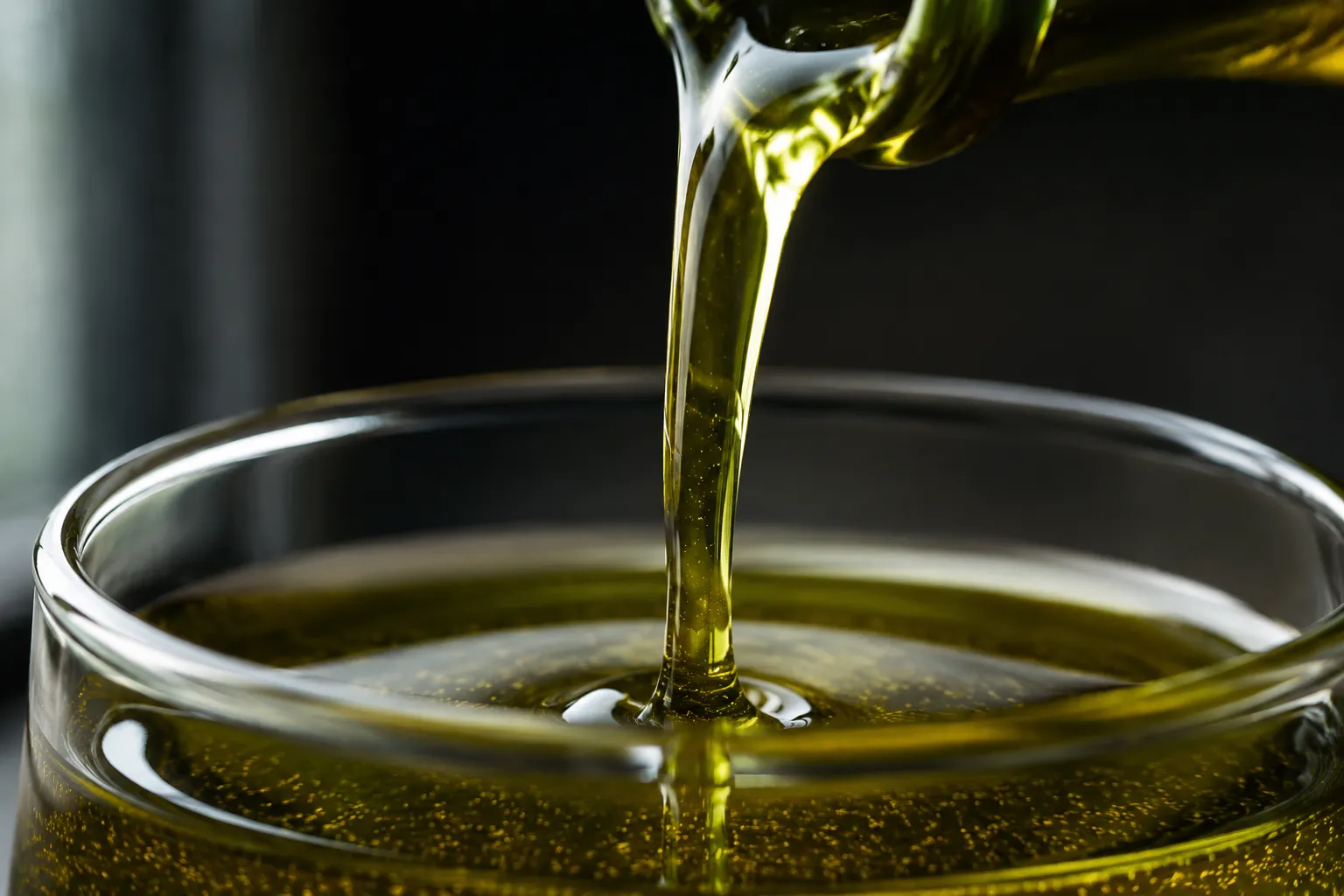
Because it’s minimally processed, EVOO keeps more of the natural compounds that give olive oil its signature bitterness and peppery finish. Those qualities are a good thing, even if they surprise you at first. A strong throat tickle, grassy aroma, or fresh-cut tomato note can all be signs of quality rather than flaws.
Extra virgin olive oil is produced by crushing olives and extracting the oil without high heat or chemical solvents. That gentle approach helps preserve flavor and aroma, which is why a good bottle can smell like green apple, herbs, artichoke, or freshly cut grass. In practical terms, it’s the most expressive olive oil you can buy.
The phrase first press is often used in marketing, though modern milling methods don’t always rely on a literal first pressing the way older systems did. Still, the spirit of the term is the same: the best oils come from careful handling, timely milling, and healthy olives.
One of the major markers of quality is free acidity, which measures the amount of free fatty acids in the oil. Lower free acidity usually signals better fruit quality and better handling, and extra virgin olive oil must stay below a strict threshold to earn the label. Sensory testing also matters, because an oil can meet lab numbers but still taste stale or flawed.
The International Olive Council sets widely recognized standards for these grades, and reputable producers often share harvest dates, origin, and certifications to back up their claims. If the bottle is vague about sourcing and freshness, that’s a clue to keep shopping.
Good EVOO should smell fresh and alive, never musty, metallic, greasy, or waxy. On the palate, it may taste fruity at first, then build into a peppery finish that lingers in the throat. That tiny bite is one of the easiest ways to tell you’re tasting the real thing.
If you want to experience that flavor clearly, pour a little over warm bread, tomatoes, or roasted carrots. You’ll quickly see why extra virgin olive oil is often treated like a finishing oil instead of just a generic cooking fat.
Virgin olive oil is still olive oil made by mechanical extraction, but it doesn’t reach the same sensory purity or flavor intensity as EVOO. It’s usually a little softer, less aromatic, and sometimes slightly more acidic. That doesn’t make it bad; it just means it has a different role in the kitchen. 
Many cooks overlook virgin olive oil because the label sounds almost identical to extra virgin, but the distinction matters. If you want a milder olive profile for sautéing or baking, virgin can be a smart buy. If you want a bold drizzle over a finished dish, EVOO usually wins.
The production process is similar in that both oils are mechanically extracted, but virgin olive oil is allowed to have slightly more defects and a broader range of sensory traits. That means it may not have the same bright aroma, complex fruit notes, or clean finish as extra virgin. In many cases, the olives themselves, the timing of harvest, and the handling after harvest all influence the final grade.
In other words, virgin is still a quality olive oil, just not the top-tier bottle you’d reach for when flavor is the star of the dish. It can be a good middle ground when you want something olive-based but don’t need peak intensity.
Virgin olive oil usually tastes gentler and less complex than EVOO, with a smoother finish and less pronounced pepperiness. It can still be fruity or pleasantly savory, but the aroma often feels quieter and the palate less layered. That makes it easier to use in recipes where a subtle olive note is enough.
Its acidity range is higher than extra virgin, though still low compared with many other cooking fats. For home cooks, that means you can think of it as a dependable everyday oil when you don’t need the full personality of the premium stuff.
When you compare virgin and extra virgin olive oil side by side, the differences are less about “good” versus “bad” and more about quality, flavor, and purpose. Both are useful, but each shines in different parts of cooking. 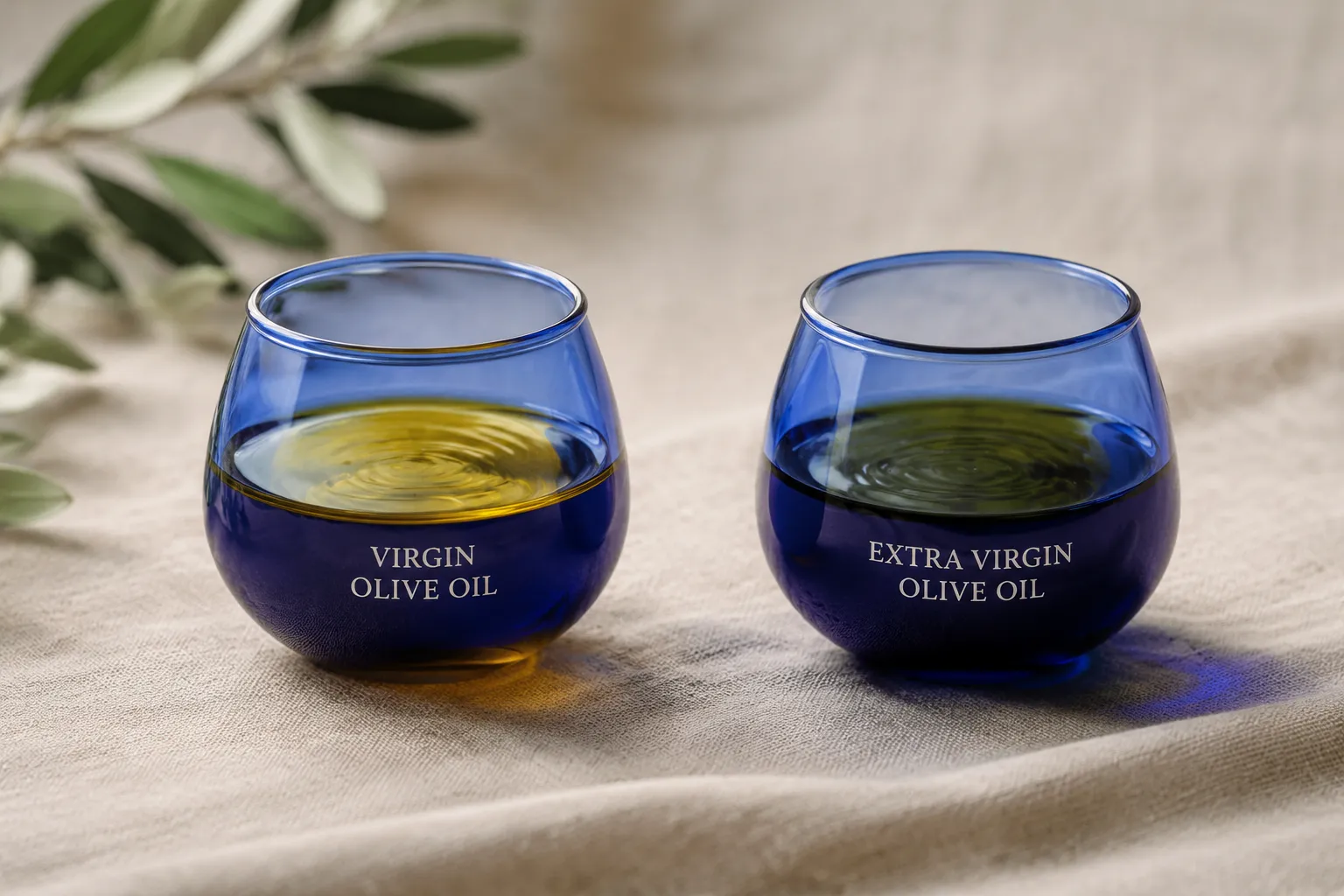
This is where the label really starts to matter. Once you know what affects acidity, aroma, smoke point, and price, you can stop guessing and start buying with confidence.
Extra virgin olive oil must meet a lower free acidity standard than virgin olive oil, which is one reason it’s considered the higher grade. Lower acidity alone doesn’t guarantee great flavor, but it does reflect careful harvesting and processing. That’s why serious producers pay such close attention to time from harvest to milling.
For the shopper, the takeaway is simple: if you want the best blend of freshness and flavor, EVOO is the safer bet. Virgin still has a place, but it’s not usually the bottle people mean when they talk about premium olive oil.
Extra virgin tends to be brighter, grassier, fruitier, and more aromatic, with a peppery finish that can be pleasantly assertive. Virgin olive oil is milder and a little flatter, though it can still taste clean and pleasant. The flavor gap matters most when the oil is served raw.
That’s why the best olive oil for salad dressing is often a good EVOO: it brings the whole bowl to life. If you’ve ever tasted a salad and thought it needed something, the answer is usually a better oil, not more vinegar.
People love to debate the smoke point, but in home kitchens, this is often overstated. Extra virgin olive oil generally has a smoke point around 375 to 410 degrees F, which is plenty for sautéing, roasting, and shallow frying. Virgin olive oil performs similarly, though its flavor is less likely to be the reason you choose it.
If you want a quick reference, an olive oil smoke point chart can be helpful, but it shouldn’t be the only factor. Freshness, quality, and intended use matter just as much, especially when cooking over moderate heat.
Oil color can range from deep green-gold to pale yellow, and color alone does not prove quality. Still, many high-quality EVOO bottles look richer and greener because of the compounds preserved during careful processing. Virgin oil may appear a little lighter or less vibrant, though this is not a hard rule.
Since color can be misleading, taste and aroma are much better indicators. A beautifully green oil can still be stale, and a paler bottle can still be excellent.
Extra virgin olive oil usually costs more because it takes stricter grading, more careful handling, and more sensory testing to make. That higher price often reflects lower yield and tighter quality control. Virgin olive oil can be a more budget-friendly option when you’re using oil in larger quantities or in recipes where subtlety matters more than sparkle.
For many households, the smartest strategy is to keep one excellent EVOO for finishing and salads, then a more affordable olive oil for everyday cooking. That approach gives you flavor where it counts without wasting the good stuff on every pan.
Extra virgin shines in dressings, dips, drizzling, finishing dishes, and any recipe where you want the oil to taste distinct. Virgin olive oil is useful for sautéing, baking savory breads, or recipes where a softer olive note is fine. Both can live side by side in a well-stocked kitchen.
If you’re building out Mediterranean pantry staples, think of extra virgin as your flavor oil and virgin as your workhorse backup. That simple split makes it easier to cook without second-guessing every bottle.
The easiest way to decide between the two is to ask whether the oil will be tasted plainly or mostly cooked into the dish. If the answer is “yes, I want to taste it,” reach for EVOO. If the answer is “just give me a dependable olive note,” virgin olive oil can do the job. 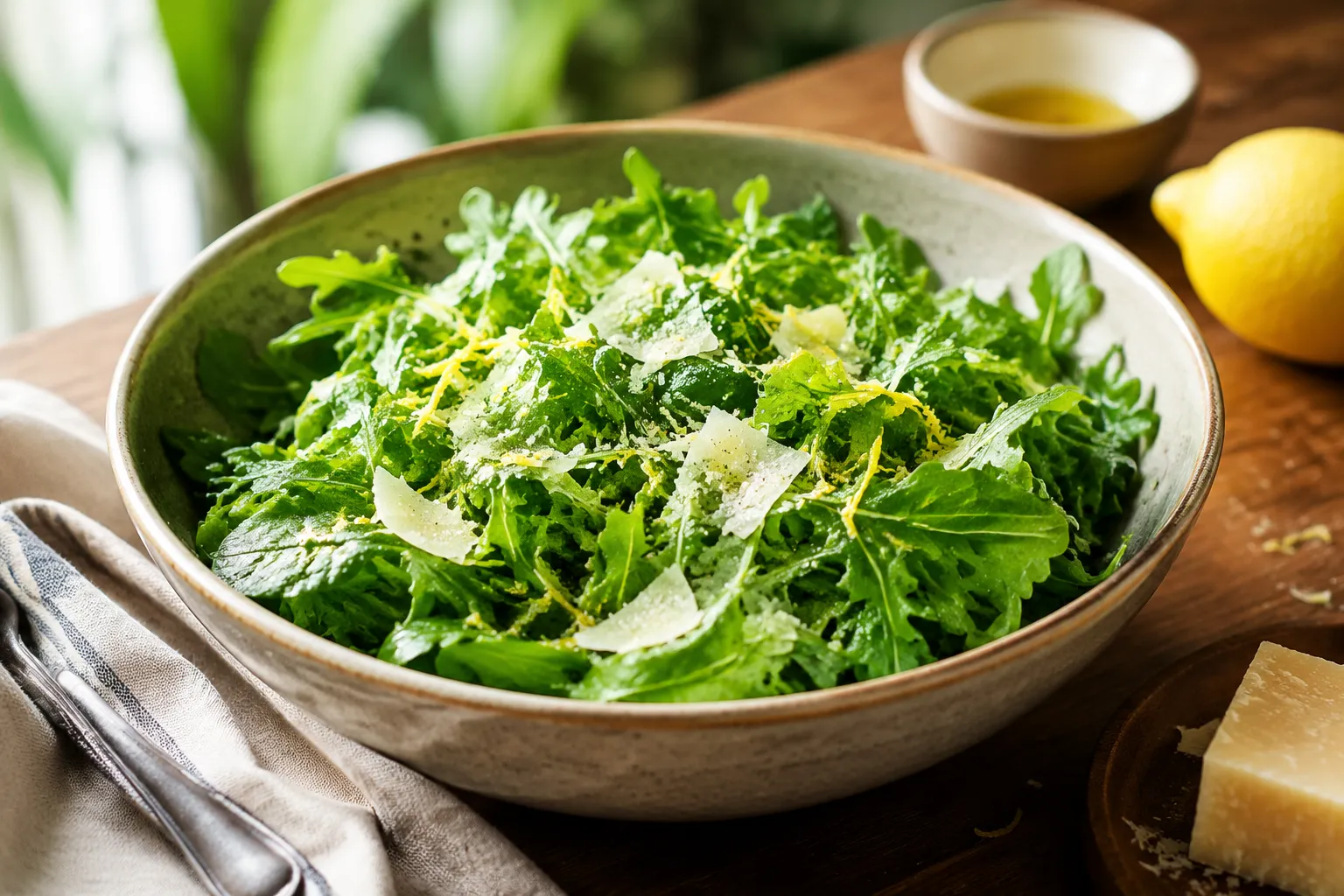
For a simple tasting test, whisk together a small batch of this lemon-garlic vinaigrette and pour it over greens, beans, or sliced cucumbers. You’ll immediately notice how much the oil shapes the final flavor. If you want a template, a homemade vinaigrette is one of the best ways to learn what good olive oil tastes like.
EVOO is excellent on salads, grilled vegetables, roasted potatoes, hummus, pasta, soups, and crusty bread. It brings aroma and structure to dishes, especially when used raw or added at the end of cooking. It’s also the oil I’d choose when a recipe calls for a drizzle just before serving.
Because the flavor is so expressive, even a small amount goes a long way. That’s why many cooks reserve it for moments when the oil is part of the seasoning, not just a background fat.
Virgin olive oil is handy when you want a gentler olive flavor in sautéed vegetables, baked savory dishes, or everyday meal prep. It’s a sensible option for recipes where the oil will be blended with other bold ingredients, like garlic, onions, or spices. If your dish isn’t meant to showcase the oil, this can be a practical pick.
It can also be useful when you’re cooking more casually and don’t want to use up a pricier bottle. Think of it as a supportive player rather than the main event.
There are times when neither virgin nor extra virgin is the best choice. If you need a more neutral flavor or plan to cook at higher heat, refined or “pure” olive oil may make more sense. These oils are more processed, but they can be useful when you want less aroma and a simpler profile.
If you’re comparing extra virgin olive oil substitutes, keep in mind that flavor changes a lot with each swap. Canola, avocado, grapeseed, and refined olive oil all behave differently, so the best substitute depends on whether you’re baking, frying, or finishing.
Buying good olive oil gets much easier once you know what labels matter and which ones are just marketing. The goal is not to memorize every certification, but to learn a few reliable signs of freshness and quality. 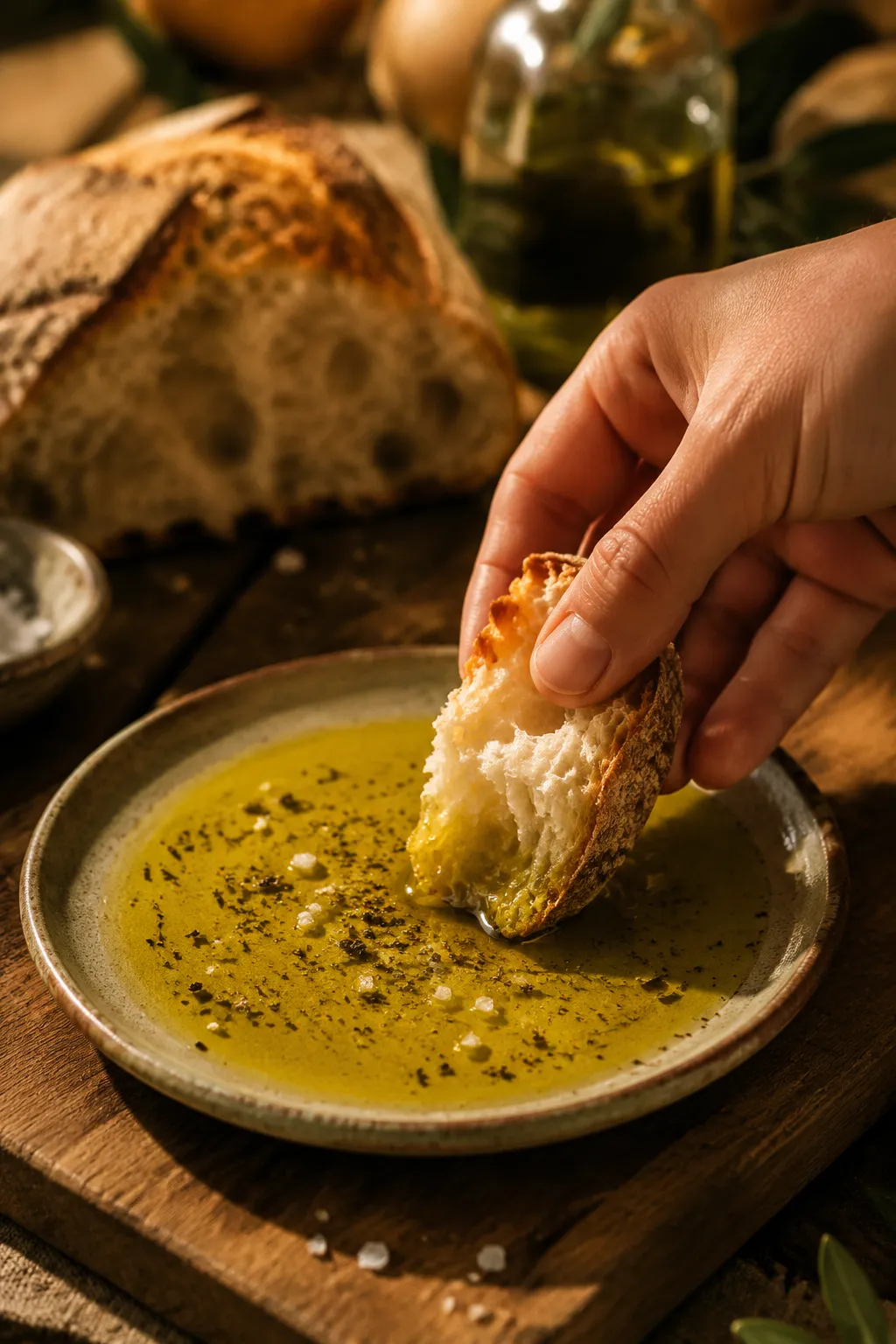
A great bottle should tell you where it came from, when it was harvested, and ideally how it was handled. If you enjoy checking labels, this is one of those pantry upgrades that pays off quickly.
Look for harvest date, origin, and trusted seals such as PDO or COOC when they’re available. Single-origin oils often give you a clearer sense of flavor, while broad blends can vary more from bottle to bottle. Certifications aren’t a guarantee of perfection, but they add credibility.
Also, “cold pressed” is still worth seeing on a label, though modern quality oils may be produced with temperature control rather than old-fashioned pressing. The bigger picture is freshness, transparency, and a producer willing to stand behind the oil.
Freshness matters more than many people realize. Olive oil is best when it’s relatively young, so a harvest date is more useful than a vague best-by date. Dark glass or tin helps protect the oil from light, which can speed up degradation.
When you shop, think of oil the way you’d think of coffee or spices: freshness is a flavor issue, not just a shelf-life issue. A beautiful bottle in clear glass may look nice, but it’s not always the smartest buy.
Be cautious if a bottle is extremely cheap, has no harvest date, and gives you almost no sourcing information. Bland labeling can mean the oil is old, heavily blended, or simply not made with much care. It’s not that every inexpensive bottle is bad, but low transparency should make you skeptical.
When in doubt, choose a known producer over a vague bargain bin option. A slightly better bottle will often taste better in both raw and cooked applications, and that’s money well spent.
Once you’ve bought a good bottle, storage becomes the next piece of the puzzle. Olive oil doesn’t need coddling, but it does need protection from light, heat, and air. If you’re unsure about how to store olive oil, the simplest answer is cool, dark, and tightly sealed. 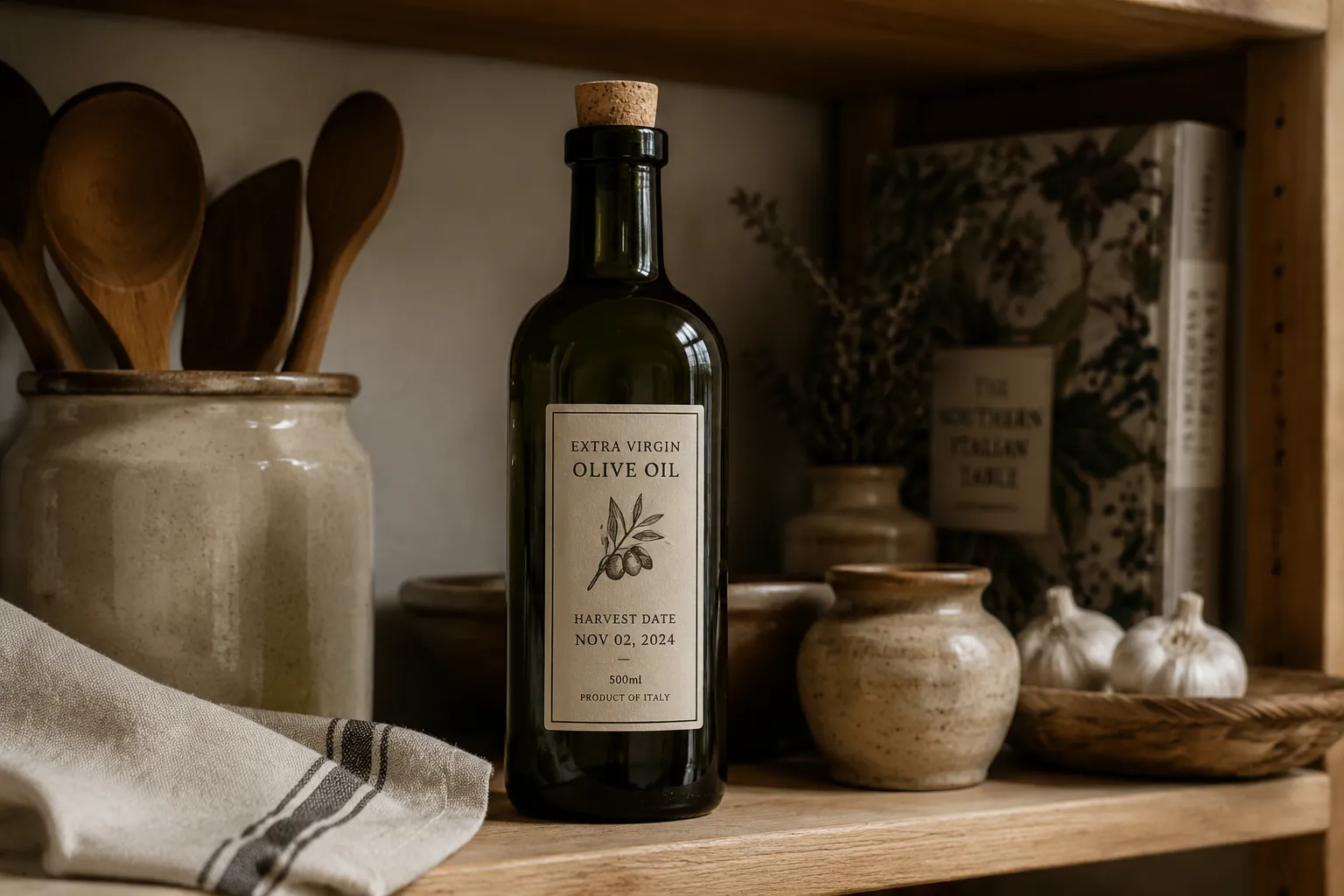
Keep the bottle near the stove only if you use it quickly; otherwise, a pantry or cabinet is better. That one habit can make a noticeable difference in flavor over time, especially with a premium bottle of EVOO.
Good storage matters whether you buy a tiny specialty bottle or larger household size. It’s one of the easiest ways to protect your investment and keep that peppery finish alive for as long as possible.
You can adjust this vinaigrette to match the olive oil you have on hand or the way you plan to serve it. A bolder EVOO will make the dressing taste greener and more peppery, while a milder virgin oil keeps it softer and more understated. Either way, the formula stays flexible and easy to scale.
Store olive oil in a cool, dark place away from the stove, oven, and sunny windowsill. A pantry or closed cabinet is ideal, and dark glass or tin helps protect the oil from light. If you buy a large bottle, consider pouring some into a smaller working bottle and keeping the rest sealed tightly.
Most olive oil is best used within 6 to 12 months of opening, though freshness depends on the harvest date and how it was stored before you brought it home. If the oil smells flat, crayon-like, waxy, or bitter in an unpleasant way, it may be rancid and ready to replace.