Homemade Alfredo Sauce (Creamy 15-Minute Recipe)
Ingredients
Scale
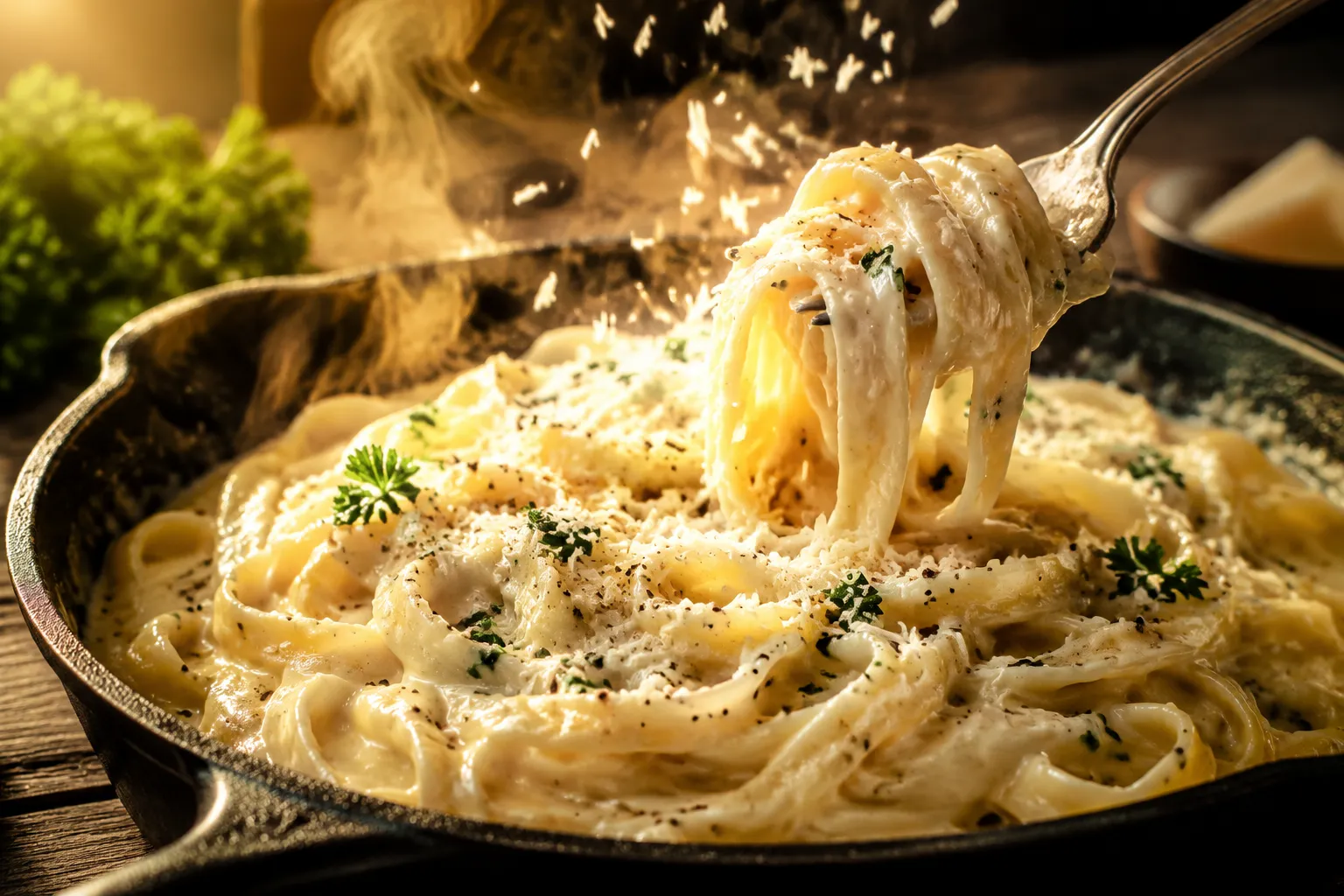
Silky, restaurant-style homemade alfredo sauce in 15 minutes — just butter, cream, garlic, and real Parmesan. No flour, no graininess, no fuss.
There's nothing more satisfying than a pan of glossy homemade alfredo sauce coming together in the time it takes to boil pasta. Fifteen minutes, six honest ingredients, and zero jars from the grocery aisle. This is the version I make on busy Tuesdays and the one I serve when friends drop by unannounced — silky, restaurant-style, and reliable every single time.
The trick to a great homemade pasta sauce of any kind is restraint, and alfredo is the perfect example. No flour, no cornstarch, no cream cheese shortcuts — just butter, heavy cream, garlic, and a generous mountain of freshly grated Parmesan cheese. The cheese itself does the thickening, and a quick simmer concentrates everything into a sauce that clings to every noodle.
If you've ever wrestled with a grainy, broken pan or wondered why your version tasted nothing like the one at your favorite Italian spot, this guide has you covered. I'll walk you through the classic cream method, share a tested milk-based variation for lighter weeknights, and show you exactly how to keep that sauce velvety from the first stir to the last bite. Once you make homemade alfredo sauce this way, you won't go back.
A great homemade alfredo sauce is a study in simplicity, which means every ingredient has to pull its weight. You'll need unsalted butter, heavy cream, fresh garlic, and good Parmesan cheese — that's the entire backbone. Salt, freshly cracked black pepper, and an optional pinch of nutmeg round things out. The brand of butter matters less than the cheese, but I do prefer European-style butter when I have it on hand for that extra richness.
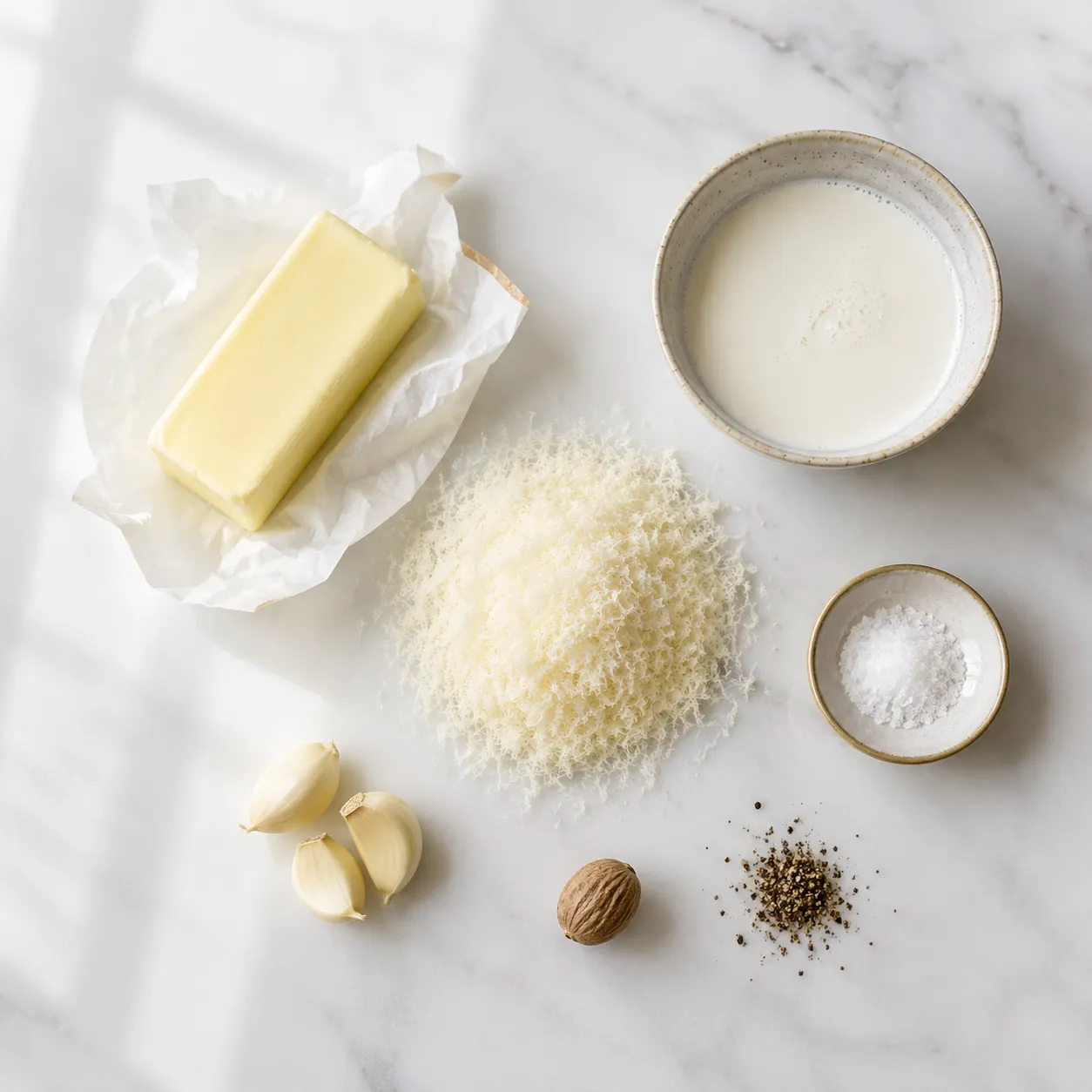
The single biggest upgrade you can make is using a real wedge of Parmigiano-Reggiano and grating it yourself. Pre-shredded bagged cheese is coated in anti-caking agents like cellulose and potato starch that prevent it from melting smoothly into a sauce. If you're new to working with hard cheeses, a quick primer on how to grate Parmesan with a microplane or the small holes of a box grater will save you a world of grief — fluffy, fine cheese disappears into hot cream within seconds, while shredded shards stubbornly clump.
You can stretch this base in a few directions. A tablespoon of cream cheese adds extra body and a subtle tang. A whisper of nutmeg, the kind of detail you'd find in a fancy Roman trattoria, makes the cream taste richer without announcing itself. And white pepper gives the sauce a cleaner finish if you don't want black flecks in the final dish.
The whole process is about layering flavor without overworking the dairy. You build a base of garlic butter, gently warm the cream, and finish with cheese off the heat — that's it. Set a heavy-bottomed saucepan over medium-low before you do anything else, because alfredo punishes high heat.
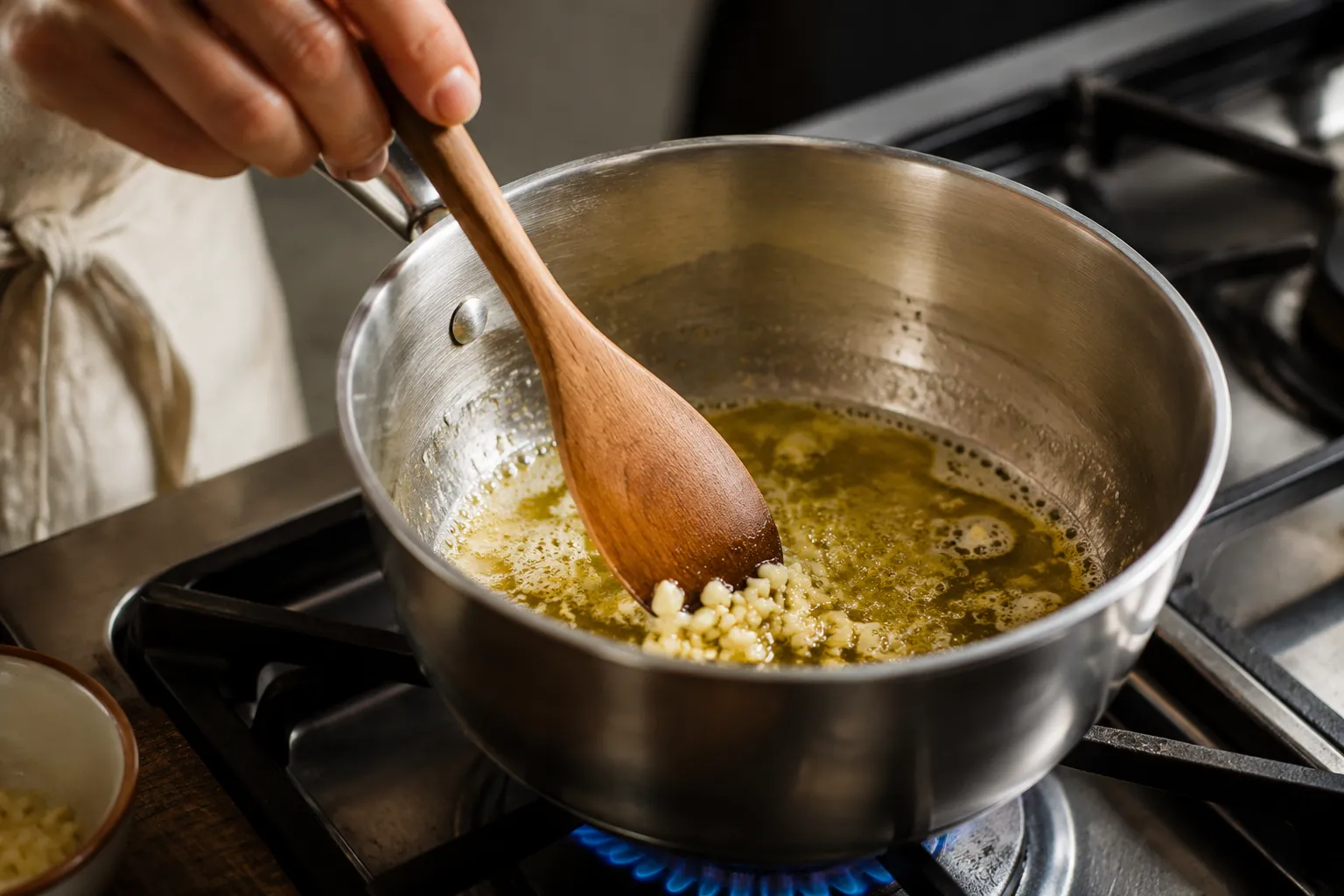
Start by melting the butter and softening minced garlic until it's fragrant but never browned, about a minute. The goal is a mellow, infused garlic butter — not a sizzle. Browned garlic turns bitter and will haunt the entire sauce, so pull back the heat the moment you smell color developing. This is also when you'd add a pinch of red pepper flakes if you like a little warmth.
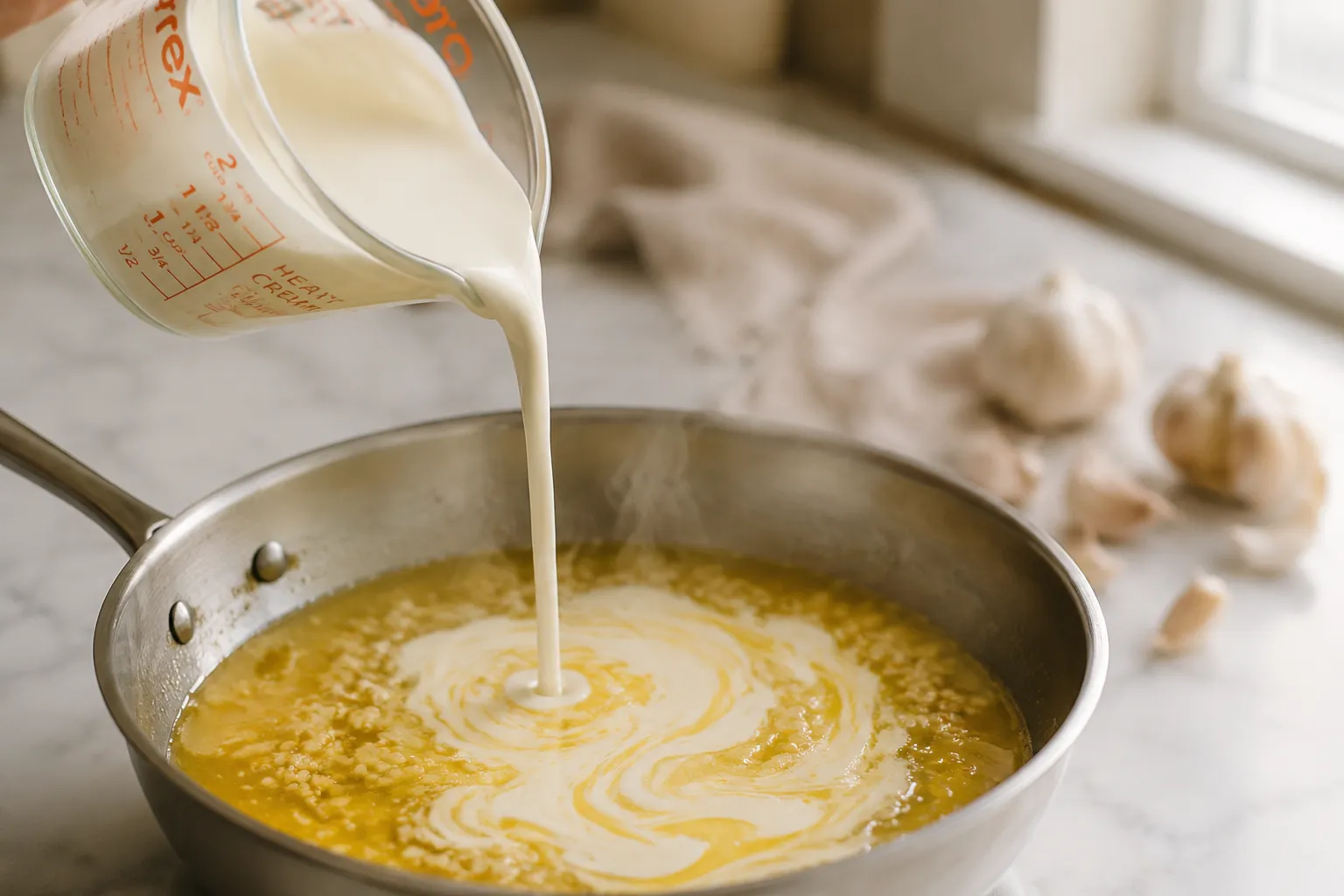
Pour in the heavy cream and bring it to a bare simmer, stirring occasionally. You want lazy bubbles around the edge of the pan, not a rolling boil. Let the cream reduce for three or four minutes until it lightly coats the back of a spoon. Season with salt and pepper now, while the sauce is still loose and easy to taste.
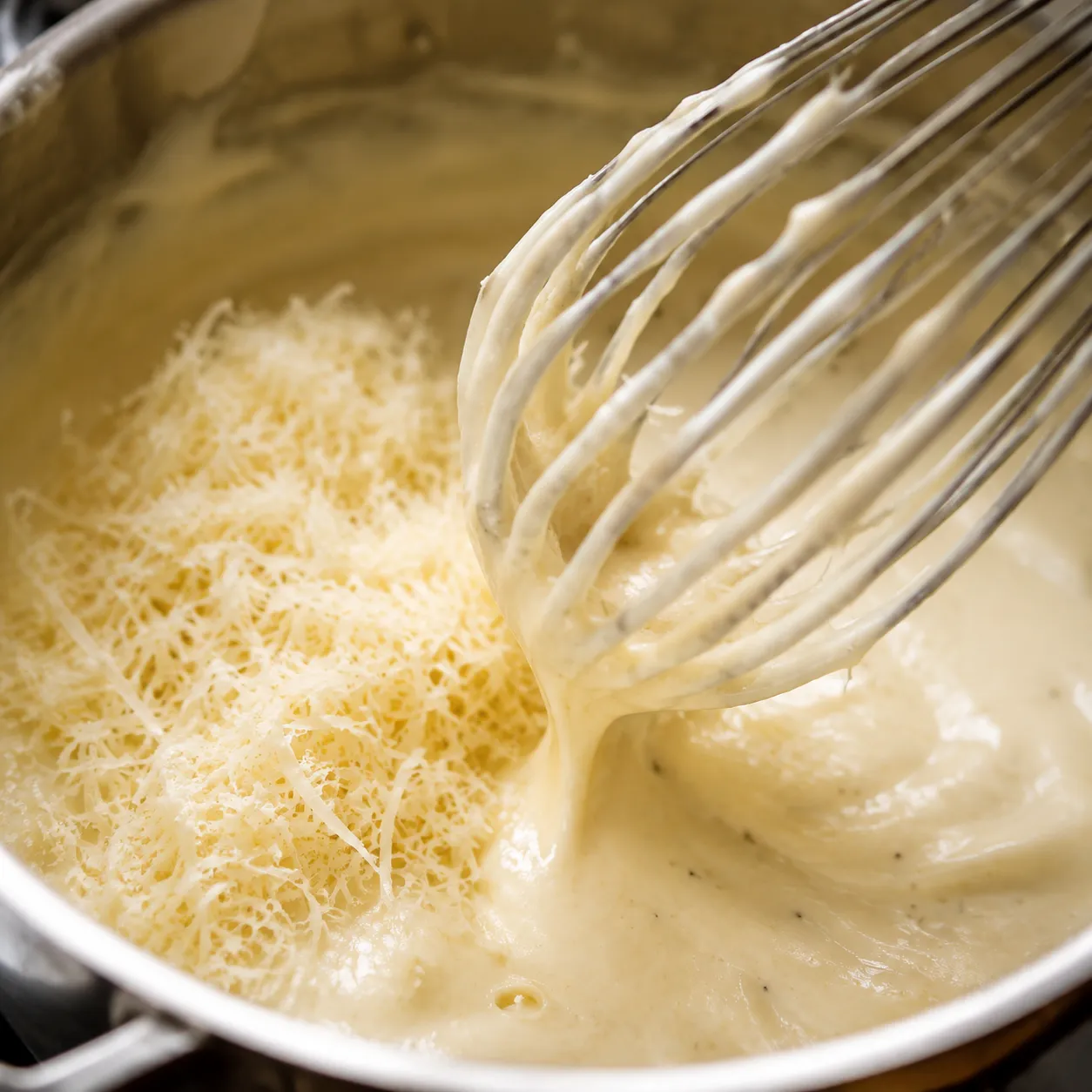
Pull the pan completely off the burner before you add the Parmesan cheese. Whisk the cheese in by the small handful, letting each addition melt before adding the next. Off-heat melting is the single most important rule for a smooth sauce — Parmesan proteins seize and turn grainy in actively boiling liquid. Once everything is glossy and emulsified, taste, adjust salt, and toss immediately with hot pasta and a splash of starchy pasta water.
Heavy cream is traditional, but I get the question constantly: can you make homemade alfredo sauce with milk? Yes, with one small adjustment. Milk doesn't have enough fat to thicken on its own, so you build a quick butter-and-flour roux first, then whisk the milk in to make a silky base before finishing with cheese. It's a different sauce — lighter, slightly more savory, less decadent — but absolutely worth knowing.
For a four-serving batch, melt three tablespoons of butter, whisk in two tablespoons of all-purpose flour, and cook the roux for one minute until it smells nutty. Slowly stream in two cups of whole milk while whisking constantly, then simmer until thickened, about three minutes. Pull off the heat, whisk in one cup of fresh Parmesan, and season. The sauce will look thinner than the cream version but will tighten as it cools and clings well to pasta.
A few rules keep a milk-based sauce from breaking. Use whole milk, never skim — the extra fat is non-negotiable for stability. Keep the heat low after the milk goes in; aggressive boiling separates the proteins. And always finish the cheese off the burner. Reach for the milk version when you want a weeknight pasta that feels lighter, when you're out of cream, or when you're cooking for someone who finds traditional alfredo too rich.
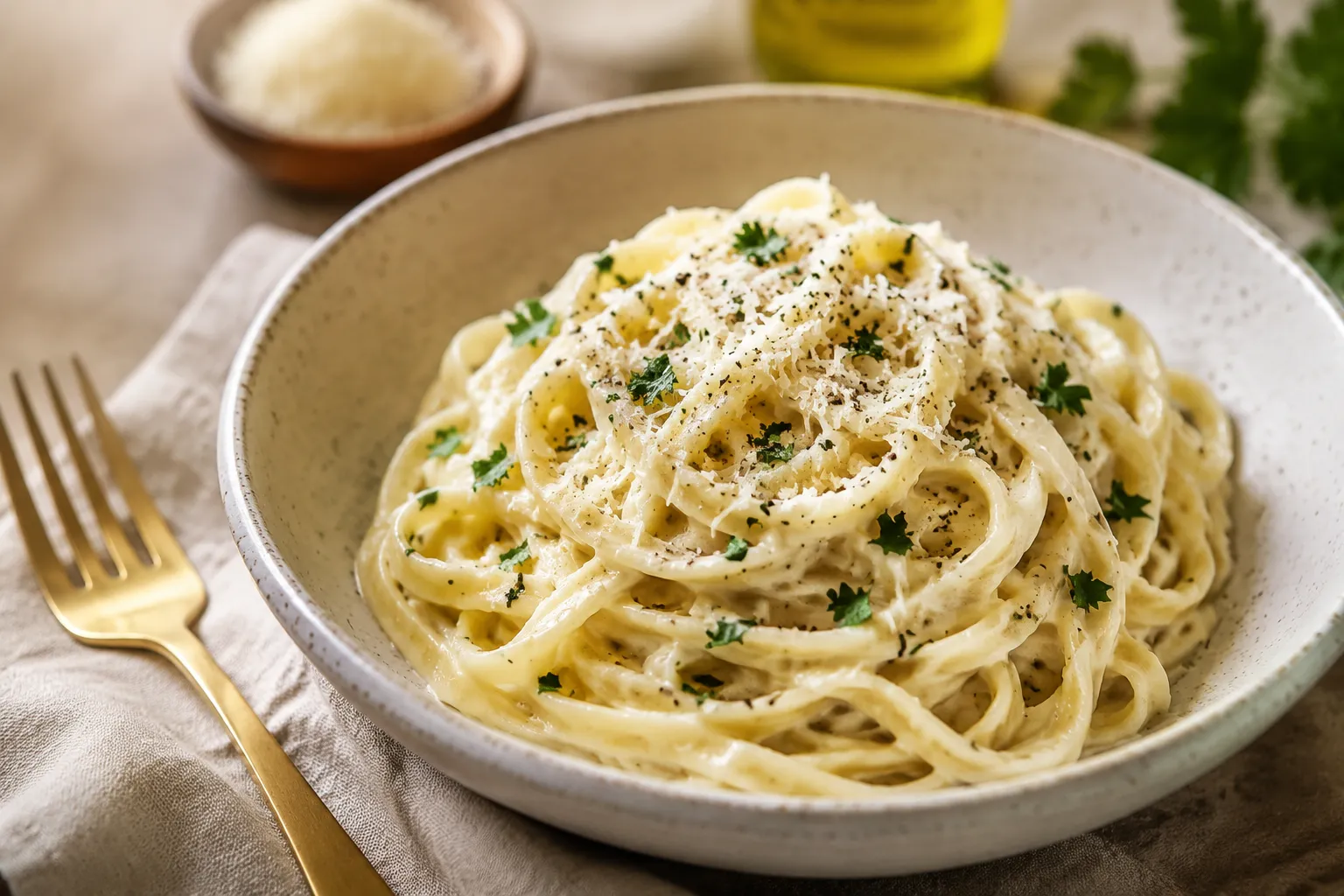
The most obvious answer is a big bowl of fettuccine alfredo, and there's a reason it's the classic — those wide ribbons of pasta are built to carry rich sauce. But this homemade alfredo sauce is a workhorse far beyond the original pairing.
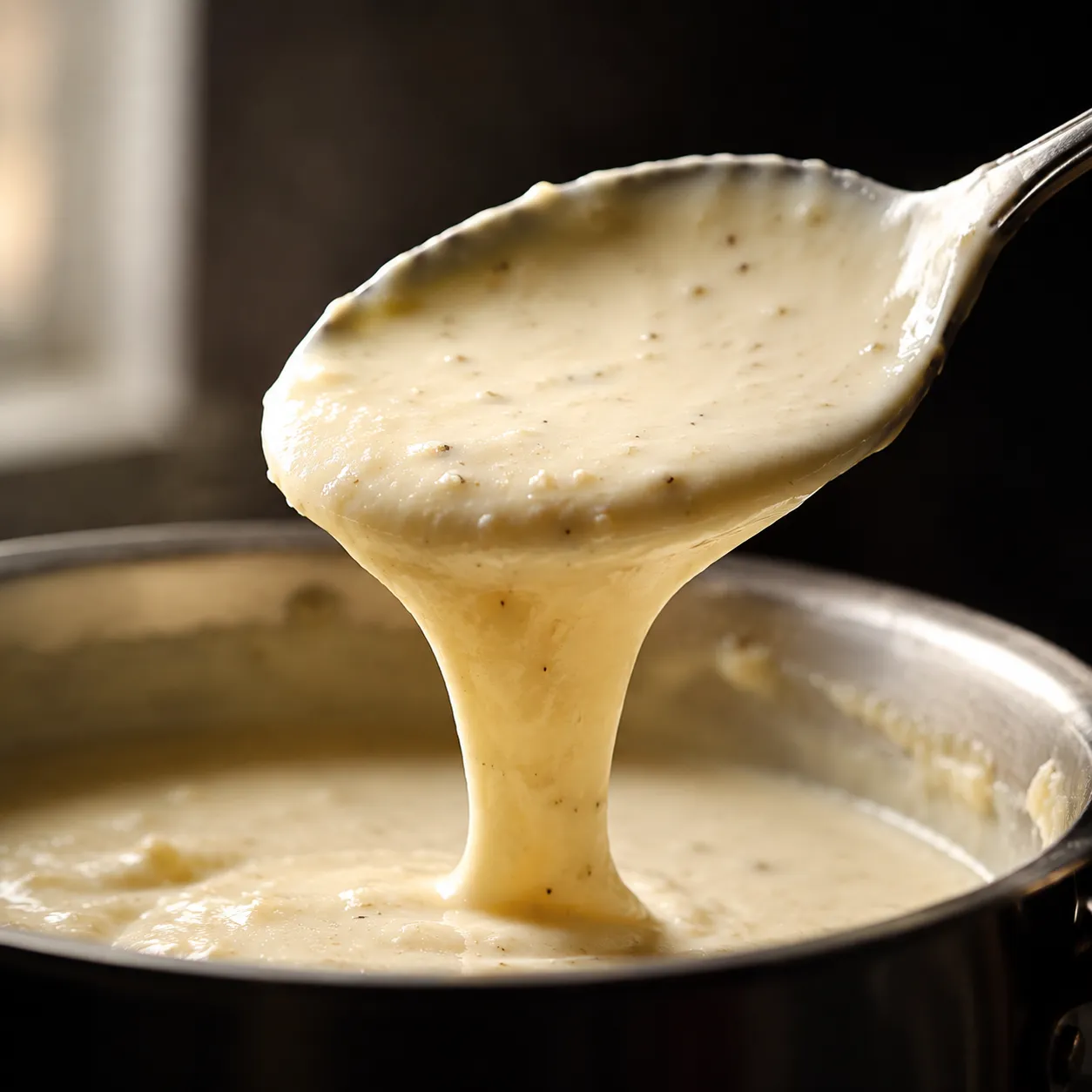
For a heartier dinner, fold in shredded rotisserie chicken or turn it into a bubbling chicken alfredo bake with penne, mozzarella, and a panko top. It's also the answer for garlic butter shrimp pasta — sear the shrimp separately, toss everything together at the end, and finish with parsley and lemon zest. Steamed broccoli, peas, sautéed mushrooms, or wilted spinach all stir in beautifully and bulk up the dish without competing.
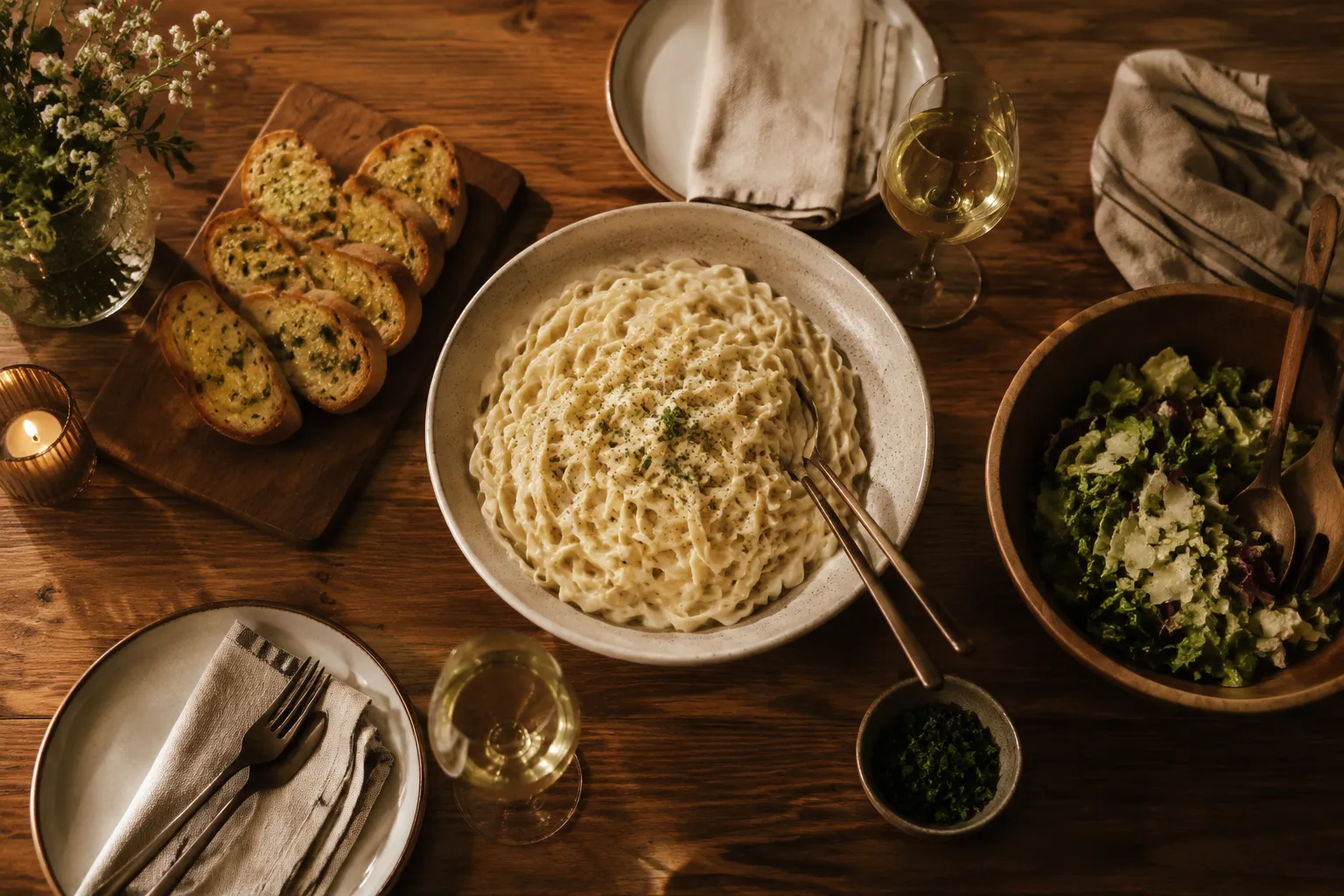
Outside the pasta bowl, alfredo doubles as a luxurious white pizza base, a dipping sauce for warm breadsticks, or the binder in a chicken-and-broccoli casserole. A warm crock alongside roasted vegetables turns dinner into a near-fondue situation. And of course, a basket of garlic bread and a sharp green salad turn any of these into a proper meal.
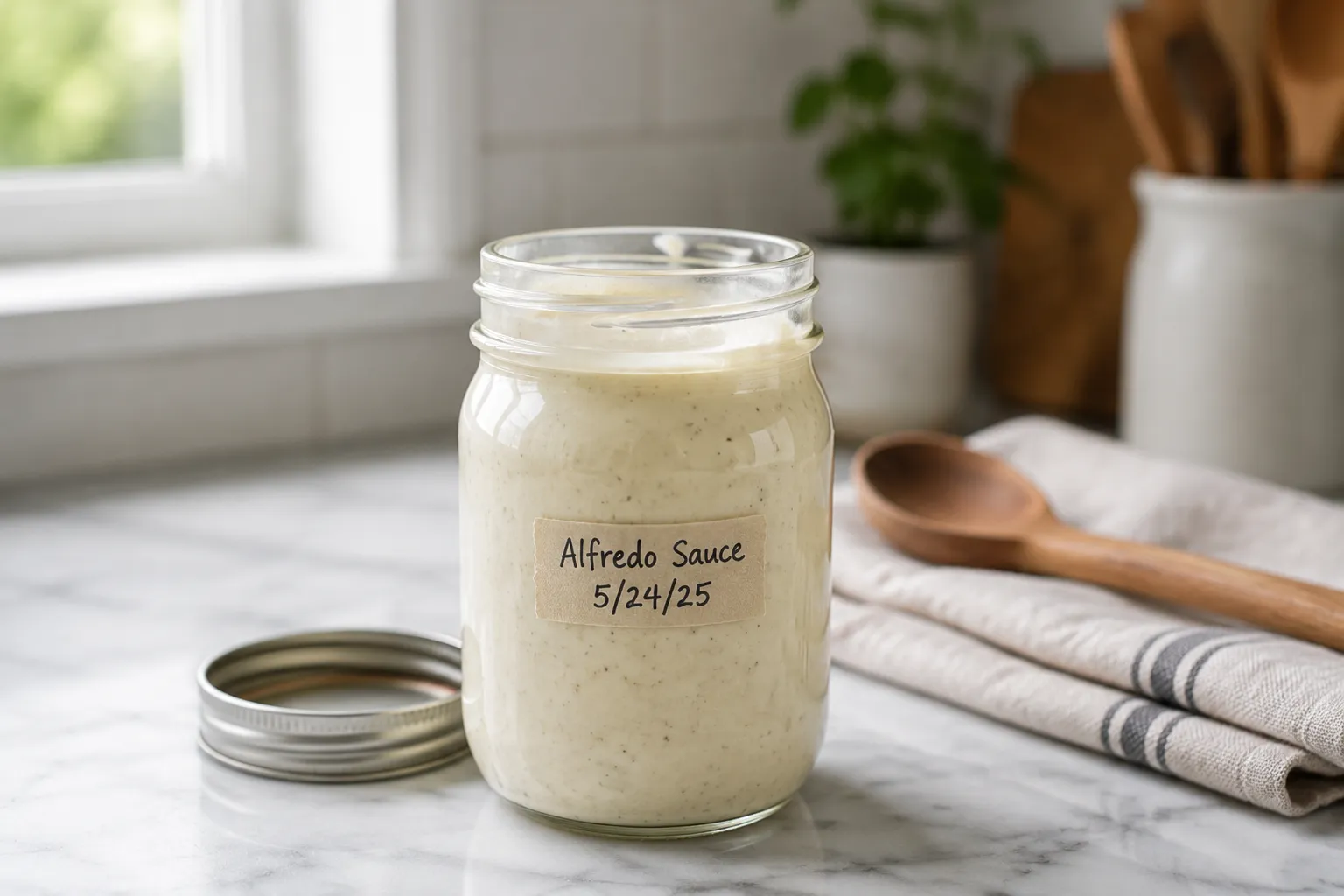
Once you taste a real homemade pasta alfredo made with butter, cream, and properly grated cheese, the jarred stuff in the grocery aisle stops making sense. The whole sauce takes less time than the pasta needs to cook, costs a fraction of takeout, and gives you complete control over salt, garlic, and richness. Make it once on a weeknight, and you'll find yourself doubling the batch the next time so there's enough for tomorrow's lunch.
Whether you're going classic with cream or lightening things up with the milk method, the principles stay the same: low heat, real Parmesan, and a confident hand with the whisk. Grab your favorite skillet, pour a glass of something cold, and let's get dinner on the table.
This sauce is a sturdy template that handles add-ins gracefully. Here are a few favorites I rotate through depending on what's in the fridge and what mood the table is in.
Store leftover alfredo in an airtight container in the refrigerator for up to four days. The sauce will thicken substantially as it cools and might look slightly broken or separated when you pull it out — that's just the dairy resting, and a slow rewarming brings it right back together.
To reheat, transfer the sauce to a small saucepan over the lowest possible heat and add a splash of milk, cream, or reserved pasta water. Whisk gently and patiently as it warms. Microwaving is risky because localized hot spots cause the cheese to seize and turn grainy. Freezing isn't ideal for cream-based sauces either, since the dairy can separate on thawing, but if you must freeze, store in airtight containers for up to one month and rewarm slowly with a few extra tablespoons of warm cream while whisking constantly.