The Best Steak Marinade Recipe (Easy & Foolproof)
Ingredients
Scale
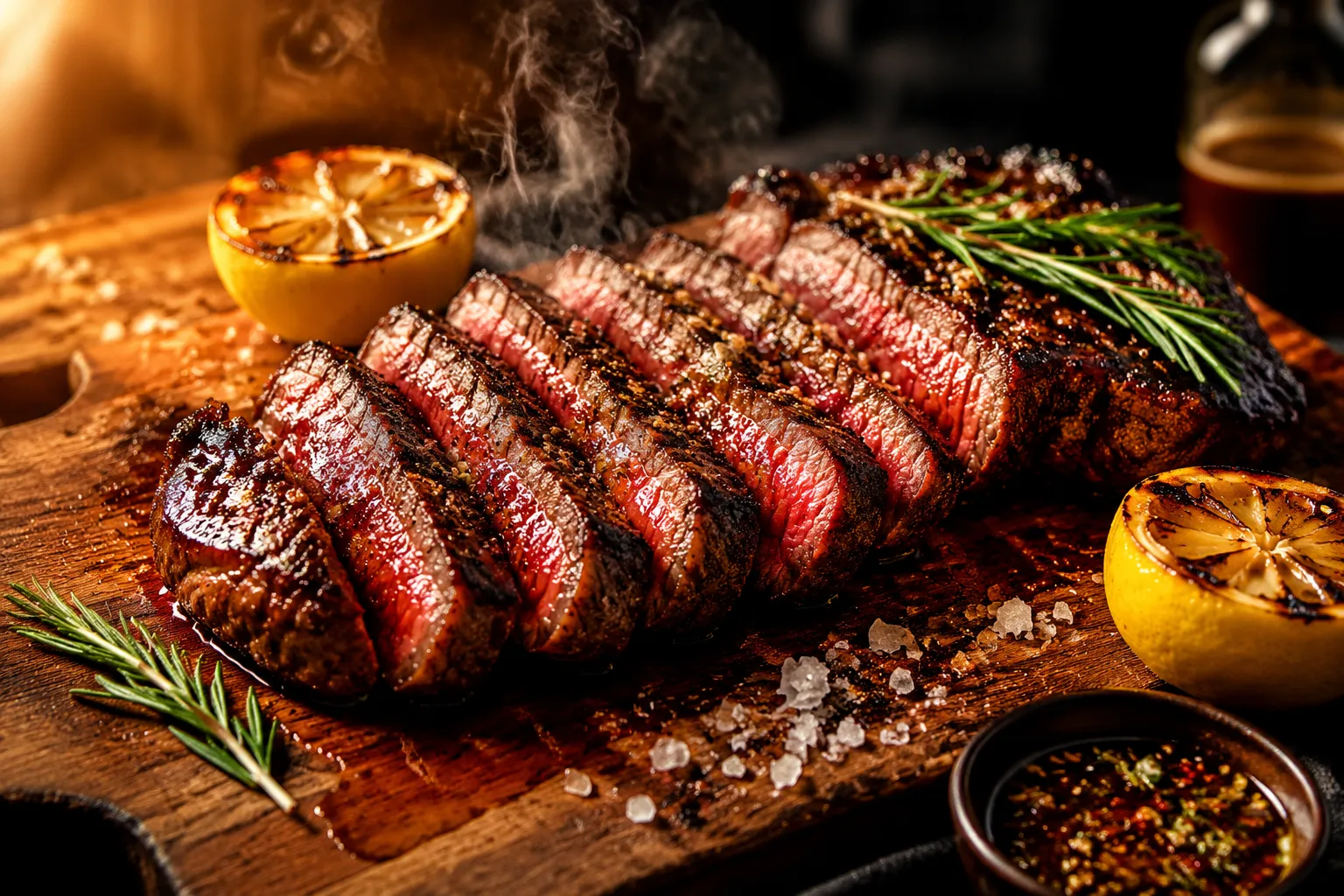
This is the only steak marinade recipe you'll ever need: a balanced soy, garlic, and brown sugar blend that tenderizes any cut and delivers bold, juicy flavor in under 30 minutes.
A great steak marinade is the difference between a forgettable weeknight dinner and a meal people text you about for days afterward. This one is built entirely from pantry staples — soy sauce, balsamic, garlic, brown sugar, a splash of Worcestershire — and it pulls double duty as a tenderizer and a flavor bomb. Whether you're working with a thick ribeye or a budget-friendly flank, it delivers juicy, deeply seasoned, beautifully caramelized results every single time.
I've been making versions of this marinade for years, tweaking the ratio of acid to sweet to salty until it landed exactly where I wanted it: bold without being aggressive, rich without being heavy, and balanced enough to let the beef itself stay center stage. It clings to the meat instead of running off the cutting board, builds a glossy lacquered crust on the grill, and works just as well in a screaming-hot cast iron pan when the weather isn't cooperating. The whole thing comes together in five minutes with one whisk and one bowl.
If you've been stuck in a rotation of plain salt-and-pepper steaks (nothing wrong with that, by the way), this is your gateway. Whisk it up, dump it in a bag with your beef of choice, and walk away. The fridge does the heavy lifting and you come back later to dinner that tastes like a steakhouse charged you forty bucks for it.
Every ingredient in this recipe earns its spot. There's nothing fussy here, no obscure bottles you'll only use once and let crystallize in the back of the fridge — just nine items that probably already live in your pantry. The magic is entirely in the ratio.
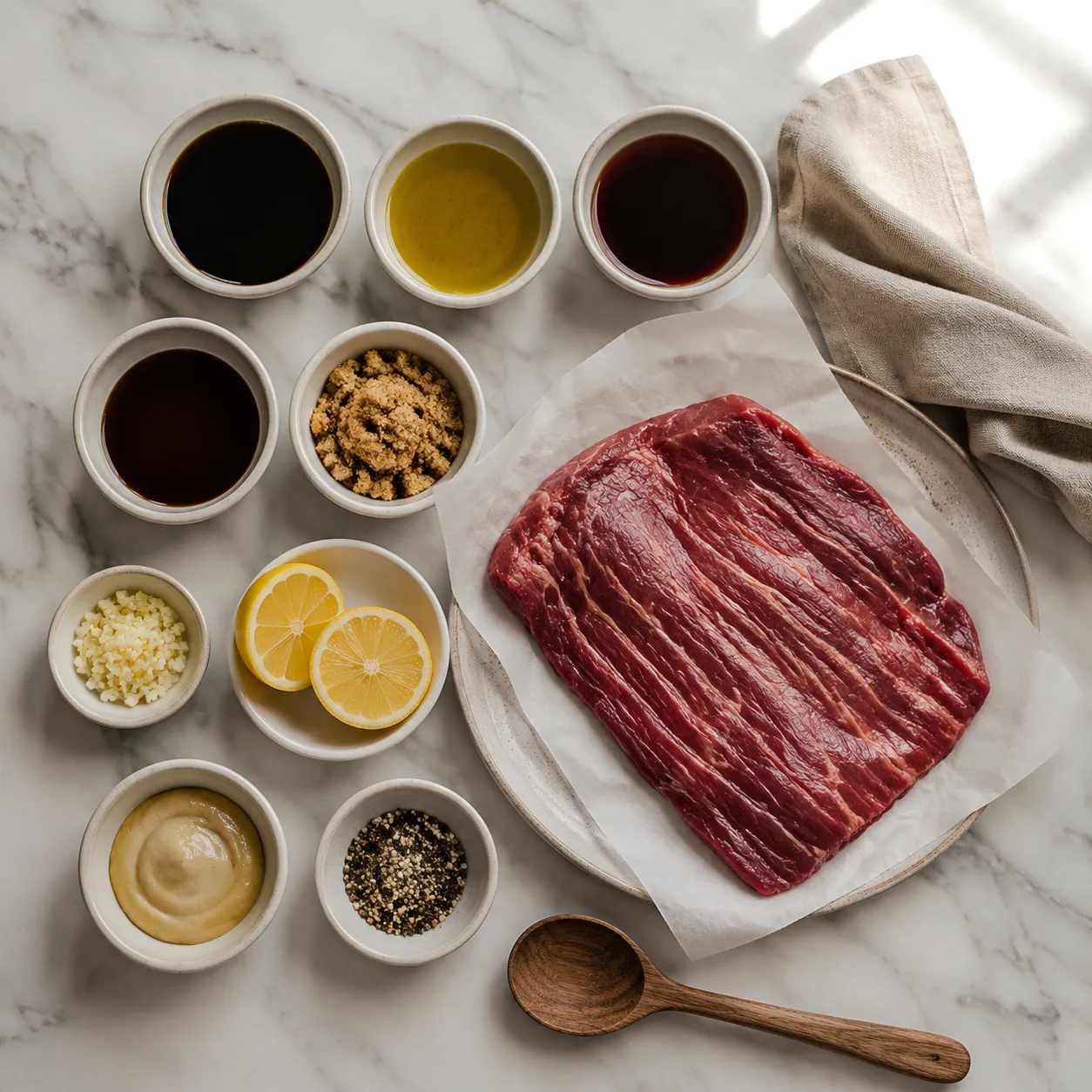
Soy sauce and Worcestershire form the savory backbone. Soy brings deep umami and seasons the meat all the way through, while Worcestershire layers in a subtle funk and complexity you can't get from soy alone — anchovies, tamarind, molasses, all doing quiet work. Use low-sodium soy if you're sensitive to salt or if you plan to marinate for the full eight hours.
Balsamic vinegar and lemon juice are your acids. Balsamic adds a fruity, slightly sweet edge that caramelizes beautifully on the grill, and a single tablespoon of fresh lemon juice keeps everything bright. Together they tenderize without going overboard the way straight white vinegar can. The combination is what gives this marinade its distinctive depth — most recipes lean too far in one direction, and the meat tastes either harsh or muddy.
Garlic, brown sugar, Dijon, olive oil, and black pepper round things out. Four cloves of fresh garlic — minced, not jarred — give that punchy aromatic hit. Brown sugar is non-negotiable; it's what creates the glossy, almost lacquered crust on the surface of the cooked steak. Dijon helps emulsify the marinade so it actually clings to the beef instead of separating into oil and liquid layers, and olive oil carries the fat-soluble flavors deep into the surface of the meat.
Mixing this marinade is genuinely a five-minute job. The hands-on time is so short that the only real planning is figuring out when to start it so the meat has enough time to soak before dinner.
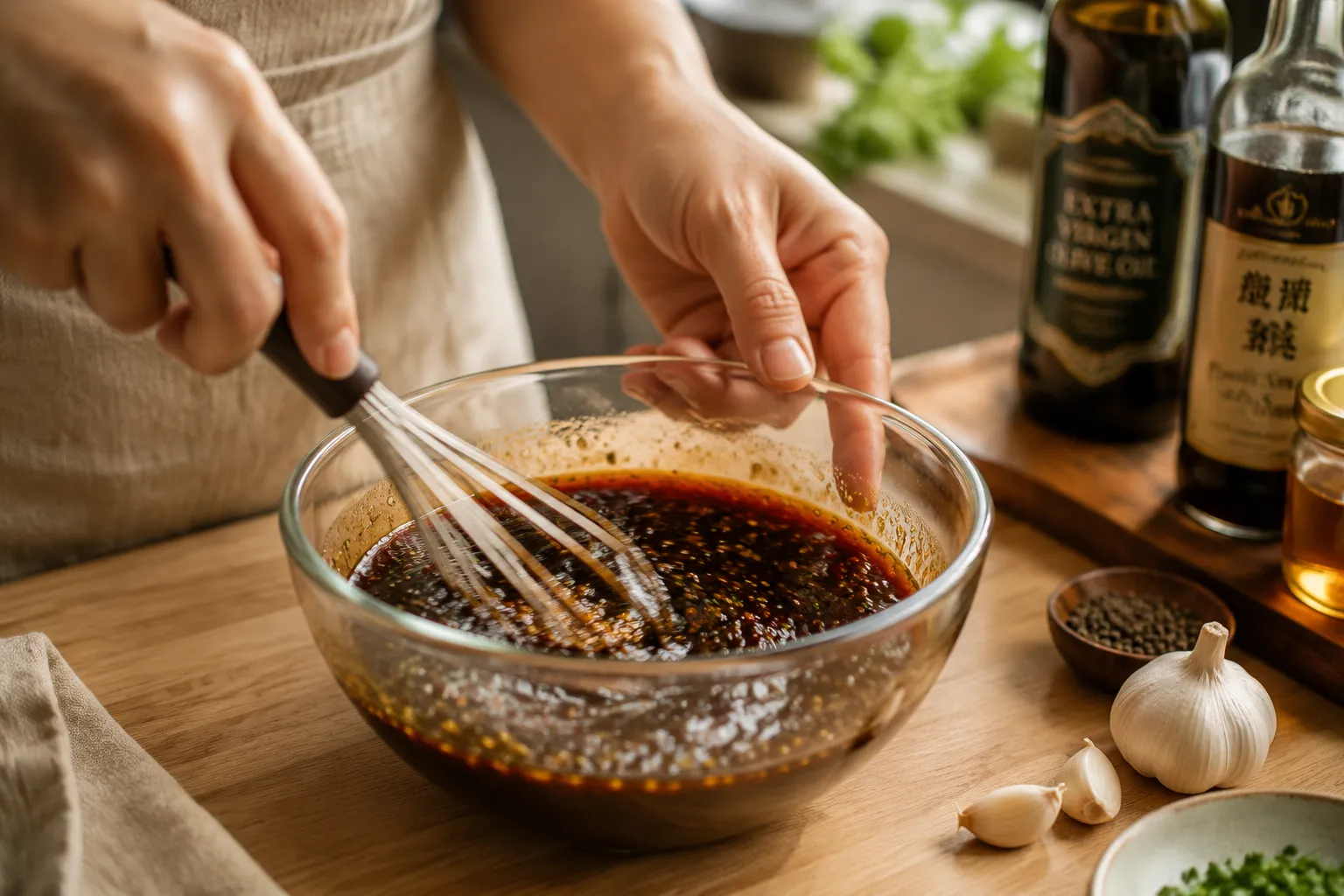
Start by whisking everything except the steak in a glass bowl or large measuring cup. The Dijon takes a few extra strokes to fully break up — keep going until the mixture looks glossy and uniform with no oil slick floating on top. This emulsification is the entire point: it's why the marinade actually coats the meat instead of pooling at the bottom of the bag and leaving the top half dry.
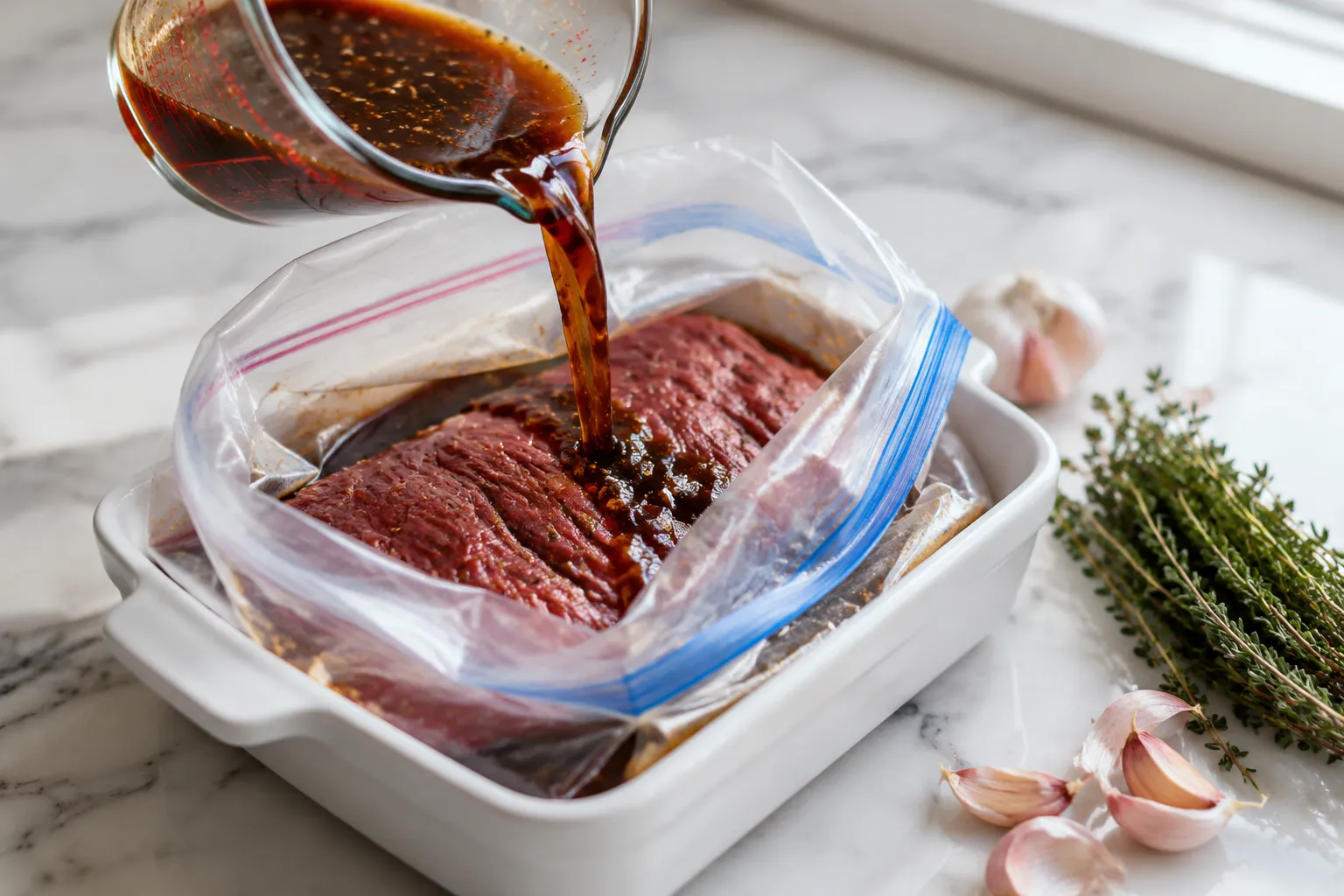
Pat your steak completely dry with paper towels first, then transfer it to a gallon zip-top bag set inside a baking dish (the dish is cheap insurance against leaks in the fridge). Pour the marinade over the top, press out as much air as you can, and seal. Massage the bag for a few seconds to coat every surface of the beef.
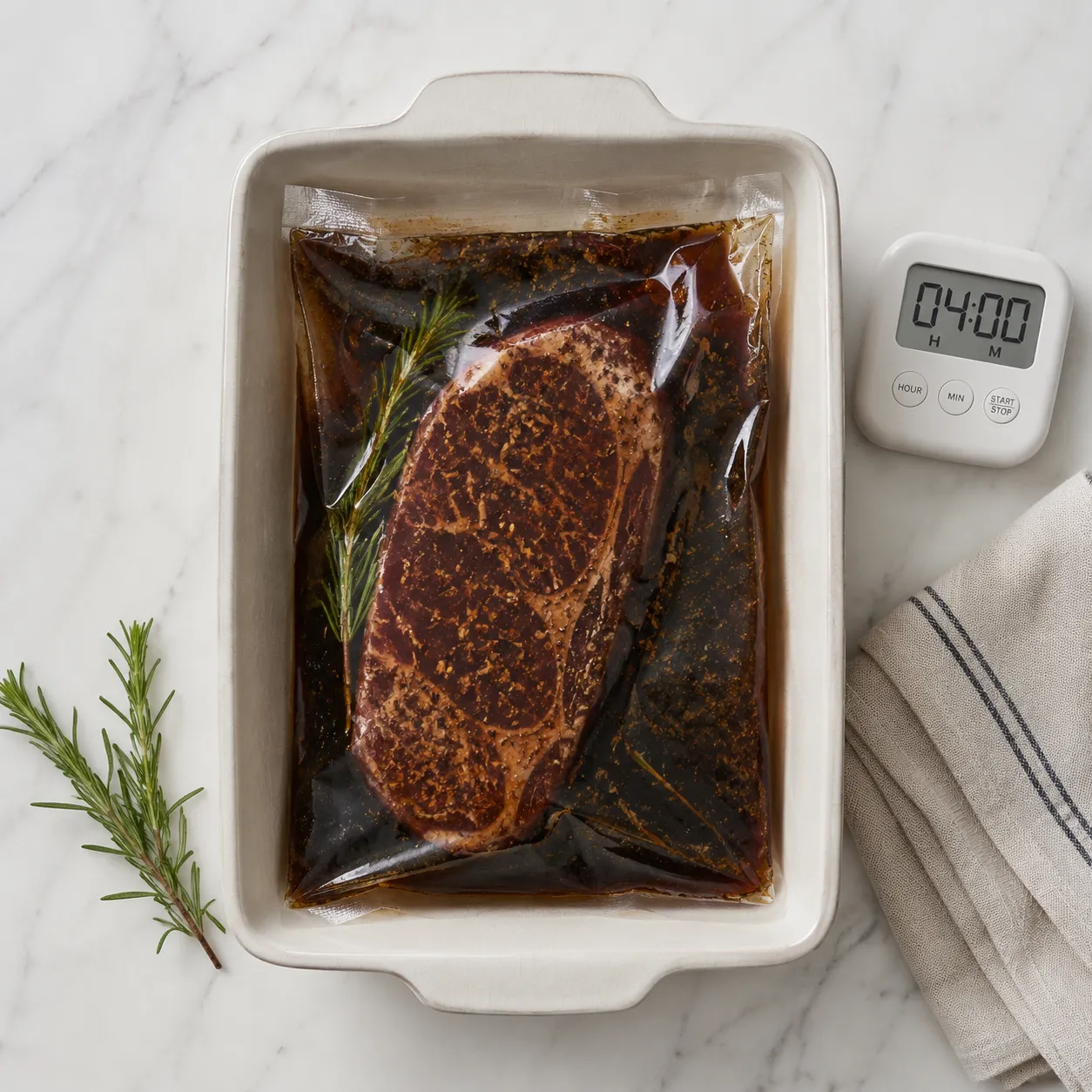
Refrigerate, flipping the bag once halfway through if you happen to be around to do it. That's it — no piercing, no scoring, no special equipment, no stirring. The marinade does the work while you do literally anything else with your afternoon.
Time is where most home cooks go wrong. The instinct is "longer must be better," but this is one of those situations where over-doing it actively hurts the final result. Acid keeps working on the proteins as long as the meat is sitting in it, and after a certain point the surface texture turns from tender to mushy and weirdly grainy — almost like wet cardboard.
Here's the cheat sheet I keep mental notes on:
The hard ceiling is roughly 24 hours, and even that's pushing it for thinner cuts. If life happens and you need more lead time, drain off the marinade after 8 hours and let the steak sit dry in the fridge — it'll keep absorbing the flavors that are already on its surface without the acid continuing to break things down.
This marinade is genuinely cut-agnostic, but some pairings are more inspired than others. If you're shopping with this recipe in mind, here's where to focus your dollars and your dinner plans.
For pure grilling glory, flank steak and skirt steak are the headliners. They drink up marinade like nothing else, cook fast over high heat, and slice into long ribbony pieces that look impressive fanned across a board. A grilled flank steak that's been bathed in this marinade for six hours is a thing of beauty — deeply seasoned all the way through, charred on the outside, vivid pink in the middle.
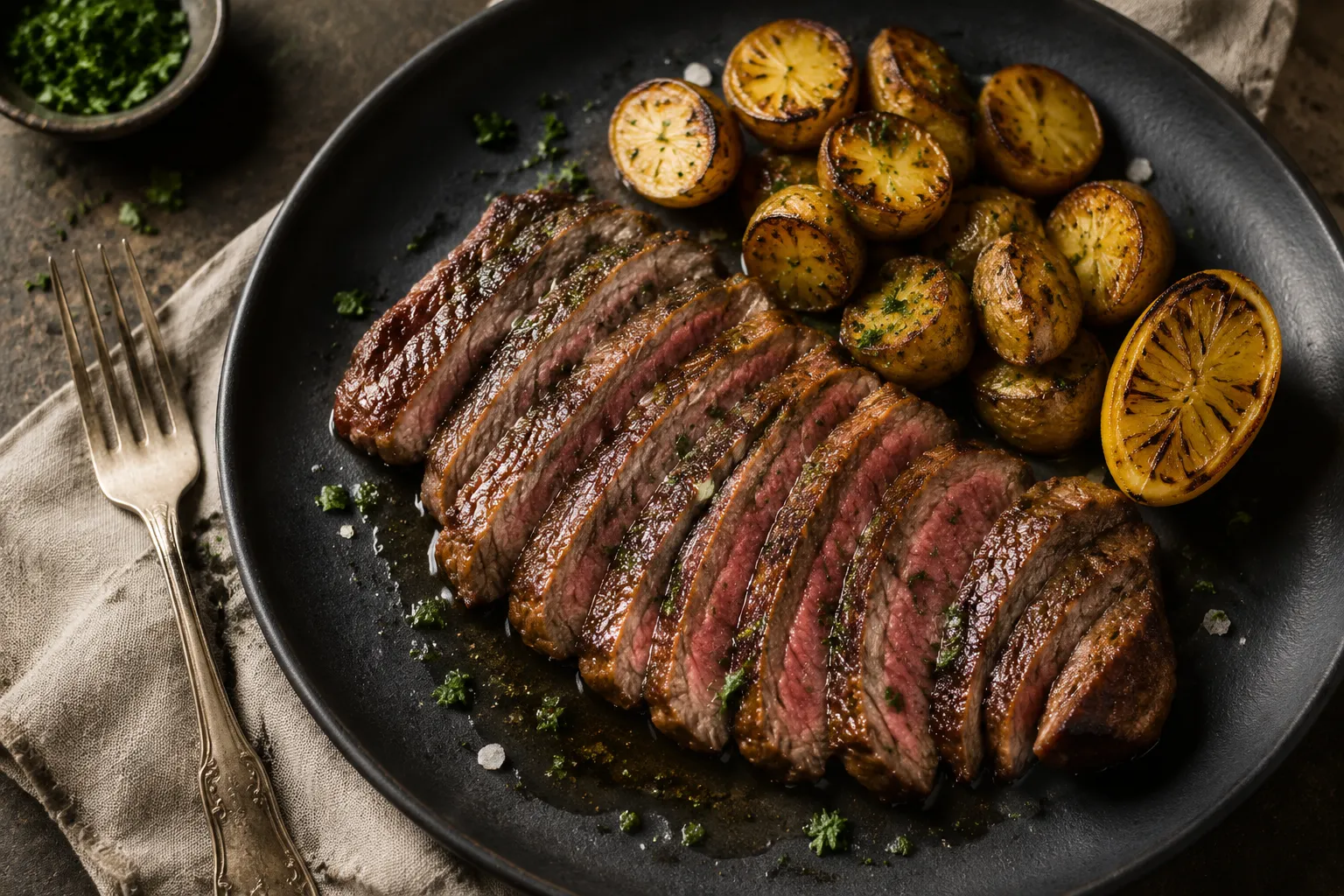
Sirloin and flat iron are your budget-friendly workhorses — affordable, flavorful, and dramatically improved by a long soak. Tri-tip is another great candidate, especially if you're cooking for a crowd. When I'm thinking through the best cuts of steak for grilling on a tight budget, these are always the ones I land on, and they hold up to the bold marinade without getting overwhelmed.
For special occasions, ribeye and New York strip still benefit from a quick 30-to-60-minute dip — just enough to season the surface and add that caramelized edge without softening the natural texture. Filet mignon is the one cut I'd skip; it's already incredibly tender and the marinade can mask the delicate flavor that makes it worth the price tag in the first place.
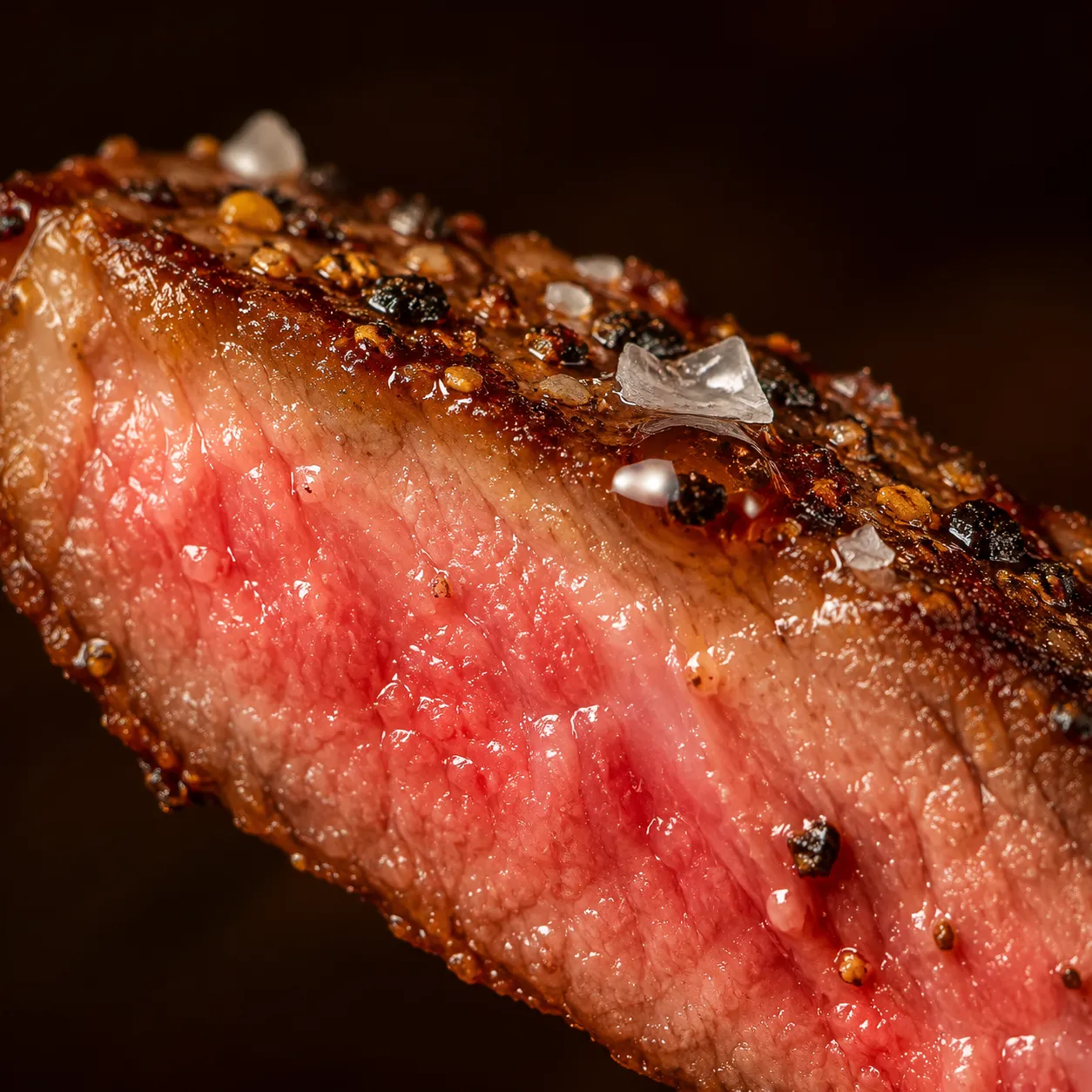
Leftover marinated skirt steak tacos are practically reason enough to make this recipe in the first place — slice the steak thin against the grain, pile it into warm corn tortillas with cilantro, lime, and a quick avocado crema, and you've got a second dinner that feels nothing like leftovers.
Once the meat has had its soak, the cooking method makes or breaks the final result. The good news is that this marinade is forgiving across grill, skillet, and even broiler. The non-negotiables are high heat, a dry surface before the steak hits the pan, and a real rest at the end. Skip any of those and you've wasted a good marinade.
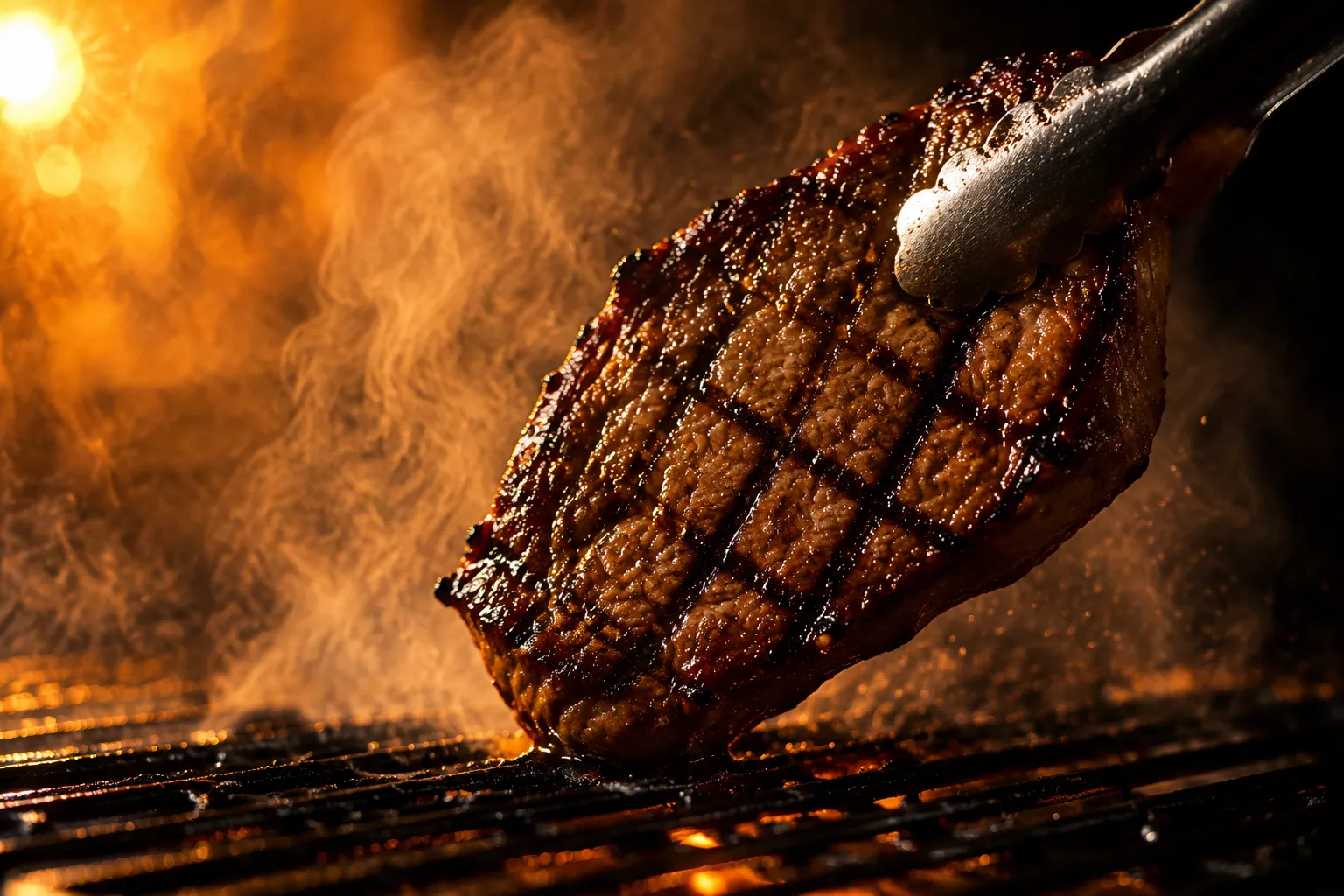
On the grill: Preheat to high (around 500°F) and oil the grates well. Pull the steak from the marinade, let excess drip off, and pat the surface dry — wet meat steams instead of searing, and you'll never get those mahogany grill marks. Grill 3 to 5 minutes per side for medium-rare on a thinner cut, longer for thicker steaks. If you want a deeper dive on technique, my full guide on how to grill steak walks through temps, doneness checks, and timing for every common cut.
In a cast-iron skillet: Heat the pan over high heat until it's smoking lightly. Add a tablespoon of high-smoke-point oil, lay the steak in away from you, and don't touch it for 3 minutes. Flip, cook another 2 to 4 minutes, and finish with a knob of butter, a smashed garlic clove, and a sprig of thyme spooned over the top — basically a quick garlic butter steak situation that turns any weeknight cut into something special. The browned butter mingles with the marinade glaze and produces an absurdly good pan sauce in about 60 seconds.
Resting and slicing: Pull the steak when it's about 5 degrees below your target temperature (130°F for medium-rare) and let it rest on a cutting board for at least 8 minutes, loosely tented with foil. This is where the juices redistribute through the meat instead of running out onto your board. Then — and this is critical — slice against the grain in thin pieces. You can see the grain running in one direction across the surface of any steak; your knife should cut perpendicular to those lines. It's the single biggest tenderness upgrade you can make at the end of cooking.

The beauty of a flavor-forward steak marinade is that the sides can stay genuinely simple. A pile of grilled corn brushed with butter, a crisp green salad with a sharp vinaigrette, a basket of crusty bread to mop up the juices on the cutting board — that's a complete dinner with very little extra effort.
If you want to dress things up a notch, this beef is incredible with a quick chimichurri spooned over the top, or alongside a homemade steak sauce blended from roasted shallots, balsamic, and a touch of horseradish. Roasted potatoes (or smashed and crispy ones) are the classic move, and a glass of bold red wine doesn't hurt either. For weekend cookouts, I'll often double the marinade, throw in a second cut, and slice everything for the table family-style. It's the kind of meal that makes people slow down, refill their plates, and actually look up from their phones.
This is the only steak marinade recipe you really need in rotation — the kind you'll memorize after making it twice and start riffing on by the third time. Keep the base, swap the herbs, lean smokier or brighter depending on your mood, and you've got a year's worth of dinners from one master formula.
The base recipe is engineered to take riffs without falling apart. Once you have the ratio in your head, you can lean it in any flavor direction the meal calls for — Asian-inspired, smoky, herby, spicy, or boozy.
Leftover cooked steak keeps in an airtight container in the refrigerator for up to 4 days. Reheat gently — a 30-second microwave zap or a quick toss in a hot skillet works well — though I usually serve leftovers cold or at room temperature, sliced over salads, stuffed into sandwiches, or piled into tacos.
For meal prep, you can mix the marinade and raw steak directly in a freezer-safe zip-top bag and freeze for up to 3 months. The meat marinates as it thaws in the refrigerator overnight, which means dinner is essentially ready the moment you take it out the next day. Cooked, marinated steak doesn't freeze quite as well — the texture suffers noticeably after thawing — so freeze raw whenever you can and cook fresh.