Authentic Jollof Rice Recipe (One-Pot West African)
Ingredients
Scale
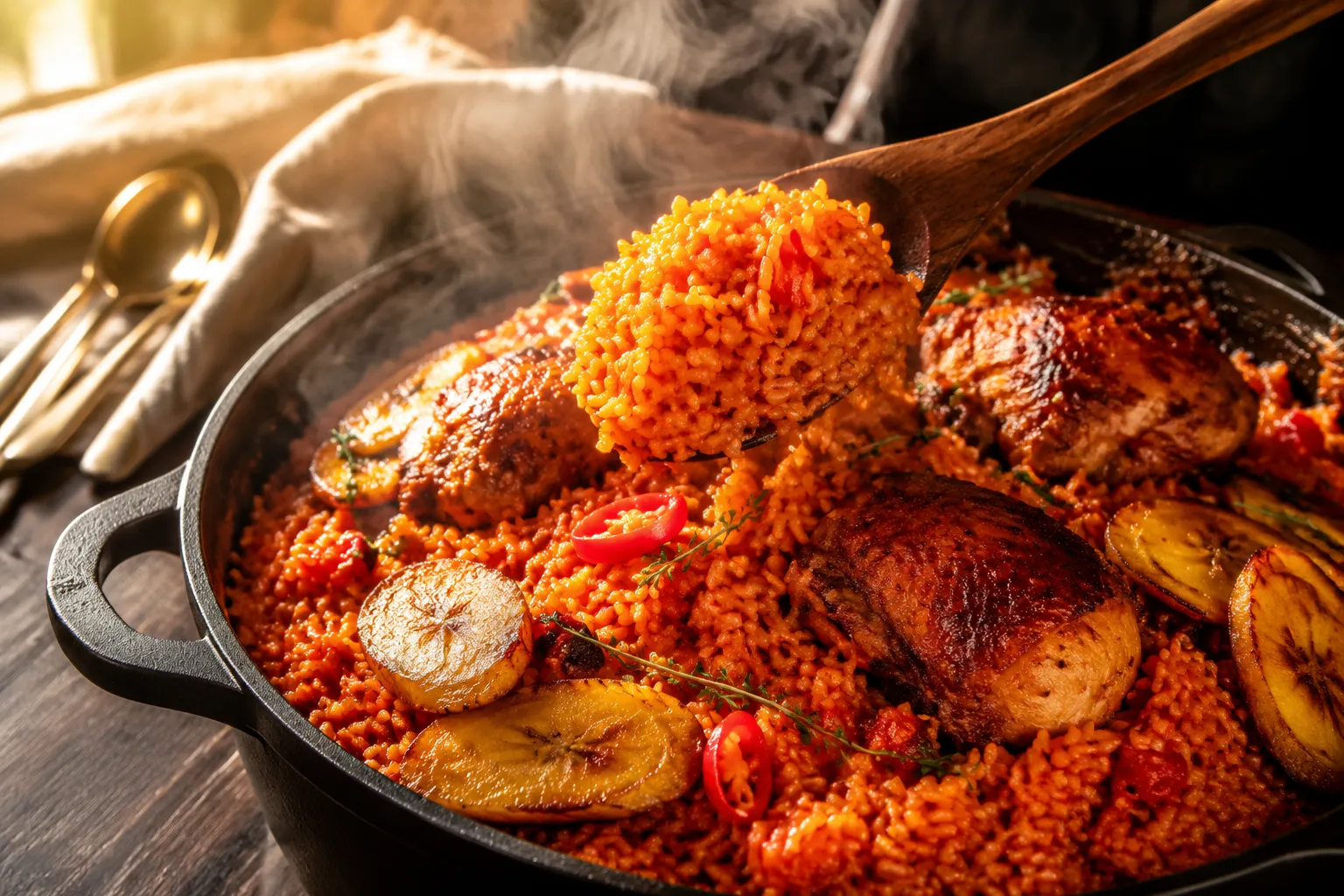
Smoky, deeply spiced, and stained brilliant red from a slow-simmered pepper base, this authentic jollof rice recipe is the one-pot West African dinner everyone fights over.
This jollof rice recipe is the kind of dish that turns a regular Tuesday into something worth slowing down for — vivid red grains stained with a slow-simmered pepper sauce, edges kissed with smoke from the bottom of the pot, and a heady aroma of curry, thyme, and scotch bonnet that pulls everyone into the kitchen before you've even called them. If you've only ever encountered West African rice dishes at a friend's family party or a Nigerian restaurant tucked into a strip mall, this is your invitation to make it at home, in your own heavy pot, with confidence.
I learned this version from years of trial, lots of generous friends, and an embarrassing number of scorched bottoms before I figured out the difference between a ruined pot and the legendary smoky bottom that defines great party jollof. The good news? It's not hard. It just asks for patience and a willingness to leave the rice alone once it's in.
What follows is the authentic two-stage Nigerian method: a pepper base that's blended and reduced separately to concentrate flavor, then married to bloomed tomato paste, parboiled rice, and stock for a slow steam. We'll also walk through optional pan-seared chicken thighs so you can serve a complete meal — but the rice itself is the star, and the chicken is happily optional.
Jollof rice is a one-pot rice dish cooked across West Africa — Nigeria, Ghana, Senegal, Sierra Leone, Liberia, Cameroon — each country (and frankly, each auntie) claiming the definitive version. At its heart, it's rice simmered in a tomato-and-pepper sauce until every grain is dyed deep red and infused with savory spice. It's celebratory food, weeknight food, leftover-for-breakfast food.
The famous "Jollof Wars" between Nigeria and Ghana are real and gloriously unserious. Nigerian jollof leans on long grain parboiled rice (sometimes called converted rice), a tomato-pepper-onion base, and a deliberately developed smoky bottom. Ghanaian jollof more often uses fragrant basmati and adds aromatics like ginger, bay, and sometimes meat stock for a different kind of perfume. This recipe is firmly in the Nigerian camp.
Every great jollof starts with the same building block: ripe tomatoes (or canned plum tomatoes for consistency in the US), red bell peppers for sweetness and color, scotch bonnets for floral heat, and onion. You blend them smooth, then reduce them hard in a saucepan until the raw water cooks off and the puree turns from bright red to deep brick. That reduction is where flavor lives.
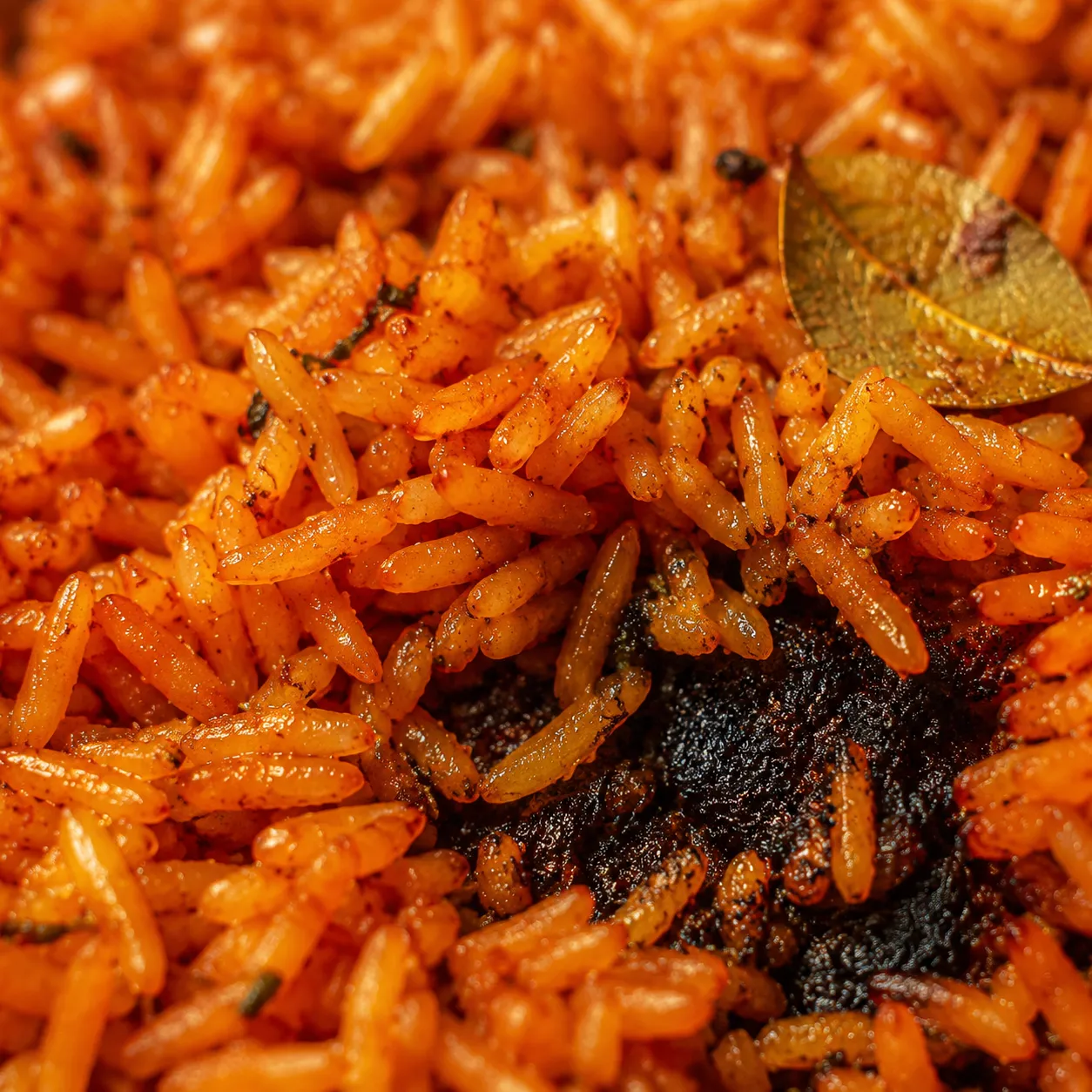
Ask anyone who grew up eating party jollof rice in Lagos and they'll describe the same thing: a faint, almost grilled smokiness woven through every bite. Traditionally it comes from cooking over wood fire in giant pots. At home, we mimic it by letting the bottom layer of rice caramelize on low heat, then briefly raising the heat to gently char the base before stirring it back through.
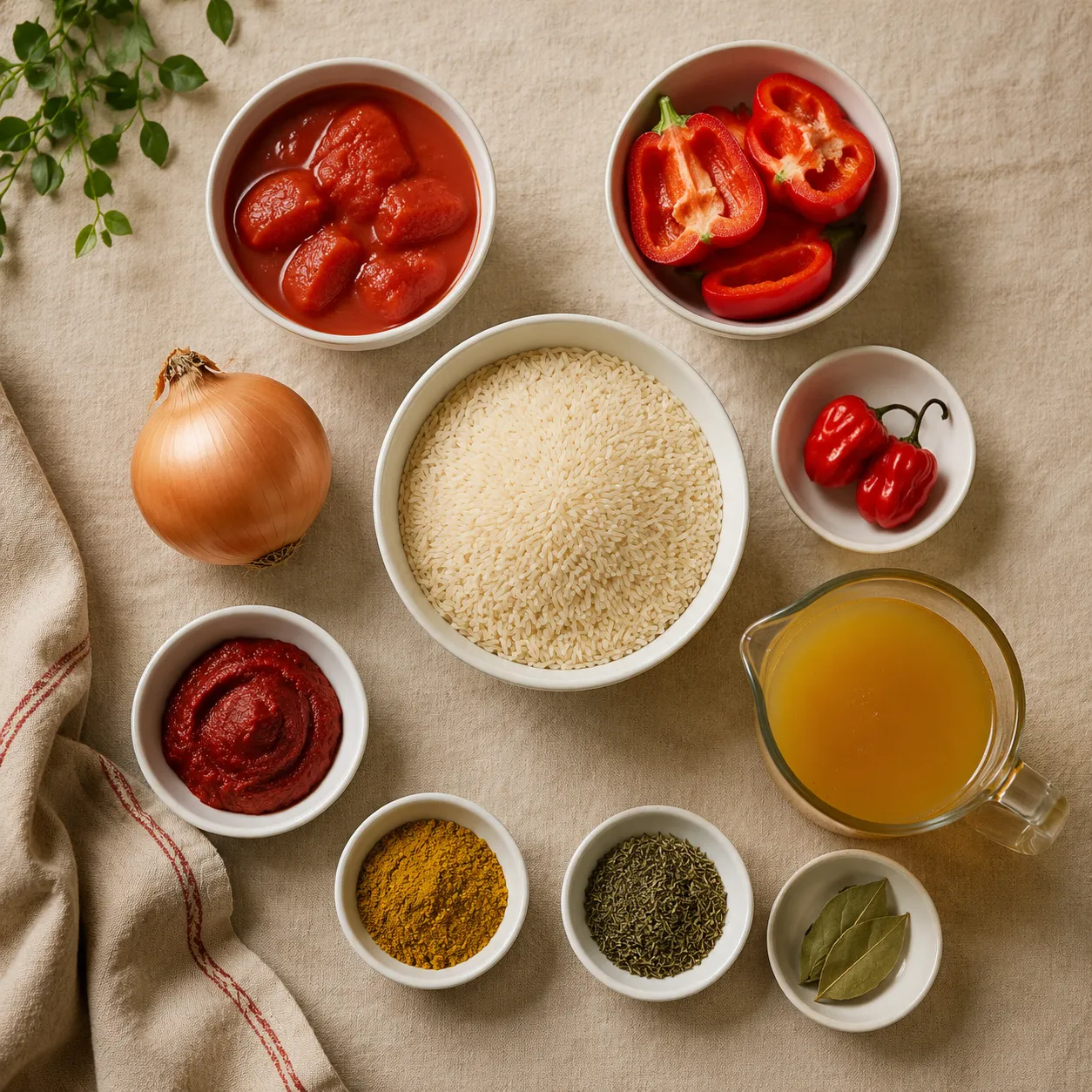
Most of what you need is pantry-friendly, but a couple of items are worth sourcing properly. Here's how each one earns its spot.
One can of plum tomatoes, two red bell peppers, and one to two scotch bonnets form the soul of the dish. Scotch bonnets bring that fruity, almost mango-like heat you can't replicate with jalapeño — find them at Caribbean or African grocers, or substitute habaneros. For a milder scotch bonnet pepper sauce flavor, seed them and use just one. The bells balance heat with sweetness and deepen the color.
Please don't swap this out. Long grain parboiled rice — Uncle Ben's converted rice works beautifully, as do brands like Mama Gloria or Caprice — has been pre-steamed in the husk, which gelatinizes the starches and produces grains that stay distinct, fluffy, and absorbent under long simmering. Regular long grain will turn mushy; basmati will give you Ghanaian-style jollof, which is delicious but different.
Yellow onion, tomato paste, bay leaves, curry powder, dried thyme, and a good chicken stock (homemade chicken stock is a real upgrade here, but boxed is fine). A pinch of bouillon — Maggi or Knorr — is non-negotiable for authentic flavor. Vegetable oil is traditional; some cooks use palm oil for an even deeper red and earthier note.
The full numbered instructions live in the recipe card below, but here's the rhythm so you understand why each stage matters.
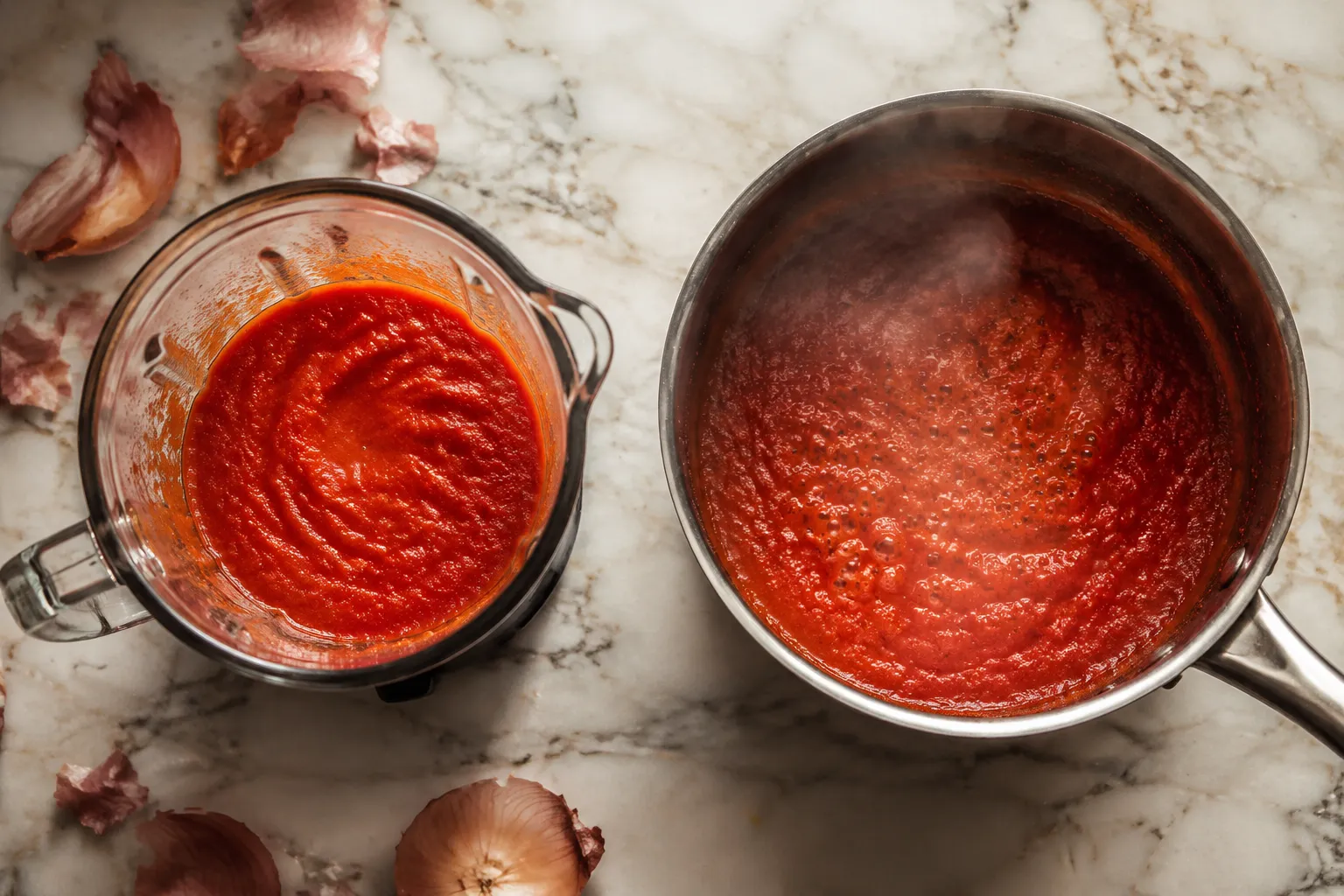
Blend and reduce the pepper base. Tomatoes, bells, scotch bonnets, and half an onion go into a blender until smooth. Then — and this is the step home cooks skip and regret — pour the puree into a saucepan and simmer it for 12 to 15 minutes until it darkens and reduces by about a third. You're cooking off the raw, watery edge so the rice doesn't taste like tomato soup.
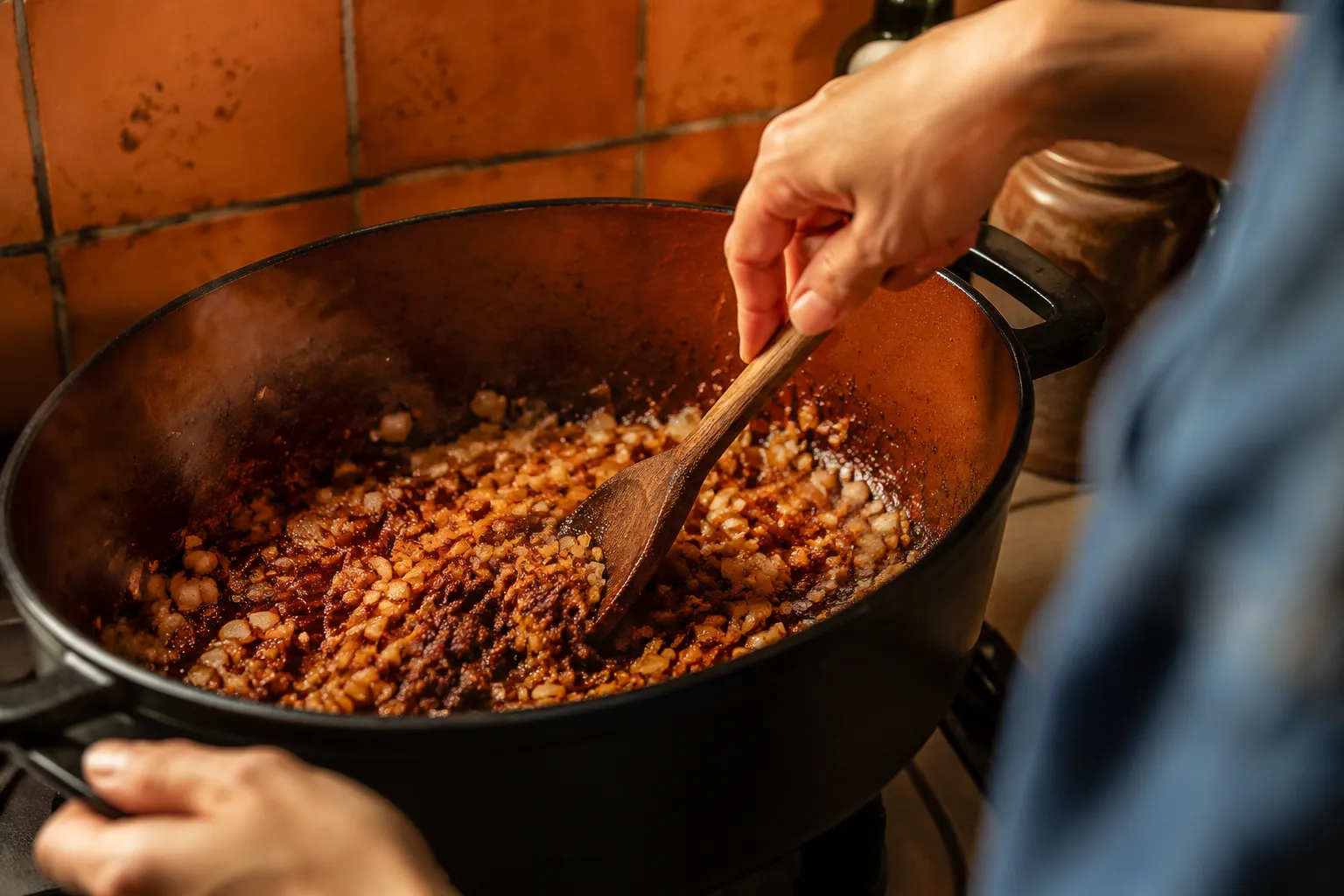
Bloom the tomato paste and aromatics. In your heavy main pot, sauté diced onion in vegetable oil, then add three tablespoons of tomato paste and let it fry until it turns from bright red to a dark, brick-mahogany color. This step builds umami you cannot fake. Add curry powder and thyme so they bloom in the oil.
Marry the bases and toast the rice. Pour the reduced pepper base into the pot with the bloomed paste, season with salt and bouillon, and let it bubble together for five minutes. Stir in the rinsed parboiled rice so every grain gets coated, then pour in just enough stock to come about half an inch above the rice — too much liquid is the most common jollof mistake.
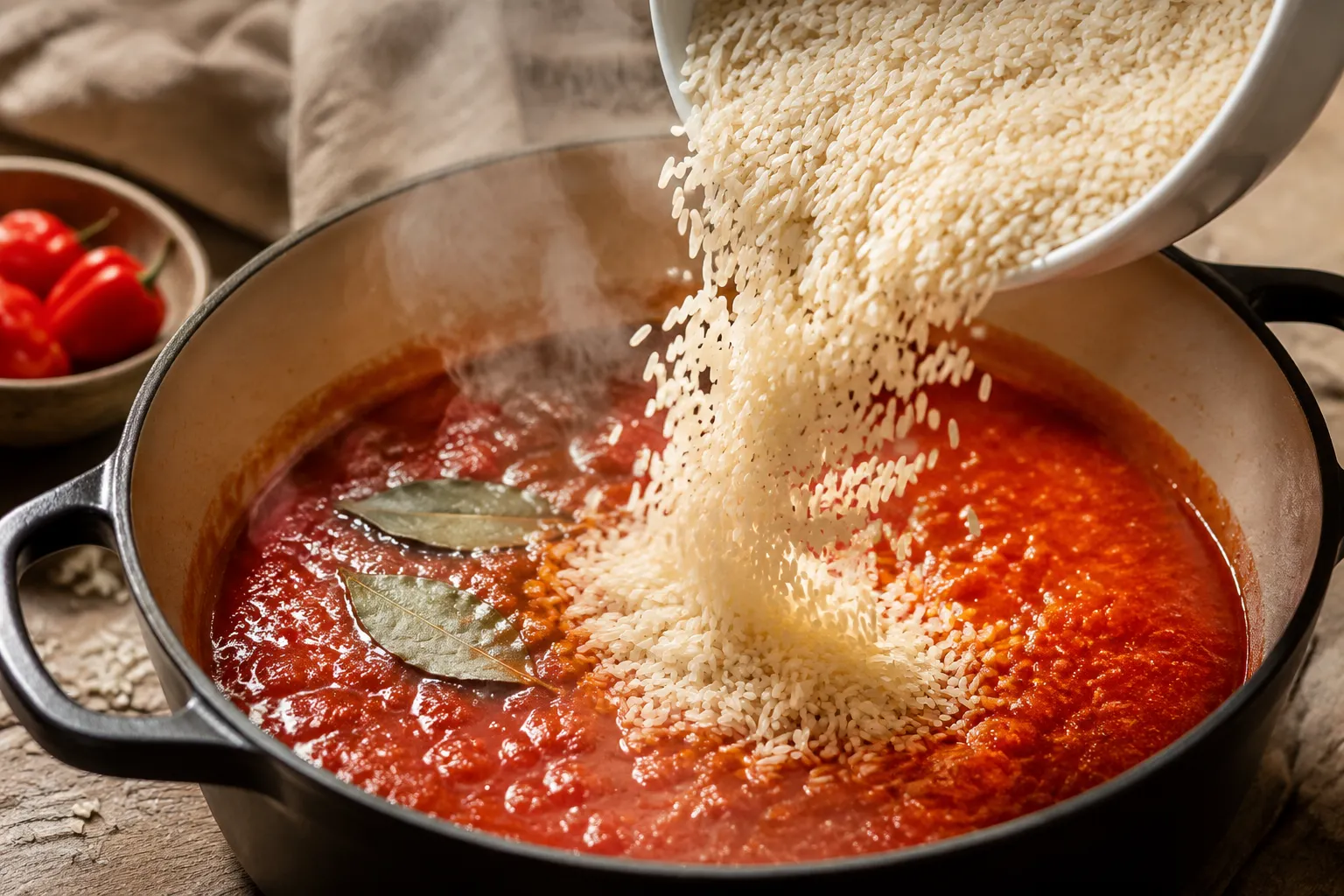
Steam low and slow, then chase the smoke. Lay bay leaves on top, cover tightly (a sheet of foil under the lid helps), and drop the heat to its lowest setting for 25 to 30 minutes. Do not stir. When the rice is tender, raise the heat to medium-high for 60 to 90 seconds — you'll hear a soft crackle. That's the bottom layer caramelizing into the smoky crust Nigerians call bottom pot. Pull from heat, fluff gently from the top down, and let it rest covered for 10 minutes.
Jollof on its own is a complete pleasure, but jollof rice and chicken is how it most often shows up at gatherings. The chicken is cooked separately so neither component competes for pot space.
Toss bone-in, skin-on chicken thighs with curry powder, dried thyme, smoked paprika, garlic, grated ginger, a crumbled bouillon cube, salt, and a splash of oil. Let it sit at least 30 minutes — overnight if you can swing it. The same spice profile in the rice carries through, making the plate feel cohesive rather than bolted together.
Pat the thighs dry, lay them skin-down in a hot cast iron skillet with a thin slick of oil, and don't move them for eight minutes. Flip, lower the heat, and cook another 12 to 15 minutes until the internal temp hits 175°F. The skin should be deep mahogany and shatter-crisp.
Plate a generous mound of rice, perch a thigh on top, and add a few rounds of fried sweet plantain (dodo) plus a quick cucumber-tomato-onion salad dressed with lime. That trio — rice, chicken, plantain — is the canon.
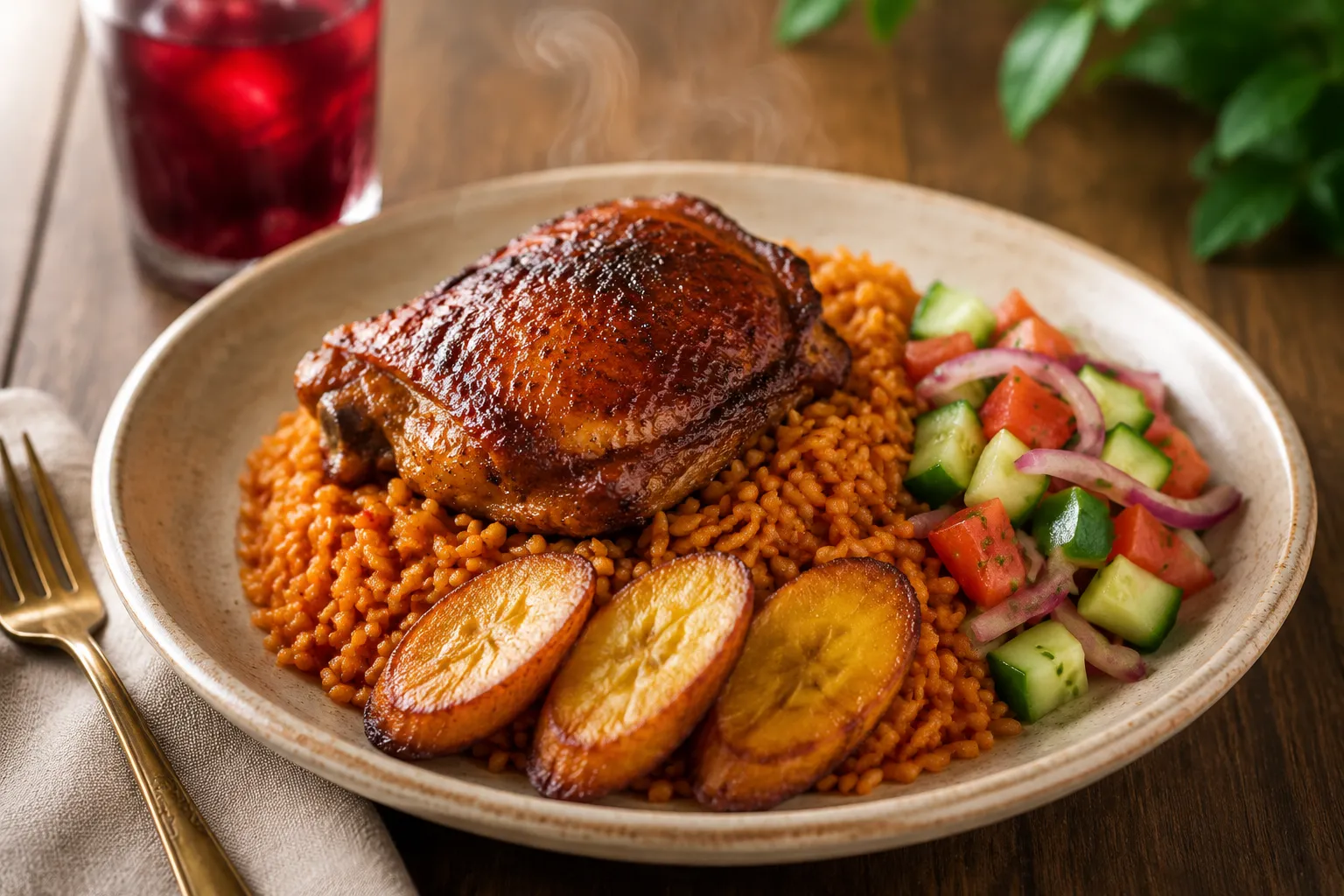
Beyond chicken and plantains, Nigerian jollof rice plays beautifully with grilled suya-spiced beef skewers, peppered fish, moin moin (steamed bean pudding), or a simple bowl of garden salad with a vinegary dressing to cut the richness. For drinks, chilled hibiscus zobo or a cold ginger beer is traditional, and frankly unbeatable.
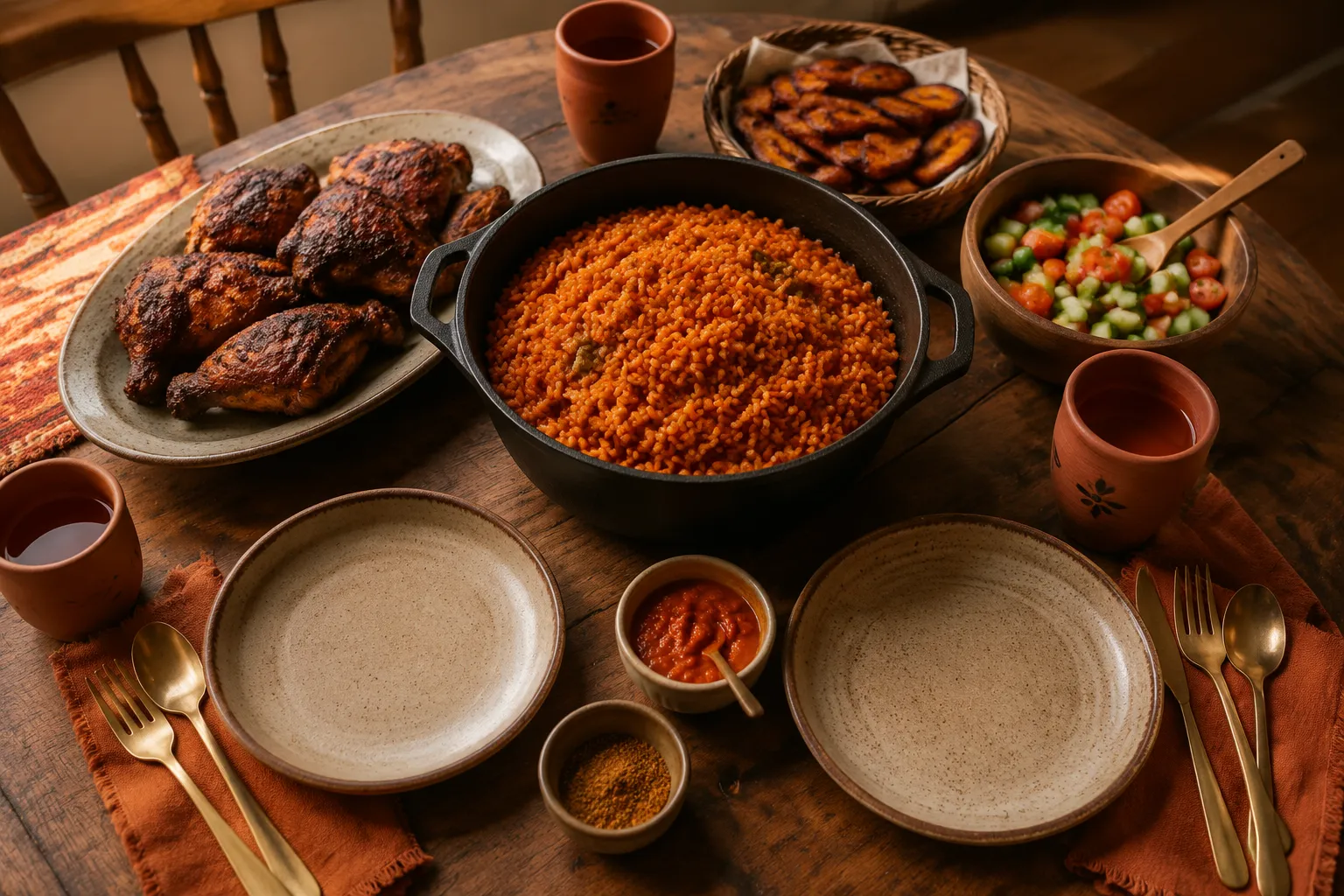
If you're feeding a crowd, this scales gorgeously to double or triple — just use a wider pot rather than a deeper one so the rice cooks evenly and the bottom develops that signature crust across the whole base.
The first time you make this, resist the urge to peek and stir. I know. It's hard. But every time you lift the lid, you release the steam doing the actual cooking, and you risk breaking the bottom crust before it forms. Trust the pot. Trust the timing. Set a timer and walk away.
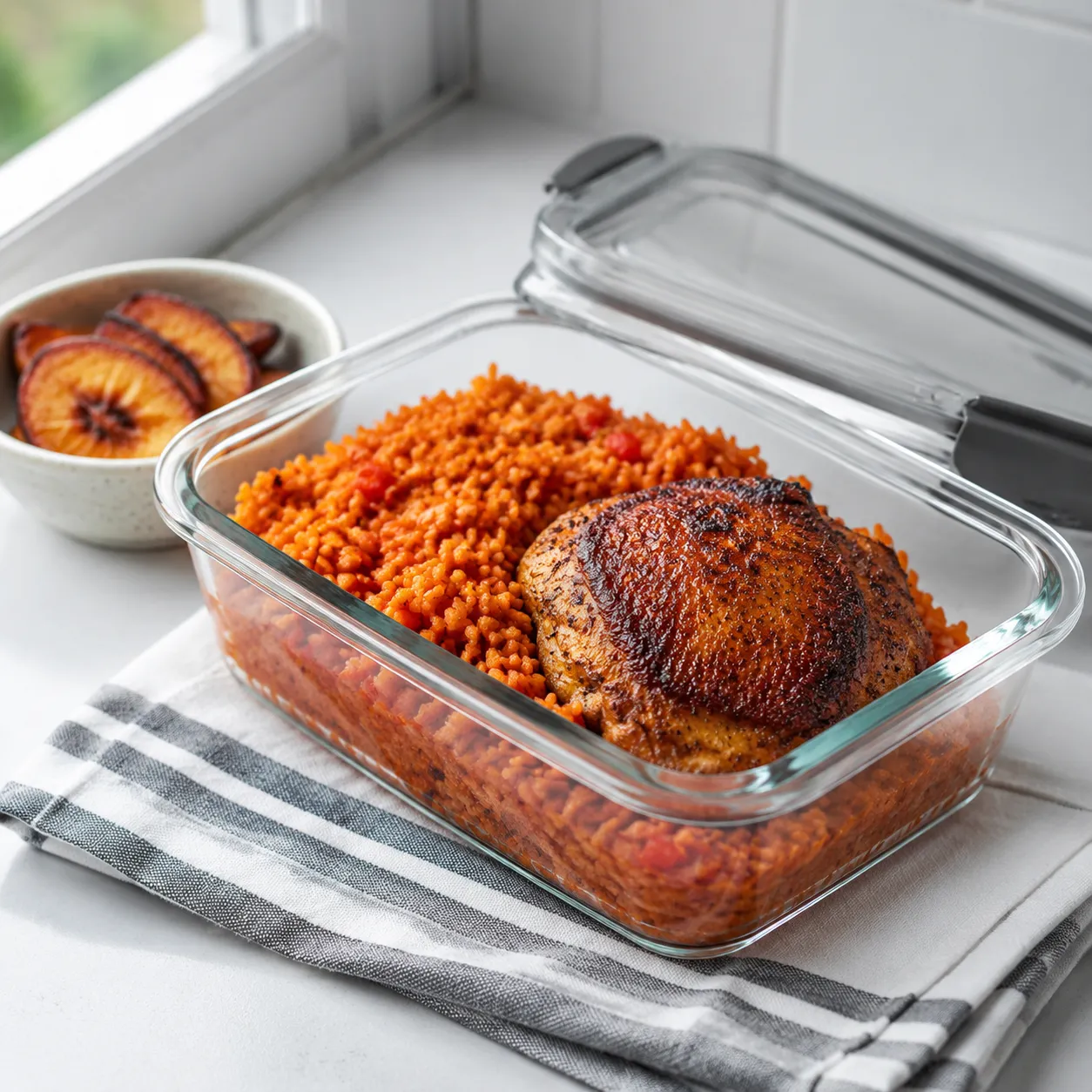
And know this: jollof rice tastes even better the next day, when the pepper base has had time to settle into the grains and the smoky notes deepen. Make a big pot. You'll be glad you did.
Jollof is a living recipe — every household has its own dialect. Here are a few directions to take it once you've nailed the base method.
Cool leftover jollof rice completely, then transfer to an airtight glass container and refrigerate for up to 4 days. For longer storage, freeze in flat portions for up to 2 months — thaw overnight in the fridge before reheating.
To reheat without drying out, sprinkle the rice with a tablespoon or two of water or stock, cover tightly, and warm in a 325°F oven for 15 minutes, or microwave on medium power in 90-second bursts, fluffing between each. Avoid reheating uncovered on high heat — that's how you end up with crunchy, sad grains. The chicken is best reheated separately in a 375°F oven for 10 minutes to recrisp the skin.