Easy Roasted Calabaza with Garlic and Lime
Ingredients
Scale
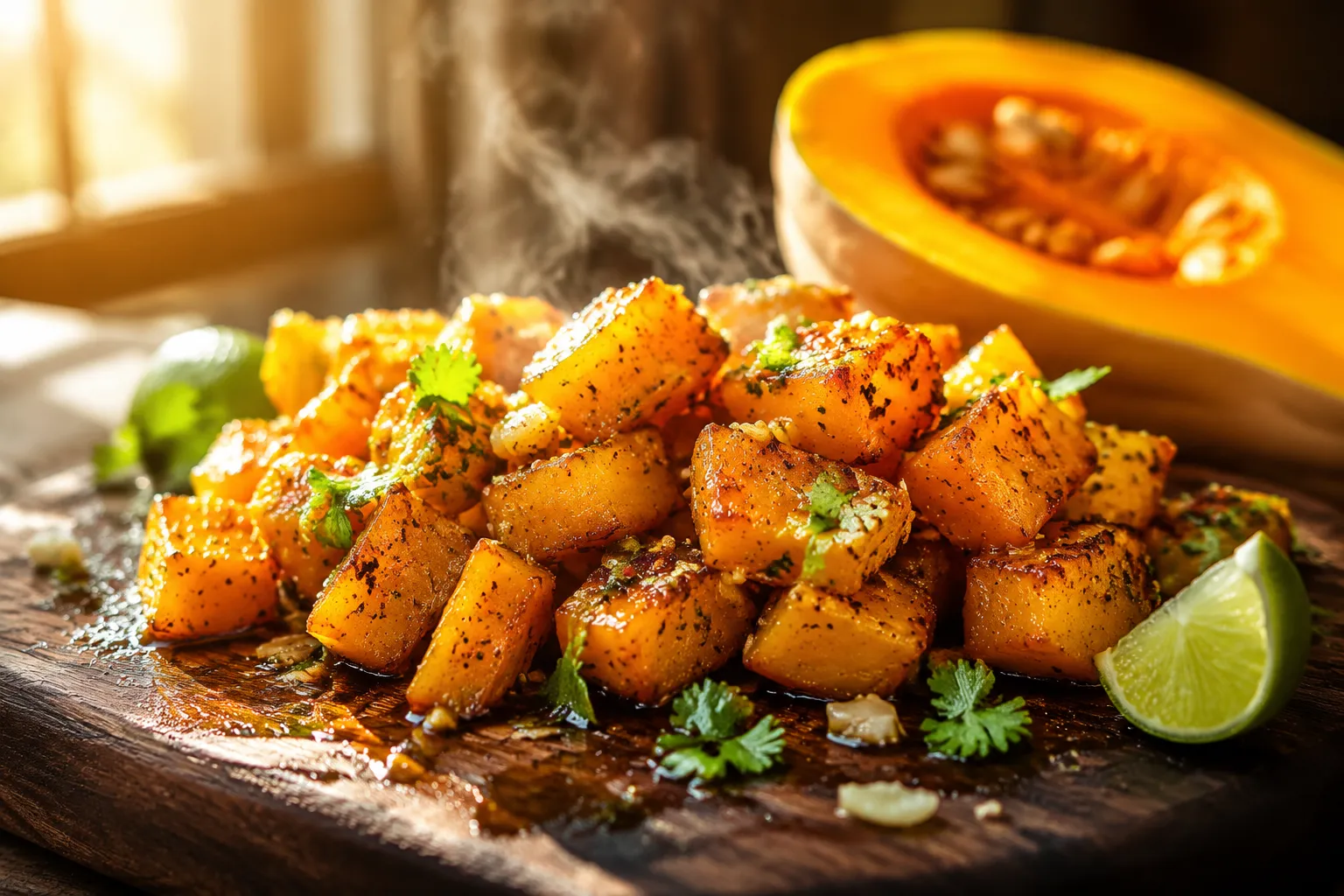
Calabaza is the sweet, vibrant orange pumpkin behind some of the Caribbean's best soups and stews. Here's how to choose it, prep it, and cook it like a pro.
If you've ever wandered into a Latin or Caribbean grocery and stopped short in front of a giant, mottled green pumpkin sold by the wedge, congratulations — you've met calabaza. It's the not-so-secret backbone of countless soups, stews, and sides across the Caribbean and Latin America, and once you cook with it, the watery jack-o'-lantern pumpkin you grew up with starts to feel like a pale imitation.
This guide walks through everything: what calabaza is, what it tastes like, how to pick a good one, how to peel it without losing a finger, and a simple roasted calabaza recipe with garlic, cumin, and lime that has become my favorite weeknight side.
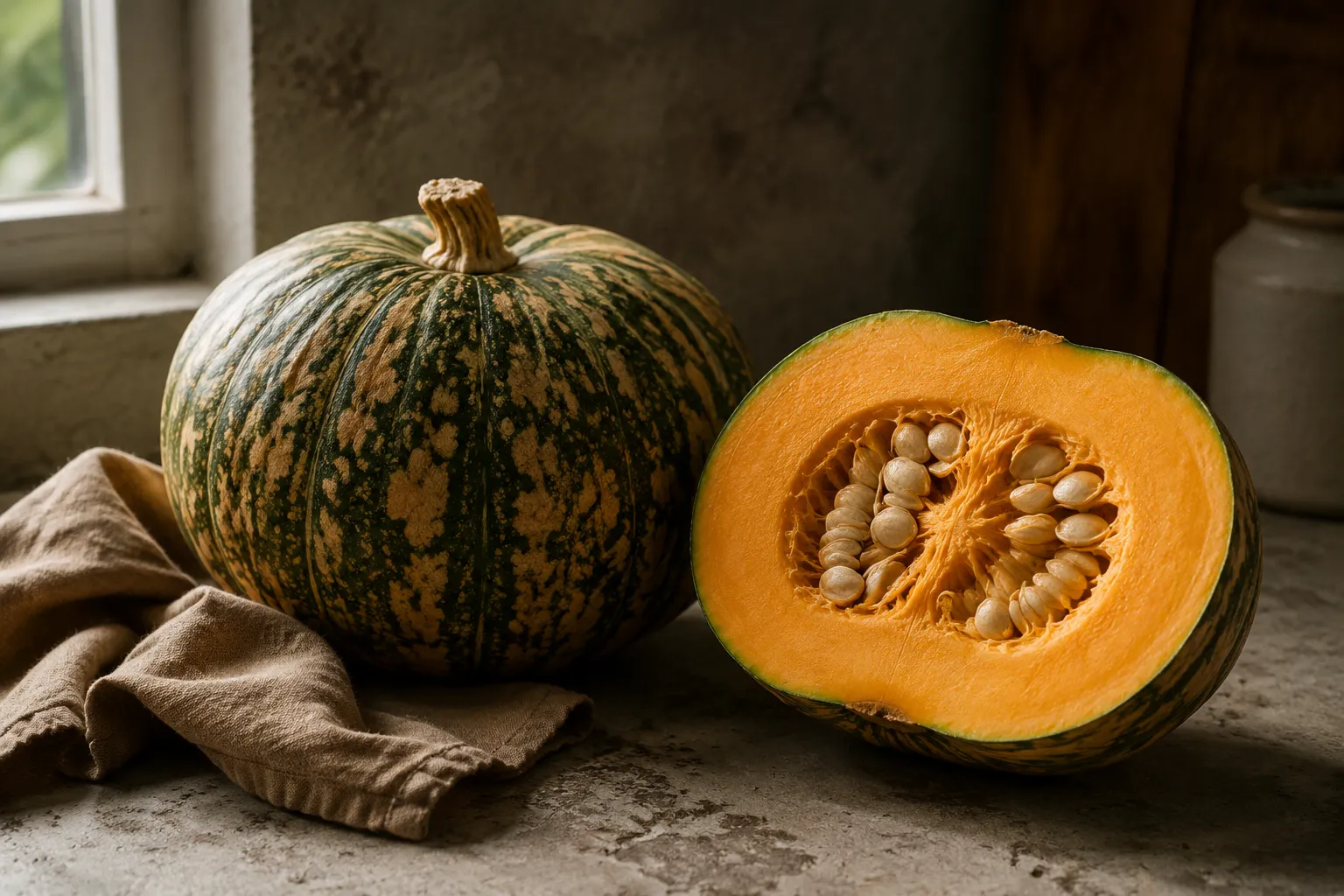
Calabaza (pronounced kah-lah-BAH-sah) is a tropical winter squash in the Cucurbita moschata and Cucurbita maxima families, grown throughout the Caribbean, Central America, and South America. The flesh is a deep, almost neon orange, denser and drier than a Halloween pumpkin, with a sweetness that sits closer to sweet potato than to canned pie filling.
You'll find this same squash sold under different names depending on where you shop. In the Dominican Republic and Venezuela it's called auyama. Across English-speaking islands like Jamaica and Trinidad, it goes by West Indian pumpkin. In parts of South America you'll hear zapallo. They're all roughly the same thing: a sweet, dense Caribbean pumpkin with mottled green or tan rind.
Calabaza thrives in warm, humid climates and is grown commercially across the Caribbean, Florida, and Mexico. In US cities, your best bet is a Latin or Caribbean grocery, a bodega, or a well-stocked international market. Because the whole squash can weigh 10 to 20 pounds, most stores sell it in pre-cut wedges wrapped in plastic — perfect for home cooks who don't need a watermelon-sized vegetable.
Calabaza squash tastes sweet, nutty, and a little earthy, with a clean pumpkin-meets-chestnut quality. It's less sugary than butternut and less starchy-dry than acorn, landing in a sweet spot that plays beautifully with garlic, cumin, coconut milk, and citrus.
When roasted or simmered, the flesh turns silky and creamy without falling apart into mush. That density is exactly why Caribbean cooks love it for soups and stews — it holds its shape in long-simmered dishes and purees to a velvety consistency when you want it smooth.
If you've cooked with kabocha, you already know calabaza's closest cousin — they share that dense, chestnutty texture and concentrated sweetness, which makes kabocha squash substitute searches one of the most common ways American cooks find their way to calabaza in the first place. Butternut is sweeter and softer; sugar pumpkin is more watery and mild. In a pinch, kabocha is the truest swap, butternut is the easiest, and standard orange pumpkin is the least ideal.
Unless you're cooking for a crowd, buy a wedge. A 2- to 3-pound piece is plenty for a family dinner, and you can see exactly what you're getting — flesh color, seed quality, and freshness.
Look for vibrant deep-orange flesh (pale or yellowish flesh means it's underripe or old), firm seeds clustered tightly in the cavity, and a rind that's hard and unbruised. Avoid wedges with slimy spots, dried-out edges, or any sour smell through the plastic wrap.
Plan on about 1/2 pound of whole calabaza per person as a side dish, since you'll lose roughly 25% to rind and seeds. For soup, a 2-pound wedge feeds four generously.
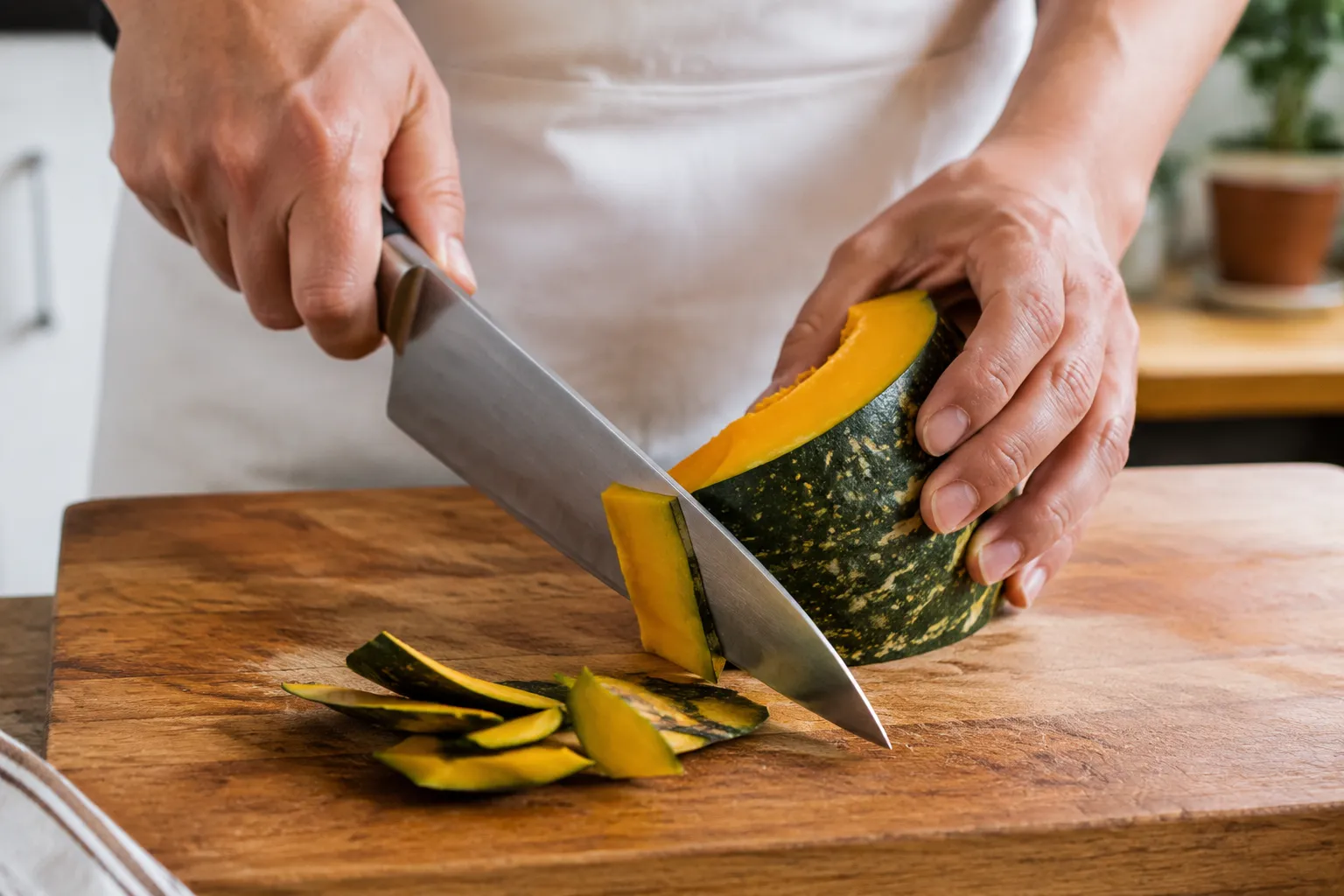
Skip the vegetable peeler — the rind is too tough. You want a heavy chef's knife (8-inch or larger), a sturdy cutting board with a damp towel underneath to keep it from sliding, and a sharp paring knife for cleanup.
Set the wedge cut-side-down for stability. Slice off the top and bottom to create flat surfaces, then stand the piece up and run your knife from top to bottom in long strokes, following the curve to shave off the rind. Scoop out any remaining seeds and stringy bits with a spoon, then cube the flesh. The same approach works for any tough-skinned gourd, so once you've learned how to peel winter squash this way, butternut and kabocha become much less intimidating.
Wrap raw cubes tightly and refrigerate up to 4 days, or freeze on a tray and bag for up to 3 months. More on storage below.
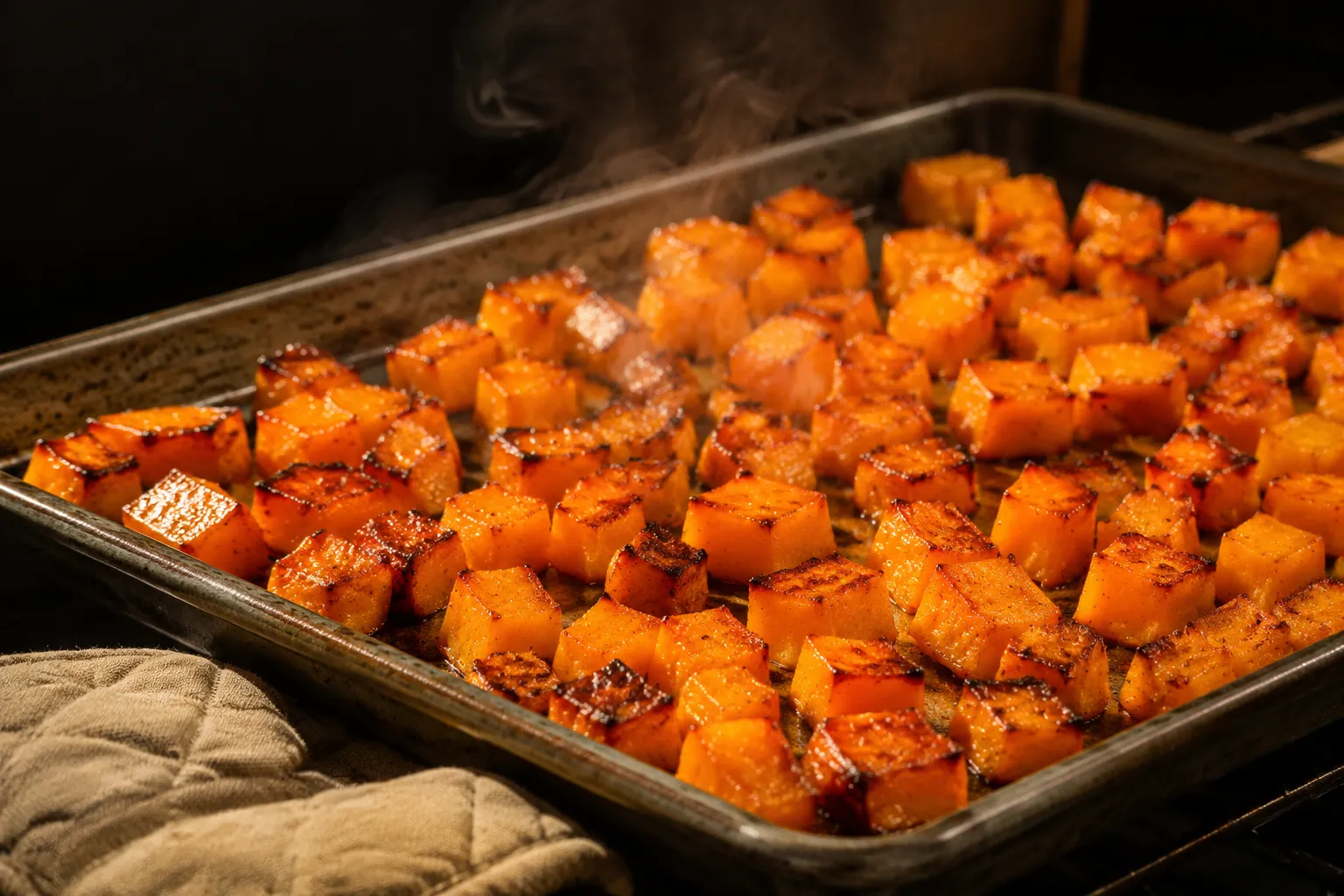
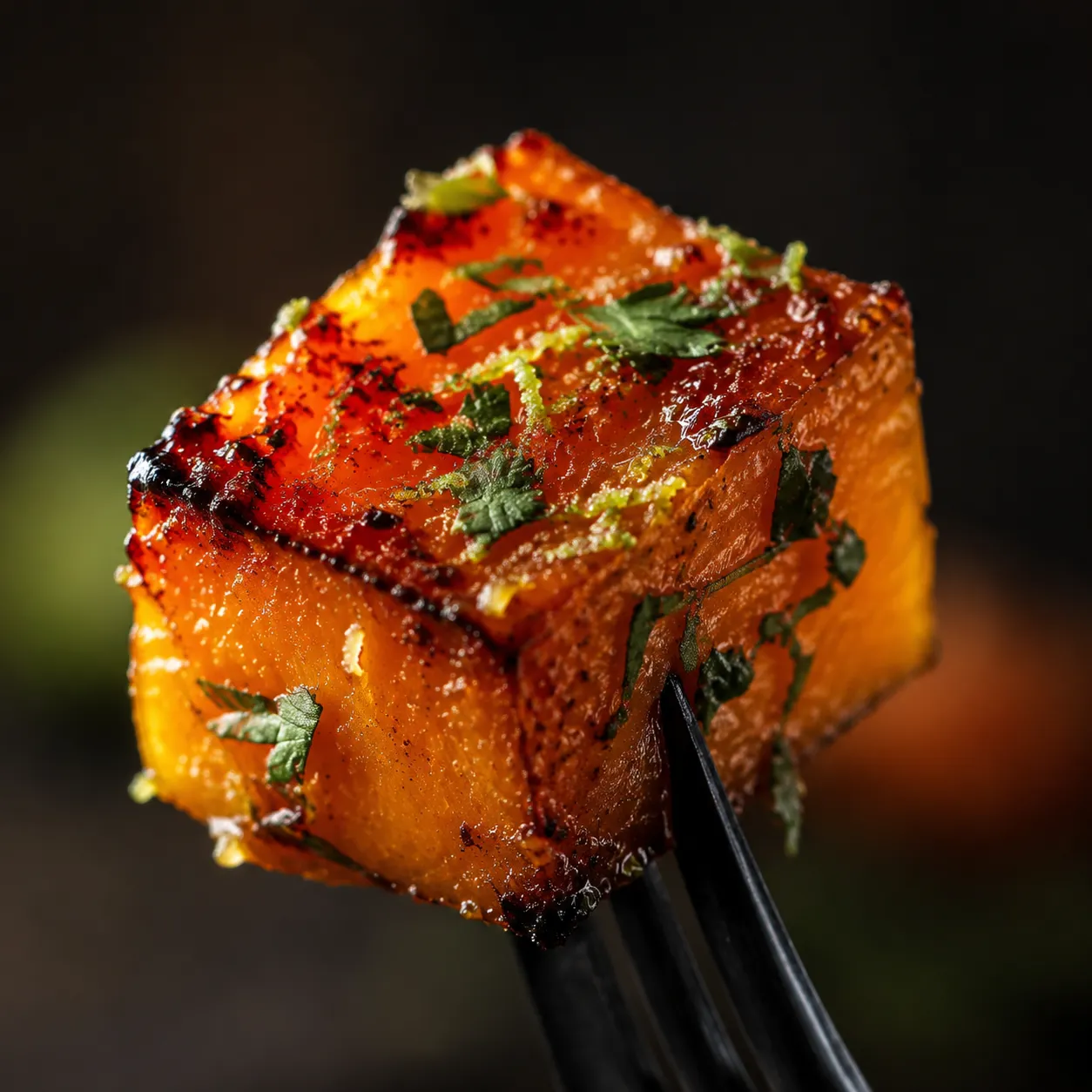
This is the recipe I make when I want to remember why I started cooking calabaza in the first place. A hot oven, good olive oil, garlic, cumin, and a final hit of lime zest and cilantro — that's it. The squash caramelizes into sticky, golden-edged cubes with creamy centers, and it pairs with almost any main: roasted chicken, black beans and rice, grilled fish, or even a fried egg for breakfast. If you've ever made roasted squash with garlic before, the technique will feel familiar, just with a sweeter, denser squash that takes the flavor even further.
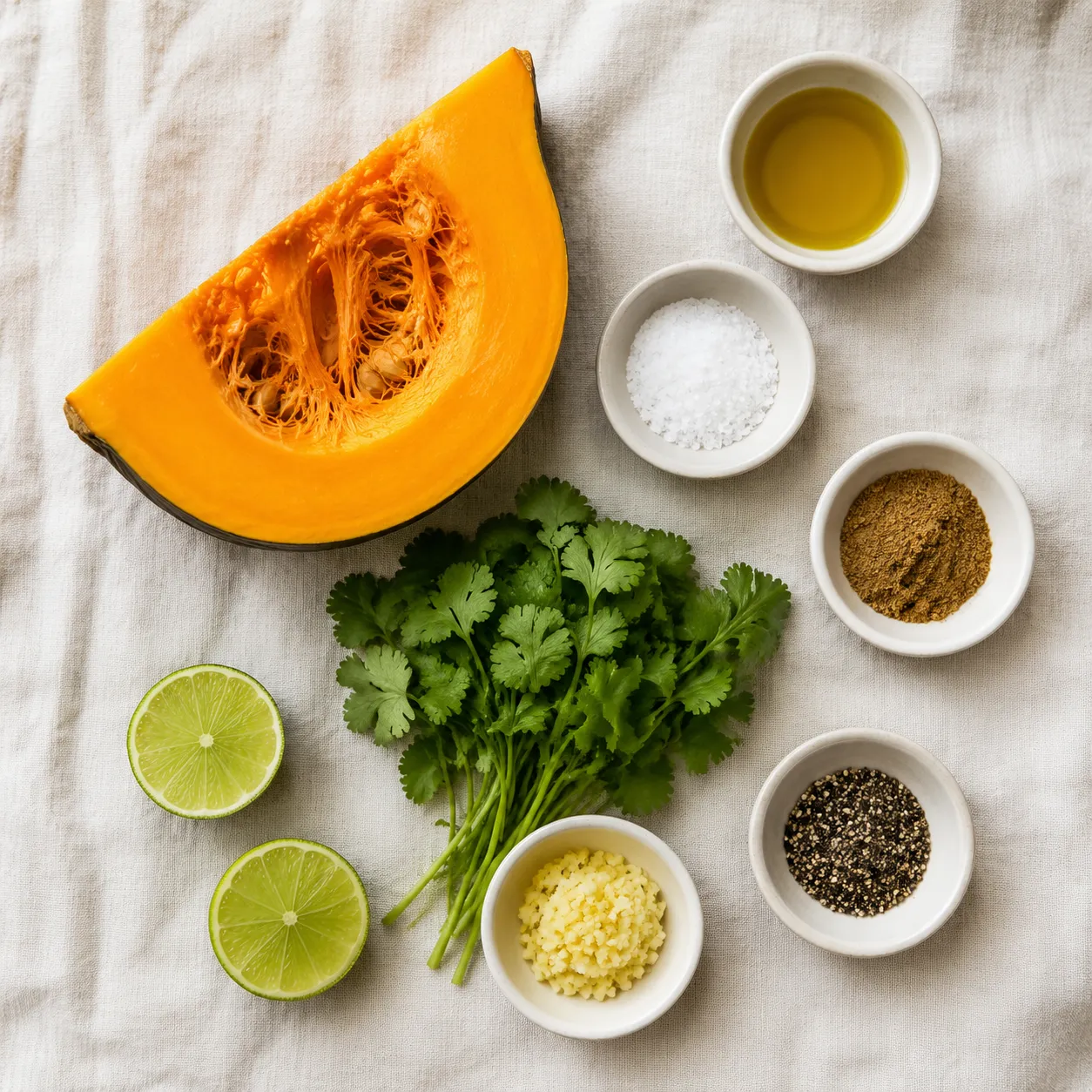
You need about 2 pounds of peeled, cubed calabaza, olive oil, four garlic cloves, kosher salt, ground cumin, black pepper, one lime, and fresh cilantro. Full quantities are in the recipe card below.
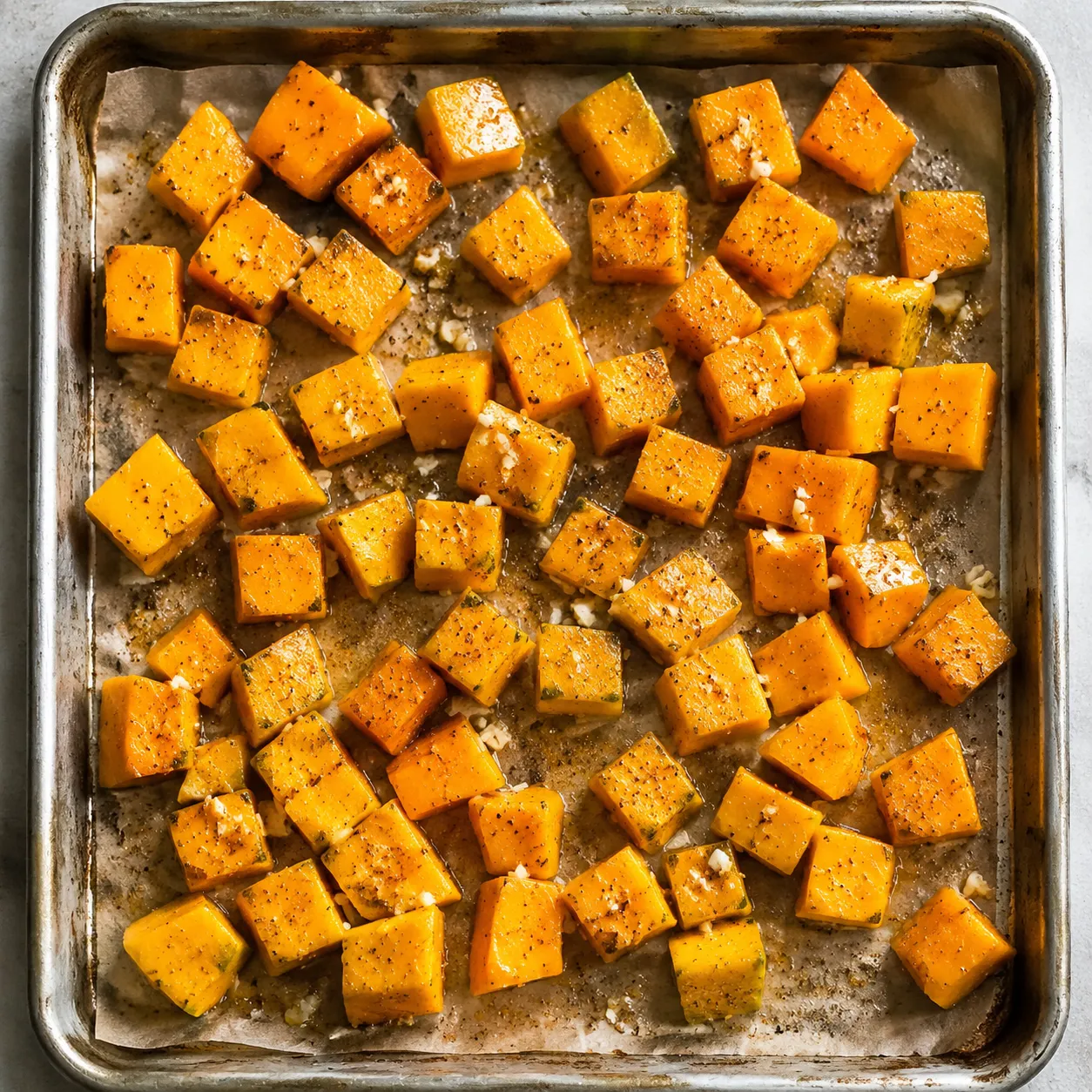
Toss cubes with oil, garlic, salt, cumin, and pepper. Spread on a parchment-lined sheet pan in a single layer — crowding leads to steaming. Roast at 425°F until the edges are deeply caramelized and a fork slides through easily. Finish off the heat with lime zest, lime juice, and cilantro. Detailed numbered steps live in the recipe card.
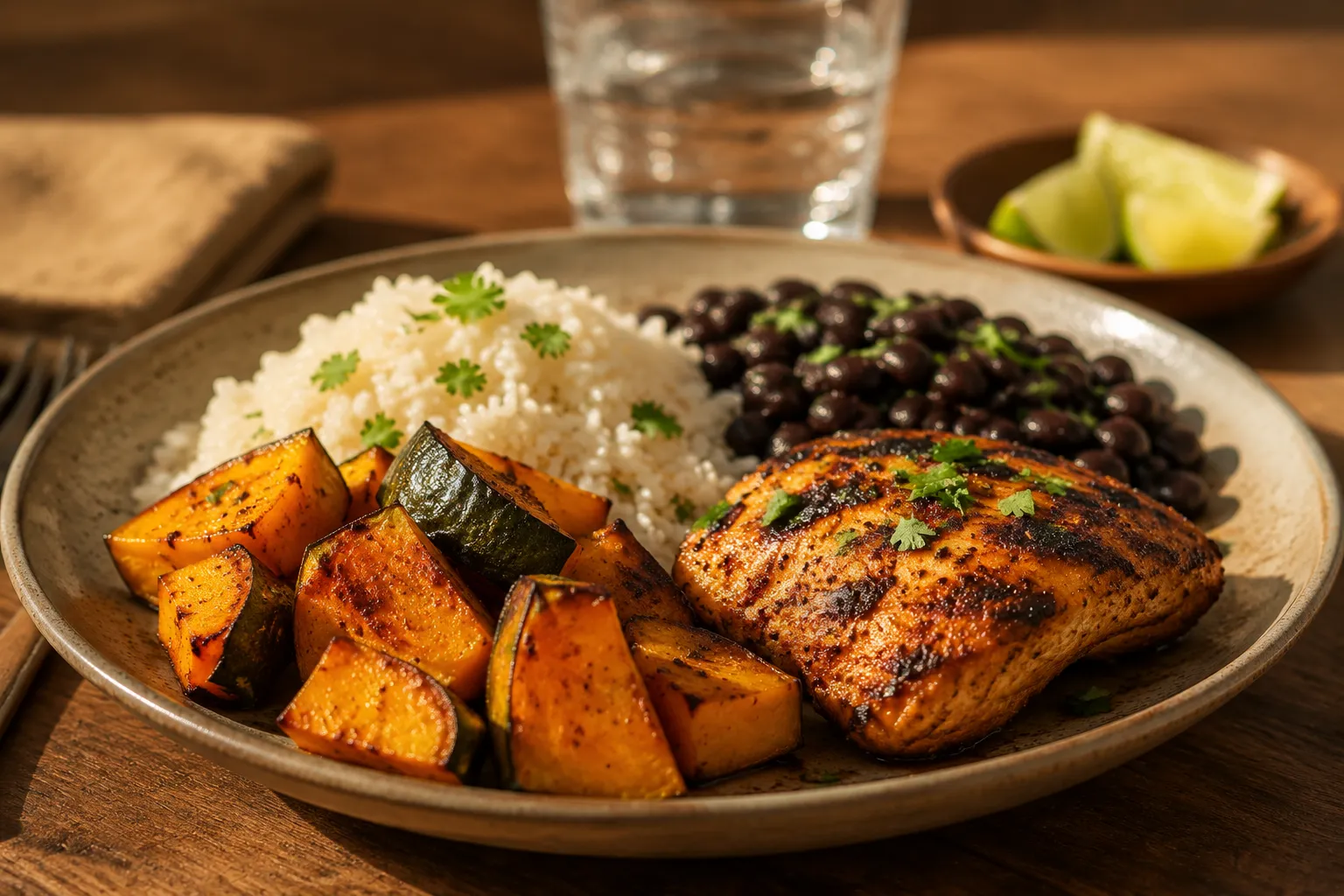
I serve this most often alongside white rice and stewed black beans, but it's also a knockout tucked into warm tortillas with crumbled queso fresco, piled onto a grain bowl with greens and tahini, or scattered over a bed of arugula with goat cheese and toasted pepitas. It's a flexible side that punches above its weight.
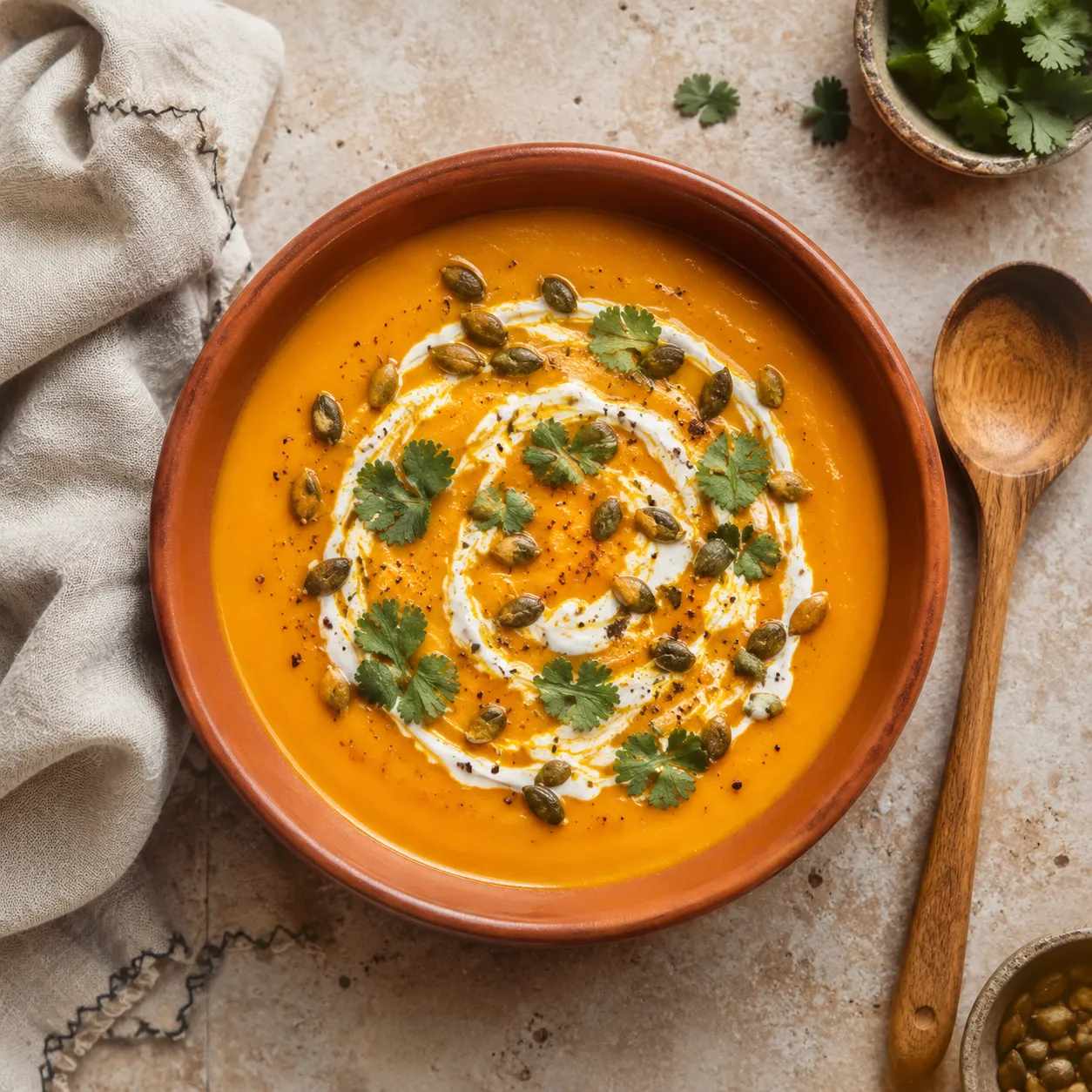
The most famous use is sopa de calabaza, a creamy, brothy soup found in countless variations across the islands. Puerto Rican sopa de calabaza leans on sofrito, garlic, and a touch of broth for a savory, sometimes brothy bowl, while Dominican and Cuban versions often go fully pureed and silky. If you love a good butternut squash soup, swapping in calabaza will give you something deeper, less sweet, and more interesting.
Calabaza is essential in sancocho, the hearty meat-and-root-vegetable stew eaten across the Caribbean. The chunks soften but hold their shape, and they melt slightly into the broth to give it body and gentle sweetness. It's also a star in callaloo, curry goat, and bean stews.
Beyond savory, calabaza shines in flan de calabaza, sweet empanada fillings, quick breads, and spiced custards. Anywhere you'd use canned pumpkin or roasted butternut puree — pancakes, pasta sauce, baby food, muffins — calabaza works beautifully and brings more flavor to the party. There are countless Caribbean pumpkin recipes worth exploring once you've got a wedge in your fridge.
Whole calabaza is shockingly hardy. Stored in a cool, dry, well-ventilated spot — pantry, basement, cool corner of the kitchen — an uncut squash keeps for one to three months. Once cut, things move faster: wrap exposed flesh tightly in plastic, refrigerate, and use within 4 to 5 days. Cooked calabaza keeps refrigerated for about 4 days and freezes well for up to 3 months, either as cubes or as smooth puree portioned into freezer bags.
This base recipe is a launchpad. A few favorite riffs:
Refrigerate leftover roasted calabaza in an airtight container for up to 4 days. To reheat, spread on a sheet pan and warm at 400°F for 8 to 10 minutes to revive the crisp edges — the microwave works but turns the cubes soft.
To freeze, cool completely, then freeze cubes in a single layer on a parchment-lined tray before transferring to a zip-top bag. They'll keep for up to 3 months. Frozen cubes are best used in soups, purees, or stews, since freezing softens the texture.