Authentic Baleadas Recipe (Honduran Street Food)
Ingredients
Scale
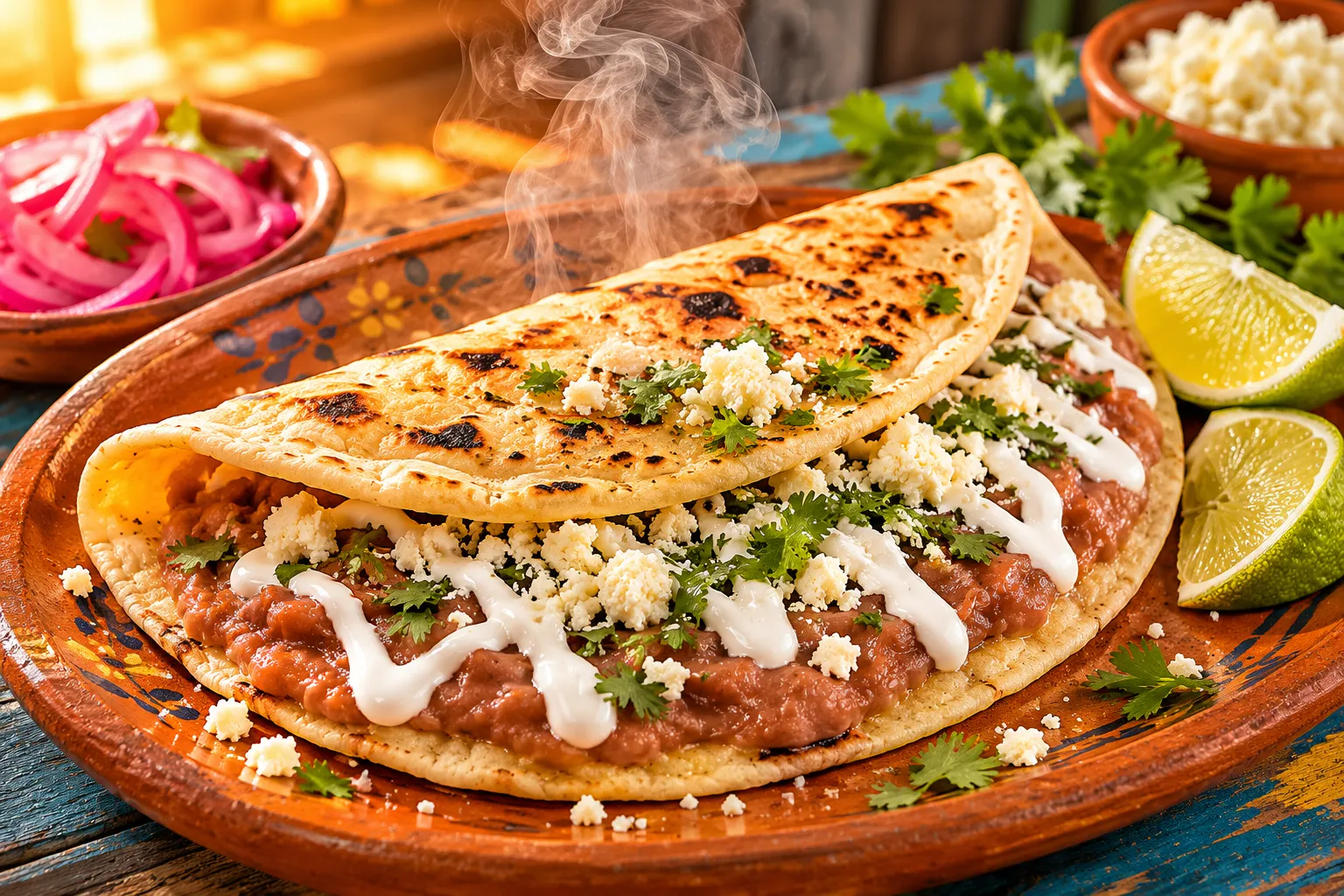
Soft, pillowy flour tortillas folded over warm refried beans, tangy crema, and salty cheese — baleadas are Honduras's most beloved street food, and they're easy to make at home.
Baleadas are the kind of food that turns a simple combination — soft flour tortilla, warm beans, cool crema, salty cheese — into something you crave at 10 a.m. and again at midnight. If you've spent any time in Honduras, you already know the rhythm: a hot comal, a stack of pillowy tortillas, three or four toppings in chipped enamel bowls, and a line that never seems to end. This is street food at its most generous and most personal, the kind of meal you fold in half and eat standing up, talking with whoever happens to be next to you.
The good news for anyone outside Central America is that you can build a faithful version at home with grocery store staples and one well-loved skillet. The tortillas come together in a single bowl, the beans take minutes if you start with canned, and the toppings are easy to source or substitute. After making them dozens of times, I've landed on a method that delivers that signature soft, slightly chewy tortilla with little blistered char spots and a folded sandwich that holds together without cracking.
This recipe leans on the traditional sencilla style — beans, crema, cheese — and then opens the door to the loaded especial with eggs, avocado, and meat. Whether you're feeding a hungry family or making a quick solo lunch, it's a dish that rewards a little practice and gives back tenfold.
A baleada is a folded flour tortilla filled with refried beans, crema, and crumbled fresh cheese. That's the foundation. Everything else — eggs, avocado, chorizo, shredded beef, plantains — is a layer added on top of that simple base. The tortilla itself is the giveaway: thicker than a Mexican flour tortilla, softer, slightly stretchy, with a faint tang from baking powder and a little richness from lard or shortening.
Honduran baleadas trace their popularity to the country's north coast, where wheat flour from American imports, beans from local farms, and Spanish dairy traditions met in vendor carts and beachside stands sometime in the early 20th century. The name's origin is debated — one popular story credits a vendor who was famously baleada (shot) and kept selling tortillas with her arm in a bandage. Whatever the truth, the dish has become a national symbol, sold from sunrise until well after midnight at puestos, comedores, and roadside stands across the country. Today, asking a Honduran where to find the best baleada is a little like asking a New Yorker about the best slice of pizza — everyone has a fierce opinion.
There are two main styles you'll see on any Honduran menu. The sencilla (simple) is the original: a warm tortilla, refried beans, a generous drizzle of crema, and crumbled queso. The especial loads the same base with scrambled eggs and avocado, often plus a protein like chorizo, shredded beef, or chicken. Both versions use the same tortilla, the same beans, and the same dairy — the especial just gives you a heftier meal. Many Honduran families eat sencilla for breakfast and especial for lunch or dinner, depending on what the day demands.
The ingredient list is short, but each component does real work. Use the best version of each that you can find, and don't skimp on the salt — these tortillas need it to come alive.
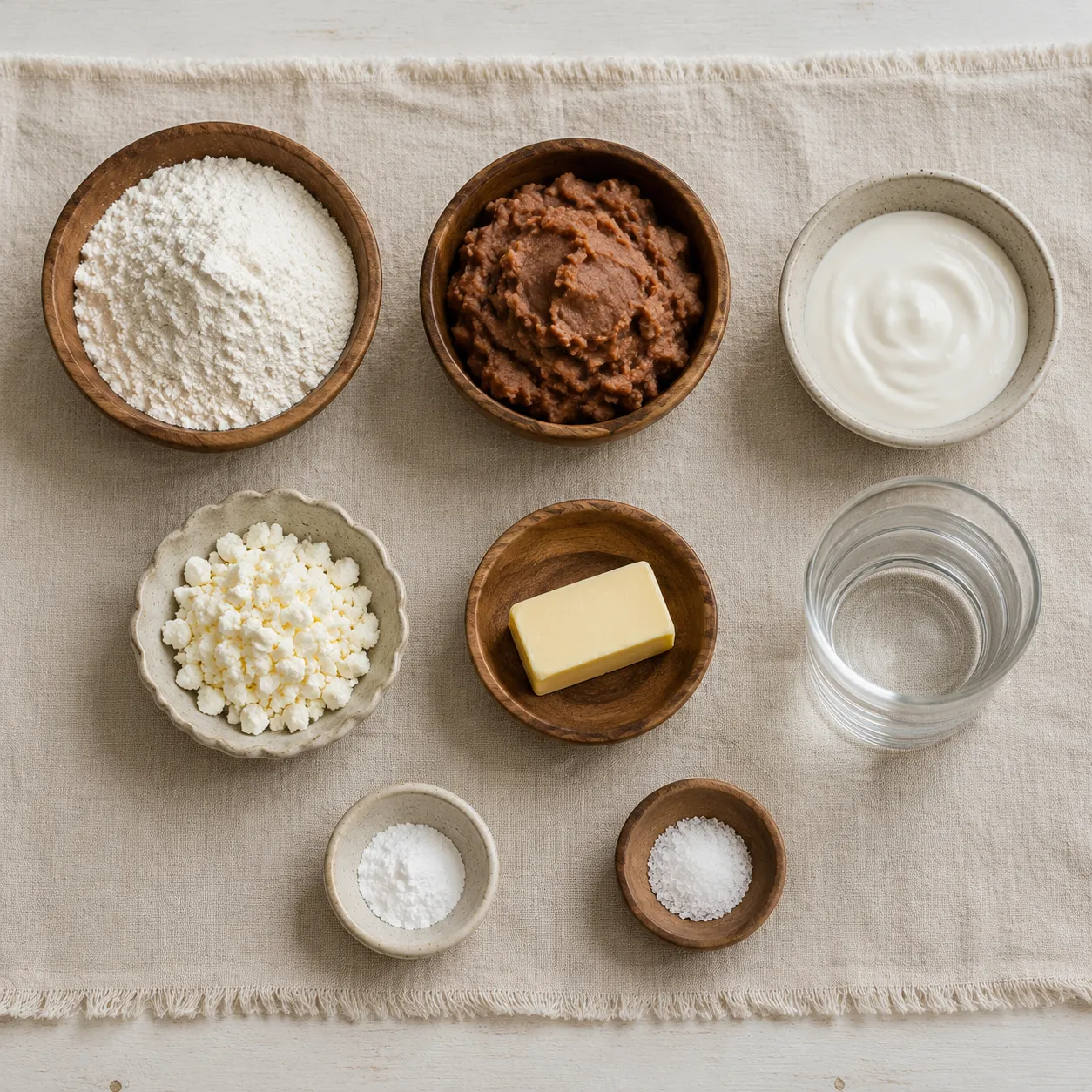
You need all-purpose flour, baking powder, salt, vegetable shortening or lard, and warm water. Lard gives the most authentic flavor, but shortening or even softened butter works just fine. Baking powder is the secret to that puffy, slightly springy texture — without it, you get a flat, dense disc. Warm water (not hot, not cold) helps the fat distribute and the dough come together quickly. If you've never made homemade flour tortillas before, this is a great place to start because the dough is forgiving and doesn't require a tortilla press.
Traditional Honduran cooks use refried red beans, but refried black beans are common too and easy to find canned in any US grocery store. To doctor canned beans into something closer to homemade, warm them in a skillet with a little oil, a clove of garlic, and a pinch of cumin until they're loose and spreadable. If you have time to simmer a pot of beans from dried, even better — but no one will fault you for taking the shortcut on a busy Tuesday.
Honduran crema is thicker and saltier than Mexican crema, with a tang somewhere between sour cream and crème fraîche. If you can find it at a Latin grocery, grab it. Otherwise, the best Honduran crema substitute is full-fat sour cream loosened with a tablespoon of milk and seasoned with a pinch of salt and a squeeze of lime. For cheese, look for queso seco — a dry, salty, crumbly fresh cheese — or use queso fresco, cotija, or a mild crumbled feta. Beyond the basics, set out sliced avocado, scrambled eggs, pickled red onions, hot sauce, and lime wedges so everyone can build their own.
The recipe card below has the full numbered method with measurements and timing. Here's the visual walkthrough so you know exactly what you're aiming for at each stage.
Whisk the dry ingredients, cut in the cold-ish fat with your fingertips until the flour looks sandy, then stream in warm water and stir with a fork until a shaggy dough forms. Turn it out and knead for about three minutes — the dough should go from rough and lumpy to smooth, slightly tacky, but not sticky.
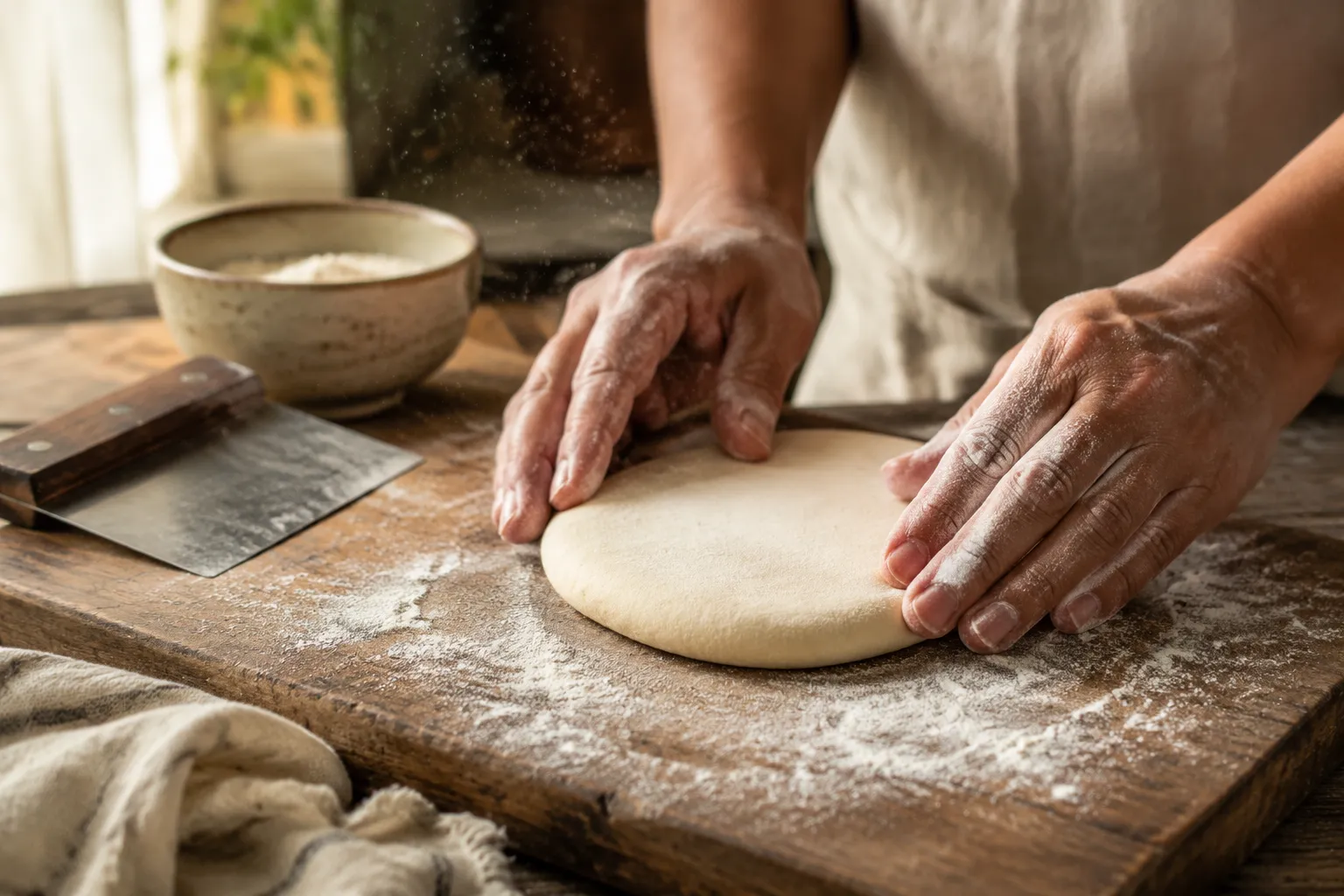
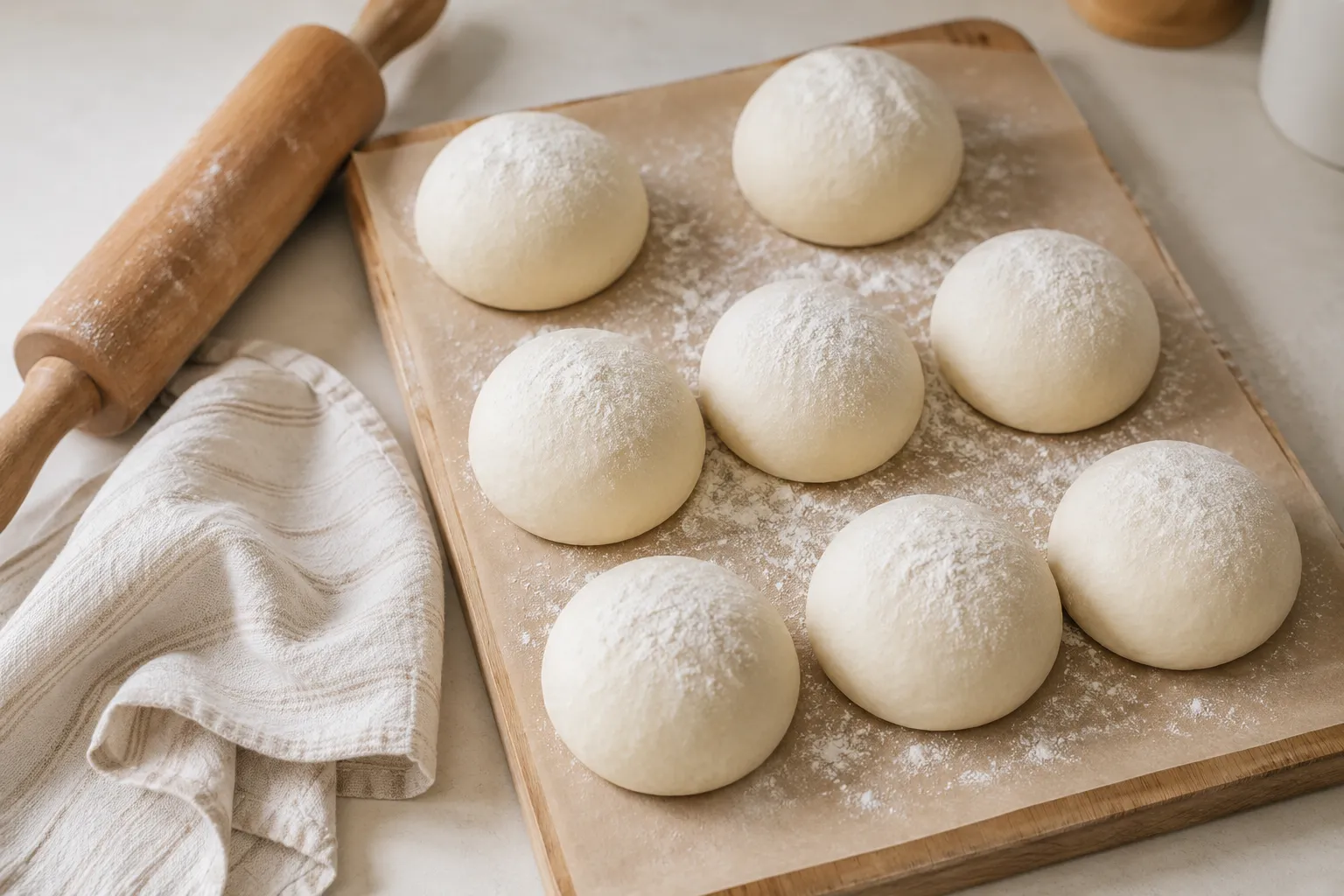
Cover the dough and let it rest for at least 30 minutes. This rest is non-negotiable: it relaxes the gluten so the tortillas roll out easily and stay tender. While it rests, divide the dough into eight equal pieces (a kitchen scale helps) and roll each into a smooth ball, then let those balls rest another ten minutes under a towel.
Heat a dry cast-iron skillet or comal over medium-high until a flick of water dances and evaporates within a second or two. Roll each ball into a round about 7 inches across and 1/8 inch thick — noticeably thicker than a typical Mexican tortilla. Lay it on the hot skillet and watch for the surface to bubble and pale spots to turn golden brown, about 45 to 60 seconds per side.
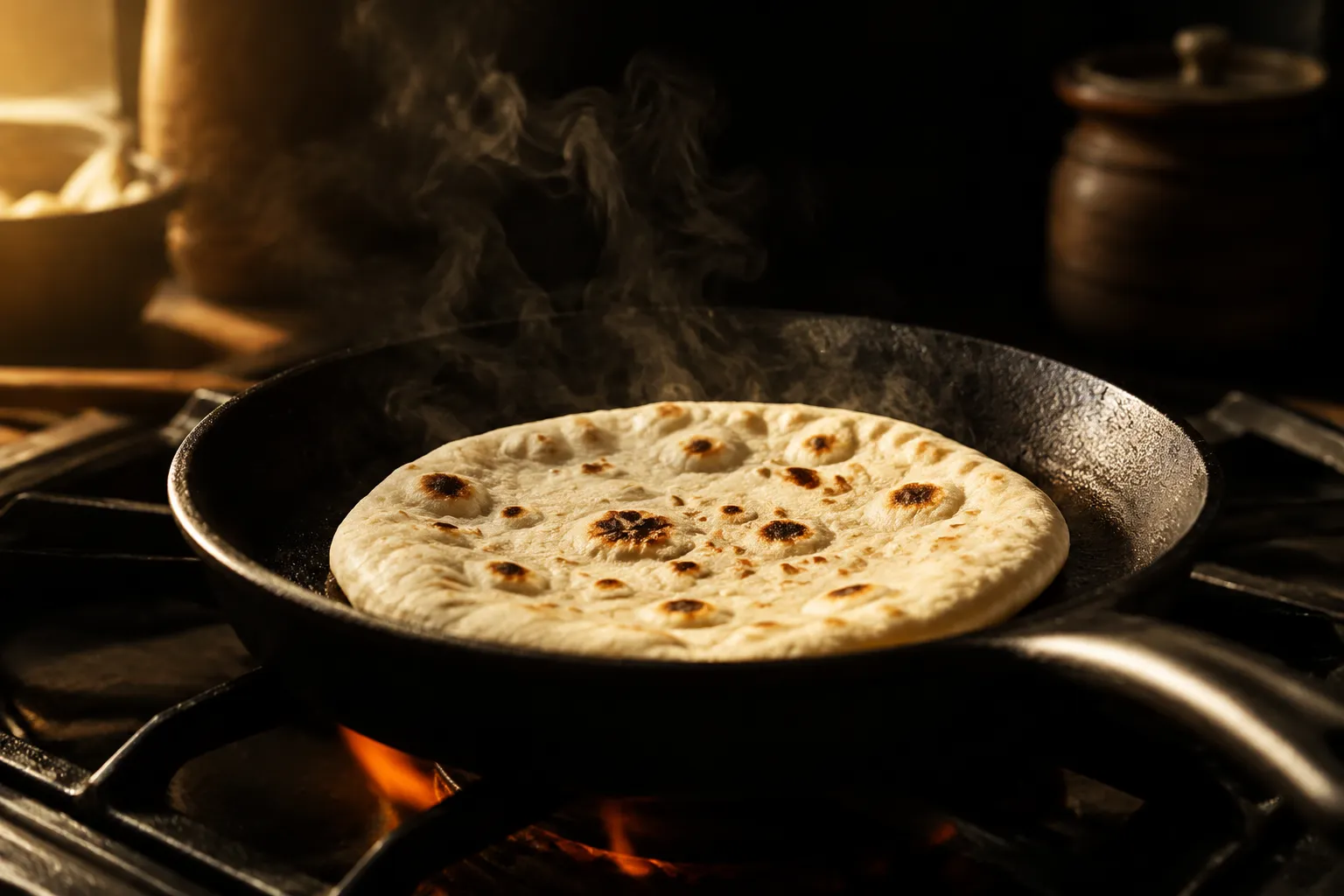
Stack the cooked tortillas under a clean kitchen towel as you go. The steam they release keeps them soft and flexible, which is exactly the texture you want for folding without cracking. Skip this step and you'll end up with stiff tortillas that fight you at assembly.
Spread a generous layer of warm refried beans across one half of each tortilla, leaving a small border. Drizzle on the crema, scatter crumbled cheese, and add any extras like avocado or scrambled eggs. Fold the empty half over the filling and press gently to seal everything together.
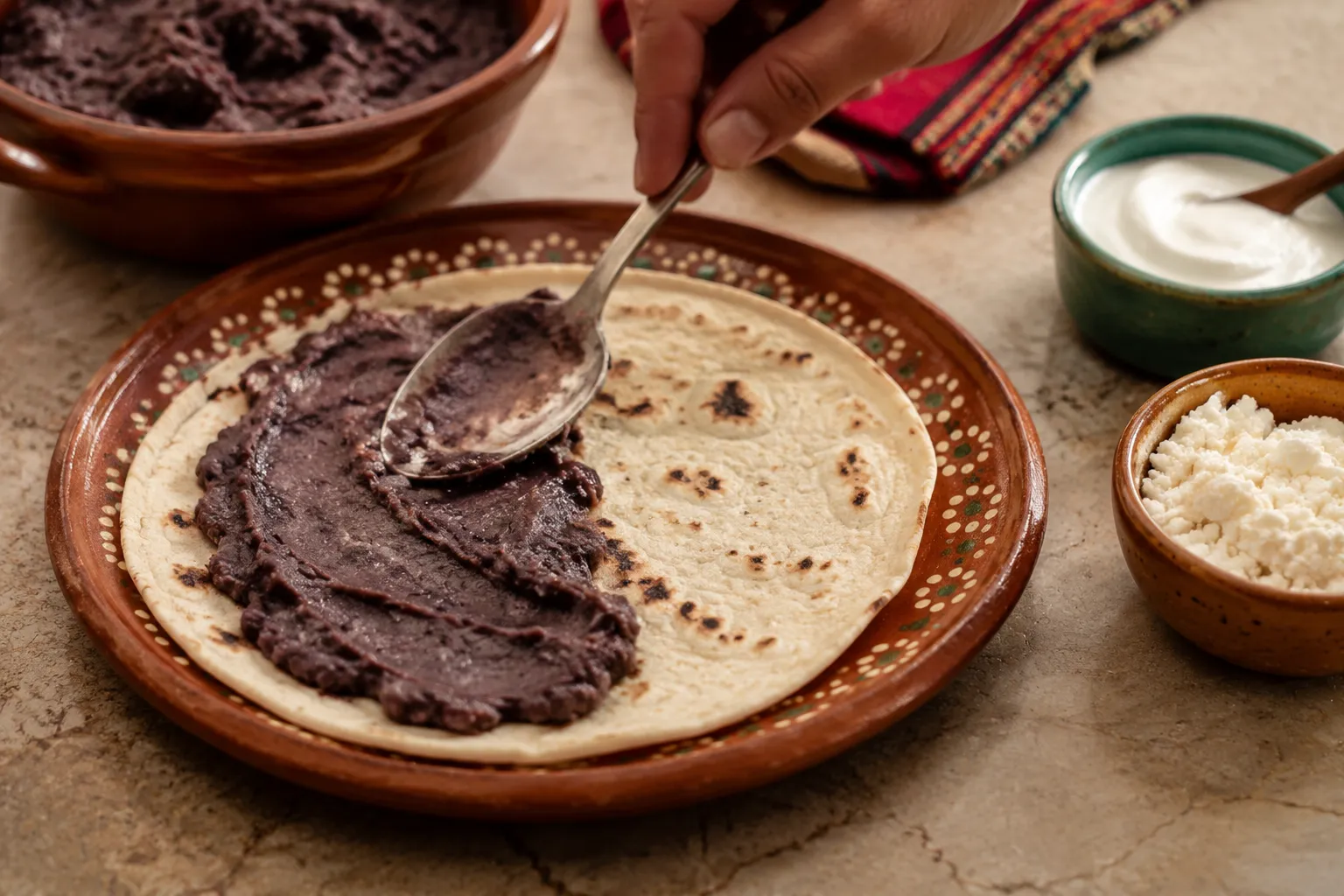
Some cooks like to lay the assembled baleada back on the warm skillet for 30 seconds per side to melt everything together — a great move if your tortillas have cooled while you were filling the others. Serve immediately while the tortilla is still soft and the beans are still warm.
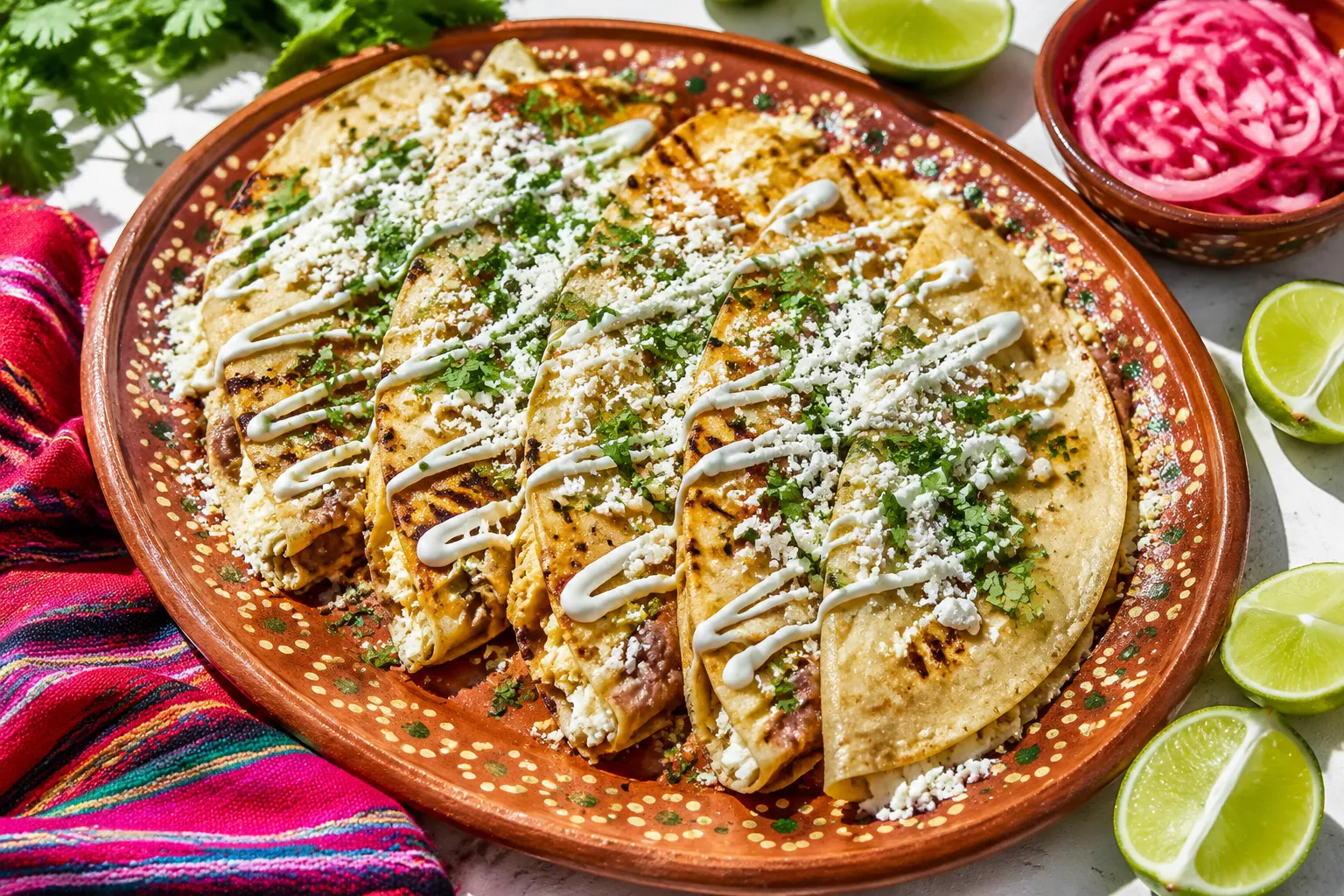
Baleadas are anytime food in Honduras, and the same logic works in any kitchen. They make a satisfying Latin American breakfast with scrambled eggs and a strong cup of coffee, a packable lunch wrapped in foil, or one of those easy weeknight dinners that comes together in under an hour once the tortilla dough is made. Serve them with a simple side of pickled red onions and lime wedges to cut the richness, or build a fuller spread with sliced avocado, hot sauce, and crispy plantain chips.
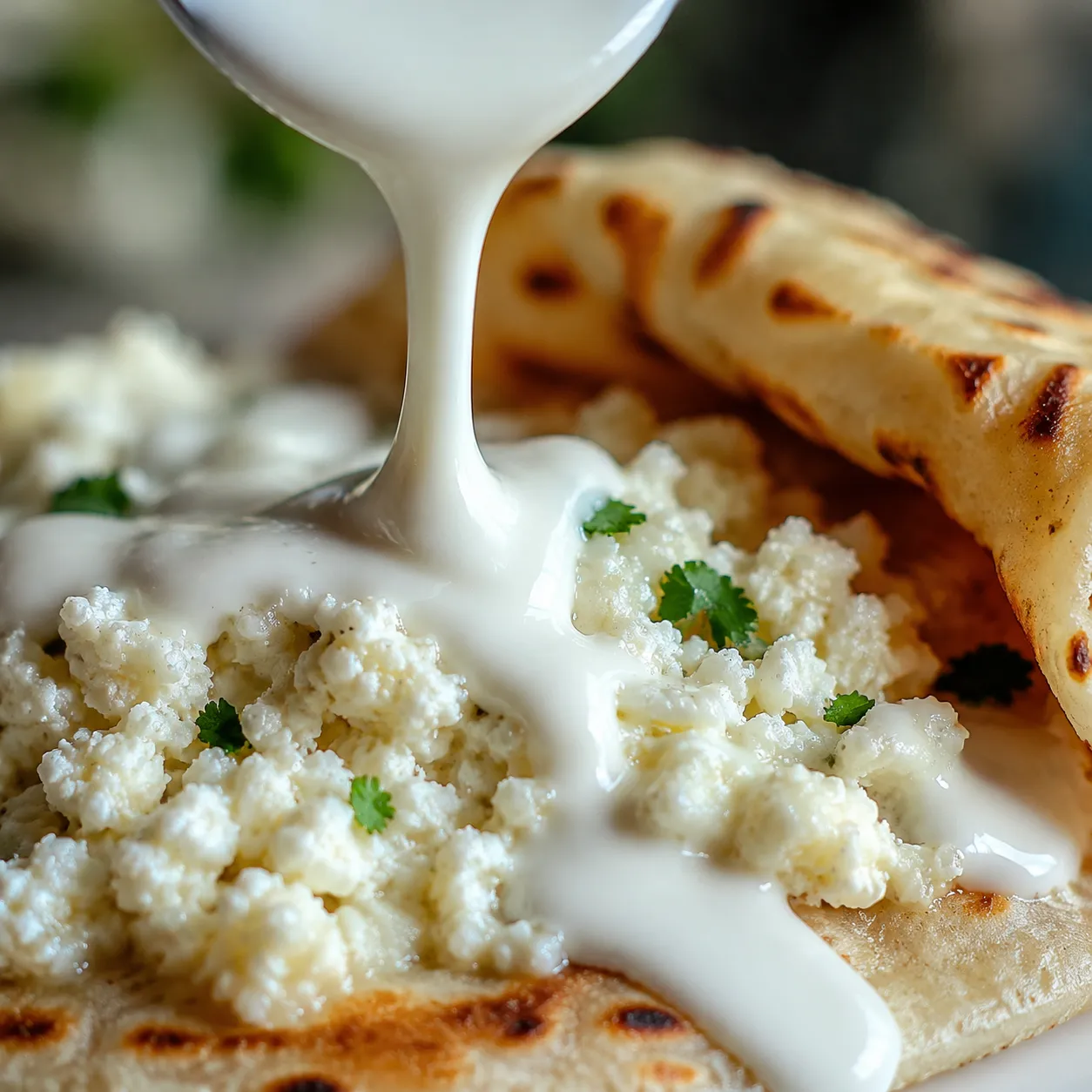
If you're cooking for a crowd, set up a build-your-own station: warm tortillas tucked under a towel, a pot of beans, bowls of crema and cheese, and a tray of add-ons. Everyone folds their own, and you skip the trap of plating eight at once. A pitcher of hibiscus agua fresca or horchata on the side rounds the meal out and makes it feel a little like a Honduran roadside stand on a Saturday afternoon.
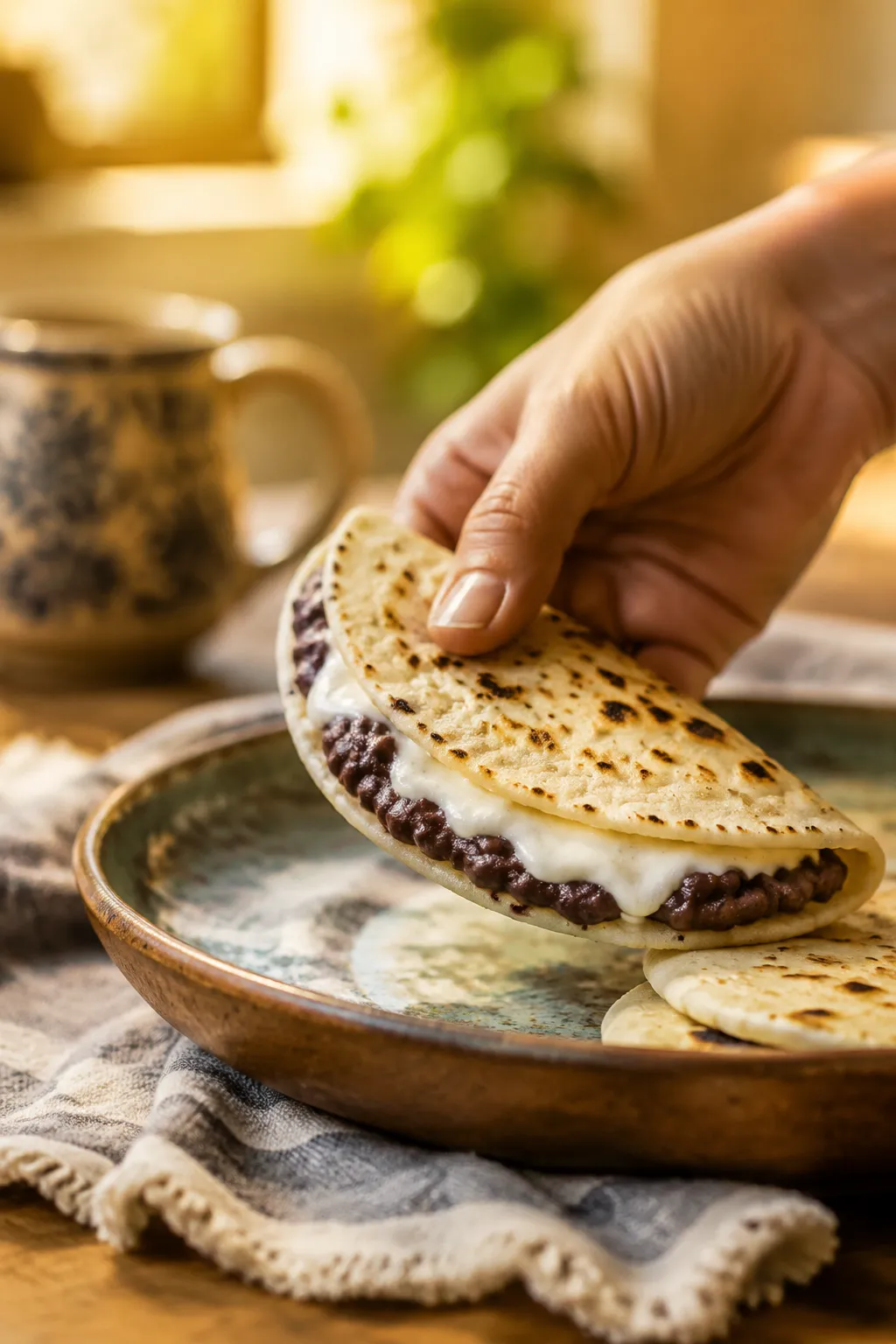
Once you've made these a couple of times, you'll understand why they're a daily ritual along the north coast. The tortillas freeze well, the beans keep all week, and the toppings live happily in the fridge — which means a hot, deeply satisfying meal is always about ten minutes away.
Once you've nailed the sencilla, the especial opens up endless options. Honduran cooks treat baleadas the way American cooks treat sandwiches — a base recipe with infinite room to riff.
Store the components separately for the best texture. Wrap cooled tortillas in foil or a zip-top bag and refrigerate for up to 4 days, or freeze for up to 3 months with a square of parchment between each one. Refried beans keep in an airtight container in the fridge for up to 5 days; loosen with a splash of water when reheating. Crema and cheese hold for a week refrigerated.
To reheat tortillas, warm them one at a time in a dry skillet over medium heat for about 20 seconds per side, or wrap a stack in a damp paper towel and microwave for 30 seconds. Avoid reheating fully assembled baleadas — the crema breaks and the tortilla turns soggy. Always assemble fresh from warm components.