Atole Recipe: Authentic Mexican Warm Masa Drink
Ingredients
Scale
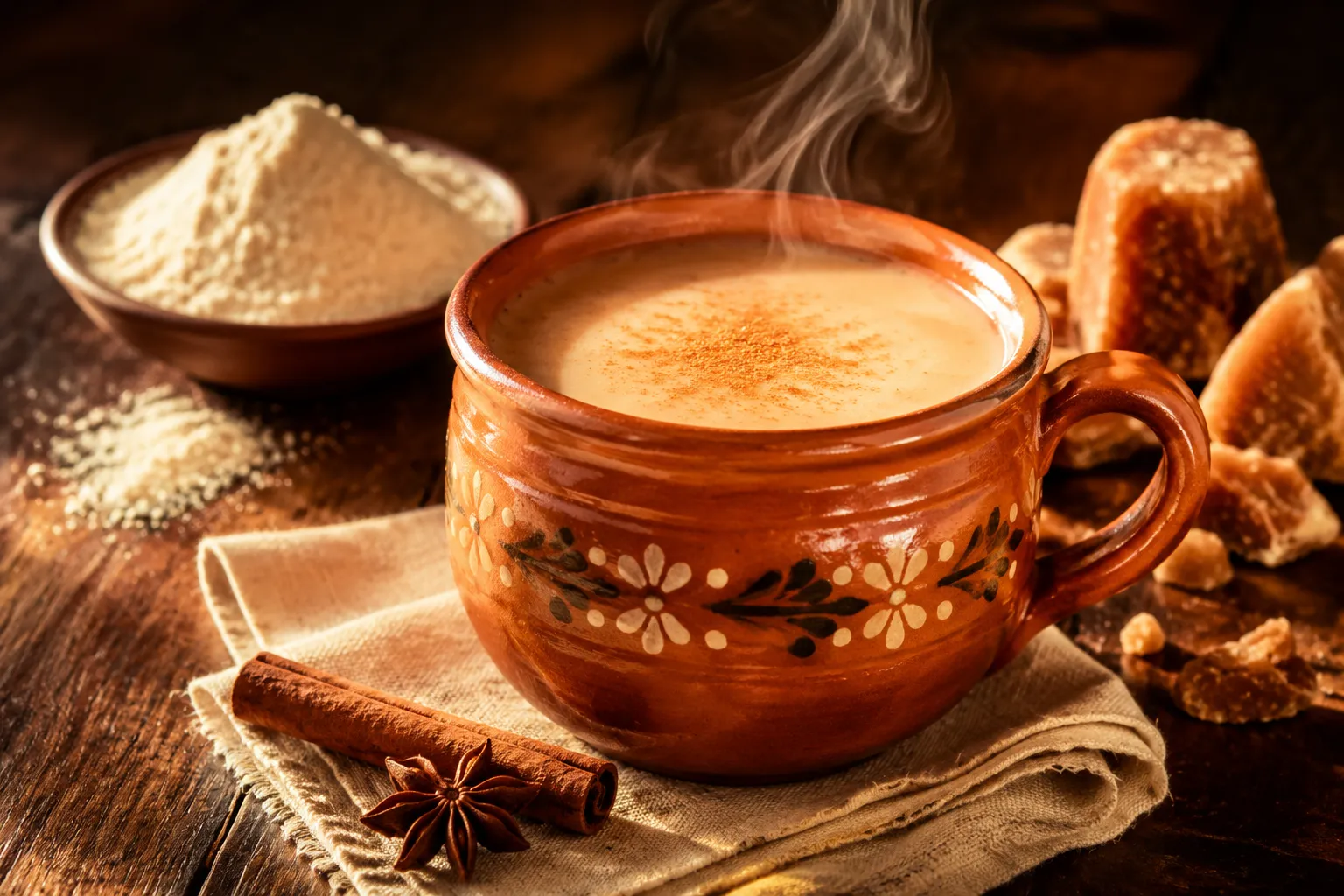
Atole is the cozy Mexican masa drink your winter mornings have been missing. Creamy, cinnamon-kissed, and ready in under 30 minutes.
Atole is the kind of warm, soul-warming hug in a mug that carries centuries of Mexican home cooking inside every silky sip. If you've ever wandered past a tamale stand on a chilly Mexico City morning, or found yourself wrapped in blankets at abuela's kitchen table on Christmas Eve, you already know the magic. This traditional warm Mexican drink is part beverage, part light breakfast, and entirely comforting — thickened with masa harina, kissed with cinnamon, and sweetened just enough to feel like a treat without tipping into dessert territory.
What makes this version special is the technique. So many shortcut recipes skip the slurry step or lean on cornstarch as a stand-in, and the result is a thin, dusty drink that doesn't do justice to the real thing. Here, we take a few extra minutes to whisk the corn flour into cool water before introducing it to hot milk, which guarantees a glossy, lump-free pour every single time. The piloncillo melts in slowly, the cinnamon sticks perfume the whole pot, and a generous splash of vanilla at the end pulls everything together.
Whether you're making it to pair with tamales on Christmas morning, to round out a spread of Mexican breakfast recipes through the week, or simply because the weather has dipped below sweater-and-socks territory, this is one of those recipes you'll come back to again and again. Twenty-five minutes, one pot, pantry-friendly ingredients. Let's pour.
It's a hot, thickened beverage with deep pre-Hispanic roots, traditionally made by simmering masa (the same nixtamalized corn dough used for tortillas and tamales) with water, milk, and aromatic flavorings. Indigenous communities across Mesoamerica were drinking versions of it long before the arrival of Spanish dairy and sugar, often using just toasted corn, water, and chiles or fruit. Today, you'll find it sold in clay mugs from street vendors, ladled into thermoses for early-morning markets, and simmering on home stoves through fall and winter.
Long before refined sugar and dairy entered the equation, atole was a staple of Aztec and Maya life — corn was sacred, and pulping it into a warm, drinkable form was both nourishment and ritual. After Spanish colonization, ingredients like milk, cinnamon, and piloncillo (unrefined cane sugar) folded into the recipe, giving us the version most home cooks know today. It's still tied closely to celebrations: Día de los Muertos, Christmas posadas, and the feast of Candelaria, when it's customarily poured alongside steaming tamales after the season's biggest gatherings.
If you've seen champurrado on a menu and wondered how the two relate, here's the short answer — champurrado is a chocolate-spiked cousin of atole. The base technique is identical (masa slurry plus liquid plus piloncillo), but champurrado folds in Mexican chocolate tablets like Abuelita or Ibarra for a chocolate-forward, slightly grittier finish. Where the classic version is a quiet, cinnamon-vanilla sip, champurrado is the bold, chocolate-loving sibling. Both belong on a holiday table, and many cooks make both at once when feeding a crowd.
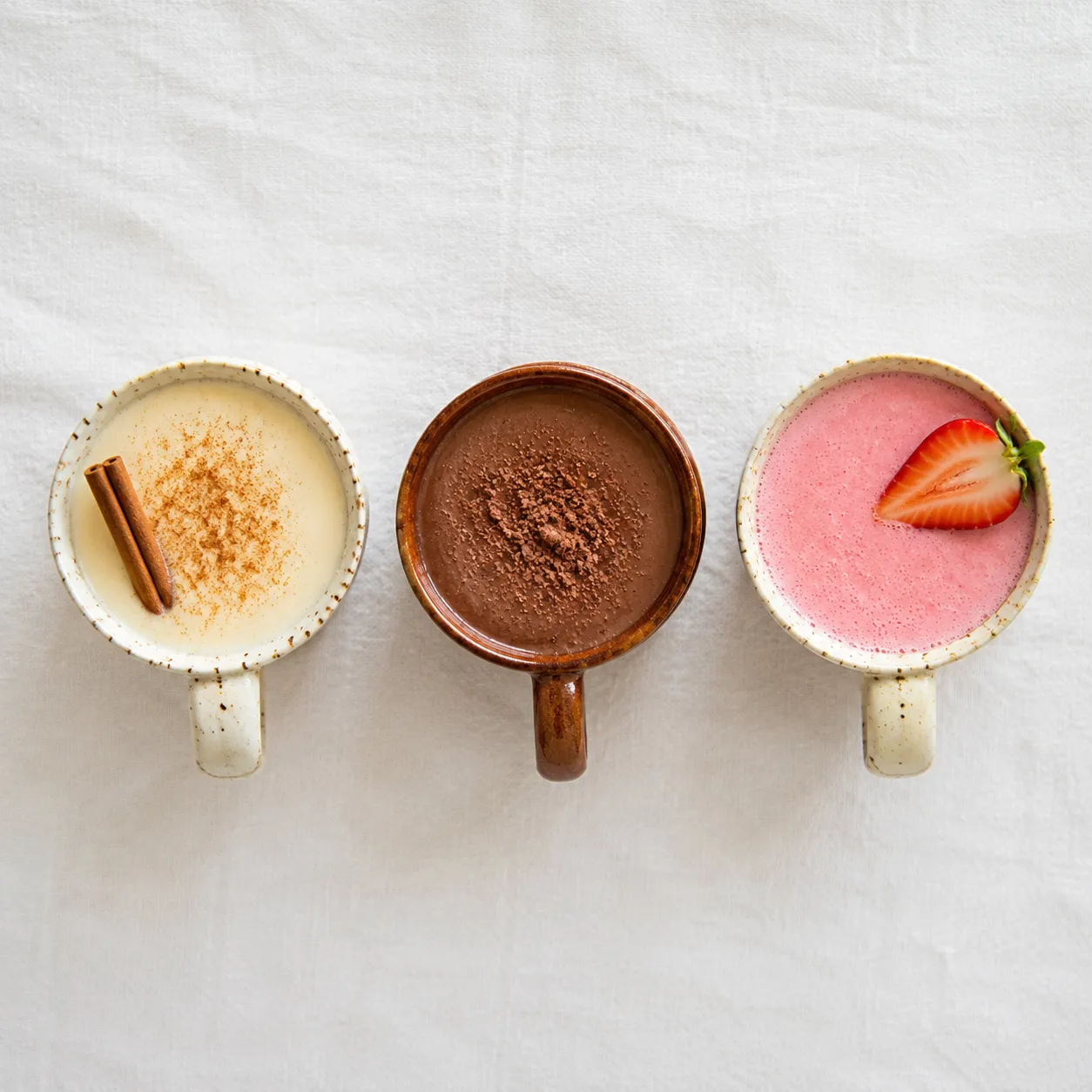
Beyond the classic atole de vainilla you'll find here, regional variations run wild. Strawberry leans pink, fruity, and beloved by kids; pecan and walnut versions add toasty depth; guava, pineapple, and rice-based renditions all show up depending on which Mexican state you're cooking in. Some home cooks even make savory editions with chiles for breakfast. The one constant is the thickened, masa-based body that sets this drink apart from a chilled cup of horchata or a simple flavored milk.
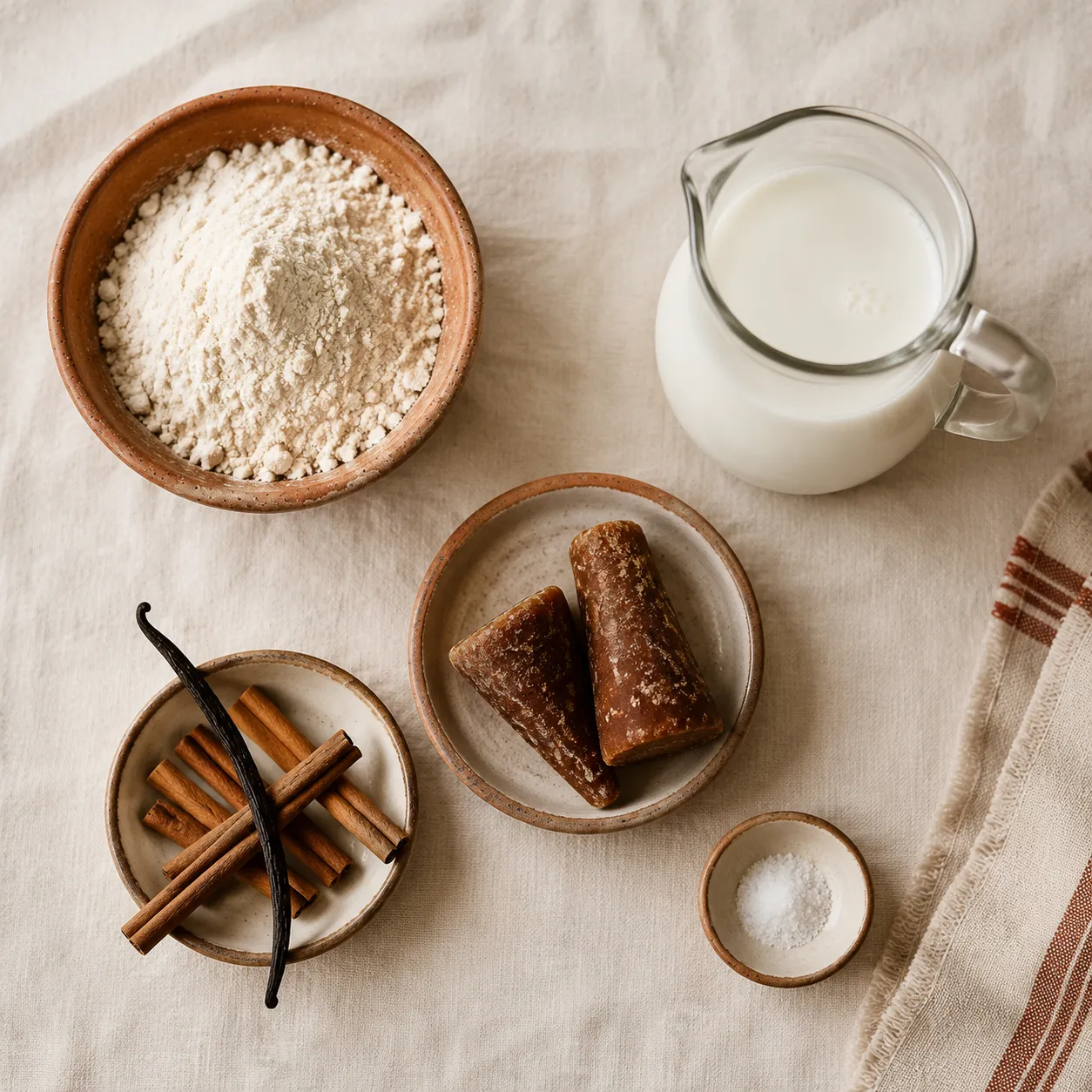
Part of why this recipe slips into regular rotation is how short the shopping list runs. Most of these ingredients live in any well-stocked Mexican grocery aisle, and a few may already be in your pantry. Quality matters here — fresh corn flour, real piloncillo (or a good dark brown sugar), and pure vanilla extract make the finished cup taste worlds better than a generic mix.
Masa harina is the soul of this recipe. It's nixtamalized corn flour — corn treated with calcium hydroxide, dried, and finely ground — and it's what gives the finished drink its signature toasty corn flavor and creamy body. Look for brands like Maseca or Bob's Red Mill in the international aisle. Don't substitute regular cornmeal or plain corn flour, because they aren't nixtamalized and the flavor will be flat and gritty.
Piloncillo is unrefined Mexican cane sugar sold in firm, cone-shaped blocks. It's smoky, molasses-rich, and dissolves slowly into warm liquid, leaving behind a complex caramel sweetness you can't quite fake with white sugar. If you can't track piloncillo down locally, packed dark brown sugar is a respectable swap. Light brown sugar works in a pinch, but you'll lose some of that signature depth.
Use Mexican cinnamon (canela) if you can find it — it's softer, lacier, and more floral than the standard cassia stick at most US grocery stores. Pair it with a real vanilla bean or a teaspoon of pure vanilla extract added off the heat to preserve those delicate aromatics. Imitation vanilla works, but the warmth of real vanilla is one of those small luxuries that makes the cup taste truly special.
The classic ratio runs about two parts milk to one part water, which gives you a creamy result that isn't heavy. Whole milk is traditional, though evaporated milk delivers an even richer pour. For a dairy-free version, full-fat oat milk or coconut milk both work beautifully — just choose unsweetened so you can control the final sweetness yourself.
The whole thing comes together in one saucepan and a small mixing bowl. The key is patience during the thickening phase — keep whisking and don't crank the heat, because masa scorches faster than you'd think.
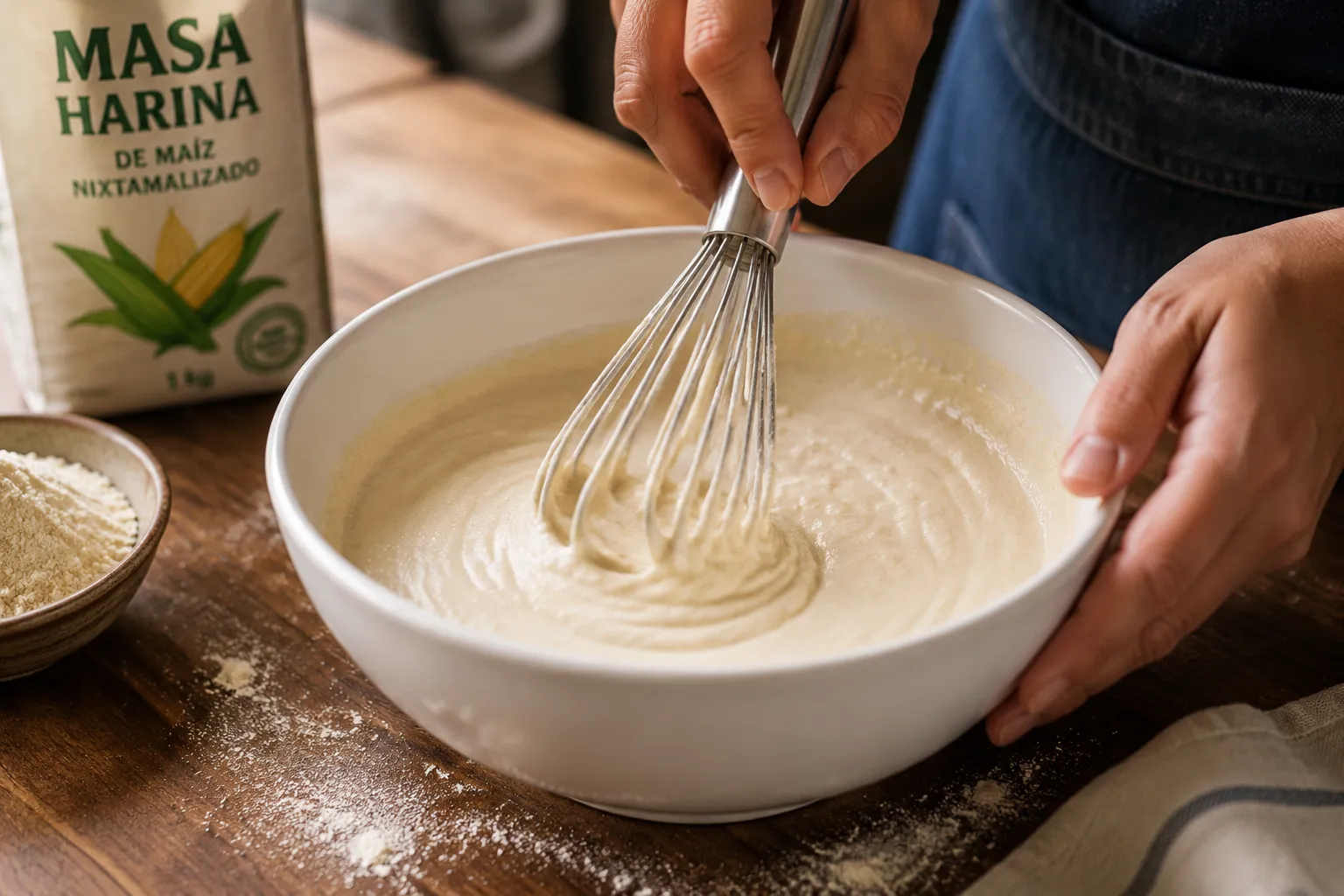
Combine the masa harina with cool water in a small bowl and whisk until completely smooth and free of lumps. This pre-mixing step is non-negotiable. If you dump dry masa straight into hot milk, it'll seize and clump like wet flour, and no amount of whisking later will rescue it. The slurry should look like loose pancake batter, pale beige and pourable.
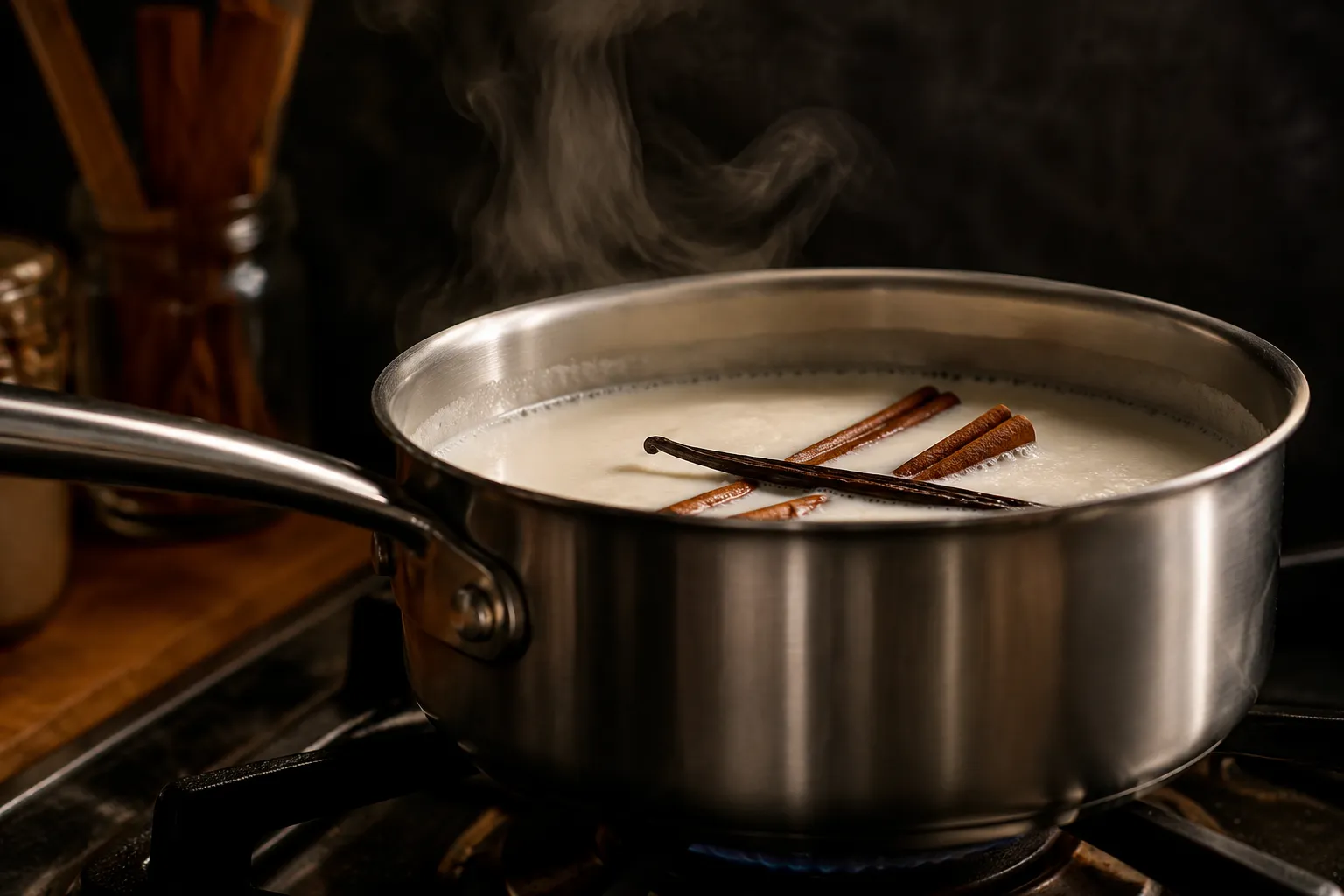
In a medium saucepan, warm the milk over medium-low heat with the cinnamon sticks and a pinch of salt. You want it just barely simmering — small bubbles around the edges, never a rolling boil. Let it steep for five to seven minutes so the cinnamon has time to perfume the milk. That slow infusion is what separates a really aromatic finished drink from a one-note one.
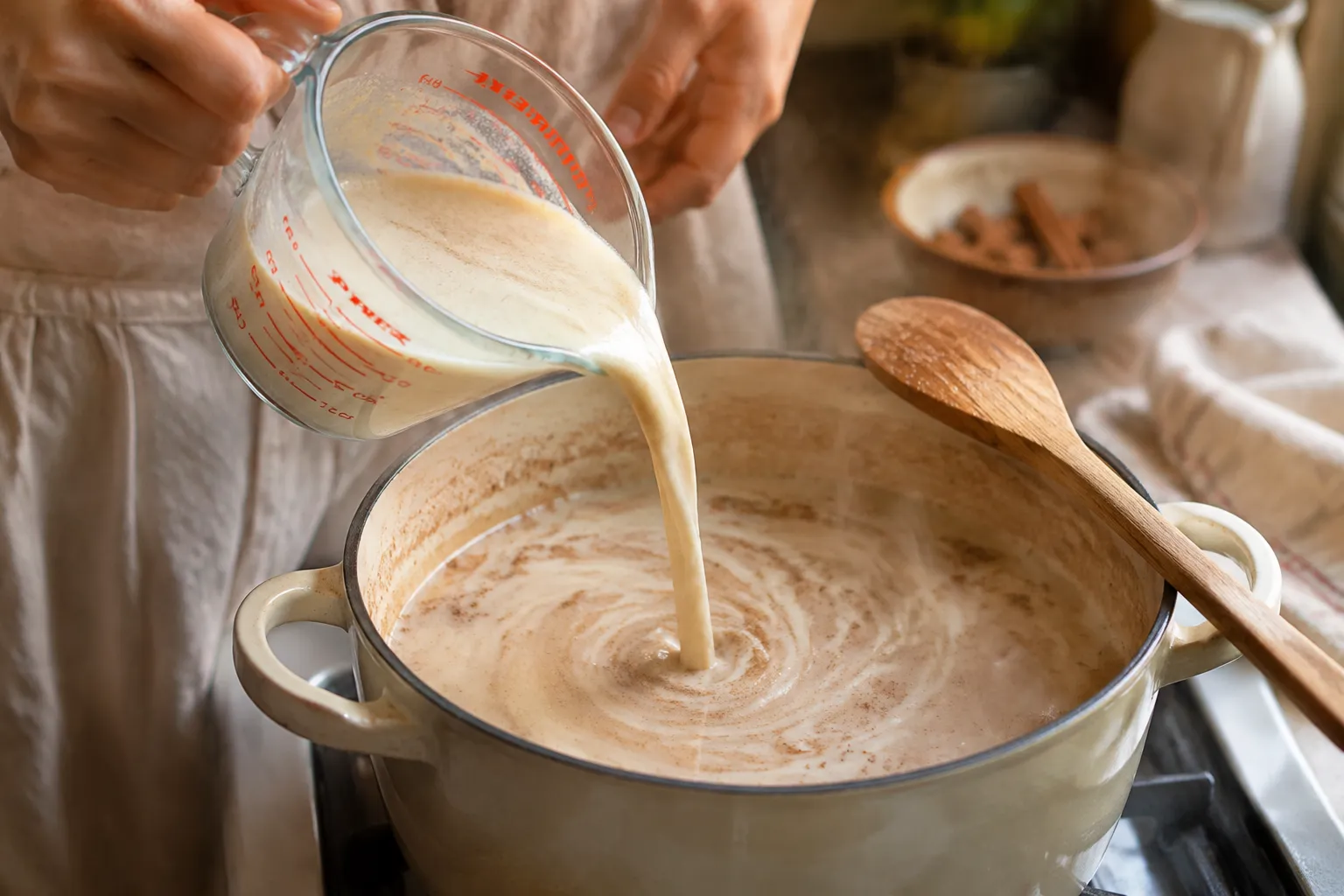
Slowly pour the masa slurry into the hot milk while whisking constantly. Keep stirring with a whisk or wooden spoon for about ten minutes, scraping the bottom of the pan often, until the mixture thickens enough to coat the back of a spoon. The texture should remind you of a loose pudding or thin custard — drinkable, but with real body.
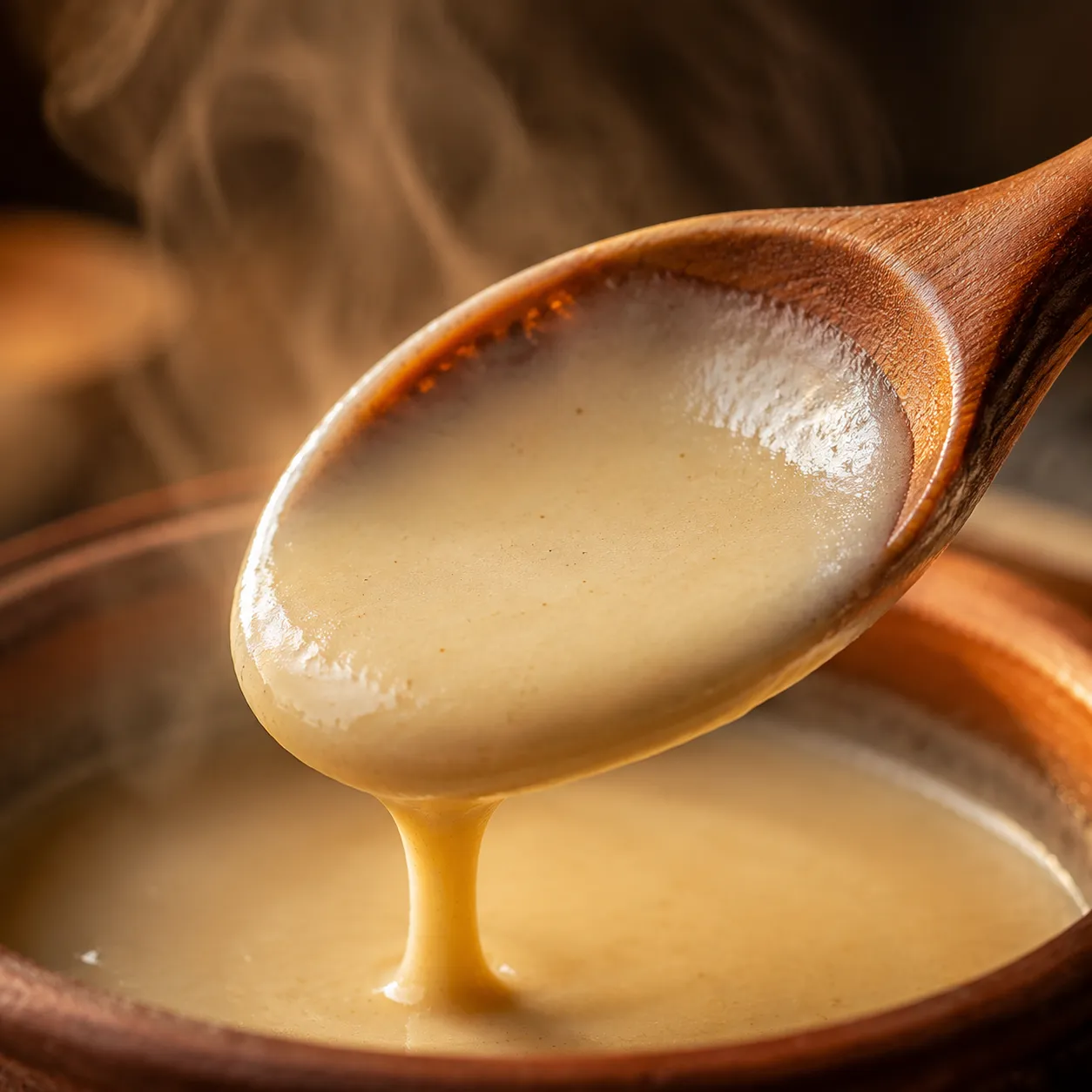
Add the chopped piloncillo (or brown sugar) and stir until fully dissolved, about two minutes. Pull the pan from the heat, fish out the cinnamon sticks, and stir in the vanilla extract. Taste and adjust — more sweetener if you want it dessert-sweet, a splash more milk if it's thicker than you'd like. Ladle into mugs immediately and dust with a little ground cinnamon.
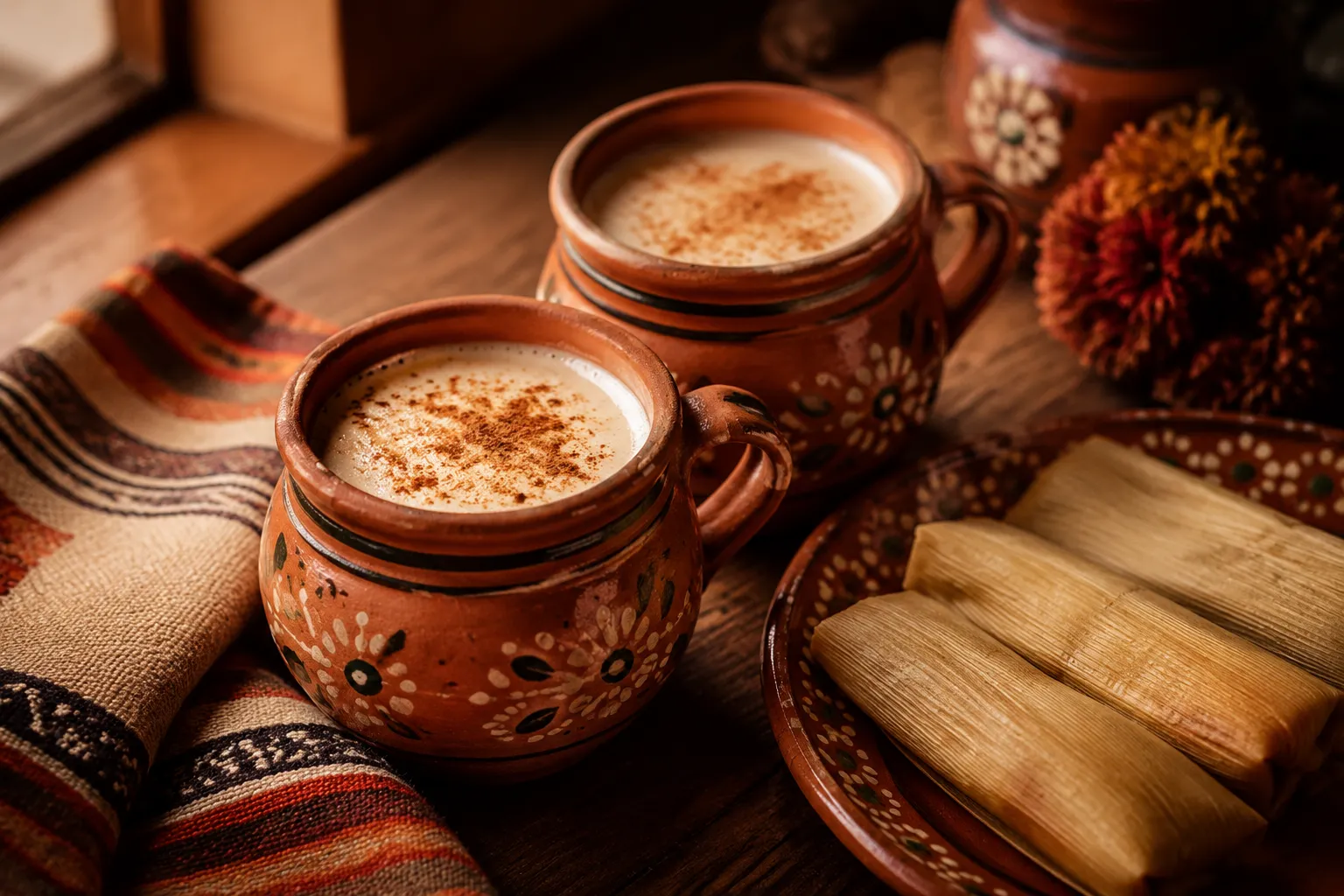
A steaming mug of this warm Mexican drink is a meal in itself, but it really sings when paired with the right food. The traditional pairing is tamales — the savory masa dough wrapped around shredded chicken, pork, or rajas creates a beautiful echo with the sweet corn flavor in the cup. Holiday breakfasts, Día de los Muertos altars, and lazy Sunday mornings all call for that combination.
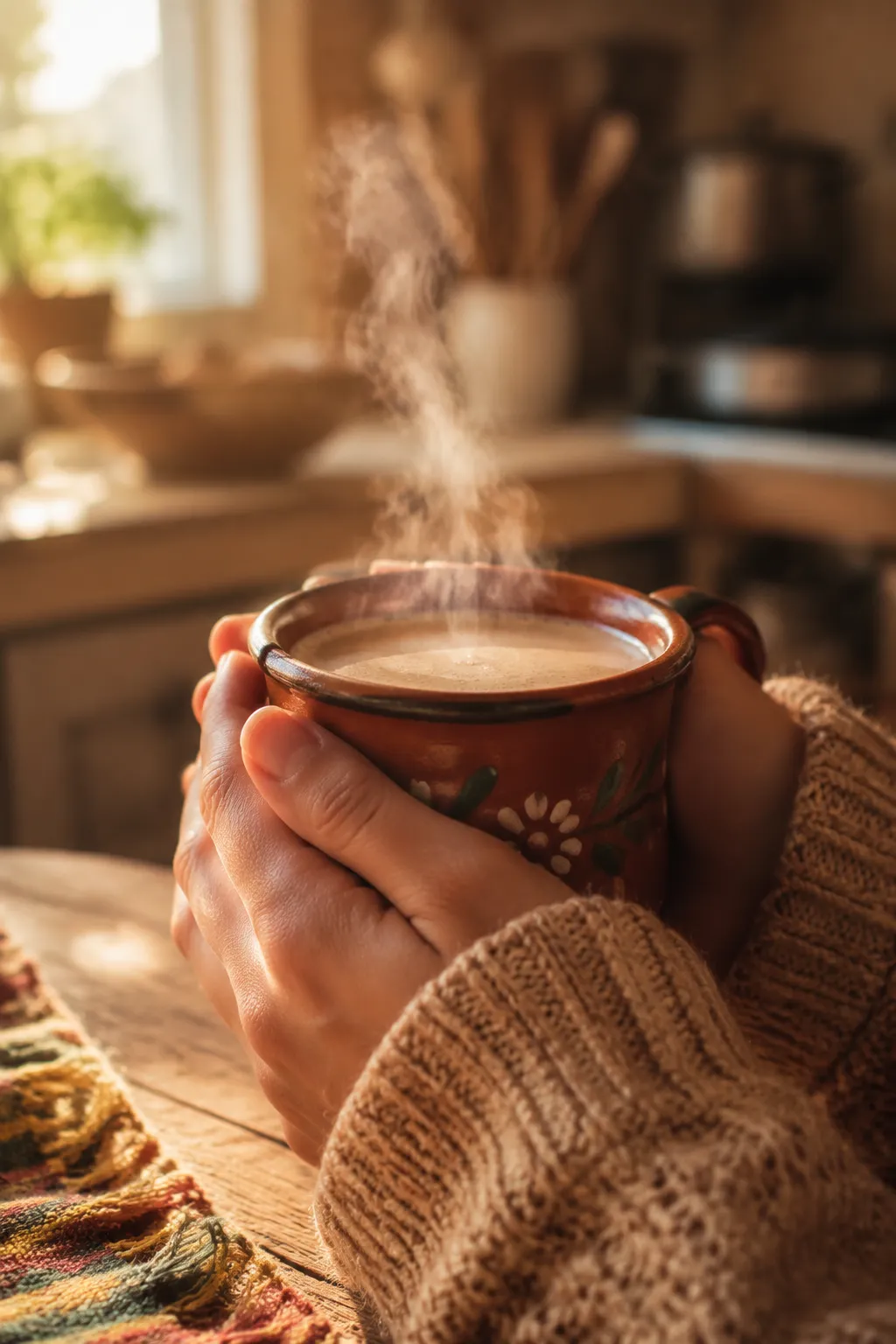
Beyond tamales, think pan dulce (Mexican sweet breads like conchas or orejas), buttery churros for dunking, or a savory plate of chilaquiles to balance the sweetness. If you're rounding out a brunch spread, this slots in naturally next to other Mexican breakfast recipes like huevos rancheros or migas. For a chillier-weather menu, serve it as the opening course at a tamalada or alongside Mexican hot chocolate so guests can pick their warm-drink mood.
Cool-weather mornings, holiday brunches, and after-dinner sipping are all prime moments to pour a cup. While horchata holds court in summer with its rice-and-cinnamon chill, this drink is the cold-weather counterpart your kitchen has been missing. Pour it into thermoses for tree-lighting nights, ladle it from a slow cooker at holiday parties, or simmer a small pot just for yourself when the house gets quiet and the windows fog up. That's the whole point — a slow, intentional moment of warmth, ready in twenty-five minutes flat.
Once you've nailed the base recipe, the variations are where the fun really begins. Plain vanilla is the classic, but cooks across Mexico put their own regional spin on the formula with chocolate, fruit, nuts, and even savory chiles. Each is a small tweak to the master recipe rather than a whole new method.
Refrigerate any leftovers in an airtight container for up to 4 days. As it cools, the masa will continue to absorb liquid, so expect the texture to firm up significantly — almost to the consistency of a soft pudding. Don't panic, that's exactly what's supposed to happen. To bring it back, transfer to a saucepan over low heat with a generous splash of milk (about 1/4 cup per serving) and whisk constantly until smooth and pourable again.
For longer storage, freeze cooled portions in single-serving containers for up to 2 months. Thaw overnight in the fridge before reheating with the milk-and-whisk method above. Skip the microwave if you can — it tends to heat unevenly and can create stubborn clumps that are tough to whisk out, especially after freezing.