Classic Southern Pralines: Buttery Pecan Candy Recipe
Ingredients
Scale
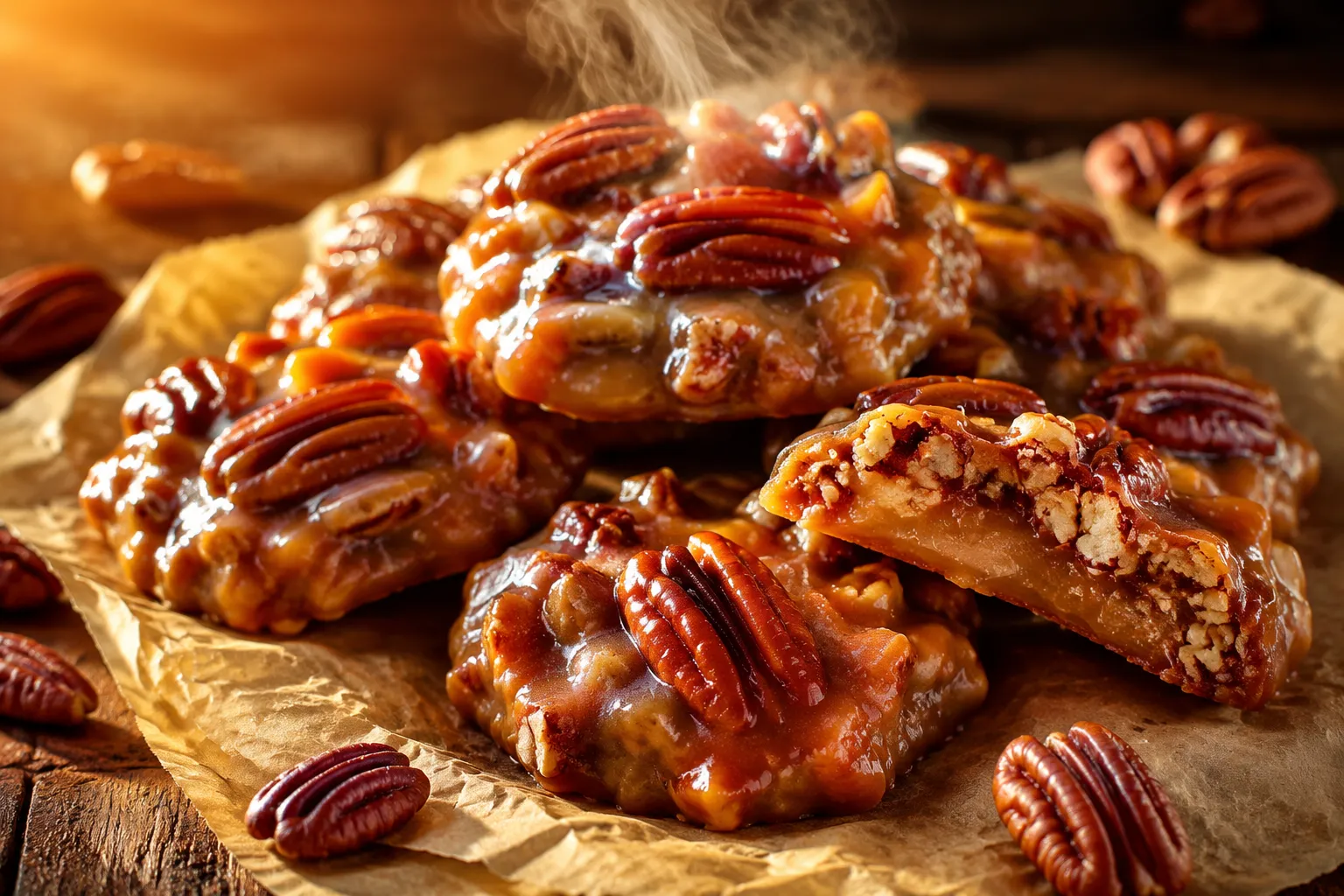
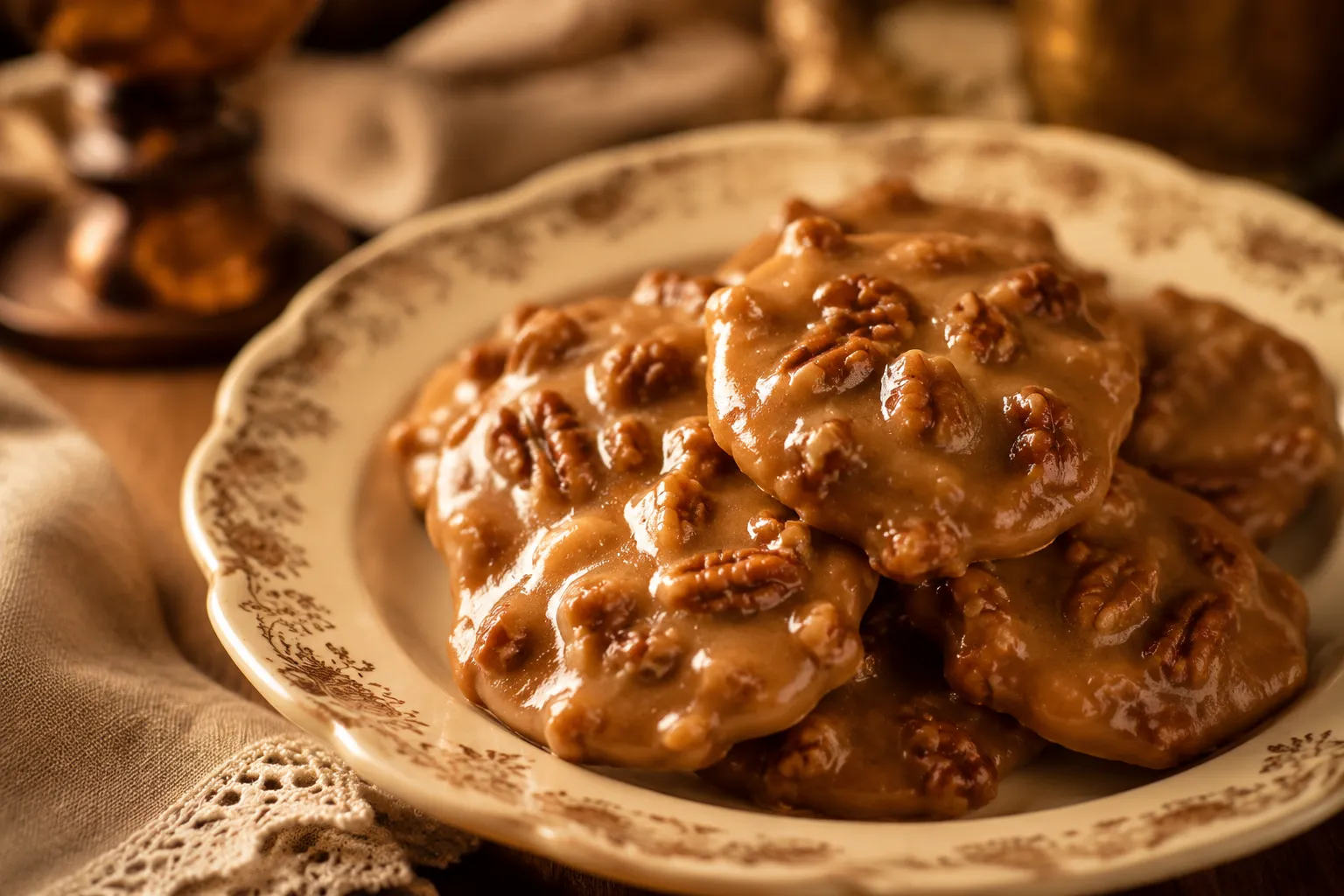
These Southern pralines turn brown sugar, butter, cream, and toasted pecans into glossy, melt-in-your-mouth candy patties in about 30 minutes.
A proper praline is one of those magical Southern confections that tastes like the lovechild of fudge, caramel, and a buttered pecan all rolled into one glossy, mahogany-flecked patty. If you've ever wandered through the French Quarter in New Orleans and caught that buttery-brown-sugar perfume drifting out of a candy shop, you already know the spell these little discs cast. The good news? You can absolutely recreate that same melt-on-your-tongue magic in your own kitchen — no copper kettle or candy-making degree required.
This recipe leans on the authentic New Orleans technique I learned from a Louisiana-born friend's grandmother: a quick stovetop cook to soft-ball stage, a vigorous beating session that coaxes the sugar into that signature creamy-crisp texture, and a fast spoon-and-set finish on parchment. Between a candy thermometer and a backup cold-water test, you'll hit the sweet spot every single time.
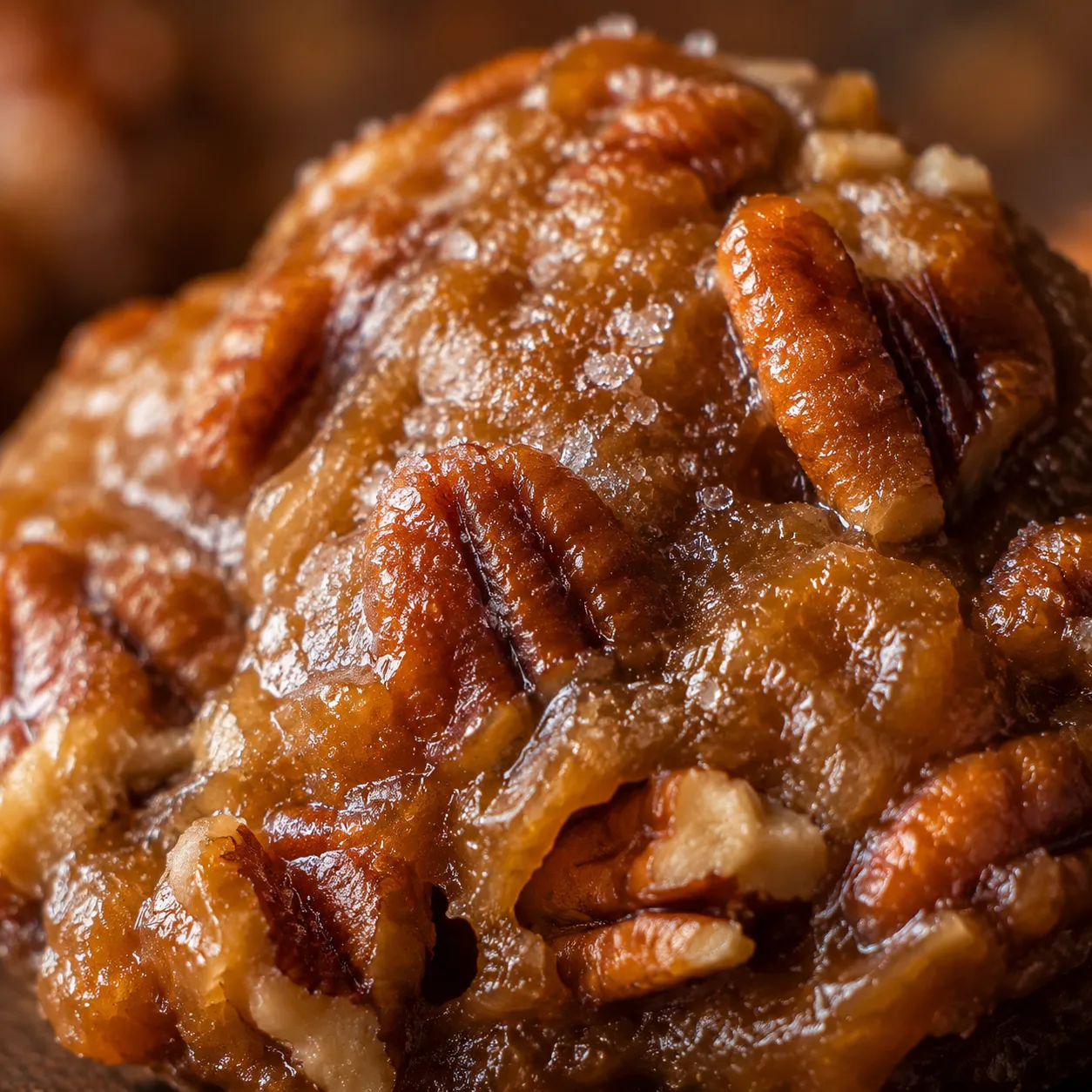
What makes Southern pralines so addictive is the contrast — the outside is delicately crystalline and shatters under your teeth, while the inside stays fudgy, almost creamy, with the deep toasted-nut flavor of pecans woven all the way through. They take about 25 minutes start to finish and use ingredients you probably already have on the counter.
The word praline traces back to 17th-century France, where the Duke of Plessis-Praslin's chef coated almonds in caramelized sugar. When French settlers brought the idea to Louisiana, they swapped the almonds for the abundant local pecan and added cream and butter — and the Southern praline as we know it was born. Today, this candy is so closely tied to New Orleans that you'll find shops dedicated entirely to it on nearly every block of the Quarter.
The two share a name but eat very differently. A French praline is essentially a hard, crunchy caramelized almond — closer to brittle. A Southern version is soft, creamy, and patty-shaped, built on a base of brown sugar, heavy cream, and butter. Think of one as a candied nut and the other as a fudge-caramel hybrid studded with pecans.
By the 1800s, free women of color in New Orleans known as pralinières were selling pralines on street corners to support their families, and their recipes shaped the candy into the soft, cream-rich form we know today. That cultural lineage is why these are sometimes called New Orleans pralines — and why they remain one of the city's most iconic edible souvenirs.
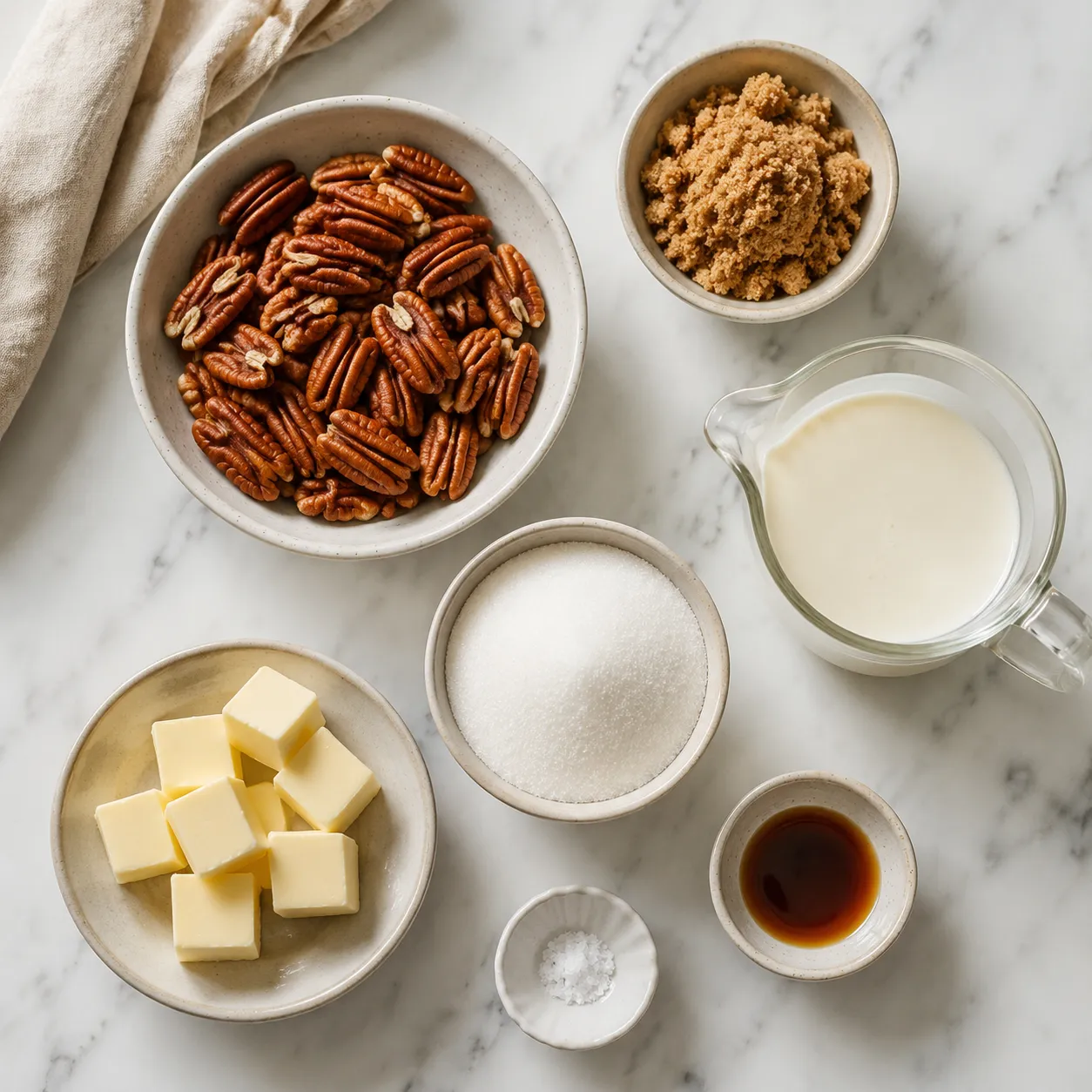
The beauty of pecan praline candy is how few ingredients it asks for. Each one pulls real weight, though, so don't skimp.
I use a 50/50 blend of light brown sugar and granulated white sugar. The brown sugar brings molasses depth and that unmistakable caramel-y backbone that defines brown sugar pralines, while the white sugar keeps the texture from going overly soft or grainy. Together they hit the perfect balance of flavor and structure.
Real heavy cream is non-negotiable — its high fat content is what gives the candy that creamy-fudgy interior. Half-and-half won't reduce the same way and milk will leave your pralines weepy. Unsalted butter, stirred in at the end, adds gloss and round dairy flavor (think: a rustic homemade caramel sauce, but set firm).
Please toast your pecans. Ten minutes in a 350°F oven coaxes their oils to the surface and deepens their flavor exponentially. Raw pecans taste flat and a little astringent next to the rich caramel. Toasted pecans, on the other hand, deliver that buttery, almost smoky note that makes a praline taste like a praline.
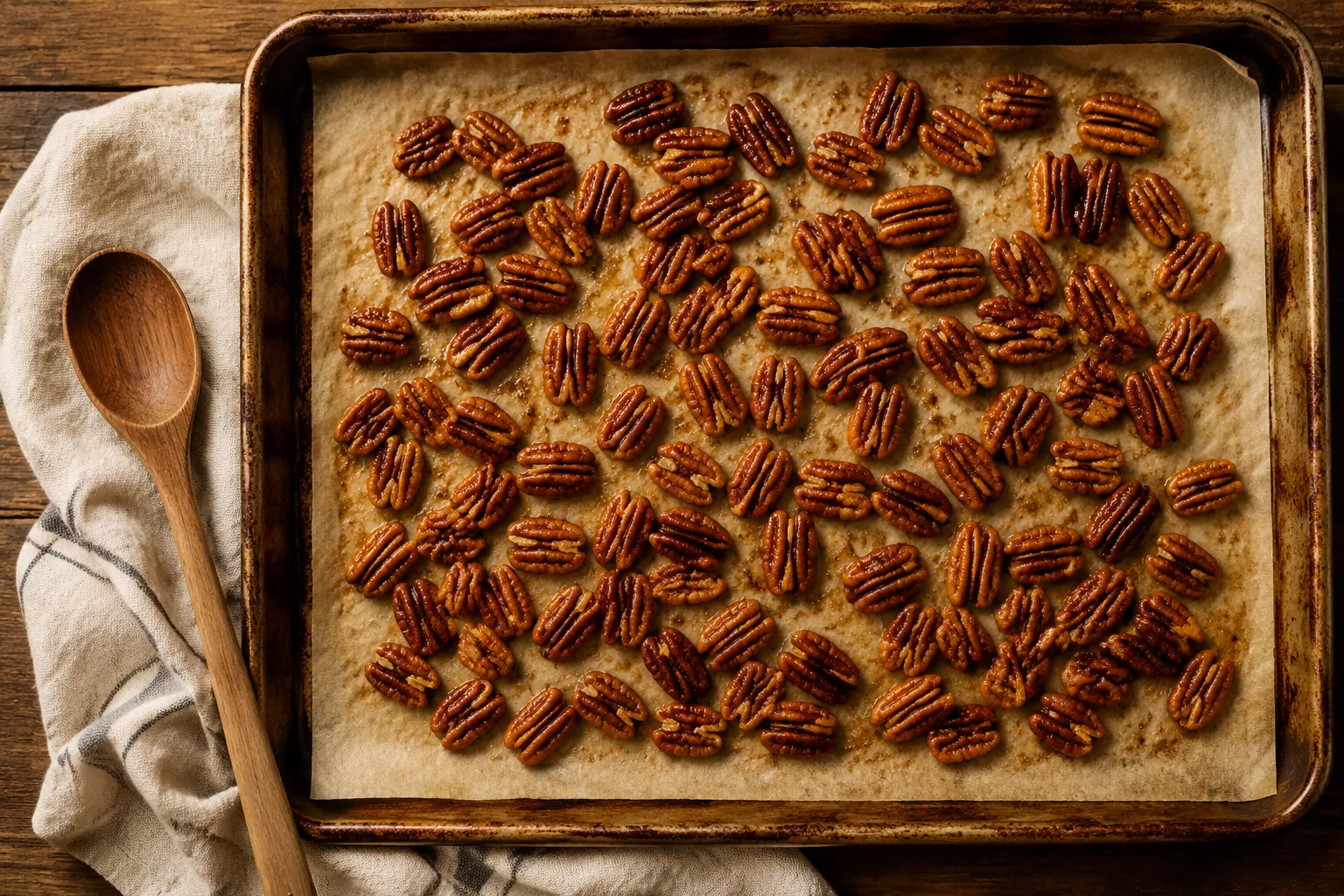
The full numbered method is in the recipe card below, but here's the big-picture flow so you know what you're walking into. Start by toasting the pecans and lining two sheet pans with parchment — once the syrup is ready you'll move fast, so a tidy setup matters. Then combine the sugars, cream, and salt in a heavy-bottomed saucepan (a 3-quart pan gives the bubbling syrup room to breathe).
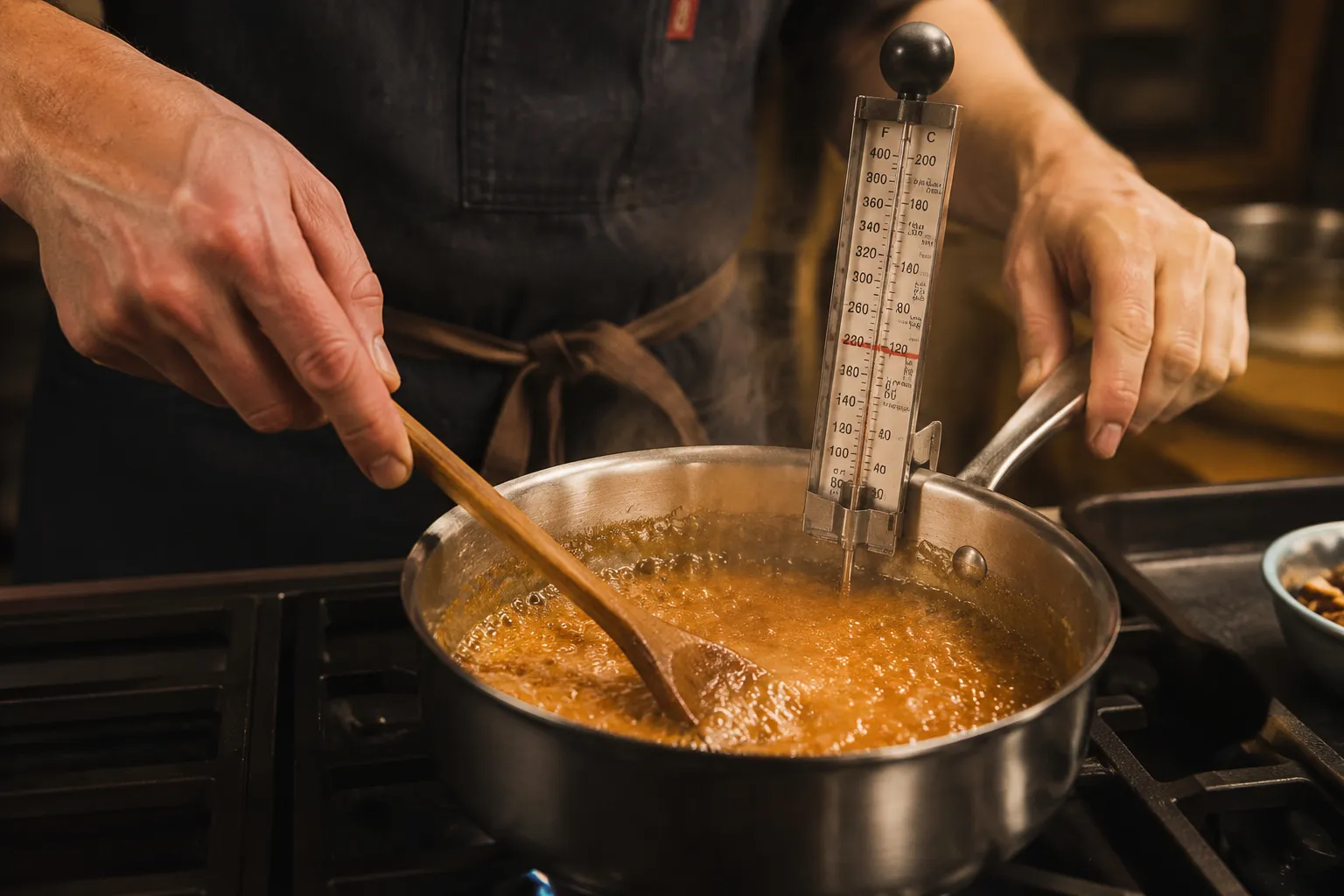
Clip your thermometer to the side and cook over medium heat, stirring gently, until the mixture reaches 236-240°F — that's the soft-ball stage, the sweet spot where the candy will set firm but stay creamy. If you don't trust the thermometer alone, drop a bit of syrup into a glass of ice water; it should form a soft, pliable ball you can flatten between your fingers.
Pull the pan off the heat the moment you hit temperature. Stir in the butter, vanilla, and toasted pecans, then beat with a wooden spoon for 1-3 minutes. You're watching for the mixture to thicken slightly and lose its glossy sheen — that's your cue to drop tablespoonfuls onto the parchment quickly before it seizes in the pan.
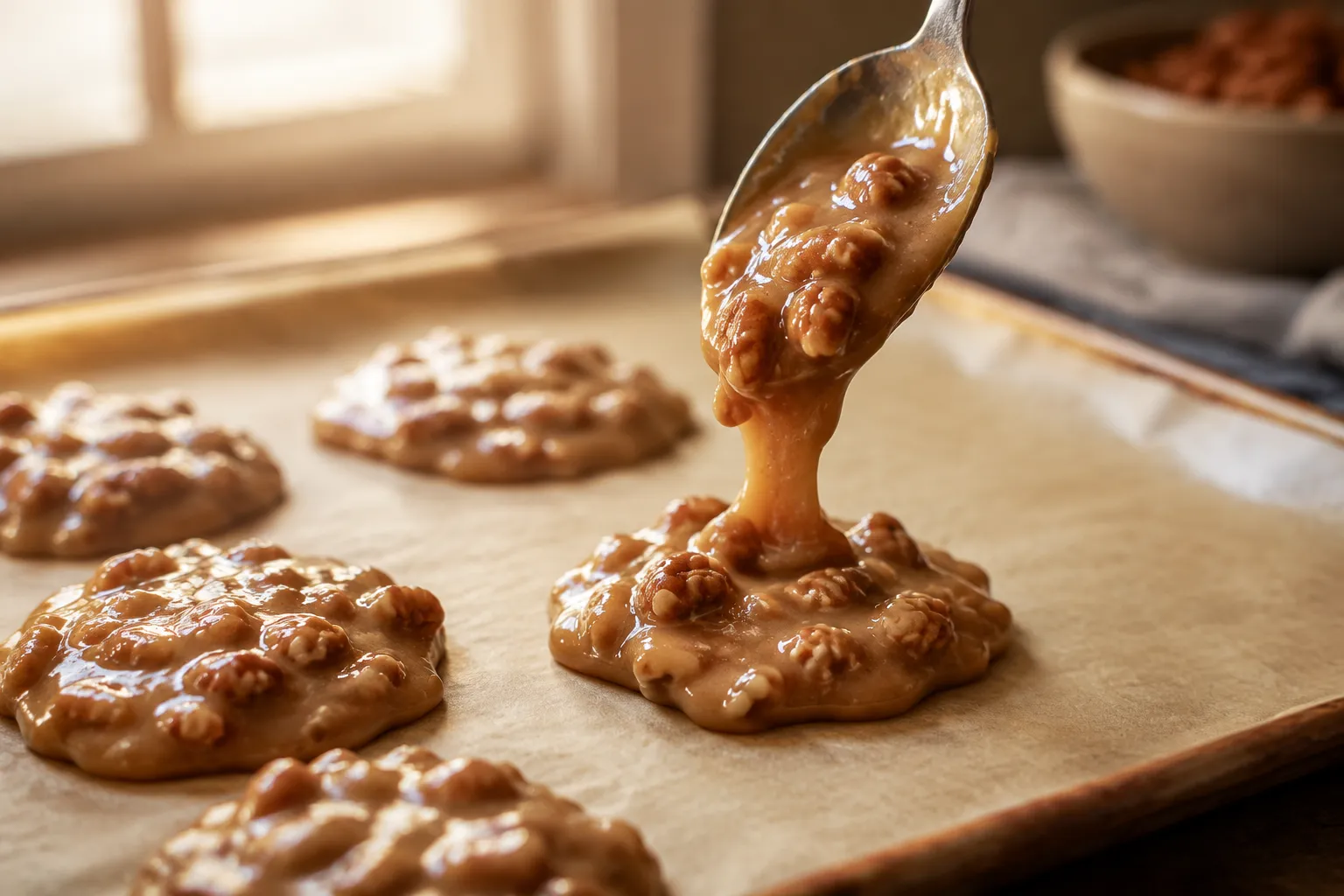
Let them set undisturbed for about 20 minutes. You'll see the surface dull from glossy to matte and feel firm to the touch. That's it — homemade Southern pralines, ready to devour.
If pralines have a reputation for being finicky, the thermometer is the great equalizer. Sugar work is all about temperature precision: a few degrees under and your candy stays a sticky puddle, a few degrees over and it sets into a gritty, sugary brick. A clip-on candy thermometer (any basic candy thermometer guide will steer you to one for under $15) takes the guesswork out of the equation.
That said, weather matters too. Pralines hate humidity — sugar is hygroscopic, meaning it grabs moisture out of the air and refuses to set properly on muggy days. If you live somewhere damp, cook your syrup an extra 1-2°F higher to compensate, and run the AC or a dehumidifier while the candy sets.
Pralines are pure joy on their own with a strong cup of black coffee or chicory café au lait. But they also crumble beautifully over vanilla ice cream, cheesecake, sweet potato pie, or a stack of pancakes. Chop a few and stir them into bread pudding, or shave them over a bourbon-glazed ham for the holidays.
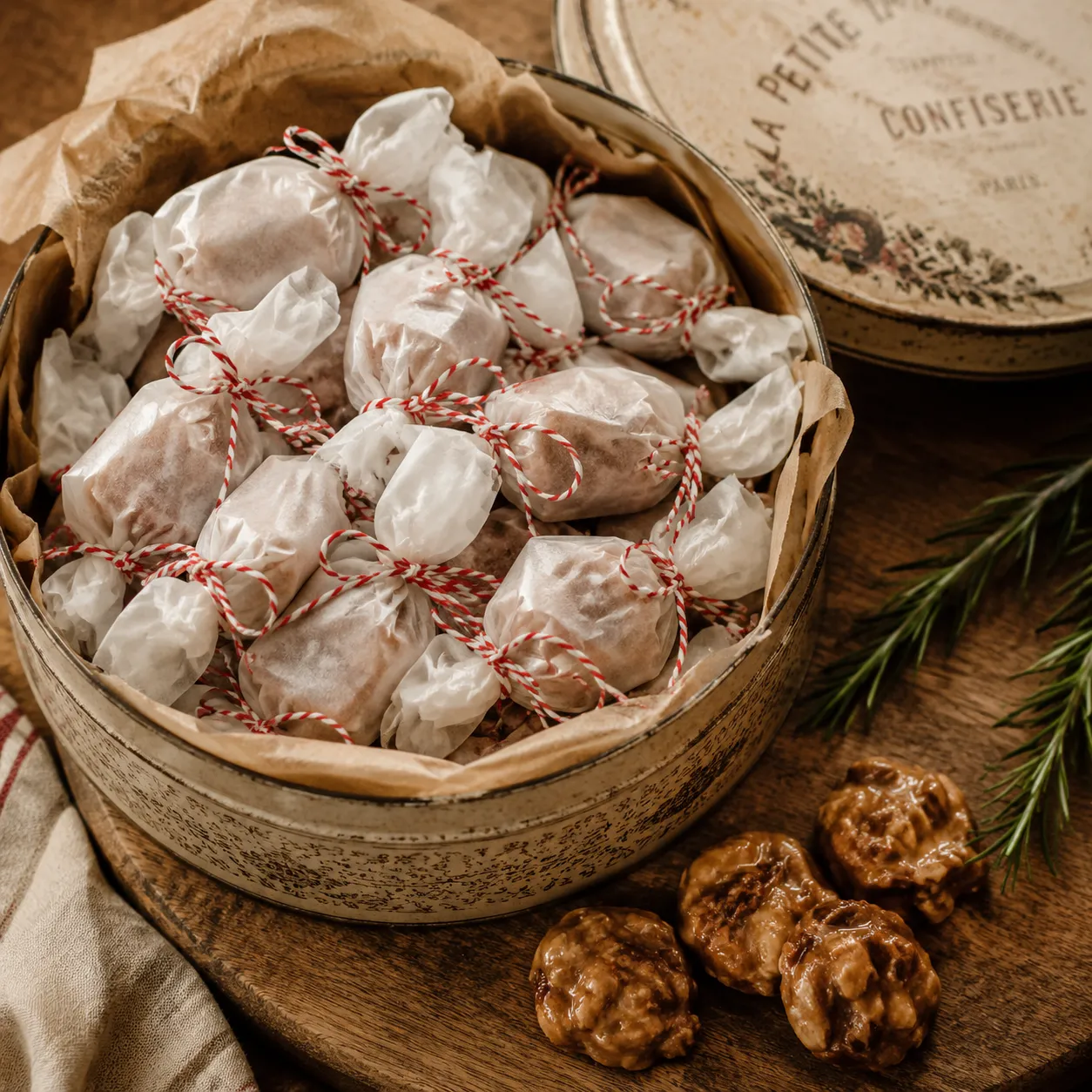
For gift-giving, wrap each praline in a 5-inch square of wax paper and twist the ends like an old-fashioned candy. Stack them in a parchment-lined tin with a sprig of rosemary or a cinnamon stick tucked alongside, and you've got a gift that beats anything from the mall.
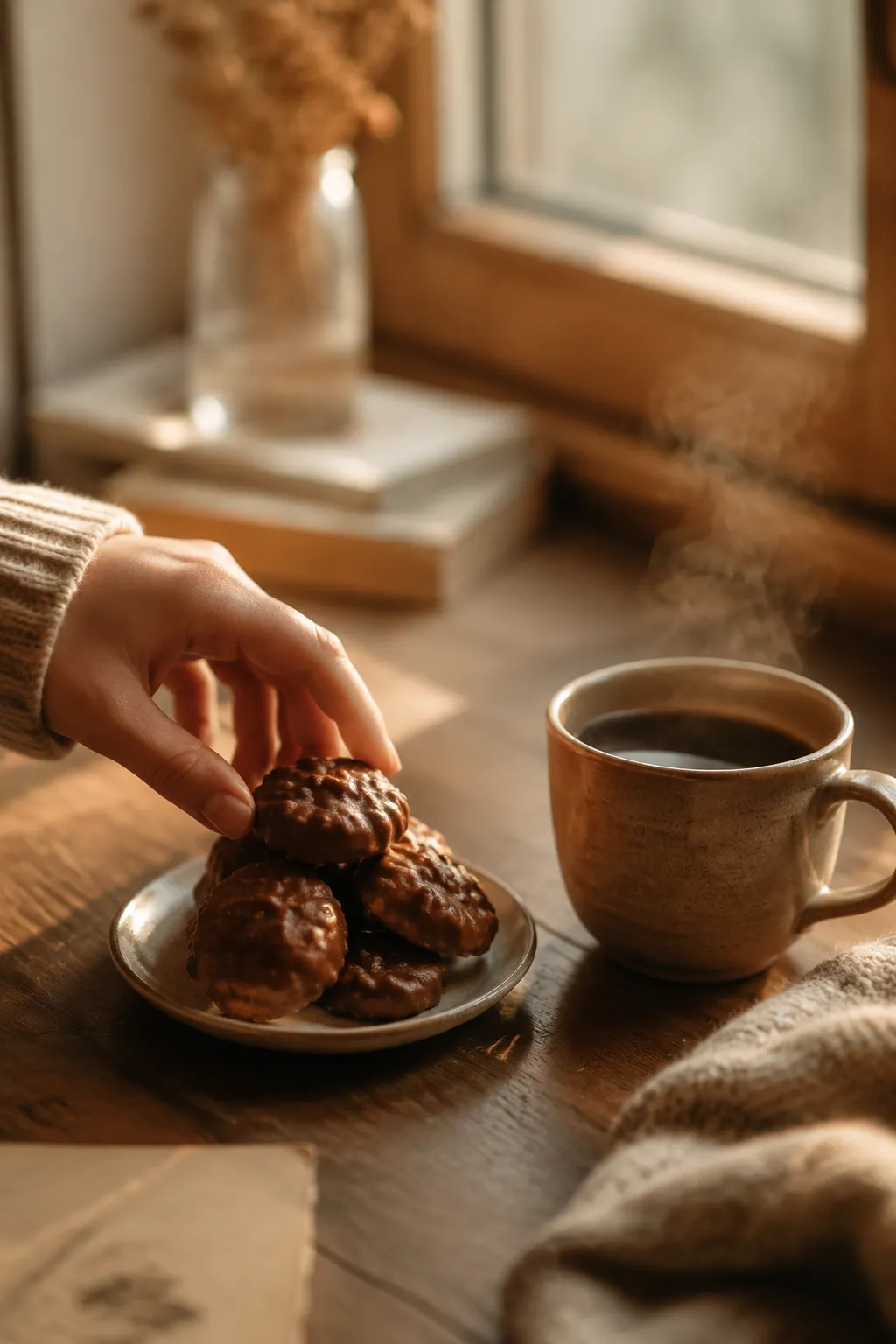
Whether you're making them for a holiday tray, a hostess gift, or just a Tuesday-night sweet tooth, this praline recipe rewards you with way more flavor than the simple ingredient list suggests. Once you've made them once, you'll have the rhythm down and find yourself making batch after batch — they really are that good.
The base recipe is gloriously customizable. A splash of bourbon, a swirl of chocolate, or a swap of maple syrup all play beautifully with the brown sugar and pecan foundation.
Stored airtight at room temperature with a sheet of wax paper between layers, pralines stay fresh and creamy for about 1 week. Avoid the refrigerator — the moisture inside will dull their texture and make them sticky.
For longer storage, wrap each praline individually in wax paper, slip them into a freezer-safe bag, and freeze for up to 2 months. Thaw at room temperature for about 30 minutes before serving so the texture returns to that perfect creamy-crisp bite.