Texas Sheet Cake: Classic Fudgy Chocolate Recipe
Ingredients
Scale
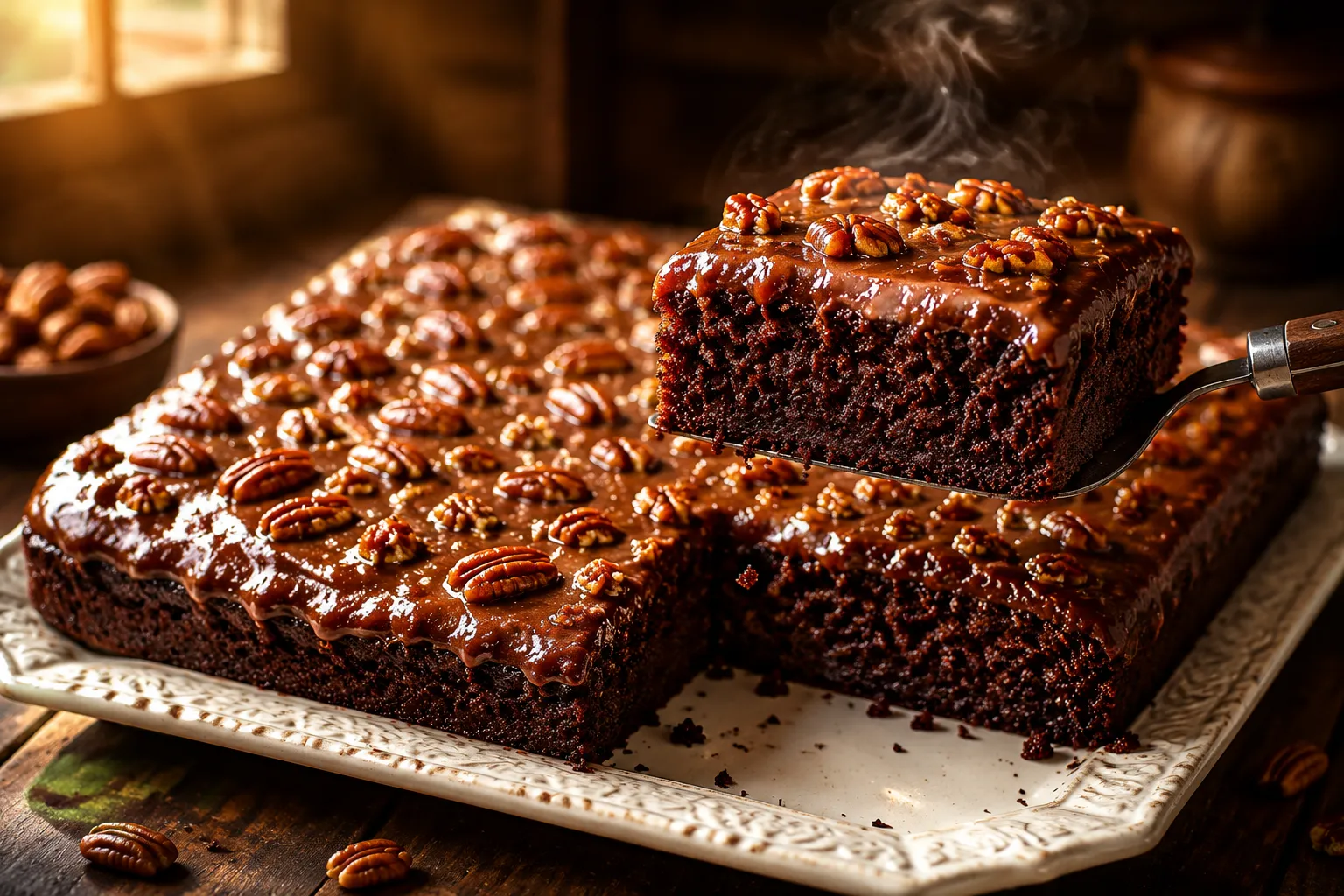
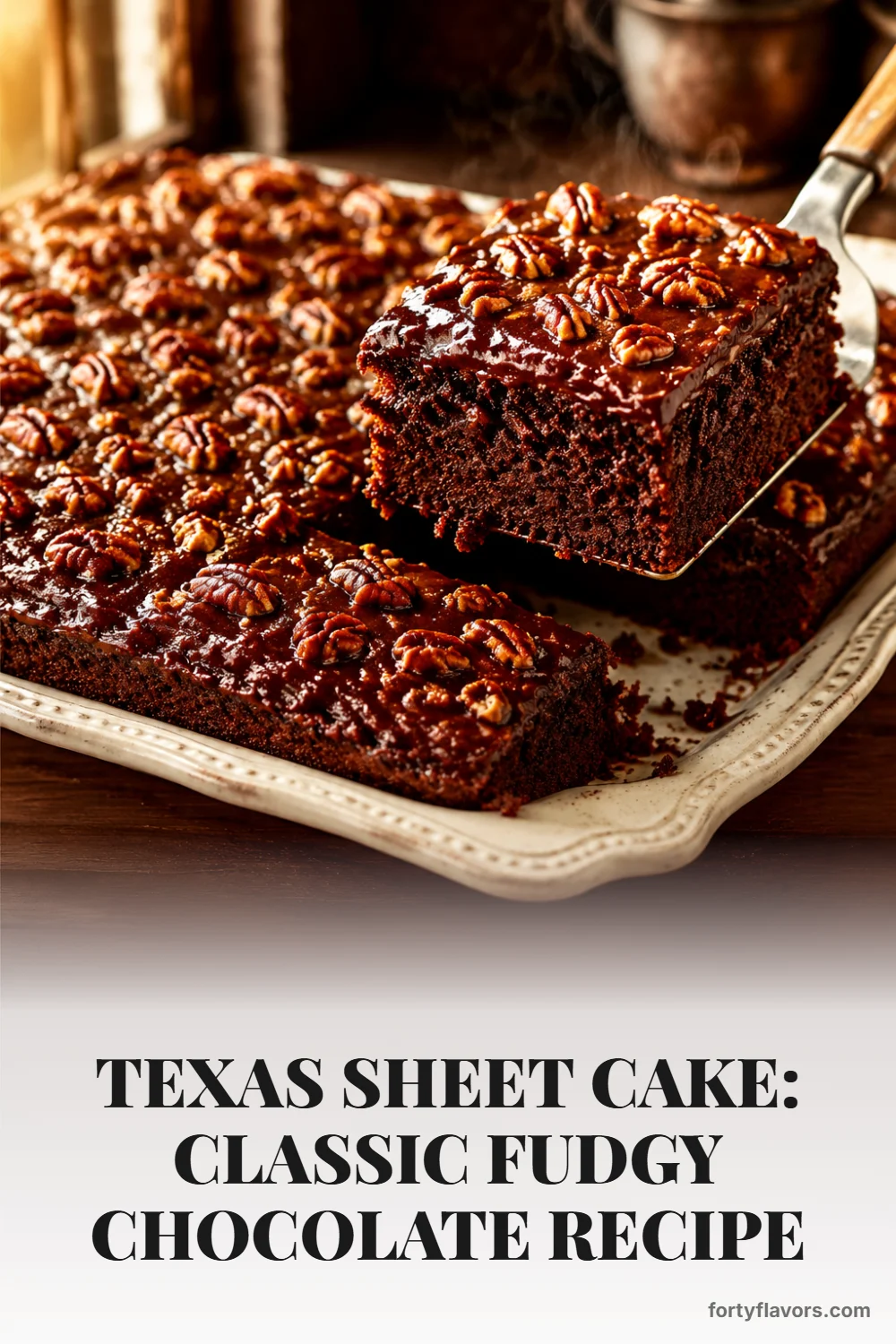
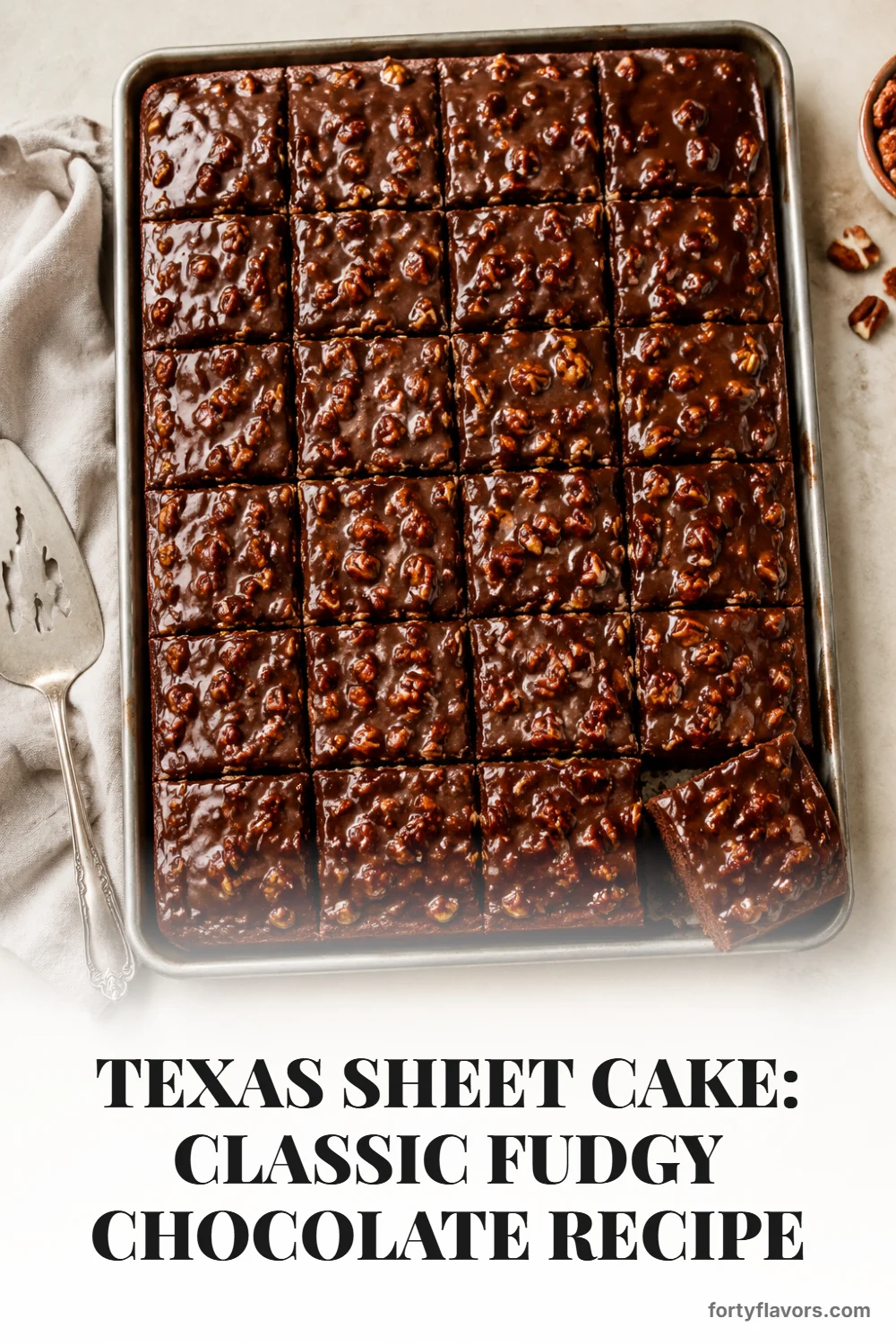
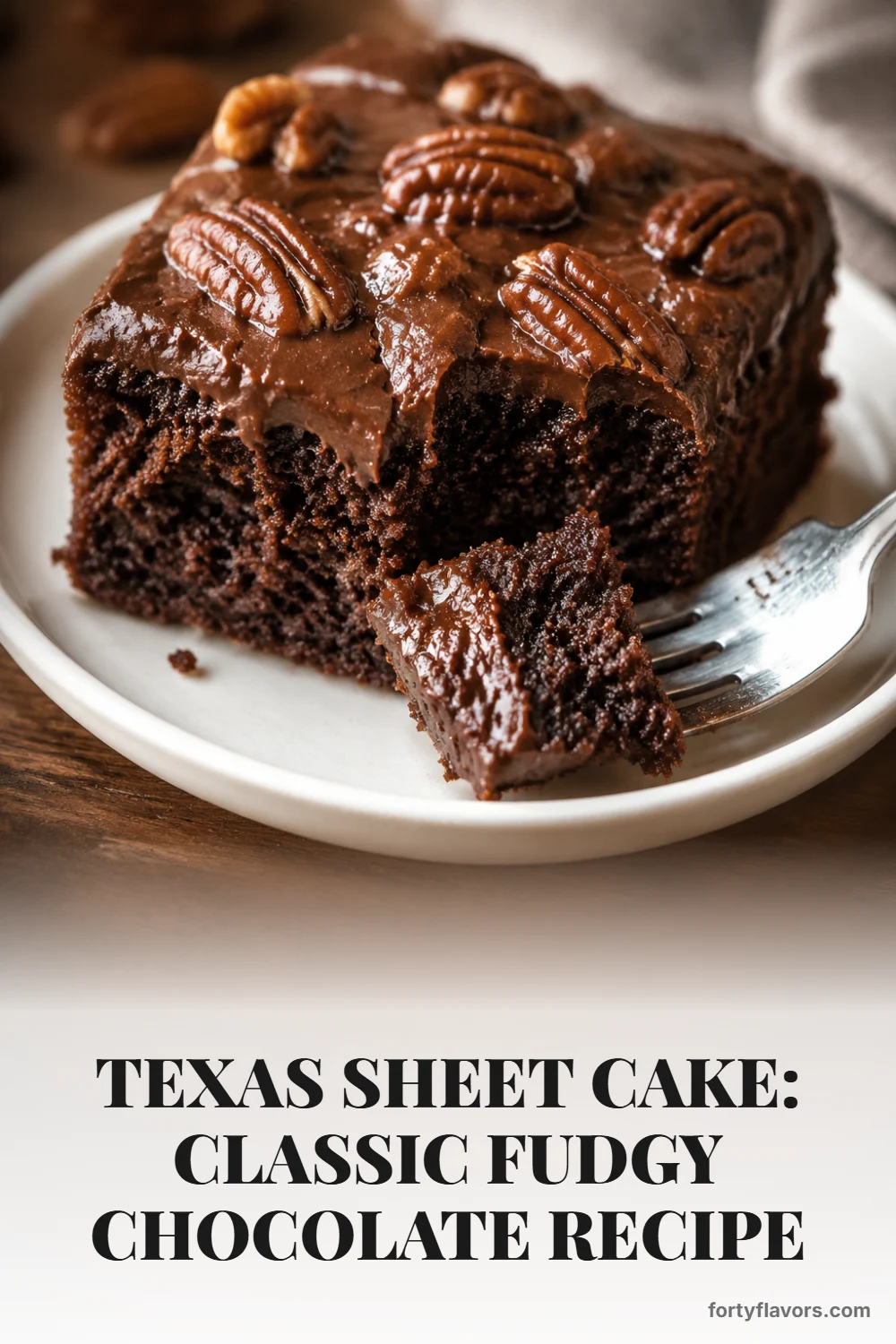
A true Texas sheet cake: thin, ultra-tender chocolate cake under a glossy warm-poured pecan frosting. One pan, one bowl, ready in under an hour.
texas sheet cake is the kind of dessert that makes a room go quiet for exactly three seconds—the time it takes everyone to take that first warm, fudgy bite. It is thin by design, deeply chocolatey, and finished with a glossy pecan frosting that is poured over the cake while both are still warm, creating that signature soft, almost candy-like top.
This is the cake I want on the counter when cousins are coming over, when the church table needs one more dessert, or when a birthday crowd would rather have seconds than a tall, fussy layer cake. It is simple in the best way: pantry staples, a saucepan, a bowl, and one big half sheet pan that turns out enough squares for a very happy crowd.
If you have ever searched for a texas sheet cake recipe that feels old-fashioned but still foolproof, this one is it. The batter comes together with a hot cocoa-butter mixture, which blooms the cocoa powder and gives the cake its bold chocolate flavor. The frosting is just as important as the cake itself—warm, buttery, pourable, and studded with pecans so every square tastes like a little piece of Southern nostalgia.
The magic here is all about timing and texture. Unlike a standard frosted layer cake, this fudgy chocolate cake is baked thin, then topped with hot icing before it has cooled. That warm-on-warm moment lets the frosting settle into the very top of the crumb, so you get a tender cake with a shiny, set topping rather than a separate layer of buttercream.
The batter also uses buttermilk, which gives the cake a soft crumb and a subtle tang that balances the sweetness. Cocoa powder is boiled briefly with butter and water before being mixed into the dry ingredients, a classic move that deepens the chocolate flavor without requiring melted bar chocolate. The result is rich but not heavy, sweet but not cloying, and sturdy enough to slice into neat potluck squares.
It also has that rare dessert quality of being better once it rests for a little while. The frosting settles, the pecans soften slightly, and the chocolate flavor rounds out as the cake cools. If you love potluck desserts that travel well and still taste homemade hours later, this is exactly the cake to make.
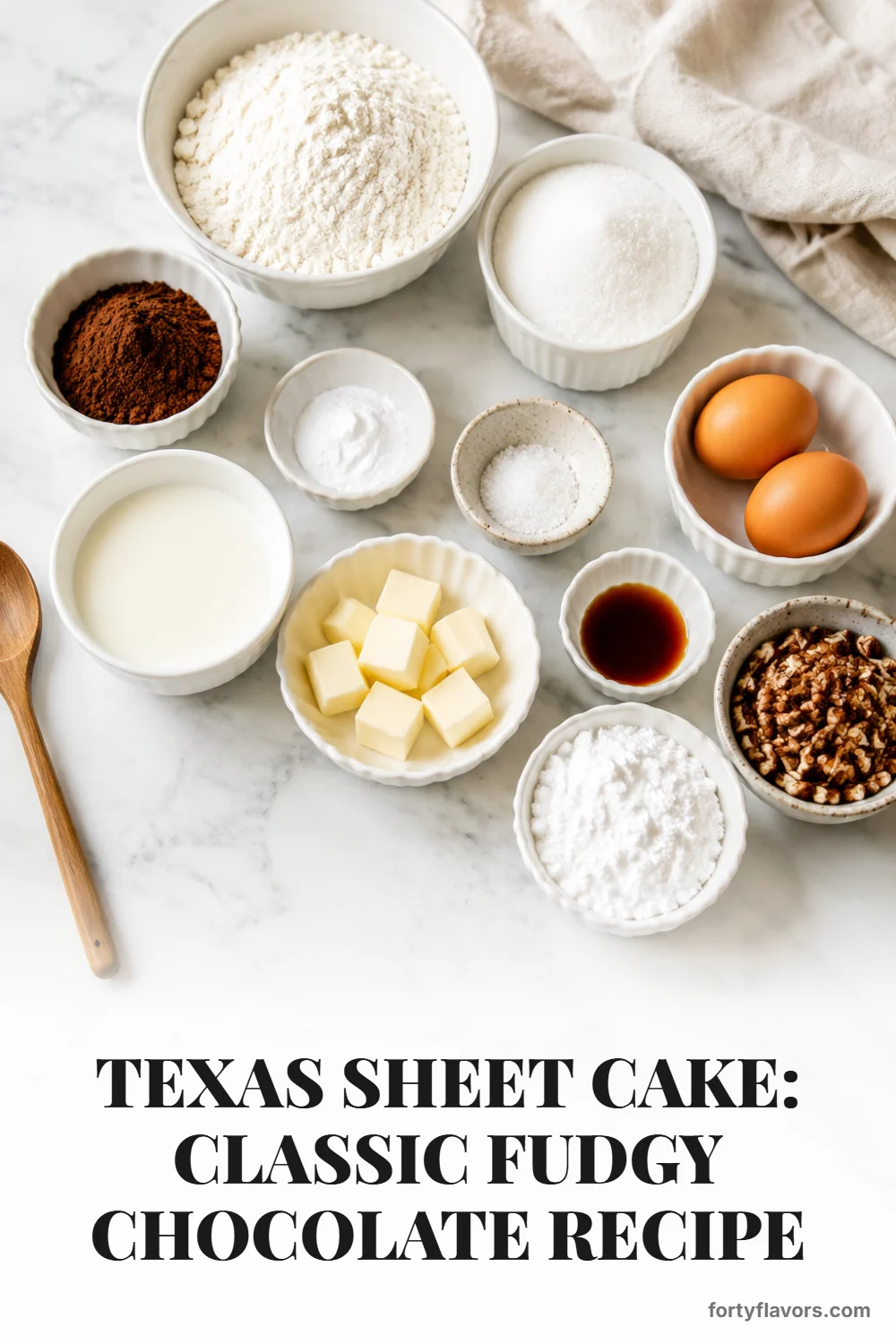
The ingredient list is wonderfully practical, which is part of the charm. For the cake, you will need all-purpose flour, granulated sugar, baking soda, salt, eggs, vanilla extract, buttermilk, unsalted butter, water, and unsweetened cocoa powder. The cocoa does most of the flavor work, so choose one you like; natural unsweetened cocoa gives the most classic taste, while Dutch-process makes the cake a bit darker and smoother.
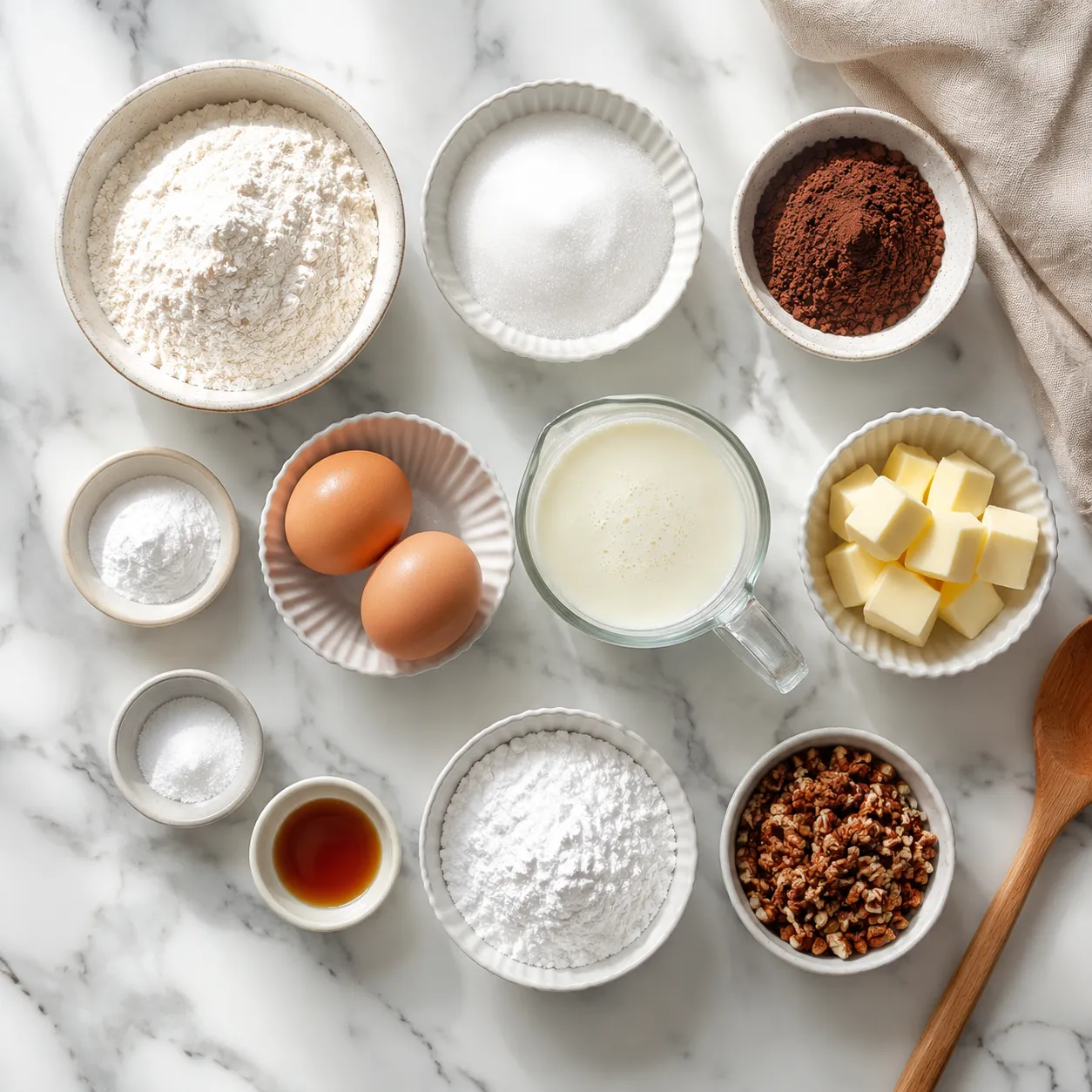
The frosting uses unsalted butter, cocoa powder, milk, vanilla, powdered sugar, and chopped pecans. It should be loose and pourable when it comes off the stove, almost like a warm glaze before the powdered sugar helps it set. Chopped pecans are traditional, but you can chop them fine for easier slicing or leave them slightly chunky for a more pronounced nutty bite.
If you are out of buttermilk, a quick buttermilk substitute works beautifully here: stir 1 tablespoon lemon juice or white vinegar into 1 cup of whole milk, let it stand for 5 minutes, then measure what you need. The acidity matters because it reacts with the baking soda, helping the cake rise gently while staying tender. If you need a nut-free cake, simply leave the pecans out of the frosting and add a pinch of flaky salt on top to keep the finish interesting.
This is also where you can understand the difference between this and an easy chocolate cake baked in a square pan. The proportions are made for a large, shallow pan, so the crumb bakes quickly and stays moist, while the frosting becomes part of the cake instead of just sitting on top.
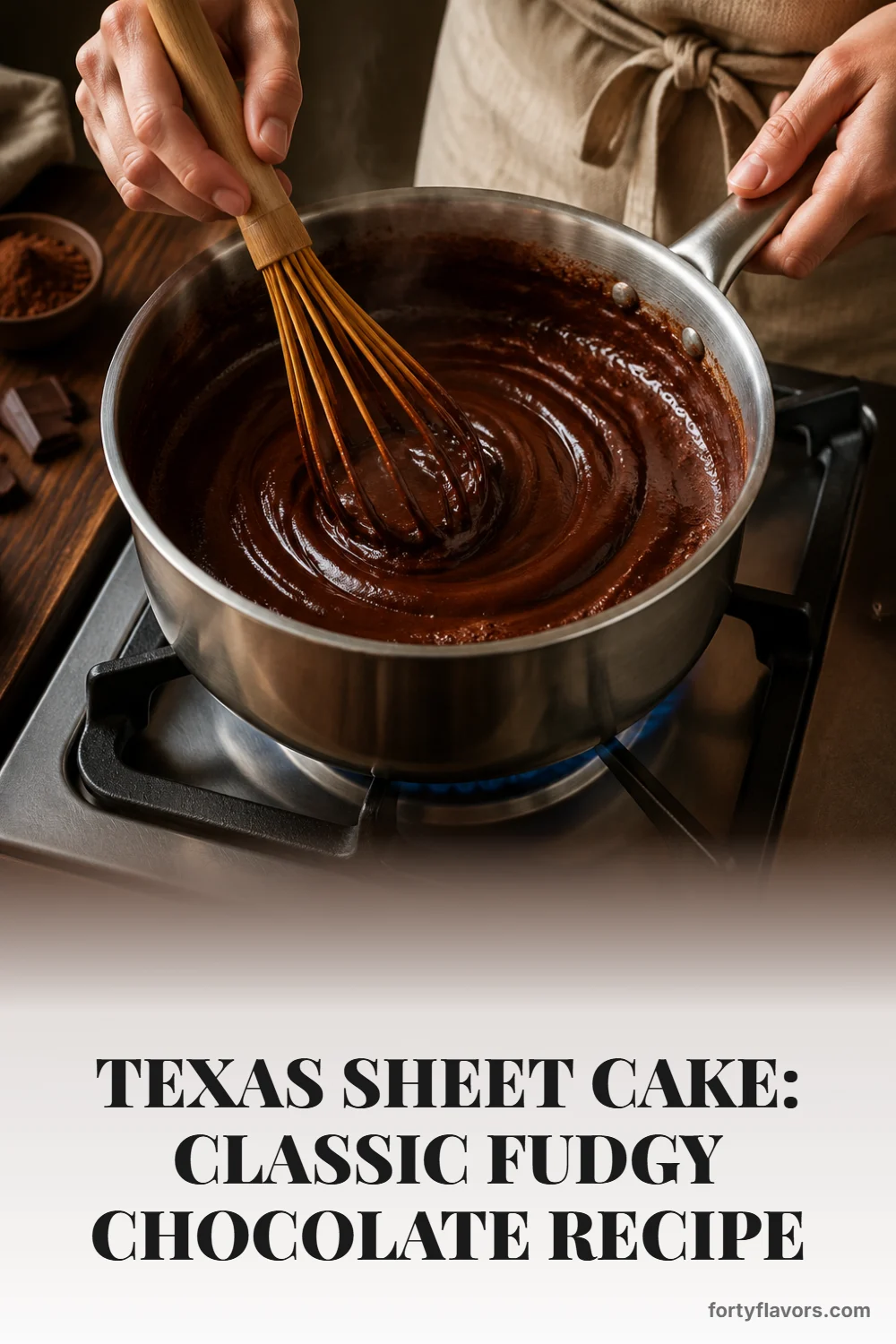
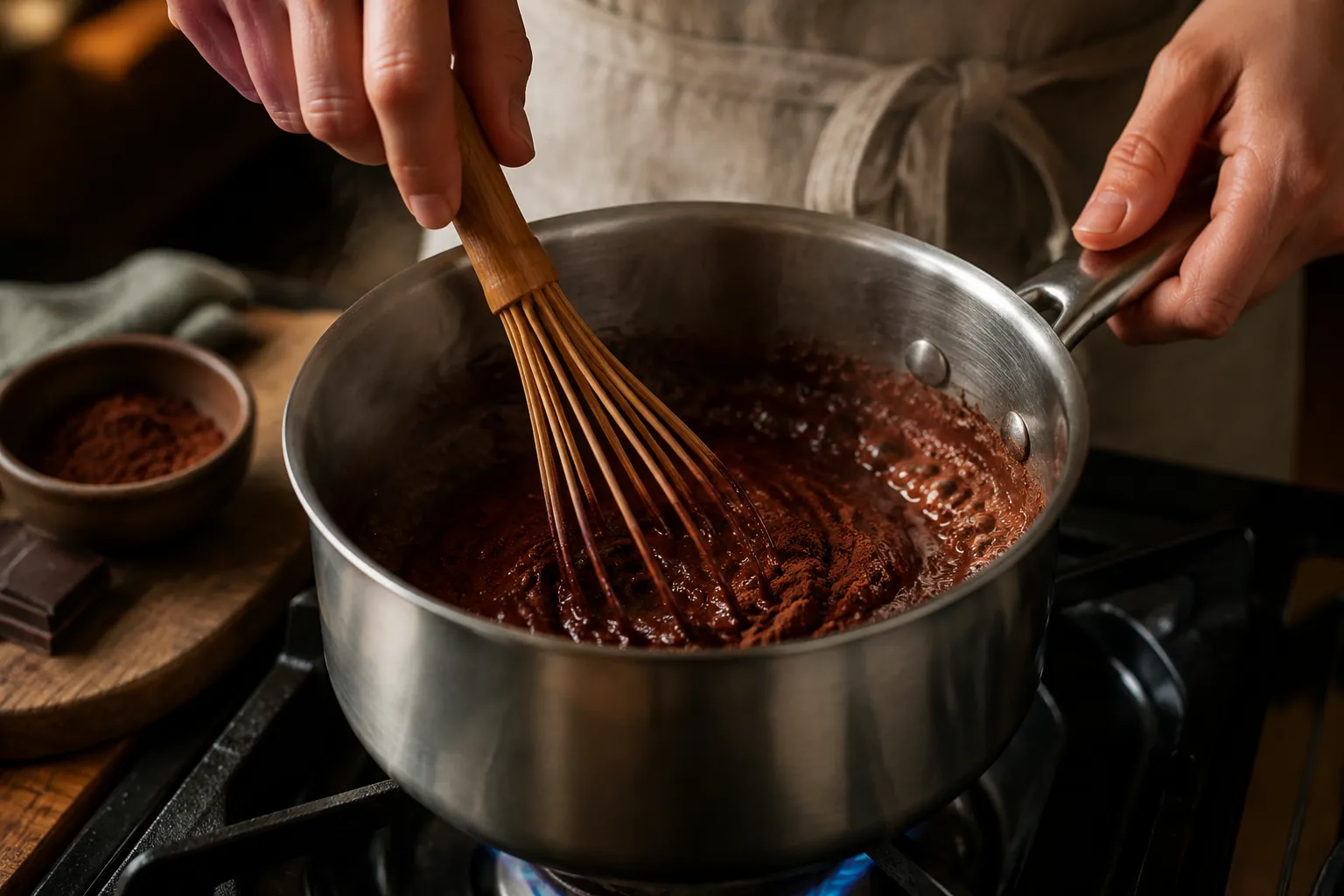
Start by heating the butter, cocoa, and water together in a saucepan until the mixture is smooth and just comes to a boil. This step is small but mighty: the heat dissolves the cocoa into the butter and water, creating a glossy chocolate base that spreads evenly through the batter. You do not need to boil it for long; once it bubbles and looks smooth, pull it from the heat.
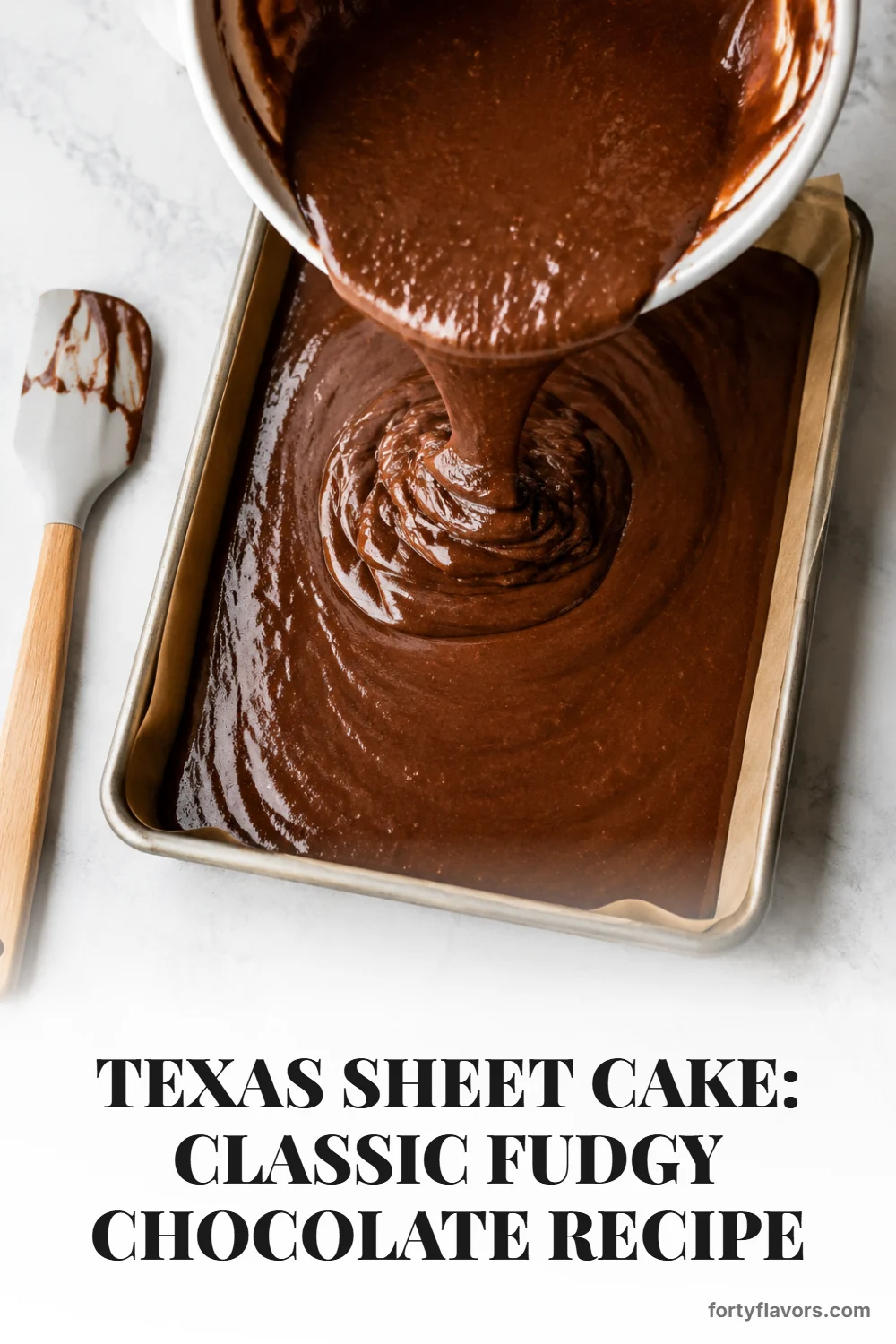
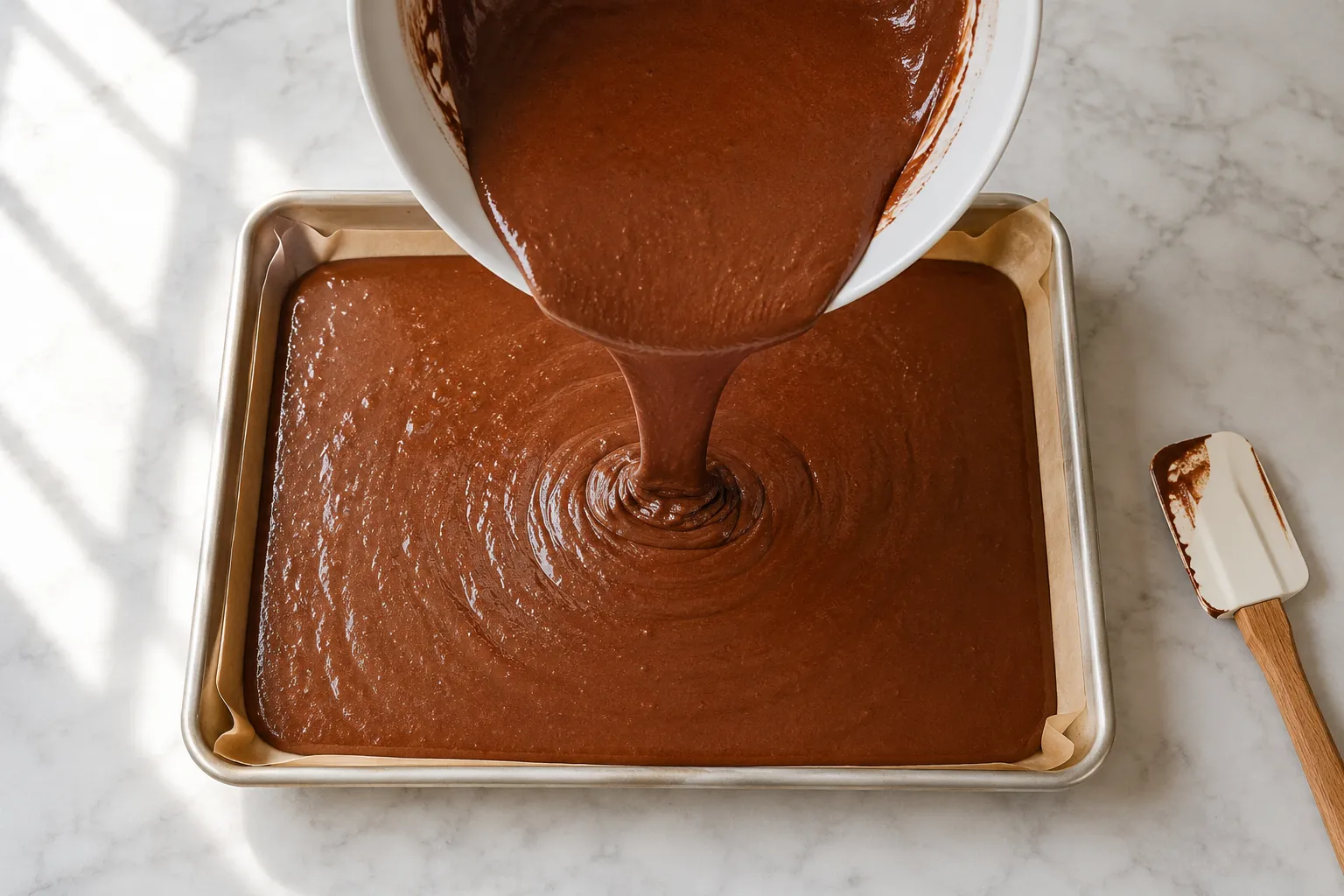
In a large bowl, whisk together the flour, sugar, baking soda, and salt, then pour in the hot chocolate mixture. Stir until the dry pockets disappear, but do not worry if the batter looks thinner than a typical cake batter. The eggs, buttermilk, and vanilla go in next, bringing the mixture together into a shiny, pourable batter that spreads easily in the pan.
A rimmed half sheet pan is the traditional choice because it gives the cake its signature thin profile and creates plenty of servings. Grease the pan well or line it with parchment if you want cleaner edges, then pour in the batter and smooth it all the way into the corners. Because the layer is shallow, it bakes quickly—usually in about 18 to 20 minutes—so start checking when the center springs back lightly.
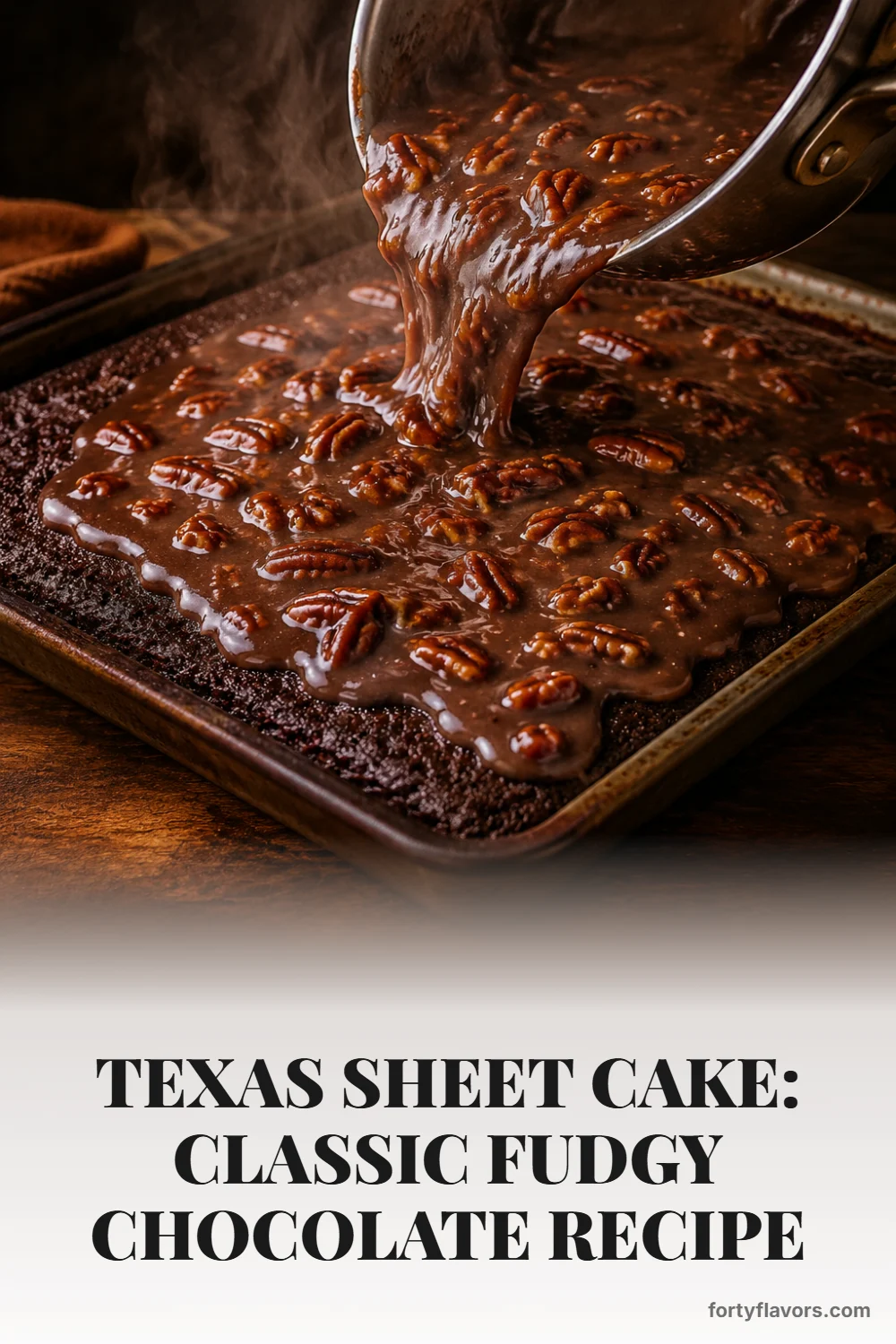
While the cake bakes, make the frosting so it is ready at just the right moment. Melt the butter with cocoa and milk, bring it to a gentle bubble, then remove it from the heat and whisk in powdered sugar and vanilla until smooth. Stir in the pecans last, then pour the warm frosting over the warm cake as soon as it comes out of the oven.
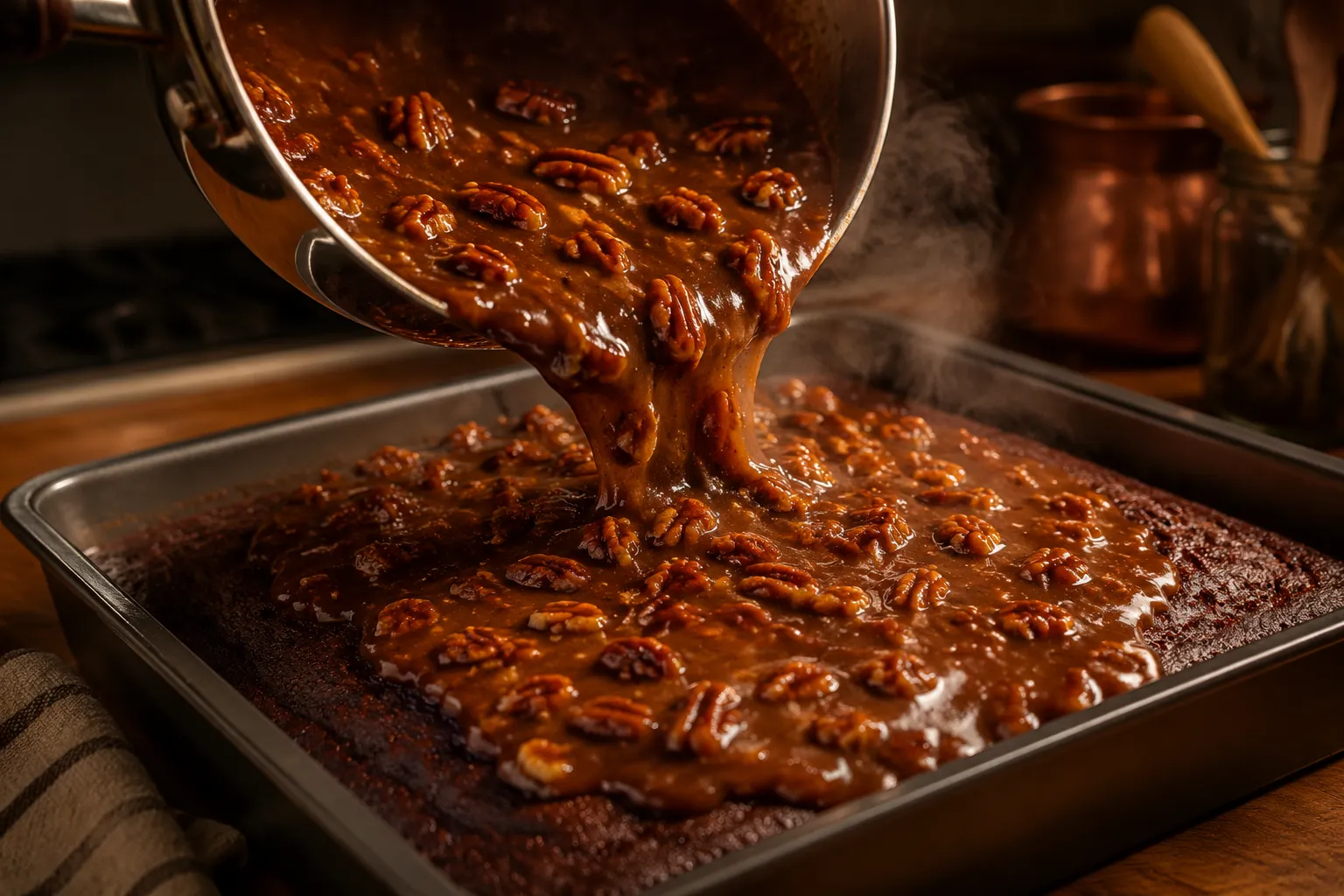
This is the moment that defines texas sheet cake. The frosting should flow across the surface with only a little help from an offset spatula, filling tiny valleys and settling around the pecans. It will look loose at first, but as it cools, it sets into a shiny, crackly-soft layer that slices beautifully.
Pouring frosting onto a warm cake can feel counterintuitive if you are used to cooling cakes completely before decorating them. Here, it is exactly the point. The cake is sturdy enough to handle the pour, but still warm enough to absorb a little of the frosting at the surface, creating a fudgy top that tastes almost like brownie icing.
The frosting is not a buttercream; it is closer to a cooked chocolate glaze. Powdered sugar gives it body, butter gives it sheen, milk keeps it pourable, and cocoa powder anchors the flavor. When it hits the warm cake, it spreads quickly and levels itself into a glossy layer that is much easier than piping or swooping frosting onto individual layers.
Let the cake cool until the frosting is set before cutting, unless you are intentionally serving it warm and messy with ice cream. A hot knife is not necessary, but wiping the blade between cuts will give you cleaner squares. For a family-style dessert, I love cutting it right in the pan and letting everyone choose a corner, edge, or soft middle piece.
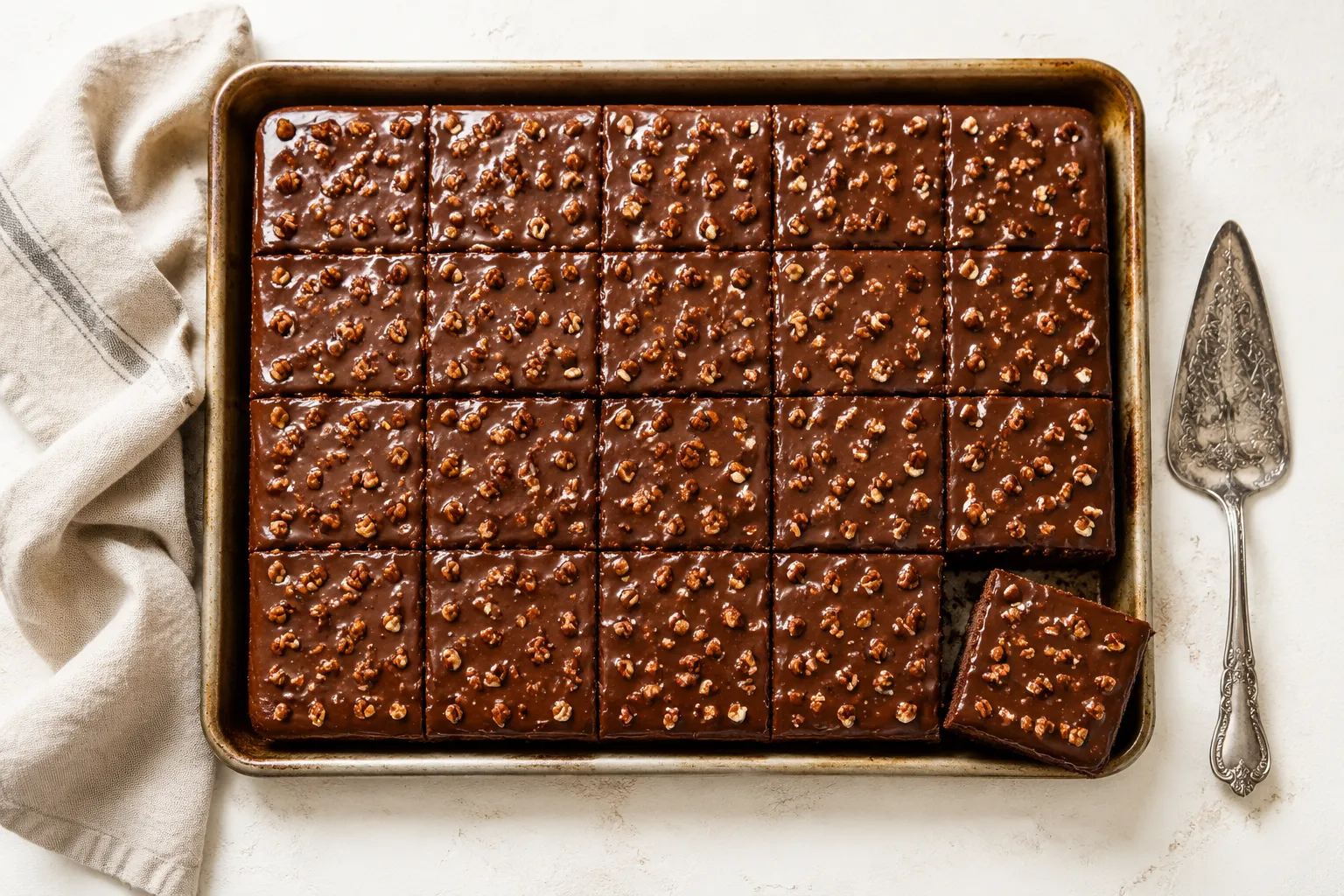
The classic pan is an 18x13-inch rimmed half sheet pan, which gives the cake its wide, thin shape. That large surface area is why the cake bakes so quickly and why the frosting-to-cake ratio is so satisfying. A jelly roll pan can also work, but because it is slightly smaller, the cake will be thicker and may need a few extra minutes in the oven.
Doneness is more about feel than color because chocolate cake can be hard to judge by sight. Look for a top that springs back lightly when touched, edges that are set, and a toothpick that comes out with a few moist crumbs rather than wet batter. Overbaking is the main way to lose the tender texture, so err on the side of checking early.
If your cake domes slightly or has a few bubbles, do not panic. The warm pecan frosting is wonderfully forgiving and will cover small imperfections. This is a generous, homespun cake, not a fussy one, and its charm is in that glossy pan of chocolate and pecans waiting to be sliced.
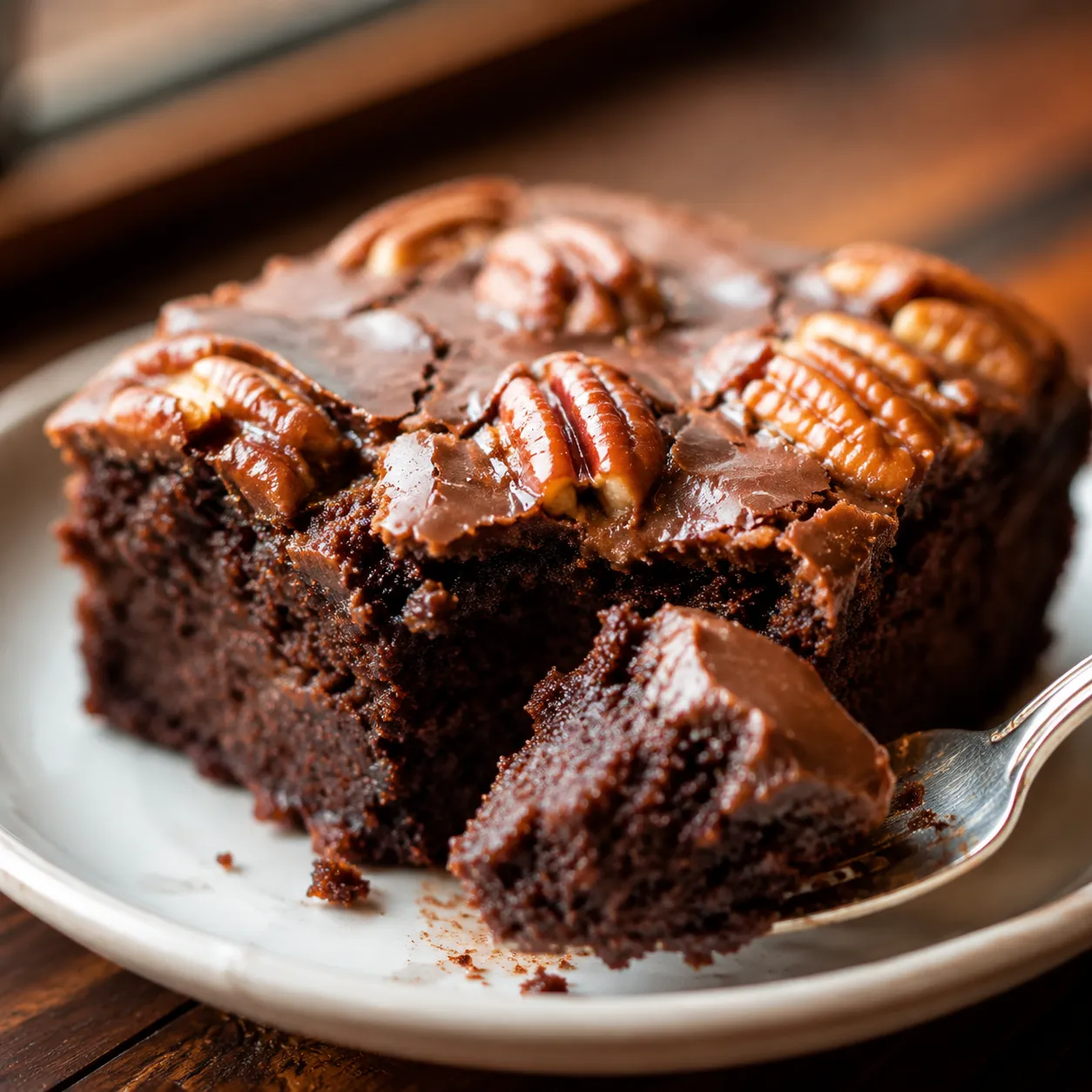
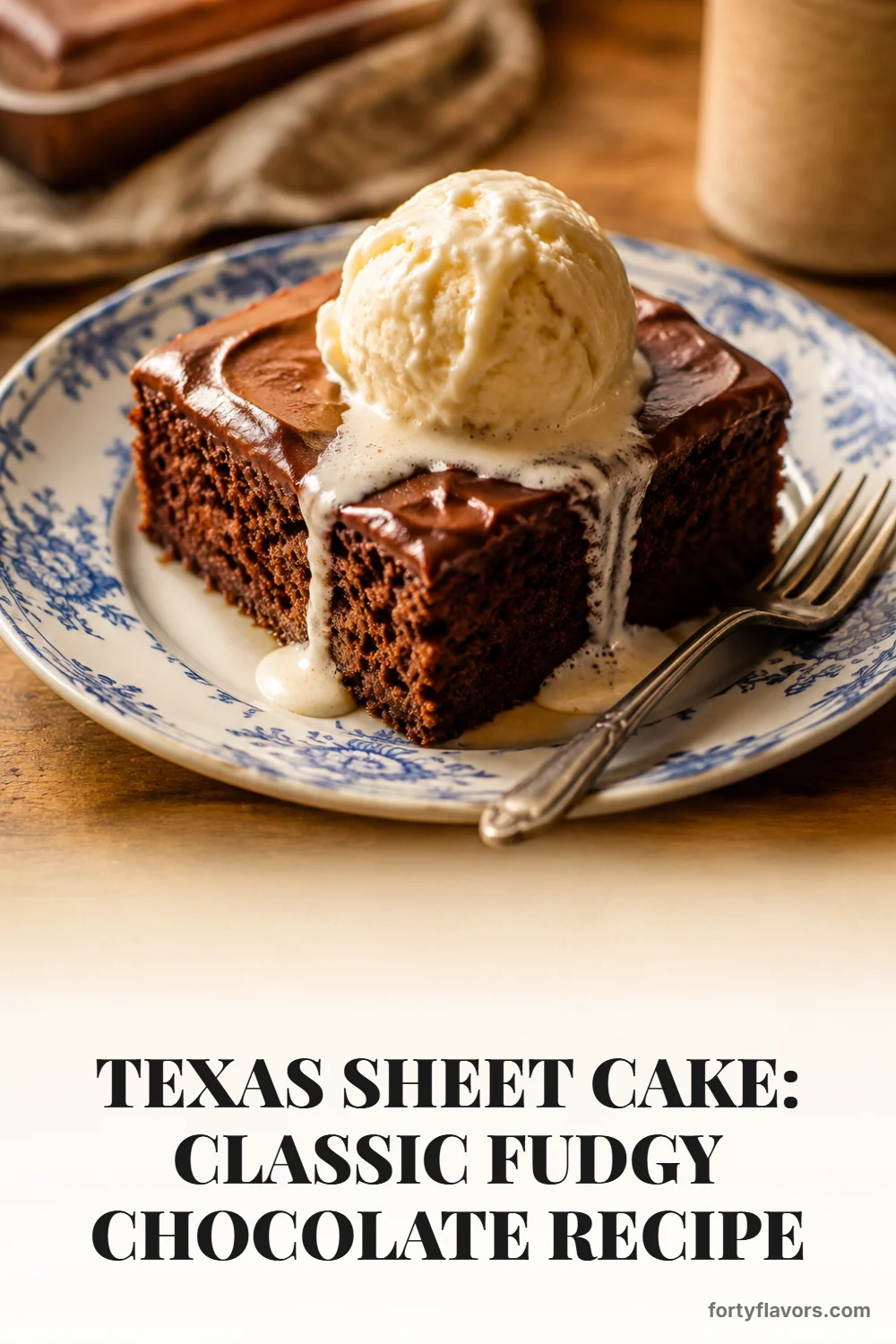
This cake is perfectly happy served plain, especially once the frosting has set and the pecans have settled into the chocolate. Still, warm squares with vanilla ice cream are hard to beat. The ice cream melts into the frosting, making the whole plate taste like a cross between a sundae and a brownie cake.
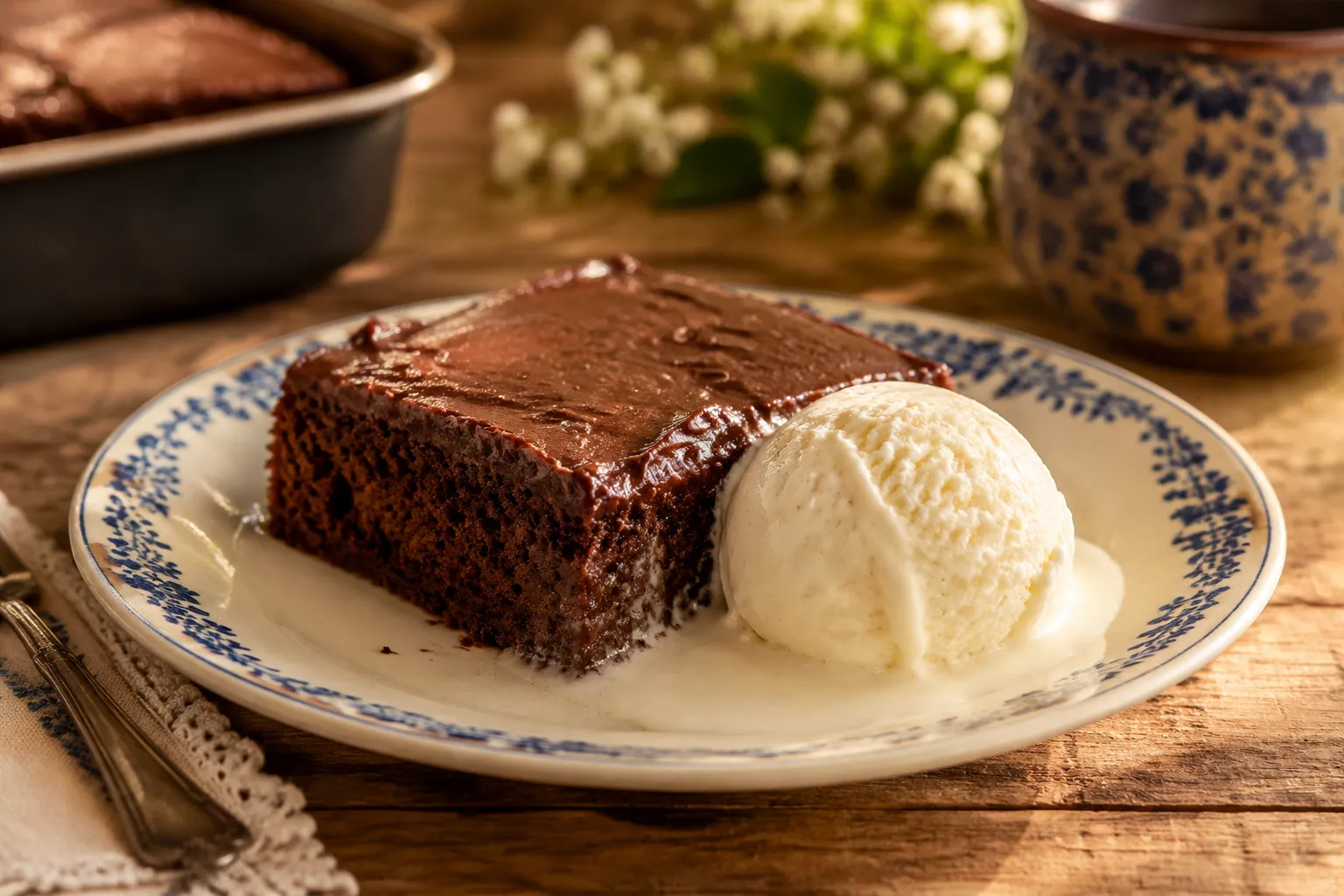
For a party table, slice the cake into 24 squares and serve it straight from the pan with a small spatula. It pairs beautifully with hot coffee, cold milk, fresh berries, or even a small pour of bourbon for the adults. Since the cake is rich, smaller squares go a long way, but do not be surprised when people circle back for seconds.
If you are planning a dessert spread, this is a natural fit alongside fruit crisps, lemon bars, cookies, and other potluck desserts. It brings the chocolate, the nostalgia, and the ease, all in one pan. And if you are drawn to the almond-vanilla side of things, the white texas sheet cake notes below offer a lovely lighter cousin to this classic.
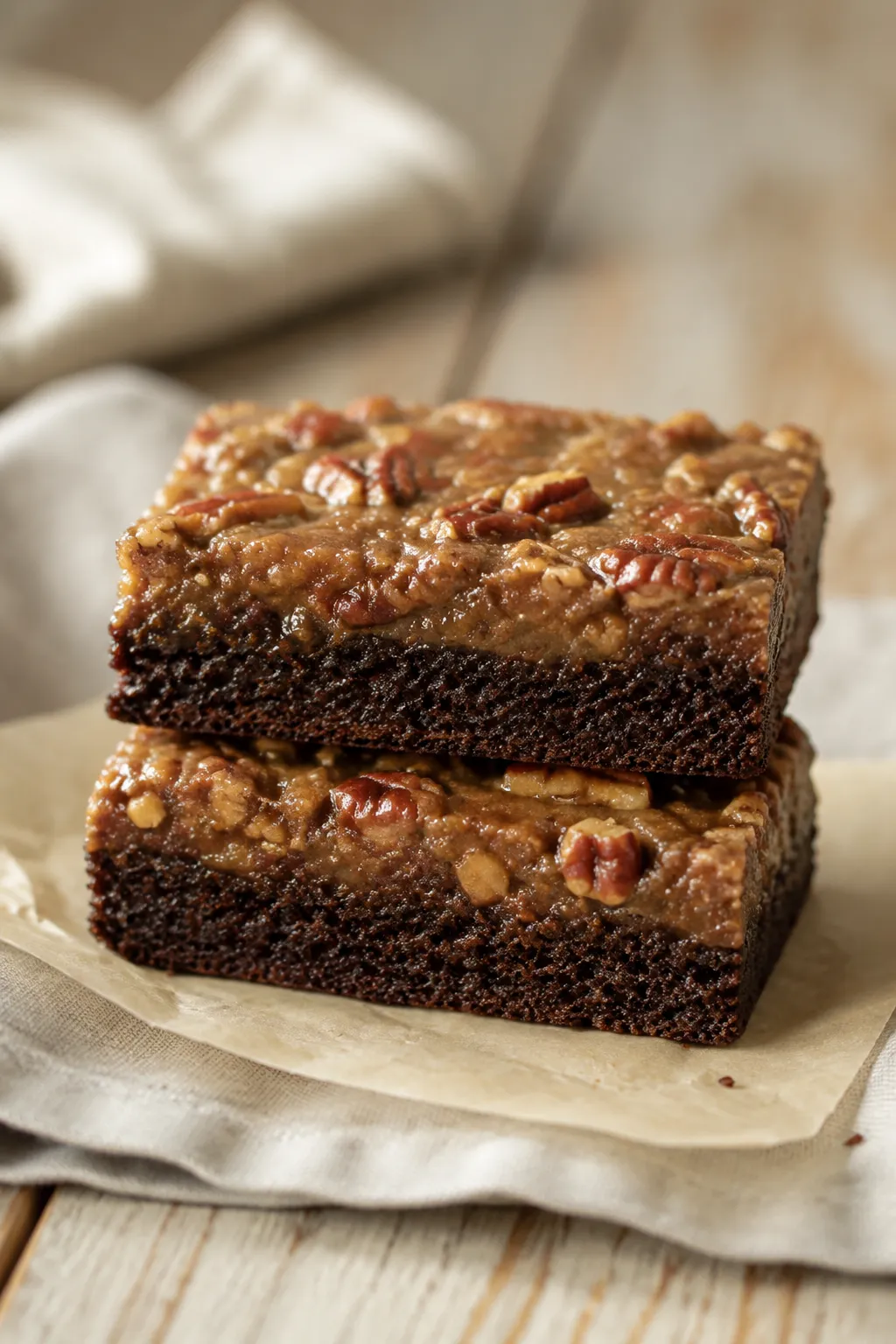
Before you begin, measure everything for both the cake and frosting so the process feels relaxed. The recipe moves quickly once the saucepan hits the stove, and having the powdered sugar, pecans, and vanilla ready makes the frosting especially easy. This is one of those bakes where a little setup rewards you with a smooth, old-school rhythm.
Use good cocoa, do not skip the buttermilk, and pour the frosting while the cake is still warm. Those three details are what turn a simple sheet pan dessert into the texas sheet cake everyone remembers. It is humble, shiny, tender, and absolutely made for sharing.
Store the fully cooled cake tightly covered at room temperature for up to 3 days. If your kitchen is very warm, refrigerate it for up to 5 days, but let slices sit at room temperature for 20 to 30 minutes before serving so the frosting softens again.
To freeze, cut the cooled cake into squares and wrap individual portions tightly in plastic wrap, then place them in a freezer bag or airtight container for up to 2 months. Thaw at room temperature, still wrapped, to help prevent the cake from drying out.
Hover any image and hit “Pin it” to save it to your Pinterest boards.