Gluten Free Naan: Soft, Pillowy & Easy (30 Minutes)
Ingredients
Scale
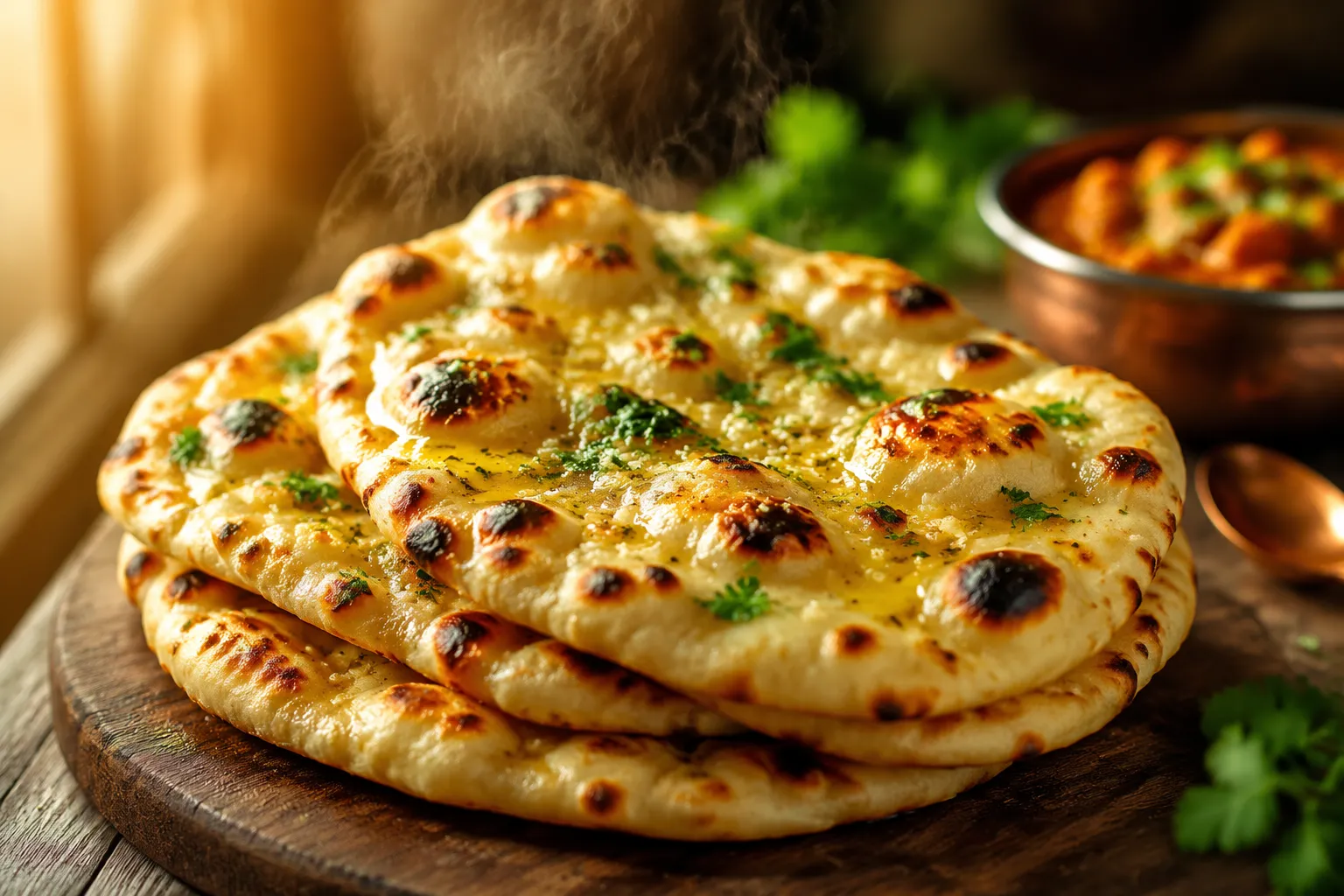
Soft, chewy, pillowy gluten free naan with golden bubbles and buttery garlic finish. Ready in 30 minutes, no yeast, no fuss, no gummy texture.
This soft, pillowy gluten free naan is the bread you've been missing — bendable, blistered with deep char spots, glossy with garlic butter, and ready in about 30 minutes flat. No yeast. No long rise. No gummy, dense disappointment that crumbles the second you fold it around a bite of curry. Just warm, chewy flatbread that tastes like the real thing because, honestly, it pretty much is.
I started chasing this recipe after one too many sad takeout nights where the rice and curry showed up but the bread basket couldn't. Most gluten-free flatbreads I tried at home came out either crackery and stiff or weirdly gummy in the middle. The fix turned out to be a combination of three little tricks: a yogurt-based dough that hydrates the starches without flooding them, a screaming-hot cast-iron skillet to mimic a tandoor, and rolling the dough between parchment so it never tears. Once those three things lined up, the texture clicked.
If you've been hunting for a reliable yeast free naan that bends like the wheat version, this is the one to bookmark. It's beginner-friendly, the ingredient list is short, and you can make the whole batch in the time it takes to simmer a quick weeknight dal.
Short answer: no, traditional naan is not gluten free. Classic Indian naan is made with maida (refined wheat flour), sometimes plus all-purpose flour, both of which are loaded with gluten. That's what gives bakery naan its famously stretchy, chewy pull — and what makes it off-limits if you have celiac disease or a serious gluten sensitivity.
It also means restaurant naan is risky even when a kitchen offers a gluten-free menu. Tandoor ovens are typically coated in years of wheat residue, and naan dough is often slapped, rolled, and stretched on the same surfaces as paratha, roti, and samosa wrappers. Cross-contamination is almost guaranteed unless the restaurant has a dedicated prep area.
Store-bought options exist, but read labels carefully. Look for a certified gluten-free seal, not just a "wheat free" claim, and scan for sneaky add-ins like malt, modified food starch from wheat, or barley flavoring. Honestly, once you see how fast a homemade gluten free flatbread comes together, you may never reach for the freezer-aisle version again.
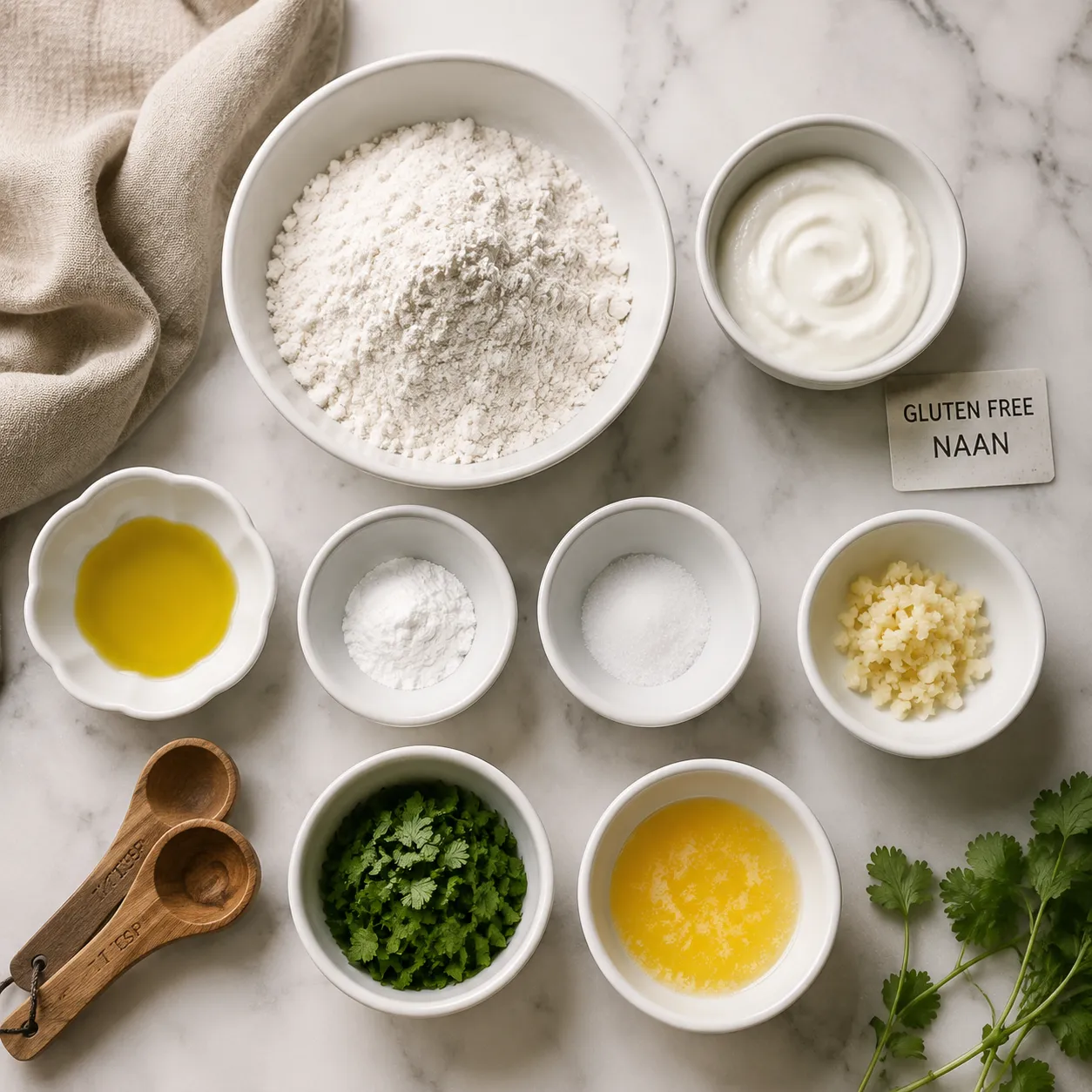
The beauty of this gluten free naan bread is that the pantry list is short and forgiving. No xanthan gum to add separately, no tapioca-and-rice-flour balancing act, no specialty ingredients that only get used twice a year. Here's what each component does and why it matters.
Gluten-free 1-to-1 flour: A good gluten free flour blend is doing most of the heavy lifting here. I reach for Bob's Red Mill 1-to-1 or King Arthur Measure for Measure because both already include xanthan gum, which gives the dough enough structure to roll and flip without cracking. Single-grain flours like rice or almond won't deliver the same chew.
Greek yogurt: Yogurt is the secret behind that tender, pillowy crumb. The acidity reacts with the baking soda for instant lift (which is why we don't need yeast), and the fat keeps the bread soft for hours. For a dairy free naan version, swap in a thick unsweetened dairy free yogurt — coconut and almond both work beautifully, just avoid anything sweetened or vanilla-flavored.
Baking powder + baking soda: Together they create the bubbles and char-spotted blisters you want on top. Don't substitute one for the other; both are doing different jobs.
Olive oil and warm water: Oil keeps the dough supple, and the warm water helps activate the leaveners and hydrate the gluten-free starches evenly so you don't end up with a chalky bite.
Garlic butter finish: Melted butter (or vegan butter), minced fresh garlic, and a flurry of cilantro or parsley brushed on while the bread is still hot. This is non-negotiable. It's what takes the bread from good to bakery-level great.
The whole process moves fast once your skillet is hot, so I like to roll all six pieces of dough before I start cooking. Think of it like making pancakes: prep the line, then cook in a steady rhythm.
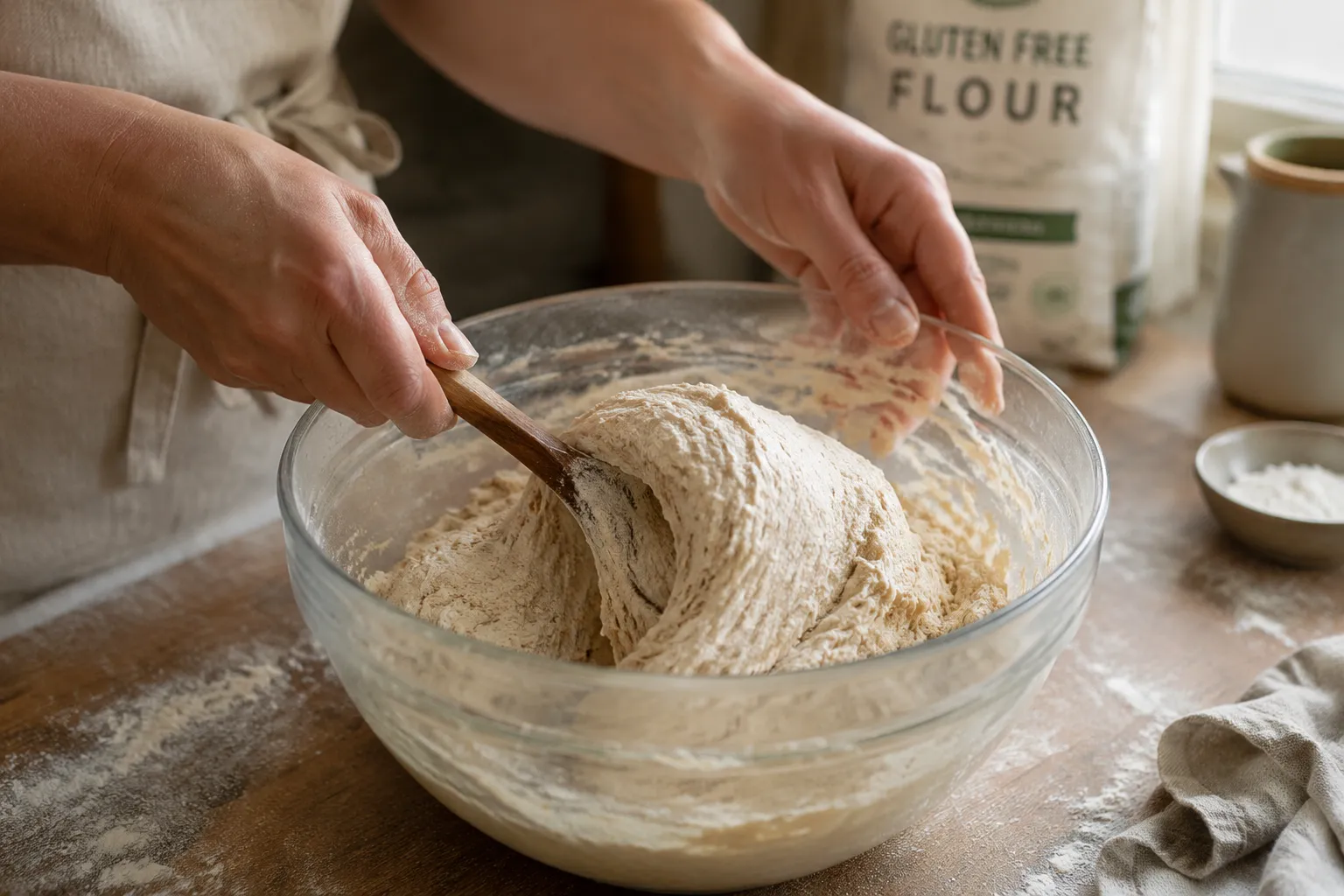
Step 1: Mix the dough. Whisk your dry ingredients together first so the leaveners distribute evenly, then add the yogurt, oil, and warm water. Stir with a wooden spoon until you have a soft, slightly tacky dough. It should pull away from the sides of the bowl but still feel pliable, like Play-Doh that's been left out for a minute. If it feels dry and crumbly, add water a teaspoon at a time. If it's soupy, dust in a little more flour.
Step 2: Rest, then divide. Cover the bowl and let the dough sit for 10 minutes. This rest is crucial — it gives the starches time to hydrate, which is the difference between a bendable flatbread and a gummy one. Divide into six equal pieces and roll each into a smooth ball.
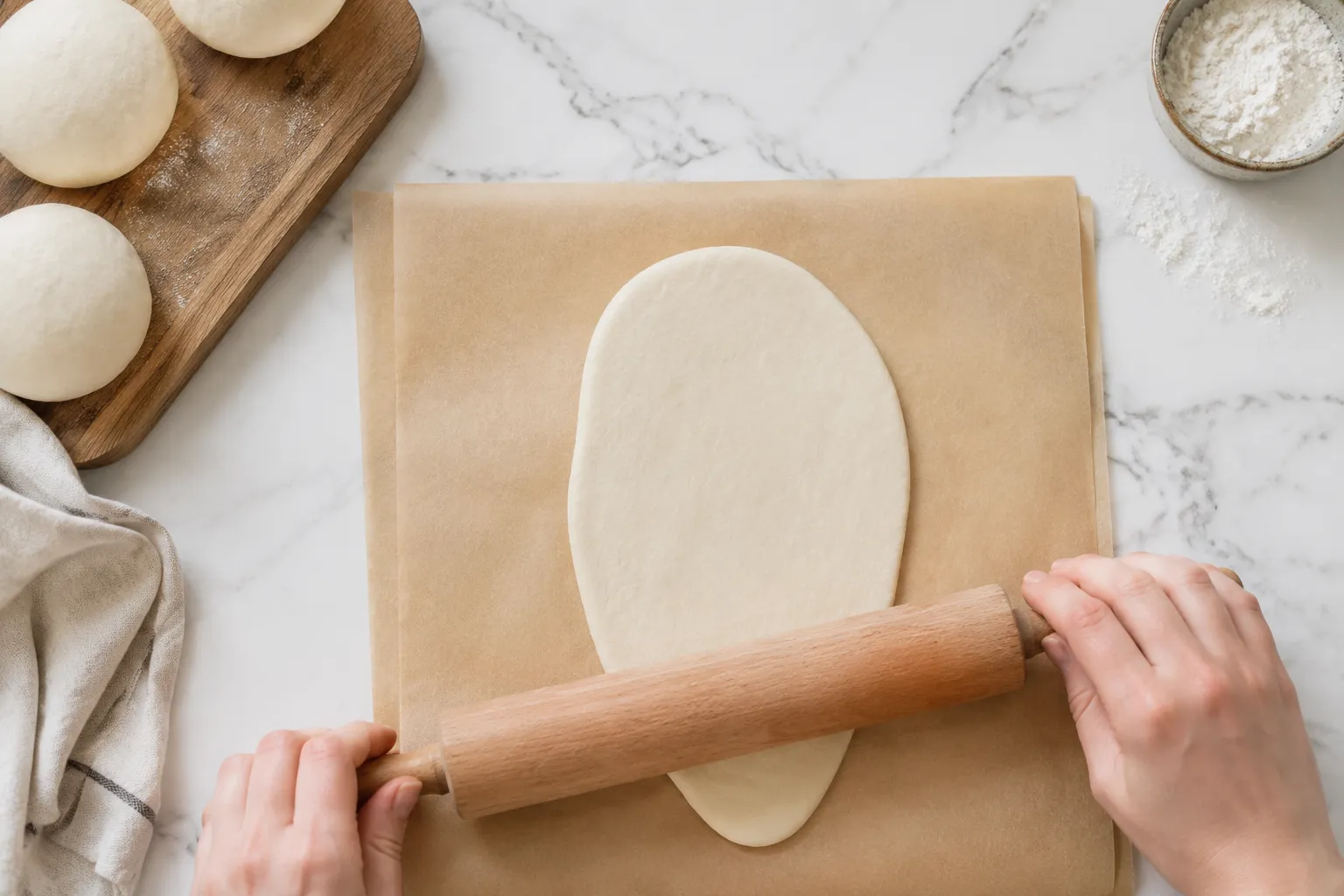
Step 3: Roll between parchment. Place a dough ball between two sheets of parchment paper and roll into an oval about 1/4 inch thick. The parchment trick is the single biggest game-changer for any gluten-free dough — it prevents tearing, eliminates the need for extra flour (which can make the surface chalky), and gives you a perfectly even thickness every time. If you've ever made gluten free pizza dough, you already know this hack.
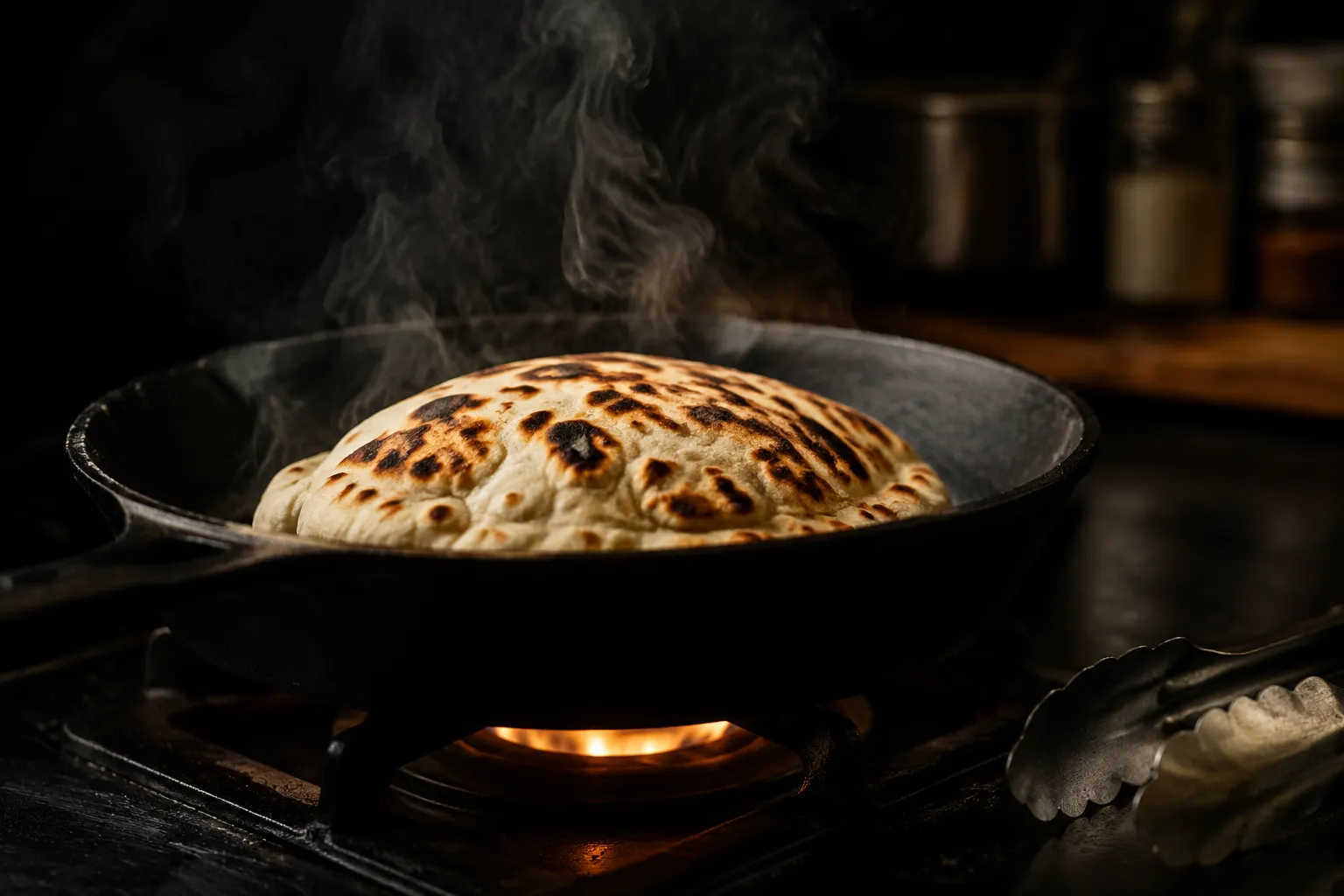
Step 4: Cook in a hot cast-iron skillet. Heat your skillet over medium-high until a drop of water sizzles and evaporates on contact. Peel the parchment off the dough and lay the naan in the dry pan — no oil needed. Within 60 to 90 seconds, you should see big bubbles puffing up across the surface and the underside taking on those signature dark char spots. Flip and cook the second side another 60 seconds.
Step 5: Brush and stack. The instant each naan comes off the heat, slather it with the warm garlic-cilantro butter and stack the breads under a clean kitchen towel. The towel traps steam and keeps everything soft and bendable while you finish the rest of the batch.
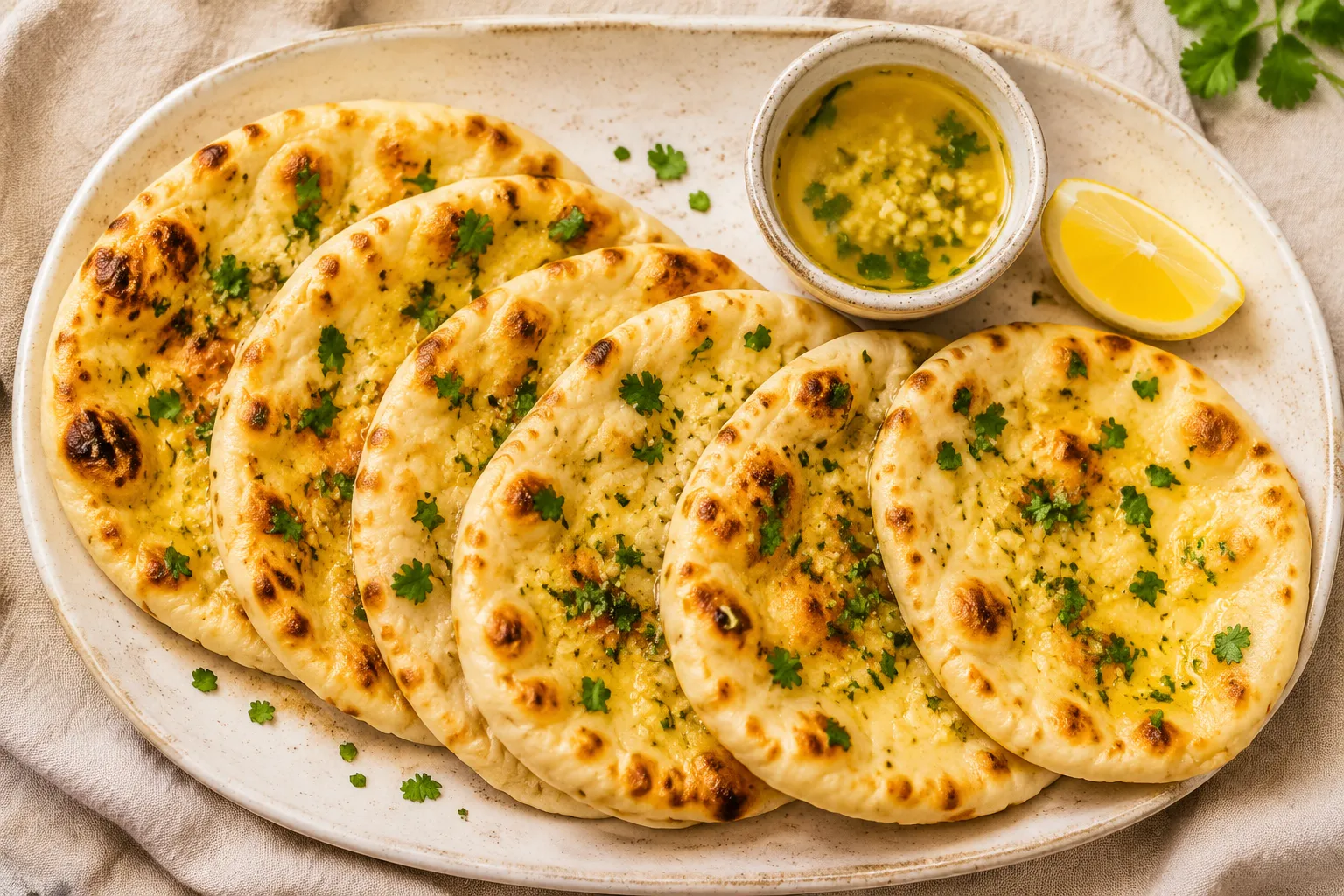
The magic of this gluten free naan recipe is in the ratio of yogurt to flour. Most failed gluten-free flatbreads are too wet, which traps moisture in the middle and reads as gummy on the tongue. By keeping the yogurt at half the volume of flour and using a hot dry pan, the surface sears and crisps before the interior has a chance to overhydrate. You get char on the outside and tender, fluffy crumb on the inside.
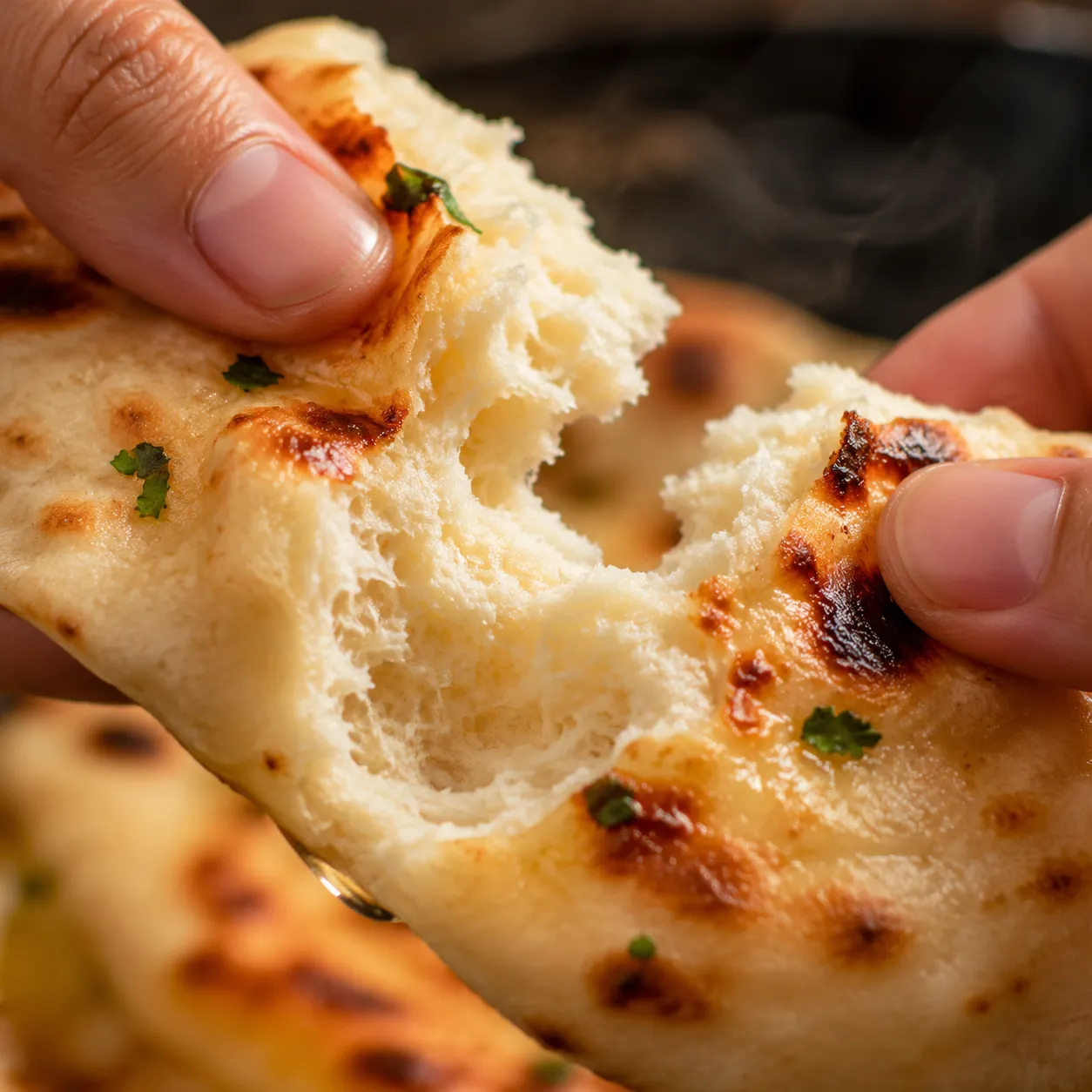
Tear one open and you'll see what I mean — the crumb is open and slightly stretchy (yes, even without gluten), the edges crackle just a little, and the middle is soft enough to fold and dunk without splitting. That's the standard I was chasing, and the standard you should expect from this recipe.
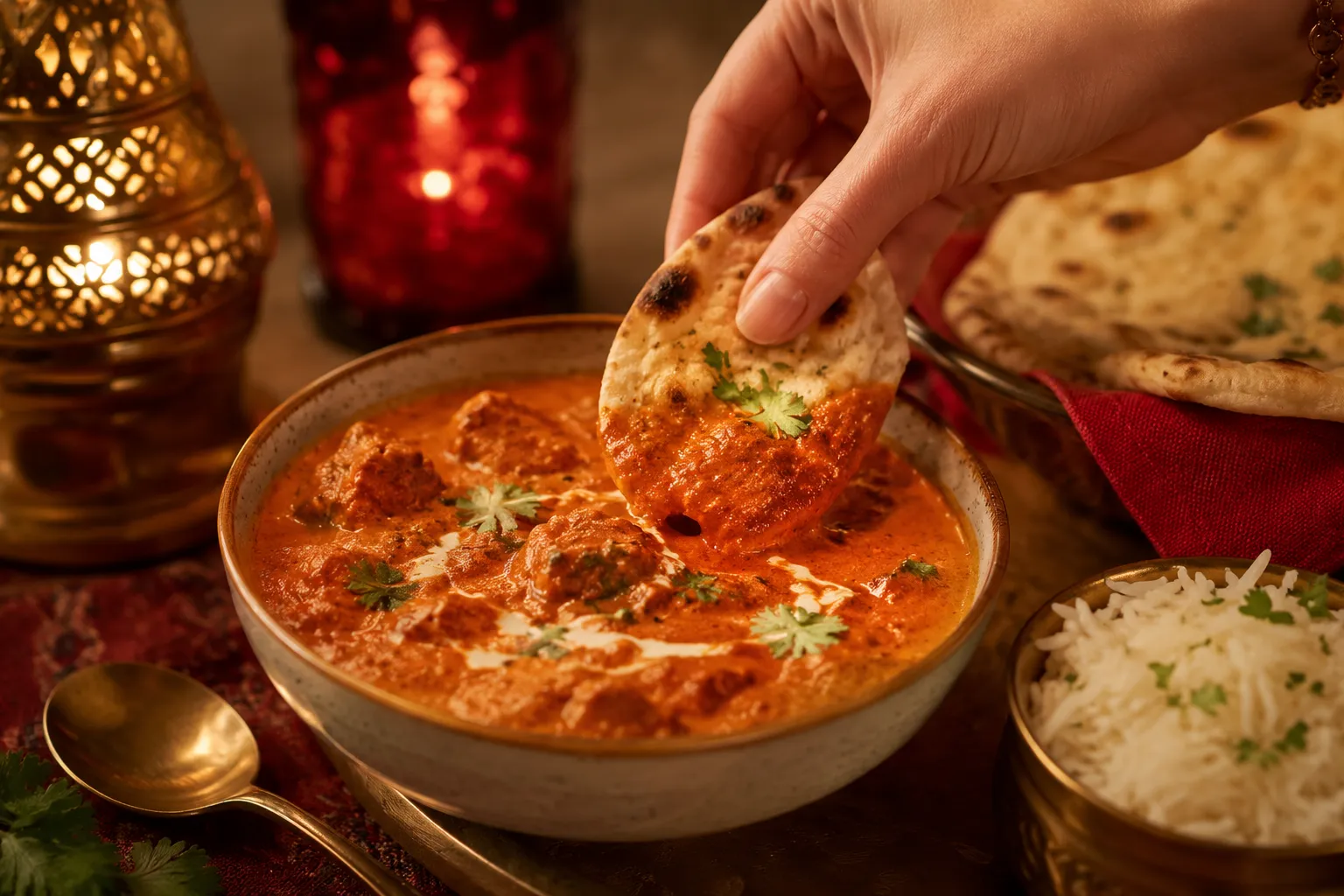
Warm naan and saucy curry are basically soulmates, so this is where the bread really shines. My go-to pairing is homemade chicken tikka masala — the creamy tomato sauce clings to the char spots like it was designed for them. It's also perfect alongside butter chicken, palak paneer, chana masala, or any of my other easy Indian curry recipes for weeknights.
Beyond Indian food, don't sleep on this bread for Mediterranean and Middle Eastern menus. Tear it into pieces for scooping hummus, baba ganoush, tzatziki, or muhammara. Use it as a wrap for grilled chicken shawarma, falafel, or kebabs. Top it with za'atar and olive oil for a quick snack, or use a leftover round as the base for a personal flatbread pizza with whatever cheese and veggies are in the fridge.
It also makes an excellent side for soups and stews — anywhere you'd normally want crusty bread, this gluten free flatbread happily steps in. I've even brushed leftover pieces with cinnamon sugar and butter for a sneaky breakfast treat.
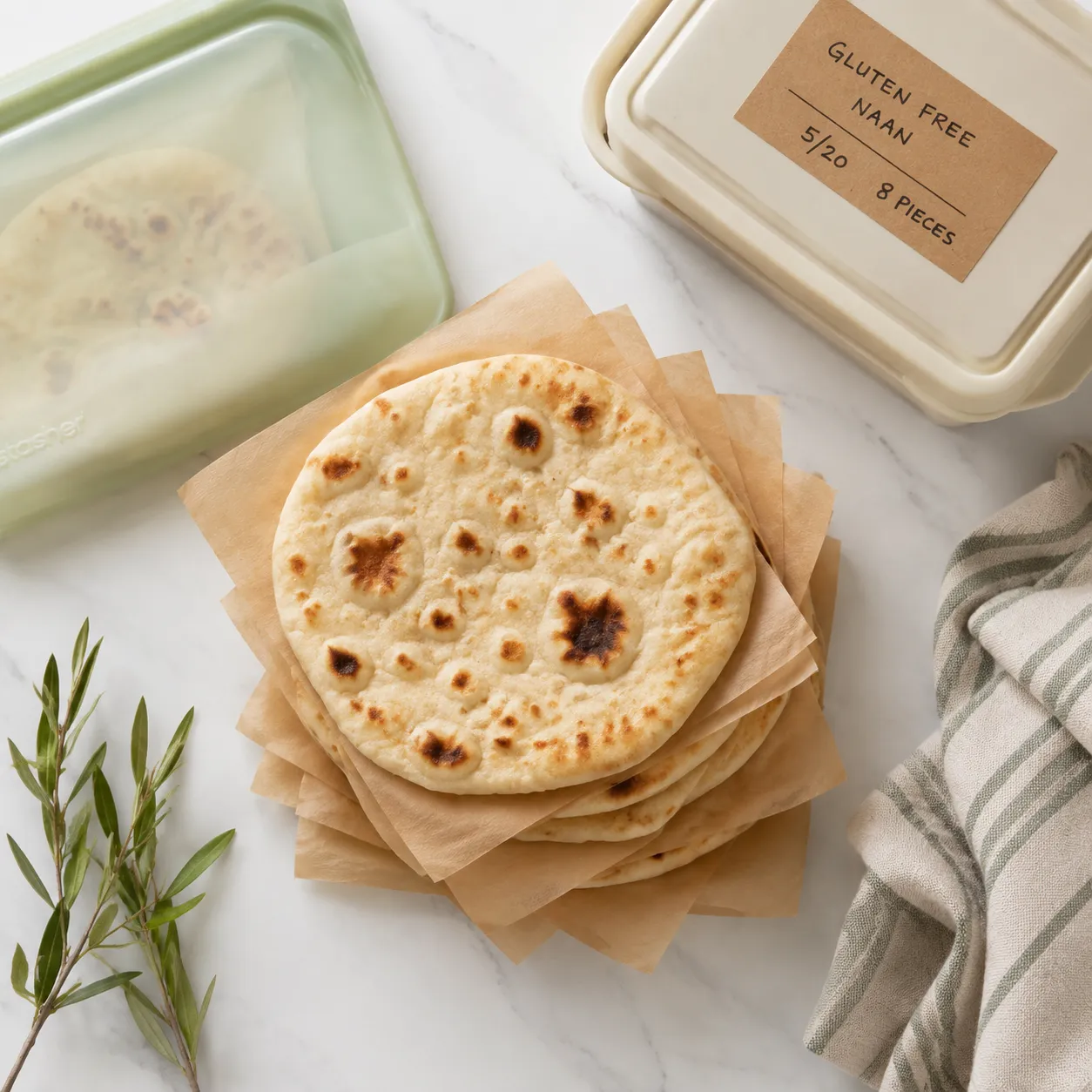
This recipe is forgiving on timing. You can mix the dough up to 24 hours ahead and keep it covered in the fridge — just let it sit on the counter for 15 minutes before rolling so it's pliable again. Cooked naan also freezes beautifully, which is honestly my favorite reason to make a double batch on a Sunday afternoon and stash some away for chaotic weeknights.
Whether you're new to gluten-free baking or a seasoned pro who just wants a recipe that works the first time, this gluten free naan is going to earn a permanent spot in your rotation. It's the kind of bread that makes a curry night feel complete instead of compromised — and that, after years of sad substitutes, feels like a small victory worth celebrating.
Once you've nailed the base recipe, this dough is a fun jumping-off point for all kinds of flavor riffs. The texture stays the same — only the toppings or mix-ins change.
Let the naan cool completely before storing or it'll trap steam and turn soggy. Stack cooled flatbreads with squares of parchment between each one, then slide them into an airtight bag or container. They'll keep at room temperature for 1 day, in the fridge for up to 3 days, or in the freezer for up to 2 months.
To reheat, warm naan in a dry skillet over medium heat for about 30 seconds per side — this revives the char and brings back the soft texture better than a microwave. If reheating from frozen, thaw at room temperature for 15 minutes first, or wrap loosely in foil and warm in a 350°F oven for 5 to 7 minutes. A fresh brush of garlic butter on the way out of the pan never hurts.