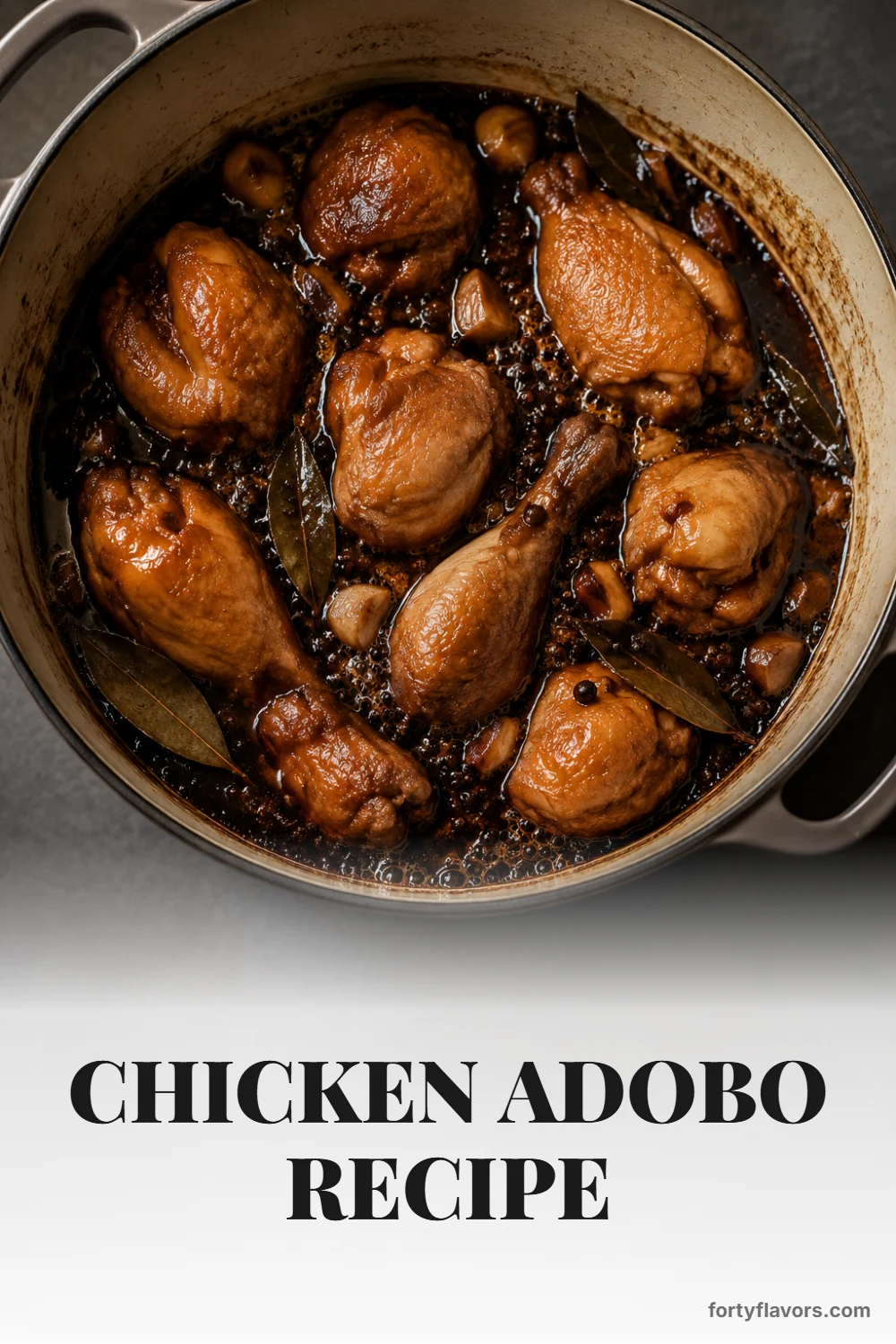
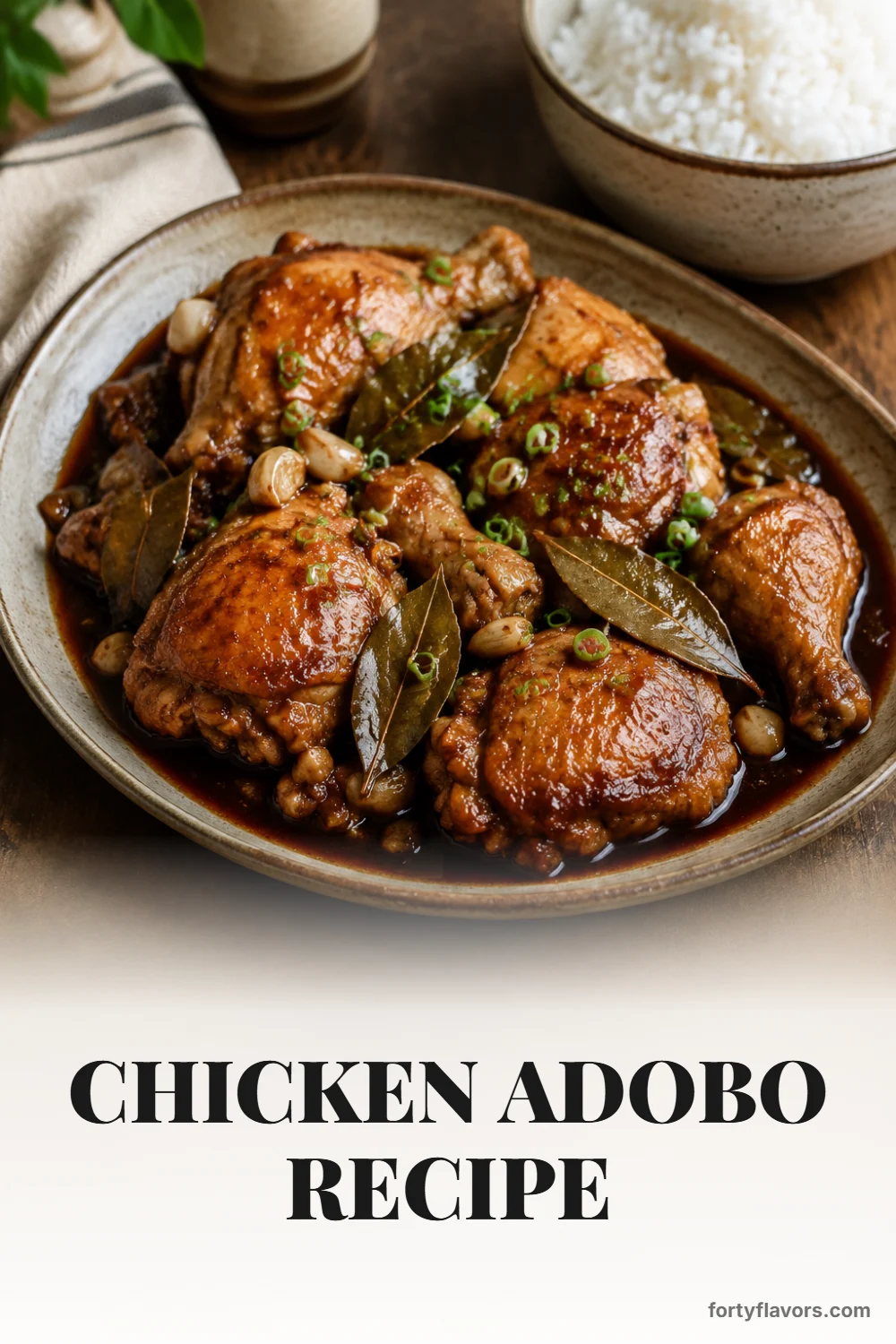
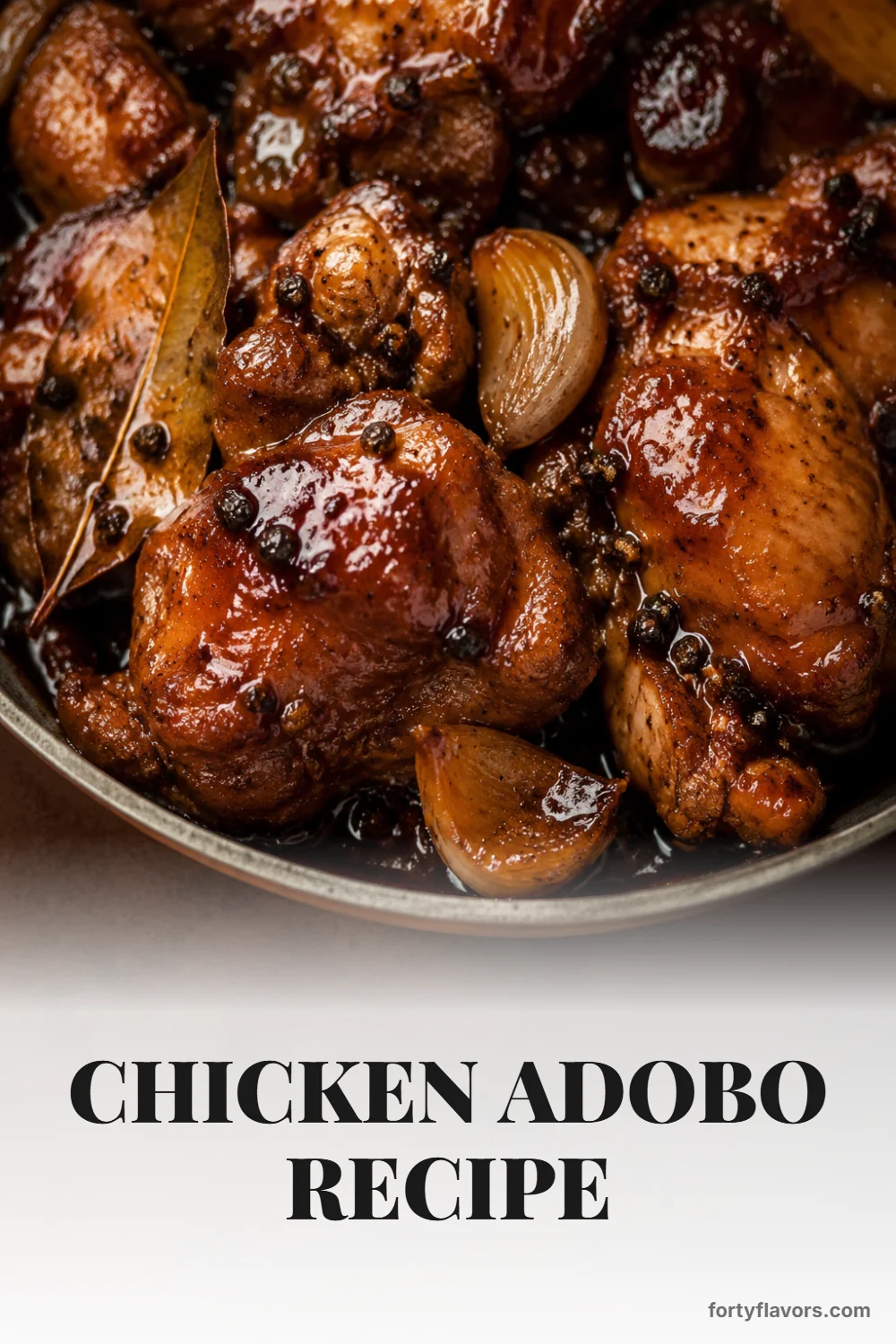
Chicken Adobo Recipe
Ingredients
Scale
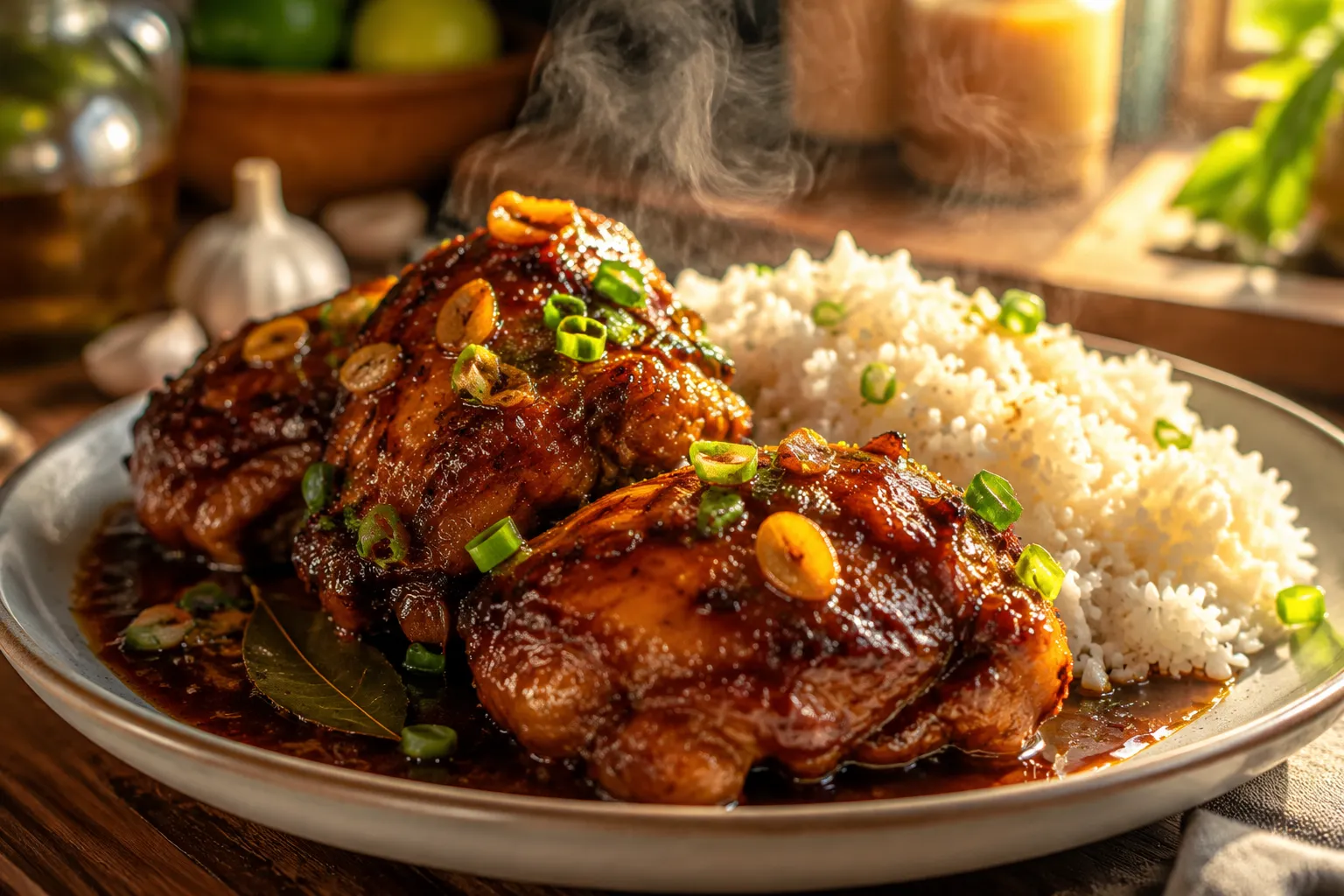
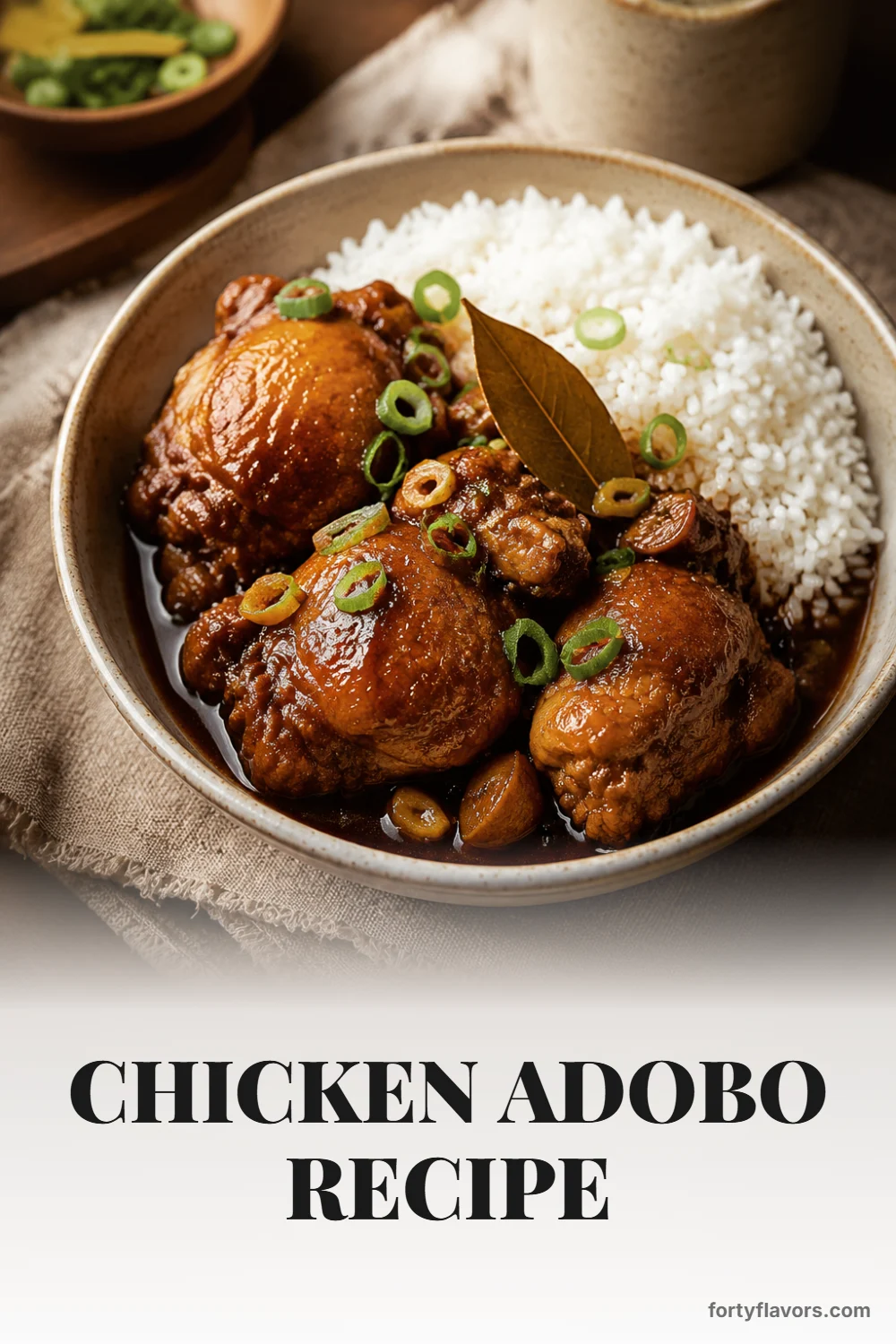
This Filipino chicken adobo is tangy, savory, garlicky, and simmered until tender in a glossy soy-vinegar sauce.
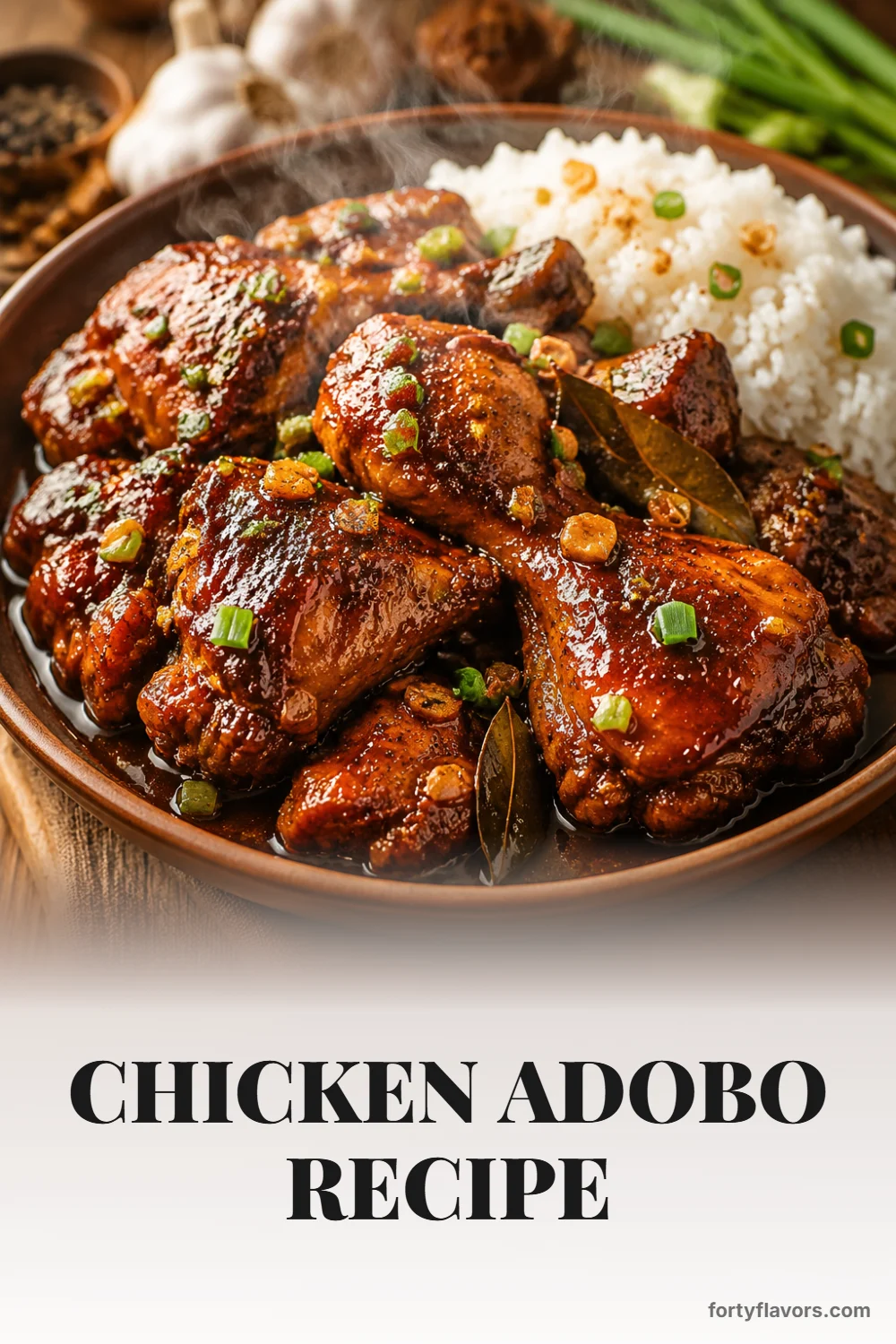
This chicken adobo recipe is the kind of deeply savory, tangy, garlicky dinner that makes the whole kitchen smell like something wonderful is happening. Bone-in chicken simmers in soy sauce, vinegar, garlic, bay leaves, and peppercorns until tender, then the sauce reduces into a glossy, spoon-over-everything finish.
Adobo is one of the most beloved Filipino recipes, and for good reason: it is bold, practical, and wonderfully adaptable from family to family. This version is designed for a US home kitchen, using grocery-store ingredients while keeping the spirit of classic chicken adobo pinoy intact. You will get that signature salty-sour balance, plenty of softened garlic, and a sauce that practically begs for steamed rice.
If you love easy chicken dinner recipes that deliver big flavor with minimal fuss, this one deserves a permanent place in your weeknight rotation. It is one of those one-pot chicken meals that tastes even better after the sauce has had a little time to settle into the meat.
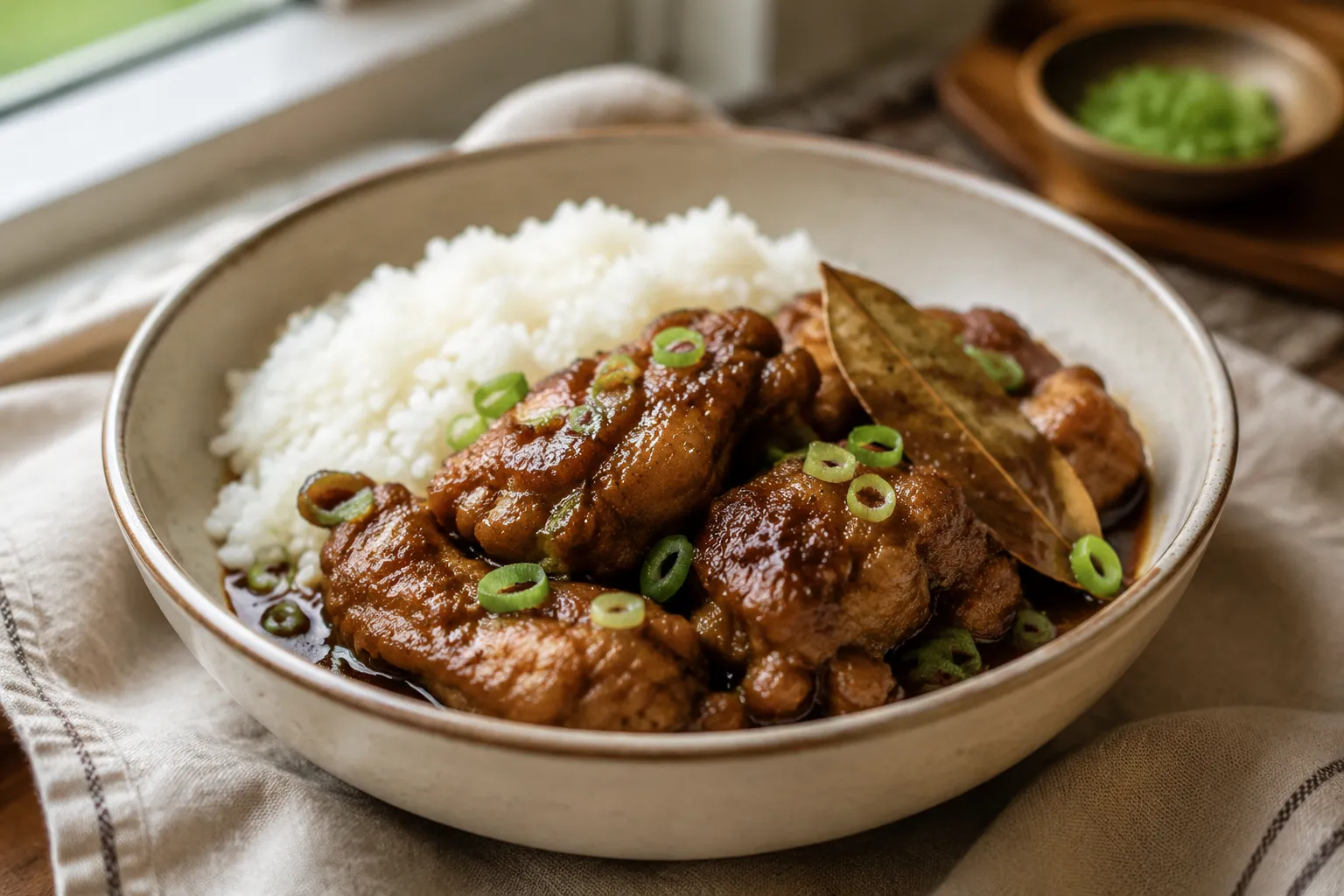
Filipino adobo is a cooking method built around vinegar, salt or soy sauce, garlic, bay leaves, and pepper, used to braise meat until tender and flavorful. While the word adobo is also used in Spanish and Latin American cooking, Filipino adobo is its own distinct dish with a sharp, savory vinegar backbone rather than a chile-based marinade. A classic chicken adobo philippines recipe often starts with pantry staples, then becomes personal through the cook’s choice of vinegar, ratio of soy sauce to acid, amount of garlic, and whether the chicken is browned first.
In many Tagalog-style versions, soy sauce and vinegar share the spotlight, creating a dark, savory sauce that clings beautifully to chicken. If you have been searching for a recipe for chicken adobo tagalog, this version follows that familiar base of soy sauce, vinegar, garlic, bay leaf, and peppercorns while offering practical cues for balancing the sauce. The result is not fussy or restaurant-polished in the stiff sense; it is home cooking, rich with personality and meant to be eaten with rice.
The magic comes from restraint. There are no complicated spices, no long list of specialty ingredients, and no need for a thickener. Vinegar tenderizes and brightens, soy sauce seasons and deepens, garlic turns mellow as it simmers, and the chicken releases its juices into the pot. Together they make a sauce that tastes layered far beyond the effort involved.
The best chicken for adobo is usually bone-in thighs, drumsticks, or a mix of both. Dark meat stays juicy during the simmer, and the bones add body to the sauce. Skin-on pieces bring extra richness, especially if you brown them first, but skinless bone-in chicken also works if you prefer a leaner dish.
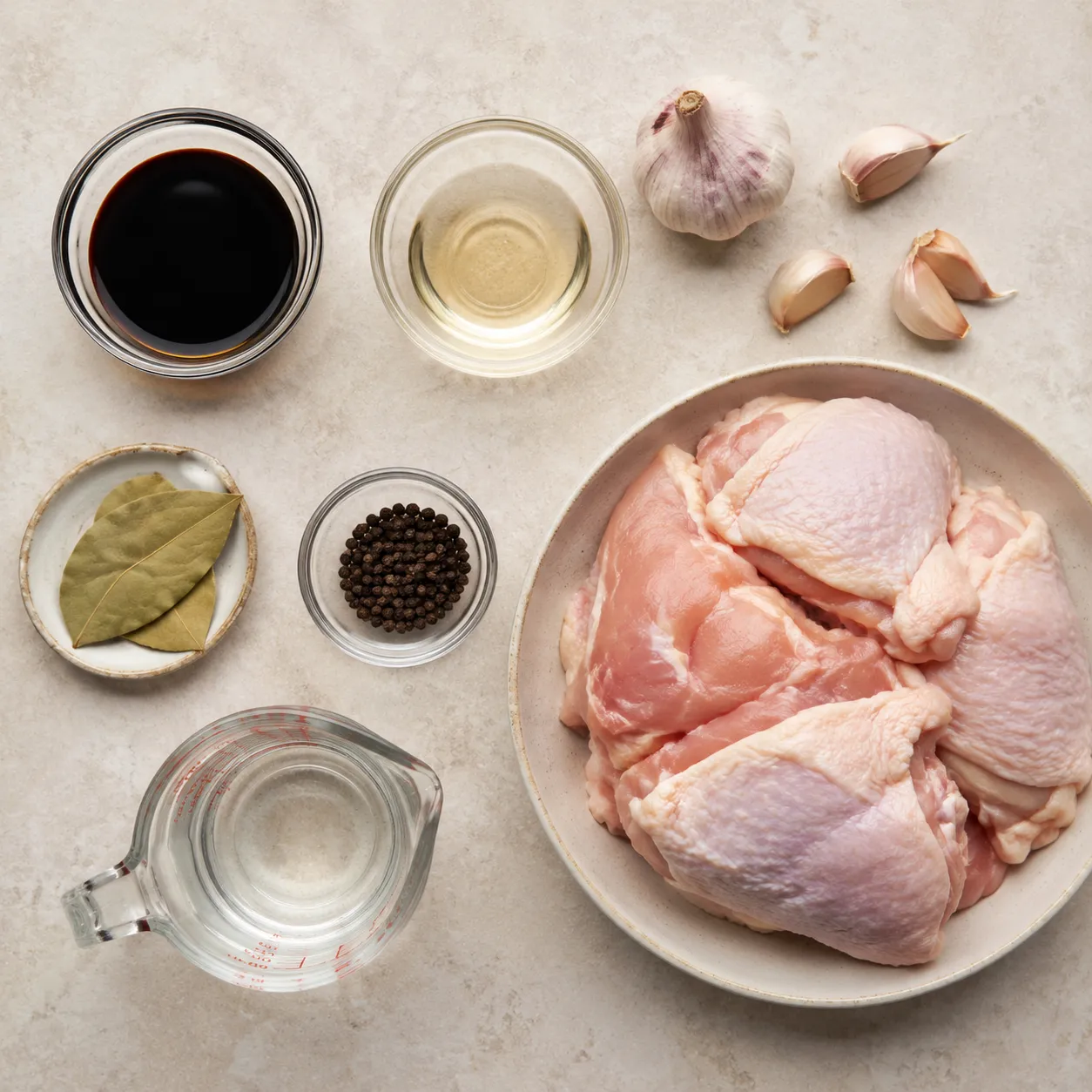
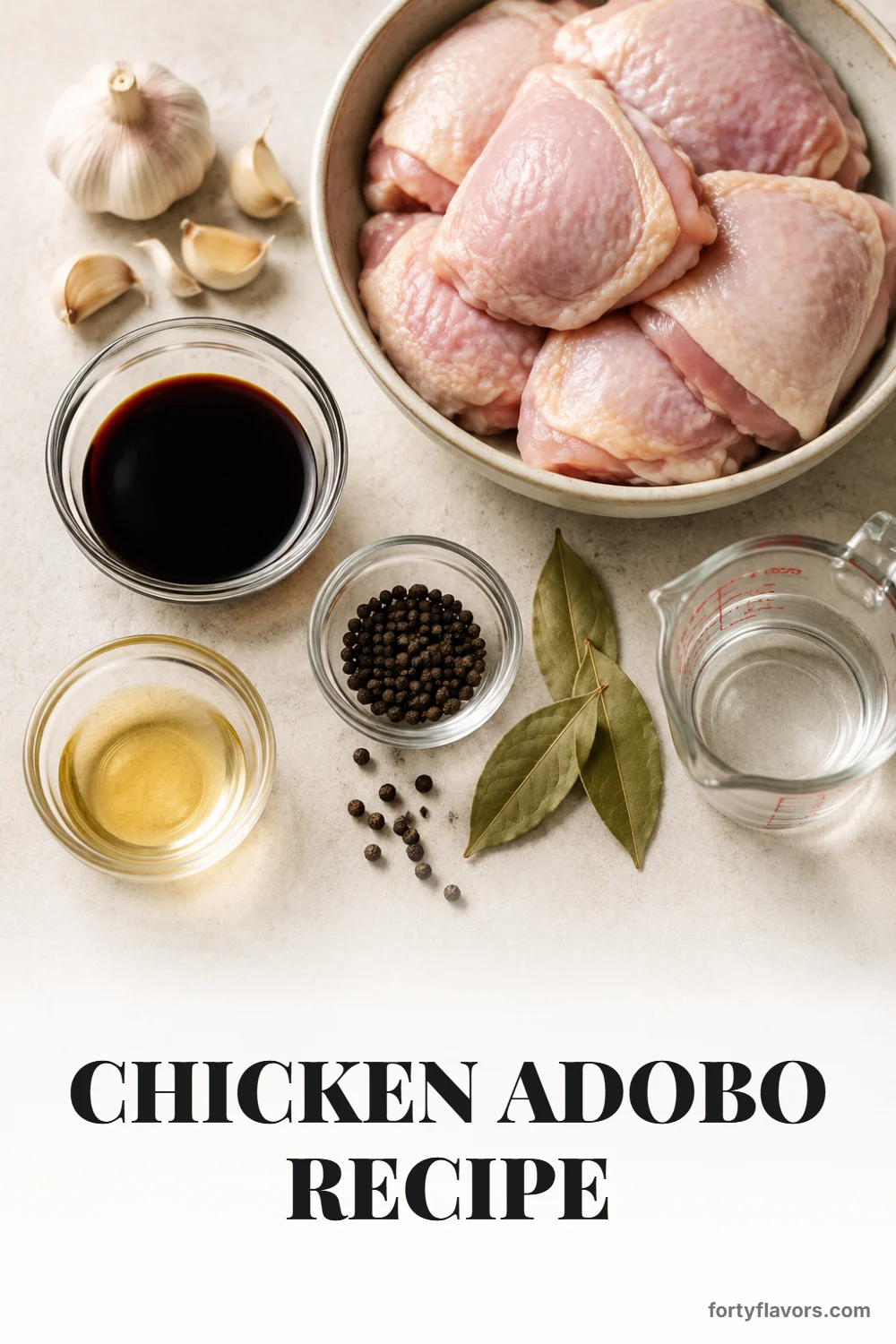
For this chicken adobo recipe, use regular soy sauce rather than dark soy sauce, which can make the dish too intense and overly dark. Cane vinegar is traditional and has a clean, pleasantly sharp flavor; white vinegar is the easiest substitute, and apple cider vinegar can work if you like a slightly fruitier edge. Garlic should be generous here. Eight cloves may look like a lot at first, but after simmering they soften into the sauce and become sweet, savory little pockets of flavor.
Bay leaves and whole black peppercorns are small ingredients with a big role. The bay leaves add a lightly herbal, almost tea-like aroma, while the peppercorns give the sauce a warm, rounded bite. A sliced onion is optional, but it melts down nicely and makes the sauce a little sweeter. If you like a whisper of heat, add a small dried chile or a pinch of red pepper flakes without pushing the dish too far from its classic profile.
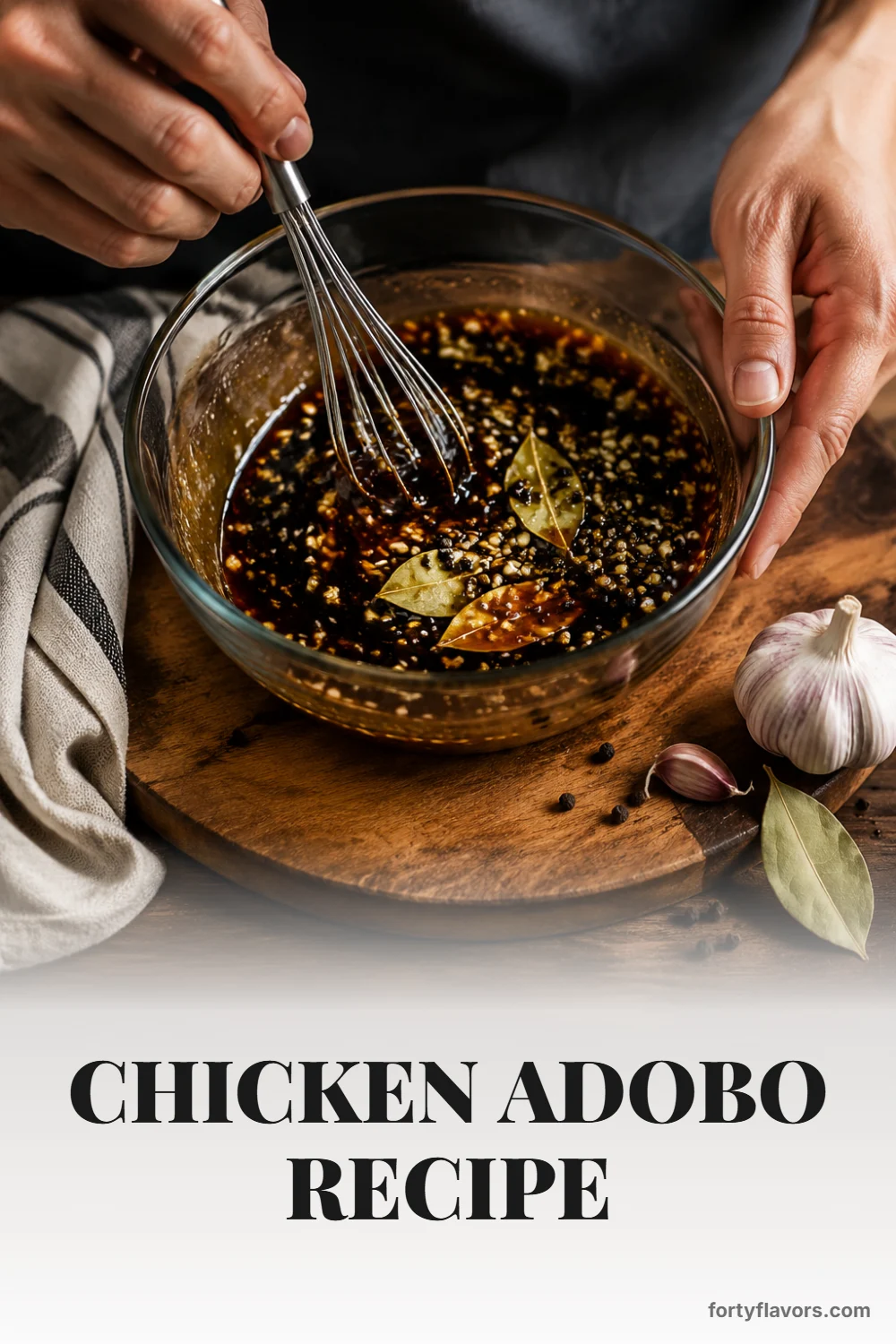
The adobo chicken marinade is simple: soy sauce, vinegar, crushed garlic, bay leaves, and peppercorns. A short rest of 20 to 30 minutes gives the chicken a head start on flavor, especially around the surface and under the skin. If you have time, marinate it for up to a few hours in the refrigerator, but you do not need an overnight soak for this dish to be delicious.
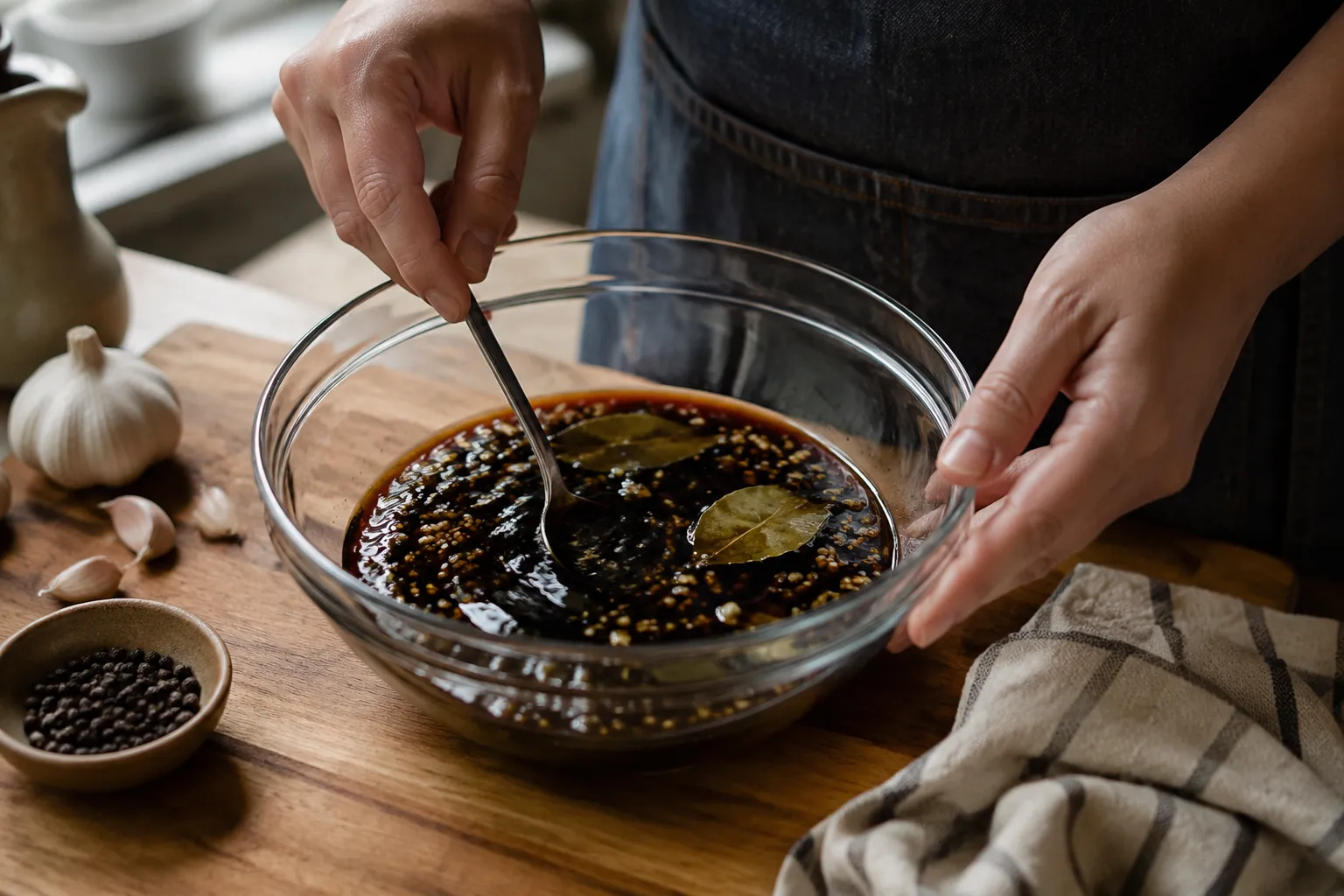
One helpful distinction: in adobo, the marinade becomes the braising liquid, so nothing gets wasted. After the chicken rests, the same mixture goes into the pot and cooks thoroughly with the meat. This is why the marinade should taste punchy but not wildly salty before cooking; it will reduce later and become more concentrated.
I like to crush the garlic rather than mince it finely. Crushed cloves infuse the sauce without burning as easily during browning, and they are easy to scoop over the finished chicken. If you prefer a smoother sauce, you can mince the garlic, but keep the heat moderate and watch carefully once it hits the pan.
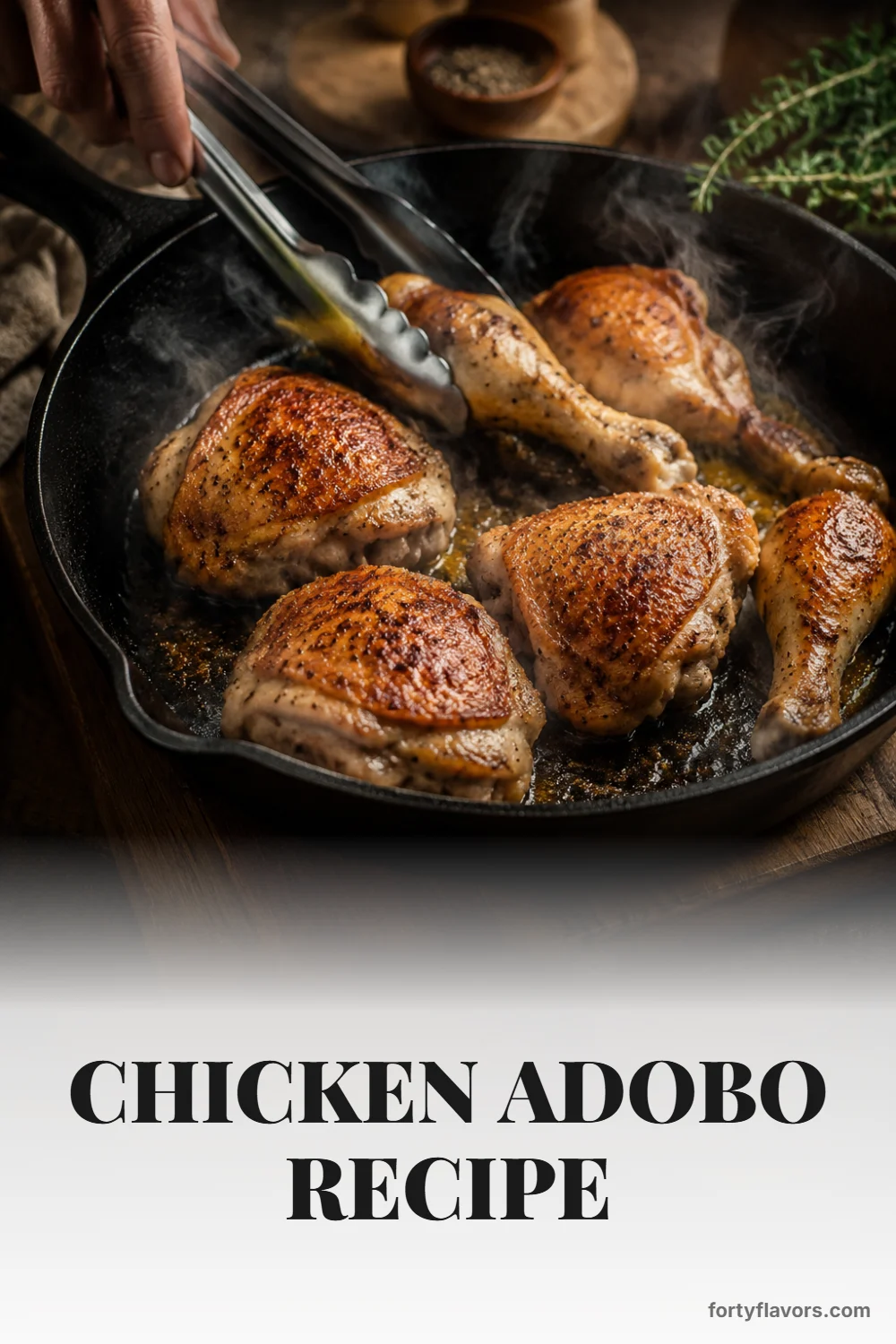
The rhythm of this chicken adobo recipe is straightforward: marinate, brown, simmer, reduce. Browning is technically optional, and plenty of home versions skip it, but it adds a roasted depth that works beautifully in a weeknight skillet. Pat the chicken lightly before it goes into the oil so it sears instead of steaming, and save every drop of marinade for the pot.
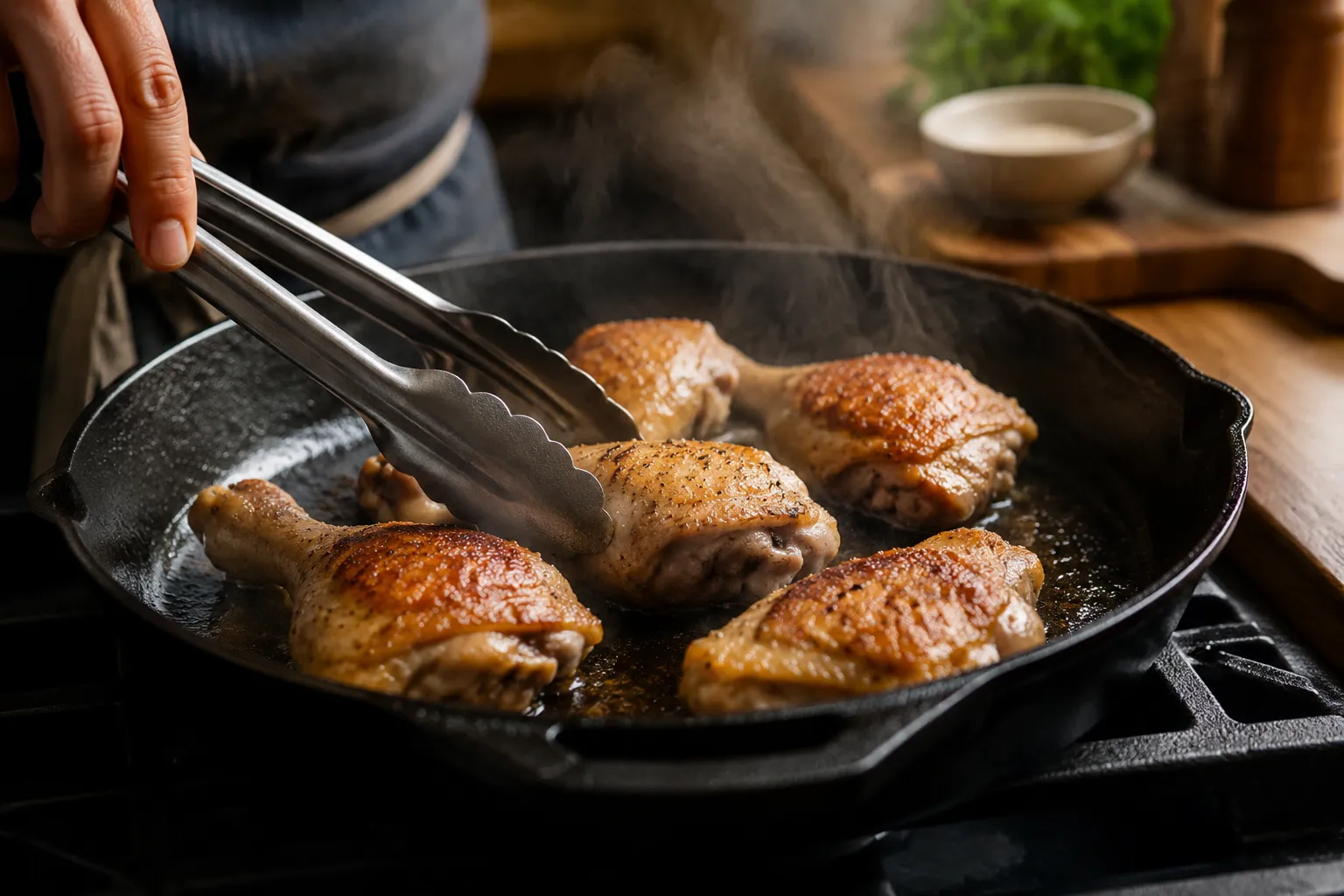
Once the chicken is browned, pour in the marinade along with water and any onion if using. Bring the liquid to a boil, then let the vinegar bubble briefly before stirring everything together. That moment matters because raw vinegar can taste harsh; giving it a short undisturbed simmer helps it mellow into the sauce.
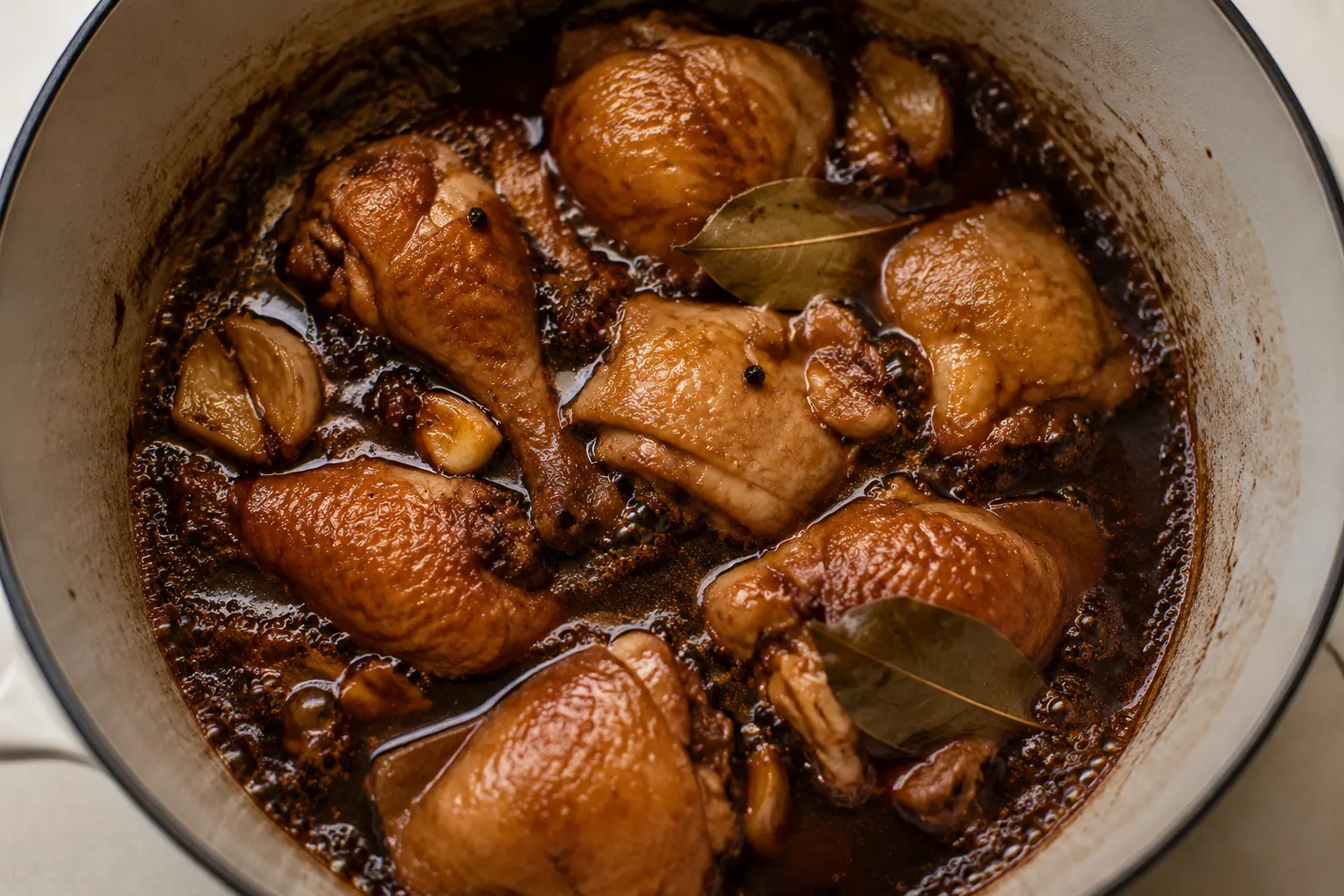
After that, reduce the heat and let the chicken cook gently until it is tender. The sauce should bubble lazily, not roar, so the meat has time to relax and absorb flavor. Turn the pieces occasionally once the vinegar has cooked off its sharpest edge, letting both sides spend time in the braising liquid.
When the chicken is cooked through and tender, uncover the pot and reduce the sauce. This final step is where the dish transforms from a braise into that glossy, savory coating you want to spoon over rice. If the sauce tastes too salty as it reduces, add a splash of water; if it tastes flat, add a small splash of vinegar and simmer for another minute.
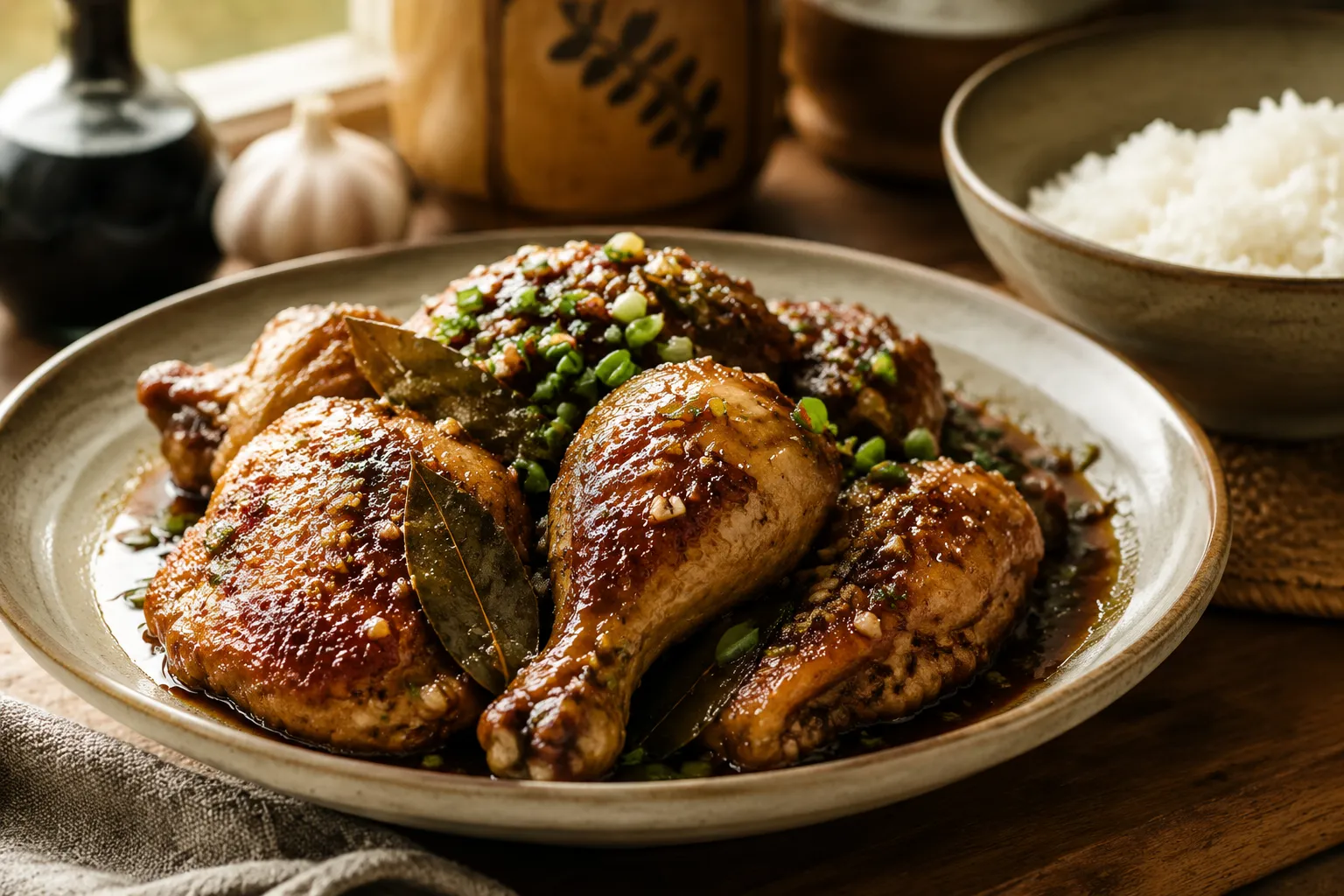
Great adobo is all about balance, and every household has its own preferred landing place. Some cooks like it more sour and bright, while others prefer a richer, saltier sauce with just enough vinegar to lift the chicken. This is why the same dish can taste different from one family table to the next and still be completely recognizable as adobo.
As the sauce reduces, taste it thoughtfully. Too salty? Add water a tablespoon or two at a time, or serve with plenty of plain rice. Too sharp? Simmer a little longer, or stir in a tiny pinch of brown sugar to round the edges. Too mild? Add another cracked garlic clove, a splash of vinegar, or a few grinds of black pepper.
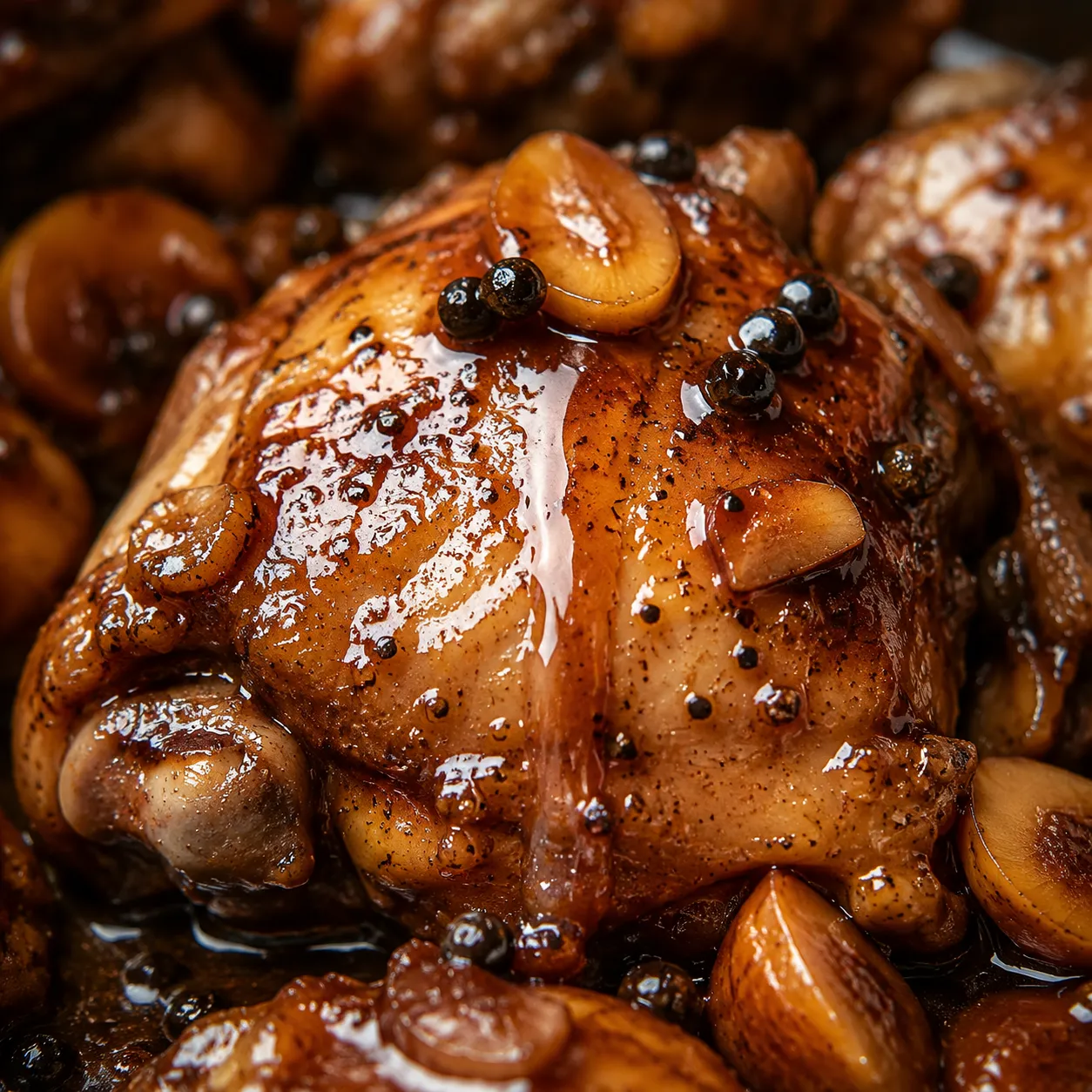
For readers building a collection of Asian chicken recipes, adobo is a wonderful lesson in how a few strong ingredients can become balanced through simmering. There is no cream, no cornstarch slurry, and no elaborate garnish required. The sauce thickens because water evaporates and the chicken juices mingle with soy, vinegar, and garlic.
A chicken adobo recipe this saucy belongs with steamed white rice. Jasmine rice is lovely, but any fluffy long-grain or medium-grain white rice will soak up the sauce beautifully. Spoon the adobo over the rice, making sure each serving gets some garlic, a little glossy sauce, and perhaps a bay leaf tucked to the side for that classic look.
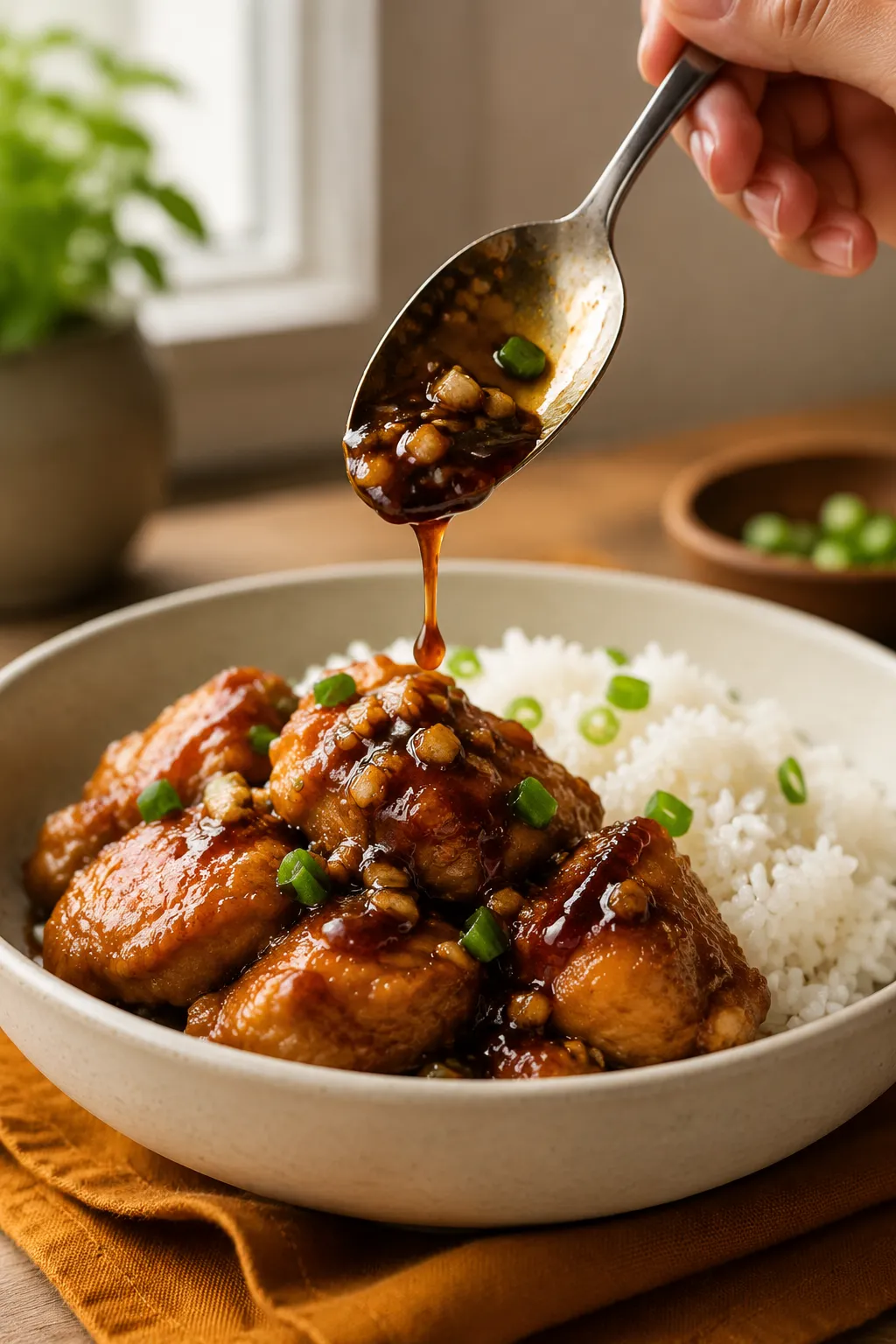
This dish also makes excellent rice bowl recipes because the sauce is bold enough to season simple toppings. Try it with sliced cucumber, quickly sautéed green beans, roasted broccoli, or a soft jammy egg. The contrast of warm chicken, tangy sauce, and fresh vegetables makes the bowl feel complete without requiring a complicated side dish.
If you are serving family-style, place the pot or platter in the center of the table with a big bowl of rice and let everyone build their own plate. Scallions are not required, but they add color and freshness. Fried garlic, if you have it, is especially good sprinkled over the top for crunch.
The beauty of adobo is that it invites repetition. Make it once as written, then adjust the next pot to suit your own table. You may find that you love a little more vinegar, a touch less soy sauce, extra garlic, or a longer reduction for a darker glaze.
This chicken adobo recipe is meant to give you a reliable foundation rather than box you into one rigid idea of authenticity. Filipino food is deeply regional and personal, and adobo especially carries family memory: the pot your auntie made, the version your friend grew up eating, the one that tastes best after a long day. Start with the classic soy-vinegar-garlic base, learn how it behaves on your stove, and then let it become yours.
For more dinners with big flavor and approachable ingredients, keep this in your rotation alongside other one-pan braises, rice bowls, and cozy weeknight favorites. It is humble, bold, and generous—the kind of food that feels like home even before you have made it a tradition.
Refrigerate leftover chicken adobo in an airtight container with plenty of sauce for up to 4 days. The flavor often improves overnight as the chicken rests in the soy-vinegar braising liquid.
To freeze, cool completely, then store chicken and sauce in freezer-safe containers for up to 3 months. Thaw overnight in the refrigerator and reheat gently on the stovetop with a splash of water to loosen the sauce and keep the chicken moist.
Hover any image and hit “Pin it” to save it to your Pinterest boards.