Beef Stir Fry Recipe: Tender, Saucy, Ready in 25 Minutes
4.8 from 12 reviews
0SHARES
Now Playing
Beef Stir Fry Recipe: Tender, Saucy, Ready in 25 Minutes
0:00
0:00
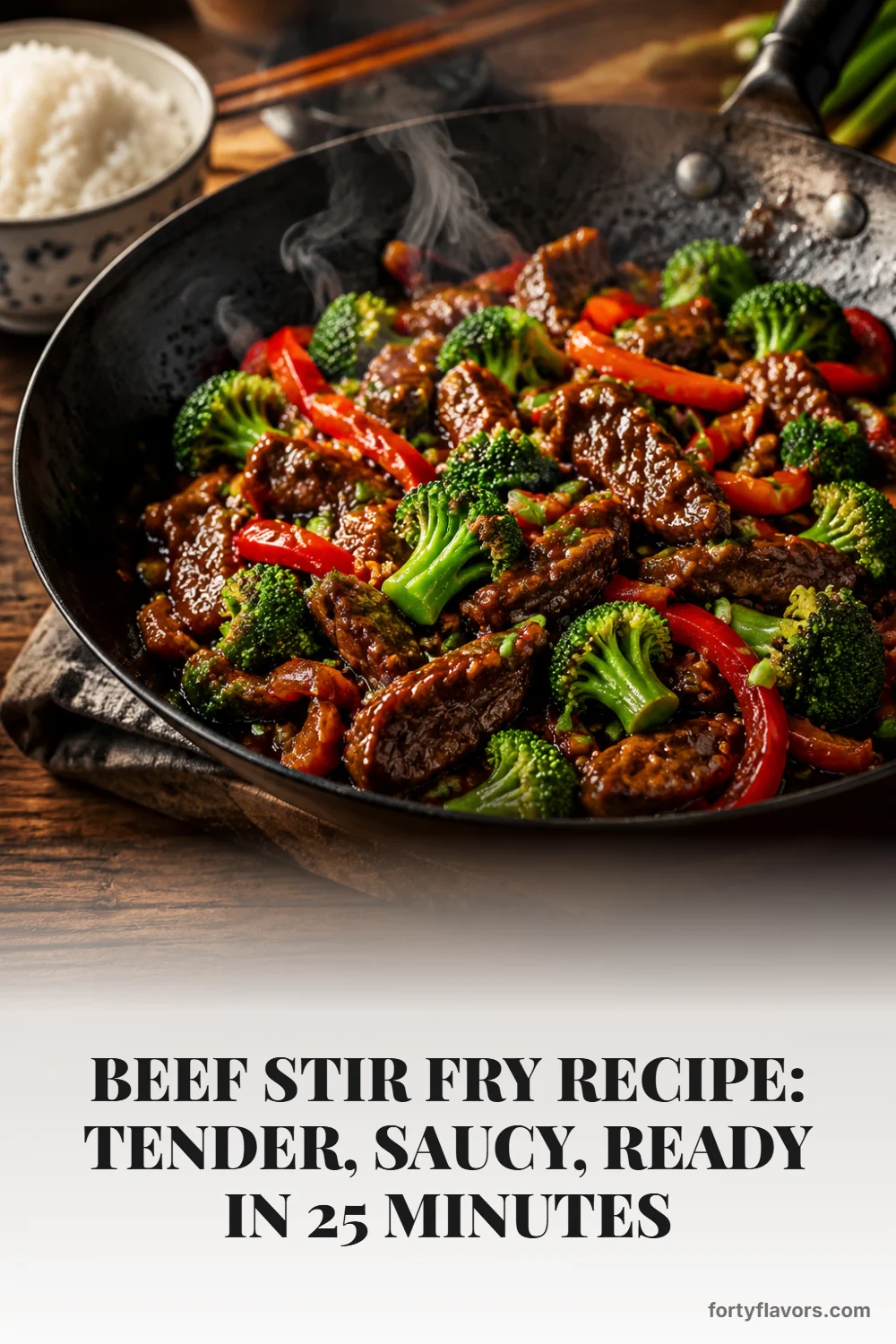
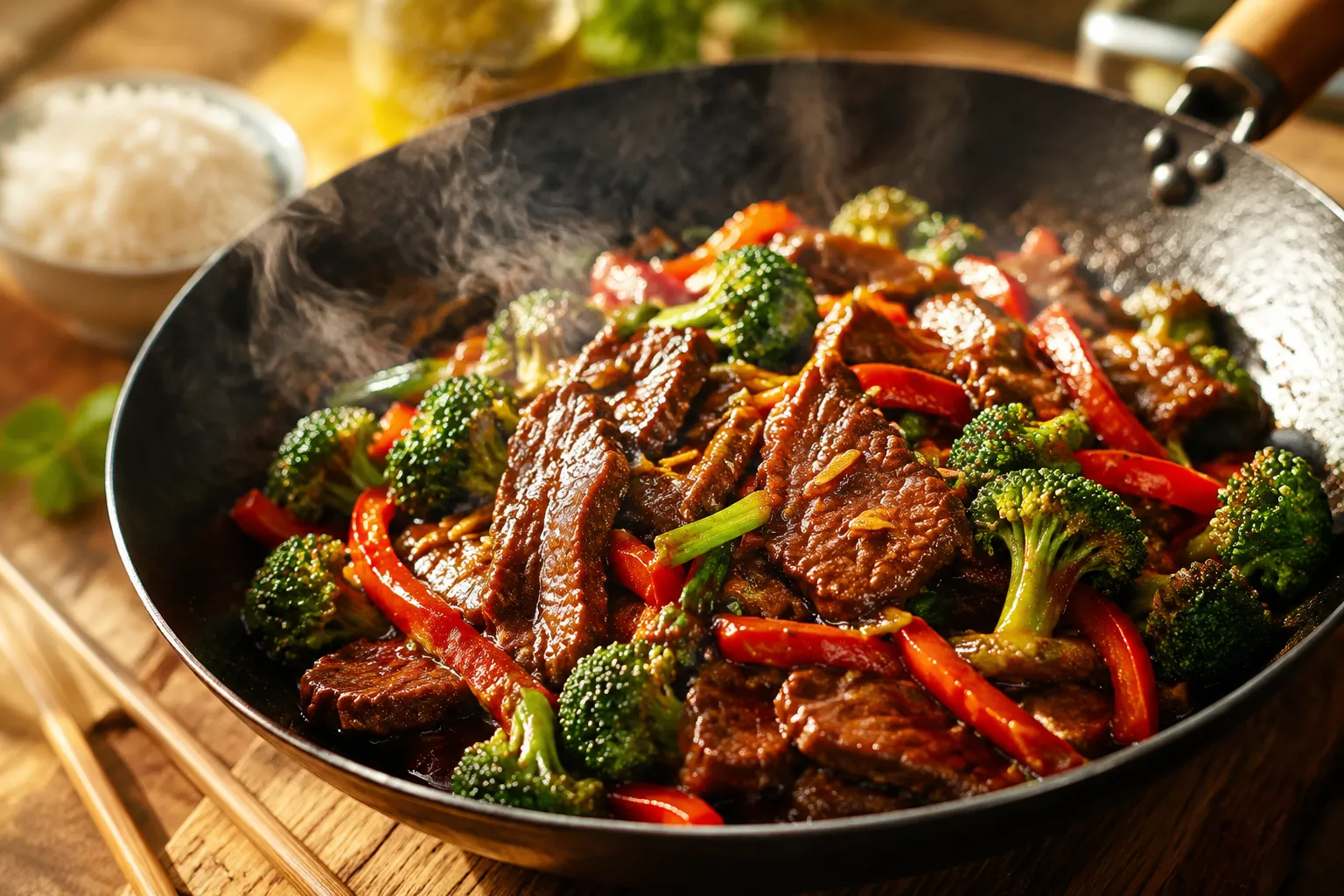
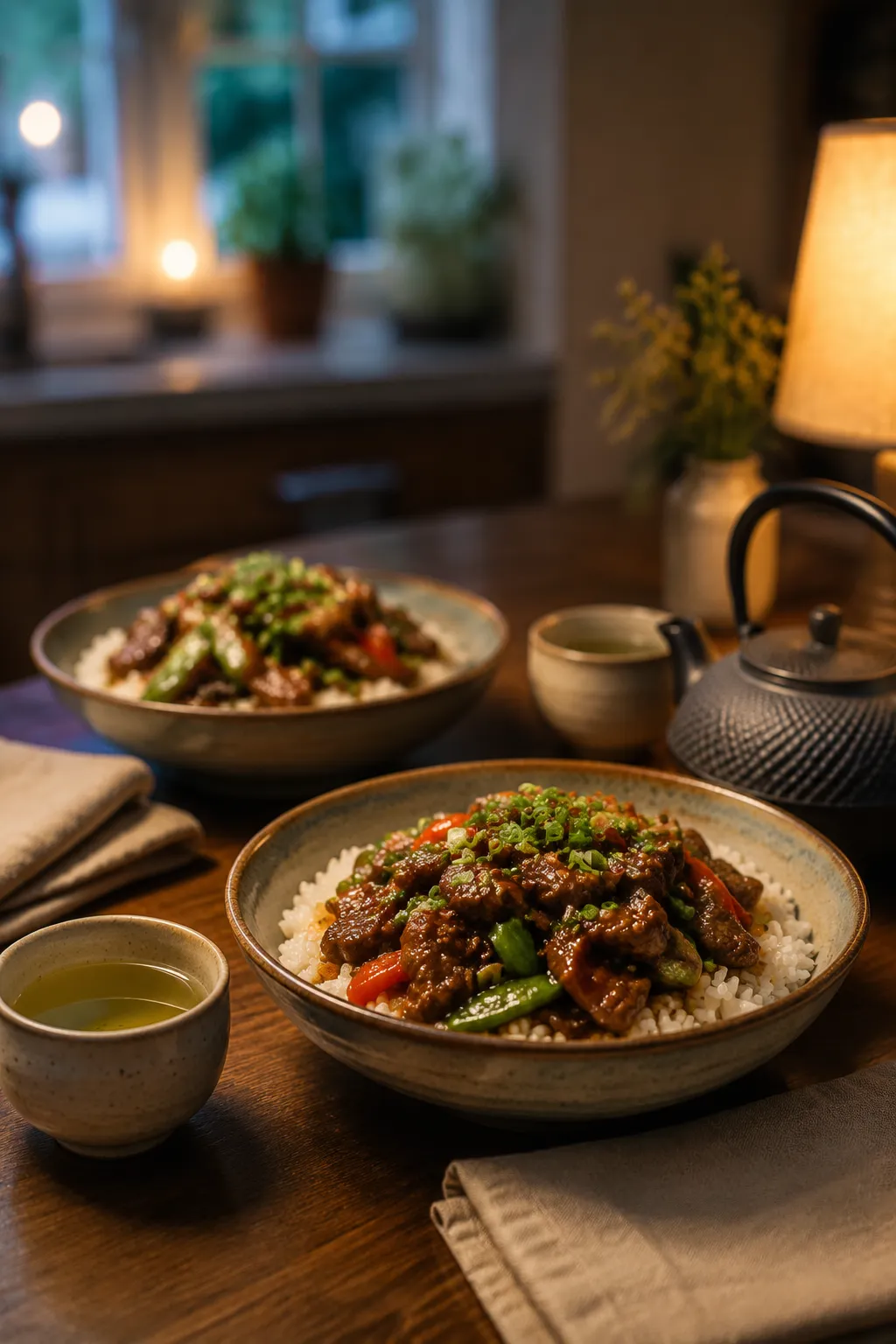
A 25-minute beef stir fry recipe with melt-in-your-mouth steak, crisp-tender veggies, and a glossy garlic-ginger sauce that beats any takeout.
Why You'll Love This Recipe
Faster than takeout: Once the ingredients are prepped, the whole dish cooks in about 10 minutes.
Tender, never chewy beef: Thin slicing plus a quick velveting-style coating helps the steak stay juicy in the hot wok.
Glossy, balanced sauce: Soy sauce, oyster sauce, garlic, ginger, sesame oil, brown sugar, and cornstarch create a savory-sweet glaze that clings beautifully.
One-pan cleanup: Everything cooks in one wok or large skillet, making this ideal for busy weeknights.
Easy to customize: Swap in your favorite vegetables, turn up the heat, or serve it over rice, noodles, or grain bowls.
This beef stir fry recipe is the weeknight dinner I reach for when I want something fast, glossy, deeply savory, and a little better than takeout. Thin slices of flank steak get a quick restaurant-style tenderizing treatment, then hit a hot wok with broccoli, red bell pepper, and a garlicky ginger sauce that clings to every bite.
The magic is in the order: prep everything first, sear the steak hard and fast, stir fry the vegetables just until crisp-tender, then toss it all together at the end. You get juicy stir fry beef instead of gray, steamed meat, plus vegetables that still have color and snap. Serve it over rice, tuck it into bowls, or pile it onto noodles for a dinner that feels like a reward after a long day.
What Makes This Saucy Steak Stir Fry So Good
Great beef stir fry is all about contrast: tender beef, crisp vegetables, and a sauce that is glossy rather than watery. This version borrows the velveting idea from Chinese restaurant cooking, where a quick coating helps protect the meat from the intense heat of the wok. The sauce is intentionally simple, built from soy sauce, oyster sauce, brown sugar, cornstarch, sesame oil, and plenty of garlic and ginger. It tastes rich and layered, but you are not opening a dozen bottles or hunting down specialty ingredients.
This is also a flexible template for busy cooks. If you have broccoli and peppers, use them; if you have snap peas, mushrooms, carrots, or zucchini, they can join the pan too. The important part is slicing everything before the heat goes on, because once you start cooking, stir fry moves quickly. If you have ever wished an easy beef stir fry could taste as polished as your favorite neighborhood takeout spot, this is the method to keep in your back pocket.
Ingredients for Tender Beef and Glossy Sauce
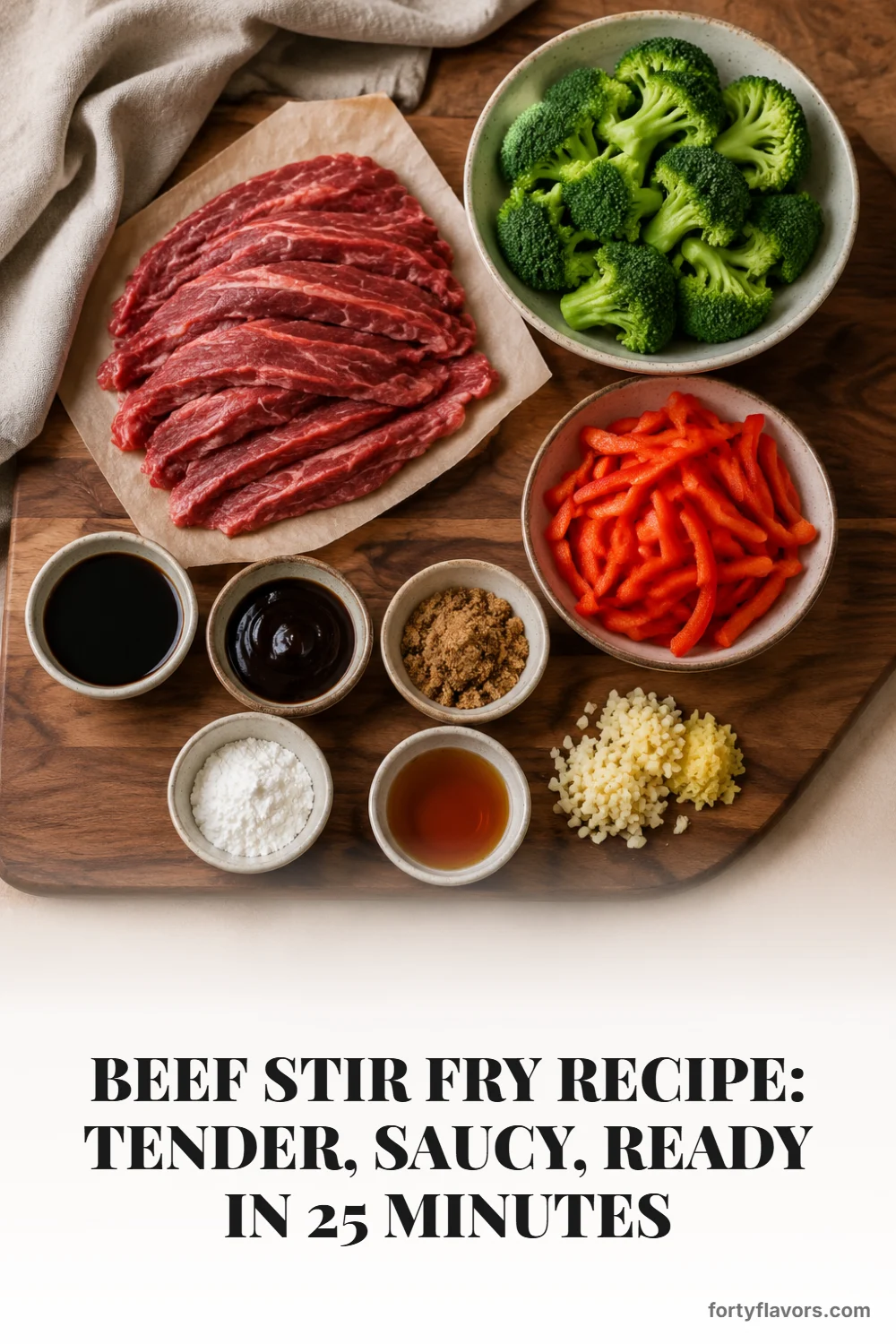
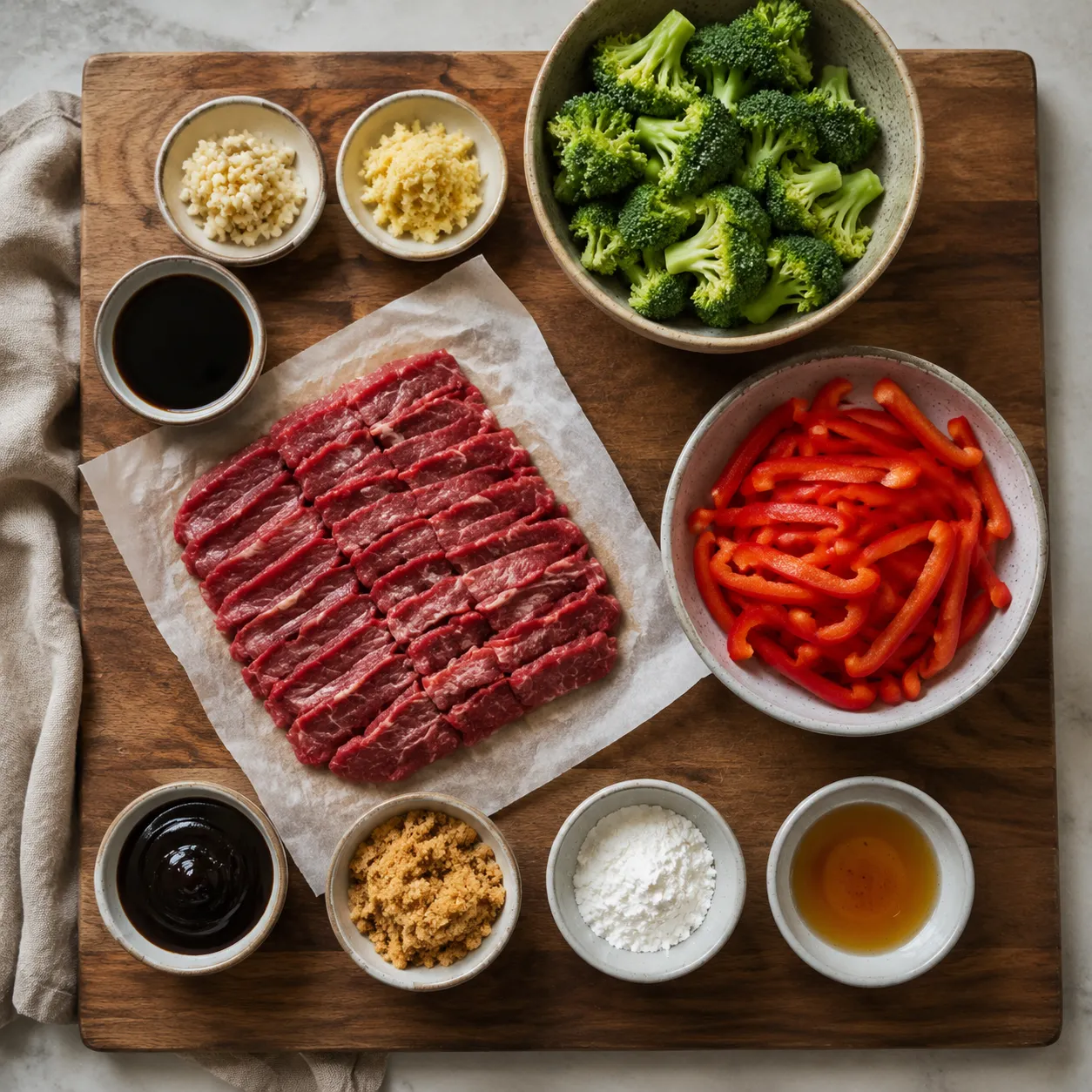
The backbone of this dish is flank steak, a lean, flavorful cut that becomes beautifully tender when sliced thinly against the grain. If you are comparing options at the butcher counter, the best cut of steak for stir fry is one with bold beefy flavor and a visible grain you can cut across, which is why flank, skirt, sirloin, and flat iron all work well. The vegetables here are broccoli florets and red bell pepper because they can take high heat without collapsing, and their green-red color makes the finished bowl look fresh and vibrant.
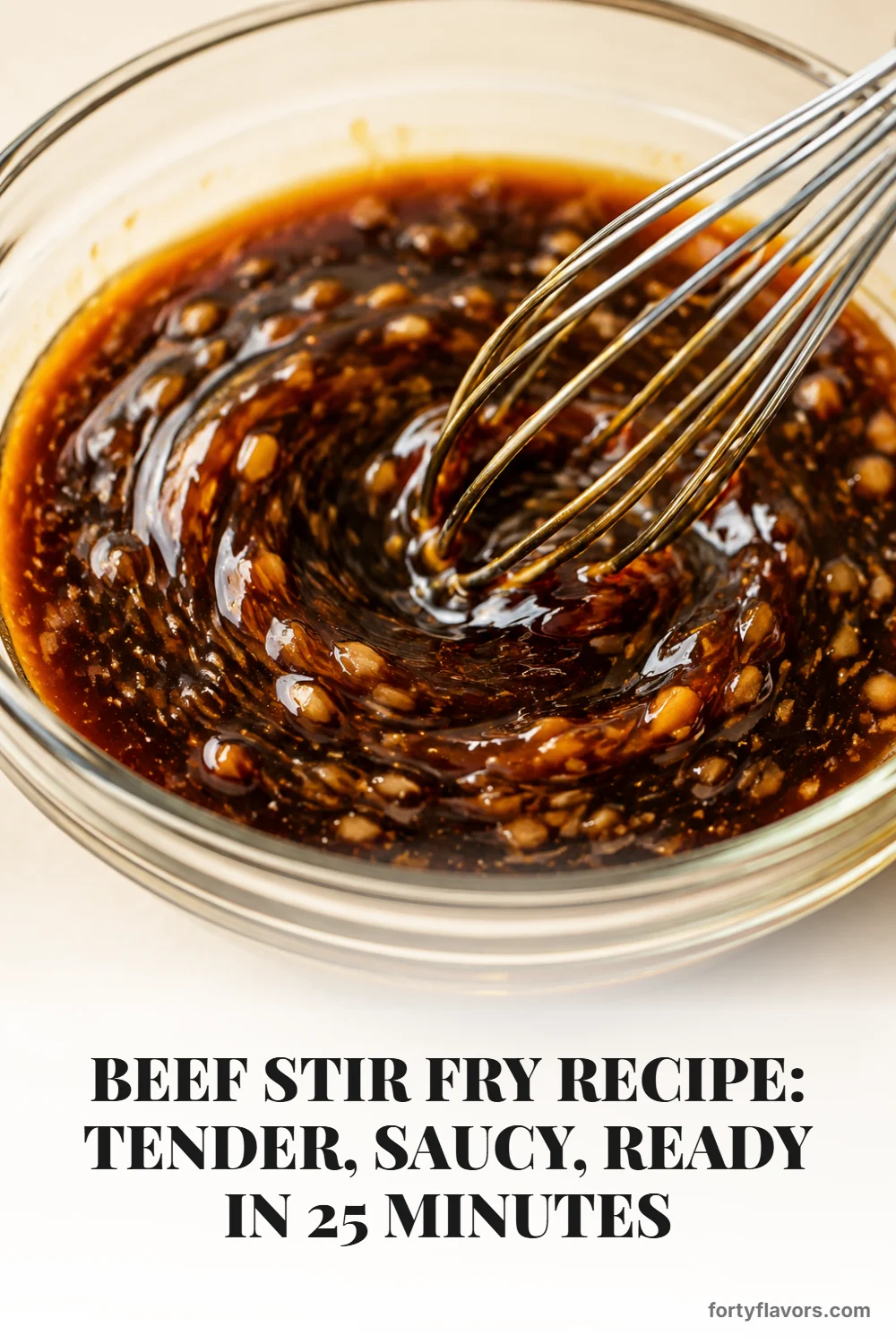
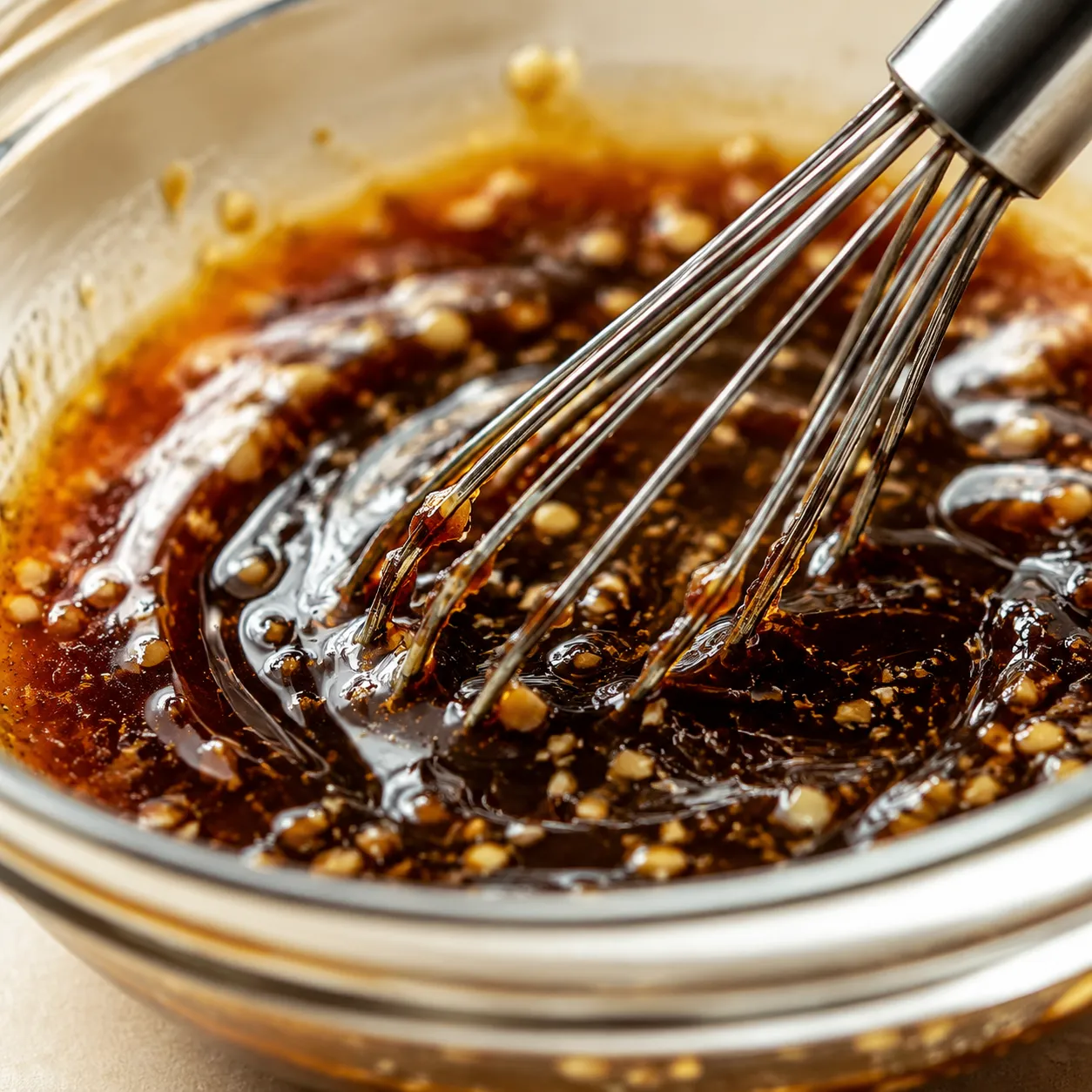
For the stir fry sauce, you will whisk together low-sodium soy sauce, oyster sauce, brown sugar, cornstarch, toasted sesame oil, garlic, and fresh ginger. The cornstarch is not just a thickener; it helps the sauce turn shiny and clingy the moment it hits the hot pan. Oyster sauce brings savory depth, brown sugar rounds the edges, and sesame oil adds that warm nutty finish. If you already love a good stir fry sauce recipe, think of this as the weeknight-friendly ratio you can memorize and riff on.
How to Velvet Beef for a Tender Wok Dinner
Velveting sounds fancy, but it is simply a quick way to keep thinly sliced beef juicy during high-heat cooking. In many restaurant kitchens, meat is coated with a mixture of cornstarch, liquid, and seasonings before it is cooked, creating a delicate barrier around the surface. For home cooking, you can keep it easy: toss the sliced steak with soy sauce and cornstarch, and if you want extra insurance, use a tiny pinch of baking soda first for 10 to 15 minutes, then rinse and pat dry before marinating.
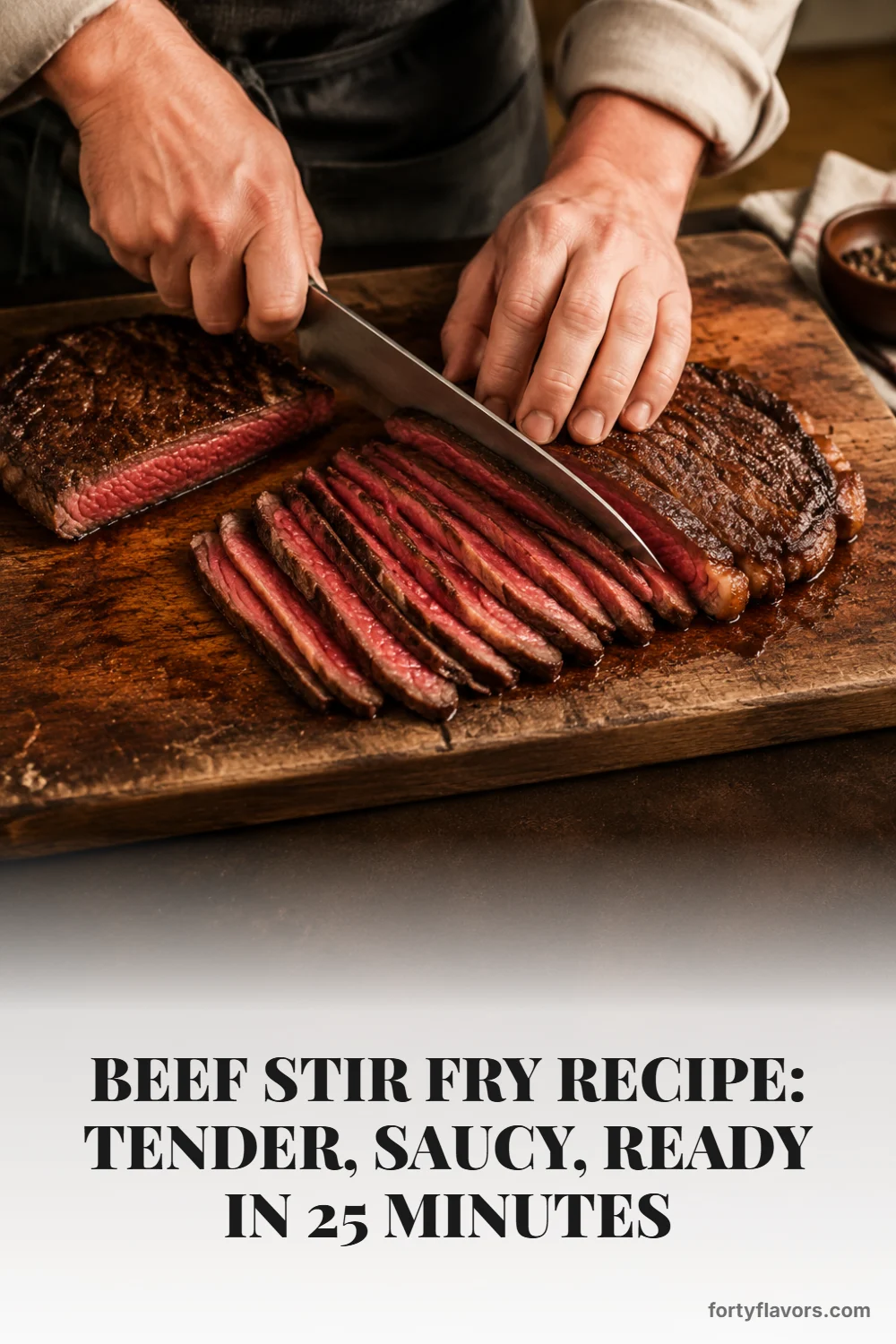
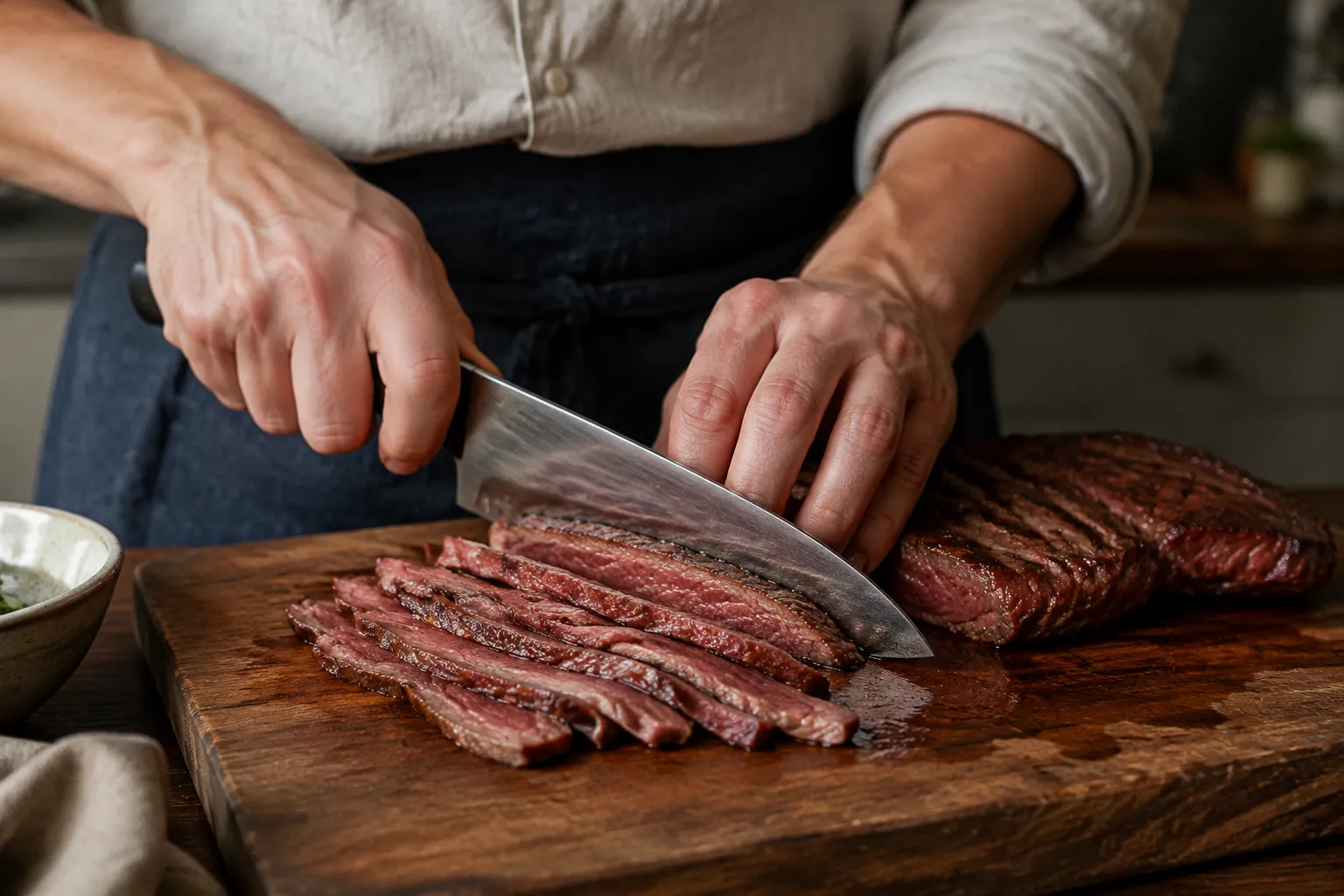
The most important step is slicing against the grain. Look for the long muscle fibers running through the flank steak, then cut across them into thin strips so each bite feels tender instead of stringy. If the steak is soft and slippery, pop it in the freezer for 15 minutes; slightly firm beef is much easier to slice cleanly. For anyone curious about how to velvet beef, this simple cornstarch-and-soy coating is the perfect place to start because it delivers noticeable tenderness without complicating dinner.
How to Make a Fast Wok-Style Beef Dinner
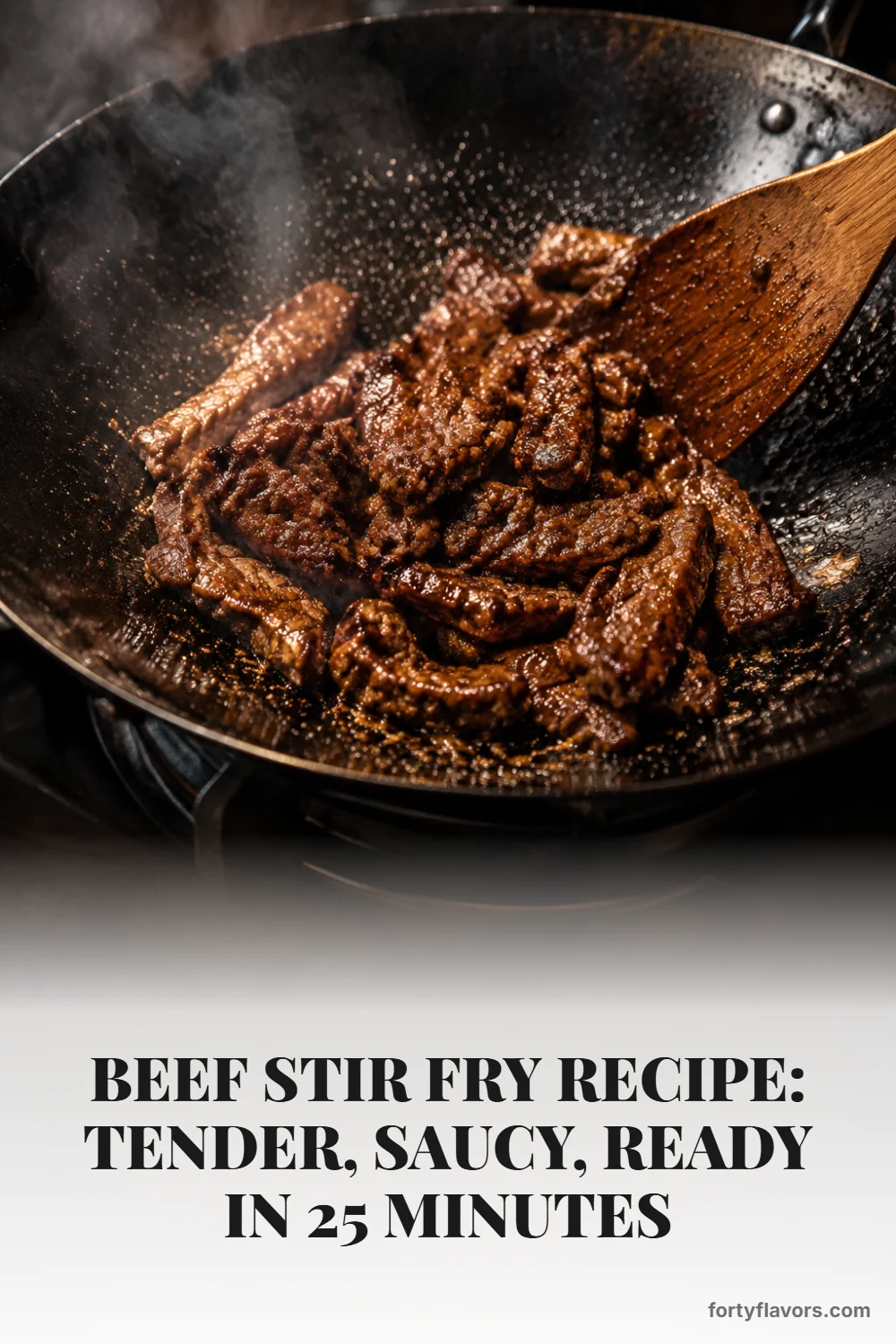
Start by slicing the steak thinly, then toss it with a portion of the soy sauce and cornstarch while you prepare the vegetables. Whisk the sauce in a small bowl before the pan gets hot, because there is no time to measure once the beef starts searing. You want the wok or large skillet hot enough that a drop of water sizzles immediately, and you want your oil shimmering but not smoking aggressively. This is the difference between browned beef and meat that releases juices too early.
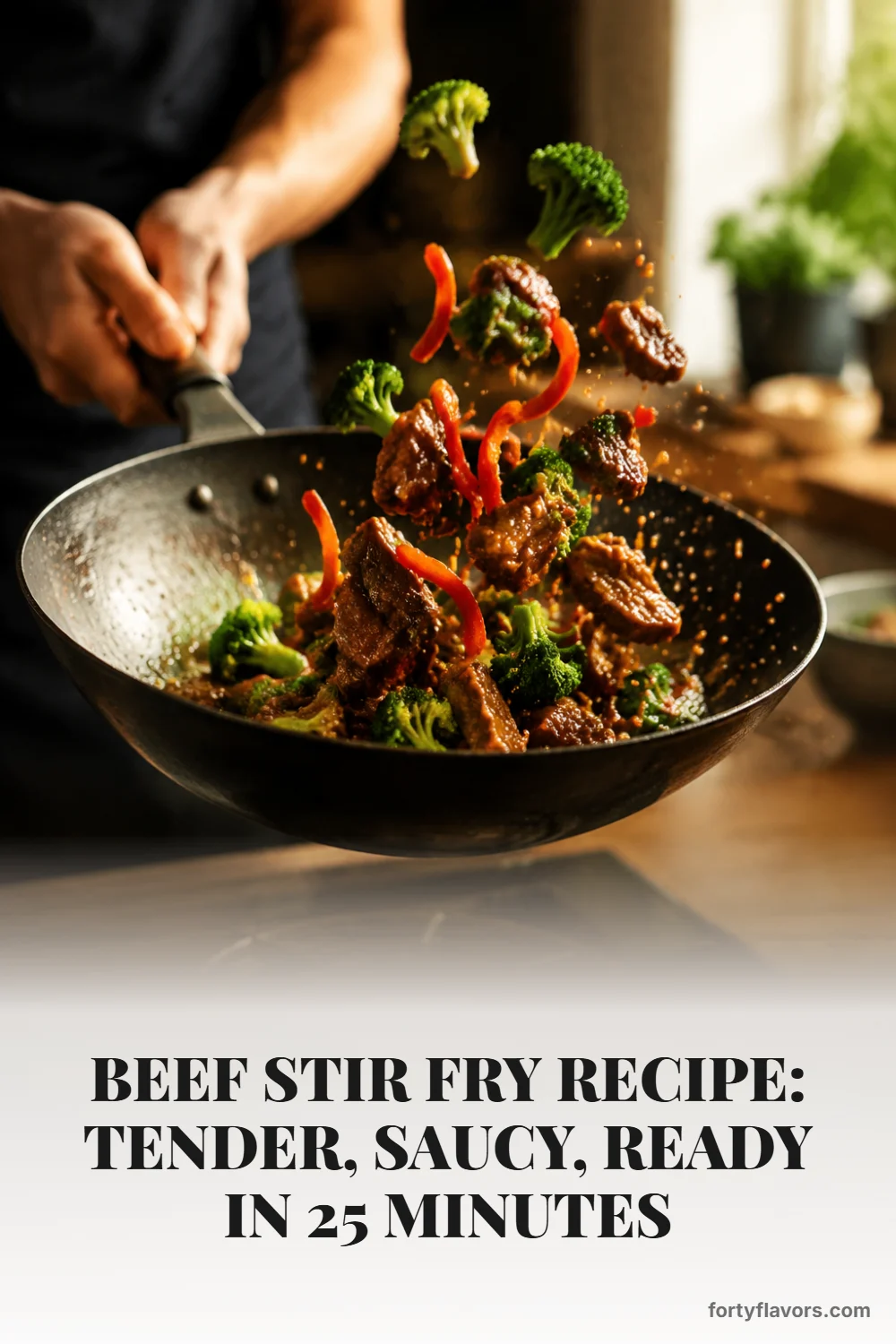
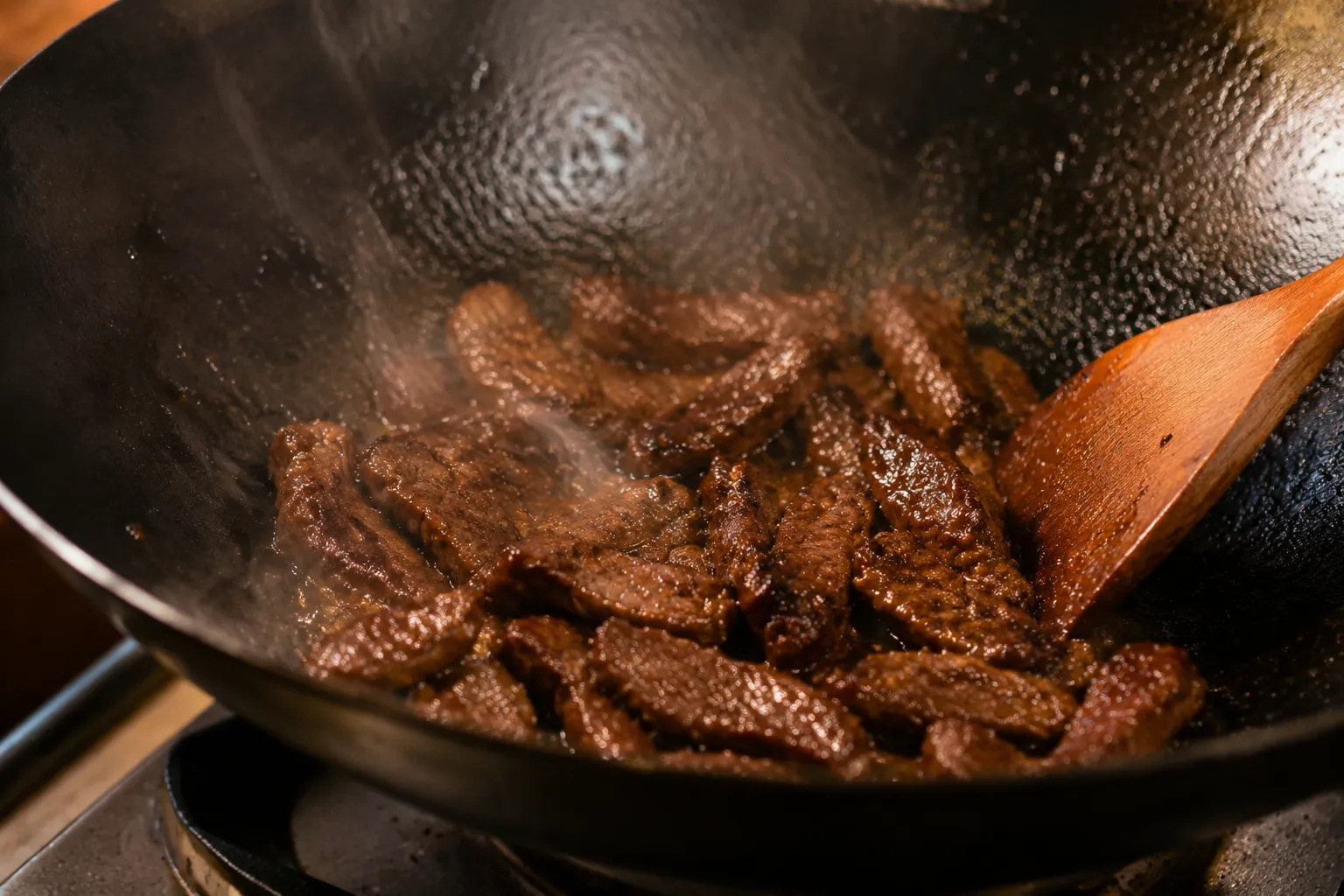
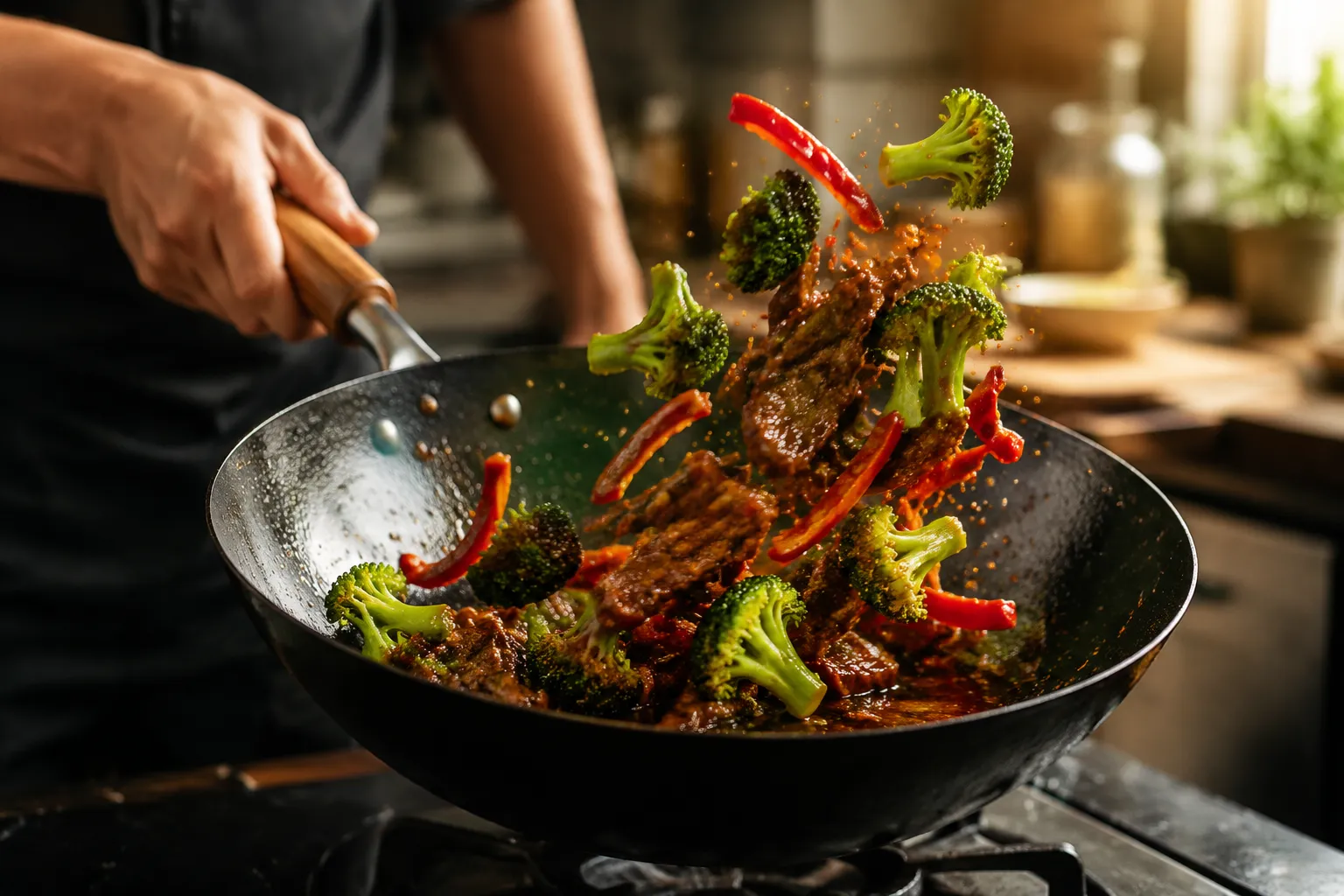
Sear the beef in batches so the strips have room to make contact with the pan. If you overcrowd the wok, the steak will steam, and the crusty browned edges that make beef stir fry dishes so satisfying will never develop. Pull the beef out while it is just cooked or even a touch shy of done; it will finish when everything gets tossed with the sauce. Then add the broccoli and bell pepper, stirring often, until the broccoli turns bright green and the peppers soften slightly at the edges.
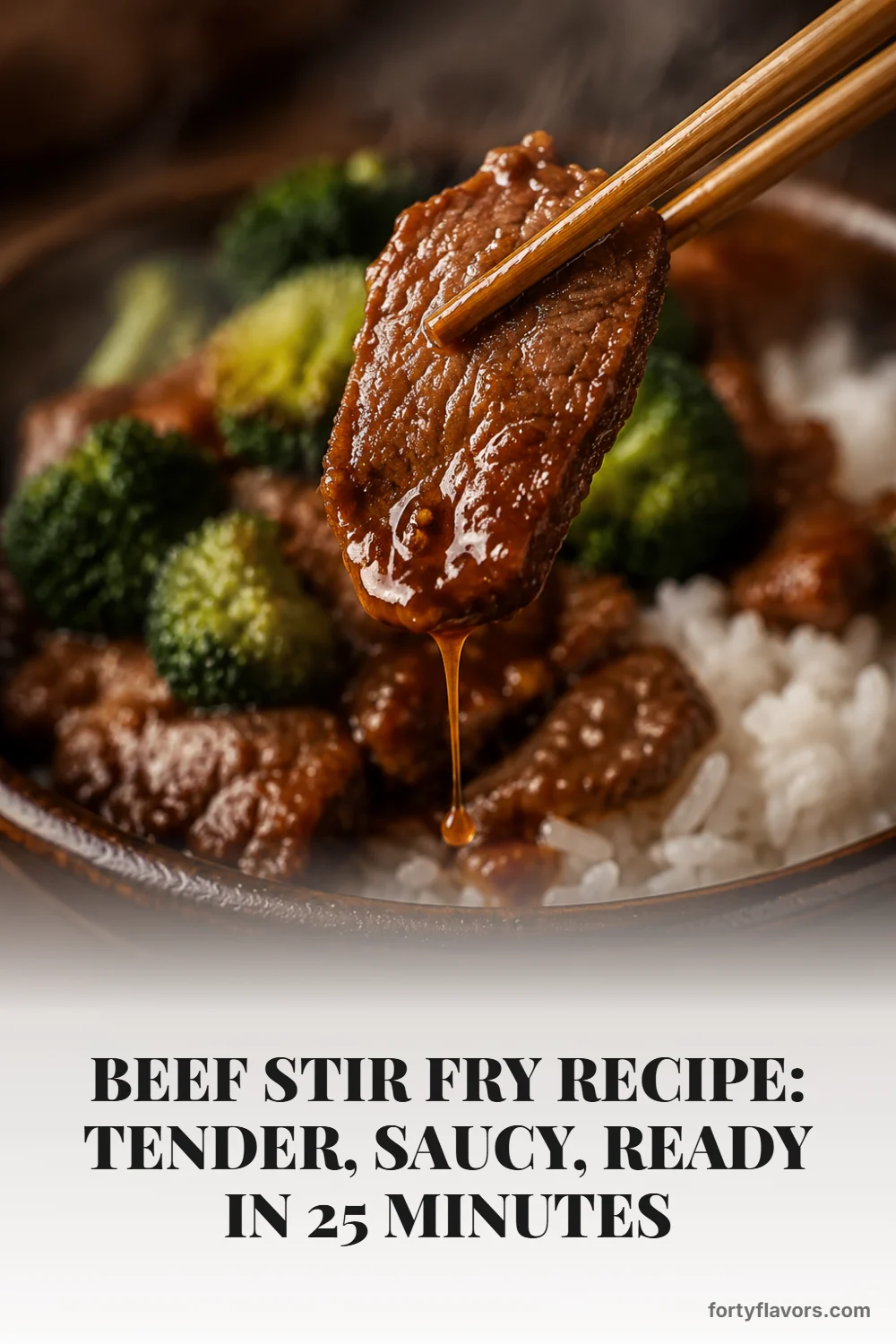
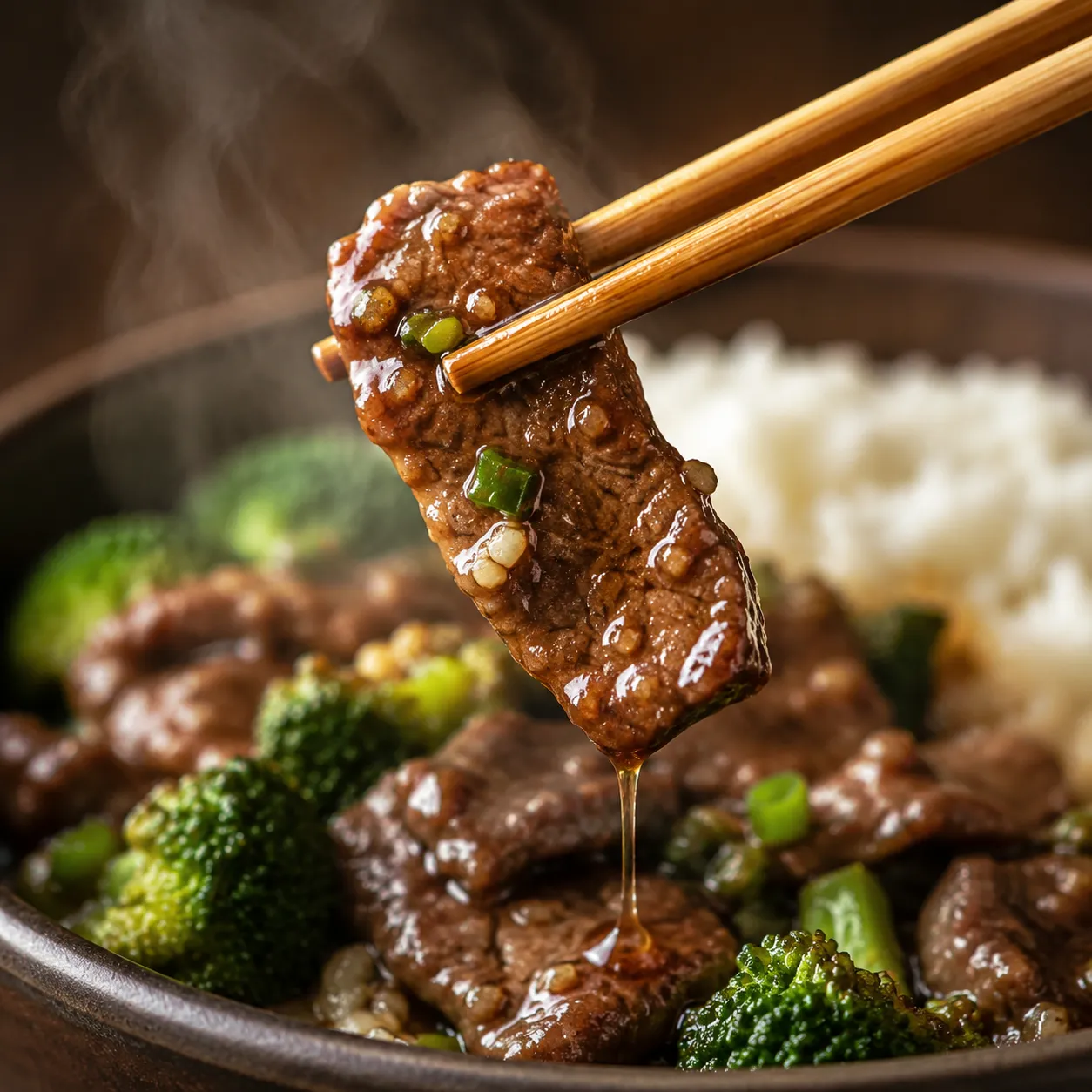
Once the vegetables are crisp-tender, return the beef to the pan and pour in the sauce. The cornstarch will activate almost instantly, bubbling into a lacquered glaze that coats the meat and vegetables. Toss constantly for a minute or two so nothing sticks and the garlic does not scorch. When the sauce looks glossy and the beef is fully coated, you are done.
Building Flavor with Garlic, Ginger, and High Heat
The classic combination of garlic and ginger is what makes this pan smell incredible the second the sauce hits the heat. Garlic brings savory sweetness, while fresh ginger adds brightness and a little peppery warmth that keeps the sauce from feeling heavy. Because both can burn quickly, they are whisked into the sauce instead of fried alone for too long. This keeps the flavor bold but balanced, with no bitter edges.
High heat is just as important as the aromatics. A carbon-steel wok is ideal because it heats quickly and gives the beef those browned, smoky edges, but a large cast-iron or stainless skillet works too. The key is using enough surface area and cooking in batches when needed. If you are making a steak stir fry recipe for the first time, remember that color equals flavor, so let the beef sear briefly before tossing it around.
Serving Suggestions for Rice, Noodles, and Bowls
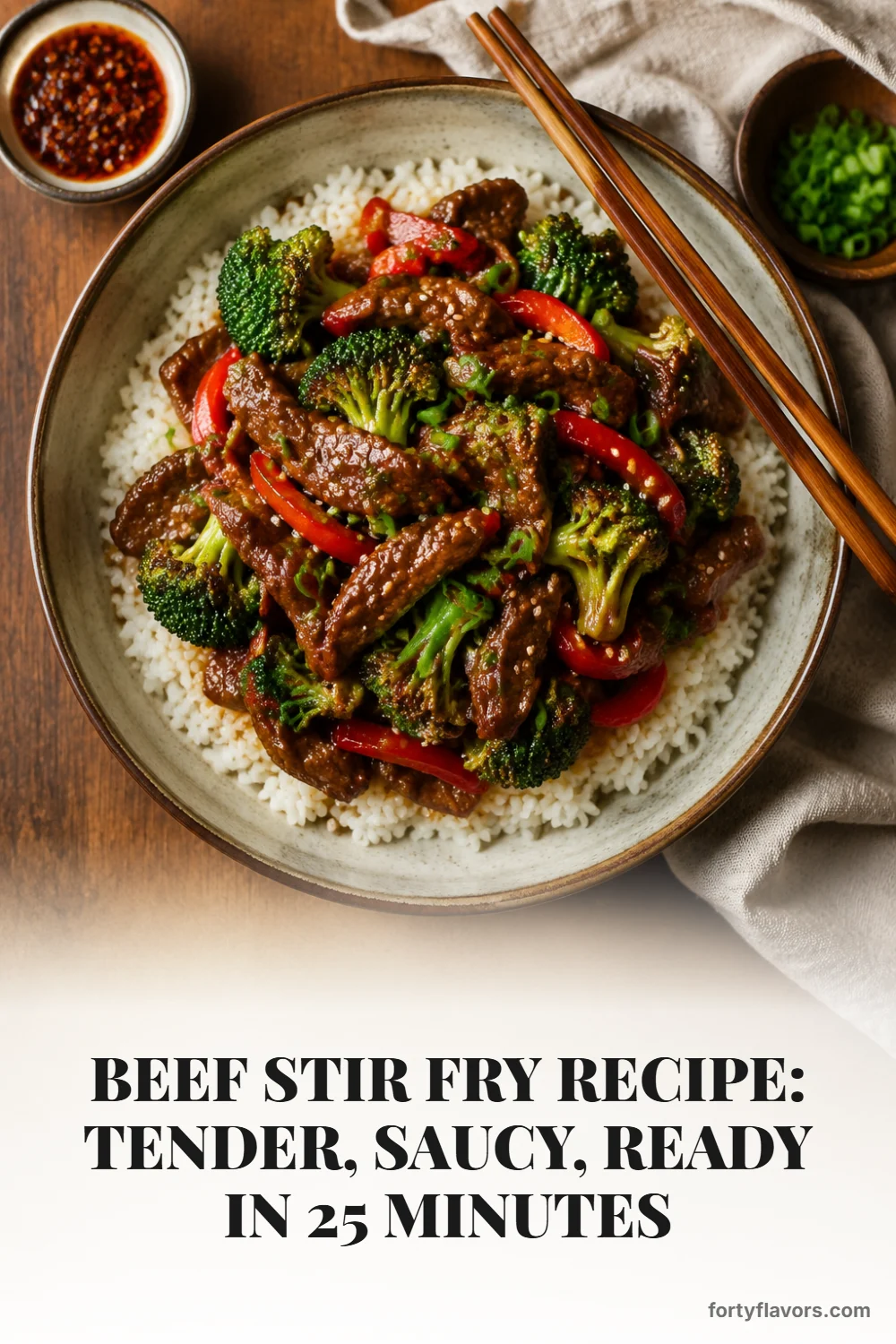
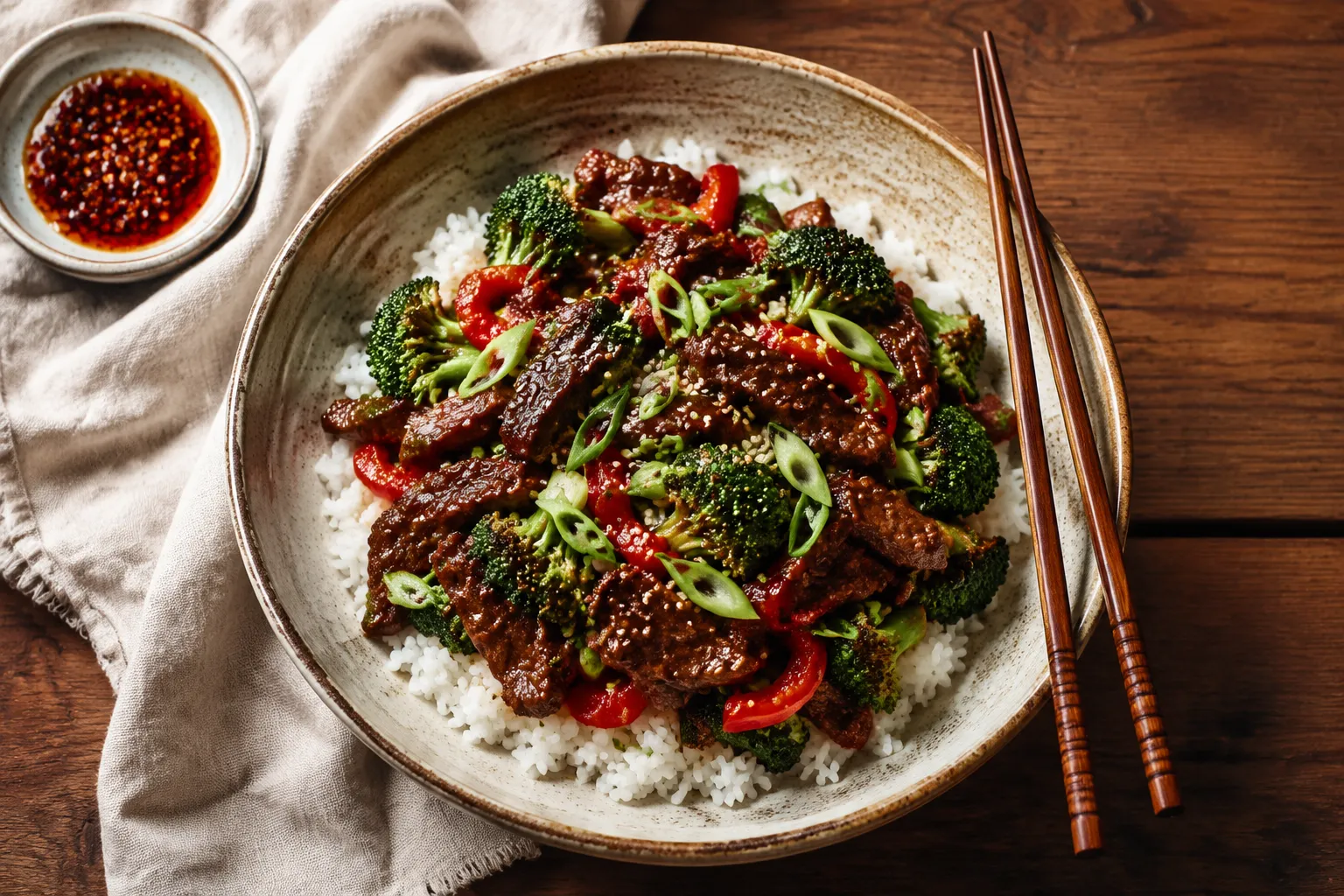
This saucy stir fry is happiest over a bed of hot jasmine rice, where every drop of the savory glaze can settle into the grains. Brown rice, coconut rice, or steamed short-grain rice are also lovely if that is what you have. For noodles, try rice noodles, lo mein-style egg noodles, or even ramen noodles tossed lightly with sesame oil before serving. Add sliced scallions, sesame seeds, chili crisp, or a squeeze of lime to wake everything up at the table.
If you like dinner bowls, this fits right into the world of Asian rice bowl recipes. Spoon the beef and vegetables over rice, then add cucumber slices, shredded carrots, kimchi, quick-pickled onions, or a jammy egg. It is also a great partner for a light salad with sesame dressing or simple steamed edamame. And if someone at the table does not eat beef, the same sauce profile works beautifully with a chicken stir fry recipe, shrimp, or tofu.
Make It Fit Your Weeknight
This dish is designed to be practical, not precious. You can slice the beef in the morning, wash and chop the vegetables ahead of time, and whisk the sauce before work so dinner becomes a quick toss-and-sizzle situation. Keep the components separate until cooking so the vegetables stay crisp and the beef does not sit too long in the cornstarch mixture. With a little prep, the actual cooking time is shorter than waiting for delivery.
The same base also lets you use up odds and ends from the crisper drawer. Broccoli stems can be peeled and sliced thin, half an onion can go into the wok, and a handful of mushrooms adds extra savoriness. Just keep the pieces similar in size so they cook at the same pace. A balanced pan should feel generous and colorful, with enough sauce to coat everything without drowning it.
A Better-Than-Takeout Dinner to Keep on Repeat
Once you learn the rhythm of slicing, velveting, searing, and saucing, homemade stir fry becomes one of the fastest dinners in your rotation. The beef stays tender, the vegetables keep their brightness, and the sauce tastes bold enough to satisfy a takeout craving without feeling too salty or heavy. It is the kind of meal that looks like you did a lot more work than you actually did.
Keep this method handy whenever you have a pound of steak and a few vegetables waiting in the fridge. The sauce ratio, hot-pan technique, and quick velveting step are the small details that make the final dish feel restaurant-quality. Serve it family-style from the wok or divide it into bowls with rice and all the garnishes. Either way, dinner lands on the table glossy, steamy, and ready in about 25 minutes.
💡 Expert Tips
Slice against the grain: Cutting across the muscle fibers makes each strip of beef much more tender.
Get the pan very hot: A hot wok gives the steak browned edges and keeps the vegetables crisp-tender.
Cook in batches: Crowding the pan traps steam, which can make the beef gray instead of seared.
Prep before cooking: Stir fry moves quickly, so have the sauce mixed, vegetables chopped, and rice ready before turning on the burner.
Finish with the sauce briefly: Add the sauce at the end and toss just until glossy so it does not over-reduce or turn sticky.
🔄 Variations & Substitutions
Use the same beef, sauce method, and hot-wok technique as a base, then change the vegetables and seasonings to create several classic stir fry styles.
Mongolian-style: Add lots of sliced scallions and a little extra brown sugar for a sweeter, oniony finish.
Pepper steak: Double the bell peppers and add sliced onion for a colorful, steakhouse-inspired version.
Broccoli beef: Use 4 cups broccoli and skip the peppers for the takeout classic.
Spicy Szechuan twist: Stir in chili garlic sauce, dried chiles, or chili crisp for heat and a little tingle.
🧊 Storage & Leftovers
Store leftover beef stir fry in an airtight container in the refrigerator for up to 3 days. The sauce will thicken as it chills, so reheat gently in a hot skillet with a splash of water to loosen the glaze and revive the vegetables.
For best texture, avoid microwaving for too long, which can make the beef tougher and the vegetables soft. If you are meal prepping, store rice separately from the stir fry so the grains do not absorb all of the sauce.
Save This Recipe to Pinterest
Hover any image and hit “Pin it” to save it to your Pinterest boards.
Flank steak is the gold standard for stir fry because it has big beefy flavor, a clear grain, and a shape that is easy to slice thinly. Sirloin, skirt steak, and flat iron are also excellent choices. No matter which cut you use, the real secret is slicing thinly against the grain. Cutting across the muscle fibers shortens them, which makes each bite more tender. Slightly freezing the steak for 10 to 15 minutes can make clean, thin slicing much easier.
How do you make beef tender in stir fry?
The best way to make beef tender is to combine three techniques: slice it thinly against the grain, coat it with soy sauce and cornstarch, and cook it quickly over high heat. For an extra restaurant-style trick, toss the sliced beef with a tiny pinch of baking soda for about 15 minutes, then rinse and pat it very dry before marinating. That quick velveting step helps relax the meat’s surface so it stays juicy instead of turning chewy.
Can I make this beef stir fry recipe ahead of time?
Yes, and it is a great recipe to prep ahead. Slice the beef and chop the vegetables up to 24 hours in advance, then store them separately in the refrigerator. You can also whisk the sauce ahead and keep it in a jar or covered bowl. Wait to combine the beef with the cornstarch marinade until closer to cooking for the best texture. Once everything is prepped, the stir fry takes less than 10 minutes at the stove.
What can I substitute for oyster sauce?
Hoisin sauce is the easiest substitute if you want a similar glossy texture and a little sweetness, though it will taste slightly sweeter and less briny. You can also use extra soy sauce with a splash of Worcestershire sauce and a pinch of sugar to mimic some of oyster sauce’s savory depth. If you need a vegetarian option, look for mushroom-based vegetarian oyster sauce, which has excellent umami and works beautifully in stir fries.
How do I store and reheat leftover beef stir fry?
Refrigerate leftovers in an airtight container for up to 3 days. To reheat, warm a skillet over medium-high heat, add the stir fry with a small splash of water, and toss for 2 to 3 minutes until the sauce loosens and the beef is hot. This method keeps the vegetables livelier than the microwave. If using a microwave, heat in short bursts and stir between each one so the beef does not overcook.
Beef Stir Fry Recipe: Tender, Saucy, Ready in 25 Minutes