Vegan Cookies: The Ultimate Guide + 5 Easy Recipes
Ingredients
Scale
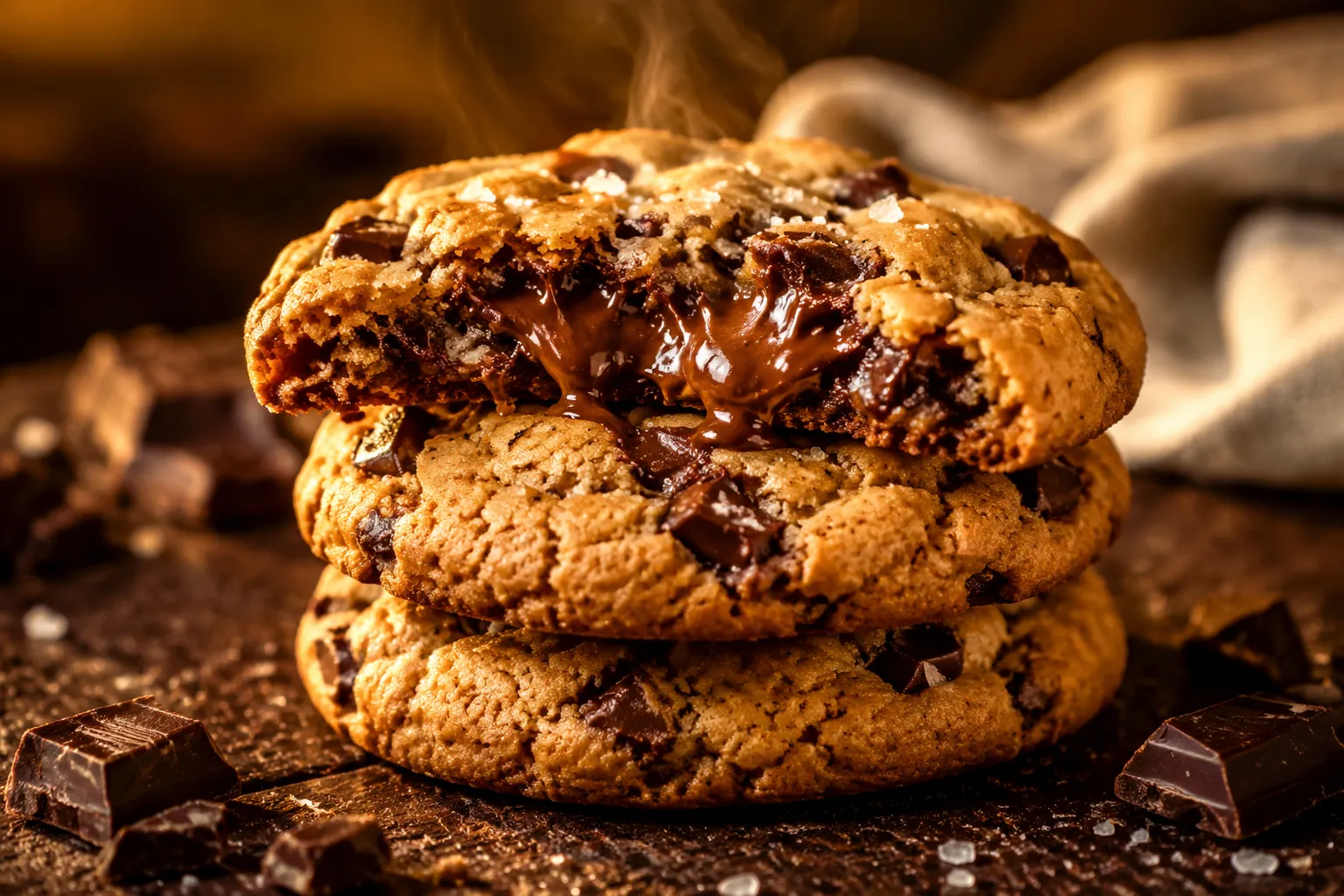
These vegan cookies are soft, chewy, and bakery-perfect. One master dough plus five flavor spinoffs, including peanut butter, sugar, gluten-free, and no-bake.
The best vegan cookies are not consolation prizes. They are not the cookies you eat because the dairy version is off-limits. They are golden-edged, chewy-centered, brown-sugar-laced bakery cookies that just happen to skip the eggs and butter, and once you have a dough you trust, you stop missing the original entirely.
I have spent more weekends than I can count testing dairy-free, egg-free cookie doughs in my home kitchen, looking for one that holds its shape, bakes up thick, and stays soft for days. This guide is the result. One master dough does the heavy lifting, and from there you can spin out chocolate chip, peanut butter, sugar cookies, a gluten-free version, and even a stovetop no-bake batch when the oven feels like too much.
If you are newly plant-based or just baking for someone who is, think of this as your cookie home base. Pin it, bookmark it, write it on the inside of the cabinet door. It is the only vegan cookies guide you really need.
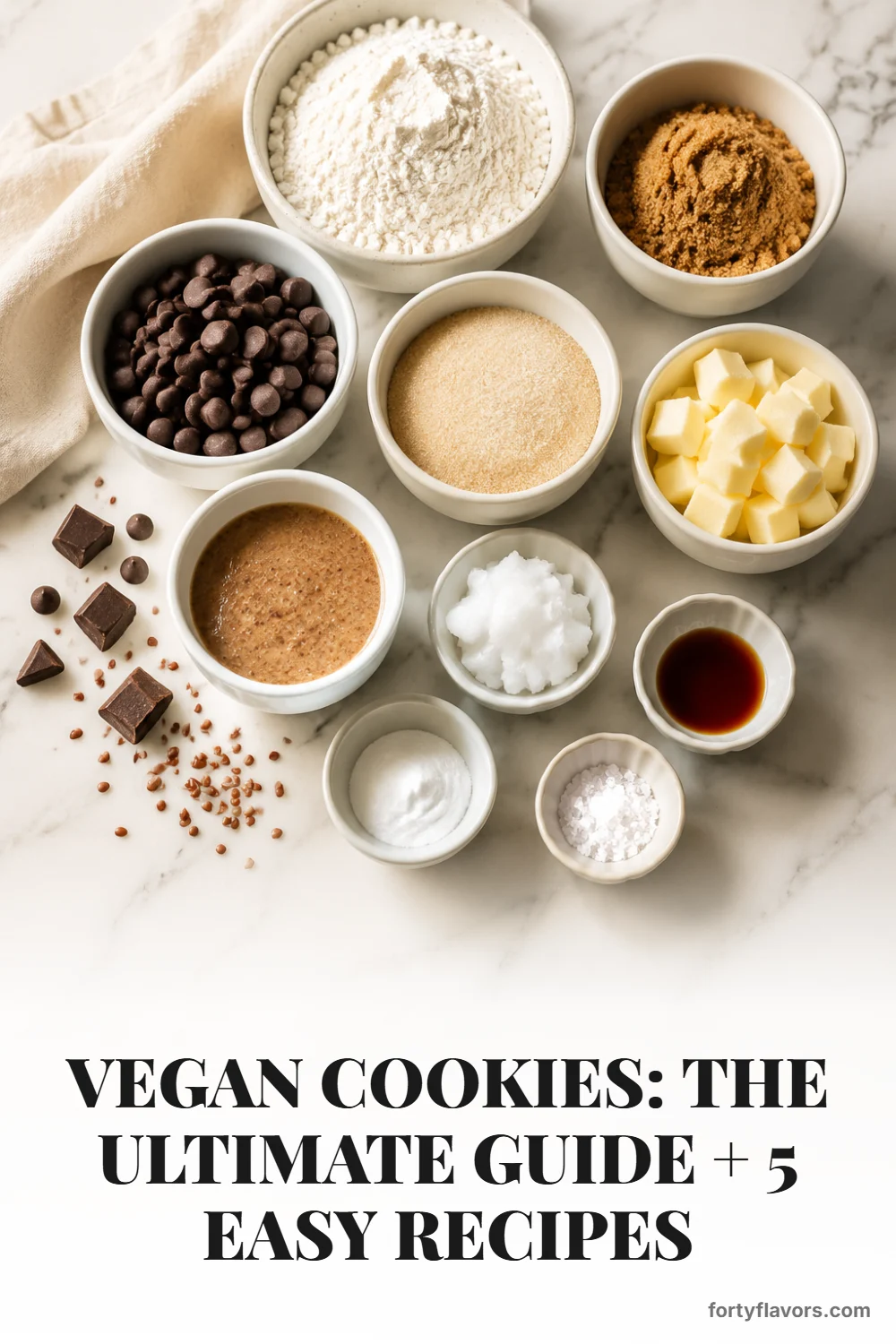
Most great cookies come down to fat, sugar, flour, and a binder, and the plant-based version is no different. The trick is choosing each component with intention, because there is no egg or buttermilk to bail you out if something is off. I lean on a hybrid fat (more on that below), a flax egg for structure, and a careful balance of brown and cane sugar for chew, color, and that classic toffee-edged flavor.
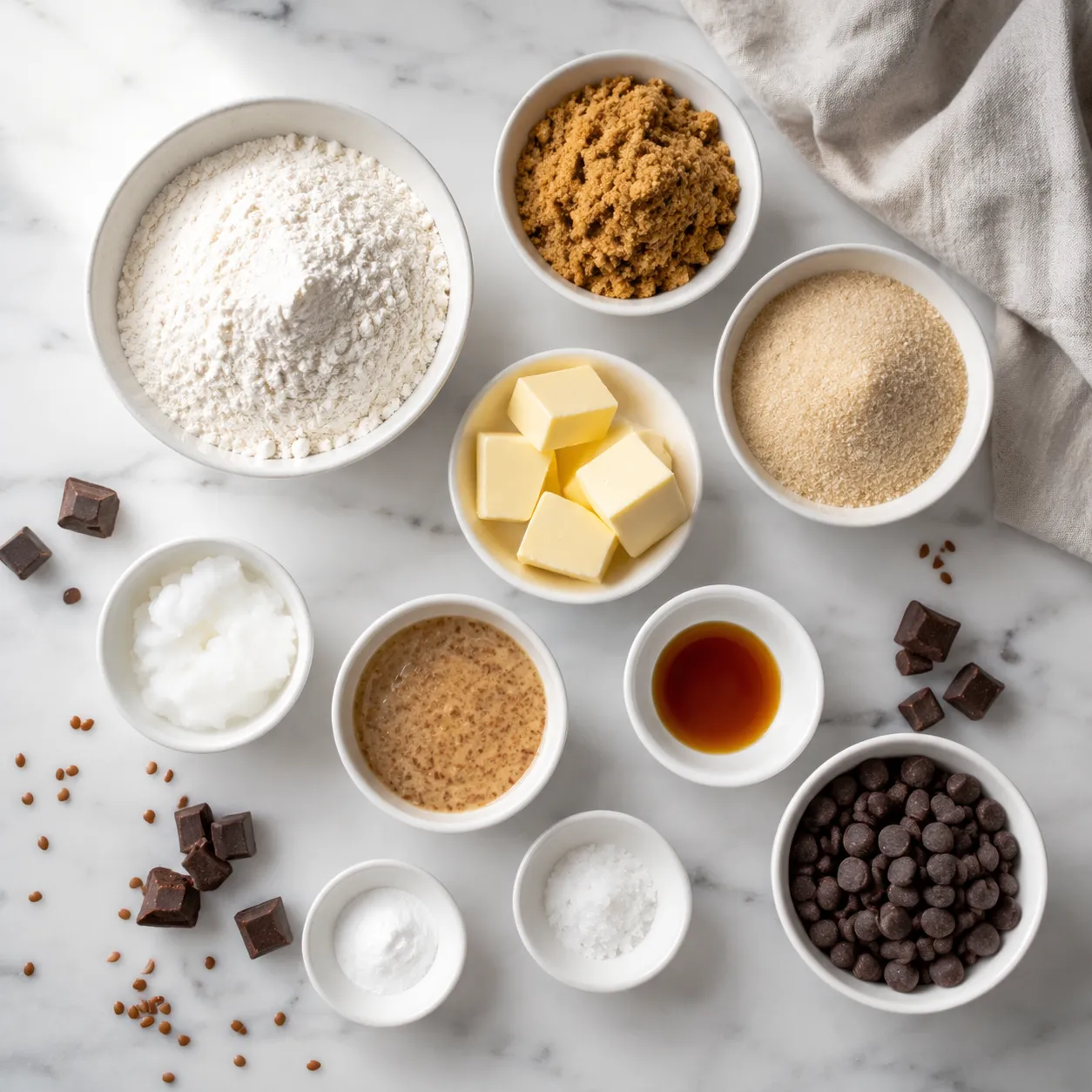
When it comes to the vegan butter substitute question, I almost always reach for a stick-style vegan butter (Miyoko's or Country Crock Plant Butter are my favorites) because they are formulated to behave like dairy butter in baking. Pure coconut oil works on its own, but it can make cookies greasy and quick to spread. My fix is a 50/50 blend of softened vegan butter and coconut oil. You get the flavor and creaming ability of butter plus the firmness coconut oil contributes once it cools.
The binder is a flax egg: 1 tablespoon of ground flaxseed whisked with 3 tablespoons of warm water and rested for 5 minutes until gloopy. It mimics the structure an egg yolk would provide, holds moisture in the dough, and brings a barely-there nuttiness that plays well with brown sugar. For flour, all-purpose works beautifully here, and a 1:1 gluten-free baking blend with xanthan gum (King Arthur Measure for Measure or Bob's Red Mill 1-to-1) swaps in cleanly. Skip almond flour and oat flour for this dough, they will not give you the same chew.
Sugar is where the personality lives. Brown sugar brings molasses, moisture, and the soft chew most of us are after. Cane sugar (or organic granulated, which is naturally vegan) gives crispness at the edges. A splash of pure maple syrup is optional but lovely in the no-bake variation. Together they hit that bakery sweet-salty balance, especially with a generous pinch of flaky sea salt on top.
This is where most dairy-free cookie recipes go sideways. People skip the chill, overmix the dough, or cream cold vegan butter and end up with flat, greasy disks. The fix is a slow, gentle mixing method and a non-negotiable rest in the fridge. I will walk you through the rhythm here, and the exact step-by-step is in the recipe card below.
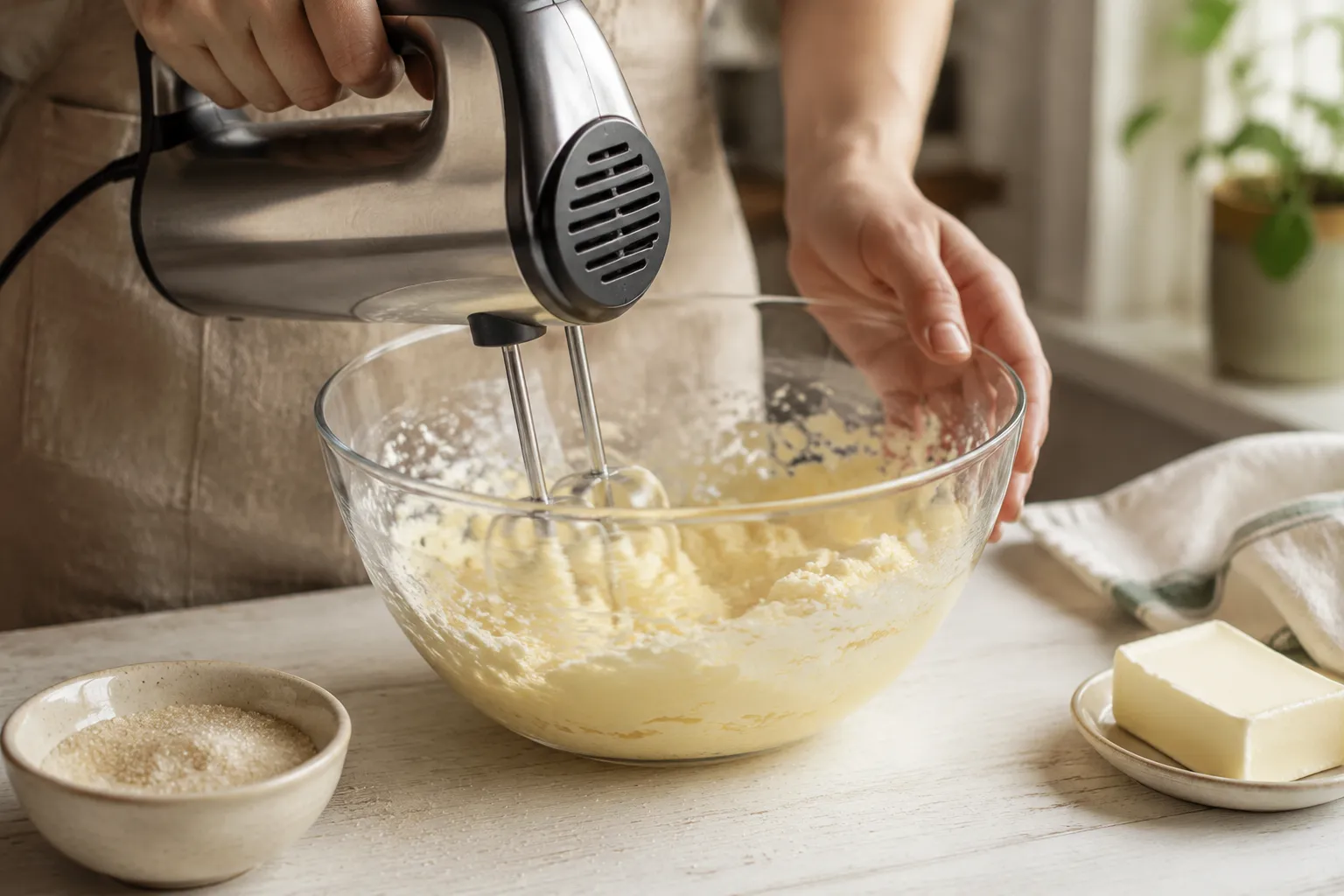
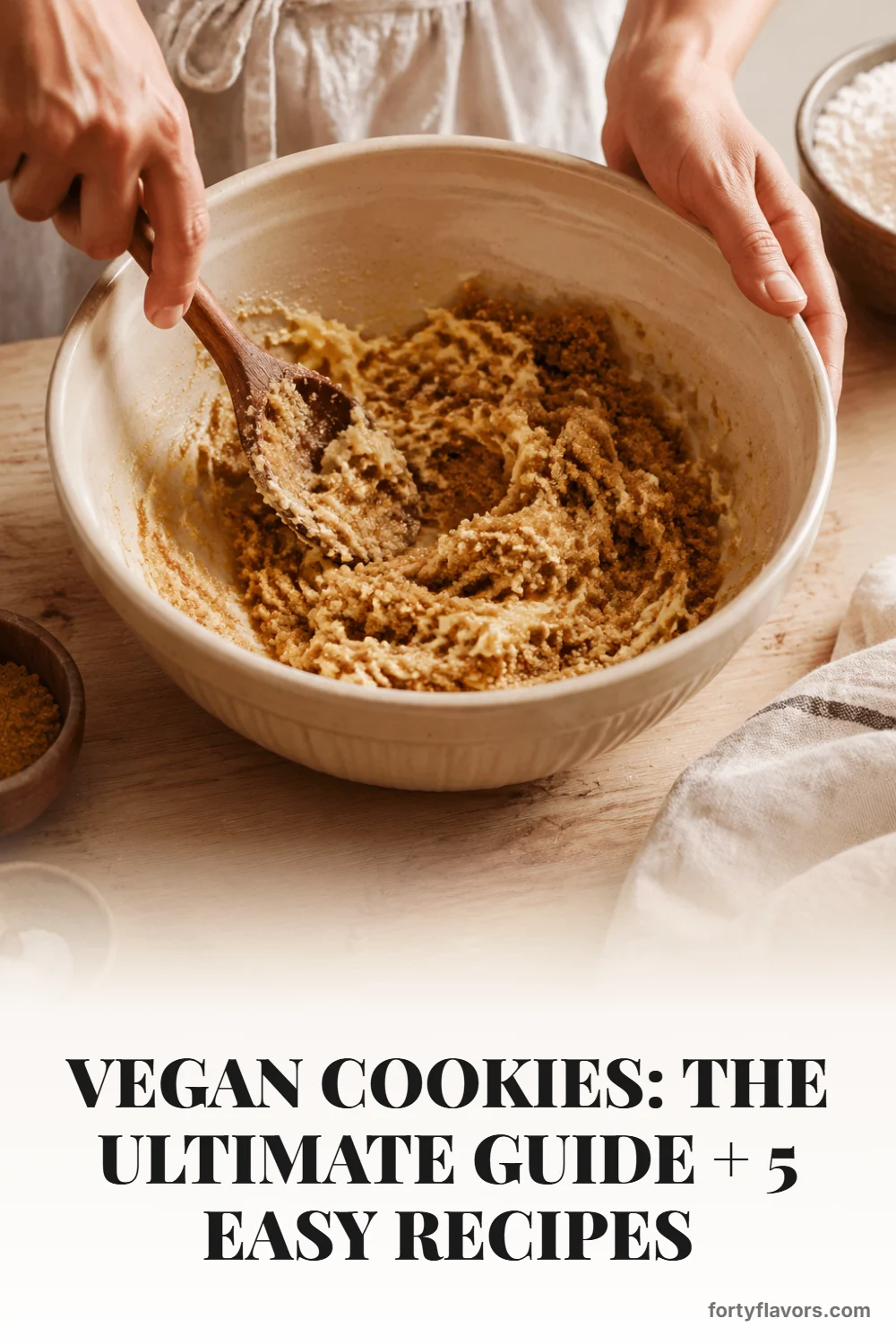
Start by softening your vegan butter just to room temperature, not melted. Cream it with the coconut oil and both sugars until pale, fluffy, and noticeably lighter, about 2 minutes by hand or 90 seconds with a mixer. This step traps air and is the only lift you get without eggs, so do not rush it. Whisk your flax egg in a separate small bowl and let it sit while you cream the fats; by the time you need it, it will be jelly-like and ready to bind.
Add the flax egg and vanilla to the creamed mixture and stir until smooth. In a second bowl, whisk the flour, baking soda, and salt together so the leavening is evenly distributed (clumps of baking soda will leave bitter spots in your cookies). Add the dry to the wet in two additions, mixing only until no flour streaks remain, then fold in your chocolate chips. The dough will look soft. That is normal.
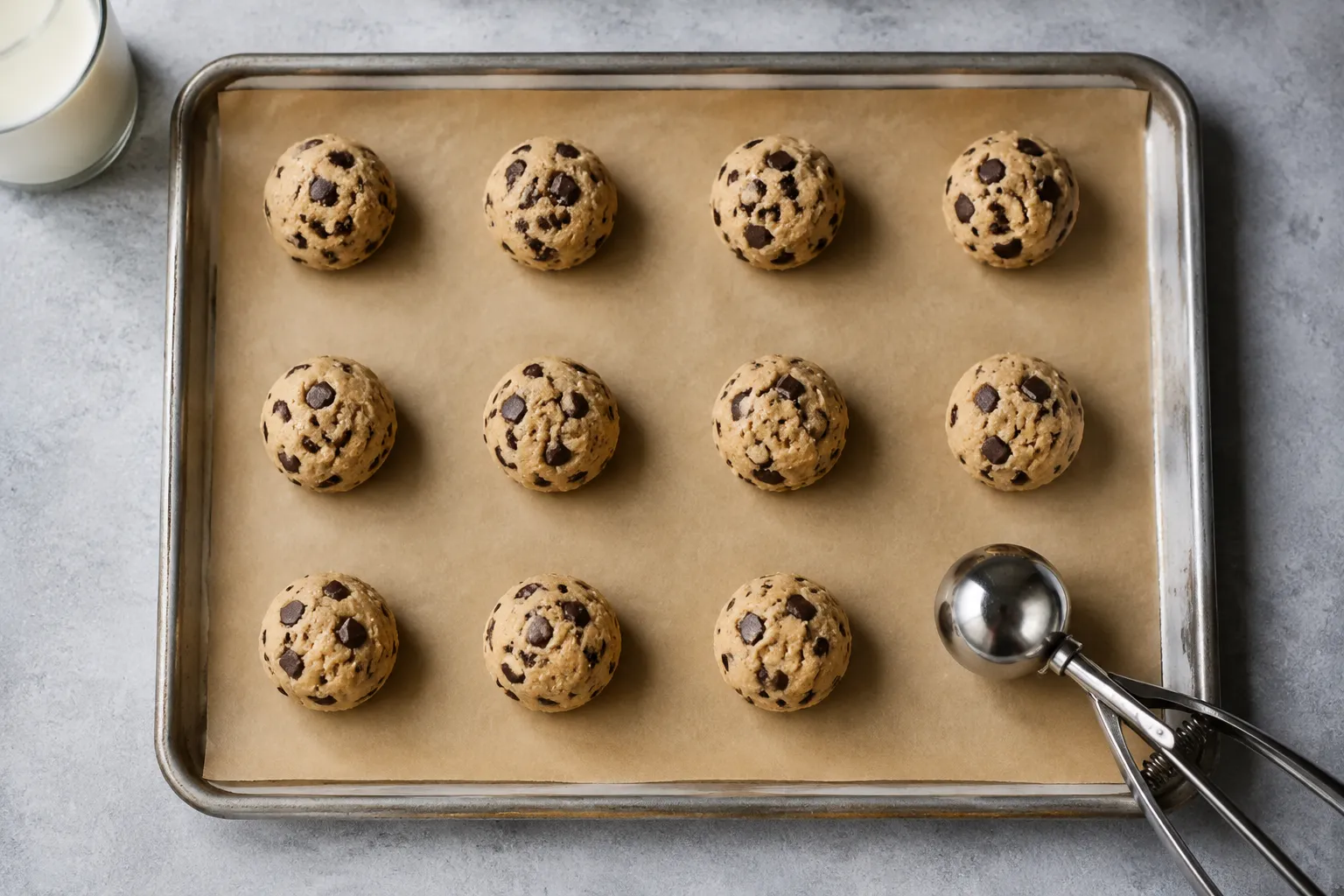
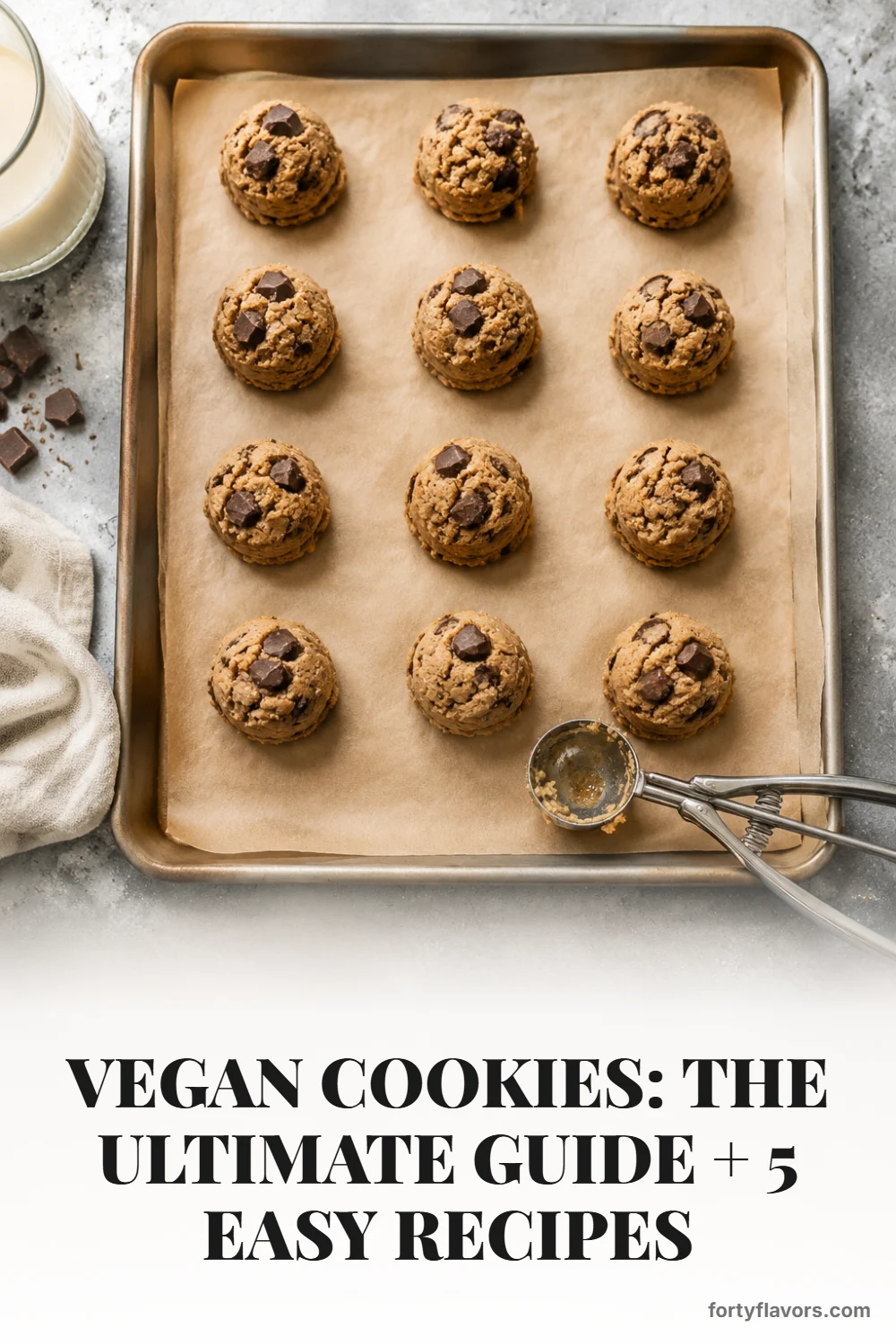
Now chill. At least 30 minutes in the fridge, ideally an hour. This hydrates the flour, firms the fats, and is the single biggest reason your vegan cookies will be thick and chewy instead of thin and oily. Scoop into 2-tablespoon balls, space them 2 inches apart on a parchment-lined sheet, and bake at 350°F until the edges are set but the centers still look a touch underdone. They keep cooking on the hot pan for the first 5 minutes out of the oven, which is exactly what you want.
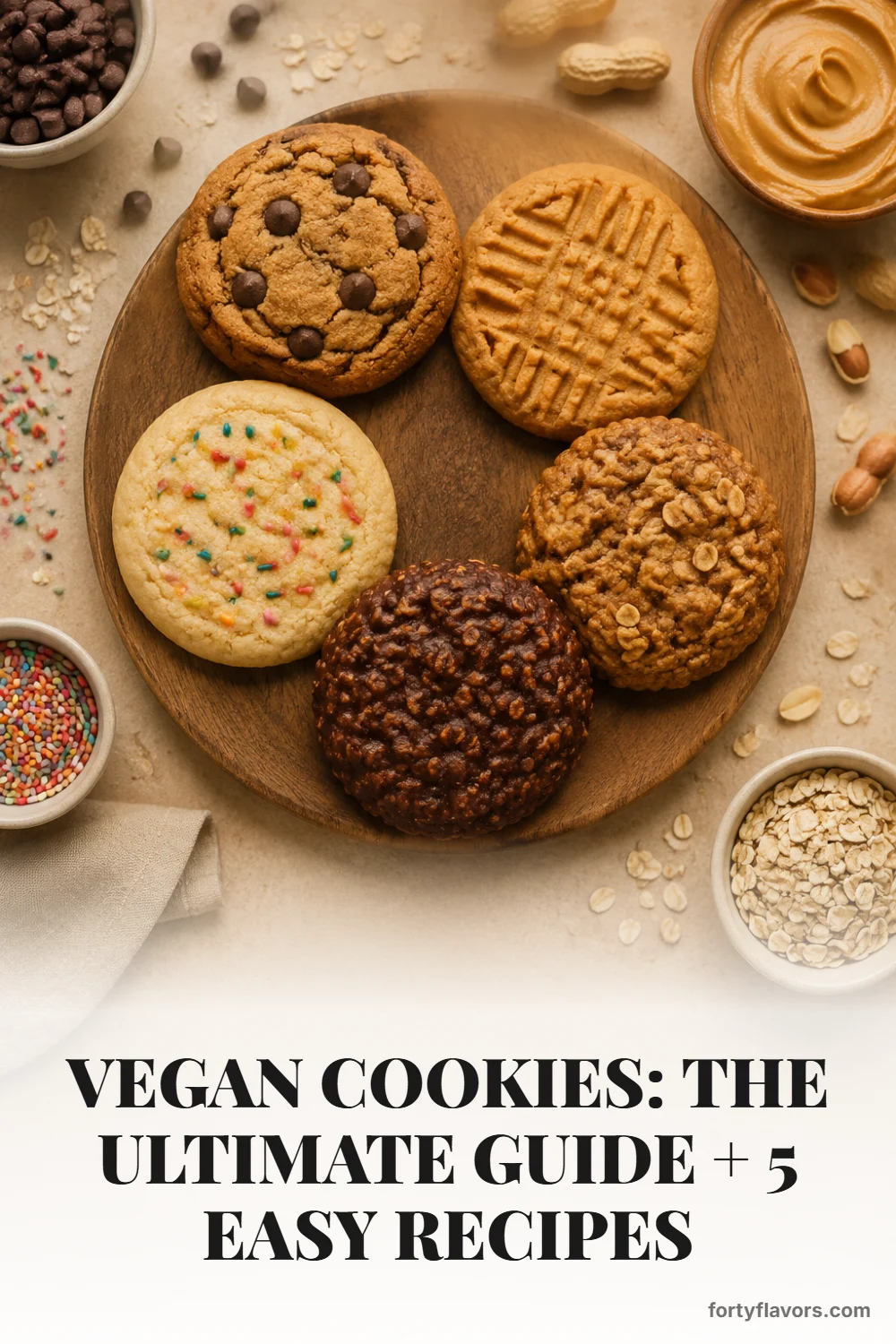
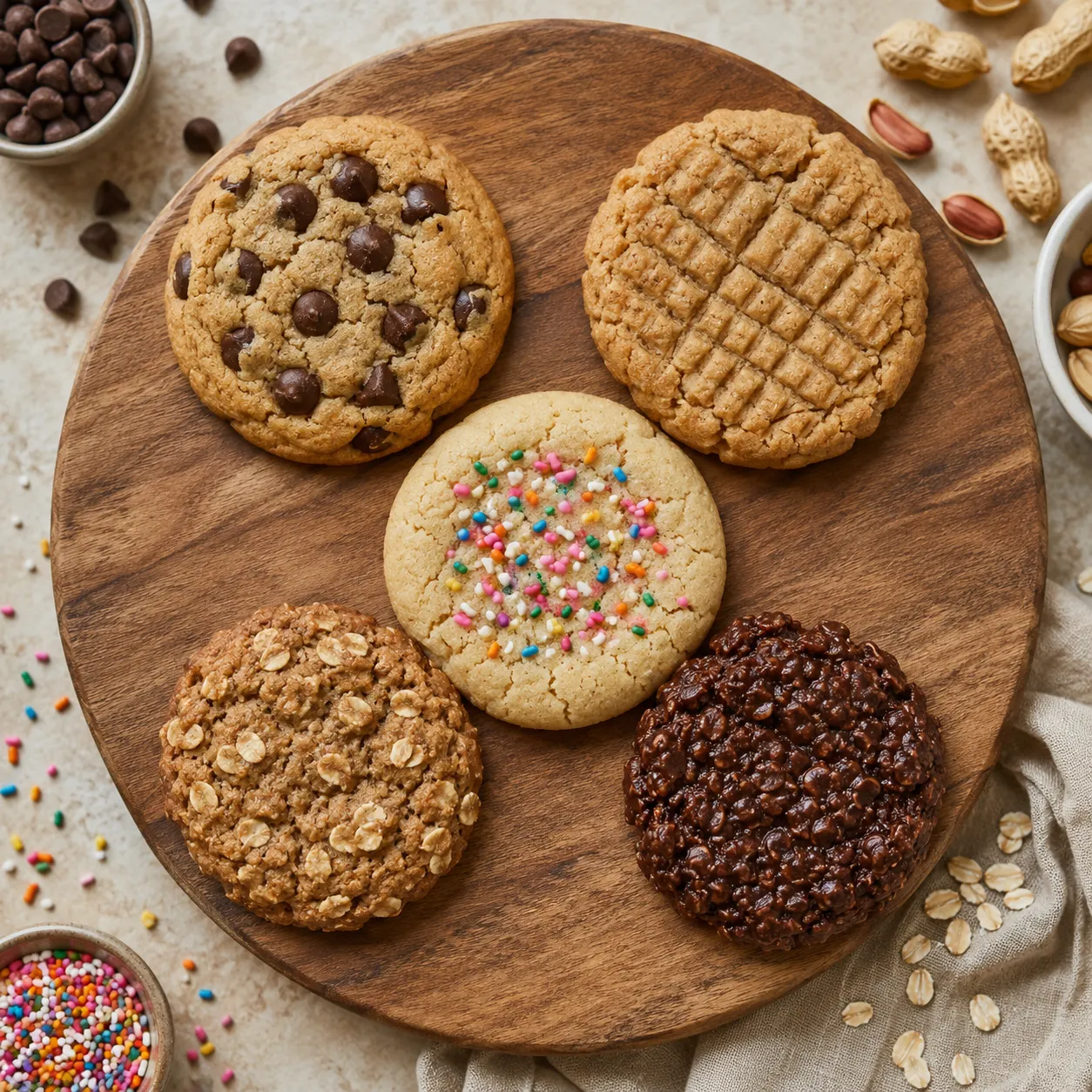
Once the master dough is in your back pocket, you can pivot into five different vegan cookies without learning five different recipes. Here is how I riff on the base, with quantities you can scribble in the margin of the printed card.
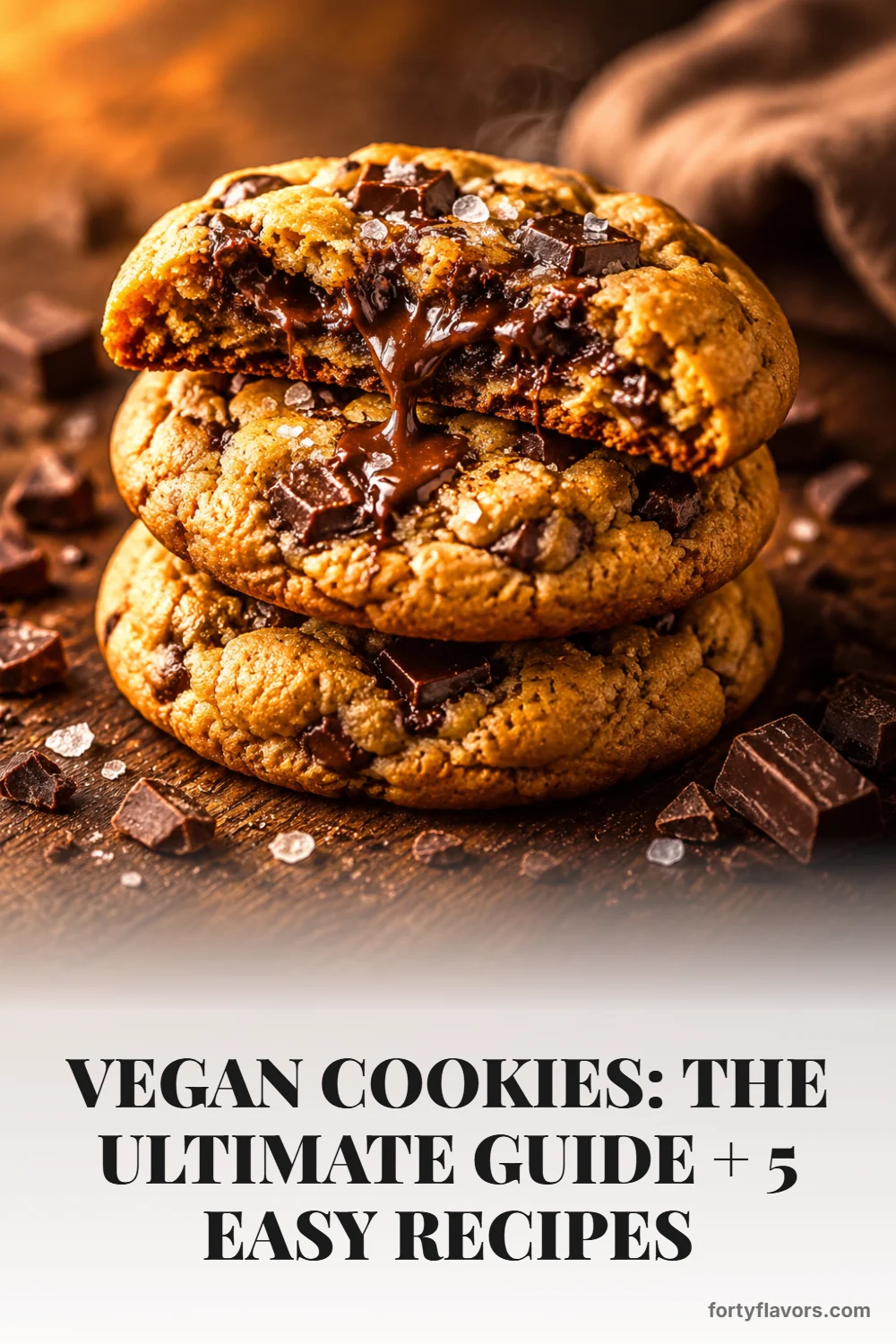
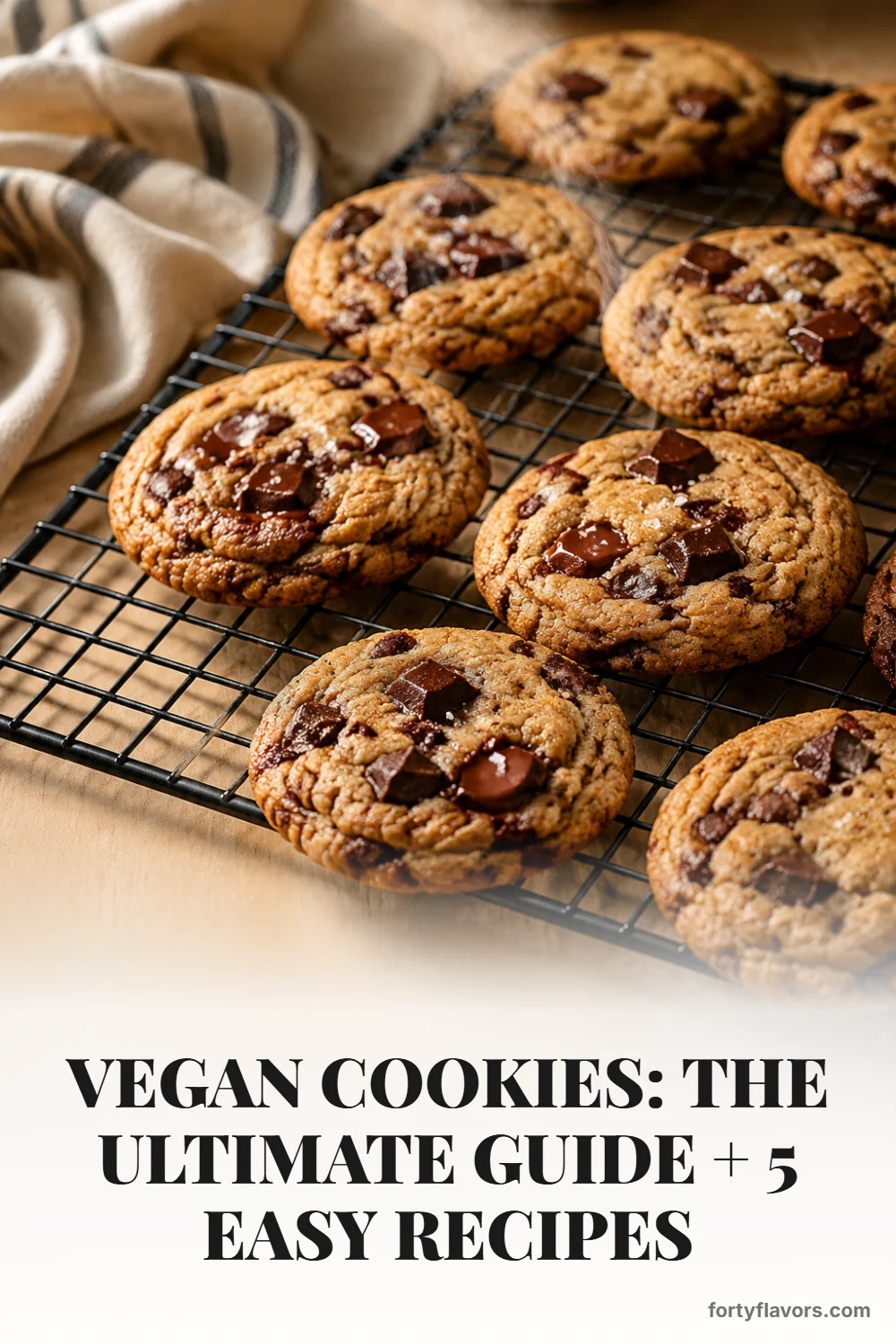
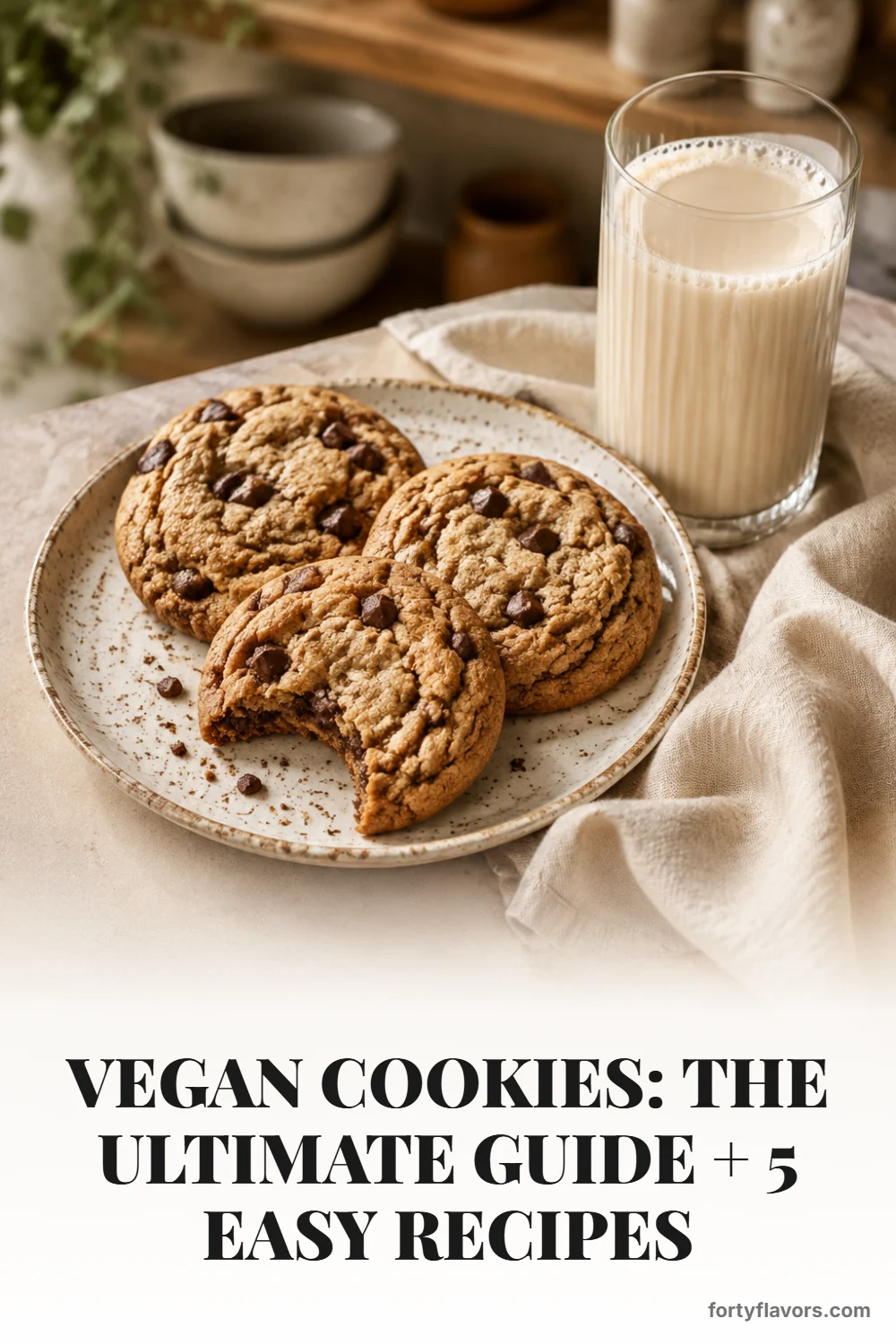
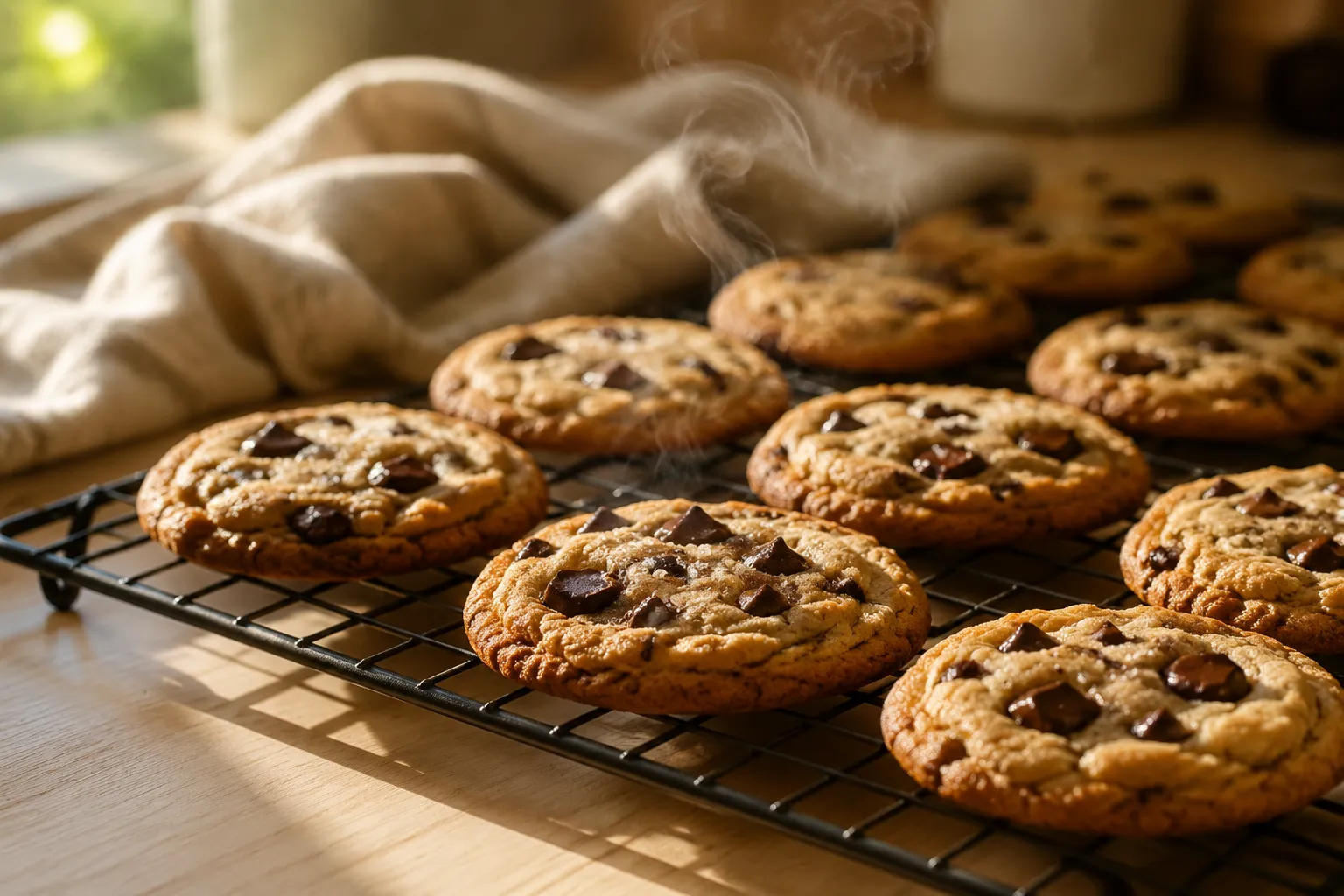
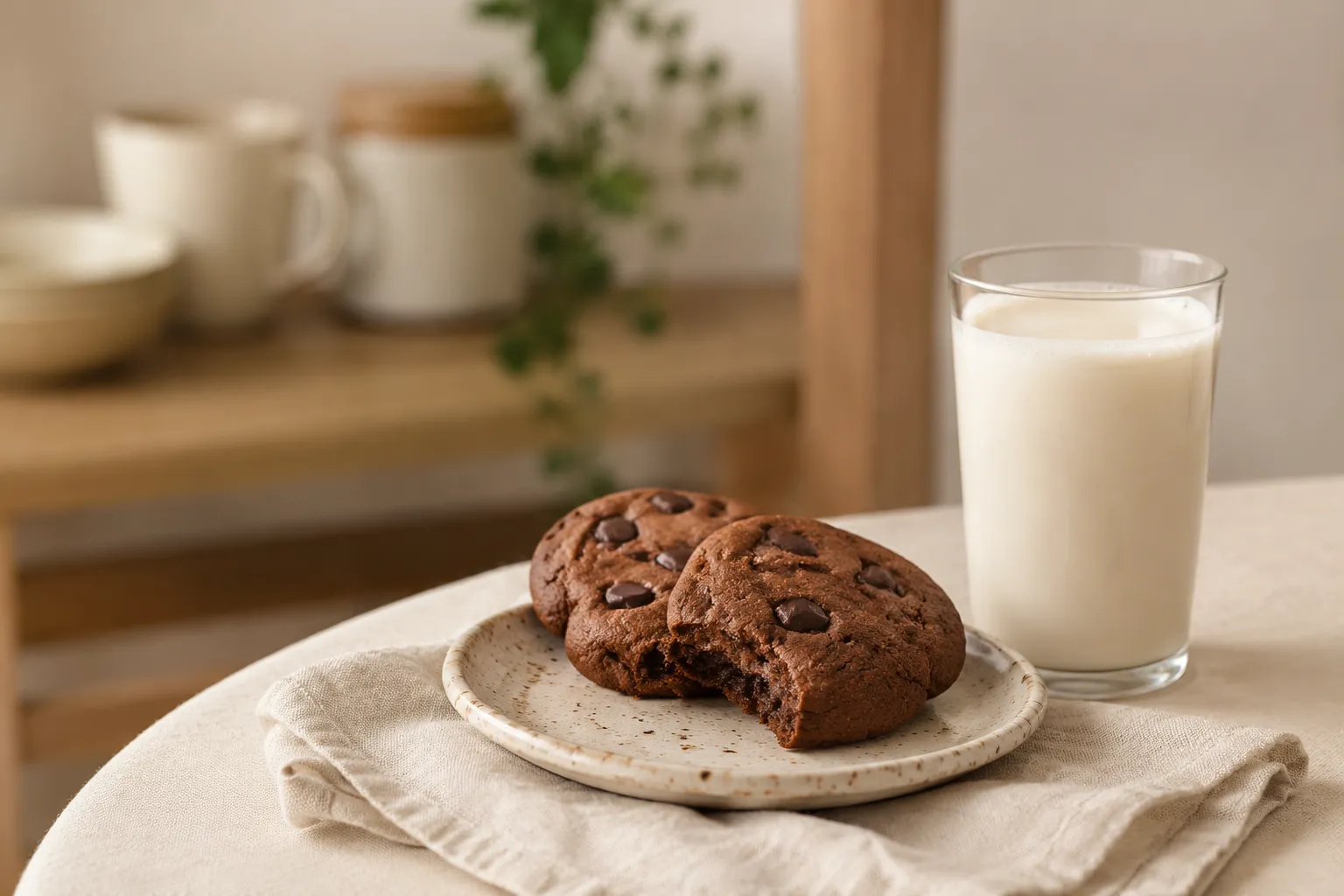
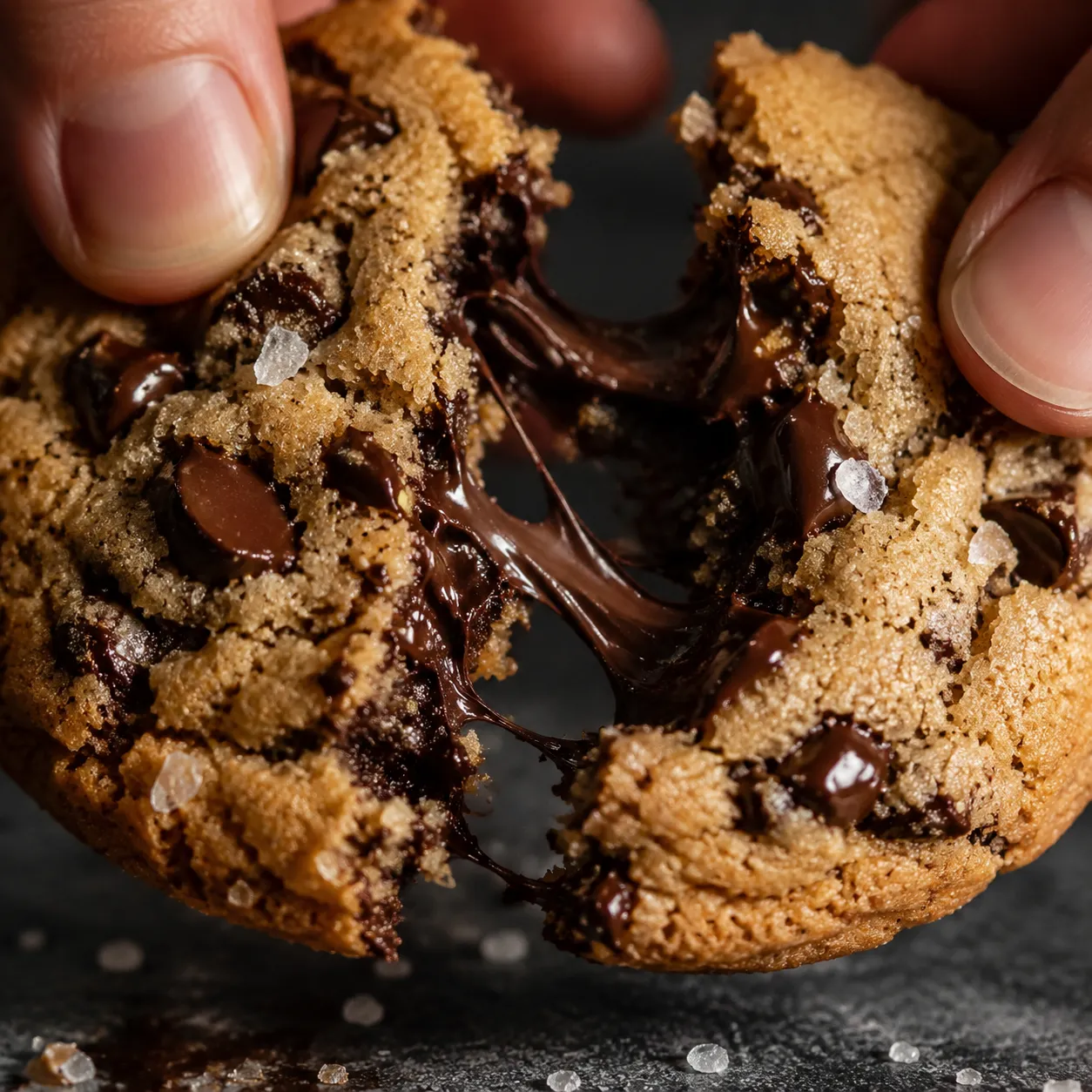
1. Classic vegan chocolate chip. Use the master dough as written with 1 cup of dairy-free chocolate chips or chopped chunks. Top each dough ball with a few extra chips before baking and finish with flaky salt. This is the version pictured at the top of the post.
2. Vegan peanut butter cookies. For deeply nutty, fork-pressed vegan peanut butter cookies, reduce the vegan butter to 1/4 cup, drop the coconut oil entirely, and add 3/4 cup of natural creamy peanut butter. Skip the chocolate chips (or add half a cup if you cannot help yourself), roll the dough balls in cane sugar, and press a crisscross with a fork before baking.
3. Vegan sugar cookies. For a soft, holiday-ready vegan sugar cookie recipe, leave out the chocolate chips, swap the brown sugar for an additional 1/2 cup of cane sugar, and add 1/2 teaspoon of almond extract alongside the vanilla. Roll dough balls in coarse sugar before baking for that signature crackly top. These bake up tender enough to ice but sturdy enough to stack. They are also my go-to for plant-based holiday tins, right alongside the lemon shortbread vegan biscuits I make every December.
4. Gluten-free vegan cookies. For chewy gluten free vegan cookies, swap the all-purpose flour 1:1 for a quality gluten-free baking blend that contains xanthan gum (King Arthur Measure for Measure is bulletproof). Add 1 extra tablespoon of plant milk to the dough and chill for a full hour, since gluten-free flours need extra hydration time. Texture stays every bit as chewy as the original, with crisp golden edges no one will peg as gluten-free.
5. Vegan no-bake cookies. When it is too hot to turn on the oven, vegan no bake cookies come together on the stovetop in 10 minutes. Melt 1/2 cup vegan butter, 1/2 cup plant milk, 1 1/2 cups sugar, and 1/4 cup cocoa powder in a saucepan, simmer for 90 seconds, then stir in 1/2 cup peanut butter, 1 teaspoon vanilla, and 3 cups quick oats. Drop spoonfuls onto parchment and let set for 30 minutes. No flax egg, no flour, no oven.
A warm cookie barely needs an accessory, but a tall glass of cold oat milk is the quiet co-star that elevates the whole moment. Beyond the milk-and-cookies classic, I love sandwiching two thinner chocolate chip rounds around a scoop of dairy-free vanilla ice cream, then rolling the edges in mini chocolate chips for an instant homemade ice cream sandwich. For dessert boards, alternate the master cookie with the peanut butter and sugar variations so each guest can pick a favorite.
If you are baking for a holiday cookie swap, pack a mix of the sugar cookies, the no-bake chocolate oat cookies, and the gluten-free batch so every guest, allergy or not, has something to take home. And if you find yourself in the same baking groove all weekend, try carrying the spirit over to a tray of fudgy vegan brownies or a loaf of cinnamon-swirled banana bread the next morning.
Once you have made these vegan cookies a few times, you will stop measuring with the same caution and start riffing the way a confident baker should: a handful of toasted pecans here, a swap from chocolate chips to chopped dark chocolate there, a swirl of tahini through the dough on a Tuesday because why not. That is the whole point of a master recipe. It teaches you the rhythm so you can make it your own. Save this one, share it with the plant-based baker in your life, and let me know which variation you reach for first.
The beauty of one master dough is how easily it pivots. Once you have it down, treat it like a canvas and let the season or the pantry decide. Switch the chocolate chips for chopped dark chocolate, fold in toasted pecans, swirl in tahini, or roll the dough balls in cinnamon sugar before baking.
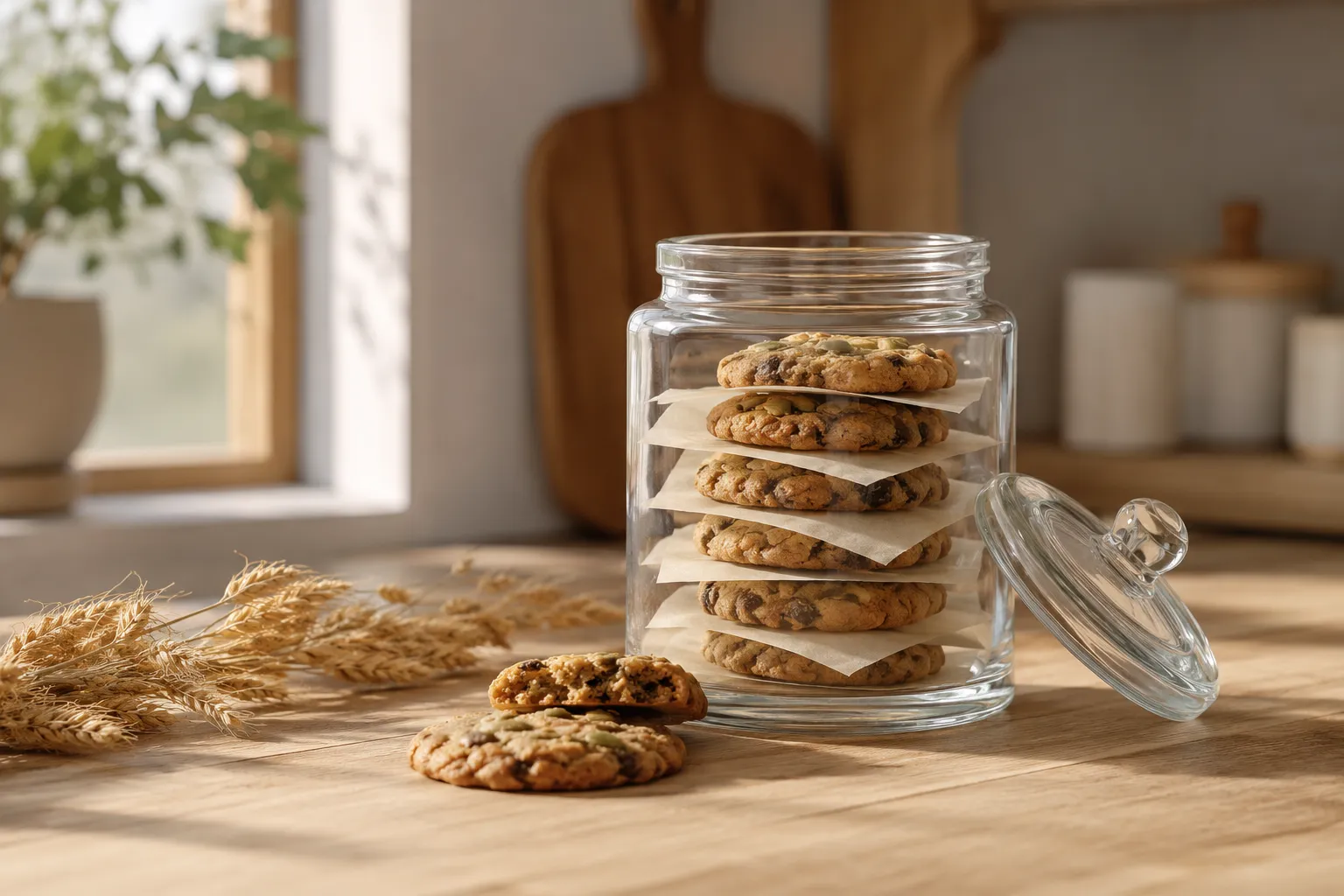
Store cooled cookies in an airtight container at room temperature for up to 4 days. Tucking a slice of soft sandwich bread into the container keeps them noticeably softer past day two, an old bakery trick that genuinely works. For longer storage, refrigerate up to 1 week or freeze baked cookies in a zip-top bag with parchment squares between layers for up to 3 months. Thaw at room temperature for an hour or warm for 10 seconds in the microwave to bring back that just-baked feel.
To freeze the dough itself, scoop dough balls onto a parchment-lined tray, freeze solid (about 1 hour), then transfer to a labeled freezer bag for up to 3 months. Bake straight from frozen at 350°F, adding 1 to 2 extra minutes to the bake time. No thawing required. This is hands-down my favorite way to keep fresh-baked cookies on demand without committing to a full batch all at once.
Hover any image and hit “Pin it” to save it to your Pinterest boards.