Italian Wedding Cookies: Buttery Snowball Recipe
Ingredients
Scale
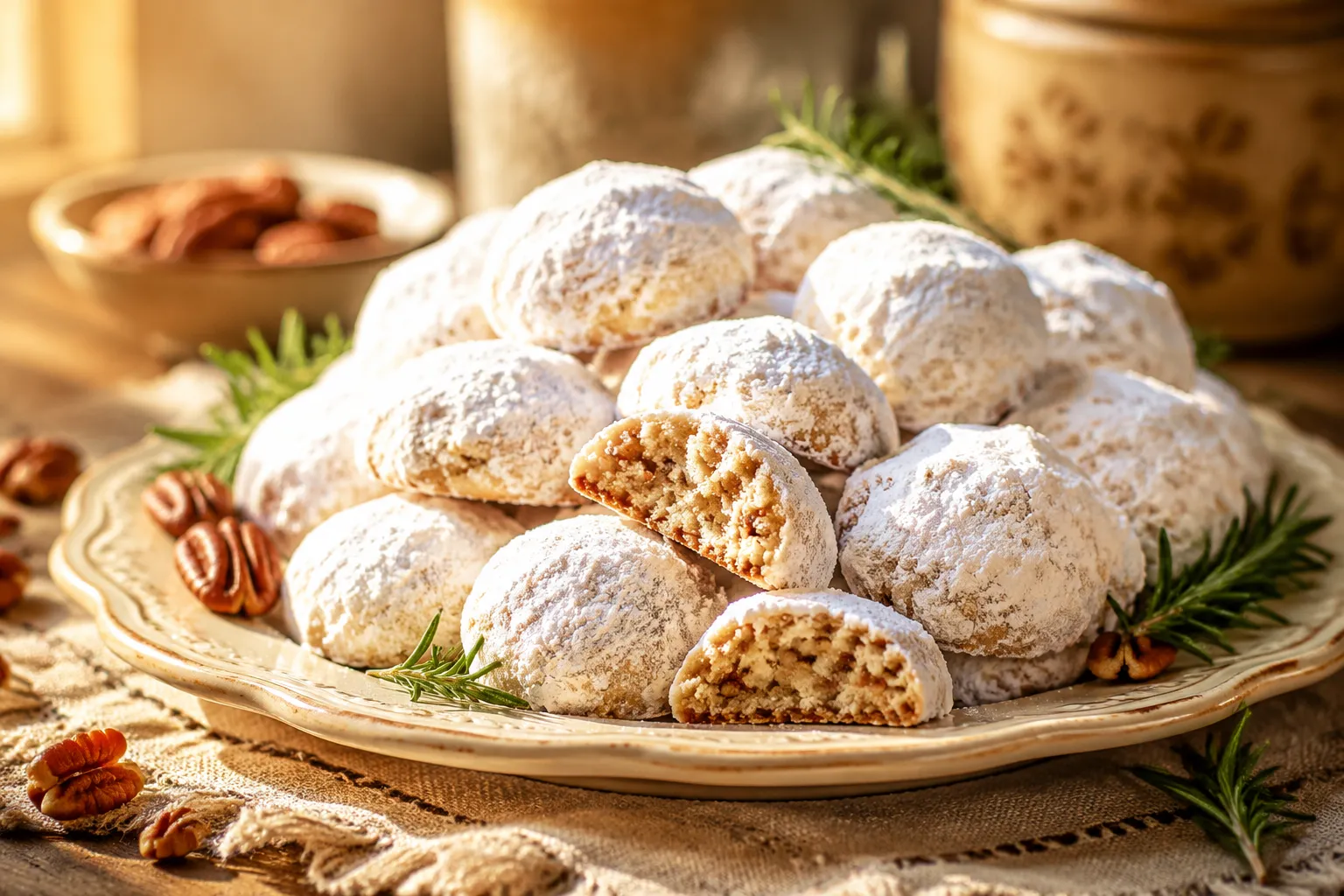
Melt-in-your-mouth Italian wedding cookies rolled twice in powdered sugar. Buttery, nutty, and ready for any holiday cookie tray or celebration.
If you've ever wondered what makes wedding cookies so beloved on holiday trays from Brooklyn to Sicily, the answer is hiding in plain sight: butter, toasted nuts, and a generous double coating of powdered sugar. These tender, snowy little spheres practically dissolve on the tongue, leaving behind a buttery, almond-scented crumb that tastes like every cozy December memory you've ever filed away.
I make a triple batch every year for our Christmas cookie tray, and they vanish faster than the gingerbread, the biscotti, and even my mom's pignoli. There's something irresistible about that fragile, sandy texture pressed against a snowdrift of sugar, especially when you've toasted the pecans first and let the almond extract bloom into the butter. They look fancy enough for a dessert table at a wedding shower but require nothing more than a hand mixer and a sheet pan.
This is the recipe I trust for big-batch baking, gift tins, and last-minute cookie swaps. It's a powdered sugar cookies template you can flavor a hundred different ways, and once you taste the toasted-nut version below, you'll see why I never go back to the bare-bones approach.
Italian wedding cookies are buttery, nut-filled shortbread balls rolled in powdered sugar, traditionally served at Italian weddings as a symbol of sweetness and good fortune for the new couple. The exact name varies wildly by region and family. Some call them snowball cookies, others call them Italian butter balls, and a few stubborn nonnas insist on the regional names they grew up with back home.
What's confusing is that nearly every European baking tradition has its own version. Mexican wedding cookies typically lean on pecans and a whisper of cinnamon. Russian tea cakes are essentially the same cookie under a different banner, and the Greek kourabiedes adds a splash of brandy or rosewater. The Italian version often features almonds, pine nuts, or hazelnuts, though pecans have become standard in American kitchens because they toast beautifully and chop cleanly.
In other words: if you've made any of those cousins, you've already made these. The technique is identical to a classic almond shortbread — cream the butter, work in the flour, fold in the nuts, shape, bake low, roll twice in sugar. What changes is the nut, the extract, and the family it came from. Once you understand the framework, the variations practically write themselves.
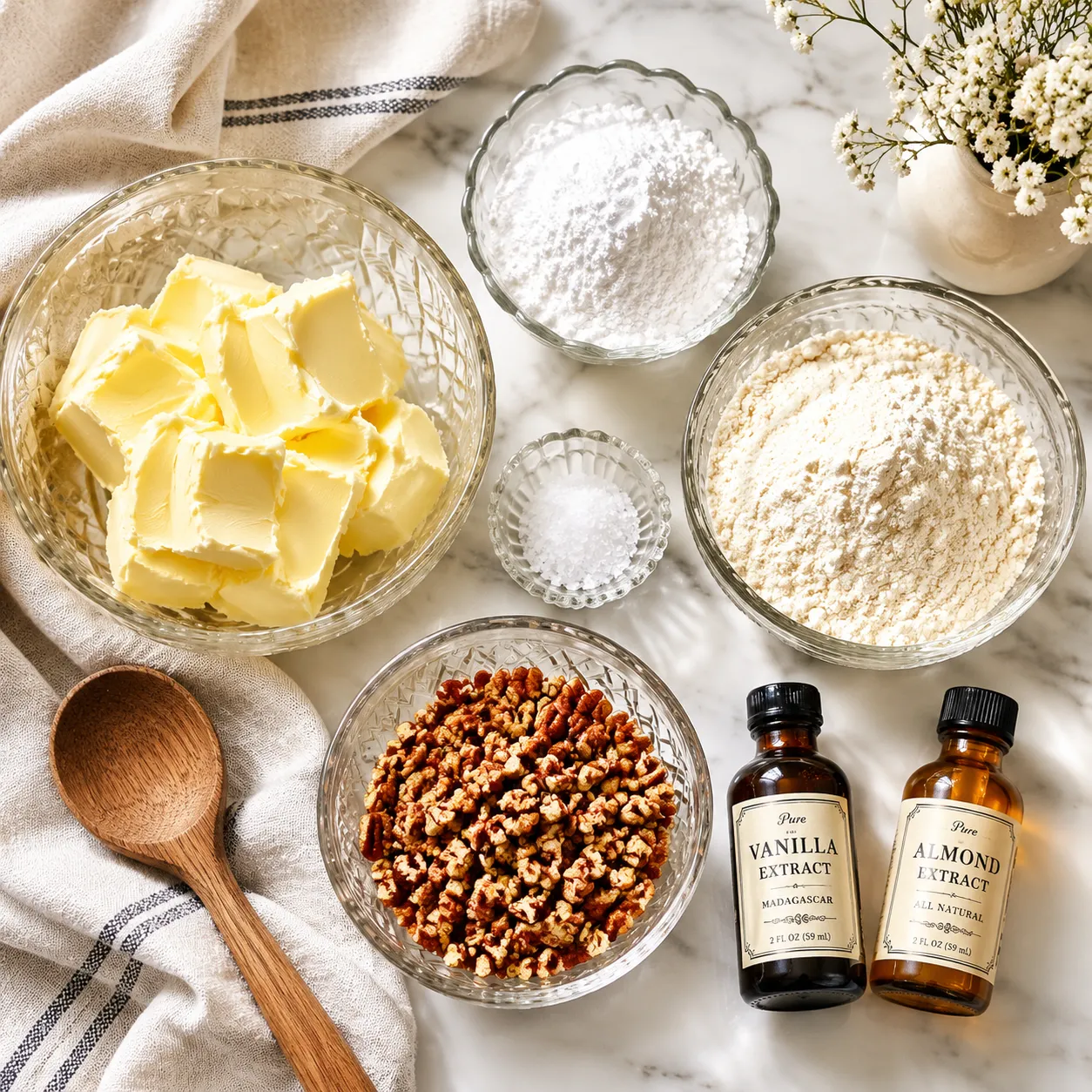
The ingredient list is short, and every component pulls real weight. Use the best butter you can find because there's nowhere for cheap fat to hide in a four-ingredient dough.
Unsalted butter. Softened to about 65°F, just cool enough to leave a slight indent when pressed but not greasy. Too warm and the cookies spread; too cold and the dough won't cream into the pale, fluffy ribbon you need to build texture.
Powdered sugar. Used twice, in two different ways. A small amount sweetens the dough without making it grainy, and a much larger amount coats the warm cookies after baking. Sift if your box looks lumpy because clumps will torpedo your snow-globe finish.
Pure vanilla and almond extract. The almond extract is the secret. Even if you're using pecans rather than almonds, that quarter teaspoon adds the marzipan-adjacent depth that makes people ask, "What's in these?"
All-purpose flour and fine sea salt. Standard pantry stuff, but measure carefully. Spoon and level the flour rather than scooping straight from the bag — an extra two tablespoons is the difference between tender and chalky.
Toasted pecans (or almonds, walnuts, pine nuts, hazelnuts). Whatever you use, toast them first. Eight to ten minutes in a 350°F oven coaxes out the oils and turns this from a fine cookie into a genuinely great one.
The full step-by-step instructions live in the recipe card below, but here's the rhythm of it so you know what you're walking into. Plan for about 20 minutes of active work, a brief chill, 15 minutes of baking, and a cooling window before the second sugar roll. Total time from soft butter to finished cookie tin: just over an hour, most of it hands-off.
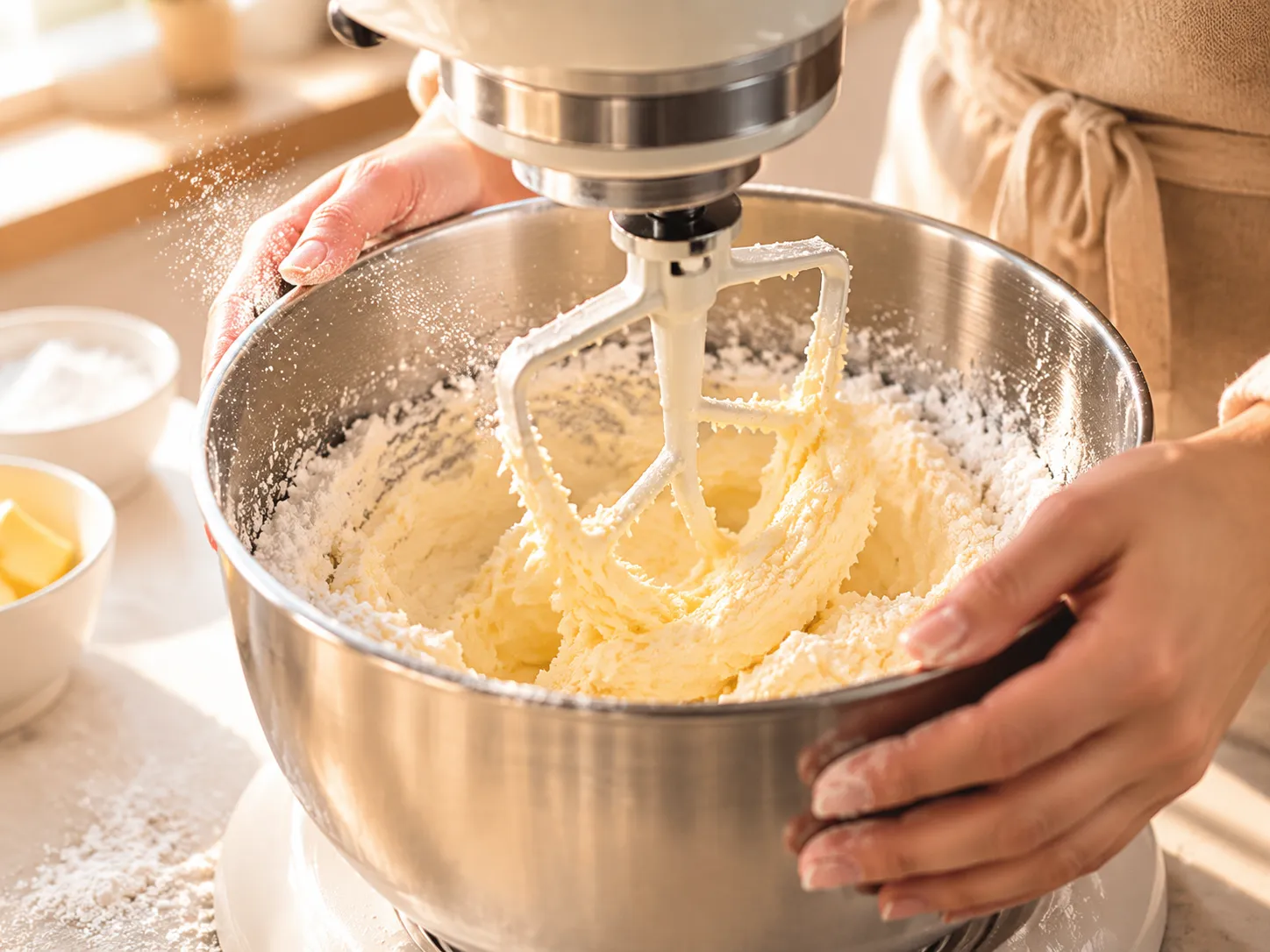
Start by creaming the softened butter with a half cup of powdered sugar until the mixture is genuinely pale and fluffy — three to four minutes, longer than you'd guess. This is where you build the texture; air whipped into the butter now becomes the tender, sandy crumb later. Add the vanilla and almond extracts and beat for another 30 seconds, scraping the bowl as needed.
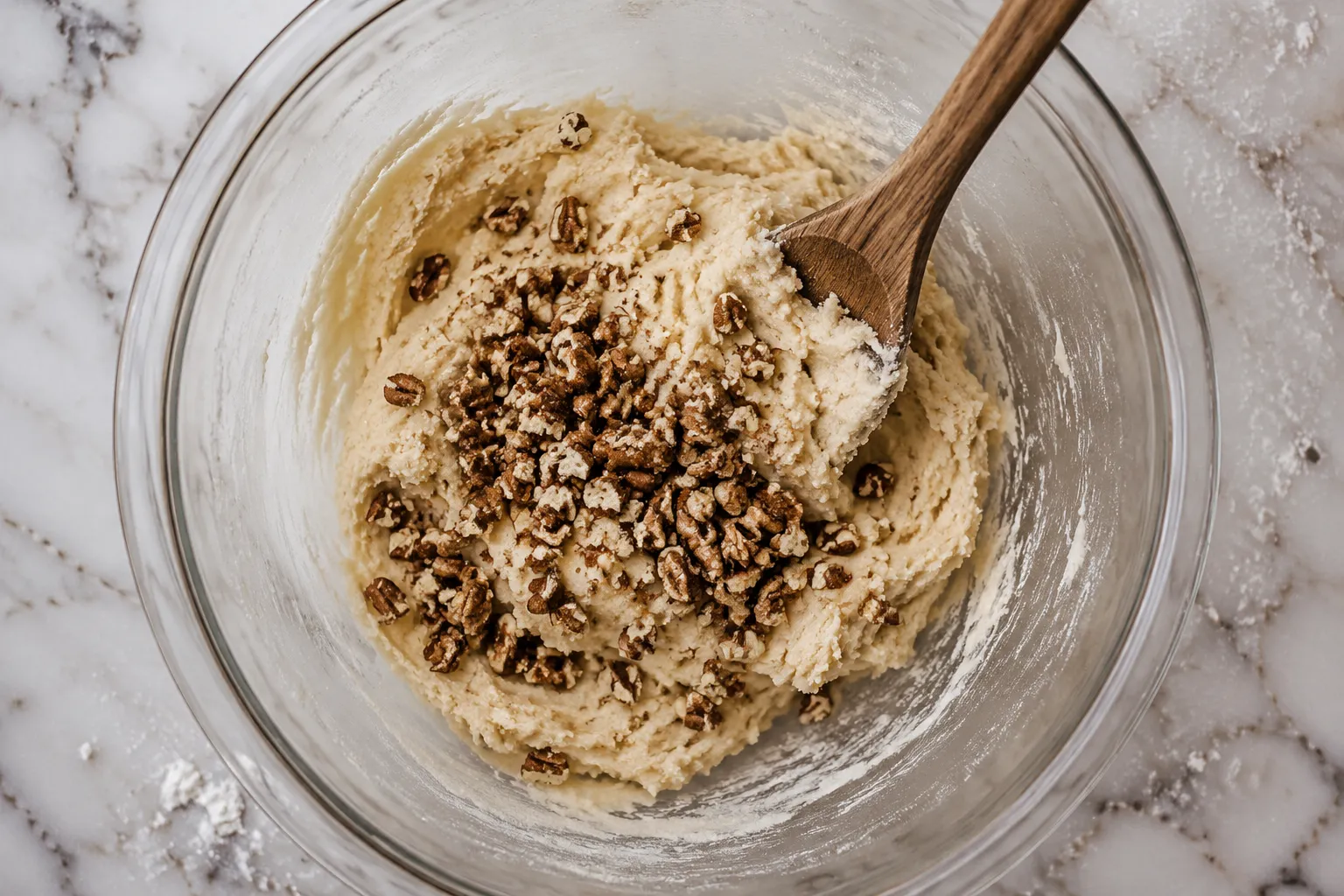
Add the flour and salt in two additions on low speed, mixing just until the dough comes together in soft clumps with no dry streaks. Switch to a spatula or wooden spoon and fold in the cooled, finely chopped toasted pecans. The dough will look almost too crumbly — press a small piece between your fingers and it should hold its shape. If it doesn't, give it another 30 seconds in the bowl.
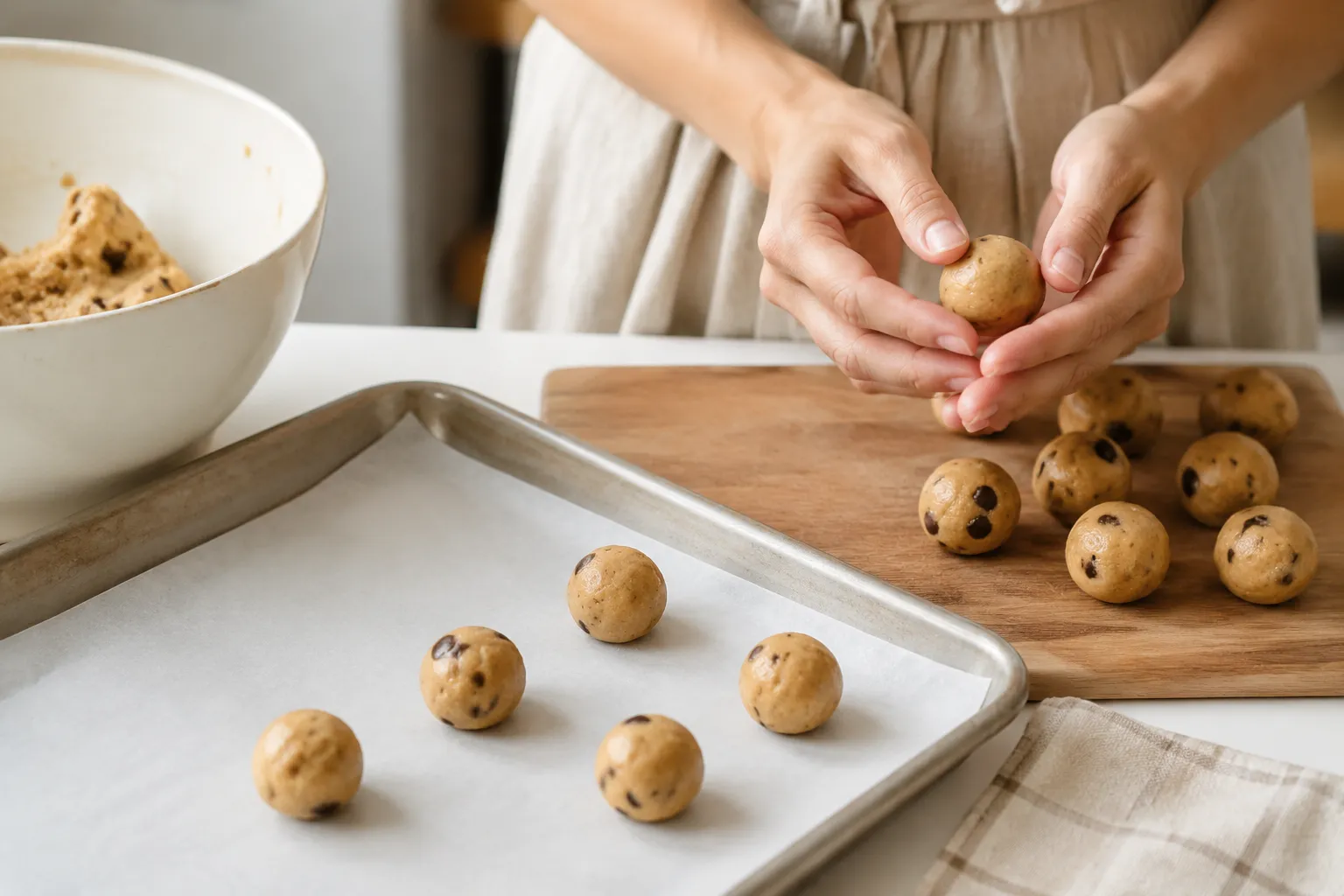
Roll the dough into 1-inch balls, about a level tablespoon each, and place them on a parchment-lined sheet pan with about an inch of space between them. They barely spread, so you can crowd them more than you would chocolate chip cookies. Chill the trays for 20 to 30 minutes — this firms the butter and keeps the cookies perfectly round in the oven instead of melting into flat puddles.
Bake at 325°F for 14 to 16 minutes, rotating the pan halfway through. You're looking for the bottoms to turn pale gold while the tops stay almost the same color they went in. If the tops brown, you've gone too far and the cookies will taste dry instead of buttery. Low and slow is the rule here.
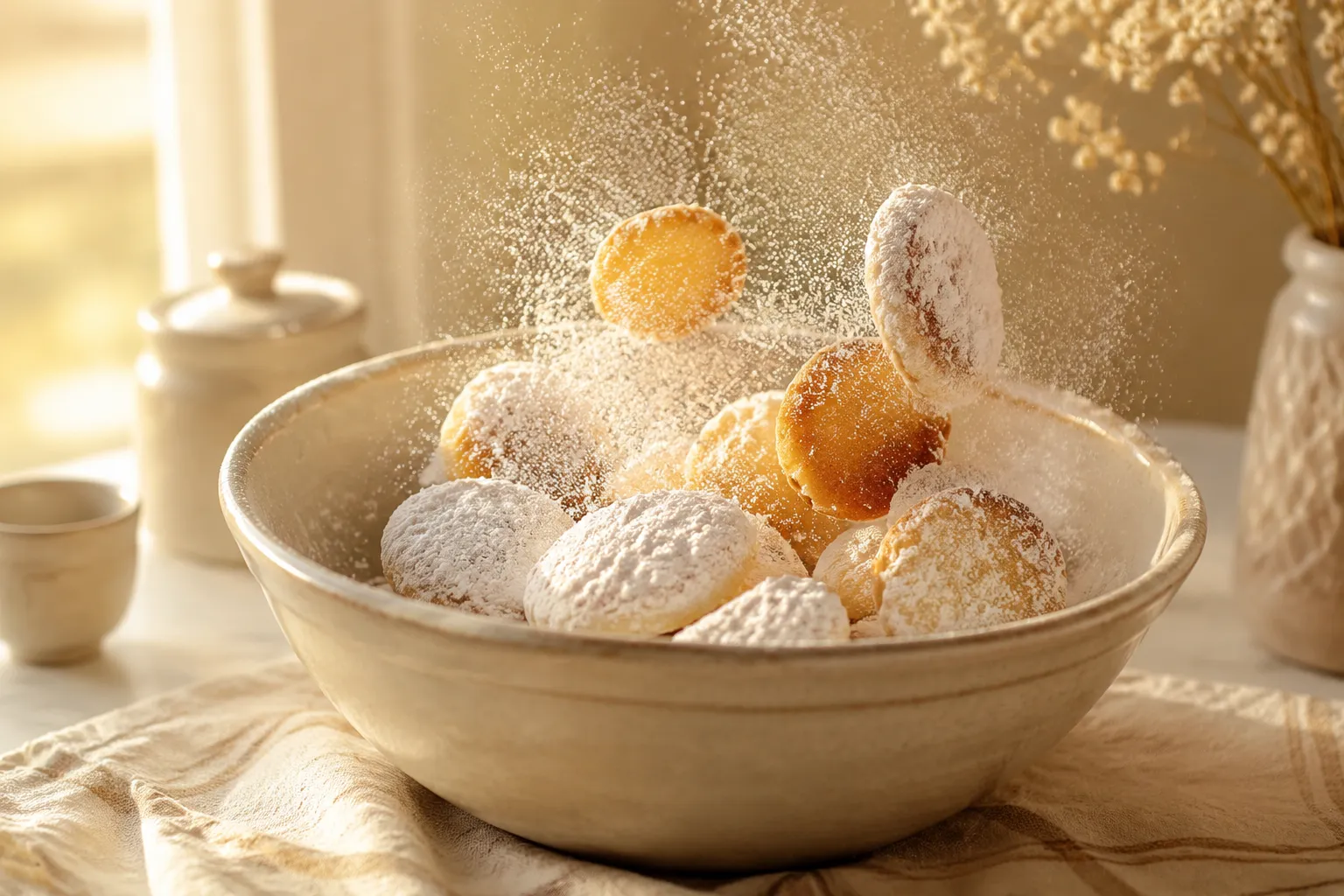
Let the cookies rest on the pan for five minutes — they're fragile when hot and will break if you move them too soon. While they're still warm but no longer oven-hot, toss them gently in a deep bowl of powdered sugar until completely coated. Set them aside on a rack to cool fully, then roll them a second time. That double coat is the whole reason these are called snowball cookies in half the country, and skipping the second pass is the most common mistake I see.
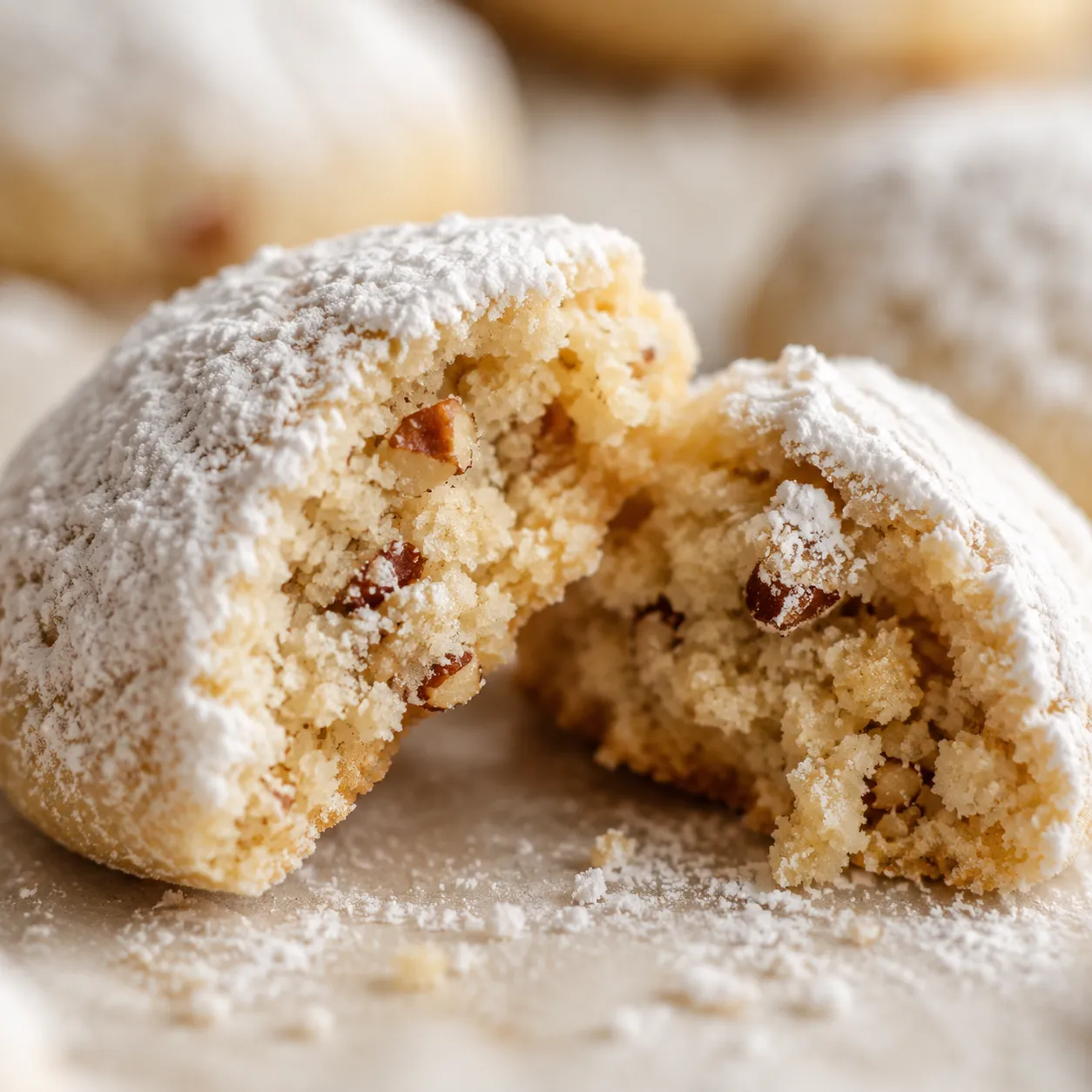
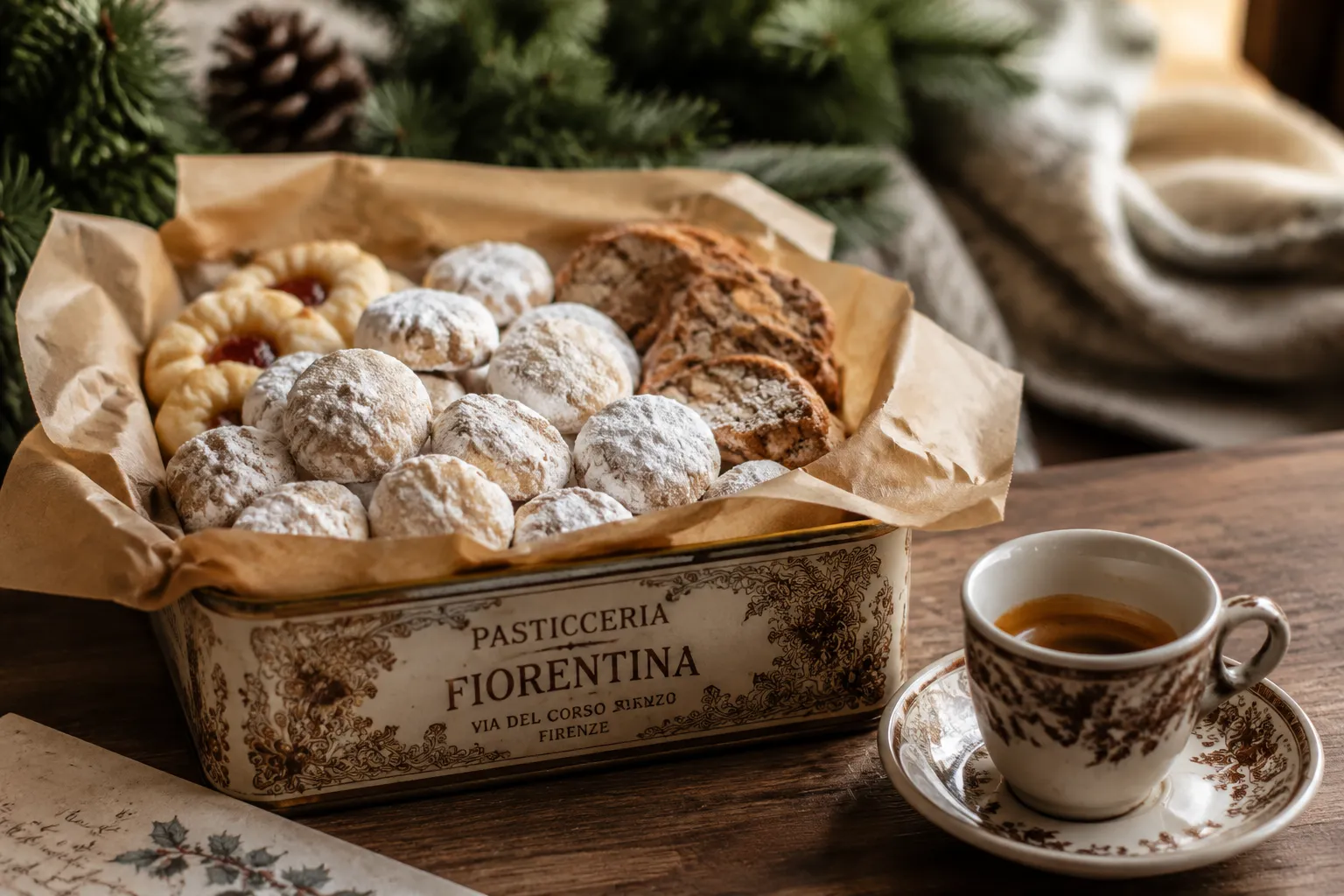
These are made for a coffee break. Stack them three or four high next to a small espresso or a hot mug of cocoa, and you've got the kind of afternoon snack that makes a Tuesday feel like a holiday. They also play beautifully on a mixed dessert board with cut fruit, a bowl of dark chocolate, and a few biscotti for dipping.
For December baking, I tuck them into vintage tins lined with parchment alongside cut-out sugar cookies, gingerbread, and chocolate crinkles. They're one of the best holiday cookie recipes for gifting because they hold up well at room temperature for almost a week and don't smush like more delicate cookies. At weddings and showers, pile them onto a tiered platter and let guests grab them with their fingers — formal enough to look festive, casual enough to feel welcoming.
If you're putting together a full spread, they pair especially well with a tray of buttery shortbread, a few squares of fudge, and something tart like cranberry bars to balance the sweetness. The textures complement rather than compete, and the snowy white sugar reads beautifully against deeper colors on the table.
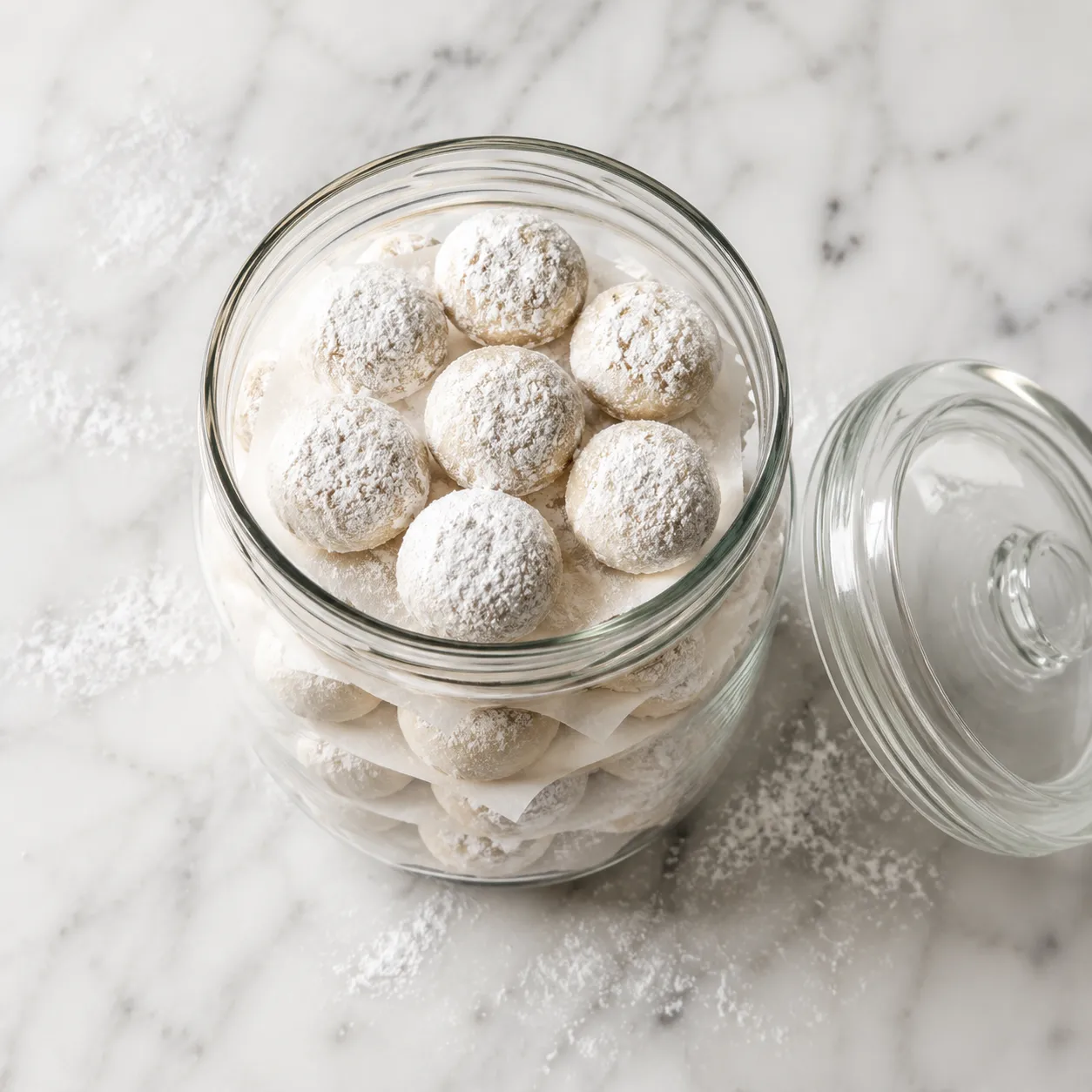
These wedding cookies are tailor-made for batch baking and giving. The dough holds well in the fridge for two days, the rolled dough balls freeze beautifully for three months, and the baked cookies keep at room temperature longer than almost any other cookie I make. If you're planning a December baking marathon, start with this recipe — they actually get better after a day, as the powdered sugar fully sets and the almond flavor mellows into the crumb.
For gifting, layer them in glass jars or vintage tins with parchment between each layer to keep the sugar coating intact. A quick re-roll in fresh powdered sugar an hour before delivery brings back that just-baked snowy look every time.