Dutch Apple Pie Recipe with Buttery Streusel Topping
Ingredients
Scale
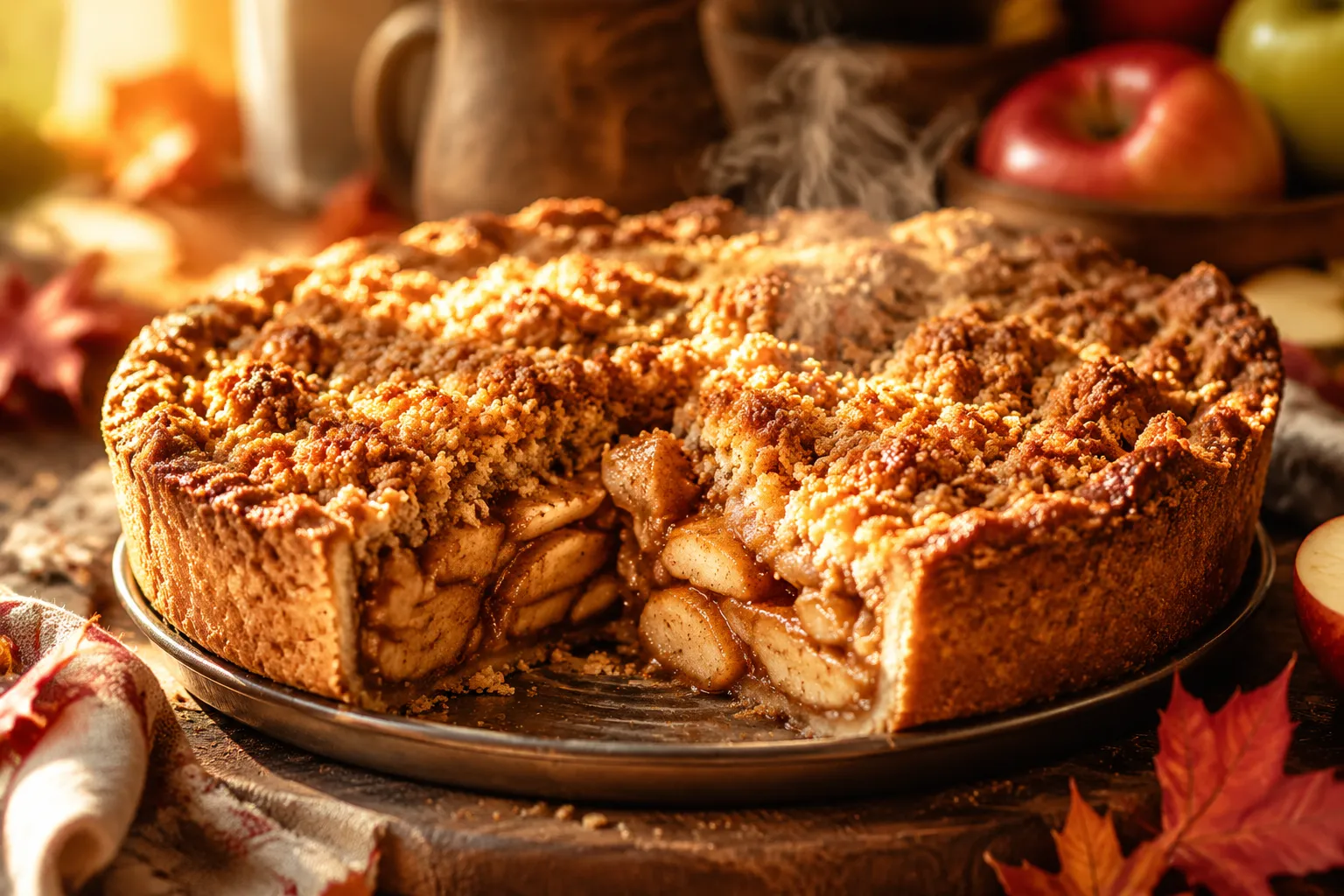
A bakery-style Dutch apple pie with a flaky bottom crust, juicy cinnamon-spiced apples, and a thick buttery streusel topping that bakes up golden and crunchy.
This dutch apple pie recipe is the kind of bakery-style dessert that turns a regular Sunday into something worth dressing up for. Tender cinnamon-spiced apples bubble away under a thick, craggy streusel topping that bakes up deep gold, buttery, and just barely crisp on top. It's everything you love about a double-crust apple pie, minus the stress of weaving a lattice or sealing a top edge.
I've made this dutch apple pie more times than I can count, and it never goes uneaten. The combination of a flaky pie crust, a juicy cinnamon apple filling, and a thick brown sugar crumb topping is the kind of trio that has people quietly going back for second slices. It's also a forgiving recipe, which is exactly what you want when the holidays roll in and the oven is already booked solid.
This one is bakery-level without being fussy. We par-bake the crust just enough to keep it crisp, mix the streusel by hand for those big craggy clumps, and use a tested apple blend so the filling stays tender without going to mush. Whether you're baking on a Tuesday or for a Thanksgiving table, this is the pie.
Despite the name, dutch apple pie isn't actually from the Netherlands. It's an American baking tradition with old Pennsylvania Dutch (German) roots, and the defining feature is what's on top. Instead of a second pastry layer, you get a thick blanket of buttery brown sugar streusel that crisps up in the oven and soaks just slightly into the apples beneath. The result feels like a hybrid of pie and crisp, which is honestly the best of both worlds.
The difference between this and a classic apple pie comes down to the topping. A traditional double-crust pie locks the filling in with pastry, which can sometimes get soggy underneath or steam the apples into oblivion. The streusel on top of a Dutch version stays open, lets steam escape, and turns that exposed sugar and butter into a craggy, almost candy-like crust. You also skip rolling and crimping a second round of dough, which is a small thing that makes a big difference at 9pm the night before a holiday.
The "Dutch" in the name is a translation slip. Early German immigrants in Pennsylvania were called "Deutsch," which got Anglicized to "Dutch." Their baking tradition leaned heavily on streusel, butter, and brown sugar, and that style of crumb-topped pie spread out from there. So when you bake one, you're baking something with deep American-immigrant heritage and a topping that has been winning people over for generations.
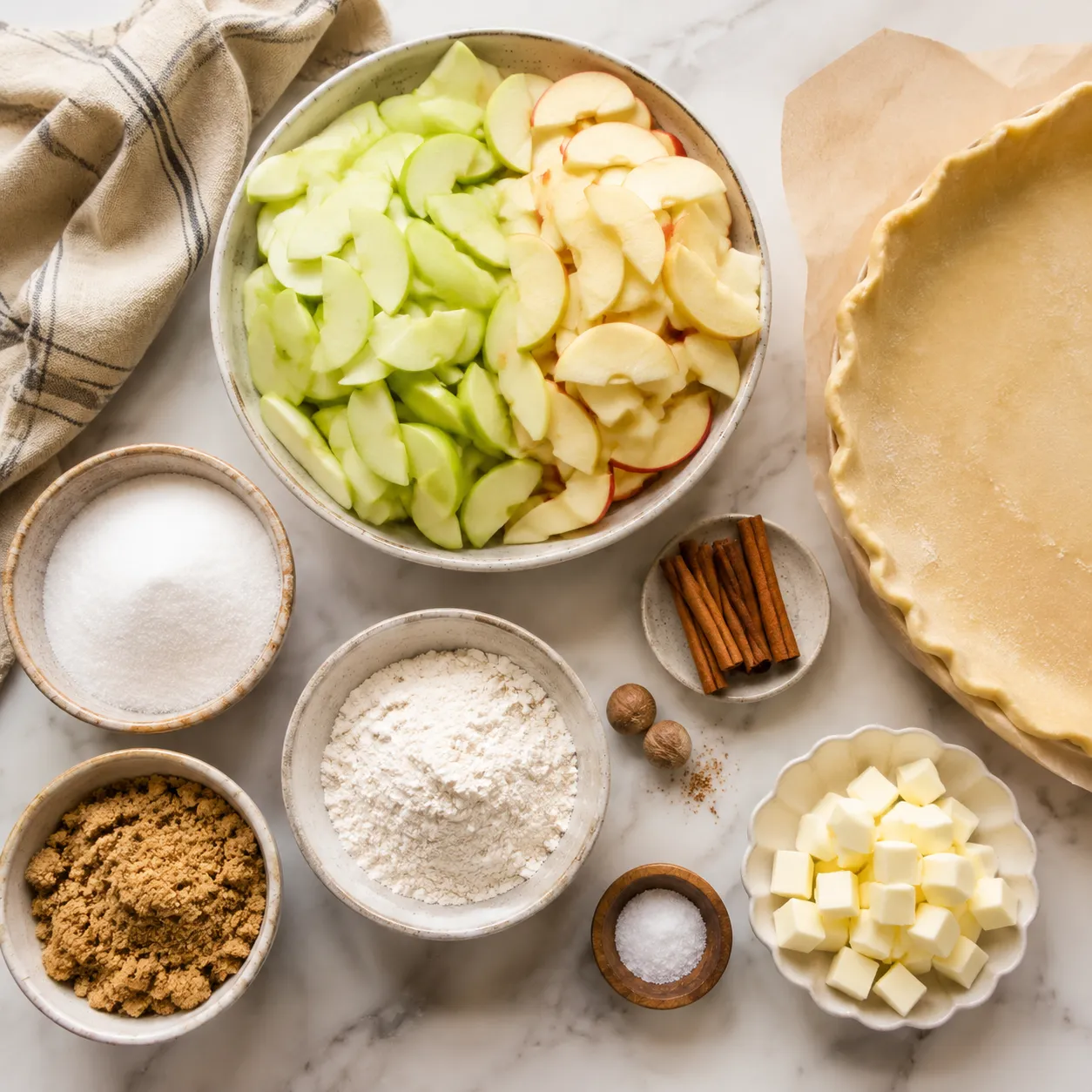
The shopping list is short and the ingredients are pantry-friendly. Most of what you need is likely already in your kitchen, with the apples being the only real grocery run. I've broken it into the three components — crust, filling, streusel — so it's easy to prep in stages.
You only need a single 9-inch crust here, which is a nice mercy. A homemade pie crust is wonderful if you have the time and a tested all-butter recipe in your back pocket, but a good store-bought refrigerated crust works beautifully too. Whatever you use, keep it cold right up until it goes into the dish — those cold pockets of butter are what create the flaky, layered shards once they hit the heat of the oven.
The filling is built around 2½ pounds of peeled, sliced baking apples (more on which to use below), tossed with granulated sugar, a couple tablespoons of flour for thickening, ground cinnamon, a whisper of nutmeg, and a tablespoon of fresh lemon juice. The lemon brightens the apples and keeps them from going dull and brown. You want enough cinnamon to taste it, but not so much that it overpowers the fruit underneath.
This is the show-stopper. All-purpose flour, packed light brown sugar, a pinch of salt, and a half cup of cold cubed unsalted butter come together into a thick, sandy crumb. The trick is keeping the butter cold and breaking it in by hand or with a pastry cutter until you have pebble-sized pieces, not fine sand. Big chunks bake into big craggy clumps, the same kind you'd want on a great apple crumble.
The apples make or break this pie. The best baking apples are the ones that hold their shape under heat, balance tart and sweet, and release just enough juice to make the filling glossy without flooding the crust. Soft, mealy varieties like Red Delicious turn into baby food in the oven. Skip them.
Granny Smith apples are the classic pick for a reason. They're firm, bright, and lean tart, which keeps the filling from going one-note sweet once you add the sugar and streusel. Other reliable workhorses include Braeburn, Pink Lady, and Northern Spy. They all bake down just enough to feel tender without collapsing into sauce.
For the most layered flavor, use a mix. I default to half Granny Smith apples and half Honeycrisp apples — the Honeycrisp brings sweetness and a slight floral note, the Granny brings backbone, and together they taste like fall in pie form. Fuji or Jonagold work too if Honeycrisp aren't in season. Aim for about 5 to 6 cups of sliced apples once peeled and cored.
The full timing and measurements live in the recipe card below, but here's the high-level walkthrough so you know what you're getting into. Total active time is about 30 minutes, with another hour of mostly hands-off baking.
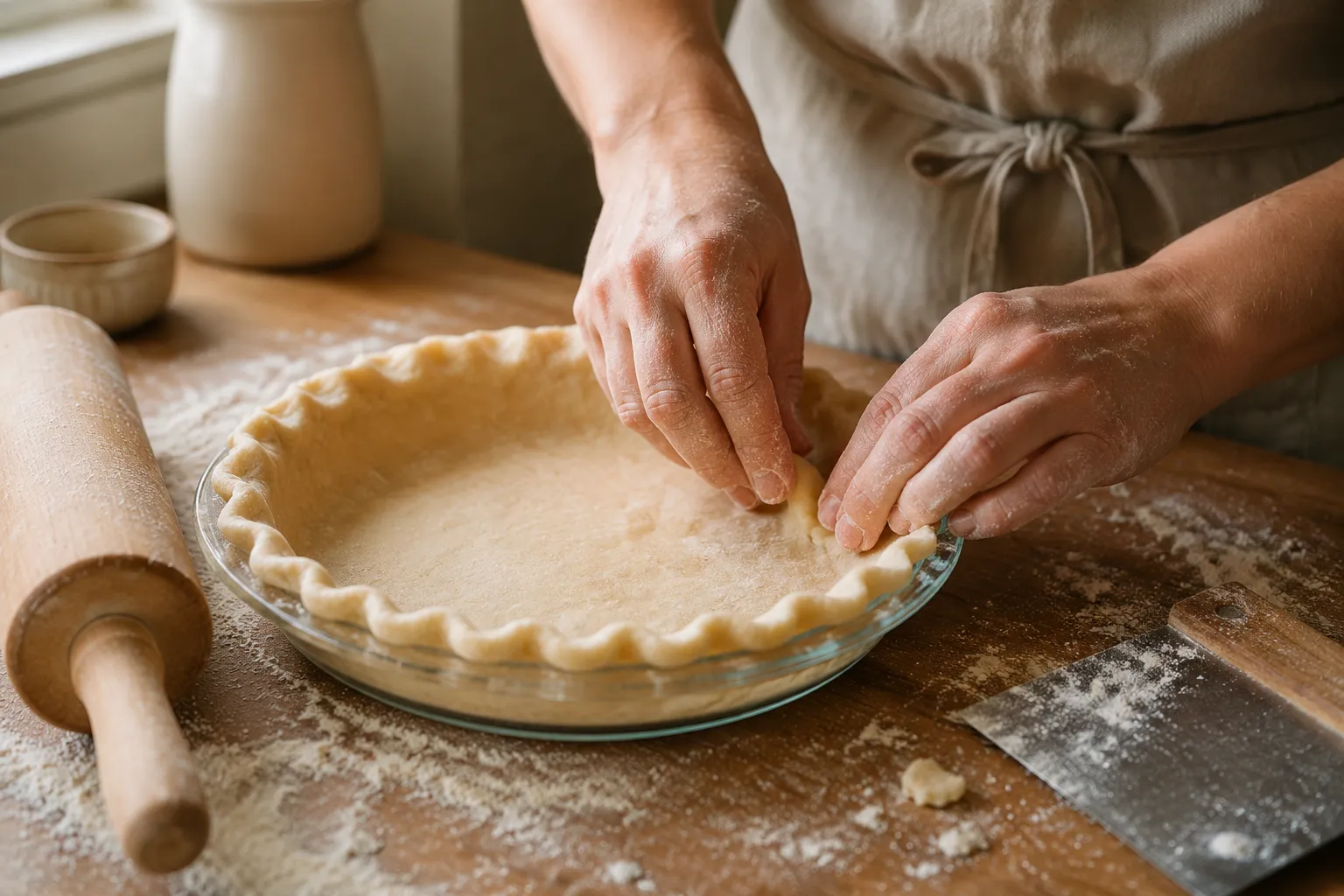
Roll your dough into a 9-inch pie plate, crimp the edges, and chill it for 15 minutes while the oven heats. Then line the crust with parchment, fill it with pie weights or dried beans, and par-bake at 400°F for about 10 minutes. This short pre-bake is the single best thing you can do for crust texture — it sets the bottom before the wet apples ever touch it.
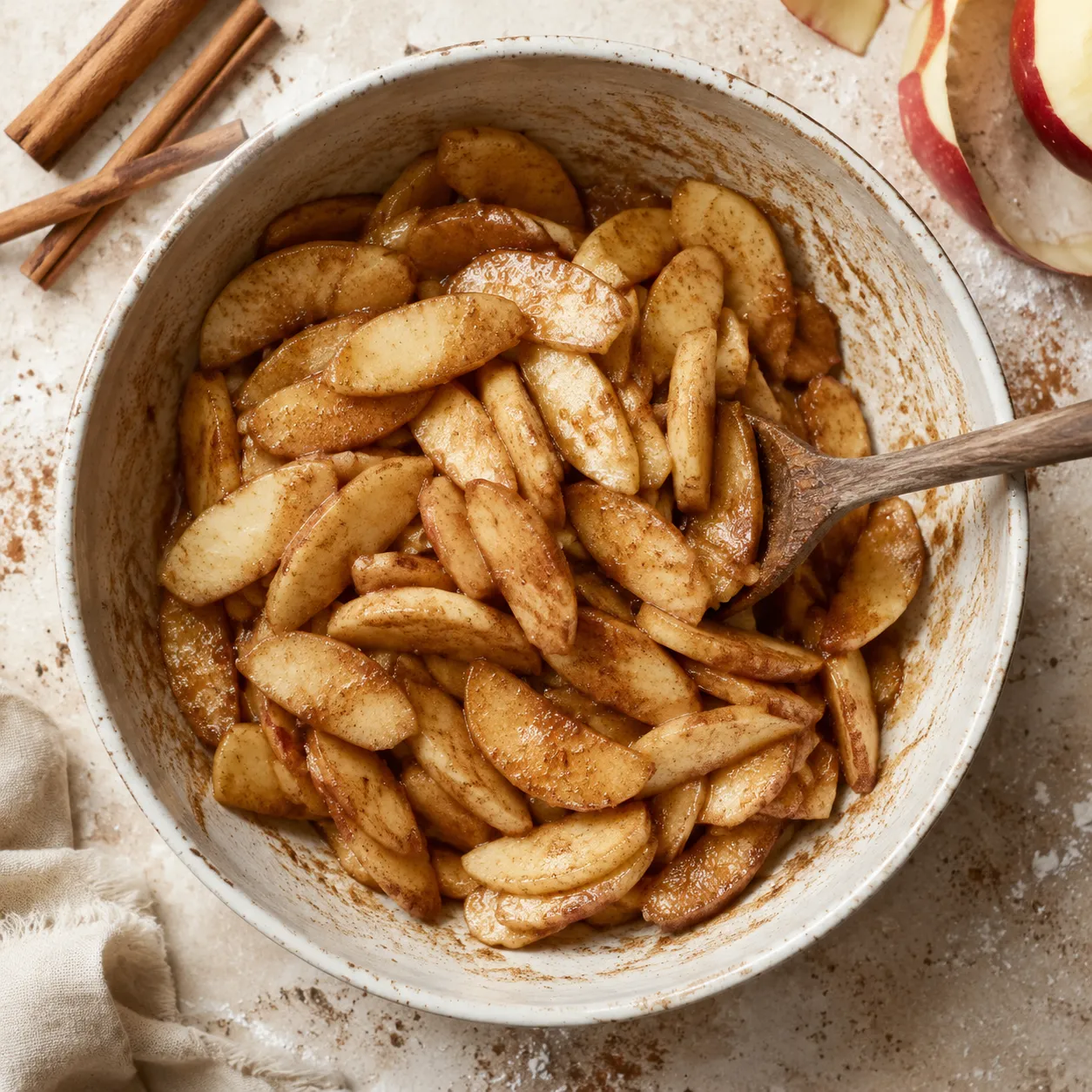
In a big bowl, combine your sliced apples with the granulated sugar, flour, cinnamon, nutmeg, and lemon juice. Toss with a wooden spoon or your hands until every slice is coated and starting to glisten. Let the apples sit for about 10 minutes — they'll release a little juice, which is exactly what you want for a glossy filling that's not watery.
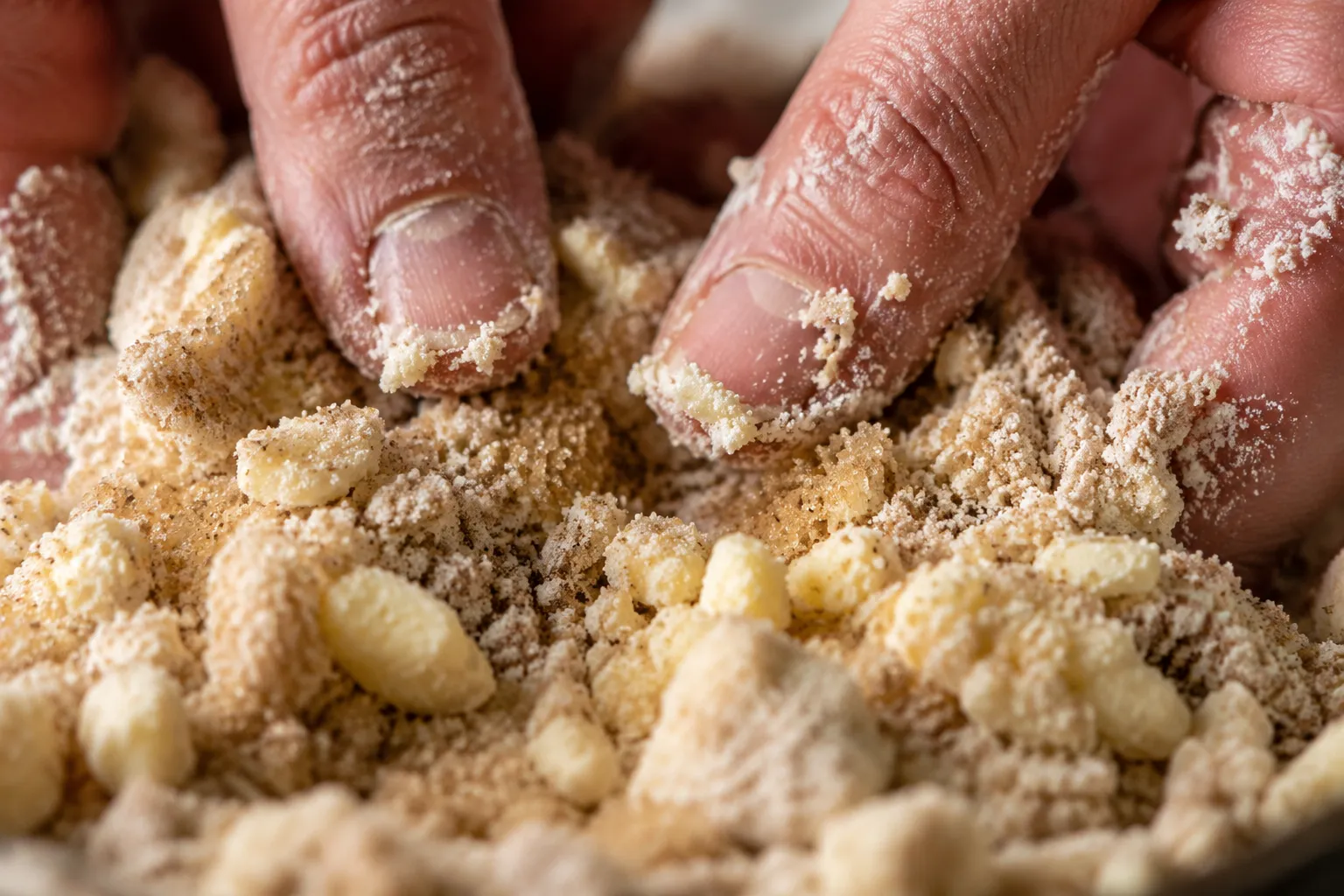
Whisk the flour, brown sugar, and salt together. Add the cold cubed butter and either rub it in with your fingertips or cut it in with a pastry cutter, working until you have a mix of pea-sized and almond-sized clumps. Don't overwork it — bigger pieces of butter mean bigger, craggier crumb topping. Pop the bowl in the fridge while you assemble the pie.
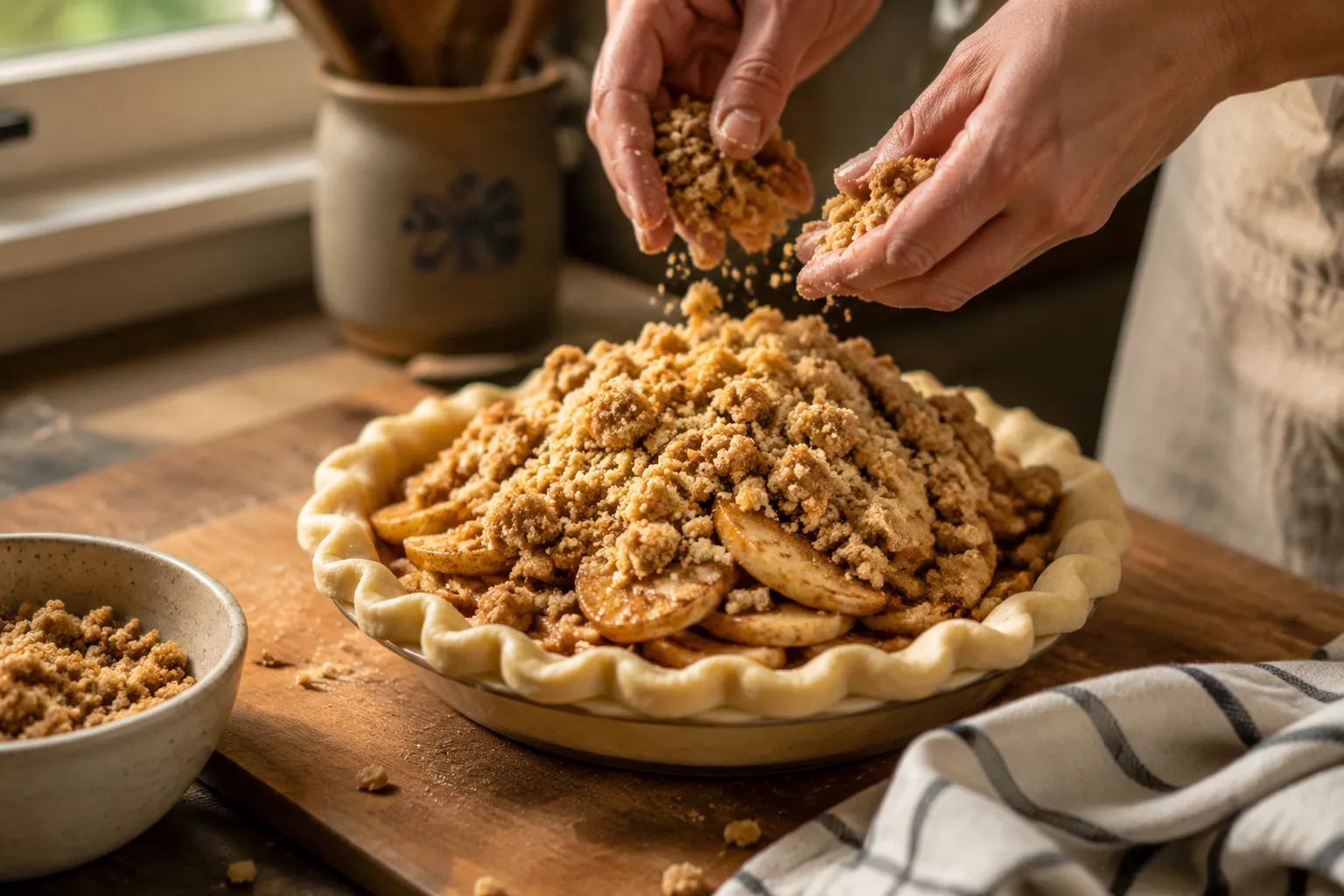
Mound the spiced apples into the par-baked crust, packing them in tightly because they'll shrink as they bake. Pour any juices left in the bowl over the top, then scatter the cold streusel evenly across the apples, all the way to the edges of the crust. Bake at 375°F for 50 to 60 minutes, until the streusel is deep golden and the filling is bubbling lazily at the edges. If the topping is browning too fast, loosely tent with foil for the last 15 minutes.
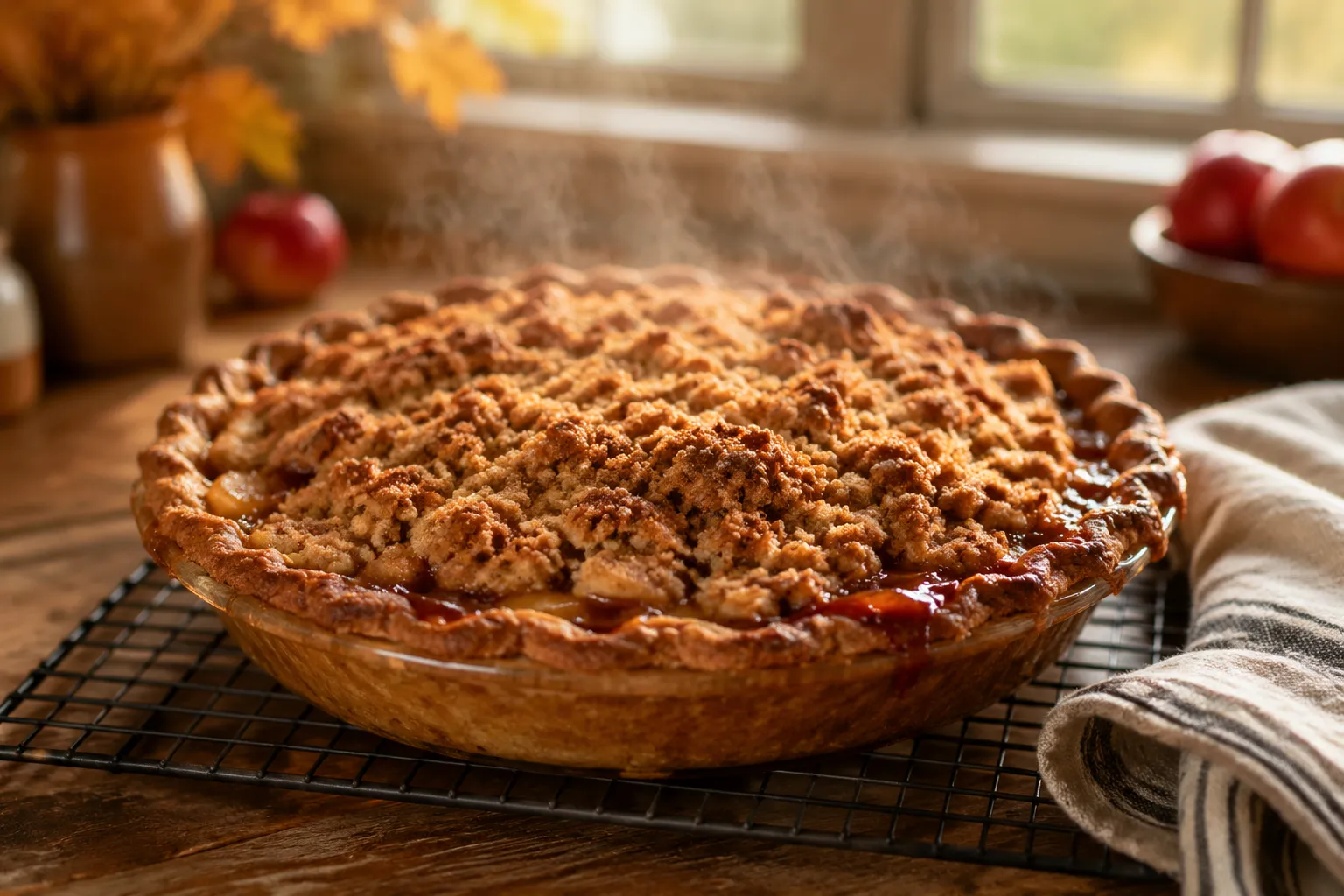
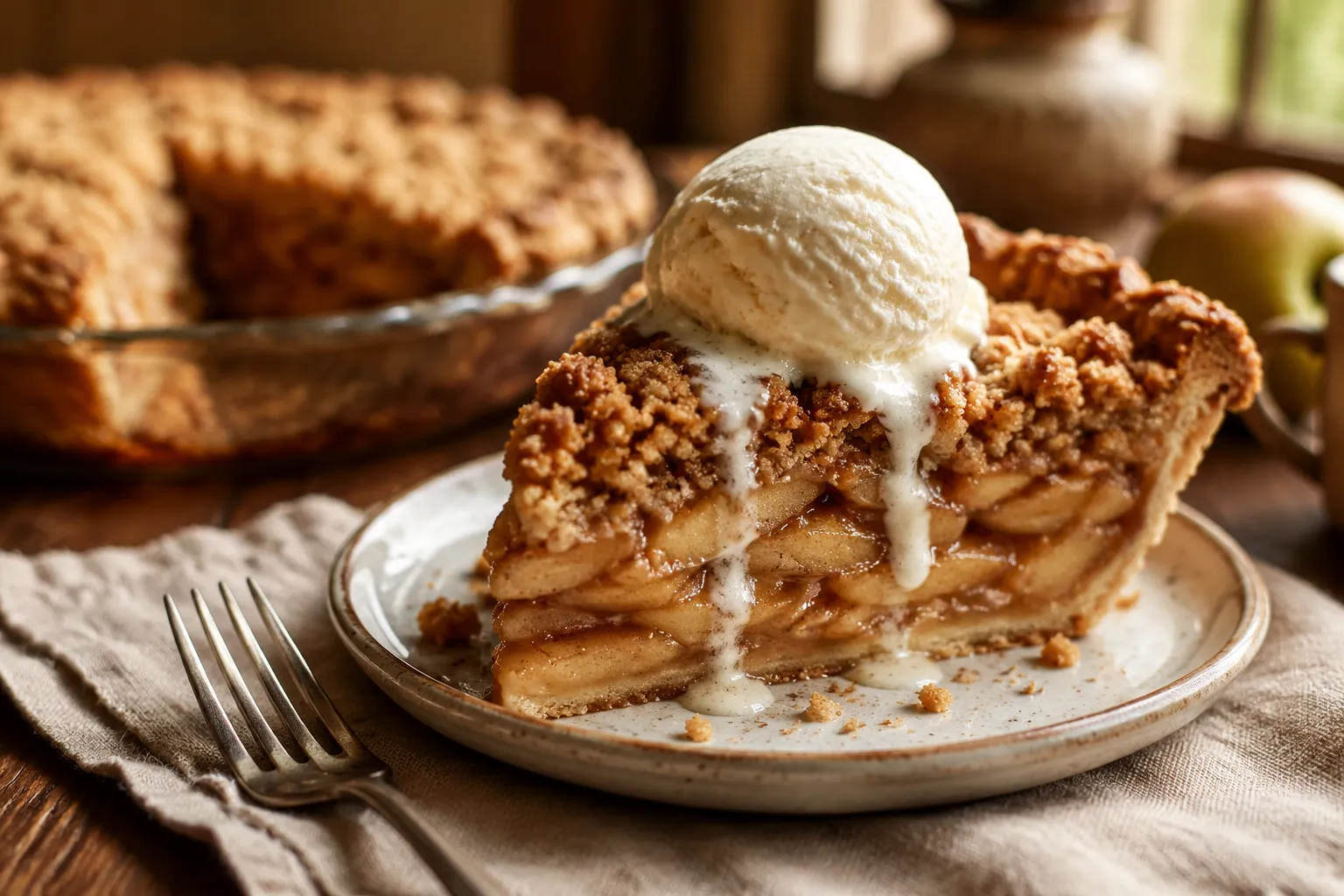
This is the easiest part — you really can't go wrong. Serve thick wedges slightly warm or at room temperature, with a generous scoop of vanilla ice cream that melts into the streusel and pools against the cinnamon apple filling. Cold heavy cream poured straight from the pitcher is a Pennsylvania Dutch move that's worth trying at least once. A drizzle of warm caramel sauce takes it into caramel apple pie territory if you want to push things further.
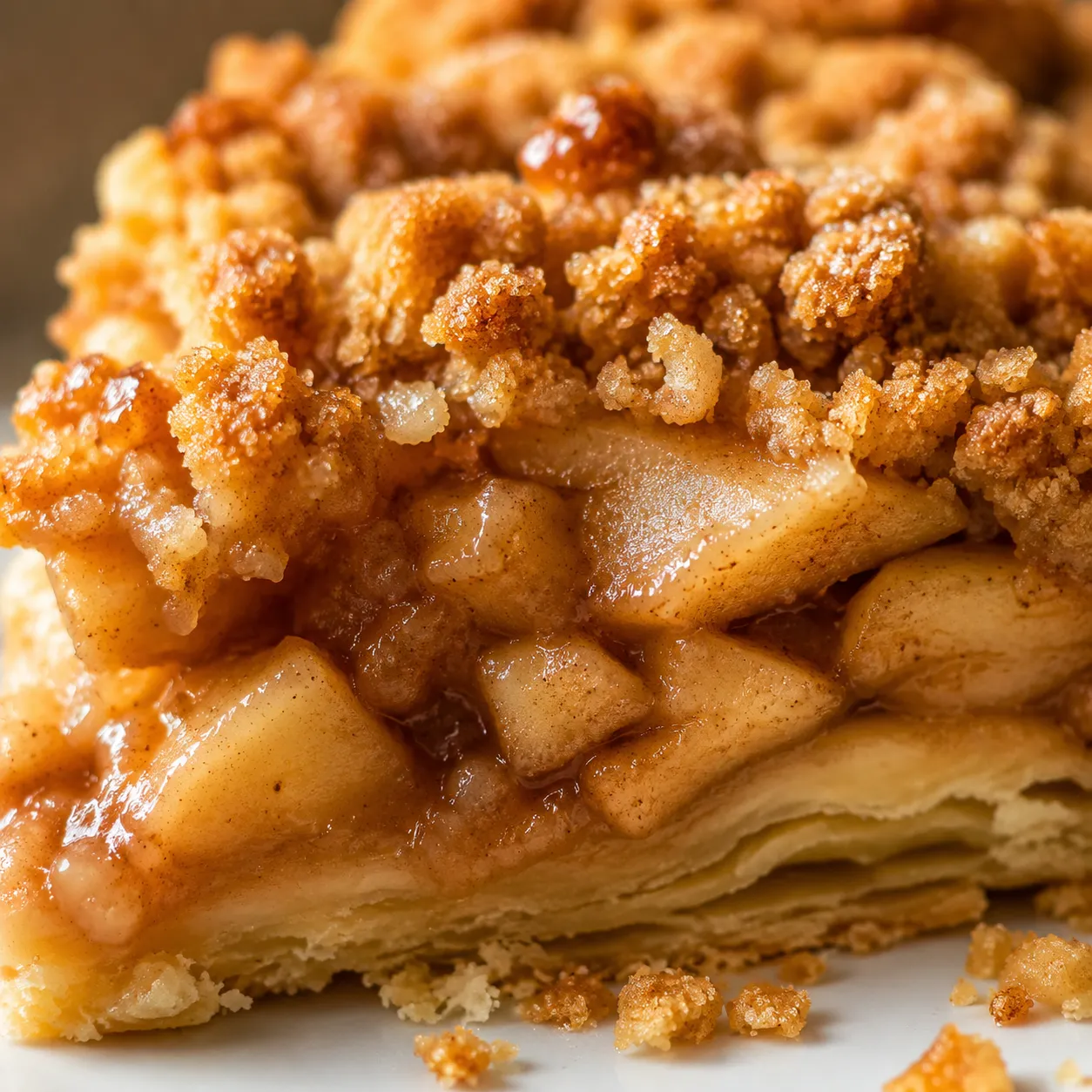
This is one of those Thanksgiving pie recipes that travels well too — bake it the day before, leave it loosely covered at room temperature, and rewarm slices in a 350°F oven for ten minutes before serving so the streusel crisps back up. It's a worthy centerpiece for any holiday dessert spread, and it earns a permanent spot in the fall baking rotation.
Once you have the base recipe down, this pie takes well to all kinds of riffs. The streusel and apple filling are both forgiving, so don't be afraid to make it yours.
Leftover pie keeps loosely covered at room temperature for up to 2 days, which is the best way to preserve that crisp streusel texture. For longer storage, transfer the pie (or individual slices) to the fridge in an airtight container for up to 4 days. Cold from the fridge is fine, but a quick warm-up makes a world of difference.
To freeze, cool the baked pie completely, then wrap tightly in plastic wrap and foil. It'll keep for up to 2 months. Thaw overnight in the fridge before reheating. To reheat, place the whole pie or slices on a sheet pan in a 350°F oven for 15 to 20 minutes until warmed through and the streusel re-crisps. Avoid the microwave — it'll soften the topping and make the crust gummy. You can also assemble the unbaked pie, freeze it solid, then bake from frozen at 375°F, adding 15 to 20 extra minutes to the bake time.