Caster Sugar: What It Is and How to Make It at Home
Ingredients
Scale
Caster sugar is the secret behind silky meringues, tender cakes, and smooth cocktails. Here's exactly what it is, when to use it, and how to make it at home in 2 minutes.
Caster sugar is the fine, quick-dissolving sugar you’ll often see tucked into British recipes, Australian bakes, delicate sponge cakes, pavlovas, and glossy meringues. If you’re baking in the US, it can feel like one of those slightly mysterious pantry ingredients—familiar enough to understand, but not always easy to find at the grocery store.
The good news: you can make it at home in just a couple of minutes with regular granulated sugar and a blender. The goal is not to turn it into powdered sugar, but to reduce the crystal size just enough that it dissolves beautifully into batters, whipped egg whites, buttercreams, and cocktails.
Think of this as a practical US baker’s guide: what it is, how it compares to other sugars, when it matters, when it doesn’t, and the exact homemade method I’d use any time a recipe calls for superfine sugar or “bar sugar.” It’s one of those homemade baking essentials that makes old-fashioned cakes, tender cookies, and cloud-like toppings feel a little more polished.
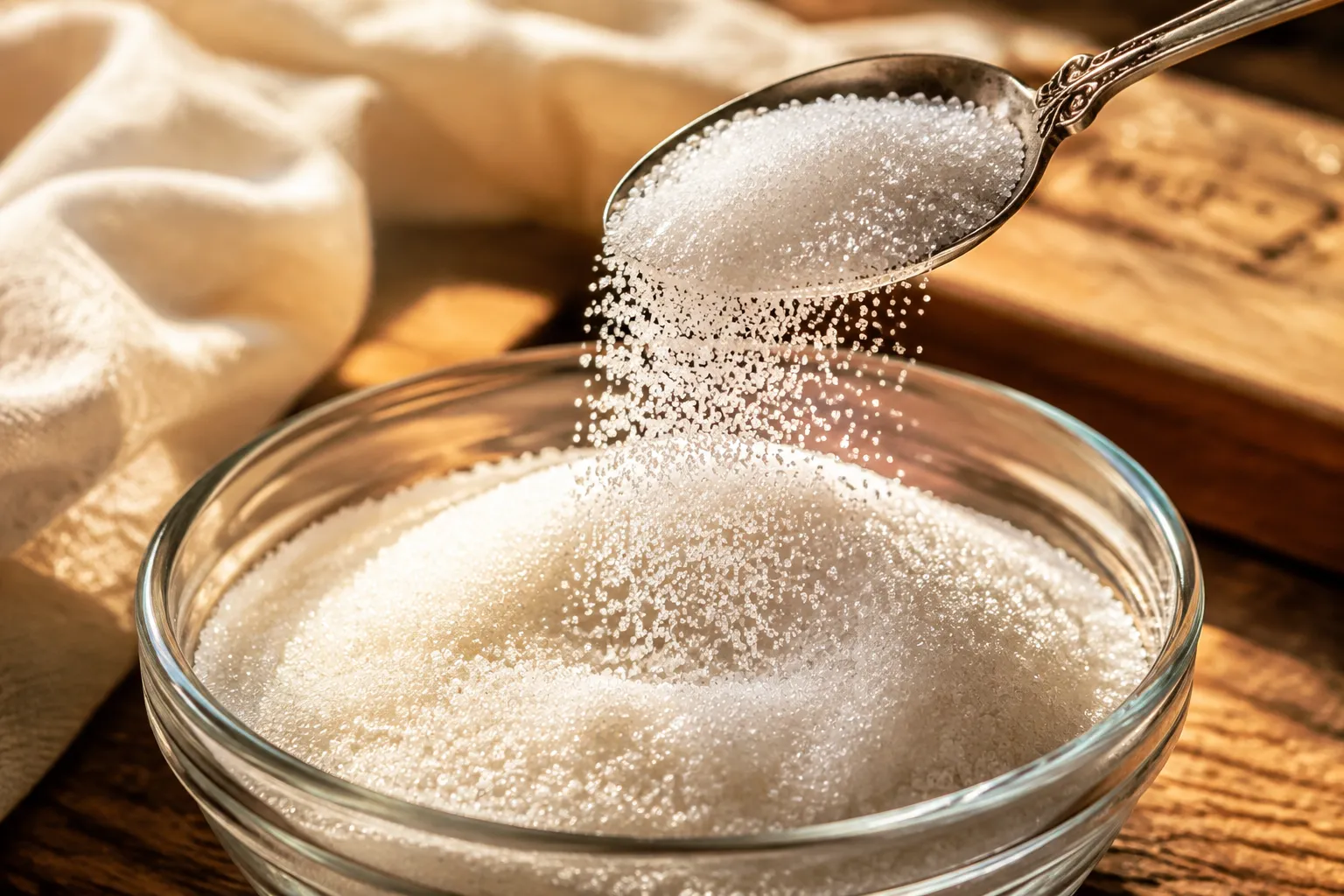
Caster sugar is white sugar that has been ground finer than standard granulated sugar, but not nearly as fine as powdered sugar. The crystals are still visible and sandy, not floury, which is exactly why they dissolve quickly without changing the structure of a recipe. In the UK, Australia, and New Zealand, it’s a common baking staple; in the US, it’s more often sold as superfine sugar. It is especially useful in recipes where sugar needs to dissolve fast, like meringue, sponge cake, simple syrup, mousses, and whipped fillings.
The name comes from old-fashioned sugar “casters,” which were small tabletop shakers used to sprinkle fine sugar over fruit, desserts, or tea. Because the crystals were small enough to flow neatly through the holes, the sugar became known as “castor” or “caster” sugar. You may still see both spellings, but “caster” is the most common modern spelling in recipes. If you’ve ever wondered how to make superfine sugar, you’re essentially learning how to make the US-labeled version of this same ingredient.
White versions are the most neutral and versatile, so they’re best when you want a clean sweetness and pale color. Golden varieties are less refined and retain a little natural molasses, giving the sugar a warm beige color and a subtle caramel note. Golden sugar can be lovely in shortbread, crumbles, oatmeal cookies, and cozy fall cakes, but it may tint white frostings or meringues. When in doubt, use white for precision baking and golden when a recipe can welcome a little extra warmth.
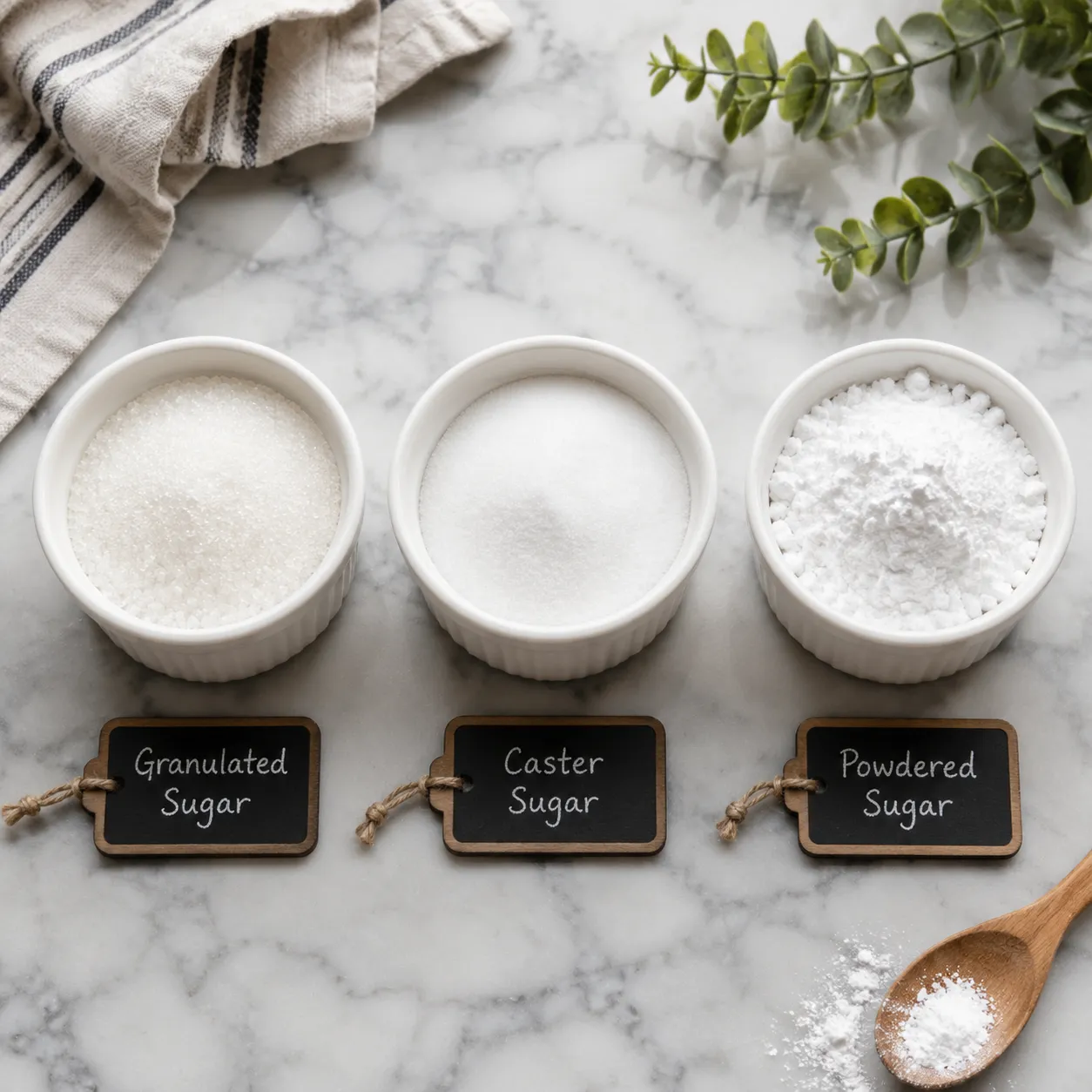
Granulated sugar is the everyday white sugar most American kitchens keep on hand. Its crystals are larger, which means it takes longer to dissolve into butter, eggs, or liquid. In many cookies, muffins, and loaf cakes, you can use a 1:1 granulated sugar conversion without much trouble, especially if the sugar has time to dissolve during mixing and baking. But in recipes with minimal liquid or short mixing times, larger crystals can leave a slightly coarse texture or create less volume.
Powdered sugar, also called confectioners’ sugar, is much finer—almost dusty—and usually contains cornstarch to prevent clumping. That added starch matters, because it can change texture, dull gloss, or make a mixture taste chalky if used in the wrong place. A powdered sugar substitute is helpful for frosting emergencies, but powdered sugar is not a direct swap here. If a recipe asks for this fine granular sugar, you want tiny crystals, not a powder.
Yes, for practical baking purposes, superfine sugar is the same ingredient. In American grocery stores, the package may also say “bar sugar” because bartenders use it for quick-dissolving cocktails and syrups. The crystal size can vary slightly from brand to brand, but the function is the same: finer than granulated, coarser than confectioners’. If you see a British sponge cake or pavlova recipe calling for caster sugar, reach for superfine sugar or make your own.
Fine sugar crystals dissolve faster, which is a small detail that makes a very real difference in delicate recipes. When sugar blends smoothly into eggs, butter, or cream, the final texture is more even and less gritty. This is especially important in no-bake desserts, whipped cream, mousses, and drinks where the sugar won’t spend much time in the oven. It’s also helpful in recipes with a short mixing window, where overbeating would cause problems.
In butter cakes and some cookies, sugar does more than sweeten—it helps aerate the butter during creaming. Smaller crystals create lots of tiny air pockets without feeling coarse, which can lead to a finer, softer crumb. That’s why older cake recipes and British recipes often specify this ingredient rather than standard American sugar. The change is subtle in sturdy bakes, but in a tender sponge or tea cake, it can be the difference between good and bakery-level.
For whipped egg whites, fine sugar is a quiet little hero. It dissolves more readily into the foam, helping create a stable, glossy meringue instead of one that weeps or feels sandy on the tongue. If you’re looking for the best sugar for meringue, this is the texture you want: fine enough to melt into the egg whites, but still granular enough to add structure slowly. Pavlovas, macarons, and Swiss-style toppings all benefit from that balance.
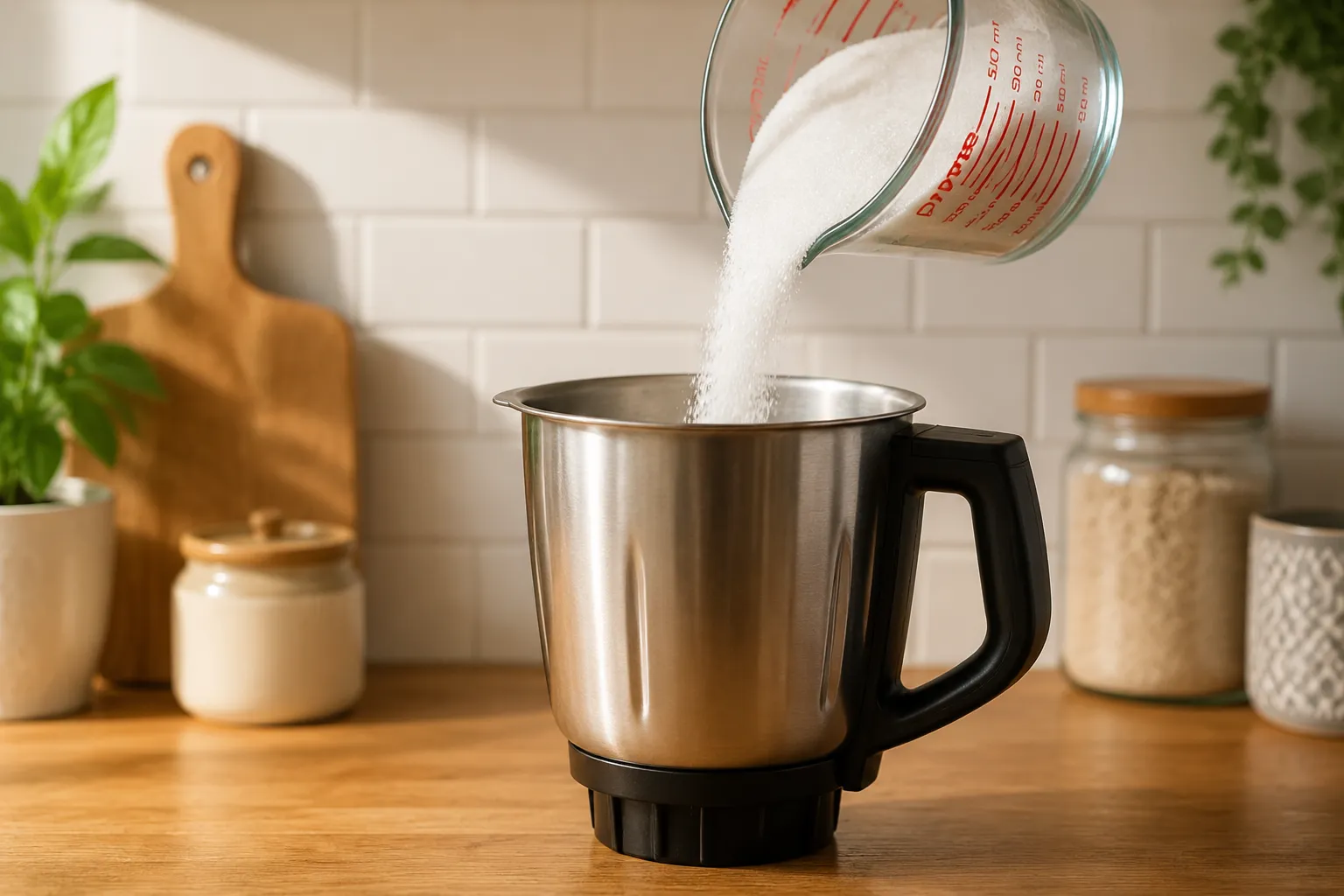
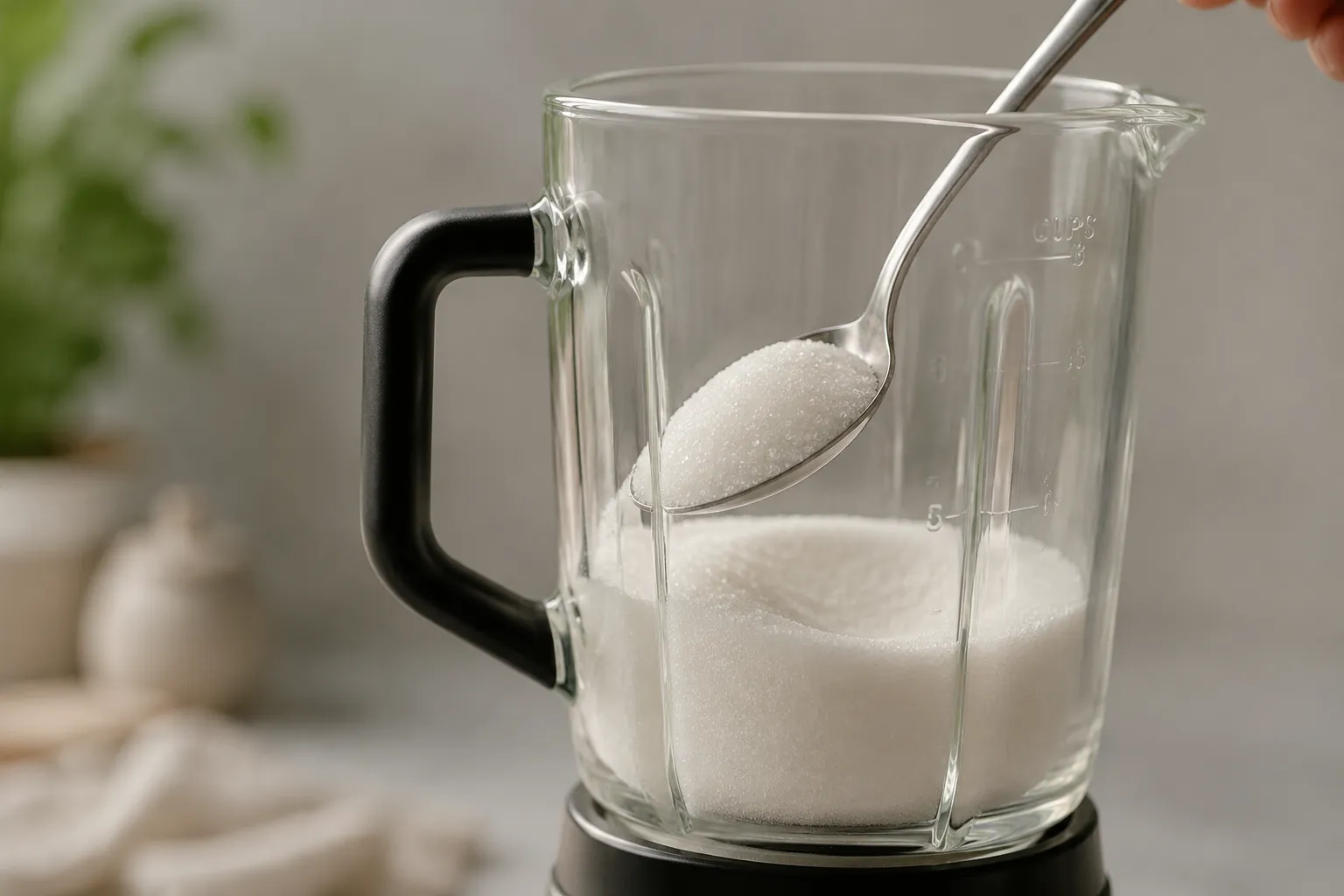
You only need one ingredient and one machine: regular white granulated sugar plus a blender, food processor, or clean coffee grinder. A high-speed blender makes the most even texture, but a standard blender works well if you pulse in short bursts. A food processor is better for larger batches, though the texture may be a touch less uniform. You’ll also want a dry measuring cup, a clean jar, and a spoon for checking the grain size.
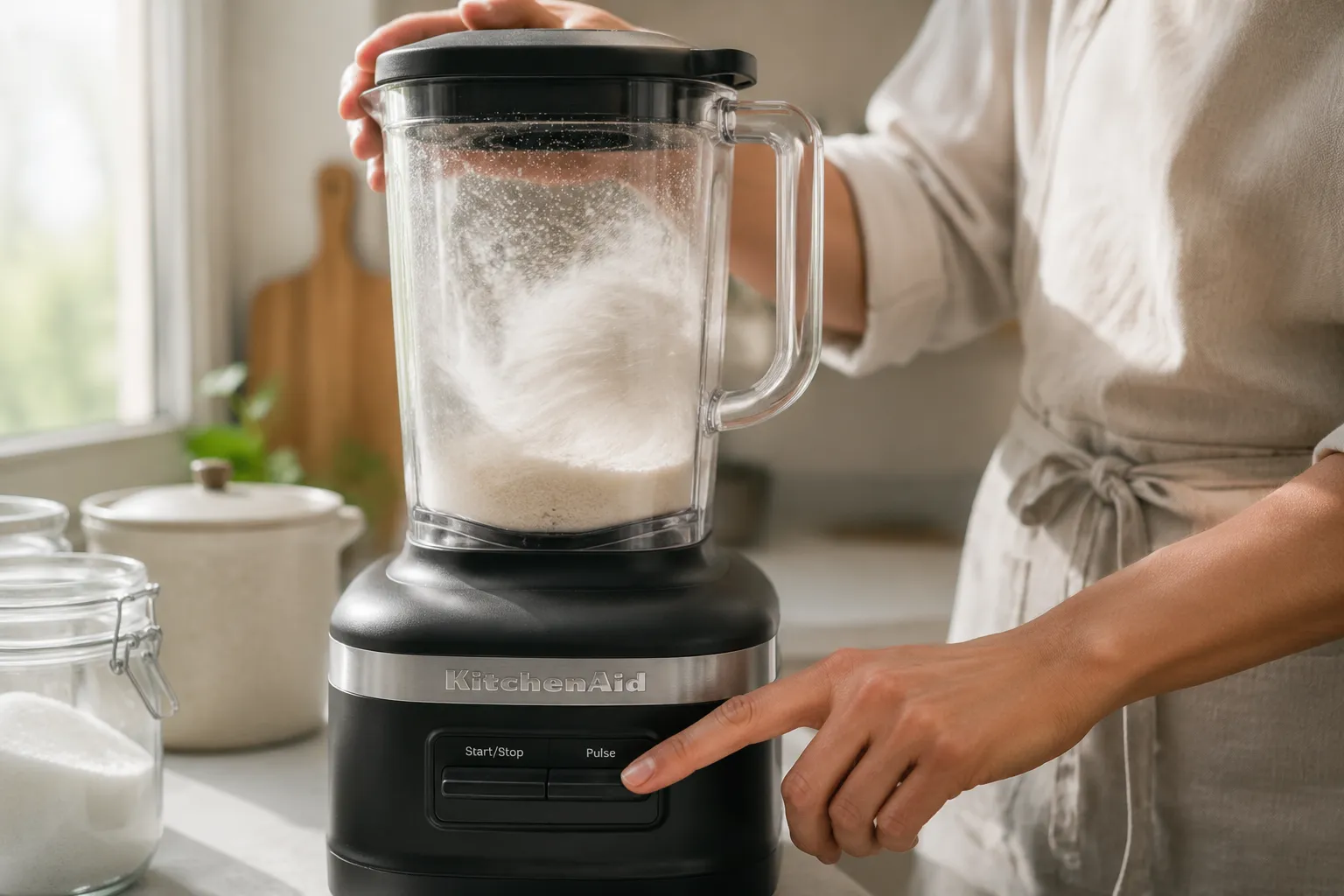
Add 1 cup of granulated sugar to a completely dry blender jar. Pulse briefly rather than running the machine continuously; you want to break the crystals down, not pulverize them into a cloud. After a few pulses, stop and let the sugar dust settle before opening the lid. Rub a pinch between your fingers: it should feel finer than table sugar but still gently grainy, like very fine sand.
A food processor works nicely when you want to make a larger pantry batch. Because the bowl is wider and the blade sits lower, it may take a little longer to reach an even texture than a blender. Scrape down the sides if sugar collects along the edges, then pulse again until the crystals look consistently small. Let the bowl sit for a minute before removing the lid so the fine sugar dust can settle safely.
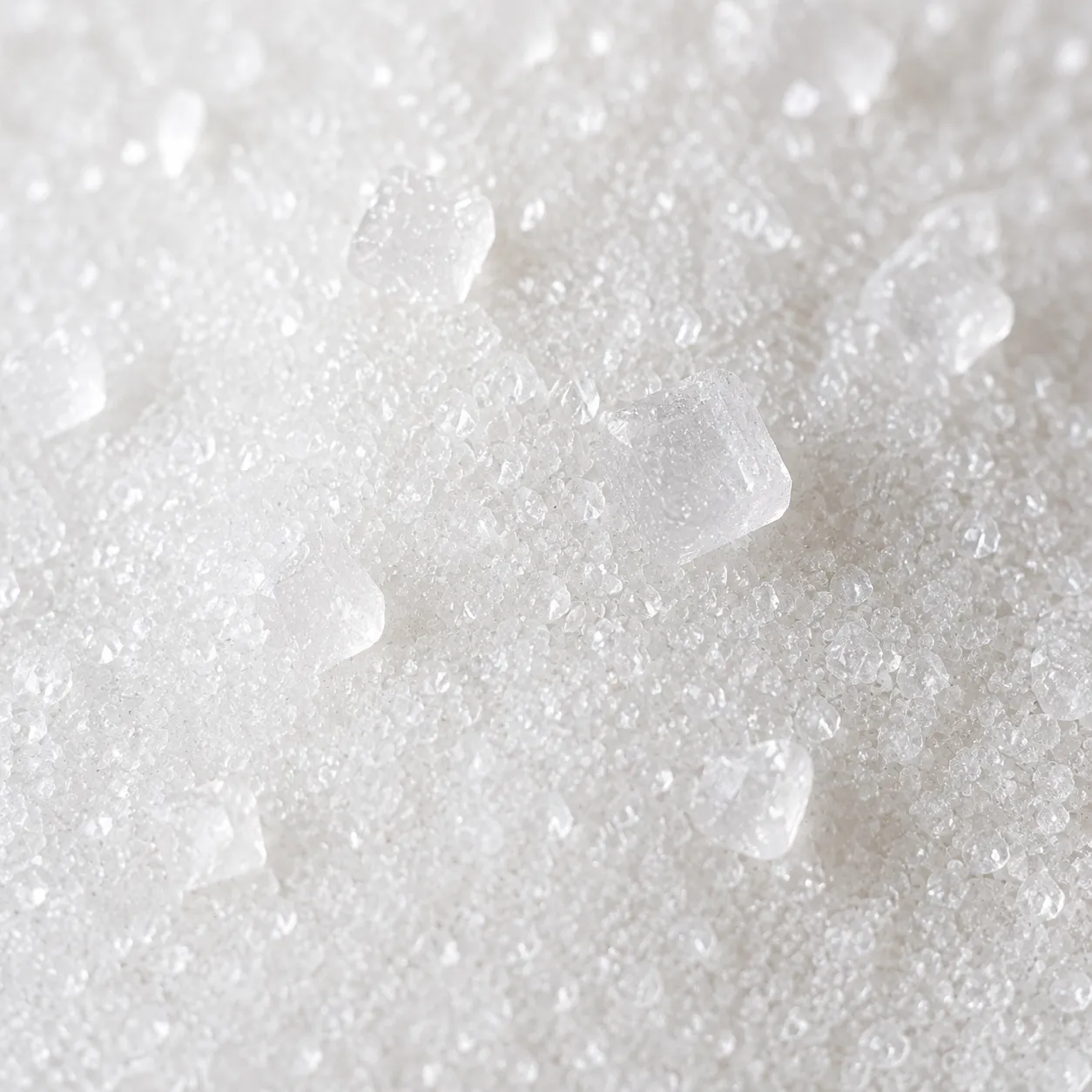
The most common mistake is processing too long and drifting into powdered sugar territory. You’ll know you’ve gone too far if the sugar looks matte, floury, or smoky when stirred. It should pour in a soft stream and sparkle slightly, not pack down like cornstarch.
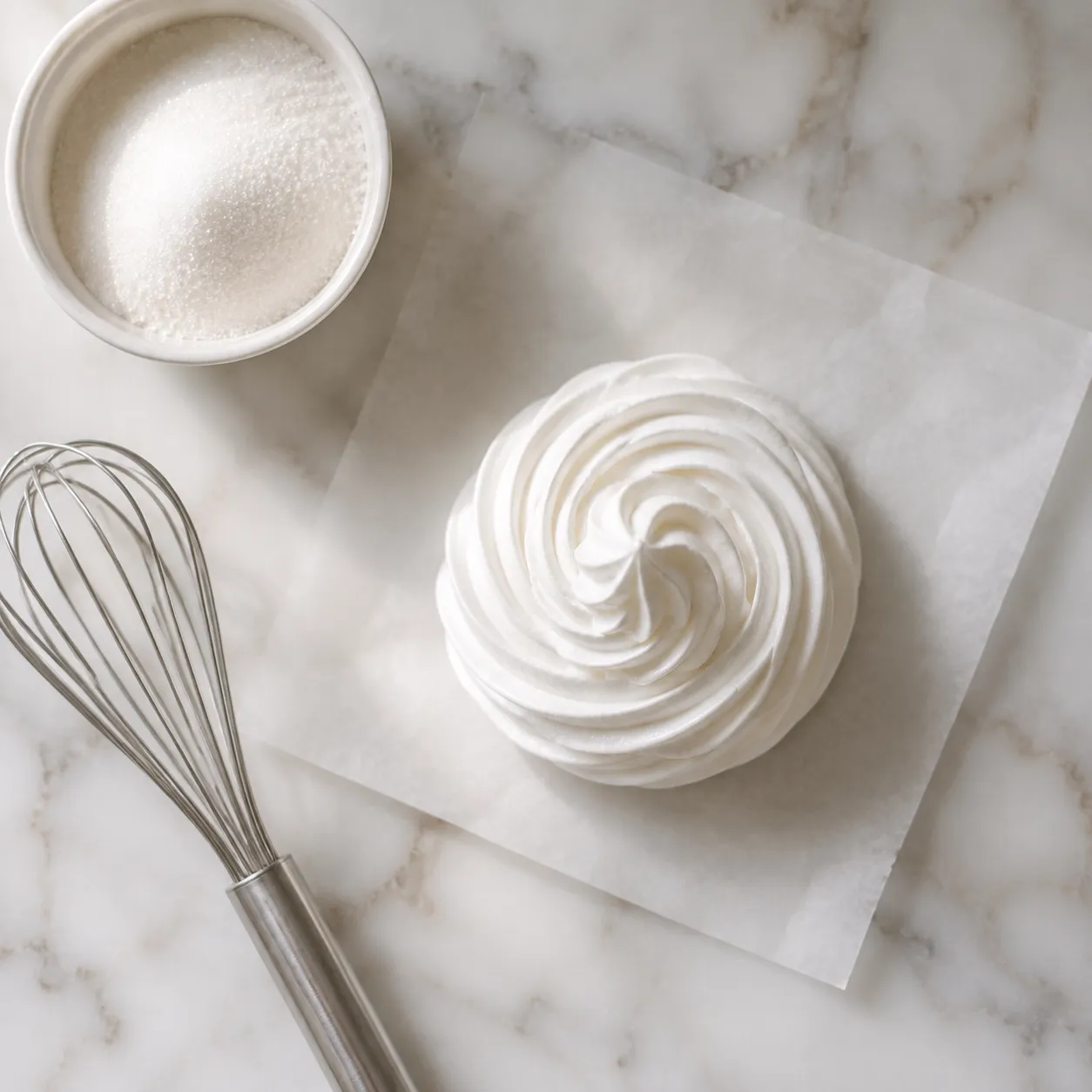
Use this fine sugar anywhere smoothness and quick dissolving matter. It shines in meringues, pavlovas, angel food cake, sponge cakes, chiffon cakes, macarons, mousses, lemon curd, whipped cream, buttercream, and simple syrup. It’s also excellent in cocktails because it dissolves without heat, which is why bar sugar is another common name. If a recipe has a delicate texture or relies on whipped eggs, this ingredient is worth the tiny extra step.
For most recipes, use it 1:1 by volume or weight in place of granulated sugar. One cup of granulated sugar becomes roughly one cup of homemade fine sugar after processing, though the volume can settle slightly depending on how long you blend. For the most accurate baking, weigh your sugar before grinding and use the same weight called for in the recipe.
There are plenty of recipes where the difference is minimal. Brownies, rustic muffins, quick breads, jammy fruit crisps, and many drop cookies are forgiving because they contain enough moisture or mixing time to dissolve standard sugar. In those cases, regular granulated sugar usually works just fine. Save the extra step for recipes where texture is front and center, rather than bakes that are already dense, fudgy, or intentionally rustic.
Start in the baking aisle near the granulated sugar, brown sugar, and confectioners’ sugar. If you don’t see it there, check near cocktail mixers or specialty baking ingredients, especially in larger supermarkets. Some stores shelve it with natural or organic sugars, while international markets may carry British brands labeled with the familiar name. Around the holidays, it can be easier to find because more people are baking meringues, candies, and delicate cookies.
In the US, look for packages labeled “superfine sugar,” “Baker’s Sugar,” or “bar sugar.” Domino and C&H are two common brands that have sold superfine-style sugar in American stores, though availability varies by region. Store brands may carry it seasonally or only in smaller bags. If you bake often from UK or Australian cookbooks, keeping one jar on hand can save you a lot of mid-recipe scrambling.
Online retailers are a reliable option if your local store doesn’t stock it. Search for superfine sugar rather than only the British name, and check the package details to make sure it is granular and not confectioners’ sugar. Specialty baking sites often carry imported brands, while restaurant-supply stores may sell larger bags for serious bakers or cocktail enthusiasts. You can also pair it with other pantry projects, like a vanilla sugar recipe, to build a more useful baking shelf.
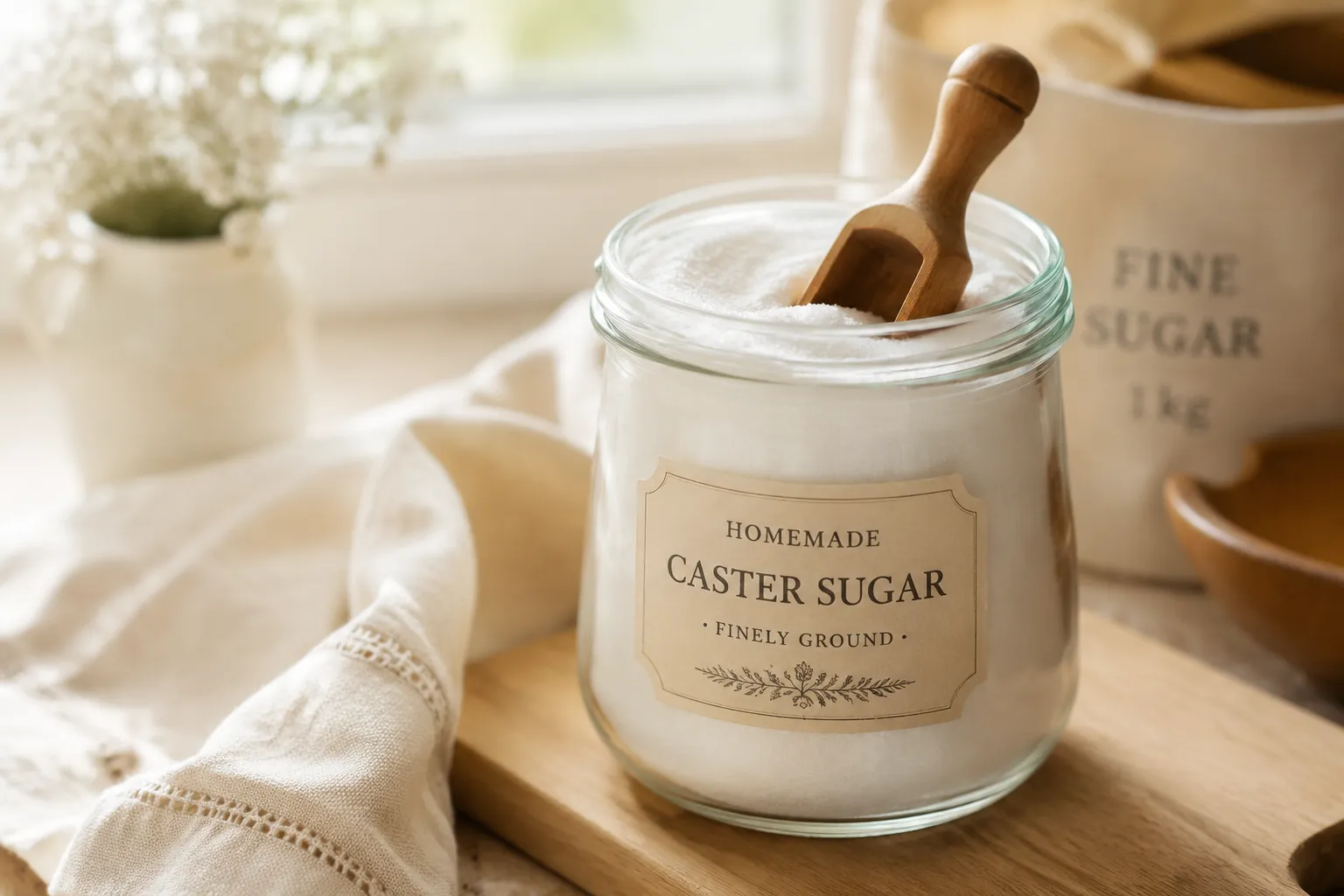
Once your sugar is ground, treat it like any fine, dry baking ingredient: keep it sealed, dry, and away from strong odors. A glass jar with a tight lid is ideal because it protects the texture and lets you see when you’re running low. Label the jar so no one confuses it with powdered sugar, especially if you store both in similar containers.
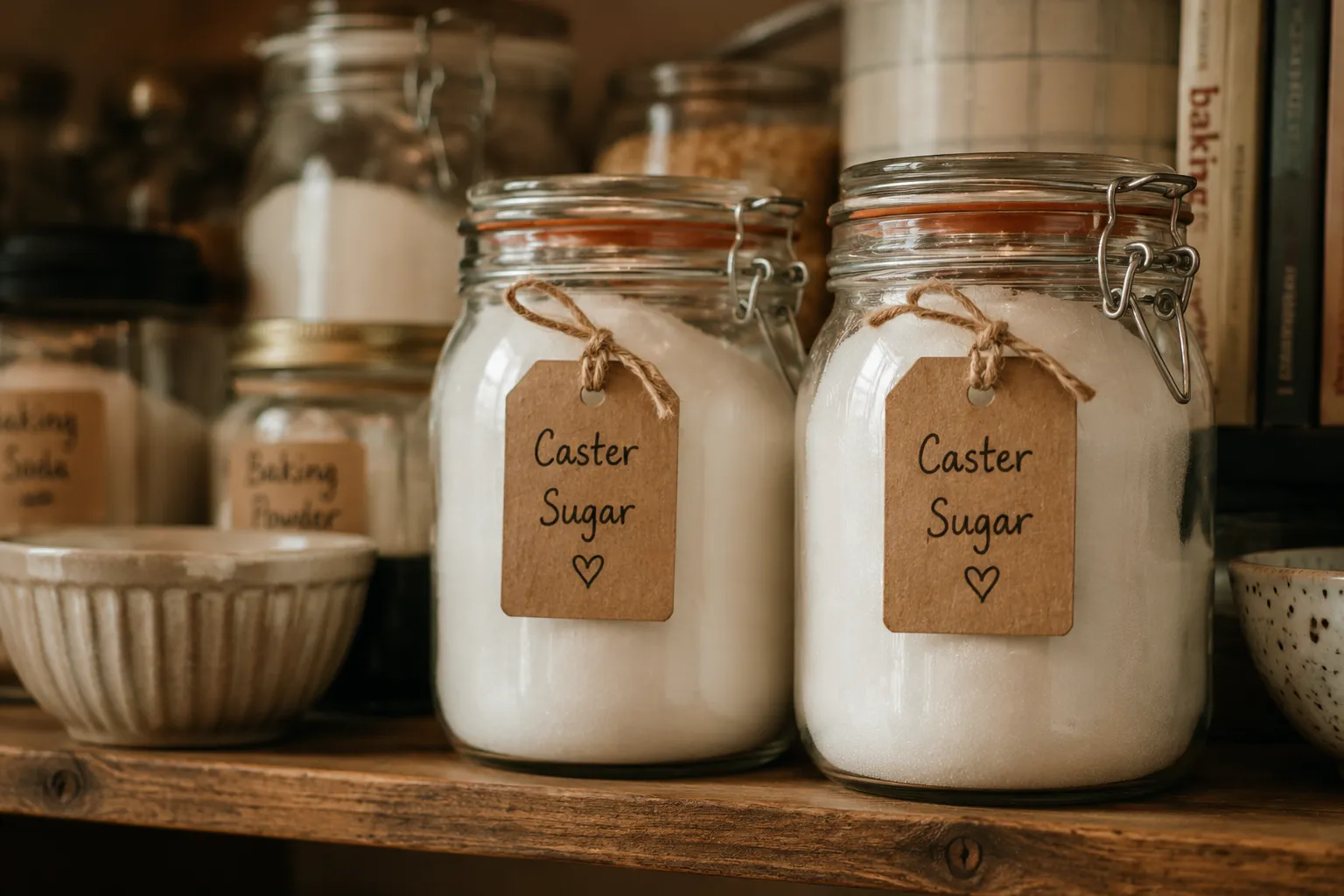
If it does clump a little, break it apart with a fork or pulse it once or twice before measuring. For longer storage, add a small food-safe desiccant packet to the pantry jar, or simply make smaller batches so it stays fresh and free-flowing. Homemade versions last a long time when kept dry, but I like making just a cup or two at once because the texture is at its best right after grinding. It’s quick enough that you never need to overthink it.
This is one of those tiny baking details that can make a recipe feel smoother, lighter, and more intentional. You do not need to panic if you can’t find it at the store, and you do not need to special-order a bag for one cake. With a blender or food processor and a cup of sugar, you can make exactly what you need in minutes.
Use it when the recipe is delicate, glossy, whipped, or no-bake; skip it when the bake is rustic and forgiving. Once you understand the texture, it becomes less of a specialty ingredient and more of a simple technique. And the next time a beautiful Victoria sponge, pavlova, or lemon mousse calls your name, you’ll know exactly what to do.