Banana and Muffin Recipe: Bakery-Style Almond Flour Muffins
Ingredients
Scale
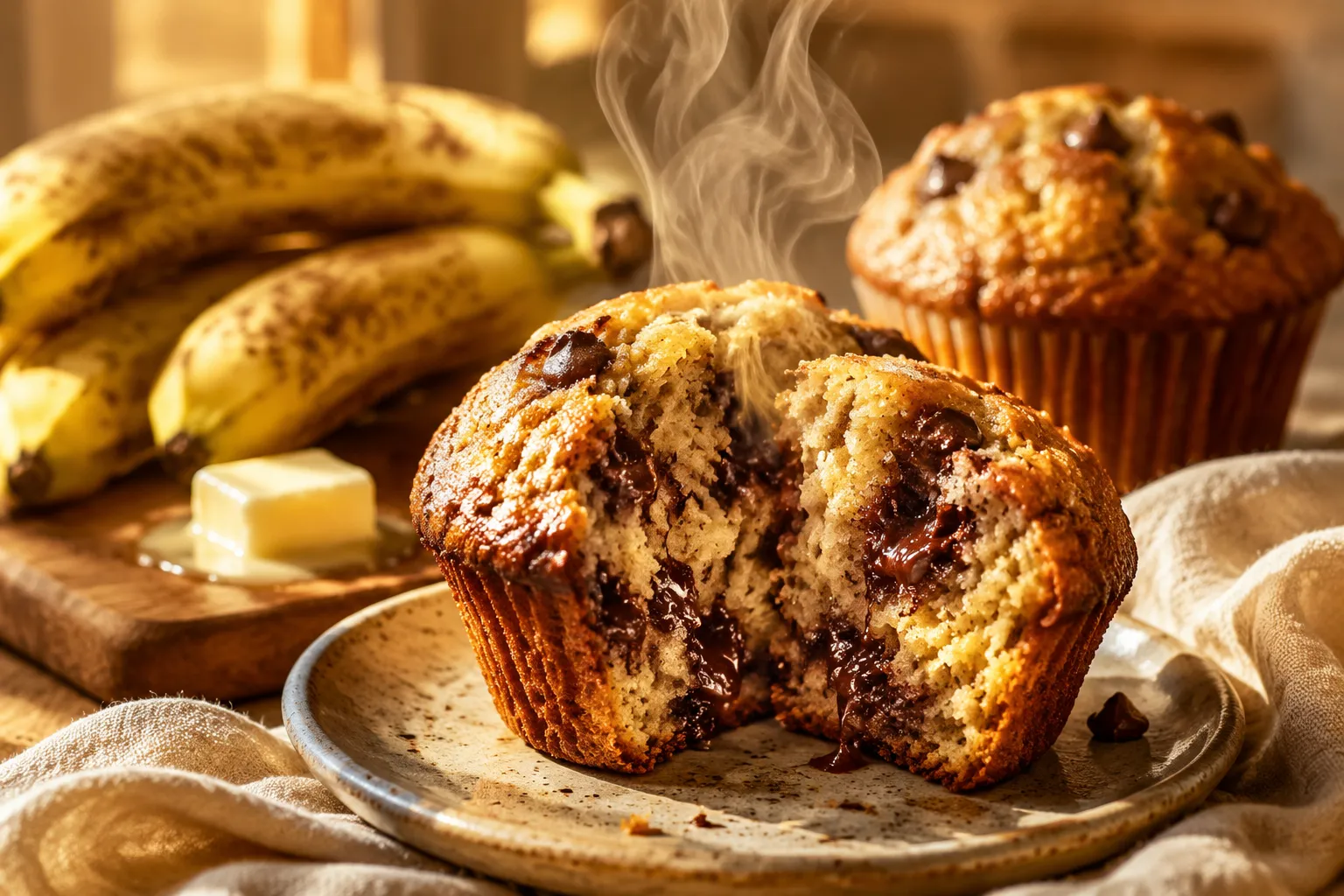
Soft, tall, and packed with real banana flavor, these almond flour banana muffins bake up bakery-style in one bowl with pantry staples.
This banana and muffin recipe is the one I keep coming back to whenever a bunch of bananas hits that perfectly spotted, almost-too-soft stage on the counter — that point right before they're destined for the freezer or the compost bin. It's a one-bowl bake that comes together in about ten minutes of hands-on time and pulls out of the oven with tall, golden domes, a tender custardy crumb, and the kind of warm cinnamon-vanilla aroma that pulls everyone into the kitchen. Whether you're working with all-purpose flour or going the almond meal route for a gluten-free version, the formula stays simple, forgiving, and bakery-worthy.
What I love most about turning banana batter into individual muffins, rather than one loaf of quick bread, is the ratio of crackly, caramelized top to soft interior. Every single muffin gets edges. Every single one has a little sugary crust. And because they bake in roughly half the time of a full loaf, you can decide at four in the afternoon that you want fresh muffins for dessert and have them on the table before five.
I've tested this batter dozens of times, tweaking sugar ratios, oven temperatures, and liner heights to land on a muffin that doesn't sink, doesn't go gummy, and tastes deeply of real fruit, not artificial flavoring. The trick comes down to a handful of practical muffin baking tips, very ripe bananas, and a smart starting oven temperature that pushes the tops up before they have a chance to spread out flat. If you've ever made easy banana bread on a Sunday afternoon, this recipe will feel familiar, just scaled into individual portions that travel better, freeze beautifully, and disappear faster.
Every great banana and muffin starts with the fruit, and the grocery list from there is short — most of it likely lives in your pantry already. Three large ripe bananas form the backbone of the flavor, sweetness, and moisture; the spottier they are, the better. Two eggs and a third of a cup of melted butter (or coconut oil for a dairy-free version) handle the structure and richness. Brown sugar deepens the caramel notes and keeps the crumb soft, while a splash of vanilla and a half teaspoon of cinnamon round everything out without overpowering the banana itself.
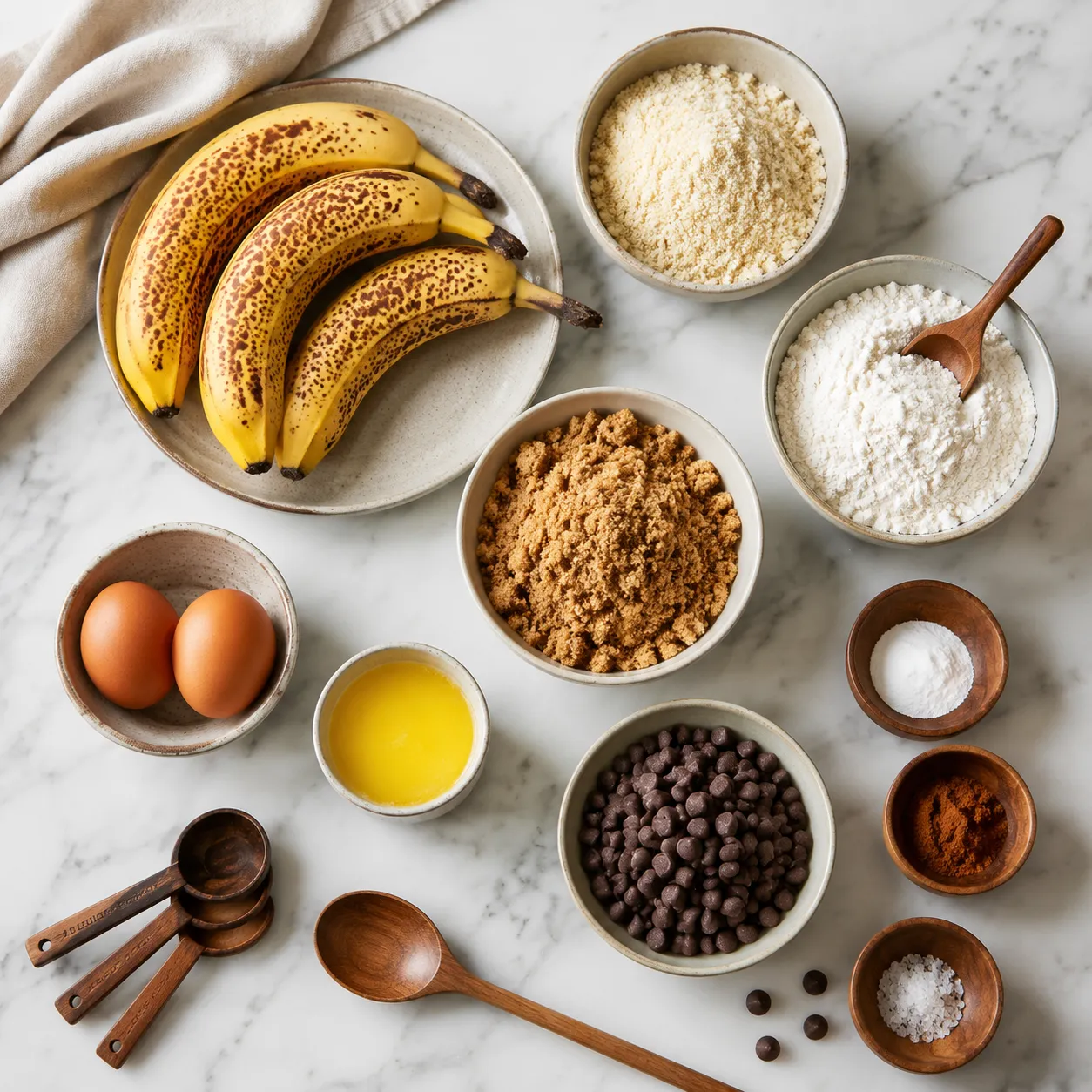
For the flour, you have two solid paths. A cup and a half of all-purpose flour gives you a classic, lightly chewy bakery muffin. Two cups of fine almond meal — sometimes labeled almond flour — gives you tender, naturally gluten-free banana muffins with a slightly more delicate crumb and a deeper golden color. Both versions have been tested in my kitchen, and both turn out beautifully if you respect the ratios. Don't try to swap them one-for-one by volume; almond meal is denser and needs a touch more lift, which is why the GF version uses a third egg.
The mix-ins are where you make this recipe yours. A half cup of dark chocolate chips melts into glossy ribbons through the crumb, while chopped walnuts add buttery crunch and a hint of bitterness that balances the sweetness. Frozen blueberries also work, though I'd reduce them to a third of a cup so the batter doesn't streak purple. A swirl of peanut butter on top is fair game too.
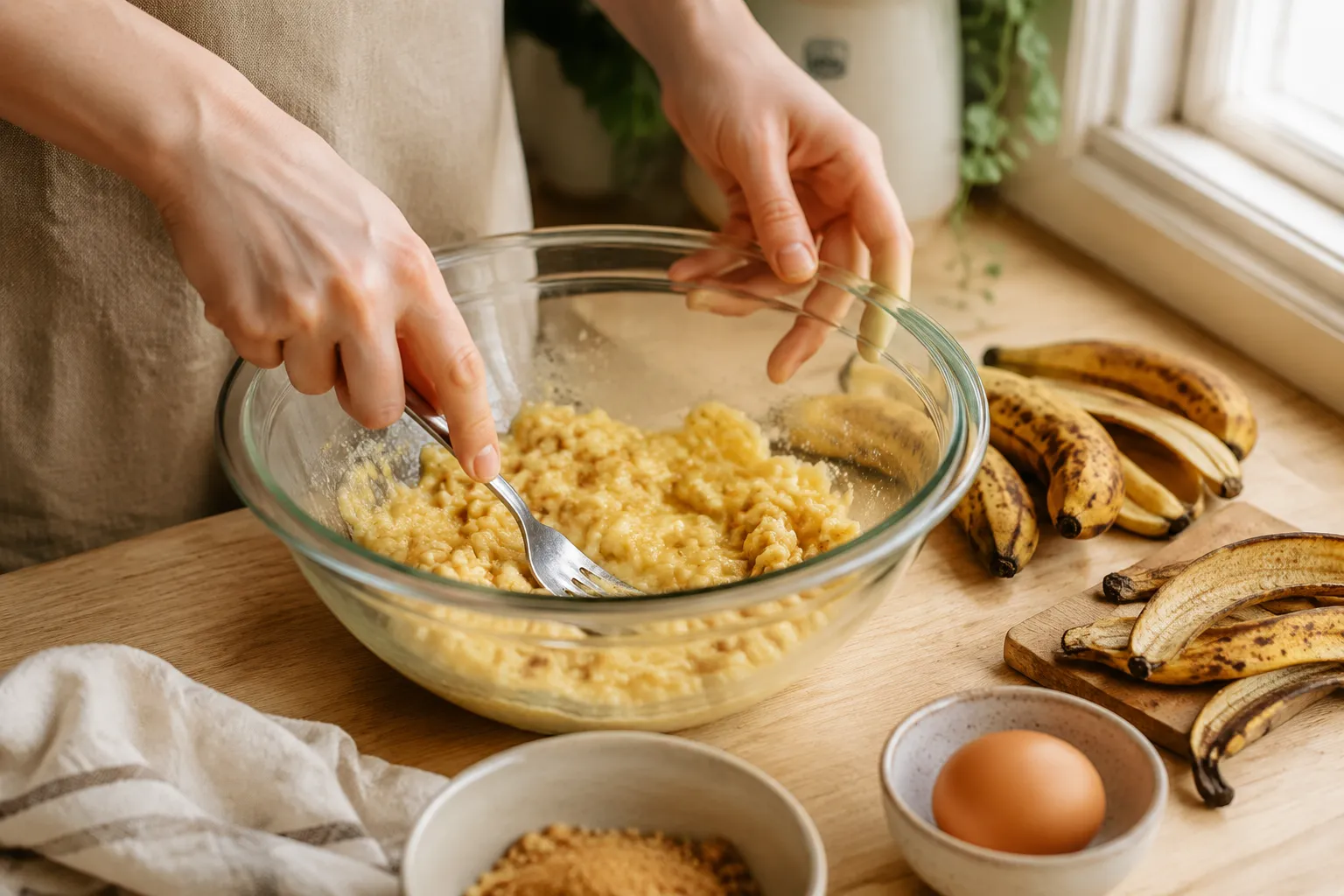
The full numbered method lives in the recipe card below, but here's the high-level rhythm of the bake so you know what to expect at each stage. You'll start by mashing your bananas in a single large bowl, then whisk the eggs, melted butter, brown sugar, and vanilla right in on top. This is what makes them genuine one bowl muffins — fewer dishes, no stand mixer to drag out, and no cold ingredients to fight against. A few small lumps of banana left in the mash are not just okay, they're great; they bake into pockets of intense banana flavor.
Next, the dry ingredients — flour (or almond meal), baking soda, cinnamon, and salt — get added directly to the wet bowl and folded in with a silicone spatula. The single most important move at this stage is to stop mixing the moment you no longer see streaks of dry flour. Overmixing develops gluten and gives you tough, peaked, rubbery muffins instead of moist banana muffins with that soft, even crumb everyone wants. Twelve to fifteen folds is usually plenty.
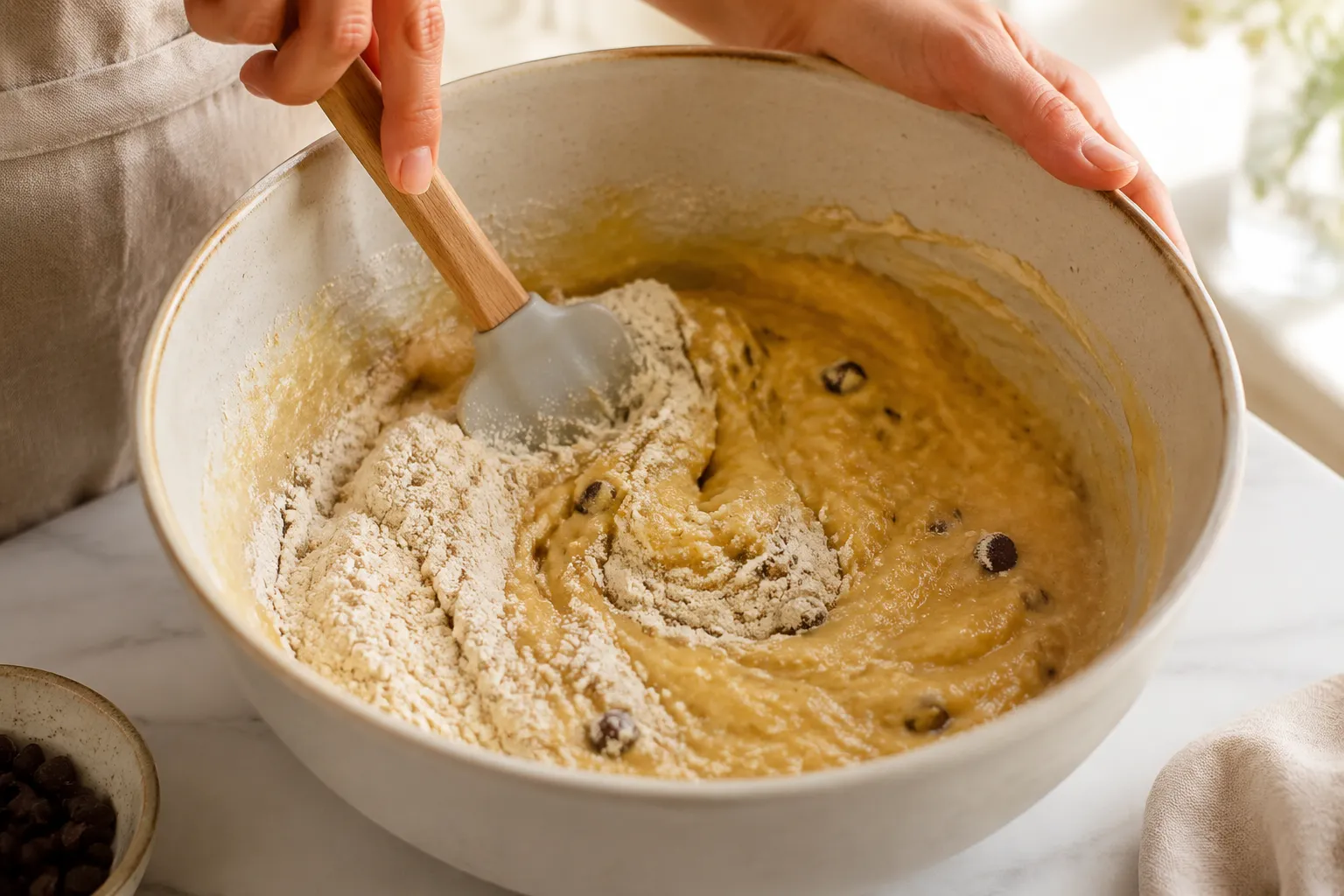
Once the chocolate chips or walnuts are folded in with just a few extra strokes, you'll scoop the batter into paper-lined muffin cups, filling each one nearly to the rim. Yes, all the way up — this is how you get that signature tall dome. A scattering of turbinado sugar and a few extra chocolate chips on top makes them look pulled straight from a coffee shop case and gives the tops a gorgeous crackle as they bake.
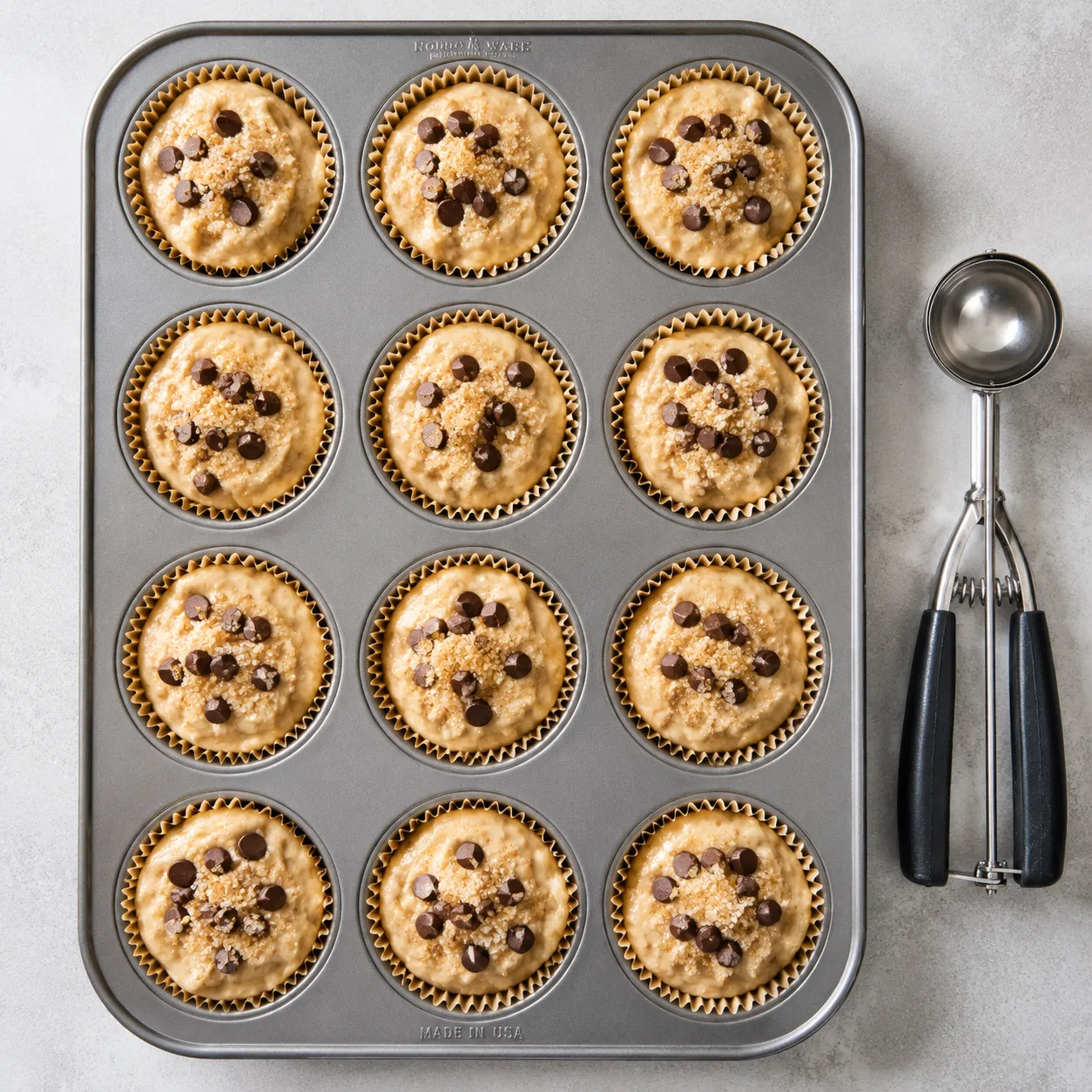
The oven does the rest. A hot 425°F start for the first five minutes lifts the tops fast and sets the structure of the dome, then dropping to 350°F lets the centers bake through gently without burning the edges. Total bake time runs around twenty-two minutes, give or take two depending on your oven and pan color. A toothpick inserted off-center should come out with just a few moist crumbs. Let them sit in the pan for five minutes before transferring to a wire rack so the bottoms don't steam and turn soggy.
There's a real difference between a soft, flat homemade muffin and the tall, crackle-topped specimens at a good coffee shop, and it isn't a secret ingredient. It comes down to three small mechanical choices: filling the liners almost to the top, starting the oven hot, and trusting the visual cues rather than a strict timer. Once you internalize those, every batch of bakery-style banana muffins you pull from this point forward will look like it came straight from a glass case. The science is surprisingly simple — a hot oven flash-sets the outer layer of batter while the leavening still has plenty of fight in it, so the dome rises tall and locks in before the rest of the muffin catches up.
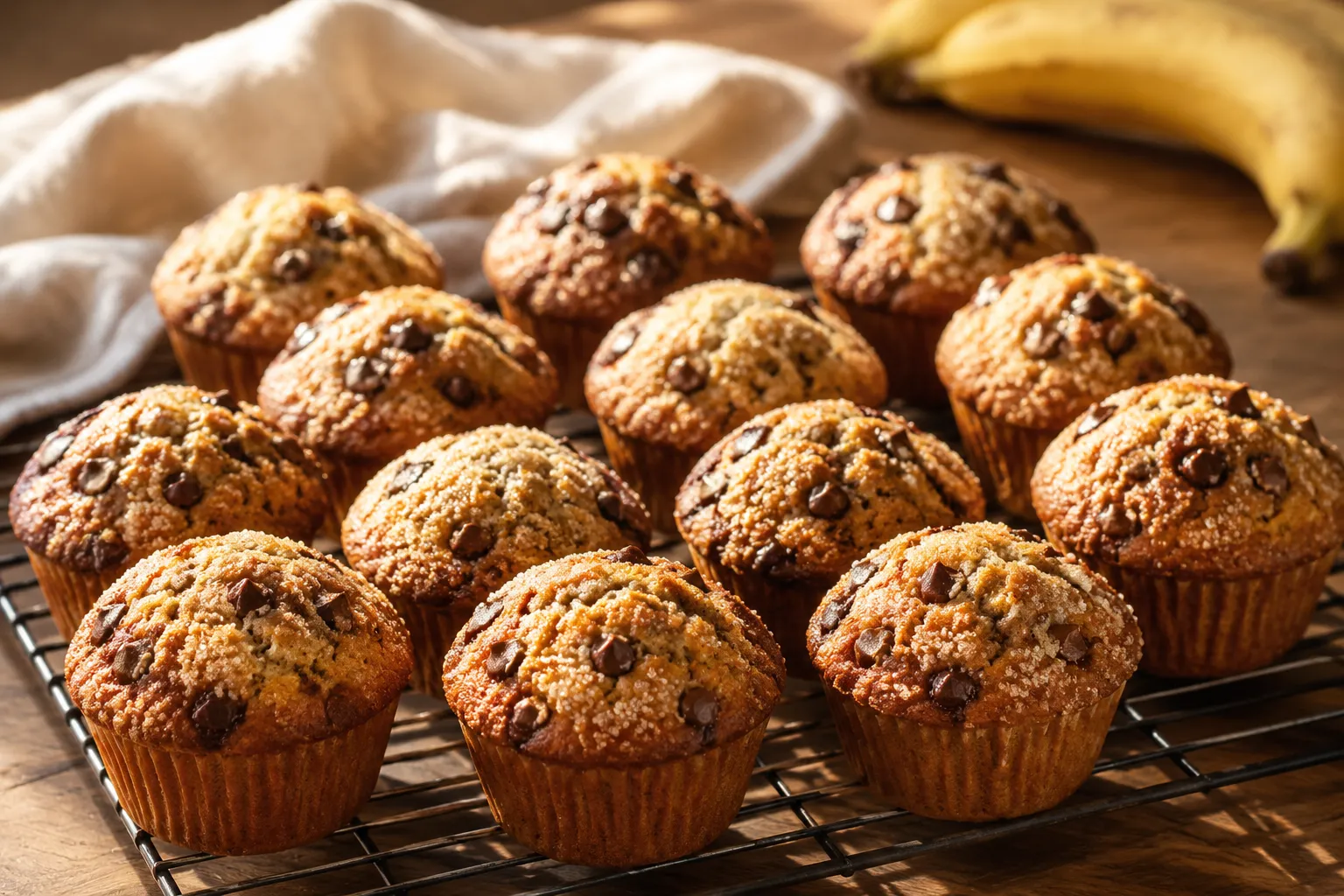
The almond flour banana muffins variation is genuinely worth trying even if you don't strictly need to eat gluten-free. Almond meal brings a higher fat content, which translates to a moister, pound-cake-like crumb and a deeper toasted flavor under the dome. These banana and almond meal muffins also keep on the counter a full day longer than the all-purpose version, which makes them a smart bake-ahead choice for busy weeks. The crumb feels almost custardy on day two, which I find even better than day one.
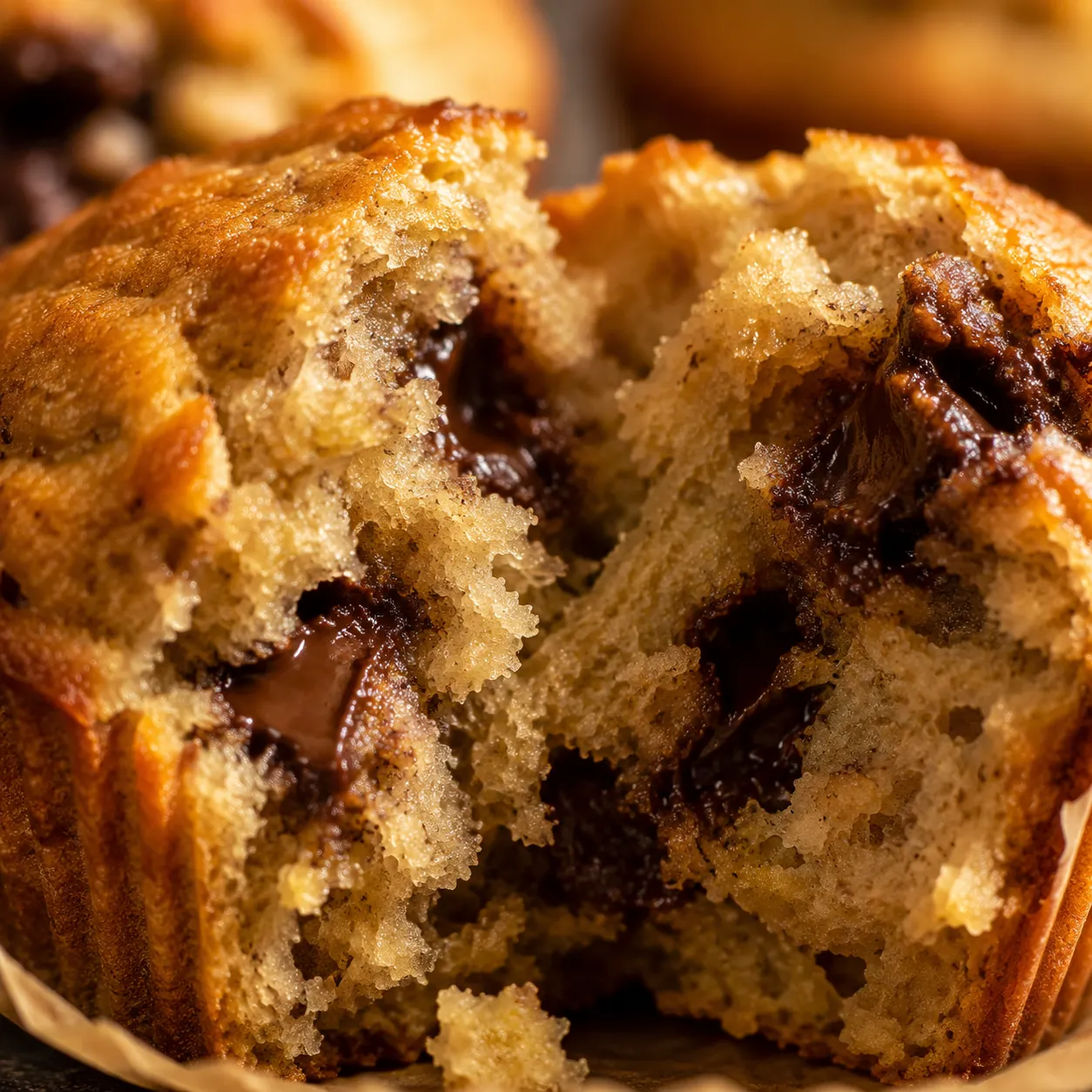
Both versions hit the sweet spot for healthy breakfast muffins — meaning real ingredients, no neutral oils that taste like nothing, and enough natural sweetness from the bananas that you could actually cut the brown sugar by a few tablespoons if you wanted to. They're sturdy enough to slide into a lunchbox and tender enough to feel like a real treat alongside afternoon coffee. The protein from the eggs and almond meal gives them more staying power than your average pastry, too.
Warm from the oven, split open and smeared with a little salted butter, these are an entire breakfast on their own. I love them on a slow weekend morning next to scrambled eggs, a wedge of melon, and a strong pour-over coffee. For brunch spreads, they sit nicely between something savory like a vegetable frittata and something fresh like a yogurt parfait bar with granola and berries.
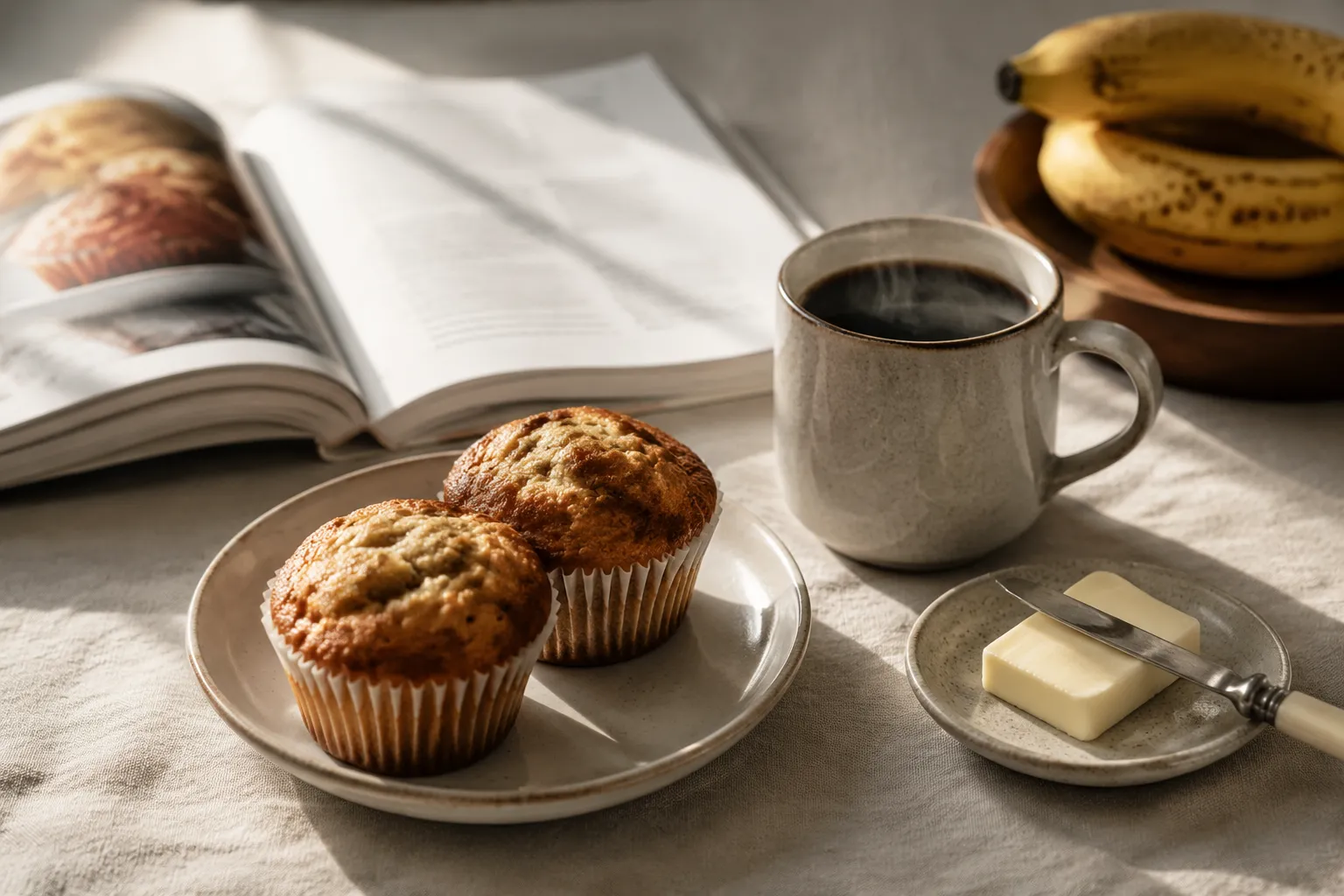
For lunchboxes and on-the-go snacks, they're hard to beat. Wrap one in parchment, tuck it next to a thermos of milk or a piece of fruit, and you've got something that will make it through a school day without getting sad or smashed. They also pair beautifully with a banana-peanut-butter smoothie if you want to lean fully into the flavor, or with a glass of cold almond milk for an after-school snack.
If you're a coffee drinker, the brown sugar and cinnamon notes love a medium-roast drip or a milky latte. Tea drinkers, try them with a black tea like English breakfast, a spiced chai, or even an Earl Grey — the bergamot oil is unexpectedly good with banana and brown sugar. And if you have extra fruit hanging around after baking these, save them for another batch — or use them up in an easy banana bread loaf the following weekend.
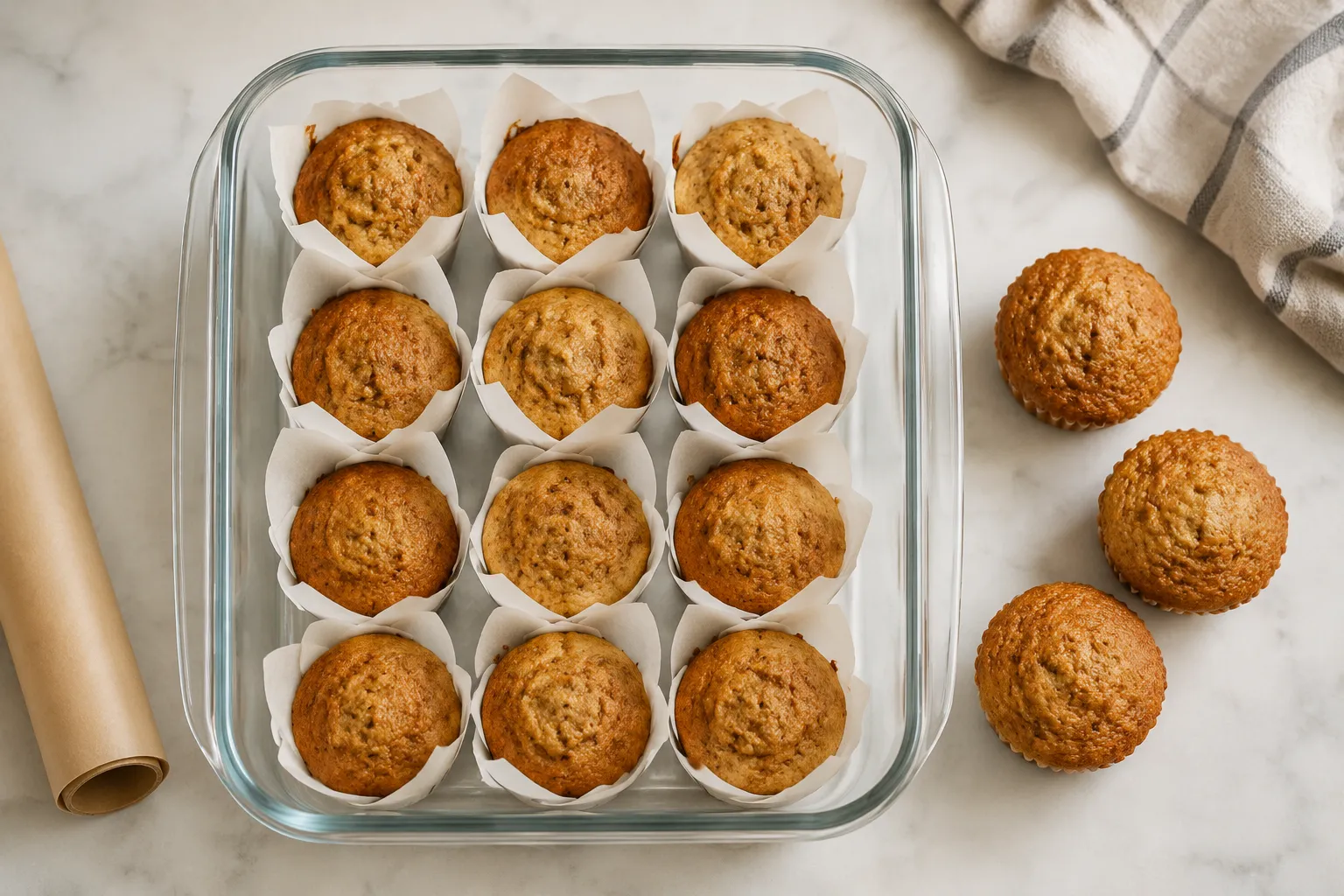
Pull a batch out of the oven and you've got a tin of soft, fragrant, bakery-worthy banana and muffin perfection that uses up the spotty fruit you were about to throw out. They keep well, freeze even better, and bend gracefully toward gluten-free, dairy-free, or chocolate-loaded depending on the day. Bake a batch this weekend, then come back and tell me which mix-in won — the dark chocolate or the toasted walnuts.
This base recipe is endlessly adaptable — once you've got the formula memorized, you can shift it in a dozen directions depending on what's in your pantry or who you're feeding.
Cooled muffins keep beautifully at room temperature in an airtight container for up to three days; line the container with a paper towel to absorb any condensation that softens the tops. For longer storage, refrigerate up to a week, though the texture firms up slightly when chilled — a quick warm-up in the microwave or oven brings it right back to that fresh-baked feel.
To freeze, cool the muffins completely, then wrap each one individually in plastic wrap or parchment and tuck them into a zip-top freezer bag with the air pressed out. They'll keep for up to three months without losing their tender crumb. Reheat directly from frozen at 300°F for about eight minutes, or microwave for 20 to 30 seconds for a softer, almost-fresh-from-the-oven finish. This is honestly my favorite weekday breakfast hack — Sunday-baked muffins, ready in under a minute on a Wednesday morning.