Slow Cooker Beef Stew: The Ultimate Slow-Simmered Recipe
Ingredients
Scale
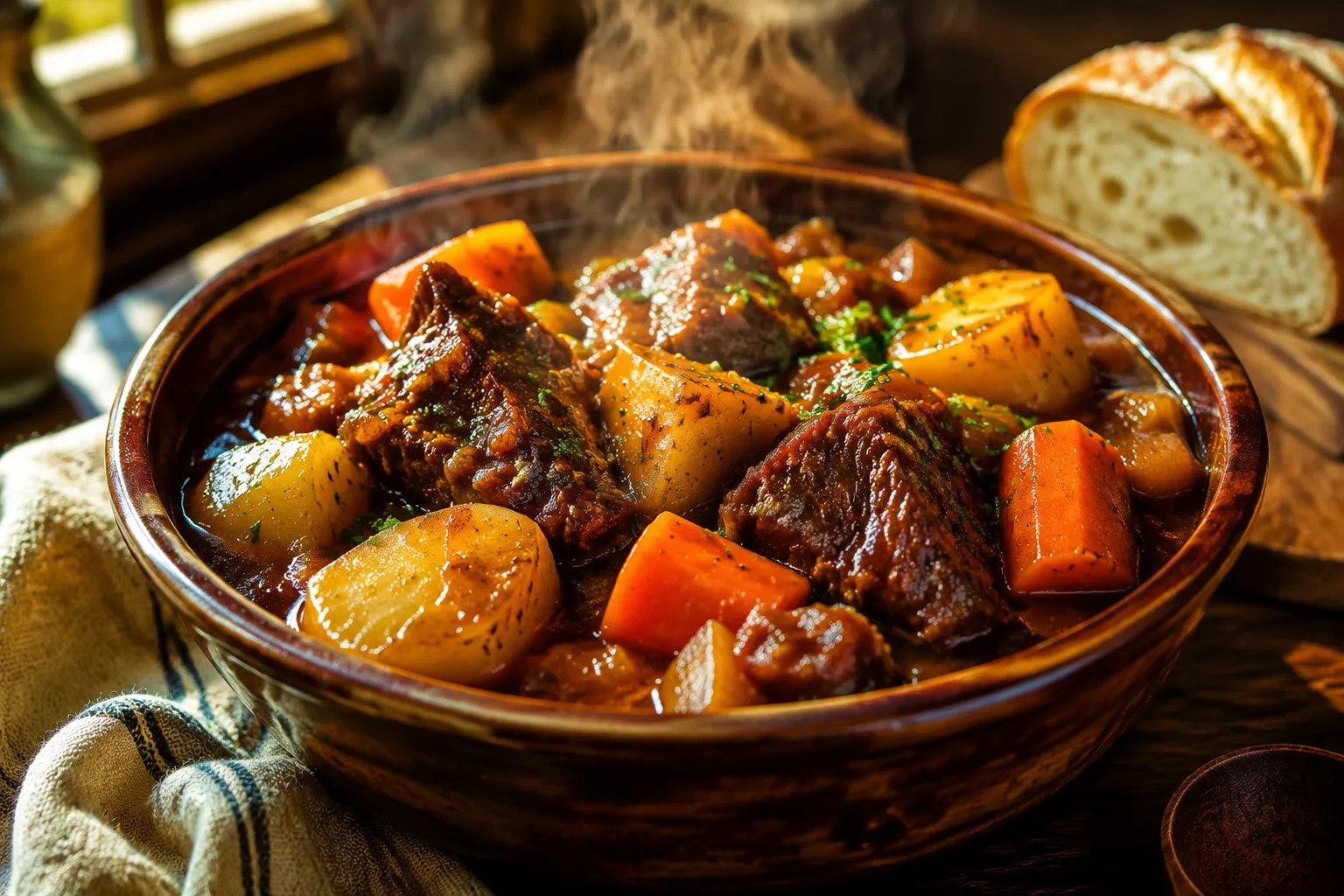
Fork-tender chunks of beef, buttery potatoes, and a deeply savory gravy simmered low and slow in your crockpot. The cozy dinner that practically cooks itself.
This slow cooker slow simmered beef stew is the kind of cozy, deeply savory dinner that makes the whole kitchen smell like you planned something special, even if all you really did was load the crockpot before lunch. It’s packed with tender beef chuck, buttery potatoes, sweet carrots, and a glossy rich gravy that clings to every spoonful. The magic is in the low and slow cooking: time gently breaks down the beef until it’s fork-tender, while the vegetables soften just enough to feel hearty without disappearing.
What makes this crockpot beef stew feel restaurant-worthy is one small extra step: searing the beef and blooming the tomato paste before everything goes into the slow cooker. Those browned bits bring a savory depth you just can’t get from a totally dump-and-go stew. The result is a make-ahead dinner that tastes like it simmered all day on a farmhouse stove, but with the convenience of set it and forget it cooking.
If you already love slow cooker pot roast, this stew belongs in your regular rotation. It has the same cozy comfort-food energy, but it’s spoonable, meal-prep friendly, and perfect with a hunk of crusty bread on a chilly night.
The best beef stew is not rushed. Chuck roast is full of collagen and connective tissue, which can feel tough if cooked quickly but turns meltingly tender when cooked low and slow. That slow transformation is exactly why a slow cooker is such a smart tool for stew: it keeps the temperature gentle and steady, giving the beef time to relax into the gravy instead of tightening up.
This slow cooker slow method also lets the flavors layer themselves as the day goes on. Onion, garlic, thyme, bay leaves, Worcestershire sauce, tomato paste, and beef broth slowly mingle into a rich gravy that tastes balanced and savory. A little flour on the beef helps the sauce thicken from the start, while a final adjustment at the end lets you make the gravy as silky or as hearty as you like.
It’s also a flexible recipe for busy households. You can chop the vegetables the night before, sear the beef in the morning, and let the crockpot take over while you work, run errands, or shuffle kids to practice. It’s the definition of easy weeknight dinners, but it still feels like Sunday supper.
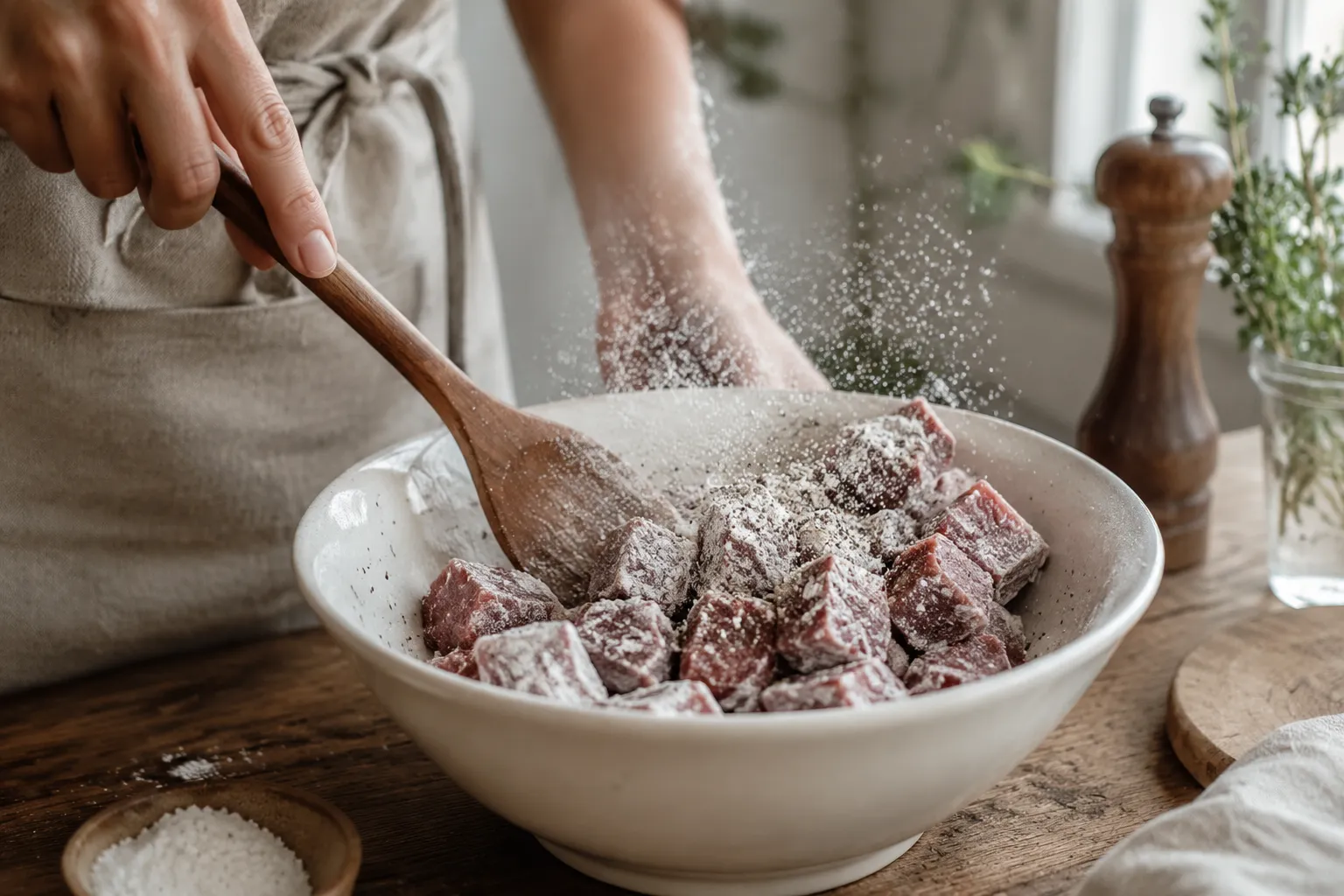
Start with beef chuck roast, not lean stew meat if you can help it. Chuck has the marbling and structure needed for long cooking, so it becomes tender instead of dry. Cut it into generous 1 1/2-inch cubes, then season it well with salt and pepper before tossing it with flour. The flour helps create a lightly crusted exterior when seared and gives the finished gravy body.
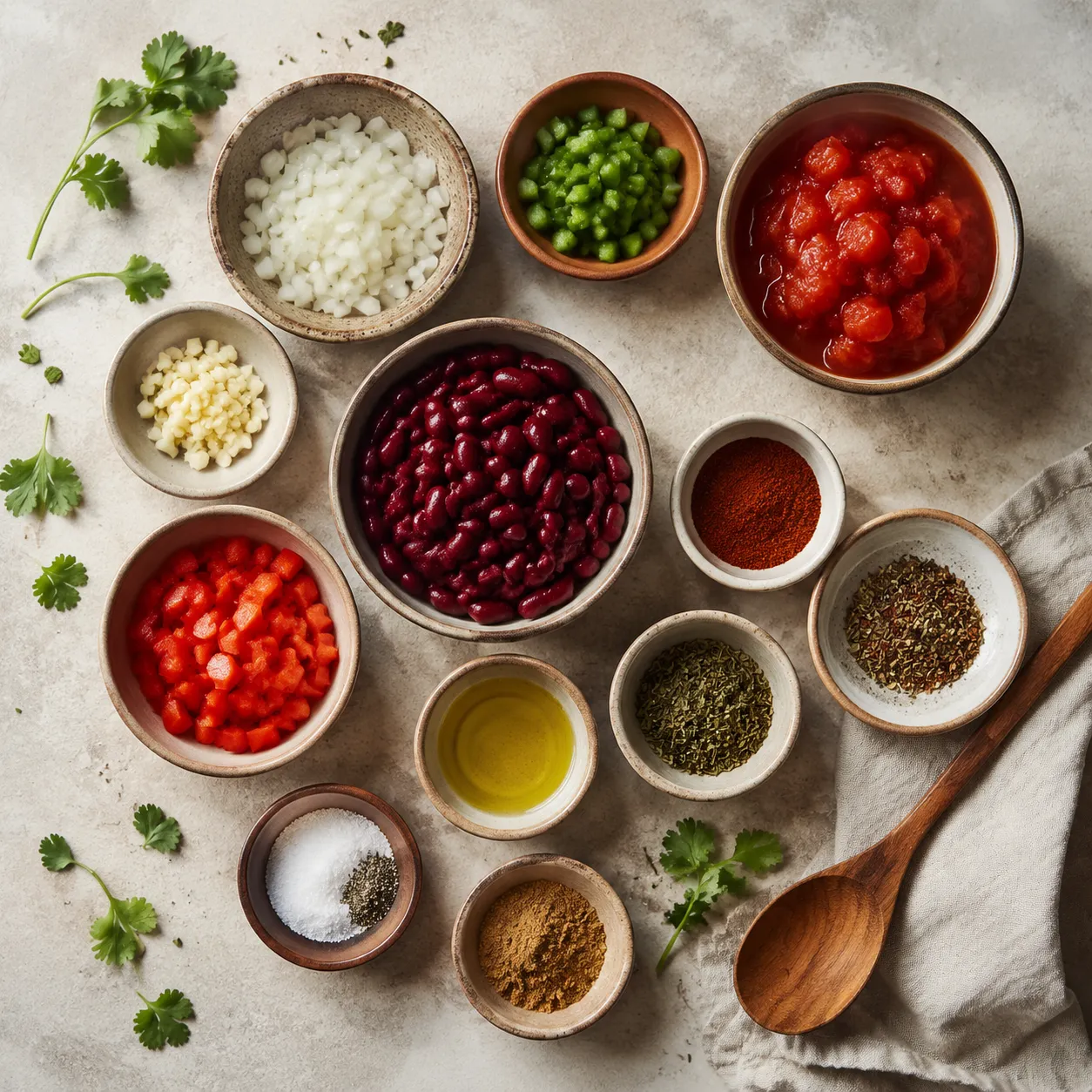
Baby Yukon gold potatoes are ideal because they hold their shape and have a naturally buttery texture. Carrots add sweetness and color, while onion and garlic create the aromatic base. Keep the vegetable pieces on the larger side so they can stand up to the long cooking time without turning to mush.
For the gravy, you’ll use tomato paste, beef broth, Worcestershire sauce, thyme, bay leaves, and the browned flavor left behind in the skillet. If you have homemade beef broth, this is the time to use it; the flavor becomes concentrated as the stew simmers. Store-bought broth works well too, especially if you choose a low-sodium version so you can control the seasoning at the end.
The first step is coating the beef in seasoned flour. This looks simple, but it’s doing two important jobs: it encourages browning in the skillet and helps thicken the stew as it cooks. Toss the cubes gently so every side is lightly dusted, then shake off any heavy clumps of flour before searing.
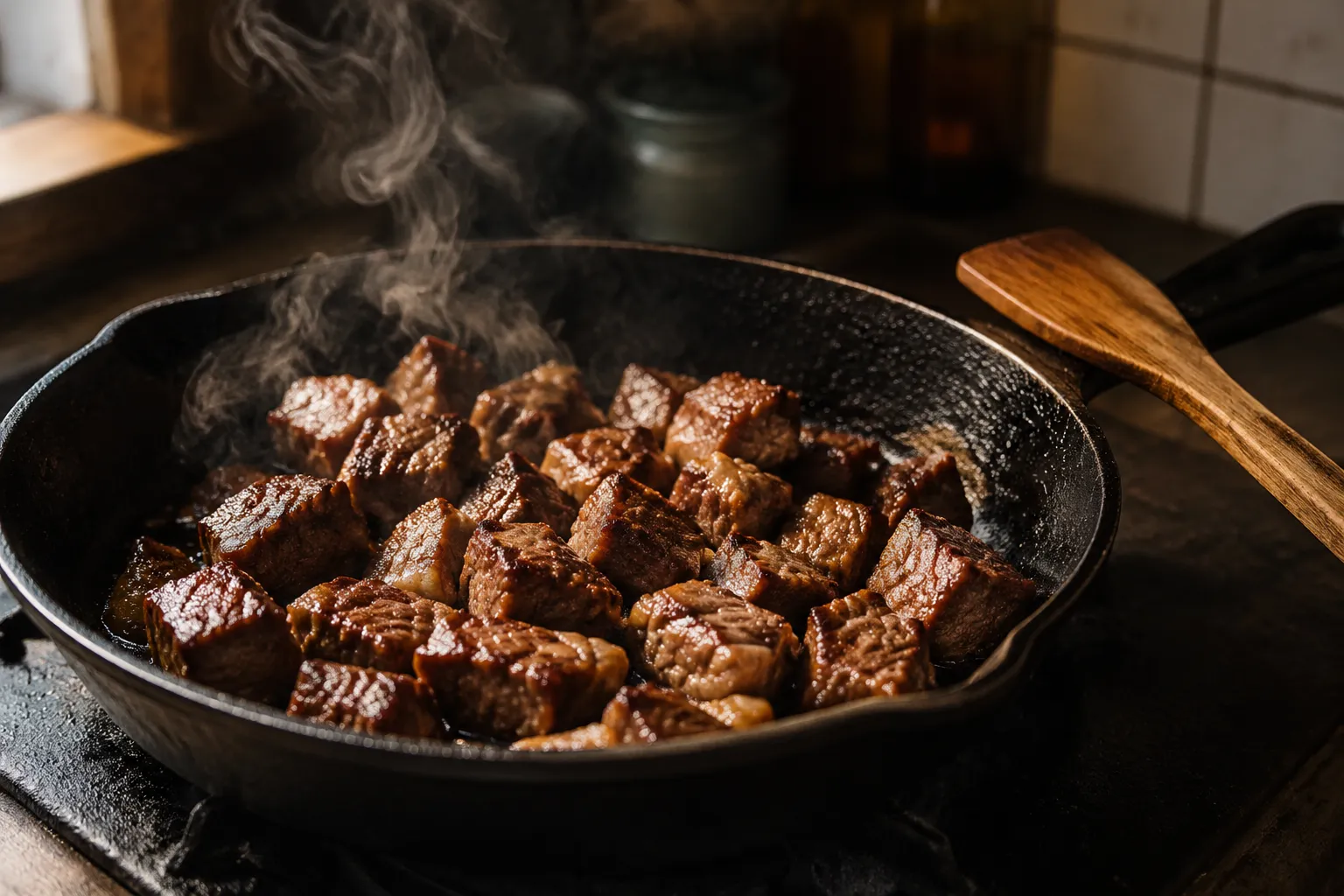
Next comes the sear, and this is where the stew starts to taste layered and slow-simmered instead of flat. Work in batches so the beef has room to brown rather than steam. You’re not trying to cook it through; you just want a deep golden crust on the outside and plenty of browned bits in the bottom of the pan.
After the beef is browned, tomato paste goes into the hot skillet for a minute or two. This quick bloom caramelizes the paste and softens its sharp edge, making the gravy taste richer and rounder. A splash of broth then lifts all those browned bits from the pan, and that flavorful liquid gets poured right into the slow cooker with the beef and vegetables.
This is the difference between a good stew and a great one. The slow cooker slow approach provides the tender texture, but the stovetop step gives you that deep, savory backbone. It’s a tiny bit of extra effort for a big payoff in flavor.
Once your beef is seared and your skillet is deglazed, layer the vegetables into the bottom of the crockpot. Potatoes, carrots, and onions can handle being closer to the heat source, and they’ll soak up flavor as the broth bubbles gently around them. Add the seared beef on top, then pour in the tomato-broth mixture along with Worcestershire sauce, thyme, and bay leaves.
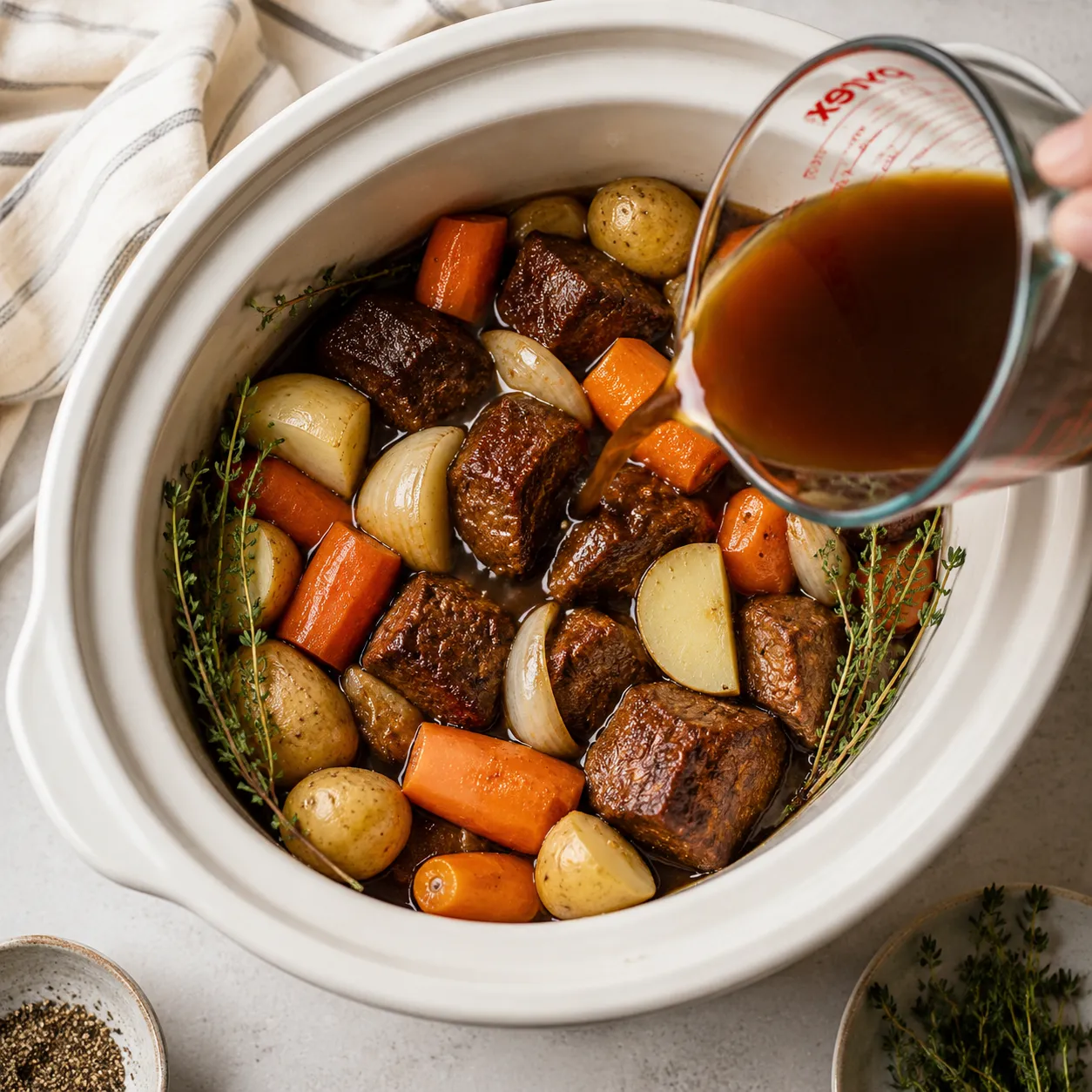
Resist the urge to add too much liquid. Slow cookers trap steam, which means very little moisture evaporates compared with a Dutch oven on the stove. The ingredients will release liquid as they cook, and the gravy will become more plentiful by the time the stew is done.
Cover the crockpot and cook on LOW for about 8 hours. That long, gentle time is what turns beef chuck into spoon-tender comfort food. If you’re in a pinch, HIGH can work, but the texture is usually best when you give the stew the full low and slow treatment.
The stew is ready when the beef pulls apart easily with a fork and the potatoes are tender all the way through. You shouldn’t have to saw at the meat or press hard to break it apart. If the beef still feels springy or chewy, give it more time; chuck roast often needs the full cooking window to become truly tender.
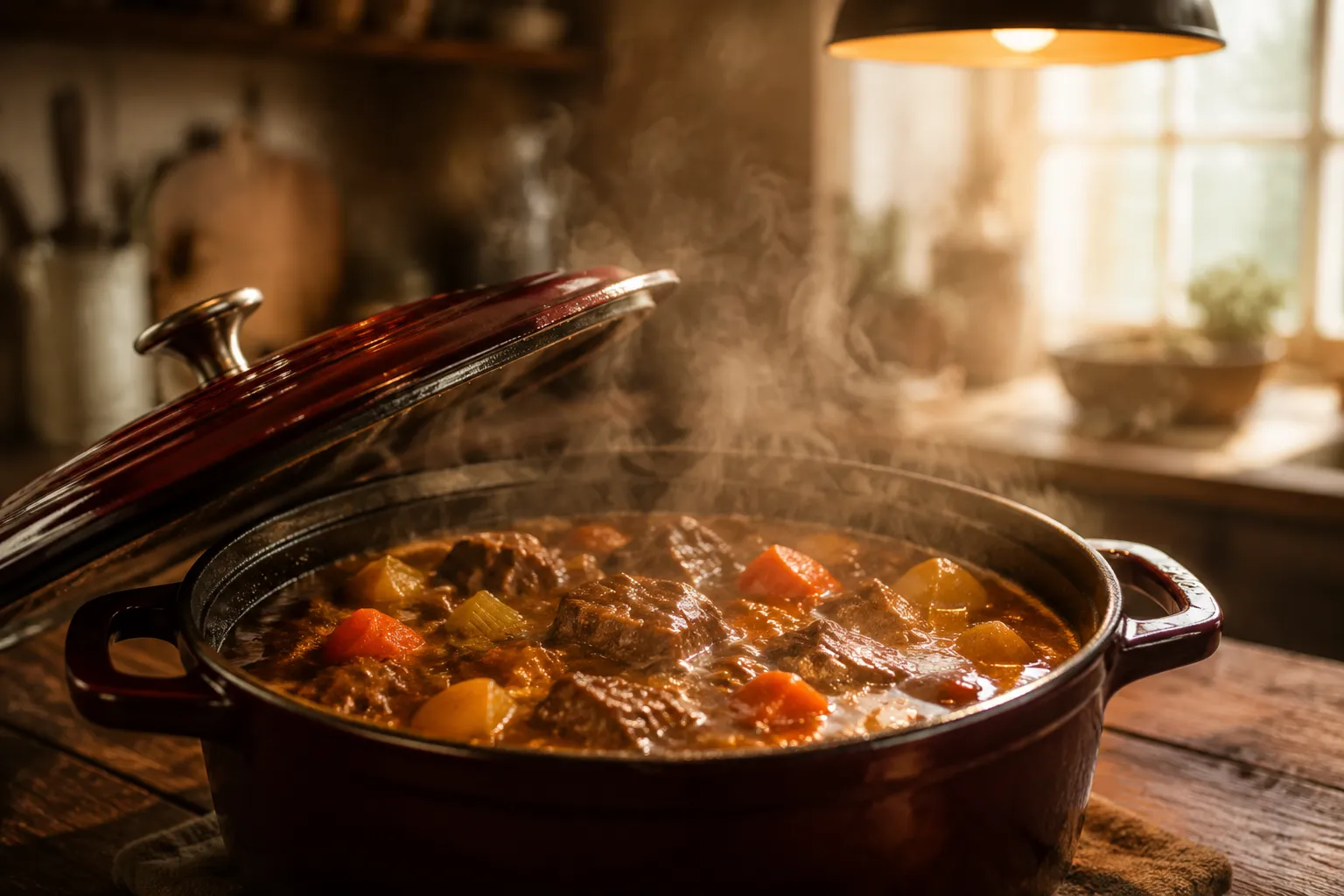
At the end of cooking, taste the gravy before adding more salt. Broth, Worcestershire sauce, and tomato paste all bring seasoning, and the flavors concentrate over time. A little black pepper, a pinch of salt, or a splash of Worcestershire can wake everything up right before serving.
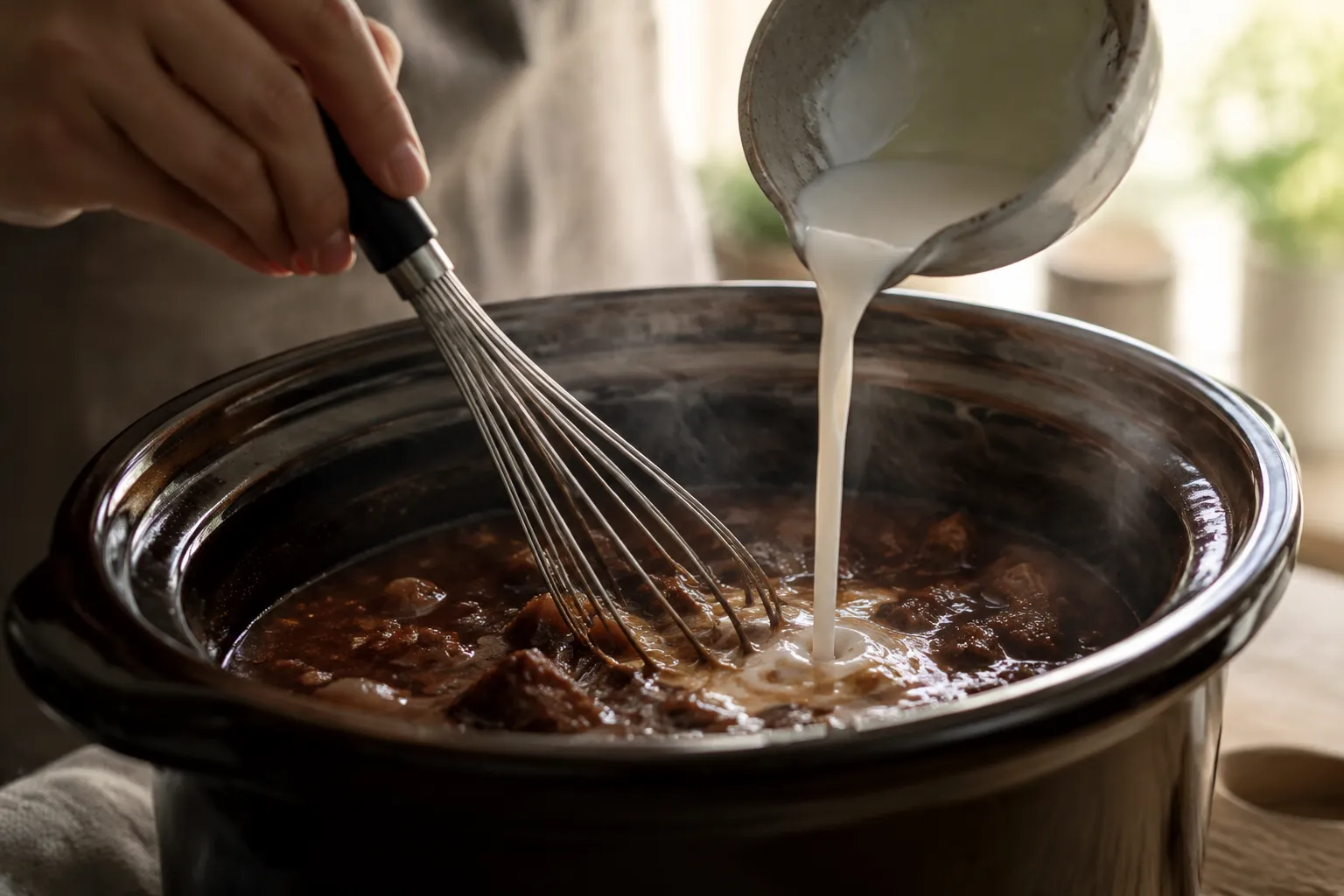
If you want a thicker gravy, stir in a cornstarch slurry during the final stretch of cooking. Mix cornstarch with cold water until smooth, stir it into the hot stew, then cover and cook until glossy and thickened. This keeps the sauce smooth instead of floury or lumpy.
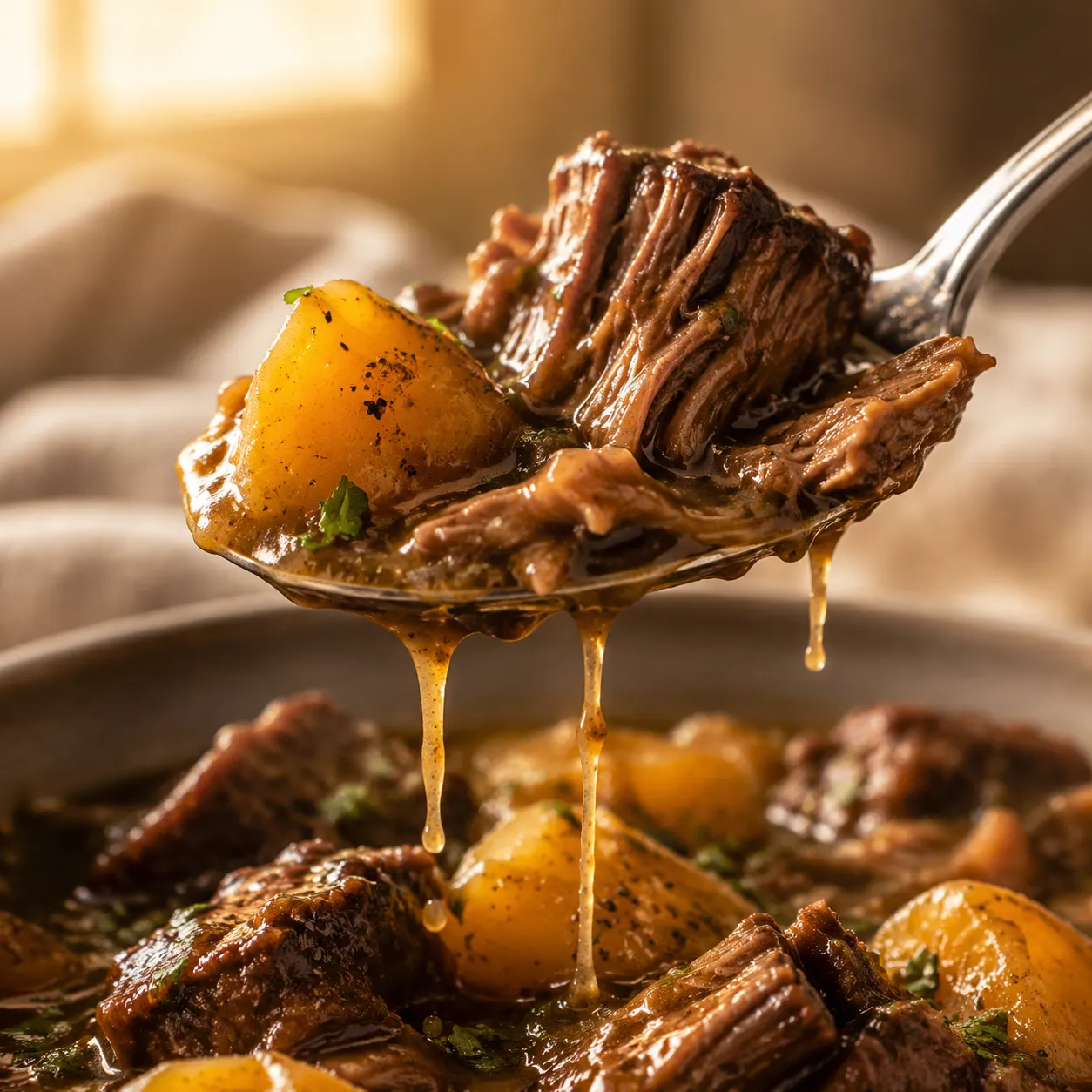
This stew is hearty enough to stand on its own, but a simple side makes it feel complete. Crusty bread is the classic choice because it lets you swipe up every last bit of rich gravy from the bowl. Flaky biscuits, sourdough toast, or warm dinner rolls all work beautifully.
If you’re feeding a very hungry table, serve the stew over buttery mashed potatoes or alongside egg noodles. It may sound extra cozy, and it is. The gravy soaks into the potatoes or noodles, making each bite feel even more comforting.
For balance, add something crisp and green. A lemony arugula salad, simple green beans, or a crunchy cabbage slaw can brighten the meal without stealing the spotlight. On nights when you’re planning a week of cozy mains like crockpot chicken and rice or Instant Pot beef stew, a fresh salad on the side keeps everything feeling balanced.
This slow cooker slow simmered stew is especially helpful if you like to plan meals in advance. You can cut the carrots, onions, and potatoes ahead of time, cube the beef, and measure the pantry ingredients so the morning prep is quick. If you want the best flavor, sear the beef just before cooking, but even prepping the components the night before makes the recipe feel easy.
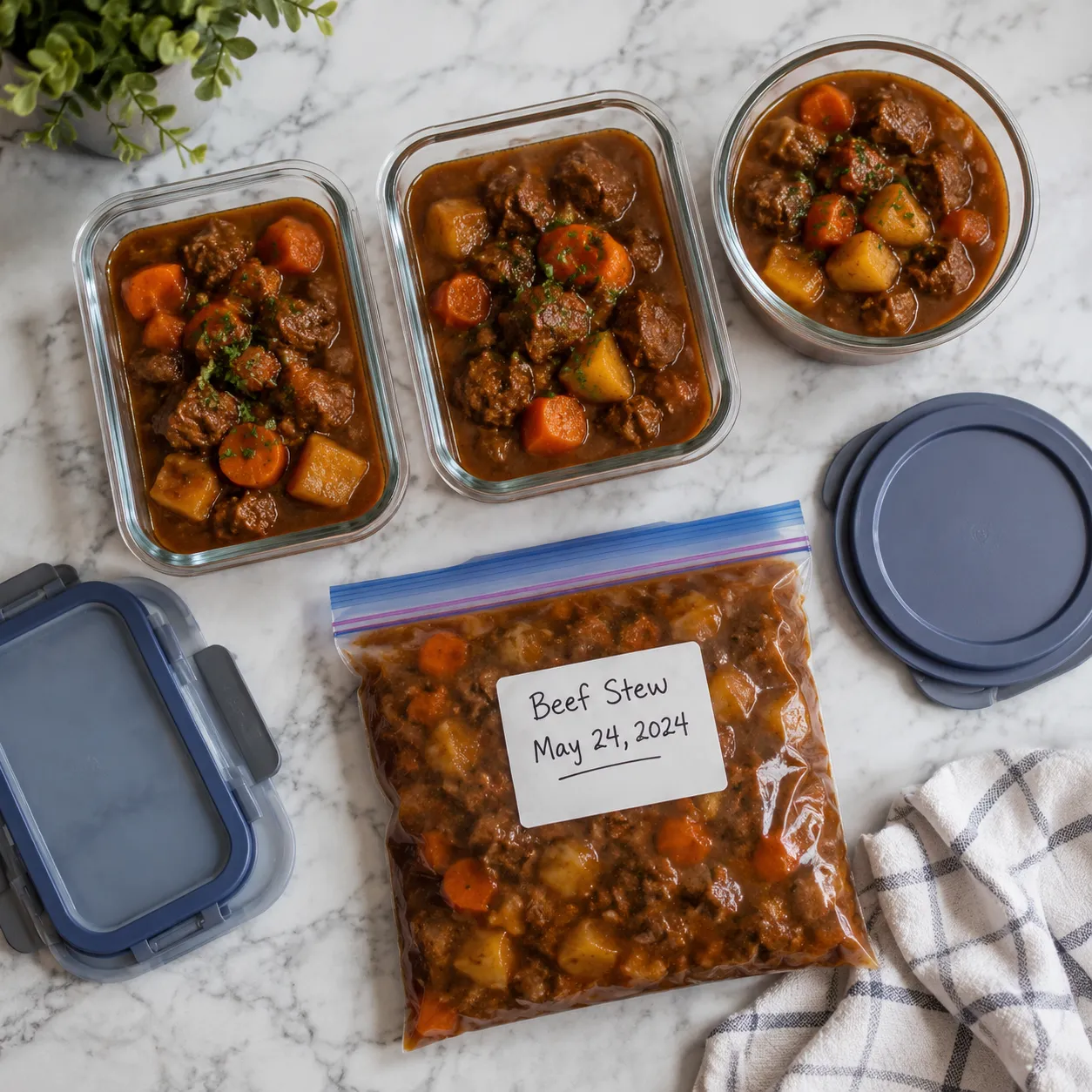
It also fits nicely into a batch-cooking routine. Portion cooked stew into containers for lunches, or prep the raw ingredients as part of your slow cooker freezer meals plan. A labeled freezer bag with beef, vegetables, aromatics, and sauce ingredients can become a nearly effortless future dinner once thawed and added to the crockpot.
The flavor often gets even better after a night in the fridge, which makes this a smart choice for guests or busy weeks. As the stew rests, the gravy settles around the beef and vegetables and becomes even more savory. Whether you serve it the day it cooks or reheat it later, slow cooker slow comfort food like this always feels generous, practical, and deeply satisfying.
This classic beef stew is endlessly adaptable, so you can nudge it richer, lighter, or more pantry-friendly depending on what you have.
Let leftover stew cool slightly, then transfer it to airtight containers. Refrigerate for up to 4 days. Reheat gently on the stovetop over medium-low heat or in the microwave in short intervals, stirring occasionally and adding a splash of broth if the gravy has thickened too much.
To freeze, portion cooled stew into freezer-safe containers or bags and freeze for up to 3 months. Thaw overnight in the refrigerator before reheating. Potatoes may soften slightly after freezing, but the stew will still be hearty, flavorful, and comforting.