Slow Cooker Corned Beef and Cabbage
Ingredients
Scale
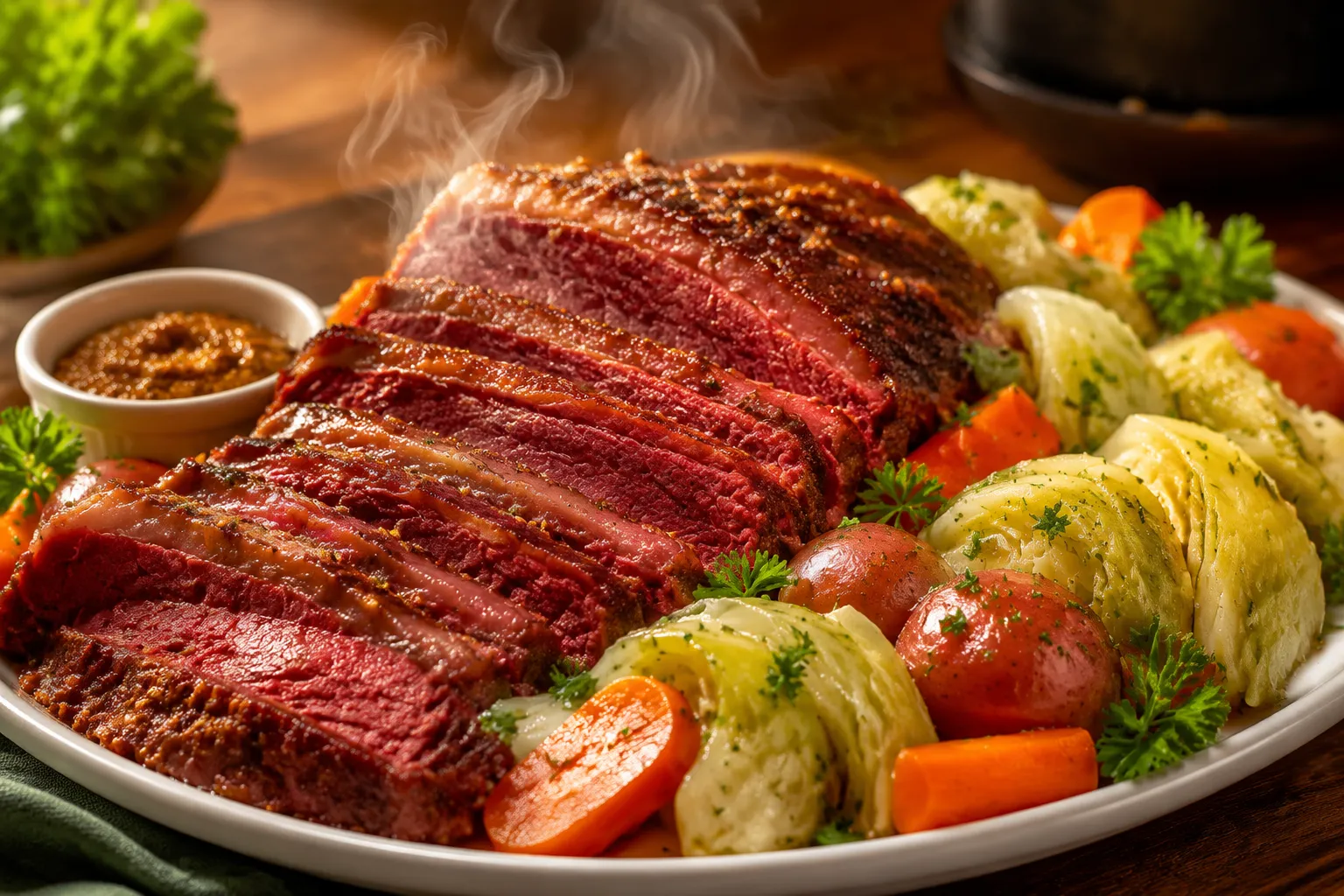
Fork-tender slow cooker corned beef with cabbage, carrots, and baby potatoes — a one-pot St. Patrick's Day classic that practically cooks itself.
This slow cooker corned beef and cabbage is the kind of one-pot dinner that practically cooks itself while you go about your day, then rewards you with fork-tender brisket, buttery baby potatoes, and just-tender cabbage wedges by suppertime. It's the meal I make every March 17th without fail, plus plenty of regular Sundays in between. The hands-off magic of the crock pot does all the heavy lifting, and the results taste like you've been fussing in the kitchen all afternoon.
Most recipes for corned beef in a crock pot make the same mistake: they dump every single ingredient in at once, and by hour eight you end up with sad, gray, waterlogged cabbage swimming alongside the meat. This version layers the vegetables strategically and saves the cabbage for the final hour, so it stays vibrant and tender-crisp instead of mushy. I've also included a stout-beer variation for richer flavor and a DIY spice blend for the inevitable moment when the brisket's spice packet goes missing in the meat drawer.
If you're hosting a St. Patrick's Day dinner this year, or just craving cozy Irish-American comfort food on a chilly Sunday, this is the recipe. It feeds six generously, scales up easily for a crowd, and the leftovers — which I'll get to in a minute — are arguably better than the original meal.
The secret really is in the layering and the timing. Brisket sits on top, root vegetables go on the bottom where they soak up the savory broth, and cabbage gets tucked in only at the end. Compared to a traditional slow cooker pot roast, corned beef arrives at your kitchen already pre-brined and pre-seasoned, so you don't need to add much beyond a few aromatics and a good liquid base. The result is balanced, deeply flavored, and never one-note salty.
What I love most is how forgiving the method is. An extra hour in the cooker won't ruin anything; the brisket just keeps getting more tender. That's why this recipe is my go-to whenever dinner has to flex around a parade, a soccer game, or a long brunch with friends. Whether you're feeding a hungry crowd or simply want leftovers for the week, slow cooker corned beef scales up to a 5-pound brisket without changing the timing much at all.
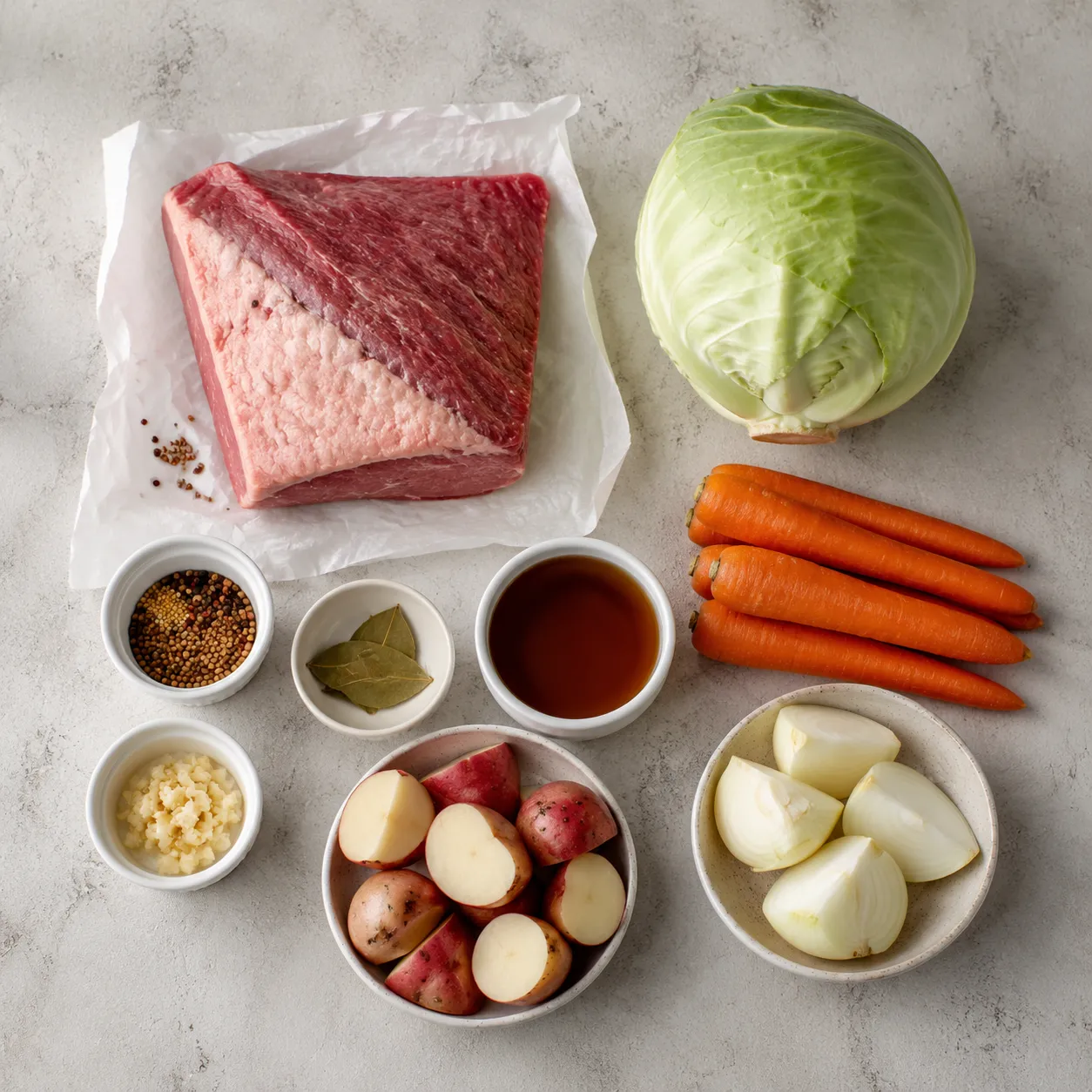
You only need a handful of grocery items here, and most of them are probably already on your shopping list this week. The star, of course, is a good corned beef brisket, which comes pre-brined and ready to go from the refrigerated meat case.
Choosing the right brisket. Look for a brisket that's plump, evenly pink, and roughly 3 to 4 pounds for a family of six. Most grocery store corned beef comes packaged in brine with a small spice packet tucked inside or taped to the back of the bag. Don't toss that packet — you'll need it for the cooker, and replacing it from scratch (while doable) is just an extra step you don't have to take.
Flat cut vs. point cut. The flat cut is leaner, slices into clean uniform pieces, and is the better choice for a polished platter presentation. The point cut has more marbling and connective tissue, which means richer flavor and shreddier texture, perfect if you're planning leftover corned beef hash or a Reuben situation later in the week. Either works beautifully here, but I usually grab a flat cut brisket because I love how it slices into long, neat ribbons.
The spice packet (and a DIY backup). That little packet typically contains pickling spice: mustard seed, coriander, allspice berries, peppercorns, bay leaves, and sometimes cloves or red pepper flakes. If your brisket didn't come with a spice packet, or if it vanished into the bottom of the meat drawer, substitute 2 tablespoons of pickling spice from the spice aisle, or mix your own from a teaspoon each of mustard seed, coriander, peppercorns, and allspice berries plus 2 crumbled bay leaves.
The vegetables. Baby potatoes — red or Yukon gold — hold their shape beautifully through long cooking, so you don't end up with mashed-potato soup at the bottom of the cooker. Carrots cut into 2-inch chunks stay sweet and tender, a quartered yellow onion adds savory backbone, and a small head of green cabbage cut into wedges keeps that classic Irish-American look on the plate. You'll also need beef broth (or broth plus a stout beer), smashed garlic cloves, and a couple of bay leaves.
The hardest part of this entire recipe is remembering to start it before lunch. Total active time is about 15 minutes — the slow cooker handles the rest. Here's how slow cooker corned beef comes together, step by step.
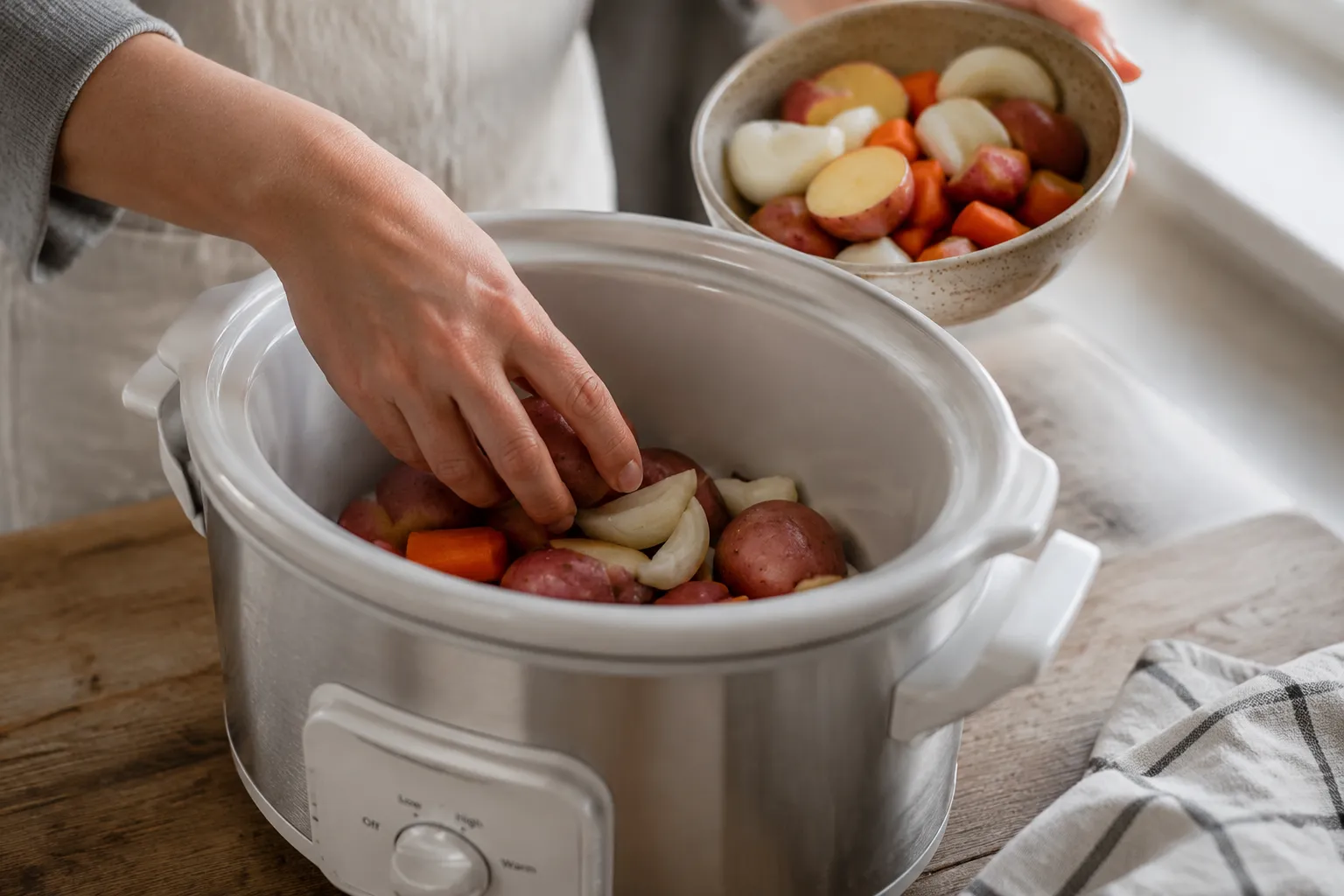
Layer the vegetables first. Place halved baby potatoes, carrot chunks, and quartered onion in the bottom of a 6-quart oval slow cooker. The vegetables act as a flavorful rack that keeps the brisket out of the deepest pool of liquid, and they soak up all the savory braising juice from below as the meat releases its drippings down through the layers.
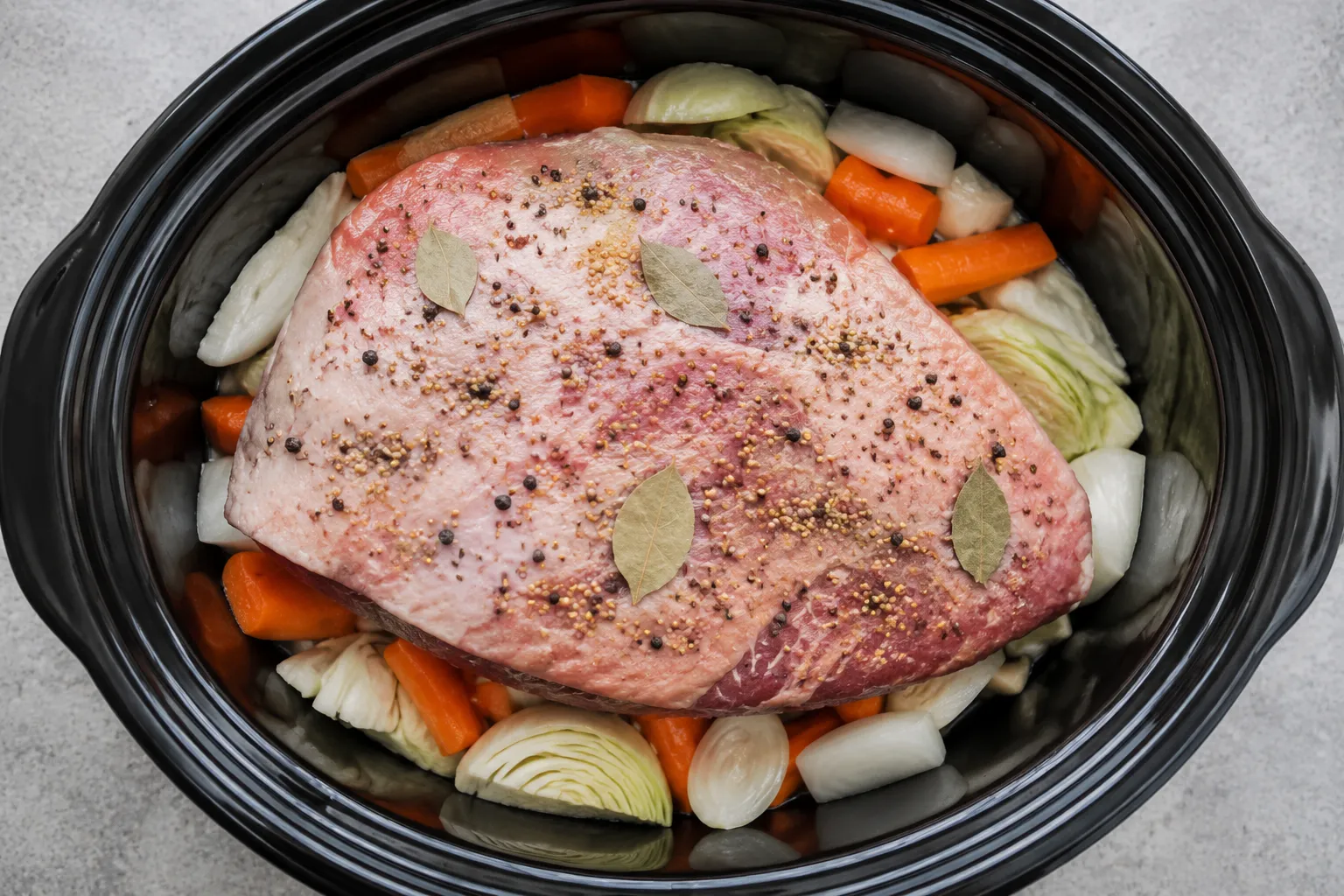
Add the brisket fat side up. Rinse the brisket briefly under cold water to wash off excess surface brine, then nestle it on top of the vegetables with the fat cap facing up. As the fat melts during cooking, it bastes the meat from above, which is what keeps every slice moist instead of dry and stringy. Sprinkle the spice packet (or your DIY blend) evenly across the top, then tuck in the smashed garlic cloves and bay leaves around the edges.
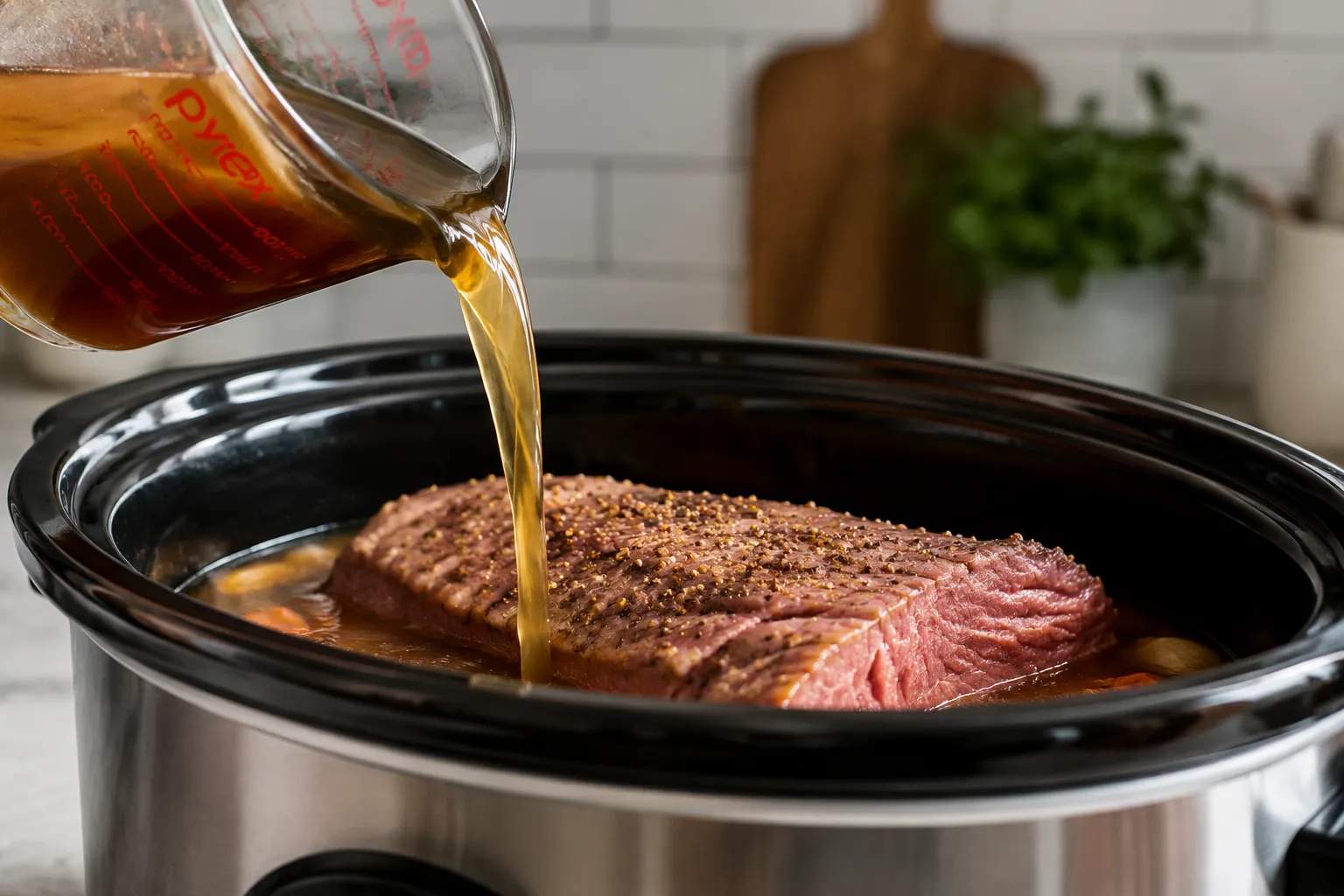
Pour in the liquid. Add 4 cups of beef broth around the brisket, or use 2 cups of broth plus a 12-ounce bottle of stout beer for a deeper, maltier flavor. The liquid should come about three-quarters of the way up the meat. It does not need to be fully submerged, because the lid traps steam and finishes the job from above.
Slow cook low and slow. Cover and cook on LOW for 7 hours, or on HIGH for about 4 hours. Low and slow is genuinely better here, giving the connective tissue time to break down into that sliceable, fork-tender texture you're after. Resist the urge to peek — every lid lift adds 15 to 20 minutes to your cook time and lets out all that flavorful steam.
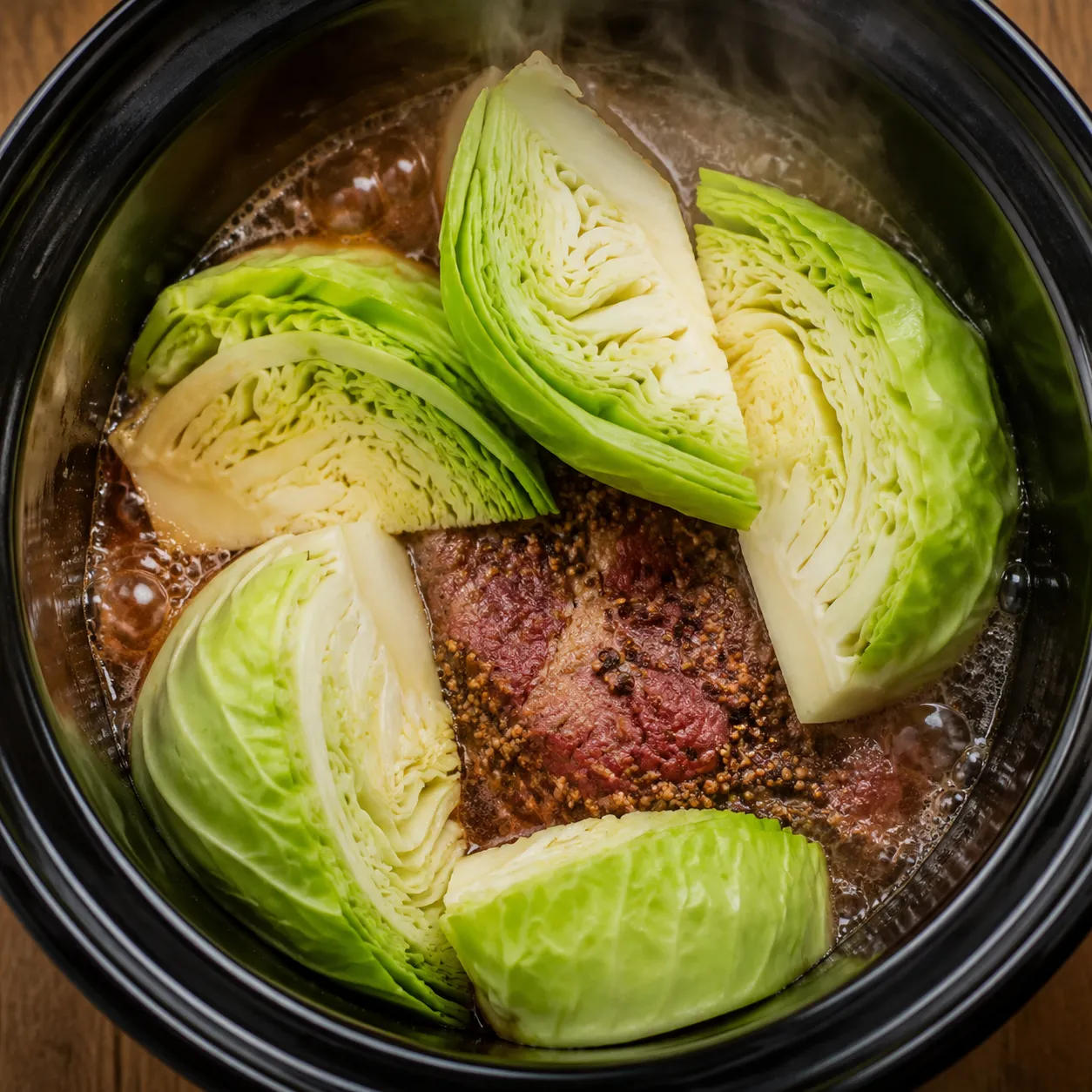
Add the cabbage at the end. During the last hour of cooking, cut the cabbage into 6 to 8 wedges, leaving the core attached so each wedge holds together. Tuck them into the liquid around and on top of the brisket. They'll steam-braise in the broth and come out vivid green, tender at the edges, and still with a little structure in the center — exactly what you want.
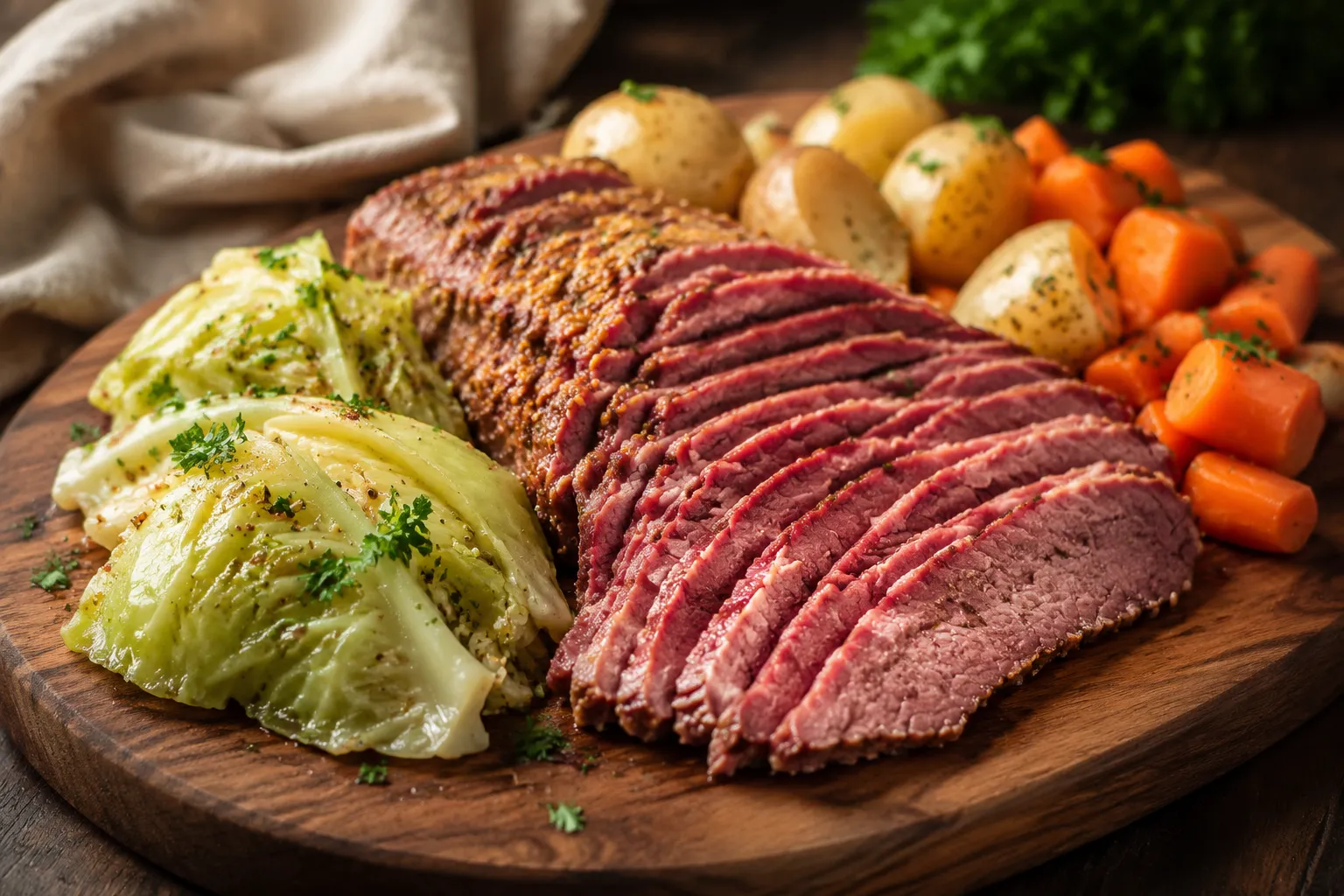
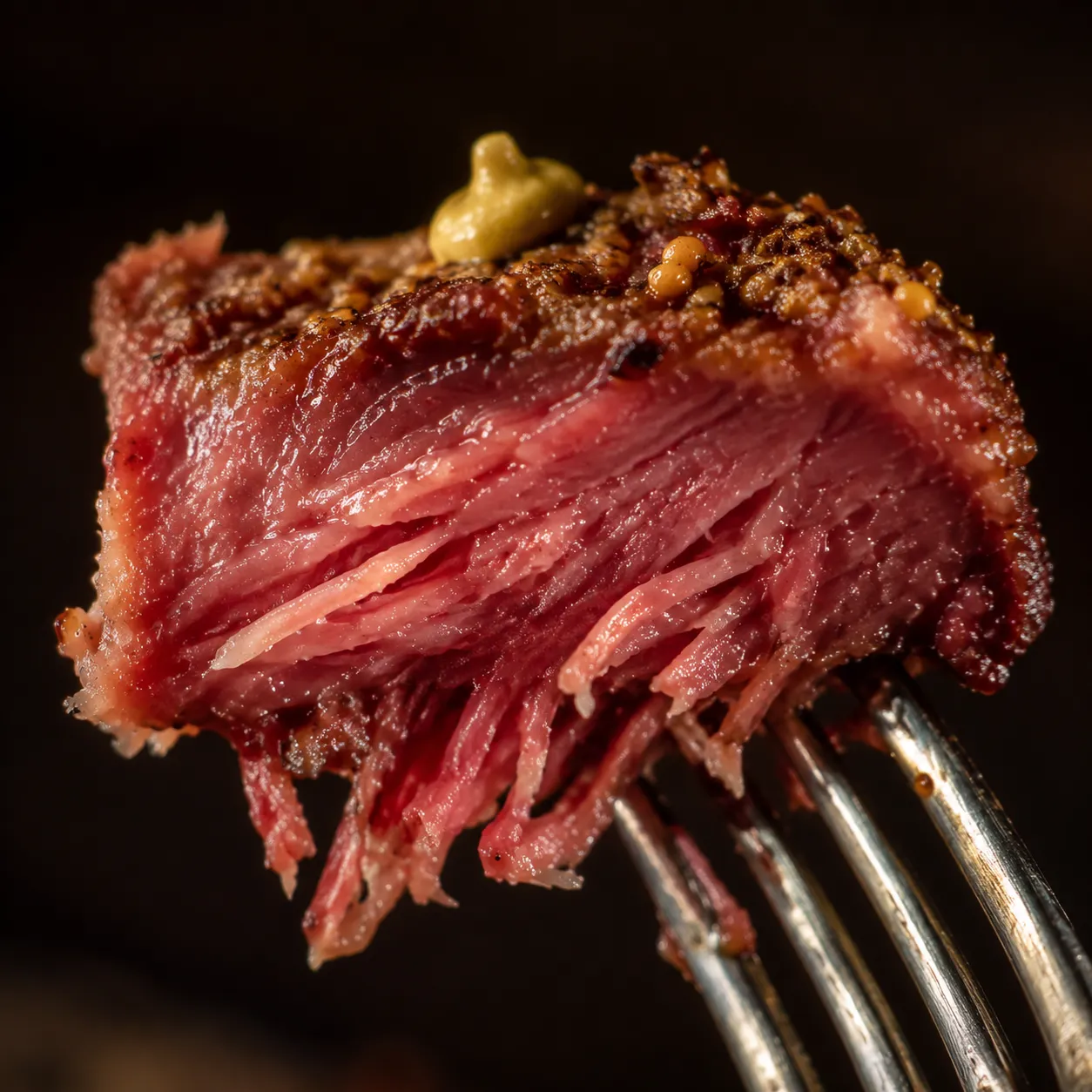
Rest, then slice against the grain. When the brisket is fork-tender, lift it out onto a cutting board and tent loosely with foil for 10 to 15 minutes. This rest is non-negotiable — it lets the juices redistribute so they stay in the meat instead of running out the moment your knife touches the surface. Look closely at the brisket and identify the direction the muscle fibers run, then slice perpendicular to those fibers (against the grain) in thin pieces for the most tender bite.
A platter of brisket, cabbage, and root vegetables is already a complete meal, but a few classic sides turn it into a proper holiday spread. A warm loaf of Irish soda bread is non-negotiable in my house — it mixes together in 10 minutes while the slow cooker does its thing, and a thick slice slathered with salted butter is the perfect vehicle for mopping up braising liquid from the bottom of your bowl.
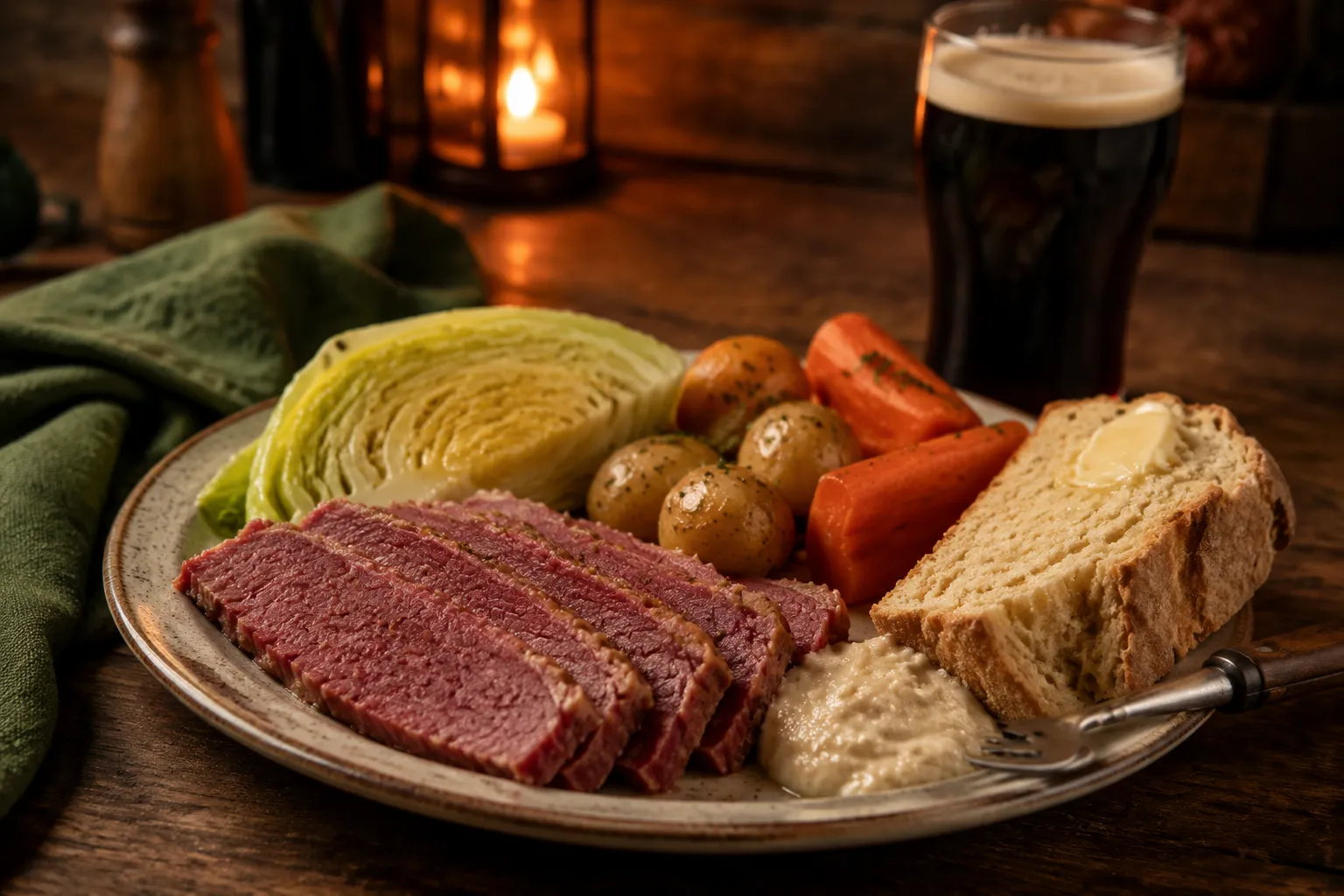
For condiments, set out a small ramekin of homemade horseradish sauce (just sour cream, prepared horseradish, a squeeze of lemon, and a pinch of salt) along with grainy whole-grain mustard. Both cut through the richness of the brisket beautifully and balance the salty-savory pull of the meat. A pint of Guinness or a crisp Irish lager rounds things out, but a glass of dry Riesling or sparkling water with lemon works just as well if beer isn't your thing.
And don't forget about tomorrow's breakfast. Dice any leftover brisket along with a few cooked potatoes, crisp it up in a buttered cast-iron skillet, and crown the whole thing with a runny fried egg. That second-day hash is part of why slow cooker corned beef is worth cooking even when March 17th isn't anywhere on the calendar.
This recipe is forgiving and easy to riff on once you've made it the classic way. A few favorites in my rotation:
Store leftover corned beef in the cooking liquid in an airtight container for up to 4 days in the refrigerator. Keeping it submerged in the broth is the single best way to prevent the meat from drying out — slice only what you need each time and let the rest sit in the liquid until the next meal. Vegetables can be stored in the same container or separately for up to 3 days.
To reheat, place sliced brisket and a few spoonfuls of cooking liquid in a covered skillet over low heat, or warm gently in a 300°F oven covered with foil for 15 to 20 minutes. Avoid the microwave on high power, which tends to toughen the meat. For longer storage, freeze brisket and broth together in 2-cup portions for up to 3 months — thaw overnight in the fridge before reheating.