Corned Beef and Cabbage Recipe (Tender & Classic)
Ingredients
Scale
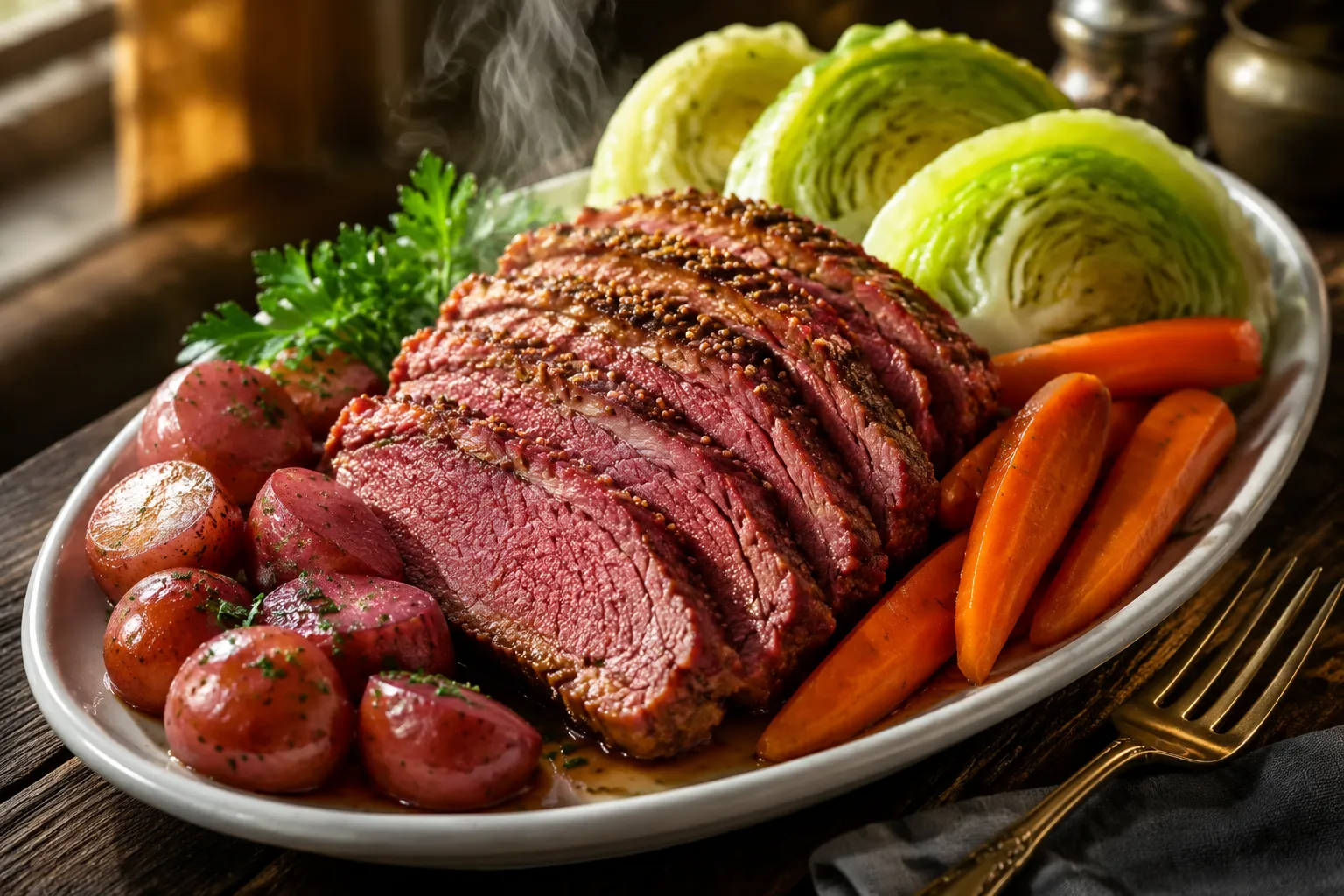
Fork-tender brisket simmered low and slow with cabbage, carrots, and baby potatoes. The classic corned beef and cabbage recipe your family will request every March.
This corned beef and cabbage recipe is the one I pull out every March, the kind of low-and-slow Sunday dinner that fills the house with warm, peppery steam and quiets a hungry crowd the second the lid comes off. The brisket simmers gently for hours in a fragrant bath of pickling spices, garlic, and a splash of stout, until it slices like soft butter against the grain. Then in go the cabbage wedges, baby potatoes, and carrots, soaking up every bit of that savory broth.
If you've ever ended up with a tough, salty slab of meat or cabbage that turned to mush, I hear you. The fix is mostly about pacing and patience. We rinse the brisket first to tame the brine, simmer it low so the collagen has time to melt, and stage the vegetables so each one finishes tender but never waterlogged. The result is the kind of plate that makes folks slow down at the table.
I've included three full methods below so you can match this to your schedule: the classic stovetop, a hands-off crock pot version, and a fast Instant Pot route for weeknights. Whether you're hosting a big gathering or just hunting through St. Patrick's Day dinner ideas for a cozy family meal, this guide has every angle covered, plus a homemade spice blend if your brisket didn't come with a packet.
The beauty of a classic corned beef and cabbage recipe is how few ingredients it actually takes. Most of the flavor comes from the brining the butcher already did for you, plus that little spice packet tucked in the bag. Everything else is pantry and produce-aisle simple, with one optional swap that takes the broth from good to deeply savory.
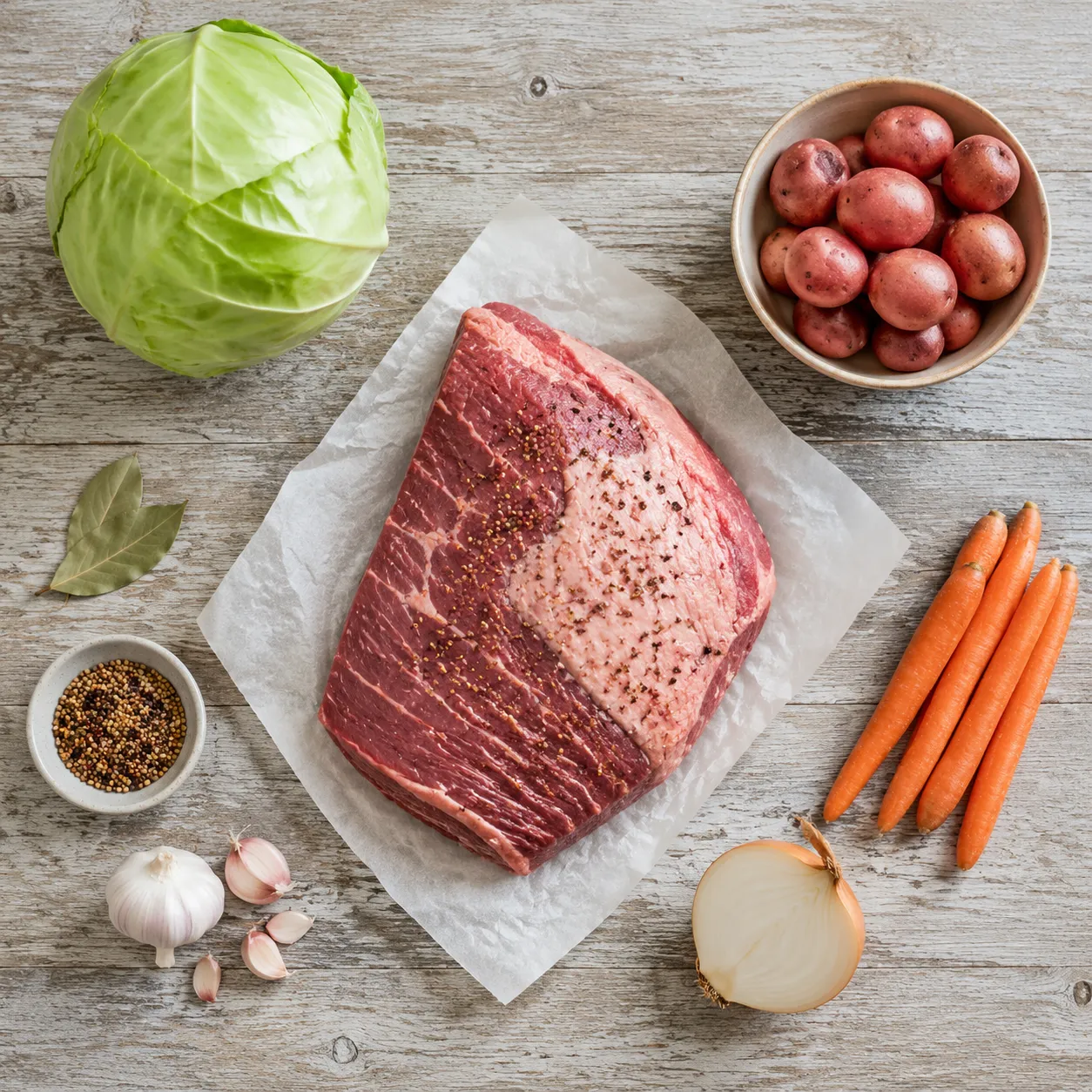
You'll see two cuts at the store. The flat cut is leaner, more uniform, and slices into clean, photogenic pieces, which makes it a favorite for plating. The point cut is fattier, more marbled, and frankly more flavorful if you don't mind trimming as you slice. Either works beautifully here. Look for a 3 to 4 pound brisket that feels heavy for its size, with a thin, even fat cap on top. If you've ever wondered how to cook brisket so it stays juicy rather than stringy, the answer is the same as with barbecue: low temperature, plenty of time, and a good rest before slicing.
One medium head of green cabbage, cut into six chunky wedges through the core so they hold together. A pound of baby Yukon gold potatoes, halved if they're larger than a golf ball. Four big carrots cut into 2-inch chunks (or a bunch of rainbow carrots, if you want a prettier platter). And a yellow onion quartered for the broth. The cabbage and carrots are the soul of this dish, soft, sweet, and slick with the salty cooking liquid.
If your brisket came with a spice packet, dump it right in. If it didn't, no worries: combine 1 tablespoon mustard seeds, 1 tablespoon coriander seeds, 1 teaspoon black peppercorns, 1 teaspoon allspice berries, 1 teaspoon dill seed, 4 whole cloves, 2 crumbled bay leaves, and a pinch of red pepper flakes. That's a classic pickling-spice blend and it's exactly what makes the broth smell like St. Patrick's Day.
This is the original method and still my favorite, because you can taste the broth as it builds and adjust as you go. Start early in the afternoon if you're serving for dinner; the brisket needs around three hours to reach fork-tender, and the vegetables join in the last 30 to 45 minutes. A heavy Dutch oven or stockpot with a tight lid is the only equipment you need.
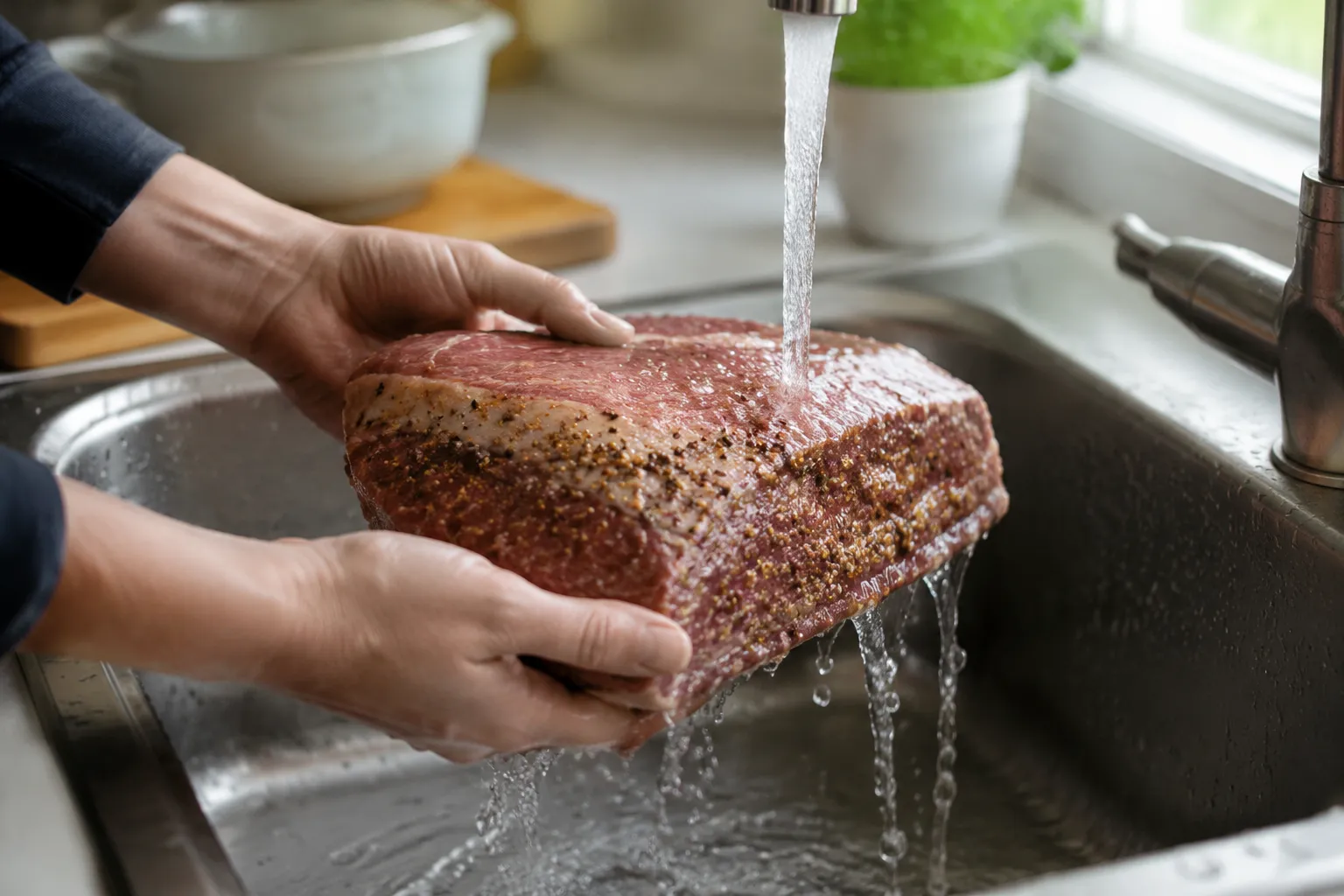
Rinse the brisket under cold water for about 30 seconds to wash off surface brine, then nestle it fat-side-up into the pot. Tuck the quartered onion and smashed garlic around it, sprinkle the spice packet over the top, and add the bay leaves. Pour in cold water until the meat is just covered, then add a 12-ounce bottle of stout if you're using it. Bring everything to a gentle boil, then immediately drop it down to the lowest simmer where you see just a few lazy bubbles breaking the surface. Cover and walk away for two and a half to three hours.
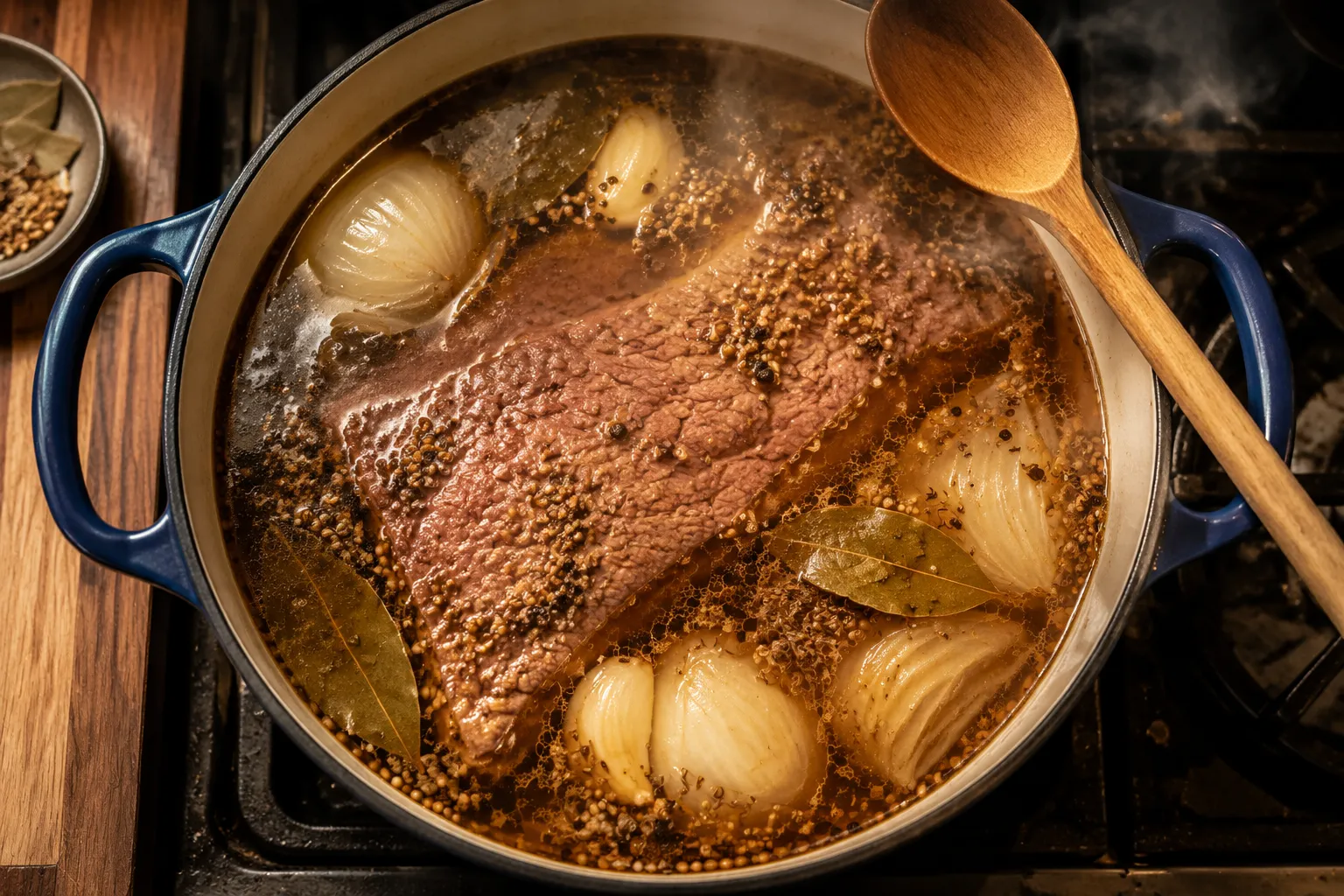
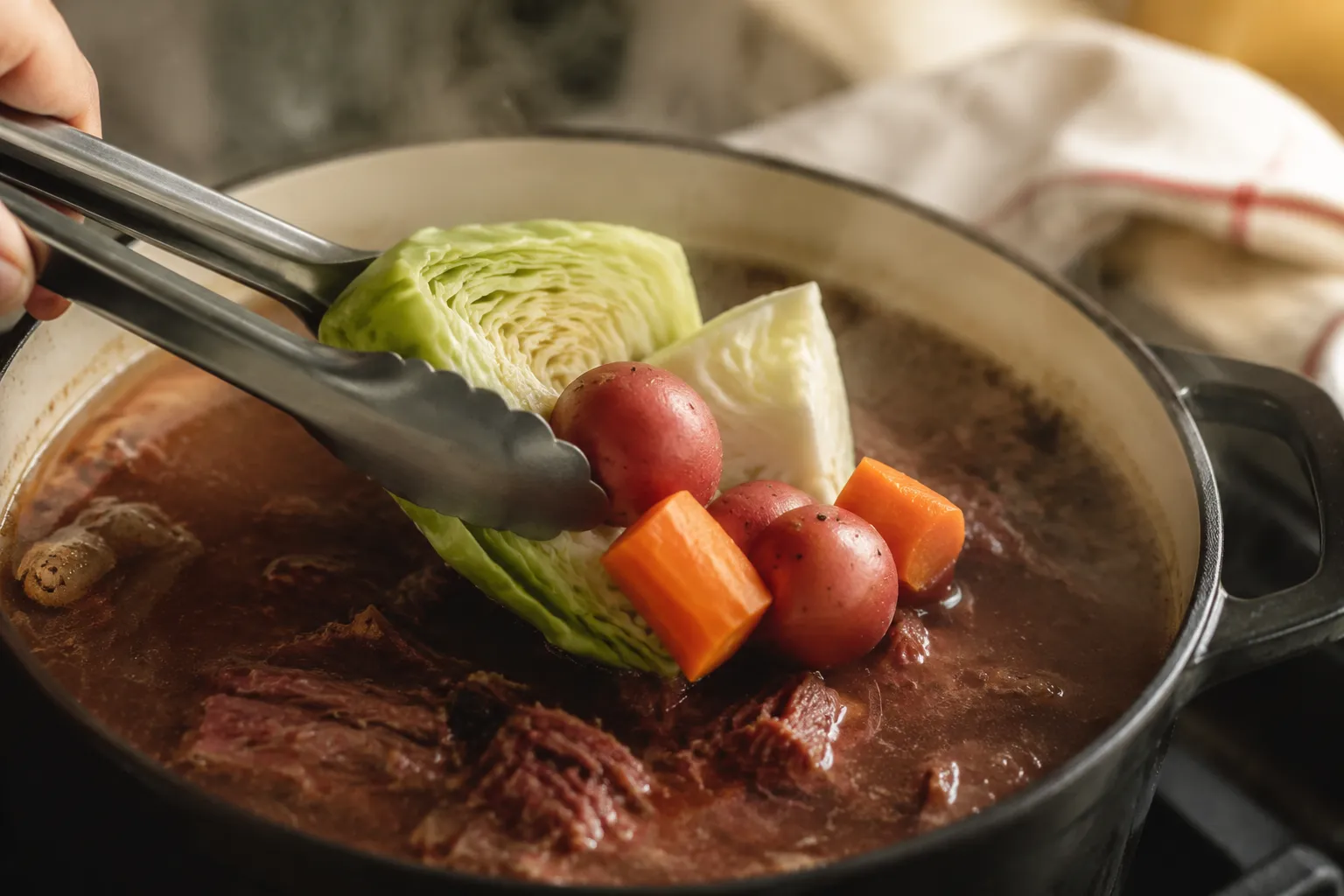
Once a fork slides into the thickest part of the brisket with almost no resistance, it's ready for the vegetables. Slip in the potatoes and carrots first, since they take the longest, and let them simmer 15 minutes. Then arrange the cabbage wedges on top, cover, and cook another 15 to 20 minutes until everything is tender but still holding shape. Lift the brisket onto a cutting board and let it rest, loosely tented with foil, for at least 10 full minutes.
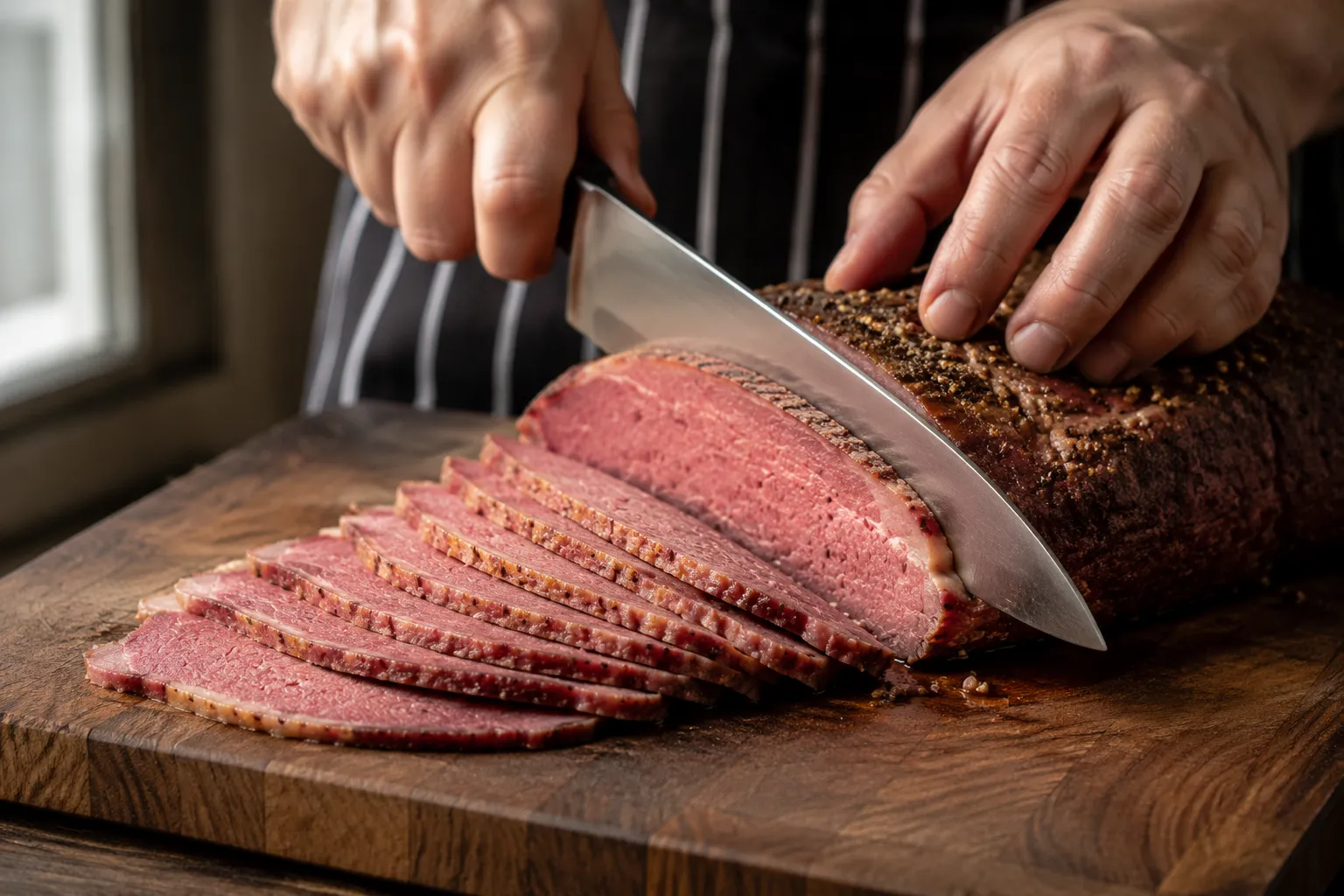
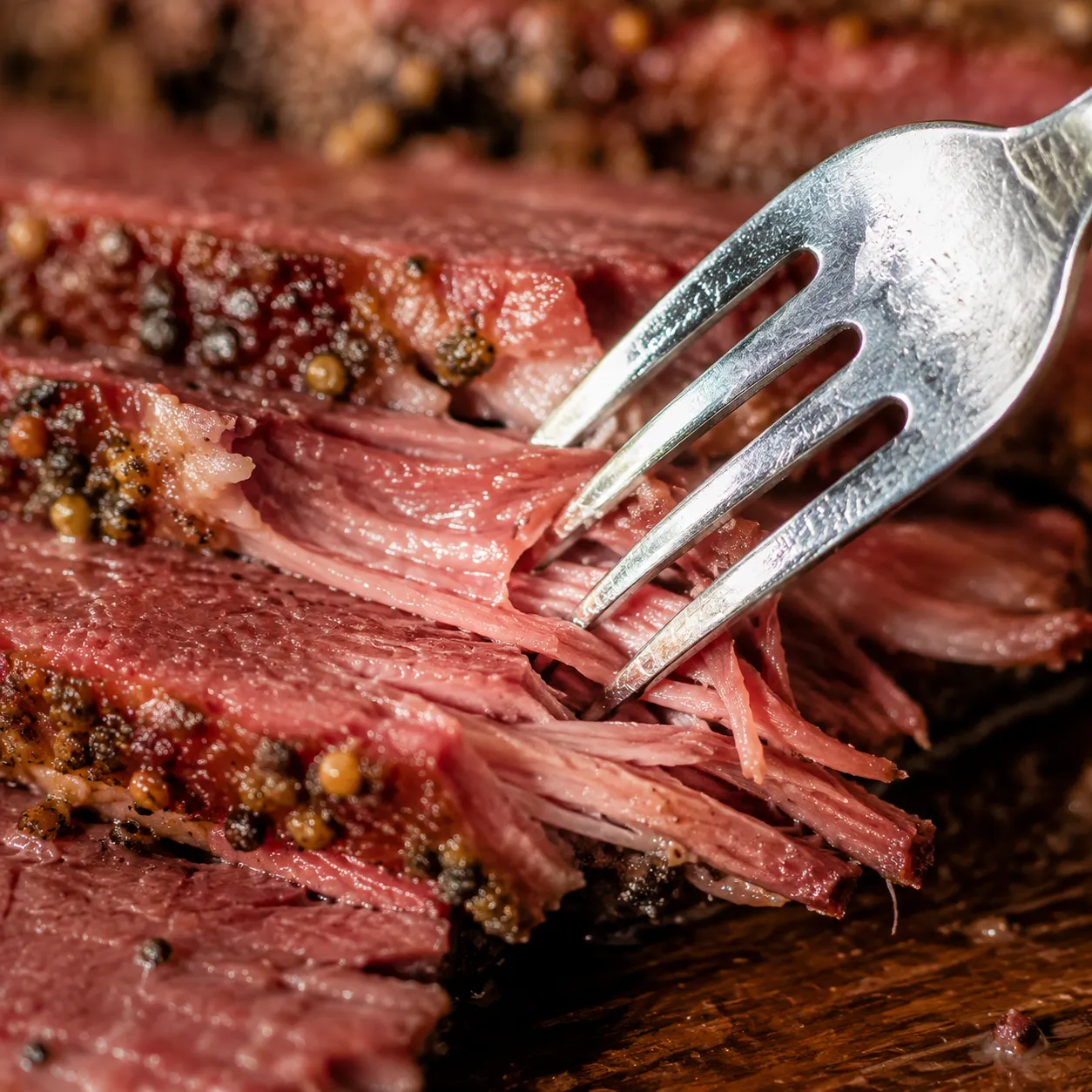
The slicing step is where most home cooks accidentally undo all their good work. Look at the surface of the meat and you'll see the muscle fibers running in one direction, like wood grain. Set your knife perpendicular to those fibers and slice across them in 1/4-inch slabs. That single move shortens the fibers and turns even a slightly tough piece into something you can cut with a fork. The full numbered steps are in the recipe card below.
If your morning is busy, the slow cooker is a gift. Crock pot corned beef and cabbage builds up an even deeper, more concentrated broth because nothing evaporates, and you don't have to babysit the simmer. The trick is layering, since the slow cooker heats from the bottom up.
Put the potatoes, carrots, onion, and garlic on the bottom so they sit closest to the heat and have time to soften. Lay the rinsed brisket fat-side-up on top, sprinkle the spice packet over it, and pour in enough water (and stout, if using) to come about halfway up the meat. Cook on LOW for 8 to 9 hours or HIGH for 4 1/2 to 5 hours. About 45 minutes before serving, lay the cabbage wedges over the top and let them steam in the broth until tender. Many readers tell me this is their favorite slow cooker corned beef setup because they can prep before work and walk in the door to dinner.
For weeknight cravings, pressure cooking turns a multi-hour braise into a 90-minute project. Add the rinsed brisket to the pot with the onion, garlic, spices, bay leaves, and 4 cups of water (plus the stout if you like). Lock the lid, set to high pressure for 75 minutes, and let the pressure release naturally for 15 minutes before quick-releasing the rest. Lift out the brisket and tent with foil to rest.
Add the potatoes and carrots to the broth, lock the lid, and pressure cook on high for 4 minutes with a quick release. Drop in the cabbage wedges, lock the lid again, and pressure cook for 2 to 3 more minutes. The vegetables come out clean and bright, and the brisket stays juicy because it rests outside the pot while the produce finishes.
The plate is mostly built into the pot already: meat, three vegetables, and a ladle of broth that doubles as a sauce. But a few thoughtful sides turn it into a full St. Patrick's Day dinner that feels worth lighting candles for.
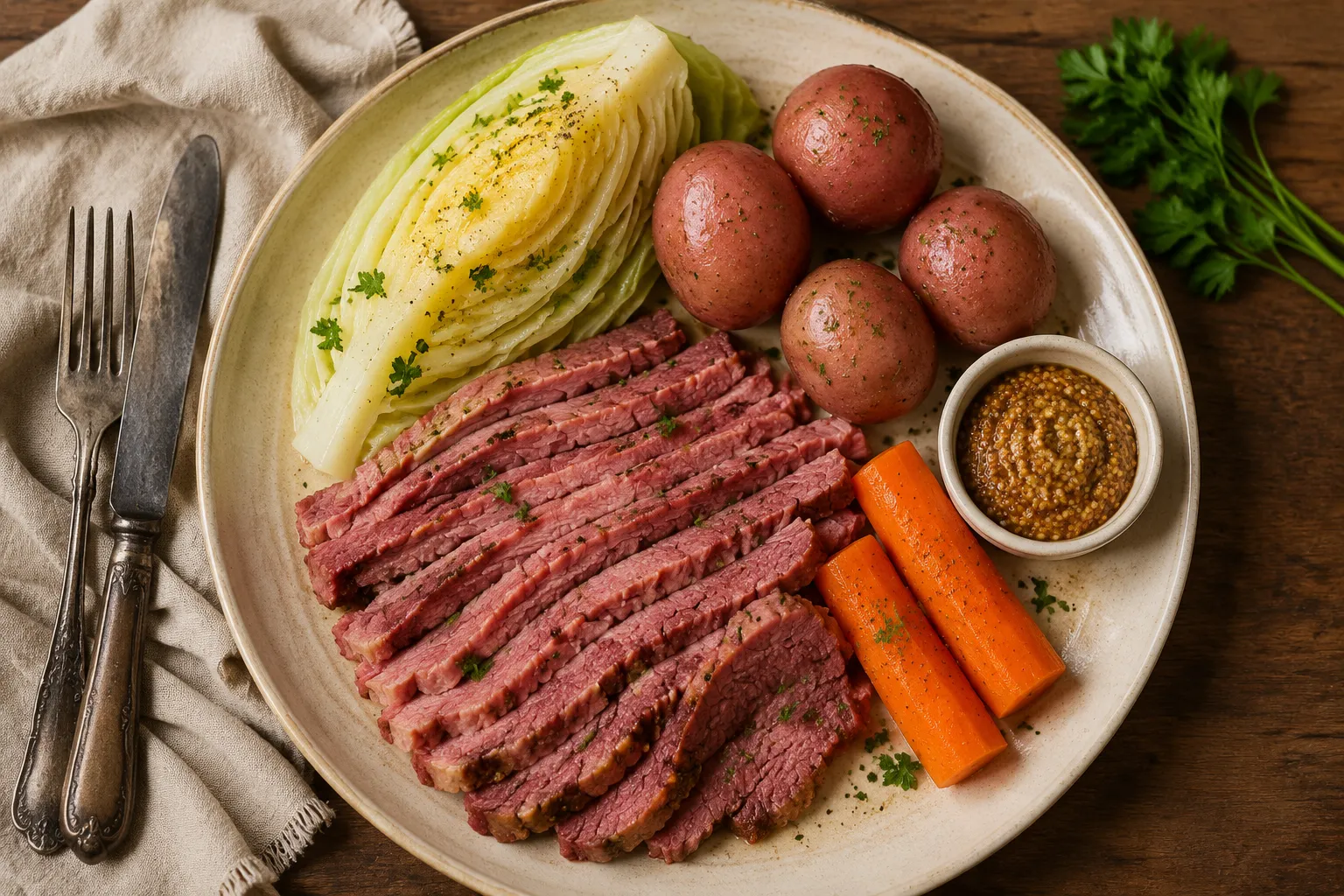
A loaf of warm, dense Irish soda bread is non-negotiable in my house, with cold salted butter for tearing into the broth. For sauces, set out a little dish of grainy mustard and a bowl of homemade horseradish sauce (sour cream, prepared horseradish, lemon, salt, a pinch of sugar). The horseradish cuts through the richness of the brisket the way mustard cuts through ham. A simple green salad with vinegary dressing is a nice cool counterpoint if your table is heavy on starches.
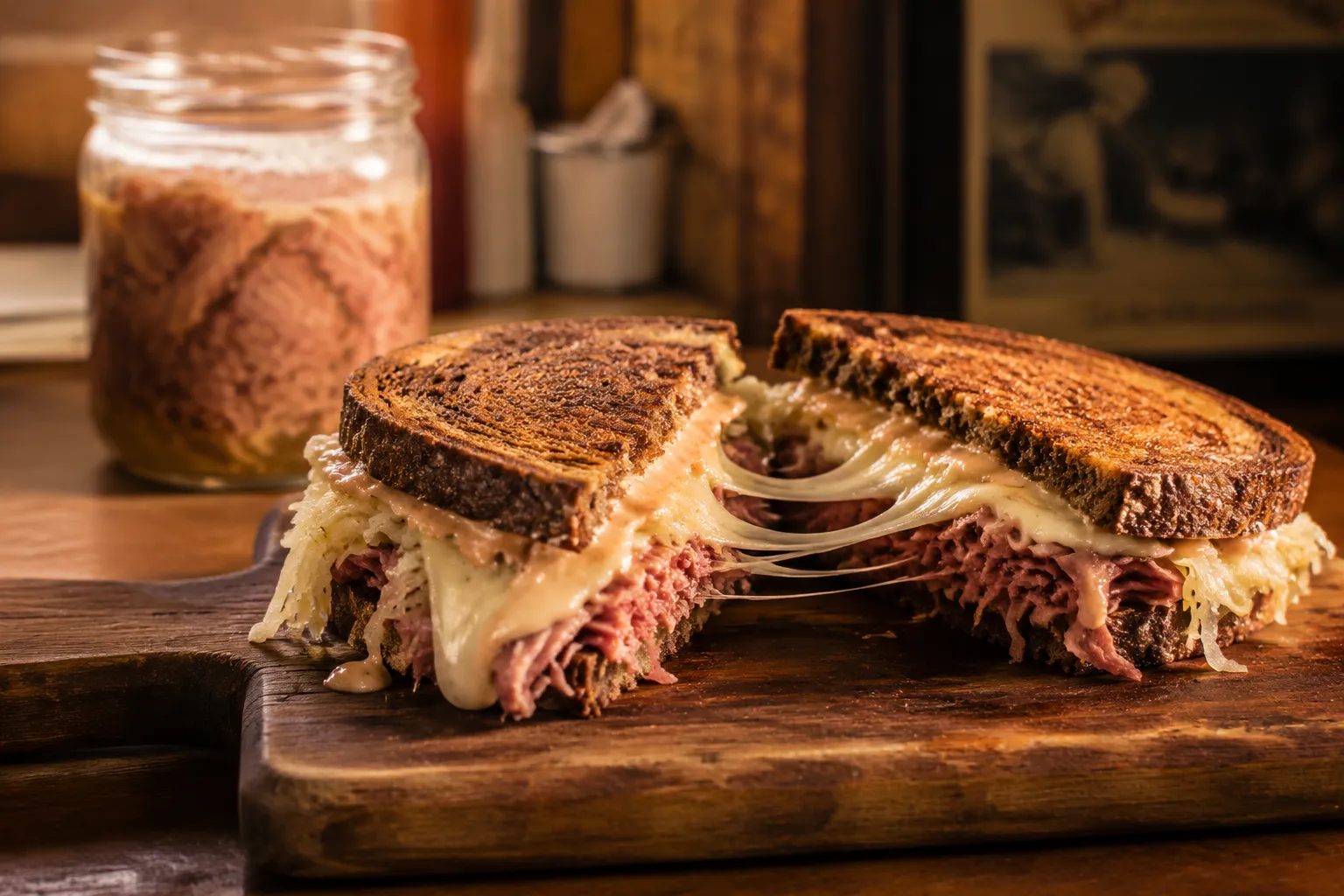
And then there are the leftovers, which might be the best part of cooking the whole brisket in the first place. Dice cold corned beef with potatoes and onions for leftover corned beef hash topped with a runny egg the next morning. Pile thinly sliced meat on rye with sauerkraut, Swiss, and Russian dressing for next-day Reubens. Or chop everything (meat, cabbage, carrots, potatoes) into the saved cooking broth for a hearty cabbage-and-carrots soup that tastes even better on day two.
Whether you're cooking it for a holiday or just because you saw a beautiful brisket at the butcher, this corned beef and cabbage recipe rewards patience with one of the most comforting plates of the year. Make it once the slow way and you'll understand why this dish has been an Irish-American Sunday tradition for generations.
This corned beef and cabbage recipe takes well to substitutions and small flavor twists, so don't be afraid to make it your own once you've got the basic method down.
Cool leftovers within two hours of cooking, then store the sliced corned beef separately from the vegetables in airtight containers in the refrigerator for up to 4 days. Pour a few spoonfuls of the strained cooking liquid over the meat before sealing — it keeps the slices juicy and prevents that dry, refrigerator-pink edge.
To freeze, pack sliced brisket flat in freezer bags with a little broth, press out the air, and freeze for up to 2 months. The vegetables don't freeze as gracefully (cabbage especially turns watery), so I usually eat those within the week or blend them into soup. Reheat gently on the stovetop in a covered pan with a splash of broth, or in a 300°F oven, just until warmed through. High heat or microwaving for too long will tighten the meat fibers and undo all that low-and-slow work.