Chinese Broccoli with Garlic Oyster Sauce (Gai Lan)
Ingredients
Scale
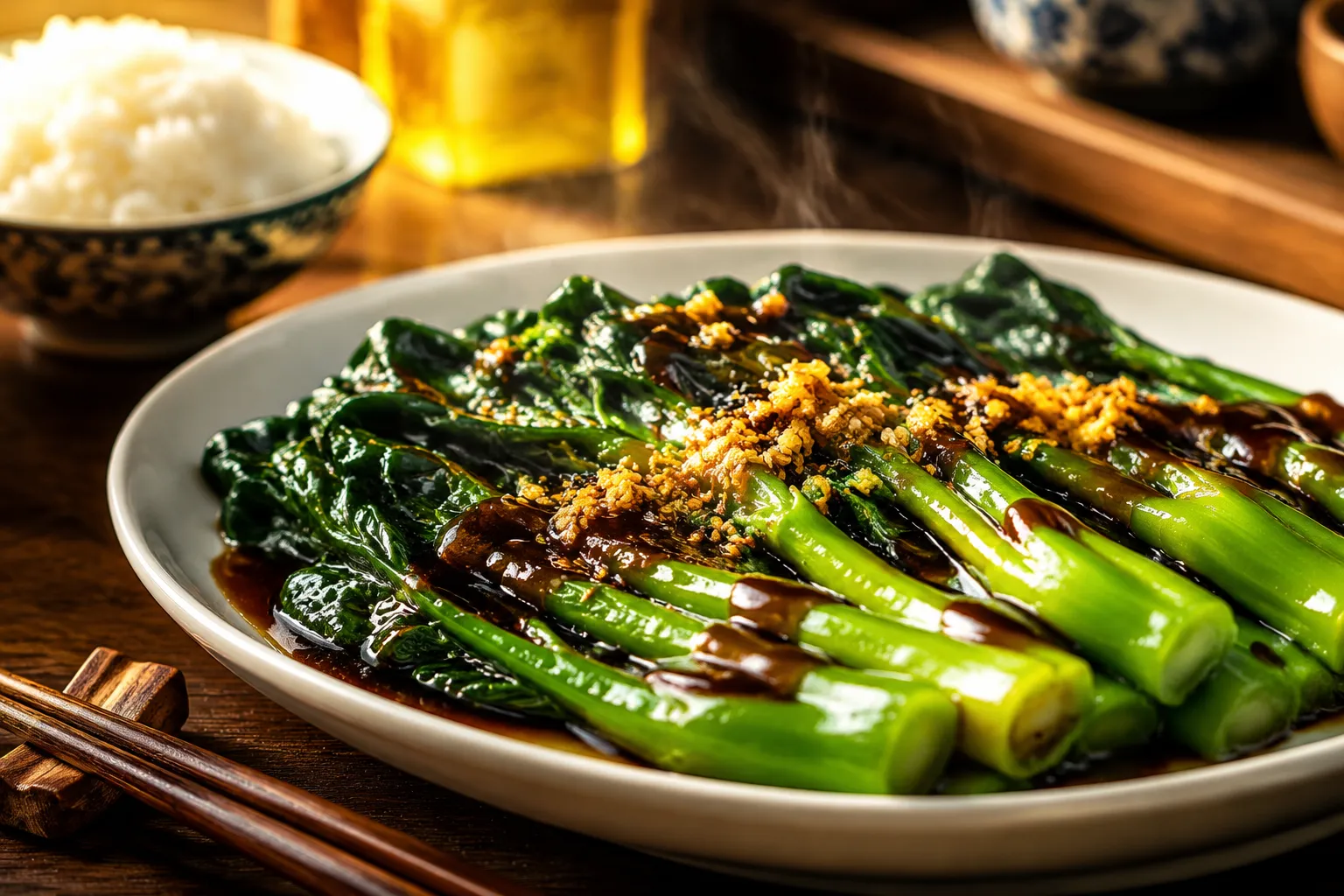
Tender-crisp Chinese broccoli draped in a glossy garlic oyster sauce, just like your favorite dim sum spot, on the table in 15 minutes flat.
Chinese broccoli with garlic oyster sauce is one of those dishes that tastes like it came straight from a bustling Cantonese dining room, even though it takes about 15 minutes in a home kitchen. The stems stay juicy and crisp-tender, the leafy tops turn silky, and the whole platter gets finished with a glossy, savory sauce that clings in all the right places. It is simple, deeply flavorful, and exactly the kind of vegetable side that makes a bowl of rice feel like dinner.
This is the classic restaurant-style approach: blanch the greens quickly in salted water, then pour over sizzling garlic, oyster sauce, soy sauce, and a touch of sesame oil. It is not a heavy stir fry, and that is the beauty of it. You get clean, bright, emerald vegetables with a warm mahogany sauce that tastes rich, garlicky, and just sweet enough.
If you have ever ordered gai lan at dim sum or alongside roast duck, this version will feel instantly familiar. It is a fast Chinese vegetable side dish that brings freshness to richer meals, but it is also satisfying enough to serve with steamed jasmine rice and call it lunch. Keep the ingredients simple, use a wide pot, and let the contrast of tender stems and glossy sauce do the work.
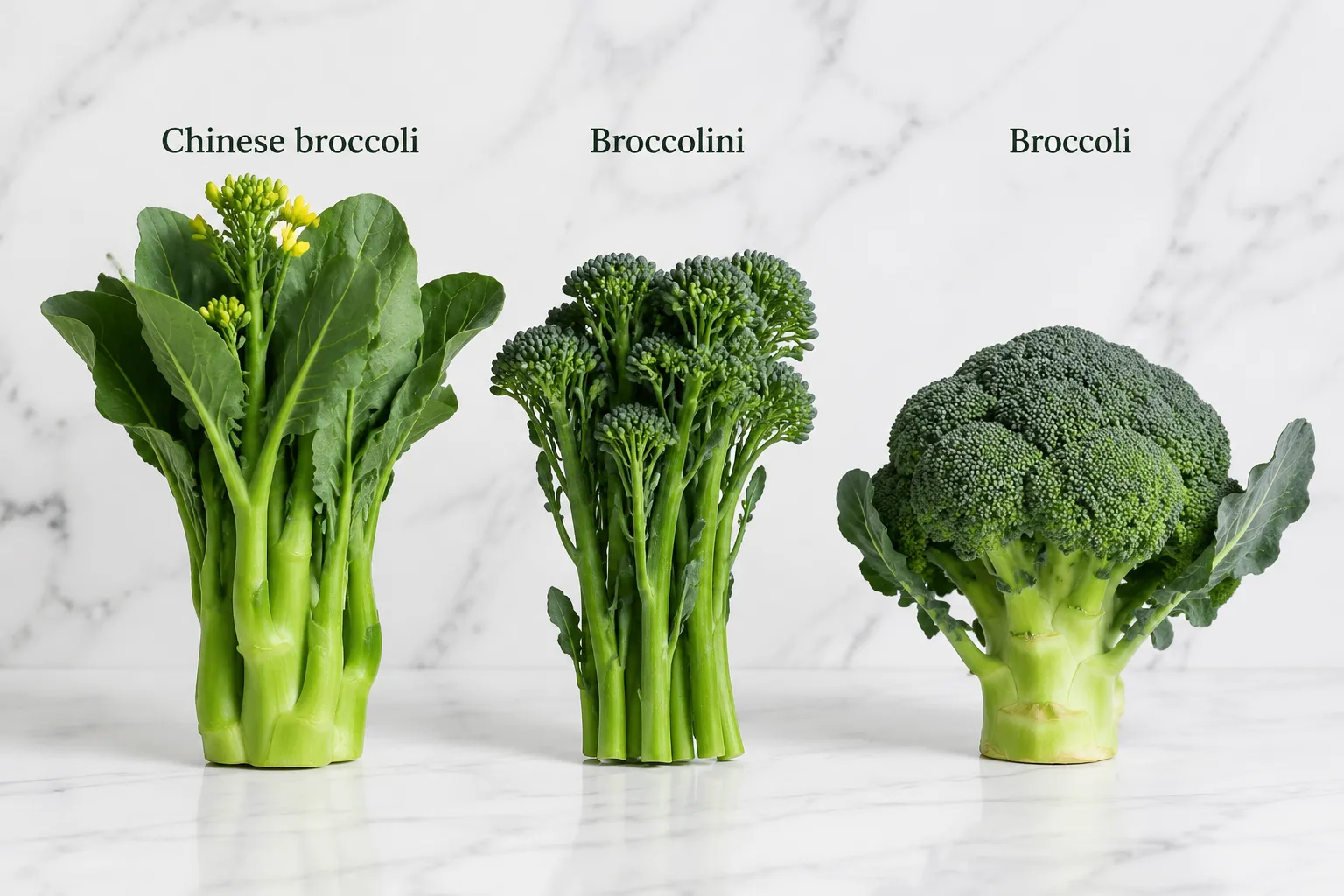
Gai lan is a leafy green in the brassica family, beloved in Cantonese cooking for its thick stems, broad blue-green leaves, and pleasantly bittersweet flavor. Compared with regular broccoli, it has fewer florets and much more stem and leaf, so the texture lands somewhere between asparagus, collards, and tender broccoli rabe. Compared with broccolini, it is sturdier, more vegetal, and a little more assertive, which is exactly why it pairs so beautifully with oyster sauce.
You will often see it labeled as gai lan, kai lan, Chinese kale, or Chinese broccoli at Asian markets. Look for bunches with firm stalks, perky leaves, and tight little buds if there are any flower clusters attached. Avoid bunches with yellowing leaves, dried cut ends, or stems that feel rubbery. Freshness matters here because the recipe is so simple—the vegetable itself should taste sweet, grassy, and alive.
The slight bitterness is part of its charm, especially when balanced by salty-sweet sauce and aromatic garlic. If you are new to Cantonese greens, this is an ideal starting point because the method is gentle and the flavor is very approachable. Think of it as the vegetable plate that quietly steals the table.
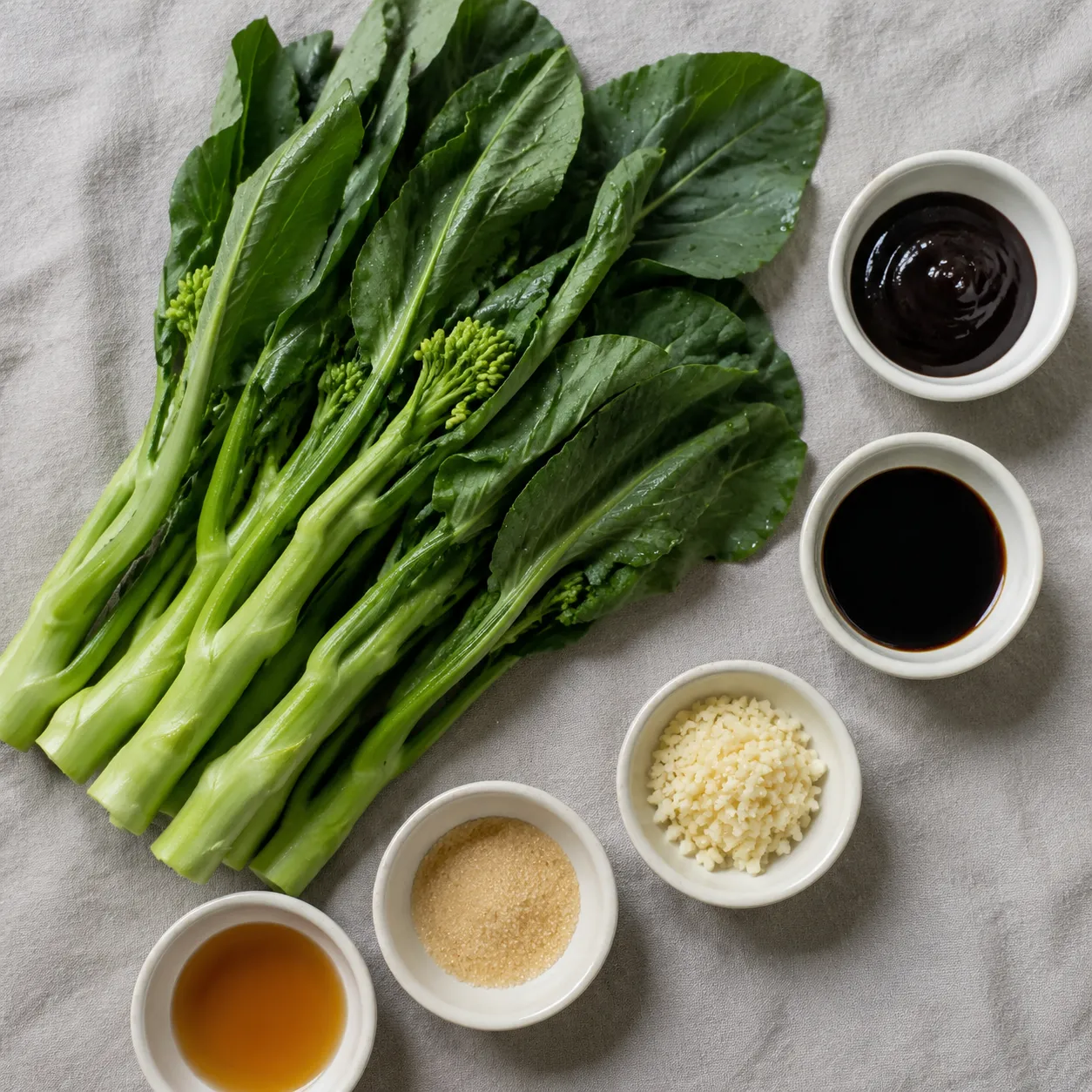
The ingredient list is short, so each component has a clear job. The greens bring body and freshness, oyster sauce adds savory depth and a restaurant-style sheen, soy sauce seasons the base, and sugar rounds the edges without making the dish taste sweet. Vegetable oil carries the garlic aroma, while toasted sesame oil gives the final sauce a nutty finish.
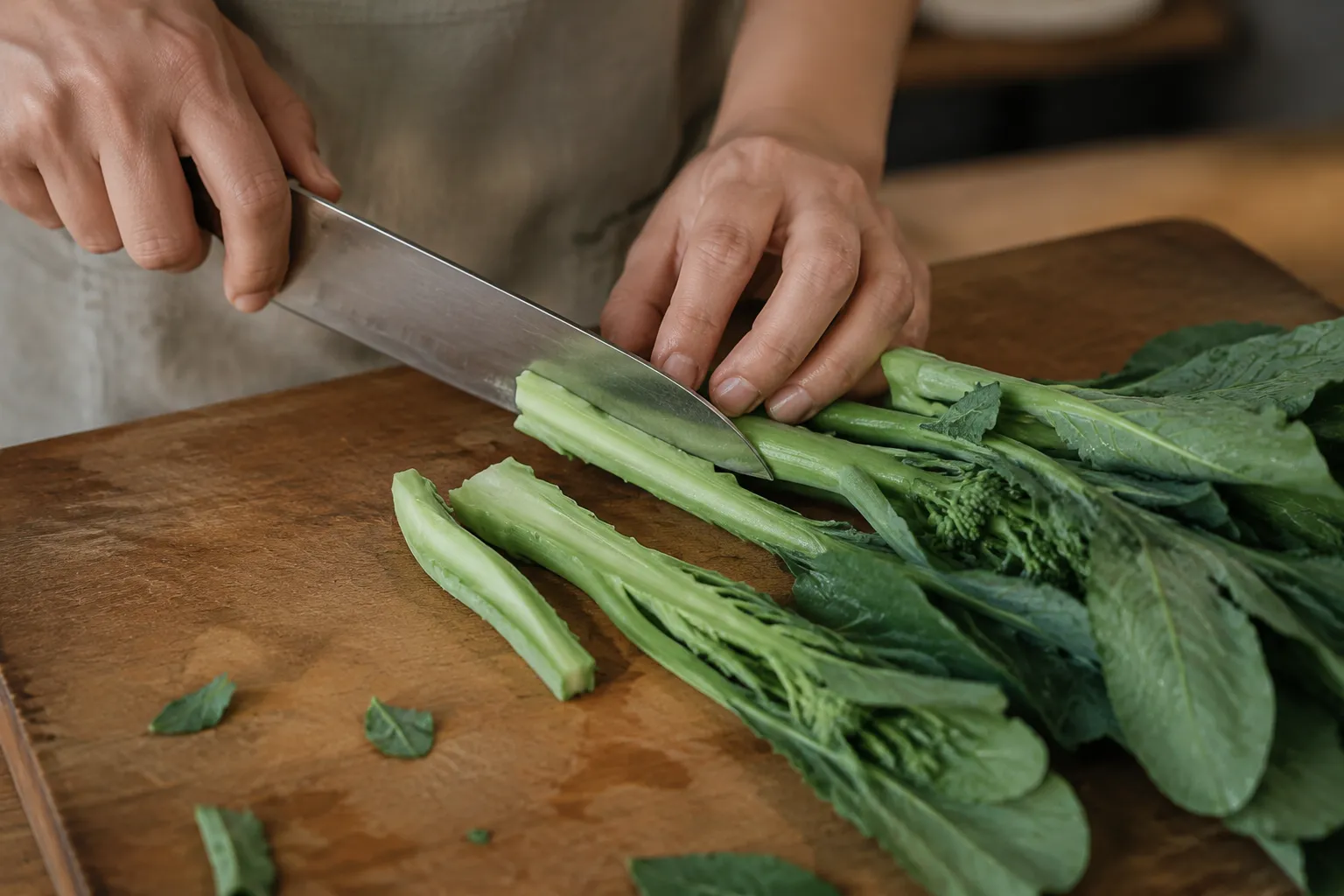
For the best texture, choose stems that are medium-thick and relatively even in size. Very thick stalks can be wonderful, but they should be split lengthwise so the centers cook at the same pace as the leaves. If your bunch includes tender flower buds, keep them attached; they become deliciously juicy after the blanch.
The sauce is intentionally uncomplicated, more like the Cantonese restaurant drizzle you would find on blanched greens than a thickened gravy. A spoonful of water loosens the oyster sauce just enough so it flows over the platter, and minced garlic sizzled in hot oil gives the dish that fragrant, just-cooked lift. If you are used to making an oyster sauce stir fry, this will feel lighter and cleaner, with the sauce finishing the vegetable rather than coating it in the pan.
The small prep step that makes the biggest difference is trimming the stalks properly. Cut away the dry, woody ends first, then inspect the stems: if any are thicker than your thumb, split them lengthwise with a sharp knife. This simple move helps the stems become crisp-tender at the same time the leaves soften, so you do not end up with tough centers and overcooked tops.
You can leave the bunches long for a dramatic restaurant-style platter, or cut them into shorter lengths if you are serving family-style from a bowl. Long stems look elegant and make the dish feel special, especially when the sauce is drizzled down the center. Shorter pieces are easier for kids, rice bowls, or packed lunches.
Give the greens a thorough rinse, paying attention to the base of the stems and any leaves where grit can hide. Shake off excess water, but do not worry about drying them completely since they are going straight into boiling water. The goal is a clean vegetable with neatly trimmed stems and leaves that still look full and fresh.
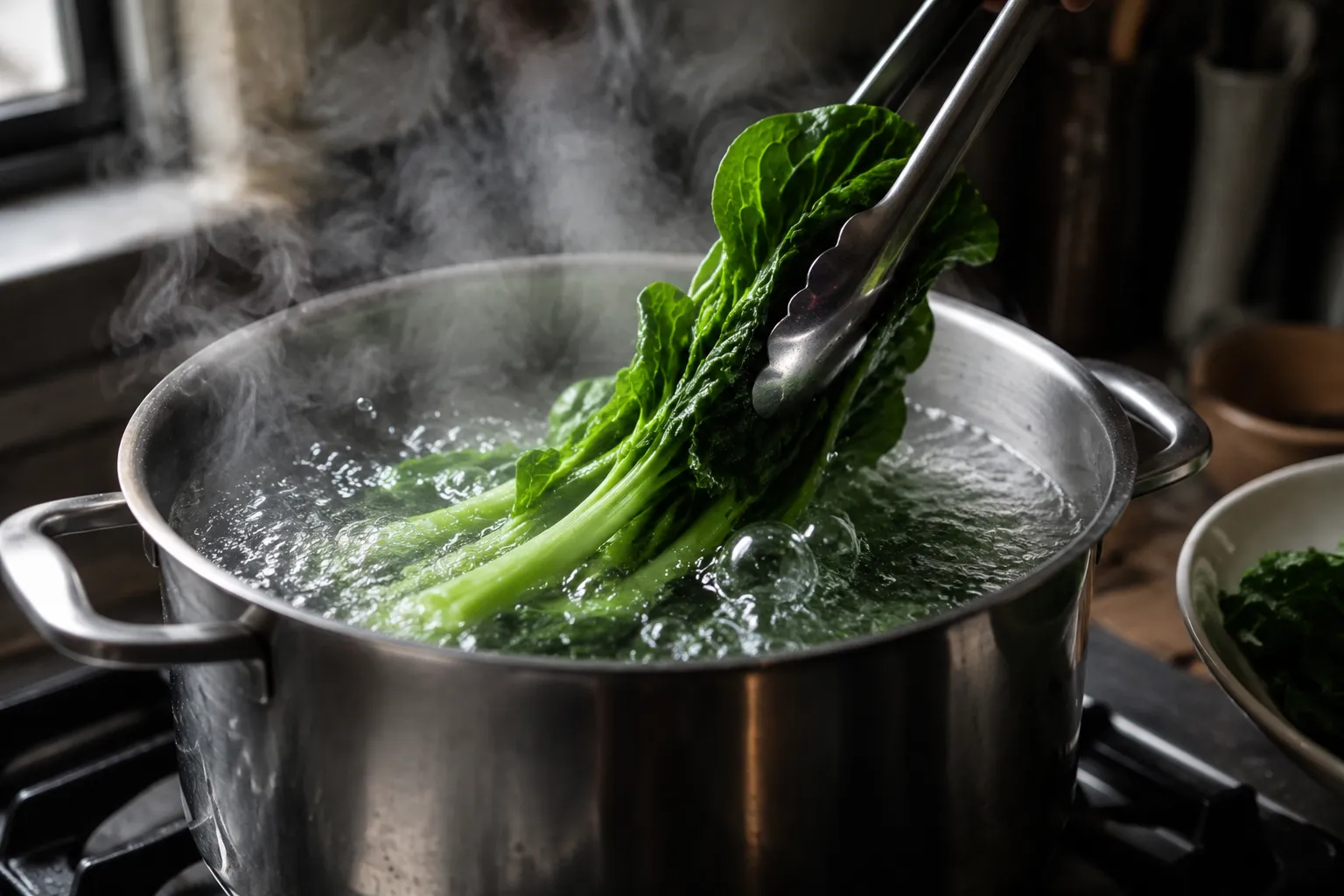
The signature technique here is to blanch first, sauce second. A large pot of salted boiling water quickly seasons the vegetable, softens the stems, and locks in that vivid green color. Because the gai lan is not tossed around in a hot pan for long, the leaves stay glossy and intact, and the stems retain their juicy bite.
Bring more water to a boil than you think you need, because a crowded pot drops in temperature and can turn the greens dull. Add the stems first if they are especially thick, then nudge the leaves under the surface with tongs. In just a few minutes, the color should deepen to an intense jade green and the thickest stem should be tender when pierced but still pleasantly firm.
Once cooked, drain well so excess water does not dilute the sauce. Some cooks shock the greens in ice water, but for this warm platter, I prefer draining and plating right away. The residual heat helps the garlic sauce bloom when it hits the surface, and the whole dish arrives at the table steamy and fragrant.
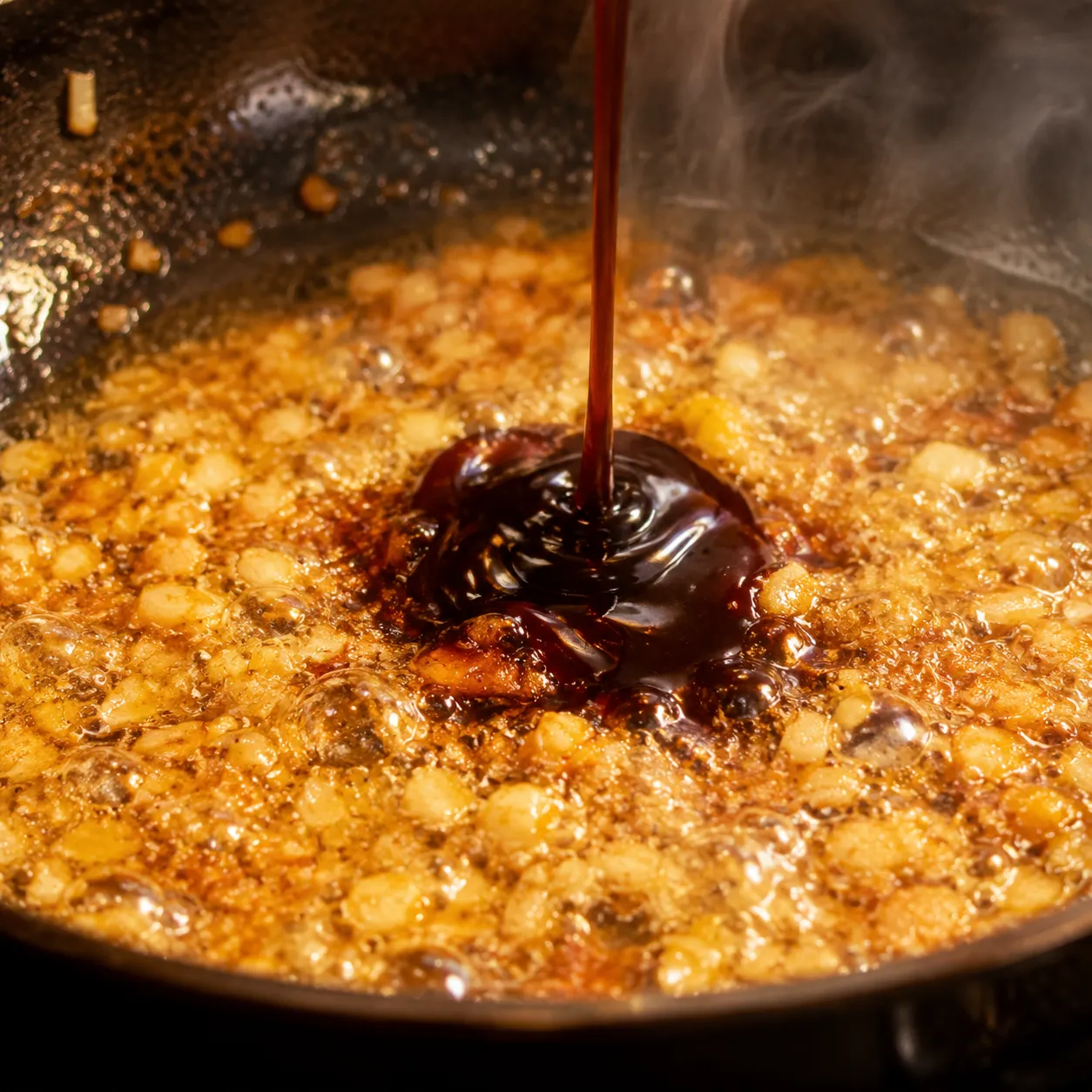
The sauce comes together in a small skillet in less time than it takes to set the table. Warm the oil, add the minced garlic, and let it sizzle just until fragrant and pale golden. This is the moment to pay attention: garlic can go from sweet and nutty to bitter in seconds, so keep the heat moderate and stir often.
Once the garlic is aromatic, stir in oyster sauce, soy sauce, sugar, water, and toasted sesame oil. The mixture should bubble gently and turn glossy, not boil aggressively into a thick paste. You want a pourable garlic sauce that ribbons over the stems and lightly pools on the platter.
The flavor should be savory first, with a mellow sweetness and lots of aromatic depth. If your oyster sauce is very salty, add another splash of water. If it tastes a little flat, a few extra drops of sesame oil or a pinch more sugar can round it out without changing the spirit of the dish.
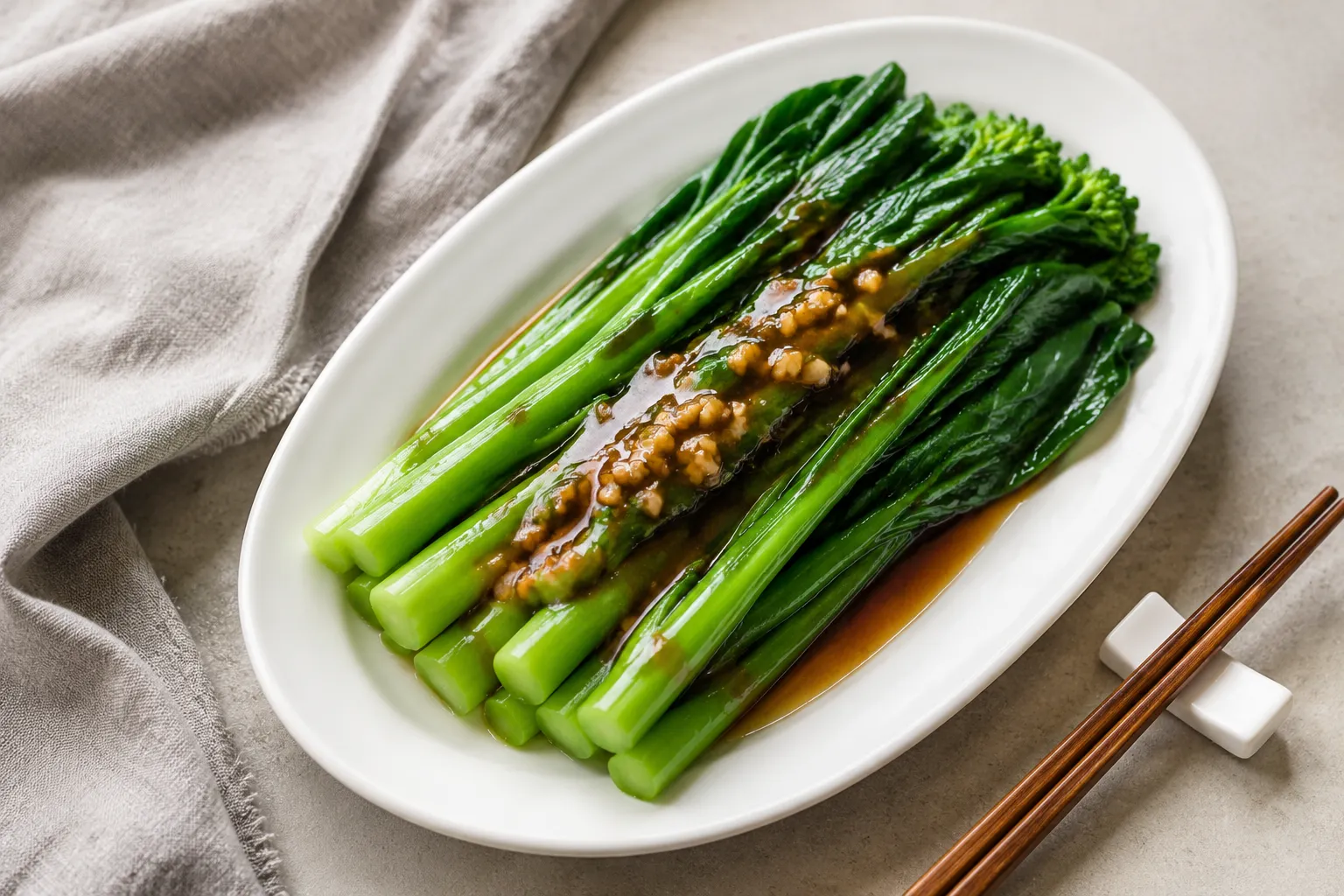
Presentation is part of the pleasure with this dish. Arrange the drained stems in the same direction on a long platter, with the leafy tops gathered loosely and the cut ends aligned. This gives the dish that polished dim sum look and makes it easy to drizzle the sauce the full length of the greens.
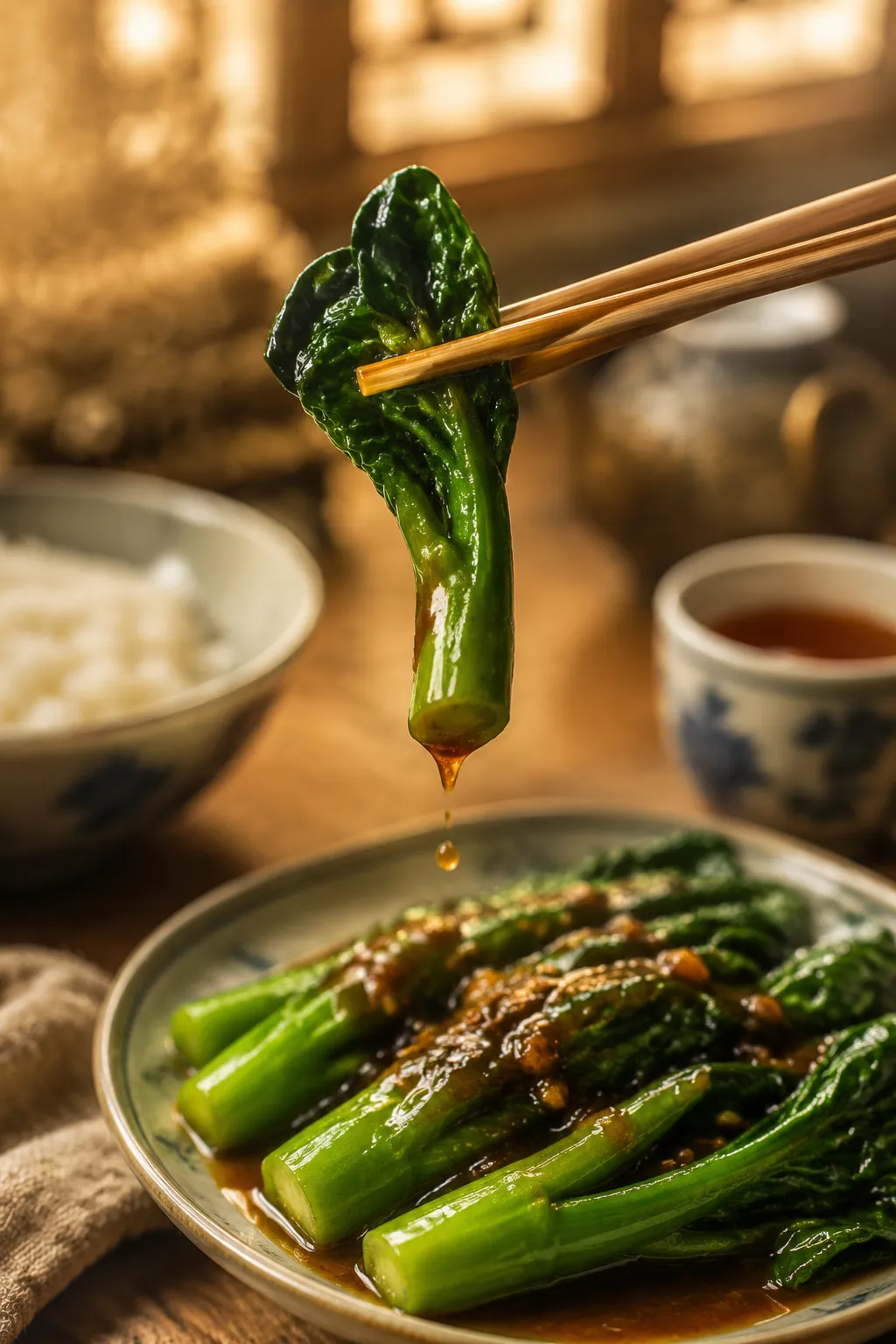
Spoon the hot sauce over the center of the platter, making sure some of the golden garlic lands on the leaves and some settles over the stems. The sauce should not completely drown the vegetable; it should highlight it. A little pool at the bottom is perfect for dragging stems through or spooning over rice.
Serve immediately while the greens are hot and the sauce is glossy. The first bite should give you a tender leaf, a juicy stem, and a hit of savory garlic all at once. That contrast is what makes this such a satisfying Cantonese greens dish, even with so few ingredients.
This platter is a natural partner for steamed jasmine rice, especially because the sauce is too good to leave behind. Add roast duck, char siu, soy sauce chicken, or crispy tofu and you have a balanced takeout-style dinner at home. It also works beautifully next to dumplings, scallion pancakes, fried rice, or a simple bowl of congee.
For a lighter meal, pair it with steamed fish and rice, letting the garlicky sauce tie everything together. For a bigger weekend spread, set it out with other blanched greens, noodles, and a platter of sliced barbecue pork. The flavor is bold enough to stand beside rich proteins but clean enough to refresh the palate between bites.
This is also a great vegetable to serve when you want something green that does not feel like an afterthought. Because the stems are substantial, the dish has a satisfying chew, and the sauce makes it feel generous. It is quick enough for Tuesday night but polished enough for guests.
If you are prepping for a larger meal, you can trim and wash the gai lan earlier in the day, then wrap it loosely in a clean towel and refrigerate until cooking time. You can also stir together the oyster sauce, soy sauce, sugar, water, and sesame oil in a small bowl so all you need to do is sizzle the garlic and pour in the mixture. This keeps the final cooking window short and stress-free.
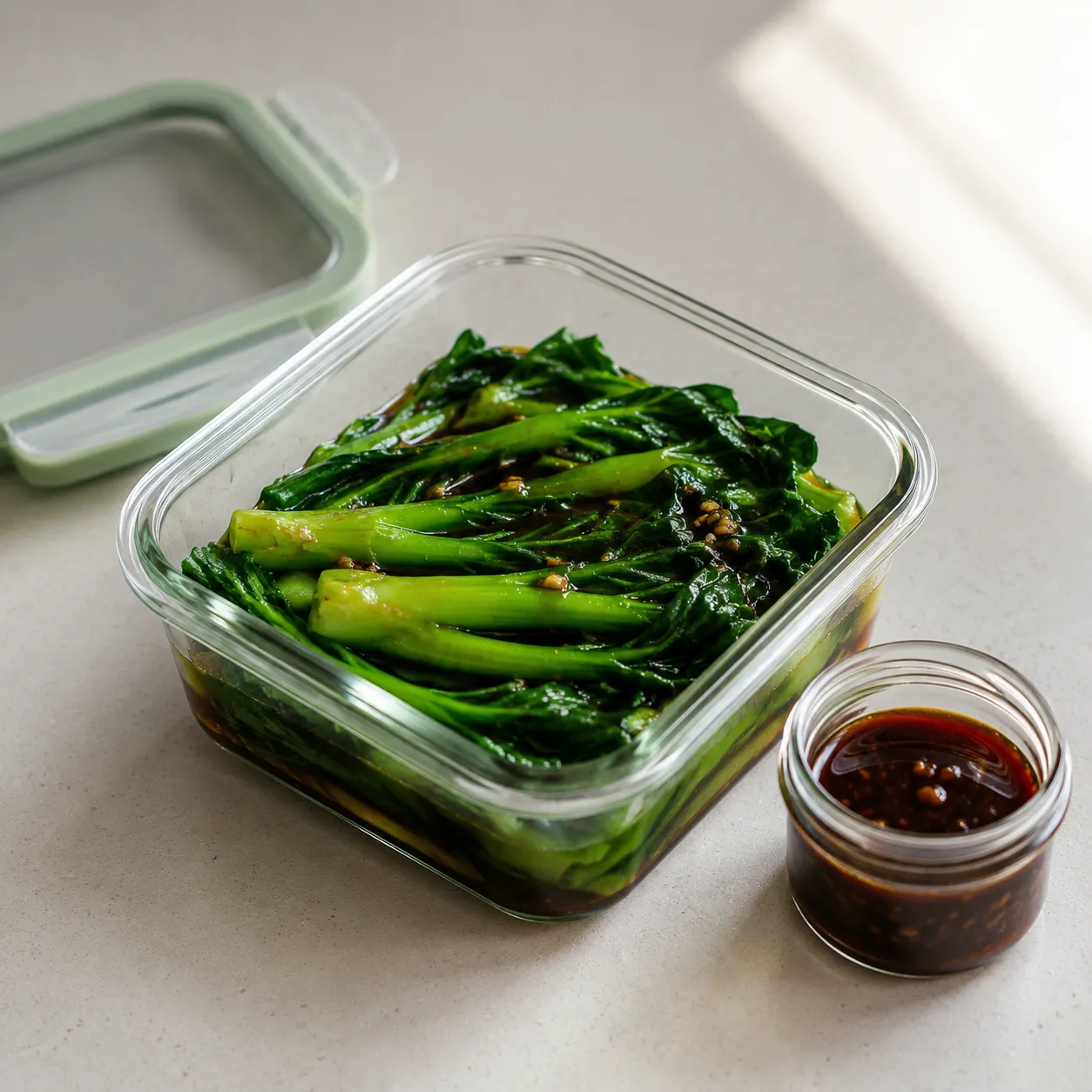
For the best texture, cook the greens close to serving time rather than hours ahead. Like most blanched greens, they taste brightest when served hot and freshly sauced. Still, leftovers are delicious tucked into rice bowls, chopped into noodle soups, or served cold as a savory side the next day.
Once you know the blanch-and-drizzle method, this dish becomes one of the easiest ways to bring restaurant-style flavor to your own table. The process is fast, the ingredients are approachable, and the result feels so much more special than the effort required. That is the magic of good Cantonese home cooking: clean technique, bold aroma, and a sauce that makes every bite shine.
Keep a bottle of oyster sauce in the fridge, grab a fresh bunch of gai lan when you see it, and you are never far from a glossy, garlicky plate of greens. Whether you serve it beside rice and roast meats or fold it into a weeknight spread, this is a simple recipe that earns a permanent spot in the rotation.
Store leftovers in an airtight container in the refrigerator for up to 3 days. If possible, keep any extra sauce separate from the greens so the stems stay firmer, but fully sauced leftovers are still very tasty.
Reheat gently in a skillet over medium-low heat with a tiny splash of water, just until warmed through. Avoid microwaving for too long, which can make the leaves limp and the stems overly soft.