Kimchi Fried Rice: The Best 20-Minute Korean Recipe
Ingredients
Scale
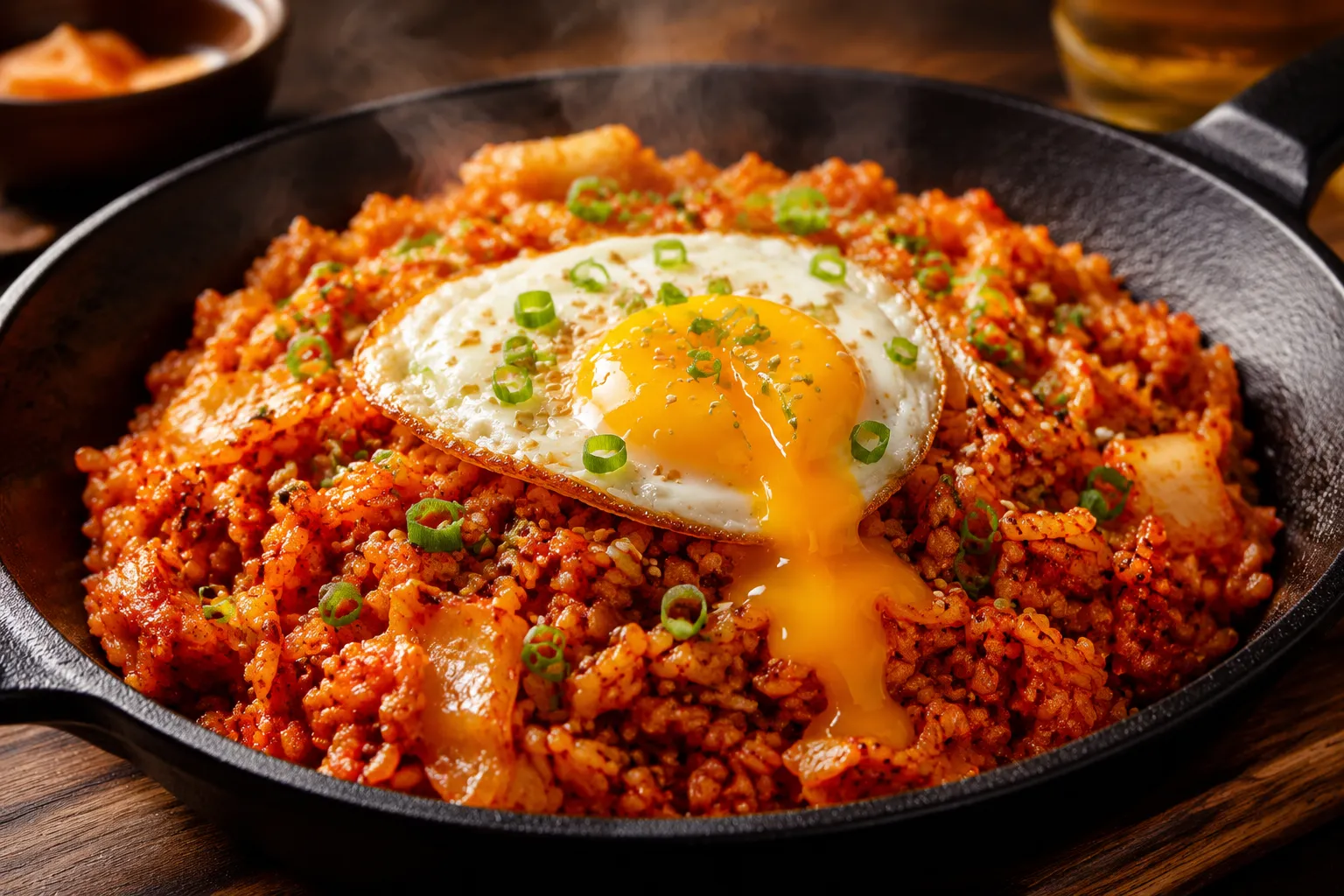
Smoky, spicy, and deeply savory, this kimchi fried rice turns leftover rice and a jar of kimchi into the fastest 20-minute weeknight dinner.
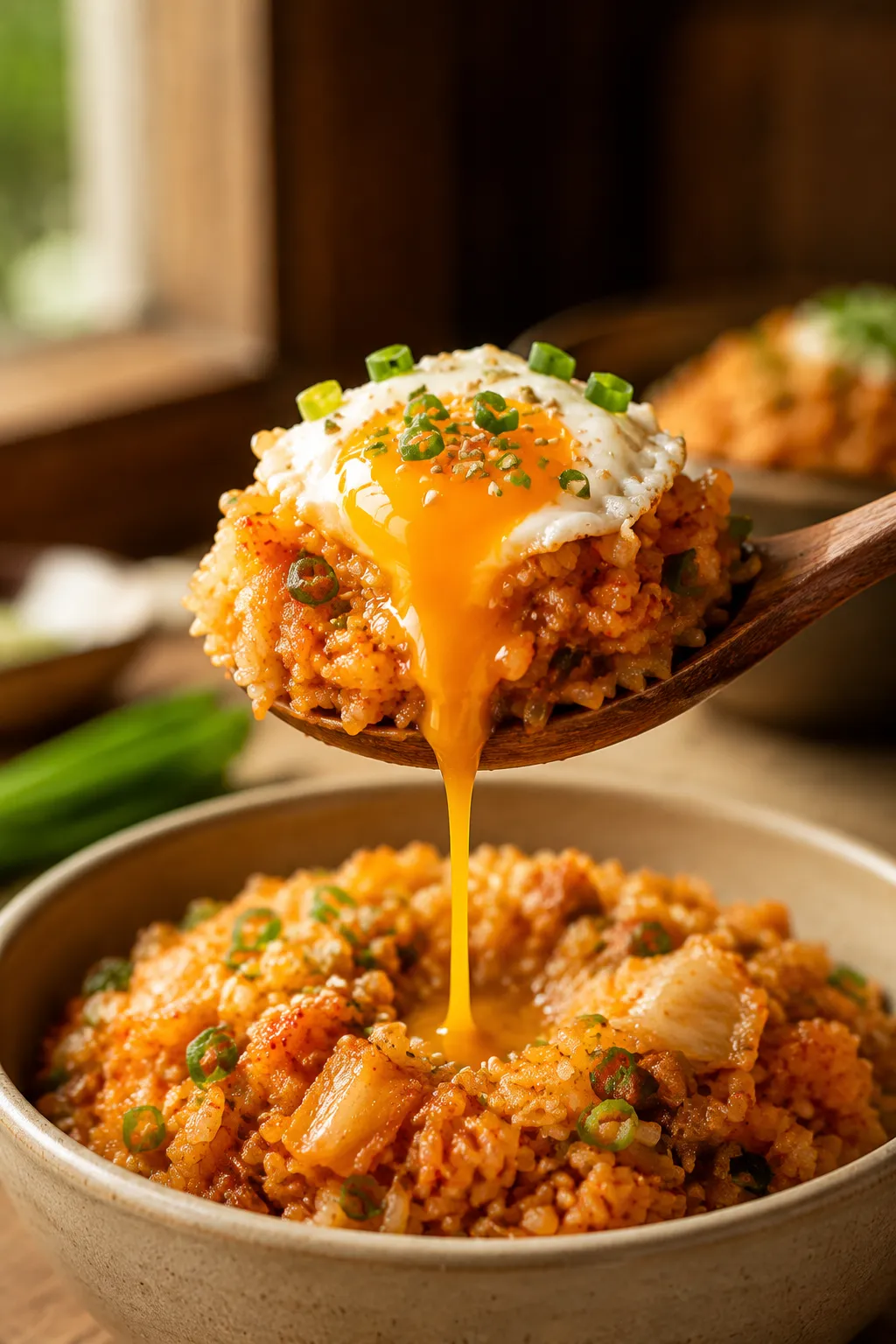
Kimchi fried rice is the kind of 20-minute dinner that tastes like you planned ahead, even when you are standing in front of the fridge at 6:12 p.m. with leftover rice, a jar of fermented kimchi, and not much else. It is smoky, tangy, buttery, and just spicy enough, with a glossy fried egg on top that turns into a rich sauce the moment your spoon breaks the yolk.
This version leans into the restaurant-style comfort of Korean fried rice: sour kimchi caramelized in butter, a spoonful of gochujang for deep chile sweetness, toasted sesame oil at the finish, and cold day-old rice that fries up chewy and separate instead of soft. It is fast enough for a weeknight, but it has that layered, late-night takeout energy that makes everyone hover near the stove.
If you keep homemade kimchi tucked in the fridge, this is one of the best ways to use it when it turns pleasantly sour and punchy. Store-bought kimchi works beautifully too, especially if it has been open for a little while and has plenty of kimchi juice in the jar. That liquid is not a side note—it is the secret ingredient that seasons the rice all the way through.
The magic starts with fermented kimchi. As kimchi ages, the cabbage softens, the garlic and chile deepen, and the brine becomes bright, funky, and savory in a way fresh vegetables simply cannot match. When you cook it in a hot skillet, the edges caramelize, the moisture concentrates, and the whole pan begins to smell sweet, spicy, and deeply appetizing.
Butter may not be in every traditional home version, but it is one of the reasons this dish tastes so satisfying. It rounds the sharpness of the kimchi, helps the rice crisp, and gives the sauce a silky finish. A little soy sauce brings salt and umami, while sugar balances acidity without making the dish taste sweet.
Gochujang is the other big flavor builder here. The fermented chile paste adds heat, depth, and a mellow sweetness that clings to every grain of rice. If you already love gochujang sauce, you will recognize that same slow-building warmth, but here it melts directly into the kimchi and butter for a richer, more savory finish.
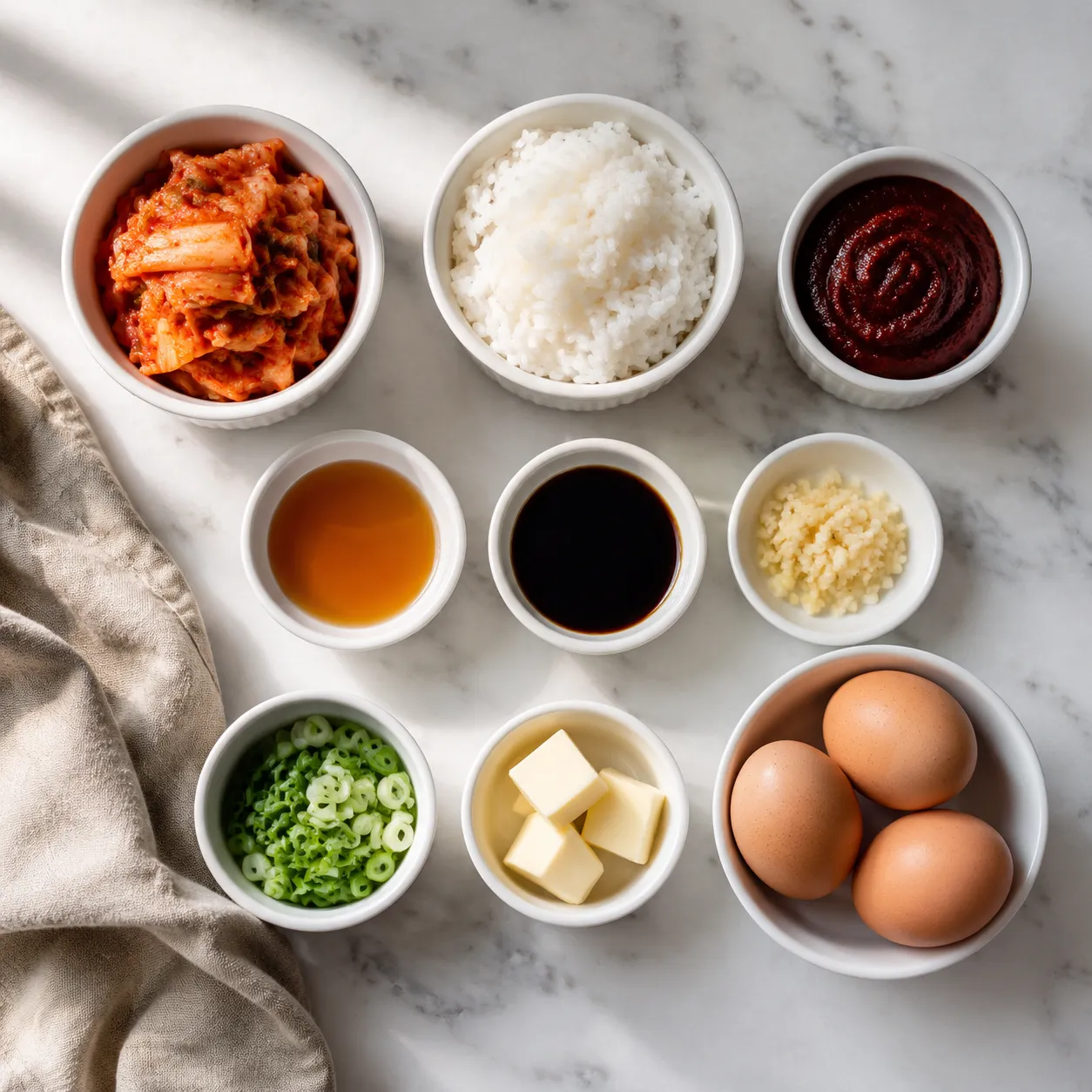
Start with cold short-grain rice, preferably cooked the day before. Freshly cooked rice is steamy and soft, which can make fried rice gummy, but day-old rice has had time to firm up and dry out slightly in the refrigerator. Those drier grains separate in the skillet and soak up the kimchi, gochujang, sesame oil, and soy sauce without collapsing.
If you are starting from scratch, learning how to cook short-grain rice properly is worth it for this recipe and beyond. Short-grain white rice has a gentle stickiness that is perfect for Korean cooking, but it still needs to be cooled before frying. Spread freshly cooked rice on a tray, chill it uncovered until cold, and break up any large clumps with your hands before it hits the pan.
For the kimchi, choose cabbage kimchi that smells tangy and tastes lively. Fresh kimchi can work in a pinch, but fermented kimchi gives the dish that signature sour, garlicky depth. Chop it into bite-size pieces so it distributes evenly, and measure out some kimchi juice from the jar before you start cooking.
The remaining ingredients are small but mighty: minced garlic, scallions, unsalted butter, toasted sesame oil, soy sauce, sugar, eggs, sesame seeds, and roasted nori. The scallion whites go into the pan for aroma, while the greens stay fresh for garnish. The fried egg on top is technically optional, but it makes the bowl feel complete.
This recipe moves quickly once the pan is hot, so it helps to have everything ready before you begin. Chop the kimchi, mince the garlic, slice the scallions, and stir the gochujang with kimchi juice, soy sauce, and sugar so it is ready to pour. Break apart the cold rice with your fingers or a spoon, because large chilled clumps are harder to season evenly in the skillet.
Use a large skillet, wok, or well-seasoned cast-iron pan so the rice has enough room to fry rather than steam. A crowded pan traps moisture, which softens the grains and dulls the caramelized flavor you are after. If your skillet is small, cook the rice in two batches and combine everything at the end.
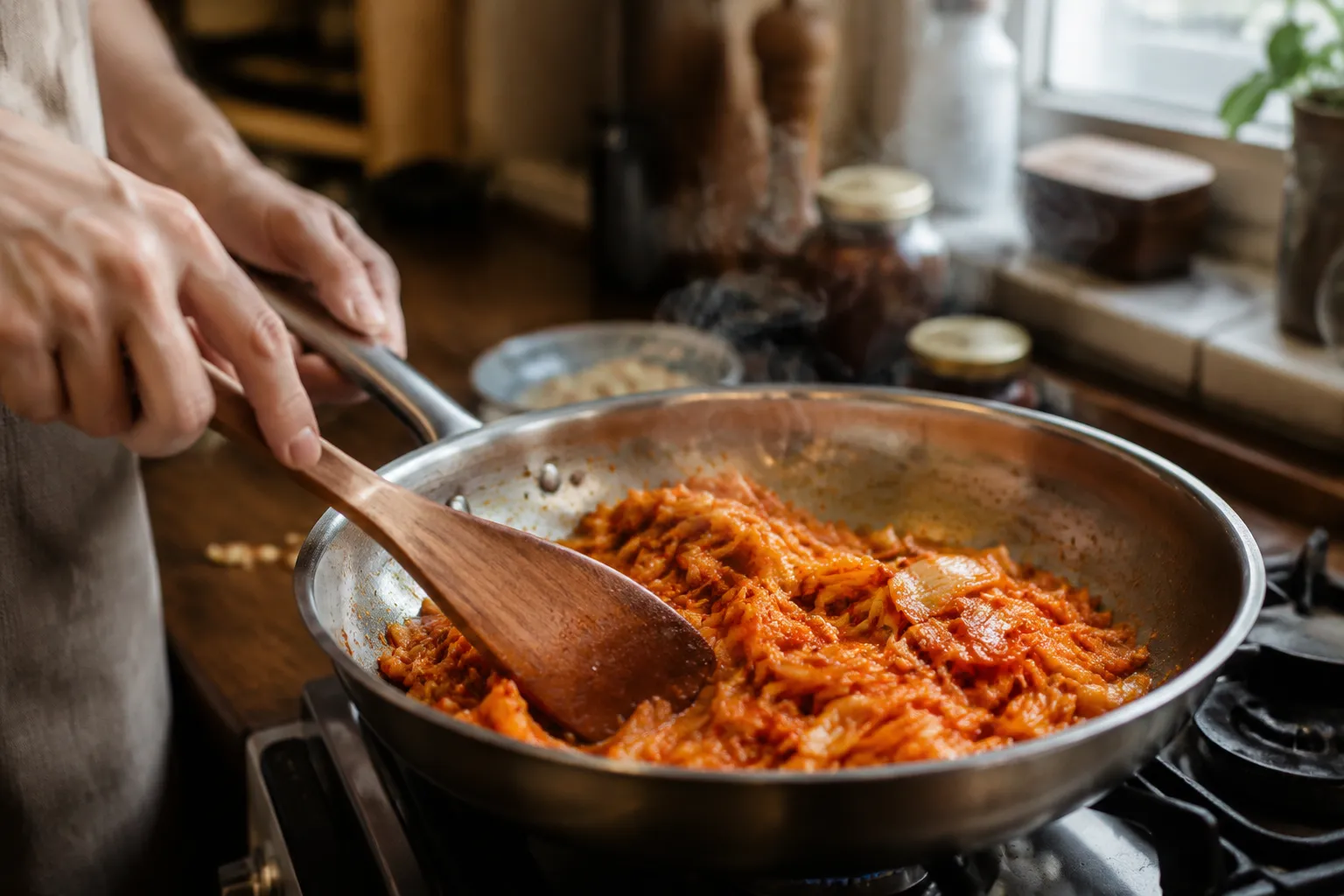
The first real cooking step is to sauté the aromatics and kimchi. Melt butter in the skillet, then add the scallion whites and garlic just long enough to perfume the fat. Stir in the chopped kimchi and let it cook until it darkens slightly, smells toasty, and begins to cling to the bottom of the pan in little caramelized bits.
Next comes the sauce mixture. The kimchi juice loosens the browned bits, the gochujang melts into the butter, and the soy sauce seasons everything with a salty-savory edge. This quick bubbling moment is where the flavors concentrate, so do not rush it; you want the sauce glossy and fragrant before the rice goes in.
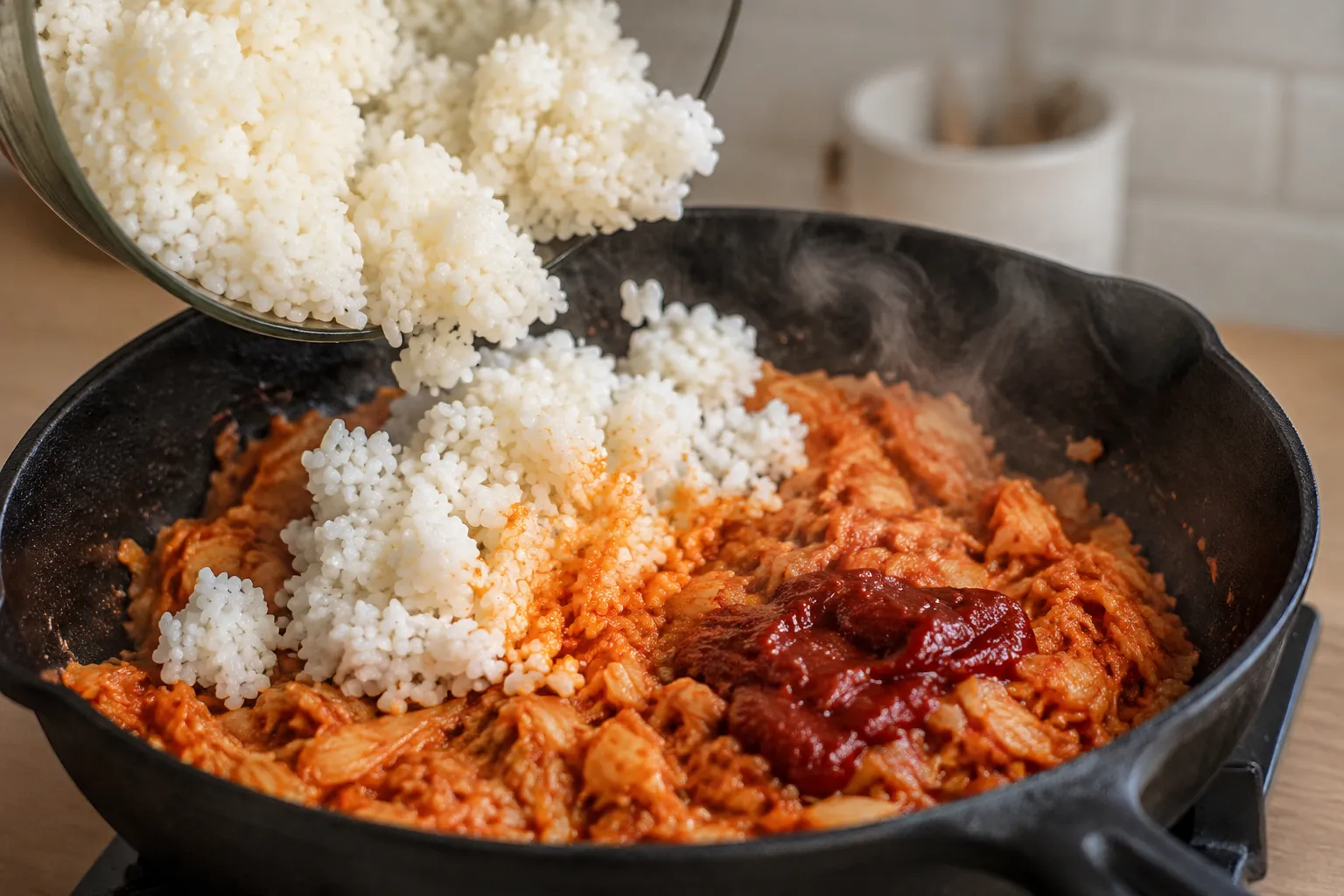
Add the day-old rice and fold it through the kimchi mixture, pressing gently to break up any remaining clumps. The rice should turn a warm red-orange as it absorbs the sauce. Once it is evenly coated, spread it out in the pan and give it a minute or two of undisturbed contact with the hot surface so the bottom can crisp.
Finish with toasted sesame oil off the heat so its nutty aroma stays bright. Taste and adjust with another splash of soy sauce if needed, remembering that the egg and garnishes will soften the heat. This is also the point where you can fold in extra scallion greens or a few torn sheets of nori for a briny finish.
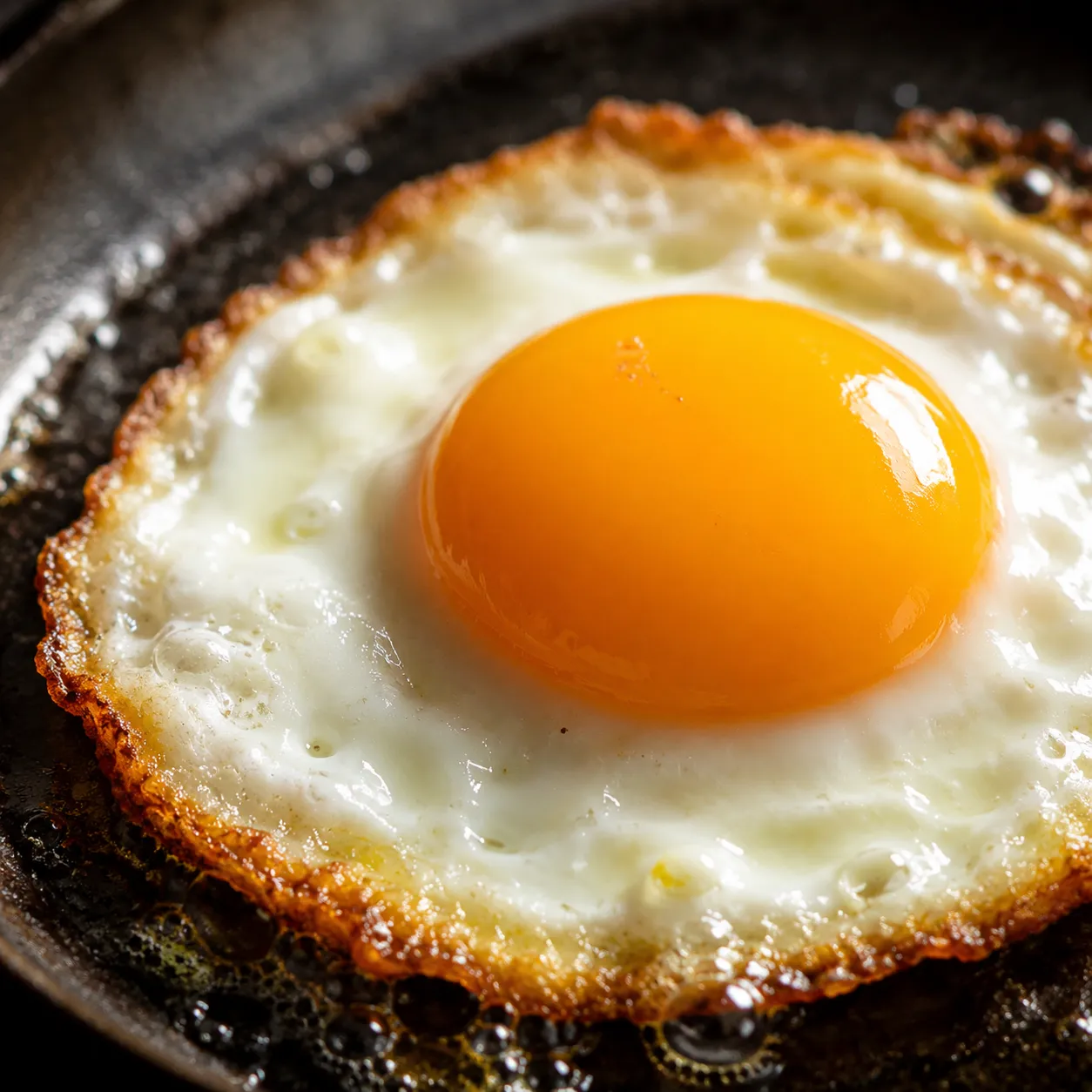
While the rice finishes, fry the eggs in a separate skillet. For lacy, crisp edges, heat a little oil until shimmering, crack in the eggs, and let the whites bubble around the edges while the yolks stay glossy. Slide one over each bowl of rice, then shower everything with sesame seeds, scallions, and roasted nori.
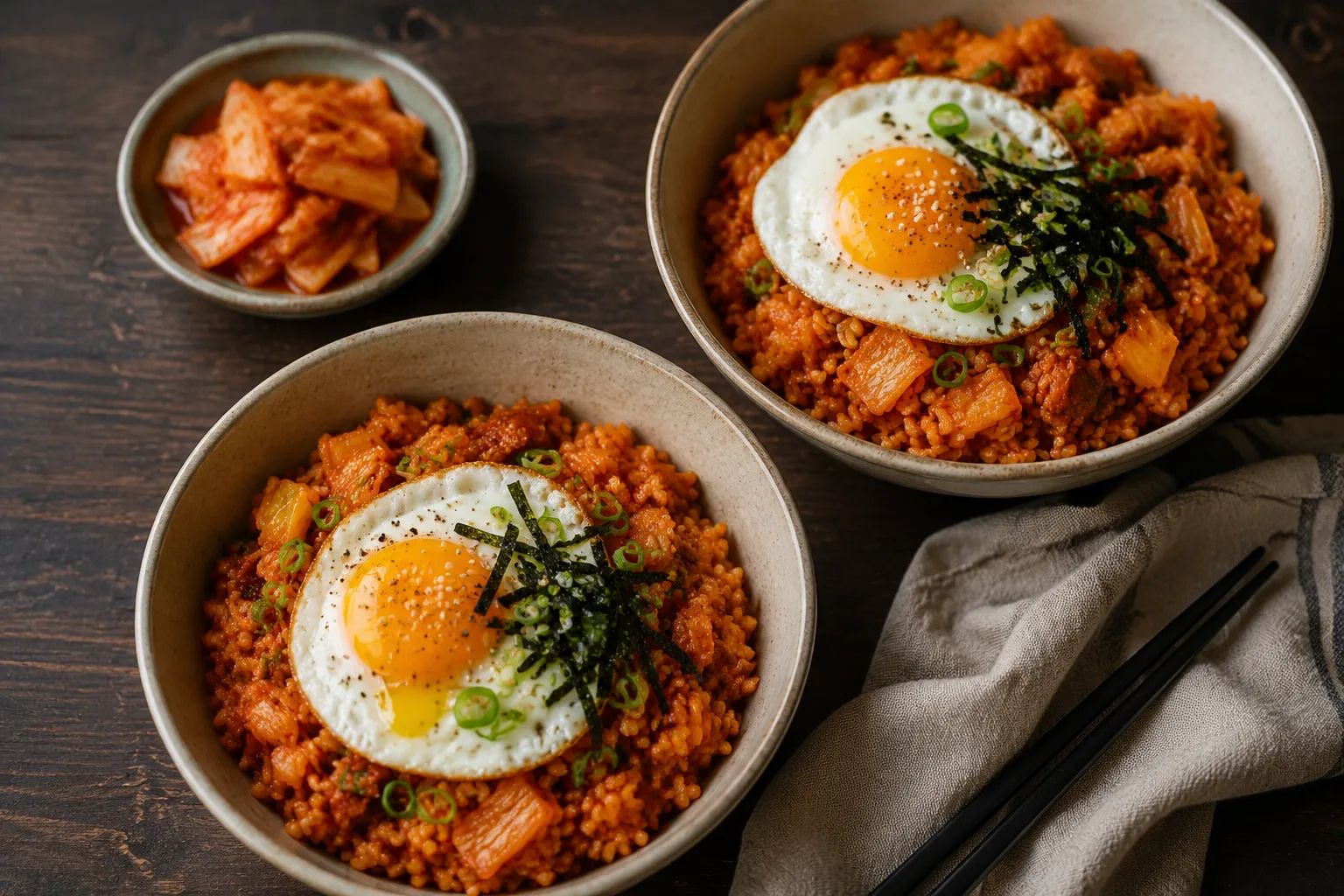
The difference between great fried rice and mushy fried rice often comes down to moisture. Day-old rice has less surface water than freshly cooked rice, so it can fry, toast, and absorb sauce without turning pasty. That is especially important here because kimchi and kimchi juice add moisture of their own.
Short-grain rice gives this dish a pleasantly chewy bite and helps the sauce cling. Long-grain rice can work, but the texture will be looser and less classic for this style of Korean fried rice. If the rice feels very hard from the fridge, do not worry; the sauce and heat will wake it up quickly.
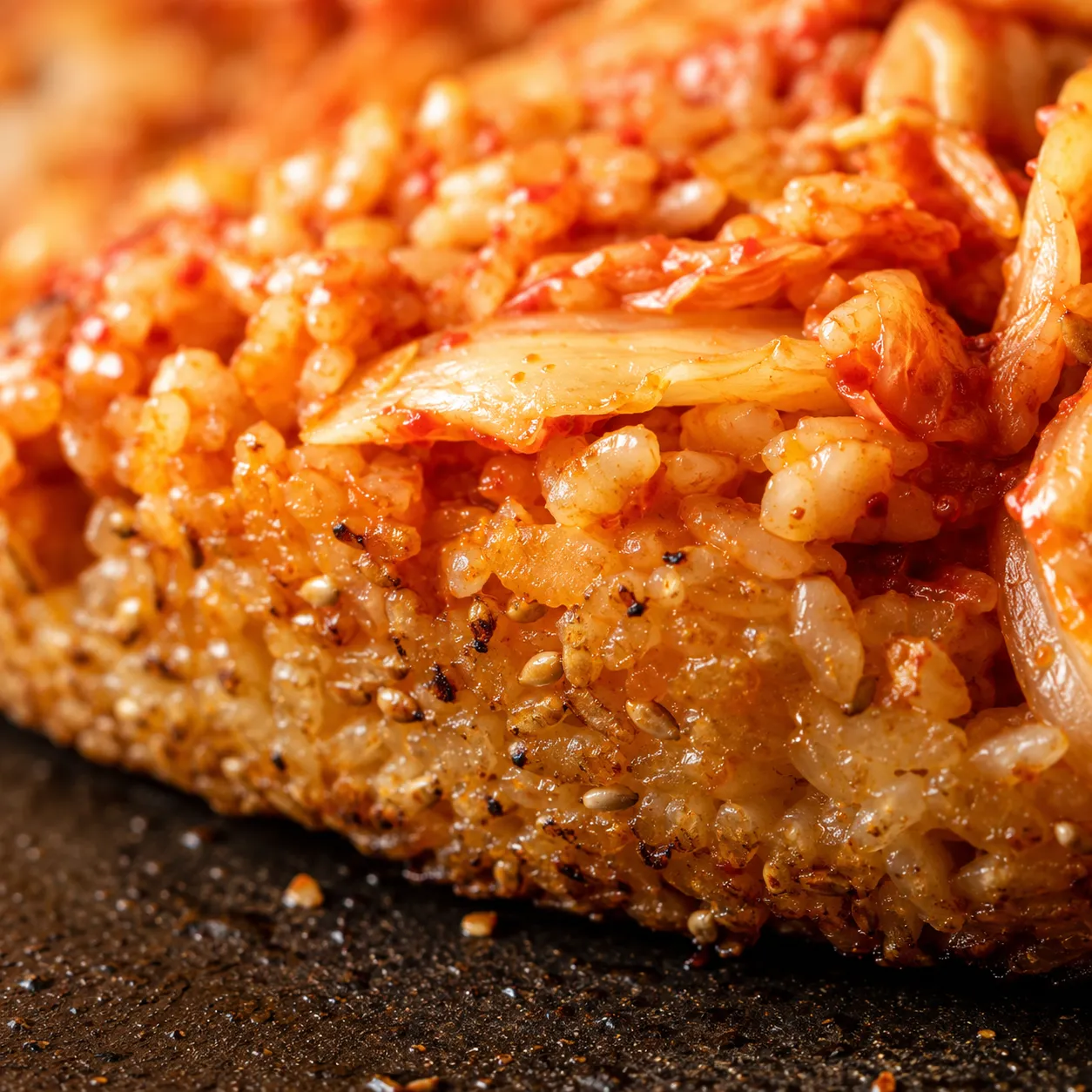
Once the rice is in the pan, resist constant stirring. Give it time against the hot skillet so some grains develop crispy edges. That contrast—soft, spicy rice above and toasted grains below—is part of what makes kimchi fried rice so addictive.
This dish can absolutely stand on its own, especially with a fried egg and nori on top. Still, it is wonderful with a few simple Korean side dishes to bring crunch, freshness, and contrast to the table. Think cucumber salad, seasoned spinach, pickled radish, or extra kimchi for anyone who wants more tang.
For a cozier meal, pair it with a light soup or broth. A simple miso soup, seaweed soup, or quick tofu soup balances the richness of the butter and egg. If you want a heartier spread, serve it with pan-seared dumplings, grilled chicken, or a crisp cabbage slaw.
Because the flavors are bold, keep the pairings easy. A bowl of egg fried rice may be a comfort classic, but this version already brings spice, tang, richness, and texture in one pan. All it really needs is something cool or brothy on the side and maybe a cold drink within reach.
This is one of those recipes that rewards a little passive planning. Cook rice the night before, tuck it into the refrigerator, and dinner the next day is halfway done before you even pull out a skillet. If you meal prep rice regularly, keep a few three-cup portions chilled or frozen specifically for quick fried rice nights.
You can also chop the kimchi and slice the scallions ahead of time. Store them separately so the scallions stay fresh and the kimchi keeps its punchy brine. When it is time to cook, the whole dish comes together so quickly that the longest part is waiting for the rice to crisp.
There is a reason this dish has become a weeknight staple in so many kitchens: it turns humble leftovers into something bold, comforting, and deeply savory. With sour kimchi, cold rice, gochujang, butter, and a crisp-edged egg, every bite lands somewhere between cozy and electric.
Once you make kimchi fried rice a few times, you will start doing it by feel—more kimchi juice when you want it saucier, an extra spoonful of chile paste when you want more heat, a longer rest in the skillet when you crave crispy bits. It is flexible, fast, and exactly the kind of pantry dinner that tastes like much more than the sum of its parts.
This recipe is endlessly flexible, so use it as a base for whatever is in your fridge while keeping the kimchi, rice, and sauce at the center.
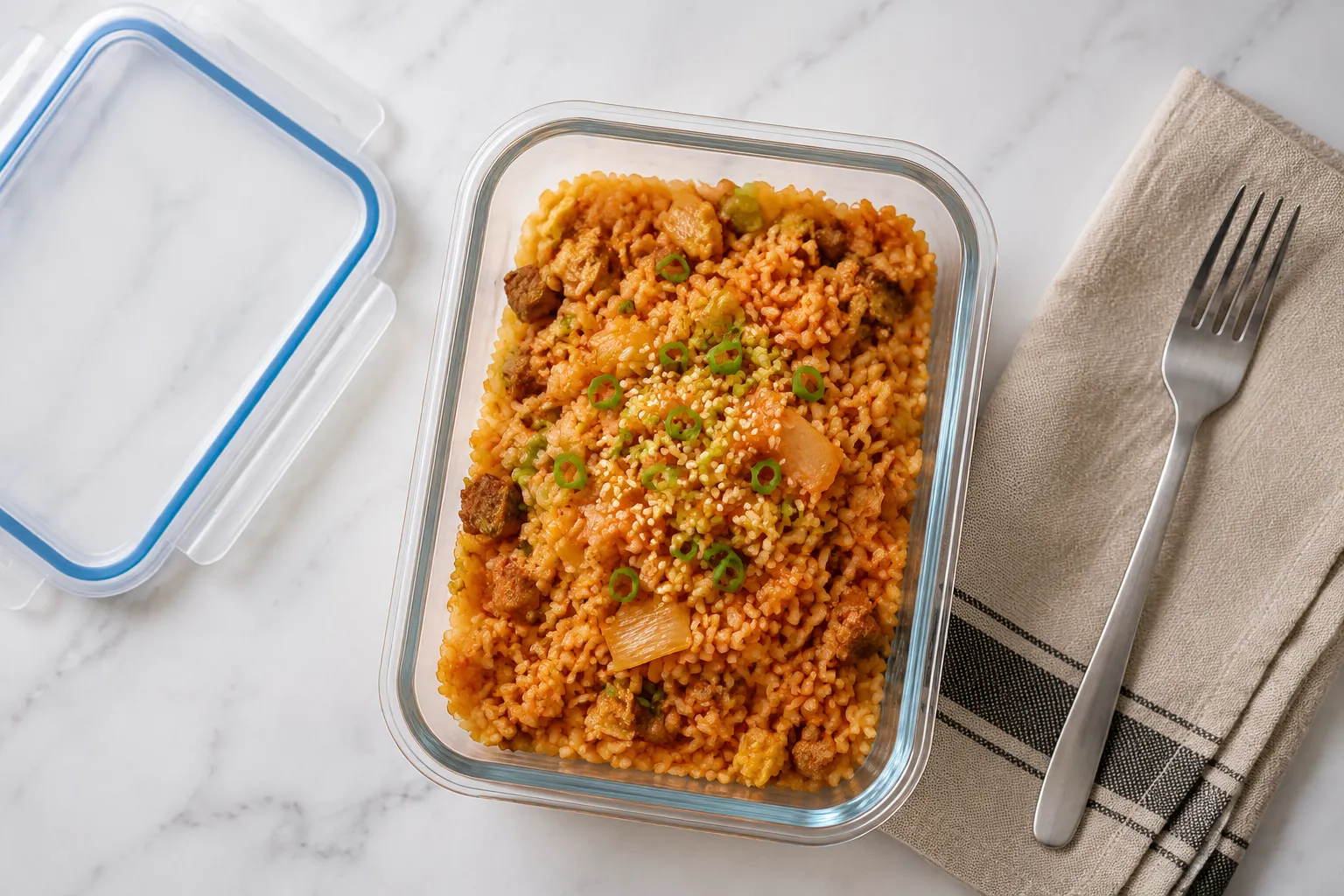
Cool leftovers quickly, then transfer them to an airtight container and refrigerate for up to 3 days. For best results, store the fried eggs separately or cook fresh eggs just before serving, since runny yolks do not reheat as nicely as the rice.
To reheat, warm a skillet over medium-high heat with a small splash of oil, then add the rice and stir until hot, letting it crisp in spots. You can also microwave it in short bursts, but the skillet method brings back the best texture. Freeze cooled rice without the egg for up to 1 month, then thaw overnight in the refrigerator before reheating.