Beijing Beef (Better Than Panda Express Copycat)
Ingredients
Scale
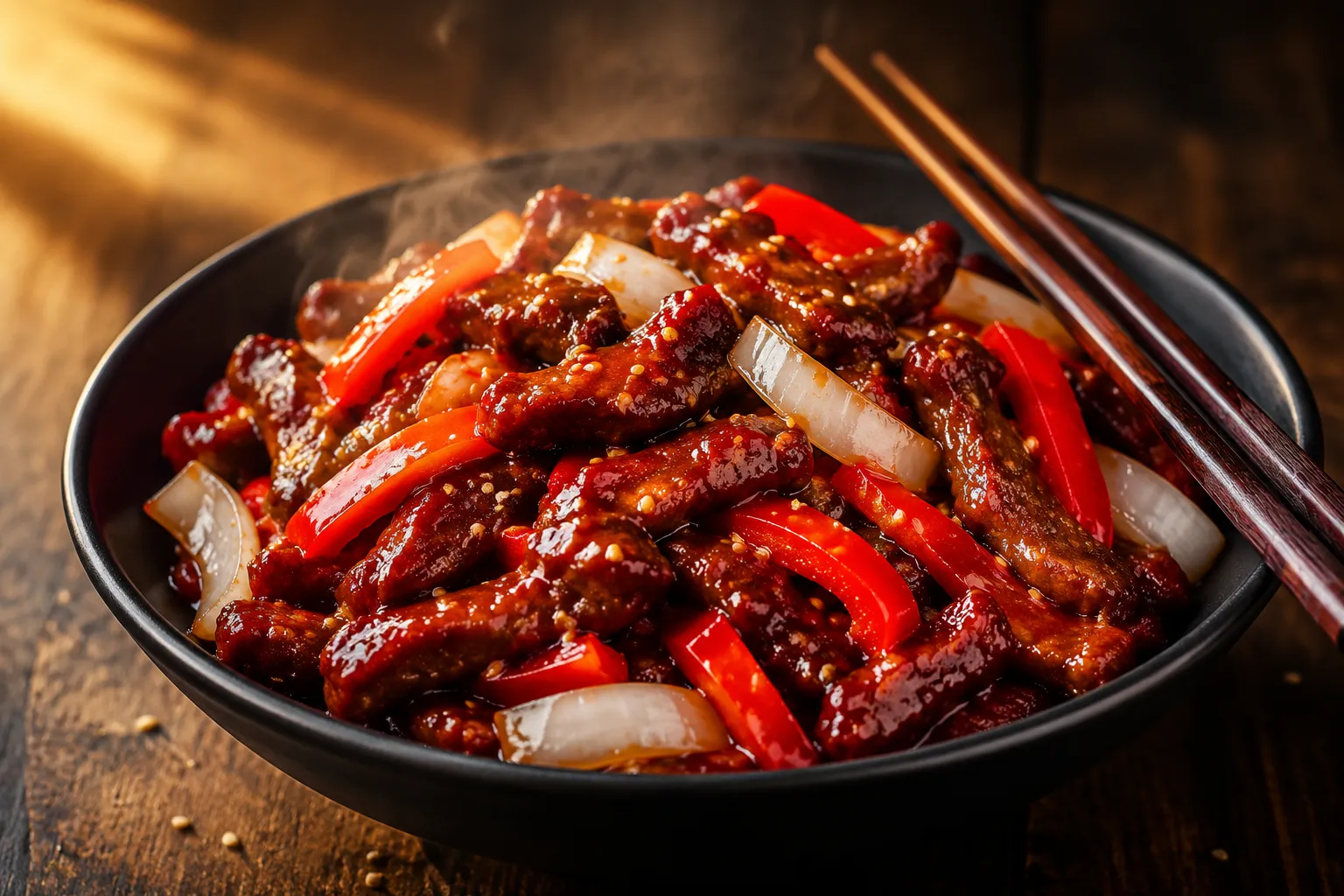
Crispy strips of steak tossed in a sweet-tangy red sauce with onions and bell peppers — this Beijing beef tastes better than Panda Express and takes just 30 minutes.
Beijing beef is the kind of takeout dinner that ruins you for the mall food court forever. Once you taste this version made in your own wok, the Panda Express tray feels like a sad rerun. Crispy strips of flank steak shatter under your fork, then collapse into a glossy red sauce that hits sweet, tangy, and just a whisper of heat all at once. Bell peppers stay snappy, onions go silky, and the whole thing lands on a bed of jasmine rice in under thirty minutes.
I tested this side-by-side with the original a half-dozen times before I called it done. The big unlock is a double-fry with an egg-white-and-cornstarch coating. That's what gives the beef the shattery, lacquered crust that holds up against the sticky sauce instead of going sad and soggy. Add a precise sauce ratio (more on that below) and you've got a copycat that genuinely tastes better than the food court version. If you've already worked your way through my other Panda Express copycat recipes, this one belongs in the regular rotation right next to them.
The best part is how forgiving the technique is. You don't need a screaming-hot restaurant wok or a deep-fryer. A heavy skillet, a couple inches of neutral oil, and twenty minutes of focused cooking will get you there. Let's break it down.
Despite the name, this isn't a dish you'll find on a menu in Beijing. It's a Chinese-American invention popularized by Panda Express in the early 2000s, built in the same flavor universe as orange chicken and General Tso's: sweet, slightly sour, lightly spicy, deeply Westernized. The closest traditional cousin is probably guo bao rou, a northeastern Chinese dish of crispy fried pork in a sweet-sour glaze, but the panda express beijing beef we all know has its own distinct identity built around ketchup, sweet chili sauce, and rice vinegar. It's pure American-Chinese comfort food with a borrowed name.
Picture the sticky-sweet pull of barbecue sauce, the bright snap of sweet-and-sour, and the warm depth of soy and garlic, all clinging to crackly fried beef. The sauce is unmistakably red, almost glossy lacquer red, and it coats every strip without drowning anything. Bell peppers and onions soften just enough to add freshness without losing their crunch. It's the kind of sweet and tangy sauce that makes you reach for seconds before you've finished firsts. The first bite is mostly crunch and sweetness; the finish is garlic, vinegar, and a slow warm tingle from chili flakes.
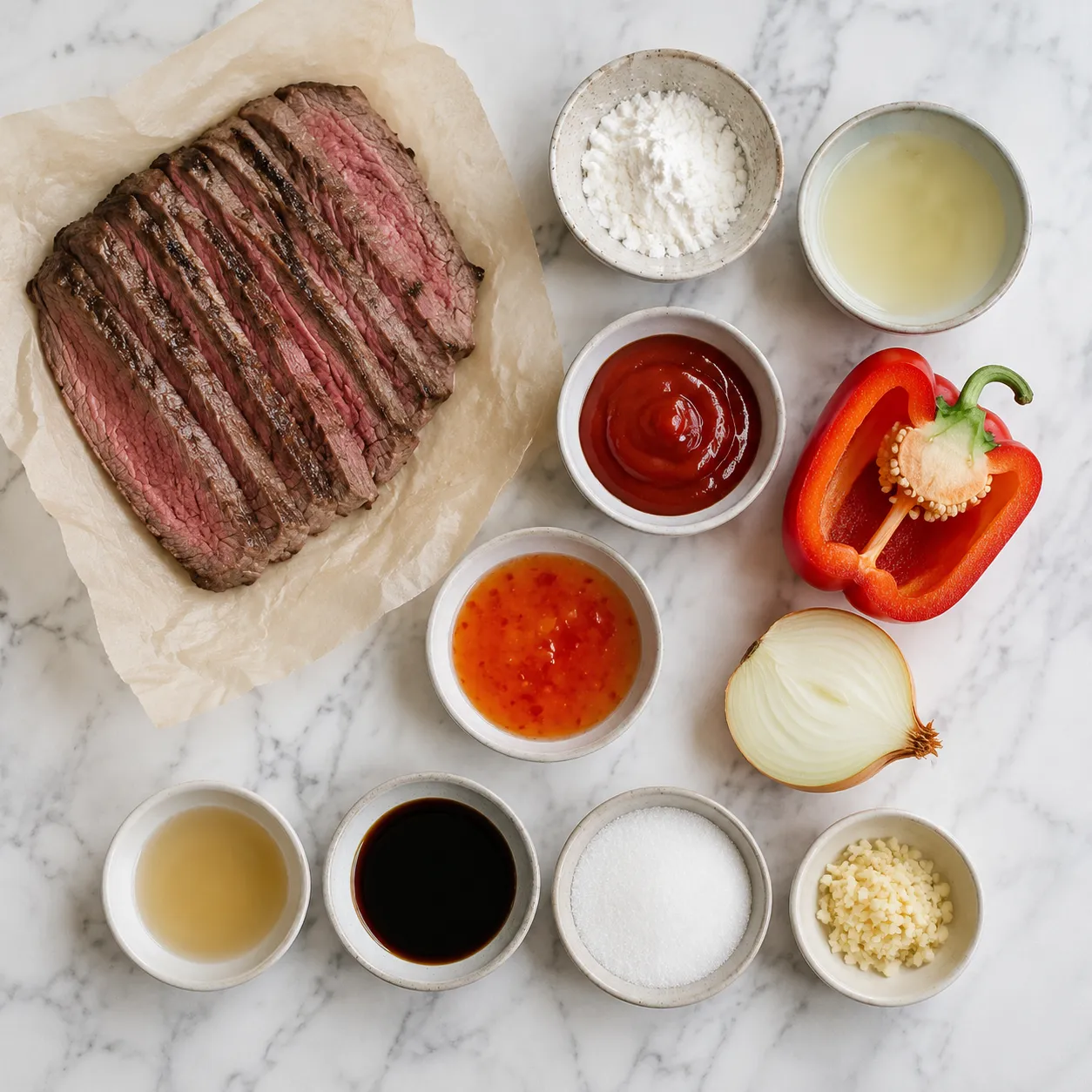
Most of what you need for this Panda Express Beijing beef copycat is already in your pantry. Nothing fancy, nothing imported, nothing you have to track down at a specialty market. Here's how it breaks down by component so you can shop with intention.
Flank steak is my go-to here. It slices cleanly against the grain, stays tender after frying, and has just enough chew to feel substantial. Sirloin works too if that's what your butcher has on sale, and skirt steak is a close third. You'll also need cornstarch (the secret to that shattery crust), one egg white for binding, and a splash of soy sauce and rice wine to season the meat from the inside out before it ever hits the oil.
This is where the magic happens. Ketchup is the base, yes really, and it brings the signature red color plus a balanced sweetness that's hard to replicate any other way. Sweet chili sauce layers in mild heat and more glossy sweetness. Rice vinegar cuts through with sharpness, granulated sugar deepens the caramel notes, and a tablespoon of soy sauce grounds the whole thing in umami. Fresh garlic is non-negotiable, and a tiny pinch of crushed red pepper flakes turns up the heat if you like things spicier.
One red bell pepper and one yellow onion is the classic combo. Cut them into roughly 1-inch chunks, about the same size as the beef strips, so every bite has a balanced ratio of meat to crunch. Some folks add green bell pepper too, which I love for color contrast. Whatever you do, don't dice them too small — you want each piece big enough to keep its bite even after a quick stir-fry.
This recipe comes together in four straightforward stages: marinate, fry, sauce, toss. Quick prep, fast cook, faster eating. The full numbered method lives in the recipe card at the bottom, but here's the visual walk-through so you know what to expect at each turn.
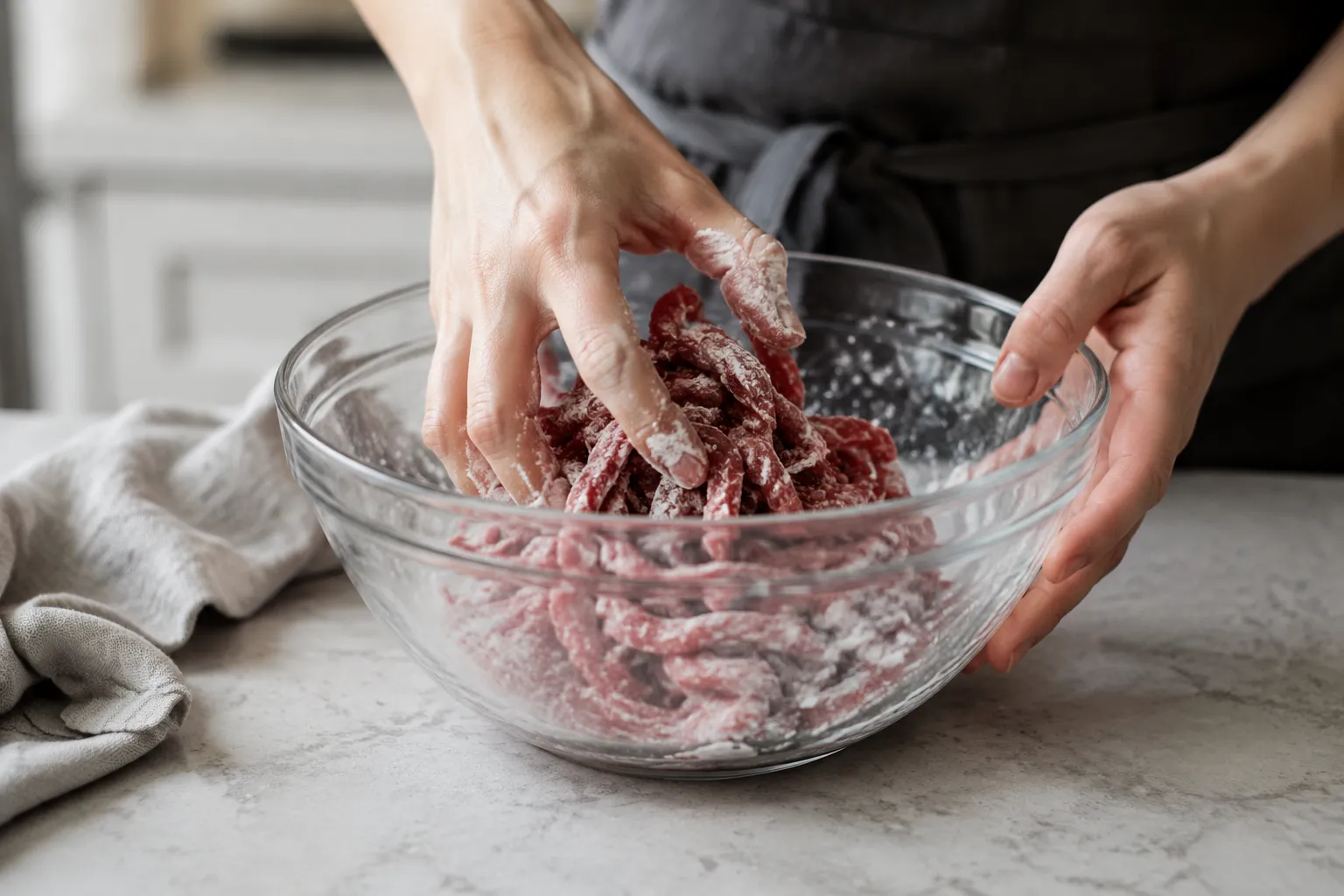
Slice your flank steak against the grain into thin strips about a quarter-inch thick. (Cutting against the grain is the difference between tender beef and beef jerky, so don't skip this.) Toss the strips with soy sauce, rice wine, and a pinch of salt and let it sit for ten minutes while you prep everything else. Then add the egg white and a heap of cornstarch and mix until every strip is coated in a dusty, slightly sticky shell. This is the foundation of your crunch.
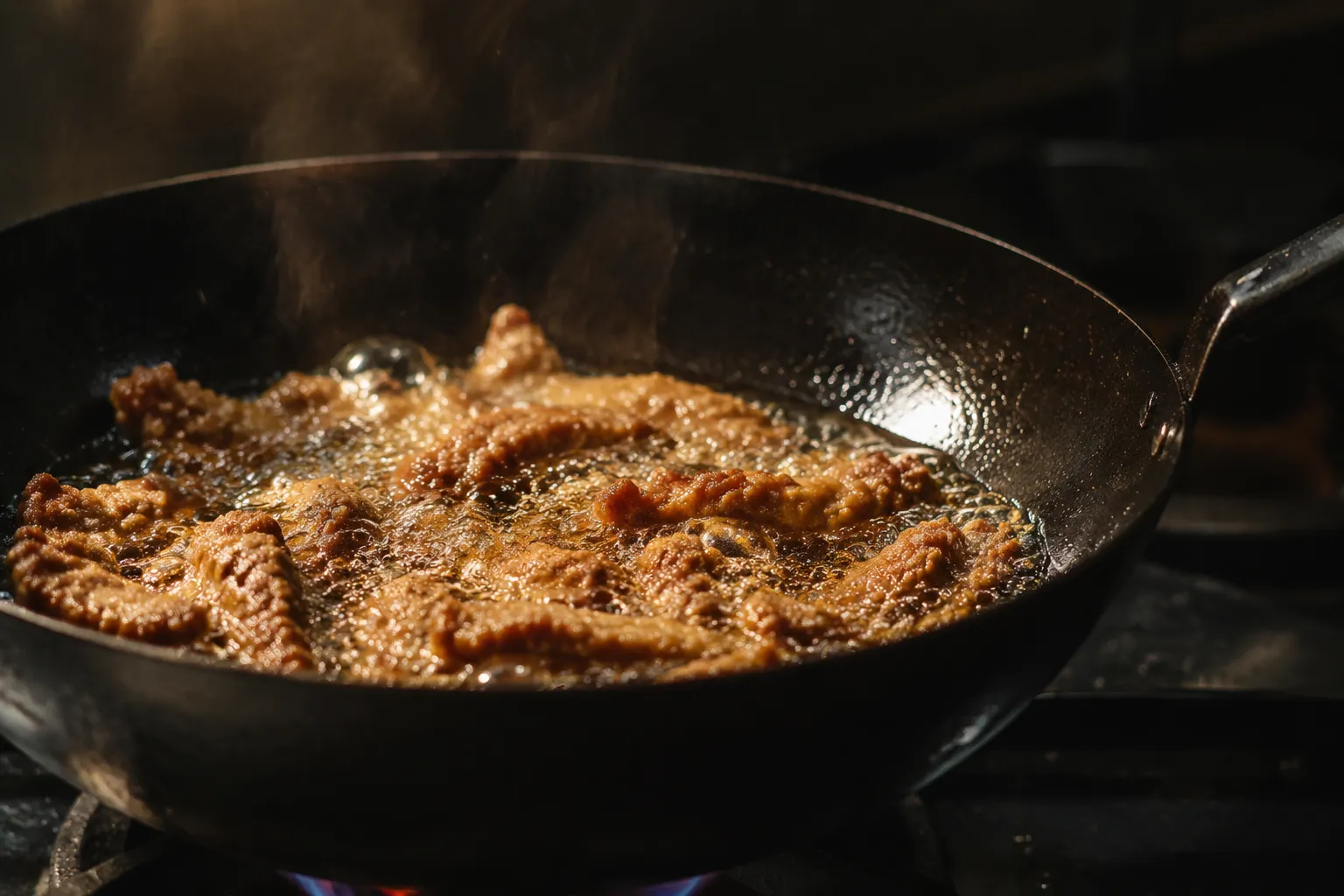
Heat about two inches of neutral oil in a wok or deep skillet to 350°F. Fry the beef in two or three batches because crowding the pan drops the temperature fast and gives you steamed beef instead of crispy beef. Each batch needs about two minutes for the first fry. Drain on a wire rack (not paper towels — the bottoms get soggy), let the oil come back up to temperature, then fry everything again for one more minute to lock in the crunch. This double-fry is what separates a great copycat from a mediocre one.
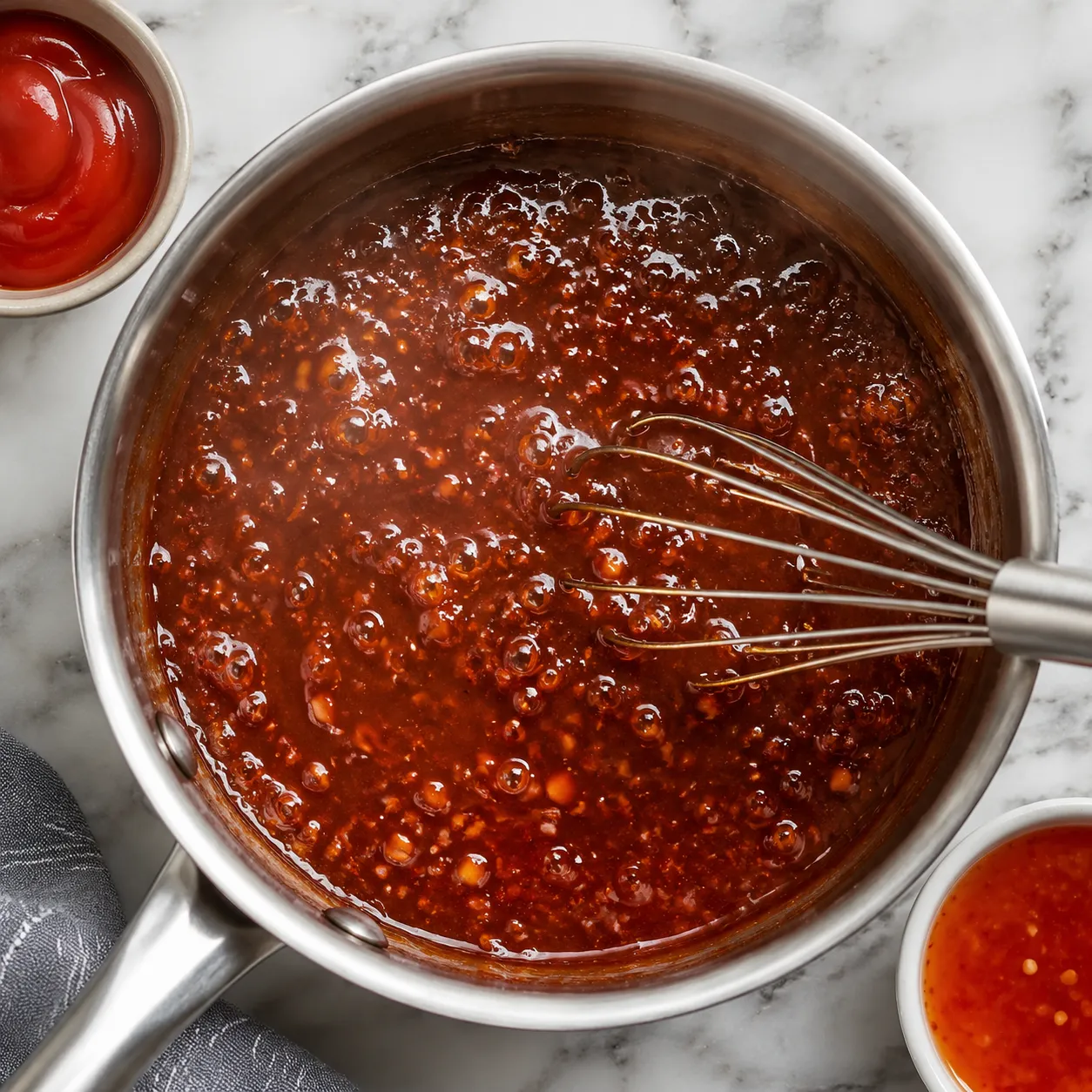
While the beef rests, whisk your sauce ingredients together in a small bowl: ketchup, sweet chili sauce, rice vinegar, sugar, soy sauce, water, and a teaspoon of cornstarch slurry. In a separate small saucepan or another wok, sauté minced garlic in a teaspoon of oil for thirty seconds until fragrant, then pour in the sauce mixture. Simmer for two minutes until it thickens to a glossy, spoon-coating consistency that clings when you lift the whisk.
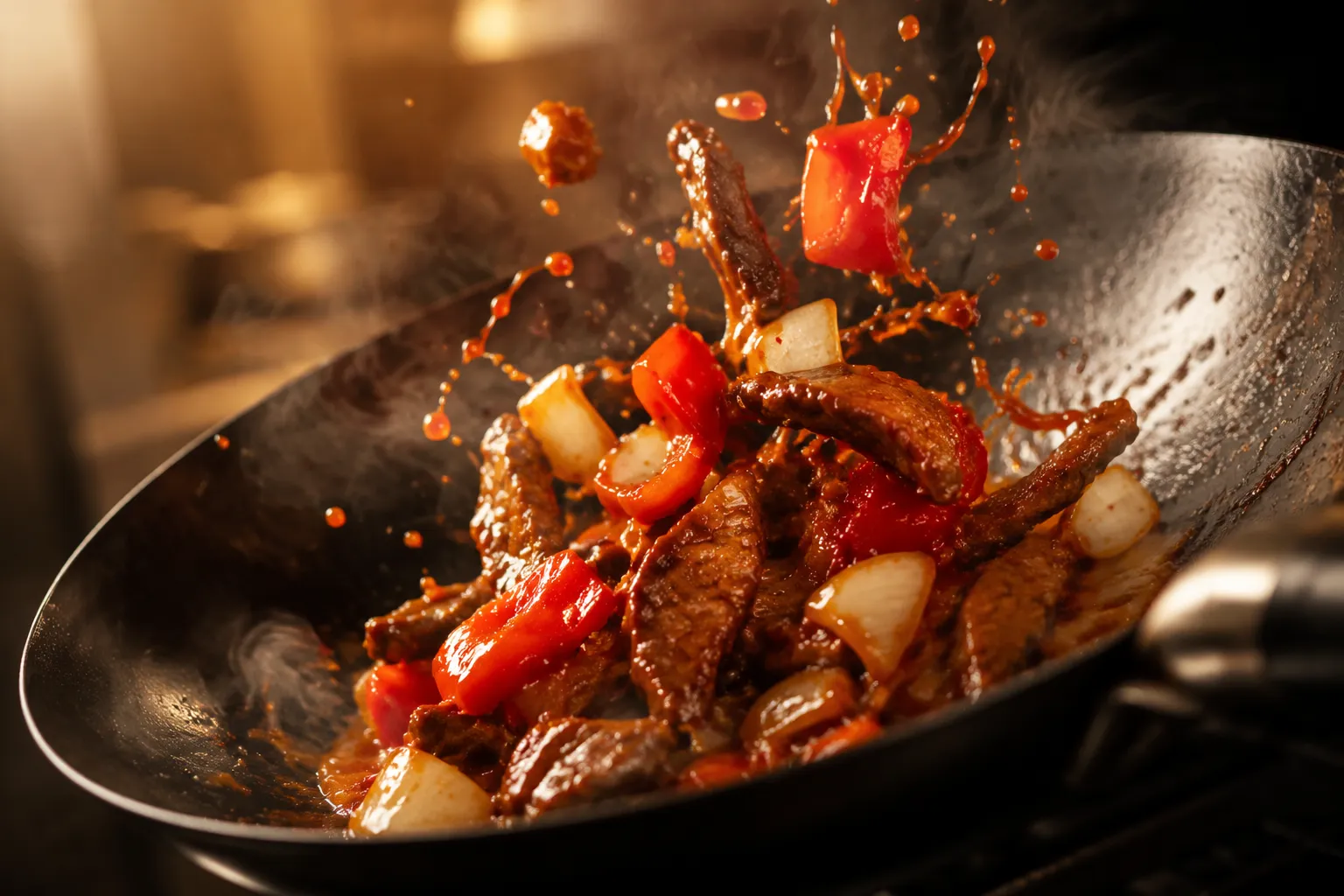
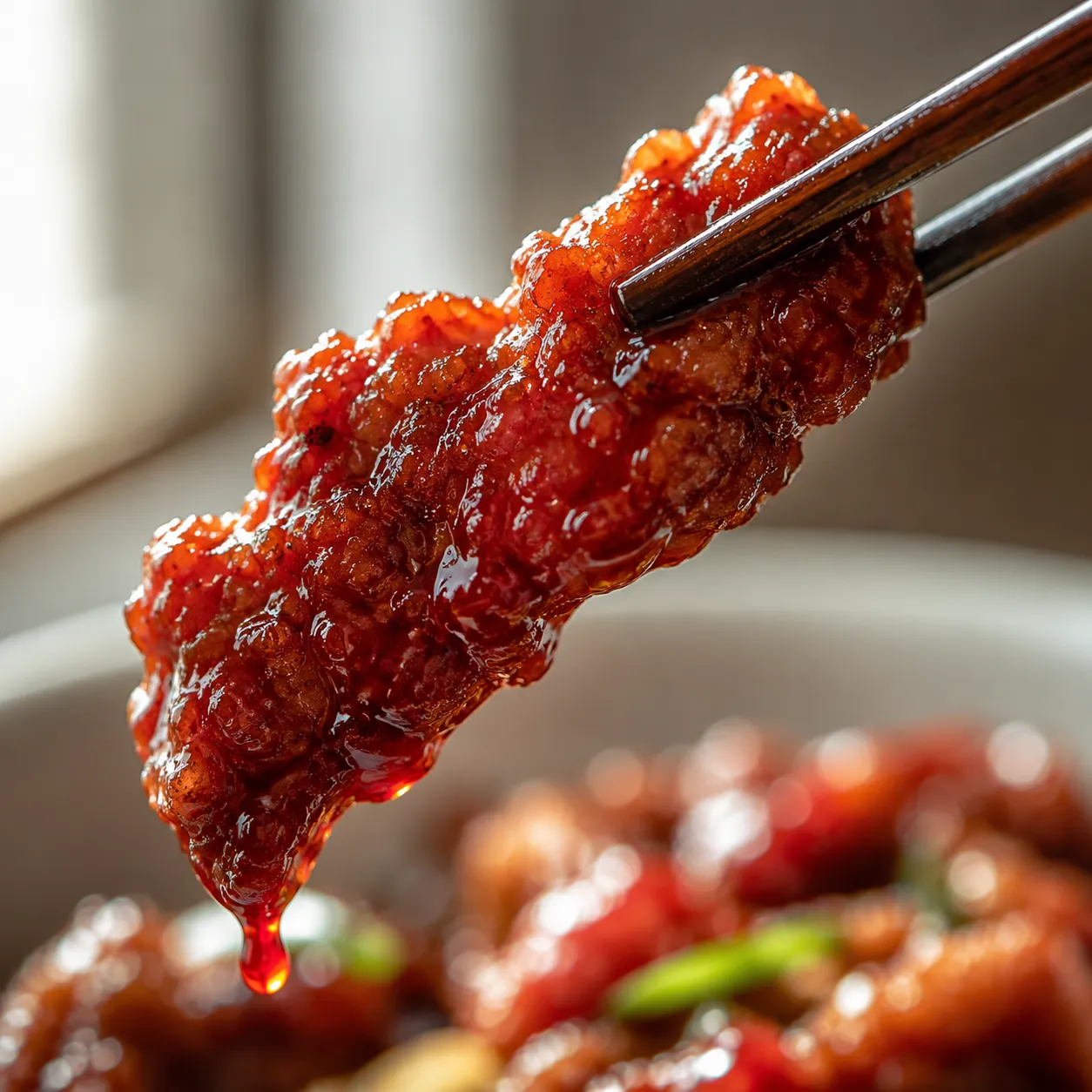
Carefully drain most of the oil from your wok, leaving about a tablespoon behind, and crank the heat to high. Stir-fry the bell pepper and onion for ninety seconds until they're crisp-tender and slightly charred at the edges. Add the fried beef back in, pour the hot sauce over the top, and toss for thirty seconds, no more, until everything is glossy and evenly coated. Move fast: the longer the beef sits in the sauce, the softer that beautiful crust gets. Plate it immediately while the lacquer is still glossy.
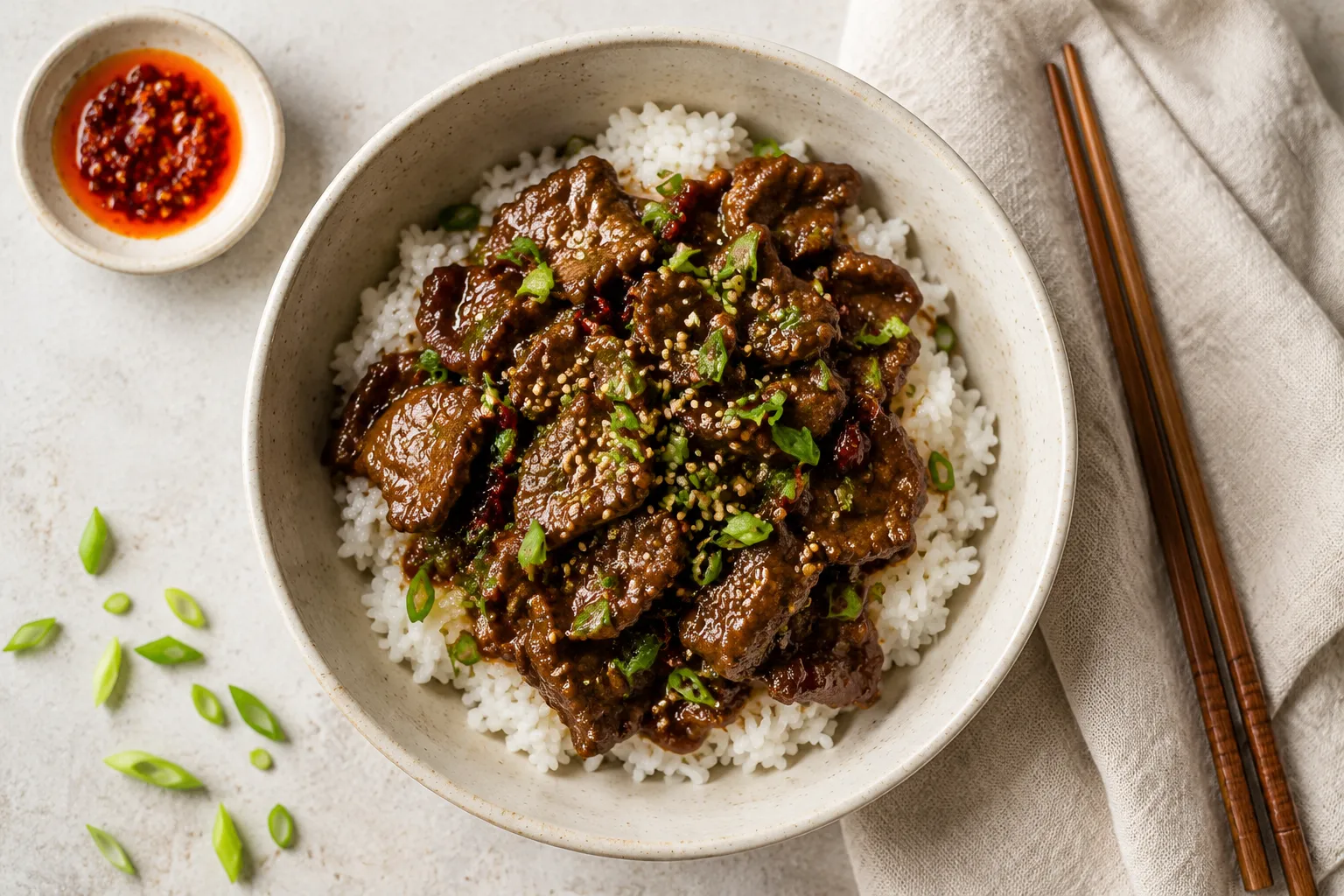
Like all great Asian beef stir-fry dishes, this one rewards a screaming-hot pan and quick hands. If you've made Mongolian beef before, the rhythm will feel familiar — coat, fry, sauce, toss, eat. The big difference here is the bright red ketchup-based glaze and that distinctive sweet chili tang that screams Panda Express the second you smell it.
Plain steamed jasmine rice is the workhorse pairing. Its mild fragrance and slightly sticky texture catch every drop of that red sauce without competing for attention. Brown rice works if you want more fiber, and cauliflower rice keeps things lower-carb without losing the saucy magic. A quick cucumber salad with rice vinegar and sesame oil makes a great cooling counterpoint on the side, especially if you bumped up the chili flakes.
For full takeout-night theatrics, build a spread. A scoop of homemade fried rice loaded with peas, carrots, and scrambled egg makes the meal feel restaurant-fancy, and a pile of chow mein noodles tangled with cabbage and bean sprouts rounds out the plate. If you want a vegetable course on the side, blistered green beans or steamed broccoli with garlic both pair beautifully with the sweet glaze. And if you've got a crowd, doubling the recipe and serving alongside orange chicken turns dinner into a full Panda Express copycat feast that's hard to beat.
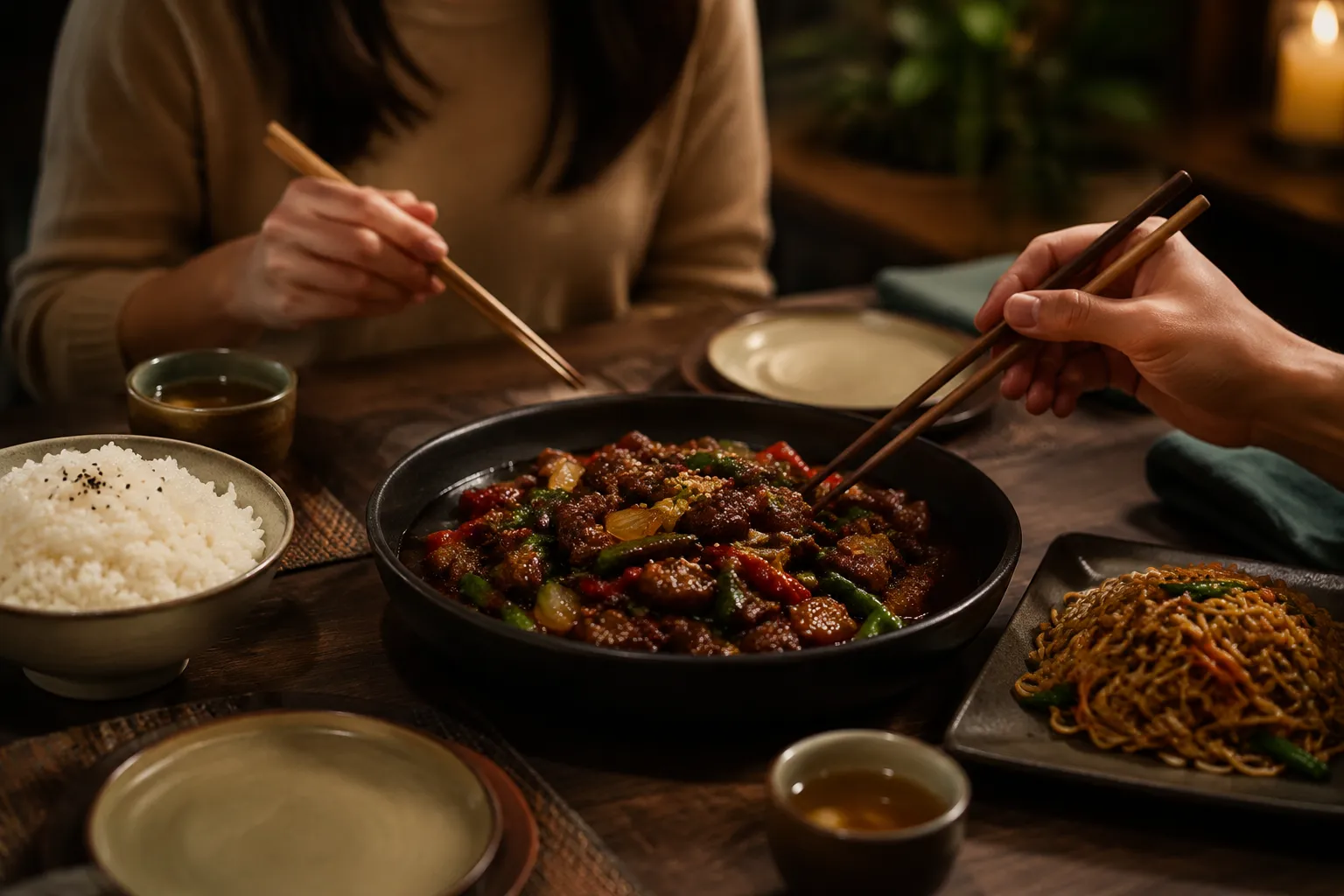
This is the kind of dinner that makes Tuesday feel like a treat: crispy, saucy, fast, and genuinely better than the version you'd pay $13 for at the mall. Make it once and you'll understand why it's earned a permanent slot in my weeknight rotation.
This recipe is a strong template once you've nailed the technique. A few tested tweaks to make it your own:
Beijing beef is at its absolute best the moment it leaves the wok, but leftovers will keep in an airtight container in the refrigerator for up to 3 days. The crust will soften as it sits — that's just physics — but the flavor actually deepens overnight as the sauce continues to mellow into the beef.
To bring back some of that crispness, skip the microwave (it'll steam the beef and turn the coating gummy) and reheat in a 400°F oven or air fryer for 5-7 minutes until the edges crisp back up. A quick toss in a hot skillet works too — just add a splash of water to loosen the sauce. I don't recommend freezing because fried coatings never thaw the same, but if you must, store in a single layer for up to 1 month and reheat from frozen in a hot oven straight from the freezer.