Tauhu Recipe: Crispy Malaysian Tofu in 30 Minutes
Ingredients
Scale
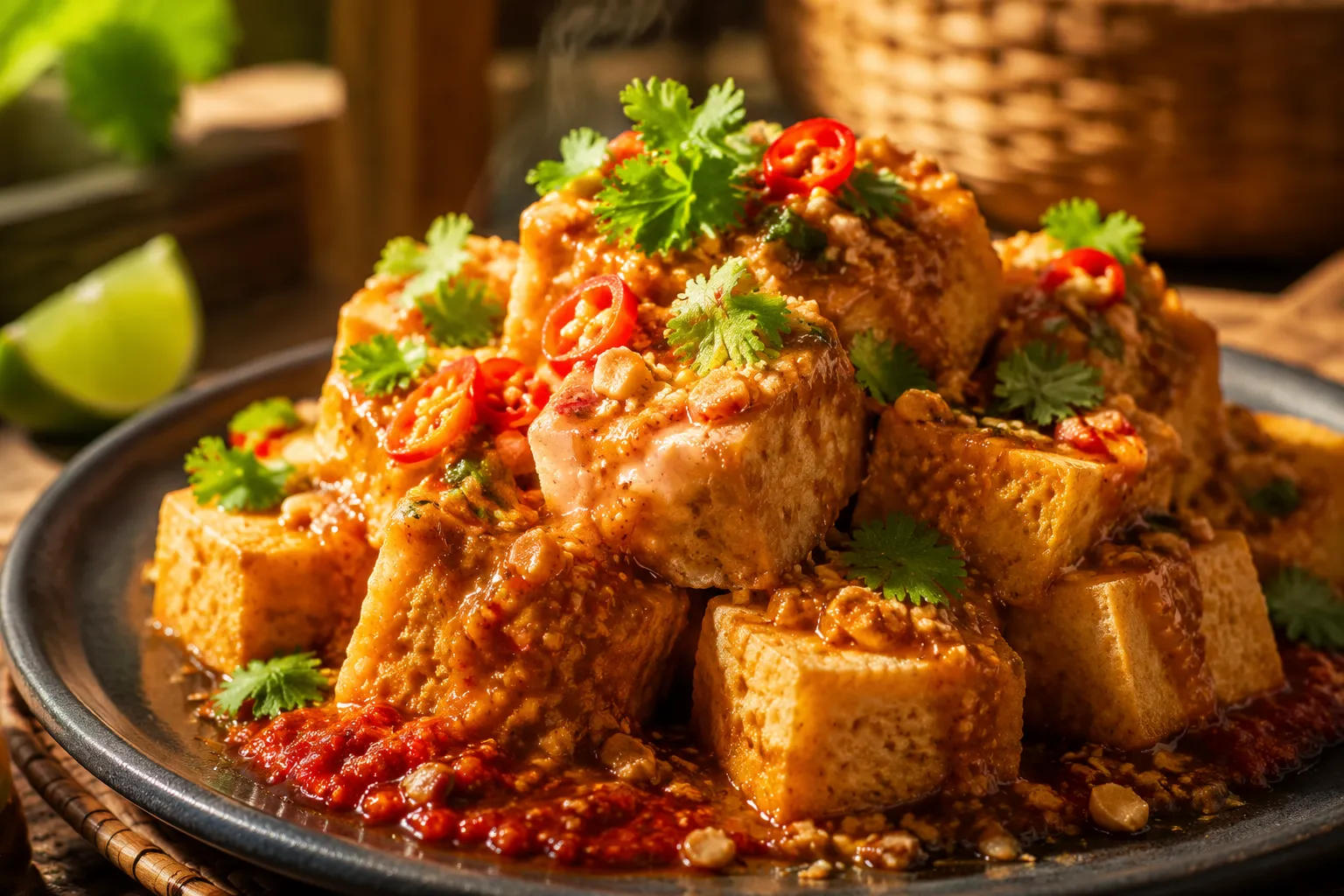
Crispy on the outside, silky inside, this Malaysian tauhu recipe delivers golden fried tofu cubes with a sweet-spicy peanut chili sauce in just 30 minutes.
This tauhu recipe turns a humble block of firm tofu into something I would happily eat off a hawker stall plate at midnight in Penang. Golden cubes shatter under the fork into a soft, custardy center, then get drenched in a glossy peanut sambal that hits sweet, salty, and chili-hot in the same bite. It comes together in 30 minutes flat with pantry staples, and once you have the technique down it becomes the kind of weeknight default you stop thinking about and just make.
I picked up the bones of this dish during a long, hungry trip through Kuala Lumpur, where tahu goreng is sold on every other corner alongside skewered satay and fresh-pressed sugarcane juice. What surprised me was how restrained the cooks were — no deep fryer, no batter, just well-pressed tofu, a dusting of starch, and a shallow pan of shimmering oil. The magic was almost entirely in the sauce, a peanut sauce loosened with lime and sweetened with kecap manis, the dark, syrupy Indonesian-Malaysian soy that tastes like soy sauce met molasses in a back alley.
If you have made my favorite crispy tofu before, this is its louder, spicier cousin. It is naturally vegan, easy to riff on, and works as a main course over rice, as a snack passed around with toothpicks, or piled into lettuce cups for a no-utensil dinner. Most importantly, it is genuinely fast — the kind of dinner you can have on the table before your delivery app has even confirmed your order.
"Tauhu" is simply the Malay word for tofu, and at its core it covers the same family of soybean curds you would find in any Chinese grocery, with a few regional twists. In Malaysia, the word most often points to firm pressed blocks or to puffy hollow cubes called tauhu pok, which soak up sauce like little sponges. Cooks in Indonesia spell it tahu, hence the famous tahu goreng — literally "fried tofu" — that you see on warung menus from Jakarta to Yogyakarta, and the dish that directly inspired this version.
What sets Malaysian tofu cooking apart from, say, Chinese mapo tofu or Japanese agedashi is the sauce culture surrounding it. The block itself is rarely the whole story. Instead, hawker stalls fry it hard on the outside, split it open with a paring knife, and ladle in a sweet-spicy peanut chili sauce, sometimes with a splash of tamarind, or stuff it with shredded cucumber, bean sprouts, and turnip. It is Southeast Asian street food that happens to be one of the most satisfying vegan plates you can eat, and it is part of the reason this corner of the world is so endlessly forgiving for plant-based diners.
You will see firm, extra-firm, silken, and puff varieties at the store. For this tauhu recipe, you want firm or extra-firm: dense enough to crisp without crumbling, but still tender once you bite through the crust. Save the silken stuff for soup and miso broths, and save the puffs for braises and laksa, where their hollow centers pull double duty as flavor sponges.
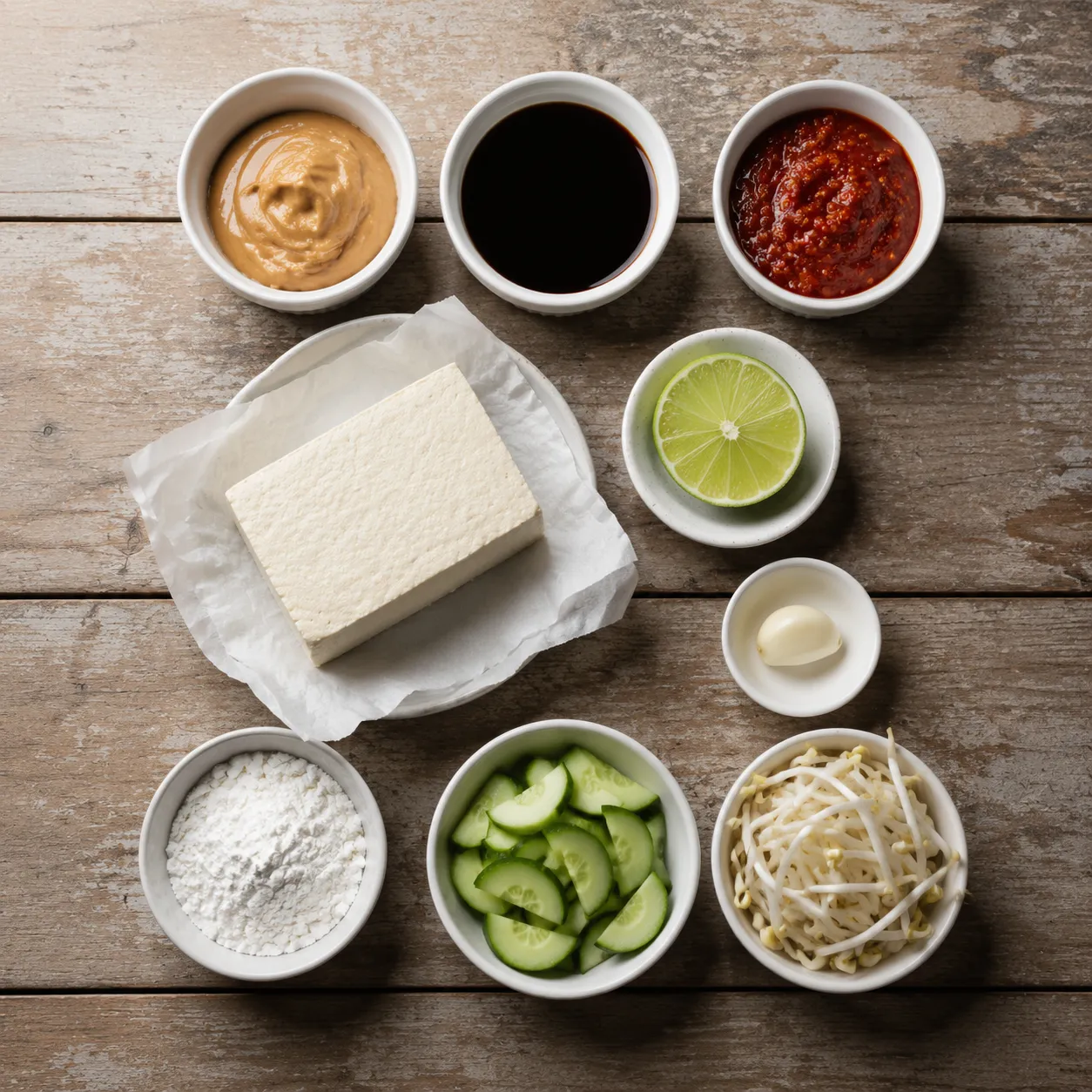
Most of what you need lives at a regular supermarket, with one or two stops at an Asian grocery for the highest-impact pantry items. Here is what each component is doing for you, and where you can flex if something is missing.
If you cannot find kecap manis at your store, whisk 2 tablespoons of regular soy sauce with 2 tablespoons of dark brown sugar over low heat until the sugar fully dissolves. Not identical, but a respectable stand-in that will get you ninety percent of the way there.
The whole thing comes together in four moves: press, coat, fry, sauce. Done in that order, you will have crackling cubes ready to plate in under 30 minutes, and most of that time is hands-off.
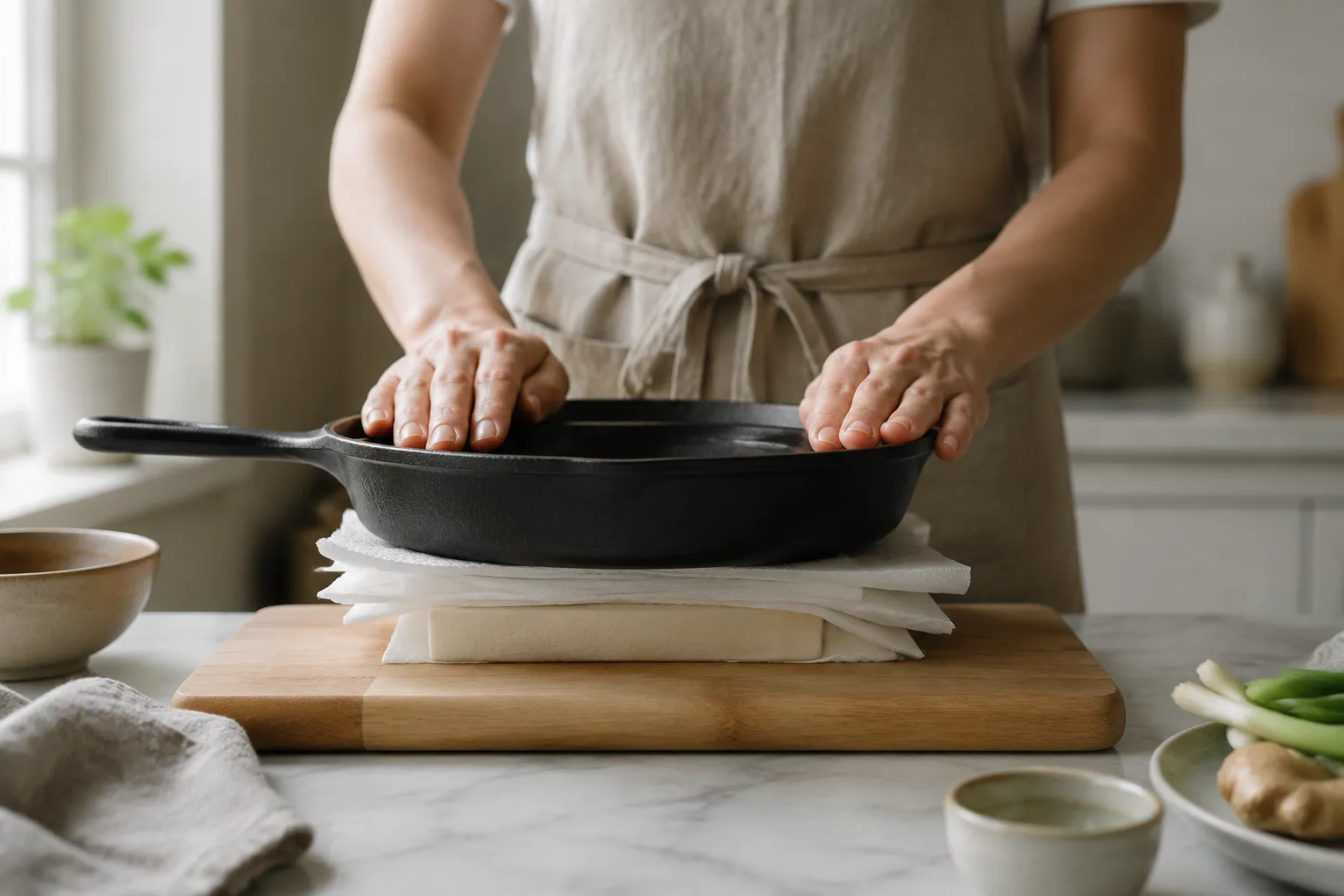
Pressing is the single biggest factor in whether your tofu crisps or steams in the pan. Wrap the block in two layers of paper towel or a clean kitchen towel, set it on a plate to catch drips, and weigh it down with a heavy skillet for a full 10 minutes. You want the surface to feel dry and slightly tacky to the touch, not wet and slick. While it presses, line a wire rack over a sheet pan — that is your landing zone for the fried cubes, and it keeps the bottoms from going soft on contact with paper towels.
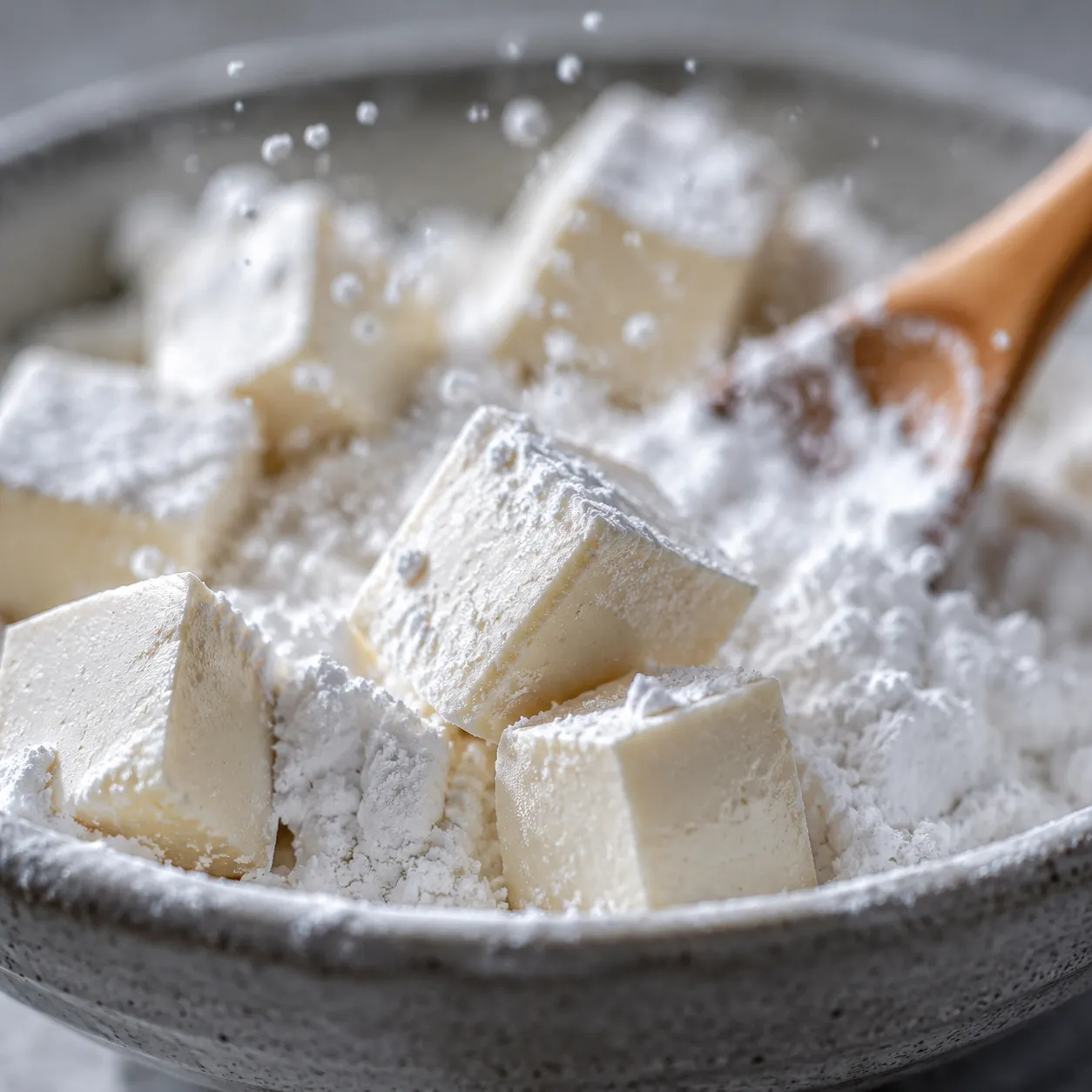
Cube the pressed tofu into roughly one-inch pieces with a sharp knife. Toss them gently in a bowl with the cornstarch and salt, turning with your hands or a spatula until each cube has a thin, even chalky coat. Resist the temptation to dump in extra cornstarch; too much creates a gummy shell that softens almost the second the sauce touches it. You want a coating you can barely see, not a full dredge.
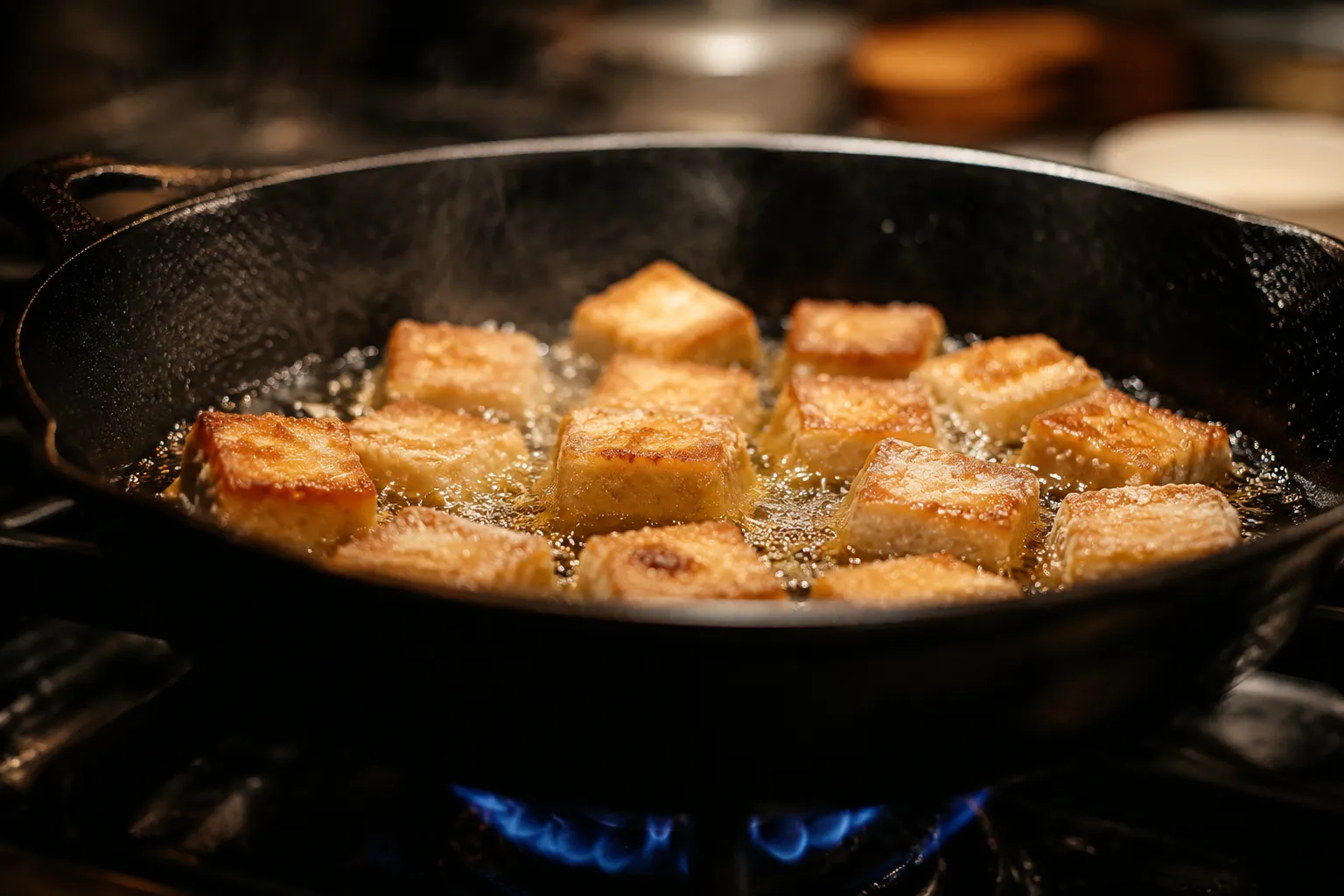
Heat the oil in a 10-inch nonstick or well-seasoned cast-iron skillet over medium-high until a stray crumb of cornstarch sizzles immediately on contact, around 350°F. Add the cubes in a single layer, leaving a finger of space between each one, and let them fry undisturbed for 2 to 3 minutes per side. Flip with a thin spatula and continue until each face is deeply golden, about 8 to 10 minutes total. Move them to your wire rack and sprinkle with a pinch of salt while they are still hot — that is when seasoning really sticks.
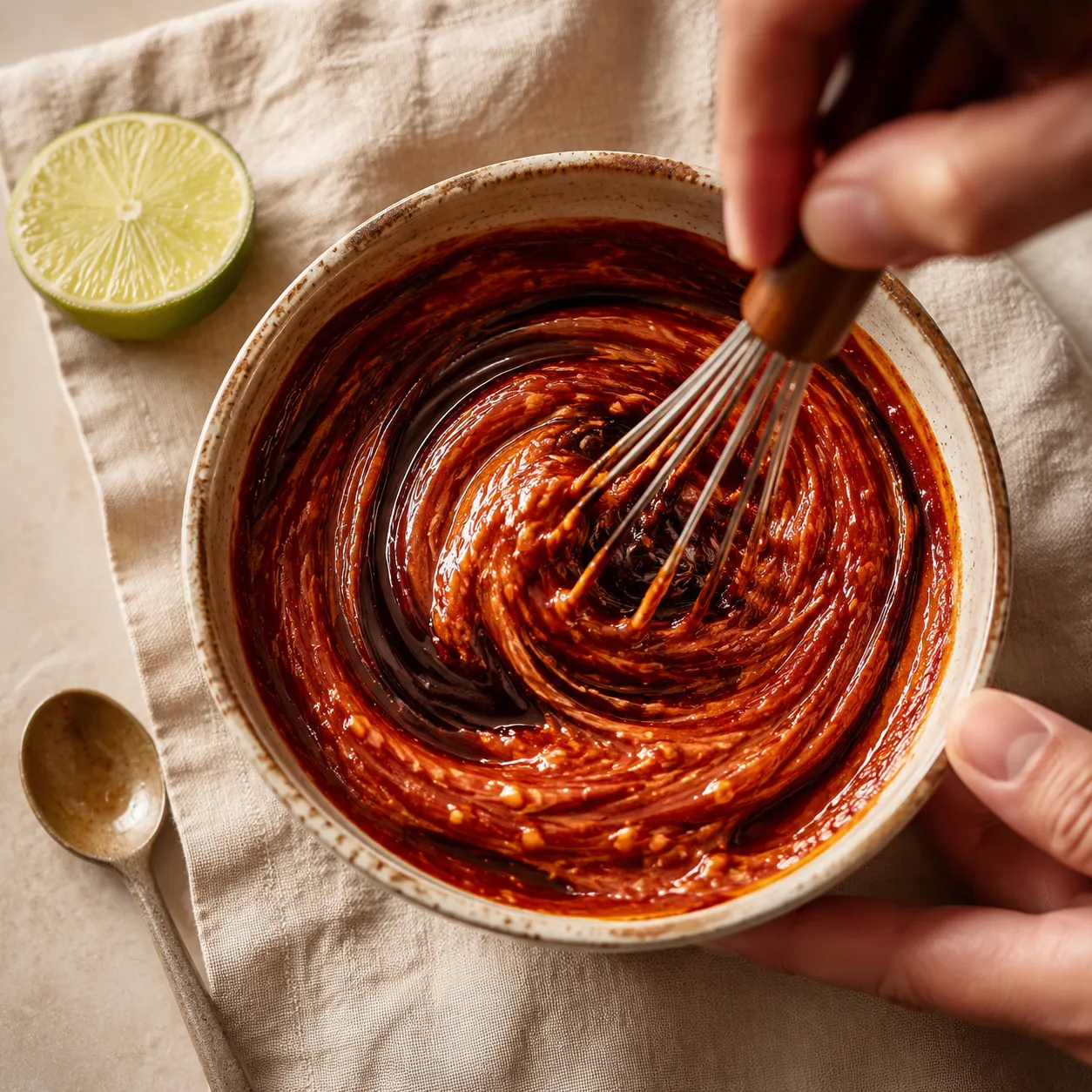
While the tofu fries, whisk the peanut butter, kecap manis, sambal oelek, lime juice, and minced garlic in a small bowl with two tablespoons of warm water until the sauce is glossy and pourable. Taste it and adjust: it should land sweet first, then hot, then tangy, with the peanut warmth holding everything in place. Add more sambal if you want it fierier, more lime if it feels heavy, more kecap manis if it feels too sharp. The whole tauhu recipe pivots on this sauce, so it is worth a few extra seconds with a spoon.
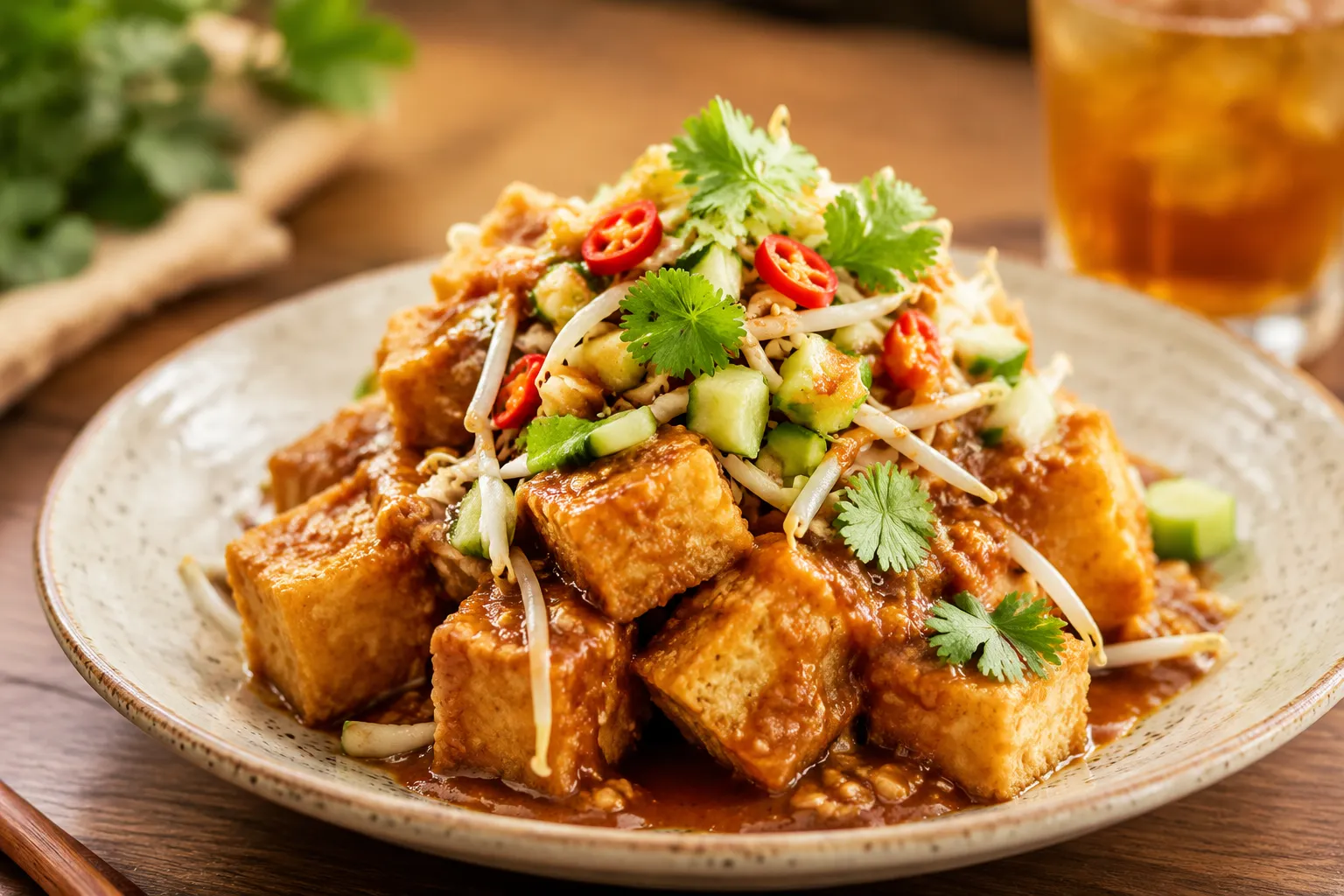
There is a reason hawker stalls plate this dish exactly the way they do, and it is worth copying at home. Pile the hot cubes on a wide platter, spoon over half the peanut sauce, then scatter diced cucumber, fresh bean sprouts, thinly sliced red chili, and torn cilantro across the top. The cool crunch of the raw vegetables against the hot, glossy tofu is the entire point — without those toppings, you have a good fried tofu, but with them, you have actual tahu goreng. Pass the remaining sauce at the table for dipping and bonus drizzling.
For a fuller dinner, set the tauhu over a bowl of jasmine rice or thin rice noodles and let the sauce pool at the bottom, where the grains will catch every drop. Add a runny fried egg if you are leaning toward Indonesian-style nasi goreng territory, or pair the platter with stir-fried morning glory or a simple cucumber-shallot salad for a green vegetable on the side. This dish also slides easily into the rotation alongside other vegan Asian recipes when you need a no-meat night that still feels like an event rather than a compromise.
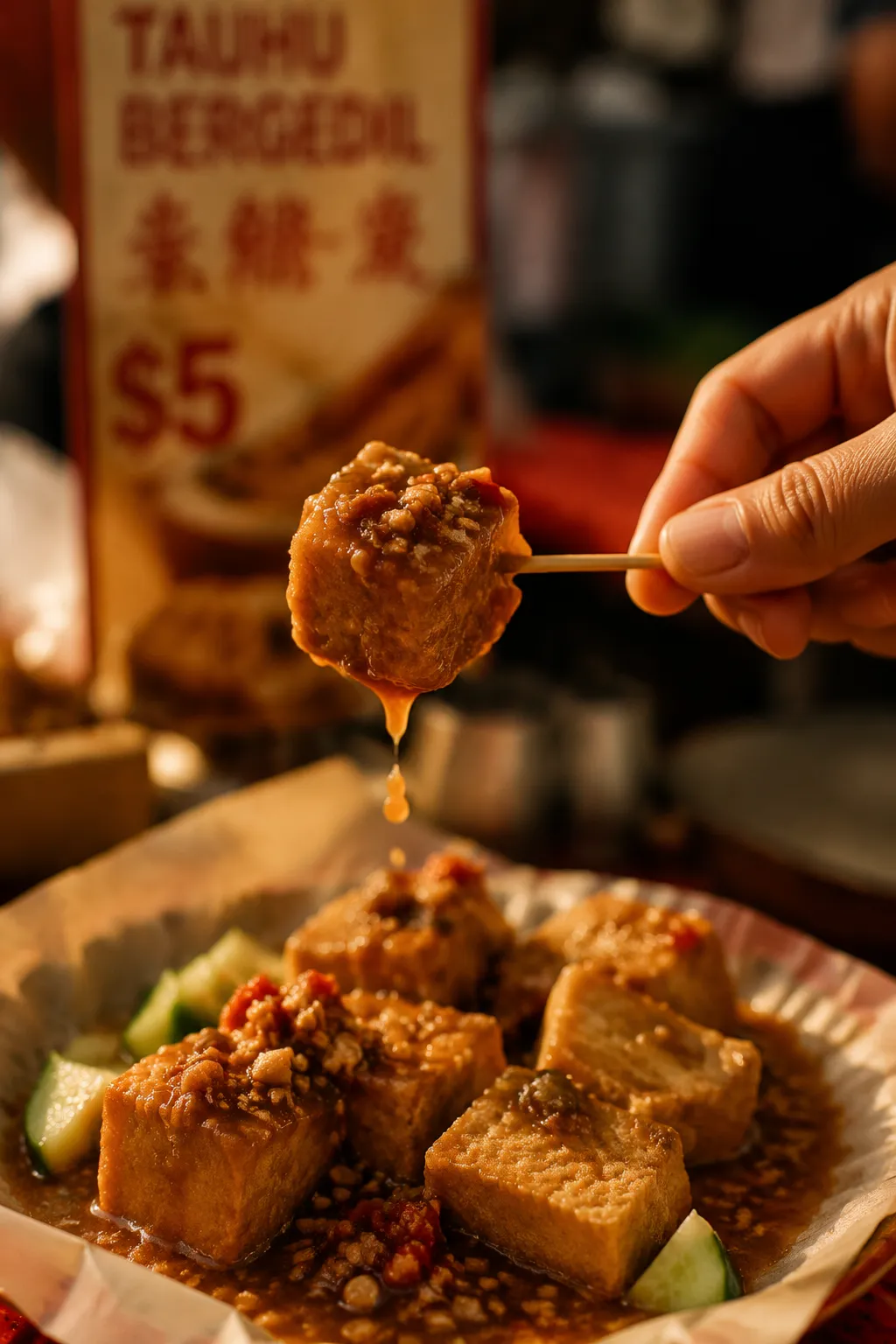
For parties and game nights, skip the platter entirely and serve the cubes on toothpicks or short bamboo skewers with the tofu sambal in a small dipping bowl in the center of the board. They hold their crunch for about 20 minutes at room temperature, which is plenty of time for a cocktail hour, and they travel beautifully to potlucks if you pack the sauce separately. I have brought these to more gatherings than I can count, and they consistently disappear before anything that took twice as long to make.
Once you have made this tauhu recipe a couple of times, it stops being a recipe and starts being a default — the thing you reach for when the fridge looks bare and dinner needs to happen in the next half hour. Keep a block of firm tofu and a jar of sambal on hand and you are always 30 minutes from something genuinely good, whether you serve it as a quick weeknight main or dress it up for company.
The peanut-sambal pairing is the classic, but the fried tauhu base happily plays with other sauces and toppings. Once you trust the technique, treat the cubes as a blank canvas for whatever flavors are in the fridge.
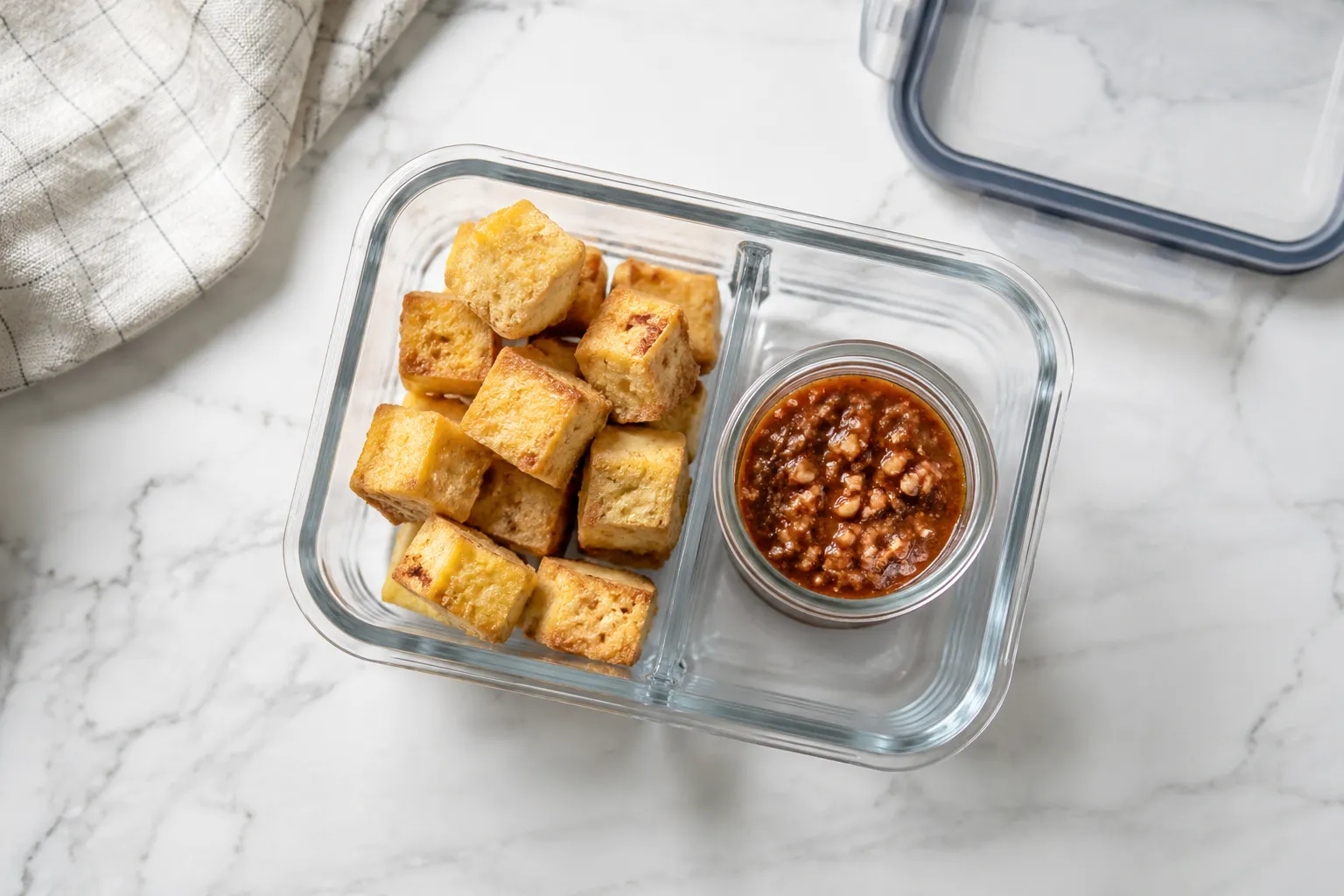
Leftover tauhu keeps in an airtight container in the fridge for up to 3 days. Store the cubes and the peanut sauce separately whenever possible — sauced cubes will lose their crunch by morning. The sauce itself thickens as it chills, so whisk in a teaspoon of warm water or a squeeze of lime juice to bring it back to a pourable consistency before reheating.
To re-crisp the tofu, spread the cubes in a single layer in a 400°F air fryer or oven and heat for 5 to 7 minutes, shaking once halfway through. Skip the microwave: it turns the crust rubbery and the interior watery in seconds. The fried cubes also freeze well unsauced for up to a month — reheat from frozen in the air fryer at 400°F for 10 to 12 minutes until they sound hollow when tapped.