Easy Homemade Flatbread Recipe (Soft & Pillowy)
Ingredients
Scale

Soft, pillowy, and ready in 30 minutes, this homemade flatbread is the no-yeast pantry recipe you'll make on repeat for wraps, dips, and dinners.
This easy homemade flatbread recipe is the kind of thing that quietly changes your weeknights. Soft, pillowy, lightly blistered from a hot skillet, and ready in 30 minutes flat, with no yeast, no proofing, and no waiting around for dough to double. If you've ever needed warm bread for a bowl of soup or a quick wrap and discovered the bakery was closed, this is the back-pocket recipe that fixes the problem.
What makes it work is Greek yogurt. The thick, tangy yogurt does double duty in this dough. It tenderizes the gluten so the bread stays plush for hours, and the natural moisture creates steam pockets that puff up beautifully against a screaming-hot pan. The result tastes like it took all afternoon but actually comes together while your soup is still simmering on the back burner.
I keep the ingredients list deliberately short and pantry-friendly: flour, yogurt, baking powder, salt, and a glug of olive oil. From there you can take it any direction you want, brushed with garlic herb butter for dipping, stuffed with cheese, swapped to whole wheat, or kept plain for tucking around grilled meats and stews. Once you've made this no yeast flatbread one time, you'll understand why it becomes a permanent fixture in the dinner rotation.
Most traditional flatbreads rely on yeast, which means at least an hour of rising before you can even think about cooking. This Greek yogurt flatbread skips all of that by using baking powder as a chemical leavener and yogurt for both moisture and tang. The lactic acid in the yogurt mimics the slightly fermented flavor you'd get from a yeasted dough, without the wait.
It's also a forgiving dough. You don't need a stand mixer, a thermometer, or a proofing basket. A bowl, a wooden spoon, and clean hands will get you there. Beginner bakers love this recipe because it's nearly impossible to mess up, and seasoned cooks love it because it scales effortlessly when you need to feed a crowd. If you've ever felt intimidated by bread baking, this is the gateway recipe.
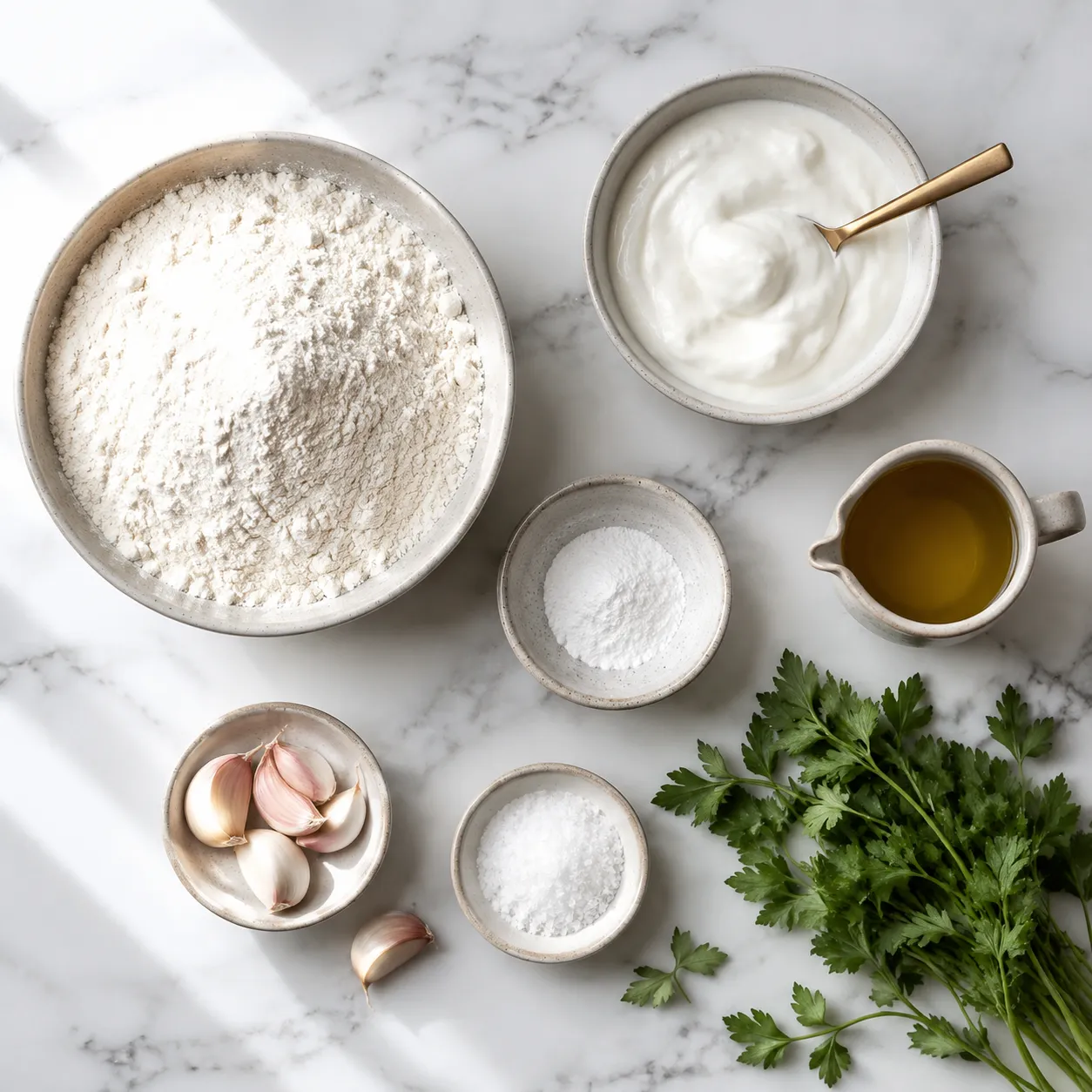
The beauty of this flatbread dough is that it relies on staples most home cooks already keep on hand. Each ingredient earns its place, and there's nothing here just for show. Here's a quick rundown of why each one matters and what to substitute if you're working with what's already in the pantry.
All-purpose flour is the workhorse here. It has just enough protein to give the bread structure without making it tough or chewy. If you'd rather use bread flour, you can, though the texture will lean a touch more elastic. For a nuttier flavor, swap up to half the all-purpose flour for whole wheat. Any more than that and the bread starts to feel dense. Always measure by spooning flour into your measuring cup and leveling it off; scooping straight from the bag packs in too much and gives you a stiff, unworkable dough.
This is the secret weapon. Use full-fat plain Greek yogurt for the richest results, since the higher fat content keeps the bread soft and pliable even after it cools. Low-fat works in a pinch, but skip non-fat, which can leave the dough dry and crackery. If all you have is regular plain yogurt, strain it through a coffee filter for 30 minutes to thicken it up first. The yogurt also adds a subtle tang that makes the bread taste more complex than its short ingredient list suggests.
Once you've nailed the base, the fun begins. Minced fresh garlic and chopped parsley folded directly into the dough turn this into a garlicky, herby flatbread that needs nothing more than a drizzle of olive oil to shine. You can also stir in dried oregano, za'atar, nigella seeds, or a pinch of crushed red pepper. Save more delicate herbs like dill or basil for sprinkling on top after cooking, where their flavor won't get muted by the heat of the pan.
The process is genuinely simple, but a few small details make the difference between fine and bakery-level. Read through once before you start, because the cooking happens fast once your skillet is hot.
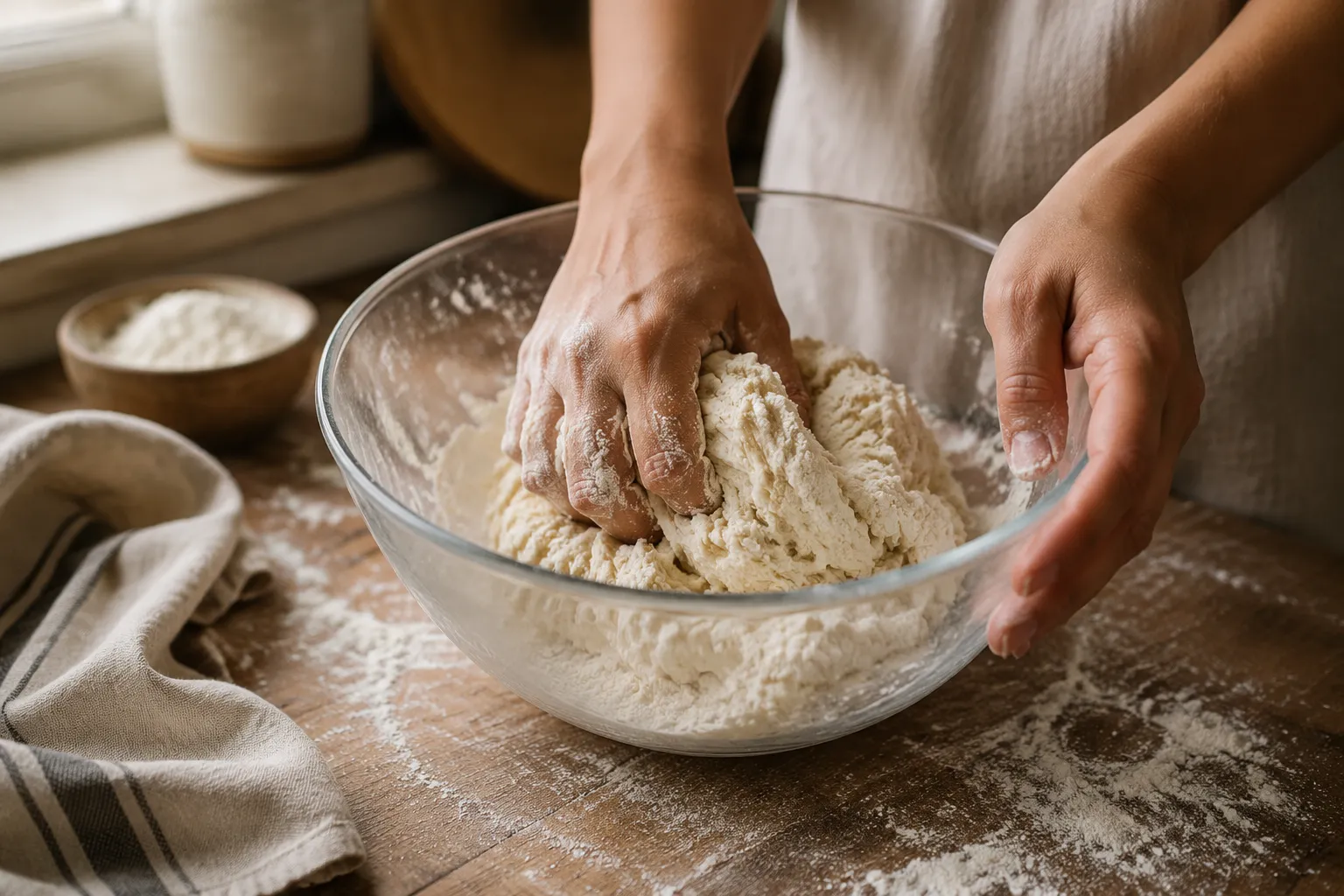
Whisk the dry ingredients together first so the baking powder distributes evenly, since clumps of leavener mean uneven puffing later. Add the yogurt and olive oil and stir with a wooden spoon until the mixture forms a shaggy dough. Turn it out onto a lightly floured counter and knead for about three minutes, just until the dough is smooth and elastic. Resist the urge to add more flour unless it's truly sticky; a slightly tacky dough cooks up softer than a stiff one every time.
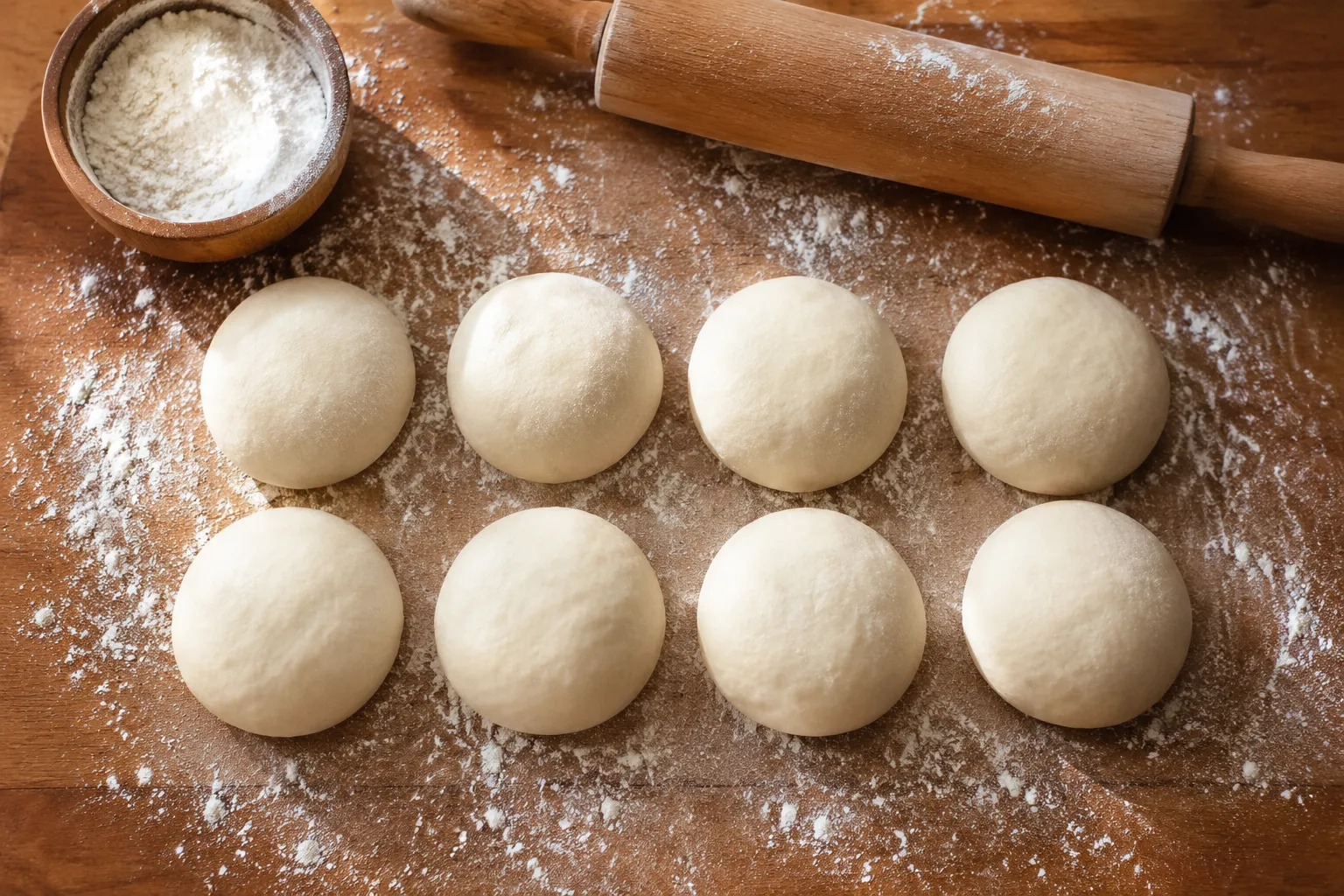
Cover the dough and let it rest for 10 to 15 minutes. This brief rest lets the gluten relax so the dough rolls out without snapping back. Divide it into eight equal portions, roll each into a ball, and use a rolling pin to flatten them into rounds about a quarter-inch thick. Aim for roughly six inches across. They don't need to be perfect circles, and the rustic shape is part of the charm.
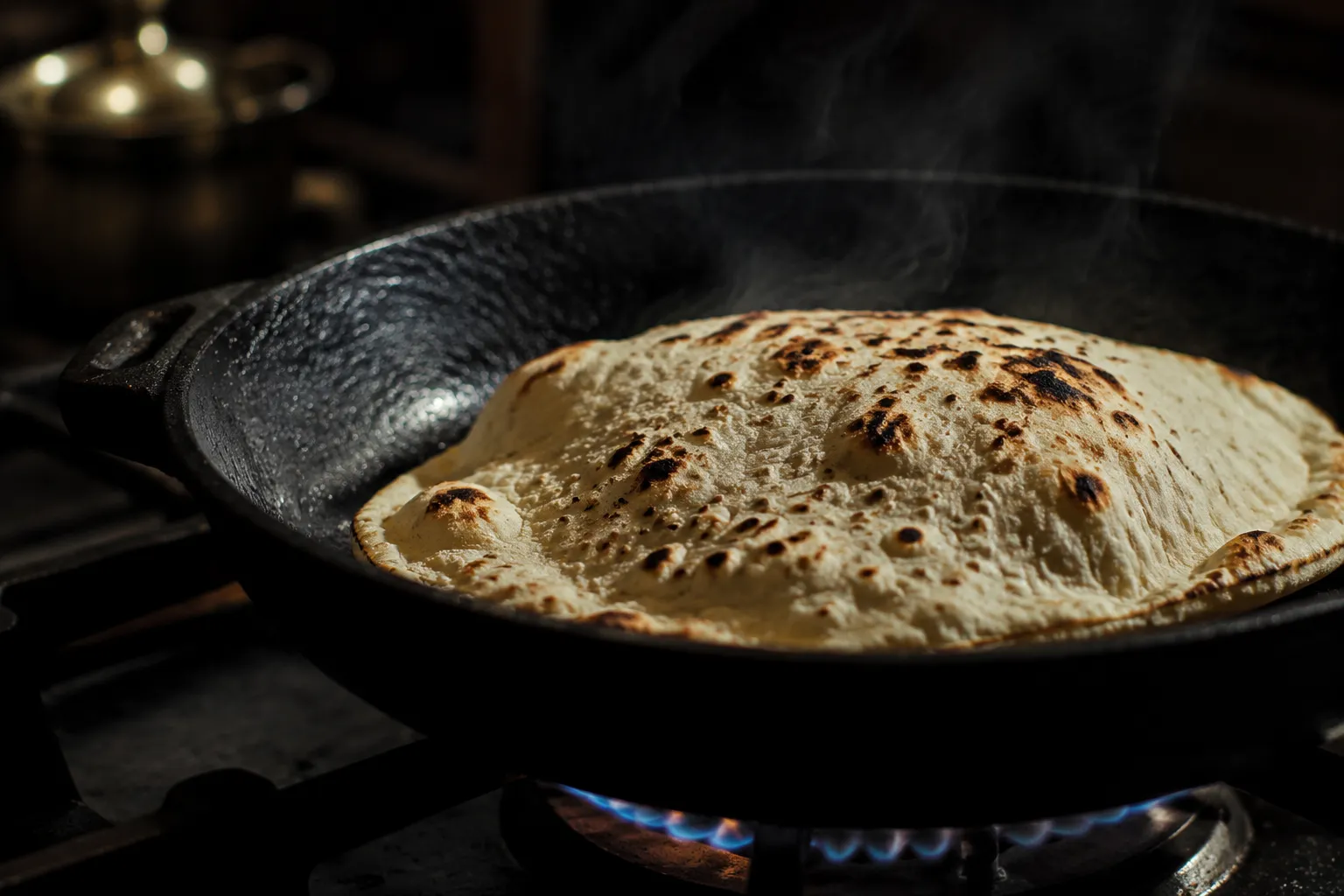
Heat a cast iron or heavy nonstick skillet over medium-high until it's properly hot. Flick a drop of water on the surface and it should sizzle and evaporate within a second. Lay one rolled-out round in the dry skillet and cook for about 60 to 90 seconds, until big air bubbles form and the underside is speckled with golden char marks. Flip and cook the second side another 60 seconds. Brush the warm bread with melted garlic herb butter and stack the cooked rounds under a clean kitchen towel while you finish the rest.
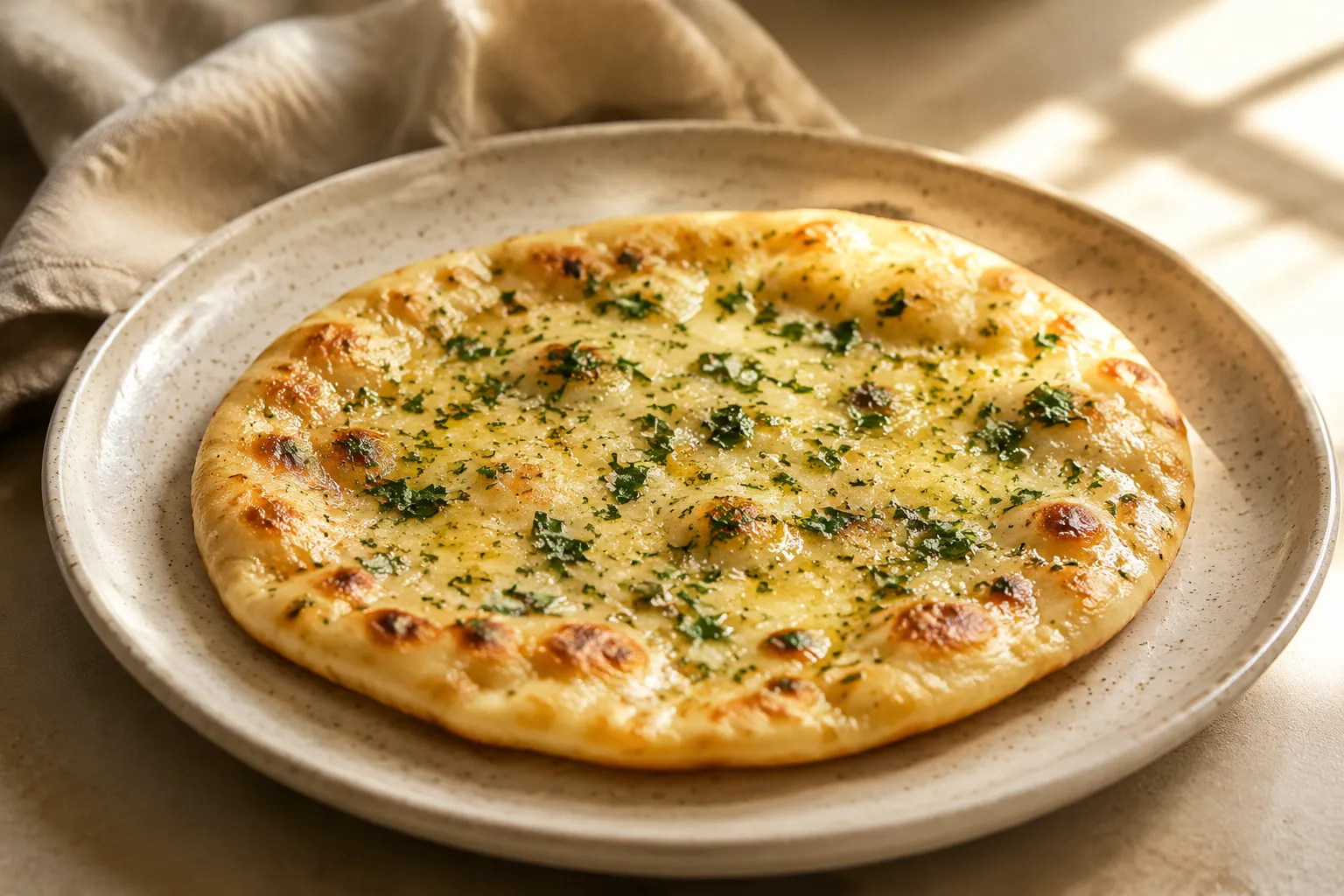
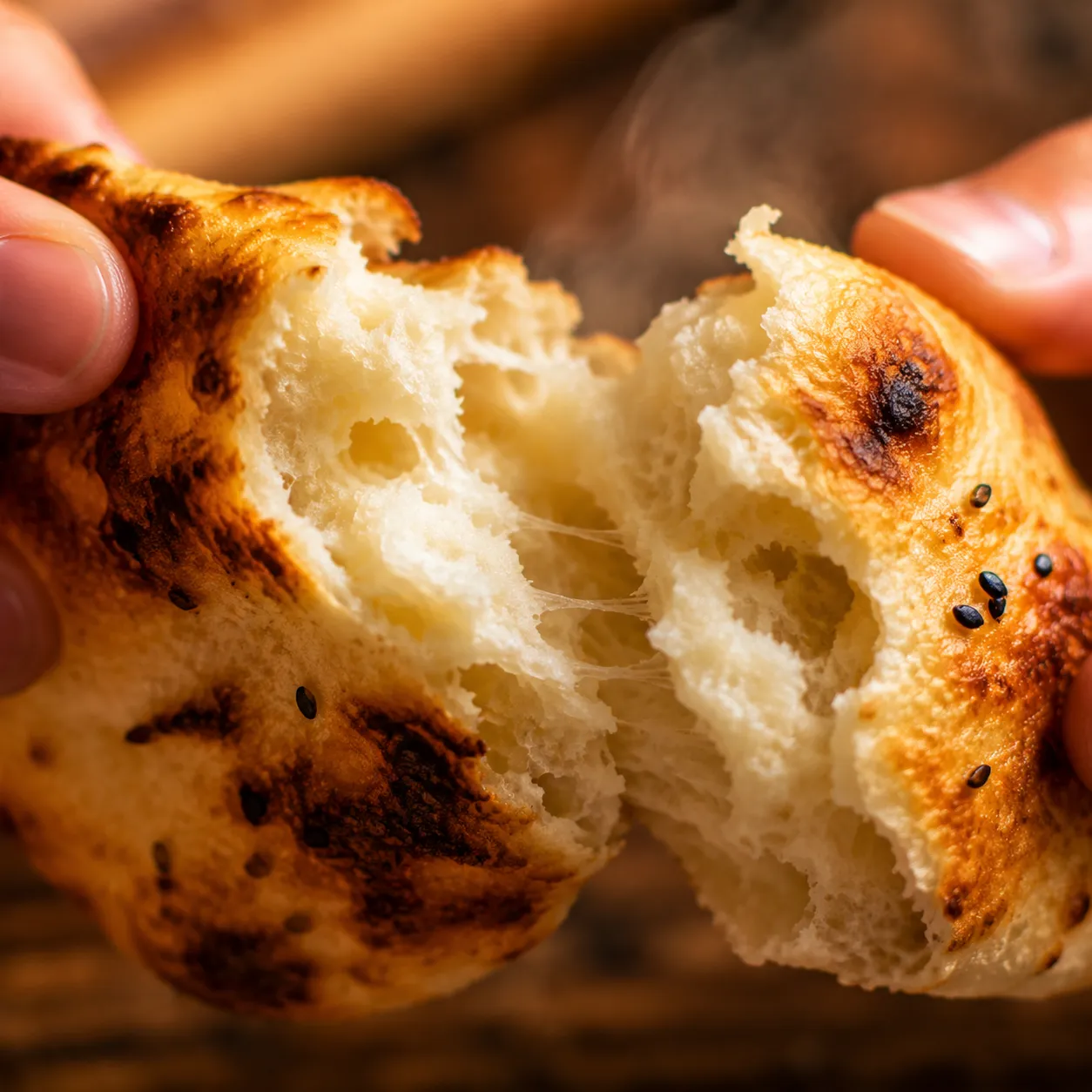
That's the whole method. Once you've cooked one or two, you'll find a rhythm, rolling the next round while one cooks, and the entire batch comes off the heat in about 12 minutes. The texture should be soft enough to fold without cracking, with a slight chew and those iconic char-spotted air pockets running through the inside.
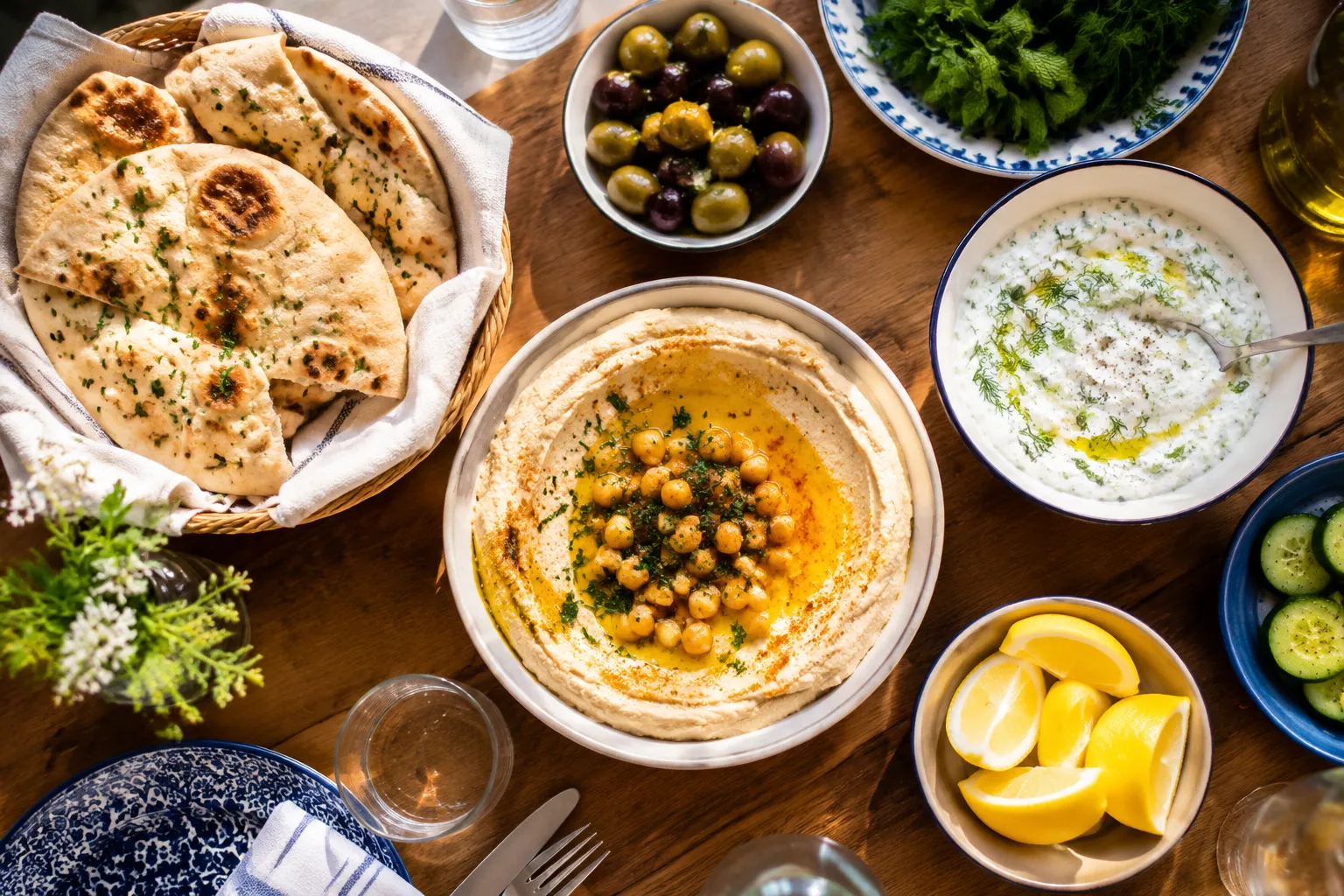
Few things are as endlessly useful as a stack of warm flatbreads on the table. They turn humble pantry meals into something that feels intentional, and they bridge cuisines from Mediterranean to Indian to Middle Eastern with zero effort. Here are a few of my favorite ways to put them to work.
This is where soft skillet flatbread really earns its keep. Build a meze board around it: a creamy hummus dip, smoky baba ganoush, whipped feta with honey, marinated olives, and a bright Greek tzatziki swirled with cucumber and dill. The pillowy texture is built for scooping, and the slight tang from the yogurt in the dough plays beautifully against rich, garlicky spreads. For an easy weeknight dinner, just lay everything out family-style and let everyone tear and dip straight from the board.
Because this soft flatbread recipe stays pliable long after cooking, it's excellent for wraps. Pile on grilled chicken shawarma, falafel, gyros, or even leftover roasted vegetables with a smear of hummus. The dough is sturdy enough to hold up to wet fillings without tearing, but soft enough to fold and bite into without crumbling. I love it for lunchboxes too. Wrapped tightly in parchment, the flatbread keeps its texture for hours, ready to eat at room temperature.
Anywhere you'd reach for naan, this bread can step in. It's a natural partner for lentil dal, butter chicken, chana masala, or a simmering pot of Moroccan tagine. It's equally at home alongside a bowl of tomato soup, white bean stew, or a hearty minestrone. The slight char from the skillet adds a smoky note that plays well with deeply spiced and tomato-based dishes alike.
If there's one bread recipe worth committing to memory, this is the one. It's fast enough for a Tuesday, impressive enough for company, and infinitely adaptable depending on what's in the fridge. Once the dough is mixed and resting, you've already done 90 percent of the work. The rest is just rolling and a few minutes at the stove.
Make a double batch the first time you try it. Half goes on the dinner table tonight; the other half stacks neatly in the freezer for the next time you need warm bread in a hurry. After one round, I think you'll see why this is the easy flatbread recipe I keep coming back to year after year.
The base dough is essentially a blank canvas, which is why this recipe earns a permanent spot on rotation. Once you've made the plain version, try one of these spins to keep things interesting throughout the week.
Cooled flatbreads keep beautifully in an airtight bag or container at room temperature for up to two days, or in the refrigerator for up to five. The yogurt-enriched dough holds its softness longer than most homemade bread, but always let them cool fully before sealing. Trapped warmth turns into condensation, and condensation turns into soggy bread.
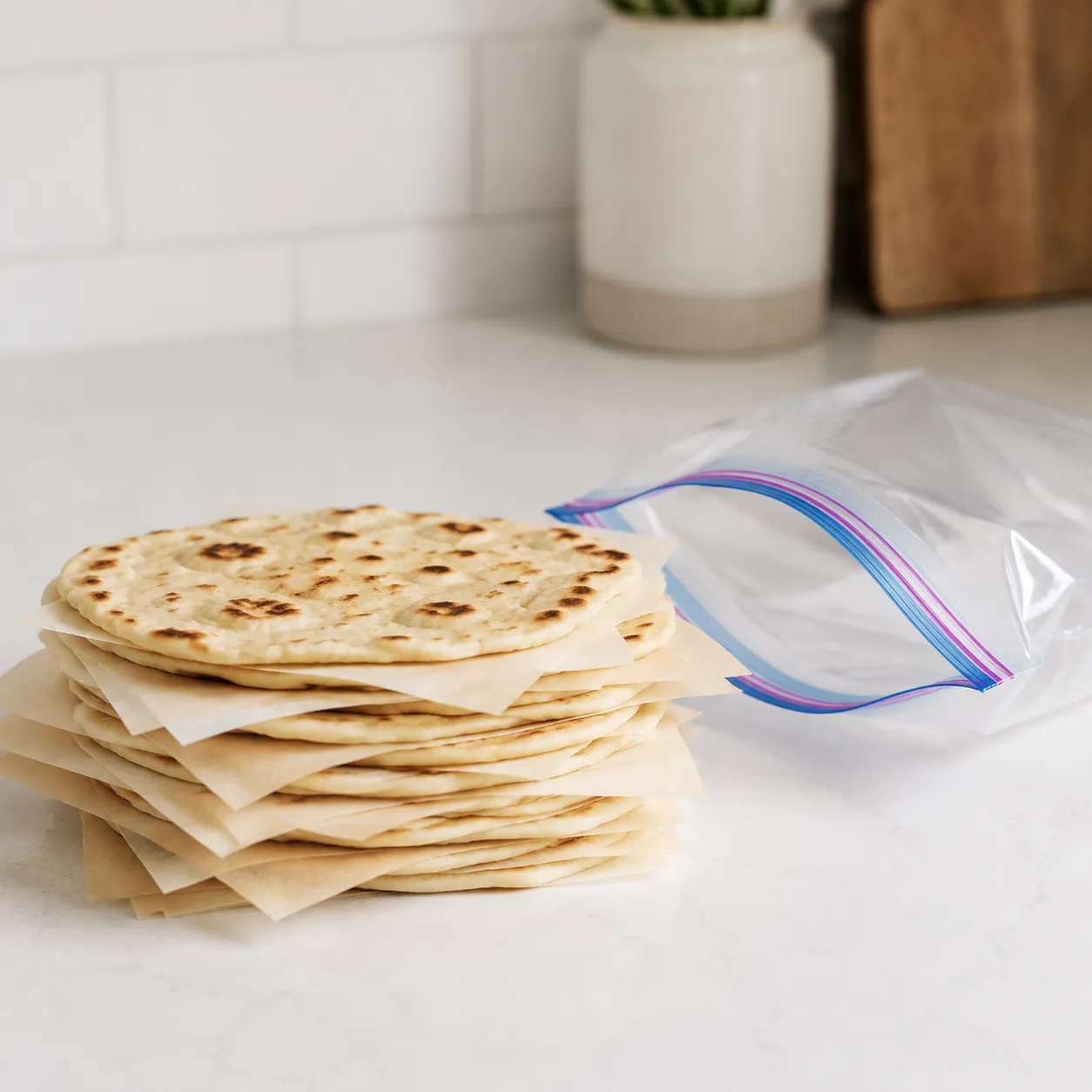
For longer storage, freezing works exceptionally well. Layer cooled flatbreads with parchment squares between each, slide the stack into a heavy-duty zip-top freezer bag, press out as much air as possible, and freeze for up to three months. To reheat, warm them straight from frozen in a dry skillet over medium heat for about 60 seconds per side, or wrap loosely in foil and heat in a 350°F oven for 8 to 10 minutes. A 15-second microwave zap with a damp paper towel works in a true pinch, though the skillet method gives the best texture every time.